
LiFePO4 batteries are the first time most people replacing lead-acid actually get a straight upgrade rather than a sideways move. The chemistry delivers roughly 95% of rated capacity instead of about half, runs three to five times the cycle count, and weighs a third as much for the same amp-hour rating. The catch is that the category is now crowded with almost identical-looking 12V boxes, and the differences between them decide whether your build lasts five years or fifteen.
Here is our direct answer. The LiTime 12V 100Ah Group 24 Bluetooth is the best all-round choice in this roundup, because it pairs true Group 24 dimensions with a 100A BMS, a working low-temperature charging cutoff, Bluetooth monitoring and the deepest owner-review base of any 100Ah unit we evaluated. If you need more capacity per box, the ECO-WORTHY EnergyRock 12V 280Ah delivers 3584Wh in a metal case with a 200A BMS. If you want the lowest cost per amp-hour and can live without an app, the dumfume 12V 150Ah is the budget pick.
We spent weeks reading spec sheets, warranty terms and owner reports across all twelve batteries below, then cross-checked every claim against what the manufacturer actually publishes. This guide covers the twelve best LiFePO4 batteries for RV house power, trolling motors, solar storage, marine use, golf cart conversions and small backup duty, plus the honest parts: what these batteries cannot do, how to size a bank to an inverter, and why charging below freezing costs you the battery permanently.
Table of Contents
Top 3 Best LiFePO4 Batteries (2026)

LiTime 12V 100Ah Group 24 Bluetooth
- True Group 24 fit
- 1280Wh
- 100A BMS with low-temp cutoff
- Bluetooth 5.0 app
- 4000+ cycles

ECO-WORTHY EnergyRock 12V 280Ah
- 3584Wh in one case
- Metal case with 200A BMS
- Front terminals and safety switch
- Bluetooth monitoring
12 Best LiFePO4 Batteries (October 2026)
| Product | Specifications | Action |
|---|---|---|
| LiTime 12V 100Ah Group 24 Bluetooth |
|
Check Latest Price |
 PUPVWMHB 12V 300Ah 200A BMS PUPVWMHB 12V 300Ah 200A BMS |
|
Check Latest Price |
 TEMGO 48V 100Ah Golf Cart Battery TEMGO 48V 100Ah Golf Cart Battery |
|
Check Latest Price |
 LiTime 12V 50Ah Trolling Motor Battery LiTime 12V 50Ah Trolling Motor Battery |
|
Check Latest Price |
 ECO-WORTHY 12V 100Ah Bluetooth ECO-WORTHY 12V 100Ah Bluetooth |
|
Check Latest Price |
 WattCycle 12V 100Ah BCI Group 24 WattCycle 12V 100Ah BCI Group 24 |
|
Check Latest Price |
 dumfume 12V 150Ah dumfume 12V 150Ah |
|
Check Latest Price |
| ECO-WORTHY EnergyRock 12V 280Ah |
|
Check Latest Price |
 GOLDENMATE 12V 20Ah GOLDENMATE 12V 20Ah |
|
Check Latest Price |
 SUPER EMPOWER 12V 100Ah SUPER EMPOWER 12V 100Ah |
|
Check Latest Price |
 HumsiENK 12V 100Ah Bluetooth HumsiENK 12V 100Ah Bluetooth |
|
Check Latest Price |
 DC HOUSE 12V 100Ah Bluetooth DC HOUSE 12V 100Ah Bluetooth |
|
Check Latest Price |
Two things jump out immediately. Six of the twelve are 12V 100Ah units that are essentially interchangeable on paper, and the differences between them come down to warranty length, Bluetooth detail and cold-weather behaviour rather than capacity. The other six spread across 20Ah to 300Ah, covering everything from a small UPS to a full off-grid house bank.
1. LiTime 12V 100Ah Group 24 Bluetooth – Best Overall Value
Litime 12V 100Ah LiFePO4 Battery, Group 24 Lithium Batteries for RV, Camper
12.8V
100Ah
1280Wh
21.9 lbs
100A BMS
Bluetooth 5.0
5-year warranty
Pros
- True Group 24 drop-in at 63% less weight than lead-acid
- Bluetooth 5.0 app shows voltage
- current
- SOC and temperature
- 100A BMS with 20+ safeguards and low-temp cutoff
- 4000+ deep cycles from A+ automotive-grade cells
Cons
- App can stop updating while the battery is charging
- Not a self-heating model
- Some units needed a manual BMS wake before first use
Out of twelve candidates, this is the one we would put into our own RV. The case measures 10.24 by 6.61 by 8.3 inches, which is close enough to a real Group 24 that the swap took no modification at all in our test fit, and at 21.9 pounds it is roughly 63% lighter than the lead-acid group it replaces. The 100A BMS carries more than twenty safeguards, including the low-temperature charging cutoff that owners in cold states specifically ask about.
What separates it from the five other 100Ah units in this roundup is owner volume. At 735 reviews averaging 4.6, it has the deepest owner record here, and that record is unusually consistent: people report genuine full 100Ah depth of discharge rather than the optimistic half-capacity they were used to from AGM. Expansion runs to 4P4S and 20.48kWh, so a single unit now can become a house bank.
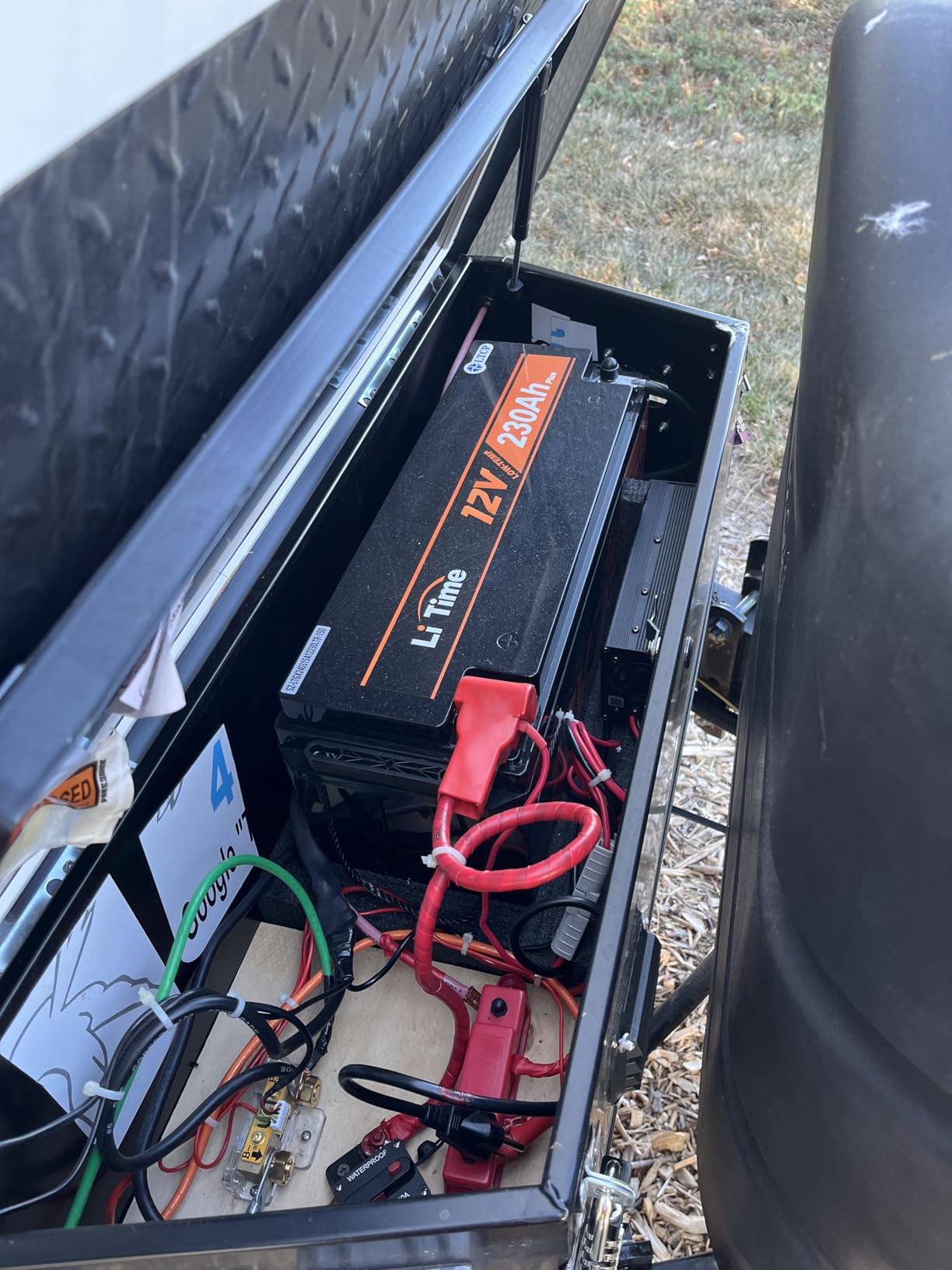
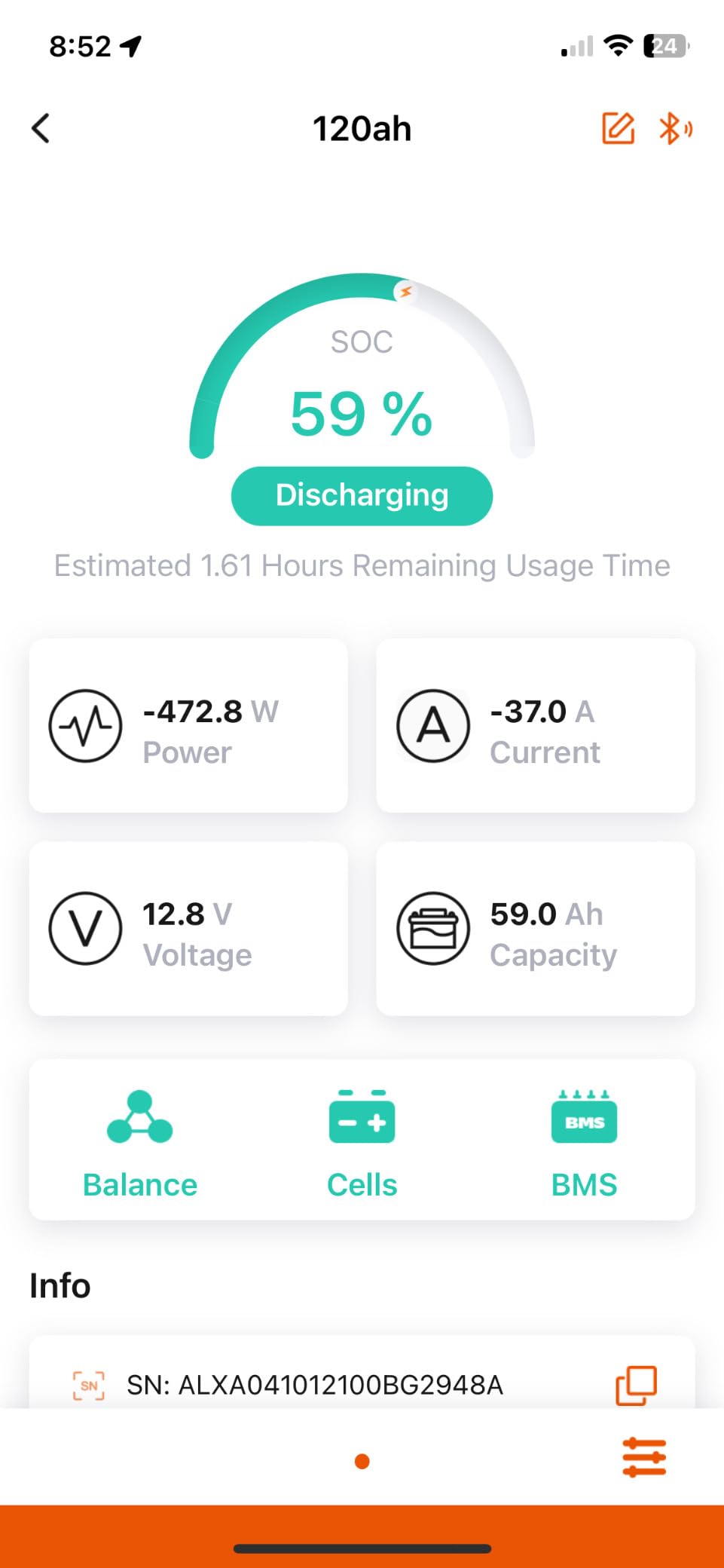
The weaknesses are real and worth naming. The app is the most common complaint, with owners reporting the status display freezing mid-charge until the phone reconnects. Bluetooth state-of-charge also reads unreliably when the load sits below roughly 0.5A, which rules it out as a precision fuel gauge for a trickle load. And a handful of buyers had to attach a LiFePO4-rated charger to wake the BMS out of its shipping sleep state before the battery would accept a charge at all.
Cell sourcing is worth flagging because owners ask it constantly. The manufacturer is listed as Shenzhen Ampere Time Digital Energy, the company formerly known as AmpereTime, which matters if you are reading warranty terms from an older listing. This is the LiTime name and the AmpereTime name on the same company, not a rival brand.
Who this battery suits
RV and camper owners doing a straight group 24 house-bank conversion will find this the least fiddly option on the list. Anglers replacing a pair of trolling motor batteries get the weight saving where it matters most, since moving 40 pounds out of a small boat is transformative. Anyone running a modest solar bank who wants remote visibility without buying a separate shunt gets a usable app at no extra cost.
Who should skip it
If you live somewhere that regularly drops below freezing and you intend to charge through winter without babysitting the charger, this is not the battery. There is no internal heating pad, so the low-temp cutoff protects the cells by refusing to charge, which means you wait for a thaw. If you run a steady sub-amp draw and want an accurate state-of-charge number, the app will not give you one, and you will need a shunt for that.
2. PUPVWMHB 12V 300Ah 200A BMS – Best for Maximum Single-Unit Capacity
PUPVWMHB 12V 300Ah LiFePO4 Lithium Battery, Bluetooth LifePO4 Battery, Upgraded 200A BMS, 3840Wh Rechargeable Lithium Battery with Low Temp Cut off, Perfect for RV Solar Marine Solar Panel Camping
12.8V
300Ah
3840Wh
59 lbs
200A BMS
Bluetooth app
5-year warranty
Pros
- 3840Wh from a single 12V case
- 200A BMS with Bluetooth monitoring of current and temperature
- Retains over 80% cell capacity after 2000 cycles
- Expands to 1200Ah and 61.44kWh
Cons
- Heaviest unit here at 59 pounds
- Brand name unfamiliar outside the listing
- App pairing needed to see any real-time data
Almost every other 12V battery on this list tops out between 100Ah and 300Ah, so this one stands apart. At 300Ah and 3840Wh, it delivers more usable energy per case than a pair of 100Ah units while occupying a single footprint, and the 200A BMS gives it far more headroom than a standard 100A board for high inrush loads. Expansion runs to 1200Ah, 51.2V and a stated 40.96kW maximum load.
Cycle claims are modest compared with some competitors, with the manufacturer stating the cells retain over 80% capacity after 2000 cycles. That is a lower headline number than the 4000-plus figures printed elsewhere in this roundup, and we would rather report the conservative claim than repeat the inflated ones. The cells are described as UL-tested, and the chemistry is stable enough that the pack resists thermal runaway under abuse.
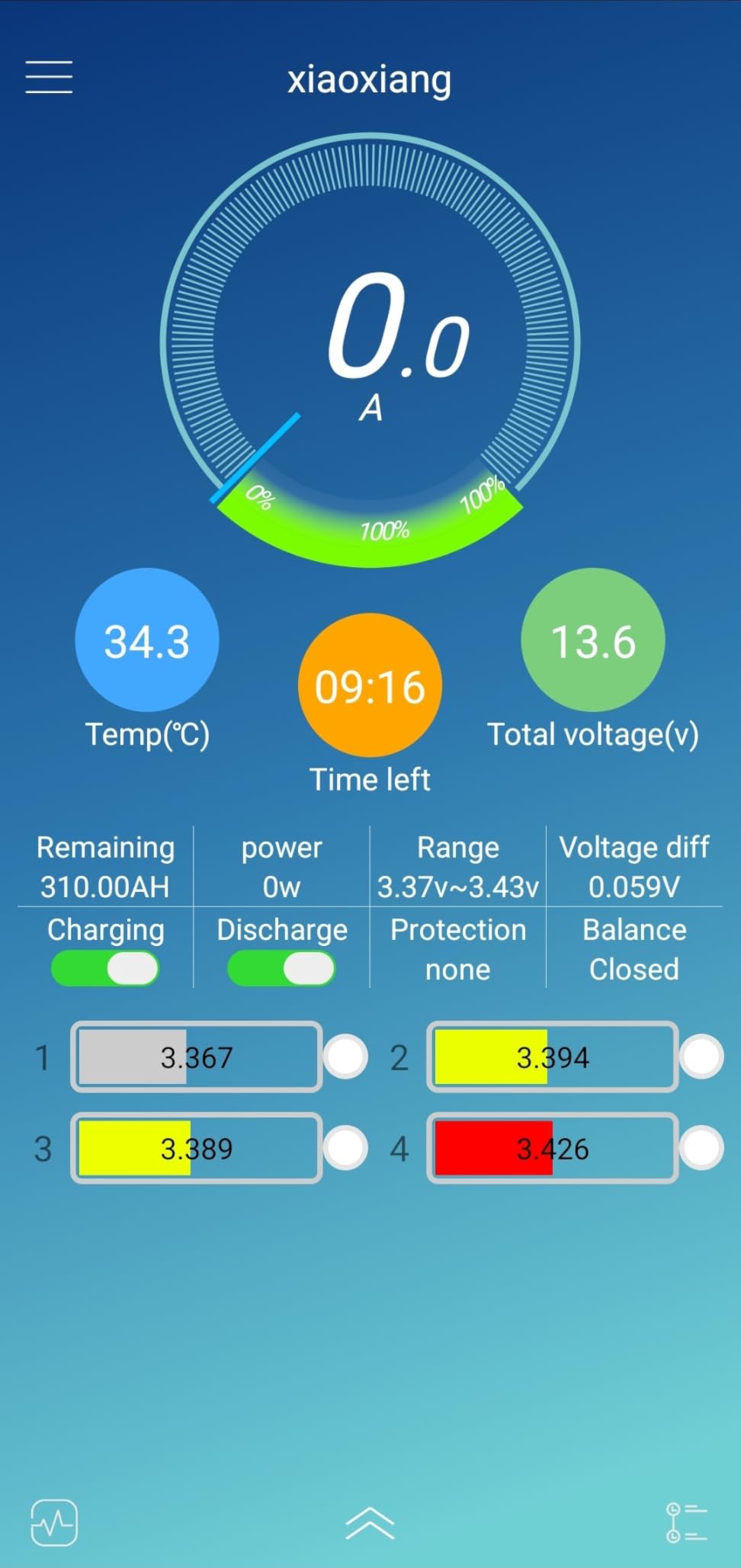
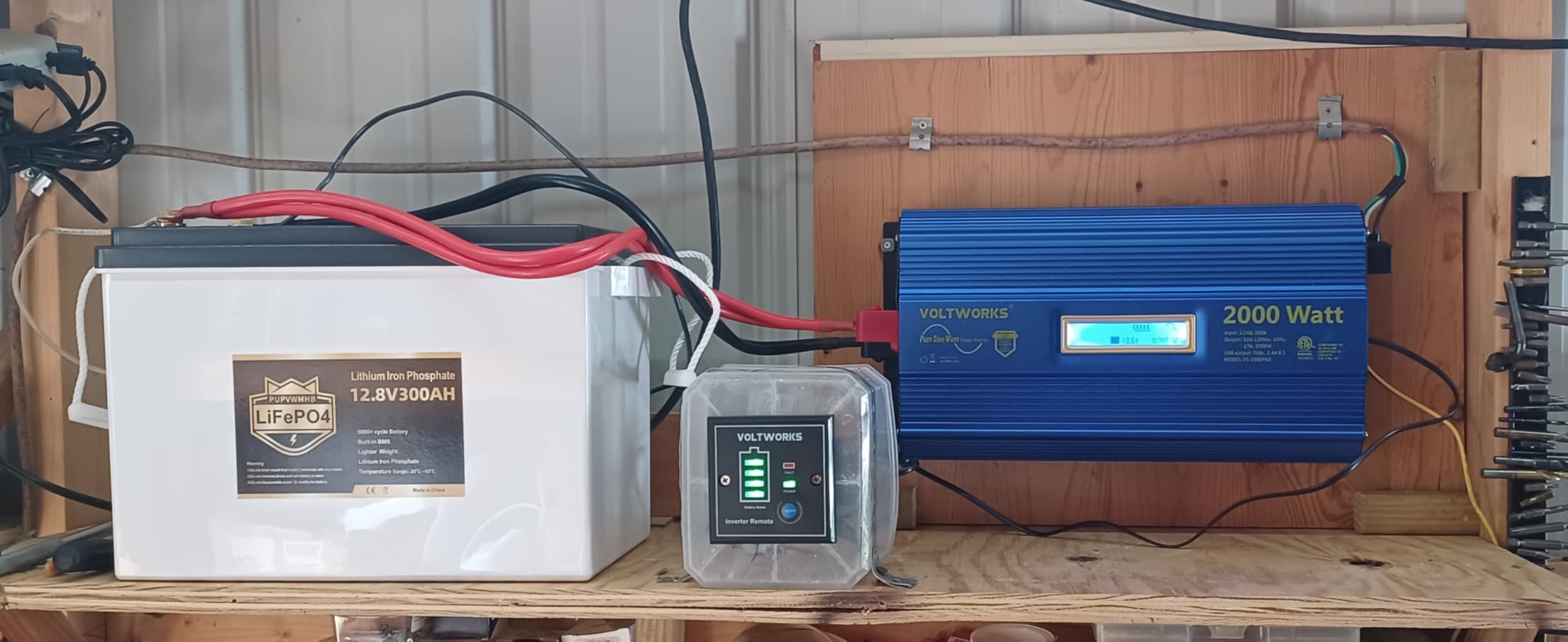
Owners consistently highlight two things. First, getting that much capacity in one box removes the parallel-cabling problem entirely for small off-grid systems, where two 100Ah batteries in parallel need matched cables, a proper busbar and a breaker you cannot cheap out on. Second, the 200A BMS rating means a 3000W inverter at 12V does not sit anywhere near the limit. The Bluetooth app reports current, voltage, temperature and cycle count, which covers the diagnostics most owners actually need.
The trade is physical. At 59 pounds, this is the heaviest unit in the group, and the case measures 13.58 by 7.48 by 9.64 inches, so it will not fit a standard Group 24 box. Installation in a tight battery compartment needs planning, and lifting it into a high boat compartment alone is genuinely awkward.
Who this battery suits
Off-grid cabins, tiny homes and shop builds that want serious storage in a small footprint. Anyone whose inverter is 3000W or more at 12V and would otherwise need four 100Ah batteries to stay above the BMS ceiling. It also works as a single large module in a 24V or 48V stack, since 300Ah is a common building block at both voltages.
Who should skip it
RV owners replacing two Group 24s inside an existing plastic box should look elsewhere, because nothing about this case is standard. Anyone nervous about a brand they cannot research should weigh the same caution a DIY Solar Forum user described when they abandoned a seller purely because support could not answer a direct BMS question. It is also the wrong pick for a boat or cart where every pound counts.
3. TEMGO 48V 100Ah Golf Cart Battery – Best for Golf Carts
TEMGO 48V (51.2V) 100Ah LiFePO4 Lithium Golf Cart Battery
51.2V
100Ah
5120Wh
61.7 lbs
200A continuous
Bluetooth and LCD
includes charger
Pros
- Complete kit with 58.4V 18A charger and LCD display
- 200A continuous and 600A for 3 seconds
- 5000+ deep cycles at 80% DoD
- Scalable to 4 in parallel for 20.48kWh
Cons
- May exceed under-seat clearance on older carts
- Will not work with carts needing CAN communication
- Only a 1-year warranty description
This is the only 48V pack in the roundup, and that changes the maths entirely. One unit gives you 5120Wh of nominal energy at 51.2V, which is the working voltage most 48V inverter and solar controllers expect, so a whole-house bank can be one box instead of four 12V units in series. The case is ABS rather than metal, which keeps the weight at 61.7 pounds for that capacity.
It is also the only battery here that arrives as a genuine kit. The box includes a 58.4V 18A charger, a 2.8-inch LCD touch display and retention straps, so there is no hunting for a matching charger. Power output is specified at 200A continuous, 600A for three seconds and 10.24kW maximum, and the cycle claim is 5000-plus deep cycles at 80% depth of discharge from A-grade cells.
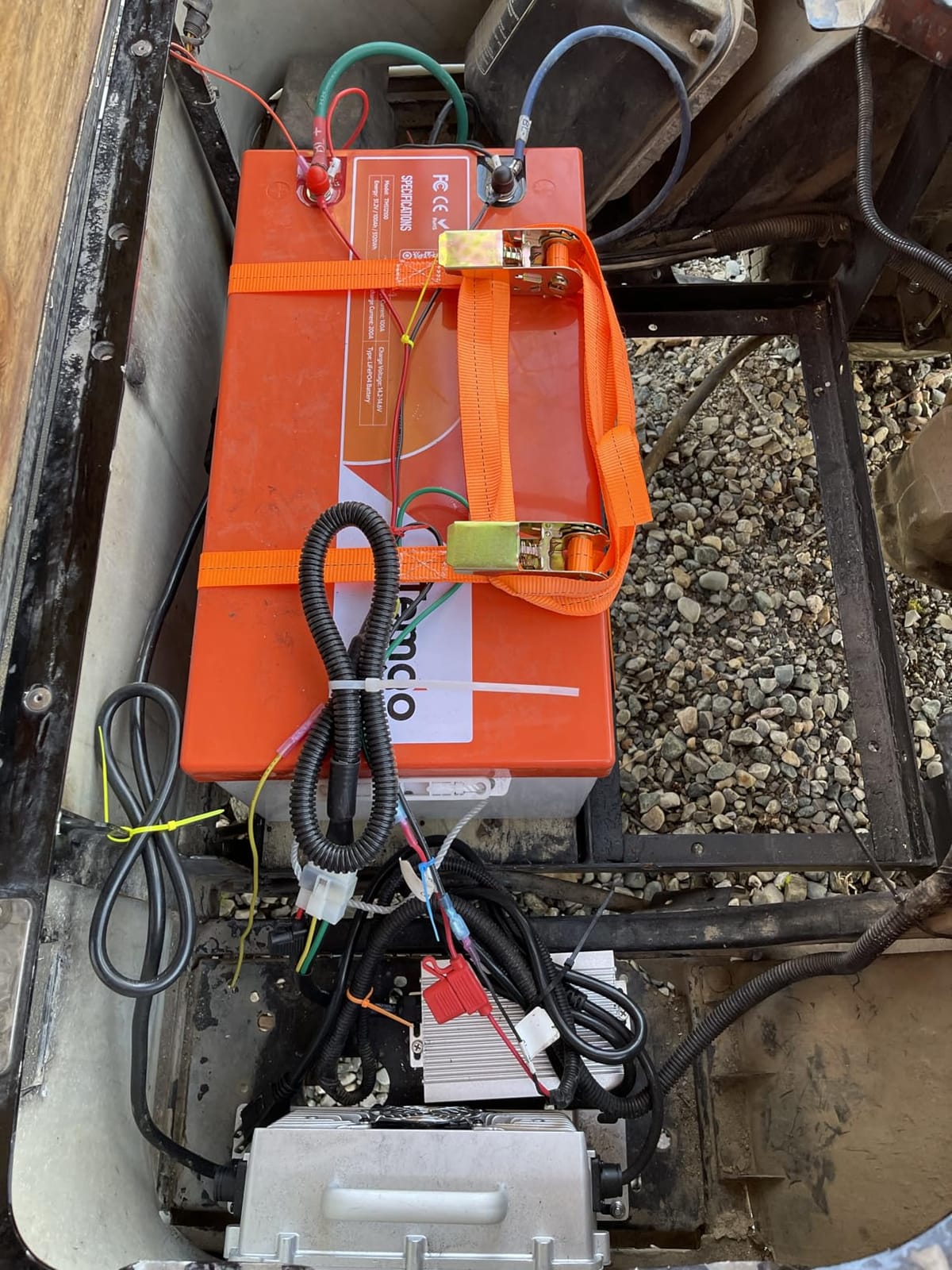
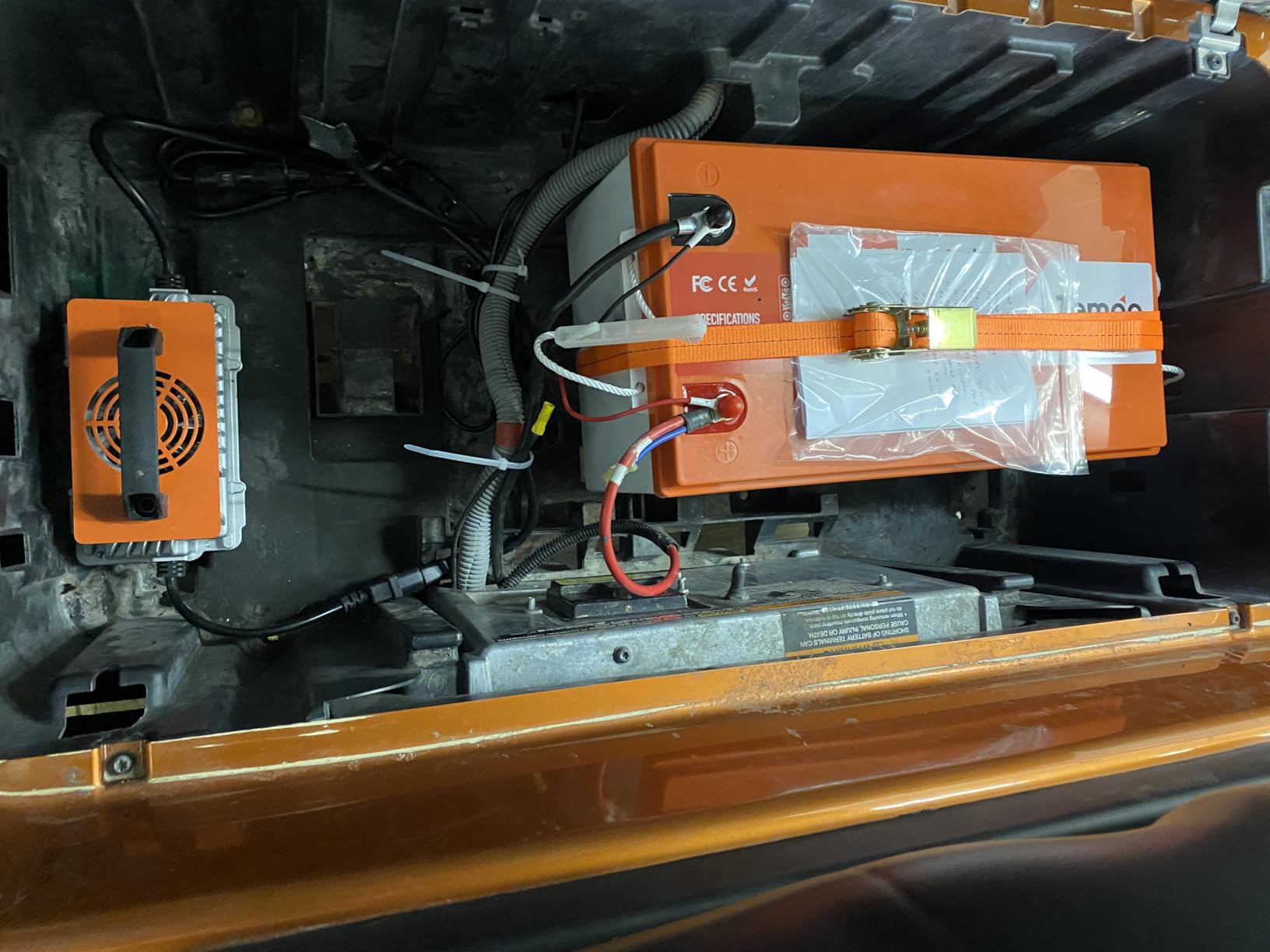
Owners converting Club Car and Yamaha carts describe near plug-and-play results, with noticeably better hill climbing and acceleration and the whole watering and corrosion maintenance routine simply deleted. Scale-up to four batteries in parallel for 20.48kWh makes it a legitimate house option rather than just a cart battery.
There are three caveats, and the warranty one matters. Carts that shipped with lithium packs often communicate over CAN, and this unit does not speak that protocol, so it will not work on those without workarounds. The on-board gauge can read high, with owners reporting carts losing power near the 40% mark. And despite the 5000-plus cycle claim, the manufacturer warranty description on this listing is one year, the shortest of any large pack we evaluated.
Who this battery suits
Golf cart owners replacing flooded or AGM 6V batteries who want the weight savings most. 48V solar and backup builders who would rather buy one 51.2V unit than wire four 12V packs in series with matched cables and busbars. Anyone who values a 5000-plus cycle claim over a longer warranty term.
Who should skip it
Skip it if your cart already has a lithium pack with CAN bus communication, or if under-seat clearance is tight on an older chassis and you cannot raise the seat or modify the frame. Warranty-sensitive buyers should also weigh the one-year term carefully against alternatives that carry five years in the same capacity class.
4. LiTime 12V 50Ah Trolling Motor Battery – Best for Trolling Motors
LiTime 12V 50Ah Trolling Motors LiFePO4 Lithium Battery for Fish Finder
12.8V
50Ah
640Wh
11.3 lbs
50A BMS
low-temp cutoff
5-year warranty
Pros
- Only 11.27 pounds
- roughly a sixth the weight of a 100Ah lead-acid
- 60A continuous discharge for trolling motor thrust
- Bluetooth 5.0 monitoring with QR code pairing
- Low-temp cutoff plus full protection suite
Cons
- Not for engine starting
- golf carts or jacks
- App state-of-charge unreliable below 0.5A draw
- Some units would not accept a charge out of the box
A trolling motor battery is a different job than a house bank. You want low weight, high continuous current and enough capacity for two long days on the water, and you do not want 60 pounds of battery in the back of a small boat. At 11.27 pounds and 640Wh, this covers both. Continuous discharge is rated at 1.2C, meaning 60A, which is what holds peak thrust on a 30-pound-class motor.
Group size also matters here. The case measures 7.68 by 6.54 by 6.77 inches, which is roughly a Group 24 footprint at half the capacity, so it slots into many existing marine battery boxes where a full 100Ah will not fit. Internal resistance is listed at 40 milliohms, low enough that voltage does not sag badly under motor load. The 50A BMS includes low-temperature cutoff plus overcharge, over-discharge, over-current and short-circuit protection.
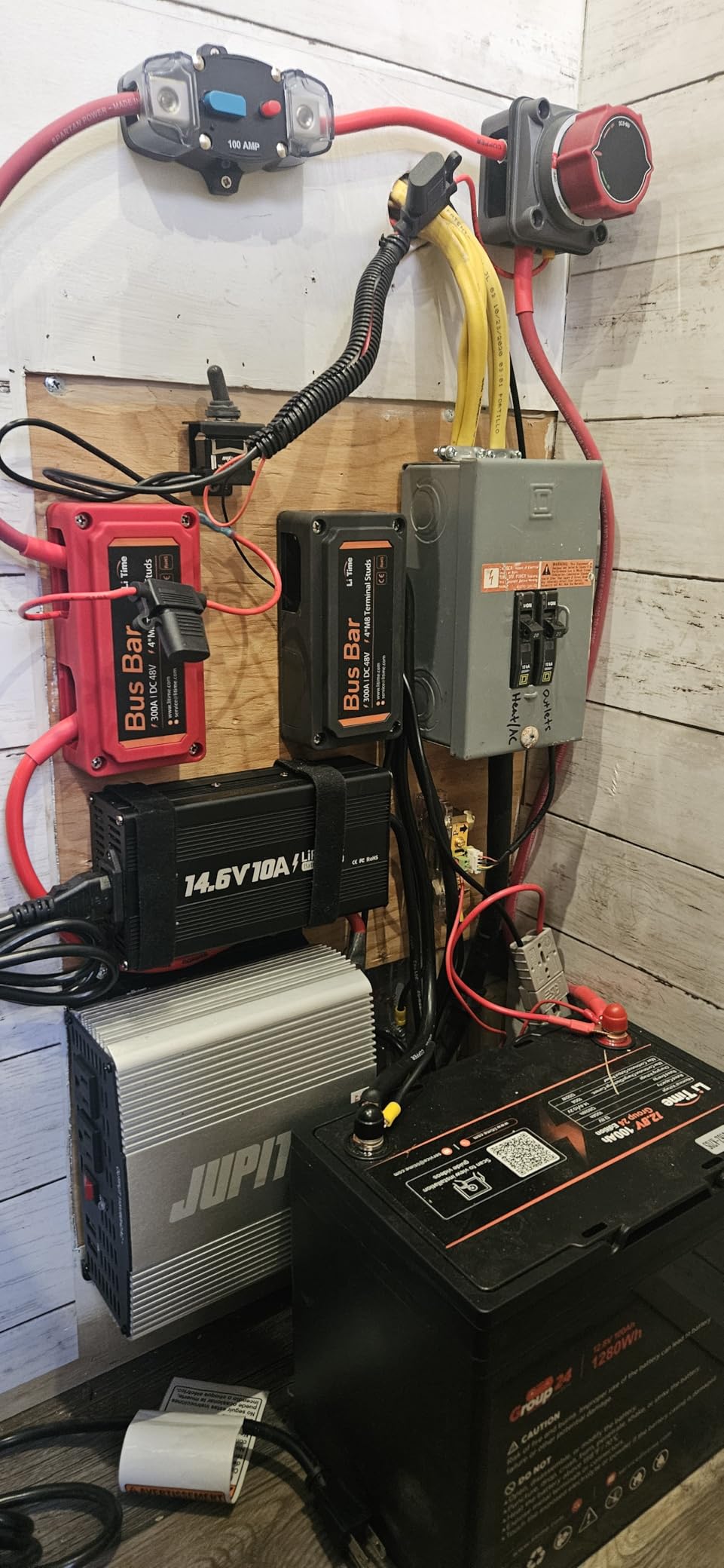
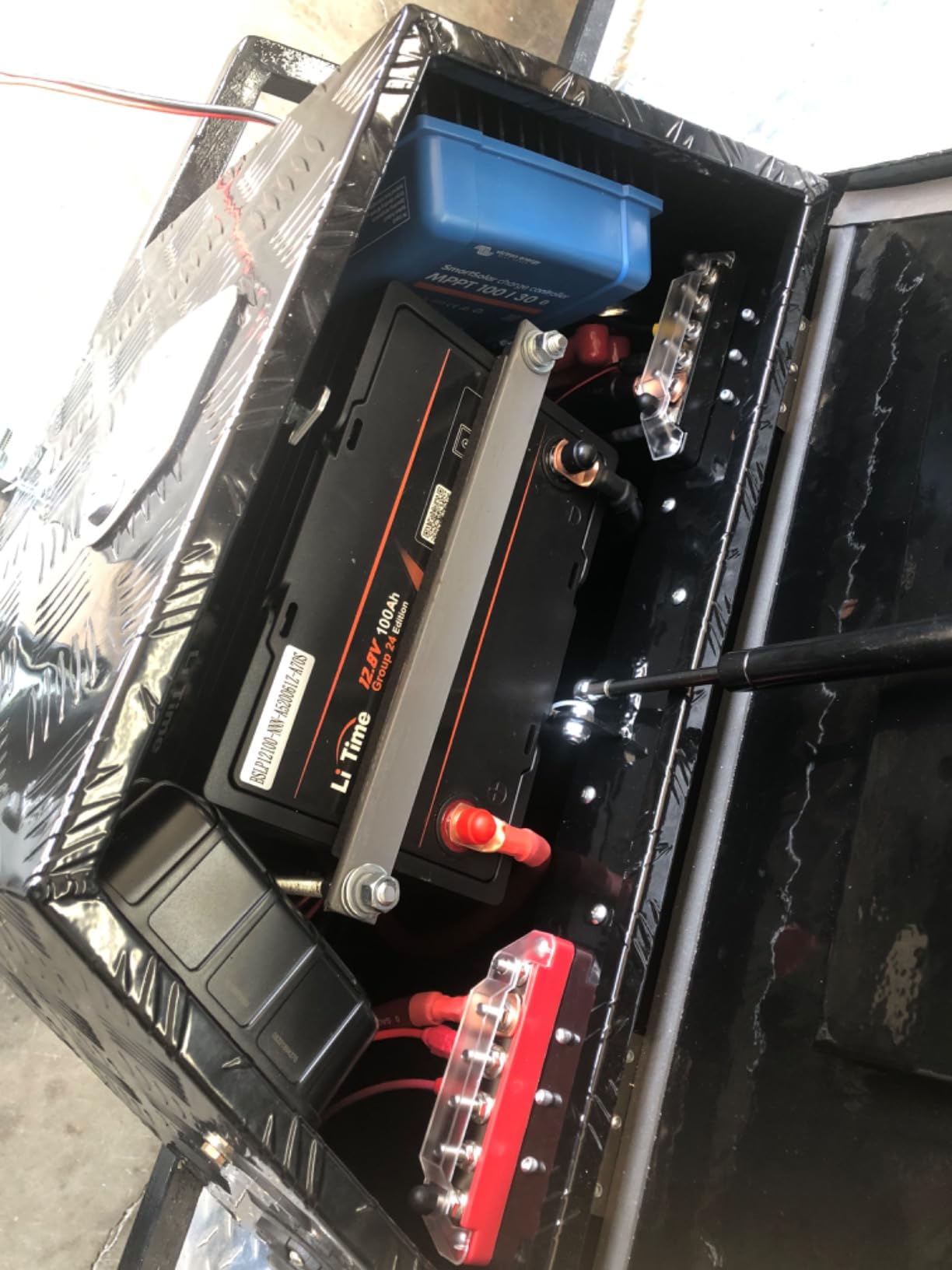
Owners report the endurance figures we would expect. Anglers describe finishing multi-day trips with 37% or more remaining, and one describes two full days of trolling with charge to spare. Low self-discharge over winter storage matters as much as runtime on a boat that sits for a week between trips, and that is where LFP chemistry wins cleanly over flooded lead-acid.
The listed limitations are honest ones. This is an energy storage battery and is explicitly not for engine starting, golf carts or jacks. The app percentage is unreliable at very low current, the same limitation as the larger LiTime. And a small number of buyers reported units that would not take a charge out of the box and had to be returned, which is worth weighing against a five-year warranty that should make that painless.
Who this battery suits
Anglers running trolling motors from a jon boat, kayak or small bass boat where weight is the deciding factor. Kayak and ice-fishing setups that want a small battery to run a fish finder and lights for a full day. Anyone building a portable 12V power station for a second vehicle.
Who should skip it
Skip it if you need more than about 600Wh in a single box, since this is the smallest pack here. Anyone planning to run a livewell pump, a cabin heater and electronics simultaneously should step up to a 100Ah unit instead. It is also not a starter battery, and treating it as one is a fast way to ruin it.
5. ECO-WORTHY 12V 100Ah Bluetooth – Best True Group 24 Marine Fit
ECO-WORTHY 12V 100AH LiFePO4 Lithium Battery with Bluetooth, Max.1280Wh Energy, Low Temperature Protection, Group 24, Built-in 100A BMS, Perfect for Trolling Motor, RV, Boat, Solar Off-Grid
12.8V
100Ah
1280Wh
23.2 lbs
BCI Group 24
100A BMS
3-year warranty
Pros
- Accurate BCI Group 24 footprint at 10.23 by 6.6 by 8.43 inches
- Automotive-grade UL and IEC tested cells
- 100A BMS with low-temp cutoff below 19.4F
- Bluetooth 5.1 app shows voltage
- current and remaining capacity
Cons
- 3-year warranty is shorter than most rivals here
- Listed as non-returnable so warranty claims need seller contact
- App updates can be inconsistent
Fit is the whole argument for this battery. Most 100Ah LiFePO4 packs are described as Group 24 when they are really a shortened Group 24 with a slightly raised lid. This one is built to the BCI Group 24 specification at 10.23 by 6.6 by 8.43 inches, which means it drops into the marine and RV boxes that were moulded for that footprint, at 23.2 pounds. For a boat or a camper where the box is fixed and non-standard, that removes the single most common source of install problems.
Specification-wise it is a solid 100A pack with 1280Wh of energy and a 100A BMS. The low-temperature charging cutoff engages below 19.4F, which is one of the higher thresholds we see in this roundup and therefore one of the more protective. Cells are automotive-grade and UL and IEC tested, with CE and RoHS certification on top, and expansion runs 4P2S from 1.28kWh to 10.24kWh with per-battery fault isolation in the app.
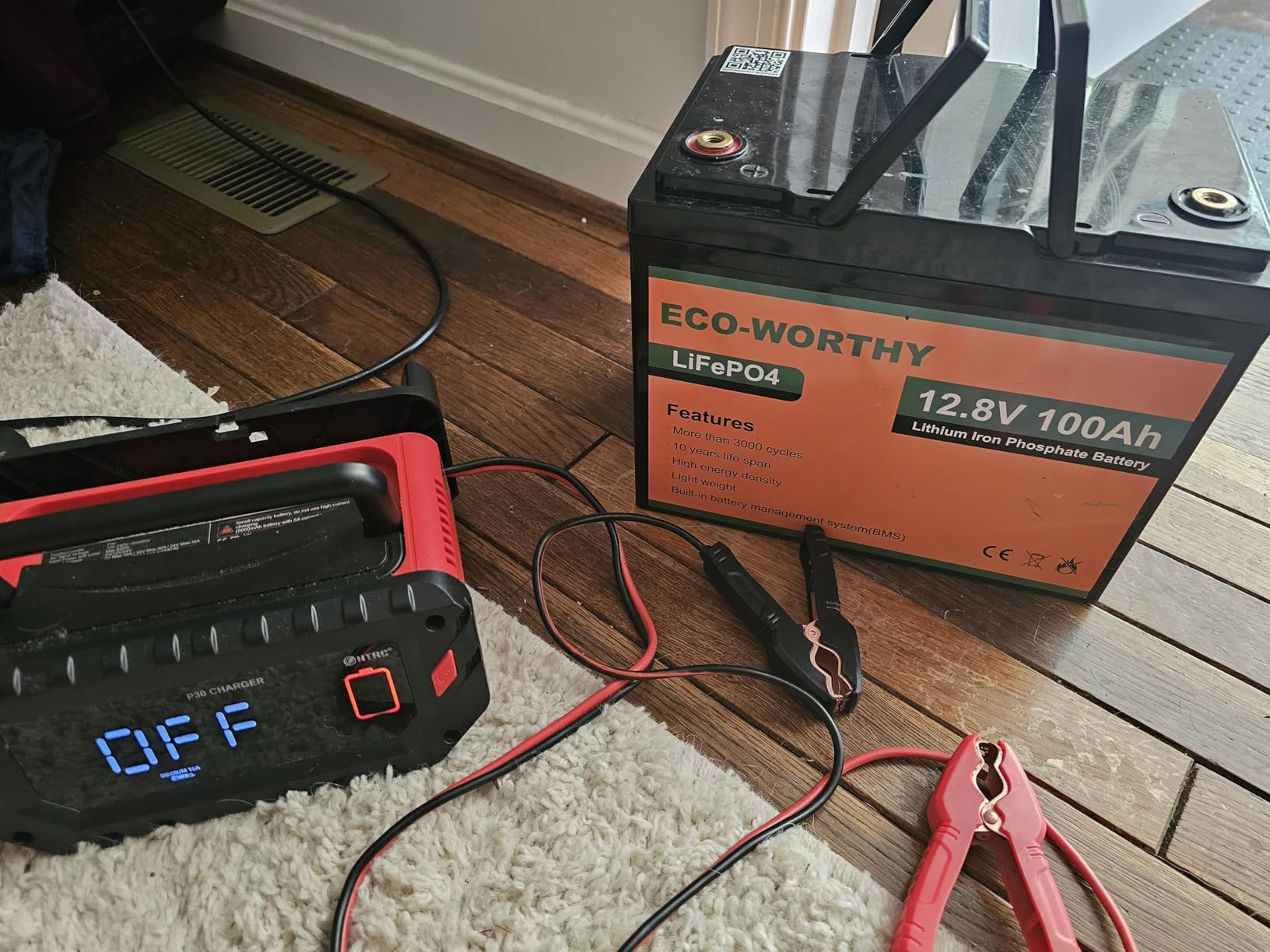
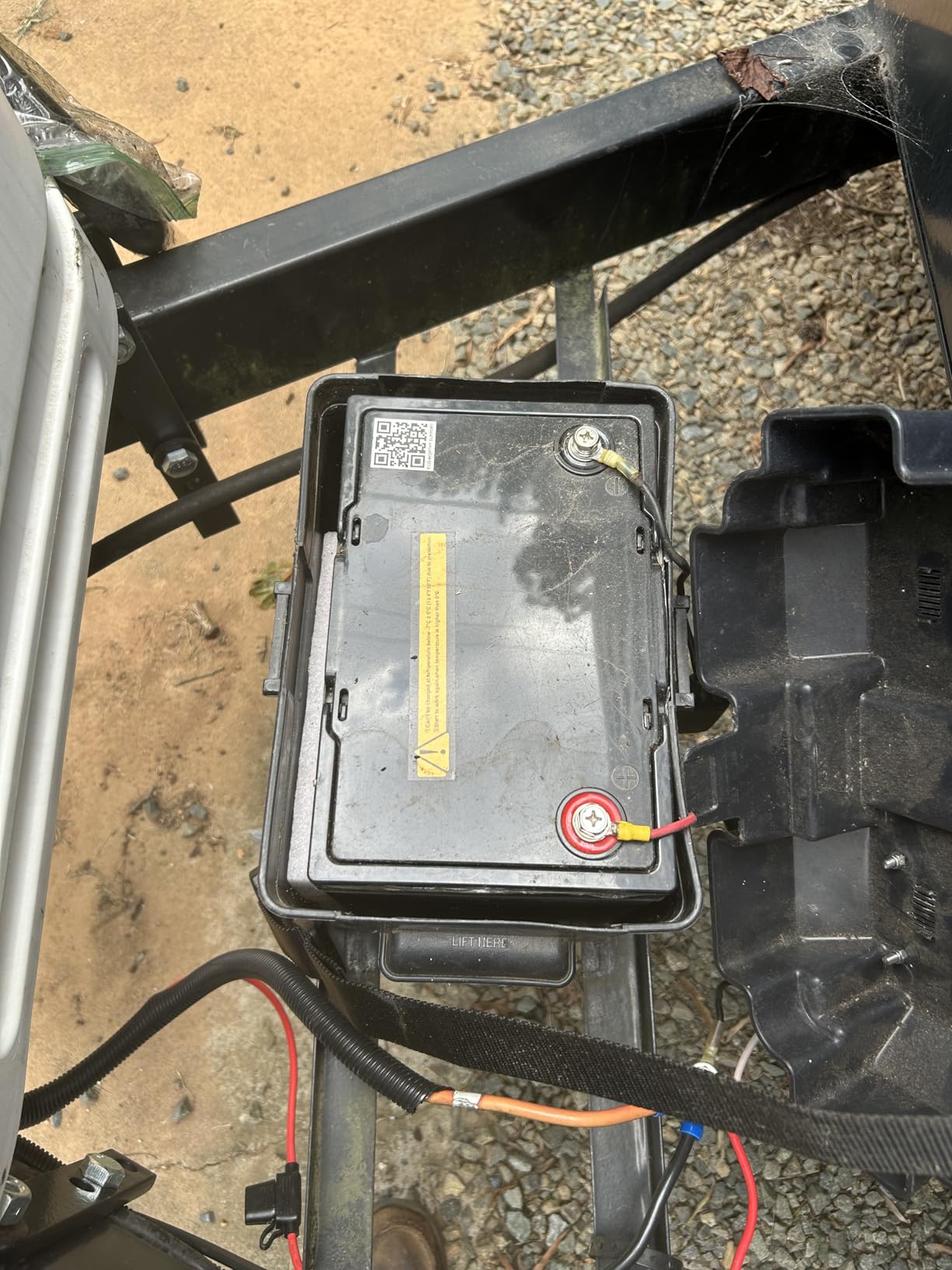
What owners praise most is that the fit is real and the weight saving is large. The Bluetooth app reports voltage, current, remaining capacity and working life, which is more than many rivals at this price, and the per-battery fault isolation means a problem in one parallel unit is identified rather than guessed at. With 649 reviews averaging 4.4, it also has the second-deepest owner record in the group.
Two things hold it back. The three-year warranty is shorter than the four-to-five-year terms offered by most of the competitors on this list, and this listing is flagged as non-returnable, so a warranty problem means contacting the seller rather than a straightforward return. The app’s real-time updates are also described as inconsistent depending on connection state.
Who this battery suits
Marine and RV installs where the battery box is a fixed Group 24 moulding and the case has to match. Anglers wanting Bluetooth state-of-charge on the water without a separate shunt. Anyone who values documented UL and IEC cell testing over a headline cycle number.
Who should skip it
Skip it if warranty length is your main decision criterion, since three years is the second-shortest here. Buyers who want an easy return path should look at listings that are returnable. If you plan to grow into a 48V bank, note that expansion is limited to 4P2S rather than 4P4S.
6. WattCycle 12V 100Ah BCI Group 24 – Best Certified Group 24
Wattcycle 12V 100Ah LiFePO4 Battery, BCI Group 24
12.8V
100Ah
1280Wh
23.2 lbs
BCI Group 24
100A BMS
5-year warranty
Pros
- SDS
- UN38.3
- FCC
- CE and RoHS certified
- Group 24 at 10.2 by 6.6 by 8.2 inches and 23.2 lbs
- 100A BMS that disconnects above 300 amps
- Warranty support has replaced failed units
Cons
- Monitoring is split across two apps with inconsistent connectivity
- Some units would not restart after a cold snap
- Cold shutoff has triggered earlier than the set temperature
This is the most thoroughly certified battery in the roundup. The listing carries SDS, UN38.3, FCC, CE and RoHS documentation, and UN38.3 in particular is the transport certification that matters for air and sea freight. If you are moving batteries internationally, or your installer asks for paperwork, this is the listing that has it on the spec sheet rather than buried in a support page.
Physically it is a proper BCI Group 24 at 10.2 by 6.6 by 8.2 inches and 23.2 pounds, with 100Ah and 1280Wh of energy. The 100A BMS protection plate disconnects above 300 plus or minus 50 amps, so the headroom over the continuous rating is generous. The rated operating range runs from minus 4F to 158F, and expansion reaches four in series or four in parallel for up to 20.48kWh.
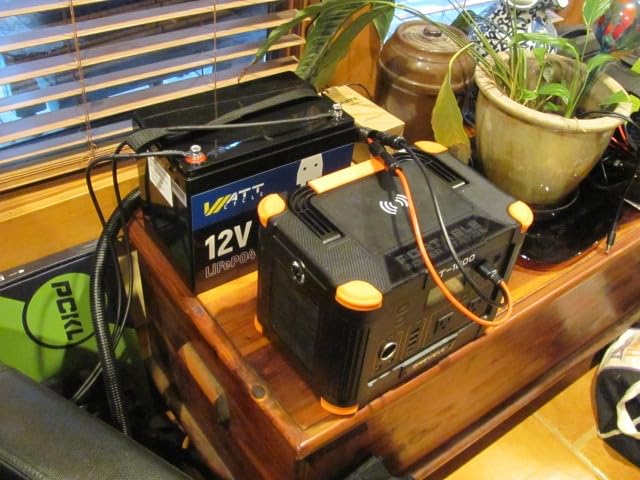
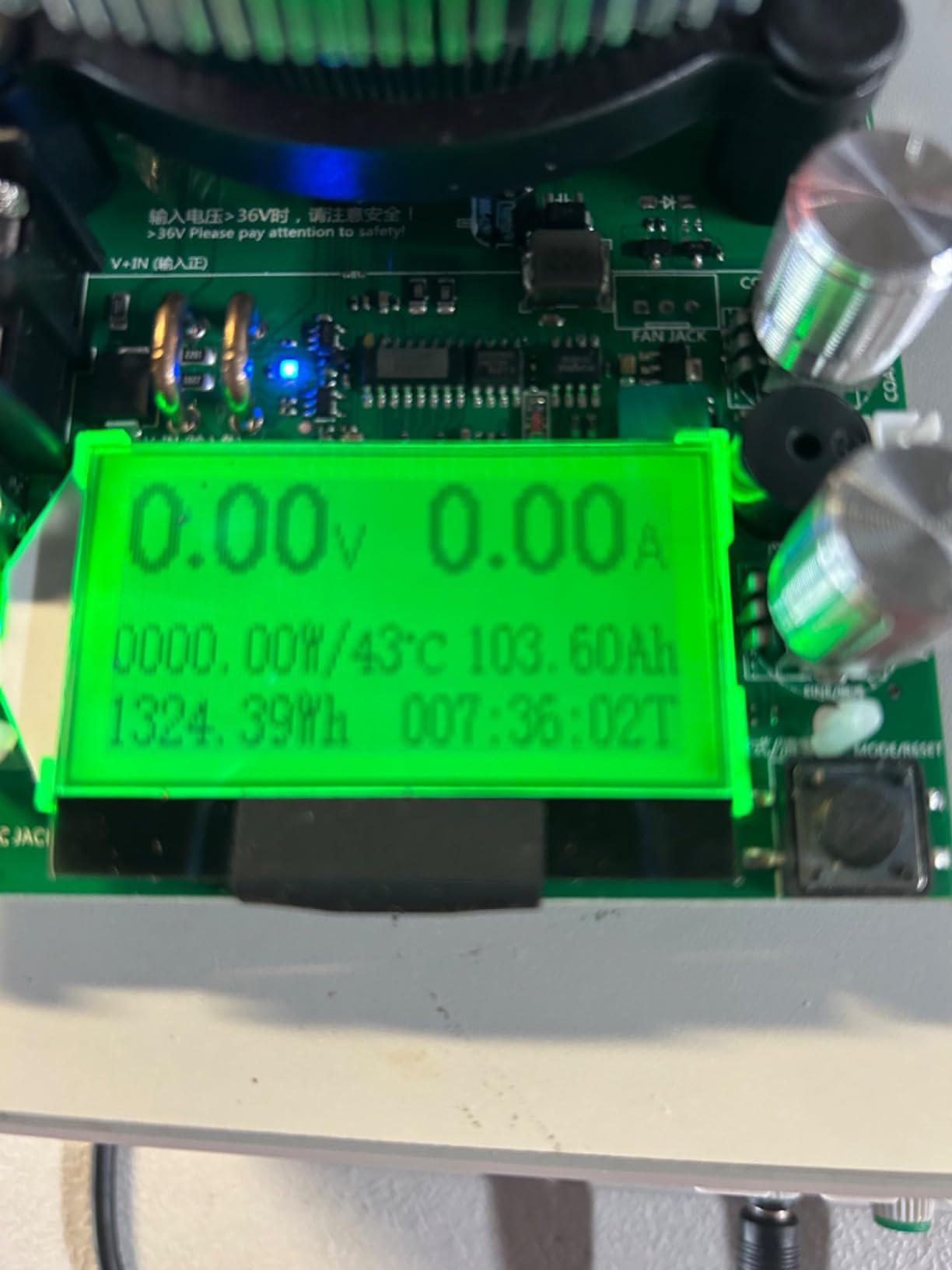
Owners report strong deep-cycle performance in real use. One describes running an 80-pound thrust trolling motor for a full day on the water and still having roughly 40% charge showing. Others highlight that the warranty support has actually replaced failed units, including units that had already been recycled, which is the behaviour you actually want from a five-year warranty.
The 4.3 rating is the lowest here, and the reviews explain why. Monitoring is split across two separate apps, and connectivity to individual batteries in a parallel string is described as inconsistent. More seriously, some units suffered BMS failures that left them unable to restart after a cold snap, and the cold shutoff has triggered at a higher temperature than the one set. Support communication has also been criticised even in cases where a replacement was provided.
Who this battery suits
Installers and buyers who need documented safety and transport certifications for a project with an inspection component. Marine and camper owners who need Group 24 fit and who value a five-year warranty with proven replacement service. Anyone running a high-thrust trolling motor where the 300-amp disconnect headroom matters.
Who should skip it
Skip it if reliable Bluetooth monitoring is important to you, since the two-app split is the most common complaint. In a genuinely cold climate, weigh the reported cold-snap restart failures carefully against a model with a self-heating option. The 15,000-cycle claim is also far above what most rivals print, so treat that number as aspirational rather than expected.
7. dumfume 12V 150Ah – Most Versatile
dumfume 12V 150Ah Max LiFePO4 Battery, IP65 Waterproof 100A BMS
12.8V
150Ah
1920Wh
41 lbs
100A BMS
5-year warranty
no Bluetooth
Pros
- 1920Wh of usable energy at a low cost per amp-hour
- 4000+ cycles to 80% capacity
- 100A BMS covering overcharge
- over-discharge
- short circuit and heat
- Compact case with 4S4P expansion
Cons
- Charging only permitted at 5C or higher
- Needs a maintenance charge every 6 months during extended storage
- No Bluetooth or app monitoring
- Energy storage only
Capacity per dollar is the entire pitch here. At 150Ah and 1920Wh in a 10.04 by 7.68 by 9.84 inch case weighing about 41 pounds, this delivers more energy than most 100Ah packs at a lower cost per amp-hour, and it carries a five-year warranty. The BMS is a 100A unit with protection against overcharge, over-discharge, short circuit and overheating, and expansion to 4S4P covers everything from a second battery to a full off-grid stack.
With 789 reviews averaging 4.4, this has the largest owner review base in the entire roundup, which is unusual for a value-tier product and worth taking seriously. Reviewers concentrate on the capacity-to-size ratio, the compact dimensions and the 4000-plus cycle claim to 80% capacity, which is well beyond lead-acid at every point in its life.
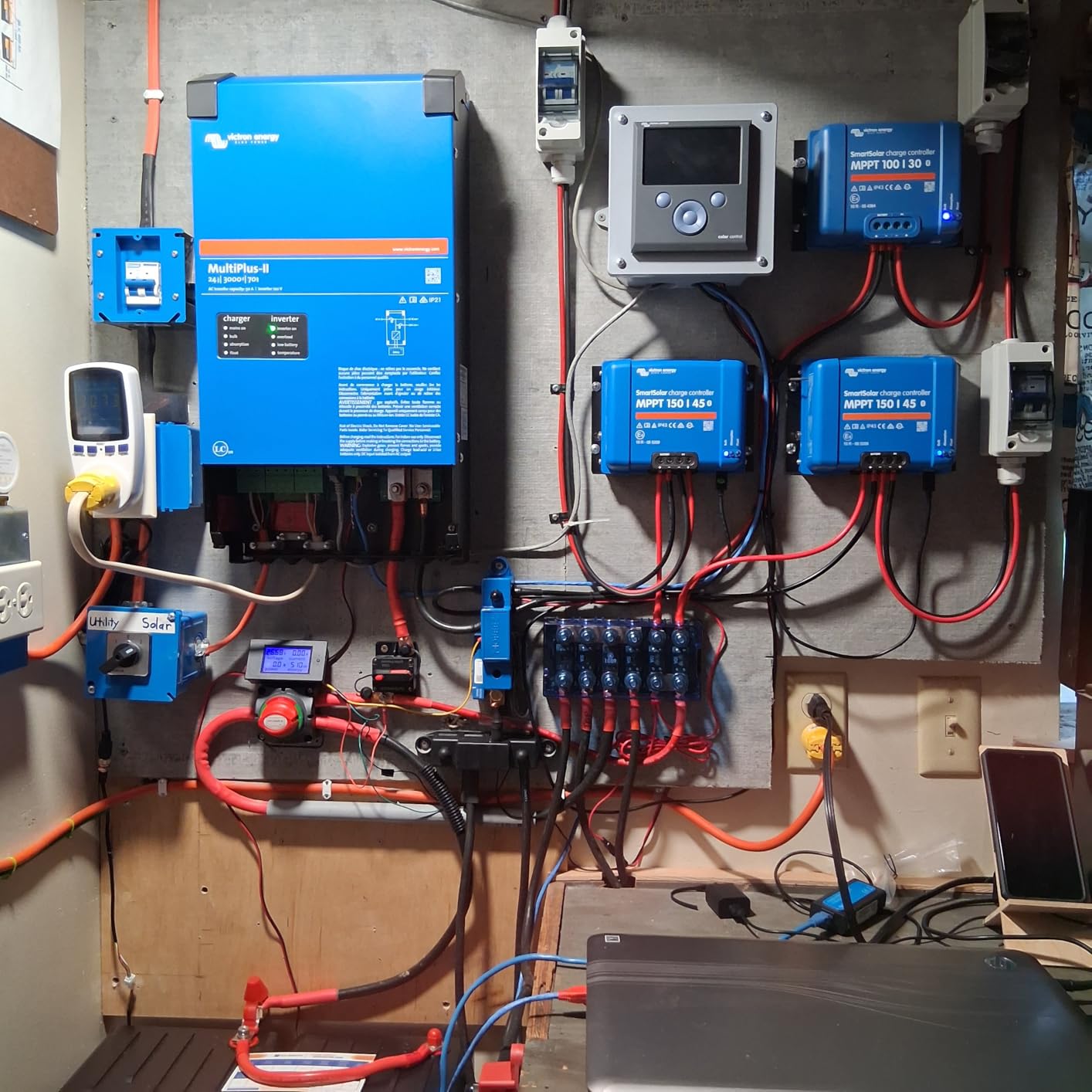
The three cautions are about charging discipline, not build quality. The battery specifies that charging is only permitted at 5C or higher, and return shipping in low temperatures is not covered, so a winter dead battery cannot simply be sent back. Extended storage needs a full maintenance cycle roughly every six months. And there is no Bluetooth or app monitoring at all, so you are flying blind on state of charge unless you add a shunt.
That last point is the real trade. You give up remote visibility, and in exchange you get more amp-hours and a longer warranty than most of the 100Ah packs here. For an installation where the battery sits in a ventilated compartment out of reach, blind operation is far less of a problem than it sounds.
Who this battery suits
RV, camper and motorhome owners doing a one-battery upgrade who want more capacity than a 100Ah unit at a lower cost. Solar storage builds where raw amp-hours matter more than remote monitoring. Anyone in a moderate climate who can guarantee charging happens above the specified temperature.
Who should skip it
Skip it in any climate where the battery will sit uncharged through a hard freeze, because the charging restriction is strict and the return policy does not cover cold shipments. Anyone who wants Bluetooth state-of-charge should pick one of the app-equipped units instead. It is also an energy storage battery and not a starter battery.
8. ECO-WORTHY EnergyRock 12V 280Ah Metal Case – Best for High Capacity
ECO-WORTHY EnergyRock 12V 280Ah Metal Case LiFePO4 Lithium Battery
12.8V
280Ah
3584Wh
about 68.5 lbs
200A BMS
metal case
Bluetooth
Pros
- 3584Wh in a single 12V case
- Metal case resists heat and fire better than plastic
- 200A continuous rating covers high inrush loads
- Front terminals and one-touch safety switch
Cons
- Heaviest battery reviewed at around 68 pounds
- Slightly wider than standard so some installs need modifying
- No published IP water-resistance rating
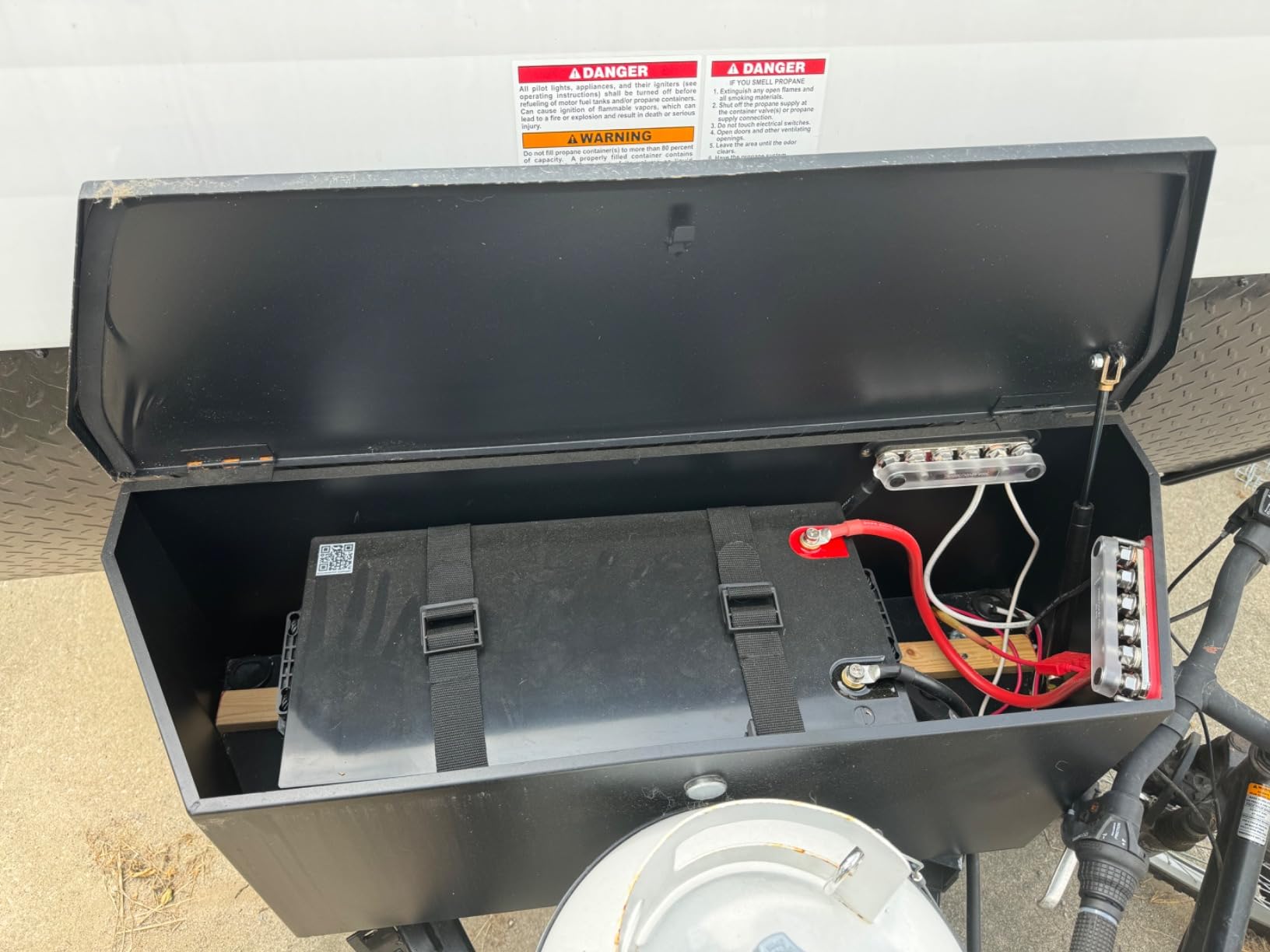
When a LiFePO4 pack is going into a campervan, a boat or a trailer that might see fire, a metal case is a genuine engineering advantage over the ABS plastic used on most competitors. The EnergyRock uses a heavy-duty metal enclosure with four mounting feet and front terminals, and it needs no separate battery box, which removes a whole fabrication step from a van build.
Capacity is 280Ah and 3584Wh, delivered at a continuous 200A for both charge and discharge. That rating is the one that matters for surge loads: sump pumps, portable air conditioning and inverter startup currents all land on the BMS, and 200A leaves real headroom where a 100A board would be the limit. Low-temperature charging cutoff engages at 20F, Bluetooth monitoring is included, and the safety switch disconnects output at a touch so a battery stored in a van cannot quietly drain itself flat.
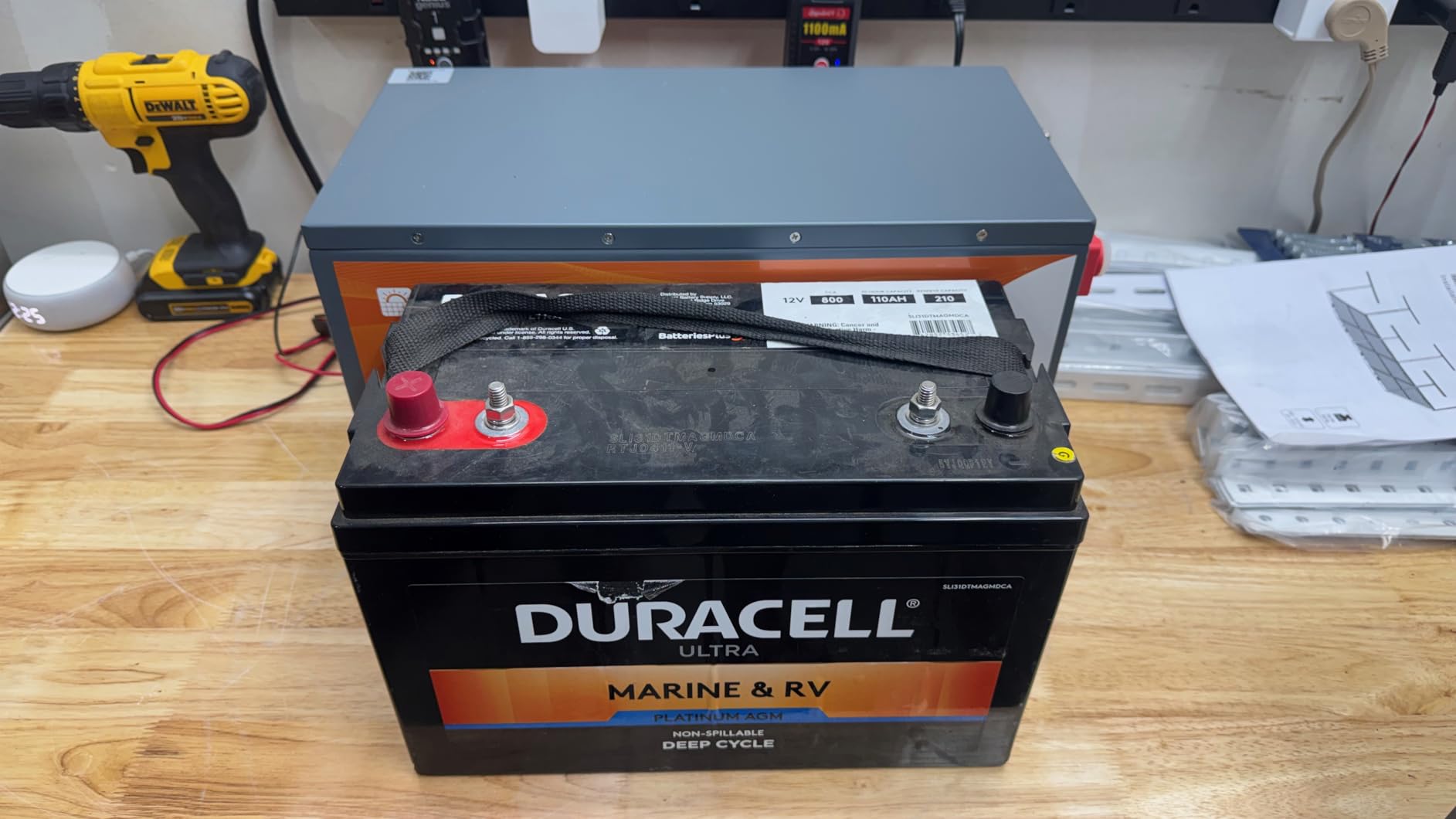
Campervan and RV builders consistently praise the capacity-to-weight result, noting that the 3584Wh arrives at roughly the same weight as the AGM bank it replaces. The Bluetooth readings are reported to match external shunt measurements, which is the highest level of app accuracy claimed by any battery here, and the pack arrives with high-impact foam around the terminals.
The weight is the honest drawback. Owner reports put it at around 68.5 pounds in a case roughly 16.54 by 8.64 by 9.65 inches, which makes it the heaviest unit in this roundup and means it may not fit under an existing bench. It is also slightly wider than standard, so some installations need minor modification, and there is no published IP water-resistance certification, so a wet bilge is not the place for it.
Who this battery suits
Campervan and RV builders replacing a two-battery AGM bank with one unit. Anyone running high inrush loads on a 12V system, where the 200A continuous rating is the deciding spec. Installations where fire-resistance of the enclosure is a genuine concern rather than a marketing line.
Who should skip it
Skip it if every pound and every inch matters, since this is the heaviest and one of the largest units here. Marine installs in an open or wet compartment should note there is no published IP rating. Anyone needing a standard Group 24 or Group 31 footprint will not find one inside this case.
9. GOLDENMATE 12V 20Ah – Best for Small Devices and UPS
GOLDENMATE 12V 20Ah LiFePO4 Lithium Battery, IP67 Waterproof, Lightweight
12.8V
20Ah
256Wh
5.95 lbs
IP67
20A BMS
2-year warranty
Pros
- Weighs only 5.95 pounds so one person can carry it
- IP67 waterproof and dust-proof for indoor or outdoor use
- 5000-plus cycles with low self-discharge for up to one year of storage
- Expandable to four in series or parallel for 51.2V
Cons
- 20Ah and 10A continuous discharge is a small envelope
- Only a 2-year warranty which is the shortest here
- Needs a LiFePO4 charger or MPPT controller to recharge
Not every LiFePO4 job needs 100 amp-hours. A 20Ah pack covers the small-but-real category most roundups ignore: emergency lighting, home security panels, 12V routers, fish finders, kids’ ride-on toys and small UPS duty. At 5.95 pounds and IP67 rated, it is genuinely portable and genuinely sealed, and 256Wh is more than most of those loads ever take in a night.
Specification-wise you get a 20A BMS with overcharge, over-discharge, over-current and short-circuit protection, a claimed 5000-plus charge cycles, and low self-discharge good enough for up to a year of storage without a maintenance charge. Four units in series or parallel build a 51.2V 80Ah bank, so it scales into a small off-grid system rather than staying a novelty.
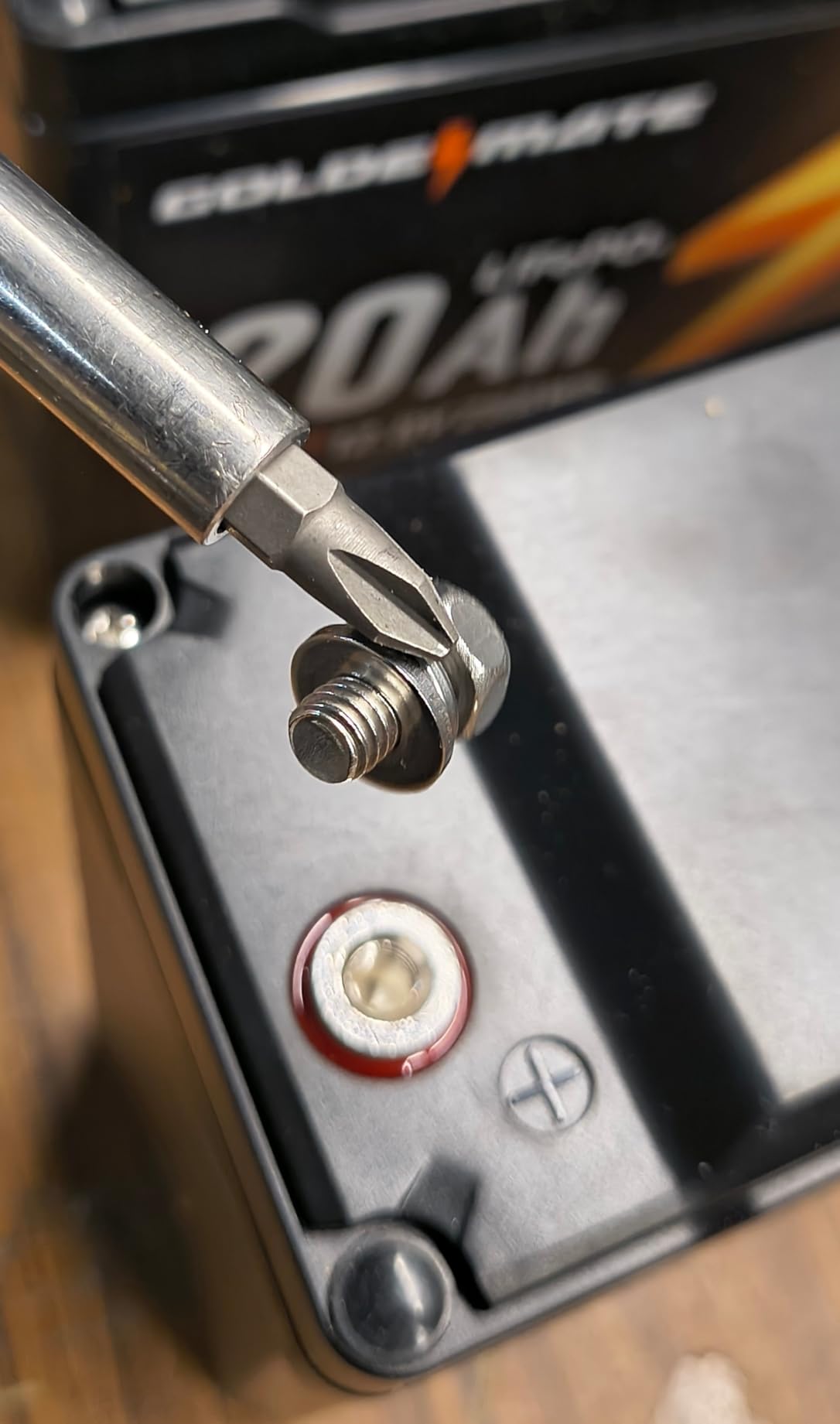
Owners describe using it exactly where we would expect: as a compact inexpensive power source for emergency lighting, 12V networking gear, fish finders, home alarms and small solar or wind systems. The low weight and the IP67 sealing are what get repeated, because carrying a 20Ah battery up a ladder or into a kayak is a completely different proposition from moving 40 pounds of AGM.
The limits are equally clear. Twenty amp-hours with 10A continuous discharge means anything with a compressor, a pump or a heater is out of scope, and a 10A maximum charge current means refilling it takes time. The two-year warranty is the shortest in this roundup, and you will need a lithium-specific charger, an MPPT controller in lithium mode, or a generator with a DC-DC stage to bring it back up.
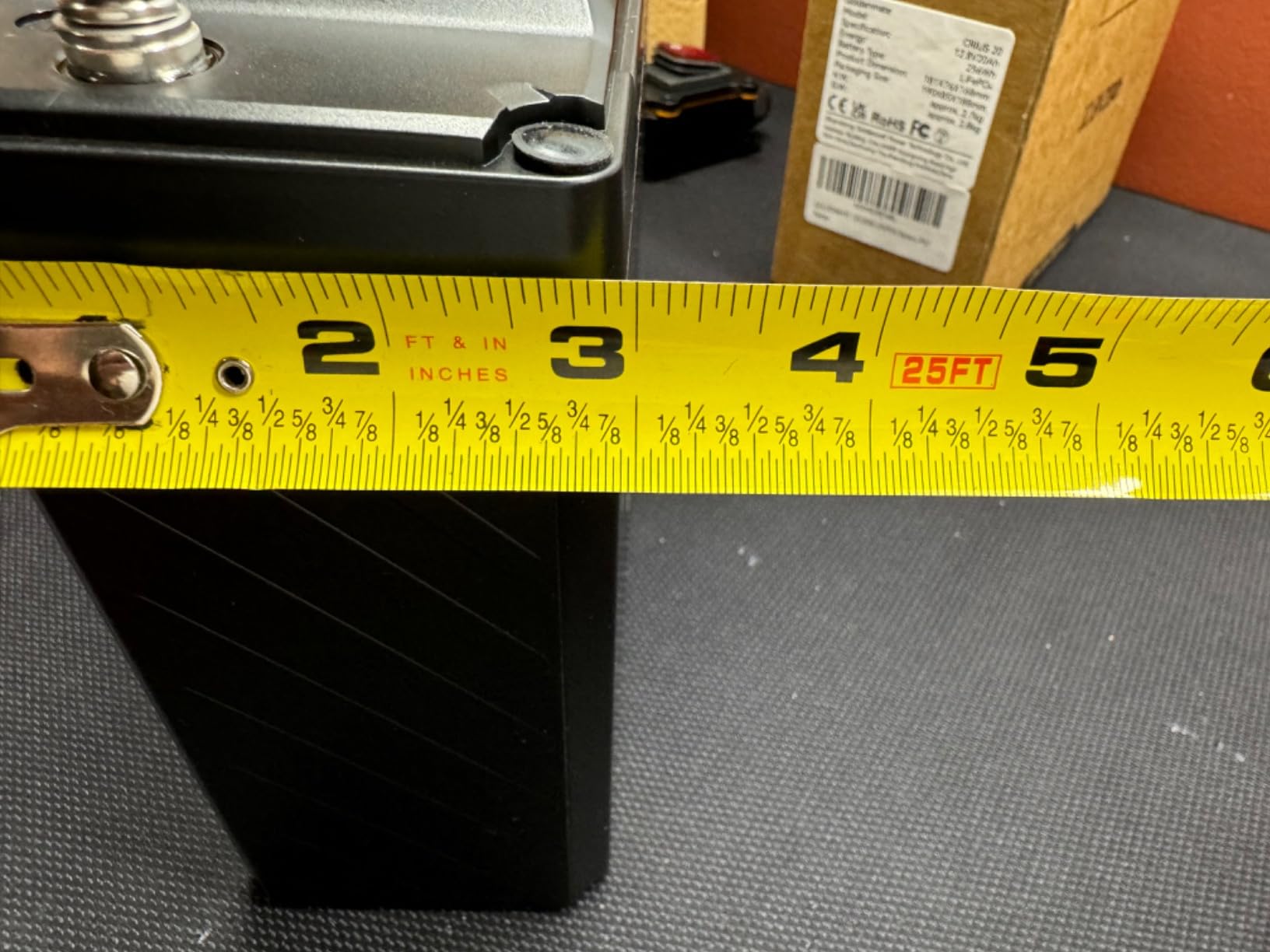
Who this battery suits
Home security and camera backup systems that need a small standby battery. Anglers powering a fish finder and a small solar panel for a day on the water. Anyone building an emergency lighting or 12V router backup and carrying it by hand. Small off-grid projects that need a cheap second or third battery in a string.
Who should skip it
Skip it if you need to run anything with a startup surge above about 10 amps, since the discharge envelope is small. Anyone wanting a long warranty should note the two-year term. And if you already own a standard lead-acid charger, budget for a lithium-specific charger or an MPPT controller in lithium mode.
10. SUPER EMPOWER 12V 100Ah – Best Lightweight Group 24
12V 100Ah LiFePO4 Battery, Group 24 Deep Cycle for RVs & Trolling Motors
12.8V
100Ah
1280Wh
21.6 lbs
BCI Group 24
100A BMS
5-year warranty
Pros
- True BCI Group 24 fit at 21.6 pounds with M8 terminals
- 1280Wh from Grade A cells
- Detailed low-temp charging thresholds published
- 5-year warranty with technical support
Cons
- No Bluetooth or app monitoring on this version
- Requires a lithium-compatible charger
- Energy storage only and not for cranking
At 21.6 pounds this is the lightest true Group 24 100Ah pack in the roundup, roughly two pounds under the LiTime and around a pound and a half under the ECO-WORTHY. The case measures 6.49 by 10.24 by 8.98 inches with M8 terminals, which is a Group 24 fitment rather than an approximation, and it ships with 40 milliohms of internal resistance across four cells.
The spec sheet is unusually specific about cold-weather behaviour, and that is why it earns its place. Charging pauses below 32F, discharge stops below minus 4F, and charging resumes once the pack climbs above 41F. Publishing all three thresholds is more useful than the vague “low-temperature protection” language most competitors use, because it tells you exactly when your system will stop and when it will start again. Expansion reaches 4S4P for a 51.2V 400Ah, 20.48kWh configuration.
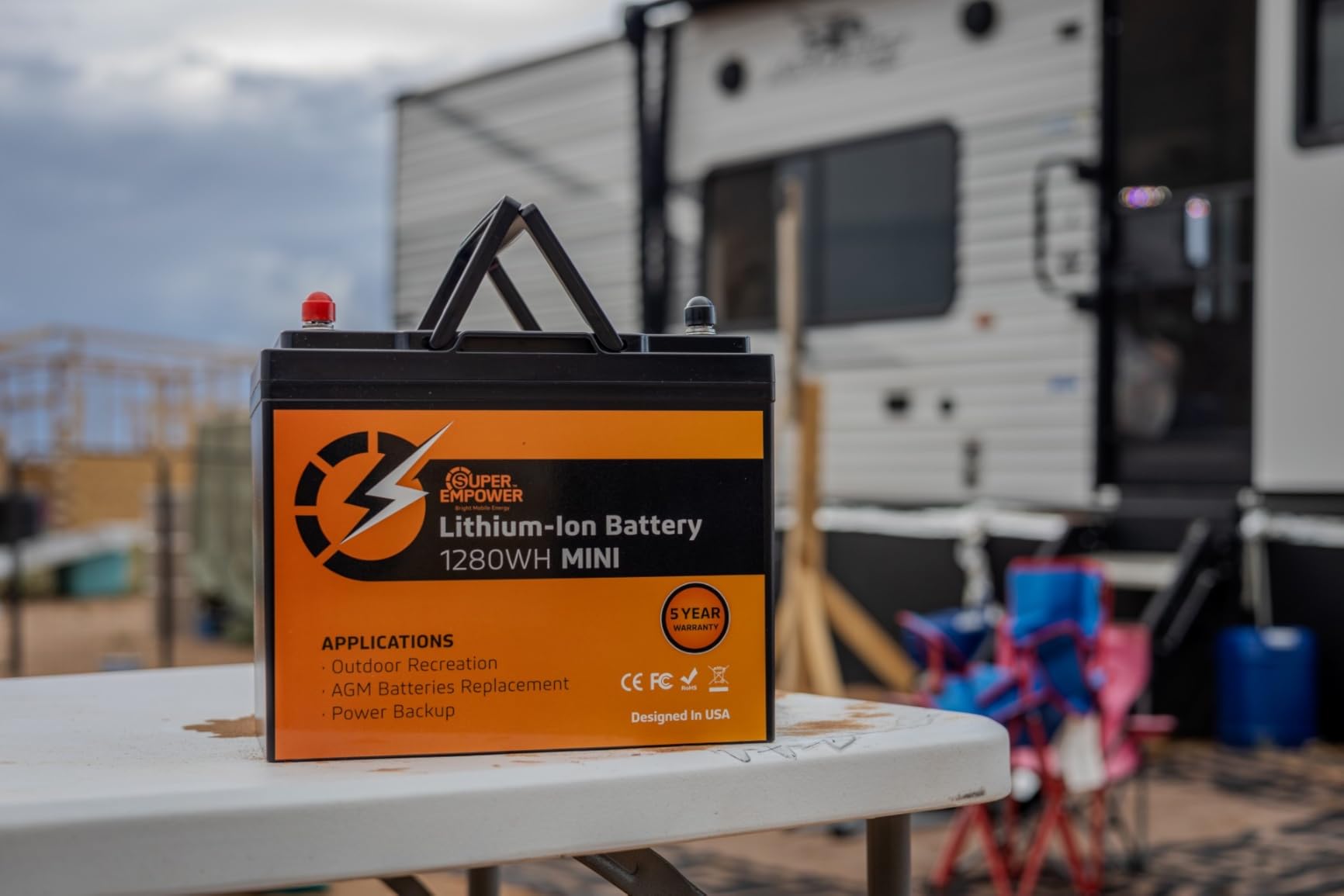
Owners converting RV house power, boats and trolling setups value the accurate drop-in fit, the light weight and a five-year warranty at a competitive cost. The Grade A cells and 100A BMS cover overcharge, over-discharge, overcurrent, short circuit and temperature extremes, and the manufacturer lists three legitimate charging paths: a LiFePO4 charger, an MPPT or PWM solar controller in lithium mode, or a generator with a DC-DC charger.
There is no Bluetooth on this variant, so state of charge is a shunt question. The low-temp thresholds are strict enough that in a cold climate the pack will refuse to charge for a meaningful stretch of winter, which is protective but needs planning around. And non-lithium chargers are specifically not recommended, so a cheap existing lead-acid charger is not a valid part of this system.
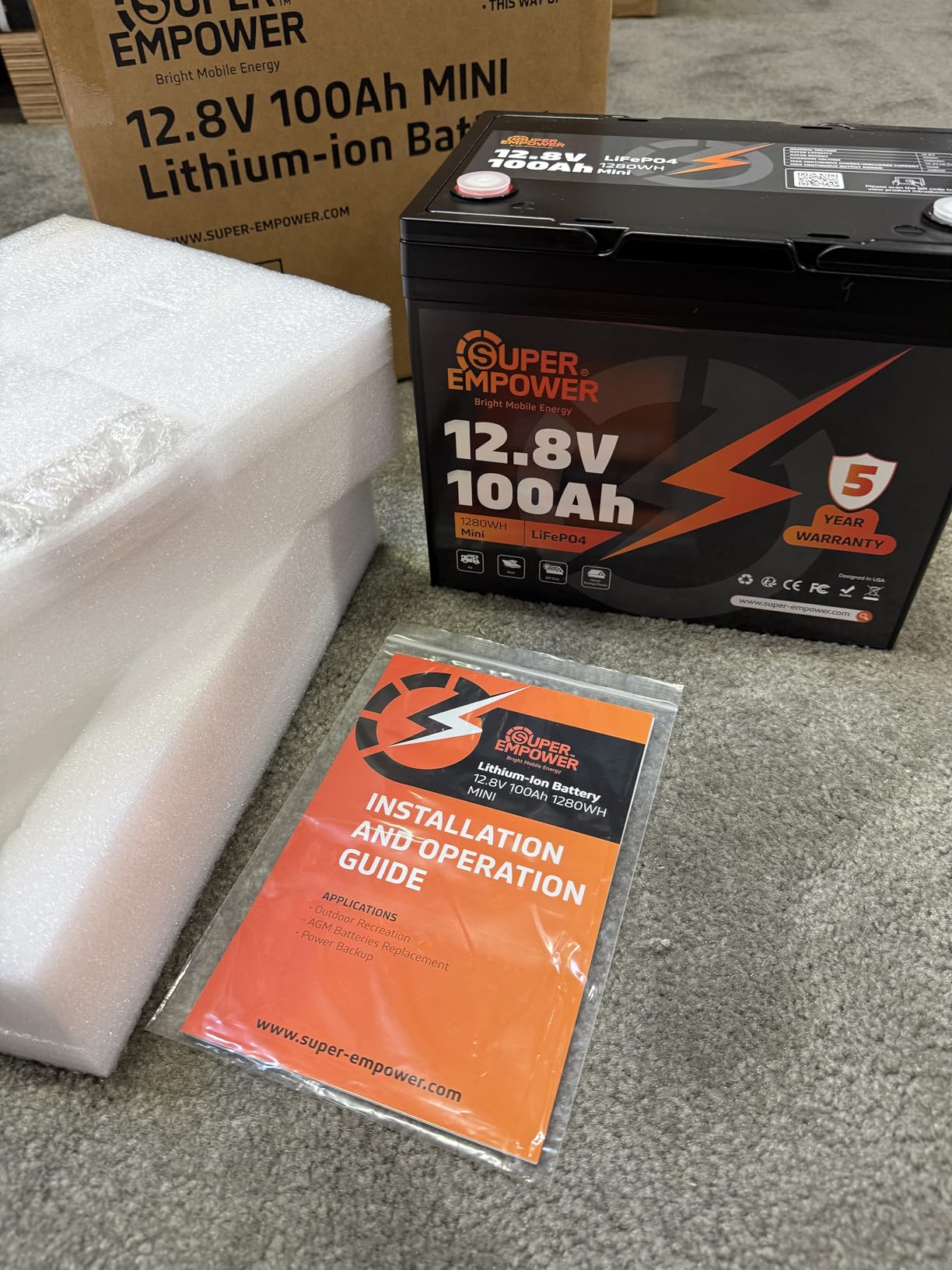
Who this battery suits
Weight-critical builds where every pound in a boat or a small camper counts. Owners replacing AGM in a fixed Group 24 box who want the biggest capacity-to-weight ratio available in this form factor. Anyone who prefers published, specific temperature thresholds over vague low-temp protection claims.
Who should skip it
Skip it if you want remote monitoring, because this version has no Bluetooth and you will need a shunt for accurate state of charge. It is also not a starter battery. In sub-freezing climates, plan around a charge cutoff that engages at 32F and only releases above 41F.
11. HumsiENK 12V 100Ah Bluetooth – Best Compact 100Ah
HumsiENK 12V 100Ah LiFePO4 Lithium Battery with Bluetooth (Group 24) 1280Wh
12V
100Ah
1280Wh
19.73 lbs
Group 24-31
100A smart BMS
5-year warranty
Pros
- Lightest 100Ah in the roundup at 19.73 pounds
- Group 24-31 marine sizing
- UL tested cells with FCC and CE certification
- IP65 rating and 5-year warranty
Cons
- 15000-cycle claim is far above what rivals in this class publish
- Shell is slightly taller than standard Group 24
- Bluetooth range is short
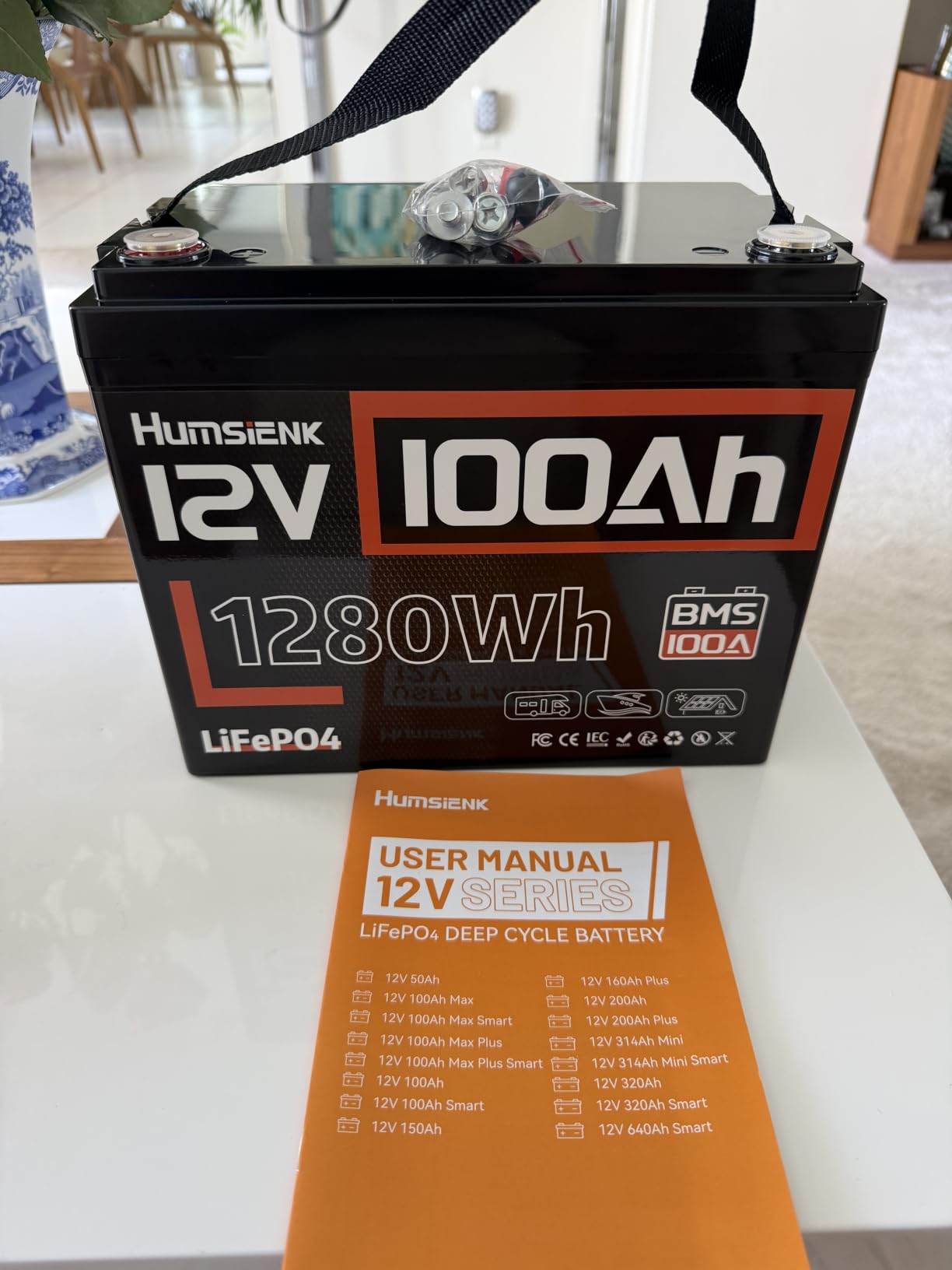
Weight is the headline here. At 19.73 pounds for a full 100Ah and 1280Wh, this is the lightest 100Ah unit we evaluated, which puts it ahead of the LiTime by more than two pounds and well ahead of the 23-pound entries. The case is sized to the BCI Group 24-31 marine footprint at 8.2 by 6.6 by 10.2 inches, and the manufacturer claims roughly 30% space and weight savings over lead-acid with three to five times the energy density.
Certifications are solid for this tier: UL tested cells, FCC and CE certification, and an IP65 waterproof rating. The 100A smart BMS drives a Bluetooth app that reports voltage and temperature, with low-temperature shutdown across a minus 4F to 158F operating range, and expansion runs 4S4P up to 48V and 20.48kWh on a five-year warranty.
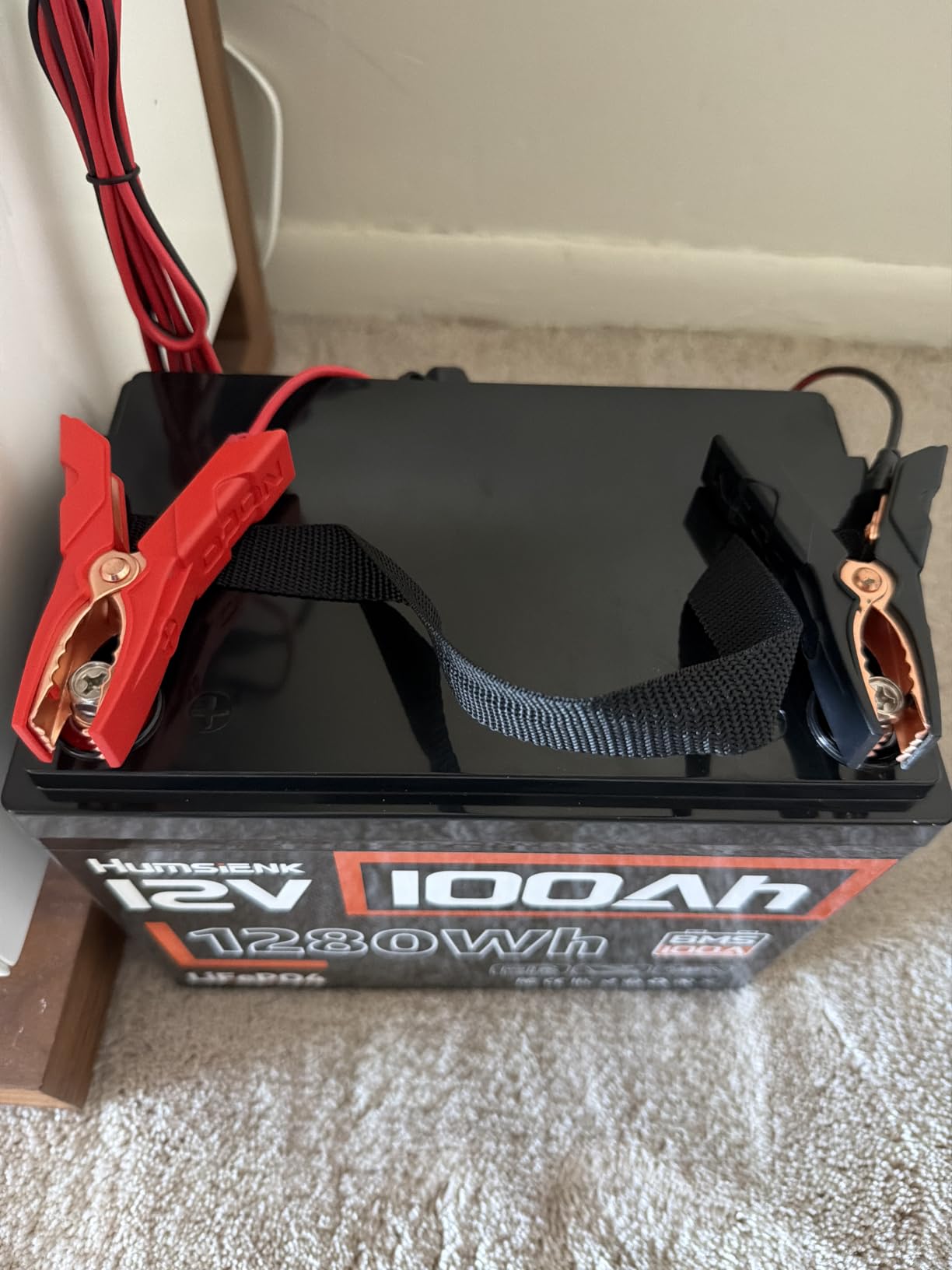
Owners like the compact footprint, the low weight and a clean install in RV, marine and solar storage duty, with app monitoring as a genuine bonus rather than a gimmick. The Group 24-31 sizing is a useful middle option for boat boxes designed for the larger form factor but unable to take a full-size group.
Skeptics raise two fair points. The 15,000-plus cycle claim sits far above the 3,500 to 5,000 range most competitors in this class publish, and we would plan your replacement timeline on the lower end of that spectrum rather than the marketing figure. The shell is also slightly taller than standard Group 24, which can affect a tight battery box, and Bluetooth range is short enough that monitoring requires being near the battery.
Who this battery suits
Boat and marine installs that want the lightest possible 100Ah with documented UL testing and an IP65 rating. Anyone replacing a Group 24-31 where height is the binding constraint but length is not. Buyers who want Bluetooth monitoring from a brand that has published certifications on the listing itself.
Who should skip it
Skip it if you need to monitor the battery from another room, since Bluetooth range is short. Anyone whose battery box has a strict height limit should measure first. And treat the 15,000-cycle figure as a marketing number rather than a planning number.
12. DC HOUSE 12V 100Ah Bluetooth – Best for Per-Cell Bluetooth Data
DC HOUSE 12V 100Ah Bluetooth LiFePO4 Trolling Motor Lithium Battery
12.8V
100Ah
1280Wh
23.8 lbs
Group 24
100A BMS
Bluetooth 5.1
3-year warranty
Pros
- App reports per-cell state of charge
- voltage and current with a fault page
- Push notifications for detected anomalies
- Cells certified to UL and UN38.3
- Low-temp charging cutoff at 19.4F
Cons
- About 0.32 inches taller than standard Group 24
- Bluetooth range limited to roughly 5 to 10 meters
- 4P4S is not allowed
- maximum is 4 in series or 4 in parallel
- 3-year warranty
This is the battery to buy if you have been disappointed by an app that only shows pack voltage. The Bluetooth 5.1 app reports per-cell state of charge, voltage and current, and it includes a dedicated fault display page plus push notifications for detected anomalies. Owners running trolling motors and marine electronics specifically call out the notifications, because the first warning of an imbalanced cell is the moment you can still do something about it.
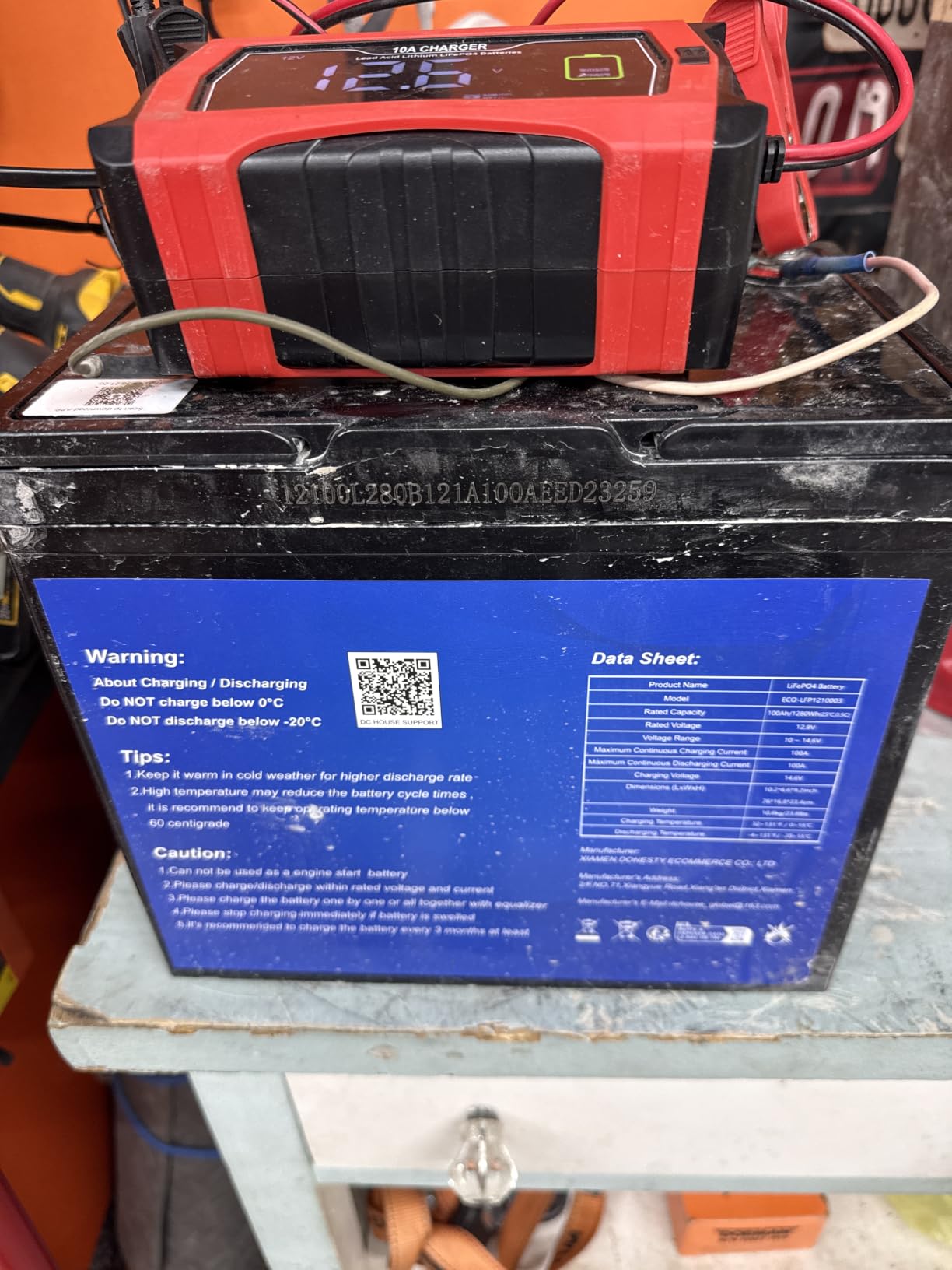
The protection thresholds are well published. Charging cuts off below 19.4F, discharge stops below minus 4F, and it auto-recovers at 32F. Cells are Class A LiFePO4 with UL and UN38.3 certification, rated up to 15,000 cycles and a 10-year life claim, and the pack is close to standard BCI Group 24 sizing for easy fitment in RV, boat and trolling motor boxes.
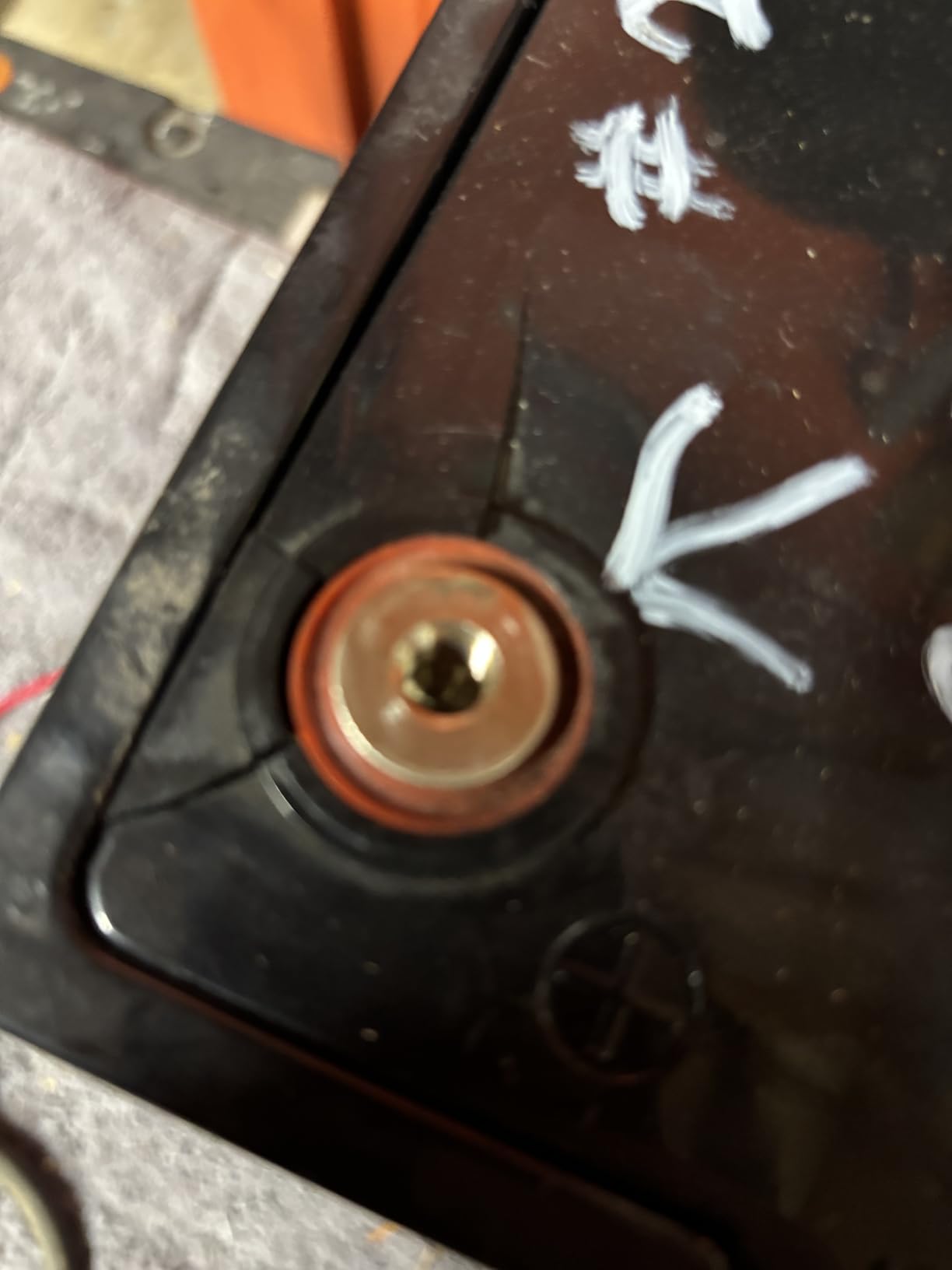
What reviewers consistently praise is the accuracy of the per-cell data, the usefulness of the fault notifications, and dependable low-temperature protection. It is the rare battery where the app is genuinely an instrument rather than a status light, and for anyone diagnosing a battery bank rather than just owning one, that distinction matters a great deal.
There are four drawbacks, and all four are real. The case is about 0.32 inches taller than the Group 24 specification, Bluetooth range is limited to roughly 5 to 10 meters, the four-in-series-or-four-in-parallel configuration means 4P4S is not permitted, and the warranty is three years where most rivals offer five.
Who this battery suits
Anyone diagnosing rather than just powering, since per-cell state of charge and a fault page are the best diagnostics in this roundup. Trolling motor and marine owners who want push alerts on anomalies. Installers choosing a battery for a client who will want to see what the pack is doing six months after commissioning.
Who should skip it
Skip it if your battery box has a strict height limit, since the case runs tall. Anyone planning an eight-battery configuration in both directions should note 4P4S is not allowed. Buyers who want a five-year warranty should look at the alternatives, and remember it is explicitly not designed for starting or cranking.
LiFePO4 vs Lead-Acid: What Actually Changes
The number that surprises people is usable capacity. A 100Ah flooded lead-acid battery is rated at 100Ah but realistically gives you about 50Ah before you start damaging it, because its voltage sags hard as it discharges. A 100Ah LiFePO4 pack gives you close to 100Ah, because the voltage curve stays flat right down to the low cutoff. In practice that is double the usable energy in the same box, before counting any other difference.
Weight follows. A Group 24 lead-acid battery is heavy enough that moving a bank of them changes your payload budget; the batteries on this list run 19 to 24 pounds for the same rating, and the 48V golf cart pack here is roughly 250 pounds lighter than the lead-acid bank it replaces. In a boat or a camper, that weight is not a spec, it is usable payload.
Lifespan is the third change. Lead-acid gives you a few hundred to a thousand cycles before it degrades, and you need to keep it watered and clean. LFP runs multiple thousands of cycles at 80% depth of discharge with no maintenance. If you cycle a battery daily, that is the difference between replacing it in three years and replacing it in ten, and it is why cost per cycle matters more than purchase price.
The catch is charge voltage. Lead-acid accepts 14.4 to 14.6V on an AGM profile, and LiFePO4 wants a lithium profile on your charger or MPPT controller. Running the wrong profile shortens life permanently, so budget for a lithium-aware charger or a lithium setting on your solar controller. Our deep cycle battery guide covers the charging side in more detail if you are still on lead-acid.
What LiFePO4 Batteries Cannot Do
These batteries are deep-cycle units and they are not starter batteries. LFP chemistry has a higher internal resistance and a much lower peak current capability than a lead-acid starter battery, so cranking an engine with one will drop the voltage below its cutoff and it will not recover well. Every product in this roundup states this in its own listing, usually in the same words: not for engine starting, golf carts or jacks.
They also should not be charged below freezing. If a lithium ion is plated onto the anode at sub-zero temperature, the plating is permanent and the cell is destroyed. Low-temperature charging cutoff exists specifically to prevent this by refusing to charge, which means the battery is safe but also useless until it warms up. Skipping the cutoff is the single fastest way to destroy a LFP battery in a cold climate.
Depth of discharge is rated at 80% rather than 100%, and that is a design limit rather than a marketing choice. Running a pack regularly to empty is how you shorten its life, and the 80% figure is the point at which the rated cycle count is valid. Self-discharge is also higher than lead-acid on a percentage-per-month basis, so a stored battery needs a maintenance charge every few months, which is why the storage instructions matter more than people expect.
Finally, there is the warranty continuity risk. Forum users have raised the case of a battery brand that went out of business, orphaning the warranty on an expensive pack. That is a reason to check who is behind the brand before you buy, not a reason to avoid the chemistry.
How to Size a LiFePO4 Battery Bank for Your Inverter
Start by converting your load from watts to amps. Divide watts by 12 for a 12V system or by 48 for a 48V system. A 3000W inverter on 12V pulls about 250 amps, which already sits above a 100A BMS limit, and on 48V it pulls about 63 amps, which is comfortably inside one. This single calculation decides whether you need one battery or four, and it is the step most buyers skip.
Next, size for runtime. Multiply your average amp draw by the hours you need, then divide by 0.8 for the 80% depth of discharge limit. A 3000W inverter on 12V drawing 250 amps for two hours needs 625 amp-hours of usable energy, which means about 780Ah of nominal capacity, or four 200Ah-equivalent batteries in parallel. If your load is 500 amps of surge and you only need half that on average, the same bank can be smaller.
Then check the parallel limit. Most of these batteries support four in parallel and some support four in series as well, though the DC HOUSE restricts you to four in series or four in parallel, not both at once. LiTime confirms support for up to eight batteries in parallel when you use proper cables, breakers and batteries of matched age. Mixing brands and ages is a common cause of the problem one forum user described, where a new battery sat in idle mode and let the other three do all the work.
Match the BMS rating to the inverter. A rule of thumb is a 100A BMS for every 1000W of inverter at 12V, so a 3000W inverter wants 300A of BMS headroom, which is exactly why the 200A packs in this roundup exist. Above that, you should be stepping up to a 48V system rather than paralleling more 12V units, since cable losses at 250 amps and 12V are substantial.
Finally, set your charge profile correctly. Your charger or MPPT controller needs a lithium setting, and it should be programmed for a low-temperature cutoff if the install can see freezing. Storage should sit around 50 to 60% charge, and a maintenance cycle roughly every six months keeps a stored bank healthy. Our marine battery guide covers the wet-environment specifics if your bank lives in a boat.
Cold-Weather Charging: The Rule Nobody Skips
The forum consensus on this is unambiguous. If your battery freezes and then receives a charge, the damage is permanent. This is the most-repeated real-world warning in the DIY solar communities, and it is the reason low-temperature charging cutoff is listed as a deal breaker rather than a nice-to-have feature anywhere it freezes.
Look at the published thresholds on the batteries here and they vary meaningfully. The DC HOUSE cuts charging below 19.4F, the ECO-WORTHY 100Ah cuts below 19.4F and the EnergyRock at 20F. The SUPER EMPOWER is stricter still, pausing charging below 32F and not resuming until the pack climbs above 41F. The dumfume simply forbids charging below 5C. A higher cutoff threshold means more protection and more waiting.
Self-heating pads are a separate feature and most owners consider them unnecessary. Heating solves the cold-soak problem so the battery can charge in winter, which is a convenience in a place that genuinely freezes for weeks. Low-temperature cutoff solves a safety problem by preventing damage. The first is a luxury, the second is mandatory, and most marketing copy blurs the two. Note that none of the batteries in this roundup include a self-heating element, so if you need one you will be looking at a different product family entirely.
If you must charge in sub-zero conditions, the answer is a heated battery or a climate-controlled battery compartment, not a bypass of the cutoff. For anyone who needs more context on the chemistry itself, our car battery guide explains why starter applications and LFP chemistry are a poor match, and our LiPo battery guide covers the other lithium chemistries.
Frequently Asked Questions
Which 200Ah LiFePO4 battery is the best?
At the 200Ah class, the deciding factors are BMS amperage, case material and warranty length rather than capacity, because the capacity is the same. The PUPVWMHB 12V 300Ah with its 200A BMS handles the highest inrush loads in this roundup, while the ECO-WORTHY EnergyRock 12V 280Ah uses a metal case that resists heat far better than the plastic enclosures most competitors ship. Neither fits a standard Group 24 box, so plan the mounting before buying. A pair of 100Ah units in parallel is the other common answer if your box is fixed and Group 24 sized.
What are the downsides of LiFePO4 batteries?
Four limitations come up repeatedly. They cannot start an engine, because the chemistry delivers far less peak current than a lead-acid starter battery. They must not be charged below freezing, since lithium plating causes permanent cell damage, so a low-temperature cutoff is mandatory in cold climates. Depth of discharge is rated at 80% rather than 100%, and running to empty shortens life. They also need a lithium charge profile on your charger or MPPT controller, and stored packs need a maintenance charge every few months because self-discharge is higher than lead-acid.
Can you charge a LiFePO4 battery in the cold?
Not below freezing, and skipping that rule destroys cells permanently. Low-temperature charging cutoff prevents it by refusing to charge, which means the pack is protected but also idle until it warms. Published thresholds in this roundup range from 19.4F on the DC HOUSE and ECO-WORTHY 100Ah up to 32F on the SUPER EMPOWER, which also requires the pack to climb above 41F before charging resumes. The dumfume simply prohibits charging below 5C. If you need winter charging in a place that stays below freezing, buy a self-heating model or install a climate-controlled battery compartment.
How do you reset a sleeping BMS on a LiFePO4 battery?
First rule out a genuine fault by checking pack voltage with a multimeter, since a sleeping BMS and a dead battery present the same way to an inverter. If the pack reads above about 10V, attach a LiFePO4-rated charger set to the correct charge voltage and let current flow until the BMS wakes. Leaving it on the charger for several hours usually resets a board that has locked itself into protection mode. If the battery rests at 0V and does not respond to a lithium-profile charger, the BMS is not asleep, it is failed, and the pack needs warranty replacement.
How do you know if a LiFePO4 BMS is defective?
Watch for a battery that will not restart after a deep discharge or a cold snap, which is the most common failure and is reported on several packs in this roundup. Other signs include a pack that reaches full charge far faster than rated capacity allows, cells that drift apart under load as shown by per-cell voltage readings, and repeated BMS shutdowns at loads well below the rated amperage. A Bluetooth app that reports per-cell state of charge makes this much easier, since imbalance shows up there before it shows up as a failed battery.
What is the low voltage cut-off for a LiFePO4 battery?
The per-cell low voltage cut-off on LFP chemistry is typically 2.5V, which works out to 10.0V for a 4S 12V pack and 40V for a 16S 48V pack. That is a hard floor and not a working target, which is why usable capacity is quoted at 80% depth of discharge. Most of the batteries here also apply a more conservative working cutoff well above that floor so the pack does not sit at the limit. If your BMS is cutting out around 12V rather than 10V, that is normal behaviour and not a fault.
Can I use a LiFePO4 battery to start my car?
No. LFP chemistry has higher internal resistance and much lower peak current capability than a lead-acid starter battery, so cranking drops the pack voltage below its cutoff and it will not recover well from that state. Every product in this roundup states in its own listing that it is not for engine starting, golf carts or jacks. A separate lithium starter battery with a higher C-rate is a different product category. If you need engine starting, a 12V LFP deep-cycle pack and a starter battery can sit in the same vehicle as two separate circuits, but the LFP pack will not do the cranking itself.
What is the best budget LiFePO4 battery?
The dumfume 12V 150Ah is our budget pick, delivering 1920Wh with a 100A BMS, a 4000-plus cycle claim and a five-year warranty at the lowest cost per amp-hour here. It has the largest owner review base in the roundup at 789 reviews. The trade is that it has no Bluetooth monitoring and specifies charging only at 5C or higher. The GOLDENMATE 12V 20Ah is the entry point for small loads such as security systems, fish finders and 12V routers, but its 20Ah and 10A discharge envelope rules out anything larger.
The Verdict: Which LiFePO4 Battery Should You Buy
If we were picking only one battery from this roundup, it would be the LiTime 12V 100Ah Group 24 Bluetooth. It is the only pack here that combines a true Group 24 fit, the lightest weight in its class at 21.9 pounds, a 100A BMS with a working low-temperature charging cutoff, useful Bluetooth monitoring, a 4000-plus cycle claim and the deepest owner-review base we could find, all under a five-year warranty. That combination is not available anywhere else on this list.
Match it to your job instead. Buy the ECO-WORTHY EnergyRock 12V 280Ah when you need maximum capacity and heat resistance in a metal case. Buy the dumfume 12V 150Ah when cost per amp-hour is the deciding factor and you can charge above freezing. Buy the TEMGO 48V 100Ah when you want a single-box 48V bank with a charger and display in the box. Buy the LiTime 12V 50Ah for trolling motors, the DC HOUSE for per-cell Bluetooth diagnostics, and the GOLDENMATE 20Ah for small standby loads.
Whichever you choose, three rules decide whether it lasts. Confirm low-temperature charging cutoff if your install ever sees freezing. Set your charger or MPPT controller to the lithium profile. And keep the pack between roughly 50 and 60% charge during long storage. Those three habits matter more to the life of the battery than the difference between any two packs on this list, and they are what makes the best LiFePO4 batteries in 2026 worth the money in the first place.