
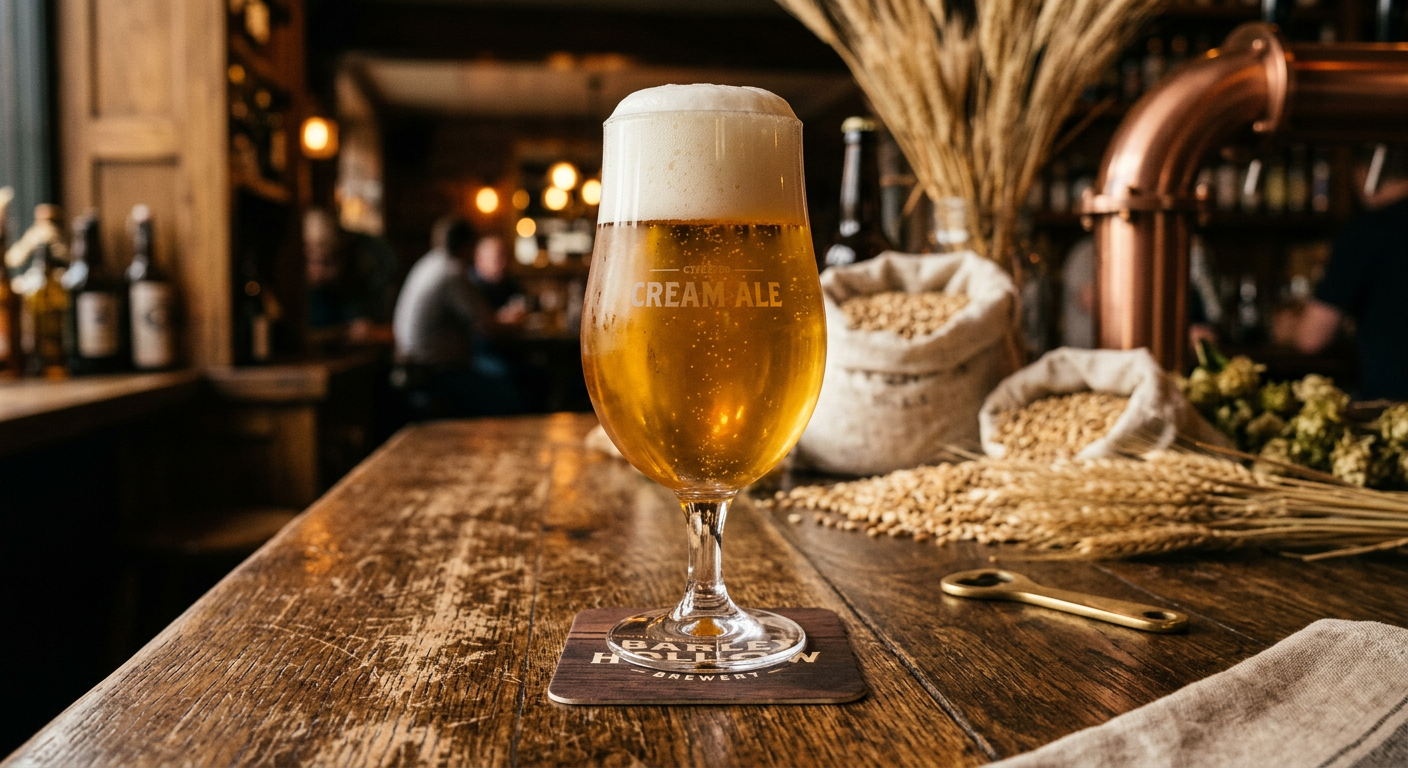
A cream ale is a light-bodied American beer that sits right between ales and lagers. It is technically a hybrid-an ale fermented at cooler temperatures to produce a crisp, clean, and refreshing taste that appeals to almost everyone. The style has survived for over 150 years because it does one thing extraordinarily well: it refreshes without demanding attention.
We have been exploring beer styles for years, and the cream ale remains one of the most misunderstood styles out there. The name trips people up every time. No, there is no cream in it. Despite the name, this style has nothing to do with dairy. Our team set out to write this guide after seeing countless people search “does cream ale have cream in it?” We decided it was time to write the definitive answer.
By the end of this article, you will know exactly what makes a cream ale unique, where it came from, how it is brewed, and why it has remained an American classic for over a century. We will also cover the flavor profile, how it compares to other styles, and which brands you should try first.
Table of Contents
What Is a Cream Ale?
A cream ale is a pale, well-attenuated beer style that originated in the United States. The BJCP classifies it as Style 6A, and it is known for being incredibly drinkable and sessionable. We find that most people who try a quality cream ale are surprised by how smooth and easy it goes down. It does not hit you with hops or alcohol. It simply delivers refreshment in a glass.
Unlike a typical ale, a cream ale undergoes a process called cold conditioning or lagering. This gives it the crispness of a lager while retaining subtle fruity notes from ale yeast. The result is a beer that bridges two worlds. You get the best of both categories without committing fully to either.
The style uses corn or rice as adjuncts, which lightens the body and keeps the alcohol moderate. This is not a bold, hoppy beer. It is meant to be refreshing on a hot day or after mowing the lawn. That is why many people call it the perfect “lawnmower beer.” We have found it works equally well at backyard parties, fishing trips, or just unwinding after work.
The History and Origins of Cream Ale
The cream ale was born in the mid-1800s, a time when American brewers faced stiff competition from German immigrants bringing their lager brewing techniques. Ale brewers watched their market share shrink as customers developed a taste for the crisp, clean beers coming from German-owned breweries. They needed to adapt or disappear.
What they created was revolutionary for its time. By combining ale fermentation with cold conditioning, American brewers invented something entirely new. Regional breweries across the country developed their own versions. The style became especially popular in the Northeast and Midwest, particularly in New York state where Genesee Brewery made it famous.
Prohibition nearly wiped out the style, as it did with many American beer traditions. Cream ale survived largely because Genesee continued producing it legally for “medicinal” purposes. After Prohibition ended, Genesee Cream Ale returned to full production and helped revive interest in the style. We have spoken to beer enthusiasts from Rochester who swear by Genesee Cream Ale as their hometown treasure.
Why “Cream” Despite No Cream?
The name is pure marketing, and it has confused people for generations. When cream ales first appeared, brewers used the word “cream” to evoke feelings of smoothness, richness, and elegance. They wanted customers to imagine something luxurious and smooth-tasting.
The reality is much simpler. There is no cream, no dairy, and no cream-colored miracle in this beer. The “cream” refers to the smooth mouthfeel and the pale, golden color that reminded people of fresh cream in a different light. We think the name is one of the best marketing brainstorms in American brewing history simply because it made people curious enough to try it.
Some historians suggest the name also helped differentiate the product from clear, watery lagers. By calling it “cream,” brewers suggested richness and body without the heaviness of a true ale. It was brilliant positioning that worked then and still works today.
How Cream Ale Is Brewed
The brewing process is what makes cream ale special. Our team has toured several breweries that produce this style, and the process always fascinates visitors. It starts like a normal ale fermentation but takes a different turn during conditioning. Every step matters in creating that signature smooth, clean profile.
The Hybrid Fermentation Process
Cream ales are top-fermented like traditional ales, meaning they use ale yeast that works at warmer temperatures near the top of the fermentation vessel. This is where the subtle fruity esters come from, the gentle banana or apple notes that give ales their character. Fermentation typically occurs between 60 and 70 degrees Fahrenheit.
Here is where it gets interesting. After primary fermentation completes, the beer undergoes cold conditioning or lagering. The temperature drops significantly, often to near freezing, and the beer sits for weeks. This cold aging smooths out those fruity esters and allows the yeast to clean up unwanted byproducts. The result is a beer that tastes cleaner than a typical ale.
Some breweries even use lager yeast but ferment it at ale temperatures, creating an even closer bridge between the two categories. This flexibility is why we sometimes hear cream ale called “lagale,” a made-up word combining lager and ale. The terminology reflects the style’s hybrid nature perfectly.
The use of adjuncts is also critical to the style. Corn and rice lighten the body, add a subtle sweetness, and help the beer ferment very dry. A well-attenuated cream ale can finish with very low residual sugar, making it crisp and clean rather than sweet. Traditional recipes might use up to 30% corn or rice, though modern craft versions vary in their adjunct ratios.
Key Characteristics and Style Guidelines
If you want to identify a cream ale, here are the specs that define the style. We recommend memorizing these if you plan to judge or seriously evaluate beers. These numbers come from the Beer Judge Certification Program and represent the official style guidelines.
BJCP Style 6A Specifications
The Beer Judge Certification Program sets clear parameters for cream ale:
- ABV: 4.0% to 5.6%
- IBU (International Bitterness Units): 8 to 20
- SRM (Color): 2.5 to 5 (straw to golden)
- Original Gravity: 1.042 to 1.055
- Final Gravity: 1.006 to 1.012
What does this mean in practical terms? The beer will be pale, almost clear, with a gentle white head. It will have very low bitterness, so no hop bite. The alcohol will be moderate, making it safe for sessions. And it will finish very dry, which is why you can drink several without feeling bloated or cloying.
The attenuation rate, which measures how completely the yeast converts sugars to alcohol, runs high in cream ales. This means most of the sugars ferment out, leaving a dry finish. Our team has blind-tasted dozens of cream ales, and the best examples taste like liquid refreshment with just a hint of cereal grain from the corn or rice.
What Does Cream Ale Taste Like?
The flavor profile of a cream ale is deceptively simple, and that simplicity is its greatest strength. When we ask people who are new to craft beer to describe it, they often struggle because they expect something complex. The truth is that cream ale is defined by its absence of defects rather than the presence of bold flavors.
You will notice subtle grain notes from corn or rice. There might be a whisper of bread crust or honey. The hops are present but muted, offering a gentle floral or earthy character rather than a bitter punch. Traditional recipes use older hop varieties like Cluster, Brewer’s Gold, or Liberty, which add subtlety rather than intensity.
The finish is clean and dry, leaving you reaching for another sip rather than grabbing for water. The carbonation is lively but not aggressive, providing a pleasant tingle without overwhelming the palate. We have found that cream ales work best when served cold, around 40 to 45 degrees Fahrenheit. At that temperature, the refreshment factor maxes out.
Some people expect a creamy texture because of the name. We want to be clear again: there is no creaminess in the mouthfeel. The name is about marketing, not texture. If you find a cream ale that tastes creamy, it likely has something else added or you are tasting the smooth, well-conditioned nature of a properly brewed example.
Cream Ale vs Related Beer Styles
Understanding how cream ale compares to similar styles helps you appreciate what makes it unique. We get questions about this constantly, so let us break it down in detail.
Comparison to Lager
A standard American lager uses bottom-fermenting yeast and cold fermentation temperatures. The result is very clean with no fruity esters. Cream ale has those esters but they are subdued by cold conditioning. Think of cream ale as a lager wearing an ale costume. The difference is subtle but noticeable to experienced palates.
Comparison to Pale Ale
Pale ale is much more hop-forward and bitter. The flavor profile is bold and assertive, with citrus, pine, or floral notes depending on the hops used. Cream ale is the opposite in many ways. It is light, easy, and never challenges you. Our team often recommends cream ale to pale ale drinkers who want something lighter, and to lager drinkers who want something more interesting. It serves as a bridge between these two major categories.
Kölsch Comparison
This is where things get interesting for beer enthusiasts. Kölsch is a German style brewed in Cologne that is remarkably similar to cream ale. Both use ale yeast but cold fermentation, both are pale and light-bodied, both finish dry. The brewing communities have actually discussed whether these styles should be merged into one category.
The main differences are geographical and cultural. Kölsch must be brewed within Cologne and follows German purity laws. Cream ale is distinctly American, uses adjuncts freely, and reflects the melting pot nature of American brewing. If you enjoy one, you will likely enjoy the other. We recommend trying a Kölsch side-by-side with a cream ale to spot the subtle differences yourself.
Popular Cream Ale Brands to Try
Several breweries have made cream ale a flagship product. Our team has compiled a list of must-try examples based on availability, reputation, and blind tasting sessions. Each brings something slightly different to the style while respecting tradition.
Genesee Cream Ale remains the classic. Brewed in Rochester, New York, since the 1800s, this is the beer that defined the style for many Americans. It has a slight sweetness and a smooth finish that keeps people coming back. Genesee also produces a hoppier version called Genesee Harvest, but the original remains the benchmark.
Sixpoint Sweet Action is a Brooklyn favorite that takes a more modern approach while respecting the style. It has more hop character than traditional examples but stays true to the cream ale spirit. Founded in 2004, Sixpoint has become synonymous with quality craft brewing in New York City.
Lazy Looper Cream Ale is a newer craft option that has gained popularity in recent years. It exemplifies how modern craft brewers approach the style with attention to ingredient quality and brewing technique.
Steelhead Cream Ale from California shows that the style works across the country. It is well-balanced and sessionable, proving that great cream ale is not limited to the Northeast.
If you are just starting to explore, we suggest trying Genesee first. It is widely available and affordable. Once you understand the classic profile, you can hunt for craft versions that put their own spin on the style.
Food Pairings for Cream Ale
Because of its light body and low bitterness, cream ale pairs with a wide range of foods. Our team has enjoyed it at backyard barbecues, seafood shacks, and casual pizza nights. The versatility is one of the style’s greatest strengths.
The style works exceptionally well with grilled chicken, fish tacos, and light pasta dishes. The crisp finish cuts through fatty foods without overwhelming delicate flavors. We also recommend it with spicy Asian cuisine where the beer can cool the heat without fighting the flavors.
Shellfish, particularly shrimp and clams, pair wonderfully with cream ale. The beer’s subtle sweetness complements the briny character of these foods. Burgers and hot dogs work well too, making cream ale a natural choice for cookouts.
Cheese pairings include mild cheddars, fresh goat cheese, and Havarti. Avoid strong blue cheeses or aged gouda, as they will overpower the subtle malt character. Lighter cheeses let the beer shine without competing for attention.
For dessert, try fruit tarts or citrus-based sweets. The beer complements the sweetness without becoming cloying. We have even enjoyed cream ale with vanilla ice cream, though we admit that pairing is not traditional.
Conclusion
The cream ale is one of America’s original craft beer styles, predating the modern craft movement by over a century. It was born from necessity, refined through experimentation, and remains a staple for brewers who understand that sometimes simple is better. The style proves that you do not need complicated brewing techniques or exotic ingredients to make something enjoyable.
This beer style proves that you do not need bold hops or high alcohol to make something worth drinking. The cream ale is refreshing, sessionable, and endlessly enjoyable. Whether you are a craft beer veteran or just starting to explore beyond standard lagers, we encourage you to give it a chance.
If you want to learn more about different craft beer styles, explore our other guides or visit your local brewery. You might just find your new favorite beer hiding in the section you usually skip.
FAQs
What makes it a cream ale?
A cream ale is defined by its hybrid brewing process (ale yeast fermented at cool temperatures), light body, low bitterness, and use of corn or rice adjuncts. It must meet BJCP Style 6A guidelines with ABV between 4-5.6% and IBU between 8-20.
What is the difference between lager and cream ale?
Lagers use bottom-fermenting yeast and undergo long cold aging, while cream ales typically use top-fermenting ale yeast but are cold-conditioned like lagers. The result is a beer with the crispness of a lager but the subtle fruitiness of an ale.
What is another name for cream ale?
Cream ale is sometimes called ‘lagale’ in certain regions, a portmanteau of lager and ale that reflects its hybrid nature.
Does cream ale contain cream or dairy?
No, cream ale contains no dairy. The name comes from marketing rather than ingredients. The ‘cream’ referred to the smooth, clean mouthfeel and golden color that appealed to consumers.