
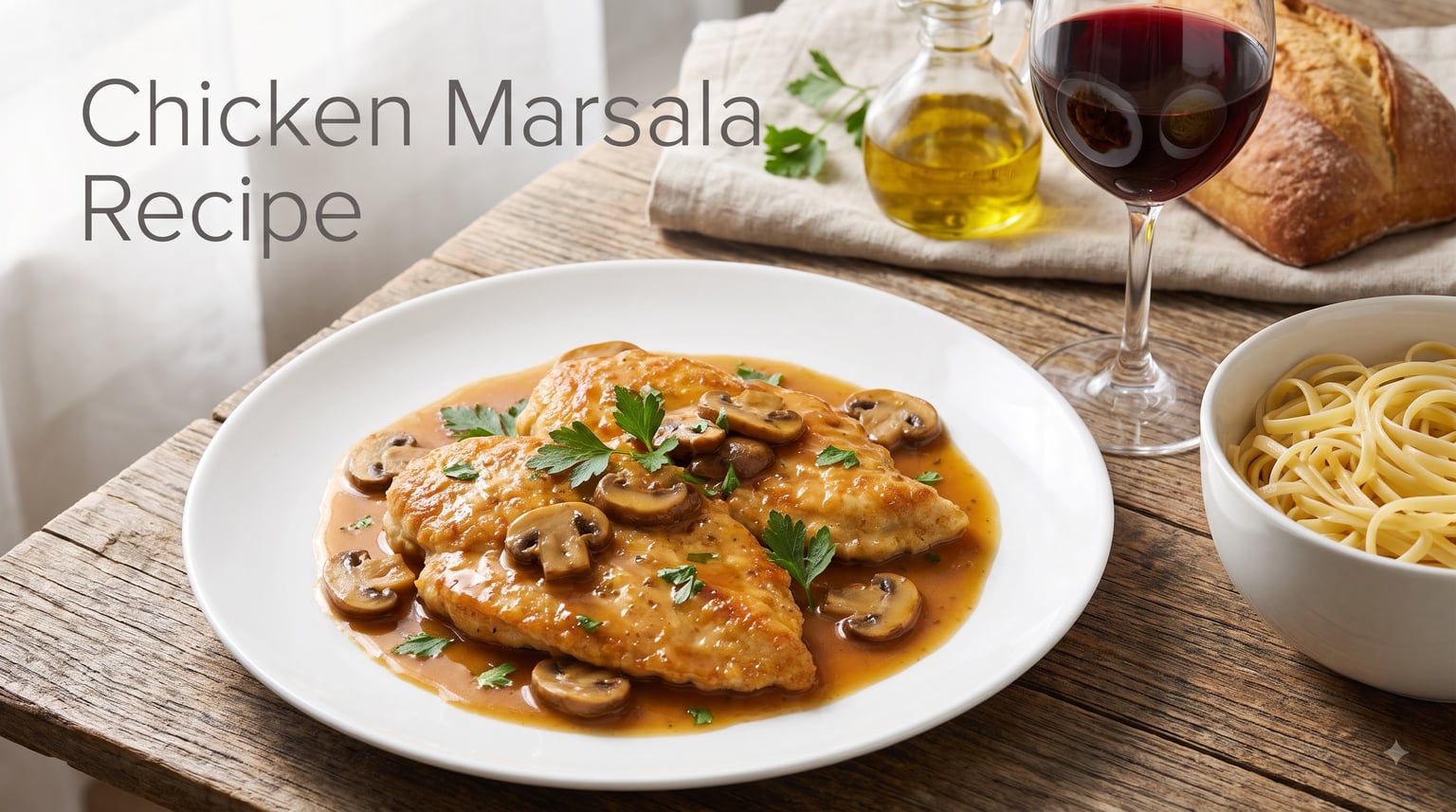
I have made this Chicken Marsala recipe more times than I can count. It was the first dish I learned to cook that actually tasted like something from a restaurant, and it is still my go-to when I want to impress without spending three hours in the kitchen.
The secret is simpler than most people think. A good Marsala wine, properly browned mushrooms, and a pan sauce that comes together in minutes. Once you understand the technique, this becomes a 30-minute weeknight dinner that feels like fine dining.
This Chicken Marsala recipe walks you through everything. The right wine to buy, how to get that glossy restaurant-style sauce, and the common mistakes that ruin the dish. Whether you have tried this at authentic Italian-American spots like Carrabba’s or fallen in love with the restaurant-style version at Cheesecake Factory, you can make something even better at home.
Table of Contents
What Is Chicken Marsala? The Story Behind the Dish
Chicken Marsala is an Italian-American dish consisting of tender, pan-fried chicken cutlets served in a rich, glossy sauce made with Marsala wine, mushrooms, and shallots. The sauce reduces down until it coats the back of a spoon, delivering deep caramelized flavors with nutty undertones from the fortified wine.
Here is where things get interesting. Chicken Marsala is not actually a dish you will find all over Italy. It was created in the United States by Italian immigrants who brought Marsala wine from Sicily and applied French cooking techniques, specifically pan-searing and deglazing, to create something new.
Marsala wine itself comes from the Sicilian city of the same name. It is a fortified wine, meaning brandy or neutral spirit is added during fermentation. This process was invented in 1773 by English merchant John Woodhouse, who discovered the local wine could survive long shipping journeys when fortified. The result is a wine with complex nutty, caramel, and dried-fruit notes that builds incredible depth in a pan sauce.
The dish became a staple in Italian-American restaurants across the country. It shows up on menus everywhere from neighborhood trattorias to national chains. The combination of golden chicken, earthy cremini mushrooms, and that signature glossy sauce makes it one of the most beloved Italian-American dishes of all time.
Authentic Italian cooking does use Marsala wine, but typically with veal scaloppine or in zabaglione desserts. The American version with chicken cutlets and mushrooms is a homegrown classic that has earned its own place in culinary history.
Choosing the Right Marsala Wine for Your Recipe
The single most important decision you will make for this recipe is which Marsala wine to buy. Walk into any liquor store and you will see multiple varieties, and choosing the wrong one completely changes the dish.
Here is what you need to know. Marsala comes in three sweetness levels: dry (secco), semi-sweet (semisecco), and sweet (dolce). For Chicken Marsala, I strongly recommend dry Marsala. It gives you savory, nutty, and caramelized notes without making the sauce cloyingly sweet. Most experienced cooks on forums agree that dry is the only way to go for authentic savory dishes.
You will also see color designations. Oro (golden), Ambra (amber), and Rubino (ruby) refer to the grape varieties used. For cooking, Oro is the standard choice and the most widely available. If you want to learn more about the best wines for cooking including Marsala, that guide covers the full range.
For brands, Florio and Pellegrino are the two most common and reliable cooking Marsala wines. Both are affordable and available at most grocery stores. Colombo Marsala is another solid option if your store carries it. Avoid anything labeled “cooking wine” in the grocery aisle with added salt and preservatives. It tastes nothing like real Marsala and will ruin your sauce.
If you cannot find Marsala at all, Madeira wine is the closest substitute. Use it in equal amounts. A mix of dry sherry and a splash of brandy also works in a pinch, though the flavor will not be identical.
Chicken Marsala Recipe Ingredients (With Exact Measurements)
Here is everything you need to make this Chicken Marsala recipe for four people. I have included notes on why each ingredient matters so you understand what you can and cannot skip.
For the chicken:
- 4 boneless, skinless chicken breasts (about 6 to 8 ounces each) — pound them to even thickness for uniform cooking
- 1/2 cup all-purpose flour — for dredging, creates the golden crust and helps thicken the sauce
- 1 teaspoon salt and 1/2 teaspoon black pepper — season the flour generously
- 1/2 teaspoon dried oregano — adds subtle Italian herb notes to the crust
- 3 tablespoons unsalted butter — divided, for pan-frying and finishing the sauce
- 2 tablespoons olive oil — combined with butter for a higher smoke point during searing
For the Marsala mushroom sauce:
- 8 ounces cremini mushrooms, sliced — cremini are preferred over white button mushrooms for their deeper, earthier flavor
- 1 large shallot, finely chopped — shallots integrate more smoothly than onions and add subtle sweetness
- 2 cloves garlic, minced — added late so it does not burn
- 3/4 cup dry Marsala wine — the star ingredient, do not skimp on quality here
- 3/4 cup chicken broth — adds body and balances the wine intensity
- 1/4 cup heavy cream (optional) — traditionalists skip it, but it creates a luxurious silky texture
- 1 teaspoon fresh thyme leaves — brightens the rich sauce
- 2 tablespoons fresh Italian parsley, chopped — stirred in at the end for freshness and color
On the cream debate, here is my take. Traditional Italian-American Chicken Marsala does not use cream. The sauce gets its body from the wine reduction and butter alone. But adding a splash of heavy cream at the end gives you that restaurant-style richness that many people associate with the dish. Both versions are legitimate. I will show you how to make it either way.
Equipment You’ll Need
The right pan makes a real difference here. You want something that holds heat well and leaves browned bits on the bottom for deglazing.
I recommend a large stainless steel skillet or well-seasoned cast iron pan, at least 12 inches wide. Nonstick pans do not create the fond (those browned bits) that form the base of your sauce. Cast iron gives excellent browning on the chicken and mushrooms.
You will also need a meat mallet or rolling pin for pounding the chicken, a shallow dish for the flour dredge, tongs for flipping, and a meat thermometer. The thermometer is optional but takes the guesswork out of doneness. Chicken is ready at 165 degrees Fahrenheit internal temperature.
How to Make Chicken Marsala Recipe (Step-by-Step)
Follow these steps in order and you will have a restaurant-quality Chicken Marsala recipe on the table in about 30 minutes of active cooking time.
Step 1: Prepare the Chicken Cutlets
Place each chicken breast between two pieces of plastic wrap or in a large zip-top bag. Using a meat mallet or rolling pin, gently pound the chicken to an even 1/4-inch thickness. This step is non-negotiable. Even thickness means the chicken cooks uniformly and stays tender. Uneven chicken means dry edges and raw middles.
Step 2: Season and Dredge
In a shallow dish, combine the flour, salt, pepper, and dried oregano. Mix well. Dredge each pounded chicken breast in the flour mixture, pressing lightly so it adheres. Shake off any excess. Too much flour will create a gummy coating and make your sauce pasty.
Step 3: Sear the Chicken
Heat 2 tablespoons of butter and 2 tablespoons of olive oil in your skillet over medium-high heat. When the butter is foaming but not browned, add the chicken cutlets in a single layer. Do not crowd the pan. Work in batches if needed.
Cook for 3 to 4 minutes per side until golden brown. The chicken should release easily from the pan when it is ready to flip. If it sticks, it needs another minute. Transfer the cooked chicken to a plate and tent loosely with foil to keep warm.
Step 4: Brown the Mushrooms
In the same pan, add the remaining tablespoon of butter. Add the sliced mushrooms in a single layer and let them sit undisturbed for 2 minutes. This is the most common mistake home cooks make. Stirring mushrooms constantly prevents them from browning. Let them develop that deep golden color, then stir and cook another 2 to 3 minutes.
Step 5: Add Aromatics and Deglaze
Add the chopped shallot to the mushrooms and cook for 1 minute until soft. Add the garlic and cook for 30 seconds, no longer, or it will turn bitter. Now pour in the Marsala wine and use a wooden spoon to scrape up all the browned bits from the bottom of the pan. This deglazing step is where the flavor lives.
Step 6: Build the Sauce
Let the Marsala simmer and reduce by about half, which takes 2 to 3 minutes. The alcohol smell will mellow and the wine will become syrupy. Add the chicken broth and fresh thyme. Simmer for another 3 to 4 minutes until the sauce thickens slightly and coats the back of a spoon.
If you are using heavy cream, add it now and stir to combine. The sauce will take on a beautiful silky texture and lighter color. Let it simmer for one more minute.
Step 7: Return Chicken and Finish
Return the chicken cutlets to the pan along with any juices that collected on the plate. Spoon the sauce over the chicken and let everything simmer together for 2 minutes until the chicken is heated through and reaches 165 degrees Fahrenheit internally.
Remove from heat. Stir in the fresh Italian parsley. Taste the sauce and adjust seasoning if needed. Serve immediately with the sauce spooned generously over the chicken.
Professional Tips for Restaurant-Quality Chicken Marsala
After making this recipe dozens of times, here are the techniques that separate a good Chicken Marsala from a great one.
Dry your chicken before dredging. Pat the cutlets with paper towels before flouring. Wet chicken means the flour turns gummy instead of forming a crisp crust. This one step transforms the texture.
Do not wash the pan between steps. Every browned bit left in the pan is pure flavor. The mushroom step, the deglazing, and the sauce building all happen in the same skillet. That fond on the bottom is what makes the sauce taste like it was made by a professional chef.
Let the wine reduce properly. Rushing the reduction is the number one reason sauces taste thin or overly alcoholic. When Marsala reduces by half, its sugars concentrate and the alcohol cooks off. You are left with deep, complex, nutty sweetness. If the sauce tastes boozey, it has not reduced long enough.
Use room temperature chicken. Take the chicken out of the fridge 20 minutes before cooking. Cold chicken straight from the refrigerator hits the hot pan and drops the temperature, leading to uneven cooking and tough texture.
Finish with cold butter off the heat. For an ultra-glossy sauce, remove the pan from heat and swirl in a tablespoon of cold butter right before serving. This classic French technique, called mounting, gives the sauce a restaurant sheen that you cannot get any other way.
Slice mushrooms uniformly. Consistent thickness means even browning. Mushrooms sliced at different thicknesses will cook unevenly, leaving some rubbery and others overcooked.
Common Chicken Marsala Mistakes and How to Fix Them
These are the problems I hear about most from home cooks, along with exactly how to fix them.
Problem: Sauce is too thin and watery.
This happens when the wine has not reduced enough or there is too much broth. Fix it by simmering the sauce uncovered for 3 to 5 more minutes until it coats the back of a spoon. If it is still thin, mix 1 teaspoon of flour with 1 tablespoon of cold water to make a slurry and whisk it in gradually.
Problem: Chicken is dry and tough.
Usually caused by overcooking or skipping the pounding step. Use a meat thermometer and pull the chicken at 165 degrees Fahrenheit. Pounding to even thickness prevents the thin edges from overcooking while the thick center finishes. Letting the chicken rest for 5 minutes before serving also helps retain moisture.
Problem: Mushrooms are soggy instead of browned.
You are either crowding the pan or stirring too often. Mushrooms need space and stillness to brown. Cook them in a single layer and do not touch them for at least 2 minutes. Also avoid salting mushrooms at the start, which draws out water and creates steaming instead of searing.
Problem: Sauce lacks glossy finish.
This means you are missing the fat emulsion. The sauce needs butter to bind the wine and broth together. Make sure you finish with butter off the heat, and do not let the sauce boil once the butter is added or it will separate.
Problem: Wine flavor is too strong or harsh.
The reduction was too short or you used sweet Marsala instead of dry. Sweet Marsala makes the sauce cloying. Switch to dry Marsala and reduce it fully before adding broth. A pinch of sugar can also balance an overly acidic sauce.
Problem: Sauce separates when reheating.
Cream-based sauces break when reheated too quickly. Reheat gently over low heat, whisking constantly. Add a splash of chicken broth to re-emulsify if needed. For butter-based sauces, add a small cube of cold butter while reheating to bring it back together.
What to Serve With Chicken Marsala
Chicken Marsala pairs beautifully with starchy sides that soak up that incredible sauce. Here are my favorite combinations.
Best starch pairings: Buttered linguine or pappardelle is the classic restaurant presentation. The wide noodles catch every drop of sauce. Creamy polenta, garlic mashed potatoes, or risotto also work beautifully. For a lighter option, try roasted baby potatoes or crusty Italian bread for sopping up the sauce.
Vegetable sides: A simple arugula salad with lemon vinaigrette cuts through the richness. Roasted asparagus, garlicky sauteed spinach, or broccolini are all excellent. Keep vegetables relatively simple so they do not compete with the star dish.
For more pairing ideas, check out this guide to the best pasta pairings for Italian dishes. It ranks sauces by versatility and flavor compatibility.
Wine pairing: Serve the same dry Marsala you cooked with, or a medium-bodied red like Chianti or Sangiovese. The earthy notes in these wines complement the mushrooms. A Pinot Noir also works well if you prefer lighter reds.
Cocktail pairing: For a full Italian dinner experience, start with a classic Negroni as an aperitif. Its bitter complexity cleanses the palate and sets up the rich main course perfectly.
Storage, Make-Ahead, and Recipe Variations
Storage: Store leftover Chicken Marsala in an airtight container in the refrigerator for up to 3 days. The sauce actually deepens in flavor overnight, making this one of those rare dishes that reheats better than it tastes fresh.
Reheating: Reheat gently in a covered skillet over low heat. Add a splash of chicken broth to loosen the sauce. Avoid microwaving on high, which can make the chicken rubbery and cause the sauce to separate.
Freezing: You can freeze Chicken Marsala for up to 2 months. Store in a freezer-safe container with the sauce. Thaw overnight in the refrigerator before reheating. The cream version does not freeze as well as the traditional butter-only version, so skip the cream if you plan to freeze.
Make-ahead: You can pound and dredge the chicken up to 24 hours ahead. Store covered in the refrigerator. The Marsala sauce base can also be made ahead and reheated. For entertaining, cook everything except the chicken in advance, then sear the cutlets and combine just before serving.
No-cream variation: Simply omit the heavy cream and let the butter provide all the richness. This is the more traditional preparation and gives you a lighter, more wine-forward sauce.
Keto variation: Replace the all-purpose flour dredge with almond flour or skip the dredge entirely and just sear the seasoned chicken. Use xanthan gum instead of flour to thicken the sauce. Omit any cream for a cleaner keto option, or keep it since heavy cream is keto-friendly.
Gluten-free variation: Use a 1-to-1 gluten-free flour blend for dredging. Everything else in the recipe is naturally gluten-free.
For more inspiration, browse these classic Italian-American recipes that share similar techniques and flavor profiles.
Frequently Asked Questions About Chicken Marsala
What is the secret to a great Chicken Marsala?
The secret is properly reducing the Marsala wine before adding broth. This concentrates the flavors and cooks off the harsh alcohol, leaving deep nutty sweetness. Also, let the mushrooms brown undisturbed, deglaze thoroughly to capture all the fond, and finish the sauce with cold butter off the heat for a glossy restaurant-quality finish.
What are the main ingredients in Chicken Marsala?
The main ingredients are boneless chicken breasts, all-purpose flour for dredging, cremini mushrooms, shallots, garlic, dry Marsala wine, chicken broth, butter, olive oil, and fresh thyme. Optional ingredients include heavy cream for a richer sauce and fresh parsley for garnish.
What are common mistakes making Chicken Marsala?
Common mistakes include not pounding the chicken to even thickness, overcrowding the pan so the chicken steams instead of sears, stirring mushrooms too frequently which prevents browning, not reducing the wine long enough, and skipping the deglazing step. Another major mistake is using sweet Marsala instead of dry, which makes the sauce cloying.
What do Italians eat Chicken Marsala with?
Chicken Marsala is typically served over buttered linguine, pappardelle, or alongside creamy polenta. It also pairs well with garlic mashed potatoes, roasted vegetables like asparagus, and a simple arugula salad. Crusty Italian bread is often served to soak up the sauce.
Can you make Chicken Marsala without cream?
Yes. Traditional Italian-American Chicken Marsala does not use cream at all. The sauce gets its body and richness from the butter and wine reduction alone. Simply omit the heavy cream and finish the sauce with cold butter off the heat for a glossy, authentic finish.
What can I substitute for Marsala wine?
Madeira wine is the closest substitute for Marsala and can be used in equal amounts. A combination of dry sherry with a splash of brandy also works. For a non-alcoholic option, mix chicken broth with a tablespoon of balsamic vinegar and a pinch of sugar to approximate the depth and sweetness.
Final Thoughts on This Chicken Marsala Recipe
This Chicken Marsala recipe proves that restaurant-quality Italian-American cooking is completely achievable at home. The combination of properly seared chicken, deeply browned mushrooms, and a glossy Marsala wine sauce creates a dish that tastes like it came from a professional kitchen.
Start with dry Marsala wine, pound your chicken evenly, and let those mushrooms brown without touching them. Master those three fundamentals and the rest falls into place. Your next dinner, whether it is a Tuesday night or a special occasion, just got a serious upgrade.