
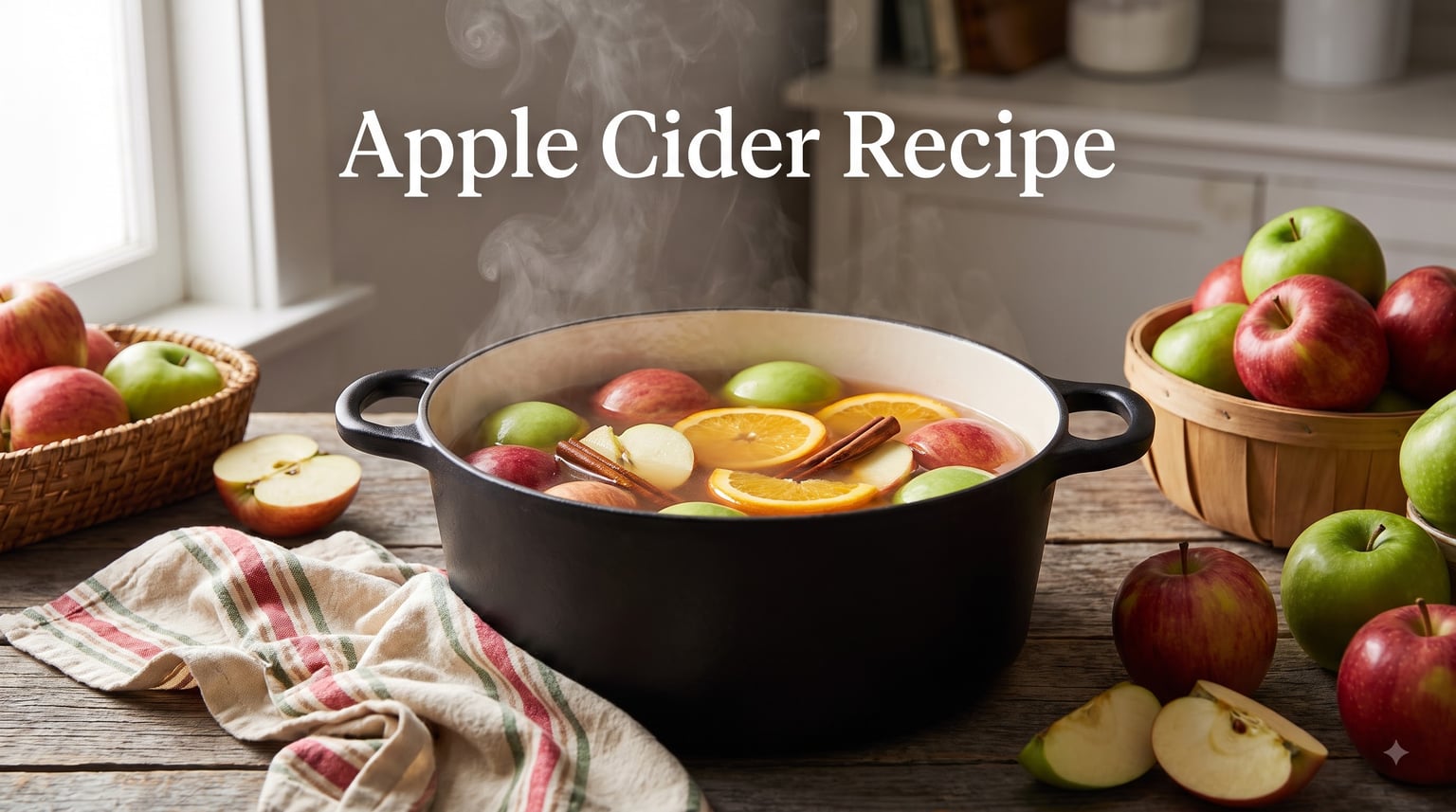
There is nothing quite like the smell of apples and cinnamon simmering on your stove for hours. Our team has tested dozens of apple cider recipes over the past three fall seasons, adjusting spice levels, apple combinations, and cooking methods until we landed on a version that beats anything you can buy at a store.
This apple cider recipe walks you through everything from selecting the right apples to straining the final golden liquid. You will learn two cooking methods (stovetop and slow cooker), how to fix common problems like bitterness, and how to customize the flavor to your taste.
If you end up with leftover cider, you can even turn it into a seasonal apple cider margarita for evening gatherings. We will also cover storage, freezing, and what to do with leftover apple pulp so nothing goes to waste.
Table of Contents
What Is Apple Cider?
Apple cider is a fresh, unfiltered beverage made from pressed or simmered apples. Unlike clarified apple juice, cider retains natural sediment and pulp, giving it a richer mouthfeel and deeper flavor.
Traditional apple cider in North America is non-alcoholic. You serve it hot or cold, often spiced with cinnamon, cloves, and allspice. This is the kind of cider this recipe produces.
Many people confuse this with hard cider, which is the fermented, alcoholic version. If you are interested in brewing hard cider at home, check out our guide to the best cider making kits for home brewing. That process involves yeast and fermentation over weeks, which is very different from the stovetop method we cover here.
Apple Cider vs Apple Juice
The main difference comes down to filtration and processing. Apple juice is filtered, pasteurized, and clarified to a transparent golden liquid with a longer shelf life. Apple cider is unfiltered, leaving in the sediment and pulp that carry most of the flavor and nutrients.
In practical terms, cider tastes richer, cloudier, and more “appley” than juice. If you have ever had fresh-pressed cider at an orchard, that texture and depth of flavor is exactly what we are recreating here on your stove.
Is Apple Cider Good for You?
Homemade apple cider offers several genuine health benefits that store-bought juice often loses during processing. When you simmer whole apples with their skins, you extract polyphenols and antioxidants that concentrate in the final drink.
A typical cup of homemade spiced apple cider contains about 120 calories, mostly from natural fruit sugars. You get a modest dose of vitamin C, especially if you include citrus in your recipe, plus small amounts of potassium.
The polyphenols in apple skin have been linked to reduced inflammation and improved gut health in several studies. Since this recipe uses whole, unpeeled apples, you capture more of these compounds than you would from peeled or filtered alternatives.
One caveat: sugar content. If you add the full amount of sweetener in this recipe, each serving contains added sugar on top of the natural fructose. We provide sugar adjustment guidance later in this article so you can dial sweetness to your dietary needs. For a low-sugar version, start with half the sugar and taste before adding more.
Choosing the Best Apples for Cider
The apples you choose matter more than any other ingredient in this recipe. Using a single variety produces flat, one-dimensional cider. Blending sweet and tart apples creates the balanced, complex flavor that makes homemade cider special.
Our team tested combinations over three seasons, and the consensus is clear: equal parts sweet and tart apples give you the best base. Here is a breakdown of the varieties that work best.
Sweet Apple Varieties
Gala apples bring a natural honey-like sweetness that forms the backbone of most great cider recipes. They break down well during cooking and release their flavor quickly.
Honeycrisp apples add intense sweetness with a slight floral note. They are pricier than other options but contribute a brightness that lifts the entire batch.
Fuji apples offer dense, very sweet flesh that holds up well during long simmers. They are a budget-friendly alternative to Honeycrisp.
Red Delicious apples contribute deep color and mild sweetness. They are widely available and inexpensive, making them a solid filler apple.
Tart Apple Varieties
Granny Smith apples provide the sharp acidity that balances sweet varieties. Even a couple of Granny Smiths in a ten-apple batch transforms the flavor profile.
McIntosh apples break down into a soft, flavorful mush during cooking, which makes straining easy and releases maximum juice.
Cortland apples offer a milder tartness than Granny Smith with a subtle berry undertone that adds complexity.
Recommended Apple Combinations
For a standard 10-apple batch, our favorite blends are:
Option 1 (Classic Balance): 5 Gala, 3 Honeycrisp, 2 Granny Smith. This produces a crowd-pleasing, well-rounded cider.
Option 2 (Budget Friendly): 4 Fuji, 4 Red Delicious, 2 Granny Smith. Less expensive but still balanced.
Option 3 (Maximum Flavor): 3 Honeycrisp, 3 McIntosh, 2 Granny Smith, 2 Braeburn. The most complex flavor profile for serious cider makers.
For more apple-focused recipes using these same varieties, try our Amish apple dumpling recipe or our canned apple pie filling recipe for fall preservation.
Apple Cider Recipe Ingredients
Here is everything you need for one batch of homemade apple cider, which yields roughly 8 servings.
Apples: 10 large apples (mix of sweet and tart varieties from the guide above). Wash thoroughly but do not peel or core. Cut each apple into quarters.
Water: 16 cups (about 3.8 liters). This is enough to cover the fruit without diluting the flavor. Users on cooking forums consistently report that too much water produces weak cider, so measure carefully.
Sweetener: 3/4 cup brown sugar, granulated sugar, or a combination. Brown sugar adds molasses depth. Start with 1/2 cup if you prefer less sweetness and adjust after tasting.
Spices: 2 cinnamon sticks (or 1 tablespoon ground cinnamon), 1 tablespoon whole cloves (or 1 teaspoon ground cloves), 1 teaspoon ground allspice, and optionally 1/4 teaspoon ground nutmeg.
Citrus (optional but recommended): 1 orange and 1 lemon, both washed and quartered. The citrus brightens the overall flavor, but be careful not to include too much pith (the white part) as it causes bitterness.
Vanilla (optional): 1 teaspoon vanilla extract added at the end of cooking for warmth and depth.
Equipment You Will Need
You do not need any specialized equipment to make great apple cider. Here is what we use and some alternatives if your kitchen is not fully stocked.
A large stockpot or Dutch oven (at least 8 quarts) is the primary tool. If you do not have one, a slow cooker works just as well and we provide those instructions below.
A potato masher is essential for breaking down the cooked apples to release flavor. A sturdy wooden spoon works in a pinch but takes more effort.
For straining, you need a fine mesh sieve or strainer. For the clearest possible cider, line your sieve with cheesecloth and strain twice. A colander with large holes will not work well enough on its own.
For storage, have clean glass jars or pitchers ready. Mason jars work perfectly for refrigerator storage.
How to Make Apple Cider on the Stovetop?
This stovetop method produces the richest, most concentrated flavor and takes about 3 hours from start to finish. It is our preferred method when we want maximum control over the process.
Step 1: Prepare the fruit. Wash all apples and citrus thoroughly. Cut each apple into quarters, leaving the skins, cores, and seeds intact. These parts contain pectin and flavor compounds that enrich the cider. Cut the orange and lemon into quarters as well.
Step 2: Combine everything in the pot. Place all the apple quarters, citrus, cinnamon sticks, cloves, and allspice into your stockpot. Pour in the 16 cups of water. The water should just barely cover the fruit. If it does not, your pot may be too wide. Add only enough extra water to cover.
Step 3: Bring to a boil. Set the stove to medium-high heat and bring the pot to a rolling boil. This typically takes 15 to 20 minutes depending on your stove and pot size.
Step 4: Reduce and simmer. Once boiling, reduce the heat to low. The surface should show gentle bubbles, not a vigorous boil. Cover the pot partially with a lid, leaving a small gap for steam to escape.
Step 5: Simmer for 2 hours. Let the cider simmer undisturbed for the first hour. After that, check every 30 minutes and use your potato masher to press and break down the apple pieces. This mashing step is critical. Users across cooking forums confirm that thorough mashing extracts significantly more flavor than simply letting the fruit sit.
Step 6: Add sugar. After 2 hours of simmering, stir in the brown sugar (or your chosen sweetener). Stir until fully dissolved. Taste the cider and adjust sweetness as needed. Remember that the flavor will concentrate slightly as it cools.
Step 7: Strain the cider. Remove the pot from heat. Place your fine mesh sieve over a large bowl or second pot. Ladle the contents through the sieve in batches, pressing the solids with the back of a ladle to extract every drop of liquid. Discard the spent fruit and spices (or save the pulp using our tips later in this article).
Step 8: Optional double strain. For the clearest, smoothest cider, pour the strained liquid through a cheesecloth-lined sieve a second time. This removes fine sediment and produces a cleaner finish.
Step 9: Add vanilla (optional). Stir in vanilla extract while the cider is still warm. This step is optional but adds a lovely depth that rounds out the spice flavors.
Step 10: Serve or store. Serve warm immediately, or let cool and transfer to jars for refrigeration. The cider will keep for up to one week in the refrigerator.
Slow Cooker Apple Cider Method
The slow cooker method is perfect when you want to set it and forget it. Many home cooks on forums report that the overnight crockpot method produces the deepest flavor because of the extended extraction time.
Step 1: Prepare the fruit exactly as in the stovetop method. Place all apples, citrus, and spices into your slow cooker.
Step 2: Add 16 cups of water. The fruit should be fully submerged.
Step 3: Cover and cook on LOW for 6 to 8 hours or on HIGH for 4 hours. The longer, slower cook extracts more flavor from the skins and cores.
Step 4: About 1 hour before the cooking time ends, use a potato masher to break down the softened apples. Add the sugar and stir to dissolve.
Step 5: Strain through a fine mesh sieve or cheesecloth as described in the stovetop method.
Instant Pot Variation
If you want apple cider in under an hour, the Instant Pot is your friend. Combine all ingredients in the pressure cooker, seal the lid, and cook on HIGH pressure for 15 minutes. Allow a natural pressure release for 20 minutes. Mash the fruit, strain, and serve.
The Instant Pot version has slightly less depth than the slow cooker method because the shorter cooking time means less flavor extraction. However, it is excellent when you need cider on short notice.
Flavor Variations and Spice Combinations
Once you master the base recipe, you can customize your cider in dozens of ways. Here are the variations our team and forum users love most.
Spice Variations
Chai-spiced cider: Add 2 whole star anise, 4 cardamom pods, and a slice of fresh ginger during the last hour of cooking. This creates a warm, complex spice profile reminiscent of chai tea.
Cranberry cider: Add 2 cups of fresh cranberries to the pot. They break down during cooking and add a beautiful tartness and pink color.
Maple cider: Replace the brown sugar with 1/2 cup of real maple syrup. The flavor is richer and less sweet than sugar-based versions.
Sugar Alternatives
If you want to reduce or replace refined sugar, several options work well. Honey adds floral sweetness; use 1/2 cup and add more to taste. Maple syrup brings caramel notes and works particularly well with the spice blend. Stevia or monk fruit sweetener works for sugar-free versions, but add it after straining since these sweeteners are much more concentrated.
For a caramel apple cider, stir in 2 tablespoons of caramel sauce per cup before serving. This transforms the drink into a dessert-level treat.
Cocktail Applications
Homemade apple cider is an incredible cocktail base. For adults-only gatherings, try using your cider in an apple butter old fashioned for a smoky, autumnal twist on the classic.
Troubleshooting Common Apple Cider Problems
Even experienced cooks run into issues. Here are the most common problems we see in forum discussions and how to fix them.
Why Is My Apple Cider Bitter?
Bitterness is the number one complaint we see. The two most common causes are too many whole cloves and citrus pith. Cloves are intensely strong; if you use more than 1 tablespoon of whole cloves or 1 teaspoon of ground cloves, the cider becomes astringent.
If your orange or lemon quarters include a lot of the white pith, that bitterness leaches into the liquid. To fix a bitter batch, dilute with additional water and add a small amount of extra sugar or honey to balance the flavor. For future batches, reduce cloves by half and trim citrus pith more carefully.
Why Does My Cider Lack Apple Flavor?
Weak flavor usually means too much water or not enough apples. The ratio should be roughly 1.5 cups of water per apple. If your pot is very wide, water may not cover the fruit even at the right ratio, which leads to under-extraction.
To fix weak cider, return it to the stove and simmer uncovered for 30 minutes to reduce and concentrate. For future batches, use a taller, narrower pot and stick to 16 cups of water for 10 apples.
How Do I Get Clear Cider?
Cloudy cider is completely fine to drink, but if you want a clearer result, double straining is the answer. First pass through a fine mesh sieve, then a second pass through cheesecloth. Some cooks let the strained cider rest in the refrigerator overnight, then carefully pour off the clear liquid, leaving sediment behind.
How Do I Make My Cider Sweeter?
If your finished cider is not sweet enough, the fix is simple. Make a quick simple syrup by dissolving equal parts sugar and hot water, then stir it into the cider 1 tablespoon at a time until you reach your desired sweetness. This prevents grainy undissolved sugar from accumulating at the bottom.
Serving, Storage, and Using Leftover Pulp
Serving Suggestions
Serve hot apple cider in mugs with a cinnamon stick garnish and a thin orange slice on the rim. For adult gatherings, set out a toppings bar with star anise, fresh nutmeg for grating, caramel sauce, and whipped cream so guests can customize their cups.
Cold cider is refreshing over ice with a splash of sparkling water for a fizzy, lighter drink. Cold cider also works beautifully as a base for fall cocktails.
Make-Ahead and Batch Cooking
Apple cider is an excellent make-ahead beverage for parties. Double or triple the recipe and store in the refrigerator for up to one week. For a crowd of 20, use 30 apples and scale all ingredients proportionally. Make it two days ahead so the flavors meld and deepen.
To keep cider warm during a party, use a slow cooker set to LOW. It will stay at the perfect drinking temperature for hours without degrading in flavor.
Freezing Apple Cider
Yes, you can freeze apple cider. Pour it into freezer-safe containers, leaving at least 1 inch of headspace for expansion. Frozen cider lasts up to 3 months. Thaw overnight in the refrigerator and reheat gently on the stove.
Avoid freezing in glass jars unless they are specifically rated for freezing, as the liquid expansion can crack the glass.
Using Leftover Apple Pulp
Do not throw away the strained apple pulp. It still contains flavor and fiber. Users on cooking forums report great success turning leftover pulp into applesauce by blending it with a splash of cider and a pinch of cinnamon.
You can also use the pulp in baking. Fold it into muffin batter or oatmeal cookie dough for added moisture and apple flavor. For a longer-term option, cook the pulp down with additional sugar and spices to make a small batch of apple butter.
Frequently Asked Questions
What are the ingredients of apple cider?
The basic ingredients for homemade apple cider are apples (a mix of sweet and tart varieties), water, sugar or another sweetener, and warm spices like cinnamon sticks, whole cloves, and allspice. Many recipes also include orange and lemon for brightness. That is it. No juicer or press required.
Is apple cider just apple juice and cinnamon?
No, apple cider is not just apple juice with cinnamon added. Apple cider is made from whole apples simmered with water, spices, and sweetener, producing an unfiltered drink with natural pulp and sediment. Apple juice is filtered and clarified. Adding cinnamon to apple juice gives you spiced juice, not true apple cider.
How to make apple cider drink at home?
To make apple cider at home, quarter 10 apples (do not peel or core them), place them in a large pot with 16 cups of water, cinnamon sticks, cloves, allspice, and optional citrus. Bring to a boil, then simmer for 2 to 3 hours, mashing the apples every 30 minutes. Strain through a fine mesh sieve, add sugar to taste, and serve warm.
Is apple cider good or bad for you?
Homemade apple cider can be good for you in moderation. It contains polyphenols and antioxidants from apple skins, which are linked to reduced inflammation and improved gut health. It also provides some vitamin C if you include citrus. The main concern is sugar content, so control the amount of added sweetener and use naturally sweet apples to reduce the need for extra sugar.
How long does homemade apple cider last?
Homemade apple cider lasts up to 7 days in the refrigerator when stored in a clean, airtight container. For longer storage, freeze it for up to 3 months. Always let fresh cider cool completely before transferring to storage containers.
Can you freeze apple cider?
Yes, you can freeze apple cider for up to 3 months. Use freezer-safe plastic containers or freezer bags, leaving at least 1 inch of headspace for liquid expansion. Thaw overnight in the refrigerator and reheat gently on the stove for best flavor.
What apples are best for making apple cider?
The best approach is to use a mix of sweet and tart apples. Sweet varieties like Gala, Honeycrisp, and Fuji provide the base flavor, while tart varieties like Granny Smith and McIntosh add brightness and balance. Aim for roughly 60 to 70 percent sweet apples and 30 to 40 percent tart apples.
Wrapping Up This Apple Cider Recipe
Making homemade apple cider from scratch is simpler than most people think. With 10 apples, water, spices, and about 3 hours on the stove, you can produce a drink that blows anything from a store out of the water.
The keys to success are using a blend of sweet and tart apples, mashing the fruit thoroughly during cooking, and straining carefully for a smooth finish. Start with our base recipe, then experiment with spice variations and sugar levels until you find your perfect version.
This apple cider recipe also opens the door to other fall favorites. Try our canned apple pie filling for preserving your apple harvest, or explore apple dessert recipes that use the same varieties. Whatever you make, the scent of simmering apples and cinnamon is reason enough to get started today.