
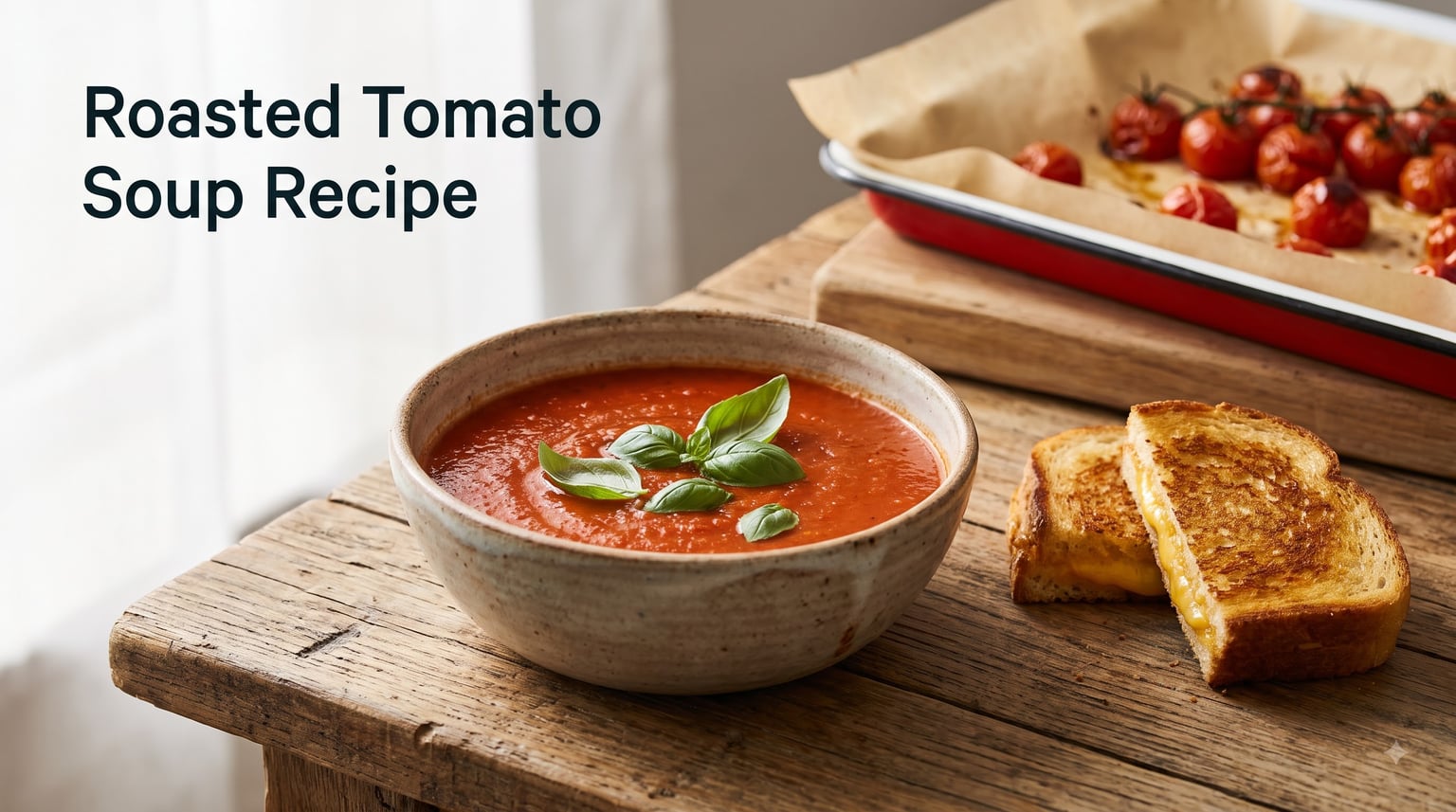
There is something almost magical that happens when you roast tomatoes. The heat pulls out their natural sweetness, chars the edges just enough to add depth, and transforms even ordinary grocery store tomatoes into something rich and complex. This roasted tomato soup recipe captures all of that in a bowl.
I have tested this recipe more times than I can count, tweaking the roasting time, swapping tomato varieties, and adjusting the seasonings until it hit exactly the right balance of smoky, savory, and slightly sweet. Whether you are working with a garden surplus in late summer or just craving classic comfort food recipes on a cool evening, this soup delivers.
By the end of this guide, you will know exactly which tomatoes to buy, how long to roast them, how to blend hot soup safely, and how to fix common problems like acidity or thin texture. Let us walk through every step together.
Table of Contents
Why Roasting Makes Better Tomato Soup?
Roasting is the single biggest upgrade you can make to any tomato soup recipe. Raw tomatoes blended into soup taste fresh and bright, but they lack the concentrated depth that makes you want a second bowl.
When you roast tomatoes at 400 to 425 degrees Fahrenheit, two things happen. First, the moisture evaporates, which concentrates the flavor dramatically. Second, the natural sugars caramelize on the surface, creating those appealing charred spots that add a subtle smokiness without any liquid smoke or artificial flavoring.
The Reddit cooking community consistently ranks roasting as the top technique for upgrading tomato soup. Home cooks report that roasted versions taste noticeably richer and more complex than stovetop versions made with the same ingredients.
Choosing the Best Tomatoes for Roasted Soup
The tomatoes you choose will shape the entire character of your soup. Here is how the three most common varieties compare for roasting.
Roma tomatoes are the workhorse choice. They have fewer seeds, less water, and a dense flesh that roasts beautifully without turning to mush. Most experienced home cooks on cooking forums recommend Roma as the best all-around option for soup texture and flavor concentration.
Cherry or grape tomatoes roast faster and produce a sweeter, more intensely flavored soup. Their high sugar content means they caramelize quickly, so watch them closely at the 35-minute mark. They are ideal when you want a brighter, fruitier soup.
Beefsteak and heirloom tomatoes bring the most complex flavor, especially at peak season. However, they hold more water, so your soup may need a longer simmer to reach the right consistency. They are worth the extra effort if you have access to great ones.
A mix works wonderfully too. I often combine Roma tomatoes for body with a handful of cherry tomatoes for sweetness. Whatever you choose, look for tomatoes that feel heavy for their size and smell distinctly like a tomato when you hold them near your nose.
Roasted Tomato Soup Recipe: Ingredients
This ingredient list is intentionally simple. The roasting does most of the heavy lifting, so you do not need a long shopping list to get incredible flavor.
3 pounds ripe tomatoes — Roma, cherry, or a mix, halved or quartered depending on size
1 large yellow onion — cut into wedges, peeled
6 to 8 garlic cloves — left unpeeled so they roast soft and sweet inside their skins
3 tablespoons olive oil — extra virgin for the best flavor
1 teaspoon smoked paprika — this is the smoky backbone of the soup
1/2 teaspoon crushed red pepper flakes — optional, for a gentle background heat
3 cups vegetable broth — low sodium so you control the salt level
1/2 cup fresh basil leaves — plus extra for garnish
1 teaspoon sea salt — adjust to taste after blending
1/2 teaspoon black pepper — freshly cracked
Optional: 1/4 cup heavy cream or coconut milk — for a creamy finish
Optional: 1 pinch of sugar — only if your tomatoes are underripe or very acidic
If you want to keep the recipe naturally vegan and dairy-free, skip the cream or use coconut milk. The soup is already velvety on its own thanks to the roasted vegetables.
Equipment You Will Need
You do not need anything fancy, but the right blender makes a real difference in the final texture.
A rimmed baking sheet is essential for roasting. The rim keeps any juices from sliding off into the oven. Line it with parchment paper for easier cleanup.
A large pot or Dutch oven is where you will combine and simmer everything after roasting.
For blending, you have two solid options. An immersion blender (also called a stick blender) lets you puree the soup directly in the pot, which means fewer dishes and no transferring hot liquid. Many home cooks on Reddit prefer this method for convenience and safety.
A high-speed stand blender like a Vitamix produces the silkiest, smoothest texture possible. If you go this route, fill the blender no more than halfway, remove the center cap from the lid, and cover the opening with a kitchen towel to let steam escape. Never blend hot soup in a fully sealed blender, as the pressure can cause it to explode.
How to Make Roasted Tomato Soup: Step-by-Step
Here is the complete method, broken down into clear steps with timing for each stage.
Step 1: Prepare and Roast the Vegetables (45 minutes)
Preheat your oven to 400 degrees Fahrenheit. Arrange the tomato halves cut-side up on your parchment-lined baking sheet. Tuck the onion wedges and unpeeled garlic cloves in between the tomatoes.
Drizzle everything with olive oil, then sprinkle with smoked paprika, crushed red pepper flakes, salt, and pepper. Use your hands to toss gently so the seasoning coats all the vegetables evenly.
Roast for 40 to 45 minutes. You are looking for the tomato edges to caramelize and char slightly, the onions to soften and brown at the tips, and the garlic to feel soft when squeezed. If you are using cherry tomatoes, start checking at 35 minutes.
Step 2: Squeeze the Garlic (2 minutes)
Once the tray comes out of the oven, let it cool for about 5 minutes. Then squeeze each garlic clove gently. The soft, golden flesh will slip right out of the papery skin. Add this roasted garlic to your soup pot, as it provides a mellow sweetness that raw garlic cannot match.
Step 3: Combine and Simmer (15 minutes)
Transfer the roasted tomatoes, onions, and garlic into a large pot. Add the vegetable broth and fresh basil leaves. Bring everything to a gentle simmer over medium heat and let it cook for 10 to 15 minutes.
This simmering step lets the flavors marry. Taste the broth at this stage. If it tastes too acidic or sharp, add a small pinch of sugar and stir. If it needs more depth, add an extra quarter teaspoon of smoked paprika.
Step 4: Blend Until Smooth (3 to 5 minutes)
Use your immersion blender to puree the soup directly in the pot until completely smooth. If you prefer a high-speed blender, work in batches following the safety technique described above.
Blend longer than you think you need to. Most people stop too early and end up with a slightly grainy texture. Keep going for a full minute or two until the soup looks glossy and completely uniform.
Step 5: Adjust and Serve (2 minutes)
Taste the finished soup one more time. Adjust salt and pepper as needed. If you are adding cream or coconut milk, stir it in now and warm gently for another minute without boiling.
Ladle into bowls and top with fresh basil, a drizzle of olive oil, croutons, or a dollop of yogurt. Serve hot.
Tips for the Best Roasted Tomato Soup
These are the techniques that separate a good soup from one people remember.
Add a parmesan rind while simmering. Drop a parmesan rind into the pot during step 3 for an umami boost that gives the soup a restaurant-quality depth. Remove it before blending.
Do not skip the smoked paprika. If there is a secret ingredient in tomato soup, smoked paprika is it. It adds the smoky char flavor that makes people ask what you did differently.
Roast extra garlic. Roasted garlic is mellow and almost sweet. Adding a few extra cloves deepens the flavor without making the soup taste aggressively garlicky.
Use the best broth you can find. Since the ingredient list is short, each component matters. A good vegetable broth provides a flavorful base that lets the roasted tomatoes shine.
Variations and Substitutions
This recipe is flexible. Here are some of the most popular ways to change it up.
Creamy roasted tomato soup: Stir in a quarter cup of heavy cream at the end for richness. For a lighter version, use half and half or whole milk.
Vegan version: The base recipe is already vegan if you skip the cream. Add coconut milk for creaminess without dairy. This is a great option if you are exploring dietary-friendly recipes.
Add red bell pepper: Many home cooks roast a red bell pepper alongside the tomatoes for added sweetness and a deeper color. Quarter and deseed it, then roast for the same amount of time.
Smoky bacon version: Cook two slices of bacon until crisp, then use the rendered fat in place of some of the olive oil for roasting. Crumble the bacon over the finished soup as a garnish.
International spice variations: Add half a teaspoon of ground cumin and coriander for a North African twist. A tablespoon of harissa paste stirred in at the end adds warmth and complexity.
Troubleshooting Common Problems
Even a simple recipe can go sideways. Here is how to fix the most frequent issues home cooks report.
My soup is too acidic. This is the number one complaint. Add a pinch of sugar, half a teaspoon at a time, tasting after each addition. A small amount of baking soda (an eighth of a teaspoon) also neutralizes acid without adding sweetness. Roasting longer in the first place helps prevent this by caramelizing the sugars.
My soup is too thin or watery. Simmer it uncovered for another 10 minutes to reduce. If it is still thin, blend in a slice of sandwich bread or a tablespoon of tomato paste to thicken it naturally.
My soup has a grainy or fibrous texture. You likely stopped blending too early or your blender is not powerful enough. Keep blending for another full minute. If that does not work, strain the soup through a fine mesh sieve for instant silkiness.
My soup separates when reheating. This happens when the fat and liquid split. Just reheat gently over low heat and whisk vigorously, or re-blend briefly with an immersion blender to bring it back together.
The roasted garlic taste is too strong. You may have roasted the garlic until it burned. Properly roasted garlic should be golden and soft, not dark brown. Next time, tuck the garlic cloves under the tomato halves to shield them from direct heat.
Serving Suggestions
Tomato soup is famously paired with grilled cheese, and for good reason. A crispy, melty grilled cheese sandwich is the ultimate dunking companion for this soup.
But there are plenty of other pairings worth trying. A slice of crusty sourdough or a warm baguette works beautifully. Homemade croutons add crunch. A side salad with a sharp vinaigrette provides a refreshing contrast to the rich soup.
If you are serving this in warmer months, you might also explore some cold soup recipes for summer as a starter before a larger meal.
For garnishes, try a swirl of cream, toasted pumpkin seeds, fresh basil chiffonade, a sprinkle of smoked paprika, or crumbled feta cheese. Each one changes the character of the dish.
Storage, Freezing, and Make-Ahead Tips
This soup is one of the best make-ahead meals you can make. It stores beautifully and often tastes even better the next day after the flavors have had time to deepen.
Let the soup cool completely, then store it in an airtight container in the refrigerator for up to 4 days. Reheat gently on the stovetop over low heat, stirring occasionally.
For freezing, ladle the cooled soup into freezer-safe containers, leaving an inch of space at the top for expansion. It freezes well for up to 3 months. Many home cooks recommend making a double batch specifically for this purpose. Thaw overnight in the refrigerator before reheating.
If you plan to freeze the soup and add cream later, freeze it without the cream. Dairy can sometimes separate or become grainy after freezing. Stir the cream in fresh when you reheat.
Frequently Asked Questions
How to make a roast tomato soup?
Halve 3 pounds of tomatoes and roast them with onion, garlic, olive oil, smoked paprika, salt, and pepper at 400 degrees Fahrenheit for 40 to 45 minutes. Squeeze out the roasted garlic, combine everything in a pot with vegetable broth and fresh basil, simmer for 15 minutes, then blend until smooth.
What is the secret ingredient in tomato soup?
Smoked paprika is the most impactful secret ingredient. It adds a smoky depth that mimics the flavor of fire-roasted tomatoes without any extra work. A parmesan rind simmered in the broth is a close second for adding umami richness.
How to make the best tomato soup?
Roast your tomatoes instead of boiling them, use smoked paprika for depth, add fresh basil for brightness, and blend thoroughly for a silky texture. Taste and adjust seasoning at the end, adding a pinch of sugar if the tomatoes are acidic.
How long should I roast tomatoes for soup?
Roast tomatoes at 400 to 425 degrees Fahrenheit for 40 to 45 minutes. Cherry tomatoes may only need 35 minutes. You want the edges to caramelize and char slightly while the flesh stays soft and juicy.
Can you freeze roasted tomato soup?
Yes. Roasted tomato soup freezes beautifully for up to 3 months. Cool it completely, store in freezer-safe containers with an inch of headspace, and thaw overnight in the refrigerator before reheating. Freeze without cream and add it fresh when reheating.
Final Thoughts on This Roasted Tomato Soup Recipe
This roasted tomato soup recipe proves that a short ingredient list and a simple technique can produce something extraordinary. Roasting is the key step that transforms everyday tomatoes into a deeply flavorful, smoky, and comforting bowl.
Make it once and you will have a recipe you return to every tomato season. Try the variations, freeze a batch for later, and do not forget the grilled cheese on the side.