
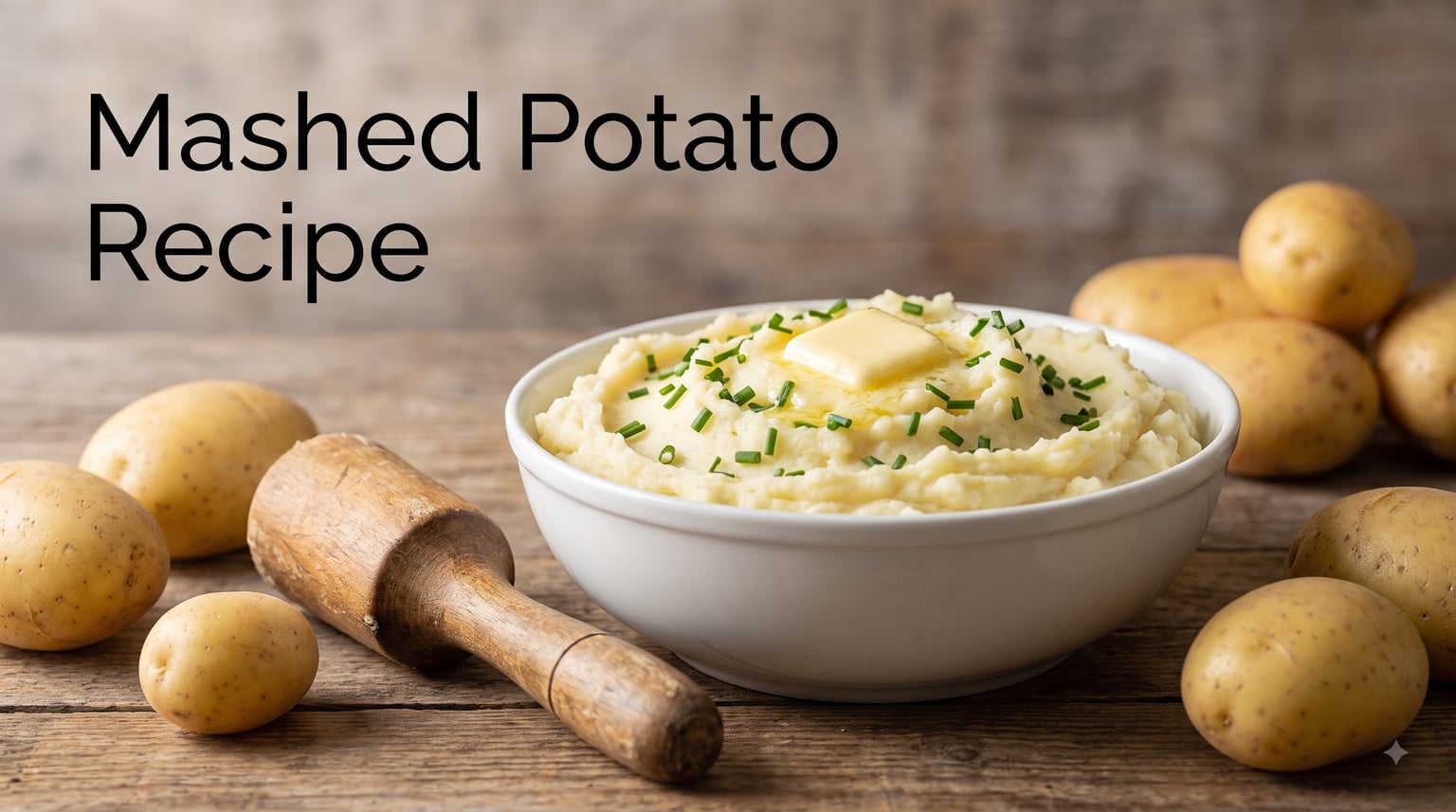
Nothing hits quite like a bowl of homemade mashed potatoes done right. After testing this mashed potato recipe more times than I can count, I’ve landed on a method that produces potatoes so creamy and buttery, they vanish from the table every single time.
The secret comes down to three things: choosing the right potato variety, adding butter before your liquid, and warming your dairy before it touches the hot potatoes. I know that sounds simple, but most recipes skip the why behind each step.
In this guide, I’ll walk you through exactly how to make fluffy, creamy mashed potatoes from scratch. You’ll get the full ingredient breakdown, step-by-step instructions, pro tips from cooking communities, troubleshooting fixes, and ideas for leftovers. Whether you’re cooking for a Tuesday night dinner or a holiday feast, this recipe delivers.
If you love potatoes as much as I do, you might also enjoy our stewed potatoes recipe for a completely different take on this versatile vegetable. And before you start cooking, it helps to know how to tell if a potato is bad so you pick the best ones at the store.
Table of Contents
Why This Mashed Potato Recipe Works?
This recipe works because it respects potato science. Potatoes are packed with starch molecules that swell during cooking and break open when mashed. Handle them gently and they stay fluffy. Beat them aggressively and they turn gummy and gluey.
The technique I use comes from both professional kitchens and home cooking forums. The biggest insight from Reddit’s cooking communities is simple but powerful: add your butter first, before any liquid. Here’s why that matters.
When butter hits hot potatoes before milk or cream, the fat coats every starch molecule. This coating creates a barrier that prevents the starch from releasing too much glue-like paste. Once that protective fat layer is in place, you can add your warm dairy without risking a gummy texture.
The third piece of the puzzle is temperature. Cold milk poured into hot potatoes shocks the starch and drops the overall temperature fast. Warming your milk or cream to around 150 degrees Fahrenheit helps it absorb smoothly into the potatoes without disrupting the texture.
These three principles, potato selection, butter-first technique, and warmed dairy, are the foundation of every great batch of mashed potatoes. Get these right and you’re 90 percent of the way to perfection.
Best Potatoes for Mashed Potatoes
The potato you choose matters more than any other single decision in this recipe. Not all potatoes mash the same way, and picking the wrong variety is the number one reason people end up disappointed.
Yukon Gold Potatoes: The All-Around Winner
Yukon Gold potatoes are my top pick for mashed potatoes. They have a naturally buttery flavor and a medium starch content that produces a creamy, velvety texture without turning gummy. Their thin skin means less peeling work, and they hold their shape well during boiling.
I’ve tested Yukon Golds against every other variety, and they consistently produce the smoothest, most balanced mash. They strike the perfect middle ground between starchy and waxy, giving you fluffy results with a rich mouthfeel.
Russet Potatoes: For the Fluffiest Mash
Russet potatoes, also called Idaho potatoes, are the classic choice for mashed potatoes. They have the highest starch content of any common variety, which means they produce an incredibly light and fluffy texture when handled correctly.
The trade-off is that Russets demand gentle treatment. Their high starch content means they go from perfect to gluey faster than any other potato. If you use a ricer and avoid over-mixing, Russets give you the most pillowy, cloud-like mash possible.
Red Potatoes: Not Recommended
Red potatoes are a waxy variety with very low starch. They hold their shape beautifully in potato salads and roasted dishes, but that same structural integrity works against you in mashed potatoes. They tend to produce a dense, heavy, and slightly watery mash.
If red potatoes are all you have, you can use them, but expect a different texture. They work better for a rustic, chunky smash than for smooth, creamy mashed potatoes.
Quick Potato Selection Guide
Here is a fast reference for choosing your potatoes:
Yukon Gold: Creamy and buttery, forgiving to work with, best for most home cooks
Russet: Fluffiest and lightest, requires gentle handling, best for special occasions
Red potatoes: Dense and waxy, better for salads, not ideal for mashing
Mix of Yukon Gold and Russet: A 50/50 blend gives you creaminess and fluffiness in one batch
Whatever variety you choose, look for firm, smooth potatoes with no green spots or sprouts. If you are unsure about freshness, check our guide on how to tell if a potato is bad before you buy.
Mashed Potato Recipe Ingredients
This recipe serves 6 people and uses just 5 ingredients. Simplicity is the point here. When you start with good potatoes, you do not need much to make them taste amazing.
The Full Ingredient List
3 pounds Yukon Gold potatoes (about 8 to 10 medium potatoes), peeled and cut into 2-inch chunks
1 cup (2 sticks) unsalted butter, at room temperature and cut into pieces
1 cup whole milk or half-and-half, warmed to about 150 degrees Fahrenheit
1 tablespoon kosher salt (plus extra for the cooking water)
1 teaspoon freshly ground black pepper
Why Each Ingredient Matters
Let me break down the reasoning behind each choice so you can adapt with confidence.
Potatoes: Three pounds gives you 6 generous servings. I weigh them rather than count them because potato sizes vary wildly. Two-inch chunks cook evenly and drain well.
Butter: I use unsalted butter so I can control the total salt level. Two sticks might sound like a lot, but this ratio, roughly 100 grams of butter per kilogram of potatoes, comes straight from cooking forums where home cooks have tested every possible ratio. European-style butter with higher fat content takes the richness up another notch.
Milk or half-and-half: Whole milk produces a lighter result. Half-and-half makes them richer and more decadent. For Thanksgiving or a dinner party, go with half-and-half. For a weeknight side, whole milk is perfect.
Kosher salt: The large crystals dissolve evenly and distribute flavor better than table salt. You will use some in the cooking water to season the potatoes from the inside out, and the rest goes in during mashing.
Black pepper: Freshly ground makes a real difference. The pre-ground stuff tastes flat and dusty by comparison.
Optional Add-ins
These are not required, but they are worth knowing about:
3 cloves roasted garlic, smashed into a paste
1/2 cup sour cream (reduces milk slightly)
1/2 cup shredded sharp cheddar cheese
2 tablespoons fresh chopped chives
4 ounces cream cheese, softened
Equipment You Will Need
The tool you use to mash your potatoes has a massive impact on the final texture. Different tools produce wildly different results, and one popular kitchen appliance will absolutely ruin your potatoes.
Potato Ricer: Best for Smooth and Fluffy Results
A potato ricer is my top recommendation. It forces cooked potatoes through small holes, producing rice-sized pieces that are uniform and fluffy. Because the potatoes pass through with minimal force, almost no starch gets overworked.
The result is the smoothest, lightest mash you can make at home. Ricers are inexpensive and easy to clean. If I could only own one mashing tool, this would be it.
Food Mill: Best for Silky Texture
A food mill works similarly to a ricer but sits over a bowl and uses a hand-cranked blade to push potatoes through a sieve. It produces an even silkier texture than a ricer and automatically catches any tough bits or skin.
Food mills are slightly more expensive and take a bit more effort, but the velvety results are worth it for a special dinner.
Hand Masher: Best for Rustic Texture
A traditional hand masher is the tool most people already own. It works fine for a rustic, slightly chunky mash. You will not get the smooth, restaurant-quality texture of a ricer, but the results are still delicious.
Use a straight-down pressing motion rather than a stirring motion. Stirring with a masher overworks the starch and leads to gumminess.
Electric Mixer: Convenient but Risky
A hand mixer or stand mixer can work for mashed potatoes, but it is easy to over-mix. The beaters whip the starch molecules into a sticky paste very quickly. If you use a mixer, run it on the lowest speed and stop the moment everything is combined.
Food Processor and Blender: Never Use These
This is the one rule I want you to remember: never put mashed potatoes in a food processor or blender. The high-speed blades pulverize the starch so aggressively that the potatoes turn into a sticky, gluey paste within seconds. There is no fix for this. Once it happens, the batch is done.
Reddit cooking forums are full of posts from people who learned this the hard way. Save the food processor for something else.
How to Make Mashed Potatoes Step by Step
Here is the complete method I use for this mashed potato recipe. Follow these steps in order, and you will get perfect results every time.
Step 1: Peel and Cut the Potatoes
Peel 3 pounds of Yukon Gold potatoes and cut them into uniform 2-inch chunks. Uniform sizing is the key to even cooking. If some pieces are much larger than others, the small ones overcook and turn mealy while the large ones stay hard in the center.
Place the cut potatoes in a large pot of cold water as you work. The cold water start is important. Starting potatoes in cold water and bringing everything to a boil together ensures the outside and inside cook at the same rate. If you drop them into already-boiling water, the outsides overcook and disintegrate before the centers are done.
Step 2: Salt the Water and Bring to a Boil
Add 1 tablespoon of kosher salt to the water. The water should taste slightly salty, like mild broth. This seasons the potatoes from the inside as they cook.
Bring the pot to a boil over high heat. Once boiling, reduce the heat to maintain a steady simmer. Cook for 15 to 20 minutes, or until the potatoes are fork tender.
Step 3: Test for Fork Tenderness
Fork tender means a fork slides into the potato with zero resistance. If you feel any hard center at all, keep cooking. Undercooked potatoes are the number one cause of lumpy mash.
I usually test the largest piece in the pot. If the biggest chunk is fork tender, the rest are too. For 2-inch chunks of Yukon Gold, this typically takes 18 minutes.
Step 4: Drain and Steam Off Moisture
Drain the potatoes in a colander, then return them to the hot pot. Put the pot back on the stove with the burner turned off but still warm. Let the potatoes sit for 2 to 3 minutes.
This resting period lets excess moisture steam off, which is a technique widely shared in cooking forums. Drier potatoes absorb more butter and milk, giving you a richer, creamier result. Wet potatoes dilute the flavor and make the mash watery.
Step 5: Rice or Mash the Potatoes
While the potatoes are still hot, press them through a ricer or food mill back into the pot. If using a hand masher, mash them right in the pot until mostly smooth.
Work quickly while the potatoes are hot. Cold potatoes do not absorb butter and dairy the same way, and the texture suffers.
Step 6: Add the Butter First
This is the most important step in the entire recipe. Add your room-temperature butter pieces to the hot, riced potatoes and fold gently with a spatula until the butter melts and coats everything.
The butter goes in before any liquid. This fat-first approach coats the starch molecules and prevents them from turning gummy when you add milk in the next step. This single technique is the difference between creamy and gluey potatoes.
Step 7: Add Warmed Milk or Half-and-Half
Warm 1 cup of whole milk or half-and-half to about 150 degrees Fahrenheit. You can do this in the microwave or on the stove. It should be hot to the touch but not boiling.
Add the warm milk gradually, about a quarter cup at a time, folding gently after each addition. Stop adding liquid when the potatoes reach your desired consistency. You might not need the full cup.
Step 8: Season and Serve
Add 1 teaspoon of kosher salt (plus the tablespoon from cooking) and 1 teaspoon of freshly ground black pepper. Taste and adjust. Potatoes need more salt than most people expect, so do not be shy.
Serve immediately while hot. Transfer to a warmed serving bowl, top with a pat of butter and a sprinkle of chives if you like.
Pro Tips for Perfect Mashed Potatoes
Beyond the basic steps, a handful of advanced techniques will take your mashed potatoes from good to extraordinary. These come from professional kitchens and cooking communities where people have tested every possible approach.
Cut Your Potatoes Uniformly
I mentioned this in the steps, but it deserves extra emphasis. Uniform chunks cook evenly, which means every piece reaches the same texture at the same time. Uneven pieces mean some potatoes are overcooked and mealy while others are undercooked and hard.
Use Room-Temperature Butter
Cold butter dropped into hot potatoes drops the temperature and does not spread evenly. Softened, room-temperature butter melts on contact and coats the starch smoothly. Take your butter out 30 minutes before you start cooking.
Warm Your Dairy
Cold milk shocks hot potatoes and makes them seize up. Warming the milk or cream to about 150 degrees Fahrenheit lets it absorb smoothly. This is one of the most commonly shared tips on cooking forums, and it makes a noticeable difference.
Let Potatoes Steam Dry
After draining, returning potatoes to the hot pot for 2 to 3 minutes lets steam escape. Less moisture in the potatoes means more room for butter and milk. This simple step makes your mash richer without adding any extra ingredients.
Resist the Urge to Over-Mix
Every stir, fold, or whip works the starch a little more. Stop the moment the ingredients are combined. Over-mixing is the single most common mistake that turns perfect potatoes into glue. Less handling always means better texture.
Season Aggressively
Potatoes are flavor sponges, but they also need more salt than you think. Reddit’s cooking communities have popularized a 100:10:1 ratio of potato to butter to salt by weight. That works out to roughly 1.5 tablespoons of kosher salt for 3 pounds of potatoes, split between the cooking water and the final mash. Taste as you go and trust your palate.
Save Some Pasta Water Logic
Just like pasta, you can save a half cup of the potato cooking water before you drain. If your finished potatoes seem too thick or stiff, a splash of this starchy water loosens them up without diluting flavor the way plain water would.
Common Mashed Potato Problems and Fixes
Even experienced cooks run into issues. Here are the most common mashed potato problems and exactly how to fix them.
Why Are My Mashed Potatoes Gluey?
Gluey potatoes happen when starch is overworked. The usual culprits are using a food processor or blender, over-mixing with a hand mixer, or using an electric mixer on high speed. Once potatoes turn gluey, you cannot reverse it. The fix is prevention: use a ricer, fold gently, and never use a blender.
If you are stuck with a gluey batch, the best rescue is to repurpose it. Gluey potatoes work surprisingly well in potato pancakes, shepherd’s pie, or gnocchi, where the sticky texture is actually an advantage.
Why Are My Mashed Potatoes Lumpy?
Lumps mean your potatoes were undercooked or not mashed thoroughly. The fix is simple: cook longer and use a ricer. A ricer catches every lump and produces perfectly smooth potatoes every time.
To test if potatoes are done, poke the largest piece with a fork. If there is any resistance at all, keep boiling for another 3 to 5 minutes.
Why Are My Mashed Potatoes Watery?
Watery potatoes come from not draining well enough or skipping the steam-off step. Fix this by draining thoroughly and returning the potatoes to the hot pot for 2 to 3 minutes before mashing. You can also try stirring over low heat for a minute to evaporate extra moisture.
If the batch is already watery, add a tablespoon of instant potato flakes or a small amount of cornstarch slurry to absorb the excess liquid. It is not perfect, but it helps.
Why Are My Mashed Potatoes Bland?
Bland potatoes need more salt and fat. Potatoes absorb a surprising amount of seasoning. Try adding an extra half teaspoon of kosher salt, another tablespoon of butter, or a spoonful of sour cream.
Also, check whether you salted the cooking water. Unsalted cooking water is a common cause of bland mash, because the potatoes never get seasoned from the inside.
Mashed Potato Variations and Add-ins
Once you have mastered the base recipe, the variations are endless. Here are my favorite ways to change things up.
Garlic Mashed Potatoes
Add 3 cloves of roasted garlic to the potatoes during mashing. To roast garlic, wrap a whole head in foil and bake at 400 degrees Fahrenheit for 35 minutes. Squeeze the soft cloves out of their skins and smash into a paste before adding. You can also simmer whole garlic cloves in the milk while warming it for a more subtle flavor.
Loaded Mashed Potatoes
Fold in 1/2 cup of shredded sharp cheddar cheese, 3 crumbled strips of bacon, and 2 tablespoons of chopped chives. Top each serving with extra cheese, a dollop of sour cream, and more bacon bits. This version is a meal on its own.
Sour Cream and Chive Mashed Potatoes
Replace half the milk with 1/2 cup of sour cream. The tang from the sour cream adds brightness that plain milk cannot match. Stir in 2 tablespoons of fresh chives at the end. This is one of the most popular variations on cooking forums.
Cream Cheese Mashed Potatoes
Add 4 ounces of softened cream cheese along with the butter. The cream cheese adds body and a subtle tang that makes the potatoes taste richer without needing extra butter. Reduce the milk by about a quarter cup to compensate.
Other Great Add-ins
1/2 cup grated Parmesan cheese for umami depth
2 tablespoons fresh chopped parsley for color and freshness
1 teaspoon truffle oil for a luxurious dinner party side
1/4 cup caramelized onions for sweetness
1 tablespoon horseradish for a steakhouse-style kick
Make-Ahead, Storage, and Reheating
Mashed potatoes are best served immediately, but you can absolutely make them ahead. Here is how to do it without sacrificing texture.
How to Make Mashed Potatoes Ahead of Time
Prepare the recipe completely, then transfer the mashed potatoes to a buttered baking dish. Spread evenly, cover tightly with foil, and refrigerate for up to 2 days.
When ready to serve, bake covered at 350 degrees Fahrenheit for 30 minutes, then uncover and bake another 10 minutes until heated through. Add an extra splash of warm cream before serving to restore the creamy texture.
How to Store Leftover Mashed Potatoes
Cool the mashed potatoes to room temperature, then transfer to an airtight container. Refrigerate for up to 4 days. Make sure the container is sealed well, because refrigerated mashed potatoes can absorb odors from other foods.
How to Reheat Mashed Potatoes
The best reheating method is on the stovetop. Place the potatoes in a saucepan over low heat. Add a splash of milk or cream and stir gently until warmed through. Low heat is important, because high heat scorches the bottom and creates a gummy layer.
You can also reheat in the microwave. Cover with a damp paper towel and heat in 30-second intervals, stirring between each. Add a tablespoon of milk or butter to keep them from drying out.
For oven reheating, spread the potatoes in a baking dish, add a few pats of butter on top, cover with foil, and bake at 325 degrees Fahrenheit for 25 to 30 minutes.
Can You Freeze Mashed Potatoes?
Yes, you can freeze mashed potatoes, but the texture changes slightly. Potatoes with higher fat content freeze better, so add extra butter and cream cheese before freezing for the best results.
Transfer cooled mashed potatoes to a freezer-safe container, leaving an inch of space for expansion. Freeze for up to 2 months. Thaw overnight in the refrigerator, then reheat on the stovetop with an extra splash of cream.
Keep in mind that frozen and thawed mashed potatoes work best in casseroles or as a topping for shepherd’s pie rather than as a standalone side dish.
What to Serve With Mashed Potatoes
Mashed potatoes pair with almost any main dish, but some combinations are truly special. Here are the best pairings for this recipe.
For a classic holiday dinner, serve these mashed potatoes alongside our herb butter turkey recipe. The gravy from the turkey poured over these potatoes is a combination that defines comfort food.
For a complete holiday spread, add our creamed peas recipes and a rice dressing recipe to round out the meal. These sides complement the creamy, rich potatoes without competing for attention.
For everyday dinners, mashed potatoes are perfect with pot roast, grilled chicken, meatloaf, pork chops, or steak. Any protein that produces a pan sauce or gravy is an ideal match. The potatoes soak up those flavors beautifully.
What to Do With Leftover Mashed Potatoes
Leftover mashed potatoes are not a problem. They are an opportunity. Here are the best ways to use them up.
Mashed Potato Pancakes
Mix 2 cups of leftover mashed potatoes with 1 beaten egg and 1/4 cup of flour. Form into patties and pan-fry in butter over medium heat until golden on both sides, about 3 minutes per side. Serve with sour cream or applesauce.
Shepherd’s Pie Topping
Use leftover mashed potatoes as the topping for shepherd’s pie. Spread them over a filling of ground beef or lamb and vegetables, then bake at 400 degrees Fahrenheit for 20 minutes until the top is golden.
Loaded Potato Cakes
Mix leftover mashed potatoes with shredded cheese, crumbled bacon, and chopped chives. Form into balls, flatten into cakes, and pan-fry until crispy. These make a great appetizer, and they are a fun way to use up leftovers alongside our loaded potato skins recipe for a potato-themed spread.
Frequently Asked Questions
What is the secret to really good mashed potatoes?
The secret is adding butter before any liquid. Butter coats the starch molecules and prevents them from turning gluey when milk is added. Also, warm your milk before adding it and use a potato ricer for the smoothest texture.
How to make simple mashed potatoes?
Peel and cut 3 pounds of Yukon Gold potatoes into 2-inch chunks. Boil in salted water for 15 to 20 minutes until fork tender. Drain, return to the hot pot to steam dry for 2 minutes, then rice the potatoes. Fold in 1 cup of softened butter first, then gradually add 1 cup of warmed milk. Season with salt and pepper.
Is it better to use milk or heavy cream in mashed potatoes?
It depends on the occasion. Whole milk produces a lighter, everyday mash. Half-and-half or heavy cream makes richer, more decadent potatoes better suited for holidays. For the best balance, use whole milk for weeknights and half-and-half for special occasions.
What is good to add to mashed potatoes?
Popular add-ins include roasted garlic, shredded cheddar cheese, sour cream, cream cheese, fresh chives, crumbled bacon, grated Parmesan, caramelized onions, and horseradish. Add strong flavors gradually and taste as you go to avoid overpowering the potatoes.
What kind of potatoes are best for mashed potatoes?
Yukon Gold potatoes are the best all-around choice because they are creamy, buttery, and forgiving. Russet potatoes produce the fluffiest mash but require gentle handling. Avoid red or waxy potatoes, which produce a dense, watery mash.
Can you make mashed potatoes ahead of time?
Yes. Prepare the recipe fully, transfer to a buttered baking dish, cover tightly with foil, and refrigerate for up to 2 days. Bake covered at 350 degrees Fahrenheit for 30 minutes, then uncover for 10 more minutes. Add a splash of warm cream before serving.
How do you reheat mashed potatoes?
Reheat on the stovetop over low heat with a splash of milk or cream, stirring gently until warmed through. You can also microwave in 30-second intervals covered with a damp paper towel, or bake covered at 325 degrees Fahrenheit for 25 to 30 minutes.
Can you freeze mashed potatoes?
Yes, mashed potatoes can be frozen for up to 2 months. Add extra butter or cream cheese before freezing for better texture. Thaw overnight in the refrigerator and reheat on the stovetop with additional cream. Frozen mashed potatoes work best in casseroles.
Why are my mashed potatoes gluey?
Gluey potatoes are caused by overworked starch, usually from using a food processor, blender, or over-mixing with an electric mixer. Once potatoes turn gluey, the texture cannot be reversed. Prevent it by using a ricer, folding gently, and never using a blender or food processor.
Final Thoughts on the Best Mashed Potato Recipe
The perfect mashed potato recipe comes down to a few key principles: use Yukon Gold potatoes, add butter before any liquid, warm your dairy, use a ricer, and handle everything gently. Master these steps and you will never need another recipe.
This mashed potato recipe has been my go-to for holiday dinners, weeknight meals, and everything in between. It is simple enough for beginners and reliable enough to serve to a crowd. Once you taste the difference the butter-first technique makes, you will never go back to your old method.
Give this recipe a try, experiment with the variations, and make it your own. The best mashed potatoes are the ones you cook exactly the way you like them.