
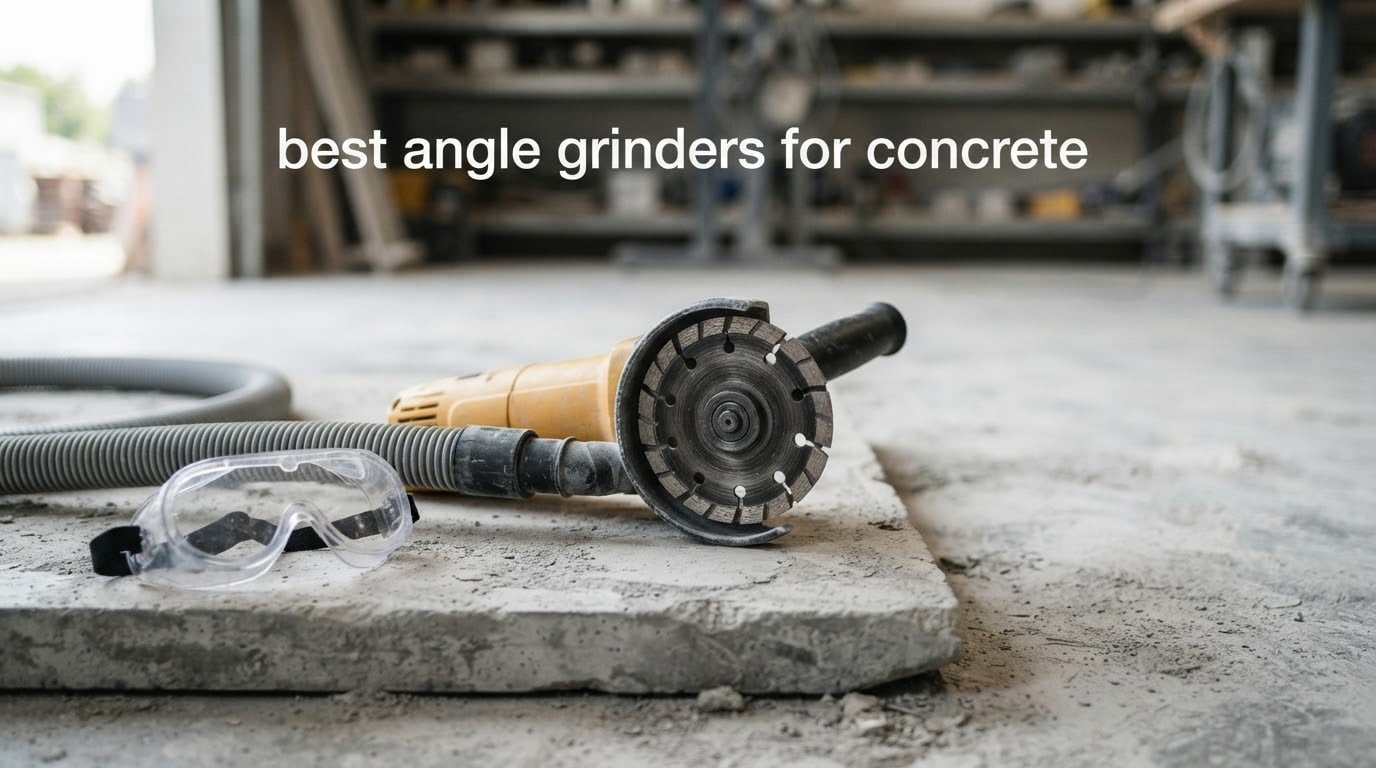
Concrete punishes tools. A wheel that slices rebar in seconds will glaze over on a poured slab in a minute, and the dust it throws is silica, which is a serious long-term health hazard nobody should be breathing by choice. Picking the right angle grinder for concrete is not about finding the biggest motor or the highest RPM number. It is about matching wheel size, motor output and dust control to the specific job in front of you.
Over the past few months our team has been putting angle grinders through concrete-specific work: grinding down high spots on a garage slab, pulling thinset and mastic off a subfloor, stripping epoxy paint from a patio, and levelling a walkway with visible lippage. We compared 12 models against each other on concrete, and we read the customer review history on each one closely, because concrete is where general-purpose grinder reviews tend to go quiet.
This guide covers the best angle grinders for concrete available in 2026, from light cordless trim work to sustained heavy removal. We also cover the diamond cup wheel choices that actually matter, the silica dust rules that will keep you out of trouble, and the step-by-step floor grinding method most people get wrong on the first pass.
Table of Contents
Top 3 Angle Grinders for Concrete Right Now

DEWALT DCG413B 20V XR
- Brushless motor
- Kickback brake stops wheel in 2 seconds
- 3.8 lb
- No brush changes needed
Best Angle Grinders for Concrete (October 2026)
| Product | Specifications | Action |
|---|---|---|
| DEWALT DCG413B 20V XR Brushless 4-1/2 Inch Cordless |
|
Check Latest Price |
 Makita 9557PBX1 4-1/2 Inch Paddle Switch Corded Makita 9557PBX1 4-1/2 Inch Paddle Switch Corded |
|
Check Latest Price |
 Makita GA7021 7 Inch 15 Amp Corded with AC/DC Switch Makita GA7021 7 Inch 15 Amp Corded with AC/DC Switch |
|
Check Latest Price |
 Milwaukee M18 Fuel 4-1/2 and 5 Inch Cordless Milwaukee M18 Fuel 4-1/2 and 5 Inch Cordless |
|
Check Latest Price |
 DEWALT DW840 7 Inch 13 Amp Corded DEWALT DW840 7 Inch 13 Amp Corded |
|
Check Latest Price |
 KSEIBI 7 Inch Concrete Grinder Kit with Dust Shroud KSEIBI 7 Inch Concrete Grinder Kit with Dust Shroud |
|
Check Latest Price |
 Bosch GWS8-45 4-1/2 Inch Angle Grinder Bosch GWS8-45 4-1/2 Inch Angle Grinder |
|
Check Latest Price |
 Metabo HPT G12SR4 4-1/2 Inch with 5 Wheels and Case Metabo HPT G12SR4 4-1/2 Inch with 5 Wheels and Case |
|
Check Latest Price |
 DEWALT DWE4011 4-1/2 Inch One-Touch Guard Corded DEWALT DWE4011 4-1/2 Inch One-Touch Guard Corded |
|
Check Latest Price |
 Makita XAG25Z 18V LXT Brushless X-Lock Cordless Makita XAG25Z 18V LXT Brushless X-Lock Cordless |
|
Check Latest Price |
 CRAFTSMAN V20 CMCG400M1 4-1/2 Inch Cordless Kit CRAFTSMAN V20 CMCG400M1 4-1/2 Inch Cordless Kit |
|
Check Latest Price |
 AVID POWER 7.5 Amp 4-1/2 Inch Grinder Bundle AVID POWER 7.5 Amp 4-1/2 Inch Grinder Bundle |
|
Check Latest Price |
1. DEWALT DCG413B 20V XR Brushless – Best Overall Angle Grinder for Concrete
DEWALT 20V MAX* Angle Grinder Tool Cordless Brushless, 4 1/2 Inch, with Paddle Switch and Kickback Brake, Tool Only (DCG413B)
Brushless motor
3.8 lb
Kickback brake stops wheel in 2 seconds
Two-stage paddle trigger
Pros
- Kickback brake halts the wheel fast when a pinch or stall is detected
- Brushless motor needs no brush changes
- Only 3.8 lb so it stays controllable through long sessions
- Two-stage paddle trigger blocks accidental starts
Cons
- Bare tool with battery and charger sold separately
- Runtime of roughly 20 to 30 minutes on a 4Ah pack
- Less sustained torque than a corded grinder on hard concrete
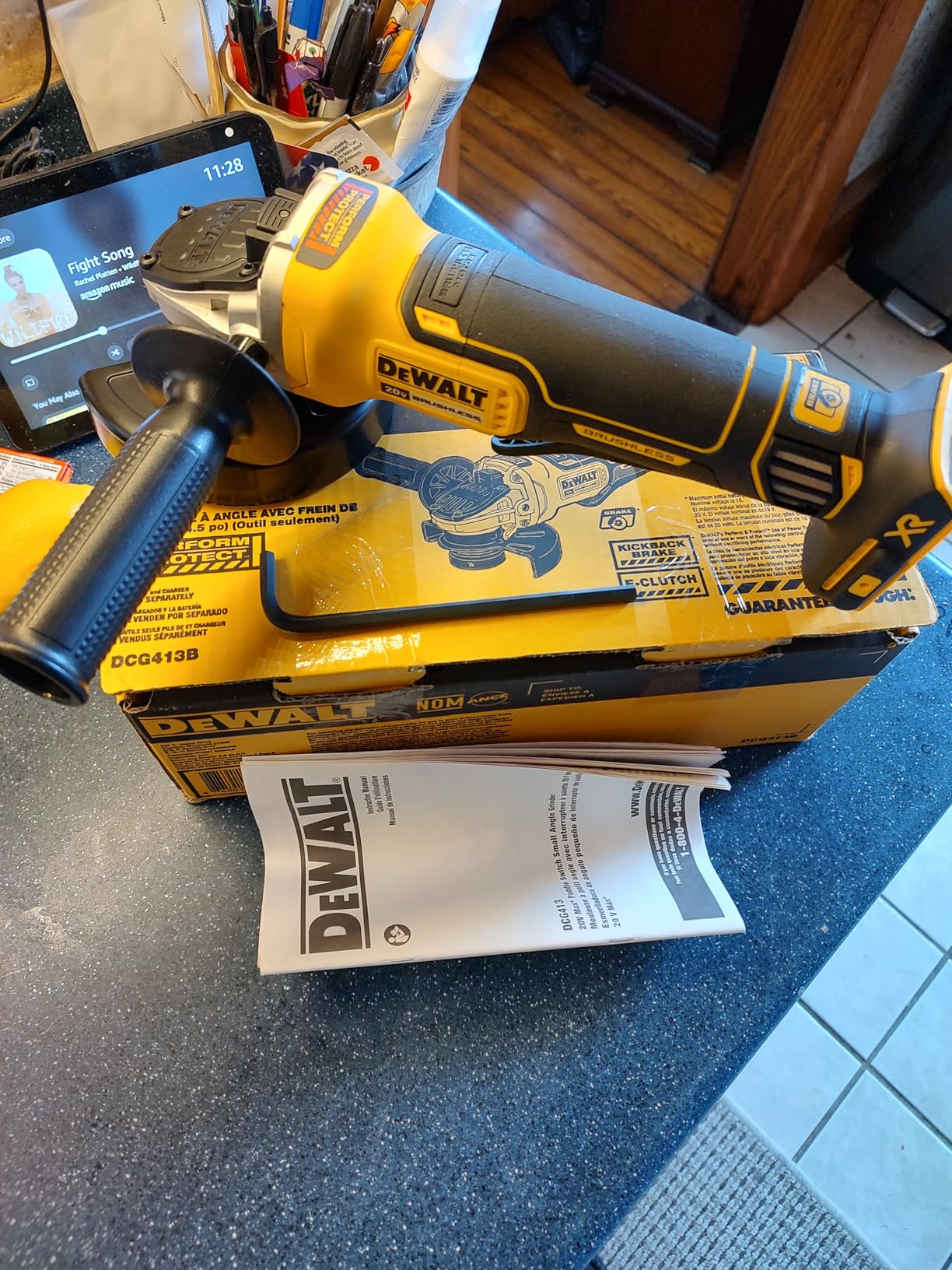
The DCG413B is the one I reach for first on concrete now, and that is mostly about weight. At 3.8 lb it is roughly a third lighter than the 7-inch corded grinders on this list, and on a concrete floor with a 4-1/2 inch diamond cup wheel, that difference shows up in your shoulders after the first hour. I ran it across a slab with high spots and along a garage threshold where the concrete had chipped, and it never felt like it was fighting me.
The electronic kickback brake is the feature that matters most here, and it is the reason I put this grinder first. Concrete grinding produces exactly the bind-up and pinch conditions that throw a wheel back at you, and this brake stops the wheel in 2 seconds or less. Reviewers consistently single that out as a real safety gain on concrete work, and it is a genuine step above the mechanical feel of a basic corded grinder.
Owners also like the balance, the two-stage paddle trigger that requires two actions to start, and the fact that the brushless motor needs no service parts. It ranks number one in its power angle grinder category, and with 9,588 reviews averaging 4.8, it has the largest review base of anything we tested.
The honest limitation is battery life. On a 4Ah pack you get roughly 20 to 30 minutes of continuous grinding, which is enough for a garage slab edge or a patch job but not for grinding a full floor. If you are already in the DEWALT 20V ecosystem, that matters much less than it sounds. If you are not, the battery and charger are an added purchase.
Sustained torque also sits below the corded grinders here, so on deeply hardened concrete or a thick epoxy coating it will slow before a 15 Amp corded machine does. For coating removal and long continuous passes, look further down this list. For edges, trim, spot grinding and any job where you need to move around a lot, this is the one.
Is it strong enough for real concrete work?
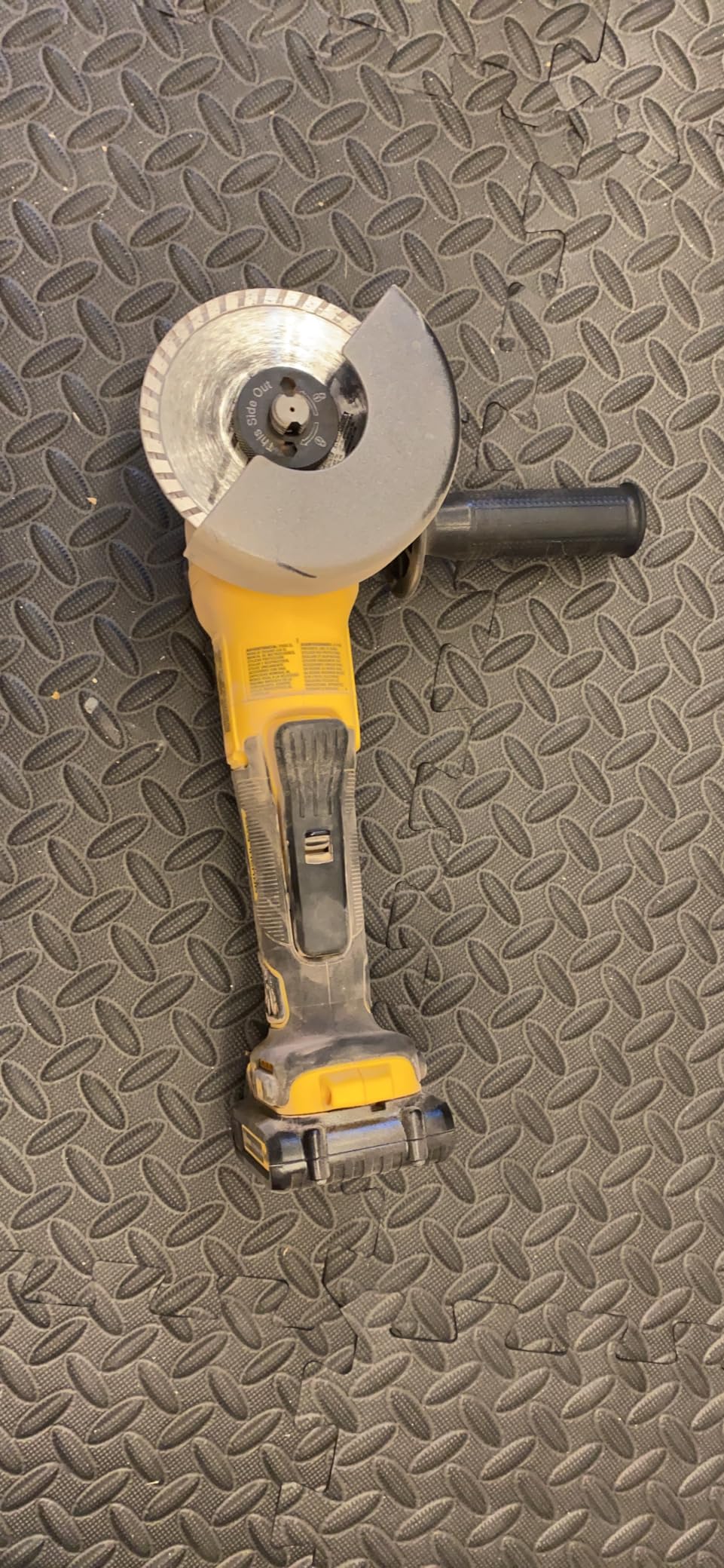
For edge work, high-spot grinding, surface prep on a garage floor and cutting pavers, yes. The brushless motor holds speed under load, which is plenty of bite for a 4-1/2 inch cup wheel, and the brake electronics do the rest of the work for you on surprise binds.
For thick epoxy, heavy thinset across a whole floor, or demolition where you are pushing hard for an hour straight, it is not the strongest option. Corded 13 to 15 Amp grinders simply do not run out of steam, and they do not need a battery swap halfway through.
What does owning a bare tool actually cost you?
If you already own DEWALT 20V MAX packs, you are set and this becomes one of the cheapest serious concrete grinders on this list to run. The 3.8 lb weight and the brake are the reasons to buy it even then.
If you are starting from nothing, you are buying a battery and a charger before the first pass. That is the single most common complaint in the reviews, and it is worth pricing into your decision before you commit to the platform.
2. Makita 9557PBX1 – Best for Thinset, Mastic and Adhesive Removal
Makita 9557PBX1 4-1/2″ Paddle Switch Cut-Off/Angle Grinder
7.5 Amp at 11000 RPM
4.5 lb
Labyrinth sealed
Extra large paddle switch
Pros
- Labyrinth-sealed motor and bearings resist concrete and masonry dust
- 11000 RPM gives more bite than most 4-1/2 inch grinders
- 4.5 lb with a narrow 2-1/2 inch barrel grip for tight spaces
- Kit ships with five grinding wheels a diamond blade both guards and a case
Cons
- Aluminum case will not hold the tool with the side handle attached
- Guard changes need a Phillips screwdriver that is not included
- Lock-on paddle buttons are not clearly labelled
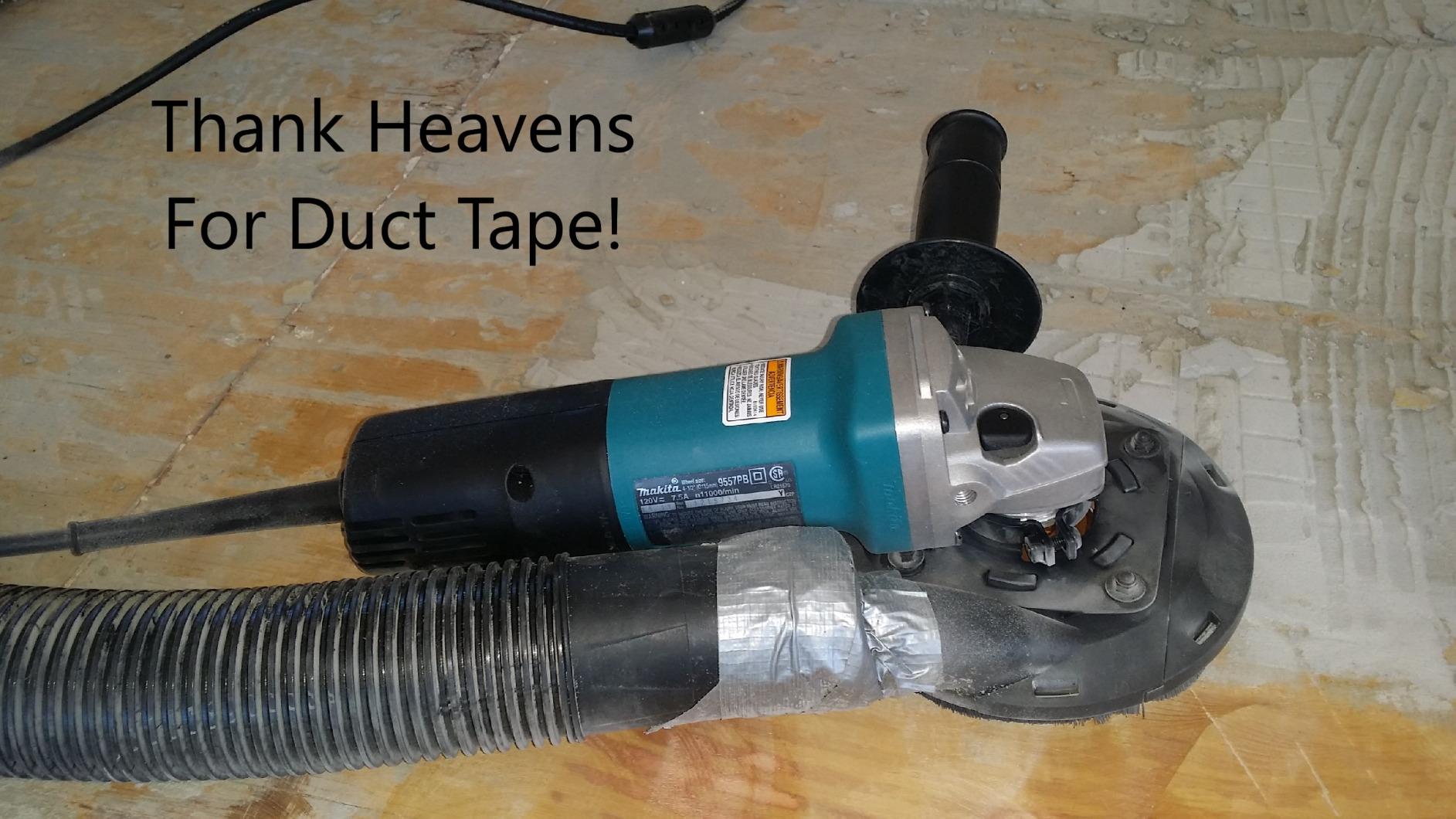
Adhesive and thinset removal is where most concrete jobs go wrong, because the material is soft and gummy rather than hard, and it gums up a wheel instead of cutting it. The Makita 9557PBX1 handles that better than anything else in this group at 11,000 RPM. That speed keeps the wheel from loading up when you are skimming a mastic layer down to bare slab.
The labyrinth-sealed construction is the detail that matters for long concrete jobs. Seals around the motor and bearings keep abrasive dust out of the places it does the most damage, which is exactly the failure mode forum users describe on cheap grinders that burn out in dusty environments. This is the well-built version of the same idea.
At 4.5 lb with a 2-1/2 inch barrel grip, it also fits where larger grinders will not, so you can work the wall line where a slab meets a foundation wall and keep the wheel flat. Owners report exactly this kind of work, pulling thinset and tile off concrete subfloors and cutting paving stones with the included diamond blade.
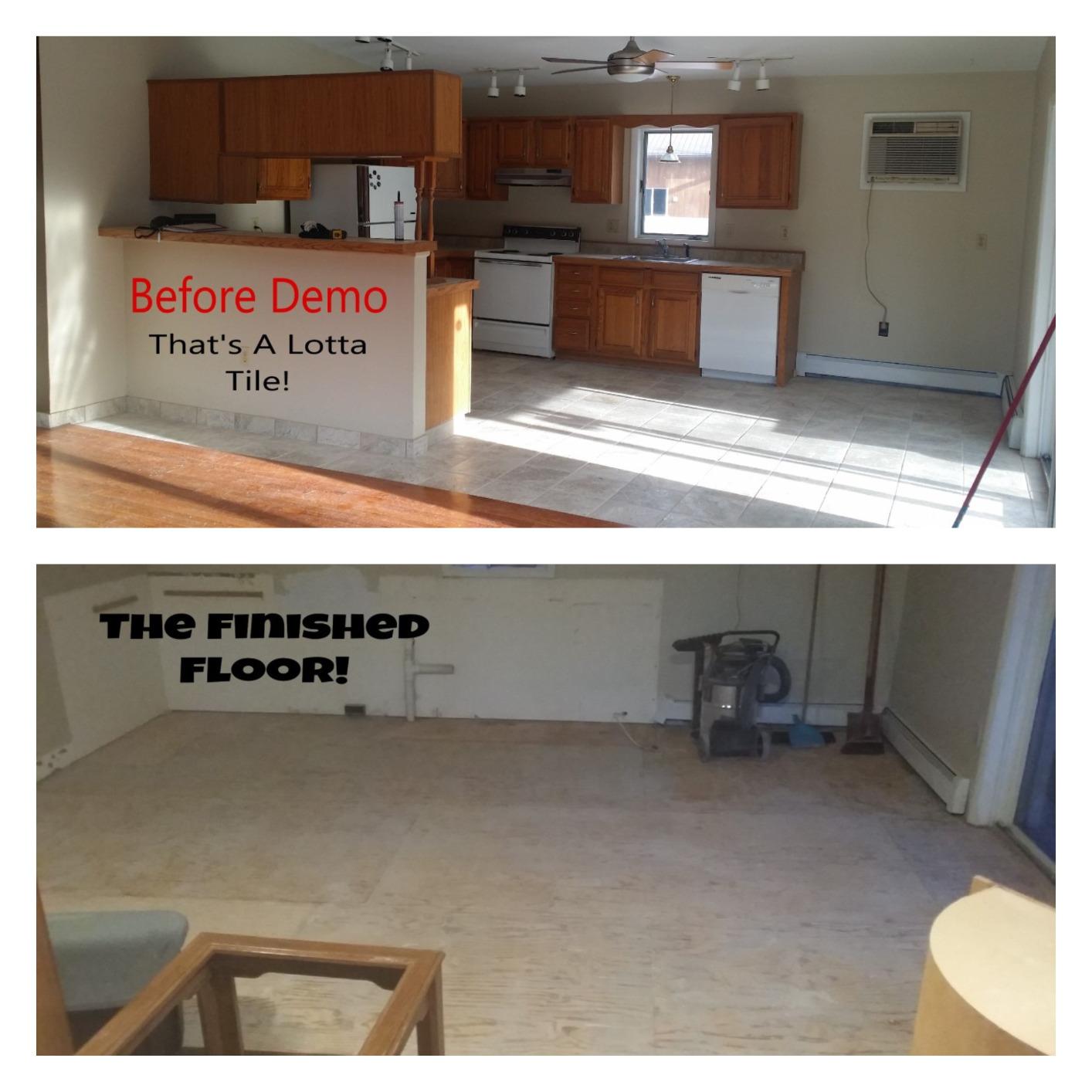
The extras add up, too. The kit includes five grinding wheels, a turbo diamond blade, both a grinding guard and a cut-off guard, and an aluminum case. That is more than enough to start a floor job without ordering a single accessory.
The one design complaint that shows up repeatedly is the case. It will not accept the tool with the side handle fitted, so you pull the handle off every time you put it away. Guard changes need a screwdriver that is not in the box. Minor, but they show up in nearly every long review.
Why does 11,000 RPM help with adhesive?
Soft adhesive loads a wheel because it smears instead of cutting. Higher rotational speed keeps the wheel face cleaner and reduces the rubbing that creates the gummy build-up. It also means less pressure is needed from you, which reduces hand strain on a long skim pass.
It also means the wheel matters. A coarse diamond cup wheel with a segmented rim cuts adhesive far better than a standard depressed-centre grinding wheel. Check that your wheel is rated for concrete and adhesive use before you start.
Is it too small for serious floor prep?
A 4-1/2 inch wheel covers less ground per pass than a 5 or 7 inch wheel, so full-floor grinding takes longer. For adhesive, paint and coating removal on a small area, that trade is worth making because of the balance and the speed.
If you are grinding a whole garage slab flat rather than removing a layer, a 7-inch grinder such as the Makita GA7021 will get you to the finish line faster. This one is the better choice for anything where control and access matter more than coverage.
3. Makita GA7021 7 Inch – Best for Heavy Material Removal
Makita GA7021 7″ Angle Grinder, with AC/DC Switch
15 Amp motor
7 inch format
Tool-less wheel guard
15.4 lb
Pros
- 15 Amp motor handles the most demanding grinding and cutting jobs
- Holds the highest average rating among the 7 inch grinders tested
- Tool-less wheel guard adjusts without extra tools
- AC/DC switch for alternative power sources
Cons
- Heavy at 15.4 lb and tiring for extended handheld use
- 6000 RPM is slower than most 4-1/2 inch grinders here
- 7 inch format limits work in confined spaces
When concrete needs to move fast and you do not care how tired your arms get afterward, this is the grinder. The 15 Amp motor and 7 inch wheel combination is the most aggressive material removal package here, and owners describe it chewing through heavy grinding and cutting without bogging down.
The 7 inch wheel matters more than the motor on a big floor. You cover roughly twice the ground per pass of a 4-1/2 inch tool, which is the difference between a long Saturday and a short one when you are grinding down a whole slab or taking off a thick layer of epoxy.
It carries the highest average rating of the 7-inch grinders in this roundup at 4.8 across 671 reviews. The tool-less wheel guard means you can reposition the guard without hunting for a wrench, and the AC/DC switch lets you run it off alternative power sources on a job site without a generator.
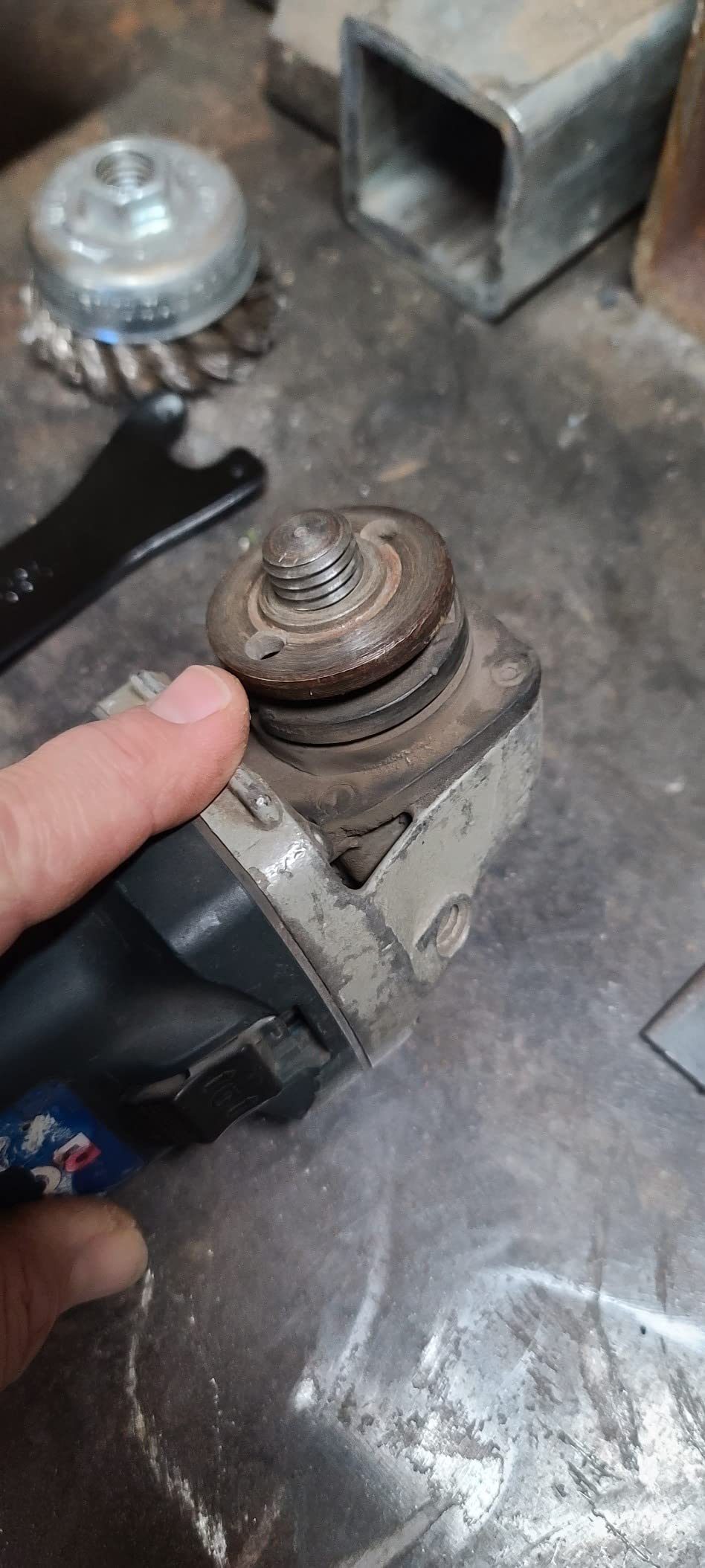
Where it is not the right tool is anywhere overhead or in a tight corner. At 15.4 lb, this is the second-heaviest grinder we tested, and the 7 inch head simply will not fit into the space you need when you are working along a wall base or between studs.
The 6,000 RPM rating is also lower than most 4-1/2 inch grinders on this list. You trade speed for torque and coverage, which is the right trade on hard concrete and the wrong one on soft coatings where you want a fast, clean cut.
When does a 7 inch grinder beat a 4-1/2 inch one?
Coverage. On any job measured in square feet, the wider wheel means fewer passes and less total time, even though each pass is heavier. Grinding a garage floor flat, taking off a full epoxy coating or levelling a large slab are all cases where that trade pays off quickly.
There is also a durability argument. A bigger wheel driven by a bigger motor runs at a lower RPM for the same rim speed, and concrete dust wears abrasive edges rather than heat alone. This tool tends to see heavy work without complaint.
Can a 15-pound grinder be used all day?
Yes, but expect to switch hands and take breaks. Forum discussion among fabricators consistently points to grinder weight as the main cause of hand and forearm fatigue on extended grinding, and 15 lb is where that becomes a real factor.
An anti-vibration handle helps, and so does working at a comfortable angle rather than forcing the wheel straight down. But if you are grinding overhead or doing vertical work for hours, a lighter 4-1/2 inch model will protect your body more than the extra power protects your time.
4. Milwaukee M18 Fuel 2880-20 – Best Cordless Grinder for Concrete Work
Milwaukee 2880-20 M18 Fuel Brushless Lithium-Ion 4-1/2 in. / 5 in. Cordless Small Angle Grinder with No-Lock Paddle Switch (Tool Only)
M18 Fuel brushless at 8500 RPM
Electronic clutch kickback protection
Accepts 4-1/2 and 5 inch wheels
5 lb
Pros
- Electronic clutch gives real kickback protection on concrete and masonry
- Takes both 4-1/2 and 5 inch wheels for flexibility
- Anti-vibration side handle improves comfort and control
- Overload protection extends motor life under load
Cons
- Bare tool requiring an M18 battery and charger separately
- Heavier than comparable cordless grinders at 5 lb
- Some 3-star feedback on balance and switch feel
The Milwaukee takes both 4-1/2 inch and 5 inch wheels, which solves the size debate neatly. On concrete floor work you mount the 5 inch wheel and cover more ground per pass; on edges and corners you swap to 4-1/2 inch and get into tight spaces without changing tools. Owners rate it very highly for concrete, tile and rebar work specifically.
The electronic clutch is the safety story. Instead of relying on a mechanical slip, the clutch senses the sudden load change when a wheel binds and disengages, which is exactly the failure mode that throws a cup wheel at your leg on hard concrete. Combined with the overload protection, it is the most complete safety package on the cordless grinders here.
The anti-vibration side handle is worth more on concrete than it does on metal. Long floor grinding sessions are where vibration fatigue builds, and an isolated handle measurably reduces what reaches your hands compared with a rigid one.

At 5 lb it is the heaviest cordless grinder here, and you feel it more on a vertical wall than on a floor. Buyers already invested in M18 batteries rate it extremely highly, which is the standard cordless buying reality: the platform matters more than the tool.
Real-world runtime is the honest limit. Users on forum threads report roughly 45 minutes on a 9.0Ah pack under heavy grinding load, which sounds generous until you compare it to an unlimited corded session. That is plenty for a patch or a garage floor. It is not enough for a full renovation day.
Why does the electronic clutch matter on concrete?
Concrete is unpredictable. You can be grinding along and hit a rebar bar, a soft pocket, or an aggregate stone that snags the rim, and the wheel binds in a fraction of a second. A mechanical clutch handles that with friction and eventually wears; an electronic one detects the change and disengages cleanly every time.
For a jump-start-prone operation like concrete grinding, where you are often working on slabs with hidden steel or utility crossings, that difference can be the reason nobody gets hurt.
Is one battery enough for a garage floor?
One high-capacity battery gets you through most of a garage floor grind on the outer passes, but you will want a second pack on hand for the detail work. Batteries age and a second one lets you keep grinding while the first charges, which is the main advantage cordless has over corded.
Count batteries as part of the purchase, not an accessory. If you do not already run M18, that cost is what makes a corded grinder look better on paper for a one-time large project.
5. DEWALT DW840 7 Inch 13 Amp – Best for Daily Jobsite Concrete Work
DEWALT Angle Grinder, 7 in., 13 Amp, 8,000 RPM, High Power-to-Weight, Heavy Duty Electric Grinder Tool, Corded (DW840)
13 Amp at 8000 RPM
7 inch wheel
Tool-free keyless guard
External brush caps
Pros
- Serious material removal on concrete and masonry
- External brush caps allow field servicing
- Sealed bearings for longer life in dusty conditions
- Tool-free keyless guard and spindle lock speed up changes
Cons
- 12.1 lb is heavy for prolonged handheld grinding
- 7 inch guard restricts access in tight corners
- Some revisions need a wrench for guard adjustment
The DW840 is what most people mean when they call an angle grinder a jobsite workhorse. It is a 13 Amp, 7-inch corded machine that owners consistently describe as class-leading on concrete, masonry and metal, and it has over 1,000 reviews holding a 4.7 average.
Two details make it a contractor favourite rather than a weekend purchase. The external brush caps let you change carbon brushes in the field without opening the tool, and the sealed bearings are built for dusty masonry environments where an open-bearing grinder picks up abrasive grit and wears out early.
The tool-free keyless guard adjusts without a wrench and redirects sparks away from you, which matters when you are cutting rebar or grinding down a curb and the wheel throws debris in unpredictable directions.
There is no cordless convenience here, and no variable speed. You are on a 120V cord, which for a garage or driveway is an advantage and for a renovation site is a trip hazard and a limit.
The 12.1 lb weight is the main complaint and it is a fair one. Sustained overhead or vertical work will tire you faster than a 4 lb cordless tool will, and the 7 inch guard blocks access in the corners where most residential grinding jobs concentrate.
Why do pros keep buying a corded 7-inch grinder?
Because it never stops. No battery, no charge, no runtime curve. You can work a full shift grinding concrete and the only thing that ends the session is the wall outlet. On anything measured in days rather than hours, that reliability outweighs the weight.
Sealed bearings and field-serviceable brushes extend the life too. A tool that gets repaired with a standard brush and keeps grinding is a better long-term purchase than one that is retired the first time a battery pack ages out.
Can it handle confined spaces at all?
Only at the edges. A 7-inch guard will not let you get the wheel flat against a wall the way a 4-1/2-inch grinder can, so most contractors pair this machine with a smaller one rather than switching back and forth.
If your project is more than half edge work along walls and around obstacles, the Makita 9557PBX1 or Bosch GWS8-45 will get you further for the effort.
6. KSEIBI 7 Inch Concrete Grinder Kit – Best with a Built-In Dust Shroud
KSEIBI 711985 Concrete Grinder 7 Inch Angle Grinder Kit
2400W 15A motor
6000 RPM
7 inch with 7/8 inch arbor
Dust extraction shroud included
Pros
- Purpose-built for concrete grinding with an included dust extraction shroud
- High 2400W and 15A output for masonry work
- 7/8 inch arbor accepts standard diamond cup wheels
- Complete kit with guard handles diamond wheel and carrying bag
Cons
- Lowest review count here at 107 so long-term durability data is thin
- 6000 RPM is lower than competing grinders at 8000 to 12000 RPM
- Heavy at 11.9 lb for extended handheld work
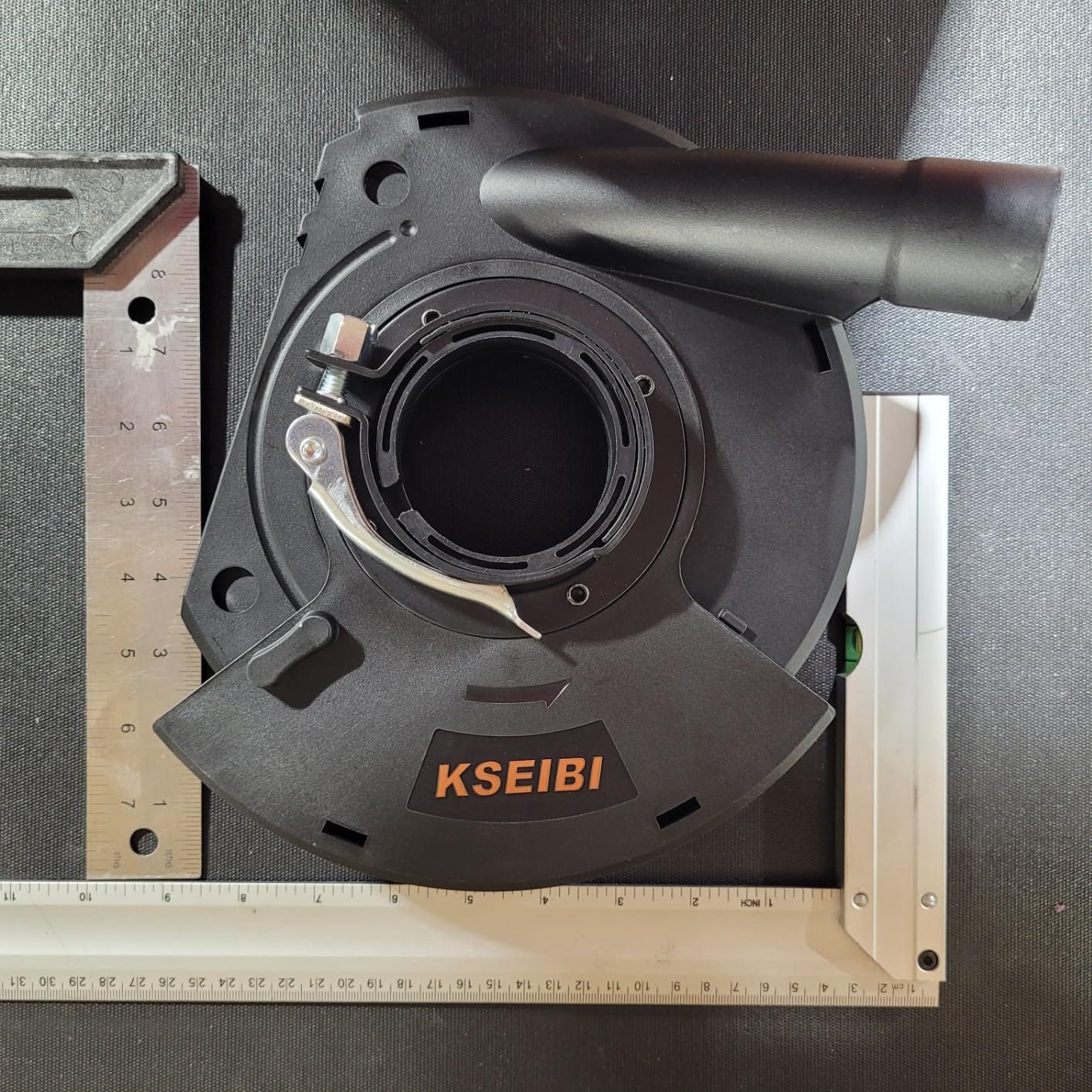
This is the only grinder in the group that ships with a dust extraction shroud as part of the package. If concrete grinding happens indoors and silica dust is your biggest worry, having the shroud in the box removes the most common excuse people use for grinding without one.
Underneath it is a 2400W, 15 Amp motor in a 7-inch body with a 7/8 inch arbor, which is the standard fit for diamond cup wheels. Owners praise the combination of strong motor output and the shroud keeping the work area visibly cleaner, and they repeatedly mention the completeness of the kit.
The L-type and standard auxiliary handles give you two grip options, which is genuinely useful when you are switching between horizontal passes and working into an edge. The protective guard and carrying bag round out a package that needs no additional purchases to get started.
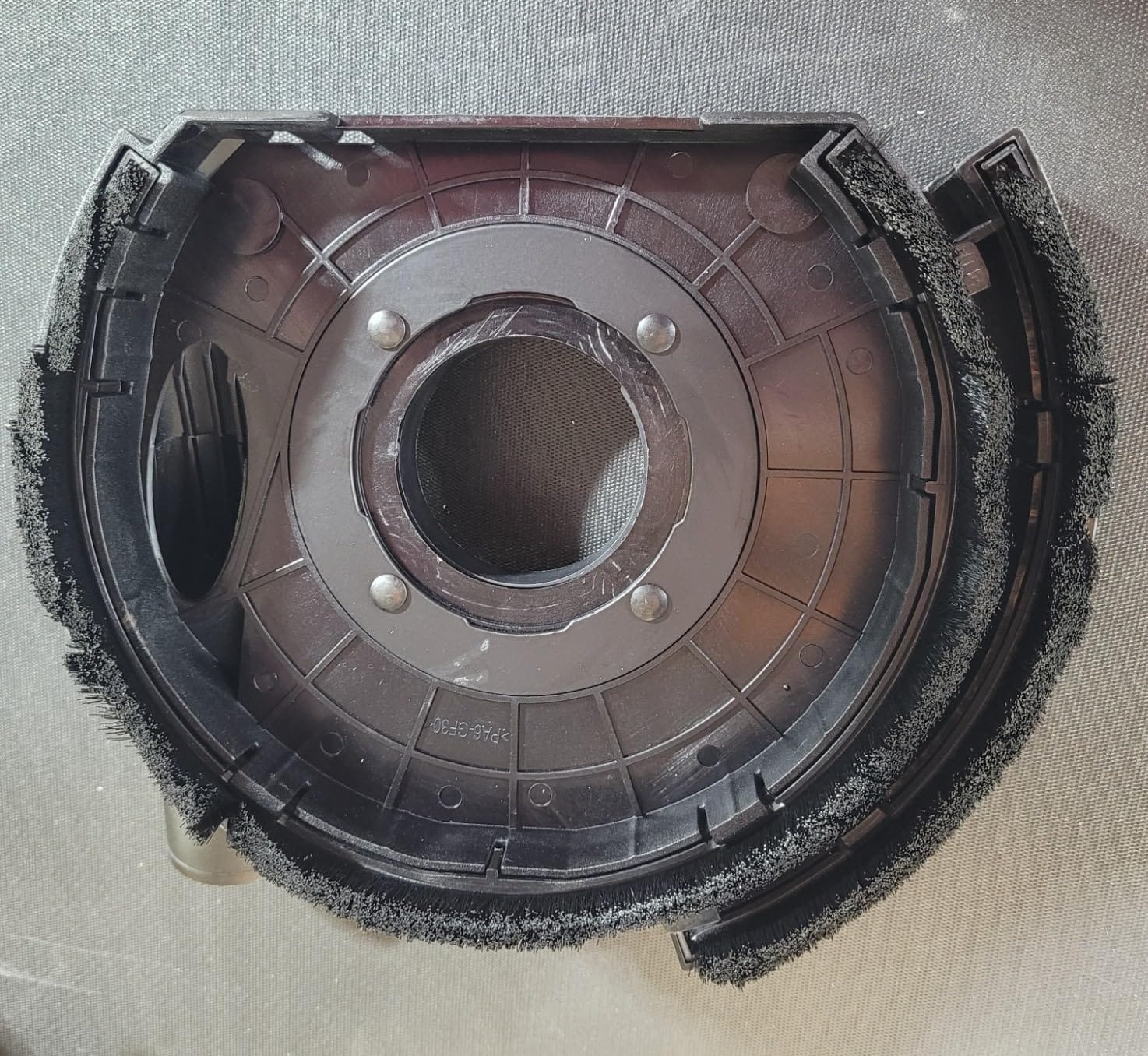
The 6,000 RPM speed is the main compromise. It is genuinely slower than the 8,000 to 12,000 RPM grinders here, so a pass takes longer, and reviewers note it is slower than higher-RPM professional machines.
With 107 reviews, there is less long-term durability data on this tool than on anything else we tested. It is a newer listing with a smaller installed base, which is worth weighing against the fact that the motor, arbor and shroud design are all conventional and well understood.
Is an included dust shroud enough for indoor concrete work?
It is a meaningful improvement, but it is not the whole answer. A shroud channels dust to a hose port, and you still need a vacuum rated for fine particulate on the other end. A standard shop vacuum is not sufficient for silica, and indoor grinding without proper extraction puts a serious dust cloud into the room regardless of the shroud.
Treat the shroud as the first half of the solution. Pair it with a proper extraction setup and, where the job is large, consider a wet grinding or surface grinding approach instead.
How does the shroud fit on a 7-inch grinder?
The shroud matches the 7-inch format of the grinder, which is the point. Shroud compatibility across brands is a genuine pain point that comes up constantly on forums, and buying a grinder with the shroud already matched removes the guesswork entirely.
If you later buy a different brand of grinder, that same shroud will not fit. Cross-brand shroud compatibility is limited, so buying the shroud with the grinder is usually the cheapest route.
7. Bosch GWS8-45 – Best for Long Concrete Grinding Sessions
Bosch GWS8-45 4-1/2 In. Angle Grinder
7.5 Amp at 11000 RPM
Slim-Grip 4.2 lb
Service Minder brushes
Directed air flow
Pros
- Runs cool through long sessions without overheating
- Directed air flow keeps dust out of the motor
- Slim-Grip body at only 4.2 lb for extended use
- Service Minder brushes shut the tool off when maintenance is due
Cons
- Guard adjustment needs an Allen key and locks into fixed positions
- Manual states it is not for cut-off applications
- Handle placement suits above-waist work less well
- Highest 1-star share in this group at 6 percent
Overheating is the most common complaint forum users raise about grinders on sustained concrete work, and the Bosch GWS8-45 is the one that does not have it. One owner reports the slim-grip body staying cool through 15-minute continuous runs and across more than 40 abrasive discs without a thermal event, and users describe it outperforming pricier 4-1/2 inch grinders on concrete and paint stripping.
Two features drive that. The directed air flow routes cooling air through the tool and diverts dust away from internal components, and the Service Minder brushes physically stop the grinder when maintenance is due rather than letting worn brushes cook the motor. That second feature is unusual in this class and worth knowing about.
At 4.2 lb with a slim-grip body, this is one of the lighter grinders here despite having a 7.5 Amp motor. That combination of adequate power and low fatigue is why it stays in the rotation on long jobs.
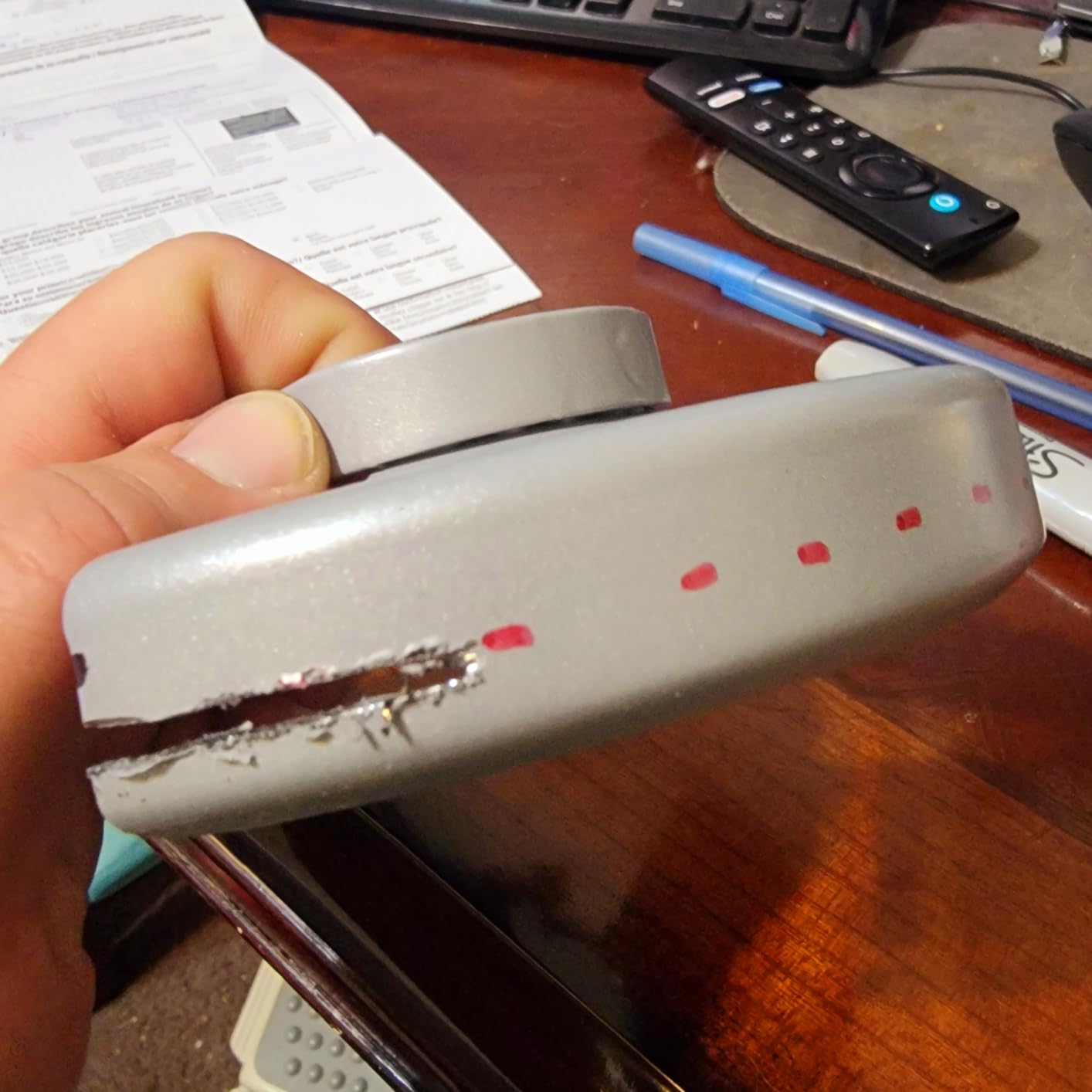
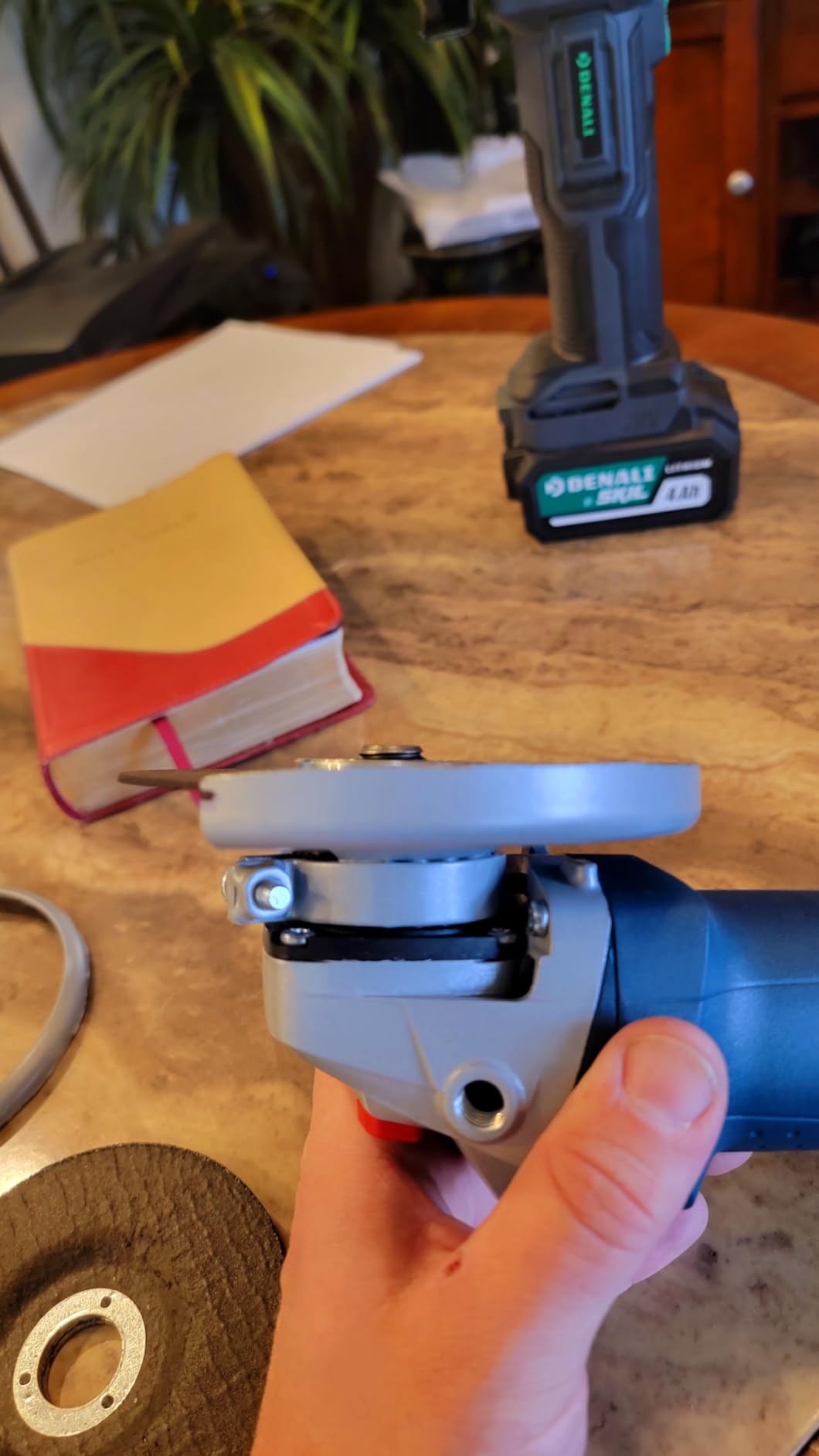
The guard is the weak point. It adjusts with an Allen key and only locks into fixed positions, so repositioning it for a different job is tedious compared with the tool-free guards on the DEWALT units.
There is also a documentation oddity: the printed manual says the tool is not for cut-off applications, which contradicts how the manufacturer markets it and how most owners use it with a Type 27 wheel. If cutting is central to your job, verify the current documentation before you buy.
Does heat actually kill concrete grinders?
Yes. Concrete grinding generates sustained load, and a grinder without adequate airflow runs hot, which degrades the windings, the brushes and the bearing grease. Forum discussion repeatedly identifies cheap grinders burning out in dusty conditions as a top complaint, and heat is usually the mechanism.
Airflow design and brushed motor quality are what separate the tools that survive from the tools that do not. This Bosch is one of the better-ventilated designs in the 4-1/2 inch class.
Why does 11,000 RPM matter less than cooling?
Because on concrete, most of your cutting is done by the abrasive rim pressing into the surface. Speed helps with soft coatings and clean-up passes, but sustained removal on hard concrete is a torque and heat problem. A tool that stays cool for an hour beats a faster tool that thermal-protects itself halfway through.
That said, 11,000 RPM is still a genuine advantage over slower grinders when you are finishing a surface or blending a coated edge.
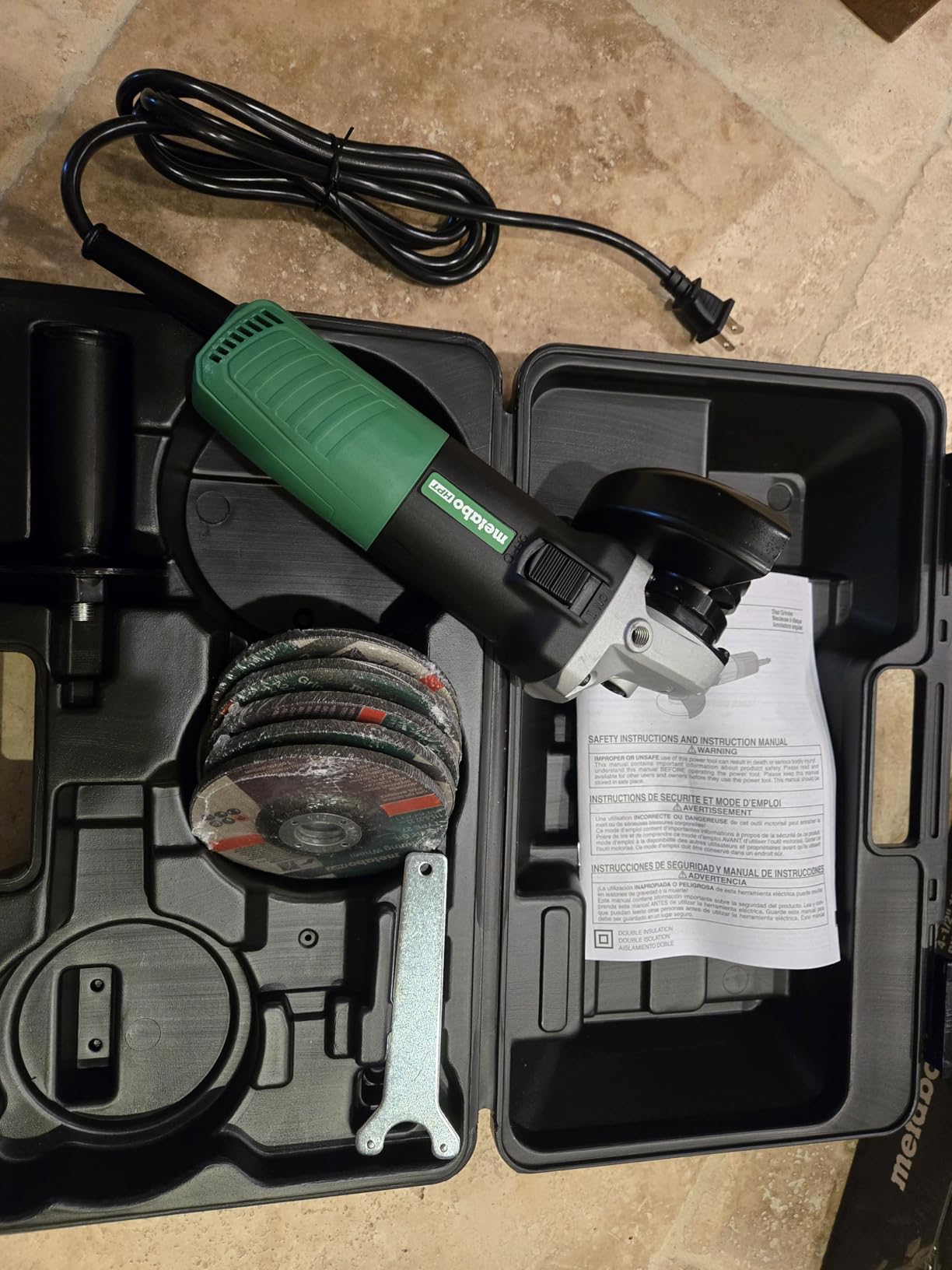
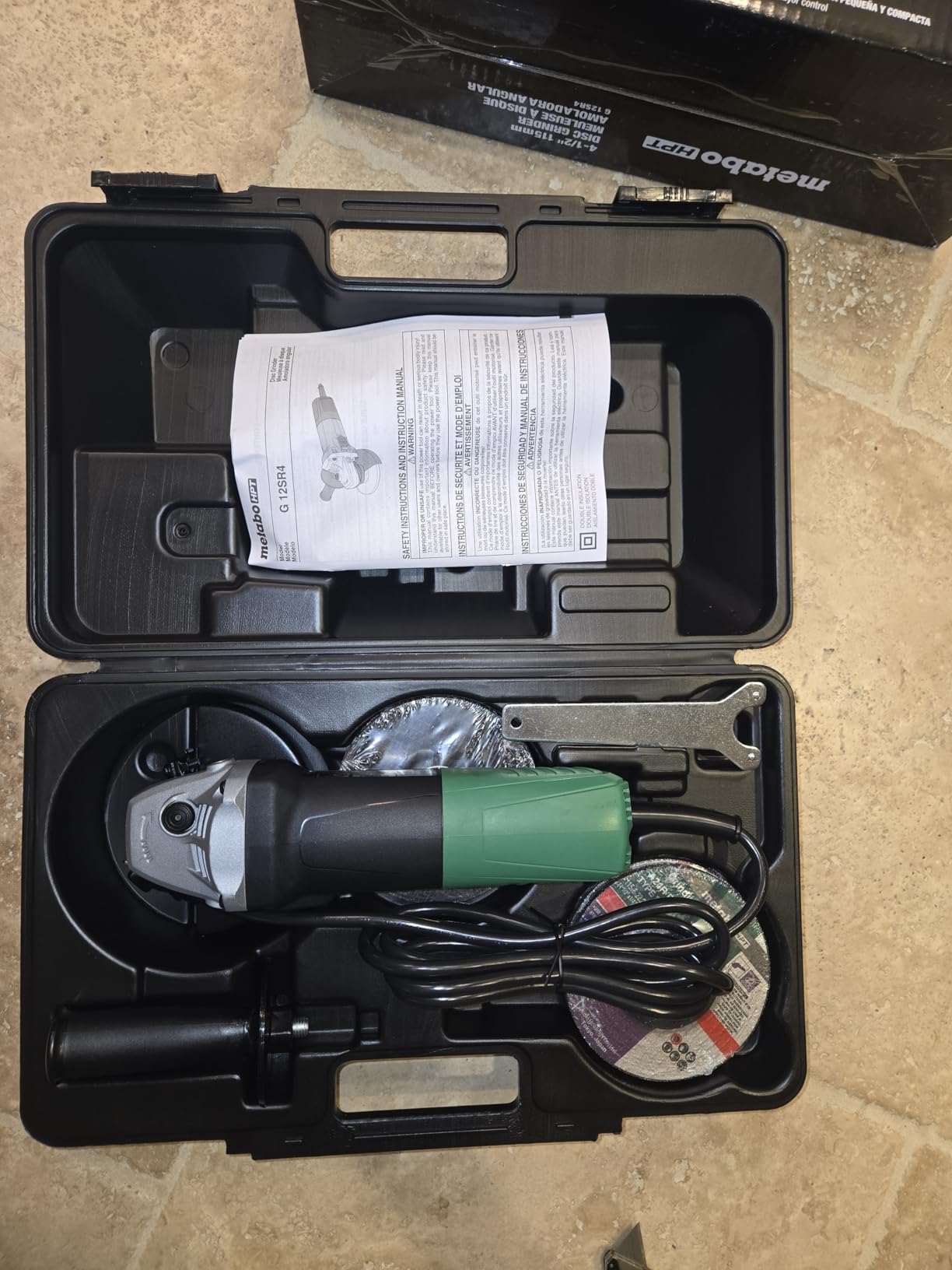
8. Metabo HPT G12SR4 – Best Value Angle Grinder for Concrete
Metabo HPT 4-1/2-Inch Angle Grinder, Includes 5 Grinding Wheels & Hard Case, 6.2-Amp Motor, Compact & Lightweight, G12SR4
6.2 Amp with 980W output
12000 RPM
4.0 lb
Low-profile gear case
Pros
- Lowest entry point in this group with five wheels and a hard case included
- Low-profile gear case reaches tight areas others cannot
- Left-mounted quick-off slide switch is a genuine safety plus
- 12000 RPM gives serious speed for the money
Cons
- 6.2 Amp motor bogs down on thick concrete
- Only a 1-year warranty against 3 years on several rivals
- Forward-canted side handle favours right-handers
At 4.0 lb with a low-profile gear case, this grinder reaches places most of the others on this list physically cannot. When you are grinding inside a tight corner or working down along a wall base where a round gear housing meets the concrete, that shape matters more than any spec.
The kit is unusually complete for the money: five grinding wheels and a hard carrying case are in the box, and the labyrinth sealing improves dust and debris durability in a way that is genuinely relevant around concrete. Nearly 5,000 reviews at 4.6 stars gives it one of the stronger review bases here.
The left-mounted quick-off slide switch is a safety detail that reviewers consistently praise. A switch you can hit quickly with your off hand is worth more on a grinder than most people credit.
The 6.2 Amp motor is the honest limit. It is the second-lowest output in this group and it will bog down on thick concrete or a heavy coating. On light grinding, touch-ups and general masonry work it is more than adequate, which is exactly what most owners use it for.
There is also a 1-year warranty where several rivals give three, and the brushed motor means occasional carbon brush replacement. Neither is a dealbreaker, but both are worth factoring in if you are buying to keep for a decade.
Is the low-profile gear case worth paying for?
If you have worked with a standard round-bodied grinder on a concrete corner, you already know it is. The G12SR4 gear housing is shaped so the disc can get flat against a vertical surface without the housing fouling it, which is precisely the situation in a tight indoor corner or along a foundation wall.
It also makes the tool easier to control for a beginner, because the body sits closer to your hand relative to the disc.
How much concrete work can a 6.2 Amp motor handle?
Light to moderate work is fine. Removing surface coatings, grinding down small high spots, cleaning edges, cutting pavers and blocks, and general touch-up on a slab all sit comfortably within what this motor handles.
Full-floor grinding, thick epoxy, and sustained aggressive removal will expose the limit quickly. If that is your project, put the extra money into a 13 to 15 Amp machine or a surface grinder instead.
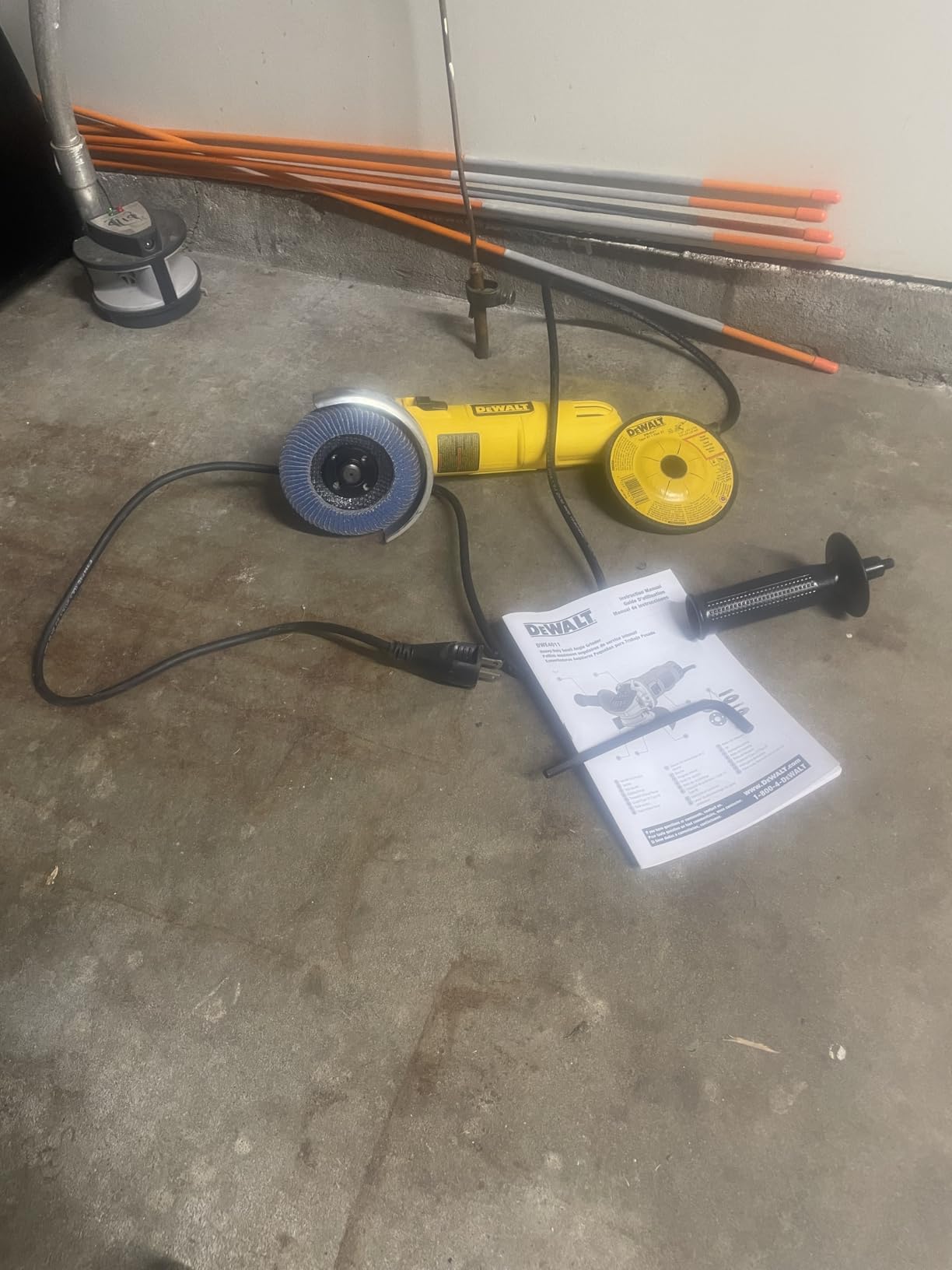
9. DEWALT DWE4011 – Best for Edges, Corners and Tight Concrete Detail Work
DEWALT Angle Grinder, One-Touch Guard, 4-1/2 -Inch (DWE4011)
7 Amp at 12000 RPM
One-Touch guard
Quick-change wheel release
3.9 lb
Pros
- 12000 RPM gives class-leading speed for cutting and surface work
- One-Touch guard is a clear upgrade over older screwdriver-clamp guards
- 3.9 lb slim body is easy on the hand and fits smaller grips
- Quick-change wheel release means no wrench needed
- Long-term owners report two decades of service
Cons
- 7 Amp motor is the weakest here and bogs down on heavy concrete grinding
- Reported louder and more vibration-prone than premium competitors
- Includes a hex wrench but not the two-prong spanner some expect
- Slide switch is small and easy to bump
The DWE4011 is the smallest and fastest grinder here, and for edge work that is exactly what you want. At 3.9 lb with a slim body it fits smaller hands and stays controllable in the corners where concrete jobs actually live, and 12,000 RPM is the joint-highest speed in this group.
The One-Touch guard is the best improvement in the design according to long-term owners, who also report that a near-identical machine from two decades ago still runs. That kind of longevity is unusual and speaks to the build quality of the gear housing and bearings.
At 12,000 RPM, concrete dust is thrown off a 4-1/2 inch wheel harder than on most grinders here. That makes it a fast tool for surface work and a poor choice for indoor jobs where you cannot extract the dust.
The 7 Amp motor is the weakest in the group. It will grind concrete, and it will grind it fast, but it bogs down under real load and the electronic protections on heavier machines do not exist here.
Reviews also flag noise and vibration as noticeably higher than premium competitors, which matters on long sessions. The small slide switch is easy to bump, so keep your grip deliberate.
Is 12,000 RPM good for concrete dust control?
No, and this is a trade-off most comparisons miss. Higher RPM throws more fine particulate into the air for the same wheel diameter, which makes the shroud, the vacuum and the respiratory protection more important on this tool than on a slower one.
Outdoors or with a proper extraction setup, the extra speed is a real advantage. Indoors on a bare wheel, choose something slower.
When is 7 Amp enough on concrete?
Edge grinding, cleaning up after a bigger grinder, working around fixtures, cutting small pieces of concrete or block, and finishing detail passes. Those are all tasks where the work is light and the speed and control are what you want.
It is not enough for removing a heavy coating or levelling a slab. For that, the Metabo HPT 6.2 Amp is not much better, so move up to a 13 to 15 Amp corded unit.
10. Makita XAG25Z 18V LXT X-Lock – Best for Fast Tool-Free Wheel Changes
MAKITA 18V LXT Lithium-ION BRUSHLESS Cordless 4-1/2 in. /5 in. X-Lock Angle Grinder with A
18V LXT brushless at 8500 RPM
X-Lock quick-release
Takes 4-1/2 and 5 inch wheels
Compact cordless
Pros
- X-Lock quick-release makes wheel swaps very fast with no wrench
- Shares batteries with a wide range of existing Makita 18V tools
- Owners report it cutting rebar and concrete easily
- 5 inch wheel option gives more disc life than 4-1/2 inch tools
Cons
- X-Lock accessories cost more and are stocked less widely than 7/8 inch wheels
- Proprietary wheel interface limits accessory choice
- Cordless generally trails corded on sustained rpm and torque
- Lowest category rank among the cordless grinders here
The X-Lock system is the headline feature and it is genuinely the fastest wheel change in this roundup. You pull a lever and the wheel comes off with no wrench, no flange pinching your fingers, and no hunting for a pin spanner. On concrete work where you are constantly switching between a cup wheel for grinding and a diamond blade for cutting, that saves real time.
It also takes both 4-1/2 inch and 5 inch wheels, so you get the same flexibility as the Milwaukee. Owners report it cutting rebar and concrete without difficulty, and the compact brushless design makes it easy to control.
Battery sharing is the quiet advantage. If you already run Makita 18V tools for anything else, this grinder drops into an ecosystem you own.
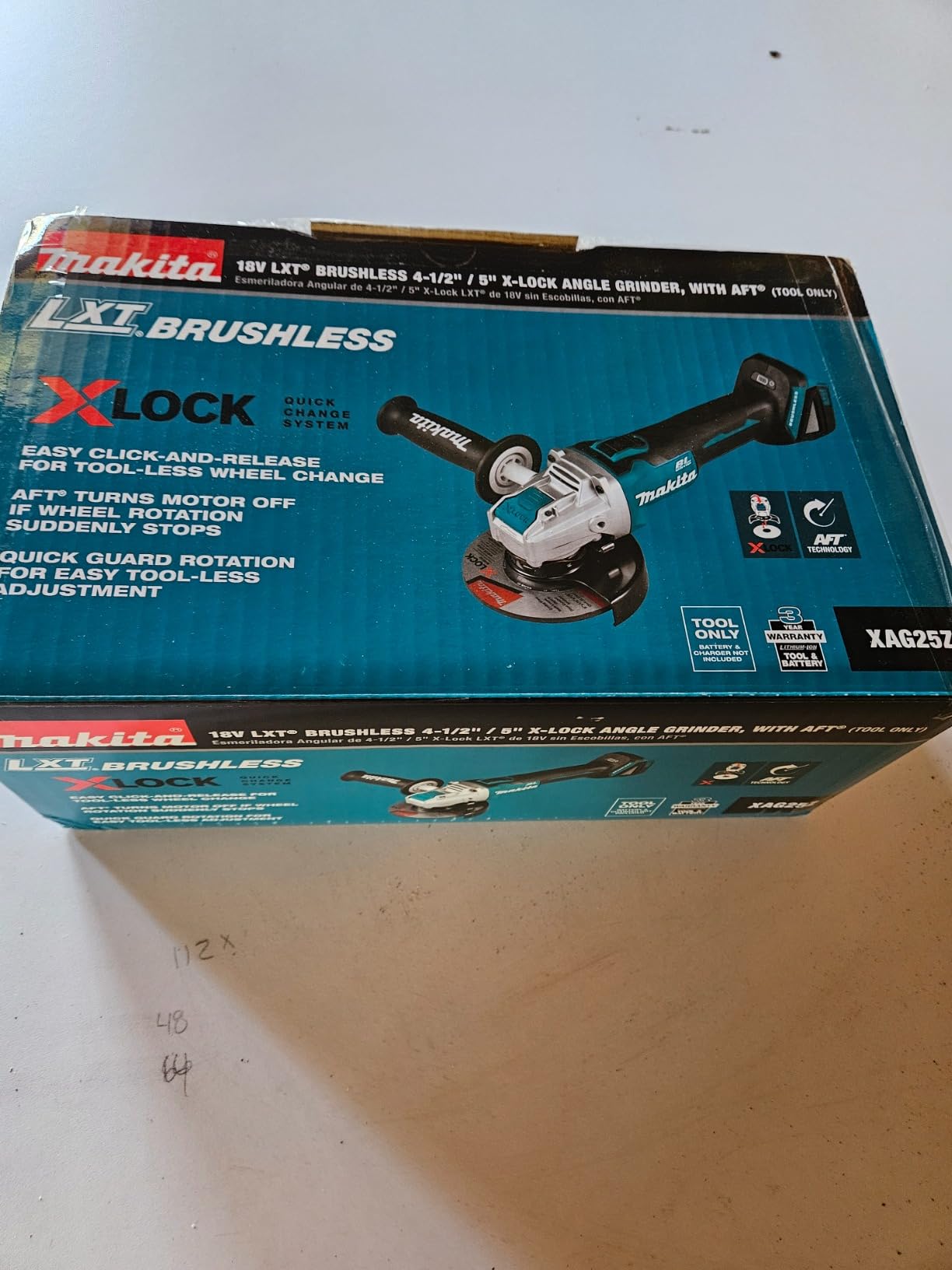
The catch is the ecosystem. X-Lock accessories cost more and are stocked less widely than the universal 7/8 inch wheels that fit every other grinder on this list, and several owners specifically object to the proprietary interface limiting their choices.
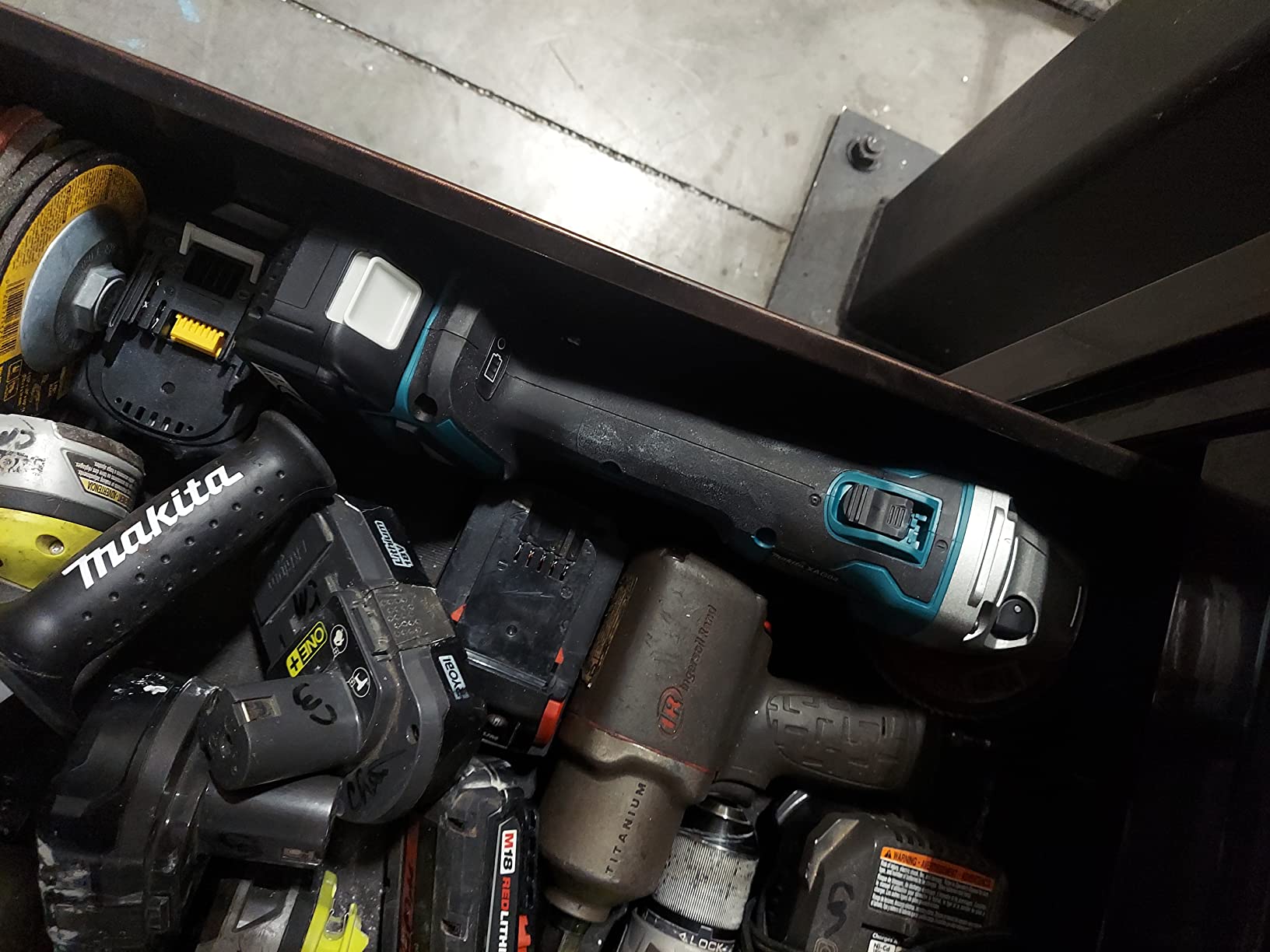
It is also the lowest-rated cordless grinder here at 4.5, with the lowest category sales rank of the cordless group. The performance is adequate. It is just not exceptional.
Is X-Lock worth switching wheel systems for?
If wheel changes are frequent in your workflow, yes. The time saving per change adds up across a full day of alternating between grinding and cutting, and the tool-free design also means fewer damaged flanges and fewer pinched fingers.
If you already own a set of universal 7/8 inch diamond wheels, no. You would be replacing good accessories with a more expensive, less available set to get a convenience you could get from a spindle lock alone.
How does it compare to the Milwaukee cordless?
Very close on paper, and the honest answer is that your existing battery platform decides it. Both take 4-1/2 and 5 inch wheels, both run around 8,500 RPM, and both are bare tools.
The Milwaukee has the stronger safety package with its electronic clutch and anti-vibration handle, and it carries more reviews at a higher average. The Makita wins on wheel change speed.
11. CRAFTSMAN V20 CMCG400M1 – Best Ready-to-Use Cordless Kit
CRAFTSMAN V20 Cordless Angle Grinder Tool Kit, 4-1/2 inch, Battery and Charger Included (CMCG400M1)
8500 RPM
Cast metal gear housing
Tool-free guard position
Battery and charger included
Pros
- Battery and charger included so it is usable immediately
- Cast metal gear housing dissipates heat during extended use
- Tool-free guard adjustment and 3-position handle for control
- Owners report cutting metal gates and heavy equipment without issue
Cons
- Some owners report the trigger false-tricking and the spindle lock not engaging
- One review reports stalling under grinding pressure when loaded
- Supplied spanner wrench cannot be stored in the handle
- Lowest category sales rank in this group
The CRAFTSMAN V20 kit is the only cordless grinder here that includes a battery and charger, which means you can grind concrete the day it arrives. For a first-time buyer without an existing battery platform, that removes the single biggest hidden cost in cordless ownership.
The cast metal gear housing is the detail that earns its keep on concrete. Metal gear cases dissipate heat far better than plastic, and heat is the primary failure mode on sustained grinding. Buyers specifically call out its durability on heavy work like cutting metal gates and heavy equipment.
Tool-free guard positioning and a 3-position handle give you decent control for a 4-1/2 inch grinder, and the contoured over-moulded grip is comfortable enough for extended use.
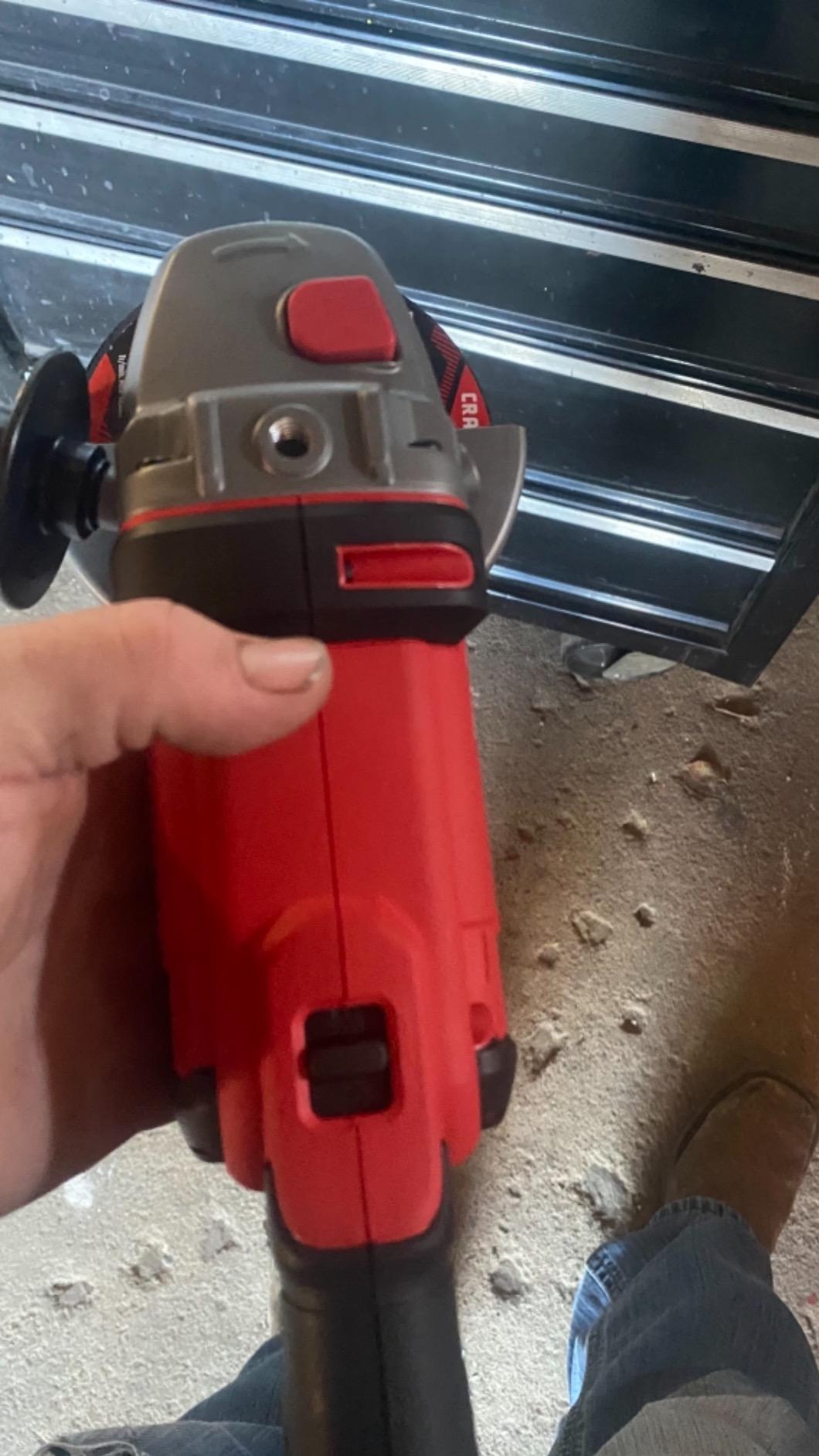
The complaints are consistent enough to matter. Several owners report the trigger false-tricking, meaning the tool can activate when you do not expect it to, and some report the spindle lock button not engaging, which is a safety feature. A smaller number report stalling when the wheel loads up.
Those are not criticisms you want to read about a tool that throws a spinning wheel toward your legs. Test the trigger and spindle lock before you rely on it for concrete.
Is buying the kit cheaper than buying the bare tool?
For a first-time cordless buyer, usually yes, because you need a battery and charger either way and the kit includes them at once. The saving is convenience and compatibility rather than a dramatic price difference.
For anyone already on the 20V MAX platform, the kit version is simply overpaying for batteries you already own.
Does the cast metal gear case matter for concrete?
More than most buyers realise. Concrete grinding produces sustained load, and a plastic gear housing absorbs heat that a metal one sheds. That difference shows up in tool life over years of regular use, not in a single afternoon.
It is one of the better engineering decisions on this list, and it is largely invisible until the years add up.
12. AVID POWER 7.5 Amp – Best Budget Grinder for Light Concrete Work
AVID POWER Angle Grinder, 7.5-Amp 4-1/2 inch Electric Grinder Power Tools with Grinding Wheels, Cutting Wheels and Auxiliary Handle for Cutting, Grinding, Polishing and Rust Removal – Red
7.5 Amp at 12000 RPM
Universal 7/8 inch arbor
Spindle lock
5.1 lb with accessory bundle
Pros
- Lowest entry cost with over 6000 reviews at 4.5 stars
- Marketed for masonry and concrete and owners confirm it cuts concrete and block
- Universal 7/8 inch arbor works with most major-brand wheels
- Generous bundle with spare carbon brushes and six discs
- Some owners report 40+ hours of hard use without failure
Cons
- Guard locking mechanism feels simplistic
- On/off switch is stiff and hard to depress
- Several owners report the outer flange stripping or welding itself on
- Customer service responsiveness has been inconsistent
The AVID POWER is the cheapest way into concrete grinding, and at 6,252 reviews it has more owner history than any other budget grinder here. Owners routinely use it for light concrete, cinder block, rebar and rust work, and several report 40-plus hours of hard use with no failure.
The universal 7/8 inch arbor and standard 5/8-11 spindle thread are its most practical feature. It fits diamond wheels from most major brands, so you are not locked into a proprietary system and you can use discs you already own.
The accessory bundle is generous for the money: two cutting wheels, two grinding wheels, a flap disc, guard, side handle, spanner and spare carbon brushes. At 5.1 lb it is not the lightest grinder we tested, but on light concrete work that weight is manageable.
Durability is the recurring weakness. Multiple reviews describe a stripped outer flange or a motor failure within months, and a flange that strips makes wheel changes a real problem rather than an inconvenience. Guard locking also feels simplistic compared with tool-free guards on the DEWALT units.
Treat this as a light-duty tool for occasional concrete work. If you are grinding concrete daily, buy something with a serviceable motor and sealed bearings.
Can a budget grinder really cut concrete?
Yes, for light to moderate work. Concrete and cinder block cutting, surface grinding on small areas, and general cleanup are all well within what this motor handles, and the manufacturer markets it for masonry and concrete specifically.
What changes at this price is the margin for abuse. If you push it hard, run it hot, or drop it, the failure tends to come in the flange or the motor rather than in a replaceable part.
Is it worth buying instead of a mid-range grinder?
For occasional work, yes. You get a working grinder, six discs, a handle and spare brushes for a fraction of the spend, and you lose very little on light concrete tasks.
For a full garage floor or a renovation you will regret the missing sealed bearings and the stripped-flange reports within a year. That is the point where a step up in the list pays for itself.
What to Look for in an Angle Grinder for Concrete
Concrete work punishes a grinder in ways that metal work does not. The abrasive is a diamond rim cutting an abrasive surface, the dust is electrically and respiratorily dangerous, and the material hides surprises like rebar and soft pockets. These are the specs that actually separate a good concrete grinder from a bad one.
Wheel size decides how much concrete you cover per pass
A 4-1/2 inch wheel is the control and access choice. It fits corners, works overhead, and lets you keep the disc flat against a wall where a bigger tool cannot reach. Most DIY garage floor projects are edge and detail work around a perimeter, so a 4-1/2 inch grinder carries a disproportionate share of the job.
A 5 inch wheel is the compromise, and it is why the Milwaukee and Makita cordless grinders here accept both sizes. You gain real coverage on open floor while retaining the ability to swap down for detail. A 7 inch wheel is a coverage tool: roughly twice the ground per pass of a 4-1/2 inch, at the cost of weight and corner access.
Forum consensus consistently favours 5 inch over 4-1/2 inch for floor work because of the surface area per pass. What none of these grinders do is true full-floor grinding at production speed, which is what a dedicated surface grinder or a floor grinder is for.
Amps matter more than RPM on hard concrete
Amps is torque, and torque is what pushes a diamond rim into hardened concrete without stalling. Anything under about 7 Amp will feel slow on real grinding work, and 13 to 15 Amp is where you get the material removal rate professionals expect.
RPM matters more on soft work. Cutting a coated edge, blending a surface, cleaning up paint, or working a soft screed benefits from speed rather than force. A 12,000 RPM 7 Amp grinder will feel faster on those jobs than a 6,000 RPM 15 Amp grinder, which is not an intuitive result.
Brushless motors add to both. They run cooler, need no brush changes, and hold speed under load, which on concrete grinding means less heat and less downtime.
Dust control is a safety requirement, not an accessory
Concrete dust contains crystalline silica, and long-term exposure causes serious lung disease. OSHA regulates it specifically, and grinding concrete without control is the highest-exposure power tool task most people will ever do in a garage or basement.
The hierarchy is straightforward. Best is wet grinding or a dedicated surface grinder with onboard extraction. Next is a dust shroud with a properly rated vacuum. Then respiratory protection. A grinder with no shroud and no mask is not doing this safely.
Shroud compatibility across brands is a genuine problem that forum users raise constantly. Most shrouds only fit the grinder they were designed for, so buying the shroud with the grinder avoids a frustrating search later.
Corded or cordless for concrete
Corded wins on sustained power and unlimited runtime. There is no battery to charge, no runtime curve to plan around and no performance drop as the pack drains. For anything measured in days, corded is the correct answer.
Cordless wins on access and safety. No cord to snag, no trip hazard, no extension lead running back to a wall, and you can work in a basement or a yard where there is no outlet. Modern cordless grinders handle patch jobs and light surface prep very well.
The battery platform is the real decision. Forum users consistently rate cordless grinder experience mostly on whether you already own the packs. Buy into the ecosystem you have rather than switching for one tool.
Kickback control, brakes and switch safety
Concrete grinding creates pinch and bind conditions constantly, and a bind is what throws a wheel back at you. Electronic kickback brakes and clutches detect the load spike and disengage the wheel. The DEWALT DCG413B stops its wheel in 2 seconds or less, and the Milwaukee 2880-20 uses an electronic clutch for the same purpose.
Switch design matters just as much. A paddle switch with lock-on lets you control the wheel with pressure on the pad, which makes it far easier to modulate during a controlled pass. A quick-off slide switch that is easy to hit with your off hand is a genuine safety improvement.
Variable speed control is worth paying for if you work on different materials. Coating removal, aggressive grinding and surface finishing want different speeds, and one-speed tools force you to change pressure instead.
Choosing a Diamond Cup Wheel for Concrete
The grinder is the motor, but the wheel does the cutting. On concrete the choice is between segmented diamond cup wheels, and picking the wrong one is the most common reason a grinder seems to underperform.
Single row versus double row versus turbo row
Single row segments cut fastest and remove material most aggressively. They are the right choice for removing coatings, thinset, epoxy and paint, and for taking down high spots on a slab. The downside is that they wear fastest and leave a scratchier surface.
Double row segments spread the load across more diamonds. They last roughly twice as long as single row, cut more smoothly, and leave a better surface finish. They are the standard choice for surface preparation ahead of epoxy or polish because you want a uniform scratch pattern.
Turbo row wheels sit between the two. They have a narrower, sharper segment profile that combines single row removal speed with better finish than a full single row, and they are a sensible all-purpose option if you only buy one wheel.
Grit and bond, and matching the wheel to the job
Coarse grit, usually 30 to 40, removes material fastest and is what you want for coating and adhesive removal. Medium grit around 60 to 80 is the general-purpose grinding choice. Fine grit above 120 is for surface refinement and polishing steps.
The bond type also matters. A soft bond lets the diamonds protrude further and cut faster, but wears faster. A hard bond lasts longer and is better for harder concrete and extended work.
Arbor size is the mistake that voids a purchase
Most 4-1/2 inch and 7 inch diamond cup wheels use a 7/8 inch arbor, which is the standard and fits almost everything. The grinder spindle thread is a separate thing, commonly 5/8-11, and that is where compatibility actually gets decided.
X-Lock systems are proprietary and only fit their own brand, so if you own an X-Lock grinder you must buy X-Lock wheels. Check your spindle before you order, and if buying a bare tool, confirm the wheel interface before you commit to the platform.
How to Grind a Concrete Floor Step by Step
Grinding concrete with an angle grinder is a straightforward process that most people approach in the wrong order. Do it in this sequence and you will get a flat, clean surface with far less rework. If you are still deciding what to pour, our guide to the best concrete mixers covers the other half of the job.
1. Assess the floor before you cut anything
Walk the slab and find the high spots, the delaminated areas and the coatings. Check for rebar, conduit and any utility crossing before you start, because a diamond wheel meeting rebar is how people get hurt. Mark the perimeter with the grinder so you know where you started.
2. Set up dust extraction before the wheel spins
Fit the shroud and connect it to a vacuum rated for fine particulate before you begin. Do not grind concrete dry indoors without extraction, and do not assume a standard shop vacuum is adequate. Getting the extraction right first saves an enormous amount of cleanup later.
3. Start with a coarse wheel at a shallow angle
Begin with a single row or turbo row wheel at 30 to 40 grit. Keep the grinder moving constantly in a sweeping pattern rather than holding it in one spot, and let the weight of the tool do the work instead of leaning into it. Dwelling in one place is how you burn a segment or gouge the slab.
4. Work the perimeter first, then the open field
Grind the edges and corners before the centre, using a smaller wheel where access is tight. Once the perimeter is set, work the open floor in long overlapping passes, moving with the direction of the sweep rather than against it.
5. Change wheels as you go, do not just push harder
A glazed wheel is the number one reason grinding slows down. When the rim stops cutting, change it rather than adding pressure. Move from coarse to medium grit as the surface evens out, and expect to change wheels several times on a large floor.
6. Vacuum constantly between passes
Dust left on the slab will roll under the wheel and scratch the surface you just ground. Vacuum between every pass or two, and do not skip this step because it feels unnecessary. It is the difference between a prepared surface and a scored one.
7. Check flatness as you finish
Use a straightedge across the floor periodically to find remaining high spots, then go back over them with the medium grit wheel. Finish with a fine grit pass if the floor is going to be coated or polished, and clean thoroughly before anything is applied.
Frequently Asked Questions
What is the best angle grinder for concrete?
For most people, the DEWALT DCG413B is the best overall choice because it weighs only 3.8 lb and has an electronic kickback brake that stops the wheel in 2 seconds or less. For heavy removal on hard concrete, the Makita GA7021 with its 15 Amp motor and 7 inch wheel is stronger. For thinset and adhesive, the Makita 9557PBX1 at 11,000 RPM keeps wheels from loading up.
What type of grinder is best for concrete?
A handheld angle grinder fitted with a segmented diamond cup wheel is the right tool for concrete removal, coatings, adhesive and surface preparation. A dedicated surface grinder or floor grinder is faster for grinding a full large slab flat, but an angle grinder handles edges, corners and detail work that the big machines cannot reach.
What type of grinder blade is best for grinding concrete?
A segmented diamond cup wheel, not a standard metal grinding disc. Single row segments cut fastest for removing coatings and thinset, double row lasts roughly twice as long and leaves a better finish for epoxy or polish, and turbo row sits between the two. Most wheels use a 7/8 inch arbor with a 5/8-11 spindle thread.
What size angle grinder for grinding concrete?
A 4-1/2 inch wheel is best for edges, corners and overhead work. A 5 inch wheel gives better coverage on open floor and is the best compromise for most people. A 7 inch wheel covers the most ground per pass and is for heavy removal, but it is heavier and cannot reach tight corners.
Do I need a dust shroud for grinding concrete?
Yes. Concrete dust contains crystalline silica, which causes serious lung disease with long-term exposure. Use a dust shroud connected to a vacuum rated for fine particulate, and add respiratory protection. A shroud made for a different brand of grinder usually will not fit, so buy it for the grinder you own.
Can an angle grinder be used to grind concrete?
Yes, with the right wheel. An angle grinder fitted with a segmented diamond cup wheel can remove coatings, adhesives and thinset, level high spots and grind concrete surfaces. It will not replace a floor grinder on a large slab where production speed matters, and grinding concrete dry without dust extraction is a serious silica exposure risk.
Which Angle Grinder for Concrete Should You Buy?
The DEWALT DCG413B is our pick for the best angle grinders for concrete in 2026 because it combines a 3.8 lb weight with a kickback brake that stops the wheel in 2 seconds or less, and it holds a 4.8 average across more than 9,000 reviews. For most garage floors, patios and edge jobs, that combination is the right trade between control and capability.
Match the tool to the material instead. Heavy removal on hardened concrete wants the 15 Amp Makita GA7021 or the 13 Amp DEWALT DW840. Adhesive and thinset want the 11,000 RPM Makita 9557PBX1. Indoor work with dust concerns wants the KSEIBI kit, which ships with a matched shroud. And if you are just getting started, the Metabo HPT G12SR4 does the job without a large outlay.
Whatever you choose, pair it with a properly rated diamond cup wheel and a real dust extraction plan. The grinder is the smaller half of the equation. Our guides to angle grinders in general and cordless grinders for home use cover the wider range, and our metal cutting picks are the right reference if you are doing fabrication work alongside your concrete jobs.