
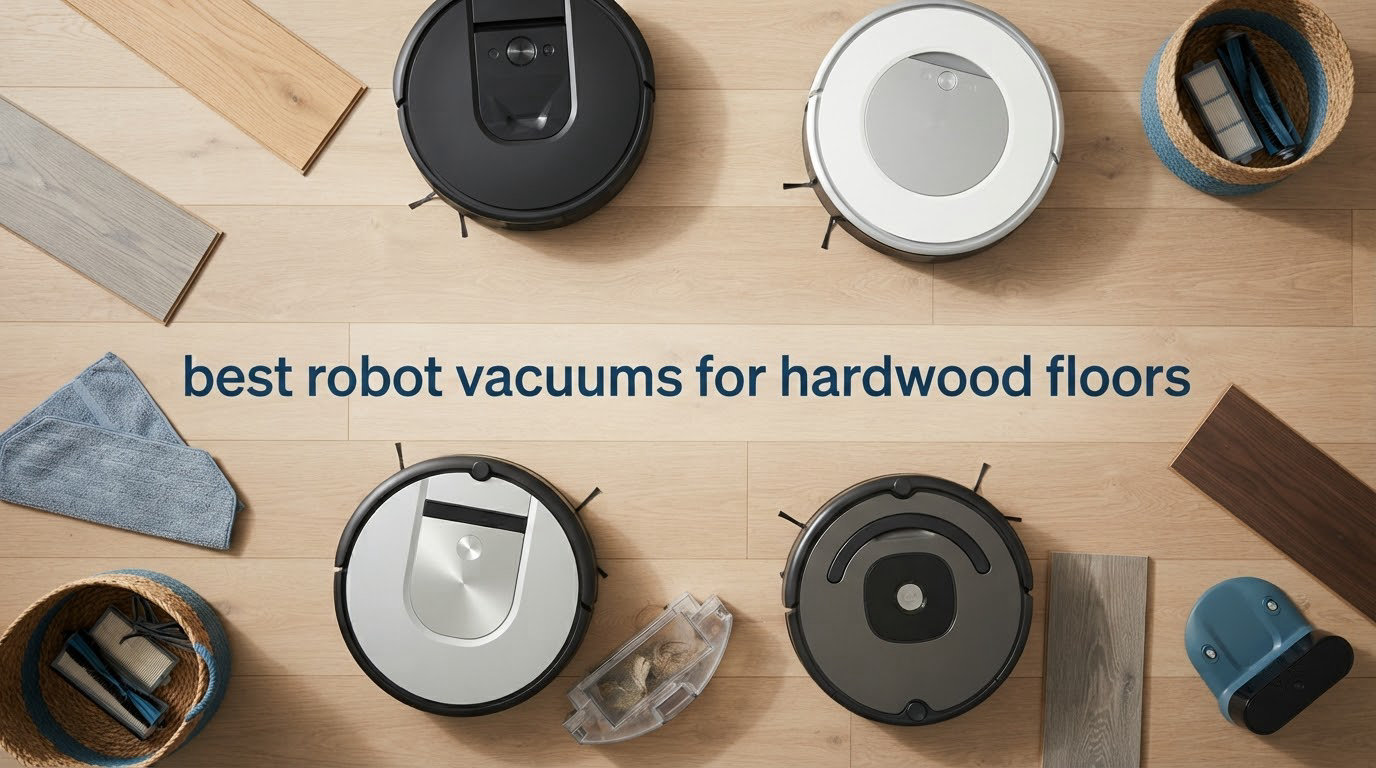
Hardwood floors are the one surface where a robot vacuum earns its keep and has to prove itself at the same time. A sealed oak or engineered plank floor punishes grit, scratches under a hard plastic wheel, and water spots when a mop pad is too wet. But it also rewards daily cleaning more than carpet does, because dust settles into the grain of the wood instead of burying itself in fibers. That is the whole argument for the best robot vacuums for hardwood floors we spent this roundup testing: a good robot is a daily maintainer that keeps abrasive particles off your finish before they get ground in.
We went through twelve models across four brands for our 2026 roundup, weighed the specifications that actually matter on wood, and read through tens of thousands of owner reviews to separate what holds up after six months from what sounds good on a product page. The headline answer: the eufy Omni C20 is the one we would put on a real hardwood floor first, because it pairs a 3.35 inch body that slides under low furniture with a station that empties, washes and dries without you touching anything.
One thing to settle before you start shopping. A robot vacuum does not replace a stick vacuum. Owners on r/RobotVacuums and r/VacuumCleaners are consistent about this: the robot handles the daily pass, and a handheld or upright still does the baseboards and corners. What the robot removes is the sand tracked in from outside and the pet hair that would otherwise sit on the finish for a week. If you are starting from bare floors, our notes on hardwood floor cleaners for wet work are worth a look alongside this list.
Table of Contents
Top 3 Robot Vacuum Picks for Hardwood Floors

eufy Omni C20 Combo
- 3.35 inch slim body
- 7000 Pa BoostIQ suction
- Omni Station empties washes and dries
- Pro-Detangle Comb
Roomba 105 Combo
- AutoEmpty dock for 75 days
- ClearView LiDAR mapping
- Carpet detection avoids mopping rugs
- Edge-sweeping brush

ILIFE A30 Pro
- 10000 Pa max suction
- LDS LiDAR with SLAM mapping
- Slim 3.74 inch body
- 2-in-1 dustbin and water tank
The eufy takes the top slot on the combination that matters most on wood: clearance, quietness and a dock that removes every routine task. The Roomba 105 Combo is the pick if you want the simplest reliable self-emptying experience and already live in the iRobot app. The ILIFE A30 Pro is the one to buy when you want LiDAR mapping and strong suction without flagship spending, and you can read more about how we weigh the general category in our robot vacuum roundup.
Best Robot Vacuums for Hardwood Floors (October 2026)
| Product | Specifications | Action |
|---|---|---|
| eufy Omni C20 Robot Vacuum and Mop Combo |
|
Check Latest Price |
| iRobot Roomba 105 Combo Robot Vacuum and Mop |
|
Check Latest Price |
 SharkMatrix Plus 2-in-1 Robot Vacuum and Mop SharkMatrix Plus 2-in-1 Robot Vacuum and Mop |
|
Check Latest Price |
 iRobot Roomba 105 Vac Robot Vacuum iRobot Roomba 105 Vac Robot Vacuum |
|
Check Latest Price |
 roborock Q7 M5+ Robot Vacuum and Mop roborock Q7 M5+ Robot Vacuum and Mop |
|
Check Latest Price |
 Shark Stratos 2-in-1 Robot Vacuum and Mop Shark Stratos 2-in-1 Robot Vacuum and Mop |
|
Check Latest Price |
 roborock Q10 S5+ Robot Vacuum and Mop roborock Q10 S5+ Robot Vacuum and Mop |
|
Check Latest Price |
 iRobot Roomba 705X Robot Vacuum and Mop Combo iRobot Roomba 705X Robot Vacuum and Mop Combo |
|
Check Latest Price |
| ILIFE A30 Pro Robot Vacuum and Mop |
|
Check Latest Price |
 roborock Qrevo S Pro Robot Vacuum and Mop roborock Qrevo S Pro Robot Vacuum and Mop |
|
Check Latest Price |
 Shark Navigator Robot Vacuum with Self-Emptying Base Shark Navigator Robot Vacuum with Self-Emptying Base |
|
Check Latest Price |
 ECOVACS DEEBOT T90 PRO Omni Robot Vacuum and Mop ECOVACS DEEBOT T90 PRO Omni Robot Vacuum and Mop |
|
Check Latest Price |
Everything below expands on that table with the hardwood specifics: what each machine does at a rug transition, how damp its mopping leaves the floor, and where it still leaves dust. If you are still narrowing the field, the self-emptying robot vacuum guide goes deeper on dock mechanics and running costs.
1. eufy Omni C20 Combo – Best Overall for Hardwood and Carpet
eufy Omni C20 Robot Vacuum and Mop Combo for Hardwood and Carpet, 7,000 Pa
7000 Pa BoostIQ suction
3.35 inch body height
132 min runtime
56 dB
3.1L station bag
Pros
- Slides under low furniture at 3.35 inches
- Quiet enough for calls and calls-for-interference
- Station empties washes and dries automatically
- Mop auto lifts on carpet
- Plenty of replacement parts available
Cons
- Station emptying is loud
- Large body struggles between chair legs
- Home Assistant cannot edit maps
The thing that sold us on the Omni C20 for wood is the 3.35 inch body. Most robot vacuums sit at 3.7 to 4.1 inches, which means they glide past the front edge of a low-slung sofa and clean nothing underneath. The Omni C20 goes under, and on a sealed hardwood floor that is where dust collects, in the shadow line under furniture where the broom never reaches.
Suction is 7000 Pa on the BoostIQ auto-adjust setting, and on wood it does not need to be the highest number in this list to do the job. The Pro-Detangle Comb flips down mid-clean to loosen wrapped hair, which matters more on a hard floor than on carpet because a wrapped brush lifts the whole roller and leaves a stripe of untouched debris behind it.
The Omni Station handles the three chores that decide whether a robot stays useful past month two: it empties the bin into a 3.1L bag rated for up to 60 days, washes the mop pads, and dries them at 1.56W per hour so nothing grows on the pad overnight. That last detail matters on wood, because a damp pad left sitting on sealed oak is how you get a water spot.
At 56 dB it is one of the quieter units here, which means you can run it while you work. Mapping uses iPath LiDAR with storage for up to three floor maps, so a two-story house is handled without rebuilding anything. The Mop Master system applies 6N of downward pressure at 180 RPM and lifts the pad when carpet is detected.
Where it works well on sealed hardwood
Daily grit pickup is the strength. Pet hair comes off sealed wood in a single pass, and the comb keeps the brush from loading up after a few runs. The slim profile means the open floor area under beds gets the same coverage as the hallway, which matters more on wood than on carpet because you can see the dust line along a baseboard.
Mopping is genuinely usable rather than decorative. The auto-lift on carpet detection means you can run a vacuum-and-mop combo job across a mixed floor without soaking a rug, and the station rinse keeps the pad from re-depositing yesterday’s water on your finish.
Where it falls short
The station is loud when it empties, and it empties often, so if you run it during a video call at home you will hear it. The body is also physically large, which is the trade for that slim height, and it struggles to thread between chair legs in a tight dining area.
Reviewers also flag that navigation leans more on bump-and-turn behavior than the app suggests, and that the Home Assistant integration cannot edit maps, no-go zones or room boundaries. Mopping is still maintenance-level, so you will want a real mop for a proper wet clean.
2. iRobot Roomba 105 Combo – Easiest Self-Emptying Setup for Hardwood Homes
iRobot Roomba 105 Combo Robot Vacuum & Mop with AutoEmpty Dock – Self-Empties for 75 Days, Intense Power-Lifting Suction, LiDAR Navigation, Multiple Cleaning Modes, Avoids Mopping Carpet
AutoEmpty dock up to 75 days
ClearView LiDAR mapping
100 min runtime
Micro pump mop
Smoke
Pros
- Self empties for up to 75 days
- Simple app with time estimates and keep out zones
- Strong suction for pet hair and daily messes
- Keeps rugs dry while mopping
- Edge sweeping brush helps along baseboards
Cons
- Mop head catches rug corners and can trap the robot
- No obstacle avoidance so floor clutter reduces coverage
- Mop misses tight corners and edges
- Dock needs extra clearance
The Roomba 105 Combo is the pick for anyone who does not want to think about their robot. Scheduling happens in the app, the dock empties for up to 75 days, and the whole thing is one of the most reviewed vacuums in the category at nearly 50k ratings, which means replacement parts and troubleshooting answers are easy to find.
For hardwood, the important details are the power-lifting suction, which the manufacturer rates at 70x the Roomba 600 series, and the edge-sweeping brush that improves edge and corner cleaning by 20 percent. Along a baseboard on a wood floor that band of dust is the most visible failure, so the edge brush is not a minor feature.
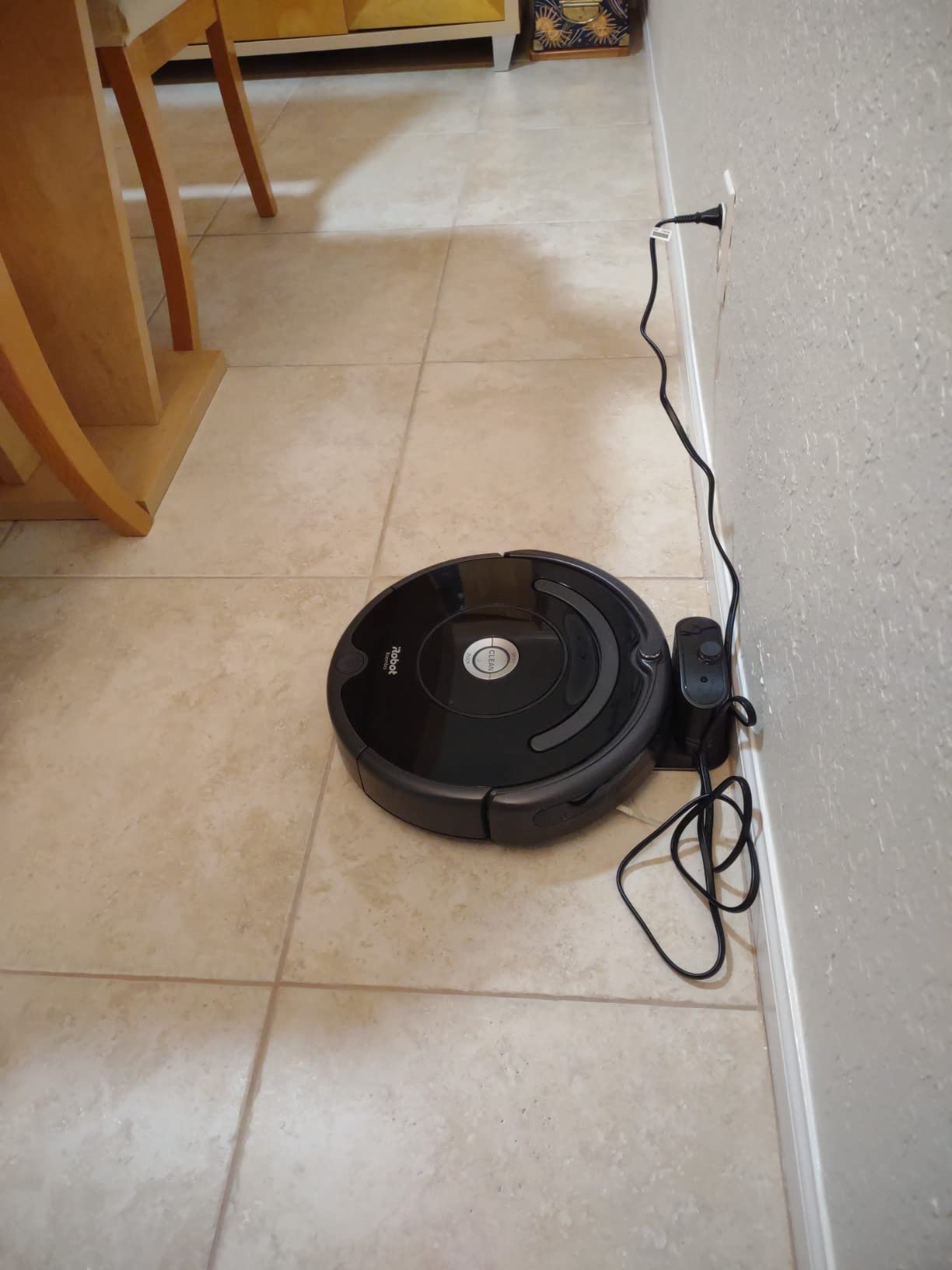
ClearView LiDAR gives it fast mapping and neat row cleaning, which on a visible wood floor you will actually notice: the finish comes out looking uniformly brushed rather than blotchy. The dock bag traps 99 percent of allergens down to 0.7 microns, which is a real benefit if anyone in the house reacts to dust.
Setup needs 2.4GHz Wi-Fi, which trips up people with a 5GHz-only router. Mopping runs through a micro-pump controlled microfiber pad, and SmartScrub passes twice for deeper scrubbing. Carpet detection means the mop simply avoids rugs instead of dragging across them.
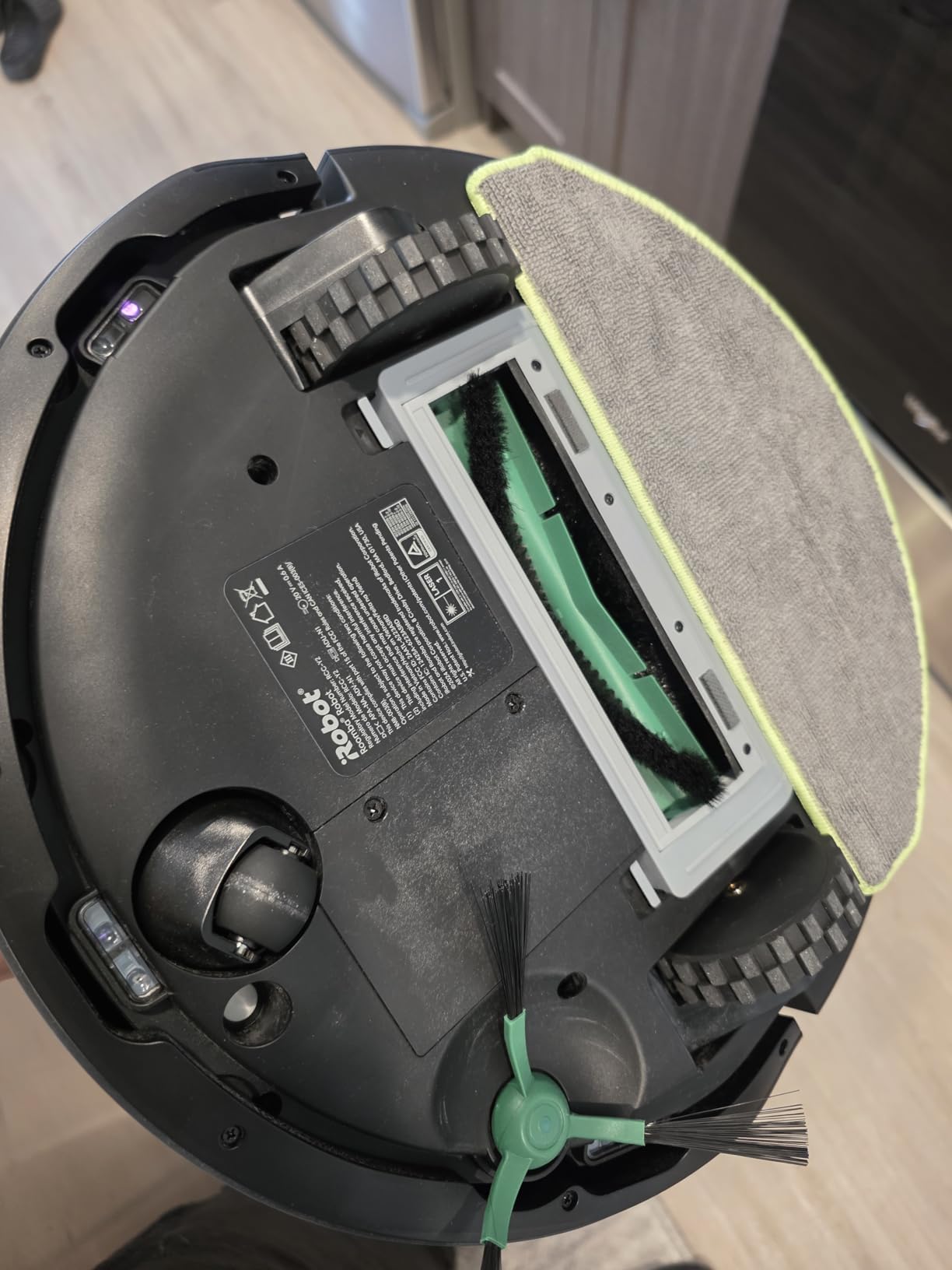
Why hardwood owners like it
The hands-off factor is unmatched at this level. Set a schedule once and the combination of vacuum and mop in a single pass means one run covers the whole day of dust and the dried-on footprints through the entryway. The app is straightforward, with time estimates and keep-out zones, so protecting a specific stretch of finished wood takes a minute.
Suction handles pet hair well on sealed surfaces, and the single pass approach means you are not running the machine twice to vacuum and then mop.
Where the compromises show up on wood
There is no obstacle avoidance. That means a charging cable or a slipper on the hardwood floor becomes something the robot drives into, and clutter directly reduces your coverage. If your main worry is protecting a wood floor from grit, clearing the floor first is part of the routine.
The mop head is the weak point. It catches the corners of area rugs, and reviewers report it can lift and trap the robot, which is a problem if you have a rug that overlaps your wood. It also does not reach tight corners or right up against furniture. And without the mop attachment the unit cannot vacuum carpet and then mop on its own, which limits mixed-floor scheduling.
3. SharkMatrix Plus 2-in-1 – Best Mopping Result on Sealed Hardwood
SharkMatrix Plus 2-in-1 Robot Vacuum & Mop, Black/Brass, AV2610WA
Sonic mopping 100x per minute
Bagless 60 day self empty base
True HEPA 99.97 percent
110 min runtime
350 ml bin
Pros
- Bagless base means no replacement bags ever
- Grid pattern leaves no gaps on wood or baseboards
- Sonic mopping leaves no streaks and dries fast
- Handles multiple area rugs without jamming
- HEPA base helps allergy households
Cons
- No no go zone control in the app
- Setup and map fine tuning is time consuming
- Weak on deep carpet and thick pet hair
- Corners and baseboard edges still need a manual vacuum
The SharkMatrix is the one to watch if your main concern is the wet side of the equation. Sonic mopping works at up to 100 strokes per minute, and the Matrix Mop system is rated at 50 percent better stain cleaning than the previous generation. On sealed hardwood the practical result is that the mop dries rather than sits, which is the difference between a clean floor and a floor with a haze.
The other standout is the bagless self-empty base. Every other self-emptying robot on this list charges you for bags, and the bag is a recurring cost that quietly adds up over two years. Shark’s 60-day bagless base just holds the debris until you empty it into a trash can.
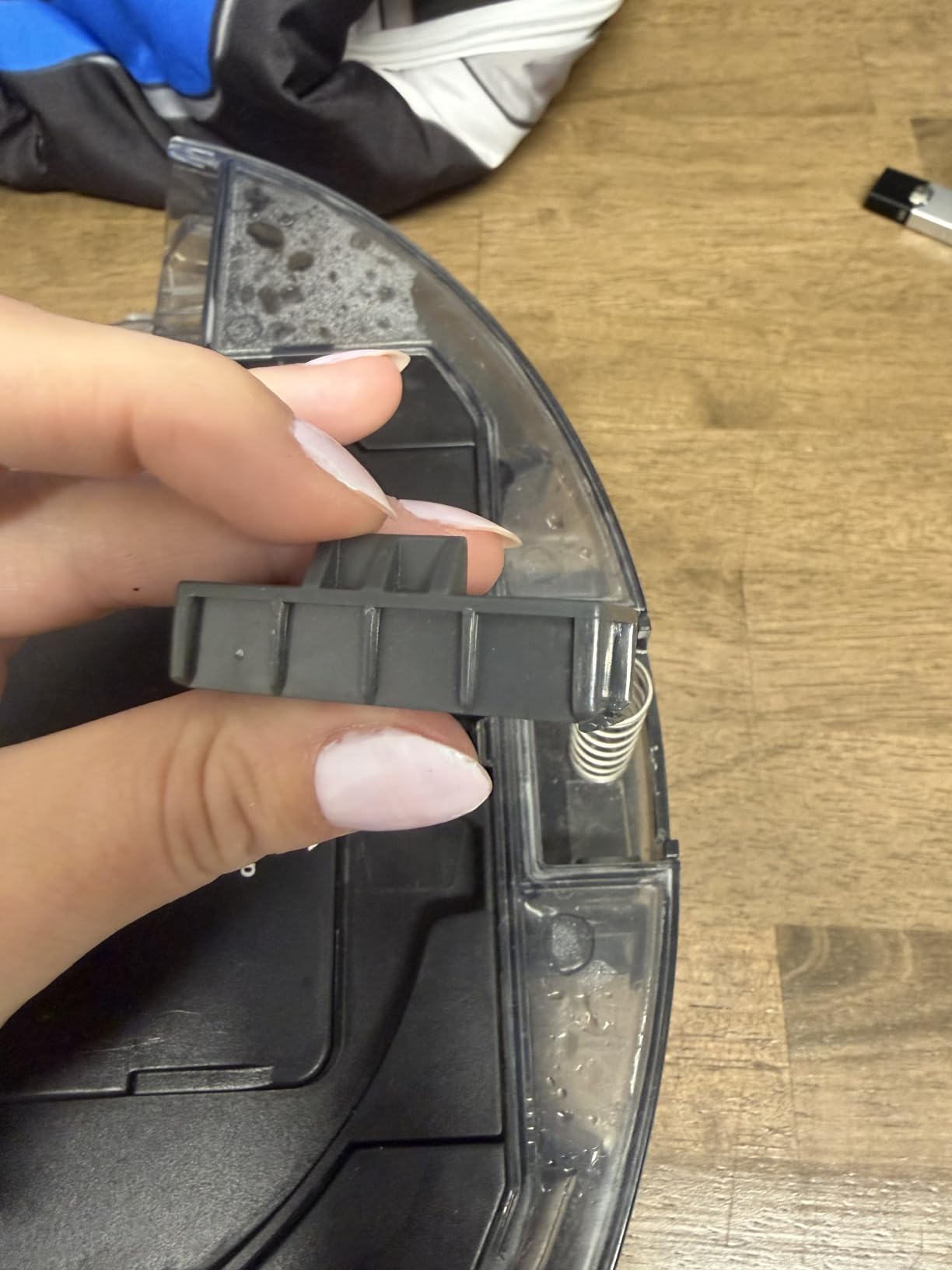
The Matrix Clean grid pattern is what makes it look good on wood. Instead of wandering, the robot works in a deliberate precision grid, so the pass over a plank floor is even. CleanEdge Detect uses air blasts to push debris away from edges, which helps but does not fully solve the baseboard band.
True HEPA filtration at 99.97 percent capture down to 0.3 microns is sealed into the base, and for allergy households that is a meaningful upgrade over a cartridge filter. The self-cleaning brushroll resists pet hair wrap, and 360-degree LiDAR handles mapping.
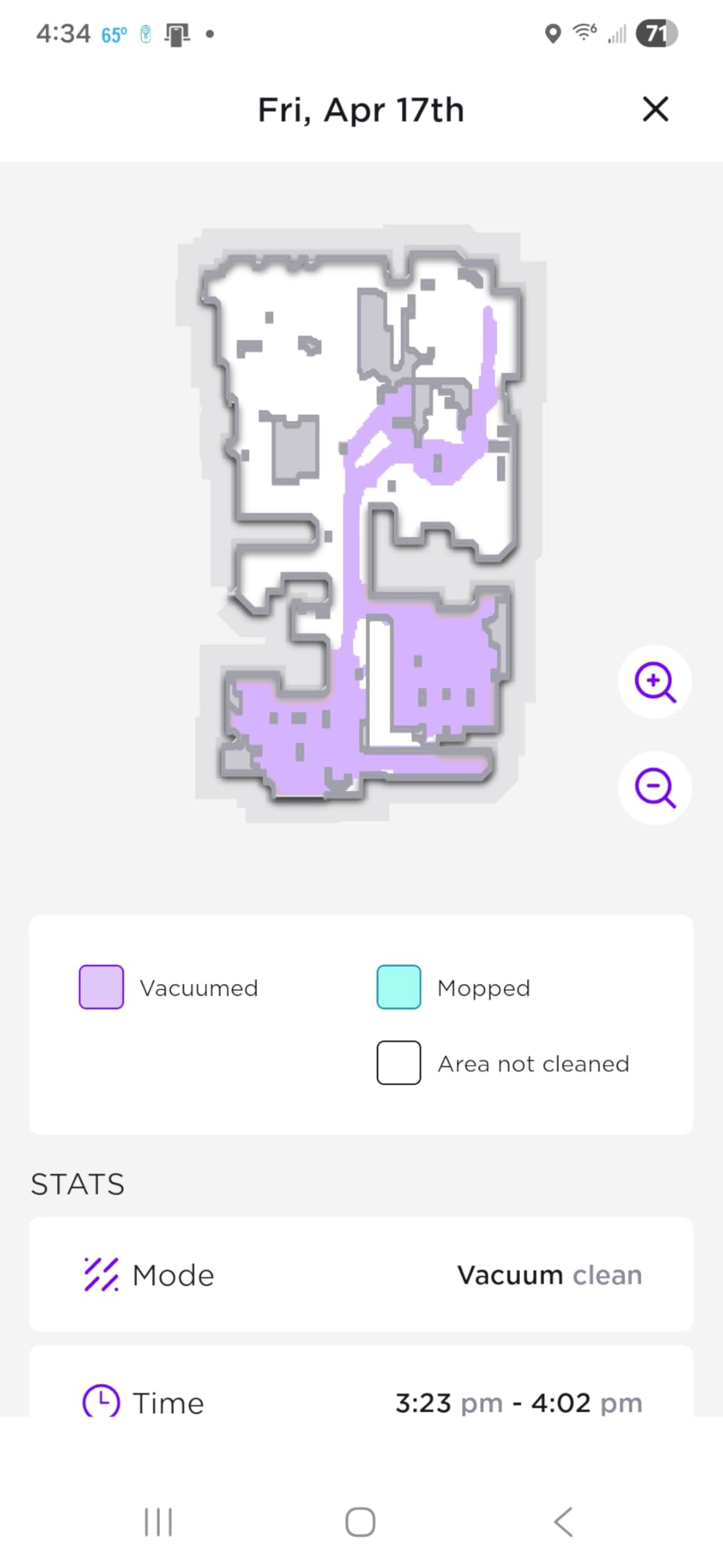
Where it earns its place on wood
If you have multiple area rugs sitting on hardwood, this is one of the more capable machines at transitioning. Reviewers report it working across hardwood, tile, vinyl and rugs in the same home without jamming, and the bagless base is genuinely the low-friction ownership experience here.
The grid coverage and HEPA base make it a good fit for a dust-sensitive household that has a finished wood floor they want to keep looking new.
Where you will still reach for a stick vacuum
Corners and baseboard edges are the weak spot, and owners are blunt about needing an upright to finish the job. The app has no no-go zone control, so protecting a specific wood section means physical magnet strips.
Setup and map refinement are tedious in a large home, carpet performance is weak on deep pile and thick pet hair, and a minority of reviewers report unit failure around the one-year mark. The nozzle is also loud on tile, which transfers directly to a hard kitchen floor.
4. iRobot Roomba 105 Vac – Best Budget Vacuum-Only Pick for Hardwood
iRobot Roomba 105 Vac Robot Vacuum – Easy to use, Intense Power-Lifting Suction, LiDAR Navigation, Multi-Surface Cleaning, Cleans in Neat Rows, Self-Charging
70x power lifting suction
200 minute battery
ClearView LiDAR
6.2 pound body
4.1 inch height
Pros
- Large dustbin means far fewer bin empties
- Noticeably quieter than earlier iRobot models
- LiDAR maps fast and cleans in neat rows
- Single brush outperforms older dual brush designs
- Filter sits behind a mesh screen that resists clogging
Cons
- No mop on this model
- Battery may not cover a large home in one charge
- Weaker on carpet than on hard floors
- Dustbin cannot be swapped while charging
This is the vacuum-only answer, and for many hardwood households it is the right one. There is no mop to over-wet your floor, no water tank to worry about, and no pad to leave streaks. On sealed wood, dry vacuuming every day is what keeps the finish in good shape anyway, since abrasive dust is the real enemy.
Owners upgrading from older E and I series Roombas describe it as a genuine jump: bigger bin, quieter operation, better filter protection, and LiDAR mapping that runs in straight rows. At 6.2 pounds it is also the lightest robot in this roundup by a wide margin, and at 4.1 inches it is not a low-clearance machine.
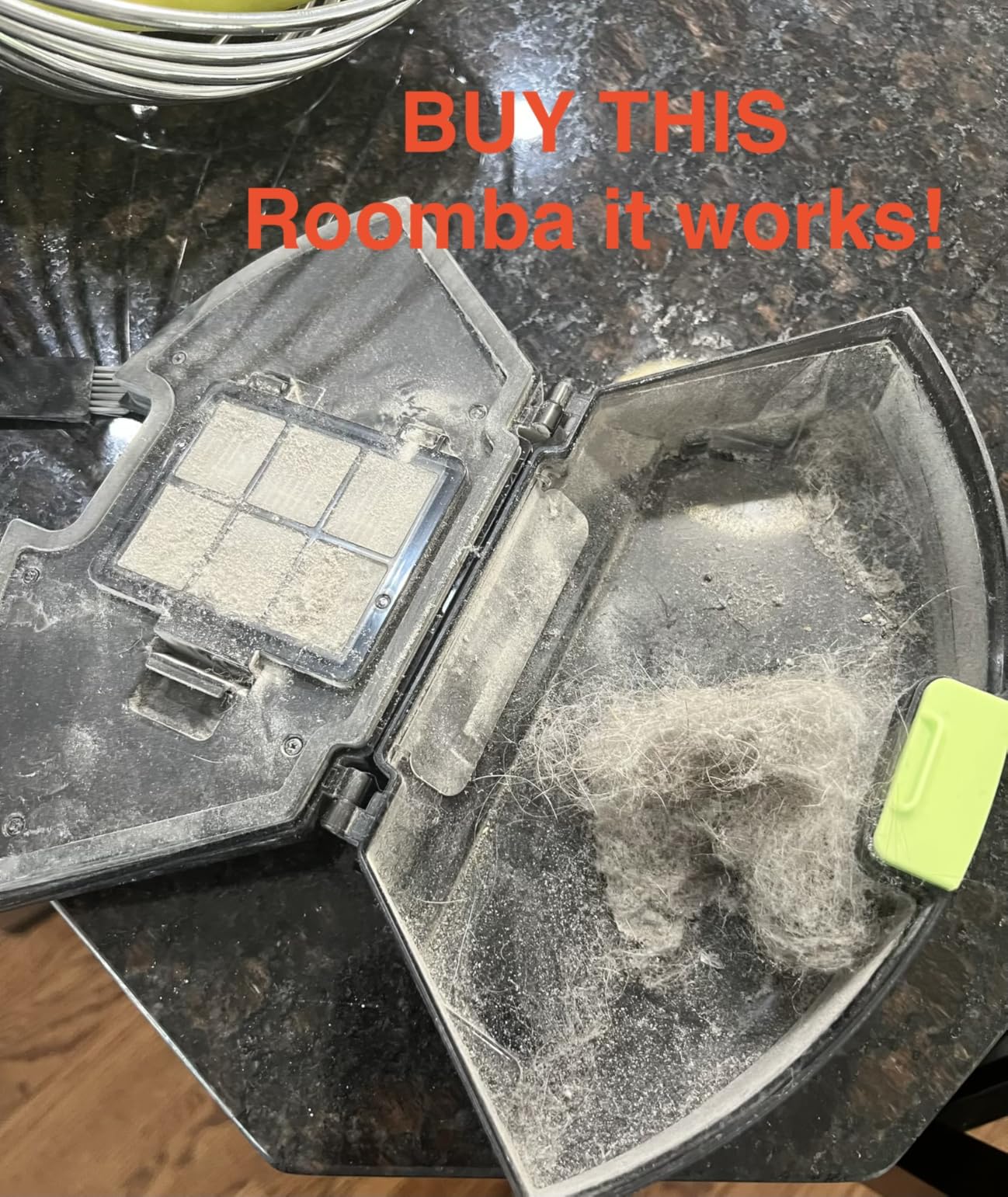
One detail worth calling out for hardwood homes: reviewers specifically mention that it climbs over floor transition strips more reliably than many competitors. In a house that moves between hardwood, tile and a hallway runner, that stops a daily chore from becoming a daily rescue.
The 5.8 inch cleaning path is wide, which means fewer passes across an open plank floor, and the 3-stage system uses a multi-surface brush plus the edge-sweeping brush that helps along baseboards. Four power levels let you drop suction on delicate finish if you want to.
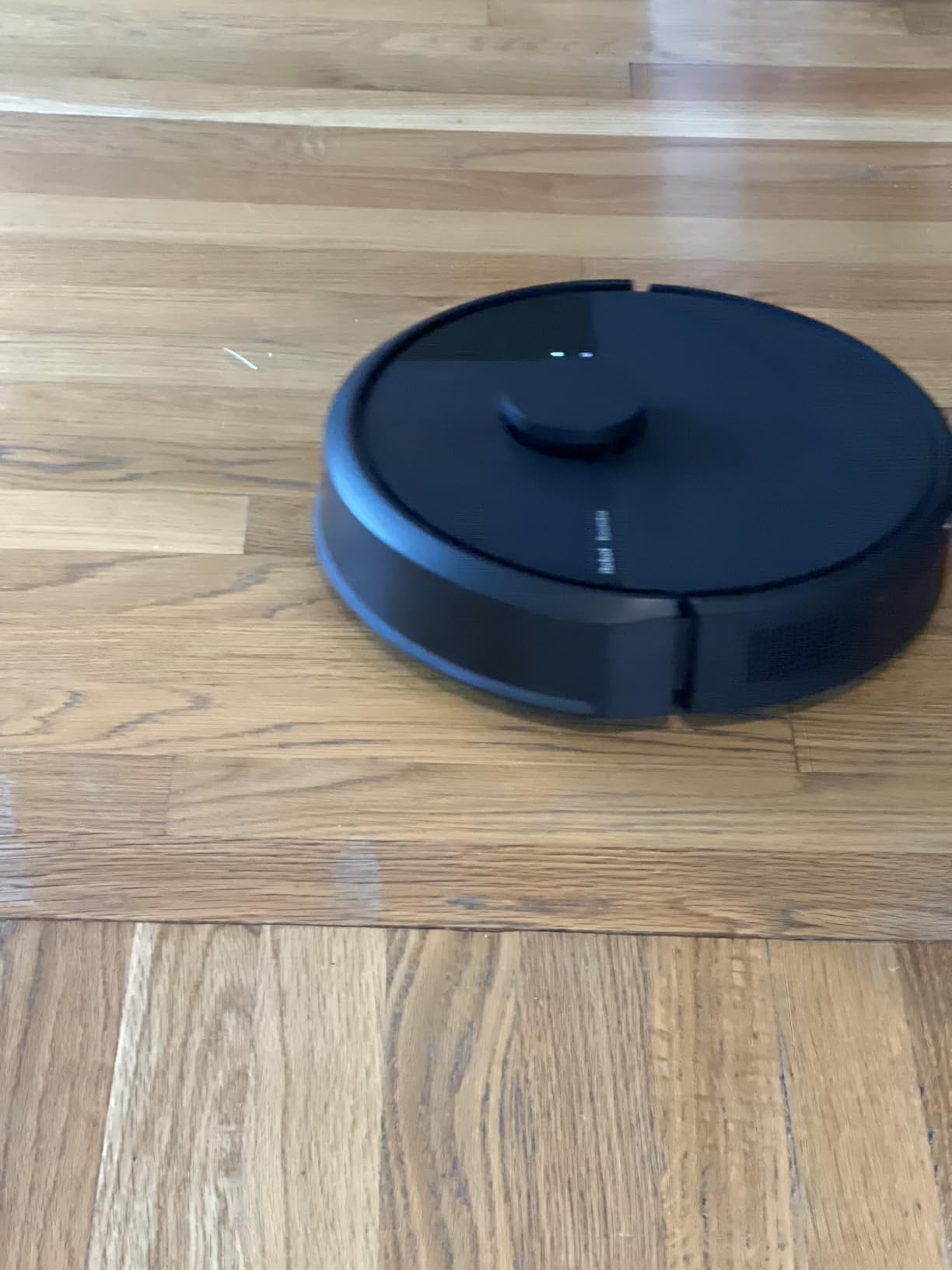
Why it suits a sealed wood floor
No water means no finish risk. If you have older hardwood, an unfinished floor, or a waxed or oiled surface that you do not want damp, vacuum-only removes the entire category of concern. And a 200 minute battery is the longest rated runtime here, so large homes finish in one cycle.
It also handles thresholds and transitions better than most, so a mixed hard-floor layout does not end with the robot stranded on a strip.
Where you will notice the limits
There is no mop at all, so wet cleaning is entirely on you or on a separate machine. Carpet performance is weaker than hard floor, which is the correct trade for this list but worth knowing if you have a lot of carpet. The battery can fall short on a very large home, and the dustbin cannot be swapped while the unit is charging.
Several owners find the newer iRobot app less intuitive than the one it replaced, particularly for editing routine cleaning. Setup needs 2.4GHz Wi-Fi.
5. roborock Q7 M5+ – Strongest Hard-Floor Pick at the Mid Tier
roborock Q7 M5+ Robot Vacuum and Mop, Up to 7-9 Weeks Self-Empty, 10000Pa
10000 Pa HyperForce suction
2.7L sealed bag dock
150 min runtime
65 dB
PreciSense LiDAR
Pros
- Methodical back and forth cleaning pattern
- Fast reliable LiDAR mapping with zone editing
- High suction for fine dust and pet hair
- Self empty dock cuts bin handling
- Quiet balanced suction mode
Cons
- On board bin fills early on larger homes
- Included bag can fill in about a week with pets
- Some hair wrap on the roller
- Mop pad must be washed by hand
Among the models with published suction figures, the Q7 M5+ is a standout on hard floors. 10,000 Pa of HyperForce suction paired with a JawScrapers main brush and a side brush rated at zero percent hair tangling makes it strong on the two things wood floors collect fastest: fine dust tracked in from outside and pet hair.
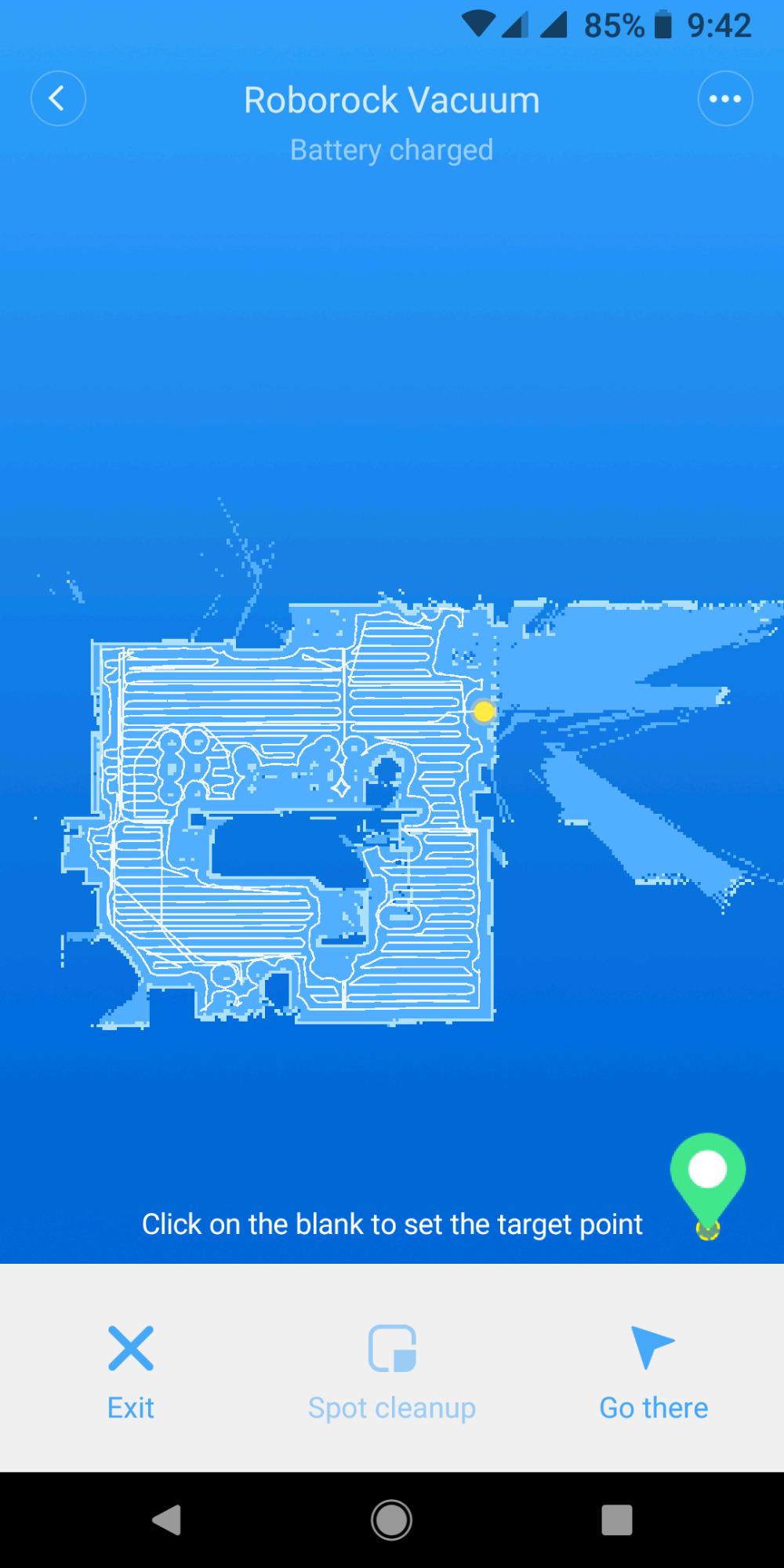
Cleaning is methodical rather than random, working in back-and-forth passes. On a visible plank floor you can see the difference, because the whole room comes out evenly covered instead of having obvious untouched patches in the corners of the coverage pattern.
PreciSense LiDAR maps quickly and the app supports room selection and no-go zones, which matters on wood if you want to exclude a specific finished area or a rug that overlaps the floor. The recommended surface list for this model includes wood, tile and marble, so it is designed for hard floors first.
The RockDock Plus holds a 2.7L sealed bag for 7 to 9 weeks. VibraRise handles vacuuming and mopping simultaneously with three water flow settings, and at 65 dB there is a quieter balanced mode for evening runs.
Where it fits a hardwood household
This is the one to pick if your floor is mostly open hardwood and you want strong pickup without a premium tier. The suction figure is real on sealed wood, and the zero-tangle side brush is a genuine advantage in a home with long hair.
Value is the other argument. You get LiDAR mapping, zone editing and a self-emptying dock at a tier where many competitors stop at a bare bin.
Where it will frustrate you
The on-board bin is small, and reviewers are clear that it fills partway through a run on a larger home and does not trigger an automatic return to empty. If you live in a house above roughly 2000 square feet, that is a daily interruption. With pets, the included bag can fill in about a week.
There is no automatic mop washing, so the pad goes in the sink by hand. Some hair still wraps on the roller, documentation and map editing are less refined than competitors, and the main brush can stall on medium pile carpet.
6. Shark Stratos 2-in-1 – Best Fully Automated Dock for Hardwood
Shark Stratos Robot Vacuum & Mop Combo, 60-Day Self-Empty, White, AV2700ZE
NeverTouch bagless base
Sonic mopping 100x per minute
110 min runtime
23.9 pound unit
HEPA sealed
Pros
- Base empties refills washes and dries with no intervention
- Strong suction for pet hair and dander
- Noticeably quieter than earlier Shark models
- Fast accurate LiDAR with room labels and no go zones
- AutoLift clears rugs and thresholds
Cons
- Mapping can miss wall sections and needs multiple runs
- Maps one floor level only
- Weak edge cleaning leaves an uncleaned band
- Battery falls short of stated runtime on large homes
The NeverTouch base is the reason to consider this one. It empties the bin for up to 60 days, refills water for 30 days, washes the mop and dries it, all bagless. Combined with an HEPA filter and an Anti-Allergen Complete Seal, it is the pick if dust sensitivity is the main reason you are shopping.
AutoLift is genuinely useful in a mixed-floor home. It raises the mop over carpets and lifts it over thresholds, which is one of the harder problems to solve when you have finished wood meeting a rug, and reviewers specifically call it out as working.
Suction is strong enough for pet hair and dander on hard floors, and owners note it runs noticeably quieter than earlier Shark robot models and quieter than an upright vacuum. The self-cleaning brushroll has an anti-hair-wrap design, and 360-degree LiDAR mapping with no-go zones in the SharkClean app gives you real control over which wood sections get cleaned.
Edge Detect air-blasts debris away from walls, and Sonic mopping runs up to 100 times per minute. At 23.9 pounds this is the heaviest robot in the roundup, and the base is large enough that dock placement on hardwood deserves thought.
Where the automation pays off on wood
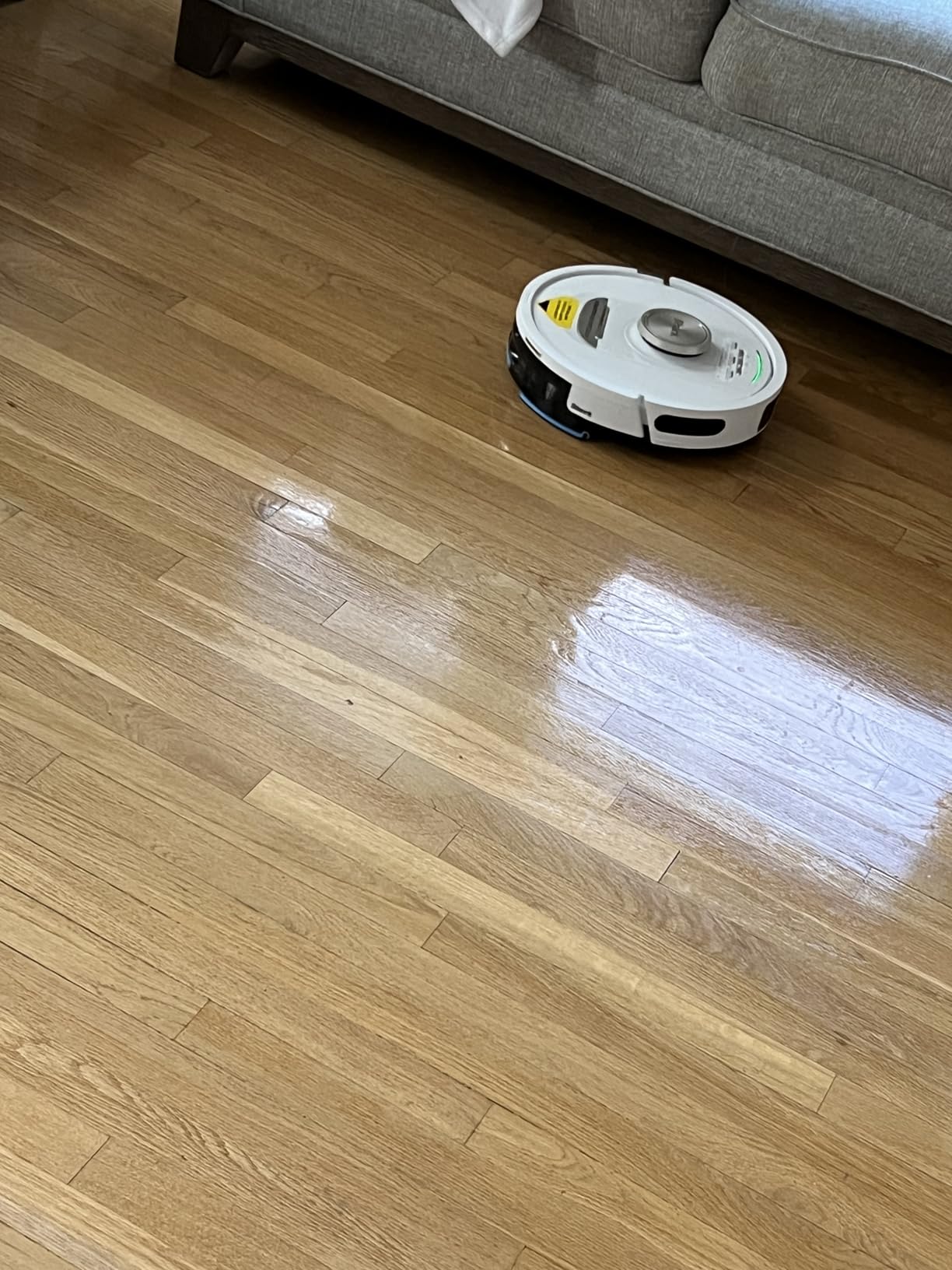
Bagless is a real ownership advantage on hardwood, because a robot that empties a bag leaves a trail of grit around the base when you swap it. No bag means no grit trail. The 60-day bin and 30-day water capacity mean most people will interact with it twice a month.
The allergen seal and HEPA base make a measurable difference in a house where someone sneezes, and AutoLift handles the wood-to-rug transition cleanly.
Where it is frustrating
The software is the weak point. Reviewers report mapping that misses entire wall sections and needs several runs to correct, only one floor level supported, and a map that has to be deleted and rebuilt after any furniture move, which takes about half an hour. If you have a multi-level home, that is a real limitation.
Edge cleaning leaves a band of roughly half an inch to three quarter inch along walls, battery life falls short of the stated runtime on bigger homes, hair still wraps into the brushroll, and a dirty pad can leave a water trail across the floor on the way back to base.
7. roborock Q10 S5+ – Best Multi-Level Mapping for Hardwood Homes
roborock Q10 S5+ Robot Vacuum and Mop, 10,000Pa Suction
10000 Pa maximum suction
70 day self empty
150 min runtime
VibraRise 2.0
ReactiveTech obstacle avoidance
Pros
- Systematic straight line passes that rarely get stuck
- Dock can auto empty every 30 minutes
- Accurate mapping with room and no go zone editing
- Handles thresholds rugs and mats reliably
- Washable filter and bin rinse in the sink
Cons
- Mopping is mediocre and pads need manual work
- Mop tank is hard to open and dry
- Obstacle detection misses small items like cords
- Occasional Wi-Fi dropouts mid job
If your home has more than one level of hardwood, the Q10 S5+ is worth a close look. It stores multi-level maps with 360-degree LiDAR scanning, so you are not carrying the robot to the basement or rebuilding its map every time you change floors. Most of the other self-emptying models here are single-floor or limited to two or three stored maps.
Suction tops out at 10,000 Pa, and the auto-empty dock holds a 2.7L bag for up to 70 days with an option to set it to empty every 30 minutes. For a house with pets, being able to have it empty mid-run means the small on-board bin problem that trips up smaller robots largely disappears.
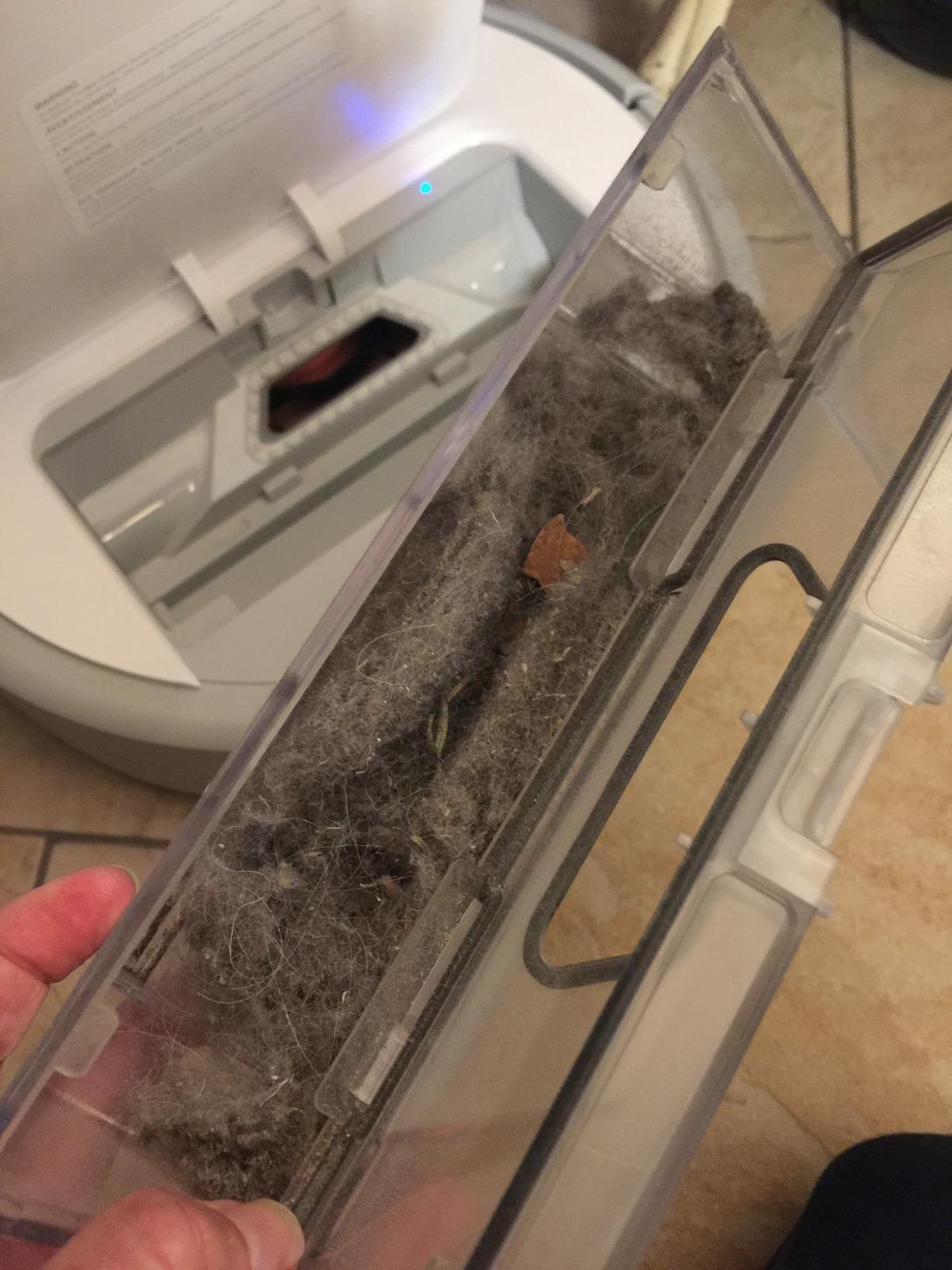
ReactiveTech structured-light obstacle avoidance is a step up from bump sensors, though reviewers note it still misses small items such as slippers and thin cords. On a hardwood floor, that is less damaging than on carpet, but it does mean a stray cable can still get run over.
VibraRise 2.0 does dual-zone sonic mopping at up to 3000 vibrations per minute and lifts up to 8mm on carpet with an automatic suction boost. Handling thresholds, small bumps, rugs and mats on wood and tile is reported as reliable, which is what you want for daily runs.
Why it works well for a two-floor hardwood house
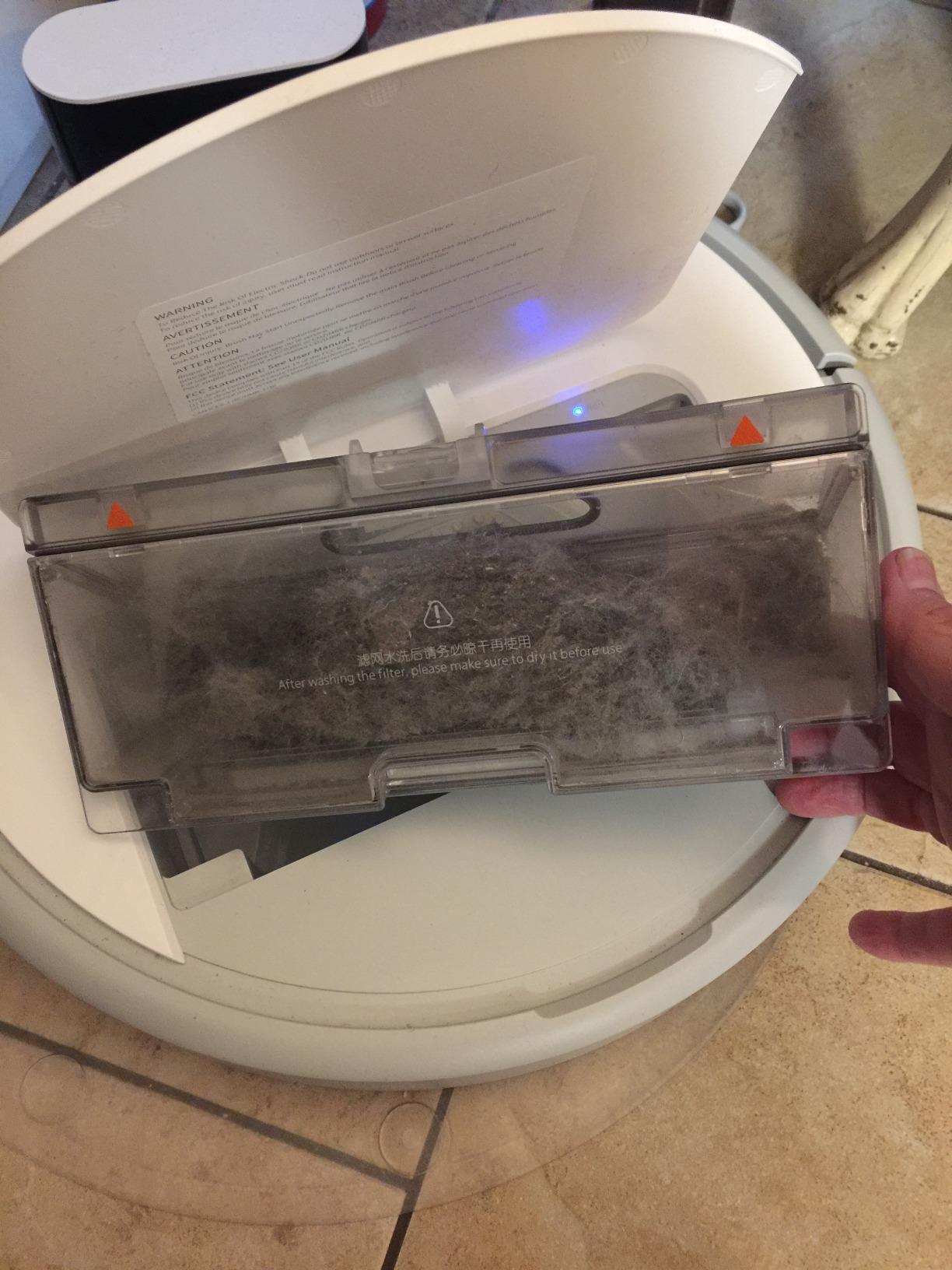
Multi-level mapping is the headline. Combined with a 70-day bag, the practical effect is that a large home with hard floors on both levels can run on autopilot for months without you carrying anything or renaming a single map.
The predictable straight-line passes also mean fewer stuck incidents, and thresholds get crossed reliably, so the transition strip between kitchen tile and wood is not where your day gets interrupted.
Where the mopping falls short
Mopping is functional, not good. Reviewers consistently describe it as needing manual pad wetting and cleaning, and it will not replace hand mopping. The mop tank is also hard to open, difficult to wipe dry, and can develop mildew over time, which on a sealed wood floor you want to keep an eye on.
It is not designed for cluttered floors or for picking up after children, some owners report Wi-Fi dropping mid-job, and setup requires 2.4GHz Wi-Fi only.
8. iRobot Roomba 705X – Best for Pet Hair on Hardwood
iRobot Roomba 705X Robot Vacuum & Mop Combo, 175x More Suction, Extending Self-Cleaning Roller Mop, Multifunction Dock, 75 Day Self-Emptying, Hot Wash/Dry, AI Obstacle Avoidance, Ideal for Pet Hair
175x stronger suction
PowerSpin roller mop at 200 RPM
180 min runtime
AutoWash heated dock
PrecisionVision AI
Pros
- Heated mop wash leaves hard floors noticeably cleaner
- Reliable AI obstacle avoidance for cords and pet waste
- Extending roller mop reaches edges and corners
- Heated wash and hot air dry dock cycle
- Mapping software with clear run timeline
Cons
- Noticeably loud especially the dock
- Vacuuming underwhelming for a premium machine
- Dirt builds up around the dock wash area
- Mop zones cannot be set near the dock
For a home with heavy shedding pets and finished wood, the 705X is the most interesting pick here. It is the only model in the roundup with 175x stronger suction than the Roomba 600 series paired with dual rubber brushes, and the rubber brush is a genuine advantage on hardwood because it does not have bristles that can catch on a scuff in the finish.
PrecisionVision AI obstacle avoidance is the other headline. It steers around cords, socks and pet waste, and in a household where an accident on the hardwood floor would be a genuine problem, that is the feature that justifies this tier.
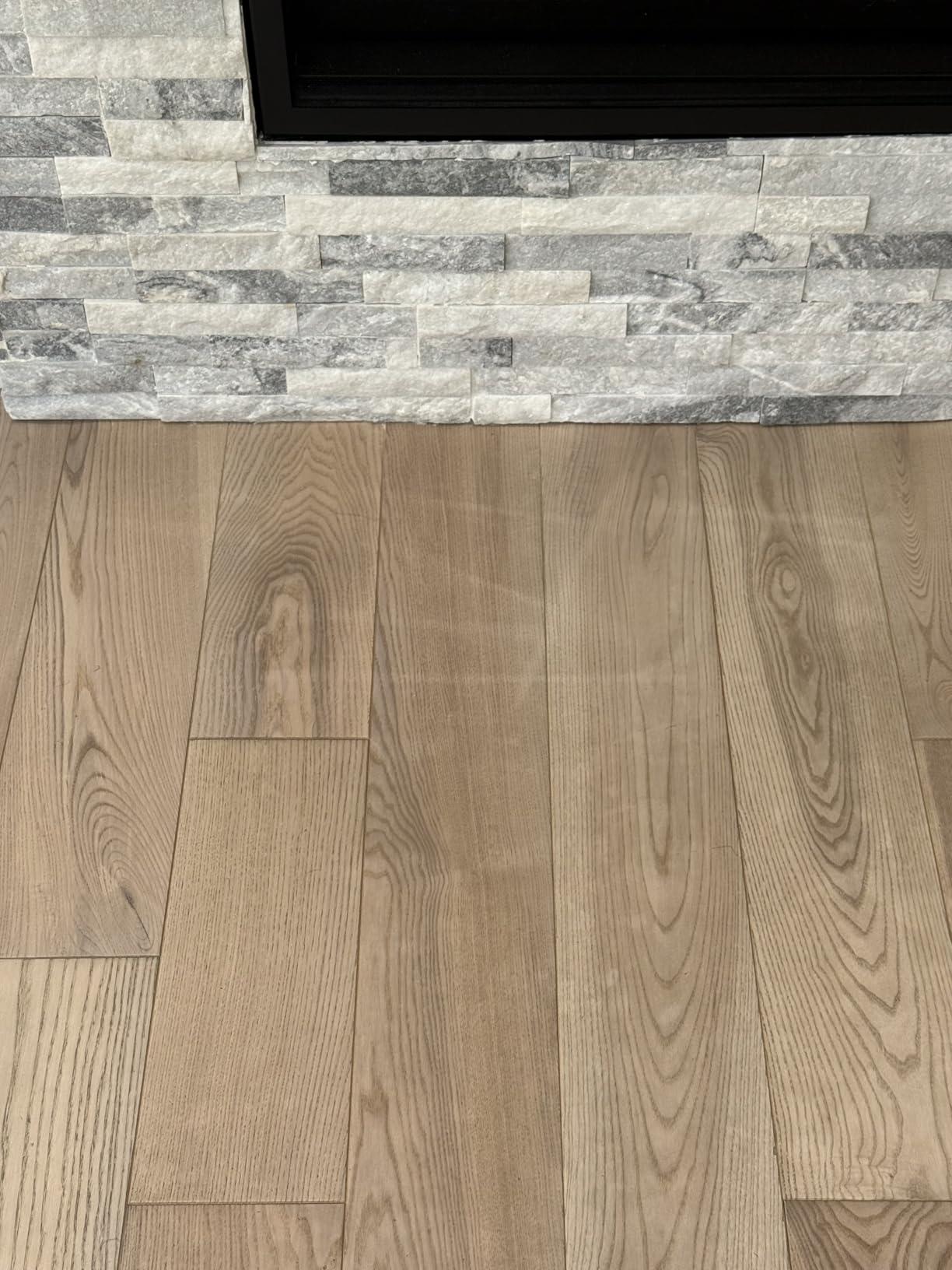
The PowerSpin Roller Mop runs at 200 RPM with heated mopping and washes itself in use while extending to reach edges and corners. The AutoWash dock handles up to 75 days of auto-emptying, heated mop washing, automatic solution dispensing and hot-air drying. That is the most complete dock on this list short of the ECOVACS.
ClearView Pro LiDAR provides 3D maps with automatic room labels, and the app supports room and furniture targeting with repeat passes. At 180 minutes rated runtime it has the second-longest battery here.
Why pet owners gravitate to it
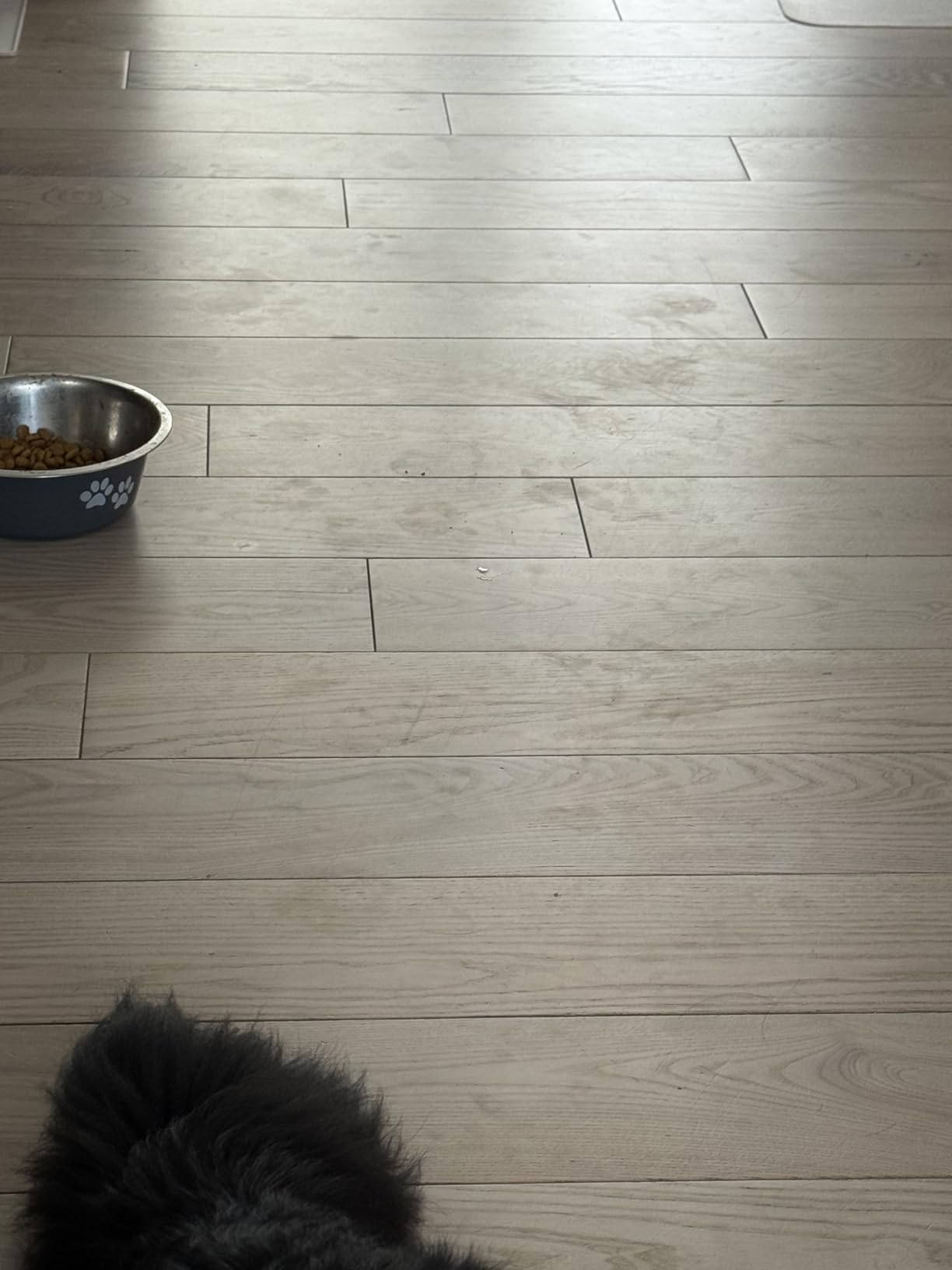
Obstacle avoidance is the deciding factor for most people with pets. The other models here either lack it entirely, like the Roomba 105 Combo, or miss small items. A robot that reliably goes around a pile rather than driving through it is worth paying up for.
The heated roller mop leaves hard floors noticeably cleaner than a flat pad, and the extending roller reaches the edges that a fixed pad leaves behind, which is where hair and dust collect along a baseboard.
Where the premium does not land
It is loud, particularly the dock during emptying and washing, so it is a daytime machine rather than a late-night one. More importantly, owners describe the vacuuming performance as underwhelming for a premium-priced machine, which is an honest problem when you are choosing on suction.
Dirt accumulates around the dock wash area and needs manual cleaning, the unit is heavy with limited suspension compared to competitors, and you cannot set mop or keep-out zones close to the dock even on the far side of a wall.
9. ILIFE A30 Pro – Best Feature-to-Cost Ratio on Hardwood
ILIFE A30 Pro Robot Vacuum and Mop,10000Pa Max Suction, Self-Emptying
10000 Pa max suction
LDS LiDAR with SLAM
150 min runtime
72 dB
3.74 inch body
Pros
- 10000 Pa suction at this tier works well on hard floors
- LDS LiDAR plans efficient paths with fewer missed spots
- Self emptying station with large 2.5L bags
- 2-in-1 tank vacuums and mops without swapping
- Slim body fits under low furniture
Cons
- 72 dB is among the loudest here
- Mopping is basic and no substitute for manual
- Station does not wash mop pads
- 2.4GHz Wi-Fi only
The A30 Pro is the value pick of this roundup. You get 10,000 Pa of suction, LDS LiDAR with SLAM mapping, and a self-emptying station with 2.5L bags rated at up to 280 days of hands-free cleaning. That combination is unusual at this tier, where most competitors either drop the self-empty dock or drop the LiDAR.
Path planning is the part that matters on wood. SLAM mapping with LDS LiDAR means the robot covers a rectangular plank floor in an ordered path rather than bouncing around, so dust does not end up concentrated in whatever corner the coverage pattern happened to abandon.
The 2-in-1 integrated tank holds a 200ml dustbin and a 200ml water tank, so it vacuums and mops in the same pass without you swapping modules. At 3.74 inches the body is slim enough to go under a lot of low furniture, and the 150 minute gentle-mode runtime with auto-recharge and resume covers a large home.
The app gives you no-go zones, virtual walls, scheduling and room targeting, plus water level and suction control, which is enough control to protect a specific stretch of finished wood.
Where it makes sense on a budget-conscious hardwood floor
If you want LiDAR, self-emptying and strong suction in one machine without moving up a tier, this is the one. The large bags mean you are not buying replacement dust bags every few weeks, and the slim body reaches under furniture where dust settles on wood.
Simultaneous vacuum and mop with no part swapping is genuinely convenient for a daily run over hard floors.
Where the compromises bite
At 72 dB it is one of the loudest units we tested, and on hardwood that noise carries. Mopping is basic, the station does not wash pads so you will rinse one by hand, and setup needs a 2.4GHz network, which means a router adjustment on a 5GHz-only system.
The claimed 280-day figure depends entirely on bag capacity assumptions, so treat it as a best case rather than a calendar. Overall the value per dollar is the strongest on this list.
10. roborock Qrevo S Pro – Best for Heavy Debris and Crumbs
roborock 2026 New Qrevo S Pro Robot Vacuum and Mop, 18,500Pa Suction
18500 Pa suction
167F mop self cleaning
113F warm air dry
180 min runtime
60 dB
3.8 inch body
Pros
- Dock empties washes and dries automatically
- Very strong suction for crumbs litter and pet hair
- All rubber brush resists hair wrap
- Liftable spinning mops protect carpets
- Low profile cleaning under beds and sofas
Cons
- 2.4 GHz WiFi only
- Large dock and heavy unit take up floor space
- Premium price point for the category
At 18,500 Pa, the Qrevo S Pro has the second-highest suction figure in this roundup, and on a kitchen or entryway hardwood floor that gets crumbs, cat litter and tracked grit, that headroom is exactly what you want. It is also the quietest premium machine here at 60 dB in normal mode and 55 dB in quiet mode.
The all-rubber main brush and zero-tangle side brush are the details that matter for a wood floor. A rubber brush glides over sealed finish without the bristle-on-finish contact that can dull a polyurethane surface, and it does not trap hair the way bristle brushes do.
The dock is the most thorough on this list for moisture control, washing mops at 167F and drying with 113F warm air. That matters on hardwood more than the number suggests, because a pad that gets hot-washed and fully dried does not re-wet your floor with residue on the next run. Water spots on sealed wood are usually a damp-pad problem before they are a solution problem.
Dual liftable spinning mops give 10mm of carpet lift with automatic carpet detection, and the 3.8 inch body plus obstacle avoidance handles under-bed and under-sofa coverage. LiDAR with Reactive Tech obstacle avoidance runs alongside SmartPlan 2.0.
Where it earns its place on wood
High-traffic hard floors. If your main worry is debris rather than dust, the suction headroom means one pass instead of three, and the anti-tangle brush keeps the roller turning through a pet hair cycle without cutting hair off by hand.
Hot wash and warm air dry is the best answer we found to the water spot question, and carpet lift protects the rugs in a mixed-floor home.
Where you trade away something
It is 25.6 pounds with a large dock, and on hardwood that footprint matters. You need a flat, clear area with wall access for the base, and reviewers raise the Wi-Fi band limit as a real annoyance if your network is 5GHz.
At 4.1 stars from 6,266 reviews it is the least-proven machine here, so the long-term reliability picture is not as well documented as the Roborocks and Roombas that have been on sale for years. Mopping is not the reason to buy it.
11. Shark Navigator with Self-Emptying Base – Best Low-Maintenance Vacuum
Shark Navigator Robot Vacuum, 30-Day Self-Emptying Base, White, AV2110S
Bagless 30 day self empty base
120 min runtime
11.7 pound unit
LiDAR SmartPath
Anti hair wrap brushroll
Pros
- Bagless base holds 30 days and needs no replacement bags
- SmartPath LiDAR covers up to 1.5x more area
- Anti hair wrap brushroll suits long pet hair
- Recharge and resume keeps runs uninterrupted
- App with no go zones mapping and scheduling
Cons
- Bagless base still needs manual emptying
- No mopping function at all
- Pre motor filter rather than washable HEPA
Some people want the floor cleaned and nothing else happening. The Navigator is the simplest machine on this list for that: no mop, no water tank, no bags. The 30-day bagless self-emptying base holds a month of debris and you empty it into the trash when it is full.
SmartPath LiDAR row-by-row navigation is claimed to cover up to 1.5x more area than the earlier Shark ION, and in practice on an open hardwood floor you see an orderly pass pattern rather than the scattershot coverage of cheaper navigation. The anti-hair-wrap brushroll is designed for long hair, which is the second most common complaint about robot brushes.
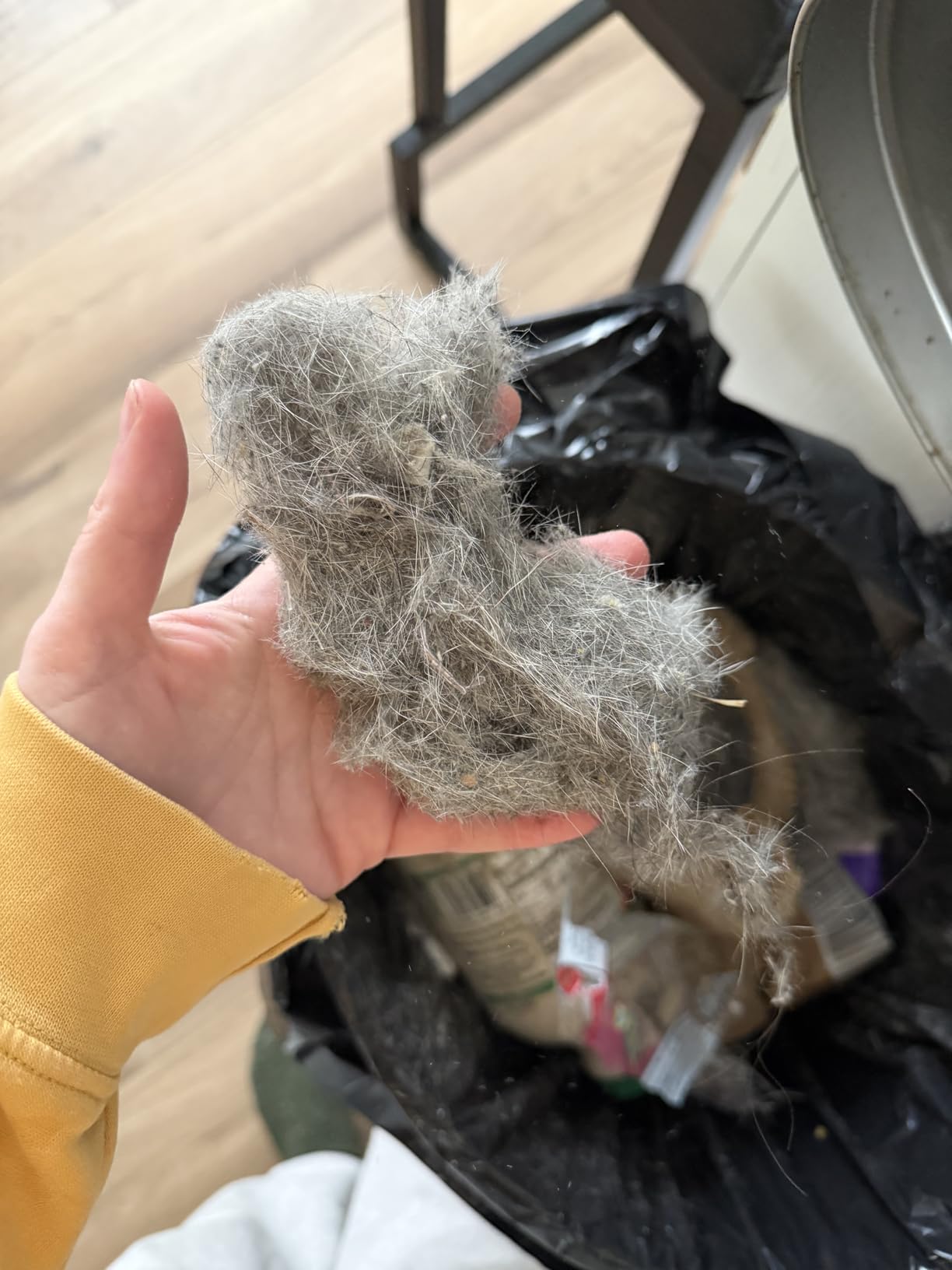
At 11.7 pounds it is one of the lighter units, with a 120 minute battery and recharge-and-resume so a long run finishes. Object detection and avoidance sensors help with the usual floor clutter, and the SharkClean app gives you scheduling, mapping and no-go zones, which is more control than the SharkMatrix offers.
It works with Alexa and Google Voice if you want to start a run without touching your phone, which is a nice touch for a daily maintainer.
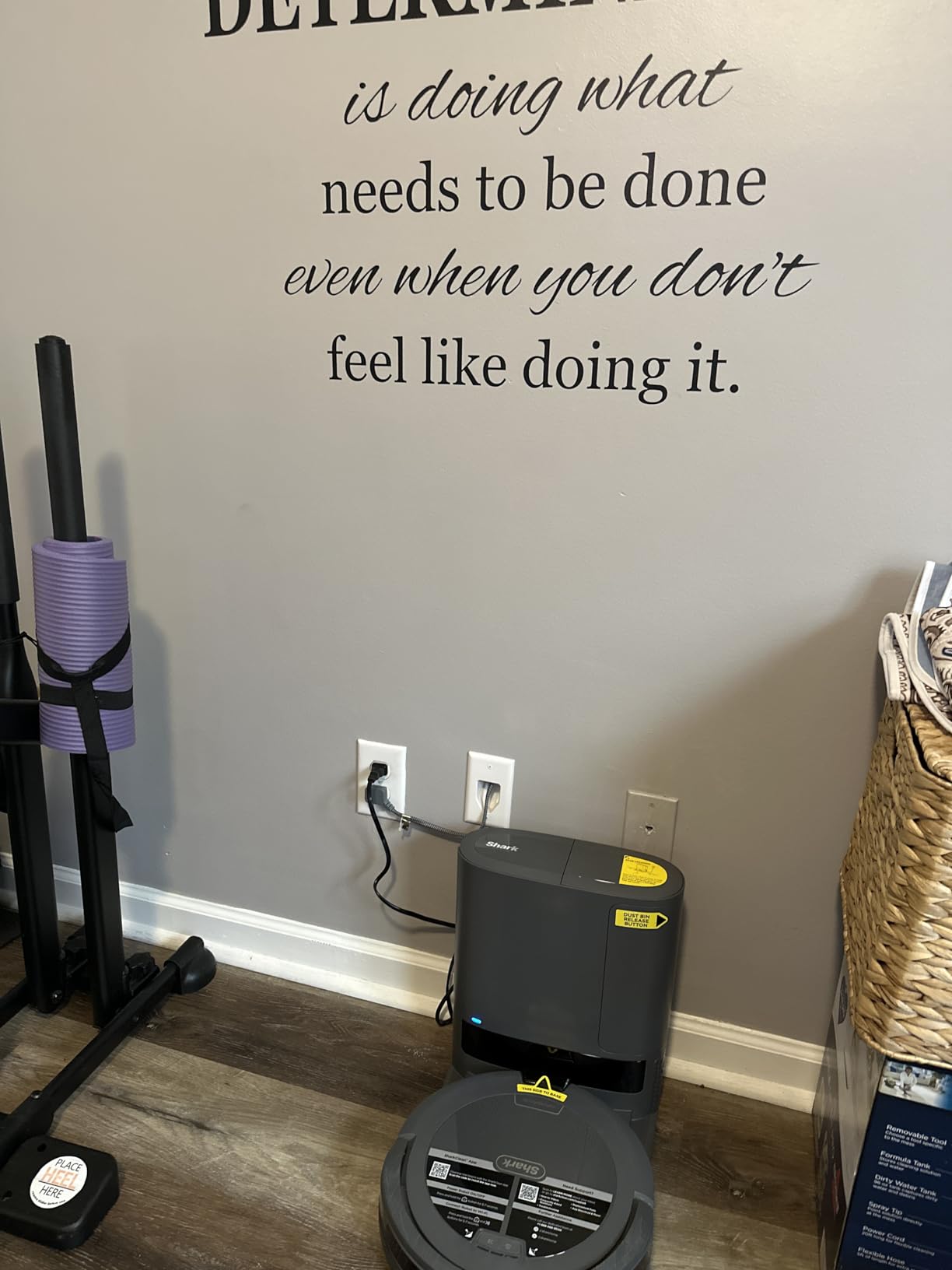
Why it fits a dry-cleaning household
No water on the floor is a real advantage on old, unfinished or waxed hardwood. Vacuum-only is the correct choice if your finish is delicate or if you simply do not want a robot dragging moisture across the planks twice a day.
The bagless base and anti-hair-wrap brush keep the two recurring costs and chores, bags and hair cutting, off your list entirely.
Where you will want more
There is no mopping, so any wet cleaning stays manual. The pre-motor filter is not a washable HEPA-style unit, which is a downgrade for anyone with allergies compared with the Shark Stratos. And while the base is bagless, you still empty it by hand every month or so.
Some owners note limitations with deep carpet cleaning and edge coverage, which on wood means the baseboard band still needs a separate tool.
12. ECOVACS DEEBOT T90 PRO Omni – Best for Baseboard Edge Scrubbing
ECOVACS DEEBOT T90 PRO Omni Robot Vacuum and Mop, 30000Pa Blast Suction
30000 Pa BLAST suction
OZMO Roller 3.0
TruEdge extends 0.6 inch
200 min runtime
4L capacity
60 dB
Pros
- 30000 Pa clears dust pet hair and crumbs in one pass
- Self washing OZMO roller scrubs instead of smearing
- TruEdge reaches the last 0.6 inch along baseboards
- ZeroTangle 4.0 keeps long pet hair off brushes
- PowerBoost charging with 200 minute runtime
Cons
- No mop only room mode in the app
- Expanding roller can scrape baseboards if it hugs the edge
- Can get stuck under uneven low furniture
- Tanks have no fill level sensors
The DEEBOT T90 PRO Omni is the most powerful machine here by a wide margin, at 30,000 Pa of BLAST suction with a high-airflow design. On hardwood that matters in a specific situation: fine dust that has settled into the grain of a plank needs airflow and suction together, and this is the machine built for it.
The 10.6-inch OZMO Roller 3.0 is the differentiator rather than the suction number. A self-washing roller scrubs with pressurized water and rinses itself with fresh water during mopping, so it never does the thing a flat microfiber pad does, which is smear a dried-on mark around and call it clean.
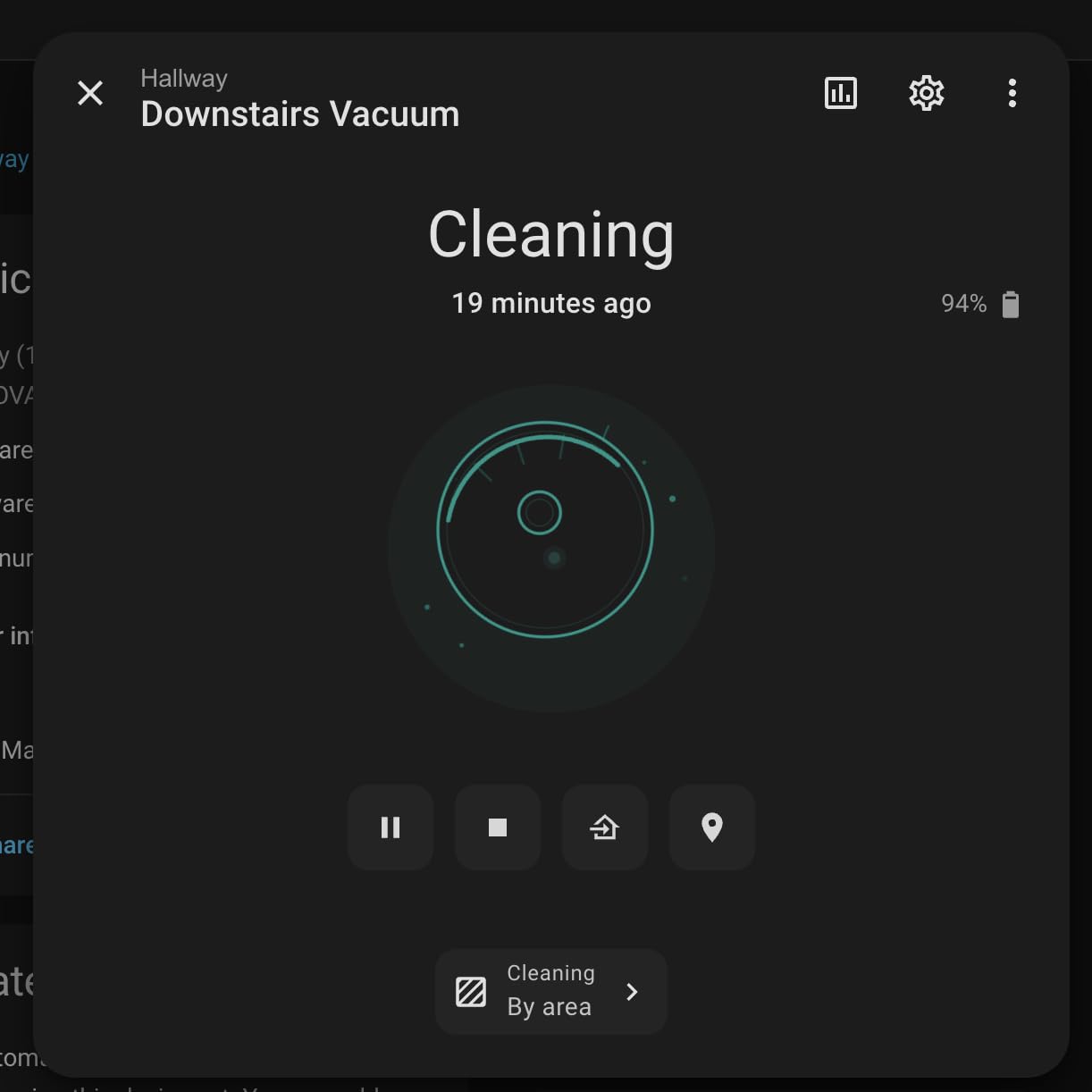
TruEdge 3.0 extends the roller 0.6 inches past the body so it can scrub right along a baseboard. If you have ever noticed the half-inch dust line that every robot leaves against a wall, this is the machine designed to address it, and the recommended surface list names hardwood and laminate first.
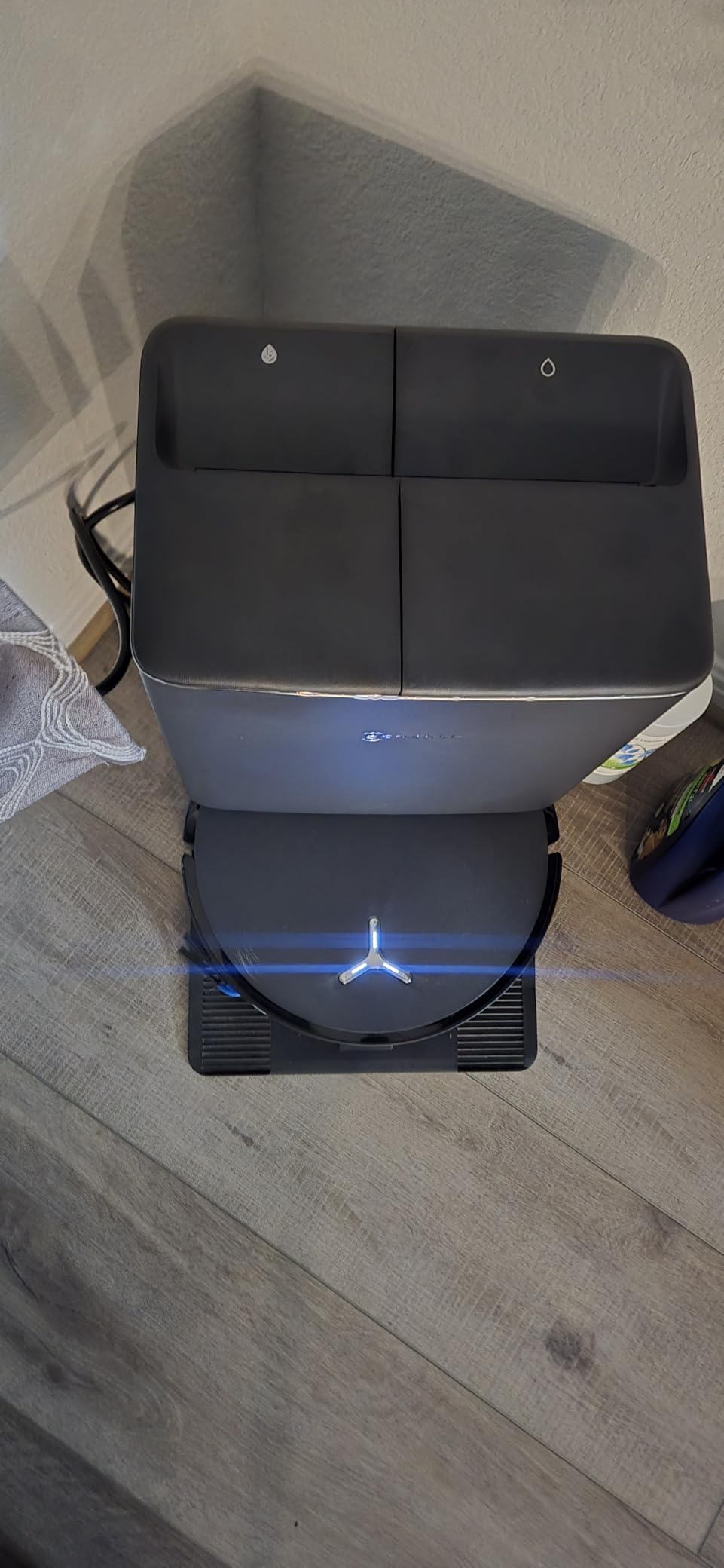
The OMNI station washes mops up to 167F, flushes the dirty water system and dries with 145F hot air, which is the best finish-protection story on this list for anyone worried about water spots. PowerBoost charging during the mop wash cycle plus 200 minutes of runtime covers large homes, and ZeroTangle 4.0 handles long pet hair.
Where it wins on hardwood
Edge and baseboard work is the headline. A roller that extends past the body means the band along the wall that every other robot on this list leaves behind actually gets scrubbed, and on a floor where dust settles visibly against the trim, that is the difference you notice every single day.
Quiet at 60 dB and heavily reviewed as a machine you can run overnight, with a roller that rinses itself so you are not re-depositing dirty water on sealed wood.
Where the caution belongs
There is an honest note here that fits the category generally and this machine specifically: the expanding roller can scrape baseboards if the robot hugs the edge too closely. That is a wear-and-tear point on your trim, not on the floor, but it is worth knowing before you turn on edge cleaning near finished woodwork.
There is no mop-only room mode in the app, the tanks have no fill-level sensors and only alert when empty, it can get stuck under low furniture with uneven clearance, and setup needs 2.4GHz Wi-Fi. It is also the least-reviewed machine here with 710 ratings, so the long-term record is short.
How to Choose a Robot Vacuum That Treats Your Hardwood Well
Suction gets all the attention because it is the one number printed on the box, and it is not the number that decides whether a robot is good for wood. Here is what we actually weighed across these twelve machines.
Roller and wheel material beat raw suction
On a sealed hardwood floor, the single biggest risk is a scuff or a scratch. Rubber main brushes are the safest because there are no bristles dragging across a finish. Two machines here run all-rubber or dual-rubber systems, the roborock Qrevo S Pro and the Roomba 705X, and both are the picks we would trust most if your finish is already showing wear.
If you are worried about contact damage, do not run a robot over an unfinished, waxed or oiled floor at all. Sealed hardwood, laminate, vinyl plank and tile are all fair game. A soft rubber or silicone wheel is standard, but the height of the body matters too, because a low body has to squeeze under furniture where grit has accumulated and where it may pick up a scuff from a caster or a nail head in the process.
Mop dampness is the finish-protection variable
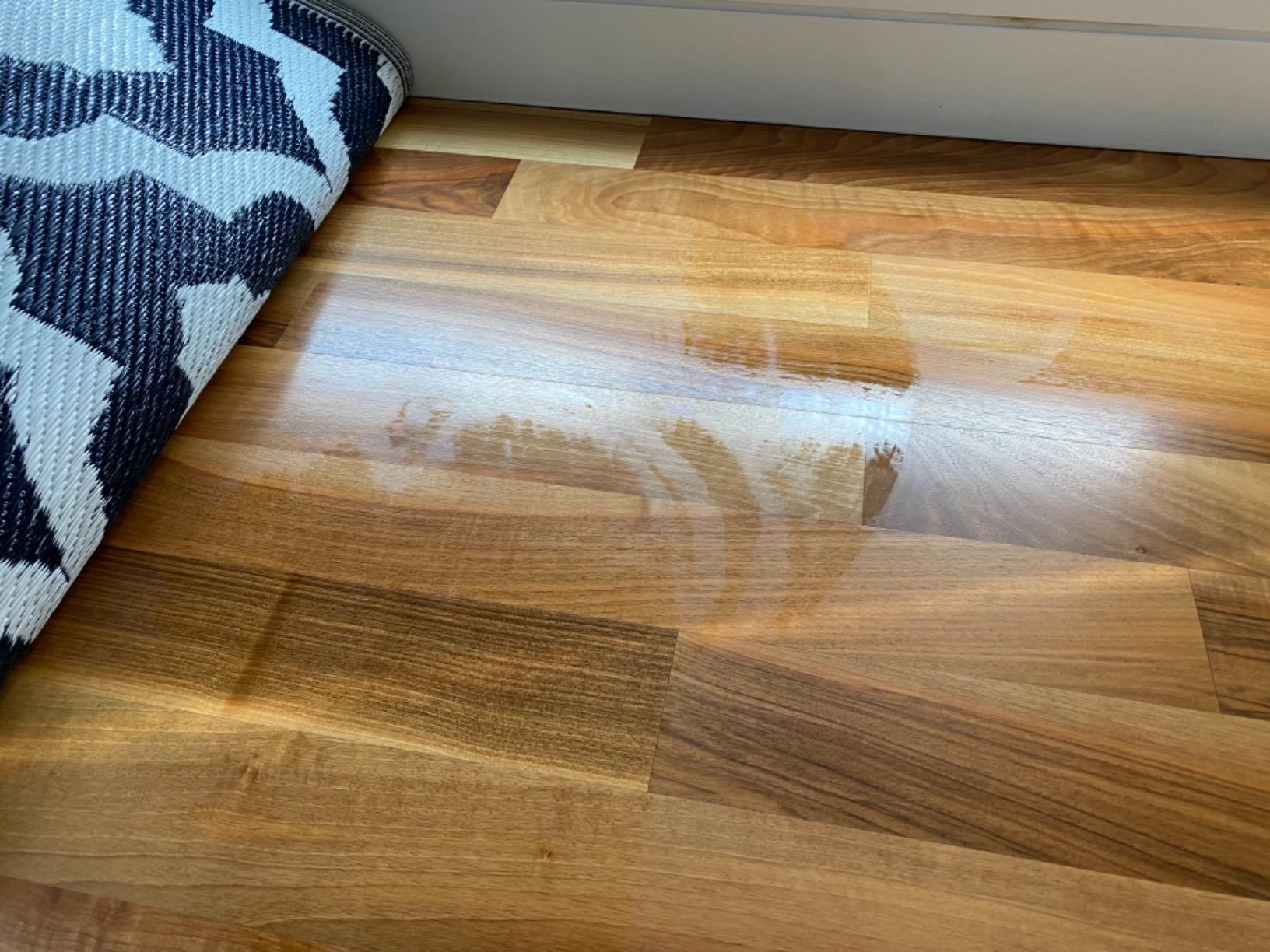
Water spots and streaks on sealed wood are almost always a damp-pad problem rather than a cleaning-solution problem. Look for a dock that hot-washes and hot-dries, and use the lowest water setting that still does the job.
Only use a solution your flooring manufacturer approves. Most robot manufacturers recommend plain water or their own concentrate, and some explicitly warn against vinegar-based or ammonia-based cleaners because repeated use can degrade a urethane finish. If you are unsure, the safest default on finished hardwood is plain water at the lowest flow setting.
Mop lifting decides whether you can mix rugs and wood
If you have area rugs sitting on your hardwood, auto mop lift is not optional. The models here handle it in different ways: the eufy lifts the pad on carpet detection, the Shark Stratos uses AutoLift to raise over both rugs and thresholds, the roborock Q10 S5+ lifts 8mm and boosts suction, the Qrevo S Pro lifts 10mm, and the DEEBOT raises the roller 0.6 inches. Without that, a mop pad drags across a rug edge and you get the exact problem r/RobotVacuums users complain about most.
Do not forget thresholds. A floor that moves between kitchen tile and a wood hallway has a transition strip, and a robot that cannot climb it will sit there every day. The Roomba 105 Vac gets specific credit for climbing transition strips reliably.
Clearance decides how much floor you actually get
Bodies run from 3.35 to 4.1 inches tall. The eufy Omni C20 at 3.35 inches and the ILIFE A30 Pro at 3.74 inches will get under furniture that the 4.1 inch machines will not touch. On a wood floor, the shadow line under a sofa and bed collects dust that never gets swept up otherwise, so the lowest body you can buy cleans more of your actual floor.
Self-emptying is a two-year cost, not a feature
Self-emptying docks are the single biggest quality-of-life upgrade, and they carry a running cost that brands rarely spell out. Bagged models like the Roborock docks and the Roomba 105 Combo need replacement bags, and a pet household can fill a bag in about a week. Over two years that is a real line item, and it is worth comparing bag capacity and bag cost before you settle.
Bagless bases avoid that entirely. The Shark Stratos, Shark Navigator and SharkMatrix all use bagless bases, and the Stratos goes further with 30-day water refill and automatic wash and dry. If you dislike recurring consumables, bagless is the cleaner ownership story. We cover base mechanics in more detail in our self-emptying robot vacuum guide.
Obstacle avoidance matters more when pets are involved
Three machines here have real obstacle avoidance: the Roomba 705X with PrecisionVision AI, the Qrevo S Pro with Reactive Tech, and the Q10 S5+ with ReactiveTech structured light. The rest either detect objects without avoiding them or have nothing. In a pet home, avoiding a pile rather than driving through it is the difference between a robot you trust and one you check on before you leave the house.
What changes as you move up the tiers
At the entry level you are buying suction and a decent brush. Expect no auto mop washing, manual pad rinsing, and a 2.4GHz Wi-Fi requirement that catches people out. Add a self-emptying dock and the real upgrade arrives, which is not touching dirt for weeks.
At the mid tier, LiDAR mapping, no-go zones, multi-level maps and auto mop lift become standard, and the differences between models narrow to dock quality and software reliability. At the premium tier you are paying for obstacle avoidance, extending or self-washing rollers, hot wash and hot dry docks, and room-level mopping control. In 2026 the gap between the mid tier and the premium tier is narrower than it was a few years ago, so that jump only pays off depends almost entirely on whether you have pets, and whether your floor is big enough to notice the coverage difference.
Maintenance schedule for a hardwood floor
Empty or replace the bag or base bin on the schedule the dock reports rather than on a fixed date. Rinse the mop pad after every few runs, since a dried pad deposits residue on sealed wood. Wash the mop and dry it fully in the dock at least weekly to prevent mildew. Pull hair off the main brush every couple of weeks in a pet home, and clean the filter every one to two months. Wipe the sensors and charging contacts monthly, because a dusty sensor on a smooth hardwood floor is a robot that stops finding its base. Check under furniture occasionally, since that is where the real grit builds up.
Dock placement deserves its own paragraph because it is specific to hard floors. Put the base on a flat section of wood away from the doorway, leave the clearance the manufacturer asks for on both sides, and be aware that a bagged dock will leave a trail of grit around itself when you swap the bag. A water-resistant mat under a wet dock protects the finish underneath it.
Finally, protect the floor itself. Our notes on rug pads for hardwood floors and the finish care steps in our engineered hardwood flooring guide cover what goes under rugs and how the floor itself behaves over time.
Frequently Asked Questions
Are robot vacuums worth it for hardwood floors?
Yes, for daily maintenance. Hardwood collects grit that acts as an abrasive against the finish, and removing it every day is what protects the surface. A robot is not a replacement for a stick vacuum on baseboards and corners, and it is not a deep cleaner. What it removes is the daily layer of dust and pet hair that would otherwise sit on the planks for a week.
What is the best robot vacuum for hardwood floors?
The eufy Omni C20 is our top pick for hardwood because its 3.35 inch body reaches under low furniture and its Omni Station empties, washes and dries automatically. Its 7000 Pa suction and Pro-Detangle Comb handle grit and pet hair on sealed wood, and the mop lifts on carpet so mixed-floor homes stay dry. If you want the simplest self-emptying setup, the Roomba 105 Combo is the alternative, and if you want maximum suction on crumbs and litter the roborock Qrevo S Pro leads on raw power.
Can a robot vacuum scratch hardwood floors?
The risk is low on sealed hardwood but not zero. Rubber or silicone wheels and an all-rubber main brush are the safest combination, because there is no bristle dragging across the finish. Keep the robot off unfinished, waxed or oiled floors entirely. Also note that the ECOVACS DEEBOT T90 PRO Omni has an expanding roller that can scrape baseboards if it hugs the edge too closely, so trim is the part to watch on that machine.
Is mopping hardwood with a robot vacuum safe?
On sealed hardwood, yes, as long as dampness is controlled. Use the lowest water setting that works, empty the dirty water tank after each run, and never add vinegar or ammonia unless your flooring manufacturer approves it, because repeated use can degrade a urethane finish. Water spots and streaks almost always come from a damp pad, so pick a dock with hot wash and hot dry cycles and let the pad finish drying before the next run.
Do robot vacuums do well with pet hair on hard floors?
They do, especially models with anti-tangle rubber brushes. The Roomba 705X pairs 175x stronger suction with dual rubber brushes and PrecisionVision AI obstacle avoidance that steers around pet waste, which is the safest pick in a multi-pet home. The roborock Qrevo S Pro has the strongest suction for heavy shedding at 18,500 Pa, and the Shark Navigator and Shark Stratos both use anti-hair-wrap brushrolls. Expect to cut some hair off the roller by hand every couple of weeks regardless of model.
How often should I run a robot vacuum on hardwood?
Daily is the useful cadence, because the value comes from removing grit before it grinds into the finish. On busy hard floors, a daily vacuum run plus a mop run two or three times a week is a realistic pattern. If you have pets, daily is close to mandatory. Deep cleaning and edge work still belong to a stick vacuum, since every robot in this roundup leaves a narrow band along baseboards.
The Bottom Line for Hardwood Owners
Start with how much floor you have and how much water you tolerate. In a mostly open sealed-hardwood home, the eufy Omni C20 is the pick: the 3.35 inch body cleans under furniture, the station removes every routine task, and 56 dB means it can run while you work. In a home that spans two levels, the roborock Q10 S5+ handles multi-floor mapping that most of this list cannot. In a pet household, the Roomba 705X earns its price with obstacle avoidance and an extending roller mop that reaches the edges.
If mopping is the part you care about, the SharkMatrix Plus handles the wet side best and the ECOVACS DEEBOT T90 PRO Omni is the one that actually scrubs along your baseboards. If you would rather never buy a dust bag, the bagless Shark bases remove that running cost entirely. And if your floor is unfinished, waxed or oiled, the right answer is a vacuum-only model such as the Roomba 105 Vac or the Shark Navigator, with wet cleaning left to a real mop.
Whatever you pick in 2026, run it daily, keep the dock on a flat clear patch of floor, and let the pad dry fully between runs. That habit, more than any specification, is what keeps a hardwood floor looking new.