
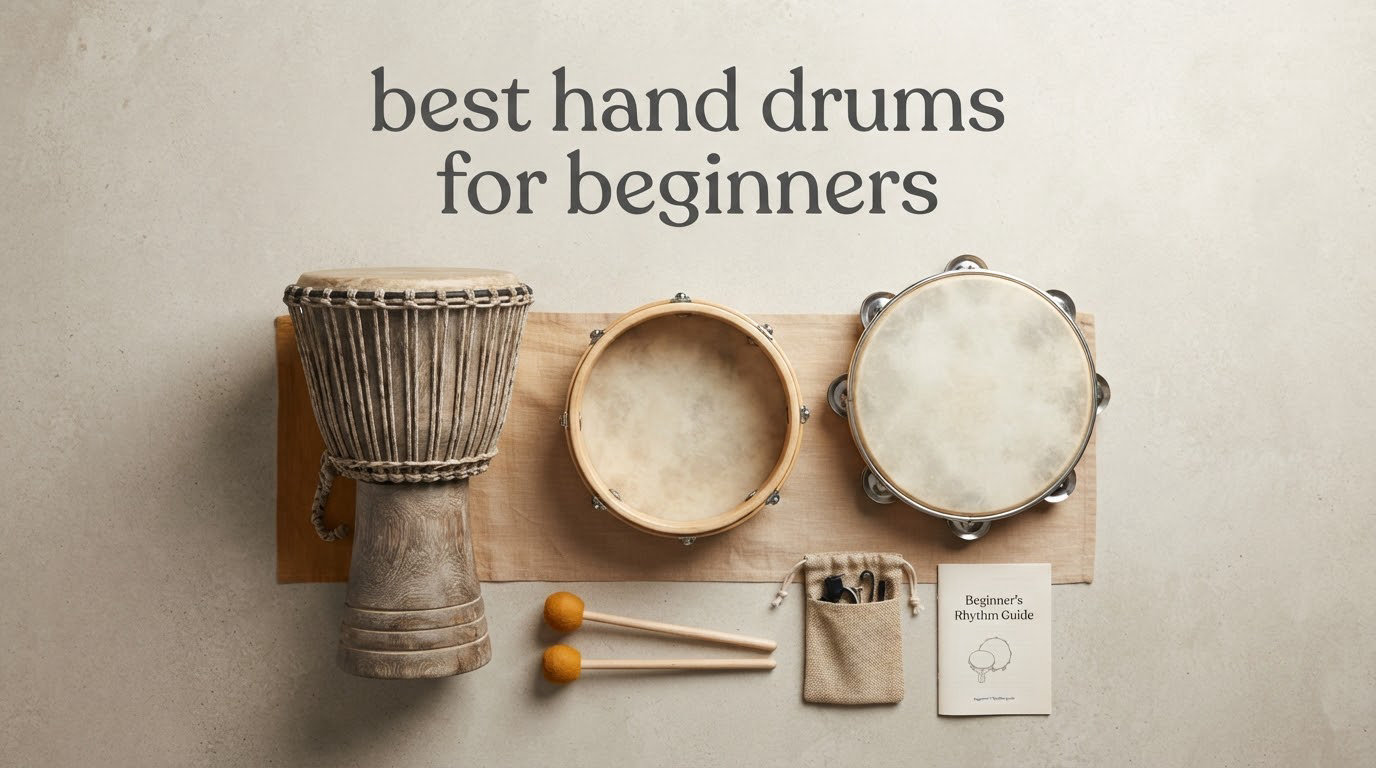
Picking the best hand drums for beginners is far less complicated than the number of options suggests. A hand drum needs no sticks, no hardware, and no reading skills to make a satisfying sound on day one, which is exactly why most first-time drummers start here rather than behind a full kit.
The honest answer to “what is the best hand drum for a beginner” depends on the room and the noise tolerance, but the pattern holds across nearly every case. Players who want a wide range of tones and a drum that responds to hand technique usually gravitate to a djembe, while those living in apartments and shared walls tend to land on frame drums or steel tongue drums. Bongos fill the gap when you want a two-drum setup that stays compact.
Our team spent weeks comparing twelve beginner hand drums across four families: steel tongue drums, bongos, frame drums, and djembes. We looked at head material, tuning stability, weight, how forgiving the drum is to sloppy technique, and how long the shell and hardware hold up. What follows is the ranking, the reasoning behind it, and a buying guide that explains which drum actually fits your situation.
Table of Contents
Top 3 Beginner Hand Drum Picks in 2026
These three cover the most common beginner situations. One is the most complete first instrument, one is the strongest two-drum set, and one is the least demanding way into playing.

HOPWELL 13 Inch Steel Tongue Drum
- 15 notes in D major
- Beginner tuned
- Includes book and mallets
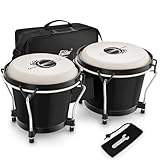
Eastar 6 Inch and 7 Inch Bongos
- Solid wood shells
- Real animal skin heads
- 6 inch plus 7 inch pair

Lronbird 6 Inch Steel Tongue Drum
- 8 notes in alloy steel
- Removable sound stopper
- Only 1.4 pounds
Our top pick earned the top spot on the strength of its rating, its review volume, and how quickly a complete beginner gets a musical result from it. The bongo pair won on tone and on being the only two-drum option here that a new player can tune by hand in under a minute.
Best Hand Drums for Beginners (October 2026)
The table below lists all twelve drums with the specs that actually change how they play. Read the head material column first, because it decides how the drum responds to humidity, how it ages, and how much maintenance you are signing up for.
| Product | Specifications | Action |
|---|---|---|
| HOPWELL 13 Inch Steel Tongue Drum, 15 Notes |
|
Check Latest Price |
| Lronbird 6 Inch Steel Tongue Drum, 8 Notes |
|
Check Latest Price |
| Eastar 6 Inch and 7 Inch Bongos |
|
Check Latest Price |
 Remo RH-5600 Rhythm Kids Bongos Remo RH-5600 Rhythm Kids Bongos |
|
Check Latest Price |
 AKLOT 10 Inch Steel Tongue Drum, 11 Notes AKLOT 10 Inch Steel Tongue Drum, 11 Notes |
|
Check Latest Price |
 EastRock 4 Inch and 5 Inch Bongos EastRock 4 Inch and 5 Inch Bongos |
|
Check Latest Price |
 Foraineam 10 Inch and 8 Inch Frame Drums Foraineam 10 Inch and 8 Inch Frame Drums |
|
Check Latest Price |
 AKLOT 9.5 Inch Mahogany Djembe AKLOT 9.5 Inch Mahogany Djembe |
|
Check Latest Price |
 Remo Fiberskyn Pretuned 16 Inch Frame Drum Remo Fiberskyn Pretuned 16 Inch Frame Drum |
|
Check Latest Price |
 Pyle 6.5 Inch and 7.5 Inch Birch Bongos Pyle 6.5 Inch and 7.5 Inch Birch Bongos |
|
Check Latest Price |
 Kmise 6 Inch Mahogany Djembe Kmise 6 Inch Mahogany Djembe |
|
Check Latest Price |
 Nydotd 10 Inch and 8 Inch Frame Drums Nydotd 10 Inch and 8 Inch Frame Drums |
|
Check Latest Price |
Two things stand out when you lay these side by side. Five of the twelve use synthetic heads, which means they tolerate humidity swings without going flat, while four use real skin, which sounds warmer but needs occasional conditioning. And the weights range from 1.4 pounds to just under 5 pounds, a difference you feel within ten minutes of playing.
1. HOPWELL 13 Inch Steel Tongue Drum, 15 Notes – the Most Beginner-Friendly Pick
HOPWELL Steel Tongue Drum – 13 Inches 15 Notes Tongue Drum – Hand Pan Drum with Music Book, Handpan Drums Mallets and Carry Bag, D Major (Navy Blue)
13 inch steel tongue drum
15 notes in D major
5.7 lb alloy steel body
Book, mallets and case
Pros
- 15 notes let a beginner play full songs
- Pre-tuned so no setup is needed
- Mellow tone suits shared walls
- Sturdy build takes hard striking
- Works with mallets or fingertips
Cons
- Higher notes need precise strike placement
- Thin padded carrying case
- Music book uses numbers not notation
The HOPWELL is the drum we hand to a complete beginner first. Fifteen notes in D major means you are not limited to open-note exercises; within an hour most people are playing something they recognise, which is the entire point of a first instrument. The manufacturer describes it as designed so a total beginner can quickly produce clear sounds, and that matched what we heard.
It weighs 5.7 pounds, which is heavier than it sounds on paper and about right for stability between your legs. The alloy steel shell does not flex, so the tone is consistent no matter where you hit it, and the finish resists fading.
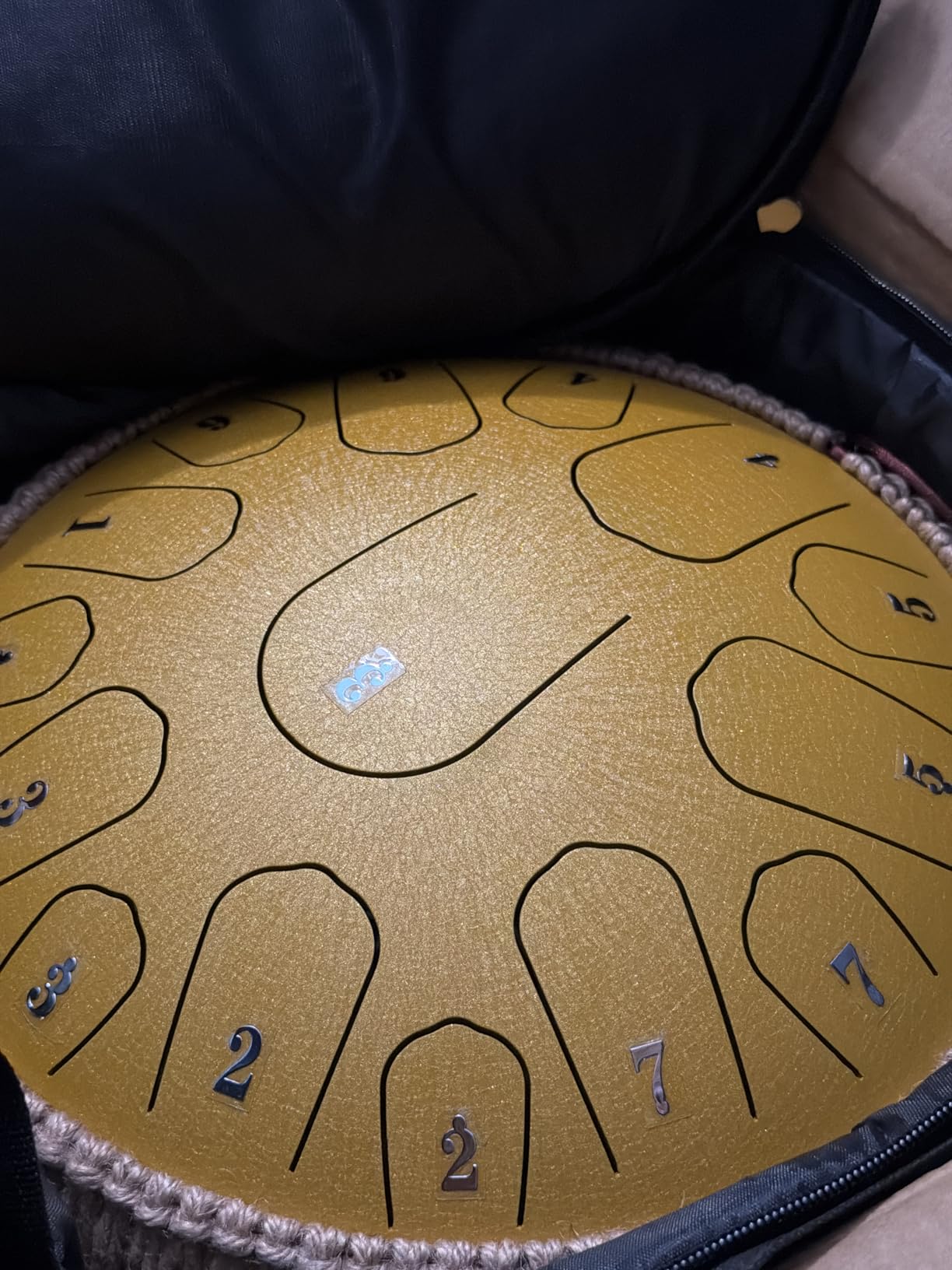
That stability is the quiet advantage here. Humidity does not move the pitch, and there is no rope or hardware to loosen. You set it down, you pick it up a week later, and it sounds the same.
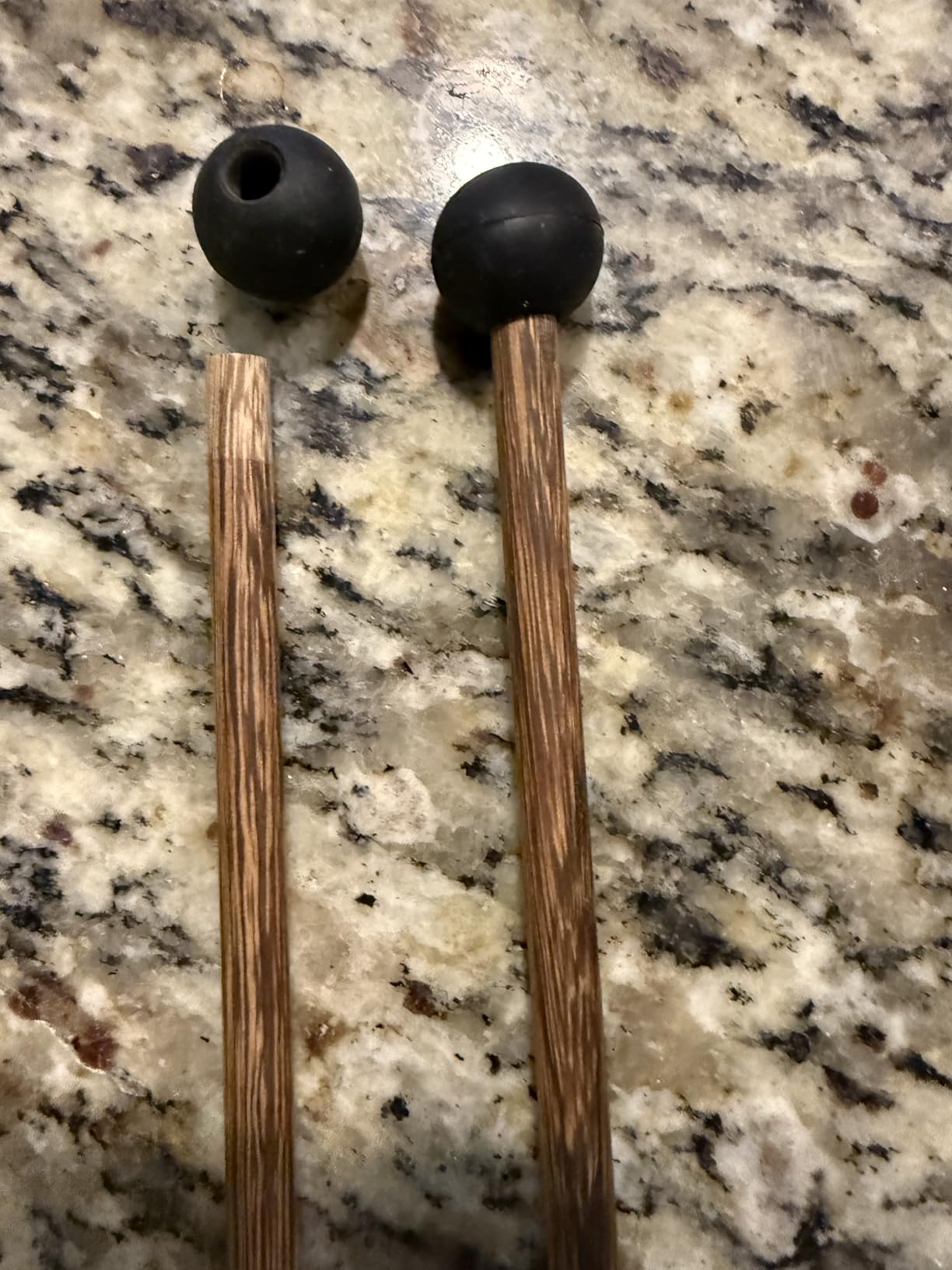
The trade-off shows up in the upper register. The top notes on a 15-note scale sit close together, and striking them needs a more precise touch than the lower ones. Reviewers repeatedly note that the higher tongues ring less freely unless you hit them right in the middle. The included case is also thin, so we would not lean on it in a car seat.
What it is genuinely good for
It is the best choice if your goal is playing songs rather than playing drums. Fifteen notes in one key is enough for familiar melodies, and the numbered tongue layout plus the included music book means nobody in the room needs to read standard notation. Parents and teachers single out one quality above all others here: it is never annoyingly loud. You can play it in a flat with thin walls and nobody knocks on the door.
The included mallets are the better starting tool even though fingertips also work. Fingertips feel natural for a minute and then get tiring, and a mallet strike gives you a cleaner, fuller bloom on every note.
Where it falls short
It will not teach you hand technique. A steel tongue drum rewards accuracy, not feel, so if your real goal is the bass-tone-slap vocabulary that drummers on r/drums point beginners toward, this is a detour rather than a foundation. Some players also find the numbered note labels confusing next to any other instrument, and the case needs replacing before regular transport.
2. Lronbird 6 Inch Steel Tongue Drum, 8 Notes – the Small-Body Favourite
Steel Tongue Drum 6 Inch 8 Notes Musical Instrument, Rain Drum Style Gift
6 inch alloy steel body
8 notes across colourways
1.4 lb portable weight
Sound stopper and mallets
Pros
- Genuinely portable at 1.4 pounds
- Two timbres from the sound stopper
- Calming tone for meditation use
- Survives drops and rough handling
- Comes with mallets
- picks and stickers
Cons
- Upper notes ring weakly over others
- Numbered stickers are hard to follow
- Stickers peel over time
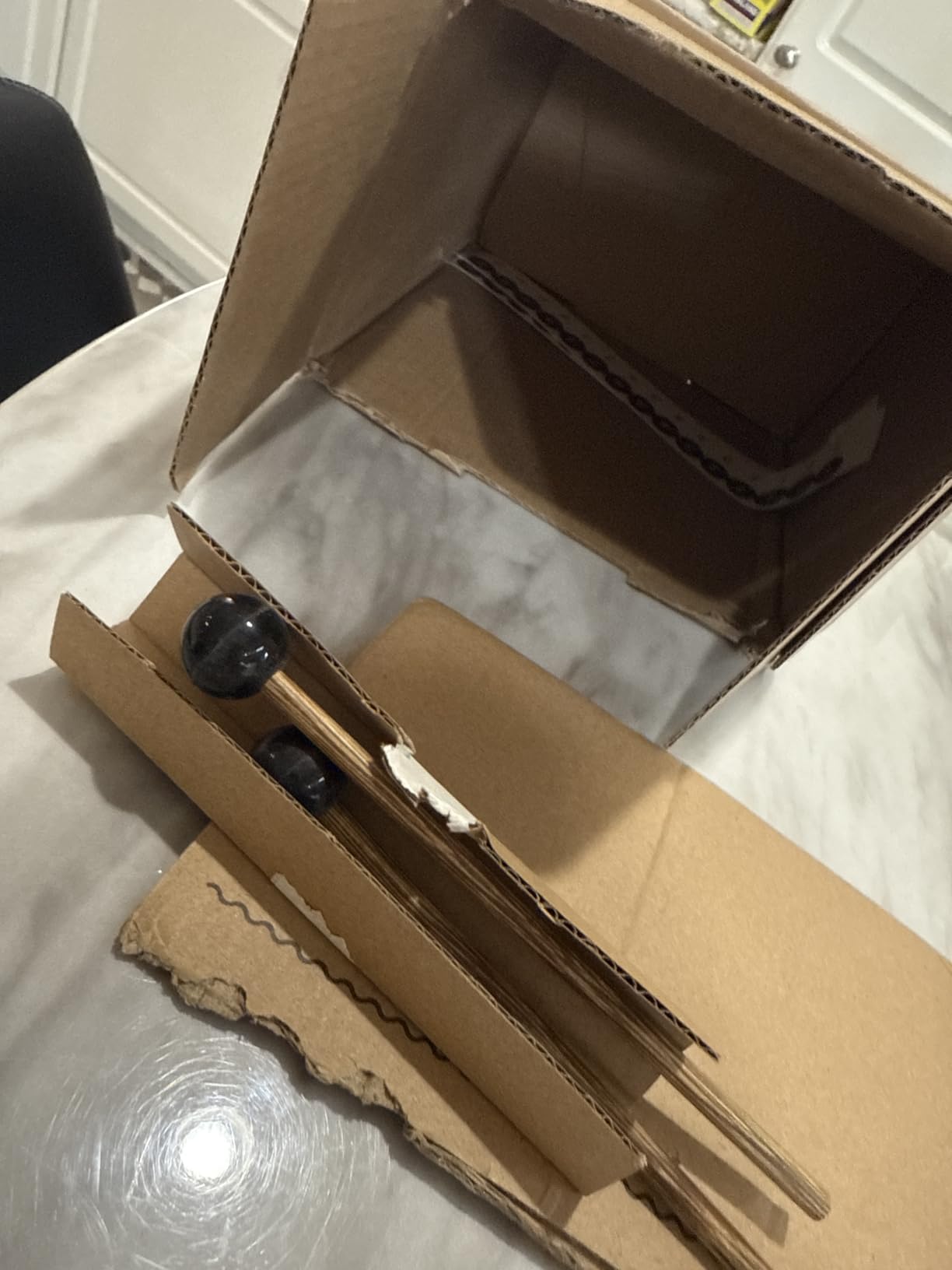
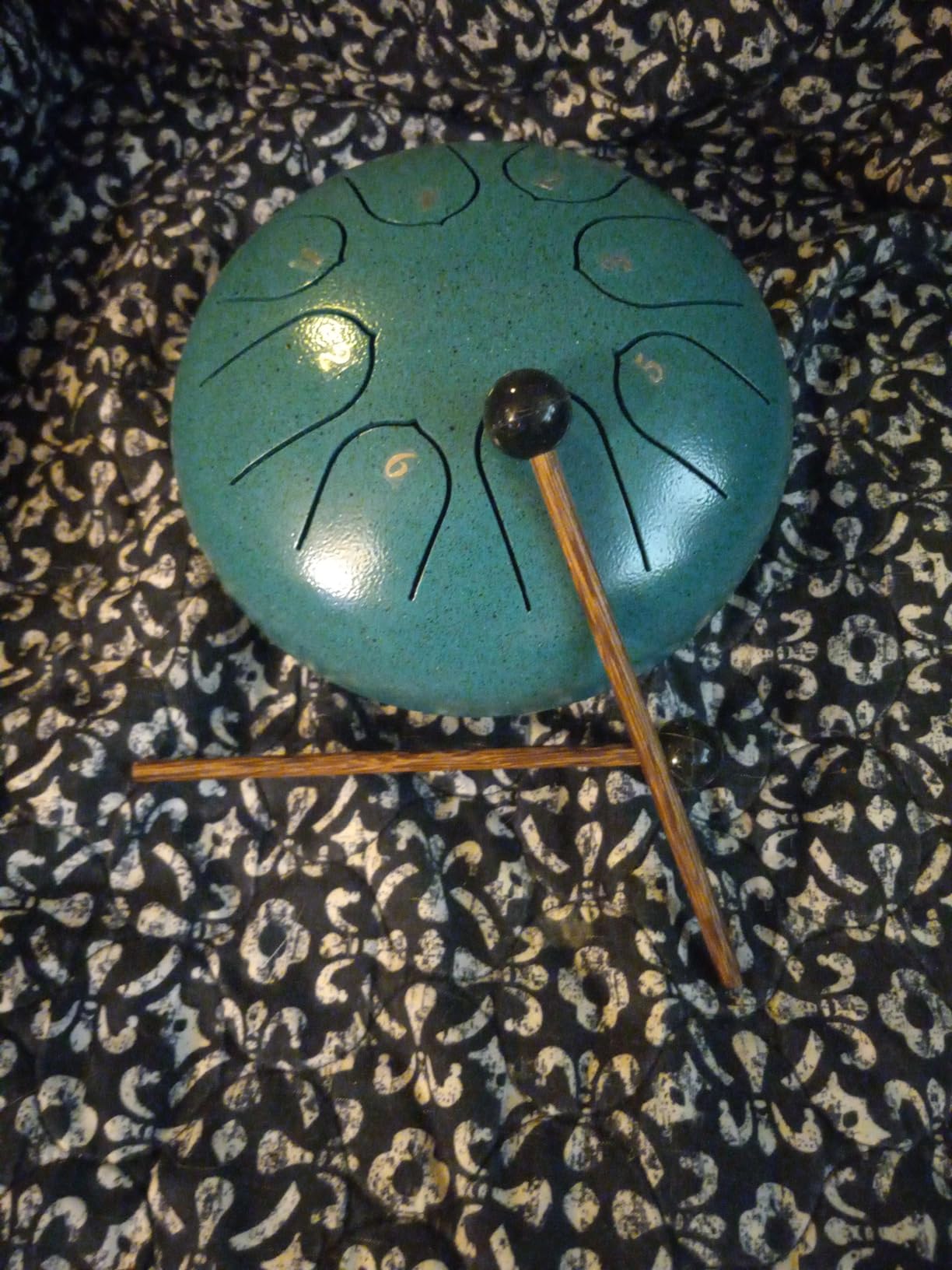
The Lronbird solves a problem the bigger tongue drums do not: it fits in one hand and a bag. At 6 inches across and 1.4 pounds, it is the instrument we would hand to a child who has never played anything, and to an adult who wants to practise in a hotel room.
The removable bottom sound stopper is the detail most buyers miss. With it fitted you get a cleaner, more classical voice; without it, a fuller and more modern one. That single part changes the character of the instrument more than the colourway does.
Eight notes is a real limit on what you can play, and it is worth being clear-eyed about that. The scale is wide enough for lullabies, meditation sets, and simple melodic lines, but not for arrangements you would recognise as songs. Owners describe it as a relaxing first instrument rather than a musical workhorse.
The upper notes are the weak point. Reviewers report that the A, B, and high C ring underneath each other rather than speaking clearly, and that hitting harder on those tongues makes the tone worse rather than louder. The note stickers also use numbers instead of note names, which makes cross-referencing with any other instrument frustrating.
What it is genuinely good for
It is the best first instrument for a young child, for travel, and for anyone whose real interest is wellness drumming rather than gigging. The anti-slip rubber base stops it walking across a table mid-play, and the alloy body shrugs off the kind of treatment drums get in a busy classroom.
Because the tone is soft and the footprint is tiny, it works in shared spaces where a djembe would not. The included finger plectrums are a nice touch, though most players end up using bare hands or the mallets.
Where it falls short
Eight notes caps your repertoire, and the numbered labelling system means you are memorising a map rather than reading music. Owners of music-reading backgrounds consistently flag this as the main friction. If you can already read a treble clef, plan to spend a week relabelling.
3. Eastar 6 Inch and 7 Inch Bongos – the Best Value Bongo Pair
Eastar Bongo Drums 6” and 7” Congas Drums for Kids Adults Beginners Professional Wood Percussion Instrument with Bag and Tuning Wrench, Black
6 inch plus 7 inch solid wood
Real animal skin heads
Tuning wrench and bag
1 kg total weight
Pros
- Crisp warm tone reviewers compare to studio sets
- Playable before any tuning
- Portable pair fits the included bag
- Polished shells are safe for children
- Trusted by music therapists
Cons
- Thin unpadded carrying case
- Slap tone needs rim placement
- One report of binding tuning rods
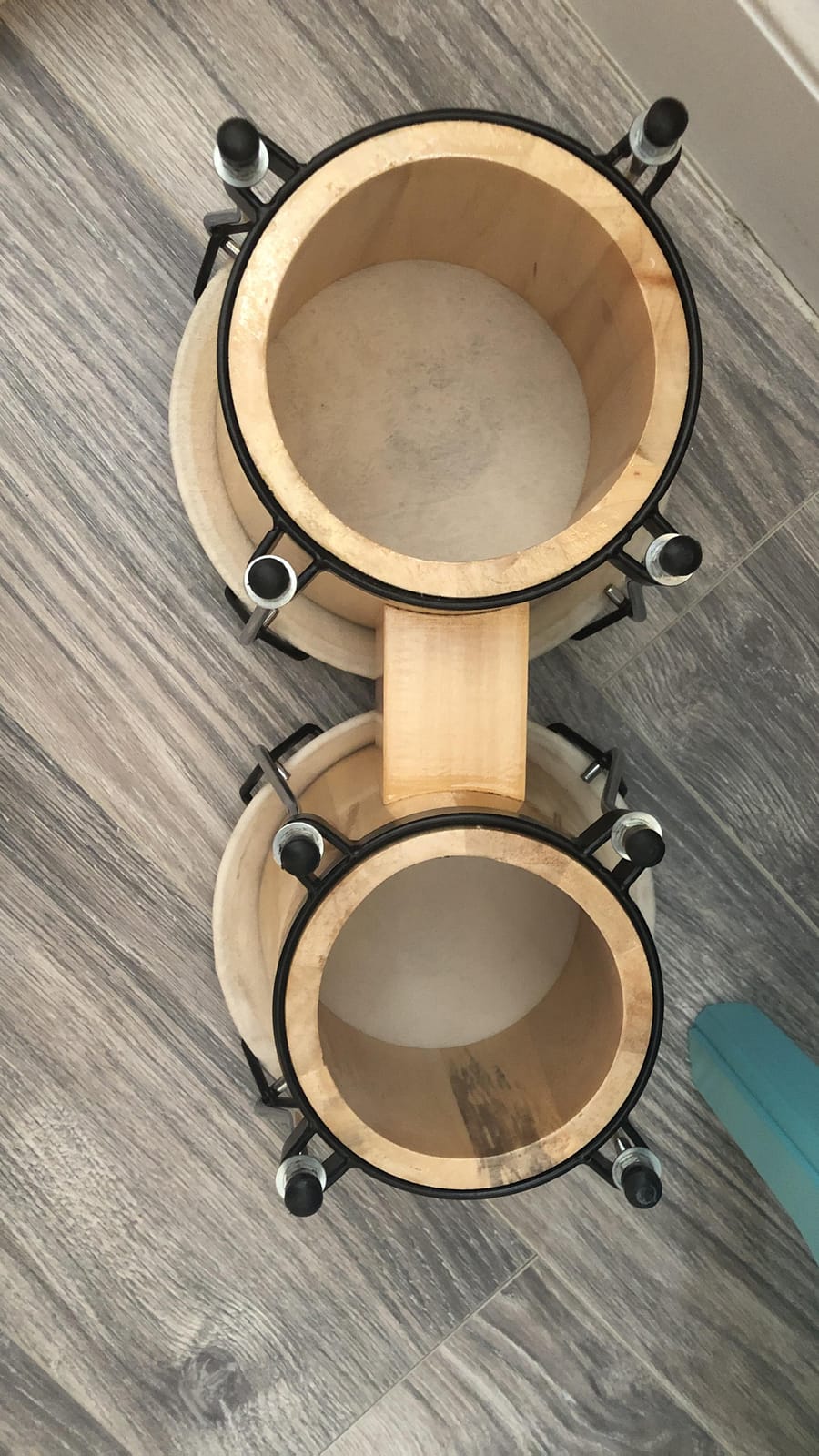
The Eastar pair is the most-reviewed drum set in this roundup, and the reason is the tone-to-effort ratio. Two shells, two heads, real animal skin, and a 6 inch plus 7 inch layout that is the most portable bongo configuration made. You can play it within minutes of opening the box.
Solid wood with a polished interior arc and no sharp edges makes it a safe first drum for a child, and the tuning wrench lets you raise the pitch yourself once the heads settle. The polished interior is also doing acoustic work, shaping the shell’s resonance rather than just feeling smooth underhand.
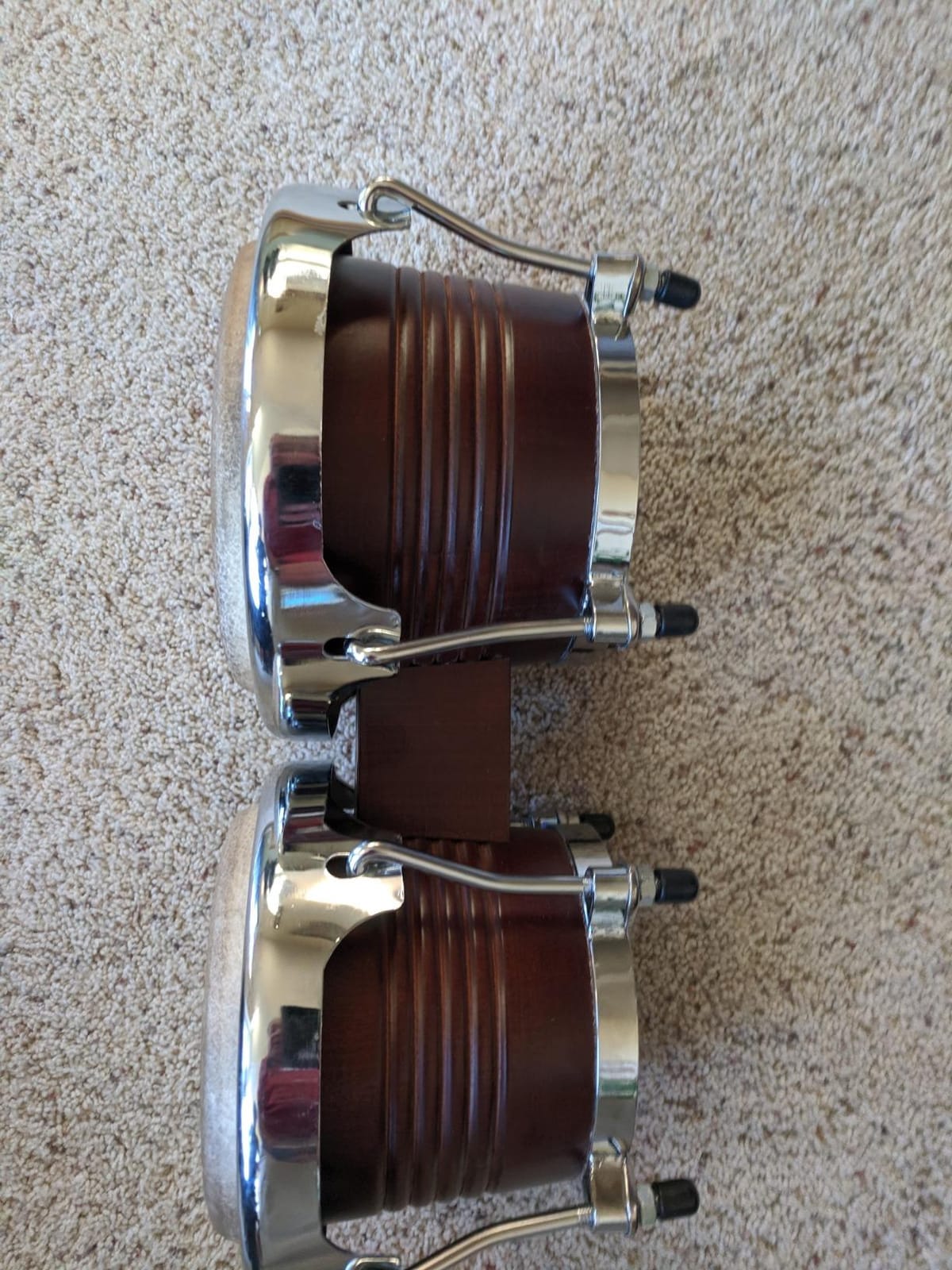
One technique note travels with almost every review of this drum, and it is worth knowing before you buy. Hitting the centre of the head gives you a dead thud, not a bongo slap. The signature tone lives near the edge, where your hand bounces off the rim as it strikes. That single adjustment is the difference between this sounding like a toy and sounding like an instrument.
It is also a genuinely practical choice for group work. Music therapists use pairs like this for rhythm sessions with children, and the two-shell setup gives you a low and a high answer without doubling the footprint. For a drum circle, that is the whole job.
What it is genuinely good for
It is the best option if you want two drums to work with but only want to carry one small bag. Natural skin gives you a response that synthetic heads cannot: the head moves under your hand, so dynamics come from pressure rather than speed. That is the single biggest tonal difference between this and a plastic-head beginner set.
It is also a strong choice for parents buying for a child aged roughly six and up, because the shells are edge-free and the 6 inch drum sits comfortably between small knees.
Where it falls short
Natural skin means natural maintenance. The heads react to humidity and dry air, and they will need occasional conditioning and eventually replacing, which is work a synthetic head never asks of you. The included case is thin and unpadded, and we have seen one report of the tuning rods binding so tightly the drums could not be adjusted at all.
4. Remo RH-5600 Rhythm Kids Bongos, 5 Inch and 6 Inch – the Best for Children
Remo RH-5600-00 Rhythm Club Bongo Drum – Rhythm Kids, 5″-6″
5 inch and 6 inch heads
Synthetic pre-tuned heads
Built-in stand legs
1.7 lb engineered wood
Pros
- Built to survive institutional use
- Synthetic head ignores humidity
- Legs let the drum resonate
- Comes apart for two players
- Part of a wider classroom range
Cons
- Heads cannot be tuned
- Duller with bare hands than mallet
- Goes flat on carpet and soft surfaces
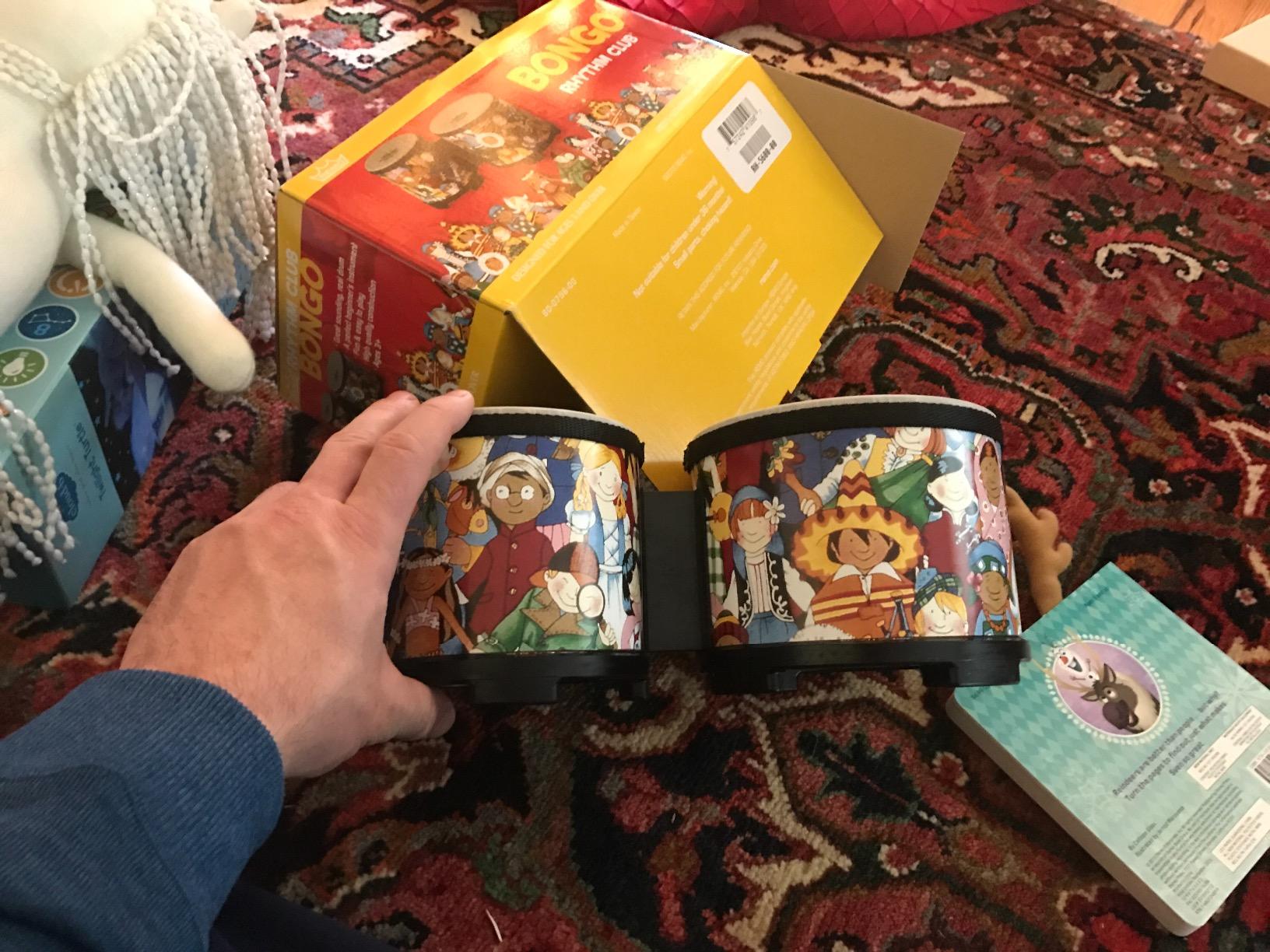
The Remo Rhythm Club bongos were designed for classrooms, and that design goal shows in every detail. Recessed hardware, a shell that shrugs off knocks, and a synthetic head that will not drift when the heating comes on in winter. If you are buying for a child aged four to eight, this is the one.
Two features separate it from the competition. The built-in legs lift the heads clear of whatever surface the drum sits on, so you are not damping the resonance by playing on a bedspread. And the pair separates easily, so two children can each have a drum instead of sharing one.
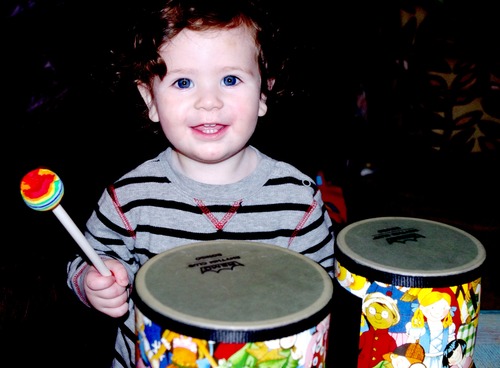
The 5 inch and 6 inch pairing gives two clearly distinct pitches, which is all a young player needs to start hearing intervals. Parents and teachers reviewing this instrument consistently describe it as a real instrument rather than a toy, and note that it builds rhythm and dexterity quickly.
There is a useful tonal quirk here. The synthetic head loses a little pitch as it loosens with play, and owners report the sound actually mellows and improves over the first months. If you tune it once and then compare a year later, do not assume something has gone wrong.
What it is genuinely good for
It is the best choice for a shared instrument, a school, or a child who will be unsupervised with it. The durability claim is not marketing: this line is used in institutional settings where drums get hit daily, and the synthetic head removes the humidity problem entirely.
It is also the easiest first drum to hand to two people at once. Each child gets a pitch, both can play together, and neither has to wait.
Where it falls short
It is not tunable, so the pitch is whatever the factory decided. It is also a very traditional bongo look with a modest sound ceiling, and percussionists reviewing it note it is not a professional-grade instrument. Owners who care about tone often add a wooden mallet, because the sound is noticeably duller with bare hands than with one.
5. AKLOT 10 Inch Steel Tongue Drum, 11 Notes – the Best Built for Quiet Homes
Steel Tongue Drum, AKLOT 10 inch 11 Notes Tank Drum C Key Percussion Steel Drum Kit w/Drum Mallets Note Stickers Finger Picks Mallet Bracket and Gig Bag
10 inch titanium alloy body
11 notes in C key at 440 Hz
2.2 lb
Mallets, picks and bag
Pros
- Musicians confirm standard C at 440 Hz
- Titanium alloy resists corrosion
- Never tires a household
- Two mallets and a bracket included
- Stable timbre across the range
Cons
- Finger picks add no resonance
- Mallets are effectively required
- Mallet heads ship unattached
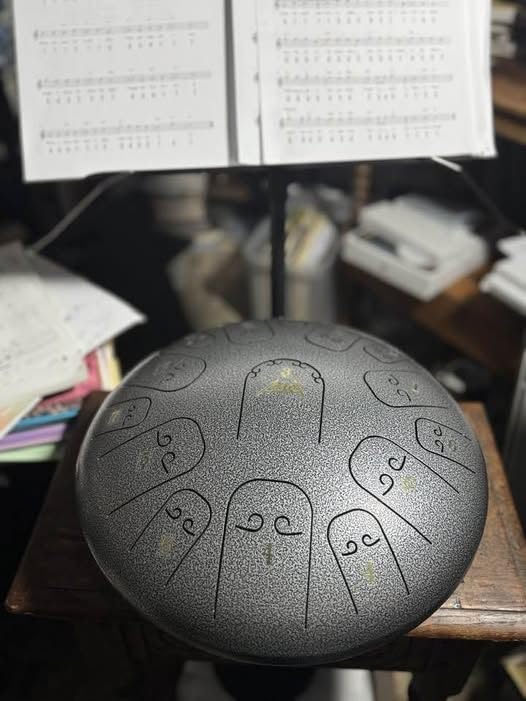
The AKLOT is the one we would recommend to anyone who genuinely cannot make noise. Eleven notes in standard C at 440 Hz means it sits correctly alongside other instruments, and parents and teachers single out the low volume as its biggest practical virtue.
Build quality is the story here. The shell is titanium alloy rather than carbon steel, which resists corrosion and heat, and the tongues were tested in tune across the range rather than spot-checked. Percussionists reviewing it confirm the 440 Hz standard themselves, which is unusual for an instrument at this level.
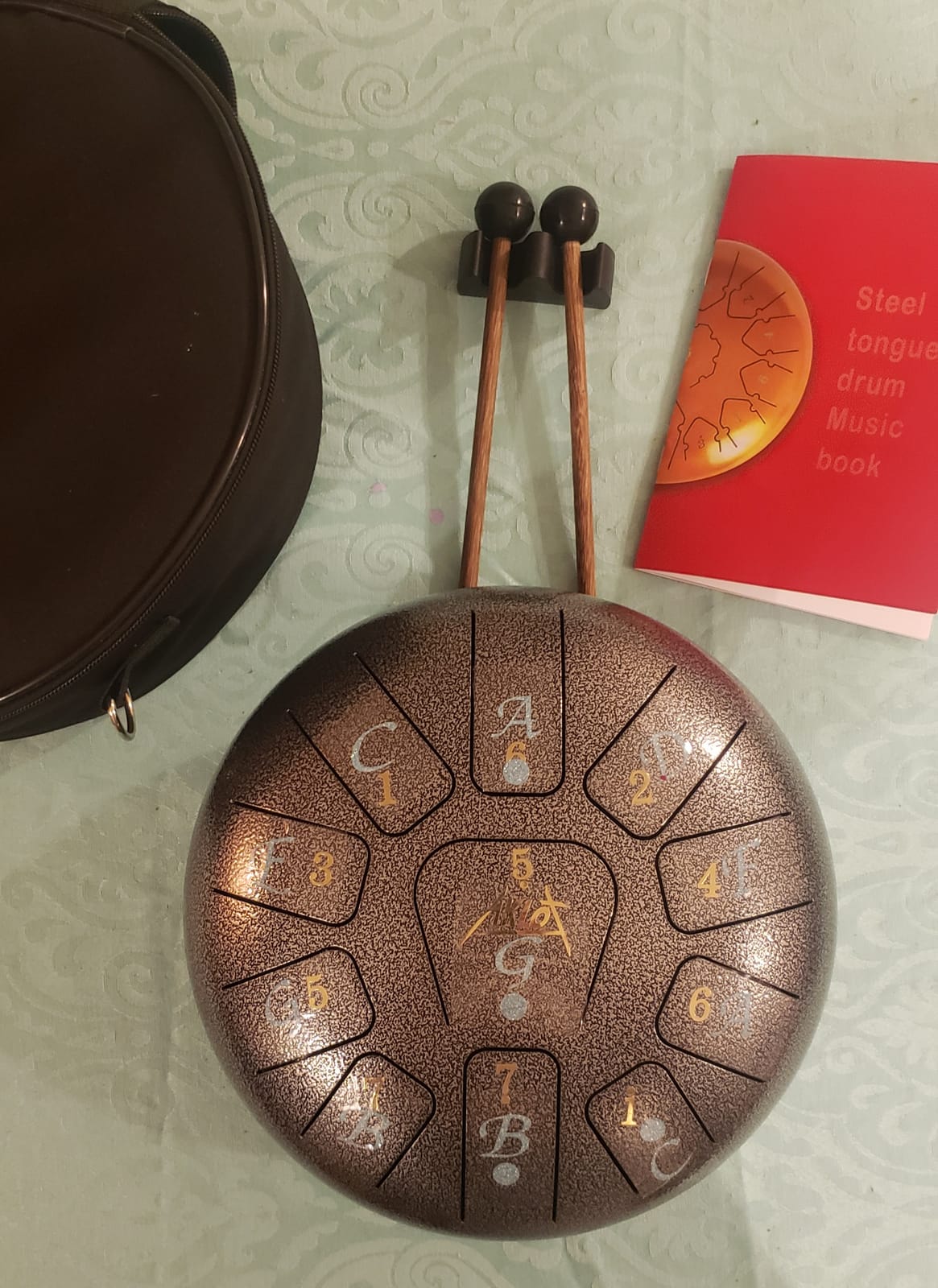
The package is unusually complete. Two mallets, a mallet bracket so you can set them down mid-session, six finger picks, note stickers, a music book, and a travel bag. Nothing about this instrument needs buying separately before the first note.
It suits religious practice, yoga, meditation, and early childhood music as readily as it suits a bedroom, and the tone is described as ethereal and melodious rather than percussive. That is a matter of taste, but it is the reason this drum never annoys anyone.
What it is genuinely good for
It is the best pick for a flat, a shared house, a classroom with hard-working neighbours, or a musician who needs a reference pitch to practise alongside. Eleven notes give you more melodic range than the smaller tongue drums without the 5.7 pound commitment of the largest one here.
The tuning accuracy is worth stressing if you play anything else. Practising against a C-key reference makes the difference between building good intonation habits and building bad ones.
Where it falls short
The included finger picks are the weak point of the package. Reviewers consistently report that they add no resonance even when struck firmly, so most players set them aside. Plan on playing with the mallets from the first session, and expect a short assembly job attaching the mallet heads before you start.
6. EastRock 4 Inch and 5 Inch Bongos – the Best Fit for Small Hands
EastRock Bongo Drum 4” and 5” Set for Adults Beginners Professionals Tunable Wood and Metal Drum Percussion Instruments With Tuning Wrench
4 inch plus 5 inch wood and metal
Natural animal skin heads
Tunable with wrench
No sharp edges
Pros
- Small sizing suits children's hands
- Heads are tunable by the player
- Hardware holds up under tuning
- Warm grainy tone
- Compact for small rooms
Cons
- No beaters included in the box
- Occasional finish inconsistency on arrival
- Tone is basic next to pro sets
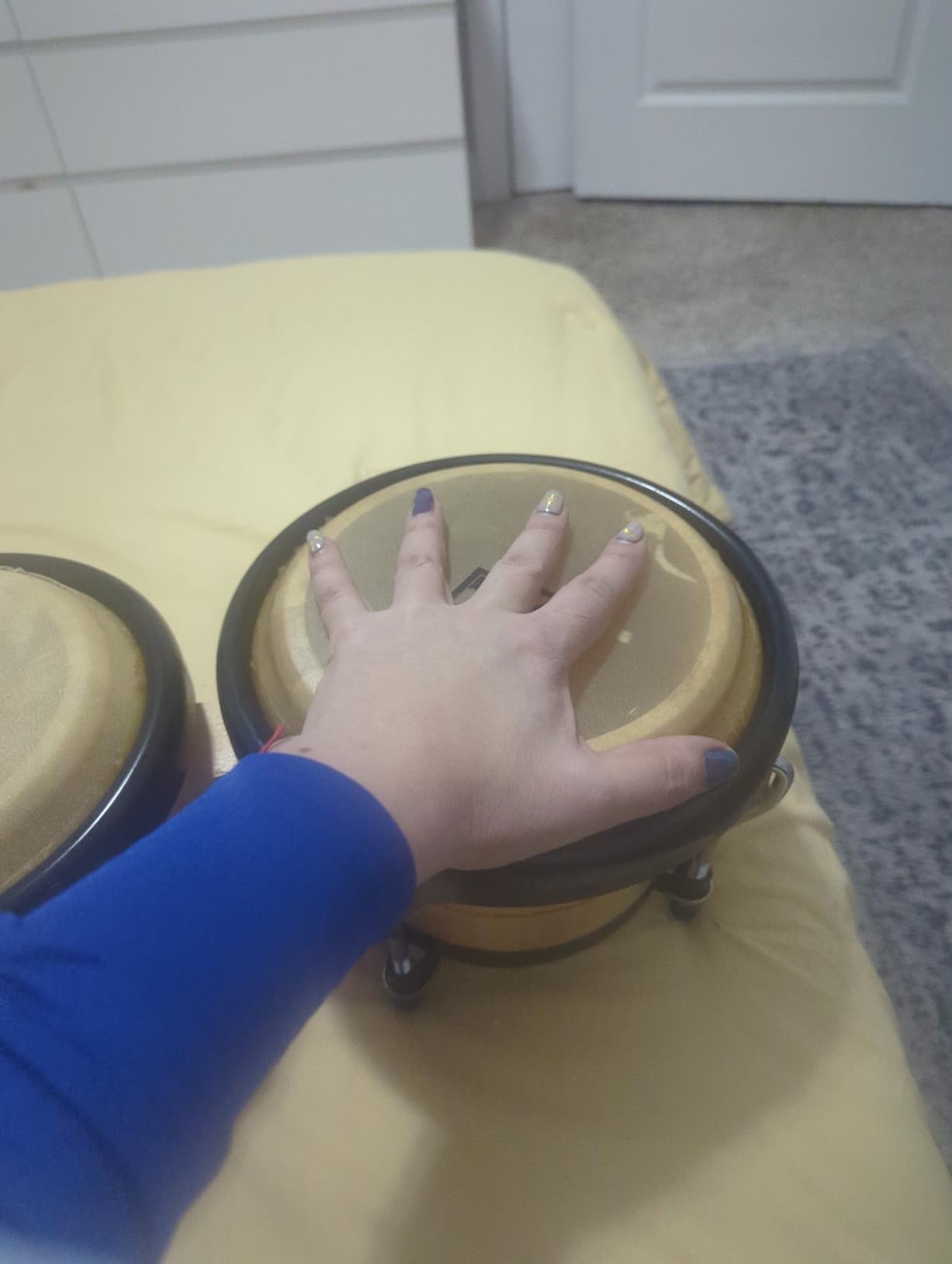
The EastRock 4 inch plus 5 inch set is the answer when a standard bongo pair is simply too big. Children with genuinely small hands, and adults with smaller frames, struggle to reach across a 7 inch head without tension. This pair removes that problem entirely.
Being tunable is a bigger deal for a beginner than it sounds. With the included adjusting wrench, you can raise the pitch after the heads settle and match what a tutorial sounds like, rather than assuming your drum sounds wrong. Buyers regularly call that control the feature that made them stick with playing.

Natural animal skin heads give a crisp, full, grainy tone that reviewers repeatedly compare favourably with synthetic heads. The wood and metal hardware is described as weatherproof and durable, holding up under repeated tuning, and the shells carry no sharp edges.
This is also the pair most often bought as a stepping stone. Start here, learn the open tones and the slap, then move up a size once your hands can handle the reach. The same brand offers 6 plus 7 and 7 plus 8 configurations when you are ready.
What it is genuinely good for
It is the best bongo pair for a young child, for a small room, and for anyone who wants to learn with a genuine skin head without a large instrument. Tunability means you can adjust as your technique improves, which no fixed-pitch beginner bongo allows.
It works well as a second drum too. If you already own a tongue drum for melody, this adds pitch contrast and a hand technique that carries over to everything else.
Where it falls short
No beaters are included. That is the most common complaint from buyers, and it is an easy fix, but it does mean you cannot play it as shipped if you want a full sound. A few reviewers also received sets that arrived dirty or unevenly finished, and the tone is plain next to a professional bongo.
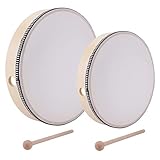
7. Foraineam 10 Inch and 8 Inch Frame Drums – the Best Two-Drum Starter Pair
Foraineam 10 Inch & 8 Inch Hand Drum Musical Percussion Instrument Wooden Frame Drum with Wood Drum Sticks
10 inch and 8 inch poplar frames
Synthetic heads
500 g total weight
Two beaters included
Pros
- Two sizes in one set
- Light enough for parties and travel
- Delicate head texture sounds melodious
- Ribbon edges protect the hands
- Playable as shipped
Cons
- No tuning hardware at all
- Entry-level poplar and synthetic materials
- No carrying case
- Plain unadorned finish
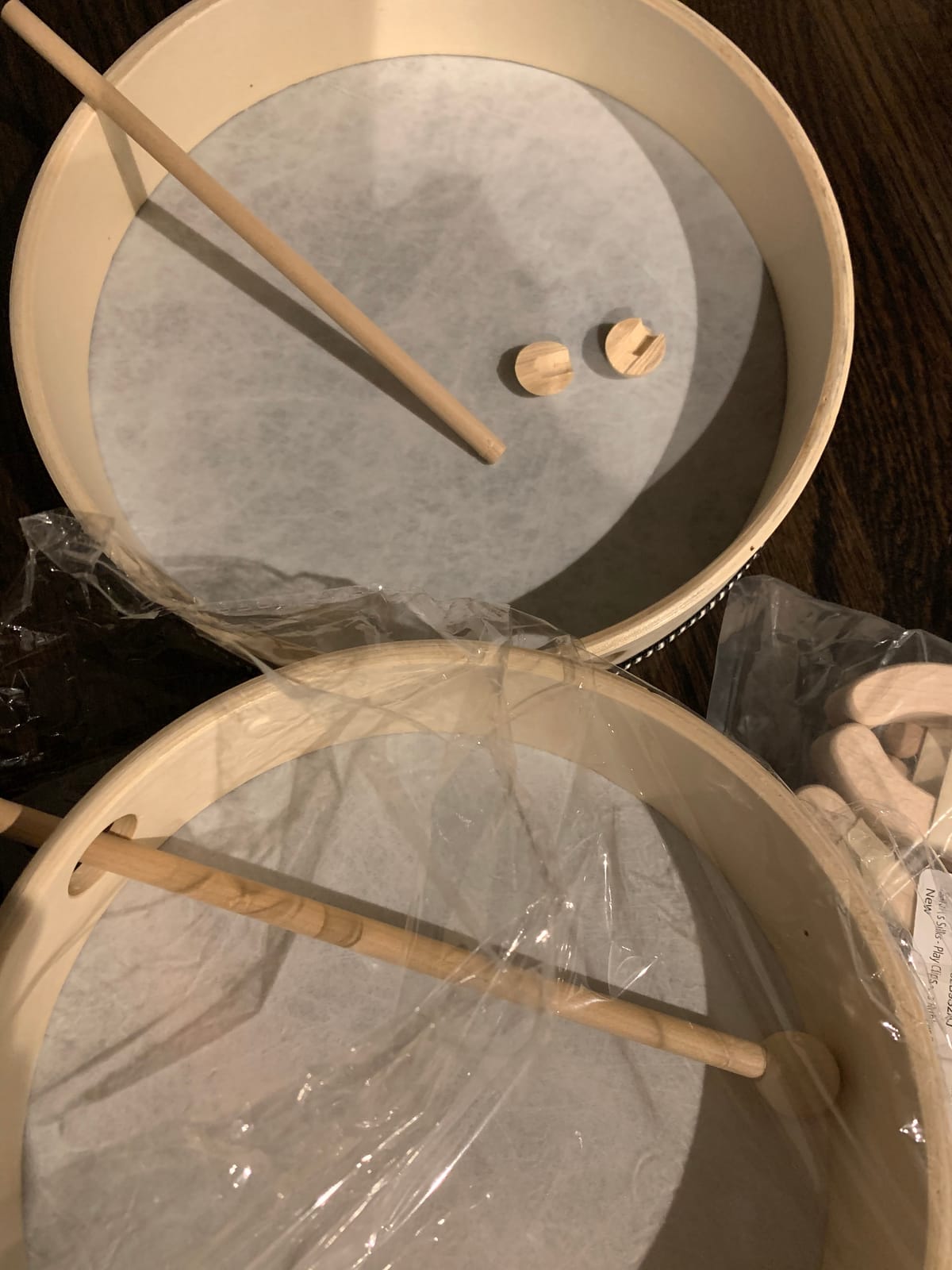
The Foraineam set is what you buy when a drum circle, a wedding, or a classroom session needs two drums and one bag. A 10 inch and an 8 inch frame drum, two wooden beaters, no assembly, and 500 grams of total weight.
Frame drums reward the least technique of anything in this roundup, and that is precisely why they work so well with groups. A single stroke anywhere on the head produces a clean tone, so a room full of beginners can play together without a demonstration.
The head texture matters more than the size here. Reviewers describe the surface as delicate and melodious rather than harsh, and the ribbon wrapping around the frame edge stops the wood from scratching hands during long sessions. Owners highlight the two sizes as the reason to buy the set rather than a single drum.
You can play it with the supplied beaters or with bare hands, and the hands-on option is what most people use. The instrument is widely used for parties, weddings, birthdays, concerts, and stage work, where carrying a full kit is not the right choice.
What it is genuinely good for
It is the best value option for a group. If eight people are going to drum and none of them play, this is the instrument. Because a frame drum cannot be played wrong, there is no intimidation factor, which is what usually stops a group from starting.
It is also the right pick for a first hand drum in a flat. Frame drums are quiet, small, and hard to hear through a wall, and the r/drums community regularly recommends this family of drum over a djembe for exactly that reason.
Where it falls short
There is no tuning hardware at all, so the pitch is fixed and that is that. The poplar frames and synthetic heads are entry-level materials, the finish is deliberately plain, and no case is included, so a padded gig bag should be on your list.
8. AKLOT 9.5 Inch Mahogany Djembe, Goatskin Head – the Best First Djembe
Djembe Drum, AKLOT African Drum Hand-Painted 9.5” x 20” Mahogany Goatskin Drumhead for Starter Beginners Adult for Over 8 Years Old
9.5 inch by 20 inch tall
Solid mahogany shell
Goatskin head, rope tuned
4.7 lb weight
Pros
- Deep musical bass for its size
- Solid mahogany feels properly weighted
- Goatskin gives a warmer response
- Works for beginners and players alike
- Hand-carved elephant motif
Cons
- Paint pattern is random
- No playing guide included
- Rope needs occasional re-tightening
If you have read anything about starting hand drums, you have read that the djembe is the standard entry point, and the reasoning holds. The whole instrument runs on three strokes, bass, tone, and slap, which is the reason the vocabulary is often described as intuitive rather than learned. Players on r/drums recommend it for beginners for precisely this reason.
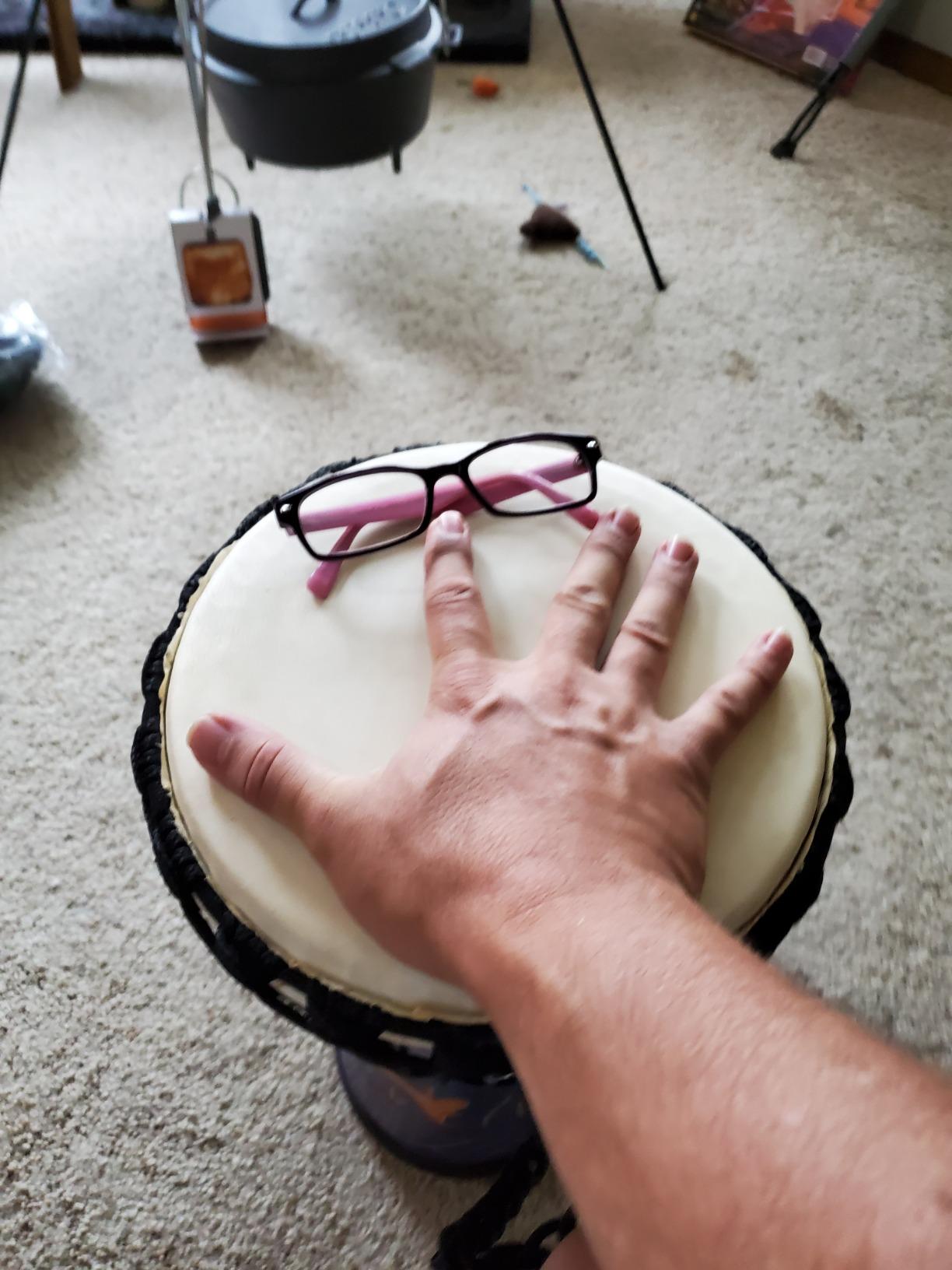
This AKLOT is carved from a single piece of mahogany at 9.5 inches by 20 inches. That standard sizing sits in the range schools and new players use, and it is listed as suitable from age eight. The single-piece hollowing is what gives the shell even vibration, and it is a different construction standard from a drum assembled from staves.
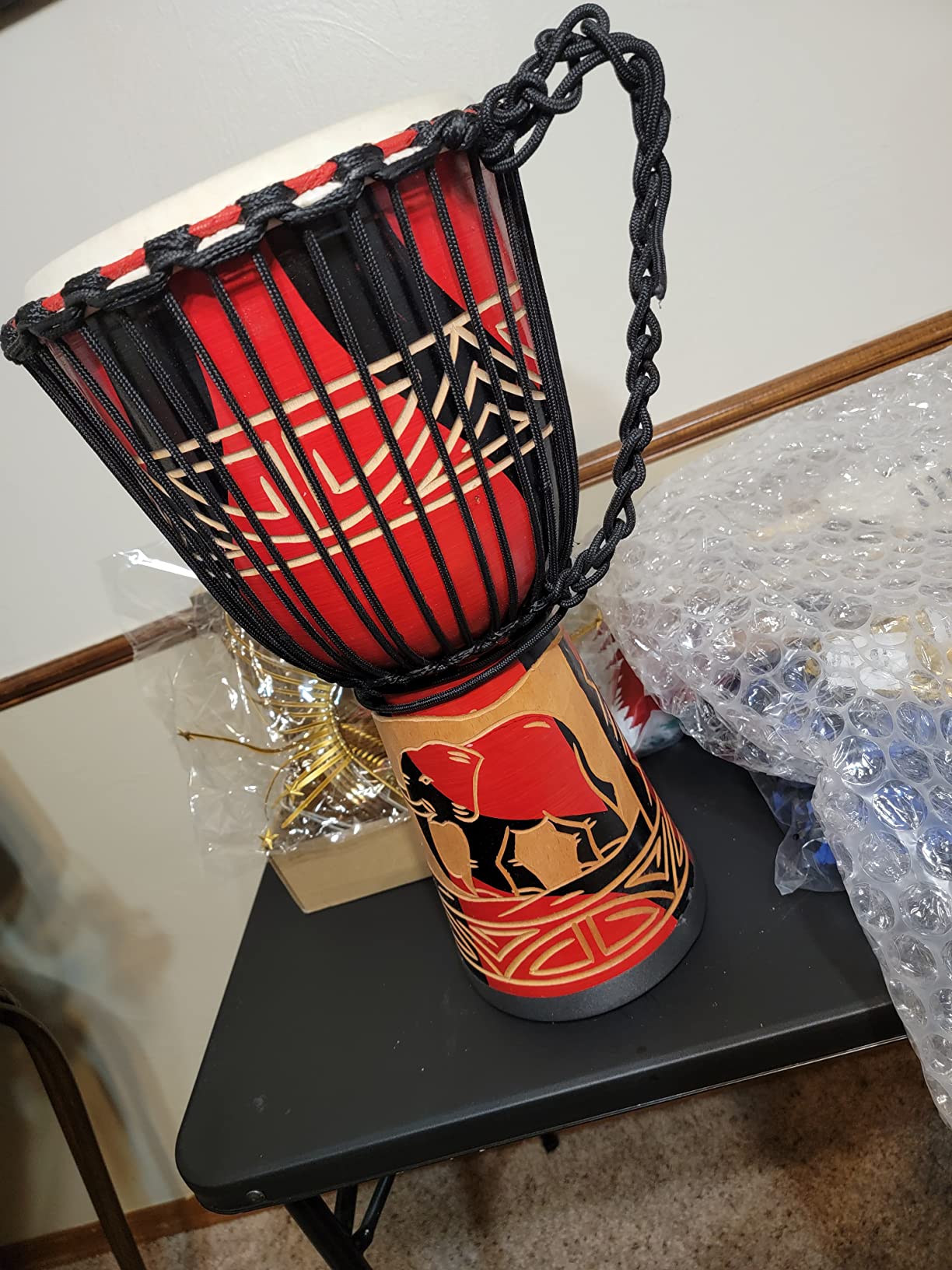
Buyers are consistently surprised by the depth of bass from a drum this size, and the rope tuning was tested by working drummers before it went into production. Low-stretch rope matters here: ordinary rope creeps, and a djembe that drifts out of pitch every few weeks is how beginners get discouraged.
The goatskin head is the other reason to choose this over a synthetic-head djembe. Skin responds to pressure rather than speed, so you can play soft or hard from the same stroke. It is warmer, more responsive, and it demands more of your hands in the best sense.
What it is genuinely good for
It is the best first drum if you want a genuine hand technique you can carry to congas, bougarabou, and any other drum you meet later. Three strokes, immediate results, and a wide tonal range between them.
It is also the drum that travels between rooms without a fuss. Owners report many treating it as a first instrument and then a performance instrument, and the mahogany weight gives it stability between the knees that lighter shells do not have.
Where it falls short
Rope tuning is the intimidation factor beginners mention most often, and it is real. You will need to learn how to re-tension the ropes, and even a well-made low-stretch rope loosens with use and can begin to unbraid at the bottom. Nothing is included to teach you, so plan an afternoon with a tutorial before your first session.
Volume is the other issue. This is a 4.7 pound drum producing a genuine low end, which is wonderful in a house and difficult in a flat. If neighbours are close, look at a frame drum first. The hand-painted pattern is also random, which is charming to some buyers and disappointing to others.
9. Remo Fiberskyn Pretuned 16 Inch Frame Drum – the Highest Rated Here
Remo Fiberskyn Pretuned Frame Drum, 16 in, Thumb Notch, Warm Hand Drum for Classroom Rhythm, Lessons, and Sound Exploration
16 inch diameter, 2.5 inch depth
Fiberskyn 3 synthetic head
Acousticon frame
Factory pre-tuned
Pros
- Highest average rating in this group
- Factory pre-tuned so it plays on arrival
- 16 inch head gives a full deep sound
- Thumb notch makes one-handed grip secure
- Lightweight and ambidextrous
Cons
- Synthetic head is less warm than goatskin
- Heads cannot be tuned after purchase
- Acousticon frame is not solid wood
The Remo Fiberskyn carries the highest average rating of the twelve at 4.8 stars, and it earns that on consistency rather than flash. A 16 inch head is large for a hand drum, and it produces a full, deep tone that still reads as warm rather than boomy.
Pre-tuning is the feature that changes the first five minutes. There is no rope, no hardware, and nothing to adjust, so you pick it up and play it. For a teacher handing instruments to a room of students, that saves ten minutes per drum every time.
The thumb notch deserves a mention because it is easy to miss. You hook your thumb through it and the drum locks to your hand, which matters once you are playing moving patterns rather than single strokes. Ambidextrous grip means left-handed players are not making compromises.
What it is genuinely good for
It is the best frame drum for a classroom, a therapy session, or a wellness circle, which is where the pre-tuning and the durability pay off. Remo builds this line for institutional use, and the synthetic head tolerates the humidity swings that a school year produces.
It is also the safest recommendation here for someone who wants a hand drum that will not need attention. No conditioning, no tensioning, no seasonal detuning.
Where it falls short
You accept a synthetic head and a synthetic frame in exchange for that low maintenance. Owners note the Fiberskyn head is less warm and less resonant than goatskin, which is the correct trade but still a trade. The heads are also not tunable once they arrive, so a drum that feels flat to you stays flat.
One data point before you choose it on rating alone: its 422 reviews are well below the middle of this list, so the 4.8 average rests on a smaller sample than the 4.5s and 4.6s around it. We still rate it highly, but we rate it on build and design first.
10. Pyle 6.5 Inch and 7.5 Inch Birch Bongos – the Best Upgrade Step
Pyle Bongo Drums Set – 6.5″ & 7.5″ Hand Crafted Birch Wood Bongos with Natural Animal Hide Heads, Tunable Design, Chrome Hardware, Tuning Key – PBND10
6.5 and 7.5 inch birch shells
Natural hide heads
Eight-point tension
6 lb weight
Pros
- Eight-point tension gives even head tension
- Large projecting sound
- Chrome hardware expected to last
- No sharp edges for children
- Out-of-box tuning holds well
Cons
- Small head arrives discoloured
- Thin packaging with feet through the box
- Bolts and rods need checking on arrival
The Pyle pair is the step up for someone who has already played a beginner bongo and wants the sound to improve rather than the price tag. Experienced percussionists reviewing it point to one feature specifically: eight-point tension per head, with the rods set in a Y configuration.
That hardware is doing something real. Even tension across the head means the shell resonates properly instead of fighting itself, and the result is a noticeably bigger, more projecting sound than a standard six-lug beginner bongo produces from the same shell material.
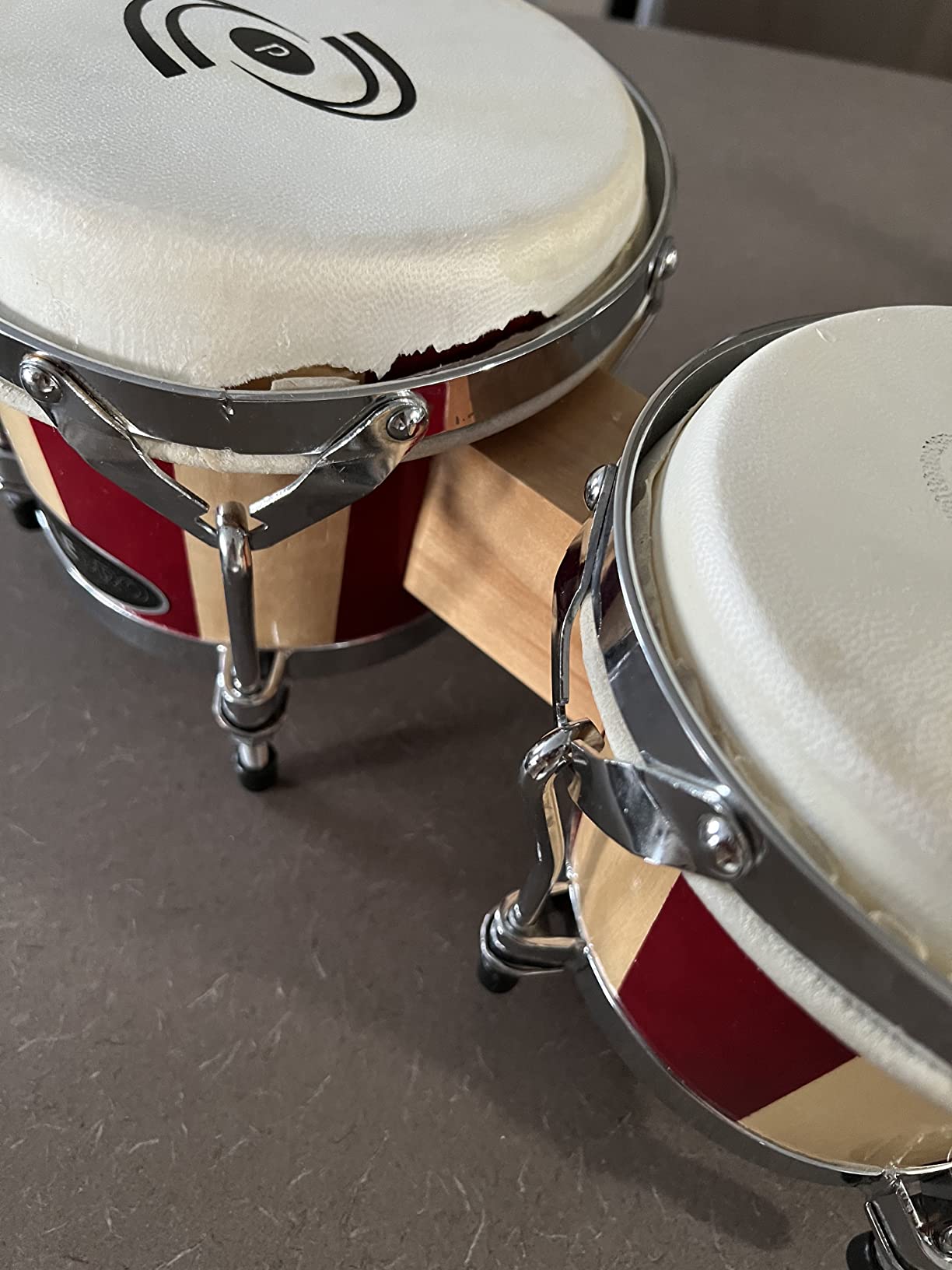
The shells are hand-crafted birch at 6.5 and 7.5 inches, with rounded rims and no sharp edges, and the chrome hardware is the part reviewers expect to outlast the heads. True-skin natural hide gives a clear acoustic tone that synthetic heads approach but do not match.
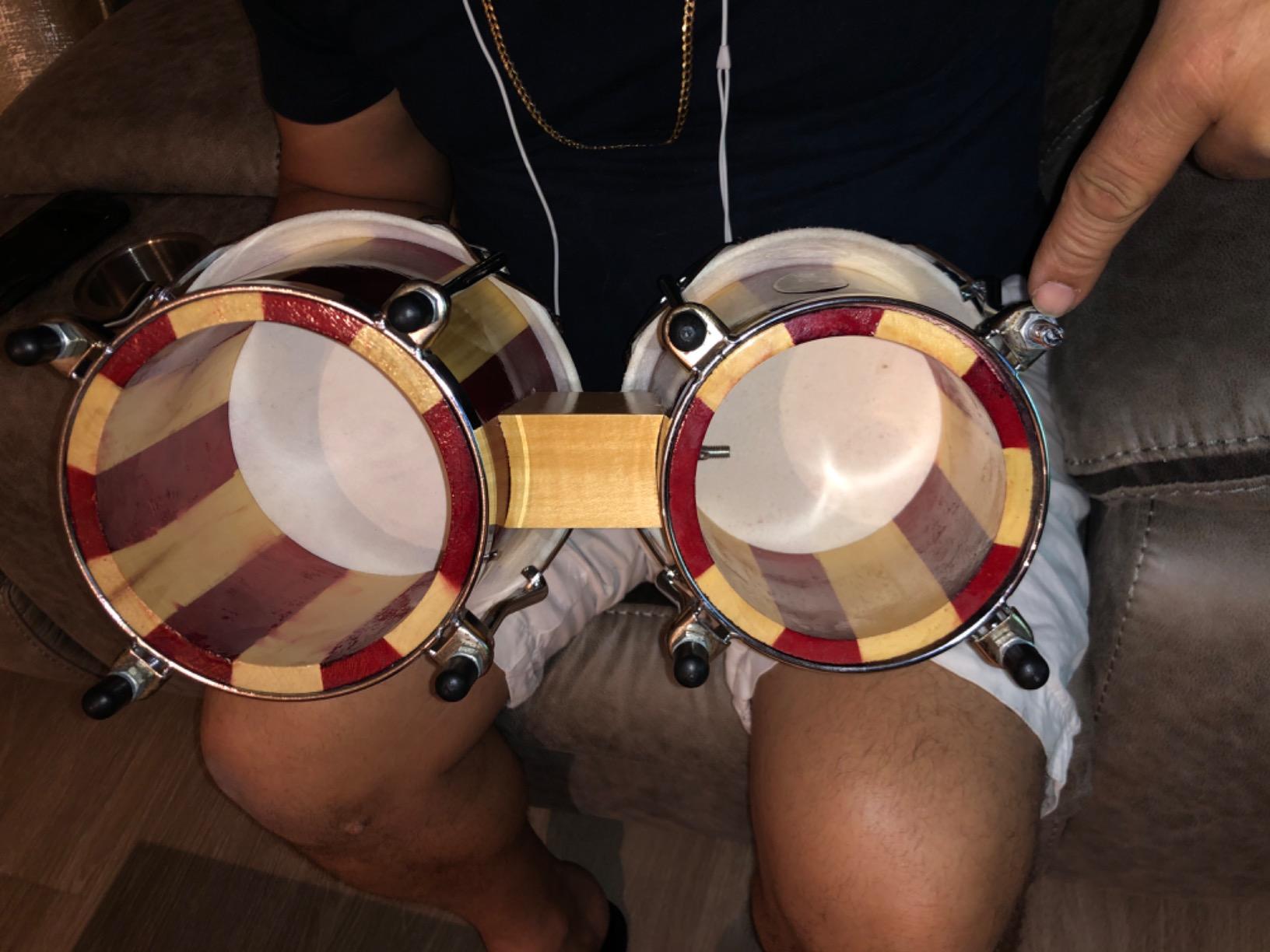
Eight-point tension is also what makes this pair tunable in a meaningful sense. A standard beginner bongo gives you coarse pitch changes through a simple lug, while a Y-configured rod can be brought down far enough to match a recording or a tuning reference once you know what you are listening for.
That is a skill you cannot easily practise on the lower-priced pairs in this roundup, and it is the practical reason to step up here rather than buying a second cheap set. It is a small feature that quietly doubles the useful life of a beginner drum.
What it is genuinely good for
It is the best choice for a player who can already hit an open tone and a slap and wants to practise against recordings. The tuning key wrench is included, so you can set the pair to match what you hear on a tutorial, and the even tension makes fine adjustment possible.
It is also a good intermediate instrument for a child moving up from a plastic-head beginner bongo, and the edge-free shells keep it safe for young players.
Where it falls short
It is 6 pounds, which is the second-heaviest instrument here, and at 6.5 plus 7.5 inches the shells are large for small hands. Natural hide also means discoloration on the smaller head, which is normal for the material but surprises buyers expecting uniform white.
Check the bolt joining the two drums and the tension rods within a day of arrival, because reviewers repeatedly recommend it and some report needing to tighten them. Packaging is thin enough that the drum feet can arrive pushed through the box.
11. Kmise 6 Inch Mahogany Djembe with Goatskin Head – the Best for Travel
Kmise Djembe African Hand Drum Mahogany Standard Goat Skin Drumhead (6 inch)
6 inch goat skin djembe
Single-piece Indonesian mahogany
Unbleached goatskin head
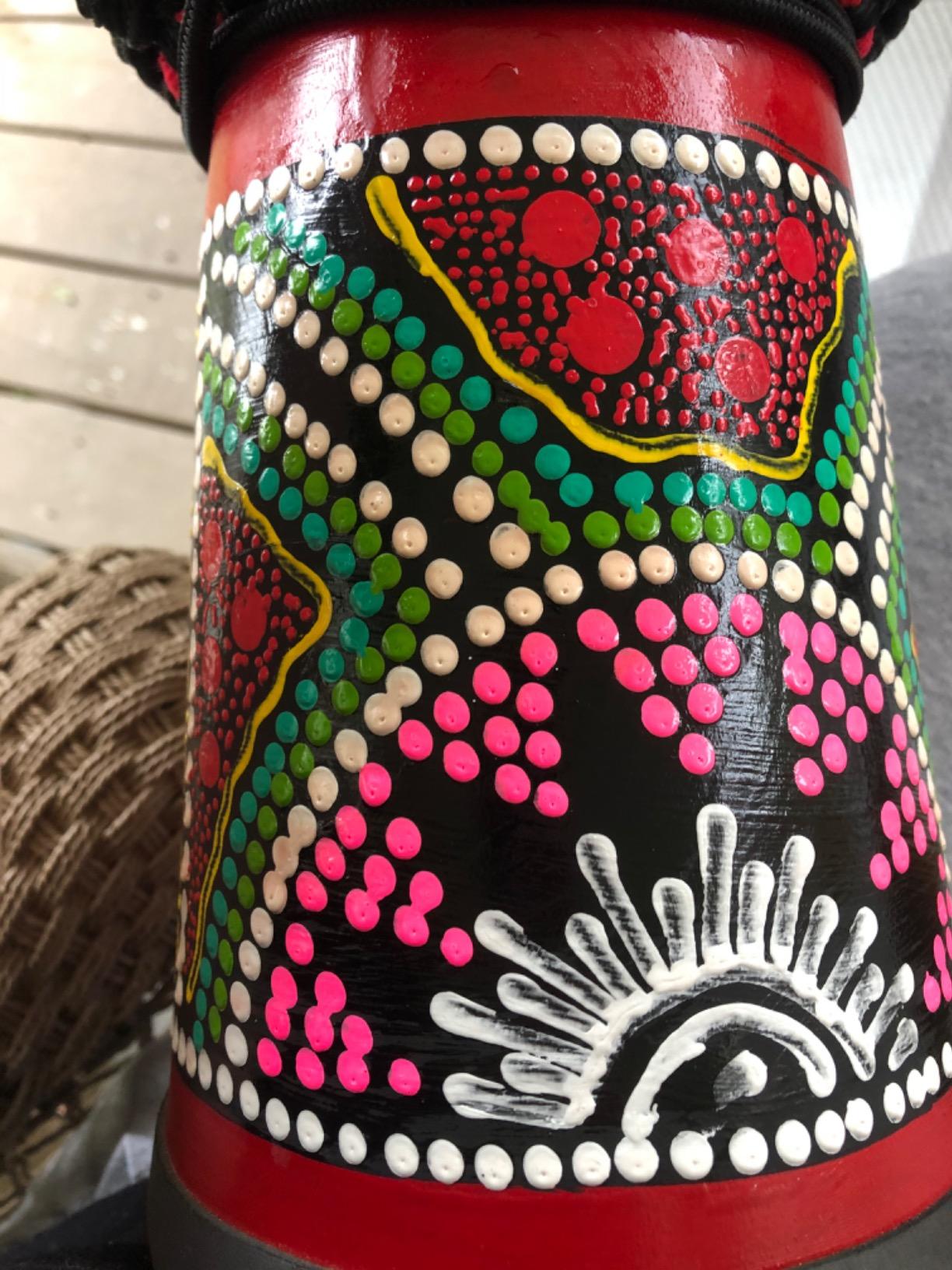
Hand-painted finish
Pros
- Real mahogany gives real resonance at this level
- Unbleached goatskin has a better tap tone
- Inelastic lanyard holds tuning
- Compact enough to hold between the knees
- Attractive hand-painted finish
Cons
- Smallest rating in this roundup at 4.3
- 6 inch shell is under typical beginner size
- Unbleached head looks mottled
- Only a 6 month warranty
The Kmise is the answer for a beginner who wants a real djembe, in real wood, with a real skin head, without a full-sized instrument. The 6 inch shell is compact enough to hold between the knees and carry in one hand, and the construction is the same as a larger drum: one piece of Indonesian mahogany, hollowed for even vibration.
The head is unbleached adult goatskin, which is why it sounds the way it does. Untreated skin has a better tap tone and more response than bleached hide, and buyers consistently say the tonal quality is ahead of what the price suggests.
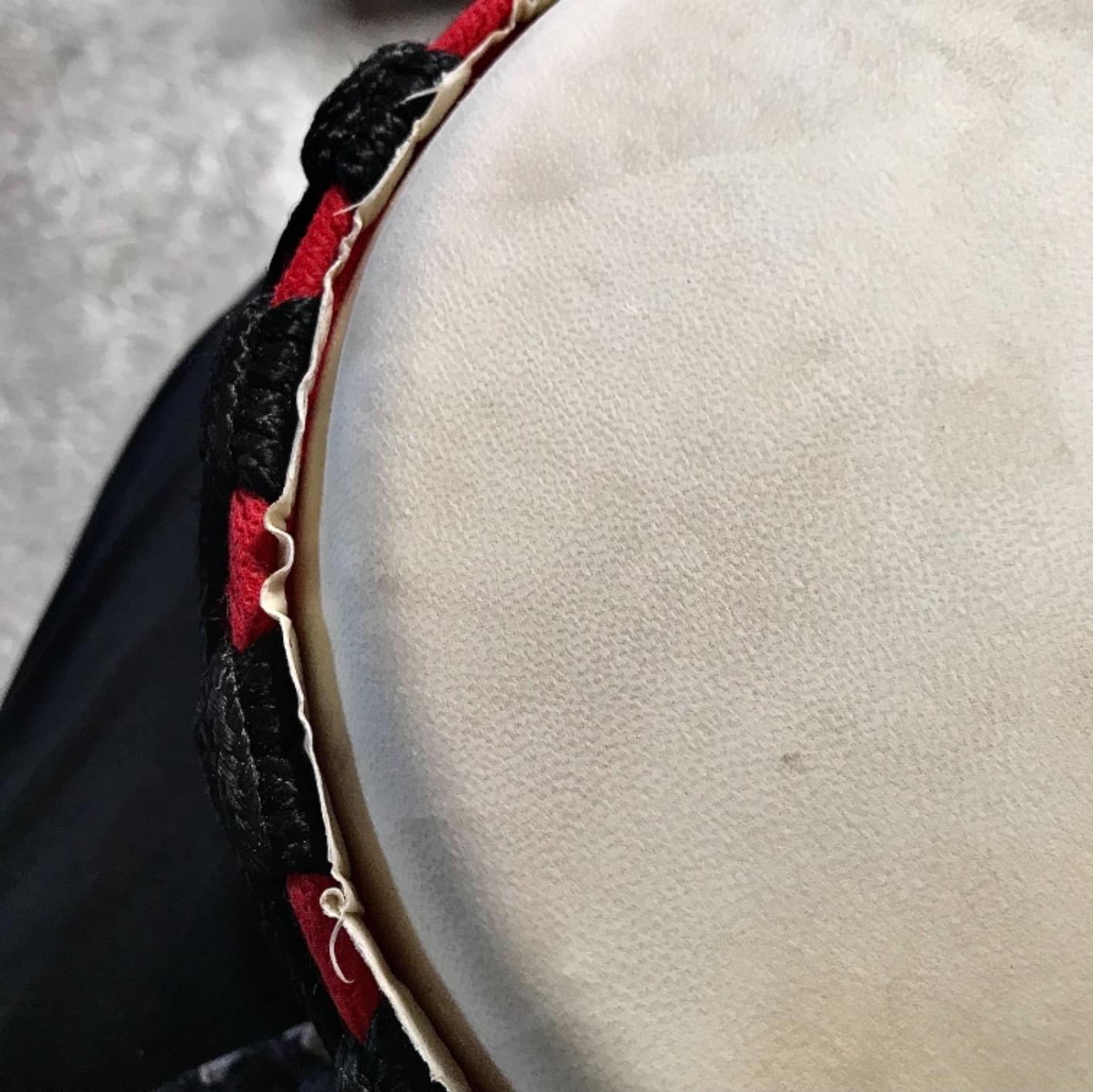
The high-strength inelastic lanyard is the engineering choice that matters. Inelastic rope does not stretch, so the drum holds its pitch over extended use instead of creeping downward week by week.
For a first djembe, the lanyard is what you are really buying. A drum that arrives in tune and stays there removes an entire category of frustration from the first month, when new players have enough to learn without also wondering whether the drum is at fault.
What it is genuinely good for
It is the best first djembe for a small-framed adult, a teenager, or anyone who wants to learn hand technique on a drum they can actually carry. Small hands can cover the head properly, which is what makes the bass tone possible in the first place.
It is also a sensible first drum for a child aged eight or up who is still growing, since a 6 inch drum stays comfortable longer than a 9.5 inch one.
Where it falls short
It carries the lowest average rating here at 4.3, and the reasons are understandable. A 6 inch diameter is smaller than a typical beginner djembe, so you trade some low end for portability, and the unbleached head looks mottled rather than clean, which disappoints buyers expecting a white drum.
The warranty is also six months, the shortest among the twelve. Check that you are comfortable with rope tuning before buying, because that is the skill this instrument demands of you.
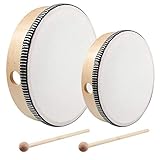
12. Nydotd 10 Inch and 8 Inch Frame Drums – the Best Lightweight Pair
Nydotd 2-Piece Hand Drum Set – 10 Inch & 8 Inch Wooden Frame Drum Percussion Instruments with 2 Drum Beatters for Adult Leisure & Festive Musical Performances
10 inch and 8 inch poplar frames
Synthetic heads
300 g total weight
Two beaters included
Pros
- 300 g total makes both drums easy to carry
- Side grip hole holds the frame comfortably
- Crisp projecting tone for the weight
- Two sizes give contrasting pitches
- Ready to play with no assembly
Cons
- Simple materials can feel cheap
- The two drums do not match exactly in pitch
- No carrying case
- Plain finish with no styling
- Ages 13 and up
The Nydotd pair is the lightest instrument in this roundup at 300 grams for both drums together, and that figure changes what you can do with it. Carrying a pair in one bag, playing outdoors, moving between rooms, working with a group that has to hand drums out fast, all of it becomes easy.
The side grip hole is a small design decision with a real effect on playing. You hook a finger through it and the frame stops rotating in your hand, which matters when you are playing patterns rather than tapping out a pulse.
Both drums use synthetic heads on solid poplar frames at 1.8 inches deep, and buyers report a crisp tone with more projection than the weight suggests. It is used for performances, drum circles, music therapy, and meditation, all of which need to move around a room.
What it is genuinely good for
It is the best frame drum pair for a beginner who will be moving, and for adults over thirteen who want a second set. Unlike the other frame drum set here, this one is noticeably lighter, which you notice after twenty minutes of standing and playing.
It is a solid second instrument if you started with a tongue drum and want two contrasting pitches to work with.
Where it falls short
It is aimed at adults and teenagers over thirteen, not young children. The materials are simple, and some buyers find them cheap to the touch, and the two drums do not always match each other in pitch, which is awkward if you are trying to play intervals deliberately.
No carrying case is included despite the portability claims, and the plain wood finish will not suit anyone buying for display.
How to Choose Your First Hand Drum in 2026
Every question in this section comes from something beginners actually get stuck on, usually before they buy rather than after. Work through them in order and the right drum names itself.
Synthetic head or natural skin head?
This is the first fork in the road, and it is a bigger decision than the price gap suggests. A synthetic head is essentially maintenance-free. It will not be affected by a dry winter or a humid summer, it will not crack or mould if it gets damp, and it will play identically in five years. A natural goatskin or calfskin head sounds warmer and more responsive, and you can play soft or loud from the same stroke, but it responds to the weather and needs conditioning.
Forum consensus is that synthetic heads are the more forgiving choice for beginners despite the warmer tone of skin. If you live somewhere with real seasonal humidity swings, plan on synthetic. If you have a dry room, live in a stable climate, and want the response of skin, the natural head drums here are the Eastar bongos, the EastRock bongos, the Pyle bongos, and both djembes.
Rope tuned, key tuned, or pre-tuned?
Three systems, three levels of involvement. Rope tuned means the head is held by a web of tensioned rope, as on both djembes here. The sound is traditional and excellent, and the cost is that you learn to tension it yourself. Key tuned means threaded hardware you adjust with a wrench, as on the bongo sets, which is faster and more precise. Pre-tuned means you do nothing, as on the Remo Rhythm Club bongos and the Remo Fiberskyn frame drum.
Beginners describe rope tuning as intimidating more than any other feature, and that is fair. It is a genuine skill with a learning curve. If you want zero setup, choose pre-tuned. If you want to learn hardware tuning, choose a key tuned bongo set with the wrench included.
What size djembe is right for a beginner adult?
Under 5 foot 4 inches: 6 inches diameter. The Kmise fits here. Your hands need to reach the head comfortably for the bass stroke.
5 foot 4 inches to 5 foot 10 inches: 9.5 inches by 20 inches tall. The AKLOT is the standard school and beginner size for good reason.
Over 5 foot 10 inches, or a wide frame: you can go larger, though the weight climbs fast. Twelve inch drums and up cause shoulder strain in smaller adults.
Weight is the part people underestimate. A 4.7 pound djembe is fine for a first session and tiring for a long one, so if you are buying a full-size goblet drum, budget for a strap or a stand.
How loud can you actually play?
This is the question that most decides the purchase, and almost nobody asks it before buying. A djembe with a goatskin head produces a genuine low end that carries through walls. A frame drum does not. A steel tongue drum produces a metallic ring that is high in frequency and remarkably short-lived, which is why parents and teachers describe those instruments as never being annoyingly loud even when played hard.
Users on r/drums warn that djembes are sometimes overwhelming in volume, especially in apartments, and the common recommendation from that community is to start with a frame drum if you have close neighbours. If you want a drum that can fill a room, a djembe is the only one on this list that will. If you want a drum that will not, take a frame drum or a tongue drum.
What comes in the box, and what do you still need?
Check what is included before you buy. Among these twelve, the HOPWELL and the AKLOT 10 inch tongue drum are the most complete, arriving with mallets, a music book, note stickers, and a carrying case. The EastRock bongos ship with a tuning wrench but no beaters, and the Foraineam and Nydotd frame drum sets include beaters but no case.
Plan to add a padded gig bag for anything you intend to move, and a stand for any bongo or djembe, since playing while seated on the floor limits you quickly. A small tuning key or wrench is worth having even if the drum ships with one, because you will lose it. If you are starting with a frame drum, buy a drum circle guide: most players sit in a ring and use simple call-and-response, and knowing that in advance gets you playing faster.
Can you teach yourself hand drumming?
Yes, and most first instruments are learned alone. The basics of a steel tongue drum or a frame drum are learnable from written guides and numbered note charts in an afternoon. The three-stroke djembe vocabulary takes a little longer, but beginner forums consistently report that YouTube tutorials are enough to get through the first weeks, and hand technique resources are widely recommended alongside them.
The fastest route is not a video. Users repeatedly report that joining a drum circle is what actually moved the needle, because playing with other people teaches you timing, volume control, and how to hold a part without thinking about it. If you take one piece of advice from this guide, make it this one: practise alone, but play with people.
What about the 80/20 rule for drumming?
The 80/20 rule, borrowed from skill development generally, suggests that roughly 80 percent of your improvement comes from 20 percent of what you do. Applied to hand drums, that means a short, focused daily session beats an occasional long one. Twenty minutes of slow bass strokes and one clean tone, most days, will outrun a three-hour practice you take once a fortnight.
If you want the wider context on how practice actually works, our guide to the best snare drums covers the same habits from the drum-set side. The short version holds: consistency beats intensity for beginners, and the muscle memory in your hands and wrists is built in the first ten minutes of a session, not the last.
For anyone who wants to add a second instrument later, our roundup on the best steel tongue drums goes into detail on note counts and tuning standards, which is the part beginners find most confusing when they first compare manufacturers. It is the single most useful companion read to this list, because three of the drums here are tongue drums with very different note counts.
If your interest eventually pulls you toward a full kit rather than hand drums, we also keep a standing roundup of the best hand mixers for home bakers, which is unrelated but follows the same testing and comparison method we use here.
Frequently Asked Questions
What is the best hand drum for a beginner?
For most beginners the best choice is a djembe around 9.5 inches by 20 inches, because it runs on three strokes (bass, tone, slap) that are quick to learn and it carries a wide tonal range. If you live in a flat or have close neighbours, choose a frame drum or a steel tongue drum instead, since both are far quieter and cannot be played wrong.
What is the easiest drum to play for beginners?
The easiest is a frame drum, because a single stroke anywhere on the head produces a clean tone with no technique required. A steel tongue drum is nearly as easy and adds melody, since numbered notes and an included music book let you play a whole tune. Bongos sit in the middle and introduce the open tones and slap that transfer to other drums later.
What is the best size djembe for beginners?
For an adult beginner, 9.5 inches diameter by 20 inches tall is the standard size used in schools and by new players. Shorter adults and children should start closer to 6 inches, because the bass stroke requires your hands to reach the head comfortably. Avoid 12 inch and larger drums at first, since the weight causes shoulder strain in smaller players.
Can I self teach myself drums?
Yes. Most beginners learn the basics of a frame drum or a steel tongue drum from online tutorials and written guides within a few sessions, and many players report that YouTube alone was enough to get started. A djembe takes slightly longer because rope tuning is a separate skill, but tutorials cover it. Practising alone is fine for technique; playing with other people in a drum circle is what teaches timing and dynamics.
Are synthetic heads as good as goatskin for practice?
For practice, synthetic heads are the safer choice. They hold pitch through humidity and temperature changes, never need conditioning, and will not crack if they get wet. Goatskin sounds warmer and responds to pressure rather than speed, so you can play soft or loud from one stroke, but it is affected by weather and needs occasional care. Most beginners do fine learning on synthetic and can move to skin later.
Is 40 too old to learn drums?
No. Hand drumming is one of the most accessible instruments to start late because it requires no reading, no posture-intensive technique, and produces a good sound on the first day. Adults commonly start in their thirties, forties, and beyond, and the three-stroke djembe vocabulary is learnable in weeks. Wrist and finger strength build quickly with regular short sessions.
Which Beginner Hand Drum Should You Buy?
Start by answering one question honestly: can you make noise? If the answer is no, pick a frame drum or a steel tongue drum, and the HOPWELL 13 inch 15-note tongue drum is the single instrument we recommend most often. Fifteen notes means you can play real songs within an hour, its tone is mellow enough for a shared wall, and it needs no tuning, no care, and no hardware. It is our pick for the best hand drums for beginners because nothing else here gets a new player from unpacking to playing music as fast.
If you can play freely and you want technique that grows with you, buy a djembe instead. The AKLOT 9.5 inch mahogany model is the one to start on: three strokes, a goatskin head, and a shell carved from a single piece of wood. Accept that you will need to learn rope tuning, and learn it early, because an out-of-tune drum is the fastest way to lose interest.
For a two-drum setup the Eastar 6 inch and 7 inch bongos give the most sound per unit of effort, and the EastRock 4 inch and 5 inch pair is the answer when the hands are small. For groups and classrooms, a frame drum pair or the pre-tuned Remo models mean nobody has to fiddle with anything before the first stroke.
One last piece of advice. Whatever you buy, join a drum circle within a month. Forums are consistent on this point, and it is the one piece of advice in this guide that no product spec sheet can improve on.