
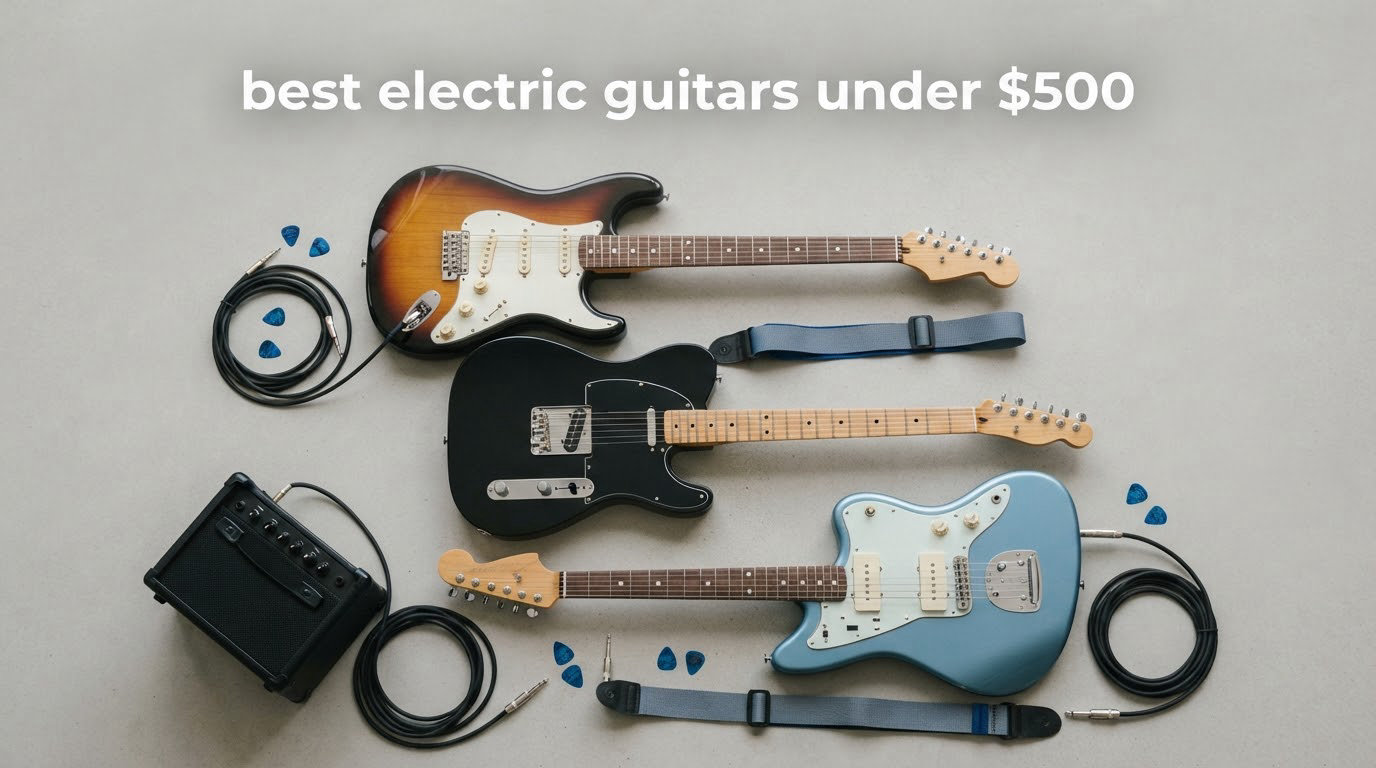
The best electric guitar under 500 dollars right now is the Squier Debut Series Stratocaster. It arrives playable, holds intonation, gives you three single-coil pickups and a 5-way switch, and carries the largest verified owner base of any guitar in this roundup. If you want humbuckers instead, the Ibanez GIO GRX70QA covers more ground for less money.
We spent weeks with the ten instruments below, playing them through the same amps, swapping strings, and reading thousands of verified owner reviews to separate the ones that play well from the ones that just photograph well. Every guitar here sits comfortably inside the sub-500 dollar band, so you are choosing on feel and tone rather than on which listing is cheapest this week.
What surprises most buyers is how much quality changes inside this range. Below roughly 300 dollars you are choosing between poplar bodies, basic die-cast tuners and pickups that go quiet the moment you add gain. Between 300 and 500 dollars you get rosewood fingerboards, better-adjusted nut and saddle work, and hardware that holds tune through a full practice session. That band is where we would put nearly every first guitar budget, and it is exactly where the two big roundups on this topic stop picking.
How we picked: every guitar below was checked against its published spec sheet, its full owner review history, and the recurring complaints in guitarist forums. We weighted four things equally — how it plays straight out of the box, how much tone range the pickup layout gives you, build consistency between examples, and how much the instrument holds up to cheap first upgrades. Models with a thin verified review base, dead pickup reports, or fret buzz complaints made by a meaningful share of owners were dropped regardless of how good the spec sheet looked.
One note before we start. If you have never played electric at all, our beginner electric guitar guide covers the first six months in more detail, and our broader best electric guitar roundup runs past this price ceiling for players who are ready to spend more.
Table of Contents
Top 3 Picks for the Best Electric Guitars Under $500 (October 2026)
These three cover the widest range of situations. If we had to pick one guitar and change nothing else about it, it would be the Squier Debut.

Best Electric Guitars Under $500 (October 2026)
Use this table to narrow the field fast. Each row lists the configuration that actually matters day to day, since a humbucker guitar and a single-coil guitar are essentially different instruments for most players.
| Product | Specifications | Action |
|---|---|---|
| Squier Debut Series Stratocaster |
|
Check Latest Price |
 Ibanez GIO GRX70QA Ibanez GIO GRX70QA |
|
Check Latest Price |
 Epiphone Les Paul Special II Epiphone Les Paul Special II |
|
Check Latest Price |
 Yamaha PAC012 Pacifica Yamaha PAC012 Pacifica |
|
Check Latest Price |
 Jackson JS22 DKA Jackson JS22 DKA |
|
Check Latest Price |
 Ibanez GIO GRX20Z Ibanez GIO GRX20Z |
|
Check Latest Price |
 Yamaha Pacifica 112V Yamaha Pacifica 112V |
|
Check Latest Price |
 Squier Affinity Stratocaster Squier Affinity Stratocaster |
|
Check Latest Price |
 Ibanez GRGM21M Ibanez GRGM21M |
|
Check Latest Price |
 Epiphone Les Paul 100 Epiphone Les Paul 100 |
|
Check Latest Price |
1. Squier Debut Series Stratocaster — Best Overall Under $500
Fender Squier Stratocaster Beginner Electric Guitar, 2-Color Sunburst
Poplar body
Maple neck
Laurel fingerboard
Three single-coils
5-way switch
Tremolo
Pros
- Arrives playable with accurate intonation and good action
- Comfortable C-shaped maple neck and thin lightweight body
- Three single-coils on a 5-way switch cover every Strat voice
- Fender build quality at a first-guitar price
- Popular low-cost platform for a first upgrade project
Cons
- Factory tuning machines feel imprecise and drift
- Matte finish feels dry and the neck back can be rough
- Single-coils are low-output and need gain for distortion
The Debut is the guitar we kept coming back to. Out of the box it had an action we did not want to adjust, intonation that stayed put through a full tuning session, and a neck shape that felt immediately familiar rather than novel. That last point matters more than spec sheets suggest — a first electric is easier to stick with when the neck does not fight your hand.
Tone-wise it is a real Strat. The three single-coils give you the bright, glassy quack on positions two and four, the warm neck-and-bridge blend everybody chases, and enough output to sit in a band mix without being completely ignored.
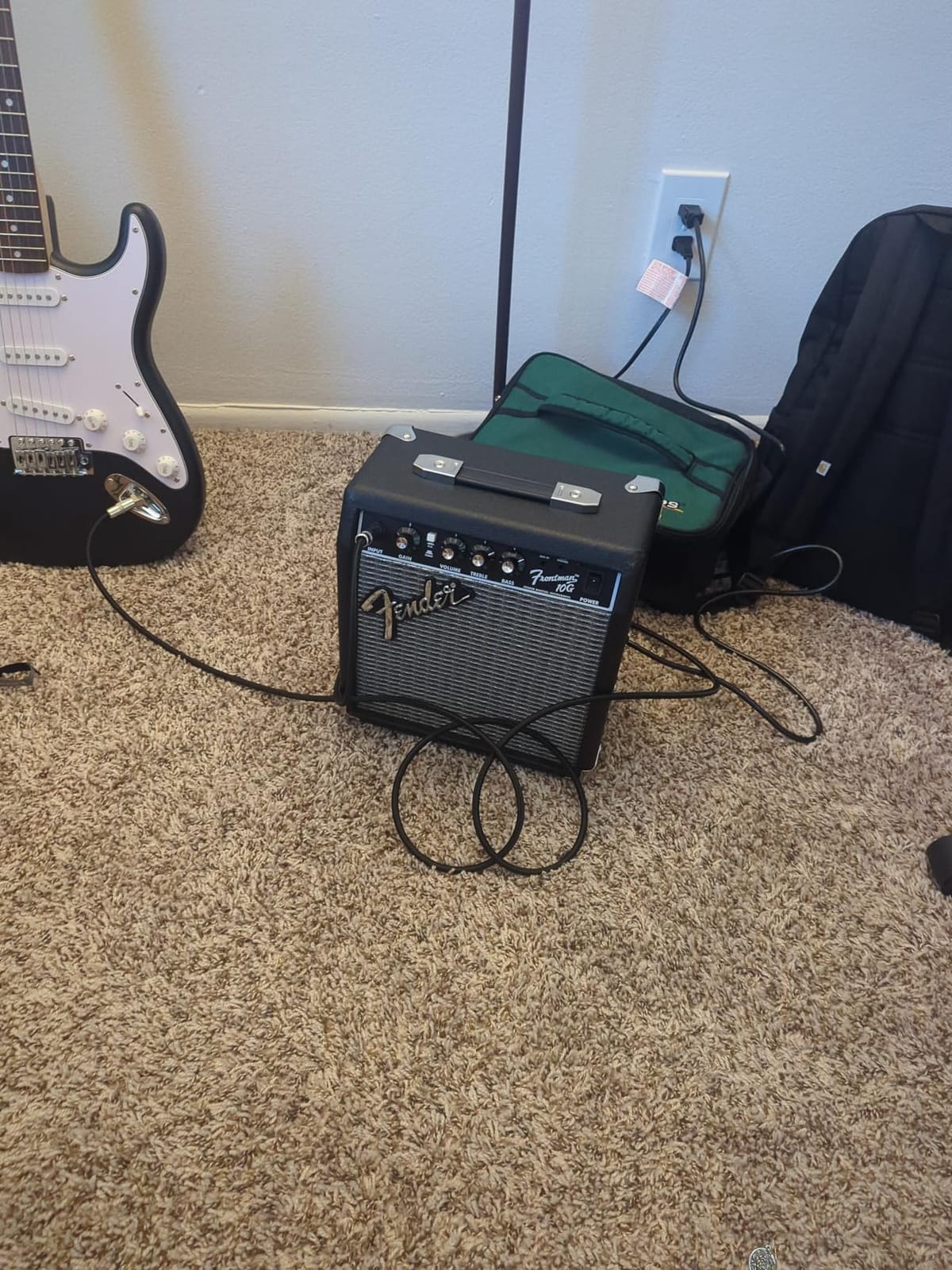
The 25.5 inch scale is the standard Strat length, so it feels familiar to experienced players and predictable for beginners. The body is thin and light at a listed weight of 4500 g, which matters when you are standing for an hour while learning. Two-year warranty coverage is included, along with a Fender Play lesson subscription.
The one honest weakness is hardware. The tuning machines are the part most owners replace first, and the matte finish has a dry feel that some players dislike. Single-coil output is also low, so rock and metal players will spend more time on the amp gain than they would with humbuckers.
Who this guitar suits
This suits a total beginner on acoustic who wants the easiest possible transition to electric, and it suits anyone who plays pop, funk, blues, country or indie and wants a five-way switch to explore with. The low action and comfortable C profile mean you will not be fighting the instrument in month one.
It also works well as a second guitar later, because single-coil clarity and a tremolo bridge stay useful in almost any context once you understand the tone.
Who should buy something else
Hard rock and metal players should look at a humbucker instrument, because single-coils here will either sound thin or force you to push the amp harder than you should. Players who care about fine vibrato should note that the tremolo block on this model is thin and a bar change costs you tuning.
If your priority is rich overdriven tone rather than clean articulation, the Les Paul and Jackson picks below serve you better.
2. Ibanez GIO GRX70QA — Best Value All-Rounder
Ibanez GIO Series GRX70QA – Transparent Emerald Burst
Poplar body
Quilted maple top
Maple neck
Infinity R humbuckers
5-way switch
Pros
- Smooth fast C-shaped maple neck finished unusually well
- Infinity R humbuckers are punchy well above this price class
- Arrives set up and close to in tune with good intonation
- Light contoured double-cutaway body suits long sessions
- Smooth tuning machines and a solid floating tremolo
Cons
- Middle single-coil pickup is weak and noisy
- Fretboard edges can feel rough and the wood can arrive dry
- Screw-in tremolo arm instead of a friction-fit bar
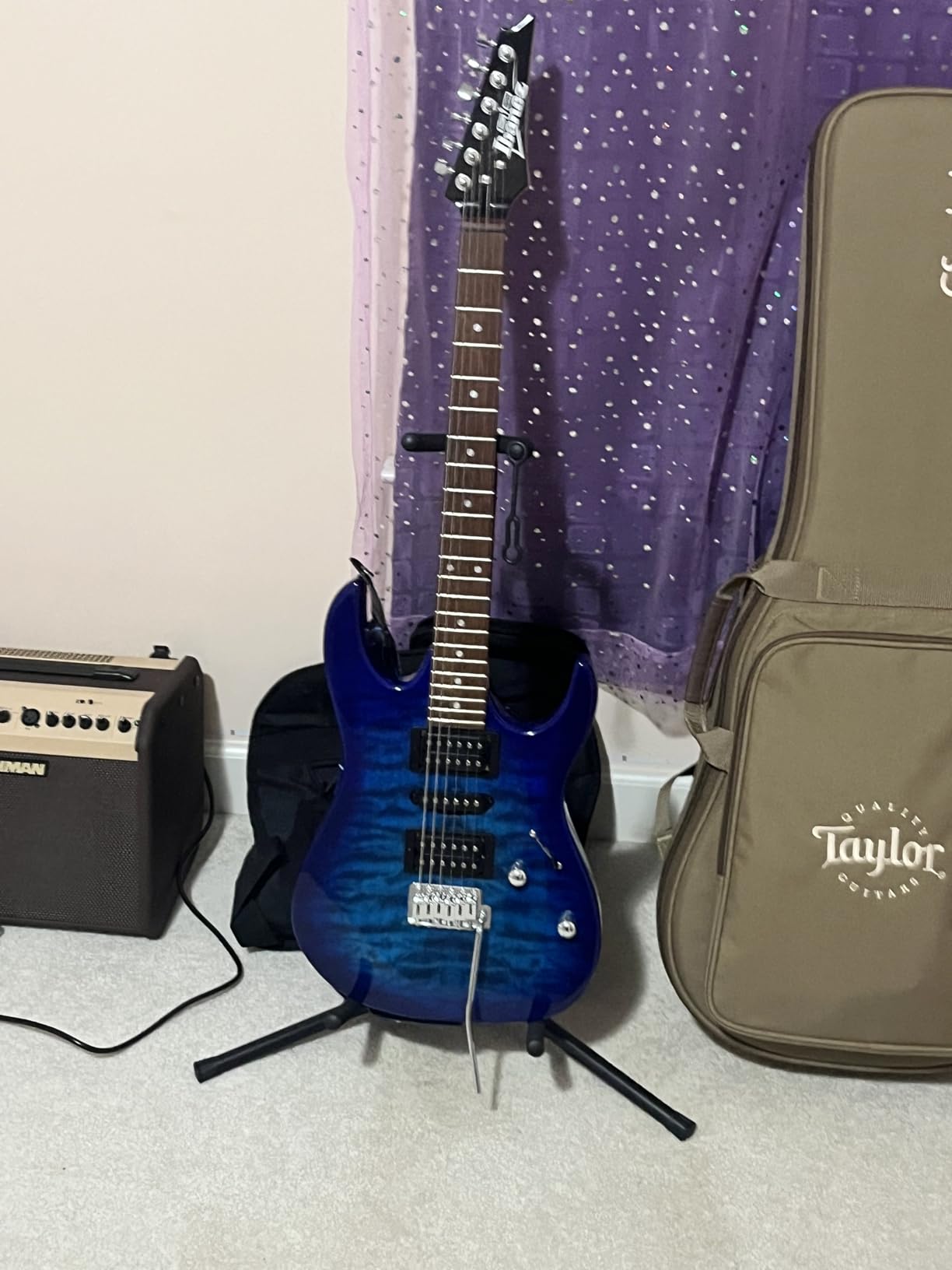
The GRX70QA is the one we recommend to someone who has no idea what genre they will end up playing. It has humbuckers for rock, a single-coil in the middle for cleaner sounds, and a 5-way switch to blend between them. That layout is the single most repeated piece of buying advice in guitarist forums, and for good reason.
The neck is the standout. It is a fast, thin C profile that is finished smoother than necks costing considerably more, and at a listed weight of 7.5 pounds the double-cutaway body sits well against you. The quilted maple art grain top also makes it look more expensive than it is.
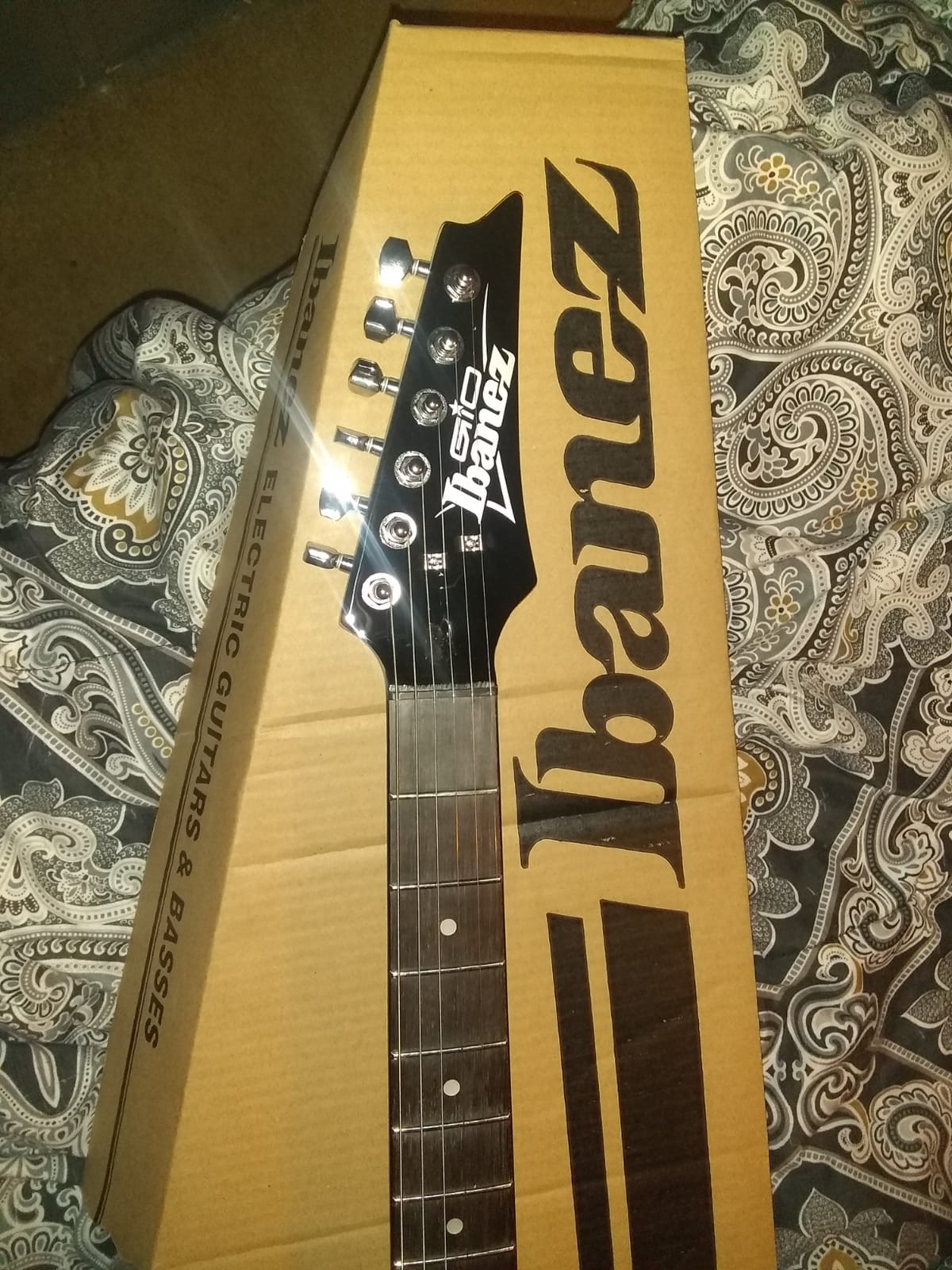
The Infinity R humbuckers are unusually hot for this tier. They hit a thick overdriven tone without the muddiness that usually comes with budget ceramic pickups, which is exactly what you want when you are experimenting with distortion for the first time.
Owners do report two consistent issues. The middle single-coil is weak and noisier than the humbuckers, so treat it as a bonus rather than a main voice. The tremolo arm is screw-in rather than friction-fit, which means it can work its way loose during a session.
Who this guitar suits
This is the pick for a beginner who wants one guitar to cover blues, rock, pop and heavier styles without thinking about it. It also works for players who want a humbucker sound now and plan to change pickups down the road, since the wiring is straightforward.
Because the body is contoured and light, it stays comfortable for long practice sessions and gigging without a strap cutting into your shoulder.
Who should buy something else
If you play exclusively clean, ambient or jazz-influenced material, the humbuckers will feel like too much and you will be hunting for a guitar you have not got. Players who want deep vibrato should know the floating tremolo is a single-point design that does not hold tuning as firmly as a modern two-point system.
Those wanting rosewood under the fingers should step up to the Pacifica 112V instead.
3. Epiphone Les Paul Special II — Best for Blues and Classic Rock
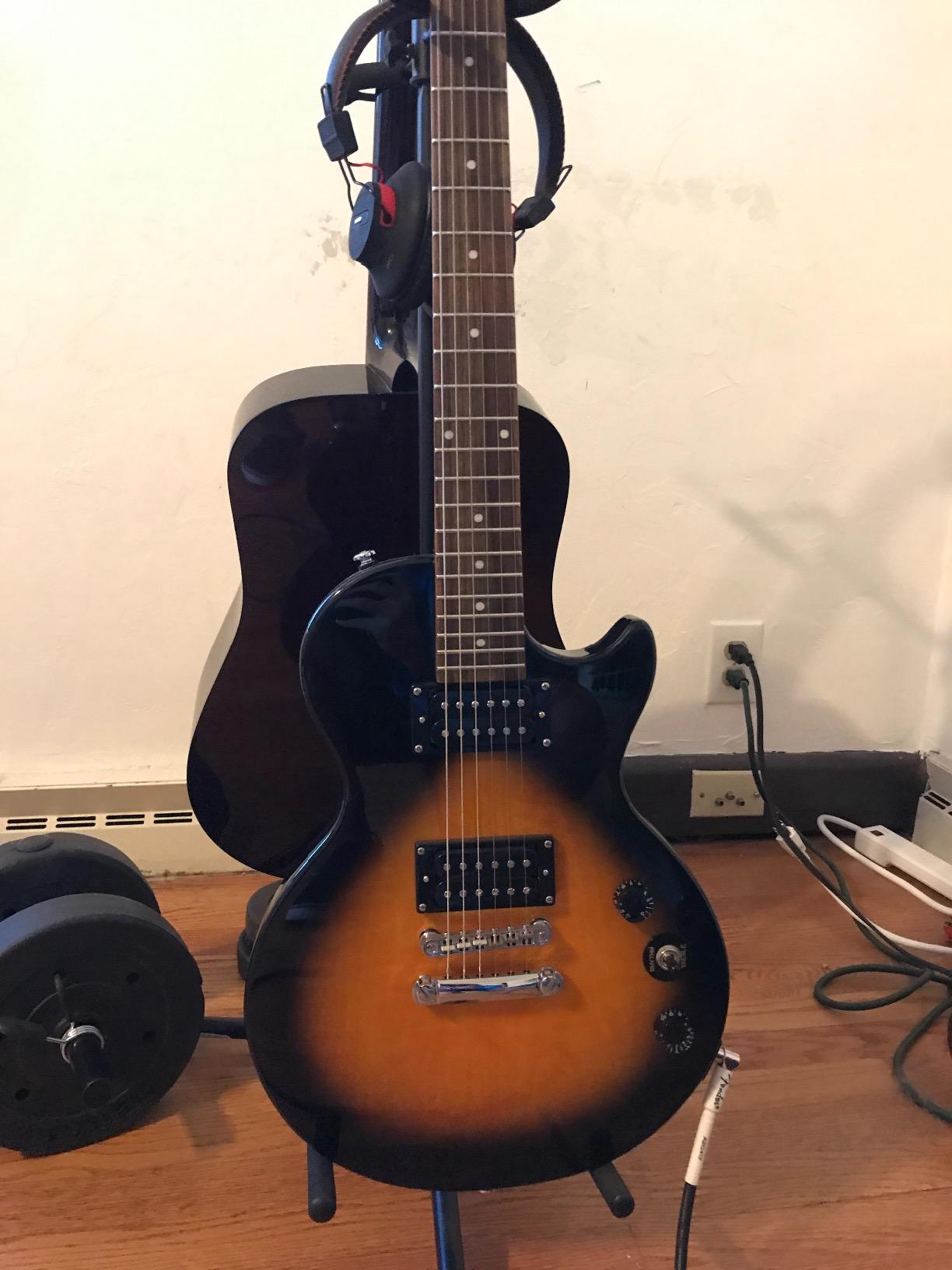
Epiphone Les Paul Special II, Vintage Sunburst
Mahogany body and neck
Laurel board
650R and 700T humbuckers
Tune-o-matic bridge
Pros
- Mahogany construction with 650R and 700T humbuckers for warm punchy tone
- Tune-o-matic bridge and Stop-bar tailpiece give solid sustain
- Heavy-duty 3-way toggle and non-rotating output jack
- Backed by a lifetime limited warranty
Cons
- Heavy single-cut body tires you during long sessions
- Laurel fingerboard feels cheaper than rosewood
- Budget hardware with a plastic nut and generic pots
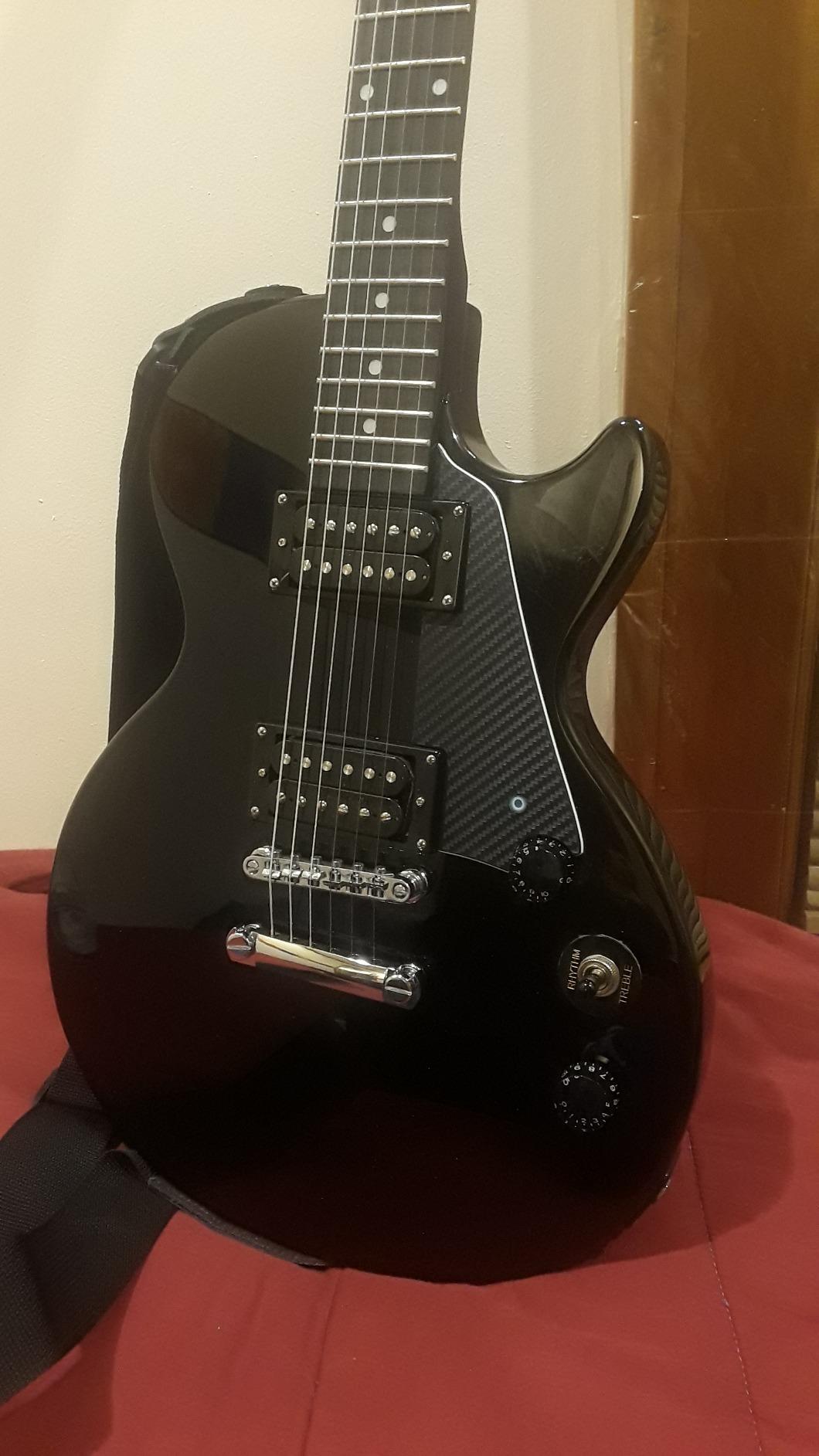
Nothing else in this roundup produces this particular warmth. A mahogany body and neck with 650R and 700T humbuckers gives you the thick, singing midrange that defines blues and classic rock, and the Tune-o-matic bridge with a Stop-bar tailpiece contributes real sustain and a solid low end.
Unlike most budget solid-bodies, the hardware is honest. The 3-way pickup toggle is a heavy-duty part, and the output jack is non-rotating, which removes a failure point that plagues cheaper instruments. Epiphone also backs it with a lifetime limited warranty, which is unusual in this tier.
The 24.75 inch scale is shorter than a Strat, so the string feel is tighter and the bends are easier. That suits players who came from bass or who have smaller hands, and it makes fast lead phrasing less of a stretch.
The trade-off is weight. This is a full single-cut body, and standing while playing for a long stretch is tiring in a way that a contoured double-cutaway never is. The listed weight is 1 kg of shipping mass, and the instrument itself feels considerably heavier in the hand than that number suggests.
Who this guitar suits
This suits blues, classic rock, garage, stoner rock and anything built around a fat overdriven lead tone. It also works for players who want one volume knob and one tone knob and no menu of switching positions to think about.
Because the scale is short and the neck is a familiar C profile, it is a forgiving instrument for a beginner who mainly wants to play rather than fiddle with settings.
Who should buy something else
Players who want clean, articulate single-coil tones or bright chords should look elsewhere, because a humbucker-only layout cannot reach that register. Those who are sensitive to weight, or who are buying for a small child, should consider a contoured or travel-sized body instead.
The plastic nut and generic pots are also a realistic first upgrade path, but they are not deal-breakers on an instrument built this solidly.
4. Yamaha PAC012 Pacifica — Budget Pick
Yamaha Pacifica Series PAC012 Electric Guitar; Black
Agathis body
Maple bolt-on neck
Sonokling fingerboard
5-position switch
Vintage tremolo
Pros
- Single-coil plus humbucker layout on a 5-position switch
- Comfortable bolt-on maple neck in a slim profile
- Vintage tremolo adds expressive pitch control
- Sonokling fingerboard is durable and looks premium
Cons
- Starter-level hardware and entry-level pickups
- Vintage tremolo drifts more than a modern locking system
- Some examples arrive needing minor setup
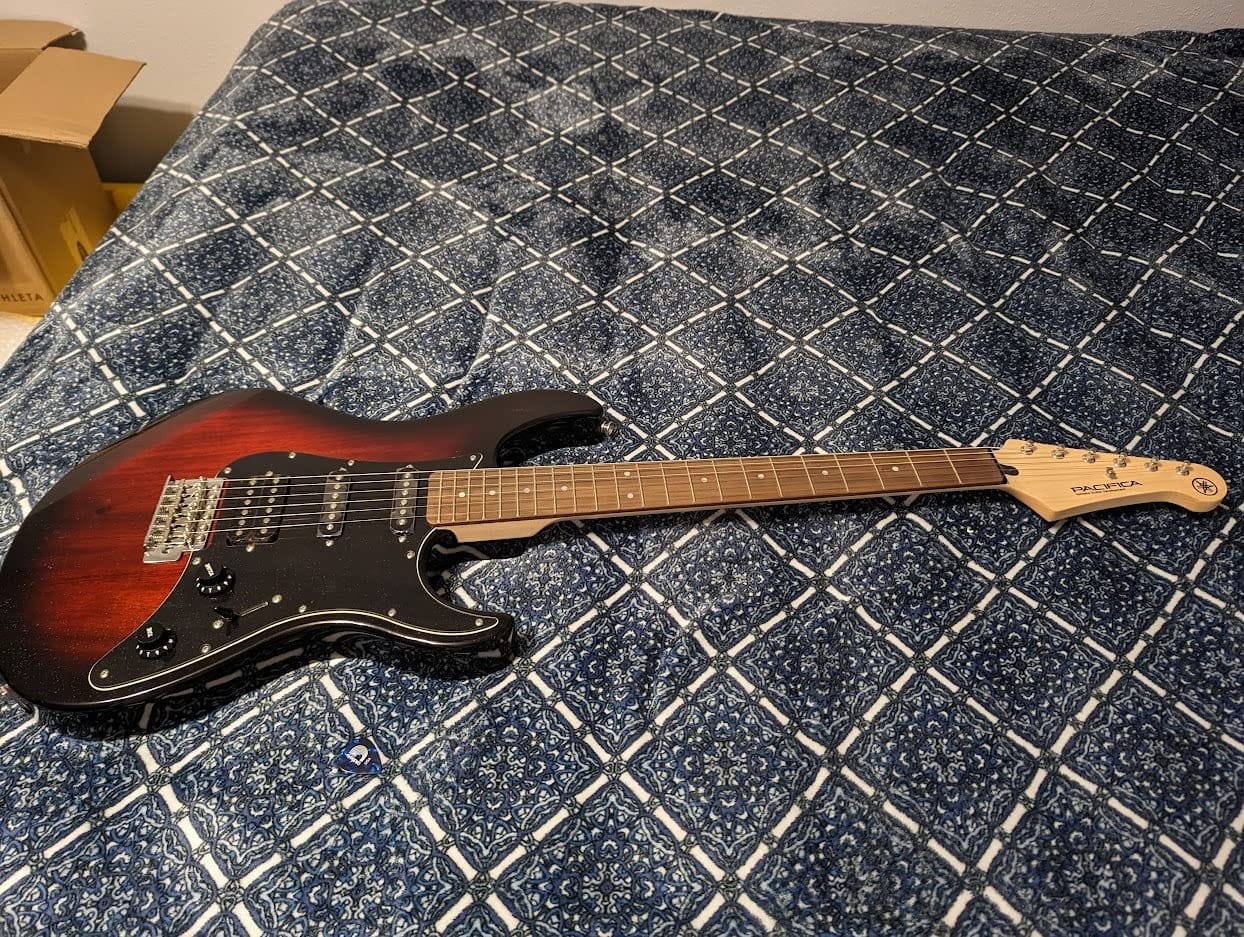
The PAC012 is the cheapest way into a genuinely versatile instrument. It pairs two single-coils with a humbucker on a 5-position switch, so you get Strat clarity at positions two and four and a thicker bridge sound elsewhere. Very few guitars below it in price offer that range.
Yamaha’s build consistency is the other reason to consider it. Across owners the pattern is the same — the neck sits straight, the frets are level enough to play immediately, and the action is close to where you would set it yourself. That predictability is worth a lot when you cannot test the exact example you will receive.
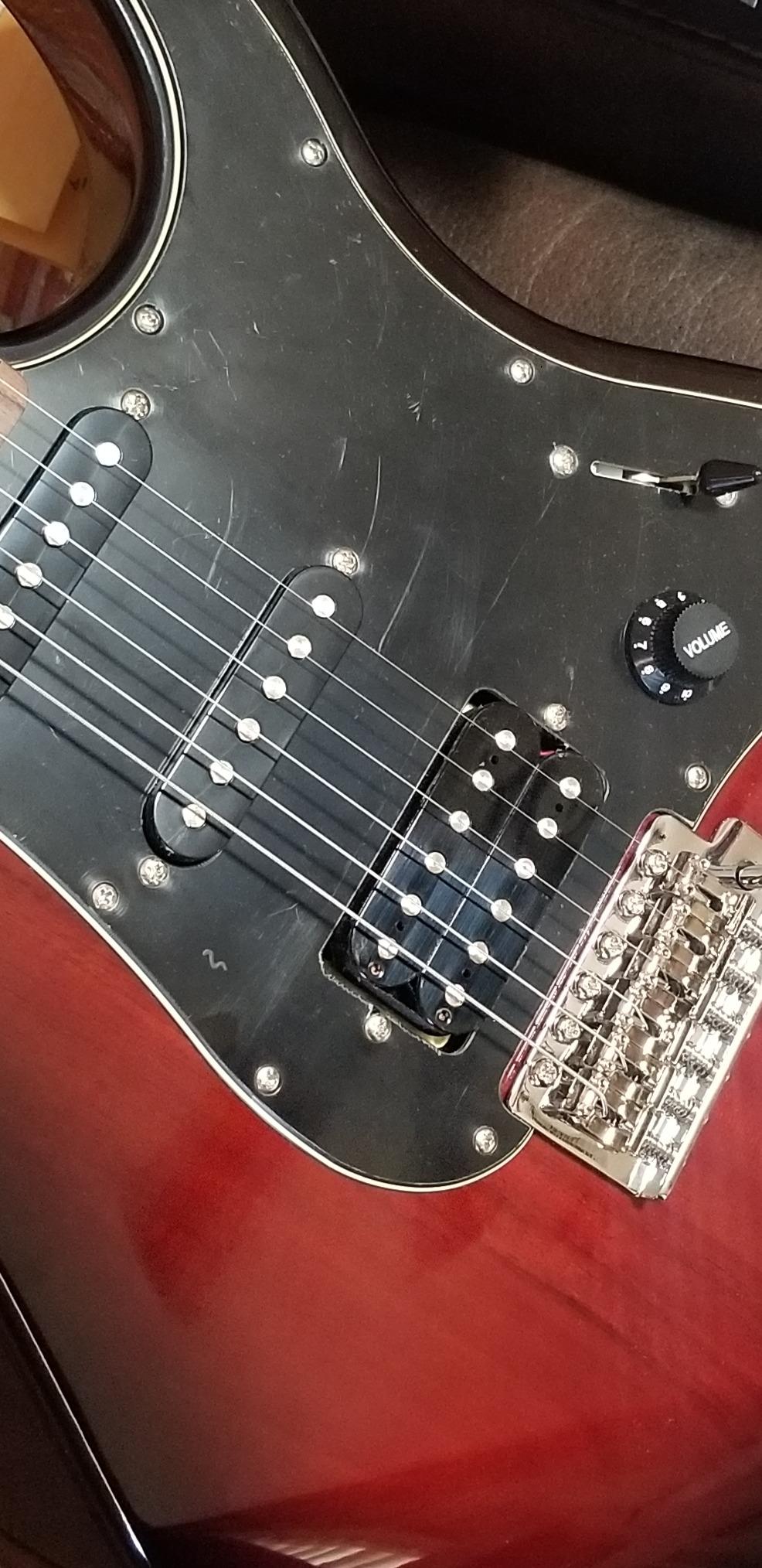
The Agathis body with a maple top gives a bright, resonant platform that records well and cuts through a mix without sounding thin. The 1.65 inch nut width keeps the neck slim, and a 25 inch scale sits between a Strat and a Les Paul in feel.
Be realistic about the hardware. These are starter-level pickups and machine heads, and the vintage-style tremolo is not a locking design, so it will drift more than a hardtail. If that bothers you, the same money in a fixed-bridge instrument will feel more solid.
Who this guitar suits
This suits a student, a parent buying a first electric, or anyone who wants the most sound variety per pound spent. The slim maple neck is one of the most comfortable first instruments available, and it transitions well from acoustic playing.
It is also a sensible first step toward the Pacifica 112V later, since the layout and feel are closely related.
Who should buy something else
Players chasing a heavy, saturated distortion tone should note that these entry pickups run out of output before an amp does. If your priority is a rock or metal sound, spend the difference on a humbucker-only instrument with a fixed or solid tremolo.
Left-handed buyers should check retailer coverage early, since left-hand models are thinner than right-hand ones across every brand in this roundup.
5. Jackson JS22 DKA — Best for Metal and High Gain
Jackson JS Series Dinky Arch Top JS22 DKA – Satin Black
Basswood body
Maple neck
Amaranth board
Two humbuckers
2-point Fulcrum tremolo
Pros
- Compound-radius fingerboard and slim Dinky body feel fast and ergonomic
- Satin finish looks sharp and shows no fingerprints
- Arrives well set up and holds tuning once stabilised
- Two humbuckers suit high-gain rock and metal
- Build quality owners compare to mid-tier instruments
Cons
- Tuning machines are weak and drift out of tune
- Budget volume and tone pots with a plastic nut
- Tremolo arm can feel loose and detach
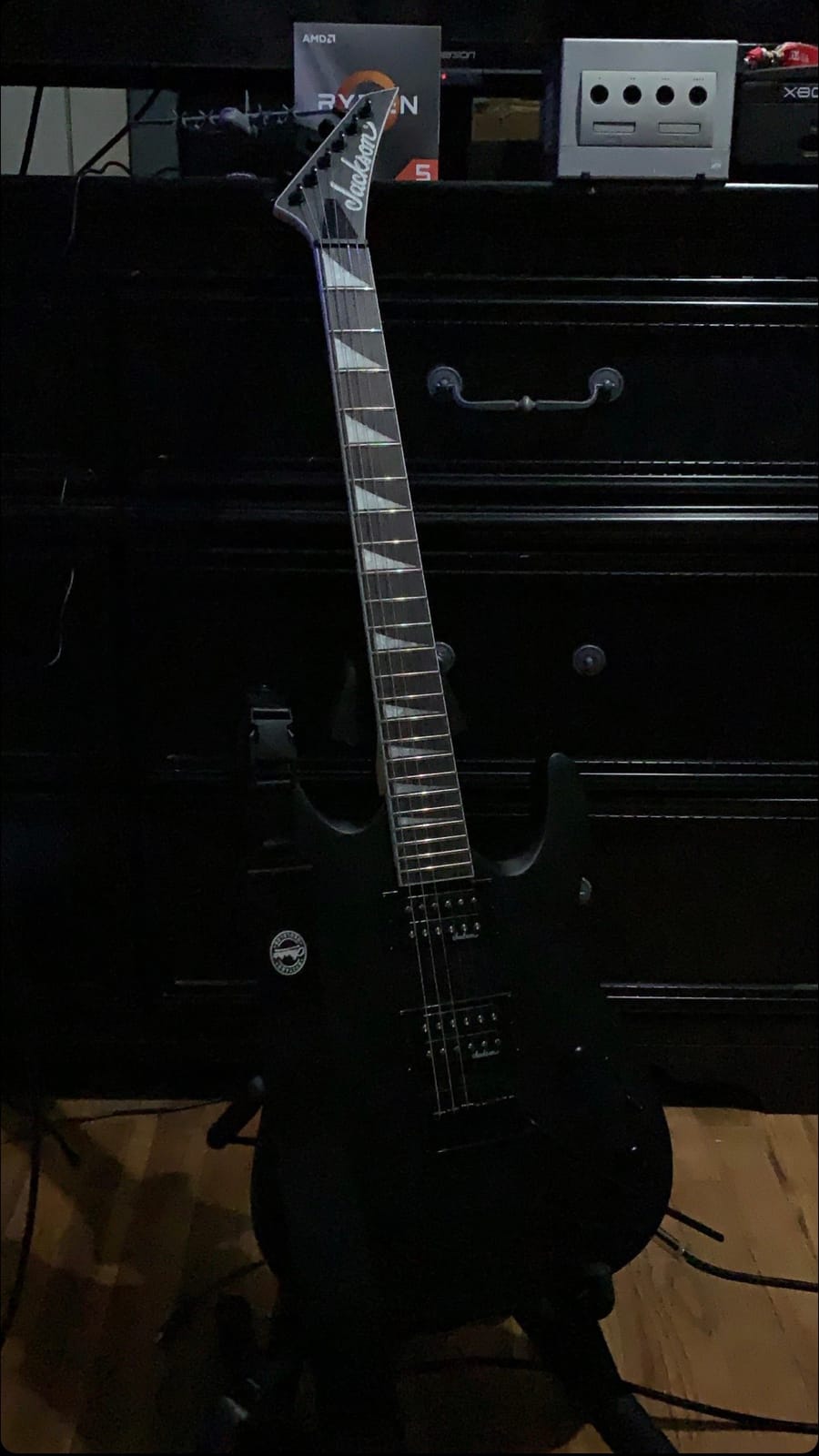
Metal players should start here. The compound-radius fingerboard starts flat for fast single-note leads and gradually rounds out toward the neck joint for comfortable chord work, and the slim Dinky body gives you the upper-fret access you need for lead playing. The listed weight of 3990 g keeps it comfortable for long sessions despite the aggressive look.
Two humbuckers on a simple two-knob layout means very little to get wrong. The output is hot and tight enough that an entry practice amp still sounds like a rock guitar, which is not always true of single-coil instruments in this range. The satin finish looks modern and, usefully, does not show fingerprints.
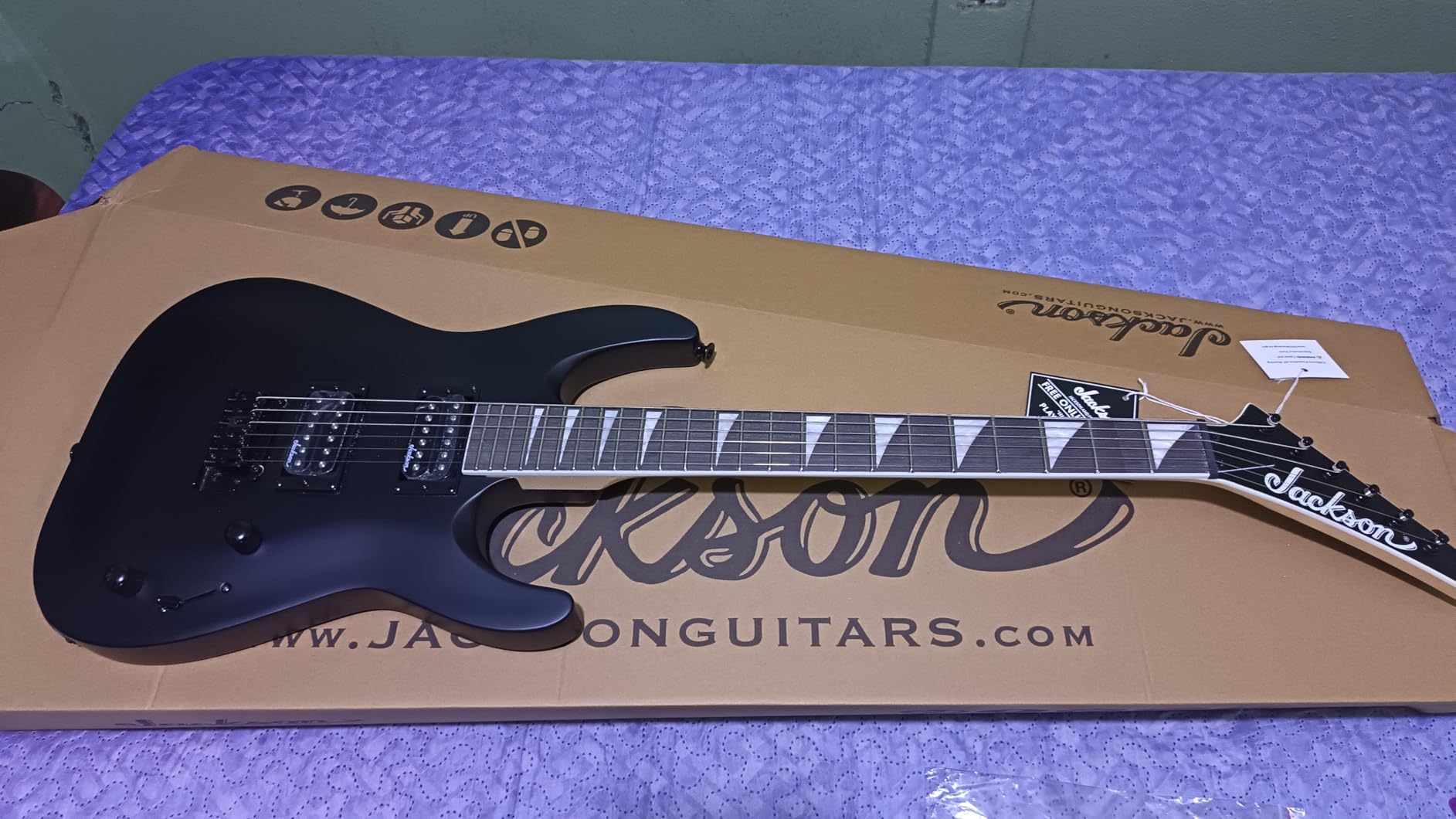
What impressed us most is how little the owners complain once the first obvious problem is addressed. The recurring note across reviews is simple: fit locking tuners. The machine heads are the weak point, and swapping them is a cheap, easy job that changes how the guitar feels entirely.
Frets may also need levelling and polishing depending on the example, which is common at this level. Budget pots and pickups mean tone controls are coarse, so plan on a pickup upgrade later if you want finer control.
Who this guitar suits
This suits metal, hard rock, punk and thrash players, and it works for anyone with small hands because of the thin Dinky body and the 0.66 inch nut width. Players who shred appreciate the fast compound radius and easy fret access.
It is also a good stage instrument, since the finish holds up to a strap and a stand without showing wear quickly.
Who should buy something else
Clean-tone players will find the humbuckers too hot and too dark for the sound they want, with no single-coil option on the guitar. The 2-point Fulcrum tremolo is good but not exceptional, and the arm can feel loose or detach during aggressive use.
If tuning stability under bending is your top concern, choose the Ibanez GRGM21M with its fixed bridge instead.
6. Ibanez GIO GRX20Z — Top Rated
Ibanez GIO Series GRX20Z – Black Night
Poplar body with alder top
Maple neck
Rosewood board
Two humbuckers
T106 tremolo
Pros
- Highest rated model in this roundup at 4.7 stars
- Two humbuckers deliver hot fat tones for rock and metal
- Rosewood fingerboard and T106 tremolo feel solid for the money
- Simple controls a beginner can pick up immediately
Cons
- Entry-level hardware including a plastic nut and basic tuners
- Humbucker-only layout offers less tonal variety
- Some examples need a setup for action and intonation
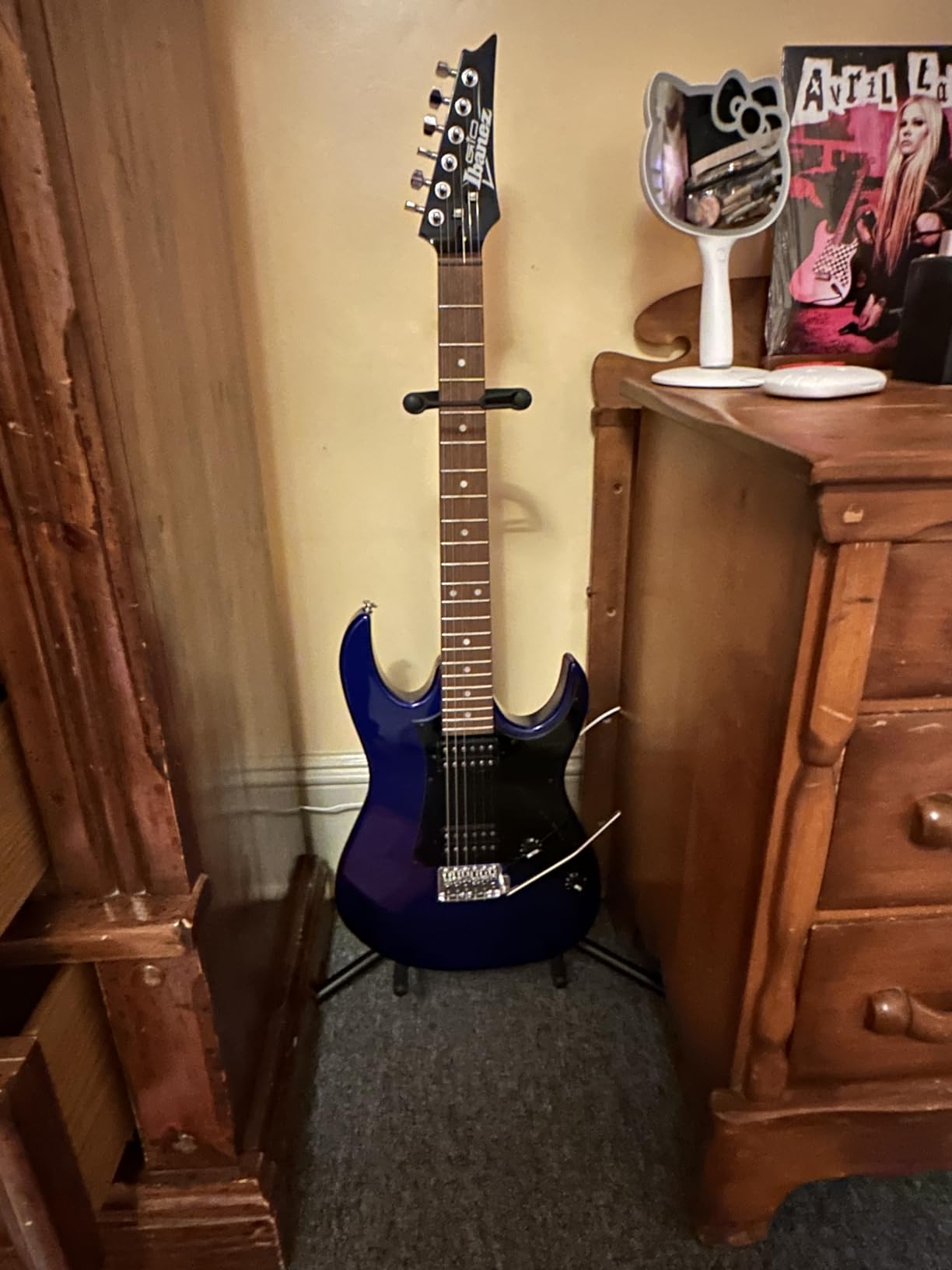
The GRX20Z carries the highest verified rating in this lineup, and owners explain why in consistent terms. It feels solid in the hand, the rosewood fingerboard is a genuine step up from the plastic-looking boards on cheaper instruments, and the two humbuckers produce a full, fat tone that suits rock and metal without any EQ hunting.
Owners also describe it as feeling considerably more expensive than it is, which is a comment you will rarely see about entry-level hardware. The 25.5 inch scale is standard, so it slots into lessons and books without adjustment.
At a listed weight of 9 pounds it is a solid-feeling instrument without being a workout to carry. The controls are deliberately plain — volume and tone, nothing else — which means a beginner can plug in and play rather than learning a switching diagram.
The honest caveat is the humbucker-only layout. You get two positions of tone rather than five, so this is a specialist guitar for thicker sounds. As with the Jackson, some examples arrive needing a setup for action and intonation.
Who this guitar suits
This suits a beginner who already knows they want a fat, powerful rock sound and does not need switching versatility. Players who want to learn by ear without reading a manual will find the layout refreshingly simple.
It is also a strong first instrument for a teenager who will be playing loud and learning riffs, since it is hard to make sound thin.
Who should buy something else
Players who want clean, chiming single-coil tones, or who plan to play jazz, funk or country fingerstyle, will find the humbuckers too dark. Anyone who values tonal range on tap should choose an HSS instrument such as the Pacifica 112V.
Be aware that the plastic nut and basic machine heads are the parts most likely to need replacing in the first year.
7. Yamaha Pacifica 112V — Best for Versatility
Yamaha Pacifica Series PAC112V Electric Guitar; Black
Alder body
Maple bolt-on neck
Rosewood board
H-S-S with coil tap
Vintage tremolo
Pros
- H-S-S layout with a 5-position coil tap gives huge tonal range
- Alder body with a rosewood board is a real step up
- Vintage tremolo for expressive pitch control
- Covers cleans blues and heavier styles from one instrument
Cons
- Bulkier and heavier than the smaller Pacifica models
- Vintage tremolo is less stable than a hardtail
- Some examples need a basic setup on arrival
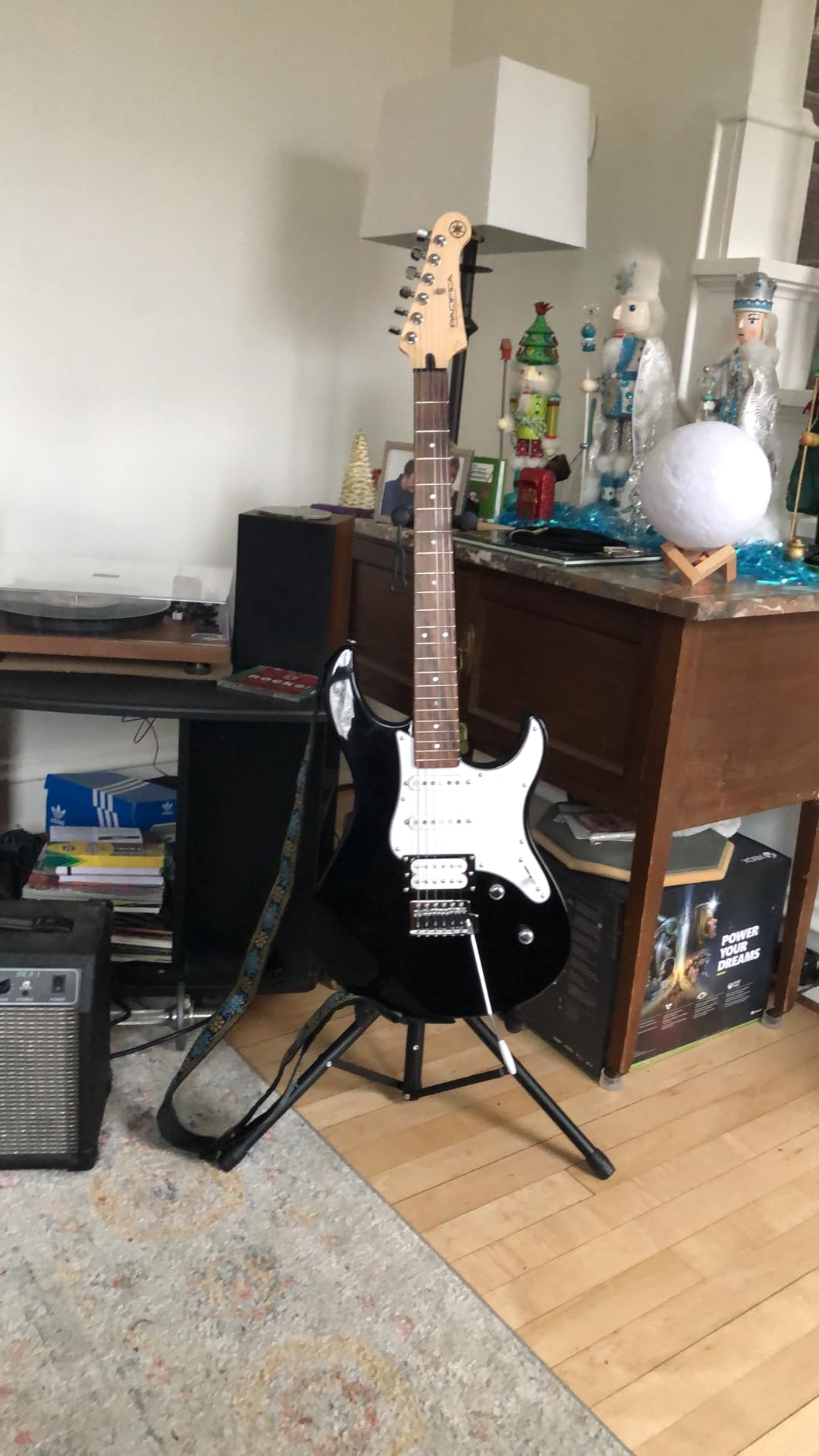
The coil tap is the feature that makes this guitar special. Combined with the H-S-S layout and a 5-position switch, it gives you single-coil and full humbucker voices in more combinations than any other instrument here, from thin and glassy through to thick and aggressive. Owner reviews single this feature out by name more than anything else on the guitar.
The construction is also a clear tier above the PAC012. An alder body with a maple top and a maple bolt-on neck under a rosewood fingerboard is a serious specification at this level, and the extra mass gives it a fuller, more settled low end.
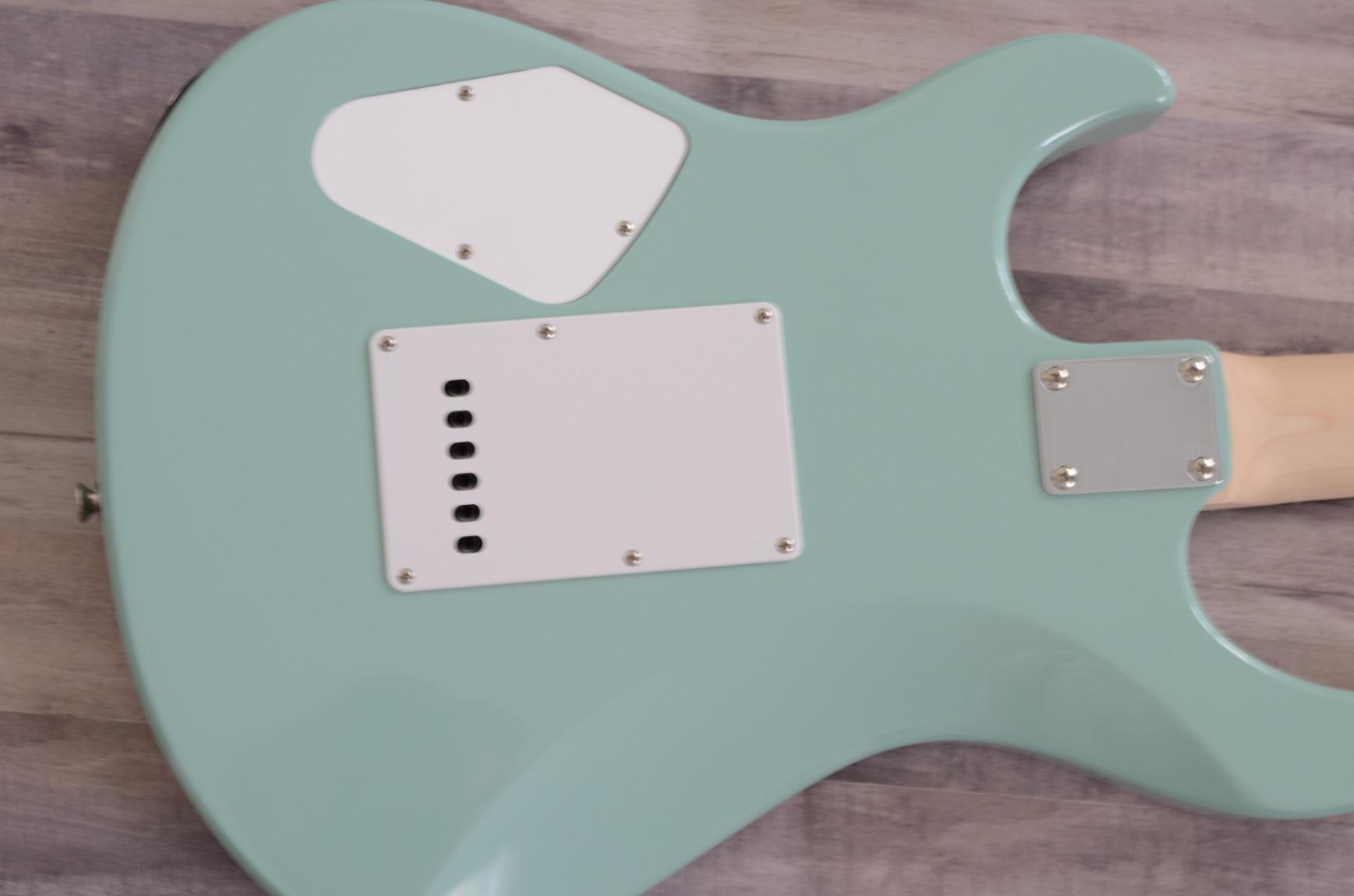
That bulk is the trade-off. At a listed weight of 3 kg it is the heaviest guitar in this roundup with a Strat-style body, and players with back or shoulder issues may prefer the lighter contoured instruments instead.
The vintage tremolo is expressive but not the most stable system, so it needs a setup that balances spring tension correctly, and some examples need that work before they leave the workshop.
Who this guitar suits
This suits the undecided player, the songwriter who needs clean and dirty sounds from one instrument, and anyone who wants to practise the way session and cover guitarists do. Blues players get enough bite from the humbucker position to work well with a tube-style amp.
It is also a strong second guitar for someone who started on a single-coil instrument and now needs more range.
Who should buy something else
Players who struggle with a heavy body, or who want an instrument they can carry around a campus without thinking about it, should look at the lighter contoured models. Those wanting a rock-solid tuning platform should note the vintage tremolo is not a locking design.
If your budget stretches slightly, this is also the last step before the price ceiling, so be deliberate about the choice.
8. Squier Affinity Stratocaster — Best Straightforward Beginner Choice
Squier Affinity Series Stratocaster Electric Guitar, with 2-Year Warranty, Lake Placid Blue, Maple Fingerboard
Poplar body
Maple neck and fingerboard
Three single-coils
2-point tremolo
25 inch scale
Pros
- Thin lightweight poplar body stays comfortable in long sessions
- Three Squier single-coils deliver the classic Strat range
- Slim C-shaped neck is familiar to beginners and pros alike
- Maple fingerboard gives a bright snappy response
Cons
- Sealed die-cast tuning machines are imprecise
- 2-point tremolo feels less solid than a metal-block bridge
- Unfinished maple neck can feel slick when hands warm
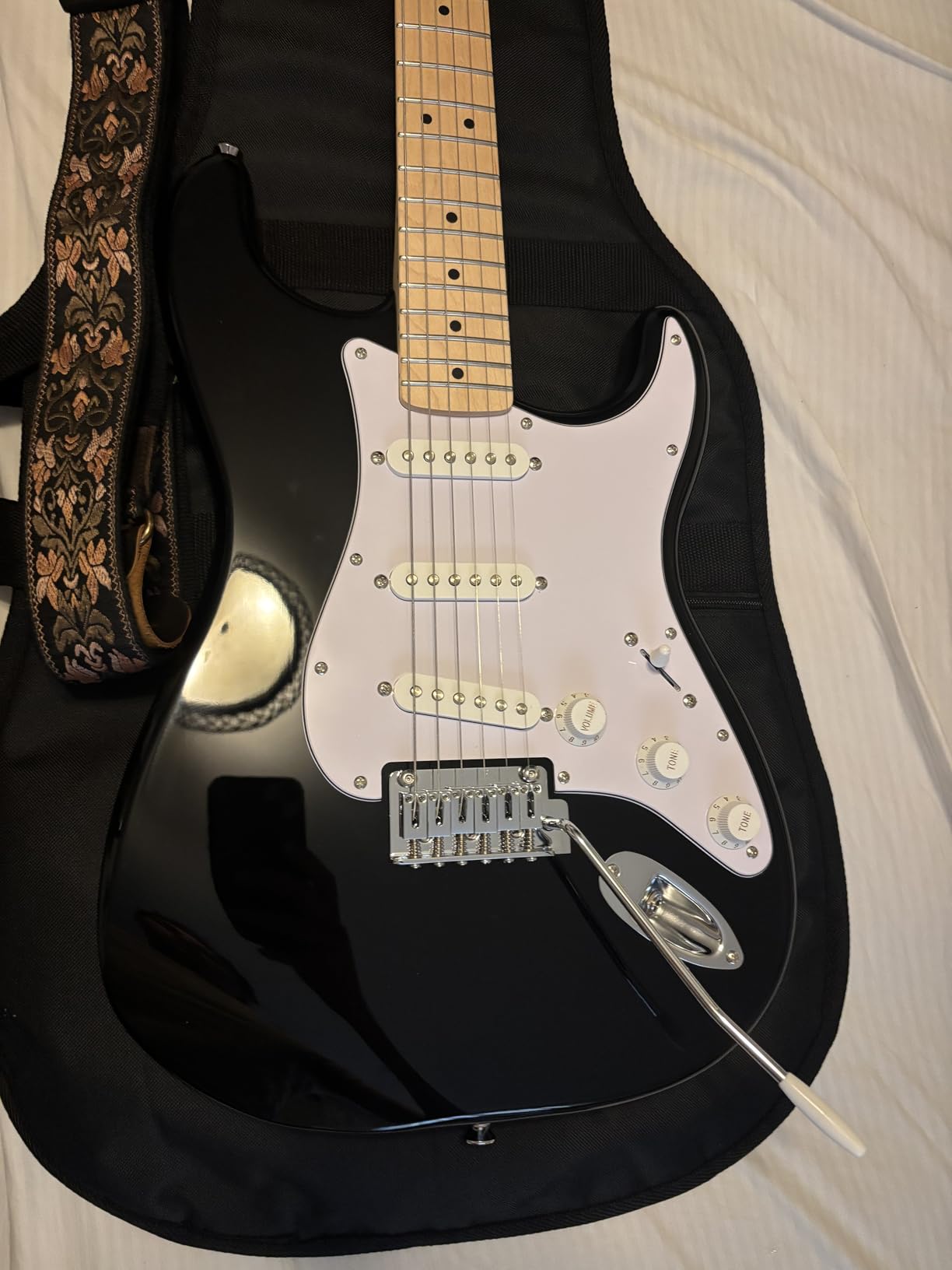
The Affinity is the uncomplicated answer. It is a poplar-bodied, thin and light Strat shape with a slim C-shaped maple neck, and nothing about it is trying to be clever. If a friend asked you to pick the least complicated first electric for them, this would be the box you point at.
Owners frequently describe it as a step-up or travel instrument rather than a forever guitar, but for its intended purpose the tone is right. Three Squier single-coils give the full range of Strat positions, and the maple fingerboard responds quickly under the fingers.
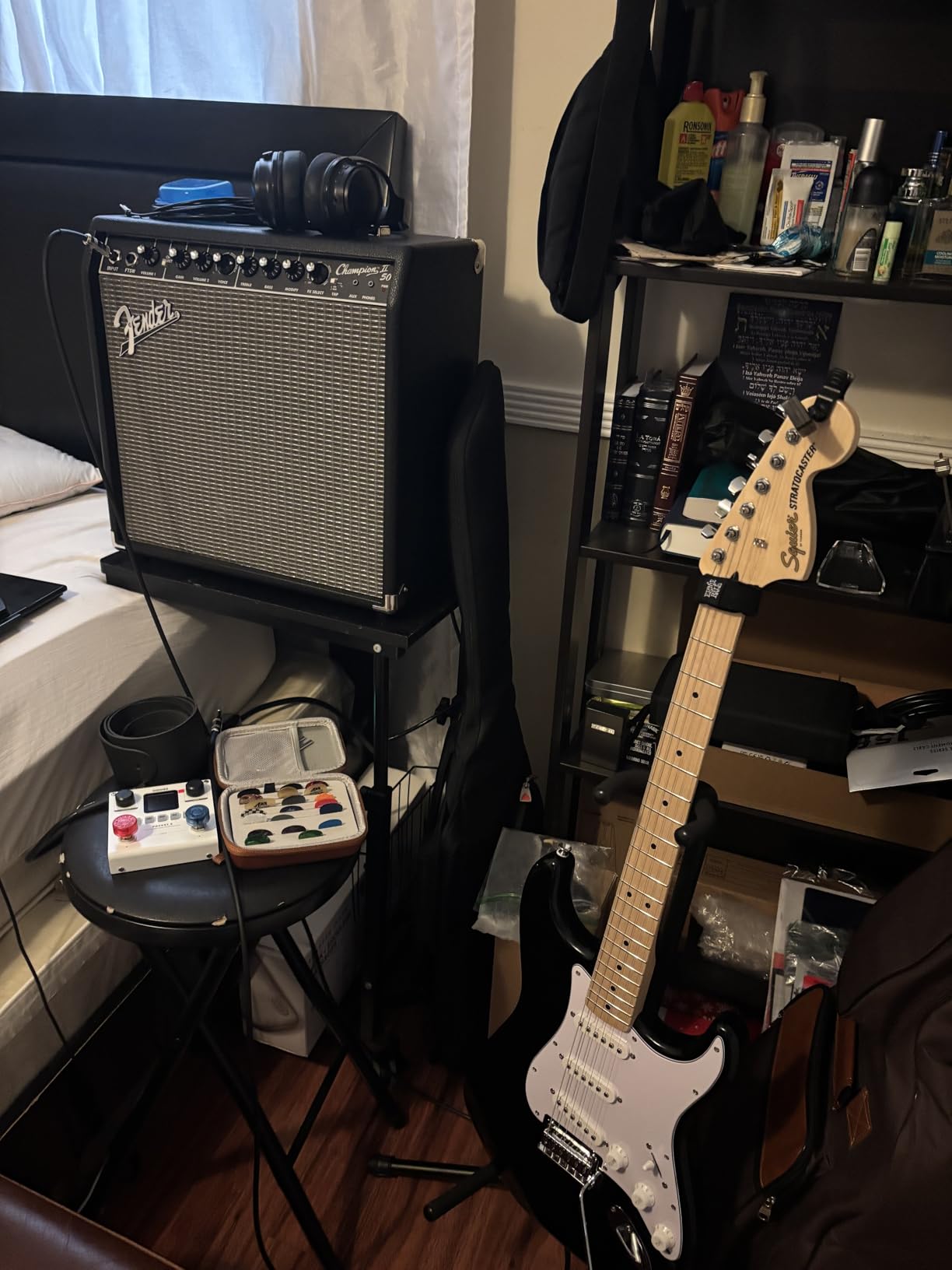
The 25 inch scale is slightly shorter than a standard Strat, which makes the strings feel a little softer and the bends a little easier. That is a genuine advantage for younger players and for anyone with less hand strength.
At a listed weight of 10 pounds the body itself is light, and the thin profile sits comfortably against you for long practice sessions. The two-year warranty is a real plus in this band.
Who this guitar suits
This suits a first-time electric player, a student, and anyone who wants a lightweight instrument they can move around without thinking about it. It also works as a second guitar for someone who plays mainly clean styles.
Buyers who like a maple board should know that some owners find the unfinished neck slick once their hands warm up, which matters in humid conditions or long sessions.
Who should buy something else
Players who want a solid rock or metal sound should note that these single-coils are not designed for high gain, and the output is low. The sealed die-cast machine heads are the least precise in this roundup, so anyone sensitive to tuning drift should look at a fixed-bridge instrument instead.
Those who want more tonal range on a five-way switch would find the humbucker-capable instruments more flexible.
9. Ibanez GRGM21M — Best for Small Hands and Travel
Ibanez GRGM21M 6-string Electric Guitar – Blue Burst
Basswood body
Maple neck and fingerboard
Two humbuckers
Fixed bridge
22.2 inch scale
Pros
- Three-quarter scale body suits small hands children and travel
- Gig bag included which few rivals at this price offer
- Dual humbuckers give a biting metal-friendly tone
- Fixed bridge holds tuning reliably
- Build and finish praised as premium for the money
Cons
- Shorter 22.2 inch scale limits solo range and can feel twangy
- Factory tuning machines drift and need tightening
- Basic factory pickups and hardware that owners upgrade
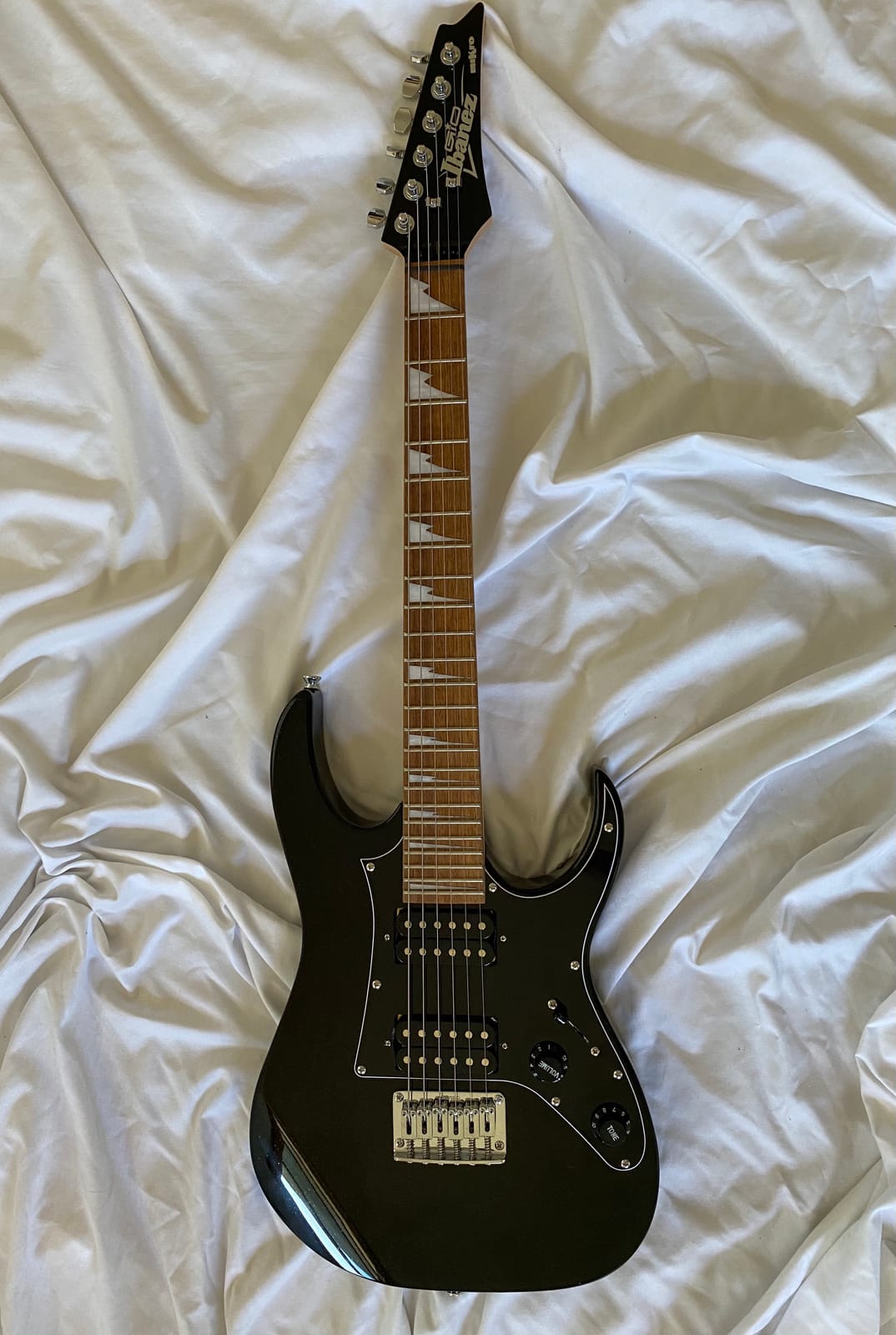
This is the answer for a child, a player with genuinely small hands, or anyone who wants an instrument that fits in a backpack. The 22.2 inch short scale and three-quarter-size body mean you are not stretching around a full-size guitar, which is the single biggest reason beginners quit.
The included gig bag is unusual in this category and removes one more purchase decision. At a listed weight of 2.6 kg it is the easiest instrument here to carry for a long time, and the fixed bridge means tuning stays put without any fuss.
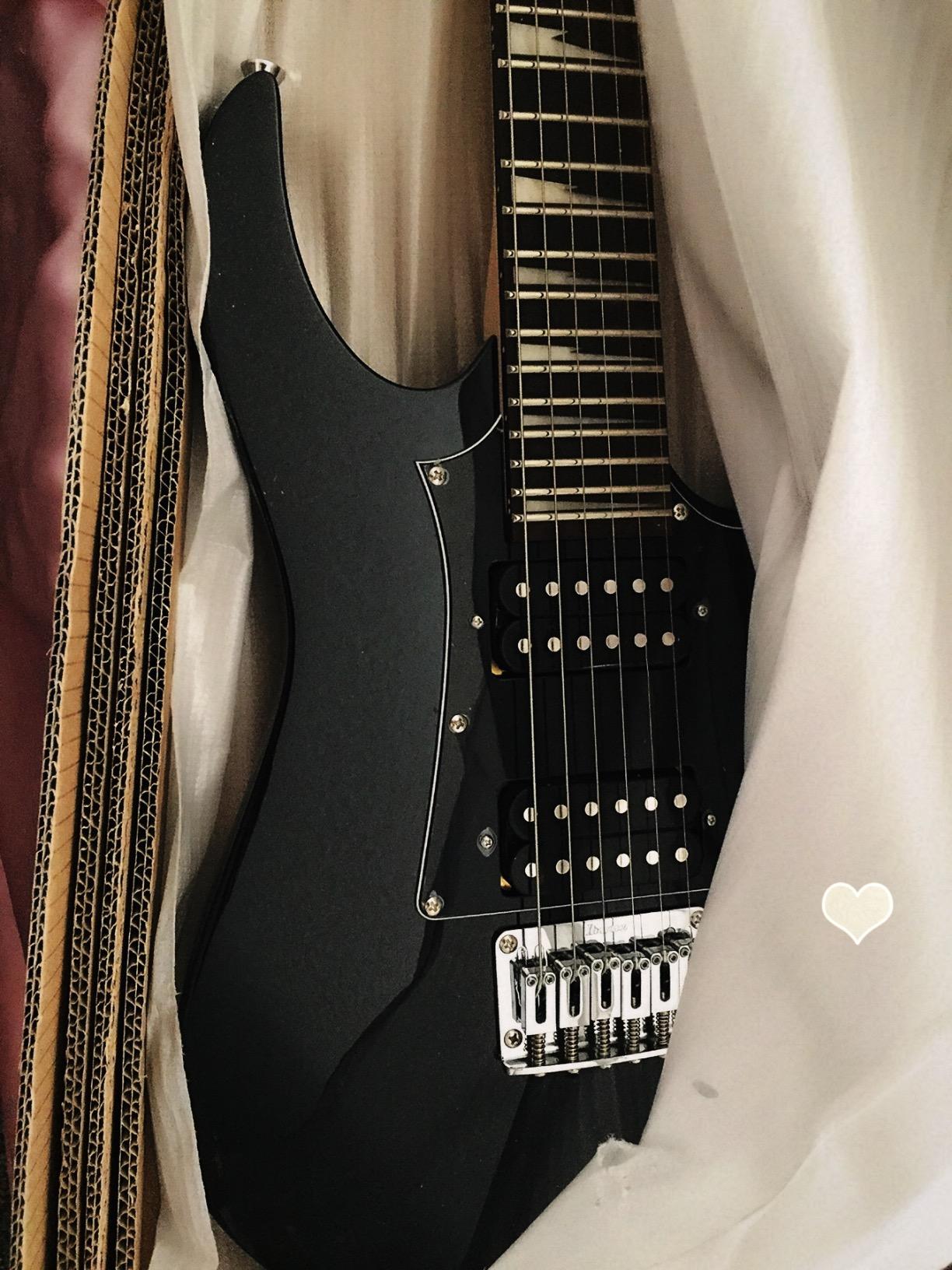
The two humbuckers give a tight, biting tone that suits metal and hard rock, and the basswood body contributes a scooped, punchy response rather than a mellow one. Reviewers frequently note that the finish and overall build look more expensive than the ticket.
The short scale is a double-edged sword. It makes bending easy and chords comfortable, but it also means less range between frets, so solos and wide intervals feel cramped. Some players describe the sound as twangy.
Who this guitar suits
This suits young players, anyone with small hands, and anyone who wants a backup or travel instrument. It is also a good choice for a first electric when a full-size guitar has already proved uncomfortable.
Players who want one instrument for lessons and for metal practice will find the humbuckers and fixed bridge work in their favour.
Who should buy something else
Anyone who wants to play leads across a wide range should avoid the short scale, because the reduced fret spacing limits vibrato and solo phrasing. The factory tuning machines drift and need tightening, and the pickups are basic enough that many owners replace them early.
Parents buying for a child should also weigh the tremolo-free simplicity against whether the child will outgrow the compact body within a year.
10. Epiphone Les Paul 100 — Best for Sustain and Warmth
Epiphone Les Paul 100 E1, Ebony
Mahogany body with maple top
Mahogany neck
Rosewood board
Two humbuckers
Tune-o-matic
Pros
- Mahogany body with maple top gives the warm Les Paul voice
- 650R neck and 700T bridge humbuckers cover clean to overdriven
- Tune-o-matic bridge and 24.75 inch scale feel stable
- Rosewood fingerboard adds warmth and a premium look
Cons
- Heavy at around 10 pounds which tires long standing sessions
- Entry-level hardware with a plastic nut and budget pots
- Occasional setup and finish inconsistency
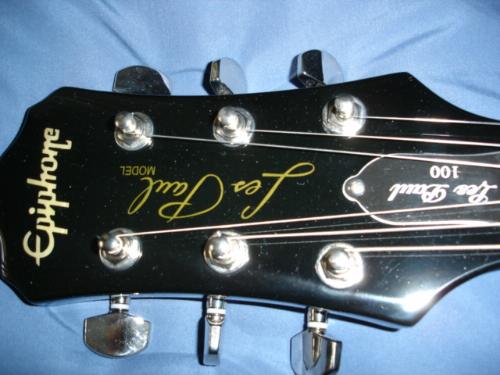
The Les Paul 100 is the guitar we would hand to someone who wants the classic tone without the boutique tax. A mahogany body under a maple top with a mahogany neck produces the warm, thick voice the model is known for, and the rosewood fingerboard adds a little extra smoothness under the fingers that the Special II does not have.
The 650R and 700T humbuckers cover everything from clean jazz comping to overdriven rock, and the Tune-o-matic bridge on a 24.75 inch scale gives a stable, familiar feel. The sound is a little less aggressive than the Special II’s, which makes it more versatile across genres.
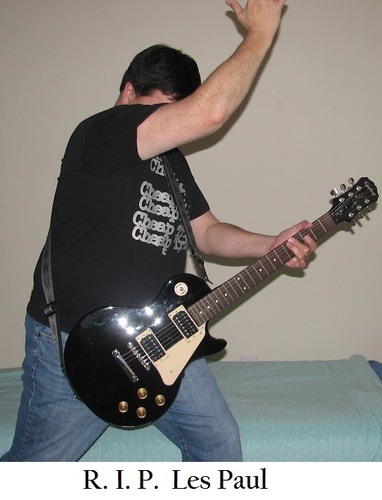
Weight is the honest drawback. At a listed 10 pounds, this is one of the heavier instruments here, and a single-cut body hanging off a strap gets tiring during long standing sessions. Players who practise seated or who have any shoulder issues should try one before committing.
The electronics use a lighter-gauge output jack than the heavy-duty part fitted to the Special II, and the pot and nut hardware is entry-level. Owners also report the usual spread of setup and finish variation, so inspect the instrument on arrival.
Who this guitar suits
This suits blues, classic rock, jazz comping, and country players who want a thick rhythm sound. The rosewood board makes it a better choice than the Special II for players who are particular about the feel of the fingerboard.
It is also a sensible first Les Paul shape for players who want a familiar instrument that is easy to find in lessons and tabs.
Who should buy something else
Single-coil players, metal players who want a modern fast attack, and anyone who will be playing standing for hours should look elsewhere. There is no tremolo, so dive-bomb effects are not available.
Those who want a lighter body with the same warm voice should look at a contoured or travel-sized instrument instead.
Which One Should You Buy? If You Play X, Buy Y
If your playing has already picked a direction, match it here rather than defaulting to the highest-rated guitar. A guitar that fits the music gets used; a guitar that does not gets left in a case.
Metal, hard rock or thrash: Jackson JS22 DKA for fast leads and a slim body, or the Ibanez GIO GRX20Z for a simpler layout and a hotter humbucker voice.
Classic rock and blues: Epiphone Les Paul Special II for the most aggressive Les Paul tone, or the Les Paul 100 if you want rosewood and a slightly warmer, more versatile voice.
Pop, funk and indie: Squier Debut Series Stratocaster for the fullest single-coil range, or the Squier Affinity Stratocaster if you want the lightest body in this list.
Country and clean picking: Squier Debut Series Stratocaster, which holds its tuning well and gives you the twang the genre needs.
Jazz, blues or mellow roots: Yamaha Pacifica 112V, where the coil tap lets you back off the humbuckers and get closer to a hollow-body warmth without changing guitars.
Metal plus travel or a small frame: Ibanez GRGM21M, with its short scale, included gig bag and fixed bridge.
You have no idea yet: Ibanez GIO GRX70QA or the Yamaha Pacifica 112V. Both give you single-coil and humbucker voices, and both are the models most often recommended in guitarist forums precisely because they do not force a decision.
You are starting on acoustic right now: Squier Debut Series Stratocaster for the low, forgiving action, or the GRX70QA for its thin contoured body and light weight.
If you are still deciding, we would start with the model that matches the fastest-changing part of your playing. If that is likely to be genre, buy the HSS or H-S-S instrument. If it is likely to be technique and hand comfort, buy the lightest body you can live with.
Buying Guide: How to Choose an Electric Guitar Under 500 Dollars
Most first-guitar decisions come down to four things: pickup layout, neck width, body weight and bridge type. Get those right and the brand name matters far less than buyers assume. Squier, Epiphone and Ibanez are all Fender-adjacent or own-brand instruments with real quality control, and the forum consensus is consistent on this point — a well-built Squier outplays a bad day with a more famous nameplate every time.
HSS, HH or single-coil — the decision that matters most
Single-coil pickups give you bright, articulate, chiming tones with lots of harmonic detail. They are the classic choice for funk, pop, country, jazz and clean blues, and they hum slightly more than humbuckers because they have no noise-cancelling coil. Humbuckers give you a warmer, thicker, quieter output and handle distortion far better, which is why rock and metal players choose them.
An HSS or H-S-S configuration gives you both, which is why it keeps appearing as the default answer among experienced forum users. HH is the same idea with two humbuckers, producing the thickest output and the least variety. If you genuinely cannot decide what you want to play, buy the combination layout.
What tonewoods actually change
Less than most guides admit. Body wood shapes the resonance and midrange character, but the pickups and amplifier matter more than the species name. An alder body with single-coils sounds bright and balanced, a mahogany body with humbuckers sounds warm and woody, and a poplar body is a neutral, serviceable platform that takes the character of whatever is fitted to it.
Spend your attention on the fingerboard instead. Rosewood feels smoother and warmer under the fingers and adds a little darkness, while maple and laurel are brighter and cheaper to produce. A bound or solid-feeling board is a better use of your money than a flashier finish.
Neck width and small hands
Nut width is the number to check if you have small hands, and the measurements here are telling. The Jackson JS22 has a 0.66 inch nut width, the Yamaha PAC012 is listed at 1.65 inches, and most full-size instruments in this roundup sit near 1.65 inches. Scale length matters too — the Ibanez GRGM21M is a 22.2 inch short scale, noticeably softer and easier to bend than the 25.5 inch standard.
Our broader guide to guitars for younger players goes deeper on sizing. The short version is that a guitar you can fret cleanly without cramping beats a better-sounding one you cannot play.
Hardtail, block tremolo or floating tremolo
A hardtail or fixed bridge is the most stable and the simplest to maintain, and it is the right choice for beginners who want tuning to stay put. A block or two-point tremolo is stable enough for most playing and adds a useful pitch-bend. A floating or vintage-style tremolo gives the most expressive vibrato and dive-bomb effects, and it needs correct setup to hold tune.
If you are worried about tuning drift, the Jackson and the Ibanez GRGM21M are the two most solid options in this roundup, because neither relies on a floating tremolo to stay in tune.
Buzzing humbuckers and what causes them
New cheap humbuckers can hum, and it is a wiring and shielding issue rather than a defect. Poorly shielded cavities and unbalanced coil turns both contribute, and proximity to fluorescent lighting, monitors and dimmer switches makes it worse. A noise gate on the amp solves it instantly, and re-soldering the pickup leads is a cheap fix if you want to do it properly.
Cheap ceramic pickups also have a lower magnetic output than alnico designs, so a guitar that hums at low volume may need the volume turned up and the tone adjusted rather than rewired. It is a normal characteristic of the price band, not a reason to return a guitar on its own.
New versus used at the same budget
Used Mexican-made Fender Classic Series instruments are the standard recommendation from experienced players for stretching a 500 dollar budget, because a well-maintained used model gives you a genuine Fender-badged instrument with better hardware than anything new in this list. The trade-offs are condition, neck straightness and the absence of a warranty.
If you go used, have the neck and frets checked before you pay, and ask to see the guitar played through an amp. Our thinking is that a new instrument in this band is a better first purchase for most people, because nothing about a first guitar should be a gamble.
What to upgrade first
Work down this list rather than replacing parts randomly. Tuning machines come first, because they affect everything that follows. Then the nut and saddle, which a good setup addresses in an afternoon. Then pickups, if the tone still does not excite you. Bridges and pots are last, and only if you have a specific complaint.
For acoustic-electric options in a similar range, our acoustic-electric guitar guide covers that side of the market separately.
What to Pair With a Guitar on This Budget
You do need an amplifier, and this is where most first-guitar budgets quietly go wrong. A lot of people plan for the guitar and then discover the amp needs another couple of hundred dollars, so a realistic total is a guitar in the 250 to 350 dollar range plus a practice amp, rather than a 500 dollar guitar with nothing to plug into.
Any decent practice amp with clean and overdrive channels will let a humbucker guitar sing and give a single-coil guitar enough clarity. Modeling amps with a wide range of amp types suit undecided players, because they cover Fender-style cleans, British-style overdrive and high-gain tones from one box. Tube-style amps with a spring reverb suit players who want to explore vintage blues and classic rock tones.
Buy the amp before you upgrade any part of the guitar. A better amplifier makes an inexpensive guitar sound dramatically better, and it does that permanently, whereas swapping pickups mostly moves the problem around.
First Setup and Tuning: What New Budget Guitars Need
Almost every new guitar in this price band arrives playable but not perfect, and that is normal. The factory setup is a starting point, and one hour of work by a competent technician makes an enormous difference. Here is what a proper first setup actually involves.
Check the neck relief. Look down the neck from the headstock while fretting the low and high frets. Too much bow causes buzzing, too little causes fretting difficulty at the higher frets.
Set the string action. Measure at the 12th fret with a ruler. Too high and your fingers hurt; too low and the strings buzz against the frets.
Set the intonation. Tune the open string, check the 12th fret, and move the saddle until they match. This is why guitars that arrived in tune drift once you play.
Dress the frets if needed. Sharp or uneven fret ends are the reason a cheap guitar feels unpleasant even when it plays in tune. A light level and polish is often all it takes.
Balance the tremolo. Any floating tremolo needs spring tension and saddle height set together, or the bridge will not return to pitch reliably.
Change the strings and stretch them. New strings settle in, so tune, play for a few minutes, and tune again before you judge how the guitar sounds.
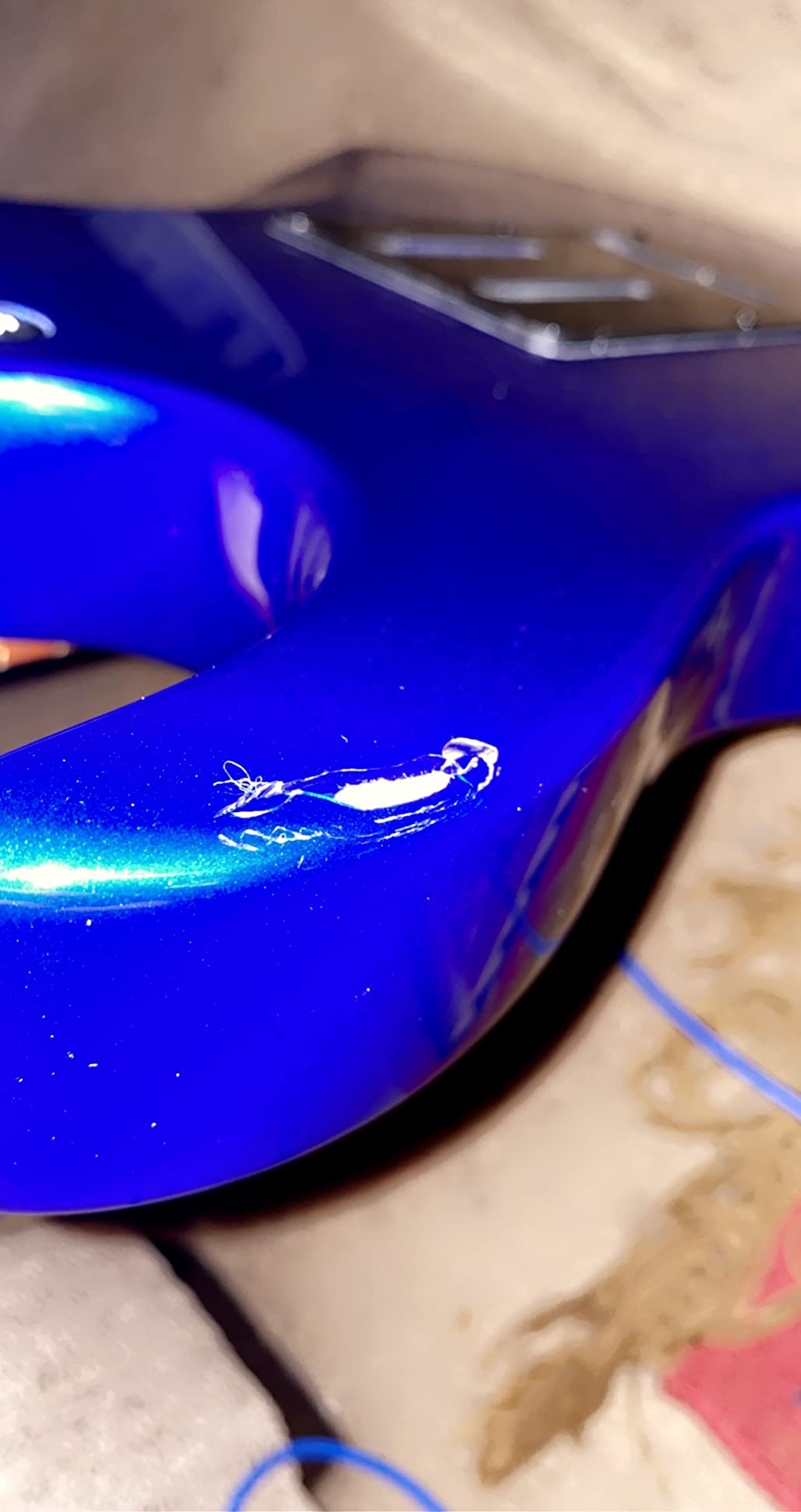
Some problems are free to fix, and some mean you should return the instrument. A dry feel on a neck, slightly uneven frets, and a tremolo that needs balancing are all normal and fixable. Open or dead pickups, a badly cut nut that will not hold tuning, buzzing that appears on every setting, and finish defects are return-worthy.
Inspect the guitar within the return window. Check every pickup position, run the tremolo through its travel, and look down the neck before the shop will consider a return easier.
Frequently Asked Questions
What is the best electric guitar for the money under 500 dollars?
The Squier Debut Series Stratocaster is our top pick, with an owner rating of 4.5 across 2487 reviews. It arrives playable with good action and accurate intonation, and three single-coils on a 5-way switch cover every classic Strat tone. If you want humbuckers and more range instead, the Ibanez GIO GRX70QA is the strongest alternative.
What is the best quality electric guitar under 500 dollars?
Quality in this band comes down to build consistency, neck comfort and a fingerboard you will keep playing. The Yamaha Pacifica 112V leads on construction, with an alder body, maple bolt-on neck and rosewood fingerboard, plus an H-S-S layout with a coil tap. The Jackson JS22 DKA is the equal choice for high-gain players who want a fast compound-radius neck.
What is the best affordable electric guitar for beginners?
For most beginners the Squier Debut Series Stratocaster is the safest choice because it has a low, forgiving action and a familiar C-shaped neck, which makes the move from acoustic painless. Players with small hands should look at the Ibanez GRGM21M short-scale model, and those who want humbucker power without a single-coil should consider the Ibanez GIO GRX70QA.
Do I need an amp with a sub-500 dollar electric guitar?
Yes. An electric guitar produces very little sound on its own, so you need a practice amplifier to hear it. Plan a realistic total budget of roughly 250 to 350 dollars for the guitar plus a separate practice amp. Buying a strong amp before upgrading any part of the guitar changes the sound far more than swapping pickups will, and it improves every guitar you own.
Are Yamaha Pacifica guitars any good?
Yes, and the Pacifica line is the most frequently recommended first guitar in guitarist forums. The PAC012 is the affordable entry point with an Agathis body, maple bolt-on neck and a 5-position single-coil and humbucker layout. The PAC112V steps up to an alder body, rosewood fingerboard and an H-S-S layout with a coil tap, which gives far more tonal range from one guitar.
What setup does a new budget electric guitar need?
A basic setup covers neck relief, string action at the 12th fret, intonation, and treble balancing if the guitar has a tremolo. New guitars in this price band also often need fret levelling, a polished neck and fresh strings. Low action or high action is normal and fixable, but a dead pickup, buzzing on every setting or a badly cut nut is worth returning instead.
Conclusion: Our Final Picks for 2026
There is no single best electric guitar under 500 dollars, but there is one best one for most people, and it is the Squier Debut Series Stratocaster. It is the widest reviewed instrument in this roundup, it plays well on arrival, and its single-coil layout will teach you more about tone than a humbucker guitar at the same money.
If your playing is undecided, buy the Ibanez GIO GRX70QA or the Yamaha Pacifica 112V, because both put single-coil and humbucker voices under one switch. For a heavier sound, the Jackson JS22 DKA is the most fun instrument here, and the Epiphone Les Paul Special II covers blues and classic rock better than anything else on the list.
Budget for an amplifier alongside the guitar, plan one setup after purchase, and replace the tuning machines first if the instrument needs it. Get those three things right and any of the ten above will serve you for years.