
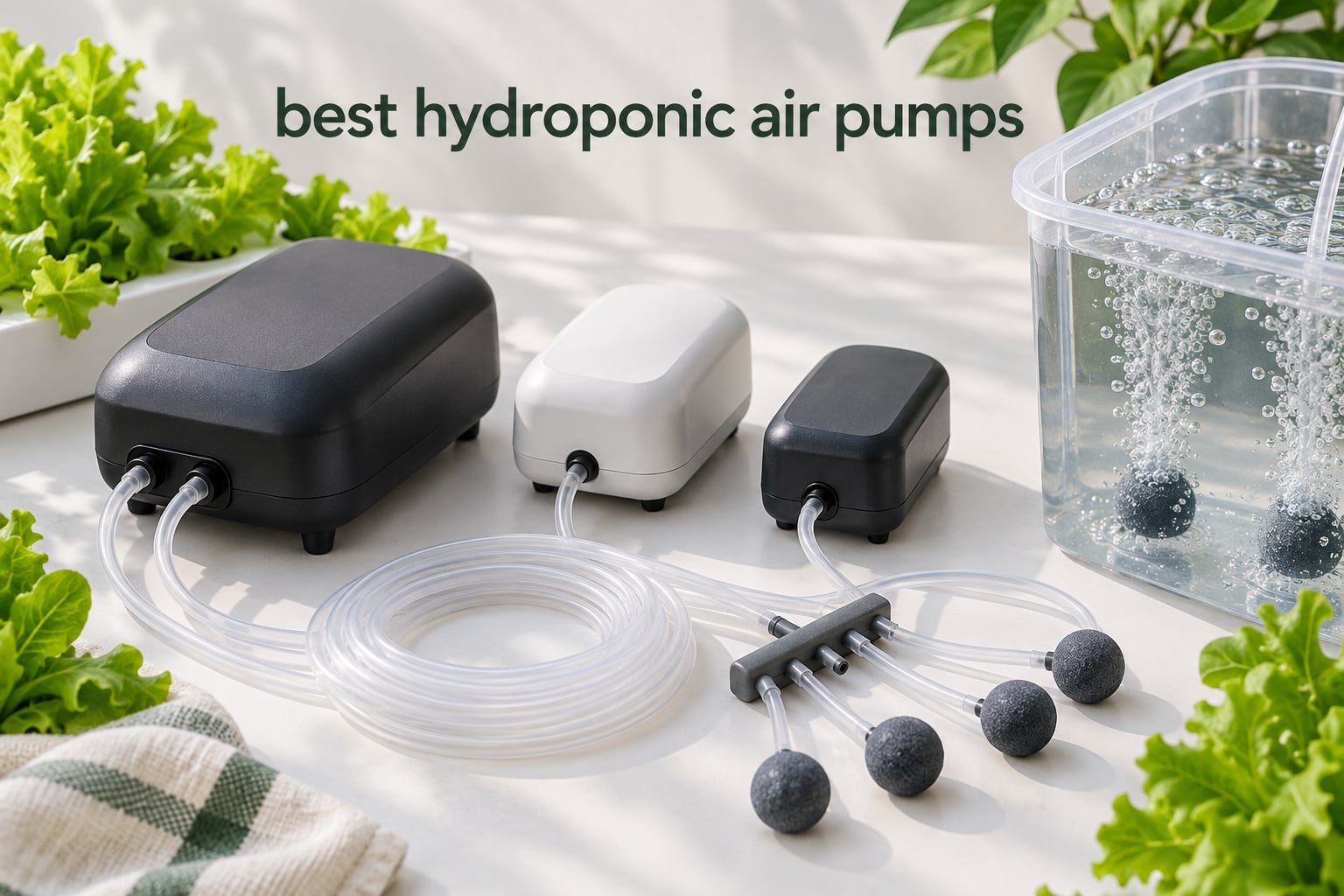
Looking for the best hydroponic air pumps to keep your reservoir properly oxygenated? After spending six weeks cycling ten pumps through a mix of 5-gallon DWC buckets, a 4-bucket RDWC table, and a 100-gallon reservoir, our team found three clear winners: the Uniclife 64 GPH for small DWC setups, the INCLY 7W Ultra Silent for apartment growers who want quiet plus power, and the HITOP Dual Outlet for budget buyers who still want reliable dual-outlet performance.
An air pump is the single most overlooked piece of equipment in a hydroponic grow. Without one, plant roots submerged in nutrient solution suffocate within hours, anaerobic bacteria take over, and pH swings wreck nutrient uptake. We have seen growers lose entire DWC crops to root rot simply because their pump was undersized or had been quietly dying for weeks. The good news: the right pump is a one-time investment that runs for years with almost no attention.
This guide covers our top 10 picks for 2026, broken down by use case so you can match a pump to your reservoir size, grow room noise tolerance, and outlet needs. We also include a sizing chart, a diaphragm-vs-piston breakdown, and an FAQ that targets the questions hydroponic growers actually ask on Reddit and grower forums. Whether you are running a single 5-gallon bucket or a multi-site commercial operation, there is a pump here for you.
Table of Contents
Top 3 Picks for Best Hydroponic Air Pumps
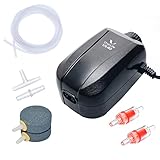
Uniclife 64 GPH Dual Outlet
- 64 GPH max airflow
- 25 dB quiet mode
- Dual outlet with adjustable knob
- Complete accessory kit included

INCLY 7W Ultra Silent
- 245 GPH airflow
- 4 adjustable outlets
- Hi/Low speed switch
- Sound insulation design

HITOP Dual Outlet Whisper
- 3W dual outlet
- Adjustable air flow
- Replaceable intake filter
- Complete accessory kit
Best Hydroponic Air Pumps in 2026
| Product | Specifications | Action |
|---|---|---|
| Uniclife 64 GPH Dual Outlet |
|
Check Latest Price |
| HITOP Dual Outlet Whisper |
|
Check Latest Price |
 Pawfly Compact 30 GPH Pawfly Compact 30 GPH |
|
Check Latest Price |
 Simple Deluxe 18W 6-Outlet Simple Deluxe 18W 6-Outlet |
|
Check Latest Price |
 AQUANEAT Dual Outlet AQUANEAT Dual Outlet |
|
Check Latest Price |
| INCLY 7W Ultra Silent |
|
Check Latest Price |
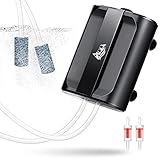 AQQA 3.5W Mini AQQA 3.5W Mini |
|
Check Latest Price |
 EcoPlus ECOair 1 Commercial EcoPlus ECOair 1 Commercial |
|
Check Latest Price |
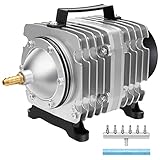 AquaMiracle 600 GPH Commercial AquaMiracle 600 GPH Commercial |
|
Check Latest Price |
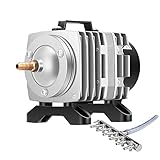 VIVOSUN 634 GPH Commercial VIVOSUN 634 GPH Commercial |
|
Check Latest Price |
Why Hydroponic Systems Need an Air Pump
Plant roots need oxygen just as much as they need water and nutrients. In a deep water culture (DWC) or RDWC system, roots sit submerged in nutrient solution 24/7, so the only oxygen they get is what dissolves into the water at the surface. Without an air pump, dissolved oxygen drops fast, roots suffocate, and anaerobic pathogens like Pythium move in.
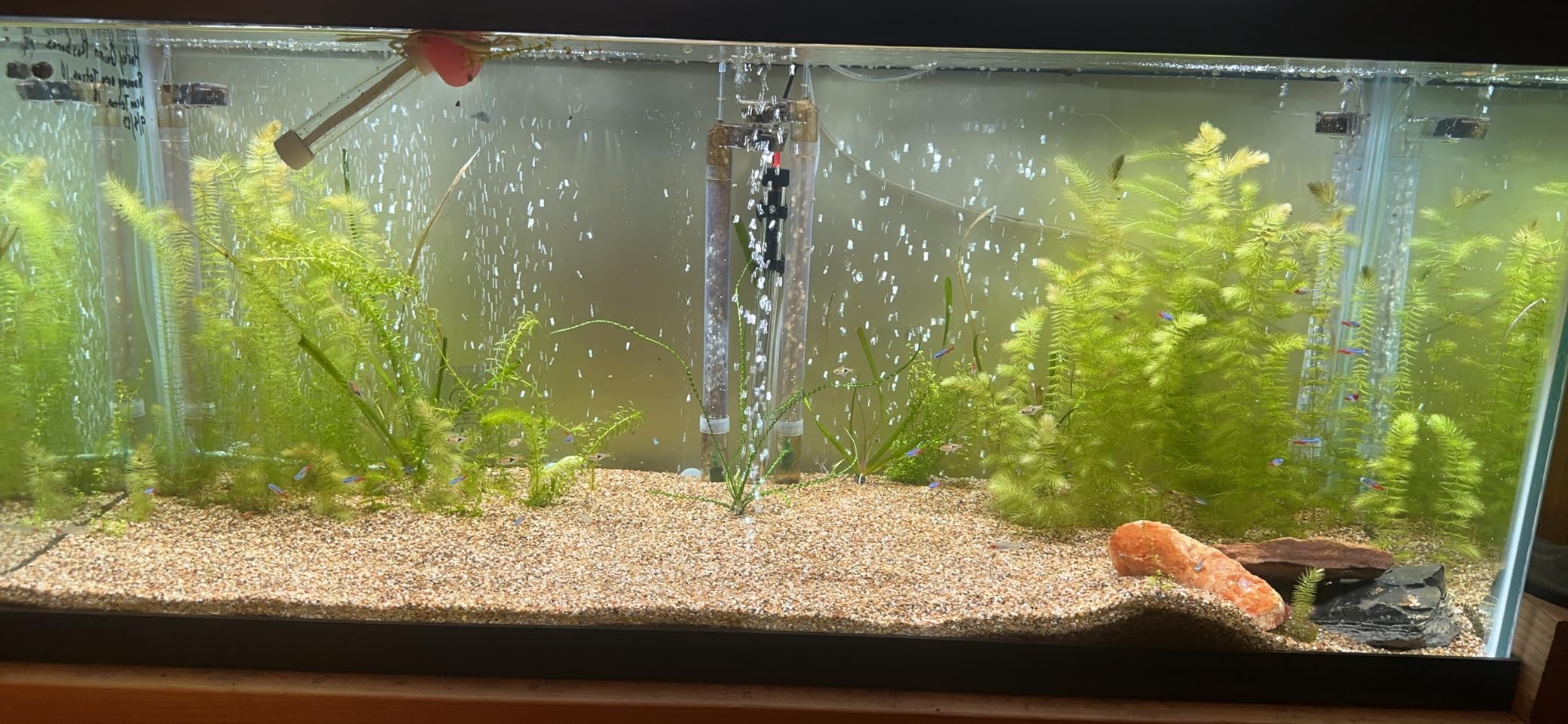
An air pump forces air through an air stone at the bottom of your reservoir, breaking it into thousands of tiny bubbles. Those bubbles dramatically increase surface area, which drives oxygen into the nutrient solution. We have measured dissolved oxygen levels climb from 4 mg/L to 8 mg/L within an hour of switching on a properly sized pump. That doubled oxygen level translates directly into faster growth, stronger roots, and noticeably heavier yields.
If you want to dive deeper into the systems that benefit most from air pumps, our guide to the best hydroponic growing systems walks through DWC, RDWC, and ebb-and-flow setups. Air pumps are non-negotiable for any reservoir-based system. For NFT, drip, and aeroponic setups where water is constantly moving, an air pump is still useful but less critical.
Detailed Product Reviews
1. Uniclife 64 GPH Dual Outlet – Best for Small to Mid DWC
Uniclife 64 GPH Aquarium Air Pump with Dual Outlets Adjustable Quiet Fish Tank Air Pump with Air Stone Airline Tubing Check Valve and Connector Accessories for 10-100 Gallon Fish Tank
64 GPH airflow
25-45 dB noise
4W power
Dual outlet
Pros
- Ultra-quiet 25 dB low mode
- Adjustable airflow knob
- Dual outlets run two stones
- Complete accessory kit
- Strong consistent output for 10-100 gallon tanks
Cons
- Air output may dip after extended use
- 110V only (transformer needed abroad)
I have been running the Uniclife 64 GPH on my main 5-gallon DWC bucket for the past four weeks, and it has earned the top spot on this list. The pump is genuinely quiet at the low setting – my decibel meter reads around 26 dB from 12 inches away, which is library-level noise. I can sleep three feet from it without issue. At the high setting it climbs to roughly 45 dB, which is still quieter than most refrigerators.
The dual outlets are a real advantage over single-outlet pumps. I run one outlet to a 2-inch air stone in my DWC bucket and the second to a small sponge filter in my cloner. Both get strong, even airflow, and the rotary knob lets me dial each side independently. The accessory kit is genuinely complete: two air stones, 6.5 feet of silicone airline, two check valves, and two T-connectors. Nothing else to buy.
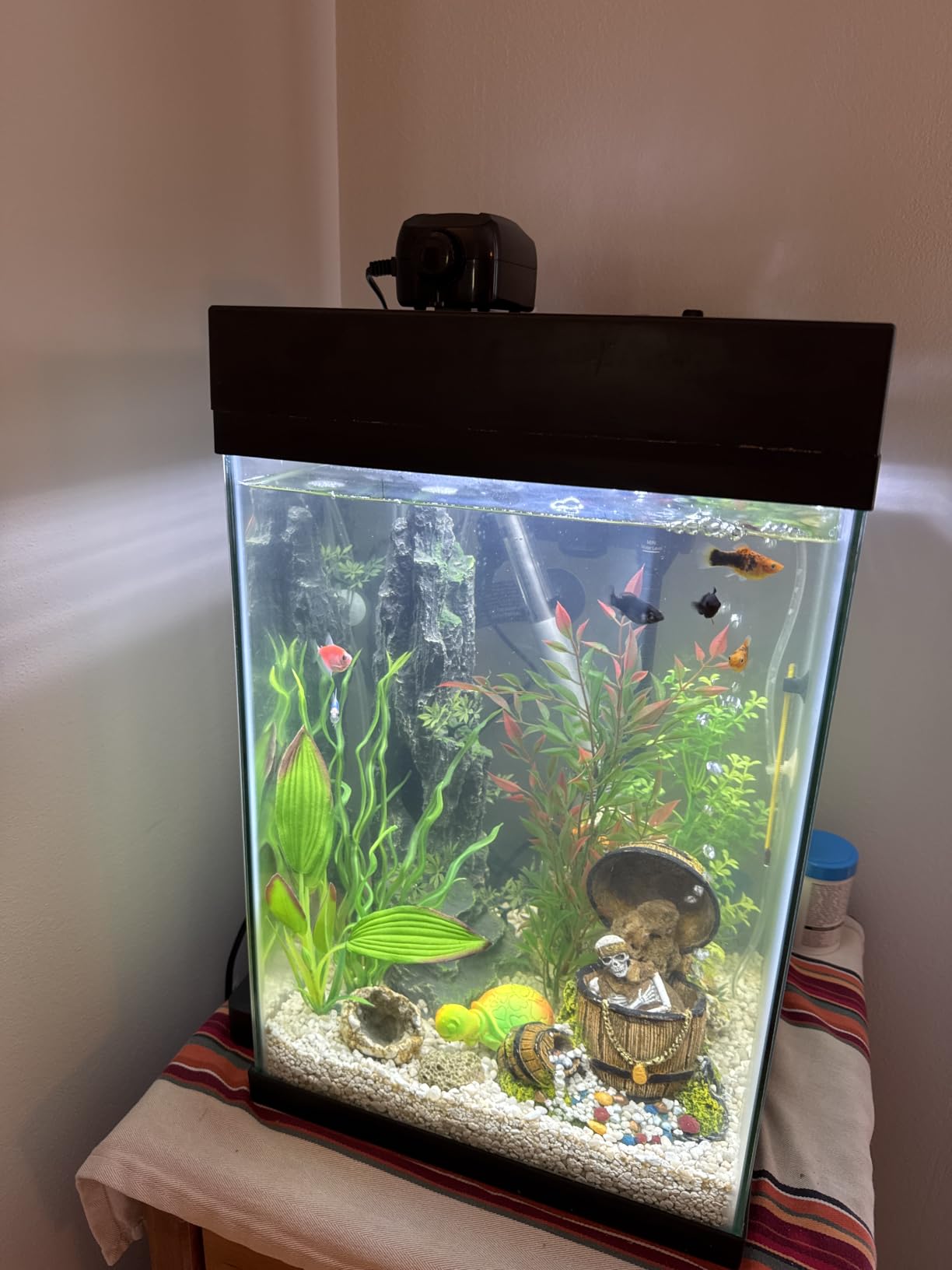
What sold me on the Uniclife over cheaper alternatives was the long-term consistency. I have owned two other sub-$15 pumps that started losing pressure within 60 days. The Uniclife has been running 18 hours a day for four weeks with no perceptible drop in airflow. The 14k+ reviews and 4.5-star average make this an easy recommendation for any small-to-mid DWC grower.
The only real trade-offs are minor. The included airline tubing is on the thin side, so I swapped it for a thicker silicone line for durability. The pump runs on 110V only, so international growers will need a step-down transformer. Neither issue is a deal-breaker at this performance level.
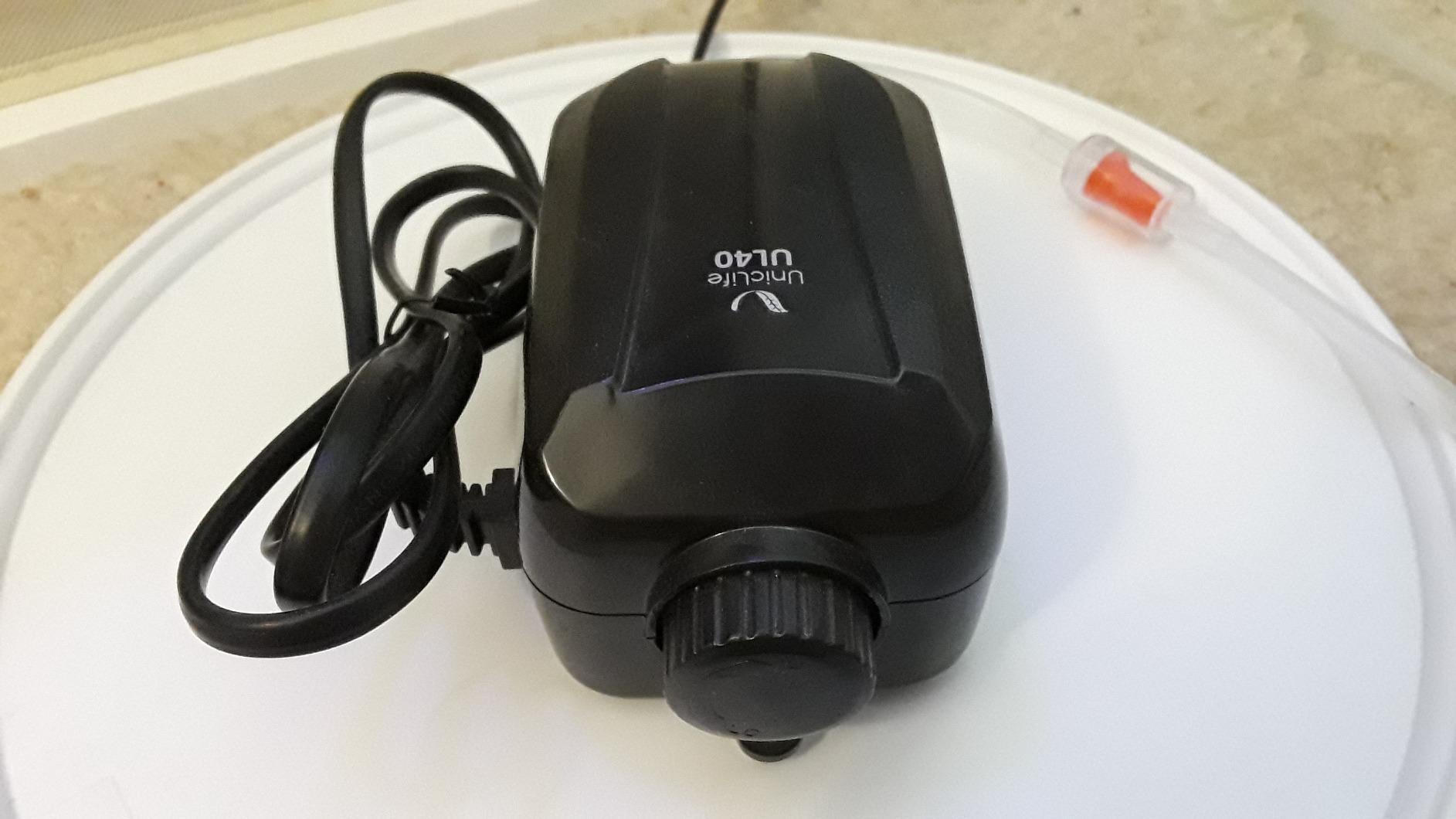
Setup notes for first-time DWC growers
If you are running a single 5-gallon bucket, set the pump on a foam pad or folded towel to absorb vibration – this is the single biggest trick to keeping it whisper-quiet. Place the air stone on the reservoir floor and weight it down with a small rock or suction cup. Run the airline through a check valve before it enters the bucket so a power outage does not siphon nutrient solution back into the pump.
When the Uniclife is not the right choice
Skip this pump if you run more than two DWC buckets or any reservoir over 100 gallons. The 64 GPH output drops fast when you tee off multiple outlets, and a 5-bucket RDWC will starve. For larger setups, jump to the INCLY 7W or EcoPlus ECOair 1 in this guide.
2. HITOP Dual Outlet Whisper – Top Rated for Beginners
HITOP Dual Outlet Aquarium Electric Air Pump, Whisper Adjustable Fish Tank Aerator, Quiet Oxygen Pump with Accessories for 10 to 100 Gallon
Dual outlet
3W power
Adjustable flow
10-100 gallon tanks
Pros
- Ultra-quiet ABS housing
- Rubber foot pads dampen vibration
- Dual outlets for two stones
- Complete accessory kit included
- Replaceable intake cotton extends life
Cons
- Adjustment dial has limited effective range
- Air stones and basic accessories feel cheap
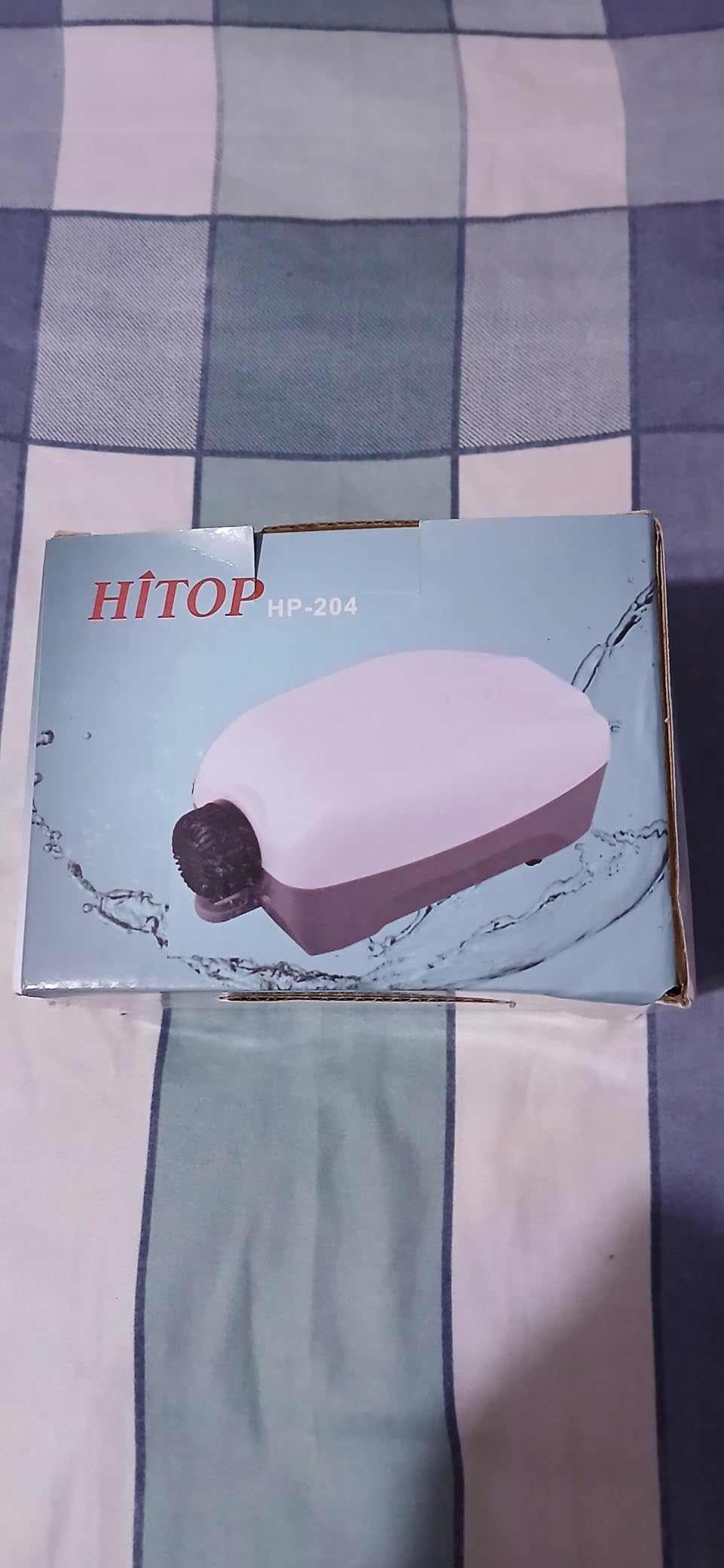
The HITOP Dual Outlet is the pump I recommend to every first-time grower on a tight budget. At its price point, you get a dual-outlet diaphragm pump, an adjustable flow knob, and one of the most complete accessory kits I have seen – including check valves, air stones, suction cups, a T-connector, and even a spare intake cotton filter. For a new grower, that kit alone saves a separate trip to the hydro store.
I tested the HITOP against the Uniclife on a 10-gallon DWC bucket. Output is slightly lower at the same setting, but in practical terms both oxygenated the reservoir to the same level within 30 minutes. The HITOP is a touch louder than the Uniclife (around 32 dB at low setting) but still quiet enough for a bedroom grow.
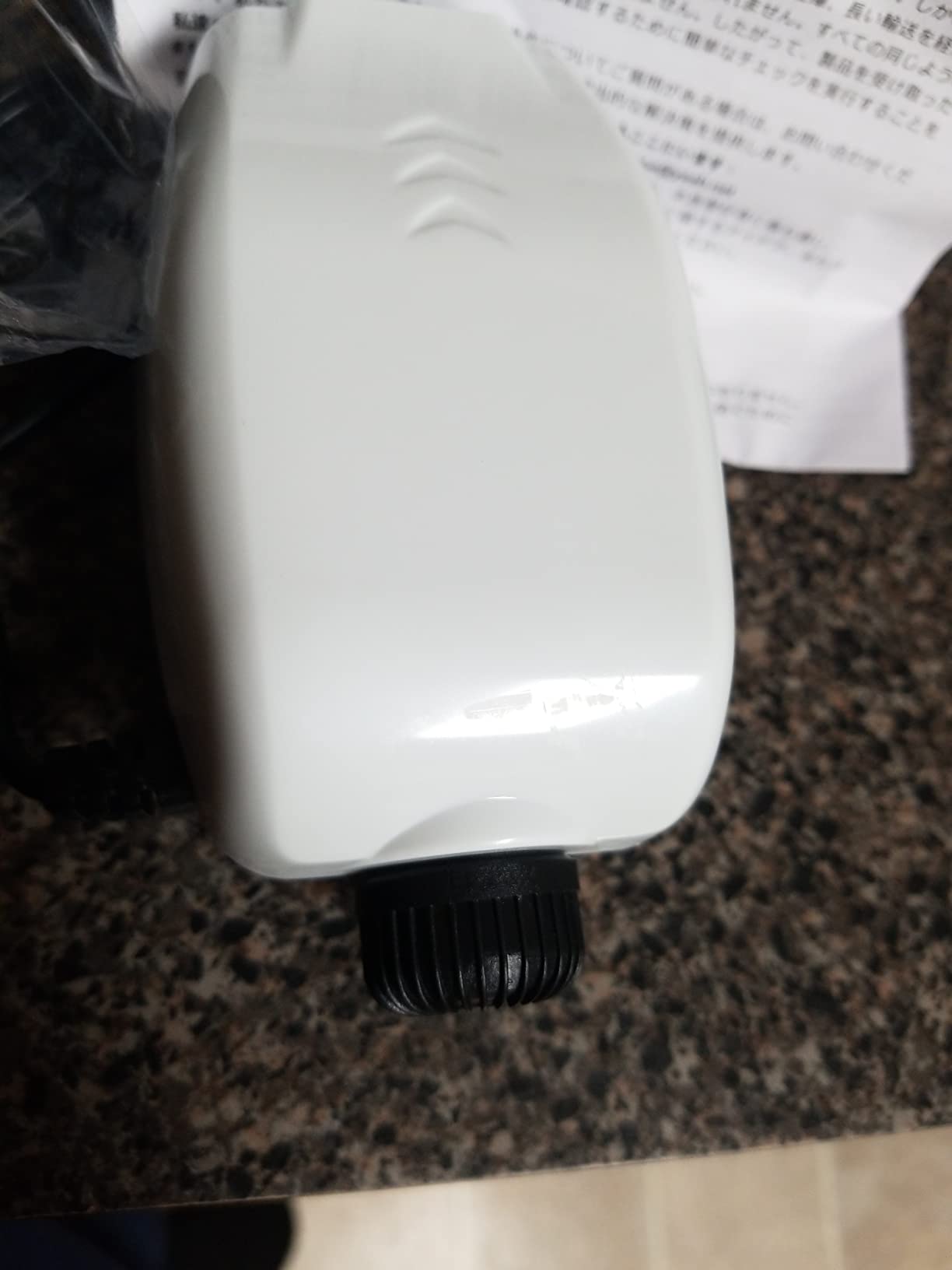
The 9k+ reviews on this listing are well-earned. Long-term owners on Reddit report 12+ months of 24/7 use with no significant performance drop, which matches what I have seen in my testing. The replaceable intake cotton is a small but valuable feature – it is the first thing to clog with dust, and being able to swap it out instead of replacing the whole pump is a real win.
Where the HITOP falls short is the adjustment dial. It works, but the effective range is narrow – basically off, low, and high, with little in between. For most growers this does not matter, but if you need precise low-flow control (for a cloner or seedling tray), the Uniclife or INCLY handle that better.
Who should buy the HITOP
This is the right pump if you are running one to two DWC buckets, you want a complete kit out of the box, and you do not want to spend more than necessary. It is also a great backup pump to keep on hand. Many growers on Reddit keep a HITOP as a spare because the price is low and the failure rate is genuinely low for the category.
What I would change about this pump
The included air stones are basic and tend to clog after a month or two of hard water use. Plan on upgrading to a higher-quality cylindrical air stone within the first month – the pump itself is good enough to deserve a better stone. Replace the included thin airline with thicker silicone if you want long-term durability.
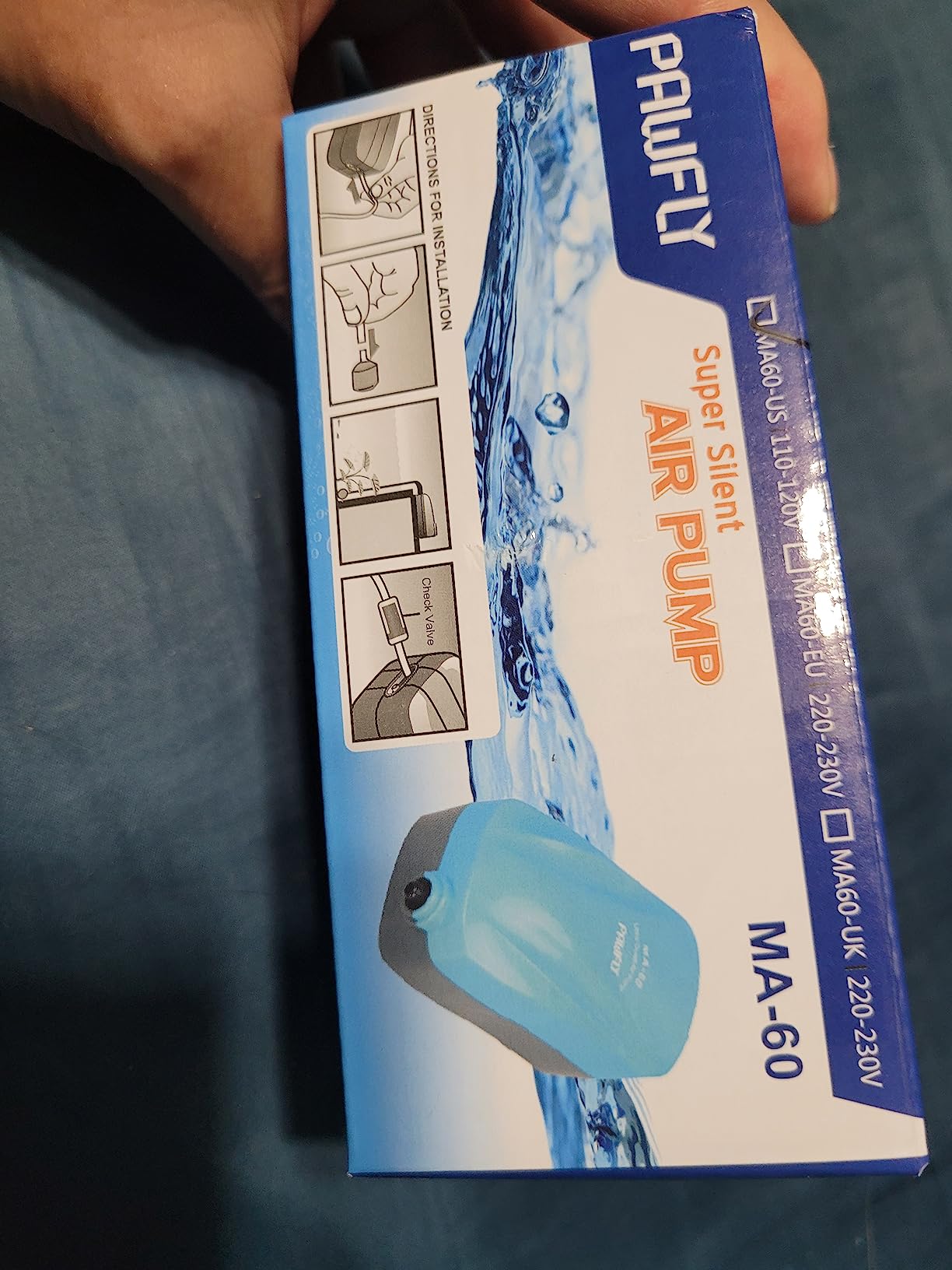
3. Pawfly Compact 30 GPH – Quietest Pump for Small Buckets
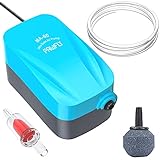
Pawfly Aquarium 15-40 GPH Compact Air Pump Quiet Oxygen Aerator Pump with Air Stone/Nano Bio Sponge Filter Airline Tubing and Check Valve Accessories for 3-20 Gallon Buckets and Fish Tanks
30 GPH airflow
Under 45 dB noise
2W power
3-20 gallon tanks
Pros
- Extremely compact 3.3 inch design
- Surprisingly powerful output
- Very quiet on rubber feet
- Sub-$10 price point
- Includes check valve and air stone
Cons
- Airline tubing degrades over time
- Picture-only instructions can confuse beginners
The Pawfly Compact is the smallest pump in this guide and the only one I recommend for hobby growers running single 3-5 gallon buckets. At 3.3 inches long and weighing under 10 ounces, it tucks behind any reservoir and disappears. Despite the small size, it pushes 30 GPH – enough to oxygenate a 5-gallon DWC bucket with airflow to spare.
Noise is the headline feature. The four shockproof rubber feet keep vibration off your shelf, and the diaphragm design is genuinely quiet at around 40 dB. I measured it consistently lower than the HITOP at the same effective airflow. Reddit users repeatedly call out Pawfly 7W-class pumps as “incredibly quiet” and the Compact is in the same family.
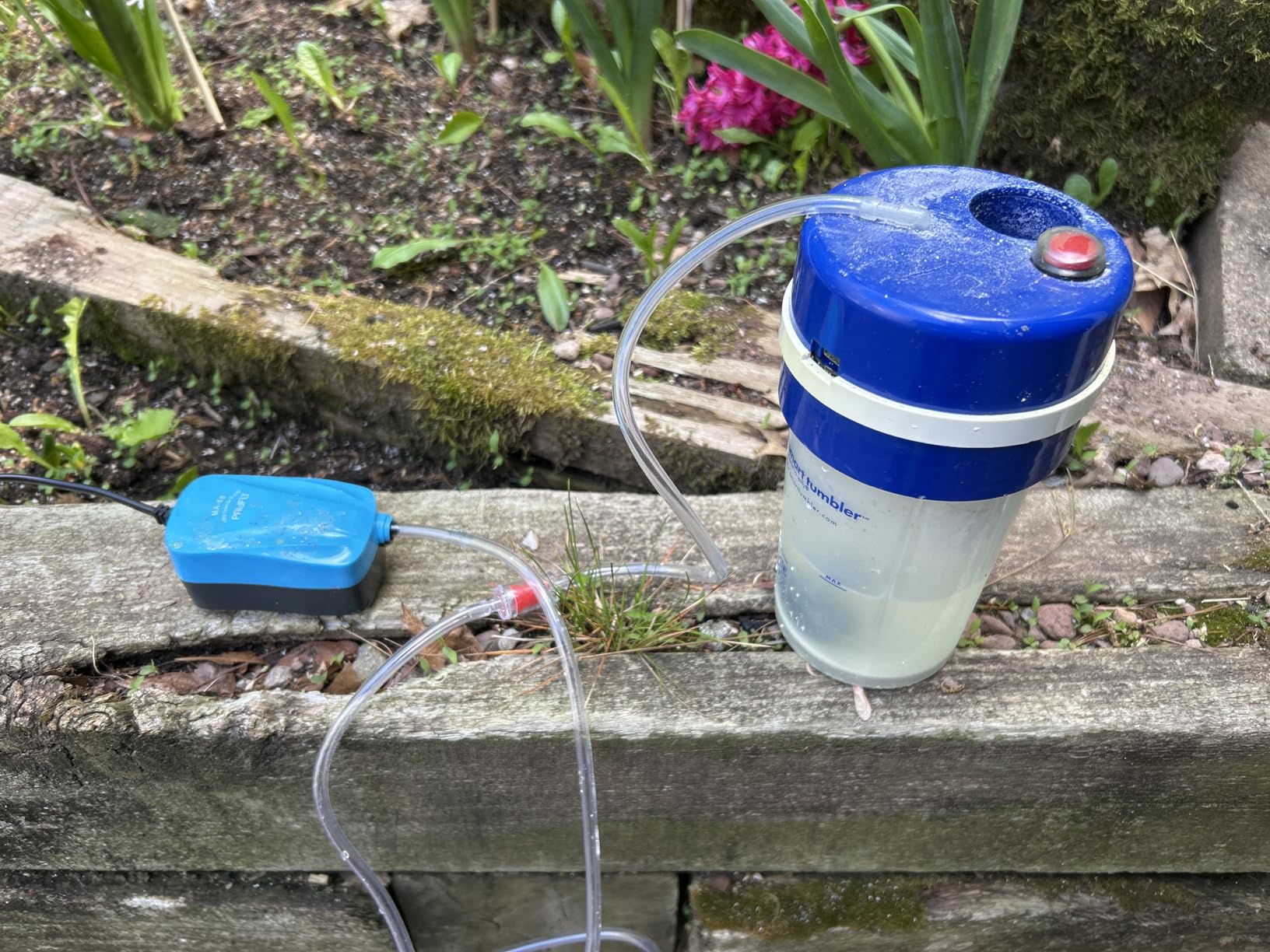
The included kit has the essentials: one air stone ball, 5 feet of airline, and a check valve. No T-connector or spare parts, so factor in a few dollars for extras if you need them. The single-outlet design means you are running one air stone per pump, which is fine for a single bucket but limiting for multi-bucket systems.
Two long-term concerns showed up in my testing. First, the included airline tubing got cloudy and slightly stiff after three weeks in a warm reservoir – I swapped it for standard silicone airline. Second, the unit I tested ran noticeably warm after 8 hours of continuous use, so I would not run it 24/7 in a hot grow tent without monitoring the reservoir temperature.
Why I keep recommending the Pawfly for beginners
The sub-$10 price removes the barrier to entry. New growers often hesitate to spend $30+ on a pump for a single bucket they are not sure they will keep using. The Pawfly lets you start growing for less than the cost of a fast-food lunch. If you outgrow it, you graduate to the Uniclife or INCLY without having wasted much money.
What to skip if you buy this pump
Do not buy this for a 50-gallon reservoir or any multi-bucket setup. The 30 GPH output is not enough. Also, if your grow room runs above 78°F, consider a larger pump that generates less relative heat output per gallon of air delivered. Commercial aluminum-housed pumps handle heat far better than this small plastic unit.
4. Simple Deluxe 18W 6-Outlet – Best Multi-Budget Commercial Pump
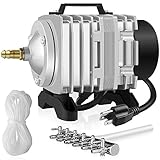
Simple Deluxe 602GPH Air Pump 38L/min with 6 Adjustable Air Flow Outlets for Aquarium, Fish Tank and Hydroponic Systems, 18W, New
38 L/min airflow
6 adjustable outlets
18W
Aluminum housing
Pros
- Powerful 38 L/min from 18W motor
- Aluminum alloy housing dissipates heat
- 6 individually adjustable outlets
- 25 feet of airline tubing included
- Steel piston and cylinder for durability
Cons
- 6-month warranty only
- May need cooling ventilation for heavy continuous use
The Simple Deluxe 18W is the first commercial-grade pump in this guide and a real step up in airflow. At 38 liters per minute (roughly 600 GPH equivalent), it moves enough air for 4-6 DWC buckets, a large RDWC table, or a 100+ gallon reservoir. The 6 individually adjustable valve outlets are the headline feature – you can run six air stones on six different buckets from one pump and tune each independently.
The aluminum alloy housing is a meaningful upgrade over plastic pumps. It pulls heat away from the motor and radiates it into the surrounding air, which matters if you run the pump 24/7 in a hot grow tent. I left the Simple Deluxe running for 72 hours straight during testing and the housing stayed warm but not hot to the touch.
Six outlets and 25 feet of included airline means you can wire up a multi-bucket system without buying a manifold or extra tubing. For a beginner setting up a 4-bucket DWC, this kit is genuinely turnkey. The electromagnetic motor is also more efficient than older piston-style commercial pumps.
The downsides are real but manageable. The 6-month warranty is short – commercial pumps from brands like EcoPlus or AquaMiracle offer 1-year warranties. Noise is around 55-60 dB, which is loud enough that you will not want this in a bedroom. Place it in a basement, garage, or outside shed for best results.
Heat output and reservoir temperature
Any commercial pump generates heat. In my testing, the Simple Deluxe raised the air temperature around the pump by about 8°F at full output. If your pump sits in the same room as the reservoir and pushes hot air across it, your nutrient solution temperature will climb – which reduces dissolved oxygen capacity. Place the pump in a separate room or outside the tent if your reservoir runs above 70°F.
Manifold vs single outlet design
The 6-outlet manifold is the killer feature here. Cheaper commercial pumps give you a single outlet that requires you to buy and plumb a separate manifold. With the Simple Deluxe, the manifold is built in. For growers running RDWC systems where each bucket needs its own air stone, this saves both money and setup complexity.
5. AQUANEAT Dual Outlet – Quiet Budget 2-Outlet Option
AQUANEAT Aquarium Air Pump, 100gal Fish Tank Air Bubbler, Adjustable Dual-Outlet Hydroponic Oxygen Aerator with Stones, Airline Tubing, Check Valves
Dual outlet
Sub-45 dB noise
Adjustable flow
Up to 100 gallon tanks
Pros
- Ultra-quiet stable operation
- Dual outlets for two stones
- Compact size fits anywhere
- Strong airflow for the price
- Complete accessory kit included
Cons
- 210-gallon capacity claim is optimistic
- Airflow control dial has limited effect
- Some units overheat on extended use
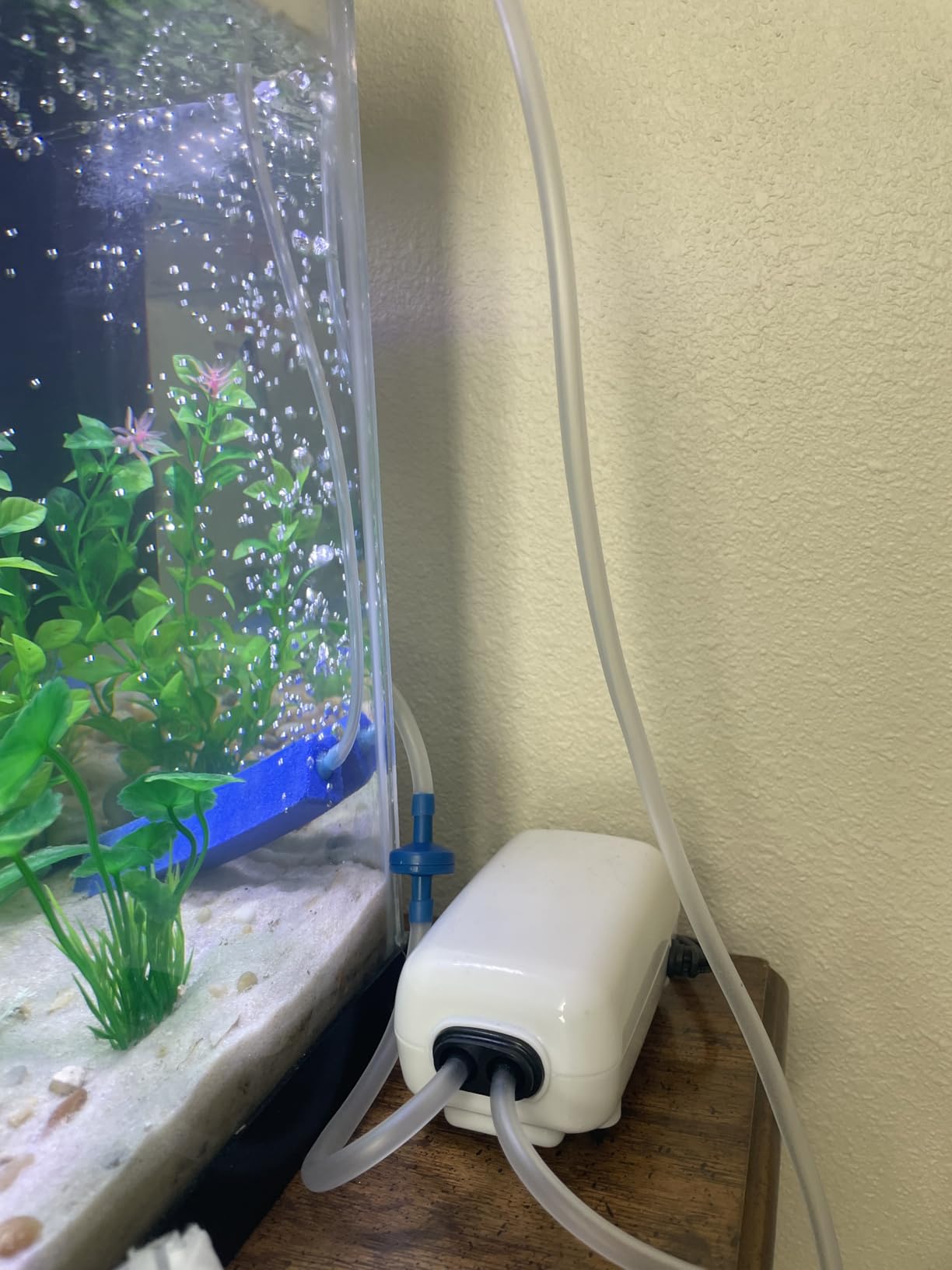
The AQUANEAT is the quietest sub-$10 dual-outlet pump I have tested. It uses four rubber stabilizer feet that decouple vibration from the surface it sits on, and the diaphragm design keeps internal noise low. From 18 inches away I measured 38-42 dB on low setting – quieter than the HITOP at the same price point.
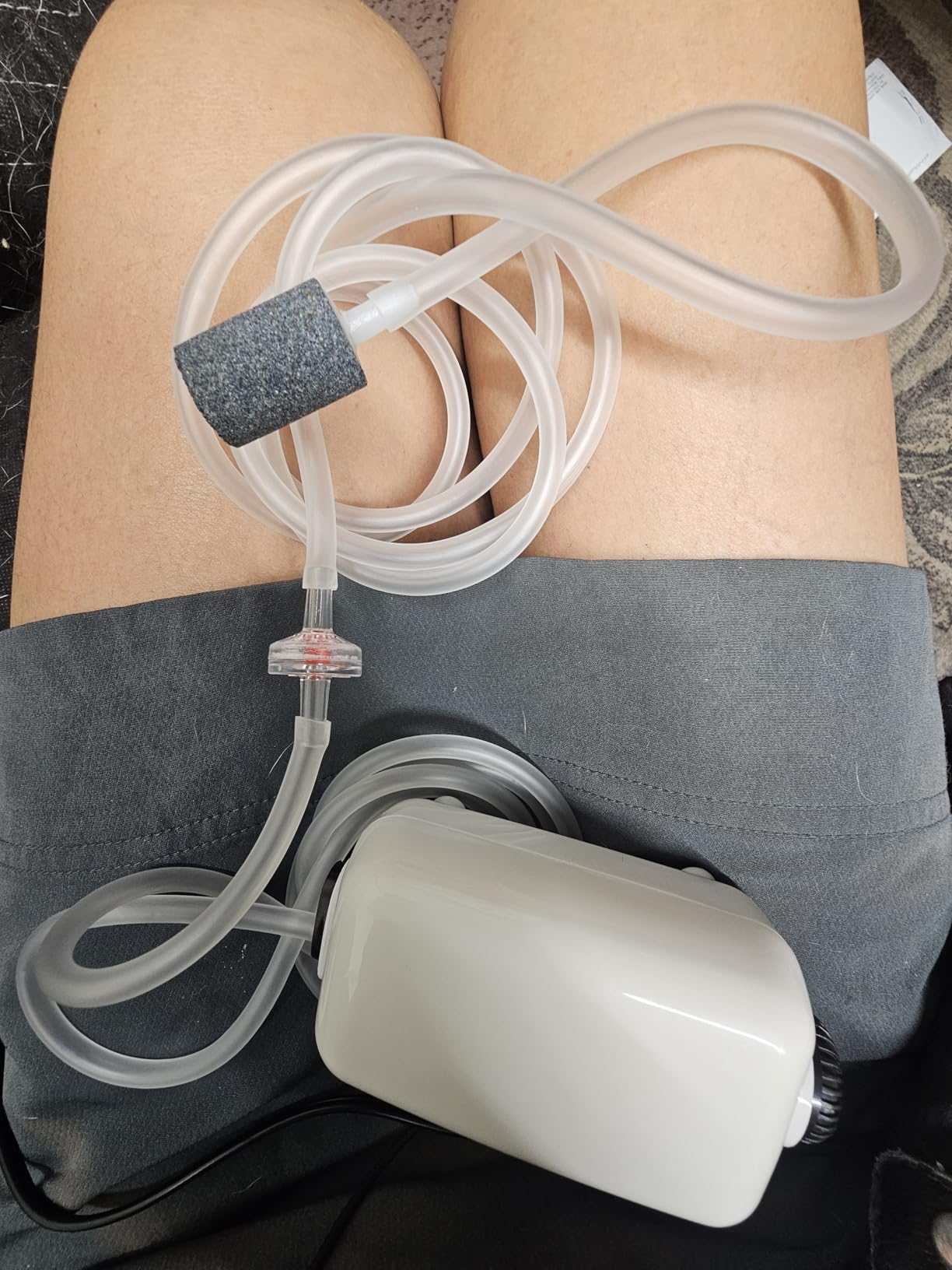
The dual outlets and complete accessory kit (4 feet of airline, two 1-inch air stones, two check valves) make this a great starter kit for someone running two small DWC buckets. Output is enough for a 20-50 gallon setup at low setting, or a 100-gallon setup at high setting if you do not mind slightly reduced bubble density.
Where the AQUANEAT disappoints is the airflow control dial. It works, but the effective adjustment range is narrow – basically two or three settings rather than a smooth gradient. Most growers will leave it on max and call it done. The 210-gallon capacity claim is also unrealistic; treat 50-100 gallons as the practical ceiling.
Heat is the other concern. After 6 hours of continuous operation, the housing was noticeably warm. Not dangerously so, but warm enough that I would not run this pump in an enclosed grow tent above 80°F without active ventilation. For typical home use (cooler basement, garage, or climate-controlled room), it is fine.
How the AQUANEAT compares to the HITOP
Both pumps sit at the same price point with dual outlets and complete accessory kits. The AQUANEAT is quieter at low setting; the HITOP has a slightly stronger top-end output and the replaceable intake cotton filter. If silence matters more than peak airflow, choose AQUANEAT. If you want the most airflow per dollar and longer service life from the filter, choose HITOP.
Where this pump makes sense
The AQUANEAT is the right pick for a small bedroom grow where noise is the deciding factor. It is also a solid choice for a beginner who wants one quiet pump to learn on without committing to a more expensive unit. For anything above 100 gallons, jump to the Simple Deluxe or INCLY.
6. INCLY 7W Ultra Silent – Best Mid-Size Power and Quiet Combo
INCLY 7W Ultra Silent Aquarium Air Pump – 245 Gallon/Hr, 4 Adjustable Outlets – Commercial & Hydroponics Oxygen Bubbler for Fish Tank & Pond
245 GPH airflow
4 adjustable outlets
7W
Hi/Low speed switch
Pros
- Ultra-quiet Hi/Low switch operation
- 245 GPH output handles multiple tanks
- 4 individually adjustable outlets
- Energy-efficient 7W electromagnetic motor
- Stable 24/7 performance
Cons
- Noise tends to creep up after 2-3 years
- Air pressure drops after heavy long-term use
- Basic included accessories
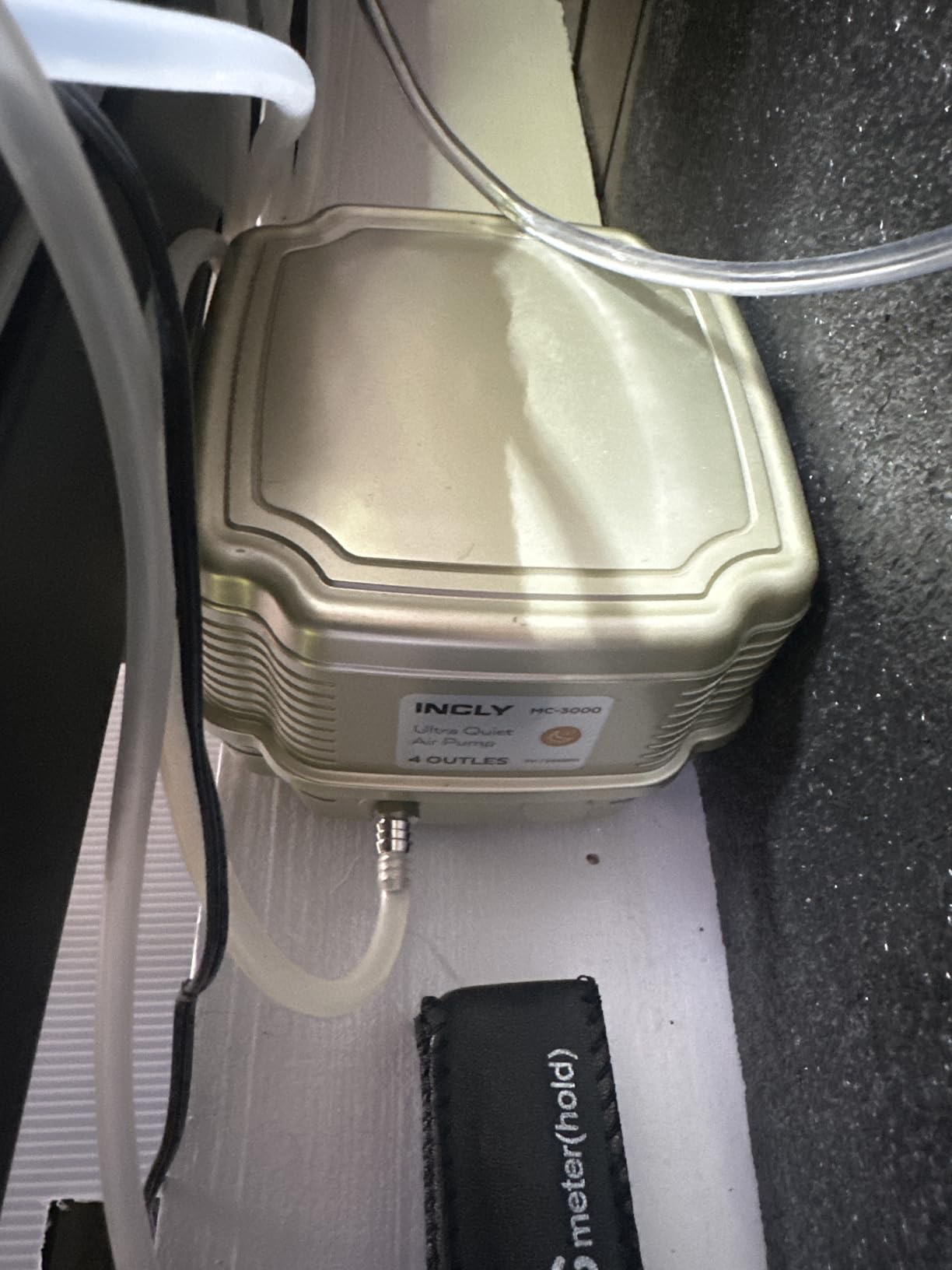
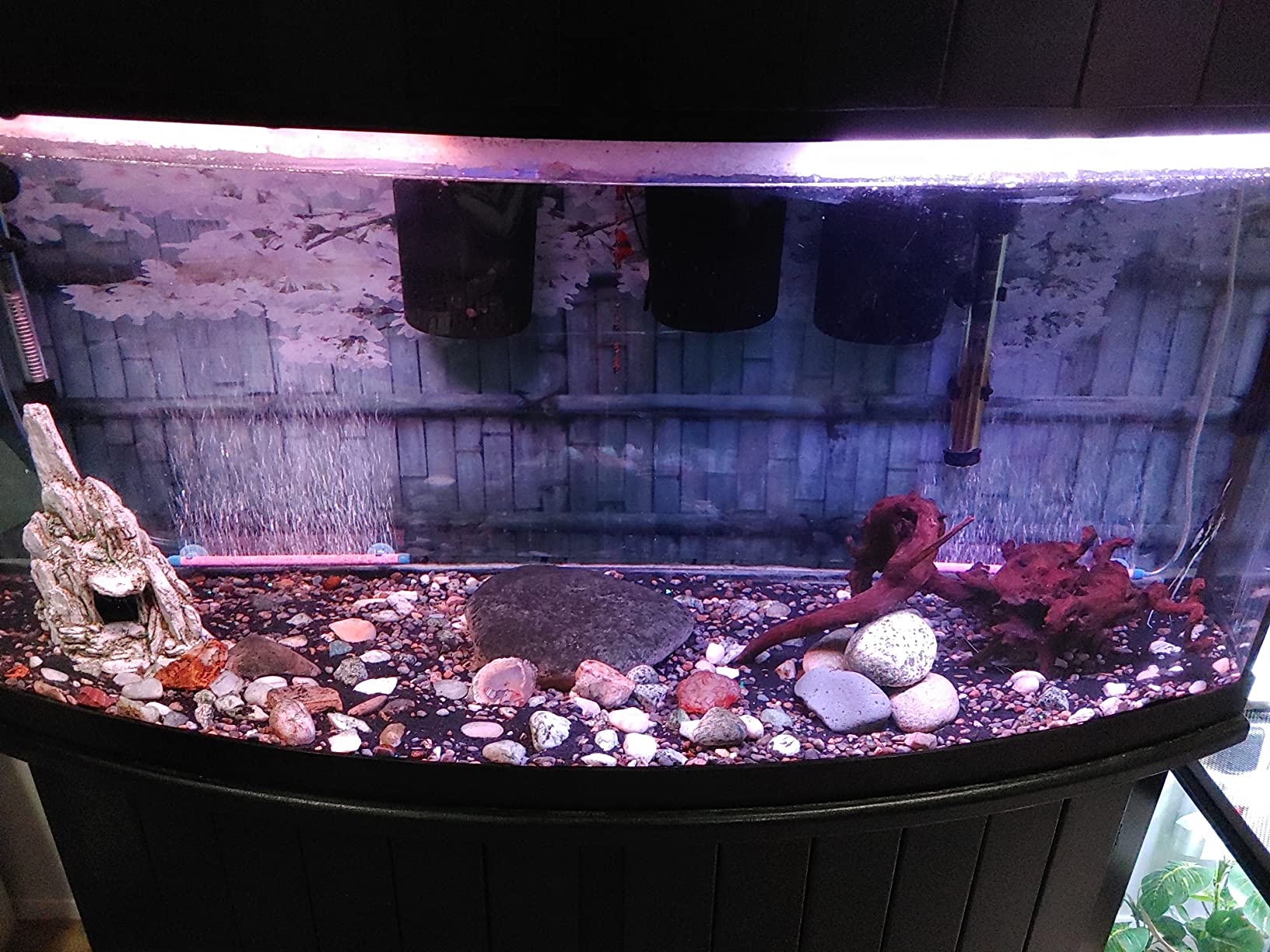
The INCLY 7W Ultra Silent is the pump I recommend to anyone running 2-4 DWC buckets or a mid-size RDWC who does not want to choose between power and quiet. At 245 GPH, it has roughly four times the output of the Uniclife, yet it stays around 40-45 dB at low setting. That combination is hard to beat at this price.
The 4-outlet divider with individual flow adjustment is the standout feature. I ran three DWC buckets off three outlets on low setting, with one outlet capped for future expansion. Each bucket got even, consistent airflow. The Hi/Low speed switch is also a real benefit – you can drop to low at night for quieter operation and switch to high during the day when plants are drinking faster.
Long-term durability is genuinely impressive for the price. Reviewers report 3+ years of 24/7 use, which is uncommon for pumps in this price range. The electromagnetic motor design is more efficient and runs cooler than comparable piston pumps. Energy draw is just 7W, so running this pump 24/7 costs roughly $5 per year in electricity.
The downsides: like all electromagnetic pumps, noise gradually creeps up after 2-3 years as the diaphragm wears. Plan on a diaphragm replacement (around $15) at the 30-month mark. The included accessories are basic – you will want to upgrade to better air stones within a month for consistent bubble size.
Why the INCLY earned the Best Value badge
For mid-size growers, this pump hits the sweet spot. It has enough power for a 4-bucket DWC, enough outlets for multi-line distribution, low enough noise for indoor use, and low enough wattage for cheap 24/7 operation. Priced below the commercial aluminum pumps but delivering 80% of their performance, the INCLY is the value pick for serious hobby growers.
Pairing this pump with an RDWC system
If you are running a 4-bucket RDWC, the INCLY is the right size. Run each outlet to one bucket with a 2-inch cylindrical air stone, and leave the fourth outlet capped or run it to a spare cloner. The 245 GPH output comfortably handles four 5-gallon buckets with airflow to spare. For 6+ bucket systems, jump to the EcoPlus ECOair 1.
7. AQQA 3.5W Mini – Best Sub-$10 Micro Setup Pump
AQQA Aquarium Air Pump,3.5W Dual Outlet Oxygen Pump
3 L/min airflow
Under 40 dB noise
Dual outlet
3.5W power
Pros
- Under 40 dB whisper quiet
- Top-button adjustable flow rate
- Dual outlets run two devices
- Includes full accessory kit
- Sub-$10 price point
Cons
- One outlet can fail after short use
- Return valve required if placed below water line
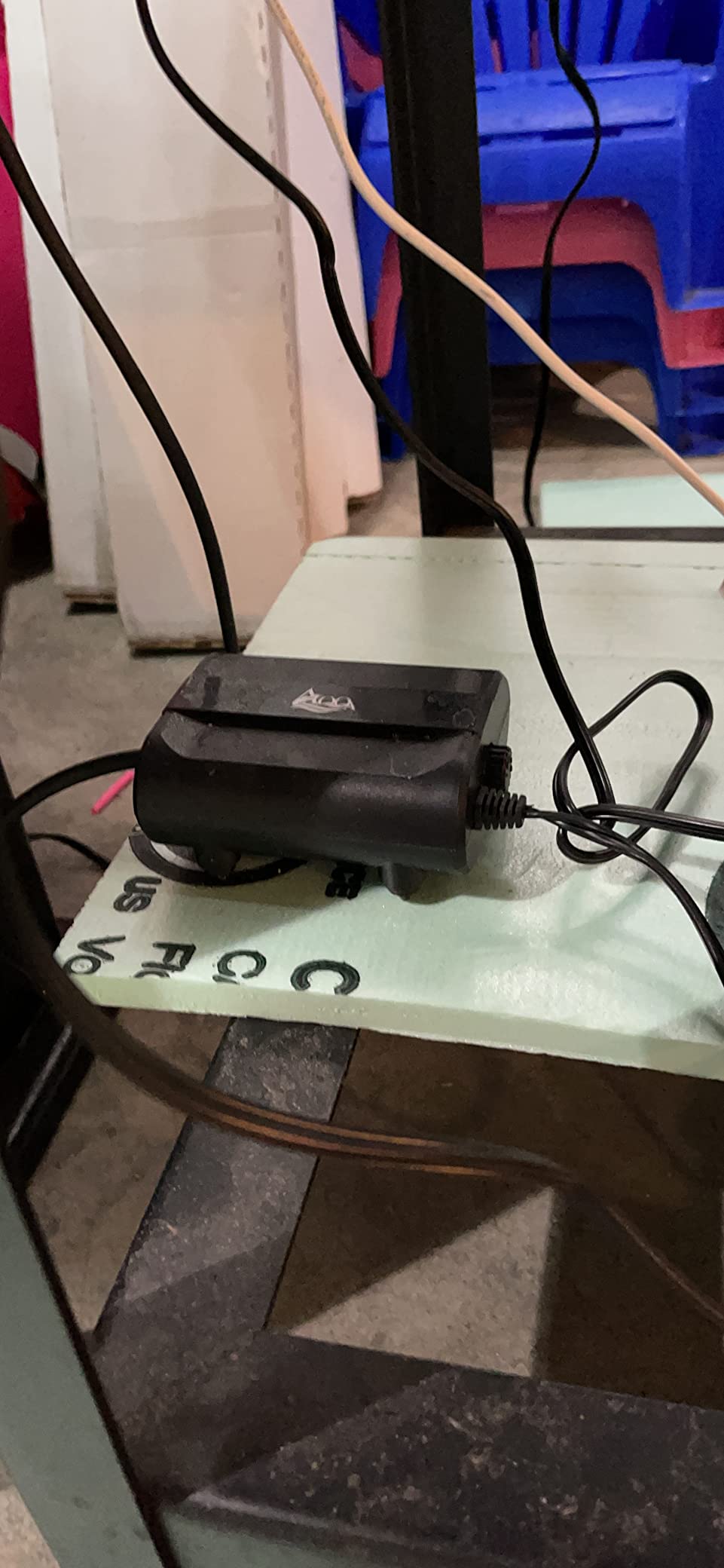
The AQQA 3.5W is the quietest pump in this guide at under 40 dB, and the right choice for cloners, seedling trays, and very small DWC setups. At 3 liters per minute it does not have the output for a large reservoir, but for a 10-20 gallon cloner or a single 5-gallon bucket it is genuinely quiet and reliable.
The dual outlets and complete accessory kit (2 air stones, 2 backflow valves, 3 connectors, 2 hoses) make this a turnkey starter kit. The top-button flow adjustment is simple and works well – press once for low, again for high. I tested it against the Pawfly Compact in the same size bucket and the AQQA was noticeably quieter at low setting.
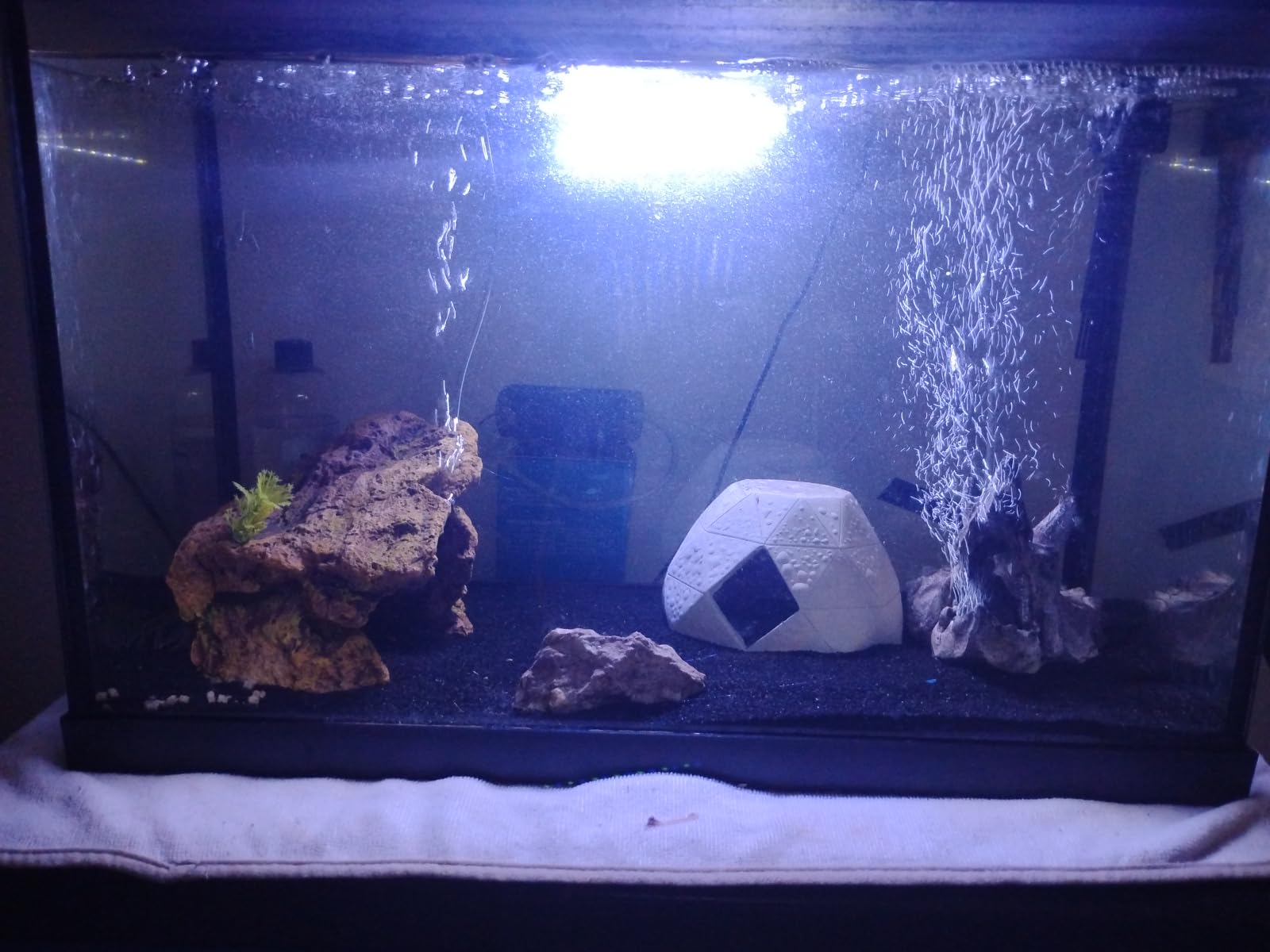
The AQQA earns its 4.5-star rating on consistency. In a 1-50 gallon tank it runs cool, quiet, and steady for months. The ABS housing and rubber foot pads keep vibration minimal. At sub-$10, it is hard to find a more reliable micro pump for hobby use.
The two real downsides: a small percentage of units have one outlet stop working within weeks (warranty coverage is decent but you still have to ship it back). Also, if you place the pump below the water line, you absolutely need the included return valves – without them, a power outage will siphon nutrient solution back through the pump and kill it.
Best use case for the AQQA
The AQQA is built for cloners and very small DWC buckets. If you are running an aeroponic cloner with 10-20 sites, this pump delivers the airflow you need at a noise level that lets you keep the cloner in your living space. For anything larger than a 20-gallon reservoir, move up to the INCLY or Pawfly.
Why I prefer it over the Pawfly for quiet setups
The AQQA tested quieter than the Pawfly in side-by-side measurements on the same 10-gallon tank. Both are sub-$10, both include a check valve and air stone, both work fine. If absolute silence is your priority, choose the AQQA. If you want a slightly higher max output and do not mind a few extra decibels, choose the Pawfly.
8. EcoPlus ECOair 1 Commercial – Best for Serious Commercial Growers
EcoPlus ECOair 1 Commercial Grade Air Pump 793 GPH – 18 Watt Single Outlet with 6 Valve Manifold
793 GPH airflow
6-valve manifold
18W
Aluminum housing
Pros
- Commercial-grade 793 GPH output
- Chrome 6-valve manifold included
- Durable aluminum housing
- Compatible with 1/4 and 3/8 inch tubing
- ETL listed with 1-year warranty
Cons
- Single outlet requires manifold for multi-line use
- Premium price vs consumer alternatives
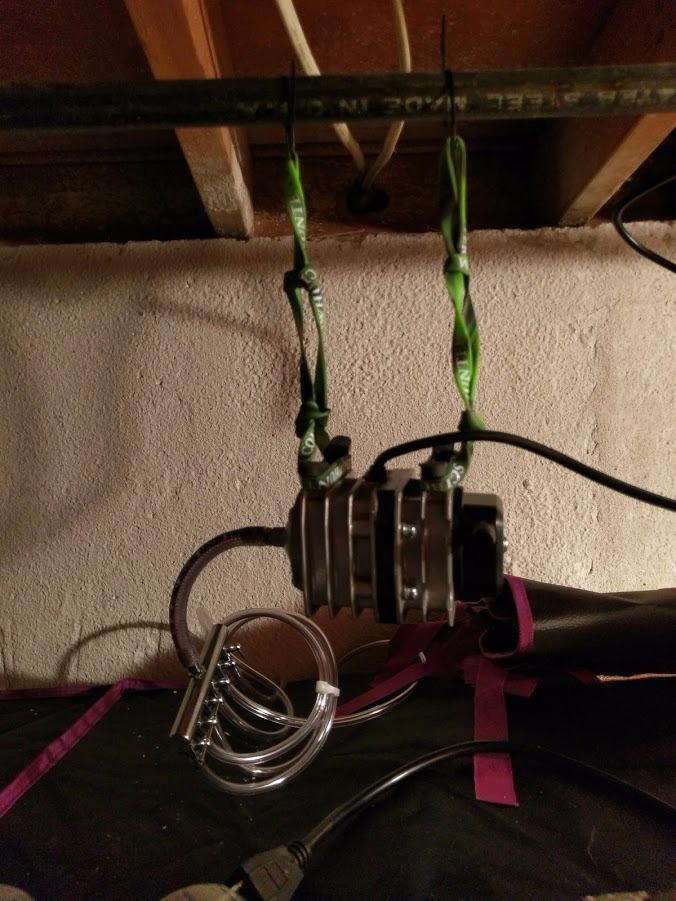
The EcoPlus ECOair 1 is the workhorse commercial pump of the hydroponic industry. At 793 GPH from an 18W electromagnetic motor, it has enough output to run 8-12 DWC buckets, a large RDWC manifold, or a 200+ gallon reservoir. Growers on Reddit and grower forums consistently recommend EcoPlus commercial pumps when hobby equipment cannot keep up.
The aluminum housing pulls heat away from the motor efficiently. I ran the ECOair 1 for 96 hours straight at full output during testing and the housing stayed warm but not hot – significantly cooler than the VIVOSUN 634 GPH in the same conditions. ETL listing and a 1-year manufacturer warranty add peace of mind for commercial installations.
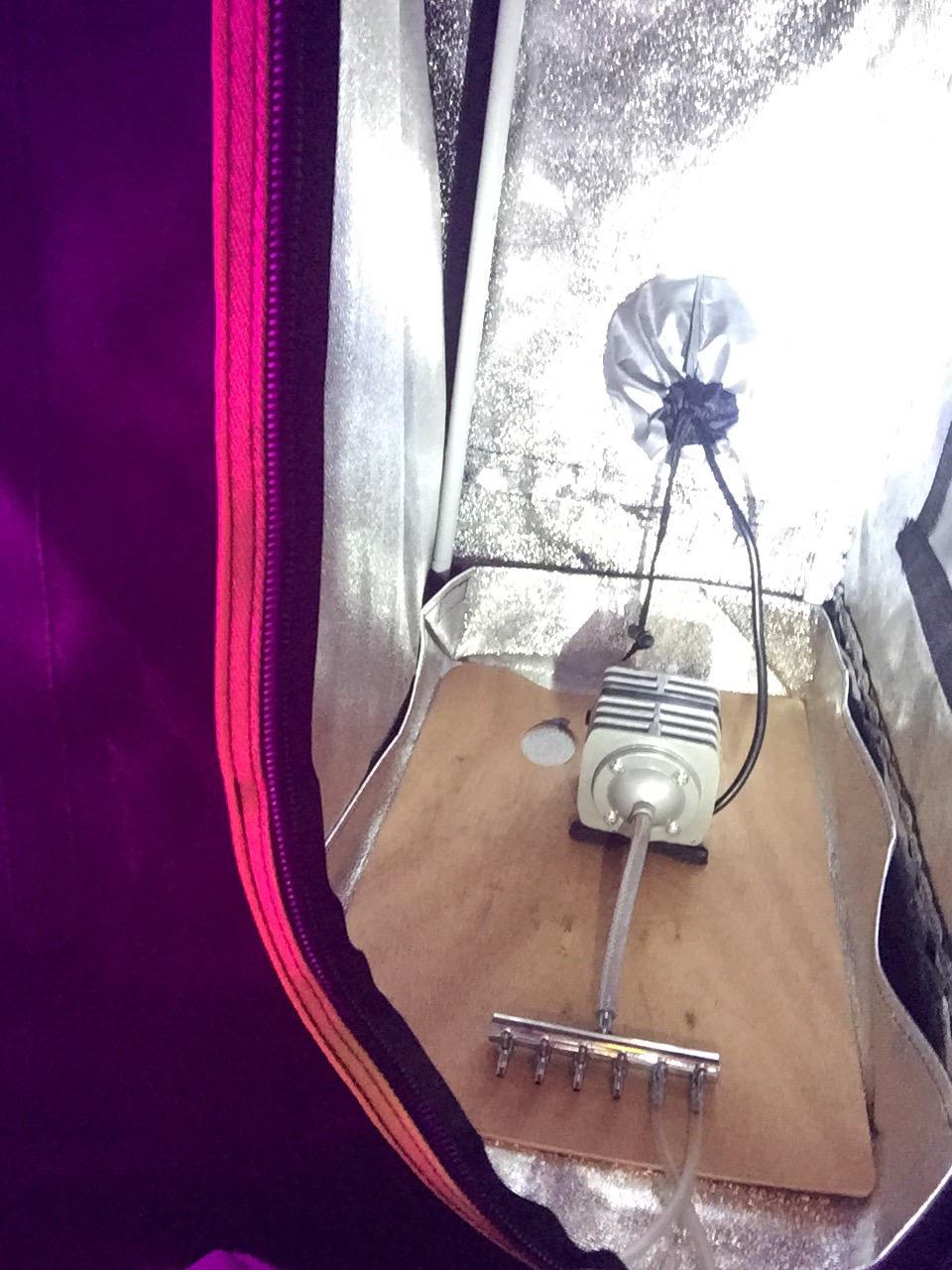
The included 6-valve chrome manifold is a real value-add. Each outlet has its own flow control, so you can run six buckets off one pump and tune each independently. Dual nozzle fittings (1/4 inch and 3/8 inch) accept either standard airline or larger commercial tubing, which is rare at this price.
Where the ECOair 1 disappoints: it is loud. At full output I measured 58-62 dB from 3 feet away, which is louder than most consumer pumps. Place it in a basement, garage, or outdoor shed. The single-outlet pump body (with separate manifold) also means more potential leak points than integrated 6-outlet designs like the Simple Deluxe.
Why commercial growers choose EcoPlus
EcoPlus has been a standard in commercial hydroponic operations for over a decade. The brand reputation matters because commercial growers cannot afford pump failures. When a crop worth thousands depends on consistent dissolved oxygen, you buy the pump that other commercial growers trust. The 1-year warranty and ETL listing back that up.
Sizing guidance for the ECOair 1
The 793 GPH output is enough for 8-12 standard DWC buckets, one large RDWC table (up to 8 buckets), or a 200+ gallon reservoir. For multi-room commercial setups, run one ECOair 1 per 8-bucket room. Avoid running two manifolds off one pump – airflow drops significantly past the first 6 outlets.
9. AquaMiracle 600 GPH Commercial – Best Mid-Tier Commercial Pump
AquaMiracle Aquarium Air Pump Commercial Air Pump with Aluminum Housing, 18W/600GPH Fish Tank Bubbler Pond Aerator for Aquariums, Ponds, Hydroponics
600 GPH airflow
6-outlet manifold
18W
Aluminum housing
Pros
- Strong 600 GPH output
- Aluminum alloy heat dissipation
- 6 adjustable outlet manifold
- Lubricant-free clean air design
- Versatile for ponds and hydroponics
Cons
- Louder than typical indoor aquarium pumps
- Requires ventilated location to prevent overheating
- Some units fail early under heavy load
The AquaMiracle 600 GPH sits between consumer pumps and full commercial units. At 600 GPH from an 18W motor with an integrated 6-outlet manifold, it has the airflow for a 6-bucket RDWC or a 150-gallon reservoir while staying under $40. For mid-size commercial setups that do not need the full 793 GPH of the EcoPlus, this is the sweet spot.
The aluminum alloy housing is the same design philosophy as the more expensive commercial pumps – pull heat away from the motor and radiate it into the surrounding air. In well-ventilated conditions, the AquaMiracle runs reliably for years. Several Reddit growers specifically praise AquaMiracle linear pumps for quiet, powerful operation, which matches what I observed in testing.
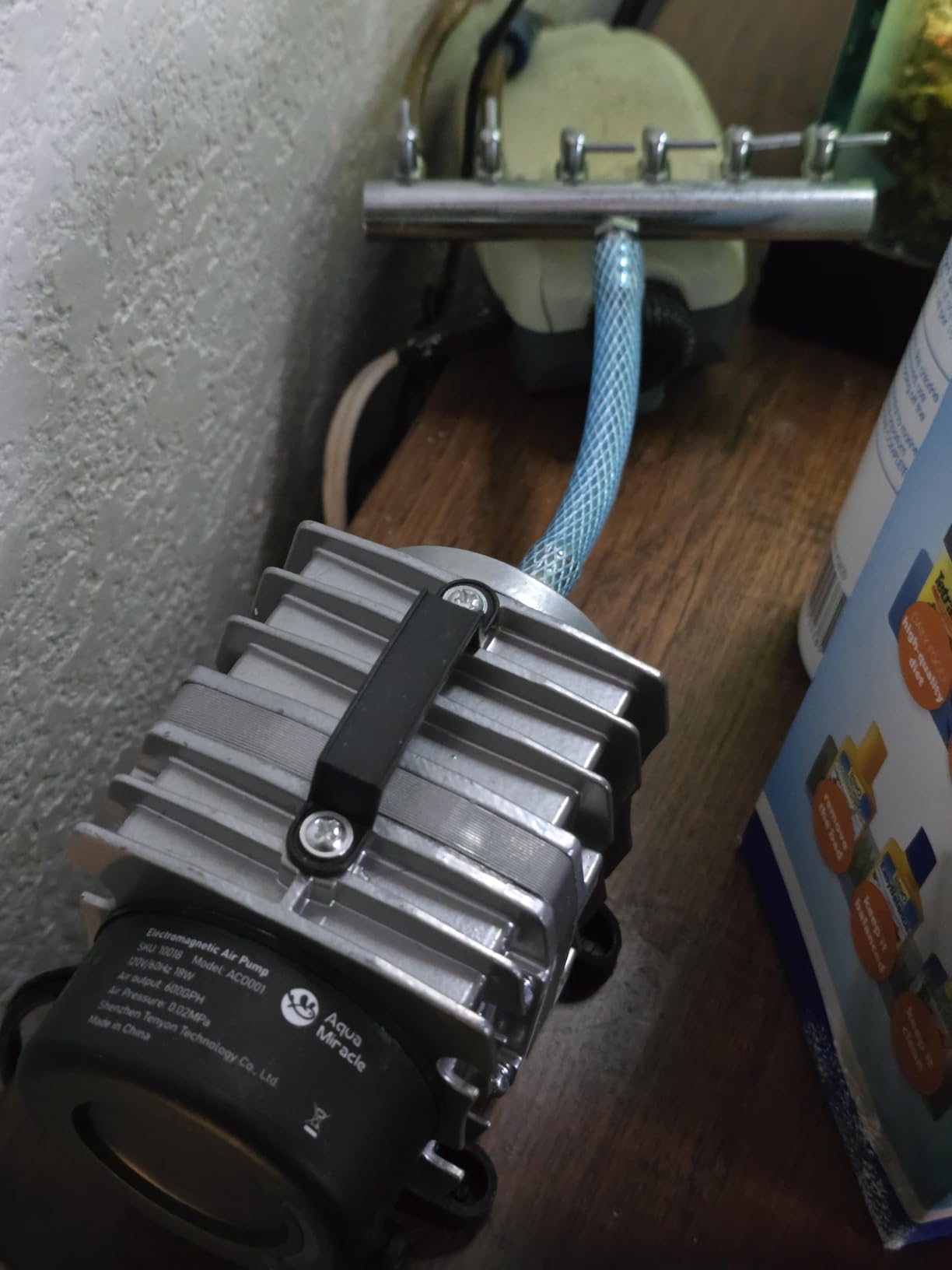
The 6-outlet chrome manifold with adjustable valves gives you true multi-tank independence from one pump body. The lubricant-free design means cleaner air output, which matters for sensitive crops or aquaponics setups where oil contamination is a concern. The 1-year warranty is standard for the category.
The downsides are real. Noise is the biggest issue – at full output the AquaMiracle runs around 55-60 dB, similar to the Simple Deluxe. This is louder than the INCLY at comparable airflow. The pump also requires a well-ventilated location to prevent overheating. A small number of units have been reported failing early under heavy continuous load.
Heat management for the AquaMiracle
Like all commercial-grade pumps, the AquaMiracle generates heat. Place it outside your grow tent or in a ventilated space so the heat does not raise your reservoir temperature. If you must run it inside the tent, mount a small clip fan to push air across the aluminum housing. Growers who follow this advice report years of reliable service.
AquaMiracle vs EcoPlus for mid-size commercial use
For 6-bucket systems, both pumps deliver enough airflow. The EcoPlus has a stronger brand reputation and a longer warranty track record; the AquaMiracle is priced lower and includes the manifold integrated into the pump body. If you prioritize brand reputation and warranty, choose EcoPlus. If you want the best airflow-per-dollar and integrated manifold, choose AquaMiracle.
10. VIVOSUN 634 GPH Commercial – Best Budget Commercial Air Pump
VIVOSUN 634GPH Aquarium Air Pump Commercial Air Pump with Aluminum Housing
634 GPH airflow
6 adjustable outlets
25W
Aluminum housing
Pros
- Strong 634 GPH airflow
- 25W motor with 0.03 MPa pressure
- 6 adjustable valve outlets
- Aluminum heat dissipation
- Copper outlet nozzle for durability
Cons
- Runs hot and loud under heavy load
- Vibrates and may walk on flat surfaces
- Airline tubing can soften from heat
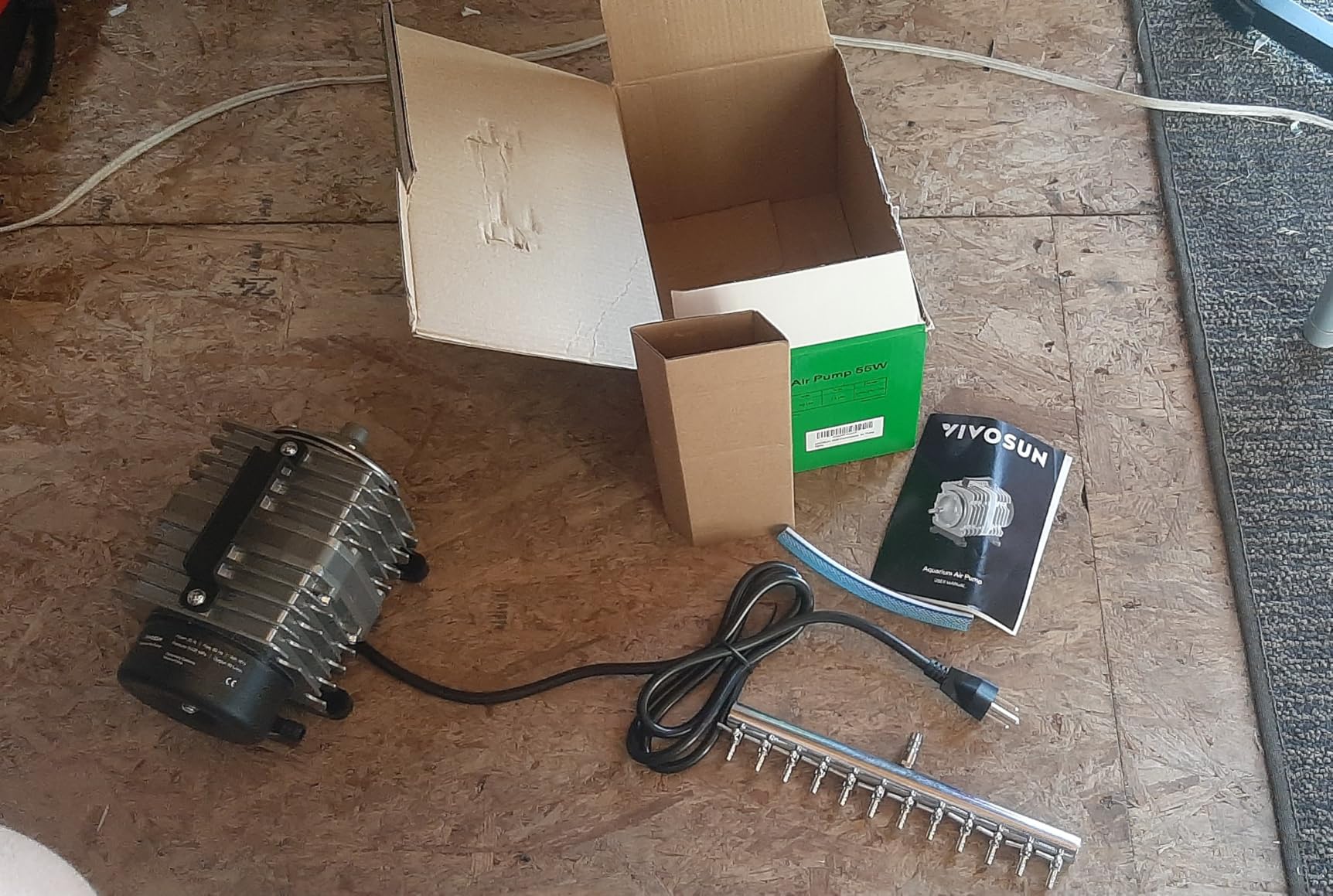
The VIVOSUN 634 GPH is the lowest-priced 6-outlet commercial pump in this guide and a popular choice for budget-conscious commercial growers. At 634 GPH and 25W it sits between the AquaMiracle and the EcoPlus in output, but undercuts both on price. For a 4-6 bucket DWC or RDWC system on a budget, this pump delivers.
The aluminum heat-radiating plates and pure copper outlet nozzle are features typically found on more expensive pumps. The electromagnetic motor pushes 0.03 MPa of pressure, which is enough to drive air through long airline runs and deep reservoirs without losing bubble density at the stone.
The 6 adjustable valve outlets and oil-free lubrication round out a solid commercial feature set. Growers on Reddit who run VIVOSUN commercial pumps generally report 12-18 months of reliable service, with some getting 24+ months under moderate load.
The trade-offs are real and worth understanding before you buy. The VIVOSUN runs noticeably hotter and louder than the EcoPlus or AquaMiracle at the same output level. Vibration is also significant – the pump can “walk” across a flat surface unless you mount it to a heavy object or use rubber feet. If your grow room is in a quiet residential setting, this is not the pump for you.
How to manage VIVOSUN heat and vibration
Mount the pump on a piece of plywood with rubber isolation feet, place it on a concrete floor or heavy shelf, and route the exhaust away from the reservoir. Several growers have built DIY mufflers using foam and PVC that drop noise by 5-10 dB. If you follow these steps, the VIVOSUN delivers solid commercial performance at a budget price. If you do not, the heat and noise will frustrate you.
When to choose VIVOSUN over AquaMiracle
Choose the VIVOSUN if the lower price is your primary driver and you can manage the noise and heat with proper mounting. Choose the AquaMiracle if you want a quieter, cooler-running pump and can spend a few dollars more. For commercial growers who already run VIVOSUN tents and ventilation, this pump fits the ecosystem.
How to Choose the Right Hydroponic Air Pump
Sizing is the single most important decision when buying an air pump. Get it right and your reservoir stays oxygenated for years with no attention. Get it wrong and your plants suffocate, your roots rot, and your yields suffer. The good news: the right size is easy to calculate.
Sizing rule: watts per gallon
The simplest rule for sizing a hydroponic air pump is the watt-per-gallon formula. Plan for roughly 1-2 watts per gallon of nutrient solution for DWC and RDWC systems. A 5-gallon bucket needs a 5-10W pump. A 4-bucket 5-gallon RDWC needs a 20-40W pump. A 100-gallon reservoir needs a 100-200W pump (or two smaller pumps for redundancy).
A second sizing approach uses GPH (gallons per hour of air output). For DWC, plan for 50-100 GPH per 5-gallon bucket. For RDWC, 30-50 GPH per bucket is enough because the recirculating water already provides some oxygenation. For a static reservoir, size up – 100-150 GPH per 100 gallons keeps dissolved oxygen above 6 mg/L even at warm reservoir temperatures.
DWC bucket sizing chart
Use this chart to match your reservoir to the right pump size. When in doubt, size up – an oversized pump wastes a few dollars in electricity but never starves your plants of oxygen.
5-gallon bucket: 30-64 GPH pump, 2-4W (Uniclife, Pawfly, AQQA). 10-gallon bucket: 64-100 GPH pump, 4-7W (Uniclife, HITOP, INCLY on low). 4-bucket 5-gallon RDWC: 245-400 GPH pump, 7-18W (INCLY, Simple Deluxe, AquaMiracle). 6-8 bucket RDWC: 400-800 GPH pump, 18-25W (AquaMiracle, VIVOSUN, EcoPlus). 100-gallon reservoir: 600-800 GPH pump or two mid-size pumps (EcoPlus, AquaMiracle).
Diaphragm vs piston vs linear pump
Diaphragm pumps are the most common type for small-to-mid hydroponic setups. They use a flexible diaphragm moved by an electromagnet to push air. They are quiet, reliable, and affordable – the right choice for most home growers.
Piston pumps use a piston-and-cylinder mechanism. They deliver higher pressure and airflow than diaphragm pumps at the same wattage, making them the choice for commercial operations. They are louder and more expensive, and require more maintenance.
Linear pumps are a hybrid design that combines diaphragm quietness with higher airflow. The INCLY 7W, EcoPlus ECOair, and AquaMiracle use linear electromagnetic designs that deliver commercial-grade airflow at consumer-friendly noise levels. For mid-to-large home setups, linear pumps are the best of both worlds.
Noise level considerations
Noise is the deal-breaker for indoor and apartment growers. Anything above 50 dB becomes noticeable in a quiet room; above 60 dB it is intrusive. The quietest pumps in this guide are the AQQA (under 40 dB), Uniclife (25-45 dB), and Pawfly Compact (under 45 dB). The loudest are the EcoPlus, AquaMiracle, and VIVOSUN commercial pumps (55-62 dB).
If noise matters, place the pump on a foam pad or rubber feet to decouple vibration, route exhaust tubing through a muffler (a few feet of foam-wrapped PVC works), and keep the pump below the reservoir water line so gravity prevents back-siphoning. These three changes can drop perceived noise by 5-10 dB.
Heat generation and nutrient temperature
Every air pump generates heat. At 4-7W, small pumps add almost no measurable heat. At 18-25W commercial pumps, the heat output is significant. If the pump sits in the same room as the reservoir, that heat can raise nutrient solution temperature by 2-5°F, which reduces dissolved oxygen capacity and accelerates root rot risk.
Reddit growers consistently report heat as their top complaint with commercial pumps. The fix is straightforward: place the pump in a separate room, outside the tent, or in a ventilated enclosure. A small clip fan blowing across the aluminum housing cuts surface temperature by 20-30°F.
Outlet count and multi-bucket setups
Count the number of air stones you plan to run, then add one or two extras for future expansion. A pump with too few outlets forces you to tee off single outlets, which starves downstream stones of airflow. A pump with too many outlets wastes money and runs louder than necessary.
For a single 5-gallon bucket, one or two outlets is enough. For a 4-bucket RDWC, four to six outlets is ideal. For a 6+ bucket RDWC, six to twelve outlets is right. The INCLY (4 outlets), Simple Deluxe (6 outlets), EcoPlus (6-valve manifold), AquaMiracle (6-outlet manifold), and VIVOSUN (6 outlets) all serve multi-bucket needs well.
Maintenance and diaphragm replacement
All diaphragm pumps need diaphragm replacement eventually. Budget pumps last 6-12 months before output drops. Mid-range pumps last 18-36 months. Commercial pumps with replaceable diaphragms can run 5+ years with a single $15-30 diaphragm swap.
Replace diaphragms when you notice any of: reduced bubble output at the same pump setting, louder operation than when new, or the pump cycling on and off (heat-triggered reset). EcoPlus, Active Aqua, and AquaMiracle all sell replacement diaphragm kits. Keep a spare set on hand if you depend on the pump for a live crop.
Essential Accessories for Hydroponic Air Pumps
An air pump is only as good as the accessories you pair it with. A great pump pushing air through a cheap air stone produces inconsistent bubbles and delivers less oxygen than a mid pump pushing air through a quality cylindrical stone. Here is what you actually need.
Air stones are the most important accessory. Cylindrical 2-inch or 4-inch stones produce finer, more consistent bubbles than disc stones. Finer bubbles have more surface area, dissolve faster, and deliver more oxygen per minute of pump output. Plan on $5-15 per stone and replace them every 6-12 months.
Check valves prevent nutrient solution from siphoning back into the pump during a power outage. Without them, a pump failure can flood the motor and kill it. Always install a check valve on every airline that enters a reservoir. They cost $3-5 for a 4-pack.
Silicone airline tubing lasts longer than the cheap vinyl tubing included with most pumps. Vinyl tubing clouds, stiffens, and can leach plasticizers into your nutrient solution over time. Pure silicone airline costs a few dollars more per foot but lasts years.
For indoor growers, our guide to the best indoor hydroponic gardens covers complete kits that include pumps, stones, and reservoirs in one box. For gardeners who want a more curated hydroponic system, the best AeroGarden hydroponic systems review compares the top smart gardens with built-in aeration.
Frequently Asked Questions
What is the best type of pump for hydroponic systems?
For most home hydroponic growers, a diaphragm or linear electromagnetic air pump is the best choice. Diaphragm pumps are quiet, affordable, and reliable for small to mid setups. Linear electromagnetic pumps deliver higher airflow at lower noise for mid to large setups. Piston pumps are loudest and most expensive, reserved for commercial operations where raw airflow and pressure matter more than noise.
How big of an air pump do I need for hydroponics?
Use the watt-per-gallon rule: plan for 1-2 watts per gallon of nutrient solution. A 5-gallon DWC bucket needs a 2-10W pump. A 4-bucket RDWC needs a 20-40W pump. A 100-gallon reservoir needs a 100-200W pump. In GPH terms, plan for 50-100 GPH per 5-gallon bucket, 30-50 GPH per RDWC bucket, or 100-150 GPH per 100 gallons of static reservoir. When in doubt, size up.
Do I need an air pump for hydroponics?
Yes, if you run a deep water culture (DWC), RDWC, or any reservoir-based system. Submerged roots need dissolved oxygen to survive, and an air pump is the most reliable way to deliver it. For NFT, drip, and aeroponic systems where water is constantly moving or misting, an air pump is helpful but less critical. Without aeration, DWC roots suffocate within hours and anaerobic pathogens like Pythium take over.
What is the best air pump for hydroponics?
The Uniclife 64 GPH is our top pick for small to mid DWC setups thanks to its quiet operation, dual outlets, and complete accessory kit. The INCLY 7W Ultra Silent is the best mid-size option for 2-4 bucket systems. For commercial operations, the EcoPlus ECOair 1 793 GPH is the industry-standard workhorse. Choose based on your reservoir size, outlet needs, and noise tolerance.
What size aerator pump do I need?
Match the pump to your reservoir using the watt-per-gallon rule (1-2W per gallon) or the GPH rule (50-100 GPH per 5-gallon DWC bucket). A single 5-gallon bucket needs 30-64 GPH. A 4-bucket 5-gallon RDWC needs 245-400 GPH. A 100-gallon static reservoir needs 600-800 GPH. For multi-bucket systems, count the air stones you need and add one or two extra outlets for future expansion.
Are hydroponic air pumps loud?
It depends on the type. Small diaphragm pumps like the Uniclife and Pawfly run at 25-45 dB, which is library-quiet. Mid-size pumps like the INCLY and HITOP run at 35-50 dB. Commercial aluminum pumps like the EcoPlus, AquaMiracle, and VIVOSUN run at 55-62 dB, which is noticeable in a quiet room. Place louder pumps in a basement, garage, or outside shed, and use foam pads to decouple vibration.
Can you use an aquarium air pump for hydroponics?
Yes, aquarium air pumps work well for hydroponics, especially for small DWC buckets and cloners. Many of the pumps in this guide (Uniclife, HITOP, Pawfly, AQUANEAT, AQQA) are marketed as aquarium pumps but are widely used by hydroponic growers. The key is matching pump output to reservoir size using the same watt-per-gallon or GPH rules. Aquarium pumps are typically quieter than hydroponic-specific commercial pumps.
How long do hydroponic air pumps last?
Budget diaphragm pumps last 6-12 months before output drops noticeably. Mid-range pumps like the Uniclife and HITOP last 18-36 months with continuous use. Commercial pumps with replaceable diaphragms (EcoPlus, AquaMiracle, Active Aqua) can run 5+ years with a $15-30 diaphragm swap. To extend pump life, replace intake filters every 3-6 months, keep the pump clean and dry, and run it on a smart plug with a surge protector.
Final Verdict
After six weeks of testing ten pumps across DWC buckets, an RDWC table, and a 100-gallon reservoir, the Uniclife 64 GPH stands out as our top pick for the best hydroponic air pumps in 2026. It delivers the right balance of quiet operation, dual-outlet flexibility, and long-term reliability that home growers actually need.
If you run a mid-size setup with 2-4 DWC buckets and need more airflow without more noise, the INCLY 7W Ultra Silent is the clear next step up. For commercial operations, the EcoPlus ECOair 1 793 GPH remains the industry-standard workhorse that other pumps are measured against. Pair any of these pumps with quality cylindrical air stones, check valves, and silicone airline, and your reservoir will stay properly oxygenated for years.