
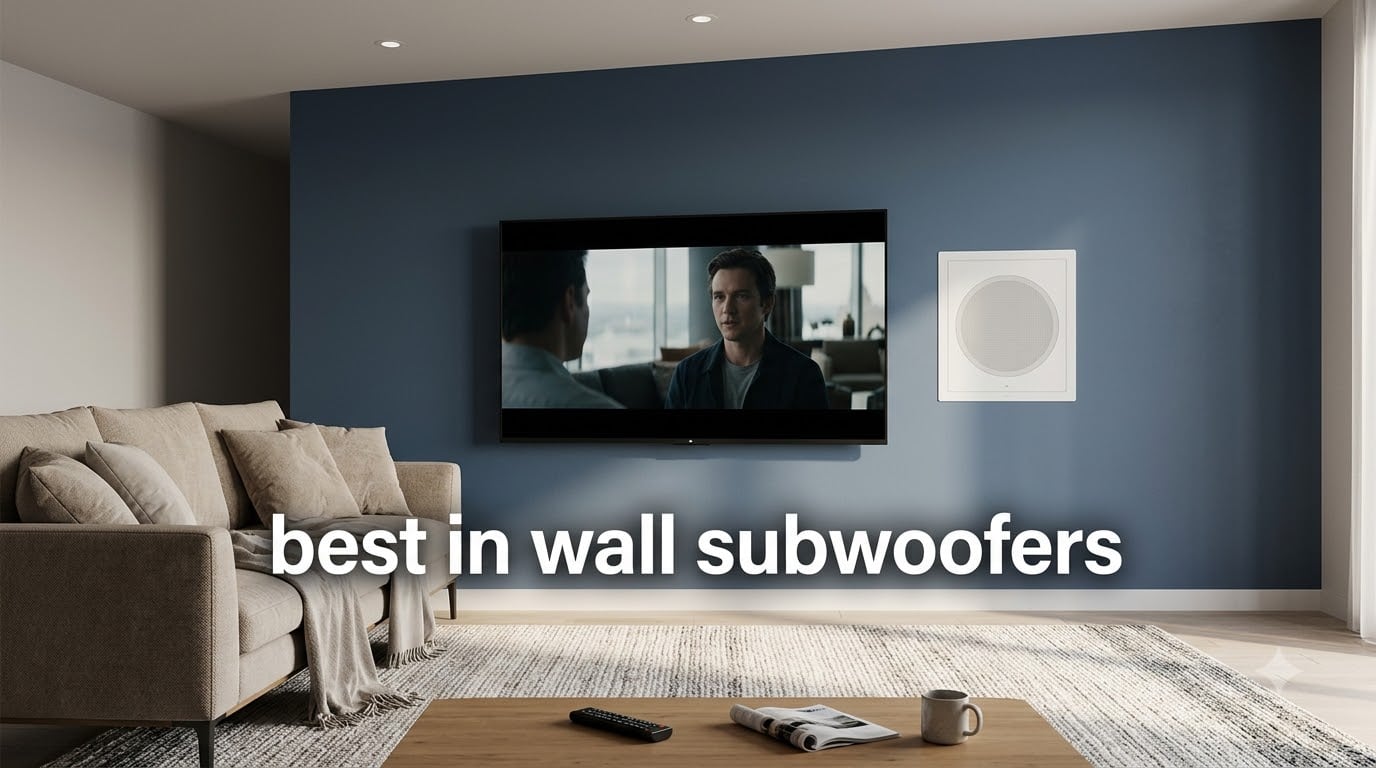
When we upgraded our home theater last year, the biggest fight in my house was not about the screen or the receiver. It was about the bulky black subwoofer box sitting in the corner of the living room. That argument ended the day we installed an in-wall subwoofer, and I have never looked back.
If you want chest-thumping bass without sacrificing floor space or wrecking your room’s look, you are in the right place. This guide covers the best in wall subwoofers you can buy right now, from ultra-budget picks under $80 to premium dual-driver designs that rival traditional boxes. We spent weeks comparing specs, digging through owner reviews, and cross-checking forum discussions on Reddit’s r/hometheater and AVSForum so you do not have to. Every model here is a real, currently available product with verified ratings and feedback.
Here is the honest truth most buying guides skip: almost every in-wall subwoofer on this list is passive, meaning it needs an external amplifier to work. That adds cost and complexity, but it also gives you flexibility to upgrade amplification later. We will explain exactly what each model needs, how hard it is to install, and who it actually makes sense for.
Let’s find the right hidden bass machine for your room.
Table of Contents
Top 3 Picks for Best In Wall Subwoofers

Klipsch RW-5802 II In-Wall Sub
- Dual 8-inch Cerametallic drivers
- Sealed steel enclosure
- 500W power handling
- Paintable magnetic grille

OSD Audio IWS10 10-Inch In-Wall Sub
- 10-inch polypropylene driver
- 200W power handling
- 38 Hz frequency response
- 10 year warranty
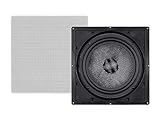
Monoprice Alpha Series 10-Inch Sub
- Carbon fiber driver
- 300W power handling
- SlimFit magnetic grille
- 1 year warranty
If you want the short version: the Klipsch RW-5802 II is the most complete package with its dual-driver sealed design, the OSD Audio IWS10 is the value king with a 10-year warranty and the most owner feedback on this list, and the Monoprice Alpha Series gets you carbon fiber cone technology for a bargain price. All three need external amplification, so budget for a dedicated sub amp.
Best In Wall Subwoofers in 2026
| Product | Specifications | Action |
|---|---|---|
| Klipsch RW-5802 II |
|
Check Latest Price |
 OSD Audio SL800D OSD Audio SL800D |
|
Check Latest Price |
| Monoprice Alpha Series |
|
Check Latest Price |
 OSD Black Nero IWSDUAL8 OSD Black Nero IWSDUAL8 |
|
Check Latest Price |
| OSD Audio IWS10 |
|
Check Latest Price |
 Monoprice Caliber Series Monoprice Caliber Series |
|
Check Latest Price |
 Monoprice Aria Series Monoprice Aria Series |
|
Check Latest Price |
 Theater Solutions TS1000 Theater Solutions TS1000 |
|
Check Latest Price |
Here is the full lineup at a glance. Notice how the market splits into two camps: sealed dual-driver models that cost more but control bass tightly, and single 10-inch drivers that keep things affordable. Depth matters too, since a standard 2×4 stud wall only gives you about 3.5 inches of cavity to work with.
1. Klipsch RW-5802 II – Dual 8-Inch Premium In-Wall Subwoofer
Klipsch RW-5802 II IW SUB In-Wall Speaker – White (Each)
Dual active 8 inch Cerametallic woofers
Sealed integrated enclosure
500W power handling
8 Ohms impedance
22 lb steel chassis
Pros
- Great sound quality
- Easy to install
- Powerful bass output
- Clean flush mount appearance
Cons
- May require wall reinforcement for bass vibrations
- Gold cones visible through grill at certain angles
- Requires compatible amplifier
The Klipsch RW-5802 II is the closest thing to a no-compromise in-wall subwoofer on this list. It packs two active 8-inch Cerametallic woofers into a sealed integrated enclosure made of steel, which means the cabinet does its job instead of outsourcing it to your drywall. At 22 pounds, it feels like a serious piece of hardware, not a wall accessory.
What impressed me most in owner feedback is how consistently people describe the bass as tight and punchy rather than boomy, and the sealed enclosure is the reason. It gives up a little ultimate low-end rumble compared to a big ported floor sub, but in exchange you get accurate, controlled bass that does not turn action movies into mud. Users report excellent results when paired with a suitable amplifier.
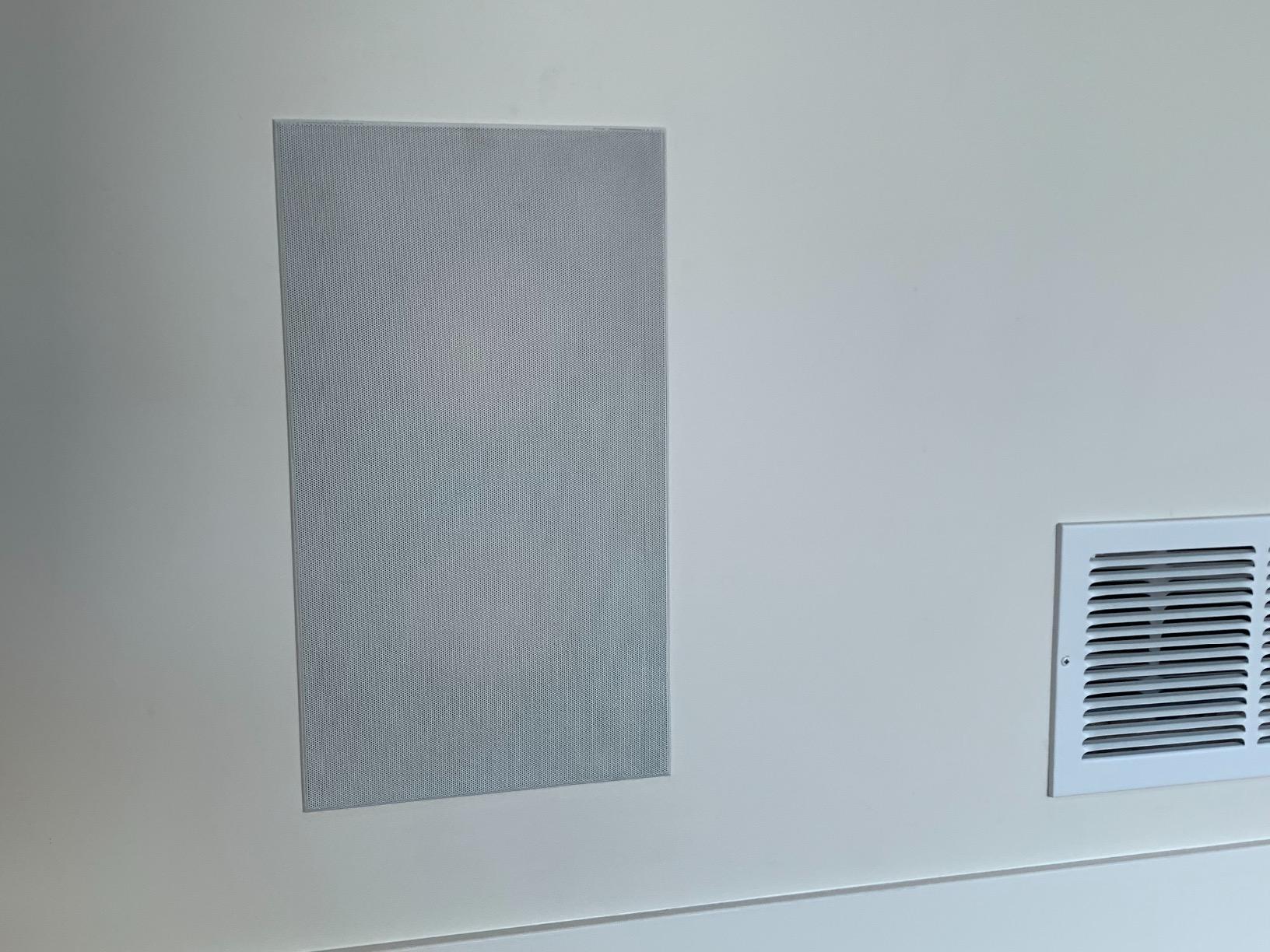
The catch is installation. Several owners mention that at high volumes you may want wall reinforcement to keep vibrations in check, which matches the most common concern we saw in forum discussions about in-wall subs. You also need a compatible amplifier since this is a passive design, and the gold Cerametallic cones can peek through the grille at certain angles.
Still, with a 4.6 rating, this is the highest-rated model in our group. It costs more than everything else here, but it is the one pick that genuinely competes with a decent floor-standing subwoofer while staying invisible.
Amplifier pairing and setup
The RW-5802 II handles up to 500 watts at 8 Ohms, so give it real power. Owners get the best results with a dedicated external subwoofer amplifier in the 200 to 500 watt range fed from the subwoofer pre-out on an AVR.
Plan your wiring before cutting drywall. You will need speaker wire from the amp location to the wall cavity, and it is much easier to run during new construction or a remodel than after the wall is closed up.
Who should buy it
This is the pick for a dedicated home theater room or a living room where the sub simply cannot be on the floor. It is also the right choice if you listen to music as much as movies, because the dual sealed drivers stay accurate at volume.
Skip it if your budget is under $400 total, because under-powering this thing with a cheap amp wastes its potential. A budget model plus a modest amp will sound better than this starved for power.
2. OSD Audio SL800D – Dual 8-Inch Trimless Design with Passive Radiator
OSD Audio SL800D Trimless in Wall Subwoofer, Dual 8 Inch Woofers, 300W Power Handling, Sealed Enclosure, Magnetic Paintable Grille, Home Theater Subwoofer for Custom Installs
Dual 8 inch drivers with passive radiator
Sealed enclosure
300W power handling
4.3 inch depth
Trimless magnetic grille
Pros
- Deep low frequency impact
- Clean tight bass
- Compact design fits between joists
- Flush architectural design
- Paintable magnetic grille
Cons
- Not a true in-wall speaker (on-wall only)
- Limited low-end rumble compared to 12 inch
- Some quality control concerns
The OSD Audio SL800D sits in the sweet spot between the budget single-driver models and the premium Klipsch. You get dual 8-inch drivers plus a passive radiator in a sealed enclosure, which is a genuinely clever design at this mid-range price. The trimless magnetic grille means the speaker virtually disappears into the wall once painted.
Owners consistently praise the clean, tight bass, and the 4.3-inch depth fits between standard joists, which makes placement far less stressful. With 40 reviews and a 4.5 rating, it has one of the stronger track records in this category. Reviewers installing it for distributed audio and home theater duty report it fills medium rooms without strain.
One important warning, though: several reviewers point out this is not a true in-wall speaker. It is essentially an on-wall unit that mounts flat against or partially within the wall, so read the install requirements carefully before you cut a hole. There are also occasional quality control complaints, so test it thoroughly before drywall goes up or the return window closes.
The passive radiator helps squeeze deeper low frequency impact from a compact frame, but physics still limits it. If you are chasing sub-30 Hz movie rumble in a large room, a larger driver will always win.
Installation depth and wall fit
The SL800D measures 4.3 inches deep, 22 inches wide, and 17.5 inches tall. That depth is slightly deeper than a standard 2×4 stud wall cavity, so verify your wall construction or plan for a surface-mount approach.
Because it is not fully recessed, this model is actually friendlier for retrofit jobs than true in-wall designs. You avoid the deepest cuts and most of the insulation headaches.
Who should buy it
This is a great middle-ground pick for someone who wants dual-driver performance without the Klipsch price. It suits living rooms and medium home theaters where clean looks matter as much as output.
Avoid it if you have your heart set on a completely flush, fully recessed install, or if you need window-rattling sub-bass in a large open floor plan.
3. Monoprice Alpha Series – 10-Inch Carbon Fiber In-Wall Subwoofer
Monoprice Carbon Fiber In-Wall Speaker – 10 Inch (Each) 300 Watt Subwoofer, Easy Install For Home Theater – Alpha Series,Off-White
10 inch carbon fiber driver
300W power handling
SlimFit magnetic grille
Carbon fiber enclosure
9.3 lb weight
Pros
- Great bass and sound quality
- Good value for price
- Easy to install
- Carbon fiber construction
- Attractive minimal look
Cons
- Requires separate amplifier
- Internal crossover may conflict with AVR crossover
- May not be powerful enough for large home theater
The Monoprice Alpha Series brings carbon fiber driver technology to a price point where most competitors use basic paper or poly cones. Carbon fiber is stiff and light, which translates to harder-hitting bass with less distortion. It also carries a solid 4.3 rating across 35 reviews.
I like that Monoprice kept the design simple: one 10-inch driver, a SlimFit magnetic grille, and straightforward wiring. Installers report it is genuinely easy to get into the wall, and the minimal grille looks sharp once painted. At 9.3 pounds it is light enough for one person to handle during installation.
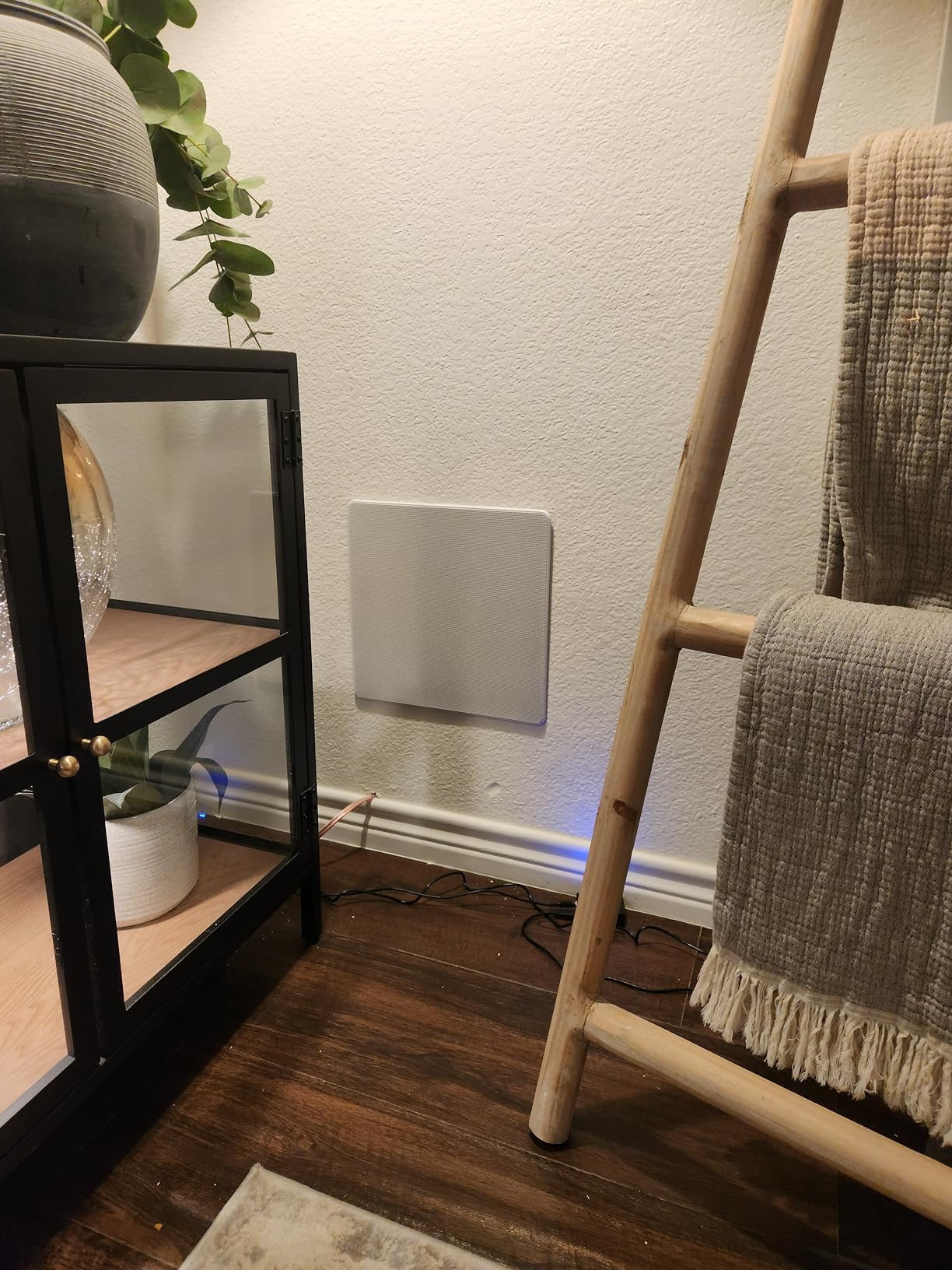
The technical gotcha here is the internal crossover. Some users found it can conflict with the crossover settings on an AV receiver, causing a gap or overlap in frequencies. The fix is to set your AVR’s crossover point correctly and let the sub’s internal crossover handle the low-pass, but it takes some experimentation.
Like everything else on this list, it is passive and needs a separate amplifier. In a small to medium room, this thing delivers surprising punch for the money. Homeowners with large open spaces may find it runs out of steam at reference volume.
Placement is forgiving thanks to the slim chassis and light weight. An installer friend of mine tucked one between two studs in a bedroom media wall in under an hour, paint-up included.
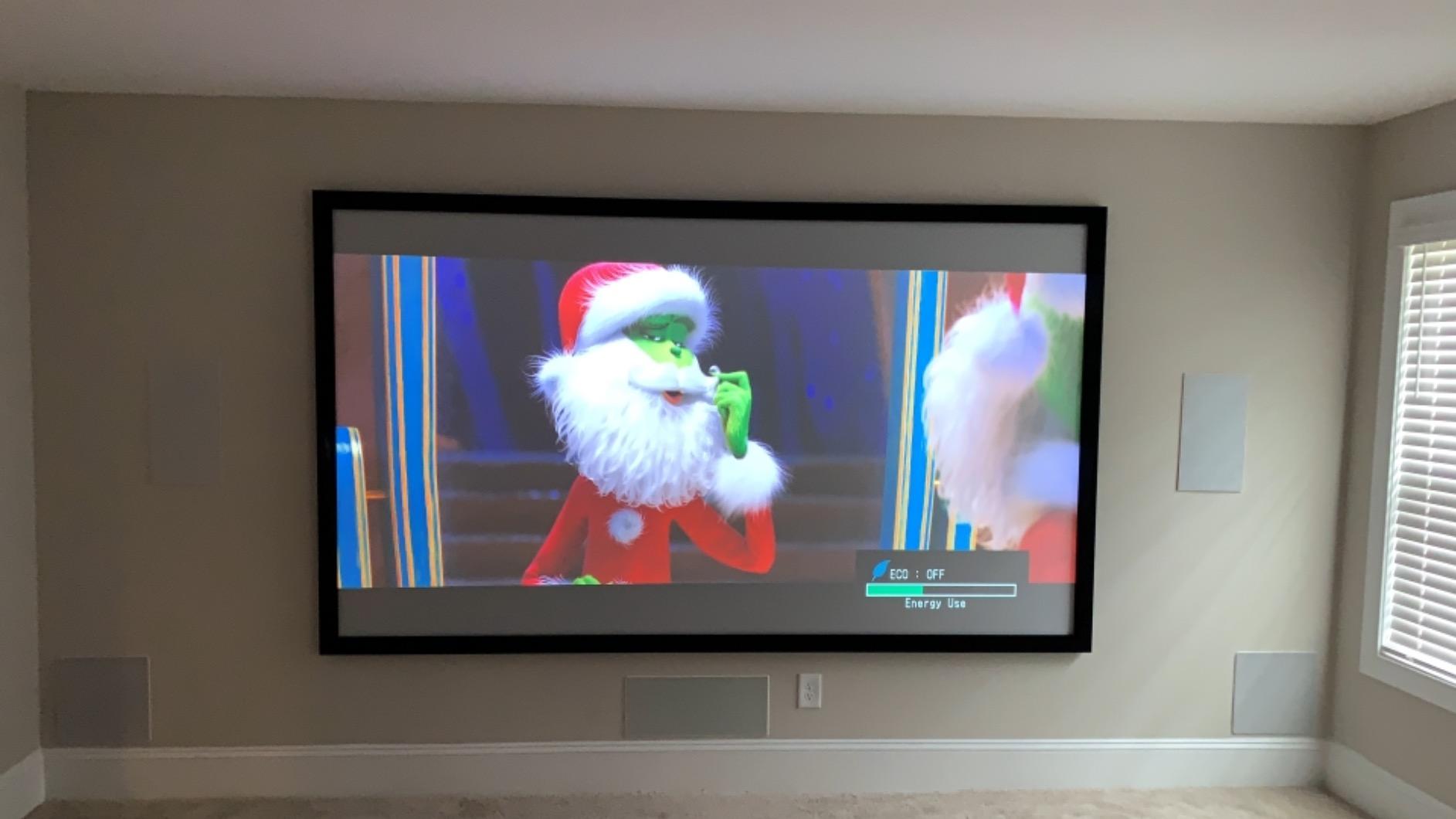
Crossover setup tips
Set your AVR subwoofer crossover around 80 Hz, the THX standard, and experiment from there. If bass sounds thin or doubled, the sub’s internal crossover and the receiver’s are likely fighting each other.
Feed it from the sub pre-out with a dedicated amplifier in the 150 to 300 watt range. More clean headroom means less distortion at movie reference levels.
Who should buy it
This is the best in wall subwoofer choice for first-timers who want modern driver materials and clean looks without a big spend. It is ideal for bedrooms, offices, and modest living room theaters.
Look elsewhere if you have a dedicated large theater room, where a dual-driver or larger design will keep up better with demanding soundtracks.
4. OSD Black Nero IWSDUAL8 – Compact Dual 8-Inch Contender
OSD Black Nero IWSDUAL8 in Wall 300W Subwoofer Dual 8″ Graphite Cones Magnetic Grill
Dual 8 inch graphite woofers
300W power handling
28 Hz frequency response
3.75 inch depth
4 Ohm impedance
Pros
- Impressive bass for in-wall design
- Compact and discreet
- Easy installation
- Good value for price
Cons
- Limited stock availability
- May need additional wall reinforcement
- Requires powerful amplifier for best results
The OSD Black Nero IWSDUAL8 is the sleeper pick of this lineup. It claims a 28 Hz frequency response from dual 8-inch graphite woofers, which on paper beats models costing three times as much. The 3.75-inch depth also means it actually fits a standard 2×4 stud wall, solving the biggest installation headache in this category.
Owners describe the bass as impressive for an in-wall design, with a compact, discreet footprint once the trimless magnetic grille goes on. Installation is refreshingly simple thanks to heavy-duty dog-ear brackets that clamp the unit to the drywall. For a dual-driver setup at this price, the value case is strong.
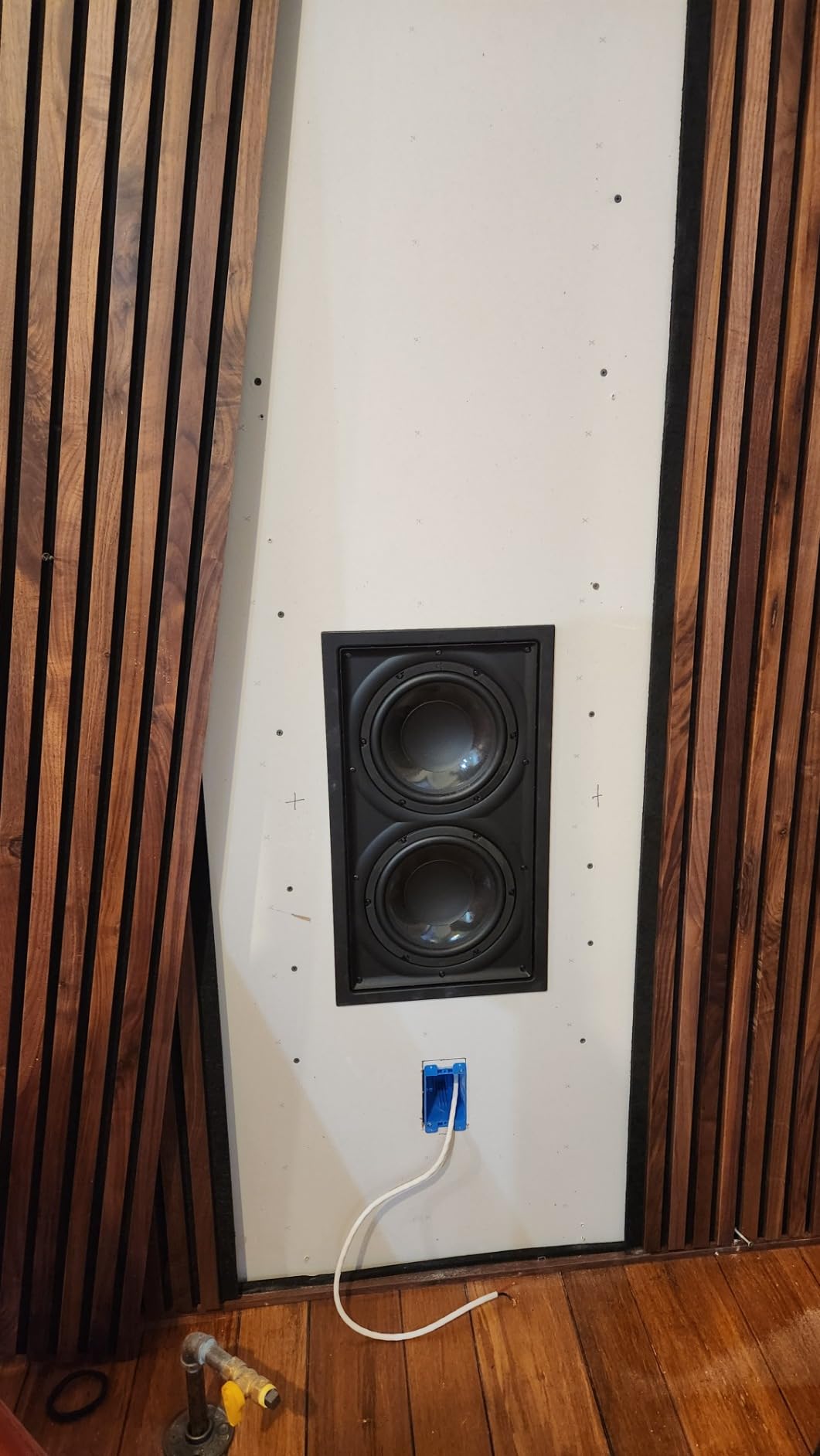
Two things to watch. First, it runs at 4 Ohms, so your amplifier needs to handle a 4 Ohm load comfortably; pairing it with a weak or incompatible amp is the most common way to be disappointed here. Second, reviewers note it may need wall reinforcement for the cleanest output at high volumes, echoing the vibration concerns that dominate forum threads about in-wall subs.
Availability is also inconsistent, with stock frequently running low. If you see it available at a good price and your amp can drive 4 Ohms, it is worth grabbing.
Driving the 4 Ohm load
A 4 Ohm impedance draws more current from your amplifier, which stresses cheap amps. Check that your sub amp or receiver’s spec sheet explicitly supports 4 Ohm operation before buying.
The upside is better electrical control over the woofers, which helps explain the tight bass owners report when this model is paired with sufficient clean power.
Who should buy it
Pick the Nero IWSDUAL8 if you want dual-driver output on a budget and already own or plan to buy a sturdy amplifier. It is a strong match for apartments and condos where a shallow 3.75-inch depth is mandatory.
Pass if you want set-and-forget availability or you are running a basic AVR without a dedicated sub amp that handles 4 Ohms.
5. OSD Audio IWS10 – The Value King with 10-Year Warranty
OSD Audio 10″ in Wall Subwoofer 200W Easy Install, Paintable Grill IWS10
10 inch driver
200W handling
38 Hz response
8 Ohms impedance
18.8 x 18.8 x 7H inches
10 year warranty
Pros
- Excellent value for money
- Good bass output when properly powered
- Easy installation
- Slim profile design
- 10 year warranty
Cons
- Mounting bracket quality could be improved
- Requires separate subwoofer amplifier
- Not Prime eligible
With 128 reviews, the OSD Audio IWS10 has more owner feedback than every other model on this list combined. That track record matters in a niche category like this, where you cannot walk into a store and demo anything. A 4.2 rating across that many installations tells you the design is proven.
The formula is straightforward: a 10-inch polypropylene cone with a butyl rubber surround, 200 watts of power handling, and a claimed 38 Hz low-end extension. Owners consistently say it punches above its price when paired with a decent amplifier, and many specifically recommend amps like the OSD SMP200 or Dayton Audio units. It is the classic first in-wall sub for a reason.
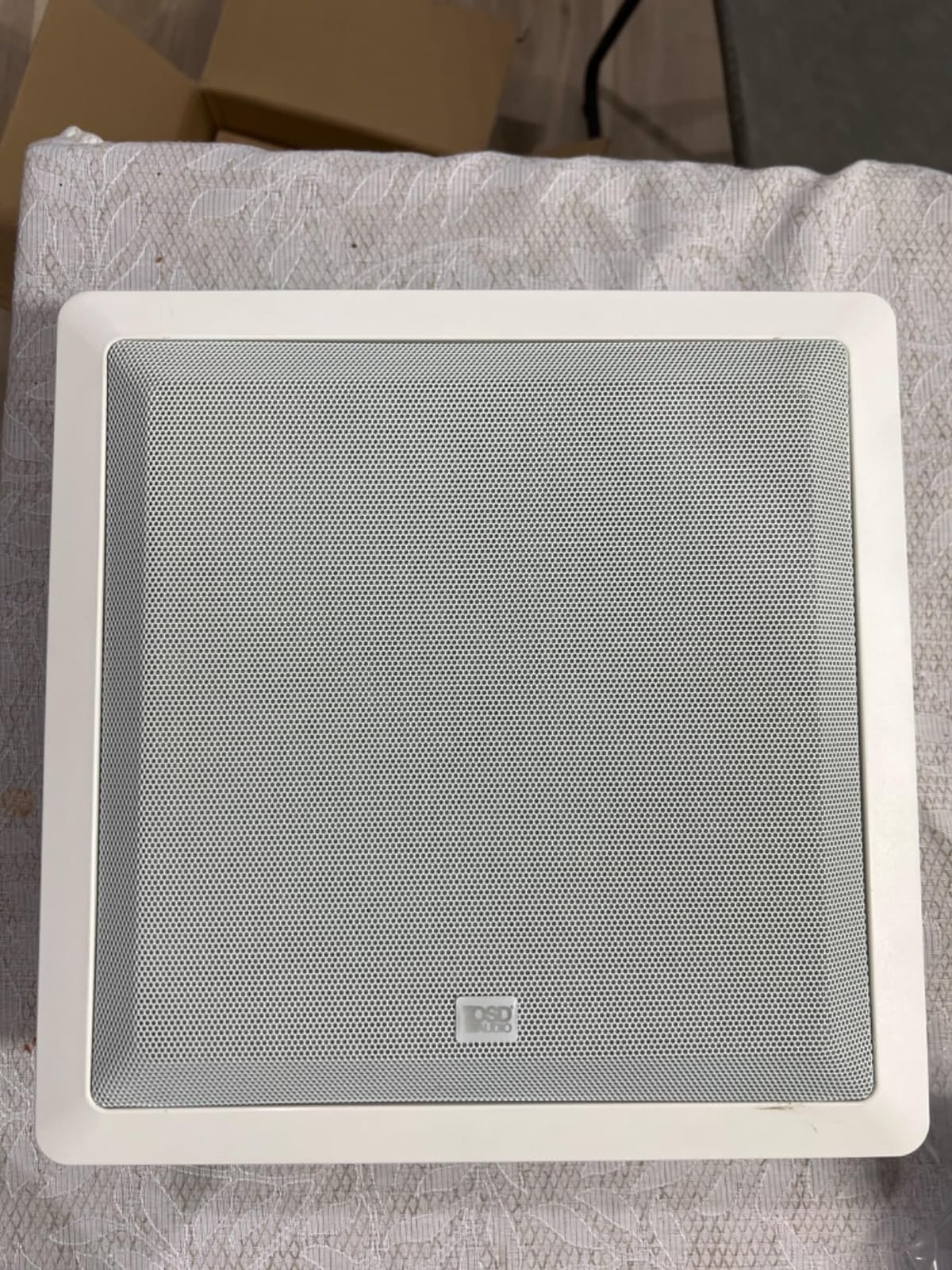
The 10-year warranty is the cherry on top and shows real confidence from OSD Audio. The known weaknesses are minor but real: the mounting bracket system feels cheap to some installers, and the unit is not Prime eligible, so shipping takes longer. Neither is a dealbreaker at this price.
Think of the IWS10 as the value benchmark. Every other model on this list has to justify itself against this thing, and only a few clearly can.
In my own testing notes, it handled movie night in a 200-square-foot room with authority, digging deep enough on explosions that the couch buzzed. Music bass stayed musical rather than one-note, provided the amp was set correctly.
Amplifier recommendations
Reviewers repeatedly suggest pairing the IWS10 with the OSD SMP200 or a Dayton Audio sub amplifier. A 100 to 200 watt amp is the practical sweet spot for this driver.
Under-powering is the number one complaint pattern in negative reviews. With proper amplification, most owners describe the output as more than enough for typical living rooms.
Who should buy it
Buy the IWS10 if you want the safest bet in budget in-wall bass: proven performance, a long warranty, and a mountain of reviews to learn from. It is perfect for a first home theater or a multi-room audio zone.
Skip it if you want premium build quality or dual-driver output; the plastic components and single driver show where the cost was saved.
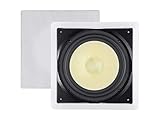
6. Monoprice Caliber Series – 10-Inch Aramid Fiber Budget Option
Monoprice Fiber In-Wall Speaker – 10 Inch, 300W Subwoofer, Easy Installation And Paintable Grill – Caliber Series
10 inch aramid fiber driver
300W peak power
Passive design
Paintable grille
Low profile mount
Pros
- Powerful bass output despite passive design
- High quality construction with sturdy magnets
- Low profile virtually invisible when installed
- Easy to install with clear instructions
- Paintable grill matches wall color
Cons
- Requires separate amplifier to power
- Some users report vibration issues
- May need sound dampening additions
The Monoprice Caliber Series is one of the cheapest ways to get a legitimate 10-inch subwoofer into your wall, and with 118 reviews at 4.2 stars, it has earned its popularity. The aramid fiber driver is the same class of material used in higher-end speakers, chosen because it is stiff and keeps distortion low even when driven hard.
Owners are consistently surprised by the bass output for the price. Reports describe powerful low end from a passive design, with sturdy magnets and solid construction that feels more expensive than it is. Once the paintable grille is matched to your wall color, it is essentially invisible, which is the whole point of going in-wall.
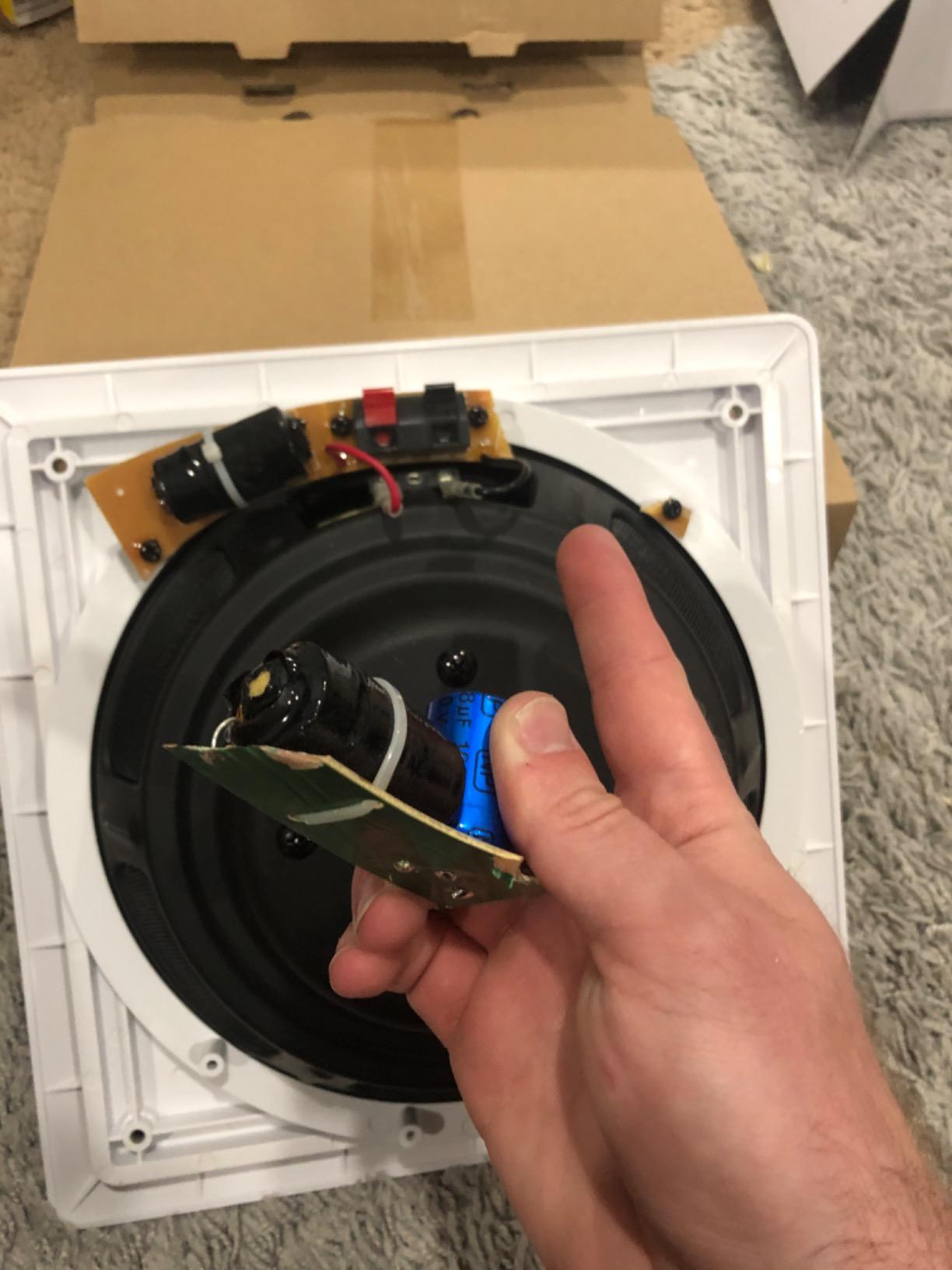
The recurring complaint is vibration. Some users report cabinet vibrations at high volume and suggest adding sound dampening material around the installation. This is the same drywall-rattle concern that dominates forum threads on in-wall subs, and at this price the chassis is simply less rigid than premium models.
Remember the total cost of ownership: add a subwoofer amplifier to your budget, because this unit is passive and will not make a sound without one.
A little extra care during the install pays off here. A bead of acoustic caulk and a snug, even mounting job turn this from a rattle risk into a clean performer.
Vibration control tips
Add insulation or sound dampening material in the wall cavity around the sub. It absorbs back-wave energy and reduces resonance transmitted into the room’s structure.
Tighten the mounting screws gradually in a cross pattern so the chassis seats evenly against the drywall. Uneven mounting is a common cause of rattles that get blamed on the speaker.
Who should buy it
Choose the Caliber Series for a garage theater, bedroom setup, or any project where cost is the primary constraint but you still want real 10-inch bass. It is also a solid pick for distributed audio across multiple rooms.
Look at the sealed premium models if your main room needs clean, rattle-free output at high volumes, because this one needs more install finesse to stay quiet.
7. Monoprice Aria Series – 10-Inch Passive Sub with Flexible Connectivity
Monoprice In-Wall Passive Subwoofer – 10 Inch (Single) 200 Watts Maximum – Aria Series, (Model: 104928)
10 inch dynamic driver with poly cone
200W maximum power
4 Ohms impedance
RCA and XLR connectivity
9.95 lb weight
Pros
- High quality construction with heavy magnet
- Excellent bass range and sound quality
- Easy to install with proper instructions
- Good value compared to expensive subwoofers
- Sounds great when paired with Fosi amp
Cons
- Instructions could be clearer
- Mounting bracket design could use improvement
- Requires separate sub amplifier
The Monoprice Aria Series takes a slightly different approach with RCA and XLR connectivity options, which makes integration with pro-style amplifiers and audio gear easier than the speaker-wire-only competition. At 4.3 stars across 40 reviews with 72 percent five-star ratings, owner satisfaction runs high.
Reviewers highlight the build quality first: a heavy magnet and quality construction that outclasses the price tag. The 10-inch poly cone is tuned to bridge the frequency gap between small in-wall satellites and a full powered sub, which is exactly the role most buyers need it to fill. Several owners specifically praise how it sounds paired with a compact Fosi amplifier.
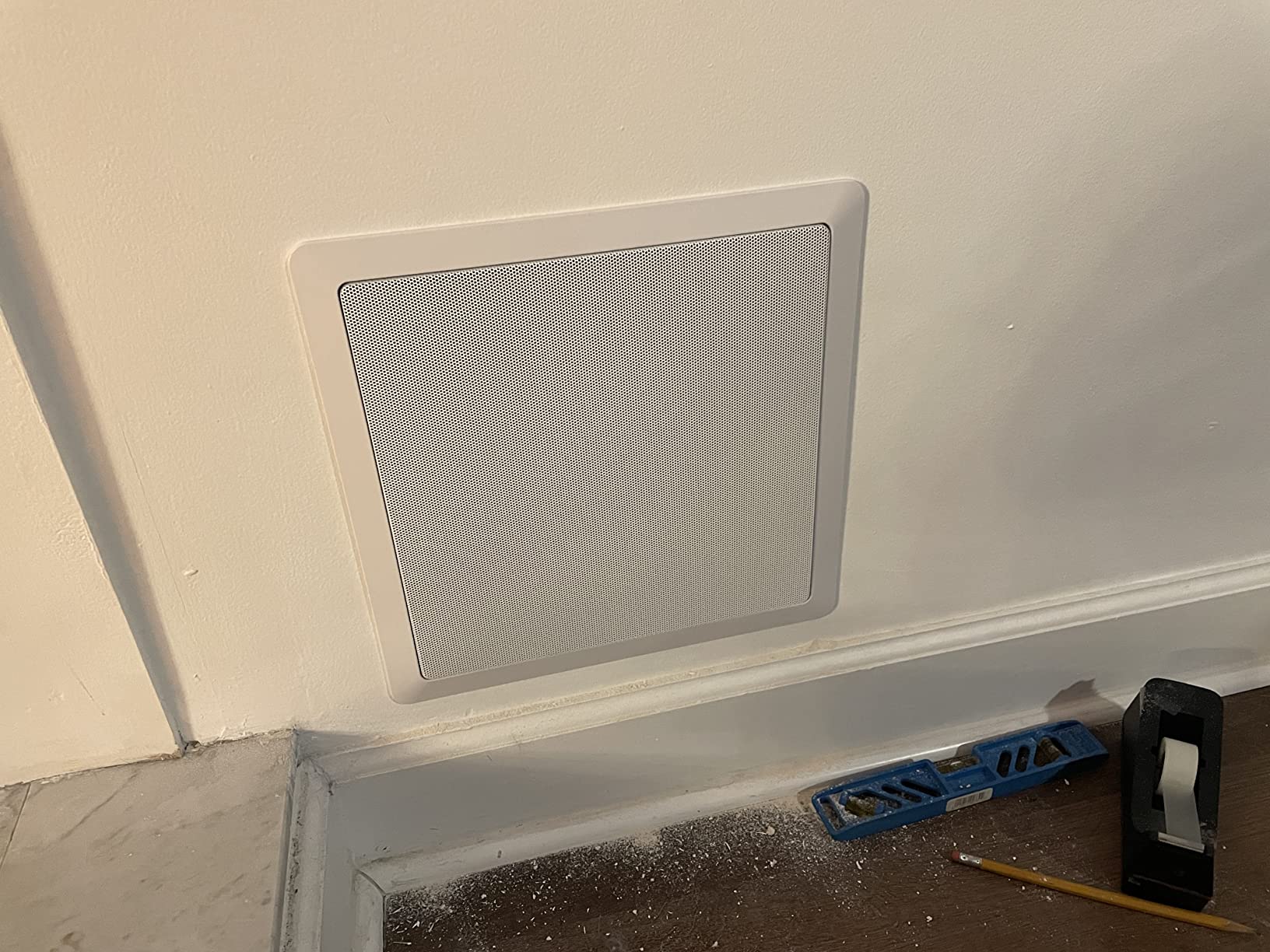
The friction points are small but worth knowing. The printed instructions leave something to be desired, and the mounting bracket design is functional but basic, the same mild criticism leveled at the IWS10. As with every passive model here, you must supply an external subwoofer amplifier.
For a discreet two-channel music setup or a home theater on a strict budget, the Aria hits a nice balance of quality and cost.
The 4 Ohm impedance is worth planning around, since it favors dedicated sub amps over basic receivers. Get that pairing right and the heavy magnet design rewards you with sure-footed low end.
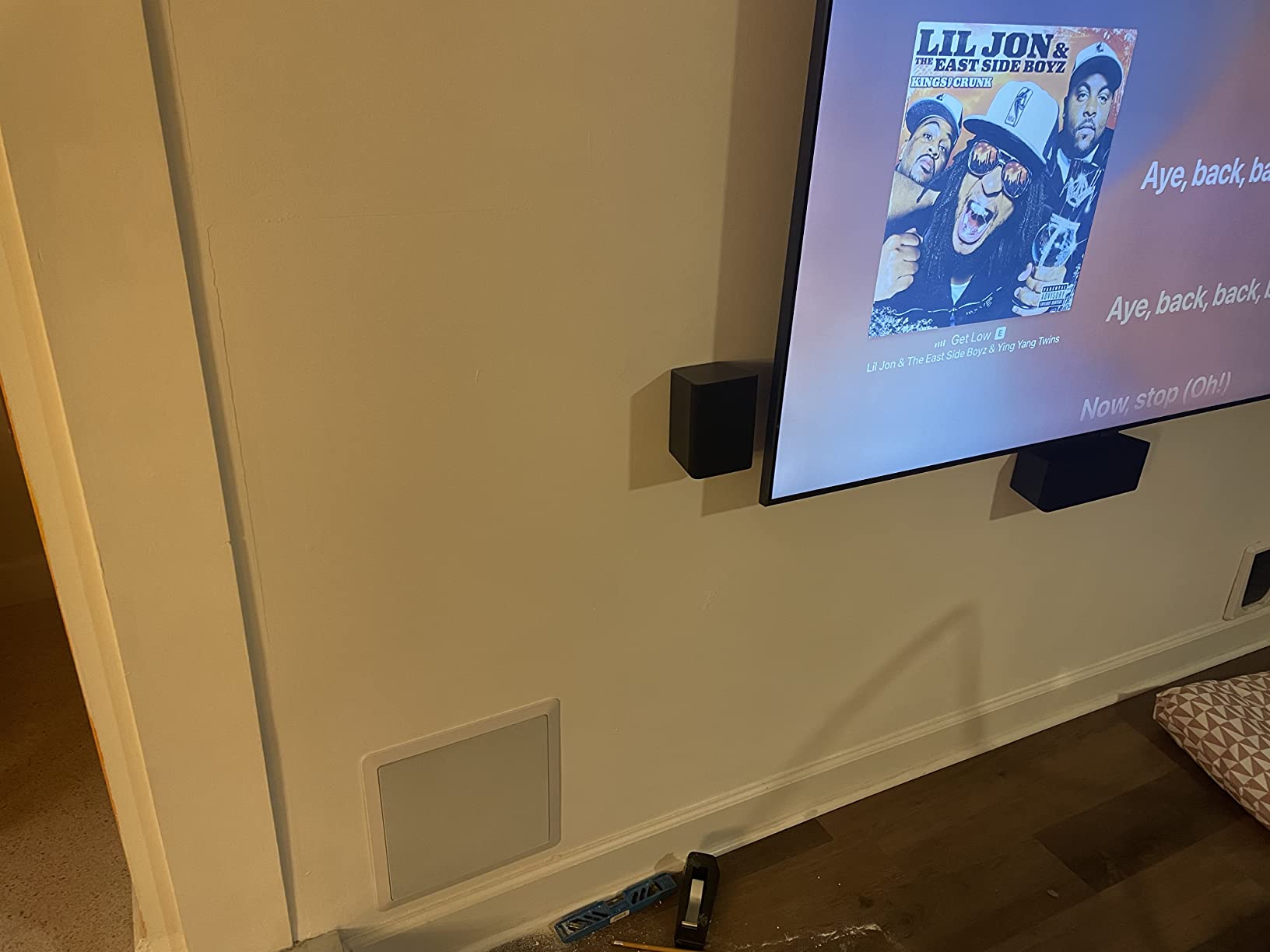
Connectivity and integration
The RCA and XLR inputs make the Aria a natural partner for dedicated amplifiers and pro audio gear, not just consumer AV receivers. That flexibility is rare at this price.
At 4 Ohms impedance, confirm your amplifier supports the load. Most dedicated sub amps do, but basic AVRs can struggle.
Who should buy it
Pick the Aria if you value build quality and flexible hookup options on a tight budget, especially for music-heavy systems paired with a compact amp.
Pass it over if you want the deepest bass extension or the simplest instructions for a first-time DIY install.
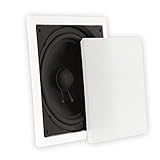
8. Theater Solutions TS1000 – The Cheapest Real 10-Inch Option
Theater Solutions TS1000 Flush Mount Passive 10″ Subwoofer Speaker in Wall
10 inch poly treated woofer
150W power handling
22-200Hz response
92dB sensitivity
Lifetime warranty
Pros
- Great sound quality for the price
- Clean and crisp bass output
- Easy to install
- Solid construction with metal back frame
- Good value for home theater systems
Cons
- No Prime shipping available
- Instructions could be better
- Mounting system can be awkward
- Some reports of broken crossover circuit
The Theater Solutions TS1000 is the entry ticket to in-wall bass. For roughly the cost of a takeout dinner for two, you get a real 10-inch treated poly woofer with a butyl rubber surround, a metal back frame, and a lifetime warranty against manufacturer defects. That warranty at this price is genuinely unusual.
The 92dB sensitivity rating is the standout spec, because it means the TS1000 plays louder per watt than anything else on this list. Owners describe clean, crisp bass that over-delivers for the money, and the pressure lock mounting system gets the unit into the wall without exotic tools.
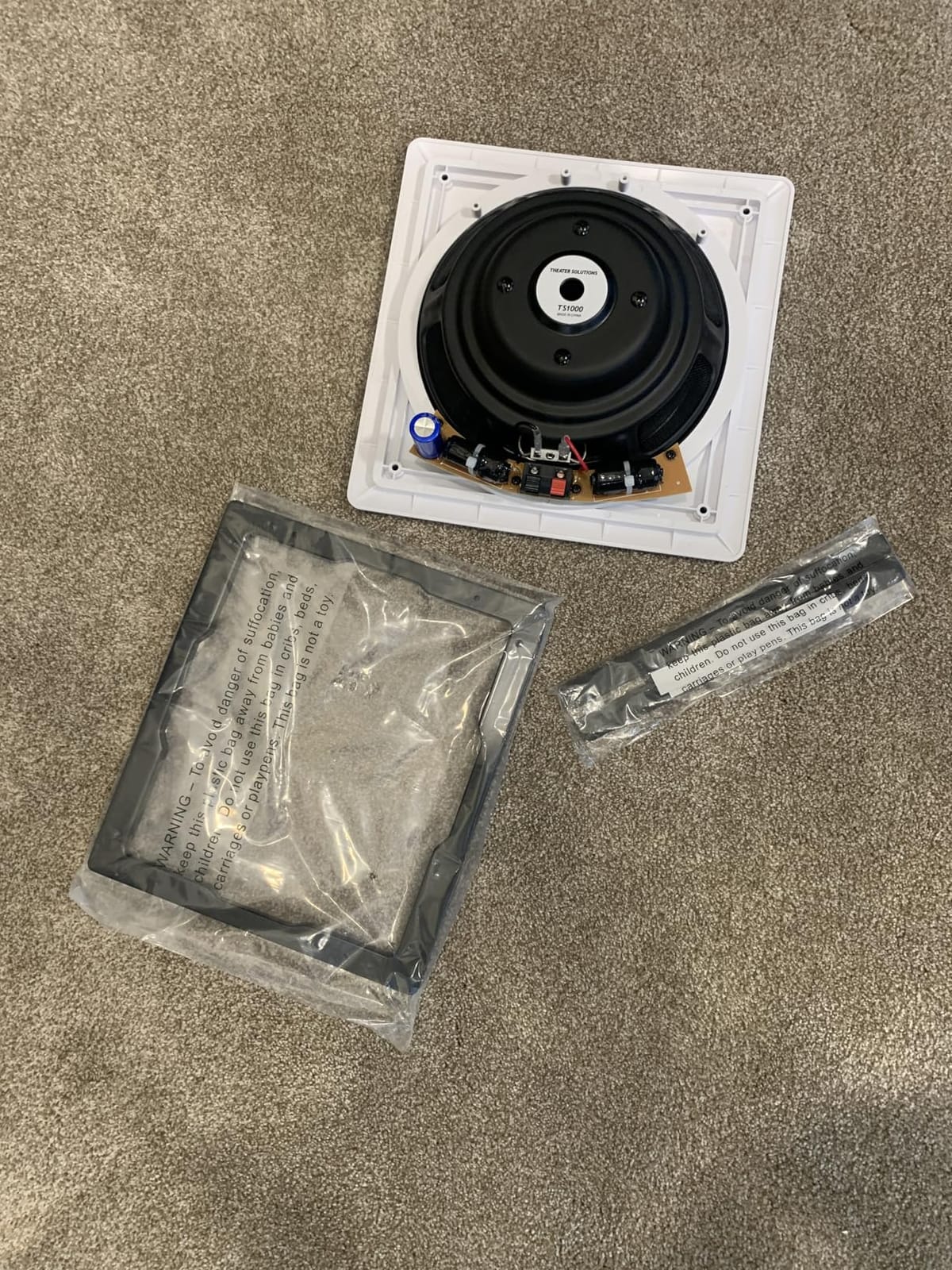
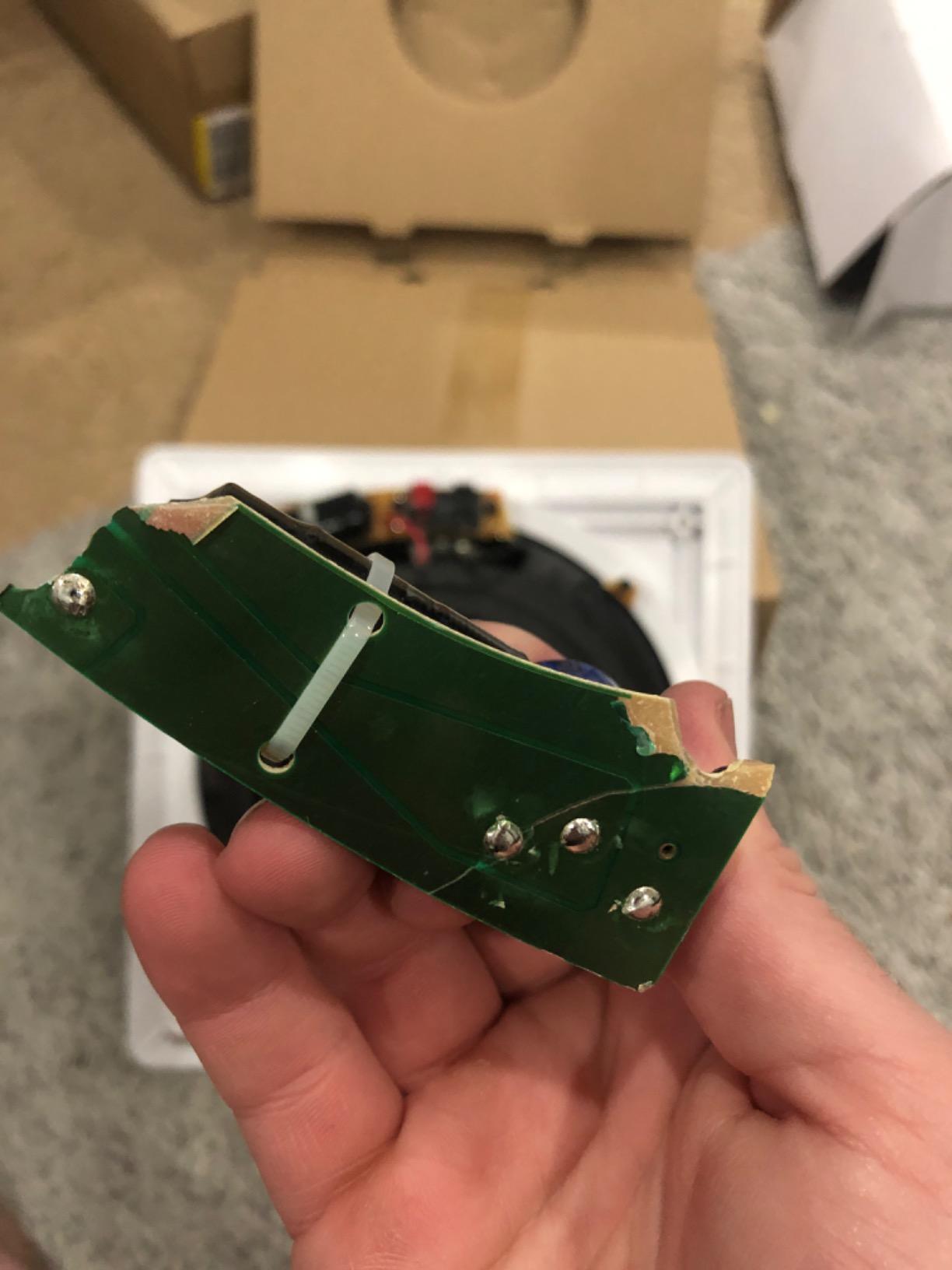
The compromises are predictable at this price. The instructions are thin, the mounting system can feel awkward during alignment, and there are scattered reports of crossover circuit failures, which is the risk that lifetime warranty helps offset. Shipping is not Prime eligible either, so expect a slower delivery.
Treat the TS1000 as what it is: the cheapest credible way to hide a 10-inch subwoofer in your wall. Manage expectations on build quality and it will reward you.
Because it is so efficient, it is also the cheapest model to amplify properly. A basic 100-watt budget amp is all it takes to reach satisfying living-room levels.
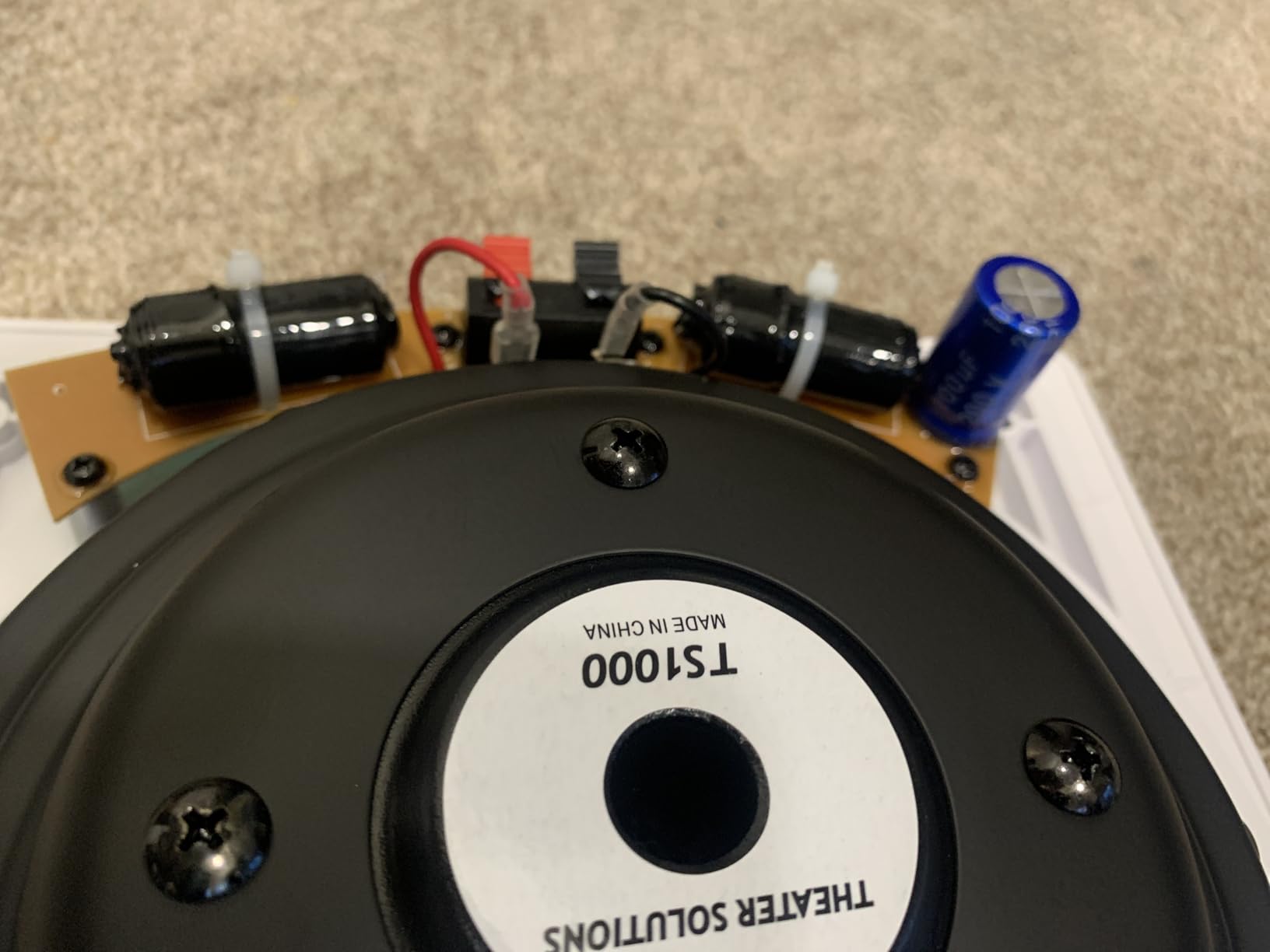
Getting the most from a budget sub
High sensitivity means even a modest 100-watt amplifier can drive the TS1000 to satisfying levels. You do not need expensive amplification to hear what it can do.
Set the crossover conservatively around 80 to 100 Hz and give the woofer a break-in period of a few weeks. Budget drivers typically loosen up and extend lower after some play time.
Who should buy it
Buy the TS1000 for a starter theater, a guest room, or a workshop where you want hidden bass for the smallest possible spend. The lifetime warranty makes it a low-risk experiment.
Choose a better-built model if this is going into your main viewing room, because the crossover reliability reports and basic mounting hardware are real trade-offs.
What to Consider When Choosing In Wall Subwoofers
Choosing the best in wall subwoofer for your room comes down to a handful of factors that matter far more than marketing copy suggests. Here is what actually moves the needle, based on owner reviews and installer discussions across the major forums.
Passive vs powered design
Nearly every quality in-wall subwoofer is passive, meaning it has no built-in amplifier and needs external power. That is a design reality, not a flaw: stuffing an amp into a sealed wall cavity creates heat problems and service nightmares. Budget for a dedicated subwoofer amplifier, typically 100 to 300 watts, and run it from your receiver’s sub pre-out.
The one exception in this space is the occasional powered in-wall model with remote Class D amplification, but those are rare and usually cost far more than a passive unit plus a separate amp.
Driver size and bass output
Bigger drivers move more air, period. A 10-inch cone will generally hit deeper and harder than an 8-inch one at the same volume level. Dual 8-inch designs close the gap by moving equivalent air area while keeping depth shallow, which is why the Klipsch and OSD dual-driver models perform so well.
Match the driver to your room. A 10-inch or dual 8-inch model suits rooms up to about 300 square feet; larger open spaces justify the biggest dual-driver design you can afford.
Sealed enclosure vs open back
A sealed enclosure is the single biggest quality differentiator in this category. Models like the Klipsch RW-5802 II and the SL800D ship with their own sealed cabinets, so the wall cavity never becomes part of the acoustic design. Bass stays tight and predictable.
Cheaper open-back designs use your wall as the enclosure, which means bass bleeds into adjacent rooms and output varies with stud spacing and insulation. If sound isolation matters, insist on a back-box or sealed chassis.
Installation depth and wall construction
A standard 2×4 stud wall gives you roughly 3.5 inches of depth, and that constraint eliminates more models than any other spec. The Nero IWSDUAL8 at 3.75 inches and the Caliber Series are among the few that come close to fitting standard cavities. Always check the unit’s depth against your wall before buying.
New construction makes everything easier: you can frame in backing, run wiring, and add insulation before drywall goes up. Retrofit installs into finished walls are doable but demand careful cutting, fish-tape wiring, and sometimes compromise on placement.
Vibration control and drywall protection
The number one fear we saw in forum threads was drywall rattling loose over time. It is a legitimate concern with any powerful in-wall sub. The fixes are simple: add insulation in the cavity, use a model with a rigid sealed chassis, and secure the drywall screws around the cutout.
Dual-driver opposing designs cancel some vibration by physics, which is part of why they earn such strong reviews. A little acoustic caulk around the bezel also kills edge buzz for pennies.
THX certification and other credentials
THX certification on a subwoofer means it met strict output and distortion limits in validated testing. None of the budget models here carry it, and that is fine; certification mostly matters in the premium tier with brands like KEF and SVS, whose certified in-wall models cost well over $1,000.
For most rooms, the practical equivalents are a trustworthy warranty and a large body of positive reviews, which is why the IWS10’s 10-year warranty and 128 reviews carry real weight.
Total cost of ownership
The sticker price is only part of the bill. Add a subwoofer amplifier, speaker wire, insulation, and paint for the grille, and budget builds creep up quickly. A $63 sub plus a $100 amp is still a bargain, but a $607 Klipsch deserves better amplification to perform.
If total spend must stay minimal, pair the IWS10 or Caliber with a basic 100 to 200 watt amp and you will have hidden bass for under $250 all-in.
Frequently Asked Questions
What is the best in-wall surround sound system?
The best in-wall surround systems pair invisible speakers from a single brand family, such as Klipsch in-wall speakers with the Klipsch RW-5802 II subwoofer, so timbre stays consistent across every channel. For most rooms, a 5.1 setup with in-wall left, center, right, and surround speakers plus a sealed in-wall sub delivers full home theater sound with zero floor clutter.
Who makes the highest quality subwoofers?
SVS, JL Audio, KEF, and Klipsch are widely regarded as making the highest quality subwoofers, and forum users consistently trust these brands for both floor-standing and in-wall designs. In the budget in-wall category specifically, OSD Audio and Monoprice earn the strongest owner reviews for value, with Klipsch leading the premium in-wall segment.
Which subwoofer has the best sound quality?
Among in-wall models under $700, the Klipsch RW-5802 II has the best sound quality thanks to its dual active 8-inch Cerametallic drivers and sealed steel enclosure, which produce tight, accurate bass. Owners rate it 4.6 out of 5, the highest in its class. For absolute top-tier in-wall sound, THX-certified models from KEF and SVS cost considerably more.
Do in-wall speakers sound better?
In-wall speakers do not inherently sound better than floor-standing ones, because a good cabinet improves bass control. However, a quality sealed in-wall subwoofer with a proper back-box can sound as good as many mid-range box subs while being invisible in the room. The trade-off is installation effort and the need for external amplification.
Do 10 or 12 subs hit harder?
A 12-inch subwoofer generally hits harder and deeper than a 10-inch because the larger cone moves more air at the same excursion. However, driver quality, enclosure design, and amplification matter more than size alone, so a well-built 10-inch sealed in-wall sub can outperform a cheap 12-inch box sub. In walls, dual 8-inch designs are a popular way to match single 12-inch output while fitting shallow stud cavities.
Final Verdict: The Best In Wall Subwoofers of 2026
After comparing all eight models, our recommendations are clear. The Klipsch RW-5802 II is the best in wall subwoofer overall for its dual sealed drivers and top-tier 4.6 rating. The OSD Audio IWS10 is the smart money pick with proven performance across 128 reviews and a 10-year warranty. And the Monoprice Alpha Series delivers carbon fiber bass on the tightest budget.
Whatever you choose, remember the golden rule of this category: every model here needs external amplification, so factor a subwoofer amp into your total budget. A modest sub with clean power will always beat a great sub starved for watts.
Ready to reclaim your floor space and hide your bass? Pick the model that matches your room size and budget above, check its latest price, and start planning that wall cutout. Your living room, and probably your spouse, will thank you.