
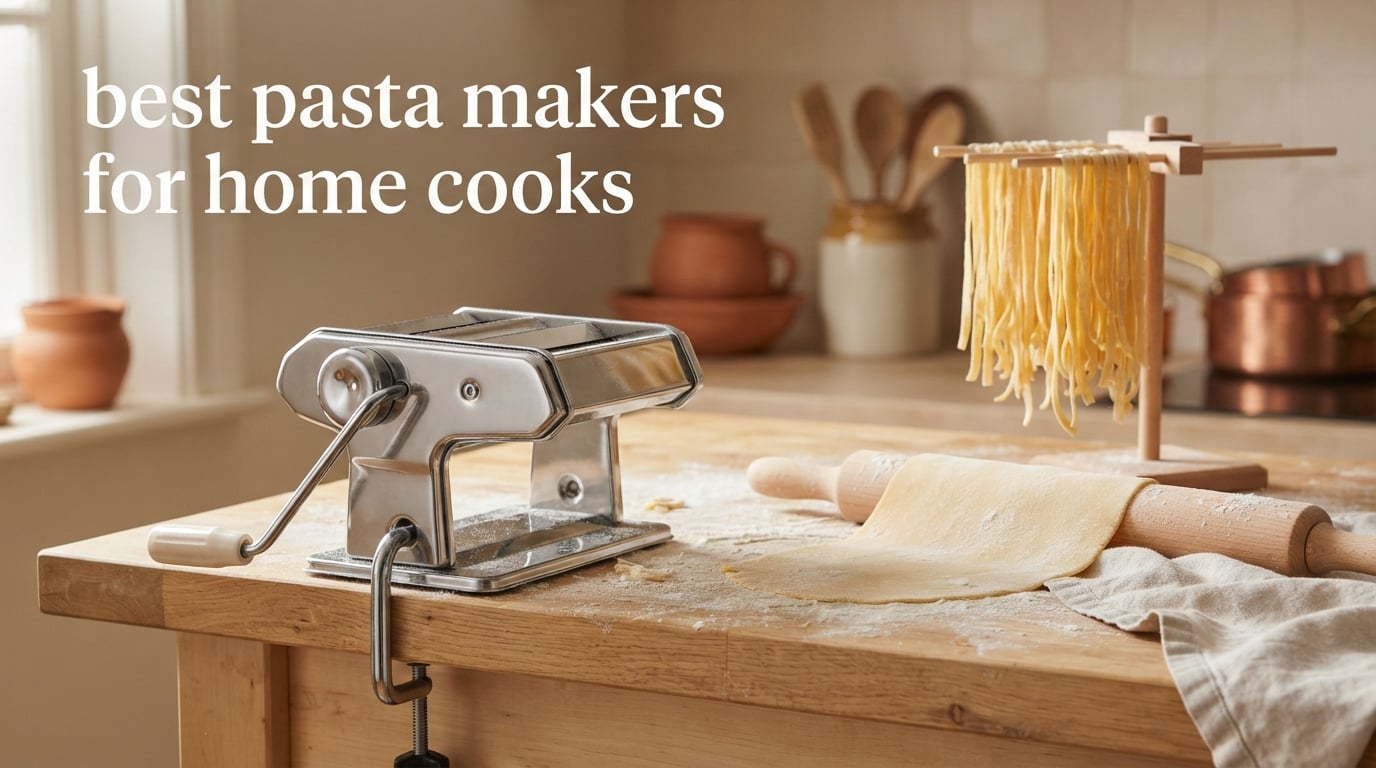
The first time I ran dough through a pasta machine, it came out looking like papier-mache. It was under-hydrated, I had skipped the rest, and I had cranked the rollers down to a thin setting on the first pass instead of thinning gradually. Six weeks and roughly sixty batches later, the whole routine is automatic. That failure is why the list below is ordered by what actually happens on your counter, not by marketing copy.
This is a guide to the best pasta makers for home cooks, covering ten machines across the three families you will actually be choosing between: hand-cranked roller-and-cutter units, electric extruders, and attachments that clamp to a stand mixer. Every pick lists the thickness range, the cutters in the box, the weight and the cleaning rules, because those five details decide whether you will still be using the machine a year from now.
If you want the short version first, jump to the direct answer below, then come back for the technique sections. If you are more interested in the electric side of the market, we also track those separately in our electric pasta maker reviews.
Table of Contents
What is the best pasta maker for home use?
The best pasta maker for home use is the Marcato Atlas 150 Classic: chrome-plated steel made in Italy, ten thickness settings from 0.8mm to 4.8mm, three cutters in the box, and 27686 owner reviews behind it. For hands-free output, the KitchenAid Gourmet Pasta Press attaches to your stand mixer and extrudes six shapes. If you want zero cranking, the Philips Viva Collection HR2370/05 mixes, kneads and extrudes two to three servings in about 18 minutes.

Marcato Atlas 150 Classic
- Made in Italy chrome steel
- 10 thickness settings 0.8mm to 4.8mm
- Three cutters included
Imperia IPasta Classic Line
- Made in Italy alloy steel
- 6 settings 0.5mm to 5mm
- Upgradeable with Pasta Facile 4600
KitchenAid Gourmet Pasta Press
- Powered by your stand mixer
- Six interchangeable shaping discs
- Wire cutter trims to length
How we tested these 10 pasta makers?
We compared ten machines over a six-week period, working through more than sixty dough batches across all-purpose, semolina and gluten-free formulas. The point was not to make the most pasta but to make it repeatedly, which is where cheap machines give themselves away.
Every machine was scored on five criteria: consistency of sheet thickness across the width, the effort required at the crank or button, how long cleanup takes once dough is left to dry, the range of shapes the included cutters produce, and whether the clamp or base stayed put on a working counter. We also logged failures rather than hiding them, because a machine that jams is a different product from one that rolls beautifully.
Two honesty notes. We did not test every unit we list, so ratings and review counts come from the owners who did. And we tested on a laminate counter and on a thick stone counter, which turned out to matter more than we expected. For the dough work itself, the techniques in our homemade pasta guide are the ones we used.
Best pasta makers for home cooks in 2026
Here is the full field in one view. The best for column tells you which job each machine is genuinely good at rather than which one wins a ranking.
| Product | Specifications | Action |
|---|---|---|
| Marcato Atlas 150 Classic |
|
Check Latest Price |
| KitchenAid Gourmet Pasta Press |
|
Check Latest Price |
 Nuvantee 3-in-1 Nuvantee 3-in-1 |
|
Check Latest Price |
 Sailnovo 3-in-1 Sailnovo 3-in-1 |
|
Check Latest Price |
 Philips Viva Collection HR2370/05 Philips Viva Collection HR2370/05 |
|
Check Latest Price |
| Imperia IPasta Classic Line |
|
Check Latest Price |
 VeoHome Pasta Maker with Dryer VeoHome Pasta Maker with Dryer |
|
Check Latest Price |
 YASHE 3-in-1 YASHE 3-in-1 |
|
Check Latest Price |
 KitchenAid Pasta Deluxe Set KSMPDX KitchenAid Pasta Deluxe Set KSMPDX |
|
Check Latest Price |
 GVODE 3-in-1 Attachment GVODE 3-in-1 Attachment |
|
Check Latest Price |
1. Marcato Atlas 150 Classic – Best Overall Manual Roller
MARCATO Atlas 150 Classic Manual Pasta Maker Machine, Made in Italy, Chrome Steel with Black Hand Crank. Makes Lasagna, Fettuccine & Tagliolini. Made in Italy
Chrome-plated steel
Made in Italy
10 settings 0.8mm to 4.8mm
3 discs
2.6 kg
Pros
- Made in Italy from chrome-plated steel and ABS
- Ten thickness settings from 0.8mm to 4.8mm
- Compact footprint at 8 inch square
- Includes three cutters for lasagna fettuccine and tagliolini
- Deepest review base in the group at 27686 owners
Cons
- Two-handed cranking with real arm effort
- Steel rollers must be dry brushed never rinsed
- Flat sheets and strips rather than extruded tubes
I own the Atlas 150 and it has replaced every other roller I have owned. The dial runs from 0.8mm to 4.8mm across ten numbered positions, and once you understand the numbering, the whole machine becomes predictable. Number two or three for a first pass, then walk it down one notch at a time.
The thing that took me longest to accept is that this is a two-handed machine. One hand turns the crank, the other feeds dough, and if you are making lasagna sheets for a lasagne you have to crank through the same sheet five or six times. Budget for the arm, not just the counter space.
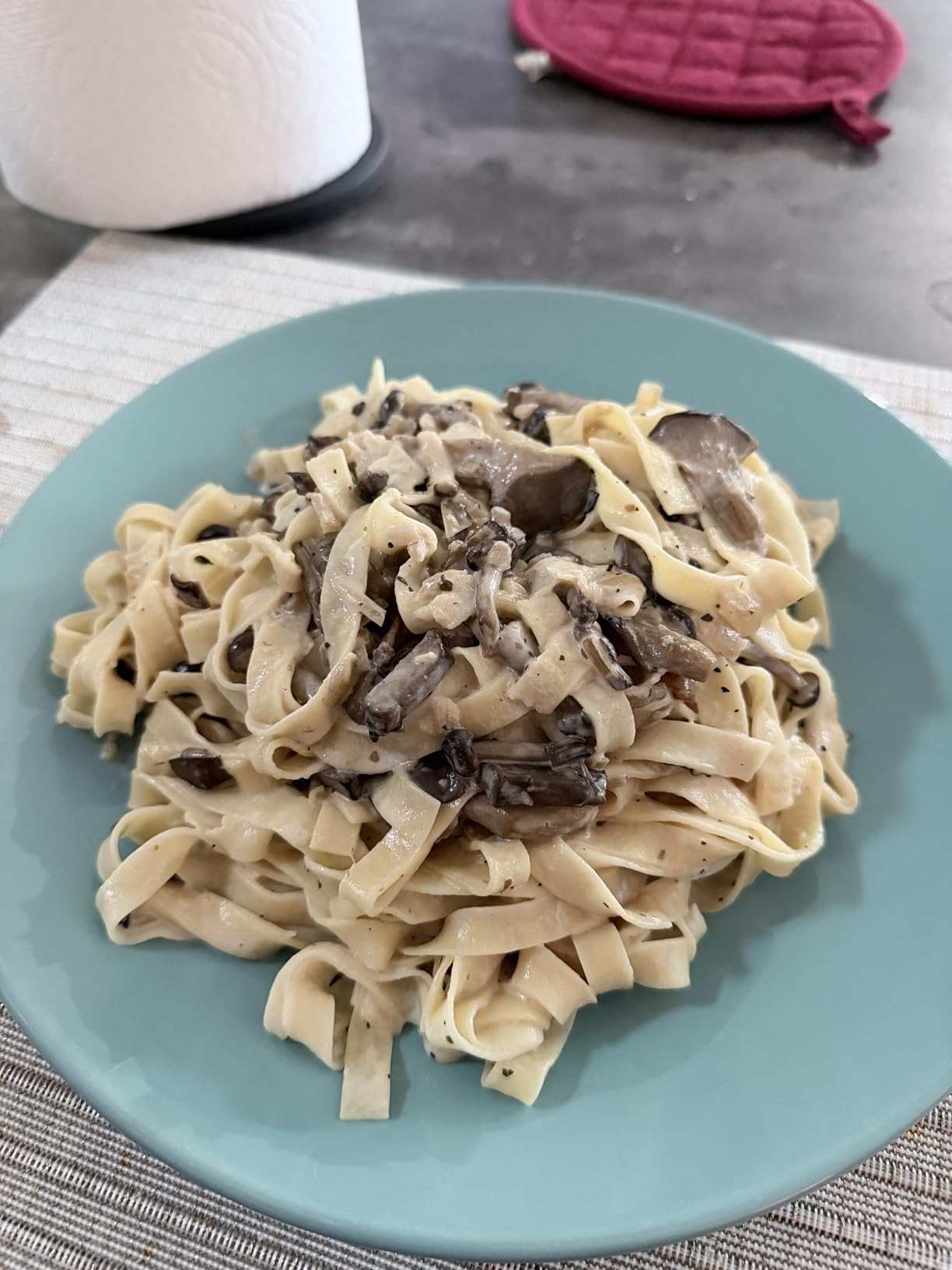
Build quality is the reason it lasts. The body is nickel-plated and chrome-plated steel with ABS components, and the rollers hold their calibration well past the point where cheaper machines start producing wavy sheets. Owners consistently single out the Italian steel build and the width of the thickness range as the two reasons they came back to it after trying cheaper options.
Cleaning is a dry job and the manual is firm about it. Let any dough dry on the rollers, then take it off with the brush and a wooden stick rather than water. Water is what puts spots on chrome, and the reviewers who skip this step are the ones who eventually report rust.
One safety note nobody mentions often enough: keep the crank handle seated at all times. On a hand-crank machine the handle can work loose under load and drop onto your foot, so wear shoes and keep the machine clear of your toes when you crank.
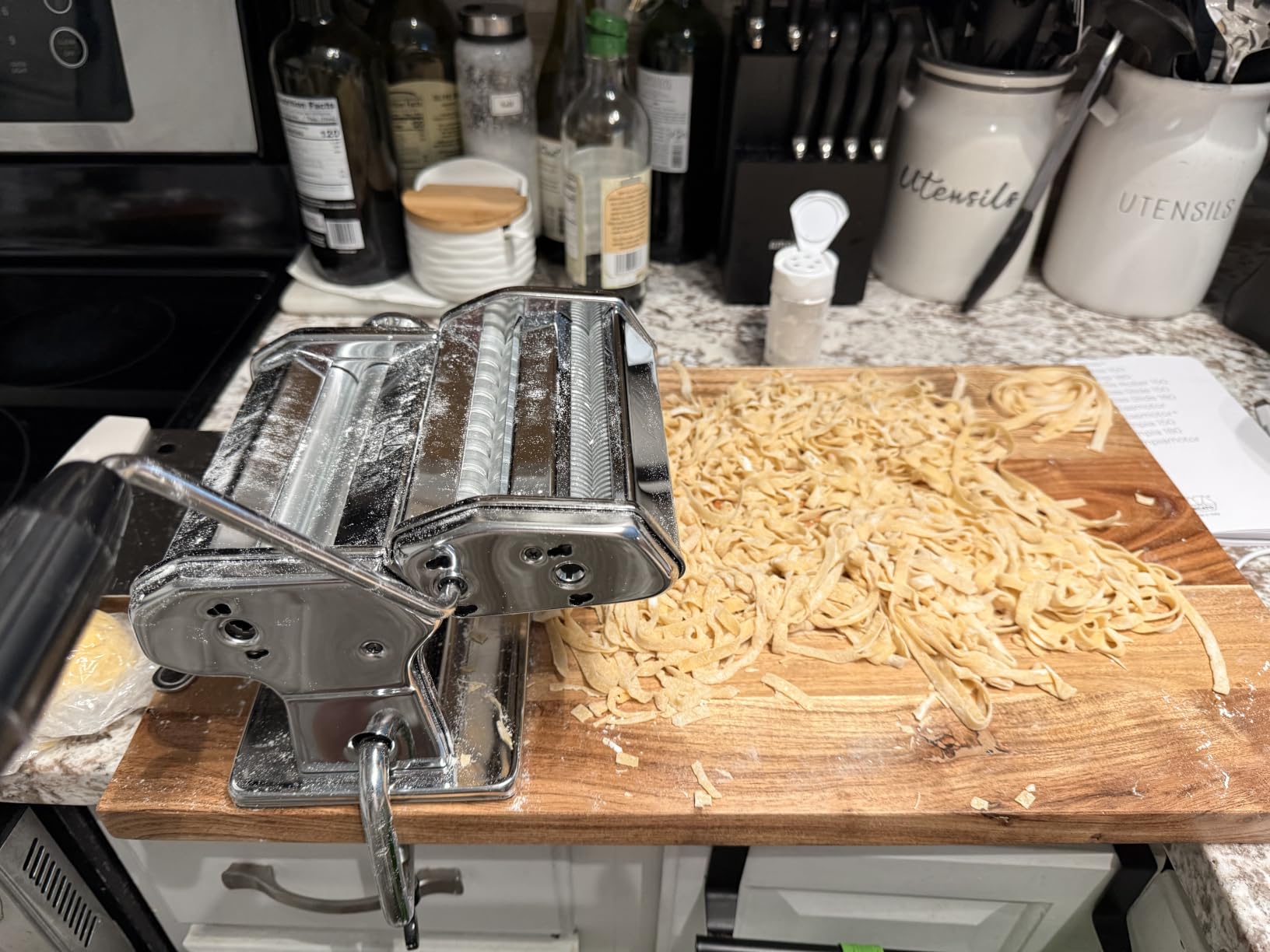
Who should buy the Marcato Atlas 150?
Buy it if you make pasta weekly and want sheets you can trust for lasagne, ravioli and flat noodles. The 150mm sheet is wide enough for a family portion without a second pass, and the accessories ecosystem means you can add a motor later if cranking stops being fun.
Buy it if you want the least ambiguous option in the market. Italian-made is treated as a default quality signal among home pasta people, and this machine has the largest review base of any we tested, which means parts, tips and fixes are easy to find.
Who should skip the Marcato Atlas 150?
Skip it if your wrist or shoulder cannot handle repeated cranking. A motorised alternative such as the Imperia IPasta with a Pasta Facile 4600 or a stand mixer attachment will save your arms entirely.
Skip it if you want penne, rigatoni or fusilli. A roller and cutter set makes flat shapes only, and the only way to get extruded tubes is an extruder-style machine.
2. KitchenAid Gourmet Pasta Press KSMPEXTA – Best Hands-Free Extruder
KitchenAid KSMPEXTA Gourmet Pasta Press Attachment for Kitchenaid Mixers
Stand mixer powered
6 shaping discs
Built-in wire cutter
9 pieces
2.7 lb
Pros
- Powered by the stand mixer so both hands stay free
- Six discs cover spaghetti bucatini rigatoni fusilli and two macaroni sizes
- Built-in wire cutter trims pasta to length
- Storage case and stainless steel cleaning tool included
- Works with gluten-free flours such as red lentil flour
Cons
- Only fits KitchenAid stand mixers which cost extra
- Extrusion parts need patience to clean
- Real learning curve on dough consistency and disc fitting
This is an extruder, not a roller, and that distinction changes what you can make. Instead of a sheet, the machine forces dough through a shaping disc, so you get spaghetti, bucatini, rigatoni, fusilli, large macaroni and small macaroni from the same box. Nine pieces are included, including a dough pusher and a stainless steel cleaning tool.
The stand mixer does the work, which means both hands are free and the dough is pressed with real force. Owners consistently report that this is where restaurant-style semola dough starts behaving, because the auger kneads more consistently than hands do. The built-in wire cutter means you do not have to trim the strands with scissors over the sink.
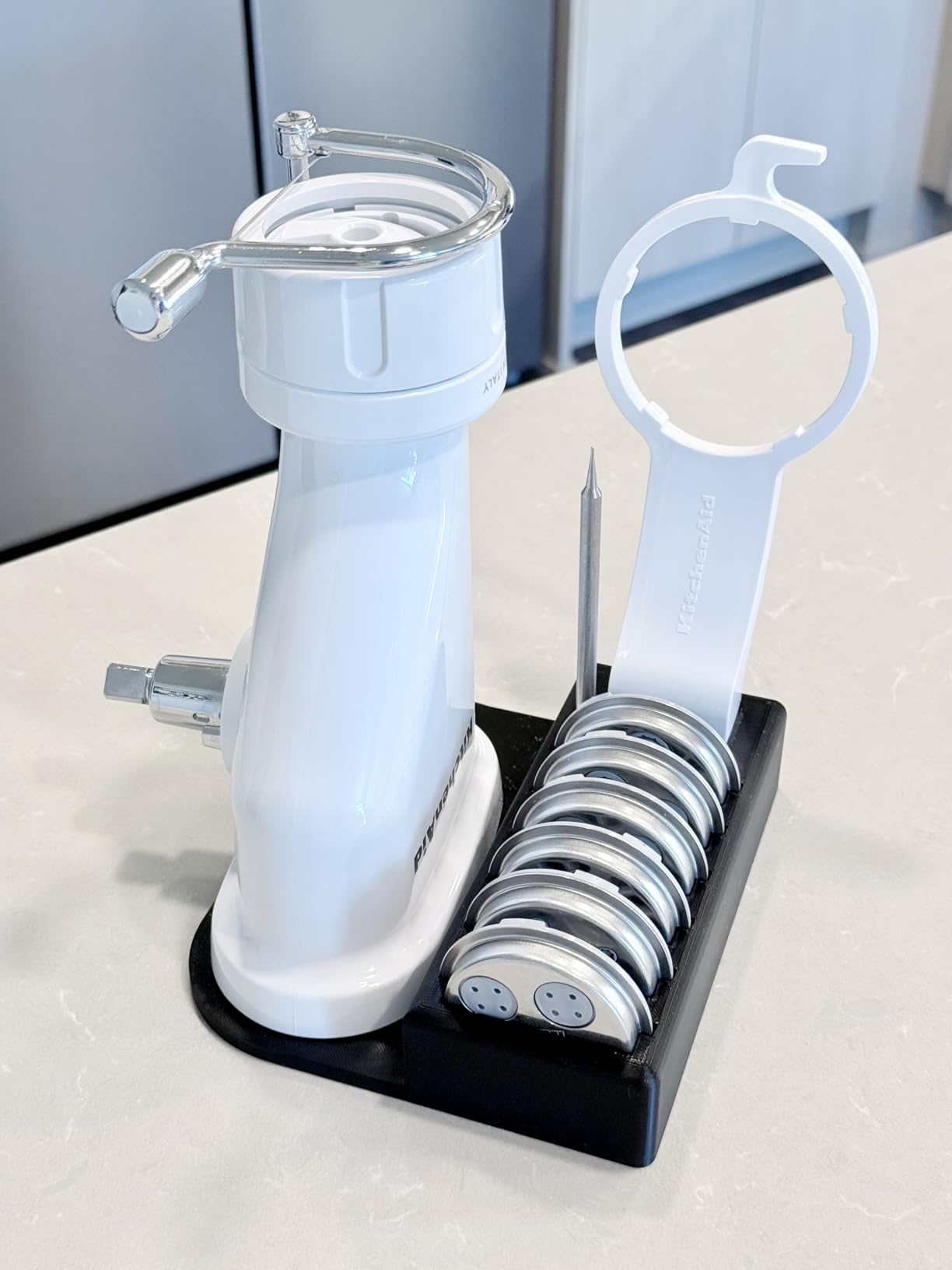
Gluten-free is the quiet strength here. Red lentil and similar flours are brittle and tear on rollers, but an auger handles them because the dough is pushed rather than stretched. Several owners mention that this attachment is the reason their celiac household could make pasta at home.
Cleanup is the trade-off. Dough has to dry inside the auger before it will come out, and the ring and combination tool can go in the dishwasher while the press itself cannot. Plan on setting the parts on a towel for twenty minutes rather than scrubbing wet steel.
One more real complaint from owners: some small parts arrive loose in the packaging. Count the pieces against the included-components list before the first batch so nothing is missing when the dough is ready.
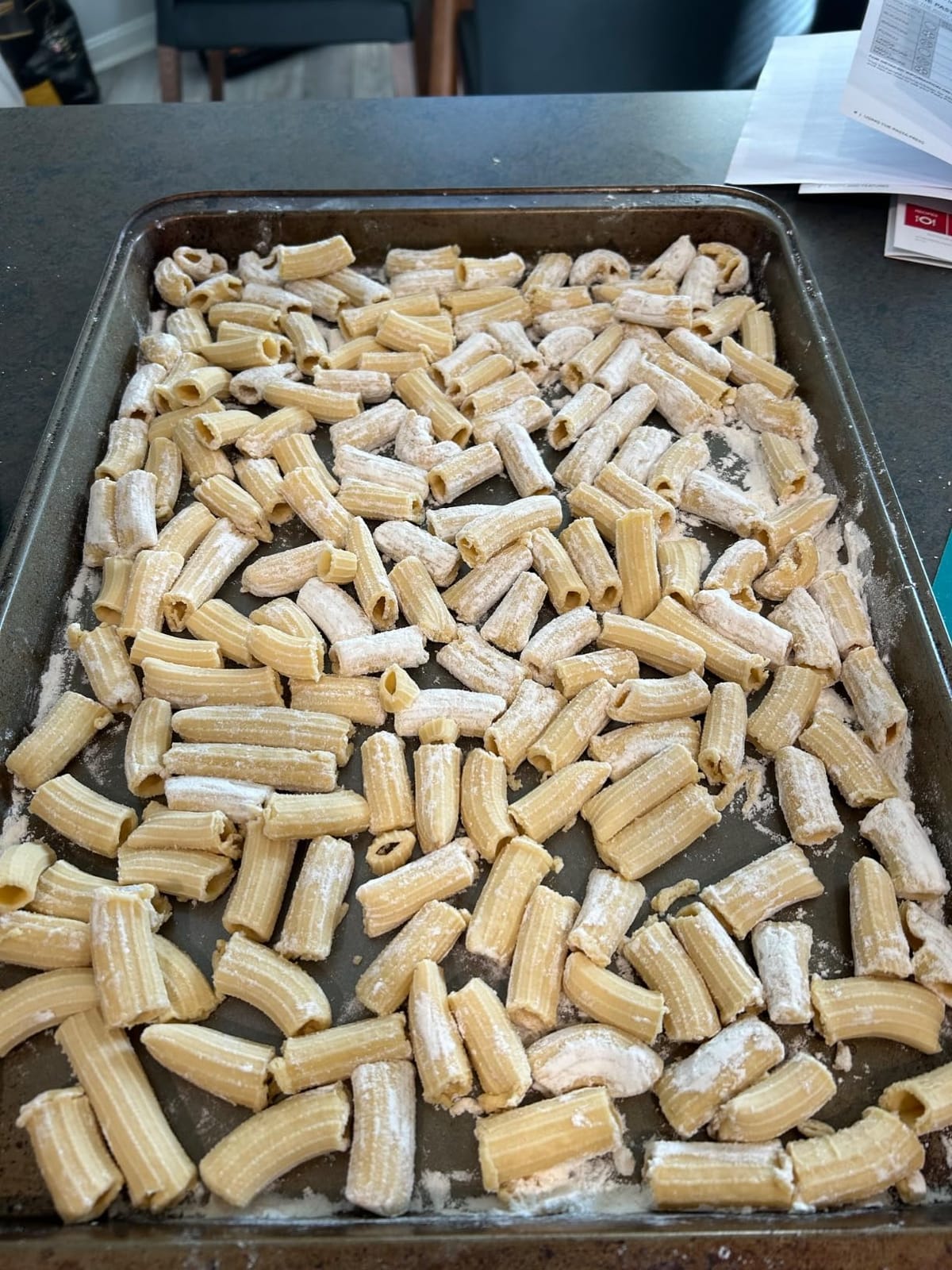
Who should buy the KitchenAid Gourmet Pasta Press?
Buy it if you already own a KitchenAid stand mixer and you want extruded shapes without cranking. The mixer is the motor, so the total cost is spread across equipment you probably own already, and the whole system stores in the included case.
Buy it if anyone in the house is celiac or avoids gluten. Gluten-free dough is where an auger beats a roller outright, and this is the pick for that job.
Who should skip the KitchenAid Gourmet Pasta Press?
Skip it if you have no stand mixer, or if your mixer is not a household KitchenAid model with a power hub. There is no hand-crank fallback on this attachment, and the mixer itself is a separate purchase.
Skip it if lasagne sheets are your priority. This machine does not produce a flat sheet you can fill, so anyone making ravioli or layered lasagne needs a roller such as the Atlas 150 instead.
3. Nuvantee 3-in-1 – Best for First-Time Pasta Cooks
Nuvantee Pasta Maker with Adjustable Thickness Settings – 3 in 1 Noodle Maker with Rollers & 2 Width Cutters for Fresh Spaghetti, Fettuccini, Lasagna, Dumplings & More
Stainless steel
7 settings 0.5mm to 3mm
2 cutter widths
2700 g
Pros
- Stainless steel construction with no metallic taste in the pasta
- Seven settings reaching dumpling-wrapper thinness at 0.5mm
- Two cutter widths at 2.0mm and 6mm for spaghetti and fettuccine
- Simple manual operation that older and younger users manage
- Compact size at 5.39 by 6.89 inches
Cons
- Aluminum rollers can mark or tear delicate dough at fine settings
- Flat noodle shapes only with no extrusion
- Cleaning requires a dry brush rather than running water
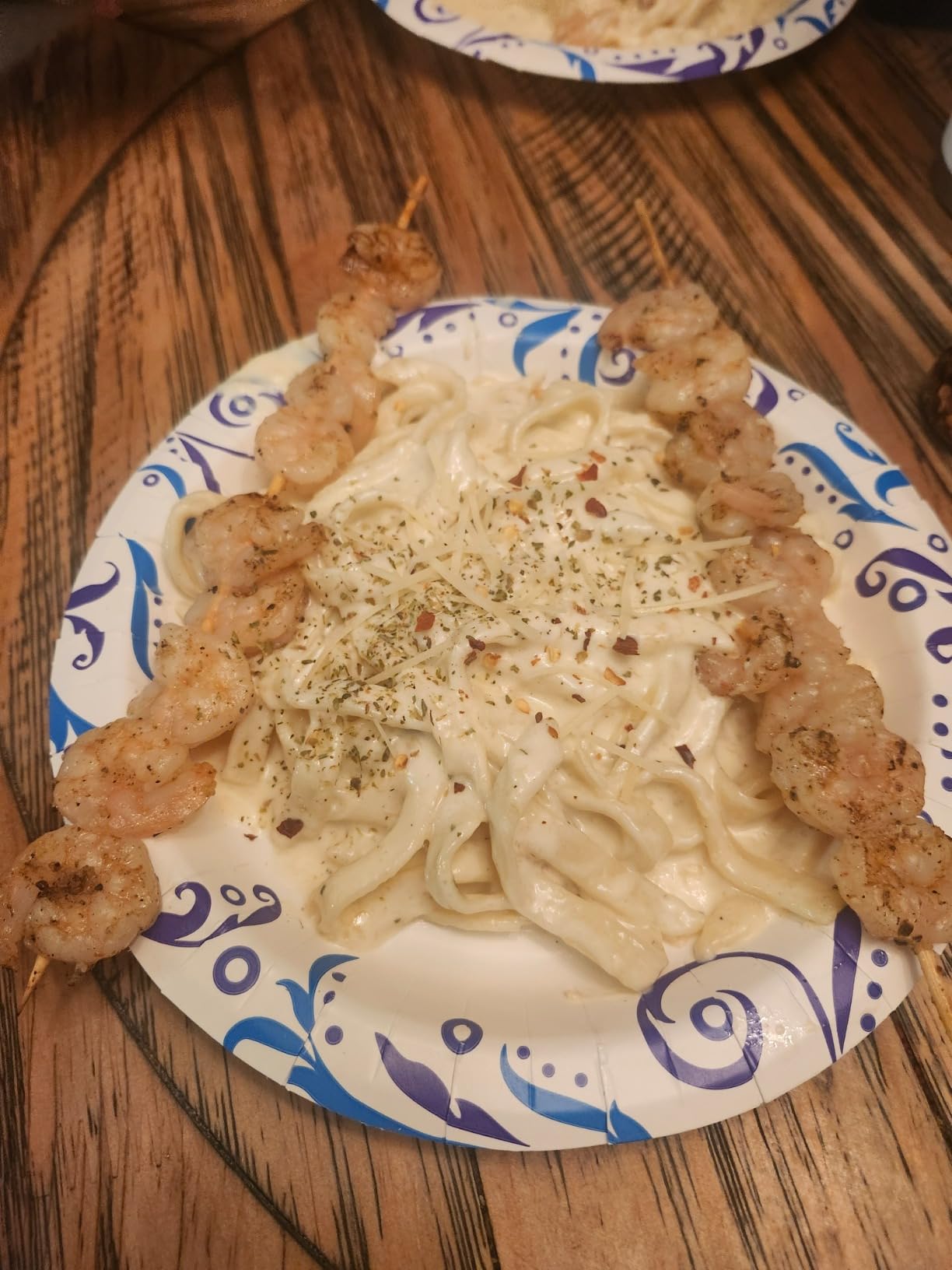
Most first machines fail for one reason: they are too fussy. The Nuvantee is not. It is a straightforward stainless steel roller with seven numbered thickness settings running from 3mm down to 0.5mm and a dual-width cutter at 2.0mm and 6mm, which covers spaghetti, linguini, fettuccine, lasagne and dumpling wrappers.
That bottom end is what makes it the pick for a first machine. Getting to 0.5mm is how you make dumpling skins, which is a skill most people want and almost no budget roller can deliver. Seven settings also means fewer notches to pass through, so you are less likely to jump from thick to thin in one move and tear the sheet.
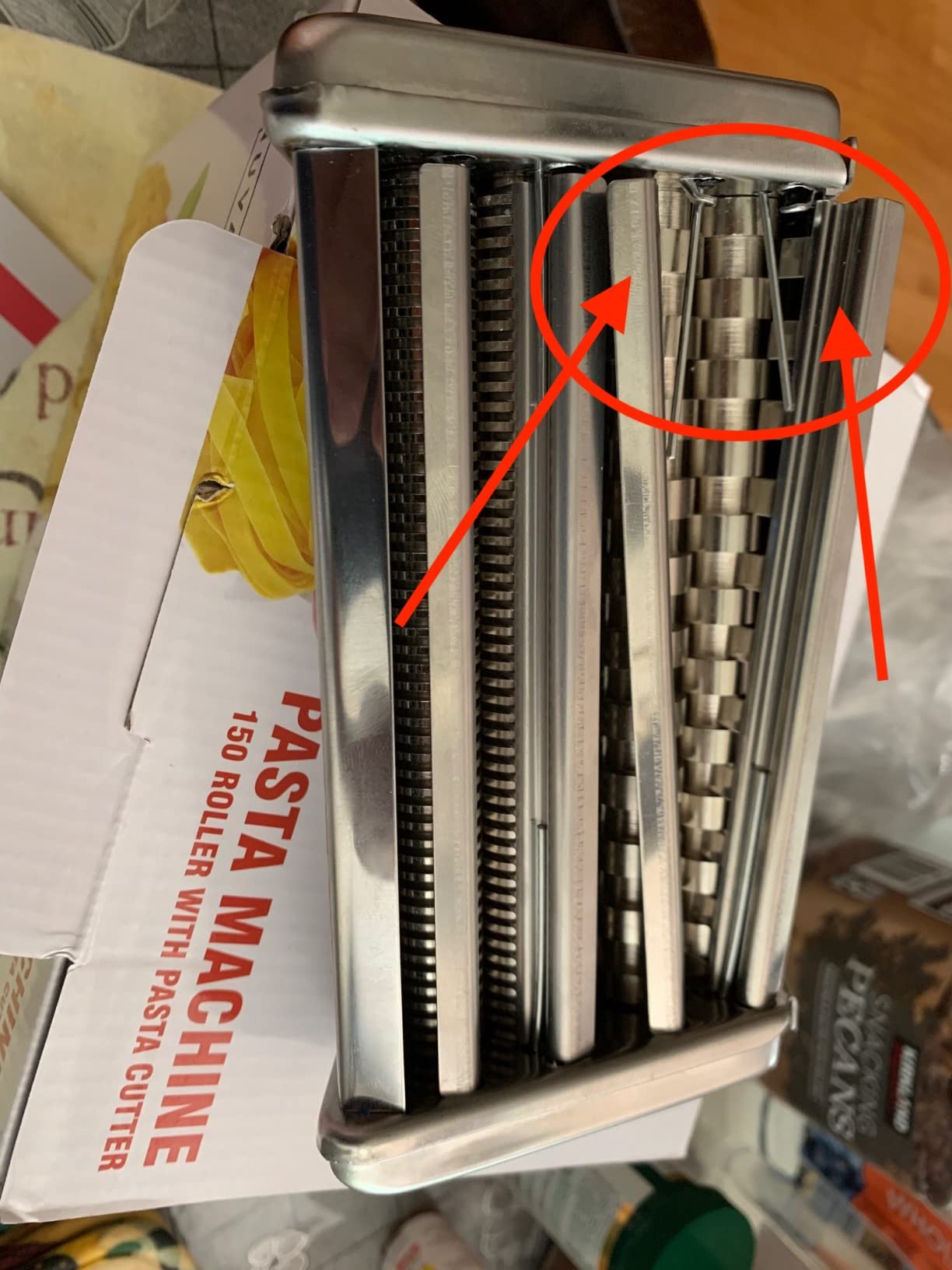
The build is honest stainless steel with aluminum rollers, and reviewers point out that it avoids the metallic smell that some cheaper plated machines transfer to fresh dough. The rank it holds in its category reflects genuine volume of owners rather than a marketing push.
Two limits to know up front. The aluminum rollers can mark or catch delicate dough at the thinnest settings, so if you are chasing translucency you will want a chrome-plated machine. And the cutters produce flat noodles only, because there is no extrusion path at all.
The same dry-brush rule applies to every manual machine here. Do not rinse it. Let the dough dry on the rollers, then brush it off and wipe the body with a barely damp cloth.
Who should buy the Nuvantee 3-in-1?
Buy it if this is your first pasta machine and your main goals are spaghetti, fettuccine and lasagne sheets. It is the least complicated way to get a consistent sheet, and the small size stores away easily between batches.
Buy it if you make dumplings as well as pasta. The 0.5mm end of the range is the reason this machine stands out among entry-level rollers.
Who should skip the Nuvantee 3-in-1?
Skip it if you care about the finish on very thin sheets. Aluminum rollers leave marks that a chrome-plated roller does not, and that is visible at dumpling-wrapper thickness.
Skip it if you plan to make pasta several times a week for years. It is a good first machine, not a forever machine, and the weight to price ratio is where it shows.
4. Sailnovo 3-in-1 – Best Compact Manual Roller
Sailnovo 3-in-1 Pasta Maker with 9-Setting Pasta Roller & Cutters, Silver
Stainless steel body
Aluminum rollers
9 settings 0.5mm to 3mm
2 cutter widths
Pros
- Stainless steel body resists rust and wipes down easily
- Thickness range from 3mm down to 0.5mm across nine settings
- Lightweight enough to move between uses and store away
- Table clamp keeps the machine steady while rolling
- Ranks near the top of the Manual Pasta Makers category
Cons
- Blade must be dry cleaned with a brush not water
- Aluminum rollers can discolor dough over time
- Flat sheets and strips only with no extrusion
- Cutter widths of 2.0 and 4.5mm are narrower than rivals
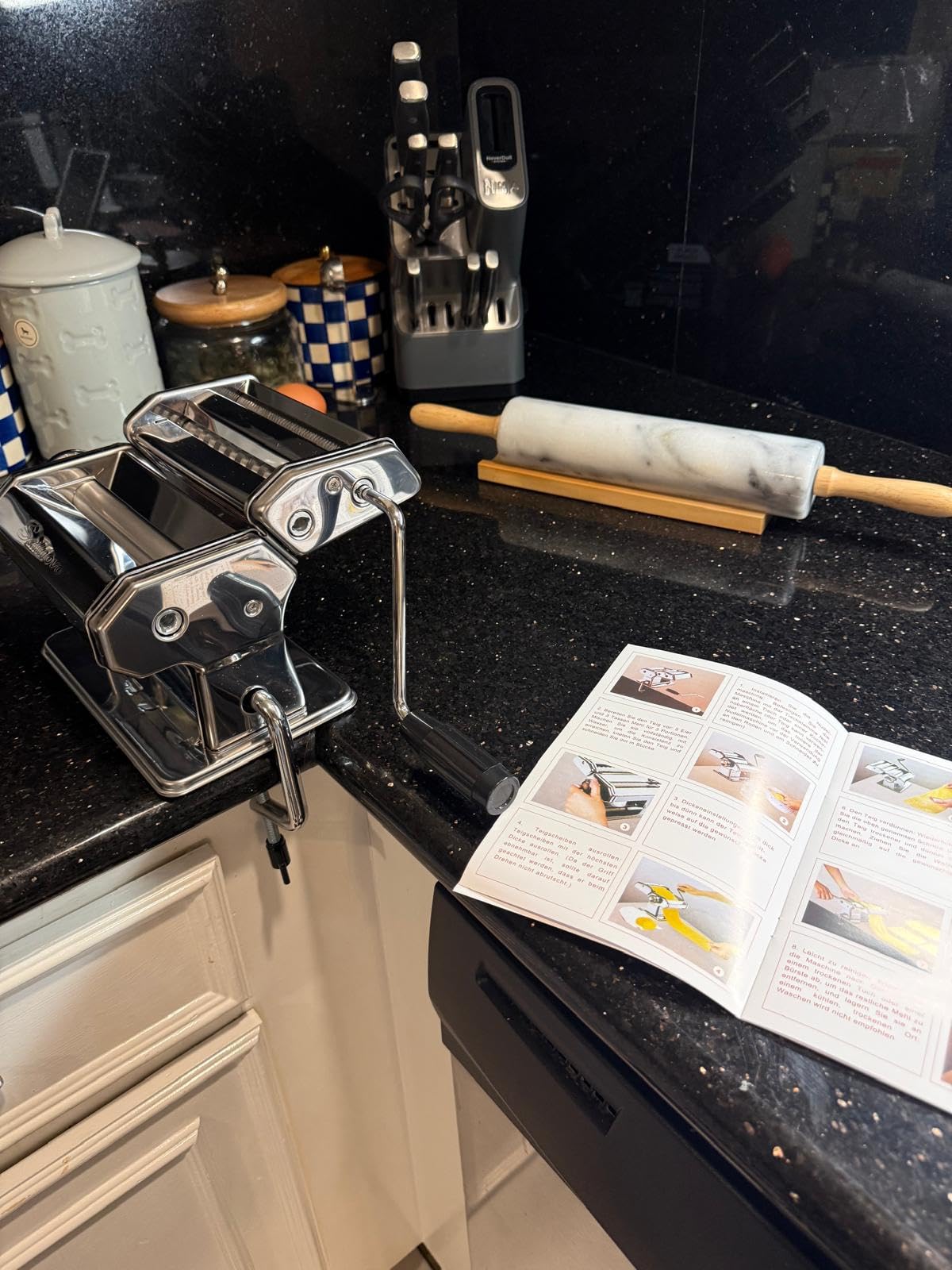
The Sailnovo is the machine I recommend to people who live in a small kitchen. It is a stainless steel body with aluminum rollers, nine thickness settings spanning 3mm to 0.5mm, cutting widths at 2.0mm and 4.5mm, and a clamp that keeps it from walking across the counter. A clamp and an English manual are in the box.
Where it beats most rivals is weight. You can lift it one-handed to rinse nothing and set it back down, and a stainless body is the easiest finish in the group to keep dry and wipe clean. The lightweight construction is consistently called out as a real advantage by owners who store it away rather than leaving it out.
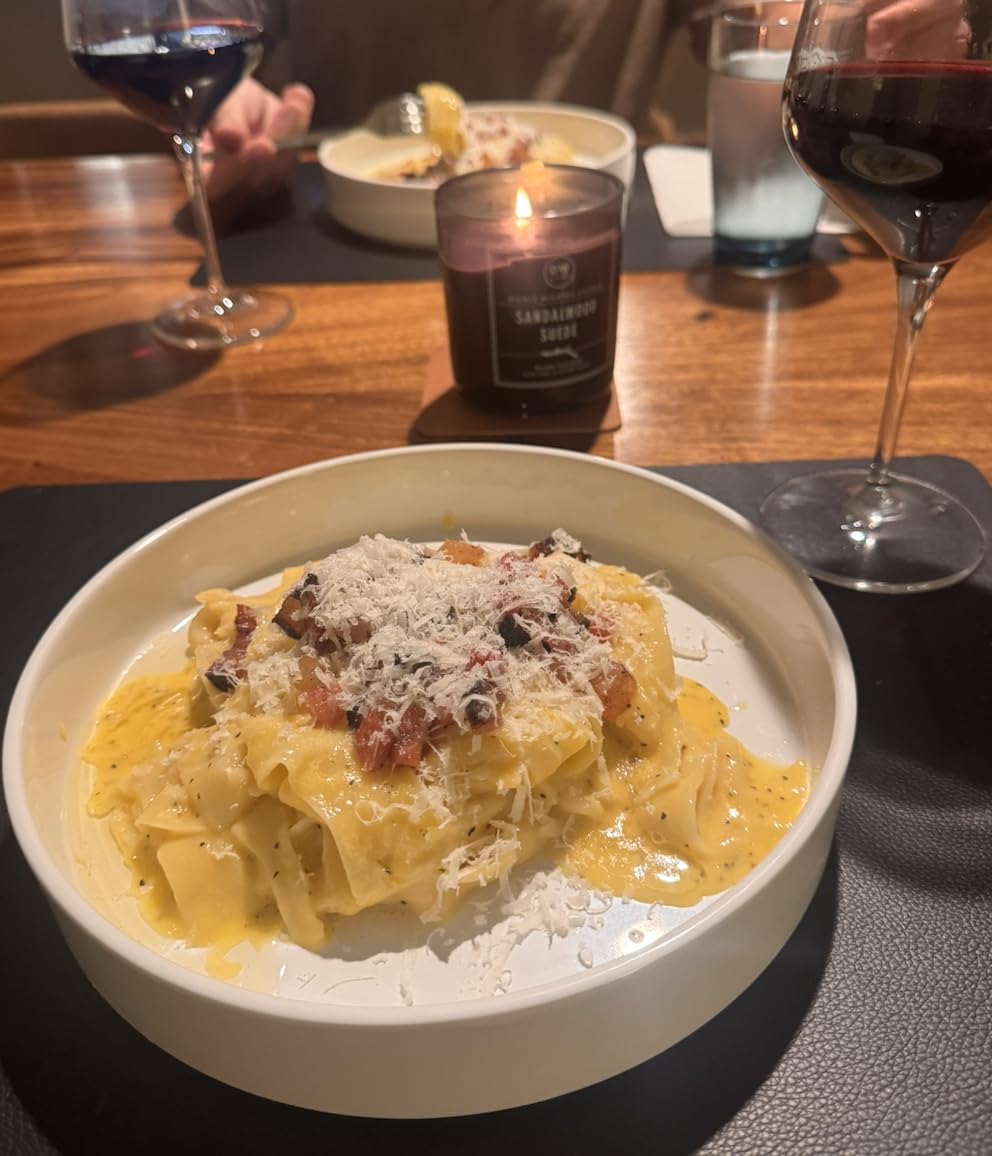
The nine-setting range is generous for the money. Topping out at 3mm means lasagne and filled pasta work, and the bottom at 0.5mm means dumpling skins are possible, so you are not boxed into one style of dough.
The honest limitation is cutter width. At 2.0mm and 4.5mm you have a narrow band of flat noodles, and if you want broad pappardelle or a wide lasagne sheet you will need a different cutter or a different machine. Aluminum rollers also discolour over time, which some owners notice as a faint mark on the sheet.
Keep the blade dry. The manual is explicit that the cutter should be cleaned with a brush or a wooden stick, and owners who follow that advice report the blade staying sharp far longer than those who rinse it.
Who should buy the Sailnovo 3-in-1?
Buy it if counter space and storage are the binding constraints. This is the machine you can put away after dinner rather than dedicate a permanent spot to.
Buy it if you cook in an apartment or a small kitchen and want a full range of thicknesses without a big footprint. The clamp is included, which removes one common extra purchase.
Who should skip the Sailnovo 3-in-1?
Skip it if you want wide ribbons. The two cutter widths do not cover the broad end of flat pasta, and buying more cutters separately erodes the value of the machine.
Skip it if you already own a heavy chrome-plated roller. You will not notice much difference in sheet quality between the two once you get past the first few batches.
5. Philips Viva Collection HR2370/05 – Best Automatic Extruder
Philips Kitchen Appliances Compact Pasta and Noodle Maker, Viva Collection, Comes with 3 Default Classic Pasta Shaping Discs, Fully Automatic, Recipe Book, Small, White (HR2370/05)
Fully automatic
3 shaping discs
2-3 servings in about 18 minutes
4700 g
Pros
- Mixes kneads and extrudes in one automatic step
- Compact footprint for a small kitchen
- Three classic discs for spaghetti penne and fettuccine
- Parts disassemble for cleaning and are mostly dishwasher safe
- Strong results with gluten-free dough
Cons
- Batch limited to roughly 2-3 servings per run
- Results depend on exact flour to liquid ratios
- No thickness control with the included discs
- Extra shaping discs are sold separately
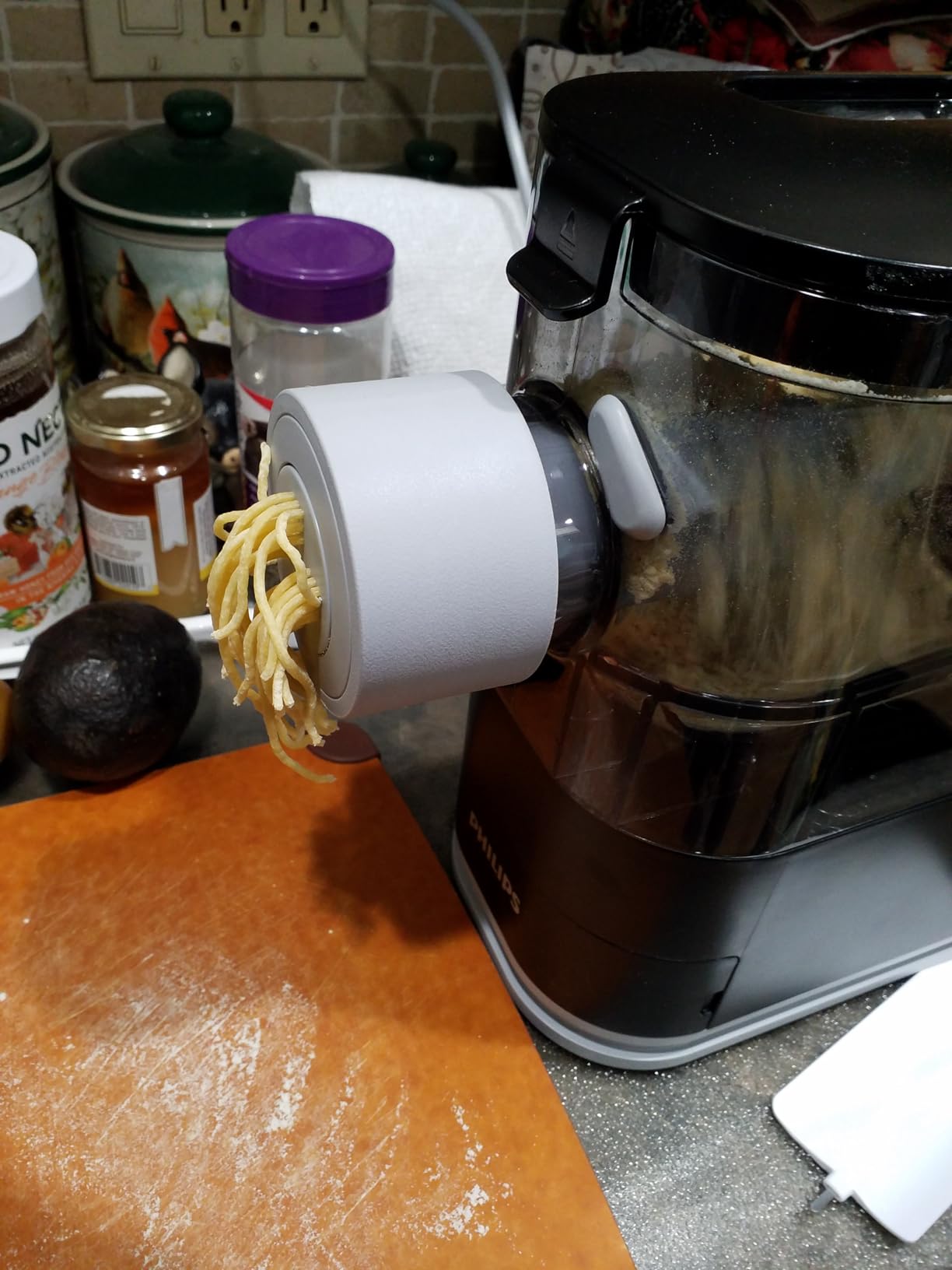
The Philips is the machine to buy if you want pasta without any of the technique. It weighs and measures nothing for you in the traditional sense, but it does mix, knead and extrude in a single automatic step, producing two to three servings in about 18 minutes. Three default shaping discs give you spaghetti, penne and fettuccine.
A double extrusion process is the technical detail that matters. Dough passes through twice, which is why the output is smoother and more consistent than a single-pass machine produces, and why the sheet-free extruded shapes come out clean enough to eat straight from the machine.
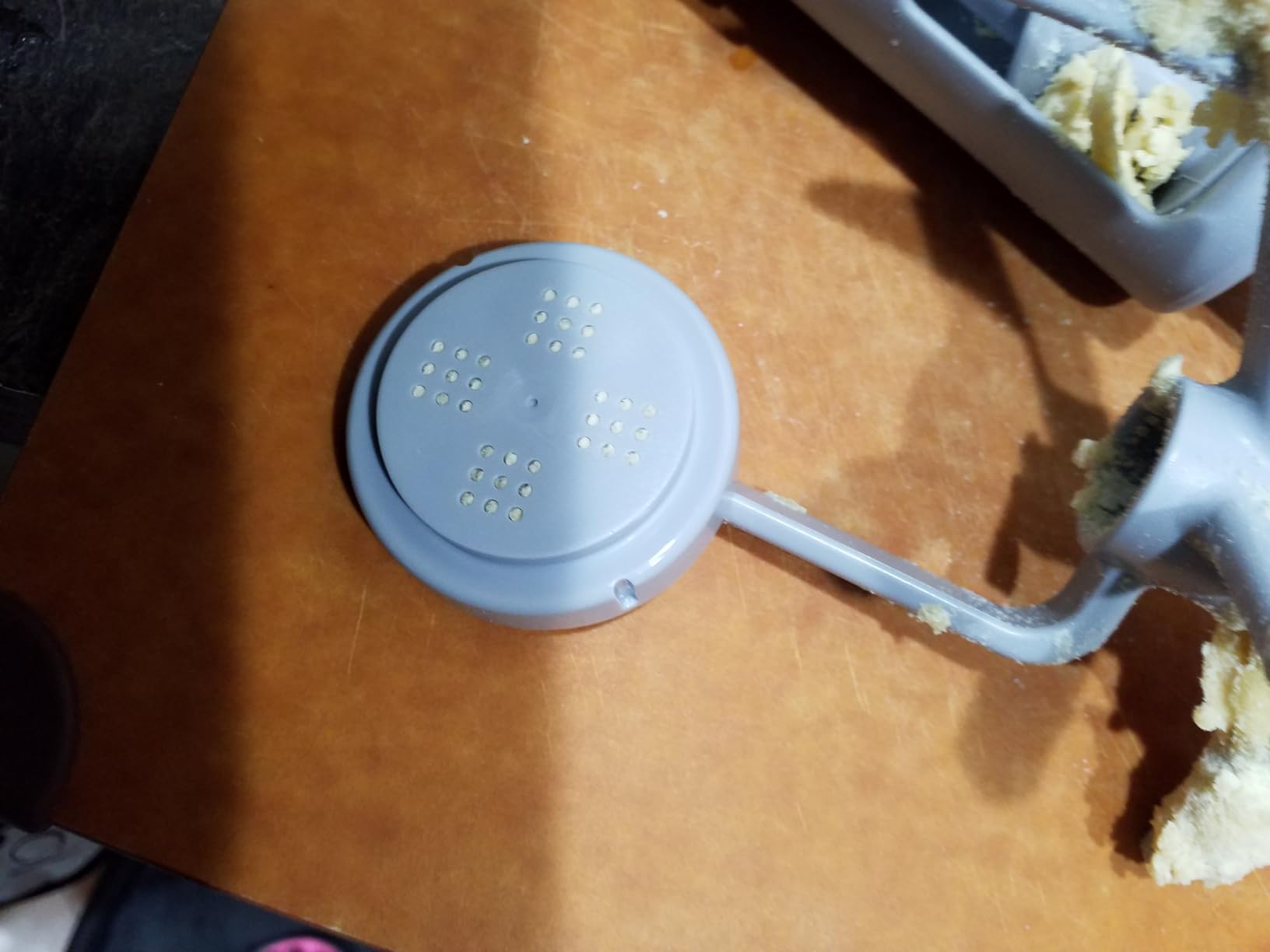
Cleaning is the easiest in the group. Parts disassemble, and most of them are dishwasher safe, with built-in storage for the shaping discs so you are not hunting for a small plastic wheel. That design matters more than it sounds in a kitchen with limited drawer space.
Two things to weigh. The batch is small, roughly two to three servings, so this is a weeknight machine rather than a batch-cooking one. And the ratio has to be right; owners who get smooth results are the ones who weigh flour precisely and keep the dough on the crumbly side rather than wet.
Flavoured and coloured dough is a genuine strength here rather than an afterthought, since the machine never touches the dough with your hands. Spinach, carrot juice and herb variations are called out in the recipe book that ships in the box.
Who should buy the Philips Viva Collection?
Buy it if you are a beginner who finds dough technique intimidating. One button, three discs, no rollers to jam, and a machine that cleans mostly in a dishwasher.
Buy it if you make small amounts often, or if you want coloured and vegetable pasta for children without handling dye in your hands.
Who should skip the Philips Viva Collection?
Skip it if you want lasagne or ravioli sheets. It is an extruder with three shaping discs, so there is no flat sheet to fill or layer.
Skip it if you cook for a large family in one sitting. Three servings per cycle means multiple runs, and each run takes about 18 minutes with loading and unloading on top.
6. Imperia IPasta Classic Line – Best Italian Value Roller
Imperia IPasta Classic Line. Pasta Machine 100% Made in Italy. Fresh pasta machine in steel. Manual roller with crank. Creates dough sheets for Lasagne, Tagliolini, Fettuccine. (End of line)
Made in Italy
150mm sheet
6 settings 0.5mm to 5mm
7.6 lb
Pros
- Made entirely in Italy by a maker working since 1932
- 150mm sheet width with six settings from 0.5mm to 5mm
- Accepts a Pasta Facile 4600 motor later through a side clamp slot
- Expands with duplex simplex and ravioli accessories
- Includes cotton pouch crank brush non-slip base and table support
Cons
- Heavier build at 7.6 pounds
- Manual crank only with no motor in the box
- Only one cutting disc included
The Imperia is the answer when someone asks what pasta maker Italians use. Imperia and Monferrina have made pasta equipment in Italy since 1932, and this model is alloy steel with chromed steel cutting rollers, a 150mm maximum sheet width, six roller heights from 0.5mm to 5mm, and cutting widths of 6.5mm for fettuccine and 2mm for tagliolini.
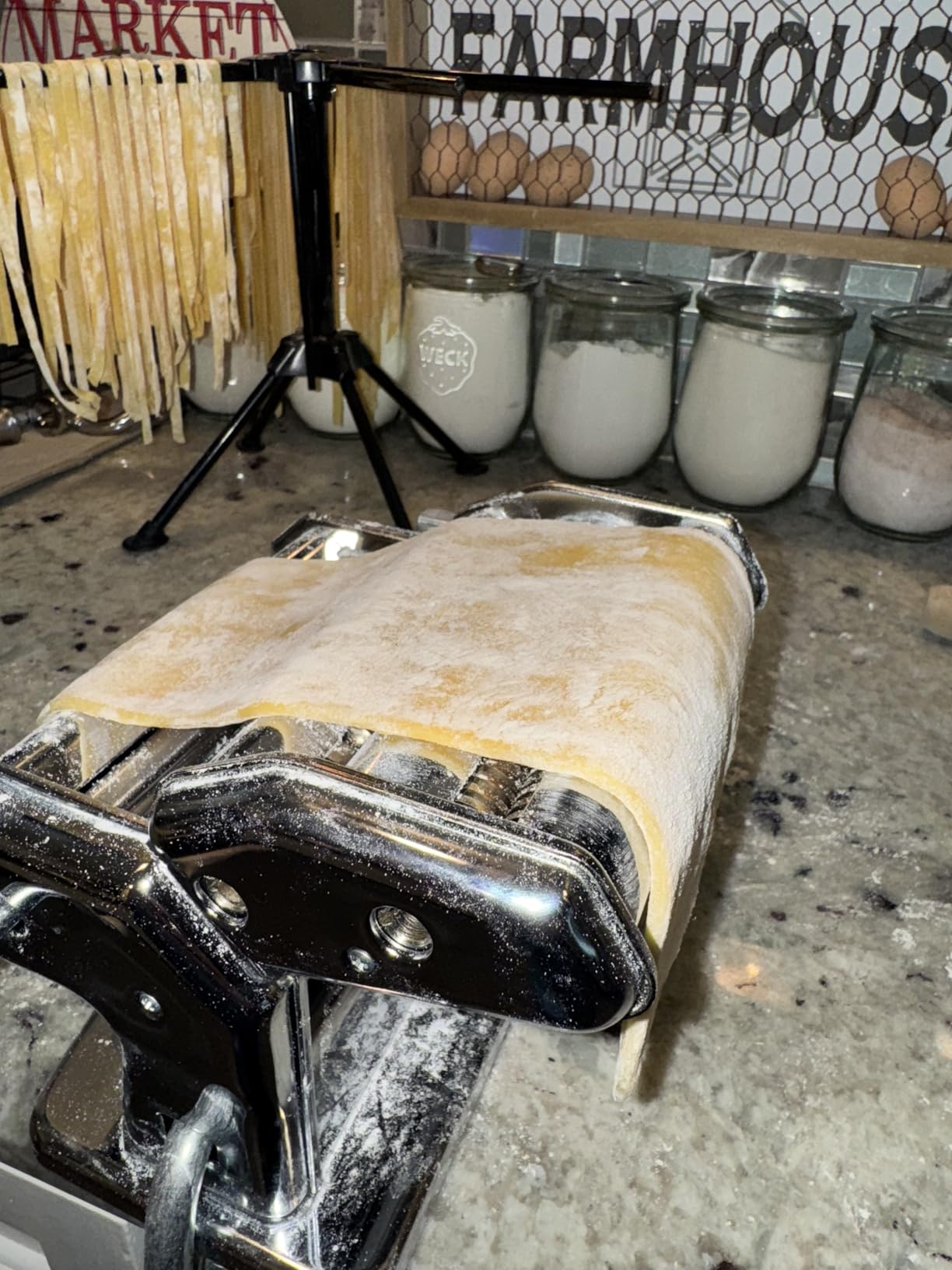
What makes it exceptional is the upgrade path. A side clamp slot accepts the Pasta Facile 4600 motor, so you can start cranking and add electric power later without buying a new machine. The duplex, simplex and ravioli accessories expand the same body into a filled-pasta setup, which is a cheaper route to ravioli than a dedicated machine.
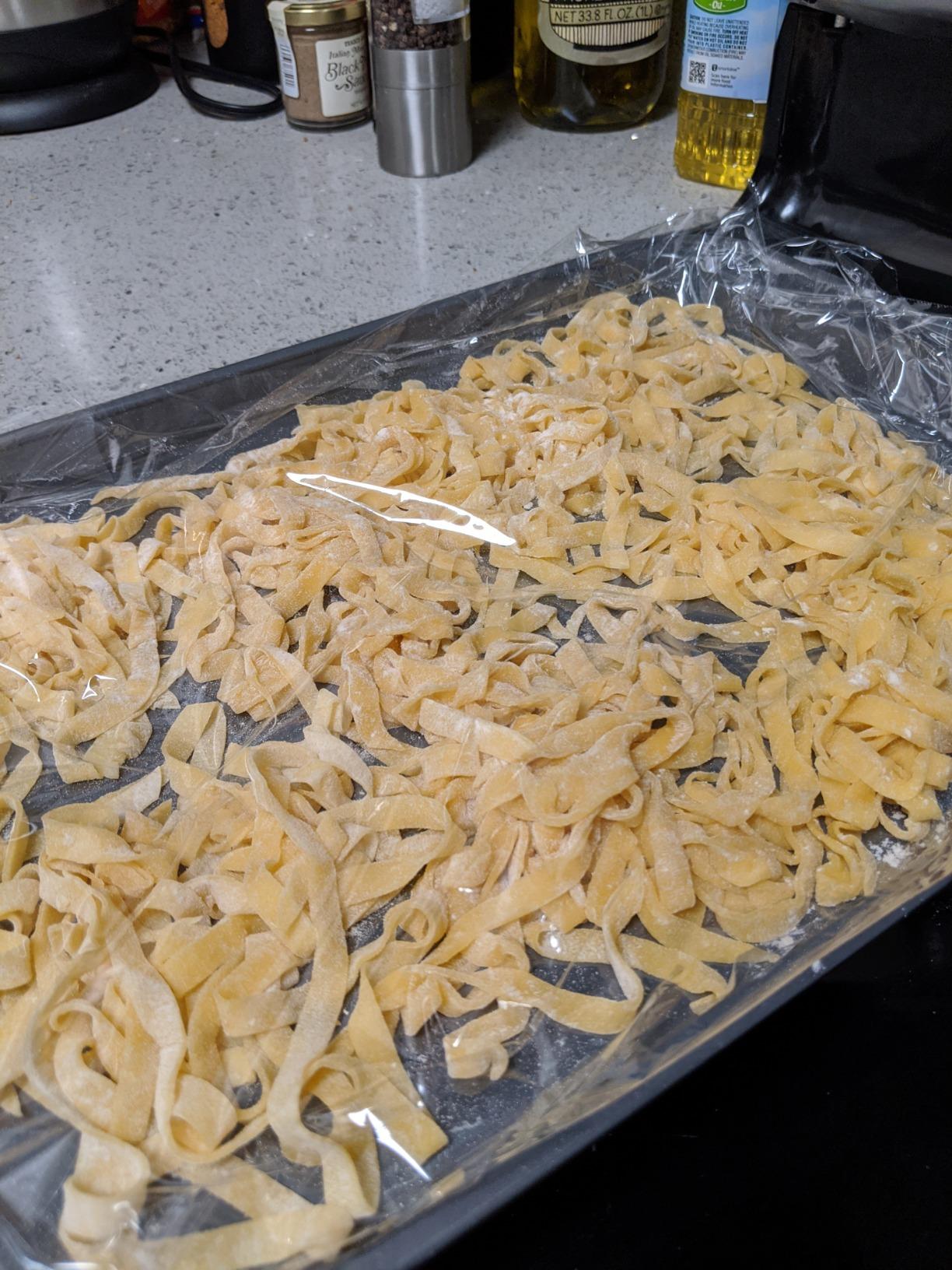
The box is unusually generous for this category. You get a cotton storage pouch, the crank, a cleaning brush, a non-slip base, a table support and the manual, so nothing needs buying to get started except dough.
What you give up is portability. At 7.6 pounds this is the heaviest roller on our list, which is a real factor in a small kitchen where the machine has to live in a cupboard. The accessory ecosystem also assumes you will spend more over time, and the single included cutting disc is thin on its own.
Site note: this listing carries the End of Line colourway name. The machine itself is a current, long-running Italian design, and the accessory ecosystem is the point of choosing it over a cheaper clone.
Who should buy the Imperia IPasta Classic Line?
Buy it if you want to start manual and add a motor in a year or two. The Pasta Facile 4600 mounts through the side clamp slot, so cranking is a phase rather than a life sentence.
Buy it if ravioli is on your list. The simplex and duplex accessories turn this roller into a filled-pasta machine, which no other machine in this roundup can do.
Who should skip the Imperia IPasta Classic Line?
Skip it if you have limited storage and do not want the machine on the counter permanently. Seven and a half pounds is a two-hand lift into a high cupboard.
Skip it if you want a wide range of cutter widths immediately. Only one disc is included, so more shapes mean more accessory purchases.
7. VeoHome Pasta Maker with Dryer – Best Complete Kit
Manual Pasta Maker with Dryer – Multi-Pasta Stainless Steel Italian Flat Dough Machine with Adjustable Setting, Sharp Cutter, and Hand Crank – Fresh Homemade Noodles, Spaghetti, Lasagne | By VeoHome…
Stainless steel
7 settings 0.6mm to 7mm
2 cutters
Drying rack and ravioli mould
Pros
- Comes as a kit with a folding drying rack and a ravioli mould
- All-metal stainless steel build that brushes clean easily
- Seven settings from 0.6mm to 7mm covering thin ravioli to lasagne
- Compact enough to store in a deep drawer
- 2.9 kg stainless body
Cons
- Table clamp can slip and the machine can wobble
- Assembly is tricky the first time
- Included recipe is weak
- Roller can catch the edge of the sheet
Most machines in this roundup sell the machine and leave the rest to you. The VeoHome includes a folding pasta drying rack and a ravioli mould in the box, and that turns a single-use purchase into a complete setup. The body and rollers are food-grade stainless steel, with seven thickness settings from 0.6mm up to 7mm and detachable cutters at 2mm and 6.6mm for tagliatelle and fettuccine.
The 7mm end of that range is the thickest sheet of any machine here. It gives you a heavy lasagne sheet and, more usefully, extra material to trim when you are cutting ravioli rounds, which is where the included mould earns its place.
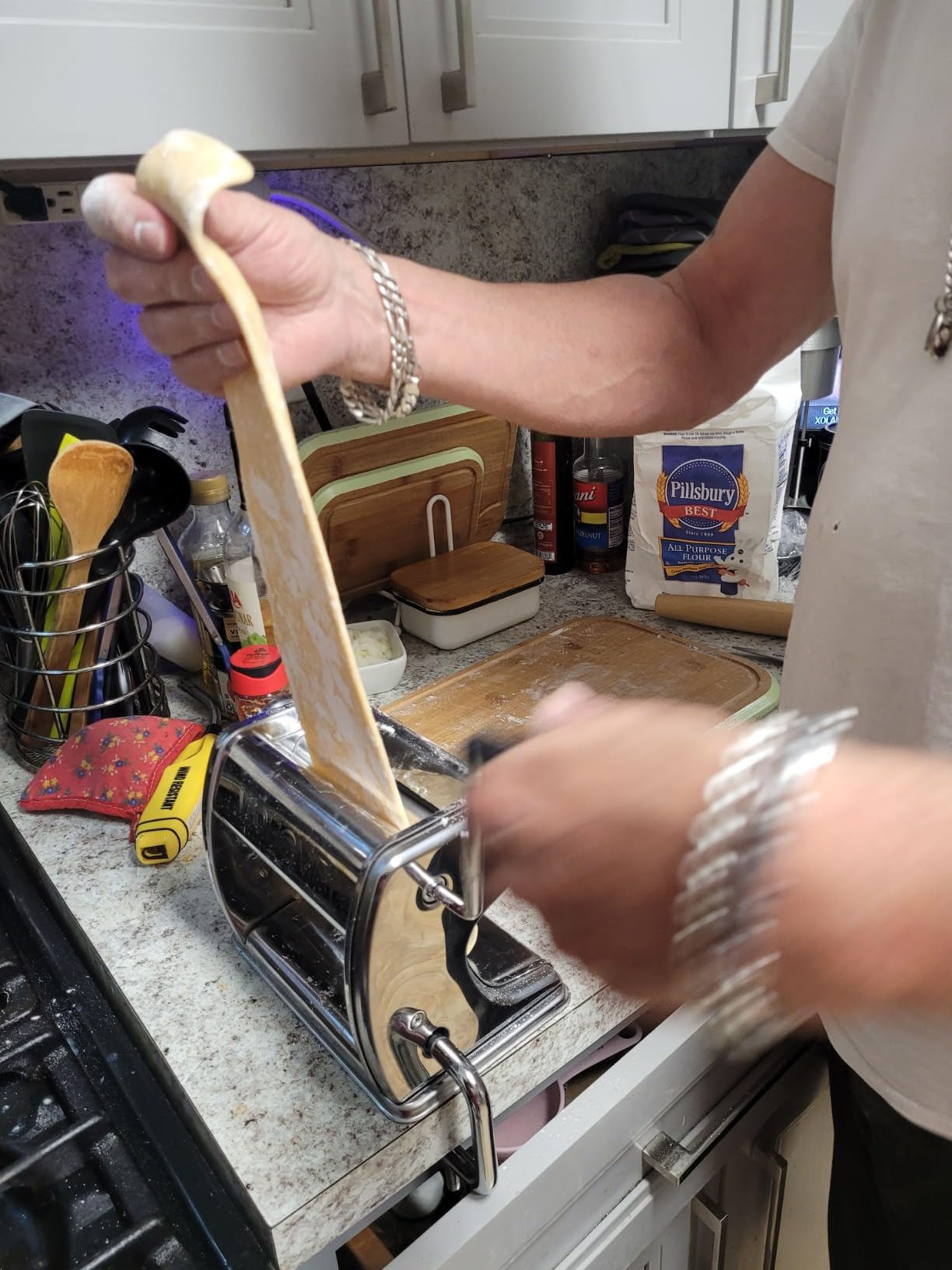
Two things to sort out before your first batch. The assembly is genuinely fiddly the first time, so give yourself twenty minutes with the manual and no dough waiting. And the locking clamp can slip on a smooth or thick counter, which is the most common complaint in the reviews, so check it holds before you crank.
The included recipe is weak and most owners replace it. Treat it as a starting point for hydration rather than a method. The roller catching the edge of the sheet is another recurring note, which usually means feeding the dough slightly off-centre, so nudge it rather than forcing it.
Cleaning follows the same rule as every manual machine here. Dry brush only, and do not immerse the body in water even though it is stainless steel.
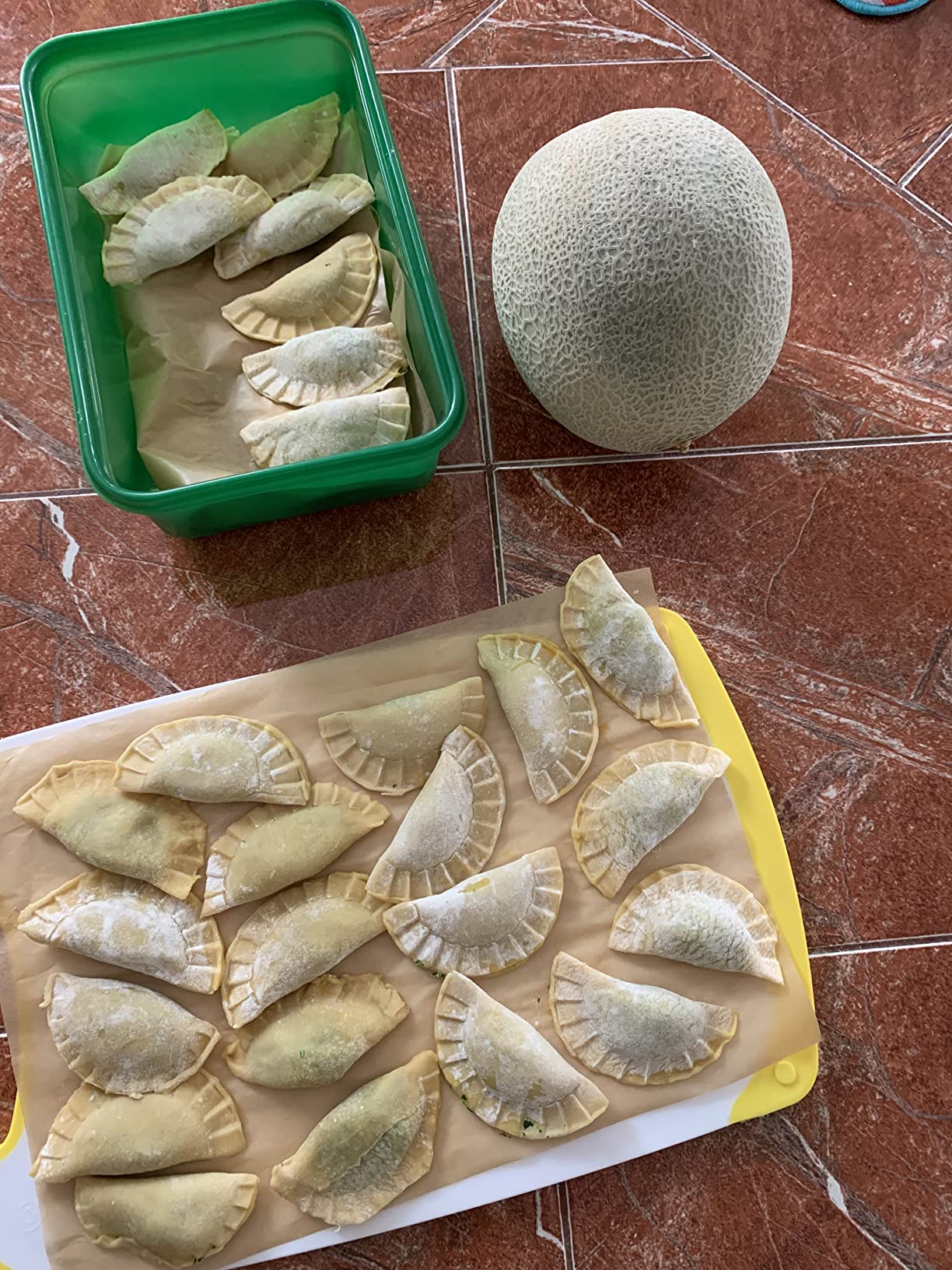
Who should buy the VeoHome Pasta Maker with Dryer?
Buy it if you are starting from nothing and want the accessories on day one. A drying rack solves the real problem of fresh pasta, which is that 300g of it does not fit on one towel.
Buy it if you make ravioli often. The included mould plus 7mm of thickness headroom covers filling and sealing in one session.
Who should skip the VeoHome Pasta Maker with Dryer?
Skip it if your counter is thick stone or has a beveled edge. The clamp is the weak point and it needs a flat, square edge to grip, so test the fit before you commit.
Skip it if you want fine control at very thin settings. The roller marking the edge of the sheet is a recurring note and shows up most on delicate dough.
8. YASHE 3-in-1 – Best Thin-Setting Value
YASHE 3-in-1 Pasta Maker Machine with Adjustable Thickness
Stainless steel and alloy
9 settings 0.3mm to 3mm
2 cutter widths
2.9 kg
Pros
- Thinnest setting of the group at 0.3mm for dumpling skins
- Nine thickness settings across a useful range
- Cleaning brush and cloth included in the box
- Sturdy fixing clamp holds the machine steady
- Food-grade stainless steel and aluminum alloy
Cons
- Brushed rather than plated rollers can mark dough
- Aluminum alloy parts are lighter duty than all-steel rivals
- Only two cutter widths limit noodle variety
- Dry cleaning still needed to remove dough
The YASHE exists to do one thing the other budget machines cannot: reach 0.3mm. Nine settings run from 3mm down to that 0.3mm floor, which is the thinnest sheet of any machine here and makes it a practical choice for dumpling wrappers and very fine filled pasta.
For everything else it is a competent manual roller. The body is food-grade stainless steel with aluminum alloy components, the dual-width cutter handles 2mm and 6.5mm, and the included fixing clamp, cleaning brush and cloth mean you can start the same afternoon it arrives.
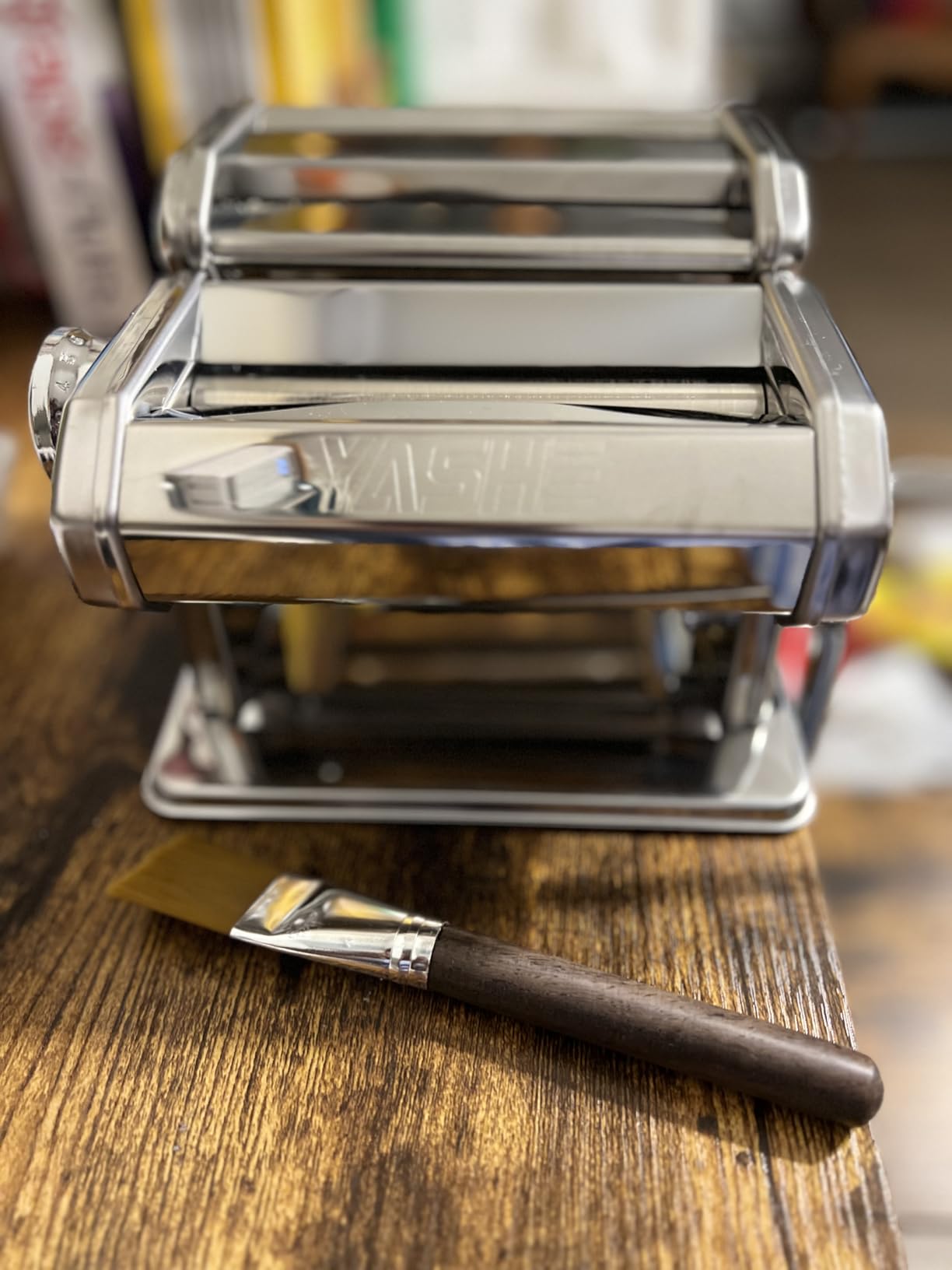
Be clear about the trade-off. The rollers are brushed rather than plated, and brushed surfaces catch dough more readily at fine settings, which is precisely where you will be working. Expect a little more semolina and a little more patience than you would get from a chrome-plated roller.
Two cutter widths is the other limitation. That covers spaghetti and a broad flat noodle, and it means the machine is narrower in purpose than the Nuvantee or the Imperia even though the thickness dial looks more capable.
Owners rate it as value rather than as a forever machine, and that framing is fair. It is the pick if dumpling skins and fine filled pasta are your goal and you want the widest dial for the least outlay.
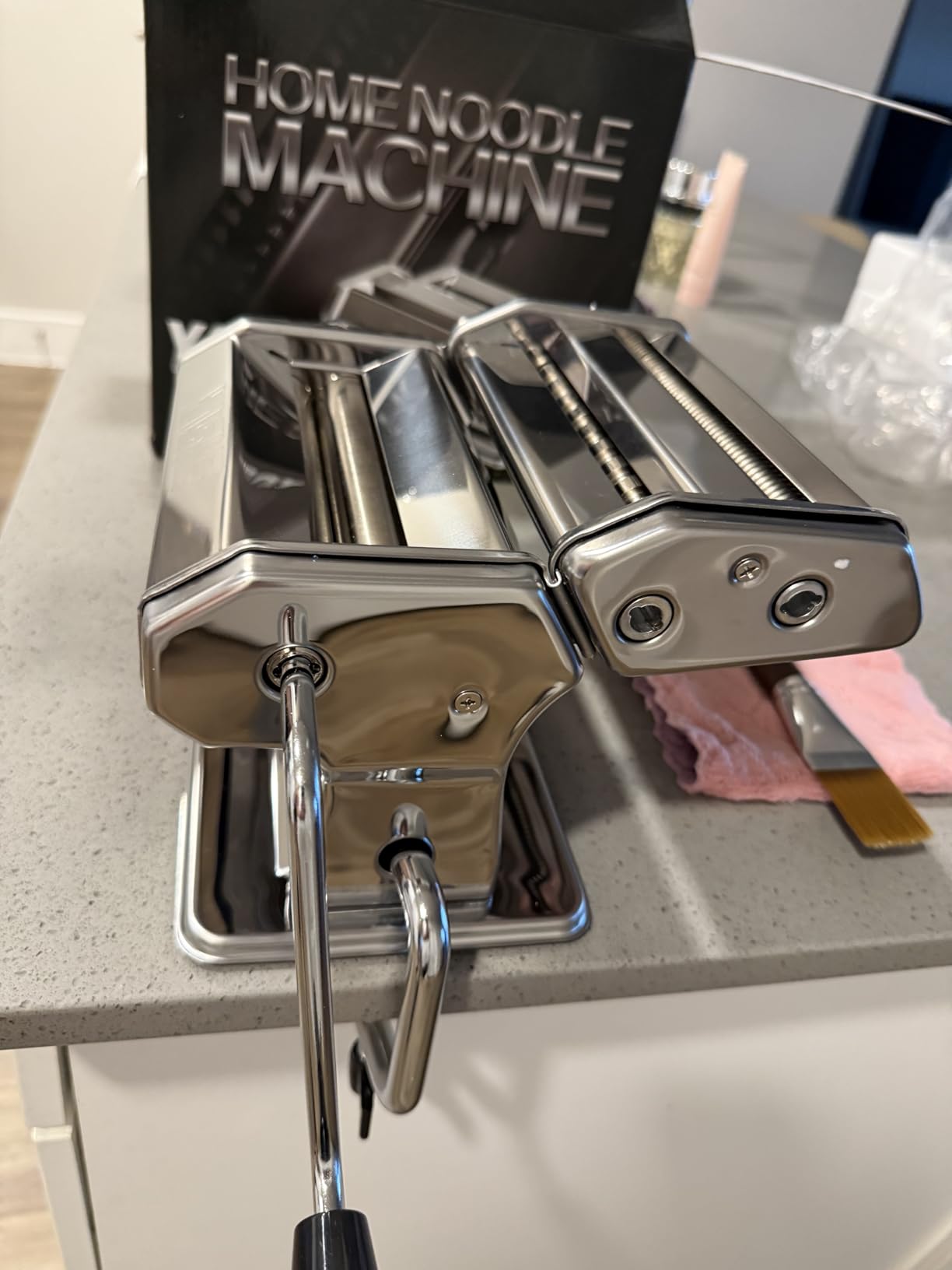
Who should buy the YASHE 3-in-1?
Buy it if making dumpling wrappers or very fine filled pasta is the main goal. A 0.3mm floor is a real feature, not a spec-sheet trick.
Buy it if you want a cleaning kit from day one. The brush and cloth are in the box, which is one fewer accessory to track down.
Who should skip the YASHE 3-in-1?
Skip it if appearance of the final sheet matters. Brushed rollers mark delicate dough, and that is most visible on white or coloured pasta.
Skip it if you want noodle variety. Two cutter widths is a narrower range than most machines at a similar tier.
9. KitchenAid Pasta Deluxe Set KSMPDX – Best Roller Set for Mixer Owners
KitchenAid KSMPDX 5-piece Pasta Deluxe Set Attachment for KitchenAid Mixers
All stainless steel
8 thickness settings
6 inch sheets
4 cutters
2 kg
Pros
- Highest owner rating on our list at 4.8 stars
- All stainless steel with no plastic parts
- Five pieces cover sheets plus spaghetti fettuccine lasagnette and capellini cutters
- Eight thickness settings from fine to hearty
- Works with mixers that are decades old
Cons
- Requires a KitchenAid stand mixer which is sold separately
- Dough must dry fully in the roller before removal
- Included brush is too narrow for the roller slots
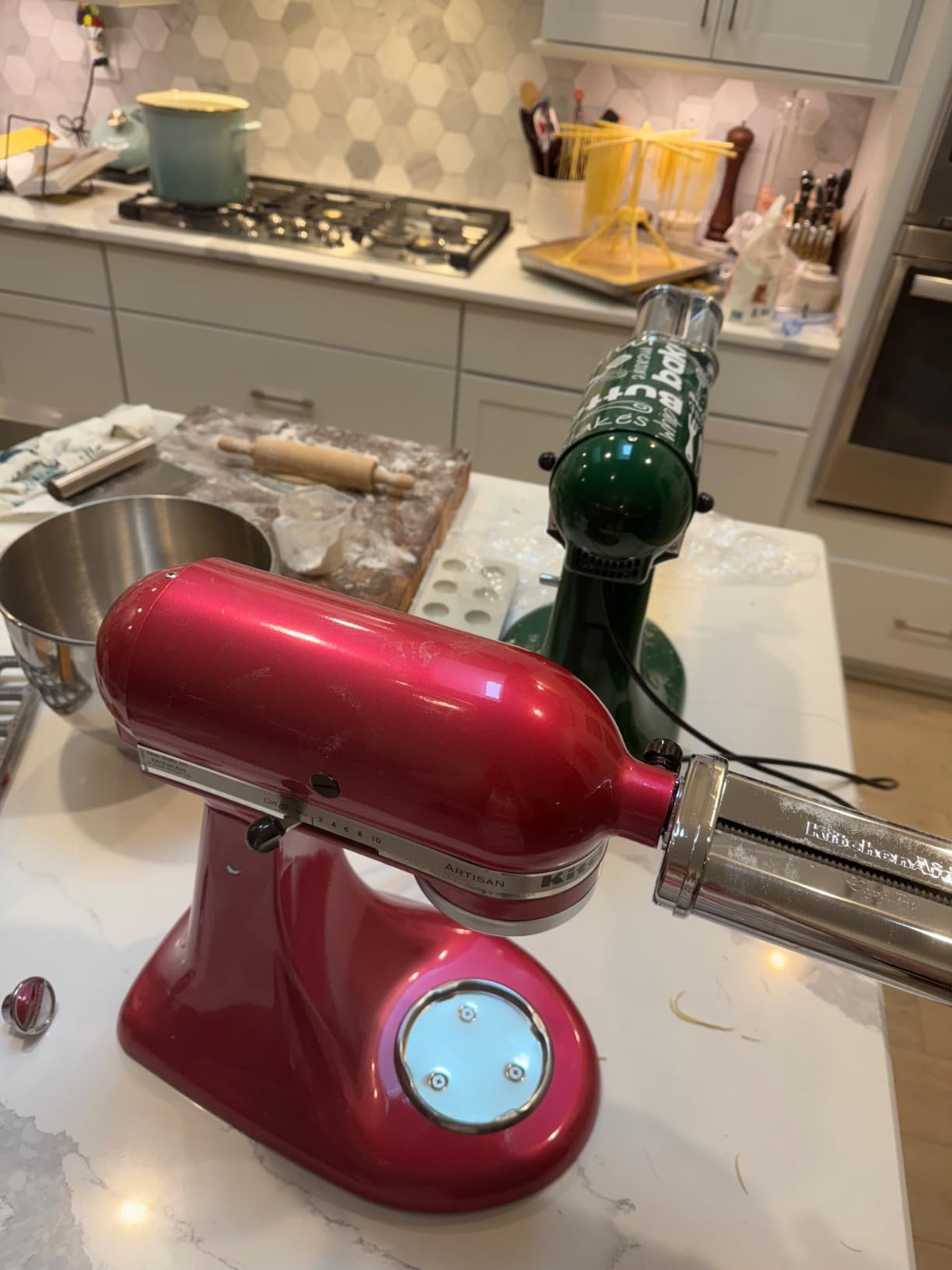
This is a roller rather than a press, and it is the best-rated machine we covered at 4.8 stars across 1162 owners. It connects to any household KitchenAid stand mixer power hub, rolls six-inch sheets across eight thickness settings, and the box contains a roller plus fettuccine, spaghetti, lasagnette and capellini cutters and a cleaning brush.
The all-stainless construction is the differentiator. There is no plastic anywhere in the food path, which matters for a machine people expect to keep for a decade, and the fact that it works with older mixers means you are not replacing your mixer to use it.
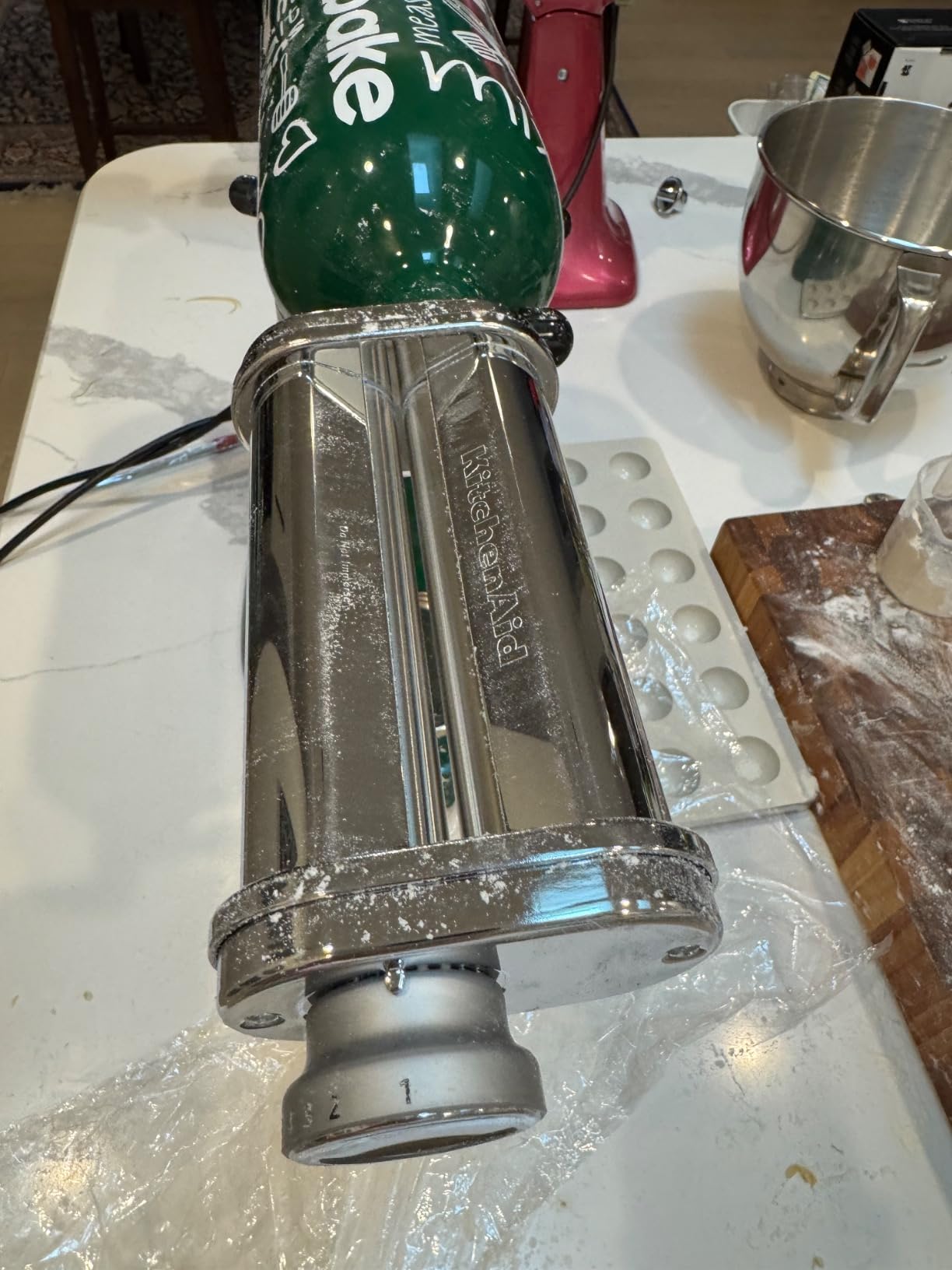
Because the mixer drives it, the rollers turn at a steady motor speed rather than at whatever pace your arm gives on the third minute. That is why output is uniform, and it is the same reason owners describe the process as hands-free once the dough is loaded.
Cleanup has one specific trap: dough stuck in the roller has to dry completely before it will release, and pulling it out wet risks marking the steel. The supplied brush is also too narrow to reach into the roller slots properly, so a wider pastry brush is a worthwhile extra.
The sheet is six inches, narrower than a 150mm standalone roller. For lasagne in a standard dish that is two strips, and for large ravioli rounds you may prefer the Atlas 150.
Who should buy the KitchenAid Pasta Deluxe Set?
Buy it if you own a KitchenAid stand mixer and want flat sheets without cranking. The motor does the work, the steel lasts, and four cutters cover most weeknight shapes.
Buy it if you are replacing a plastic roller attachment that has cracked. The all-metal build is the reason to upgrade rather than buy the same plastic part again.
Who should skip the KitchenAid Pasta Deluxe Set?
Skip it if you do not own a stand mixer. The mixer is not included, and without one this attachment cannot be used at all.
Skip it if you need wide sheets for lasagne or big ravioli. Six inches is narrower than the 150mm standalone rollers in this roundup.
10. GVODE 3-in-1 Attachment – Best Budget Mixer Attachment
GVODE 3-in-1 Pasta Maker Attachment for KitchenAid Stand Mixers
Metal not plastic
3 in 1 roller and cutters
8 thickness levels
2.5 lb
Pros
- Sheet roller fettuccine cutter and linguine cutter in one unit with no head swapping
- Metal body resists the cracking that affects plastic attachments
- Metal baffle contains flour and dough splatter
- Polished stainless surface to reduce dough sticking
- 8 adjustable thickness levels across the full set
Cons
- Thickness selector can slip out of position while rolling
- Cutters may not fully sever wider dough on the first pass
- Thickness adjustment screw cap does not stay put on some units
- Rollers may need pliers for a deep clean
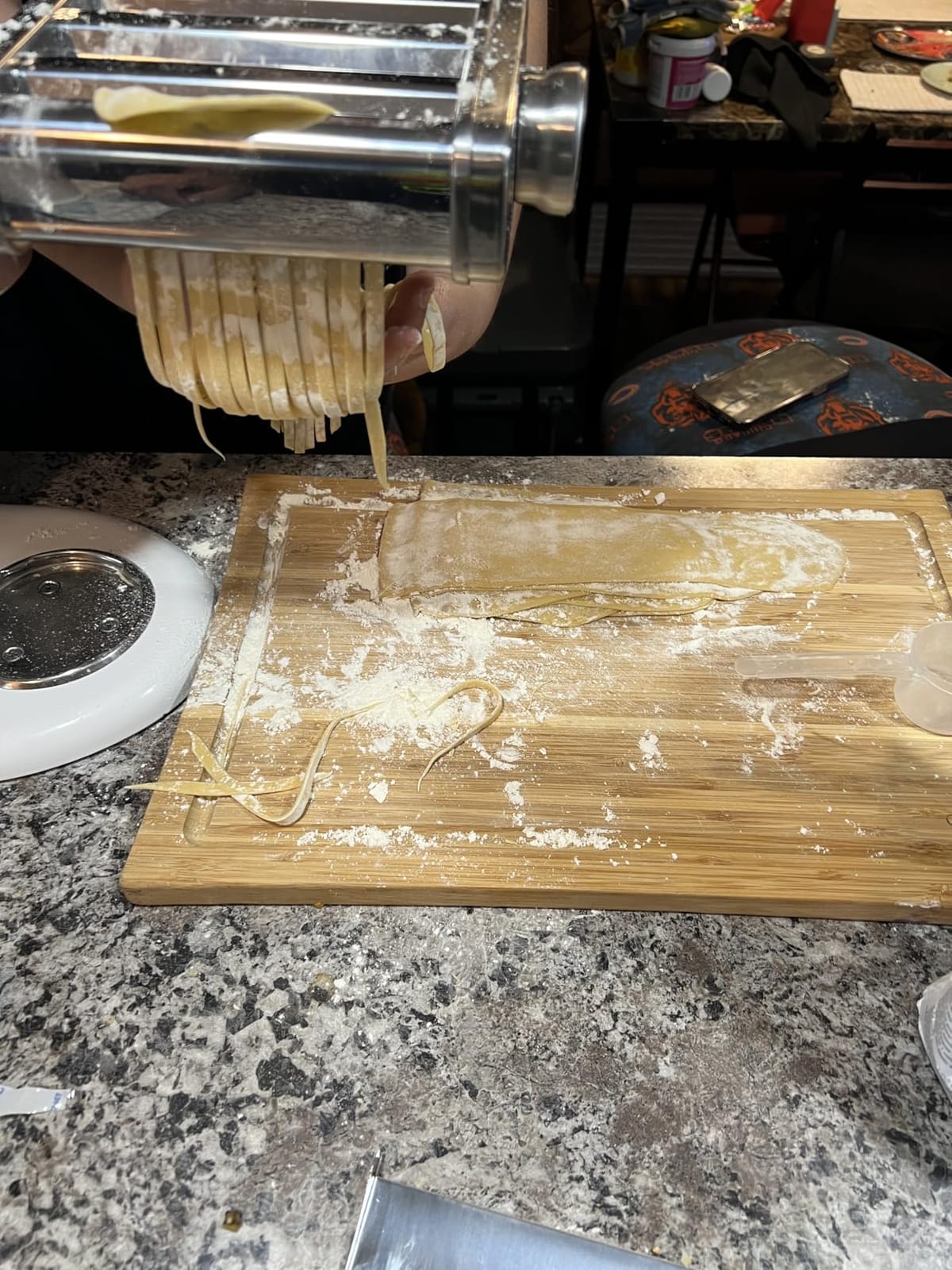
The GVODE exists to solve one problem: the price of the official roller set. It is a metal rather than plastic body in three pieces of functionality, a sheet roller, a fettuccine cutter and a linguine cutter, with eight adjustable thickness levels and a metal baffle to keep flour off your counters and cabinets.
Not swapping heads is the underrated feature. The three-in-one design means the roller and both cutters stay attached, so there is nothing to remove, mislay or cross-thread between a lasagne sheet and linguini in the same session. The polished stainless surface is also genuinely less sticky than bare aluminum.
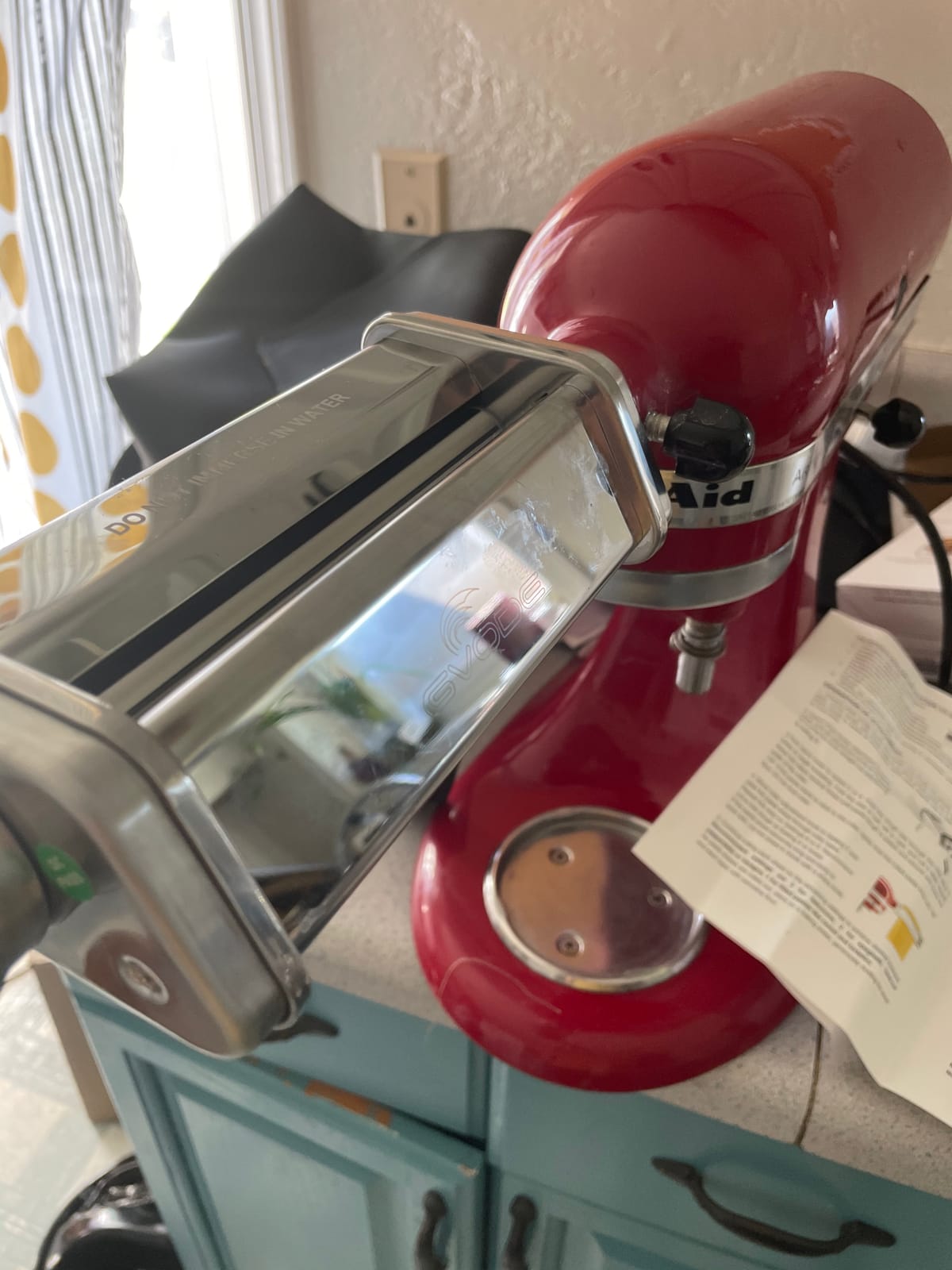
It fits stand mixers precisely and rolls evenly, which is not a given in this price tier. Several owners report buying it specifically after a plastic attachment cracked, and finding the metal body does not flex.
Now the faults, which recur in a minority of reviews. The thickness selector can slip out of position mid-roll, so re-check the setting whenever you change it. The cutter blades may not fully sever wider dough on the first pass, which means a second run rather than a discarded sheet, and the screw cap on the thickness adjustment does not always stay in place.
For a deep clean, the rollers can need pliers to turn. A thin, dry pastry brush and a little patience is the better routine.
Who should buy the GVODE 3-in-1 Attachment?
Buy it if you already have a mixer and want a metal roller body without the brand-name outlay. The 3-in-1 layout also makes it the least fiddly attachment to use.
Buy it if flour mess is a real issue in your kitchen. The metal baffle genuinely contains splatter that other attachments throw across the worktop.
Who should skip the GVODE 3-in-1 Attachment?
Skip it if you make wide sheets often. A cutter that does not fully sever wider dough on the first pass means a second pass every time, and that adds up over a large batch.
Skip it if you would rather not re-check settings mid-batch. The slipping thickness selector is the most common complaint and it is genuinely irritating at 2mm in the wrong light.
Manual, electric or stand mixer attachment: which type suits you?
Manual crank rollers give you the widest thickness control and the most shapes per outlay, and they need two hands plus arm strength. Electric extruders do everything for you but cap you at two or three servings per cycle and offer no thickness control, since the disc does the shaping. Stand mixer attachments sit in between, using a motor you may already own.
Choose a manual roller if you care about lasagne, ravioli, wide sheets and fine thickness control. Choose an electric extruder if you want penne, fusilli or coloured pasta without learning dough handling, or if someone in the house needs gluten-free pasta. Choose an attachment if a KitchenAid mixer is already on your counter, because the motor is the single biggest quality jump available for free.
Wrist and shoulder problems are the deciding factor more often than people expect. If cranking is difficult, skip straight to an attachment or to an electric model, and there is no shame in it.
Thickness settings, roller width and cutter terminology explained
Thickness is measured in millimetres and stated as a range, from the thinnest sheet to the thickest. Across this group that runs from the YASHE at 0.3mm up to the VeoHome at 7mm. A practical mapping: 0.3 to 0.5mm for dumpling wrappers, 0.8 to 1.2mm for angel hair and cappellini, 1.5 to 2mm for spaghetti and tagliolini, 2.5 to 3mm for fettuccine, and 4mm upward for lasagne sheets and filled pasta.
Roller width tells you how wide a sheet comes out. A 150mm sheet gives you a full family-sized lasagne strip in one pass, which is why the Marcato Atlas 150 and the Imperia both use that figure. The mixer roller attachments roll six-inch sheets, which is narrower and means two strips for a standard dish.
A cutting disc or cutter is a flat comb with slots cut into it. It slices a sheet into strips at a fixed width, so a machine with one disc at 2mm and another at 6.5mm gives you exactly two widths of flat pasta. An extruder instead uses a shaping disc, which forces dough through holes to create three-dimensional shapes like penne and fusilli, and those are the two terms beginners most often confuse.
Cleaning, maintenance and rust prevention
No manual pasta machine in this roundup should be rinsed, and the reason is mechanical as much as legal. Water sits in the roller gap and in the adjustment threads, then dries there, and the result is a rust spot that spreads under the chrome plating. The rule exists because that is what happens, not because the manufacturers are being cautious.
Here is the routine we use. First, let everything dry, then scrape loose dough off the rollers with a wooden stick or the supplied brush while it is still soft but not wet, about ten minutes after the last pass. Next, brush the rollers dry along the gap with a stiff brush.
Then wipe the body and crank with a barely damp cloth and dry them immediately, and air the machine with the clamp loose rather than sealed in a cupboard so trapped moisture can escape. That last step is the one people skip, and it is the one that decides whether a machine survives its second winter.
Weekly and monthly, add two steps. Once a week, run a dry sheet of paper through the rollers at the thickest setting to pick up any remaining starch. Once a month, oil the crank shaft lightly with a food-safe oil, and check that the thickness dial still returns to the same sheet thickness when you set it to the same number.
If a machine already has spots, they are usually surface only. A paste of baking soda applied with a cloth, left for a few minutes and wiped dry, lifts light oxidation without any risk to the steel beneath.
One more safety habit for manual machines. Keep the crank handle seated and your feet clear, because handles can work loose under load and drop onto your foot. Shoes, not bare feet, when you are cranking.
Beginner mistakes and dough technique
How long should pasta dough rest before you roll it out? Thirty minutes at room temperature is the minimum, and an hour is better. Resting lets the gluten relax so the sheet stretches instead of snapping back, and it is the single change that fixes most beginner problems.
Why is your pasta tearing in the roller? Work through this in order. First, check the dough is not too dry, because under-hydrated dough tears at the edges. Second, flour the sheet lightly and knock off the excess, since sticky dough grabs and drags. Third, pass it through at the thickest setting first, then step down one notch at a time rather than jumping. Fourth, feed it centred, because off-centre dough catches an edge. Fifth, if it still tears, dust with a little semolina rather than more flour, and let the dough rest another fifteen minutes.
The other common mistakes are all timing and hydration. Knead ten minutes, not three, or the gluten is not developed enough to hold shape. Keep the dough slightly drier than a bread dough for machine rolling, because a wet sheet sticks to the rollers and a dry sheet cracks. And make small batches, because a sheet left sitting while you roll the next one dries out and tears.
For coloured and flavoured dough, the machine is an advantage over a rolling pin. Spinach, beet, herb and squid ink go straight into the dough and the rollers distribute the colour evenly, which is much harder to achieve by hand.
Gluten-free, vegan and coloured dough
Gluten-free dough is the case where the machine type matters more than the machine quality. Gluten-free flours have no gluten network, so the sheet has almost no elasticity and will not stretch between rollers, which is exactly what a hand roller relies on. An auger-based extruder pushes the dough instead of stretching it, so shapes come out intact.
That is why the KitchenAid Gourmet Pasta Press is the pick for a celiac kitchen, with red lentil flour called out by owners as the flour that finally worked. The Philips Viva Collection is the other option, because it also augers the dough and the automatic cycle never asks you to handle it. What you do not want is a manual roller at thin settings, where brittle dough simply shatters.
Ramen and other Asian noodles work too, with a caveat. Any machine that cuts narrow strips can produce the flat noodle base, and the Philips line in particular is the one that comes up repeatedly in ramen circles. But hand-pulled ramen and the bouncy texture of a proper alkaline noodle are outside what a home pasta machine does, so treat this as a weeknight alternative rather than a replacement.
Vegan is the easy case. Standard egg-free dough works in every machine listed here, and the egg is the ingredient that is usually swapped out. The only real difference is hydration, since vegan dough without egg can be a little drier and wants a shorter rest before the first pass.
If you want the wider technique background, our guide to homemade pasta techniques covers dough hydration and shaping in more detail, and the sauce side is covered in our cherry tomato pasta recipe.
Frequently Asked Questions
What is the best pasta maker for home use?
The Marcato Atlas 150 Classic is the best pasta maker for most home kitchens: chrome-plated steel made in Italy, ten thickness settings from 0.8mm to 4.8mm and three cutters in the box. The KitchenAid Gourmet Pasta Press is best if you own a stand mixer and want hands-free extruded shapes, and the Philips Viva Collection HR2370/05 is best if you want a fully automatic machine that makes two to three servings in about 18 minutes.
Which brand of pasta maker is considered the best?
Marcato is the most established name among home pasta rollers, with the Atlas 150 carrying the largest review base of any machine in our group. Imperia is the long-established Italian alternative, made by a company working since 1932. KitchenAid dominates attachments, while Philips dominates automatic extruders. Made in Italy is the most common quality heuristic people use when narrowing the field.
How long should pasta dough rest before you roll it out?
Thirty minutes at room temperature is the minimum, and an hour is better. Resting relaxes the gluten so the sheet stretches through the rollers instead of snapping back or tearing. If your dough is tearing, an extra fifteen minutes of rest is usually more effective than adding flour.
Why can’t pasta makers be washed with water?
Because water collects in the roller gap and the thickness adjustment threads, then dries there and forms rust spots under the chrome plating. The safe routine is to brush dried dough off with a wooden stick or stiff dry brush, wipe the body with a barely damp cloth, and air the machine with the clamp loose. Immersing a manual machine in water is the fastest way to ruin it.
Why is my pasta tearing when I roll it in the roller?
Five fixes in order: make sure the dough is not under-hydrated, dust the sheet lightly and knock off the excess flour, pass it through at the thickest setting before stepping down one notch at a time, feed it centred so the edge does not catch the roller, and rest the dough a further fifteen minutes if it still tears. Drier-than-bread dough and small batches prevent most tearing.
Which pasta maker is easiest to use for beginners?
The Philips Viva Collection is the lowest-effort machine because it mixes, kneads and extrudes automatically with one button and three discs. Among manual rollers, the Nuvantee 3-in-1 is the easiest because it has seven straightforward thickness settings and a stainless steel body, and the VeoHome is easiest on setup because it includes a drying rack and a ravioli mould in the box.
Are pasta machines worth the investment?
They are worth it if you make pasta more than a few times a month, want lasagne or ravioli sheets you can trust, need gluten-free or coloured dough, or cannot manage a rolling pin. A machine gives you consistent thickness and a sheet wide enough to fill. Occasional cooks who make pasta twice a year get more from a good rolling pin. Remember the true cost includes extra cutters and, for the Imperia, a Pasta Facile 4600 motor.
Final verdict
The best pasta makers for home cooks break down by archetype rather than by rank. The Marcato Atlas 150 Classic is the best general-purpose buy, with the widest thickness range and the deepest pool of owner feedback. The Imperia IPasta Classic Line is the best value Italian build and the only machine here you can motorise later. The KitchenAid Gourmet Pasta Press is the best choice for a household with a stand mixer, and the Philips Viva Collection is the best fully automatic option.
Start with the machine that matches the pasta you actually want to eat, not the one with the longest spec sheet. Buy the rollers for sheets and flat noodles, the extruder for tubes, and never put any of them in the sink. If you are still deciding, the gifts for chefs guide covers the accessories worth adding later.