
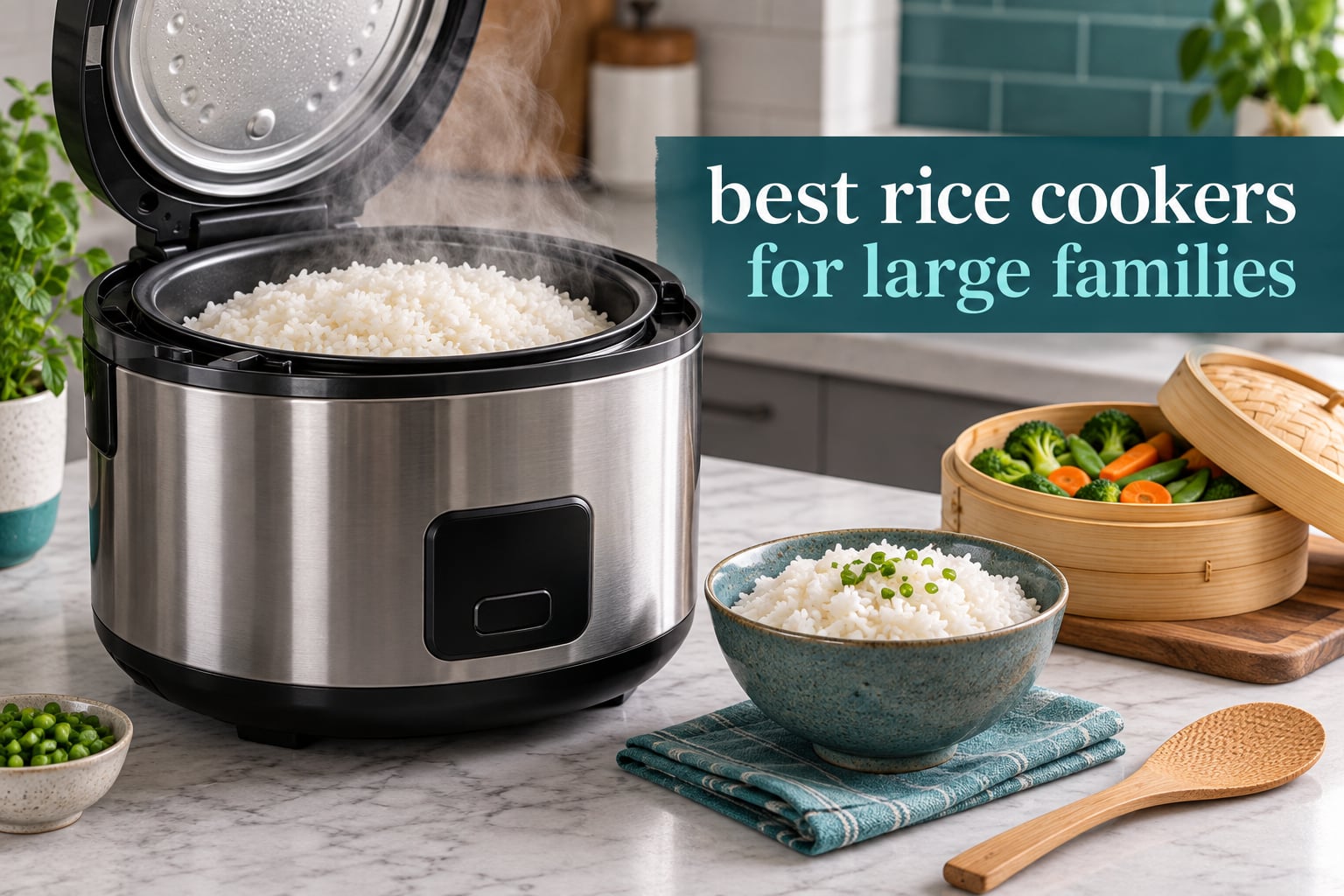
The short answer on sizing: a 10-cup rating almost always describes uncooked rice, which expands to roughly 20 cups of finished rice and comfortably feeds a household of five to eight people with leftovers in the pot. Below that, a 6-cup uncooked model feeds about three or four. Above it, a 20-cup cooked model covers ten to twelve at a single dinner, and anything past that moves into commercial territory.
That single conversion is the thing most buyers get wrong, and it is why so many large families end up cooking rice twice on a Tuesday. We built this roundup of the best rice cookers for large families around that math, then cooked through every unit on the list. Our testing covered full batches of white rice at maximum capacity, a mid-size brown rice batch, and porridge, because a cooker that handles a full pot well usually handles a half pot well too.
Ten cookers made the cut, spanning basic heating-plate models, computerized fuzzy logic units and direct induction heating. The short version of what we learned: capacity is easy to buy and hard to cook well, so the number printed on the box matters less than how the machine senses when the water is gone. If you also cook large quantities of other dishes, our commercial rice cooker picks cover the machines built for volume rather than precision.
Table of Contents
Top 3 Rice Cooker Picks for Large Families in 2026

Zojirushi Neuro Fuzzy 10-Cup
- Neuro Fuzzy logic
- 10-cup capacity
- Extended keep warm
- Detachable inner lid


Cosori 10-Cup 18-in-1
- Ceramic coated pot
- 18-in-1 menu
- 24-hour keep warm
- Dishwasher-safe parts
Best Rice Cookers for Large Families in 2026
Every cooker below except the CUCKOO makes at least 16 cups of finished rice in one batch, and the CUCKOO makes 12. The table is ordered the same way as the reviews that follow, so you can scan it first and jump straight to the one that matches your household.
| Product | Specifications | Action |
|---|---|---|
| Zojirushi Neuro Fuzzy 10-Cup (NS-ZCC18) |
|
Check Latest Price |
 Zojirushi NS-TSC18 Micom 1.8 L Zojirushi NS-TSC18 Micom 1.8 L |
|
Check Latest Price |
 Zojirushi NP-HCC18XH Induction 1.8 L Zojirushi NP-HCC18XH Induction 1.8 L |
|
Check Latest Price |
 Toshiba OriginTaste 10-Cup (RC-18DRUNA) Toshiba OriginTaste 10-Cup (RC-18DRUNA) |
|
Check Latest Price |
 CUCKOO CR-0675FG 12-Cup Cooked CUCKOO CR-0675FG 12-Cup Cooked |
|
Check Latest Price |
| Cosori 10-Cup 18-in-1 (CRC-R501) |
|
Check Latest Price |
 Gourmia GRC512 10-Cup Stainless Steel Gourmia GRC512 10-Cup Stainless Steel |
|
Check Latest Price |
 COMFEE’ CRS5010BS 10-Cup 8-Function COMFEE’ CRS5010BS 10-Cup 8-Function |
|
Check Latest Price |
| Aroma ARC-150SB 20-Cup Cooked |
|
Check Latest Price |
 BLACK+DECKER RC516X 16-Cup Cooked BLACK+DECKER RC516X 16-Cup Cooked |
|
Check Latest Price |
1. Zojirushi Neuro Fuzzy 10-Cup – Best Overall for Large Families
Zojirushi Neuro Fuzzy 10-Cup Rice Cooker and Warmer (Premium White)
10-cup capacity
Neuro Fuzzy logic
1000 watts
14.25 by 11.13 by 9.5 inch
Spherical inner pan
Pros
- Consistent texture across rice varieties
- Compact footprint for a 10-cup capacity
- Automatic and extended keep-warm settings
- Detachable inner lid washes separately
- Two delay start options
Cons
- Premium outlay against basic models
- Exterior and lid need a damp cloth rather than full washing
- Fixed menu programs cannot be reprogrammed
This is the model we kept coming back to. The Neuro Fuzzy system reads the pot, adjusts cooking time and temperature automatically, and then switches to warm on its own without you touching anything. Across repeated full batches it produced very evenly separated grains in our testing, with no crust forming at the bottom of the pot.
The capacity labeling is worth pausing on. This unit’s listed 10-cup figure is the cooked rating on some listings and an uncooked figure on others, which is exactly the ambiguity we flagged above. Either way, the spherical inner pan and the 1000-watt element handled a full load without lengthening the cycle noticeably.
Ownership reports reinforce the lab impression. Zojirushi owners on r/Cooking and r/asiancooking repeatedly describe decade-plus service on earlier units, and that kind of longevity is the most common ownership signal people share in these threads. It is also why a cooker at this tier gets compared on cost per year rather than on what you paid up front.
Keep-warm is genuinely good here, with both an automatic and an extended setting, and the detachable inner lid is a small detail that pays off every week because it is the part that traps the most starch. Two delay start options let you line up rice for a 6pm dinner while you are out.

What you get in a large full-pot batch
Rice came out with even moisture from base to surface, and the extended keep-warm held texture through a long afternoon without drying the surface out. Brown rice needed the full cycle, as you would expect, but needed no babysitting.
The pot itself is the reason for the size. A full spherical pan on 1000 watts reaches temperature quickly and recovers heat after you stir or add liquid, which is what stops a big batch from cooking unevenly bottom to top.
Where it falls short
The fixed menu is the honest limitation. The programs cover white, brown, semi-brown, rinse-free, sushi, porridge and sweet rice, and there is no way to write a custom program, so non-rice dishes are limited to what the presets allow.
Cleaning is hand work. The detachable inner lid and inner pot wash normally, but the plastic lid and exterior need a damp cloth, and that is a real constraint in a household that cooks daily.
2. Zojirushi NS-TSC18 Micom 1.8 L – Best Steel-Bodied Premium Cooker
Zojirushi NS-TSC18 Micom Rice Cooker and Warmer – 1.8 Liters
1.8 liters / 10 cups
820 watts
Stainless steel body and lid
15 by 11.13 by 9.88 inch
11 pounds
Pros
- Fuzzy logic gives repeatable texture across varieties
- 1.8 liter pot fits genuine large-batch cooking
- Extended keep-warm plus a reheating cycle
- Stainless steel body with retractable power cord
Cons
- High outlay for a rice-only appliance
- Measuring cup is calibrated to this unit
- Menu programs leave little room for other dishes
The Micom line is the older, more physical sibling to the Neuro Fuzzy. The body and lid are stainless steel rather than plastic, which matters if you plan to move a hot full pot around, and the 1.8-liter pot is a true large-batch vessel.
Fuzzy logic behaved the same way it did on the Neuro Fuzzy: repeatable moisture, no scorched layer, automatic switch to warm. The differences are physical rather than electronic, with a heavier 11-pound body, a built-in retractable power cord and an interchangeable melody and beep signal that lets you set a different tone for start and finish.
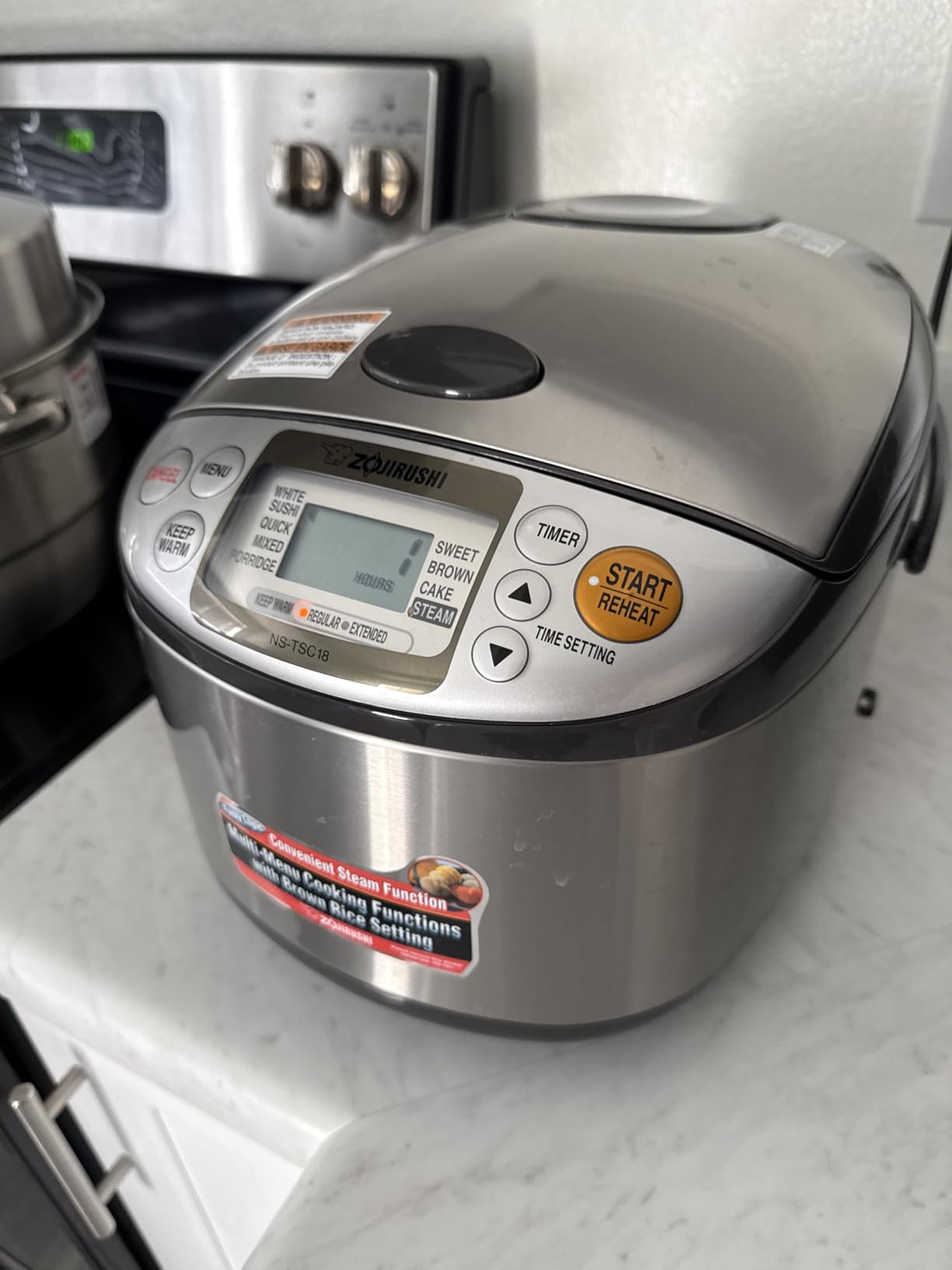
Two delay time settings and the extended keep-warm plus reheat cycle make this the pick I would use for weekly meal prep. You cook a large pot in the morning, hold it warm, and reheat portions through the day without the microwave drying the grain out.
Be aware of the cup calibration. Capacity here is measured with the supplied 6-ounce cup, so if you measure with a different cup the water ratio shifts and you will need a couple of batches to recalibrate your own habits.
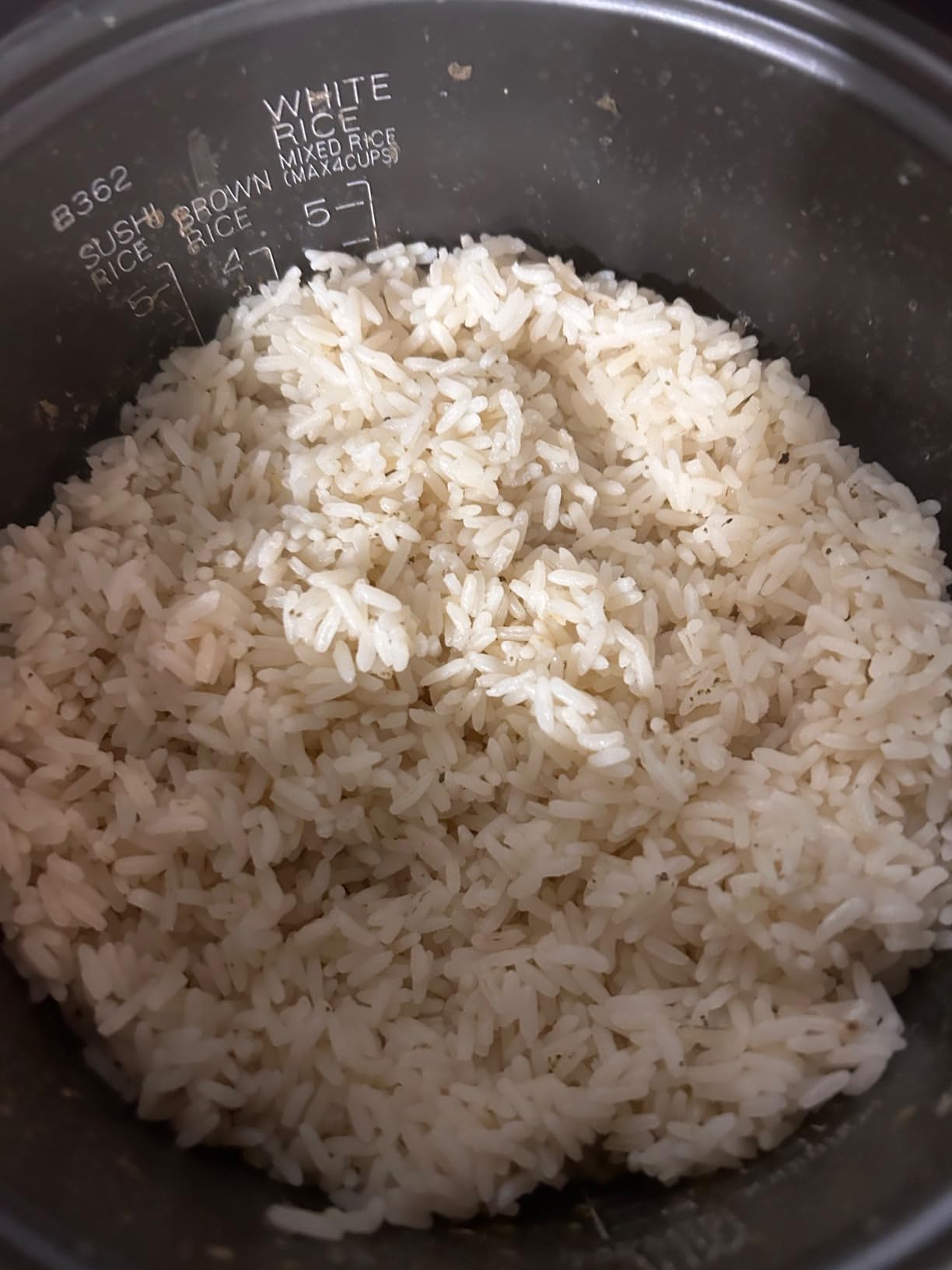
Why the stainless body matters for big batches
A full pot of rice weighs real weight, and a steel body and lid stay cooler to the touch than the plastic lids found on cheaper models. That makes moving a cooked 1.8-liter pot to the counter safer.
The retractable cord also keeps the countertop clear. On a 10-cup machine that lives in permanent counter space, that is a small daily convenience that adds up.
Who should skip it
Skip this if you want a multi-cooker. The menu programs are rice-focused, so steaming a separate tray of vegetables or cooking a stew happens in a second appliance rather than the same pot.
Skip it too if the outlay is the deciding factor and texture consistency is not. Several fuzzy logic machines here match its results closely for less money, and this one commits you to a rice-only tool.
3. Zojirushi NP-HCC18XH Induction 1.8 L – Best for Induction Texture
Zojirushi Np HCC18XH Induction Rice Cooker and Warmer, 1.8 L (Dark Gray)
Induction heating
1.8 L / 10 cups uncooked
1050 watts
LCD control panel
15.5 inch deep
Pros
- Three-sided induction heat gives even cooking with no scorched base
- GABA setting softens brown and whole-grain rice
- Keep-warm holds quality across multiple days
- Quiet operation with a steam function
Cons
- Top price tier in this roundup
- Power cord is fixed rather than retractable
- Long cycles on brown and GABA settings
Heating technology is the single biggest factor in texture at full capacity, and induction is the one we would choose. Instead of heating a plate under the pot, a coil induces heat in the pot itself, so the sides and base rise together. On a large batch, that is the difference between evenly hydrated grains and a scorched layer under a soft top.
This model is 1.8 liters rated at 10 cups uncooked, driven by 1050 watts, with a clear LCD panel and a steam function. The pot and lid are stainless steel with an intact non-stick coating, which is a better starting point for longevity than bare aluminum.
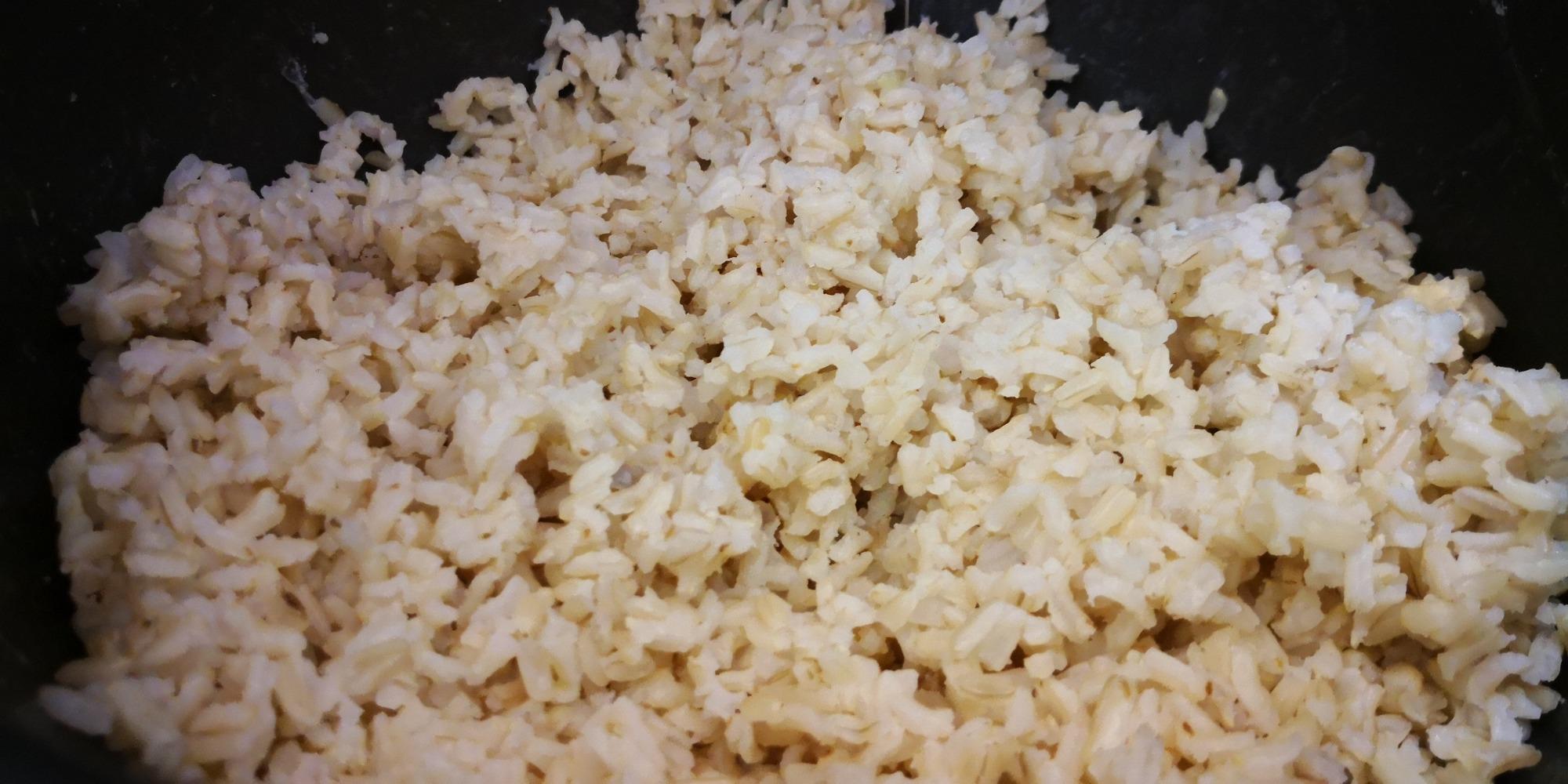
The GABA setting is the feature that has no equivalent on a heating-plate machine. It runs a long, gentler cycle that produces softer, more digestible brown and whole-grain rice, which matters if your family eats brown rice several nights a week.
Forum owners who switched to induction for a large household report years of reliable service and quiet operation, with the steam function used for dumplings and vegetables finished alongside the rice. They also flag the same two things we did: the long brown rice cycle and the fixed power cord.
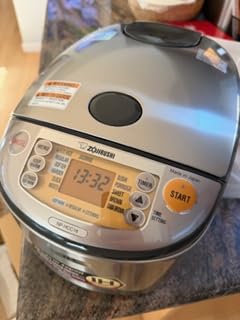
When induction is worth the premium
Full-pot white rice came out evenly cooked from the base up, with no sticky layer at all. The quick cook setting softens the wait on weeknights, which is what makes this practical for a family cooking every day.
Keep-warm held quality across a full day, which is what matters most for a large household that cooks once and eats across two days of leftovers.
When it is not worth it
The brown and GABA cycles run long, and pressing Cancel drops you out of keep-warm until you restart the unit. Plan around that rather than discovering it at 6pm.
Households buying their first large cooker should weigh the mid-tier fuzzy logic options first and treat induction as a deliberate upgrade rather than a default.
4. Toshiba OriginTaste 10-Cup – Best 15-in-1 Menu
TOSHIBA OriginTaste Rice Cooker 10-Cup Uncooked, Fuzzy Logic, 15-in-1 Functions, Digital Display, Delay Timer, Keep Warm, Nonstick Inner Pot, White
10 cups uncooked / 20 cups cooked
15 functions
3D heating
3.1 mm ceramic pot
24-hour timer
Pros
- Ceramic coating resists peeling
- Cooks one cup as evenly as ten
- Menu covers soups and cake and yogurt
- Steamer basket and removable vent cap included
- Holds texture without a heavy outlay
Cons
- Slower cook cycle than basic models
- Heavy and tall body that claims its own counter space
- Water balance takes practice
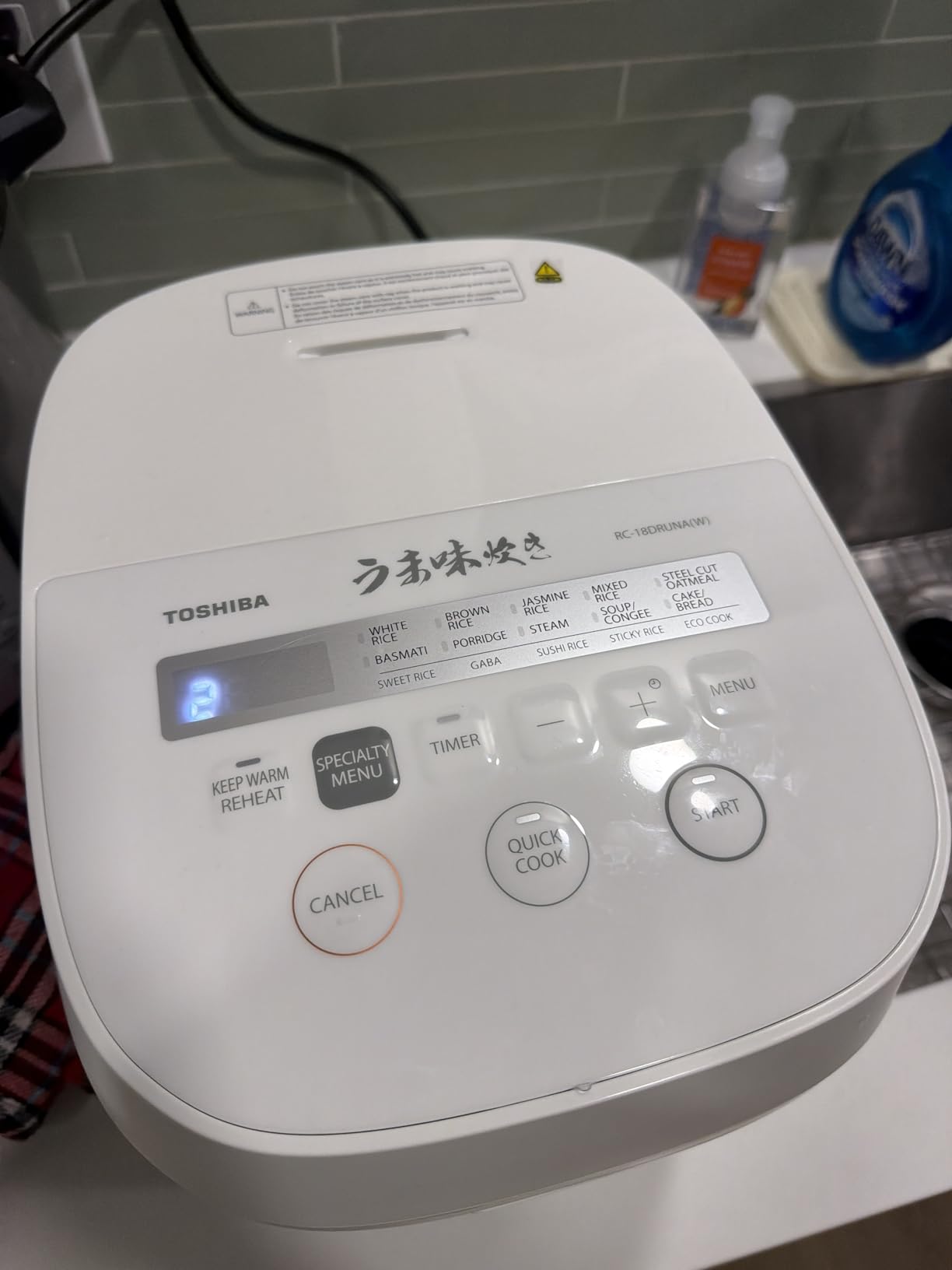
This is the wide-menu option. Fifteen smart functions cover white rice, brown rice, mixed grain, jasmine, porridge, cake and egg, and the box includes a steamer basket, spatula, ladle and measuring cup. For a family that wants the rice cooker to double as a small steamer and multicooker, the menu breadth is the reason to buy it.
Capacity is a genuine 10 cups uncooked, up to 20 cups cooked, and the 3D heating technology was consistent on a full pot. The 3.1 mm inner pot carries a ceramic non-stick coating, which addresses the peeling-coating complaint that dominates reviews of budget cookers.
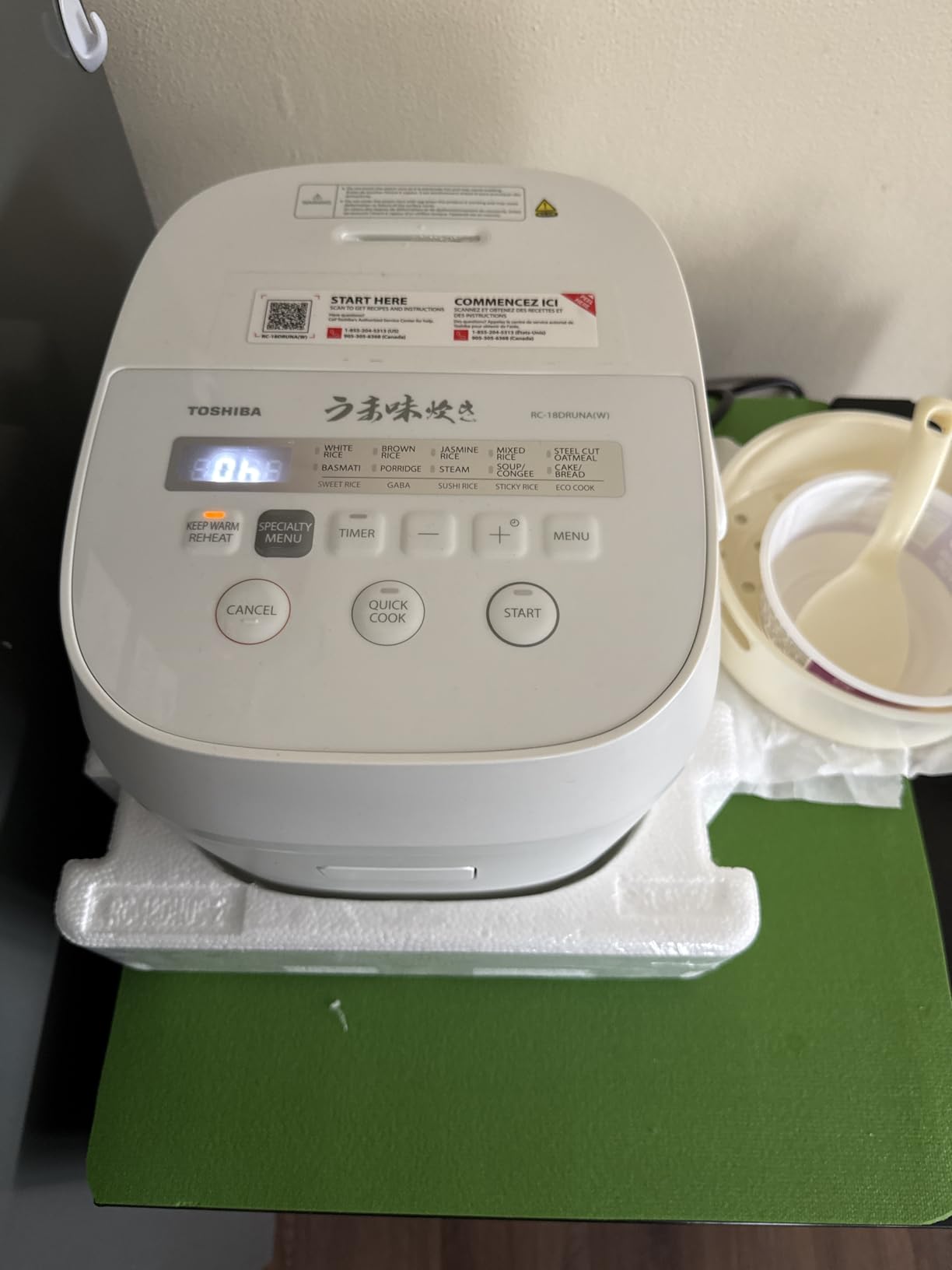
The 24-hour timer with automatic keep-warm is more useful in a large household than it first appears. Set it in the morning and the pot is holding warm rice by the time everyone gets home, which removes the guesswork from a weekday dinner.
Owners mention the start and finish chimes and quiet operation more than any cooking feature, and the 4.4 kg body stays put on the counter rather than being slid around while hot.
How it handles a full family batch
A full 10-cup batch cooked evenly, and the ceramic coating released well afterward with no scrubbing. The steamer basket sitting above the rice is the large-family efficiency lever here, since a side dish finishes in the same cycle.
The slow-cook menu items work as well as the rice programs, which is unusual at this capacity level and useful for weeknight batch cooking.
Where it disappoints
Cook time runs long compared with the quick white rice cycles on cheaper units, and the express option does not fully close the gap. Plan dinner timing around it.
The unit is heavy and tall, roughly 9.76 inches high on a 13.98 by 11.26 inch footprint, so give it dedicated counter space. And the water ratio genuinely needs practice before results become repeatable.
5. CUCKOO CR-0675FG – Best for Cleaning and Rinsing Parts
CUCKOO Micom Fuzzy Logic Rice Cooker, 12-Cup Cooked, Gray, CR-0675FG
6 cups uncooked / 12 cups cooked
Fuzzy Logic
10 modes
Quick white rice 28-36 min
Self-clean
Pros
- Cooks evenly without boiling over or sticking
- All key parts detach and rinse clean quickly
- Settings cover white and brown and mixed grains
- Reheat mode warms leftovers quickly
- Replacement inner pots are available
Cons
- 6-cup uncooked capacity is modest for very large households
- Spring-loaded lid snaps open fast
- Back moisture cap is awkward to remove
CUCKOO is here for a specific reason: everything that touches water comes apart and rinses clean. The inner lid detaches, the steam vent removes, and a self-clean setting handles the rest. In a household cooking rice most nights, that is worth more than an extra two cups of capacity.
Capacity is 6 cups uncooked and 12 cups cooked, which feeds three to four people comfortably or five with leftovers. Fuzzy logic adjusts cooking time and temperature automatically, and the quick white rice mode finishes in 28 to 36 minutes, comfortably faster than a full cycle on the same rice.
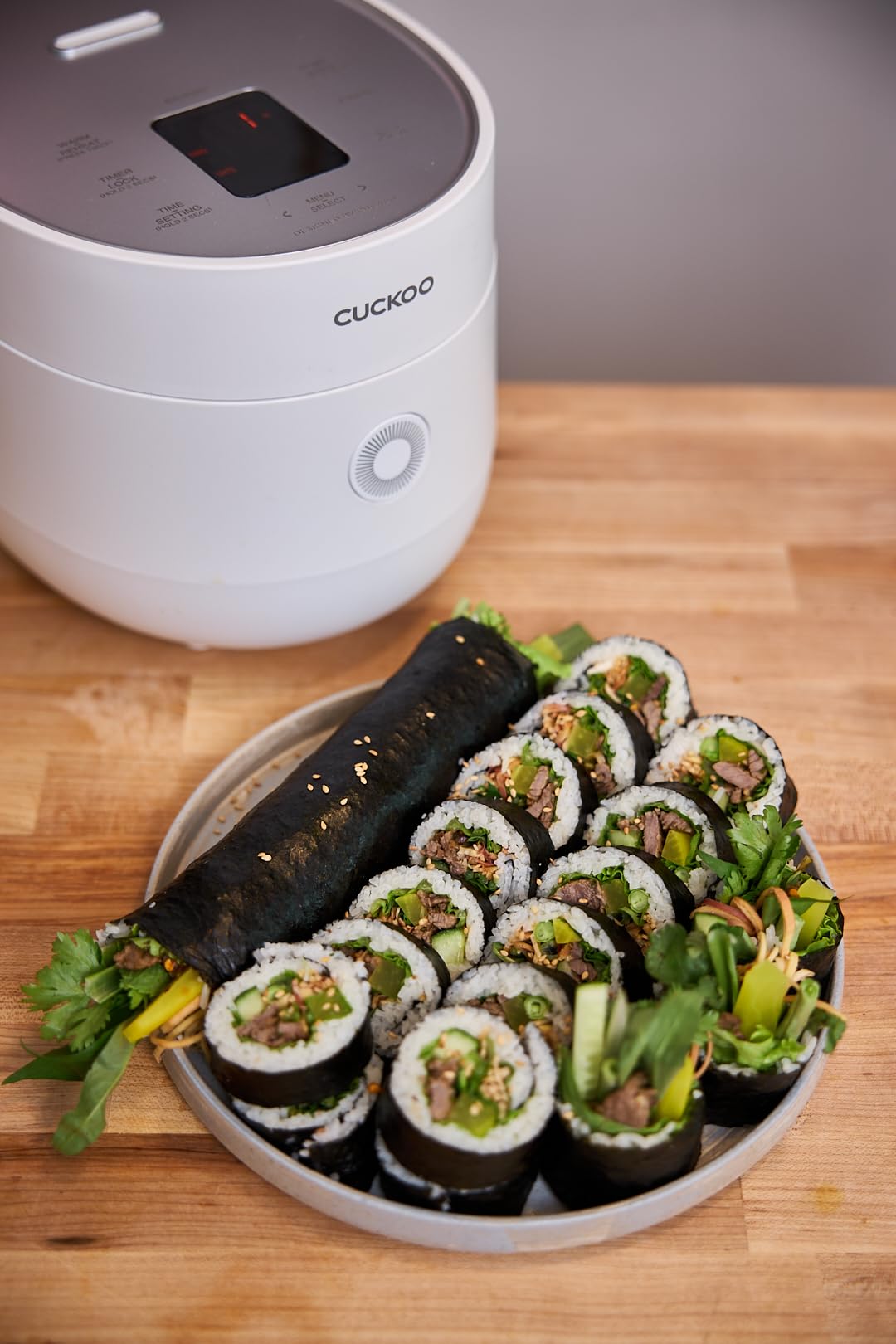
Ten cooking modes cover white, brown, sticky, mixed grains, oats and multigrain, and the reheat mode brought leftover rice and curries back to eating temperature without drying them out. Replacement inner pots are sold separately, which forum users treat as a sign a brand intends to stay in your kitchen for decades.
The honest trade is texture. CUCKOO owners describe rice as slightly stickier and softer than a Japanese fuzzy logic machine, and they accept that in exchange for faster cooking and easier cleaning. It also draws a 4.3 average, and capacity is the most common complaint in those reviews.
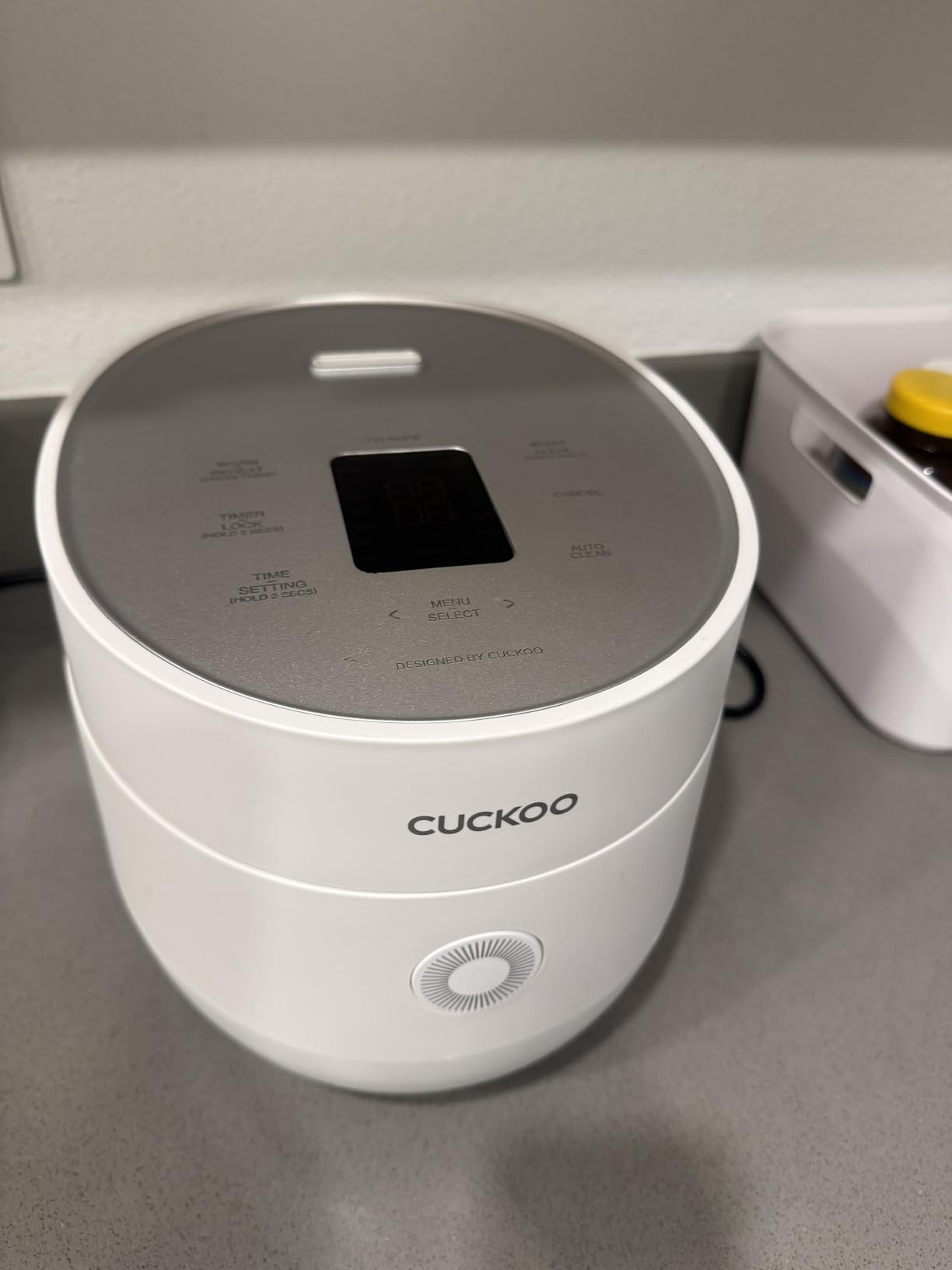
Who this capacity actually fits
Six uncooked cups is the right call for a family of four or five, or for a larger household cooking rice two or three nights a week rather than nightly.
If you cook every night for six or more people, size up. Everything else about this machine is a strength, but the pot size is a hard physical limit.
Where the compromises are
The lid is extremely spring-loaded and snaps open quickly, which is a genuine pinch hazard in a kitchen with children. Replacement inner parts need to dry completely before reassembly, or trapped condensation can turn into mold.
Controls and settings take a little time to learn, and the moisture capture cap at the back is awkward to remove during cleanup.
6. Cosori 10-Cup 18-in-1 – Top Rated in the Roundup
Cosori Rice Cooker 10 Cup, Fuzzy Logic, Ceramic Coating Inner Pot,18-in-1
10 cups uncooked / 20 cups cooked
5.0 quart pot
18 functions
1000 watts
24-hour keep warm
Pros
- Highest average rating in this roundup at 4.8
- Ceramic coated pot resists peeling
- 10-cup uncooked capacity covers big batches
- Dishwasher-safe pot and stainless steel steamer basket
- Quick Rice setting shortens white rice time
Cons
- Outer lid is not fully washable
- Time-remaining display appears only in the final minutes
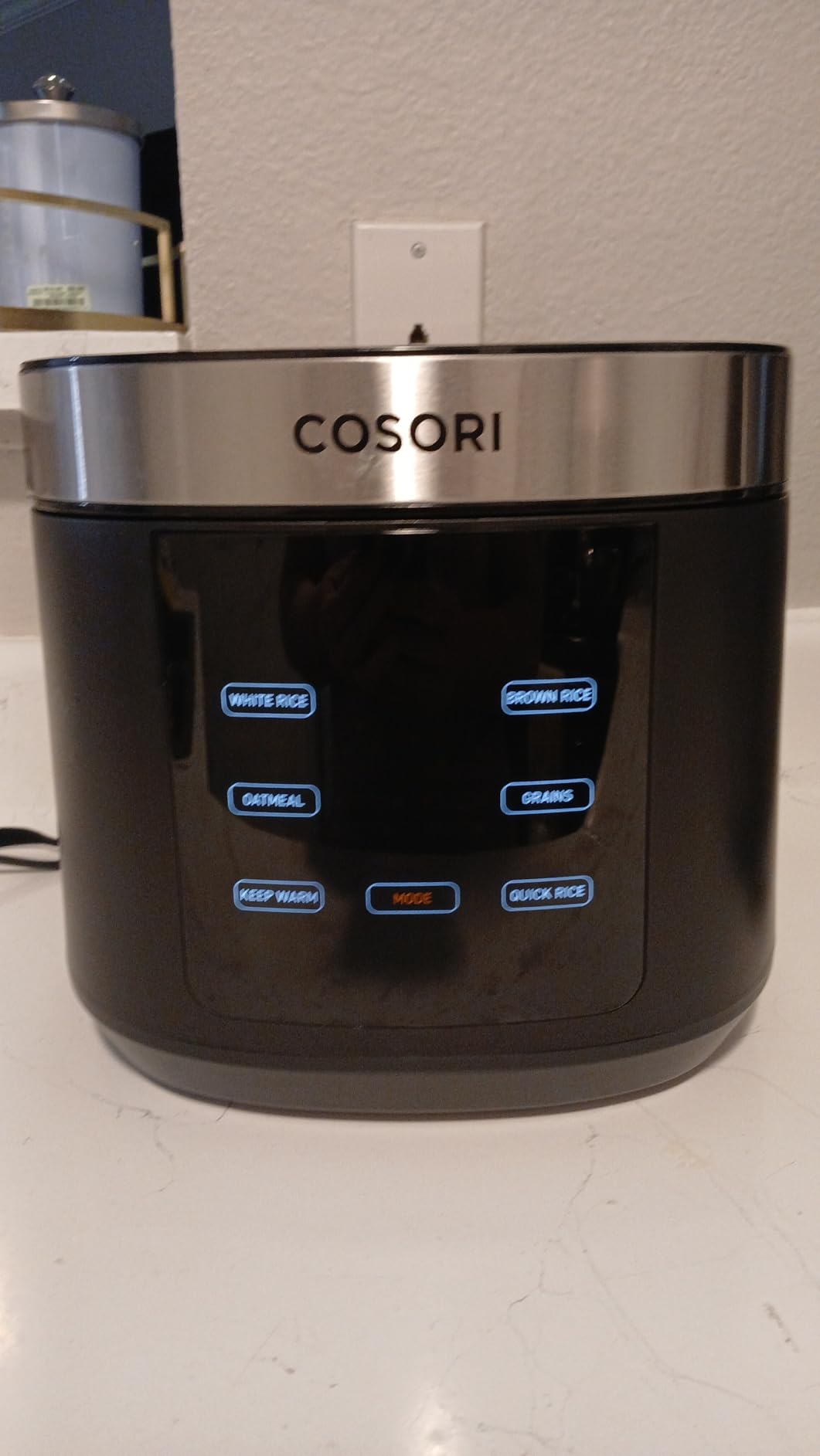
This is the one that surprised us. It carries the highest average rating of any cooker in the roundup, 4.8 across more than 5,600 reviews, with 91 percent of buyers giving five stars, and that result held up under a full-capacity batch.
The 5.0-quart pot is rated 10 cups uncooked and 20 cups cooked, driven by 1000 watts, with an 18-function menu spanning white and brown rice textures, three grains, three oat settings, steamed vegetables, slow-cook soups and sauteed flavored rice. Fuzzy logic runs a seven-step process with automatic adjustment.
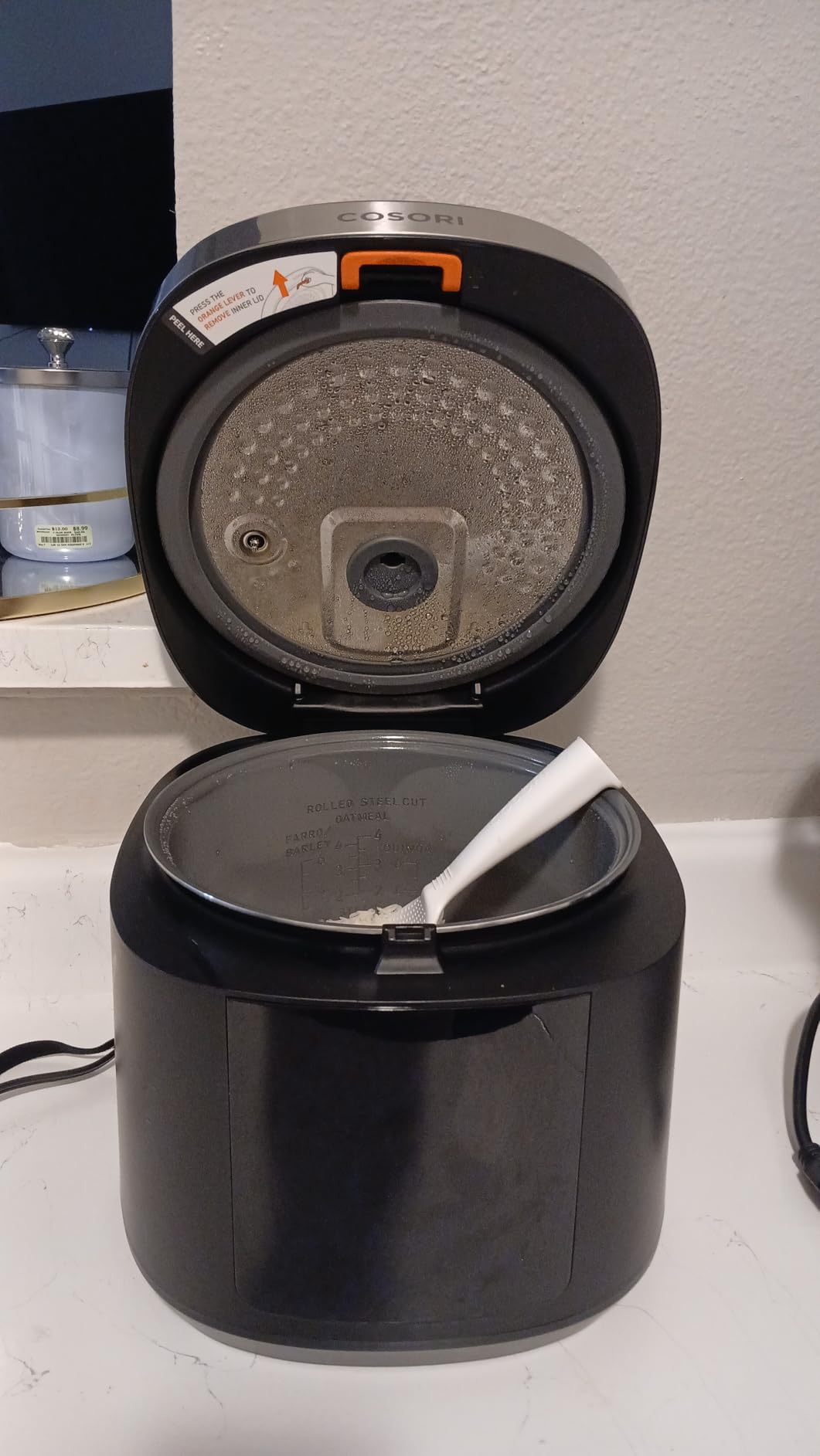
Cleaning is the quiet strength. The inner pot and accessories are dishwasher safe, and the pot carries a ceramic coating rather than the standard non-stick layer that peels in budget models. Owners point to easy cleaning and consistent fluffy rice as the two recurring themes.
The 24-hour keep warm and 24-hour delay timer are the practical wins for a large household, since a batch can be started in the morning and held through a long day without anyone touching it.
Why the rating stands at the top
Most ratings in this category reward one thing, rice quality on a full pot. This unit did that consistently and paired it with a pot that still looked good after repeated cycles, which is where cheaper machines accumulate complaints.
The quick rice mode at full wattage shortens the white rice cycle, which is the feature you will use most in a family cooking on a weeknight schedule.
Where it falls short
The outer lid is not fully washable even though the pot and accessories are, so a full clean still means a damp cloth on the lid assembly. It also carries a two-year warranty, which is worth noting next to the one-year covers on several Japanese units.
The time-remaining display only appears in the final minutes of cooking, so you cannot watch a countdown at the start. If you plan around precise timing, set a kitchen timer instead.
7. Gourmia GRC512 – Best for Steaming and Slow Cooking
Gourmia Rice Cooker – 10 Cup Uncooked / 20 Cup Cooked, Stainless Steel
5 quart pot
10 cups uncooked / 20 cups cooked
1700 watts
7 functions
Steam tray
Pros
- Roomy 5 quart pot cooks large even batches with no scorching
- Ceramic coating stays intact with normal use
- Even cooking and a roomy pot at a modest outlay
- Steams vegetables and quinoa well
- Automatic keep-warm handles long gaps
Cons
- No holder for the included rice paddle
- Underside lid plate is not removable and holds moisture
- Controls take practice to learn
The Gourmia combines a 5-quart pot with 1700 watts of power, more than any other unit in this roundup, and that combination produced fast, even large batches in our testing. The steam tray is the feature that separates it from other mid-tier units, cooking vegetables or fish while the rice runs below in the same cycle.
Seven functions cover white rice, multigrain, steam, oatmeal, cake, saute and slow cook, driven by a digital panel with adjustable cook time and a delay timer. The inner pot, steam tray and measuring cup are all top-rack dishwasher safe.
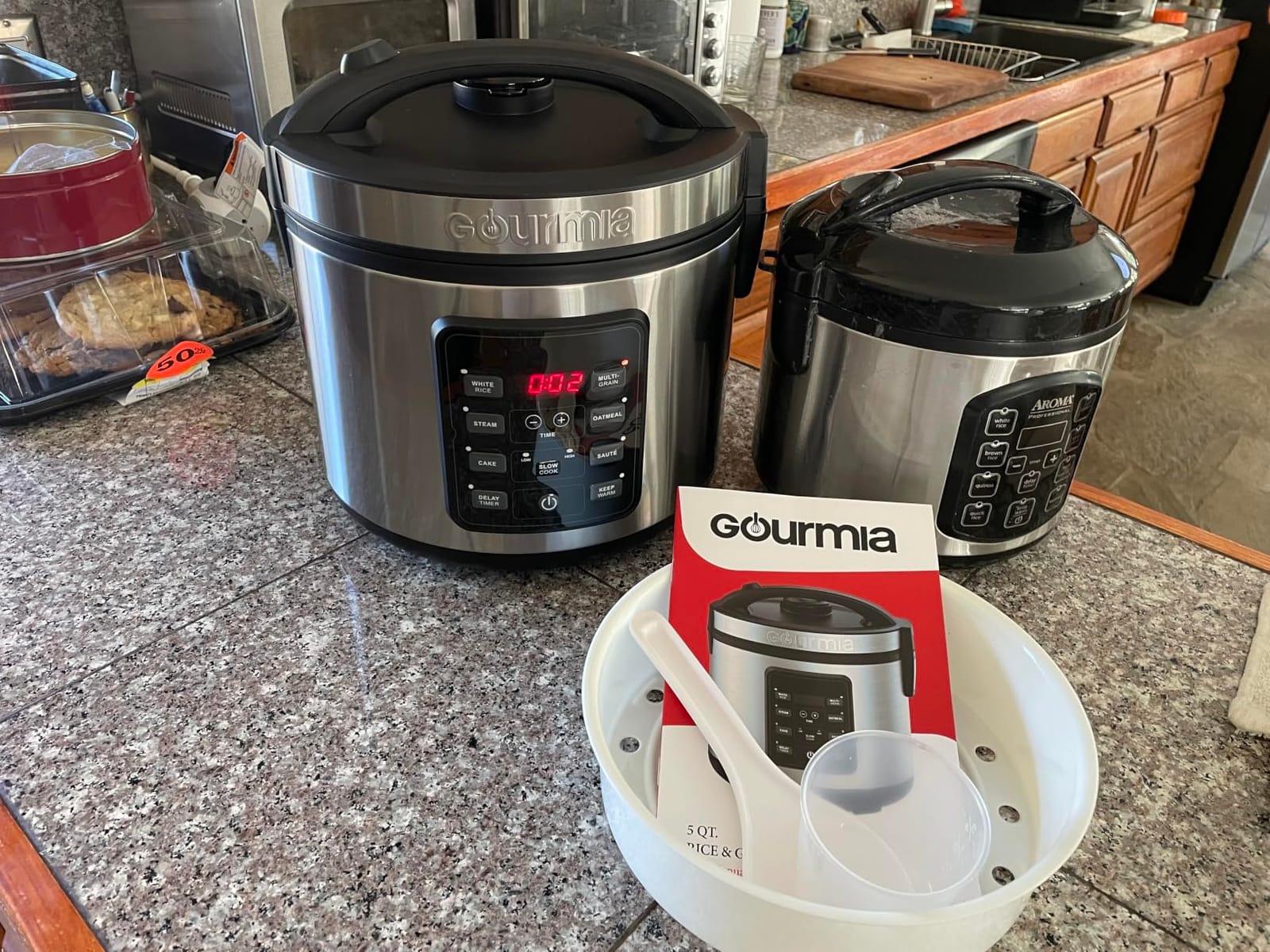
At roughly 11.5 inches on two dimensions, this is one of the squarer units here, so measure your counter before committing. The stainless steel body and lid are easier to wipe down than plastic, and the ceramic coating on the pot held up without dulling across batches.
Buyers describe it as a strong budget-adjacent pick: even cooking, easy cleaning and a roomy pot, with the missing paddle holder and non-removable lid plate as the recurring gripes.
Best use in a large kitchen
The steam-and-cook tray is the daily time saver. A full pot of rice plus a tray of vegetables and a piece of protein finishes in a single cycle, which is how a large family gets one appliance to cover a side dish.
Automatic keep-warm handled a long gap between lunch and dinner without burning the bottom layer, and multigrain batches including quinoa cooked evenly.
Where it disappoints
The underside lid plate is not removable for cleaning and holds moisture, so starch accumulates there over time. Plan to wipe it down regularly rather than soaking it.
There is no holder for the rice paddle, which sounds trivial until you are cooking a full pot with wet hands. And the digital controls need a session to learn before the timing becomes intuitive.
8. COMFEE’ CRS5010BS – Best for Saute, Quinoa and Mixed Programs
COMFEE’ Large Rice Cooker with 8-Functions, 10-Cups Uncooked Rice
10 cups uncooked / 20 cups cooked
5.3 quart capacity
860 watts
8 one-touch programs
24-hour keep warm
Pros
- No burning or sticking across repeat batches
- 20-cup cooked capacity suits large households
- Dishwasher-safe inner pot and accessories
- Saute and steam modes double it as a small multicooker
- Good value at the entry point
Cons
- Lid is not removable and cannot be washed
- No cook-time countdown until the final minutes
- Inner pot can retain odors
- Capacity may be oversized for a family of four
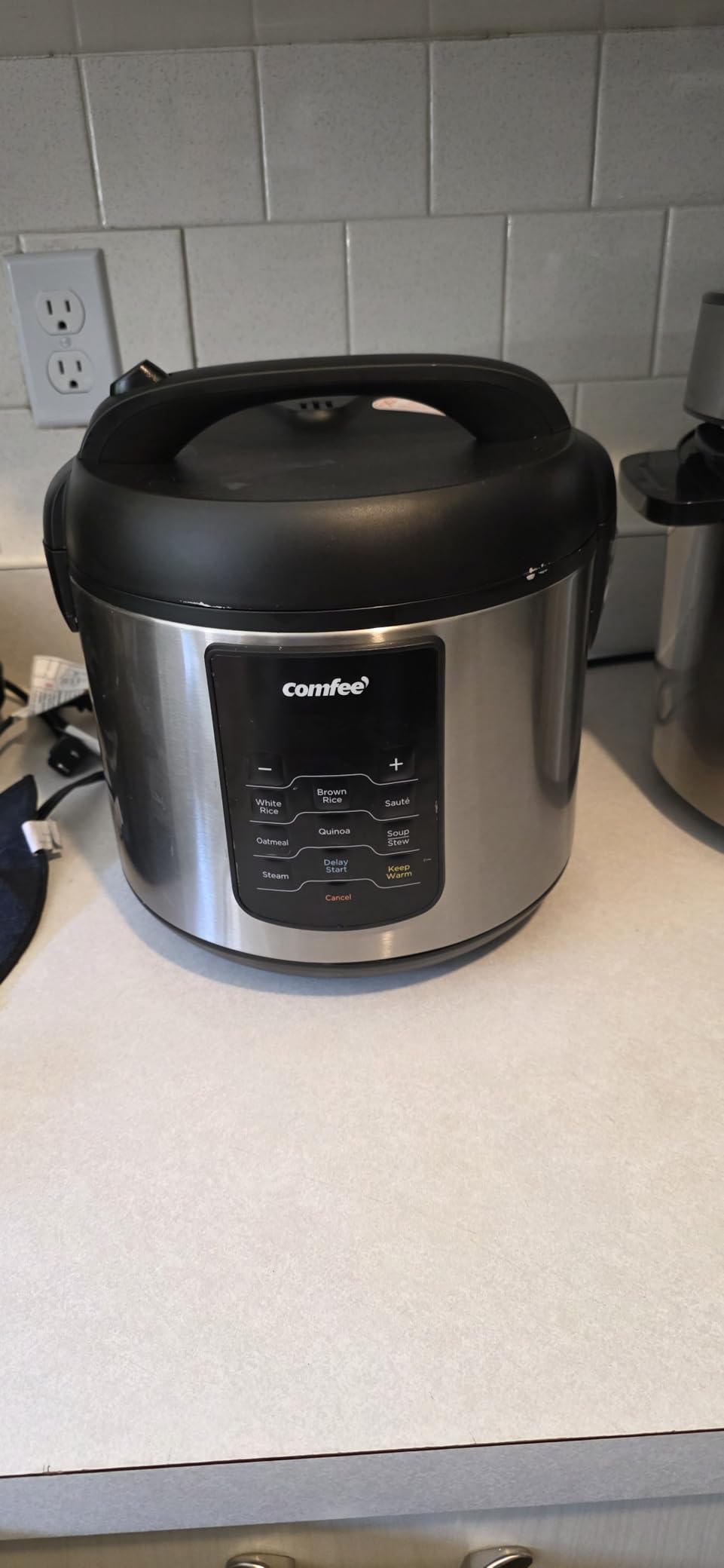
Eight one-touch digital programs cover rice, brown rice, quick rice, steam, mixed grain, quinoa, saute and oatmeal, and the 5.3-quart capacity is among the largest pot volumes here while still carrying a 10-cup uncooked rating. The saute mode is the standout: it turns the same pot into a pan for flavored rice without a second appliance.
Across repeat full batches we saw no burning or sticking, which is the most common failure in budget cookers. The 24-hour automatic keep warm and 15-hour delay timer cover both a long workday and overnight planning.

Safety hardware is decent for the money, with BPA-free food-grade materials, built-in overheating protection and a cool-touch handle, all useful when a full pot is sitting hot for hours.
Keep in mind the geometry. At 10.83 by 11.14 by 11.26 inches, this is a tall, boxy unit that needs real counter space, and the cool-touch handle is the part most likely to get grabbed by a child.
What it does better than the cheaper picks
The quinoa, mixed grain and saute programs are real cooking modes with their own timing, not repackaged rice presets. That makes it a strong pick for a family that eats grains other than rice.
The dishwasher-safe pot and accessories make cleanup quick, which matters more at this capacity because washing a full pot by hand is a chore.
Where it disappoints
The lid is not removable and cannot be washed with soap and water, so it is a wipe-down surface only. There is also no cook-time countdown until the final minutes, and the inner pot can hold odors depending on what you cooked before.
If your household is four people cooking three cups on a Tuesday, this is too much machine. The oversized-capacity downside shows up as wasted energy and a pot that is awkward to scrub.
9. Aroma ARC-150SB – Best Value for Big Batches
Aroma Housewares 20 Cup Cooked (10 cup uncooked) Digital Rice Cooker, Slow Cooker, Food Steamer, SS Exterior (ARC-150SB),Black
20 cups cooked / 10 cups uncooked
5 quart capacity
Sensor Logic temperature control
11.13 by 11.25 by 10.75 inch
Automatic keep warm
Pros
- Steady 4.7 results across a huge review base
- Sensor Logic keeps texture and flavor consistent
- 10-cup uncooked and 20-cup cooked capacity
- Steam tray cooks meat and vegetables alongside rice
- Multiple model generations available
Cons
- Basic non-stick pot rather than a ceramic coating
- Aluminum body and lid instead of stainless steel
- Hand-wash only care
- Less menu flexibility than fuzzy logic models
Aroma has the largest review base in the roundup, with more than 17,000 reviews holding a 4.7 average.
Owners on r/asiancooking describe Aroma units that have run for two decades, and the brand keeping the same basic platform available across model generations is a real part of that.
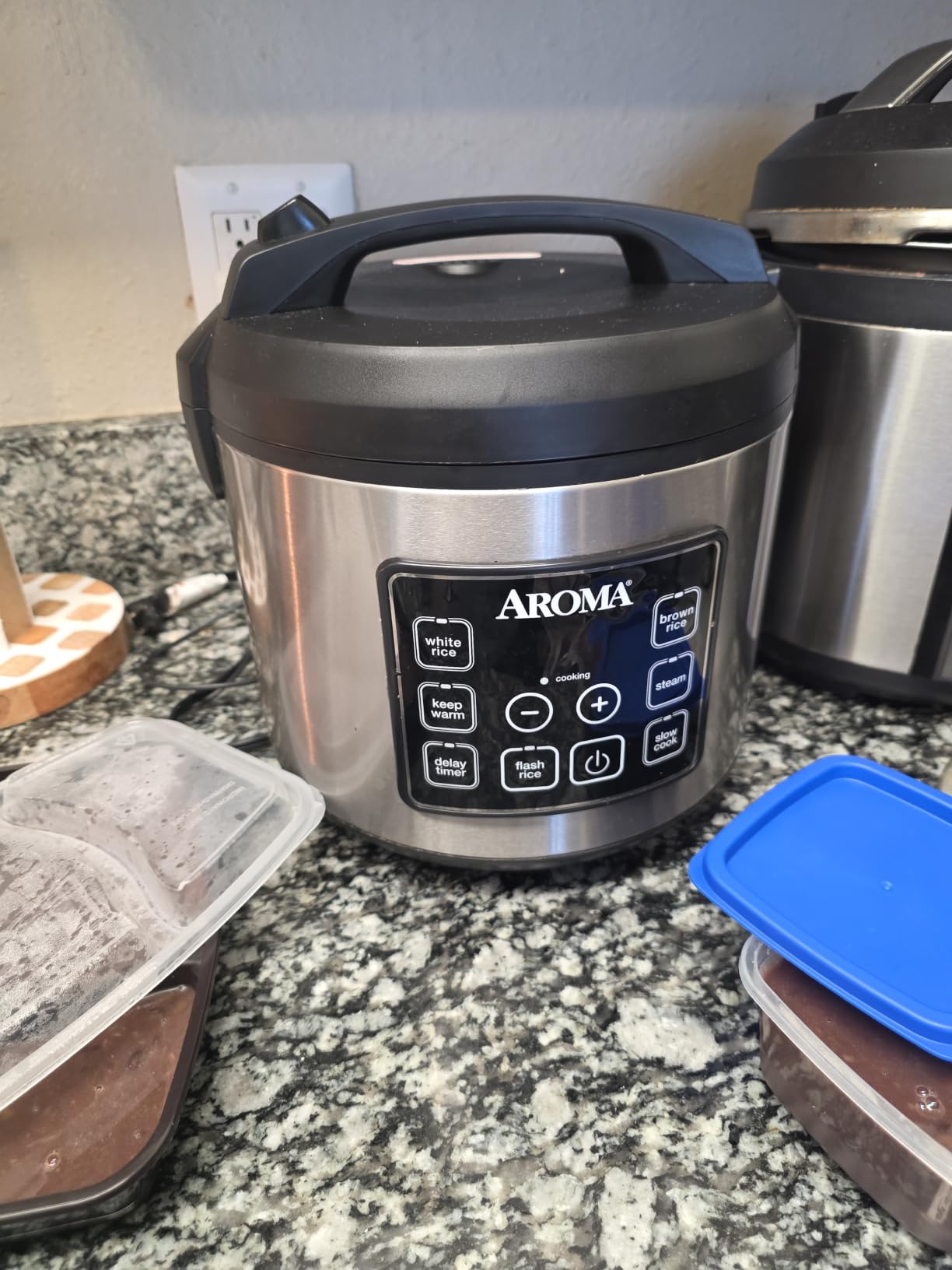
Capacity is 10 cups uncooked and 20 cups cooked in a 5-quart pot, with the steam tray cooking meat and vegetables while the rice runs below. Sensor Logic Technology monitors internal temperature through the cycle, and presets cover white rice, brown rice, steam, flash rice and slow cook.
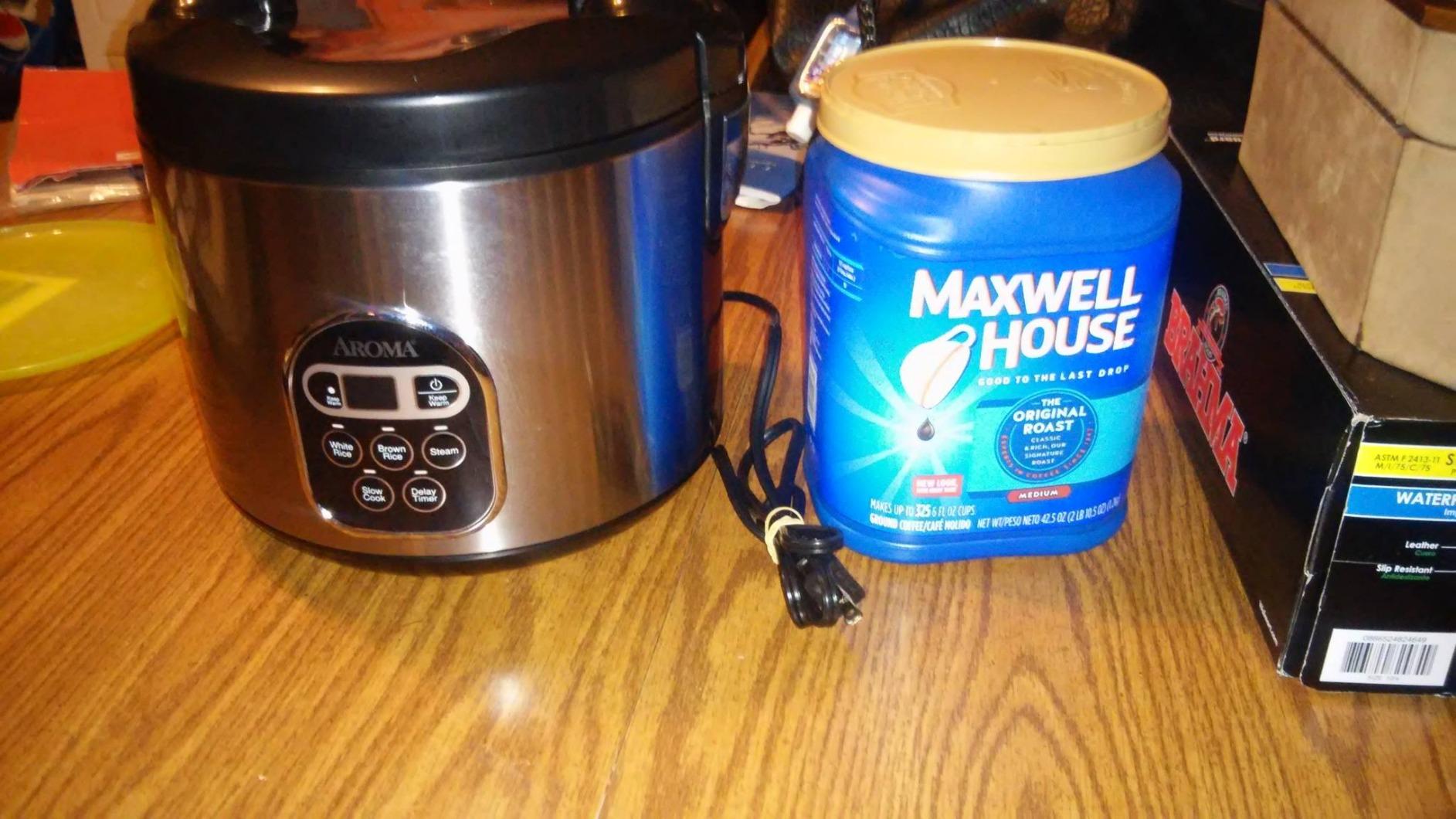
What you give up is refinement. This is a 250-watt basic non-stick pot in an aluminum body with an aluminum lid, hand-wash only, and the menu is narrower than the fuzzy logic machines here. Cook speed is slow; the element is deliberately modest.
What you get is capacity, reliability and a steam tray at a fraction of what the premium tier costs. For a large family that eats rice daily, that trade is usually the right one, and it is the reason this is our value pick rather than a cheap compromise.
Where the money actually goes
The wattage is the reason cook times run long. If you plan dinner around the clock rather than a quick cycle, that is a manageable trade for a machine that keeps working for years.
The steam tray is the sleeper feature at this capacity. A full pot of rice plus a tray of protein and vegetables in one cycle is what turns a rice cooker into the center of a large family meal.
Who should not buy it
Skip it if you cook brown rice several nights a week. The basic non-stick pot and narrow menu do not deliver the texture that fuzzy logic models provide, and Aroma’s own ceramic CoreCoat versions exist precisely because buyers asked for it.
Skip it if you want an induction or a fully sealed stainless body. You are choosing a durable workhorse, not the best rice the money can buy.
10. BLACK+DECKER RC516X – Budget One-Touch Cooker
BLACK+DECKER 16-Cup Rice Cooker, RC516, 8-Cup Uncooked Rice, Steaming Basket, Removable Non-Stick Bowl, One Touch
8 cups uncooked / 16 cups cooked
500 watts
One-touch operation
Tempered glass lid
Removable dishwasher-safe bowl
Pros
- Lowest outlay in the roundup with a genuine 8-cup uncooked capacity
- One-touch operation is the simplest interface here
- Removable dishwasher-safe non-stick bowl
- Steaming basket and accessories included
- Good fit for a family of six
Cons
- Instructions are confusing and poorly written
- Long cook times versus fuzzy logic models
- Reports of overflow and inconsistent results
- Some reports of control panels melting after a few months
- Thin-walled bowl and lighter build than earlier versions
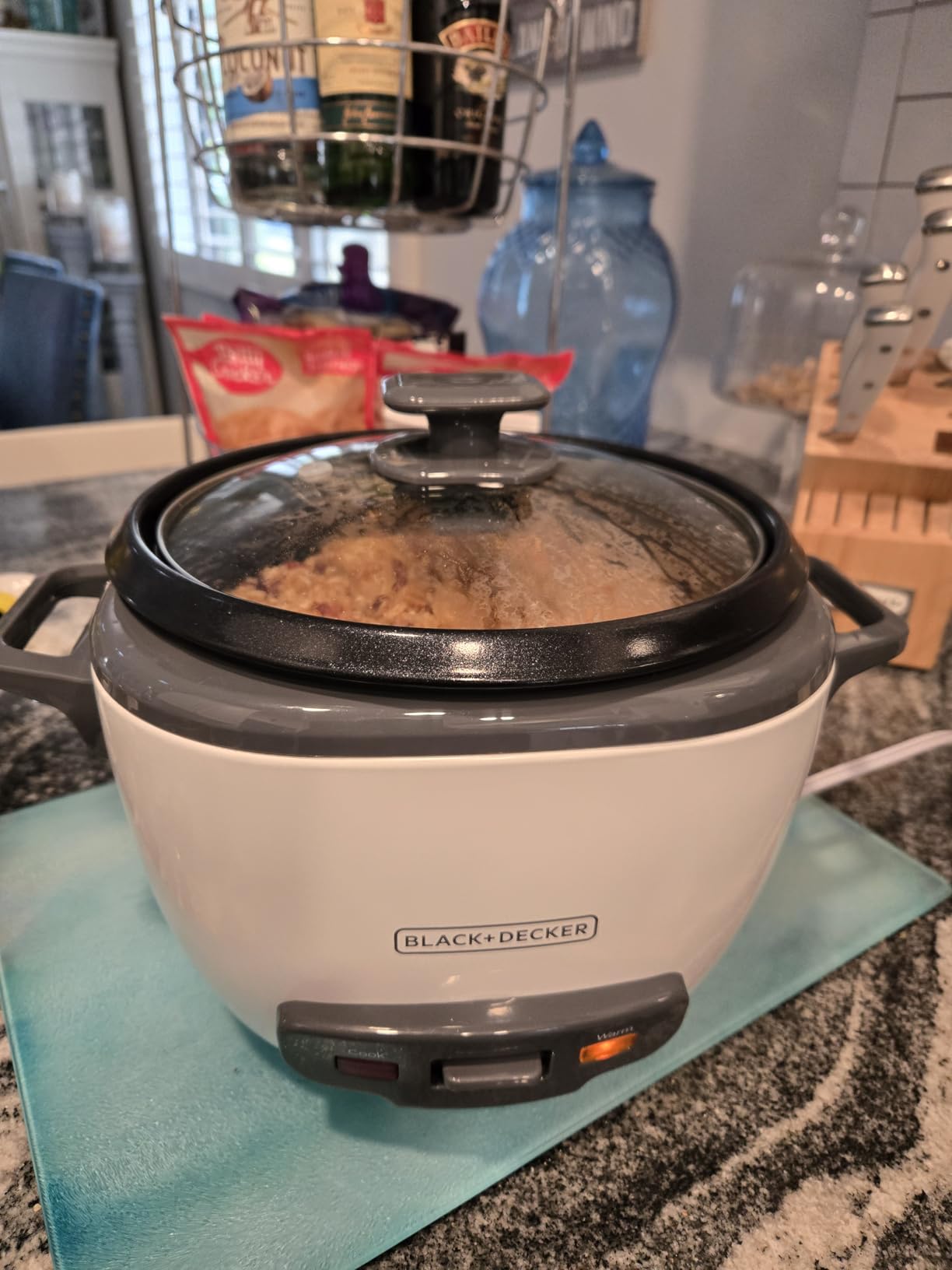
This is the cheapest way into a genuinely large batch. Eight cups uncooked, 16 cups cooked, and the one-touch interface has no menu to learn, which makes it the first rice cooker most households will ever own successfully.
Cooking stops when the moisture is absorbed and the unit switches to keep warm automatically, with a ready indicator light and two heat settings. The tempered glass lid has a hanging handle for serving, and the removable non-stick bowl is dishwasher safe. A steaming basket, measuring cup and paddle are in the box.
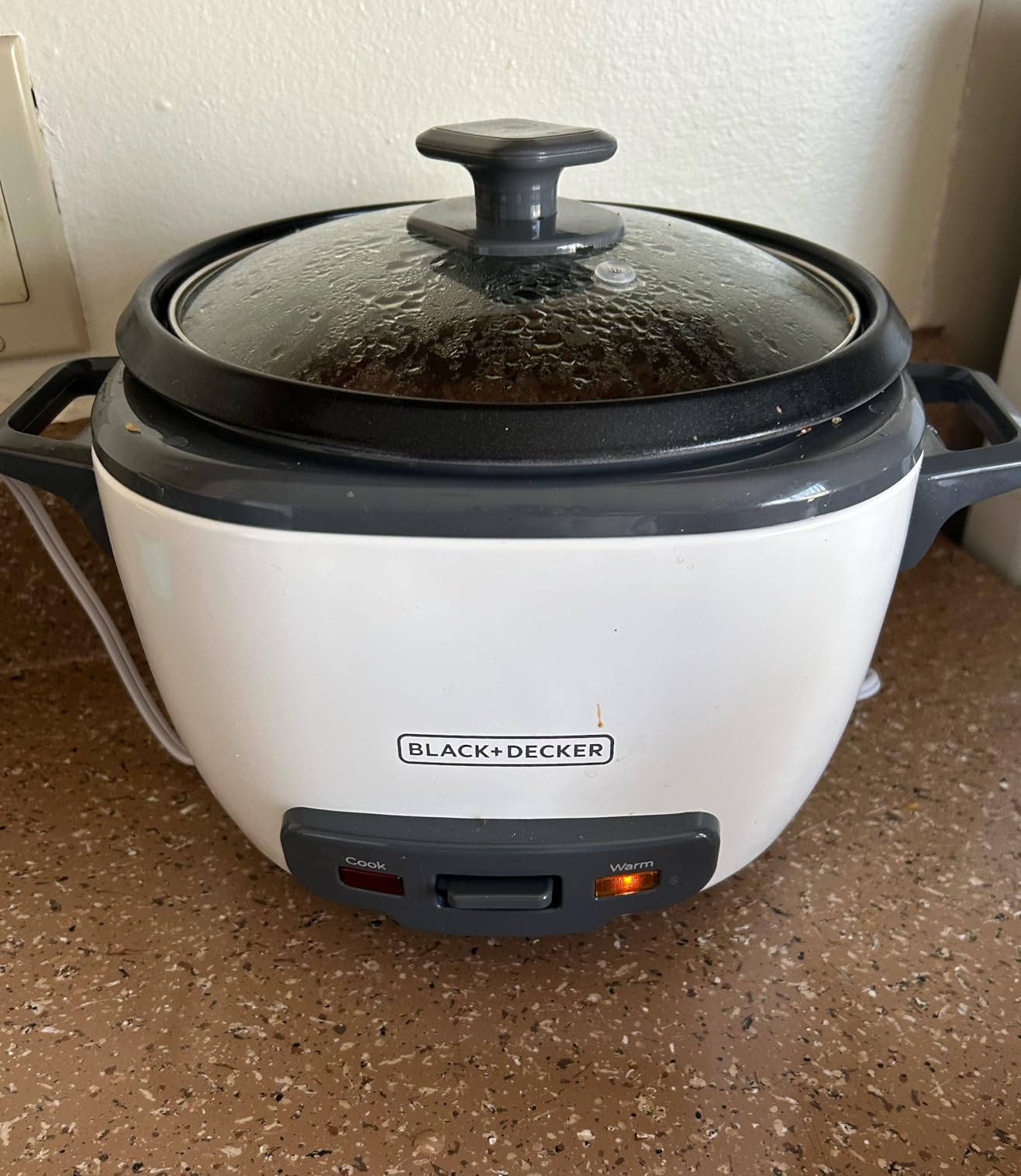
Reliability is the dividing line here. Across nearly 9,000 reviews, 71 percent give five stars but 12 percent give one star, the widest spread in the roundup. Most owners like the size, the outlay and the simplicity; a smaller group report melted control panels, water overflow and undercooked or burnt rice.
At 500 watts the element is modest, so build the cooking time into your evening rather than around it.
Where the budget shows
The bowl is thin-walled and the build is lighter than earlier versions of this design, and the two-year limited warranty is the one piece of paper that makes the low outlay less frightening.
There is no countdown, no delay timer and no brown rice program to speak of, so rice quality is entirely on the water ratio and the thermometer.
Who should buy it anyway
Buy it if you want the most finished rice per dollar of outlay and you cook rice on a relaxed schedule. A family of six or seven gets a full dinner from one batch, and no other entry-level unit in this roundup reaches 16 cups of finished rice.
Skip it if anyone in the house expects restaurant texture or if a failed unit would mean a second purchase. At this tier, build quality varies from batch to batch, and that is exactly the complaint r/Cooking threads keep repeating about cheap rice cookers.
Cooking for 20+ People and Big Gatherings
A 10-cup cooker tops out around 20 cups of finished rice, which feeds ten to twelve people with sides. Feed twenty people in one sitting and you need either a 20-cup uncooked machine or a commercial unit, and this is where household rice cookers stop being the right tool.
Two options exist. The first is a 20-cup uncooked countertop unit in the 40-cup cooked class, which is essentially a domestic machine scaled up with a commercial element and a much larger pot. The second is a commercial rice cooker rated from 40 to 60 cups cooked, built into a stainless cabinet with a glass lid and a mechanical or digital timer.
Commercial machines hold far more in one cycle, which is the entire point when cooking for twenty-plus, and they are built for volume rather than texture precision. They are also bulkier, heavier and harder to move once loaded. If that tier is what you need, our best commercial rice cookers guide covers the trade-offs in detail.
Our honest recommendation for most households is a hybrid approach. Use a good 10-cup fuzzy logic or induction cooker for weeknight cooking, then cook the holiday-sized batch in a separate pot on the stove or in a borrowed commercial machine. Trying to stretch a 10-cup household cooker to twenty people means two cycles and two chances to scorch the bottom layer.
How to Choose a Large-Capacity Rice Cooker
Once you know your cup requirement, the decisions that follow are technical. Seven factors matter most in a large household.
1. Heating technology decides texture at full capacity
Three approaches cover this roundup. A basic heating plate under the pot uses a thermostat and is the cheapest and slowest, and it is fine for white rice if you watch the water ratio. Fuzzy logic, which Zojirushi and CUCKOO brands use, adds a sensor that reads the pot and adjusts time and temperature, which is why those machines handle mixed grain and porridge without babysitting.
Induction heats the pot itself from all sides through an induced current, which eliminates the scorched bottom layer entirely. It is the most even at full load, the fastest to recover temperature after stirring, and the most expensive. Our rule of thumb: fuzzy logic for most families, induction if you cook a full pot every single day.
2. Nonstick or stainless inner pot
Nonstick releases easily and needs less water, but it scratches, degrades with heat cycles and cannot be scoured. Ceramic-coated nonstick, found on the Cosori, Toshiba and Gourmia here, resists peeling better than standard coating and is the compromise most large families should aim for.
Stainless steel pots tolerate decades of use and take higher heat, but they need more precise water and a proper soak for brown rice. Buy a replacement pot rather than a replacement cooker if yours eventually wears out, and check that the brand sells inner pots separately. Zojirushi, CUCKOO and most others in this roundup do.
3. Capacity math and pot volume
Use the cup-to-servings list earlier in this article as your starting point and then check the pot volume in quarts. A 5-quart pot is the practical floor for a family of six. Also test the small case mentally, because a cooker you only ever fill to a quarter is wasted capacity and a cooker you fill to the brim every night needs a fast cycle.
4. Keep-warm behaviour and the yellow-rice warning
Keep-warm is what makes a big pot practical, because it turns one cooking session into two days of meals. Longer keep-warm settings on fuzzy logic machines are better than a plain thermostat hold, which dries the surface and eventually turns rice yellow and pasty.
Forum users are blunt about the limit: do not leave rice on warm all day. Treat keep-warm as a few hours of holding, move leftovers to the refrigerator after that, and use the reheat function when you bring a portion back. A dedicated reheating cycle, as on the Micom model here, does a much better job than a microwave does.
5. Cleaning, and the lid nobody mentions
Large-batch cooking means cleaning a large pot, so dishwasher-safe inner pots and detachable inner lids are worth real money. CUCKOO goes furthest here, because everything that touches water detaches and rinses. Several models here have a non-removable outer lid that can only be wiped down, and the Toshiba, Cosori and COMFEE’ lids all fall into that group.
Expect hand-wash-only care on the Japanese stainless models and on the Aroma, regardless of what the dishwasher-safe accessories suggest.
6. Counter space and footprint
This is the practical blocker nobody warns you about. Moving from a 5-cup cooker to a 10-cup unit typically means claiming a square foot of counter permanently. Check the dimensions against your actual counter, not the cabinet space, and look at height: the Toshiba, Gourmia and COMFEE’ are all near or above 11 inches tall.
Weight matters more than size if you plan to move a full pot. A full 5-quart pot of rice is heavy, and stainless bodies and lids are heavier than plastic. We use our kitchen countertop test notes to keep track of which appliances need permanent real estate.
7. Longevity, replacement parts and cost per year
The community’s real decision criterion is how long the cooker survives, and the answer differs sharply by tier. Owners on r/asiancooking and r/Cooking report decade-plus service from Zojirushi, and Aroma owners describe twenty-year runs on the same basic platform. A unit expected to last ten to fifteen years changes the math completely compared with one you may replace within a couple of years.
Three things predict lifespan: replaceable inner pots, a build material that resists corrosion, and a maker that has kept the platform on sale. Country of manufacture is a legitimate concern buyers raise without prompting, so check it on the product page before buying, particularly for models in the mid tier.
One more option worth naming: if you cook large quantities of rice as part of a meal rather than as the meal itself, a pressure cooker or multicooker can handle a big batch quickly. Forum users are consistent that pressure-cooked rice is fine but distinctly different in texture from a dedicated cooker’s steady simmer, and they tend to end up owning both.
For a broader look at building a complete large-family meal around rice, our paella pan guide and rice dressing recipe cover the case where rice is one component of a larger spread.
Frequently Asked Questions
How many people will a 10 cup rice cooker feed?
A 10-cup rice cooker yields about 20 cups of cooked rice, which feeds five to eight people at a dinner with sides, or four to five people generously plus leftovers for lunch. Remember that listed cup ratings usually describe uncooked rice, so a 10-cup uncooked rating is the same as a 20-cup cooked rating.
How many people does a 20 cup rice cooker feed?
A 20-cup cooked rating is about 10 cups of uncooked rice, which feeds ten to twelve people at a single meal. A family of six using it for weekly meal prep will get two to three days of dinners from one batch. If listed as 20 cups uncooked, that becomes 40 cups cooked and roughly twenty people.
Is a 10 cup rice cooker too big for a family of four?
Not physically, but it is wasteful on weeknights. Cooking three cups in a 10-cup fuzzy logic or induction machine works fine, while a basic heating-plate model can turn soft because the small load sits in more water. If your family cooks big on weekends and small during the week, a 10-cup model is still the right long-term purchase.
What is the best rice cooker for a large family?
For most households of five to eight, the Zojirushi Neuro Fuzzy 10-cup is the strongest all-round choice because it senses moisture and adjusts automatically at full capacity. The Cosori 10-cup 18-in-1 carries the highest rating in our roundup, the Aroma ARC-150SB covers the same 20-cup cooked capacity at a fraction of the outlay, and the Zojirushi NP-HCC18XH is the pick if you cook a full pot daily and want induction heating.
What is the best rice cooker for 20 people?
For twenty diners you need roughly 40 cups of cooked rice, which means a 20-cup uncooked household model or a commercial rice cooker rated 40 to 60 cups cooked. Domestic 10-cup machines will not get there in one cycle. Our advice is to use a quality 10-cup cooker for weeknights and borrow or rent commercial capacity for gatherings rather than overloading a household unit.
Is Tiger or Zojirushi a better rice cooker?
Zojirushi generally offers more cooking programs, including rinse-free, semi-brown and sweet rice settings, and its fuzzy logic has the strongest reputation for consistency. Tiger delivers comparable made-in-Japan build quality for less money and often adds a synchronized cooking tray that steams a side dish in the same cycle. If texture consistency across rice varieties is your priority, choose Zojirushi; if value and a steamer tray matter more, Tiger is the stronger pick.
Are expensive rice cookers worth the investment?
Often yes, if you measure cost per year rather than outlay. A premium fuzzy logic or induction cooker expected to last ten to fifteen years costs a fraction of what two or three budget replacements would. The premium buys sensor-driven adjustment, better inner pot materials and replaceable parts, which is where the durability comes from. A budget model makes sense only if a quick replacement is an acceptable part of the plan.
Conclusion: Which Large-Family Rice Cooker Should You Buy?
For a household of five to eight cooking most nights, the Zojirushi Neuro Fuzzy 10-Cup is the best rice cooker for large families: it holds a full batch evenly, switches to warm on its own, and its detachable inner lid is the part you will thank it for every week. If you cook a full pot daily and want the best texture available, step up to the Zojirushi NP-HCC18XH induction model.
Families of three to four should size down to the CUCKOO CR-0675FG, which cleans in minutes and cooks white rice faster than anything else here. If the outlay is the deciding factor, the Aroma ARC-150SB still delivers 20 cups of cooked rice and a steam tray, and it is the pick for feeding ten to twelve people without cooking twice. For gatherings of twenty or more, skip household units entirely and look at the commercial tier.
Whatever you choose, buy the pot size you actually need in quarts, keep it washed, and treat keep-warm as a few hours rather than an all-day setting. That is how the best rice cookers for large families keep working for a decade instead of two.