
If you have been circling sewing machines for a few weeks, you have probably noticed the same thing we did. Almost every roundup on the search results page for the best sewing machines under 300 is unbudgeted, so half the machines on it are priced out of reach before you finish reading. Our team pulled seven machines that genuinely sit inside the ceiling, read the owner reviews closely, and compared what is actually different between them.
The short version is that 300 dollars buys you a machine with a real metal frame, a needle threader, and enough force to handle denim. It does not buy you a large throat space, an automatic thread cutter, or a machine that stays quiet at 1,100 stitches per minute. Knowing which of those trade-offs matters is the whole reason this page exists, so we name the limits for every model rather than only the wins.
We leaned on owner reviews rather than spec sheets alone, because a 1,100 stitches per minute claim tells you nothing about whether the feed dogs stall on three layers of canvas. We also cross-checked the machines against the buying guides already on our site, including our full sewing machine roundup and our beginner machine picks, so the advice stays consistent across the whole site.
Updated for October 2026. Every machine below stays inside the budget ceiling, and every one has a five-figure or four-figure owner base to draw real reliability notes from.
Table of Contents
Top 3 Picks for the Best Sewing Machines Under $300

SINGER 4423 Heavy Duty
- Metal frame
- 23 stitches and 97 applications
- 1100 stitches per minute
- One-step buttonhole

Brother XM2701
- 27 built-in stitches
- Automatic needle threader
- Drop-in top bobbin
- 12.6 lb portable body

Brother XR3774
- 37 built-in stitches
- Wide extension table
- Eight included feet
- Walking foot and darning plate
Those three cover most people. The SINGER 4423 wins on force and owner volume, the Brother XM2701 wins on simplicity for a first machine, and the Brother XR3774 wins if quilts are the plan. Keep reading if you need decorative stitches, a very light body, or a metal frame at a lower tier.
7 Best Sewing Machines Under $300 (October 2026)
| Product | Specifications | Action |
|---|---|---|
| SINGER 4423 Heavy Duty |
|
Check Latest Price |
| Brother XM2701 |
|
Check Latest Price |
 SINGER 4432 SINGER 4432 |
|
Check Latest Price |
| Brother XR3774 |
|
Check Latest Price |
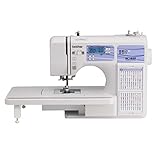 Brother HC1850 Brother HC1850 |
|
Check Latest Price |
 Janome Arctic Crystal Janome Arctic Crystal |
|
Check Latest Price |
 SINGER 4511 Next Evolution SINGER 4511 Next Evolution |
|
Check Latest Price |
Two brands fill most of the shortlist, and that reflects what the market actually sells in this band. A metal frame matters more than stitch count, and only these seven combine one with a real owner history at this price.
1. SINGER 4423 Heavy Duty – the metal frame that earns its place
SINGER® 4423 (Meltwater Blue) Heavy Duty Sewing Machine with Accessories
Metal frame and stainless steel bedplate
23 stitches and 97 applications
1,100 stitches per minute
One-step buttonhole
Pros
- Heavy-duty metal internal frame with a stainless-steel bedplate
- Powers through denim
- canvas and multiple thick layers
- 1100 stitches per minute with smooth speed control
- Automatic needle threader and easy drop-in bobbin winding
- Free arm handles cuffs and pant hems
Cons
- Outer housing
- spool pin and presser foot are plastic rather than metal
- No seam guide built in
- Printed instructions are thin and point to online downloads
This is the machine we keep coming back to, and the reason is the frame rather than the feature list. A metal internal frame with a stainless-steel bedplate is the part that stops vibration from turning into pucker and skipped stitches, and it is the single biggest jump in build quality you can feel between a 130 dollar machine and this one. The listing claims 50 percent more piercing power than a standard machine, and owners backing up repairs, webbing and denim back that up with their own results.
Twenty-three stitches delivering 97 applications sounds modest until you look at the applications. The stretch and decorative families fill in the gaps so that the same machine handles a knit hem, a topstitch on a bag and a decorative seam. One-step buttonhole and an automatic needle threader remove the two tasks beginners find most awkward on day one.
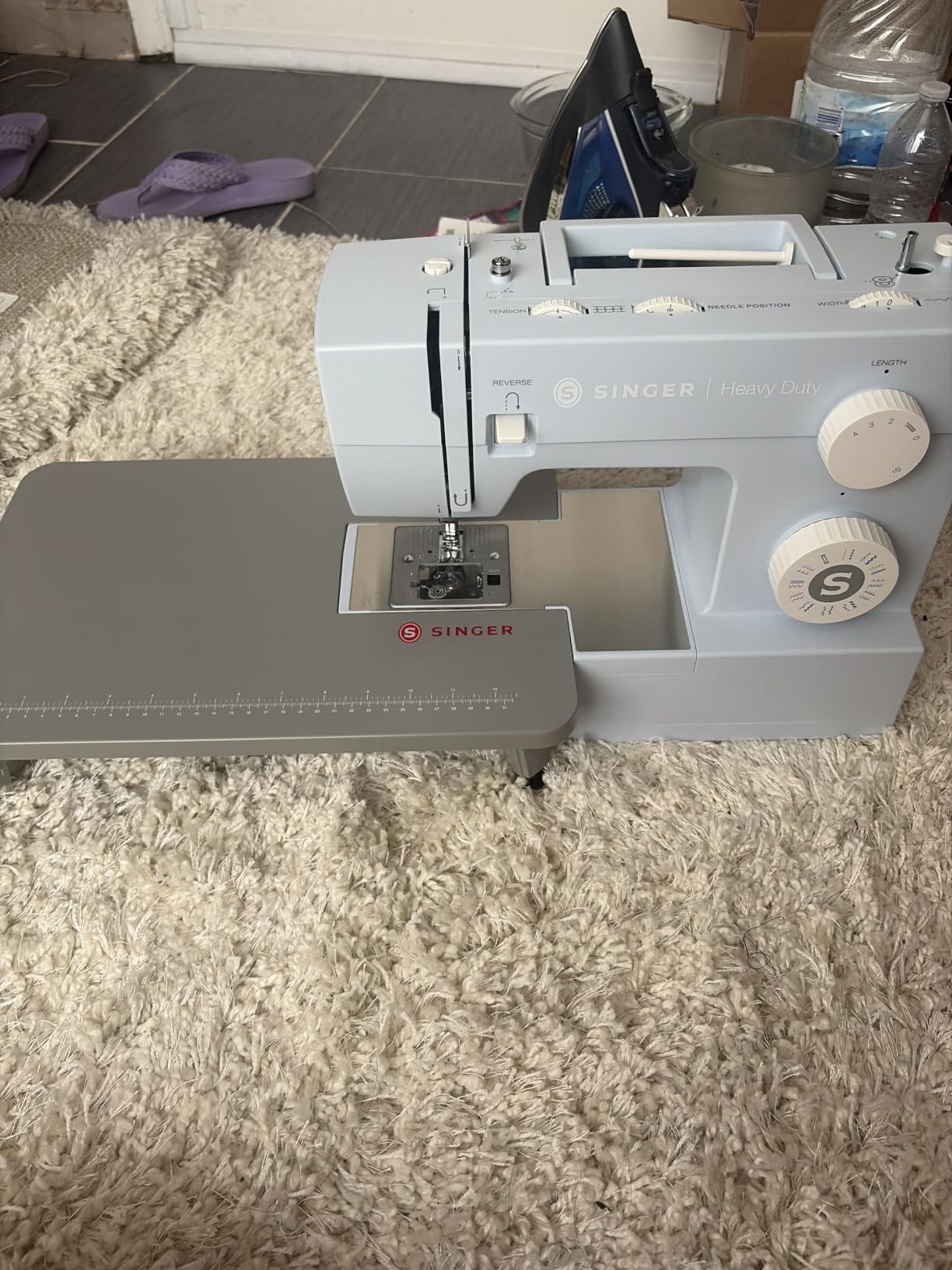
The extras are unusually generous for the price: all-purpose, zipper, buttonhole and button sewing feet, a quilting guide, needles, bobbins, a seam ripper and a soft-sided dust cover. At 17.1 pounds and 6.25 by 15 by 12 inches it is a full-size machine that needs a real table, not a lap desk.
Why owners rate it so highly
With more than 21000 reviews, the pattern is unusually consistent. Roughly 78 percent of ratings are five stars and 11 percent are four stars, and the praise clusters on three things: the frame, the needle power on heavy fabric, and how simple the mechanical controls are. Experienced sewists describe it as a machine that gets out of the way.
That consistency is why we made it the top pick. When thousands of people sew on the same machine for years and the complaints stay cosmetic, the machine is doing its job.
Where it falls short
The criticisms are about exterior hardware, not sewing. The outer housing, spool pin and presser foot are plastic even though the frame inside is metal, and the presser foot in particular is a part that eventually needs replacing. The bobbin should be a Class 15 plastic type, because owners report jams and bobbin-case failure when a metal bobbin is used.
There is also no built-in seam guide, so a magnetic guide is one of the first accessories most owners add. Some report bird-nesting and thread breakage when starting a seam on heavier projects, which is nearly always fixed by holding the thread tails for the first inch.
2. Brother XM2701 – the easiest first machine
Brother Sewing Machine, XM2701, Portable Sewing Machine, 27 Stitches
27 built-in stitches
Auto-size one-step buttonhole
Automatic needle threader
12.6 lb portable body
Pros
- Very easy for absolute beginners to learn
- Automatic needle threader and drop-in top bobbin
- 27 stitches without overwhelming new users
- Sews even consistent stitches with few skips
- Light and compact enough to store in a cubby or travel
Cons
- LED work light is dim
- Presser foot lever is thick plastic and can feel fragile over time
- Foot pedal takes practice to control at low speed
This is the most recommended first machine in the sewing communities we checked, and the reason is a short feature list rather than a long one. Owners repeatedly describe sewing a first hem within about half an hour of unboxing, which is exactly the experience a new sewist needs. A 4.6 rating across more than 19000 reviews, with 81 percent five stars, is about as safe a bet as this band offers.
Everything that trips beginners up is handled. The automatic needle threader removes the hardest part of setup, the jam-resistant drop-in top bobbin means you never have to learn to thread a front-loading case, and the built-in thread cutter saves you from hunting for scissors between steps. Twenty-seven stitches including decorative, blind hem, zigzag and stretch cover everyday work without turning the machine into a puzzle.
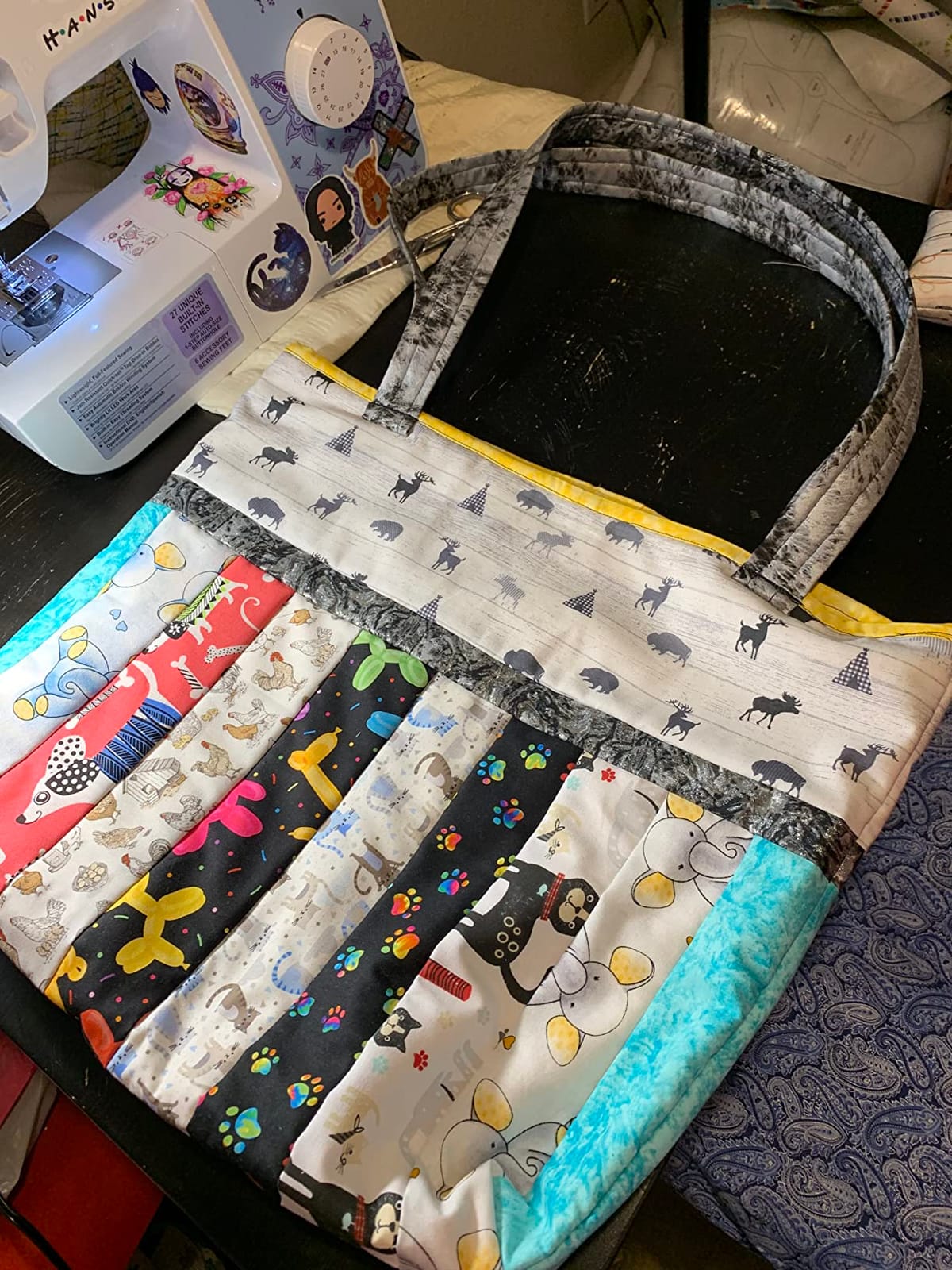
The accessory bundle is better than most rivals at this tier: six included sewing feet, a needle pack, a twin needle, four bobbins, an extra spool pin, a darning plate, a screwdriver and an accessory bag. All of it sits in a 12.6 pound body measuring 15.3 by 5.86 by 12.01 inches, and the 25 year limited warranty plus lifetime technical support are genuinely useful for a first-time owner.
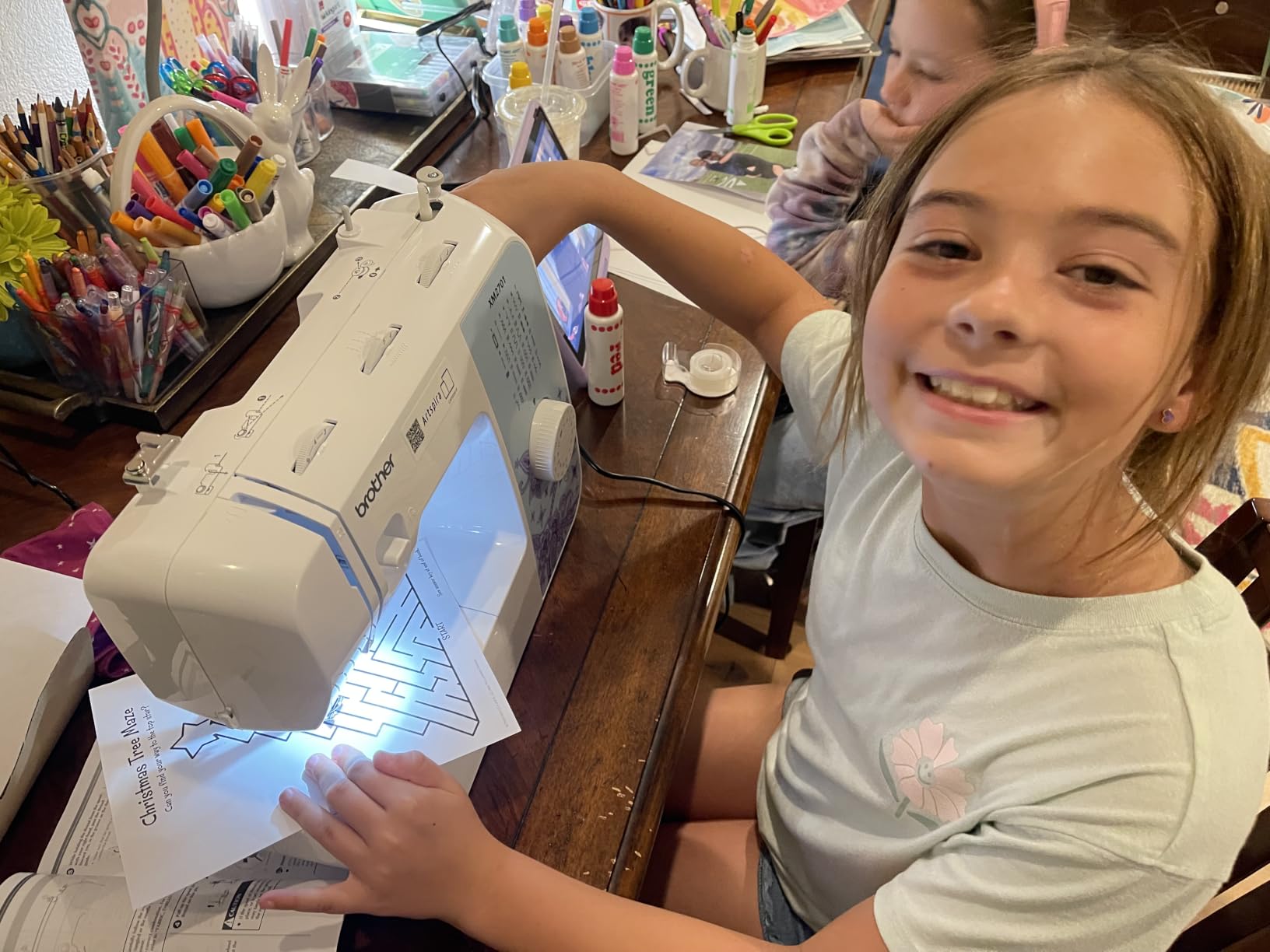
Why beginners keep recommending it
Look at the failures people report and almost none of them are sewing failures. The complaints are a dim LED work light, a plastic presser foot lever that feels fragile over time, and a foot pedal that takes practice to control at low speed. None of those will stop you from hemming a shirt or making a bag on the first afternoon.
It is also the most portable machine in this group. At 12.6 pounds it moves to a class, a shared craft space or a small apartment without ceremony, and the free arm handles cuffs, sleeves and pant legs so you do not have to turn the whole garment.
Where it falls short
It is not a heavy-fabric machine. Owners report that it struggles at the very edge of a piece or on very thick multilayer seams unless you use the paper trick to support the fabric, so denim and canvas are outside its comfort zone. The storage compartment is not a complete piece, so accessories can slide out if you carry it around.
The dim work light is the most common fix-it request. A clip-on lamp solves it for a few dollars, and it is the only addition most owners make.
3. SINGER 4432 – the widest utility stitch set
SINGER® 4432 (Grey) High Speed Heavy Duty Sewing Machine + Accessory Kit
Heavy duty metal frame
32 stitches and 110 applications
1,100 stitches per minute
Drop-in jam-proof bobbin
Pros
- Sturdy metal frame and simple mechanical controls that last
- 1100 stitches per minute cuts through canvas and denim
- 32 stitches and 110 applications
- One-step buttonhole and easy bobbin winding
- Clear bobbin cover shows thread supply at a glance
Cons
- Foot pedal cord is very short and cannot be extended
- Fewer presser feet included than some buyers expect
- On and off switch is hard to reach when the machine sits in a table
Where the 4423 offers 23 stitches, this one offers 32 with 110 applications, and that difference shows up when you make more than one kind of thing. Owners use it for everything from sheer chiffon and crenoline through to heavy fabric and leather, and the built-in reverse lever makes seam reinforcement a one-lever action rather than a routine.
Speed is the same headline figure, 1,100 stitches per minute with 50 percent more power for thick fabrics, but the 32 stitch set is the reason experienced sewists gravitate here. A 25 year limited warranty and a jam-proof top drop-in bobbin under a clear-view cover make it a long-ownership machine rather than a starter.
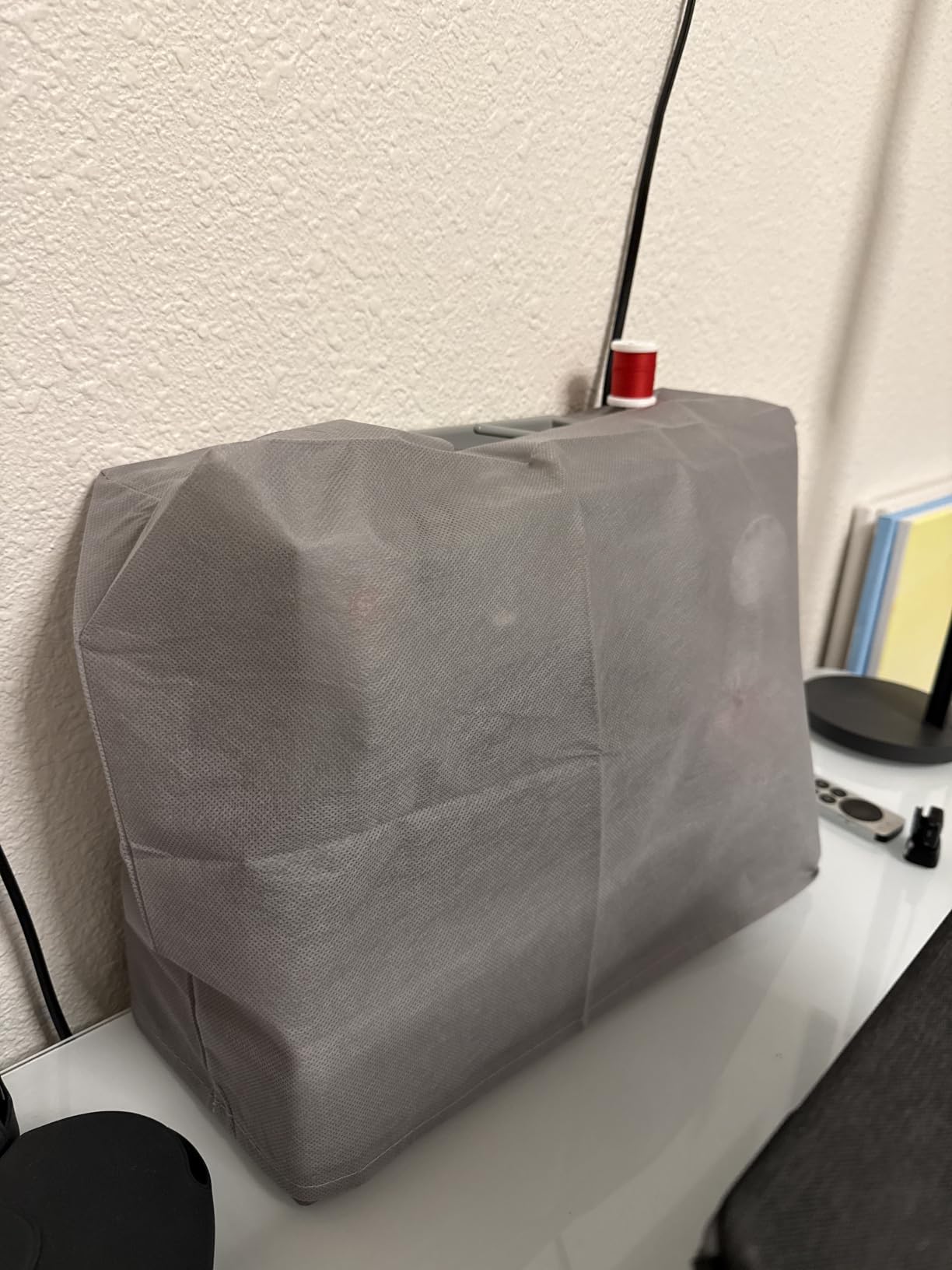
The accessory kit includes a general purpose foot, zipper foot, buttonhole foot, button sewing foot, an edge and quilting guide, needles, Class 15 transparent bobbins, spool caps, an auxiliary spool pin, spool pin felt, a screwdriver and a soft dust cover. The machine weighs 7 kg and measures 6.25 by 15.5 by 12 inches.
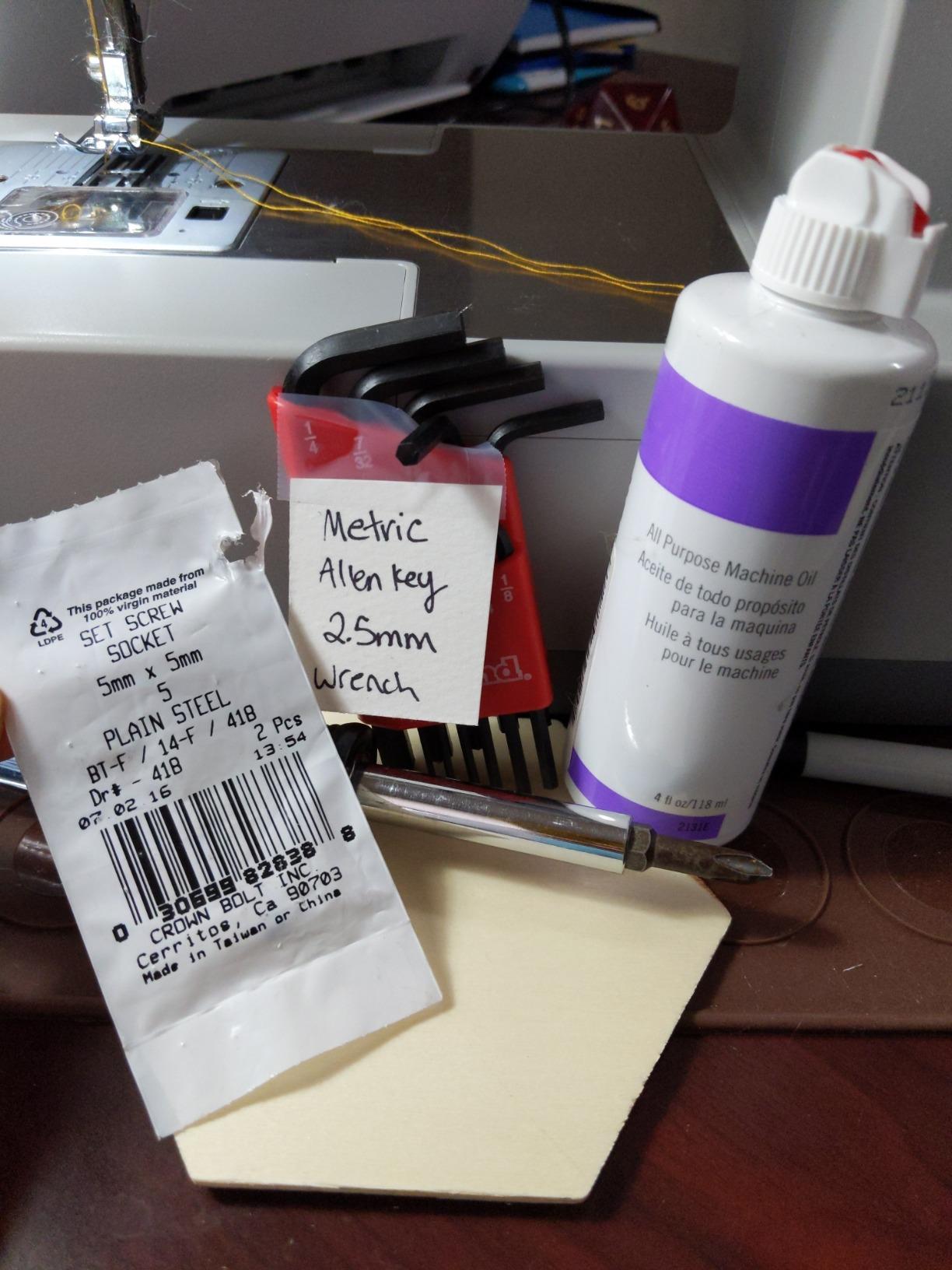
What makes it different from the 4423
Choose this one if you sew a wide mix of fabrics and want the options in front of you rather than stored behind a mode. A 4.4 rating from more than 11000 reviews, with 77 percent five stars, says the stitch variety and the metal frame both deliver on a daily basis. Experienced sewists in particular prefer the simple mechanical layout over electronics.
The reverse lever and the quilting guide are small features that matter more than they sound. Reinforcing a seam after every stitch is a habit worth building, and the quilting guide helps you keep a consistent distance from the edge when working through several layers.
Where it falls short
The foot pedal cord is very short and cannot be extended, which is the single most common complaint and a real annoyance if your table is deep. The power and pedal also use a single split cord, and the on and off switch sits low where it is hard to reach when the machine is set into a table.
Two smaller notes. The feed dog drop switch is not accessible from a lowered table position and no darning plate is included, and a minority of owners report broken needles or misaligned feed out of the box, which points to quality control variation rather than a design fault.
4. Brother XR3774 – quilting on a budget
Brother XR3774 Sewing and Quilting Machine 37 Stitches
37 built-in stitches
Wide extension table
Eight included feet
Walking foot and darning plate
Pros
- Handles bulky quilt layers and denim for a budget machine
- 37 stitch choices plus a 1-step buttonhole
- Included wide extension table and walking foot
- Eight included feet and a full accessory set
- Many owners sew repeatedly for years without a single jam
Cons
- Wide table legs are flimsy and can snap off
- Zigzag can skip stitches on very heavy projects
- Throat space is tight for large quilt bulk
Quilting is where budget machines usually disappoint, because the wide table and the walking foot matter as much as the needle. This one includes both, plus a darning plate for free-motion work, so a hobby quilter can start a project on day one without buying anything. Thirty-seven built-in stitches including blind hem, decorative and quilting stitches round out a set that is genuinely useful rather than padded.
It holds a 4.6 rating with more than 5500 reviews and 79 percent five stars, and owners report sewing repeatedly for years without a single jam. The automatic needle threader, jam-resistant drop-in top bobbin and free arm are the same beginner-friendly setup Brother builds into its whole budget line, with a 25 year limited warranty behind it.
The included list is unusually complete: a wide extension table, eight sewing feet, a walking foot, a darning plate, a twin needle, four bobbins, an extra spool pin, a machine cover, a screwdriver and an instructional DVD. At 15 pounds and 5.8 by 15.3 by 12 inches, it is sturdy but still travelable.
Why quilters like it
The wide extension table spreads the load so bulky quilt sections sit flat instead of dragging, and the walking foot feeds layers evenly through the feed dogs. Owners working denim and heavier quilting fabrics report steady results for a machine at this tier, which is not always true of the alternatives.
It is also light enough to move to a class or a craft table when you need the space back. If you want a wider selection of setups, our sewing table roundup covers dedicated furniture for bigger projects.
Where it falls short
Throat space is the honest limit. Serious quilters outgrow it on large quilt bulk, and this is the feature that pushes people toward a higher band later. The zigzag can also skip stitches on very heavy projects such as thick rug work, and the machine will not handle very stiff or very thick material.
The wide table legs are flimsy and are the most reported mechanical complaint, so handle the table rather than the machine when you move it. There is no speed-control button, and the cover included is a dust cover rather than a proper carry case.
5. Brother HC1850 – 185 stitches on an LCD
Brother HC1850 Sewing and Quilting Machine, 185 Built-in Stitches, LCD Display, 8 Included Feet
185 built-in stitches
LCD display for stitch selection
Eight auto-size buttonhole styles
Advanced needle threader
Pros
- 185 built-in stitches including 55 alphanumeric designs
- LCD screen makes stitch selection fast and clear
- Advanced needle threader is fast and reliable
- Wide table and eight included feet support quilting
- 25 year limited warranty and lifetime technical support
Cons
- More complex controls can intimidate new users
- Heavier and bulkier than simpler mechanical models
- Alphanumeric stitches lengthen the learning curve
This is the only machine in the group that gives you a screen, and for anyone making more than repairs it is the biggest functional upgrade available inside the ceiling. One hundred and thirty sewing stitches plus 55 alphanumeric designs make 185 in total, selected from an LCD rather than hunted for on dials. Eight auto-size buttonhole styles mean the machine measures the buttonhole itself.
Our team rated it highly for a specific reason: it sits at the top of the budget and the extra spend buys screen-driven selection rather than more force. If you sew garments, do craft work or want lettering and decorative designs, that is worth it. If you mostly hem things, the Brother XM2701 does the same job for less.
The box includes an accessory pouch with a needle set, twin needle, ballpoint needle, four bobbins, an extra spool pin, a seam ripper, cleaning brush, screwdriver, power cord, an English and Spanish instructional DVD and manual, a wide table and eight feet. It weighs 10.1 pounds and measures 12 by 19 by 15 inches including the table.
When the screen earns its keep
Stitch selection is the whole point. On a mechanical machine, switching between a stretch stitch and a decorative pattern means turning dials and remembering positions. Here you scroll a list, and the machine holds your width and length settings for the pattern you chose. Owners who sew the same project repeatedly say that is the feature they would miss most going back.
It holds 4.6 stars across more than 5100 reviews with 82 percent five stars, the highest share of five-star ratings in this group, and it carries a 25 year limited warranty plus lifetime technical support.
Where it falls short
The controls are more complex than a purely mechanical machine, and that is exactly the trade. New users who expected dials can find the interface intimidating, and the alphanumeric stitches add length to the learning curve without helping a basic repair.
It is also heavier and bulkier than the simpler models, which matters if you plan to store it in a small apartment. Buying it as your only machine means you carry the complexity even on days when you only need a straight stitch.
6. Janome Arctic Crystal – the metal frame at a lower tier
Janome Arctic Crystal Easy-to-Use Sewing Machine with Interior Metal Frame, Bobbin Diagram, Tutorial Videos, Made with Beginners in Mind for Garments, Patchwork, Light Quilting
Interior metal frame and metal bobbin case
15 built-in stitches
Darning plate included
12 lb compact body
Pros
- Interior metal frame and metal bobbin case outlast plastic rivals
- Simple mechanical controls with no electronic menu
- Strong enough for multiple layers of denim with a heavier needle
- Easy for first-time sewists to set up
- Only 12 pounds so it stores easily or travels to classes
Cons
- Only 15 built-in stitches
- Front-loading bobbin has a learning curve
- Thread holders are noticeably flimsy
Most people assume a metal frame costs extra. This Janome has an interior metal frame and a metal bobbin case, which is the part that actually wears, and it sits well below the metal-framed Singer models. Owners who sew multiple layers of denim with a heavier needle report it handles the load, and the 3-piece feed dog and free-arm design feed fabric evenly rather than ratcheting.
It is also the quietest straightforward option here. There is no electronic menu to learn, 15 built-in stitches with adjustable width and length cover hemming, zigzag and basic construction, and the darning plate is included for quilting and free-motion sewing. A 25 year limited warranty and tutorial videos help a first-time owner.
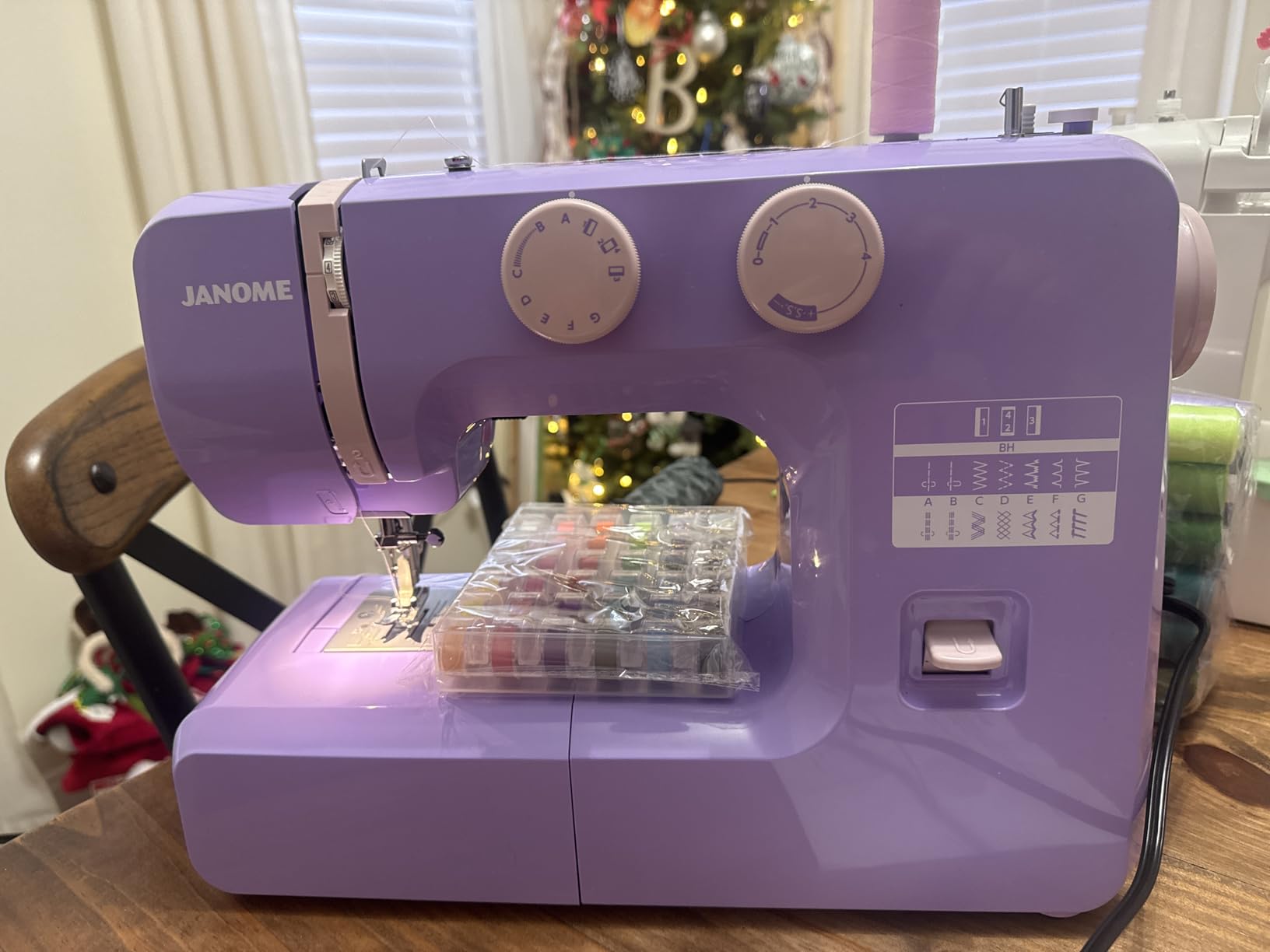
At 12 pounds and 7 by 16 by 12 inches, it is one of the easiest machines here to carry to a class or store between projects, and the free arm handles cylindrical work. The included list covers a general purpose foot, blind hem foot, 4-step buttonhole foot, zipper foot, bobbins, needles, a seam ripper, a darning plate and a quick start guide.
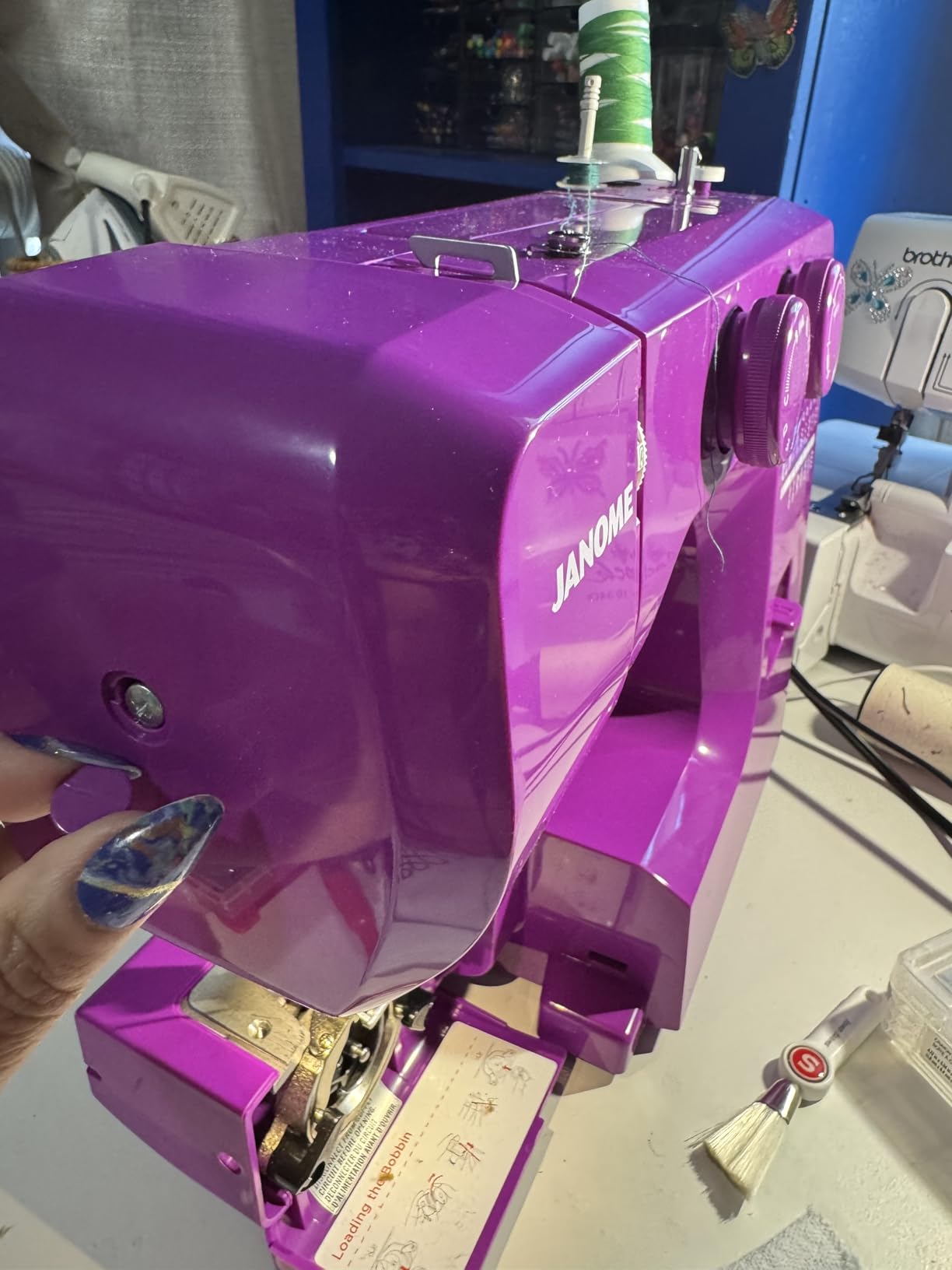
Why durability buyers pick it
The case for this machine is build, not features. A metal bobbin case and interior frame resist the wear that cracks plastic housings after a few years of heavy work, and owners commonly report smooth operation with no skipped stitches. For someone who sews denim often, that combination of frame and feeding is more valuable than a longer stitch list.
Our buying advice is simple: if you are unsure whether you will stay within light fabrics, this is the cheapest way into a metal-framed machine that still travels easily.
Where it falls short
Fifteen built-in stitches is the smallest set in this group, and the 4-step buttonhole asks more of you than a one-step does. The front-loading bobbin is a real learning curve for anyone used to a top drop-in, which is the main reason first-time owners gravitate to Brother or SINGER instead.
Two smaller details catch owners. The thread holder is noticeably flimsy and some units arrive with it broken, and the foot pedal jumps from slow to full speed quickly, which makes small pieces harder than they need to be.
7. SINGER 4511 Next Evolution – motor power and speed control
SINGER® Heavy Duty 4511™ Next Evolution Sewing Machine with Accessories
New DC motor with 50 percent extra power
Speed control to 1,000 stitches per minute
Full metal interior frame
Free arm and drop feed
Pros
- Plows through denim
- canvas
- vinyl and multi-layer seams
- New DC motor gives stronger steadier stitching
- Speed control dials back for curves
- corners and small pieces
- Full metal frame and stainless steel bedplate
- Free arm and drop feed handle cuffs and free-motion work
Cons
- Only 11 built-in stitches
- Presser foot and bobbin case are plastic despite the heavy duty positioning
- Some owners report the presser foot loosening and breaking needles
The 4511 is the newest motor in this group, and owners consistently single that out. The newly engineered DC motor delivers 50 percent extra power with speed control up to 1,000 stitches per minute, which means you can slow down for a corner and then let go on a long seam. That range of control is what makes it popular for costuming, curtains and quilt piecing rather than only straight garment work.
Underneath, it is a full metal interior frame with a scratch-resistant stainless steel bedplate, a top drop-in bobbin with a clear cover, free arm, drop feed and adjustable needle position, plus a large sewing space for bulkier seams. It ranks near the top of the category in search volume with more than 9000 reviews and a 4.4 rating, 76 percent of them five stars.
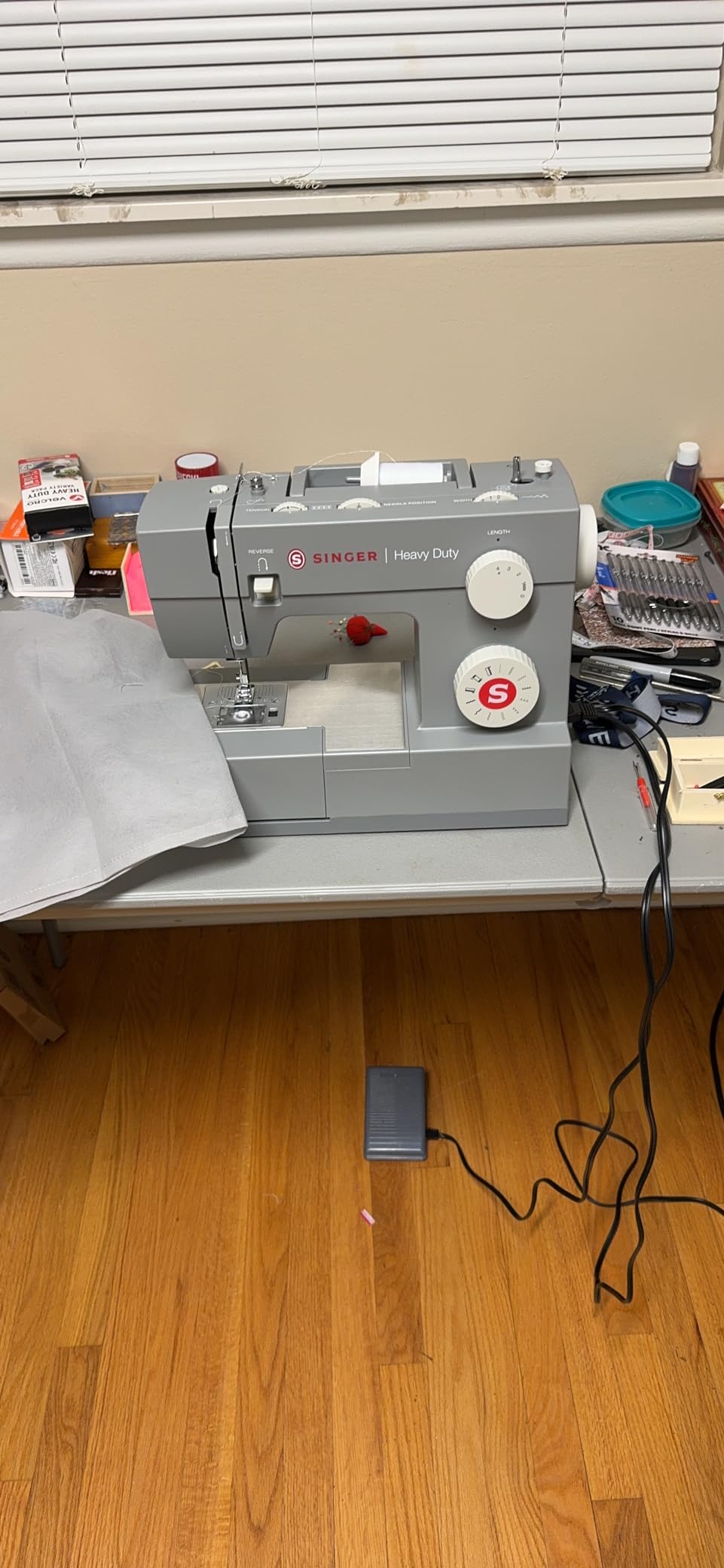
Included are an all-purpose foot, buttonhole foot, zipper foot, blind hem foot, a pack of three needles, four Class 15 transparent bobbins, spool caps, an auxiliary spool pin, spool pin felt, a needle plate screwdriver, an edge and quilting guide and a seam ripper with lint brush. It weighs 16.6 pounds and measures 6.25 by 15.5 by 12 inches.
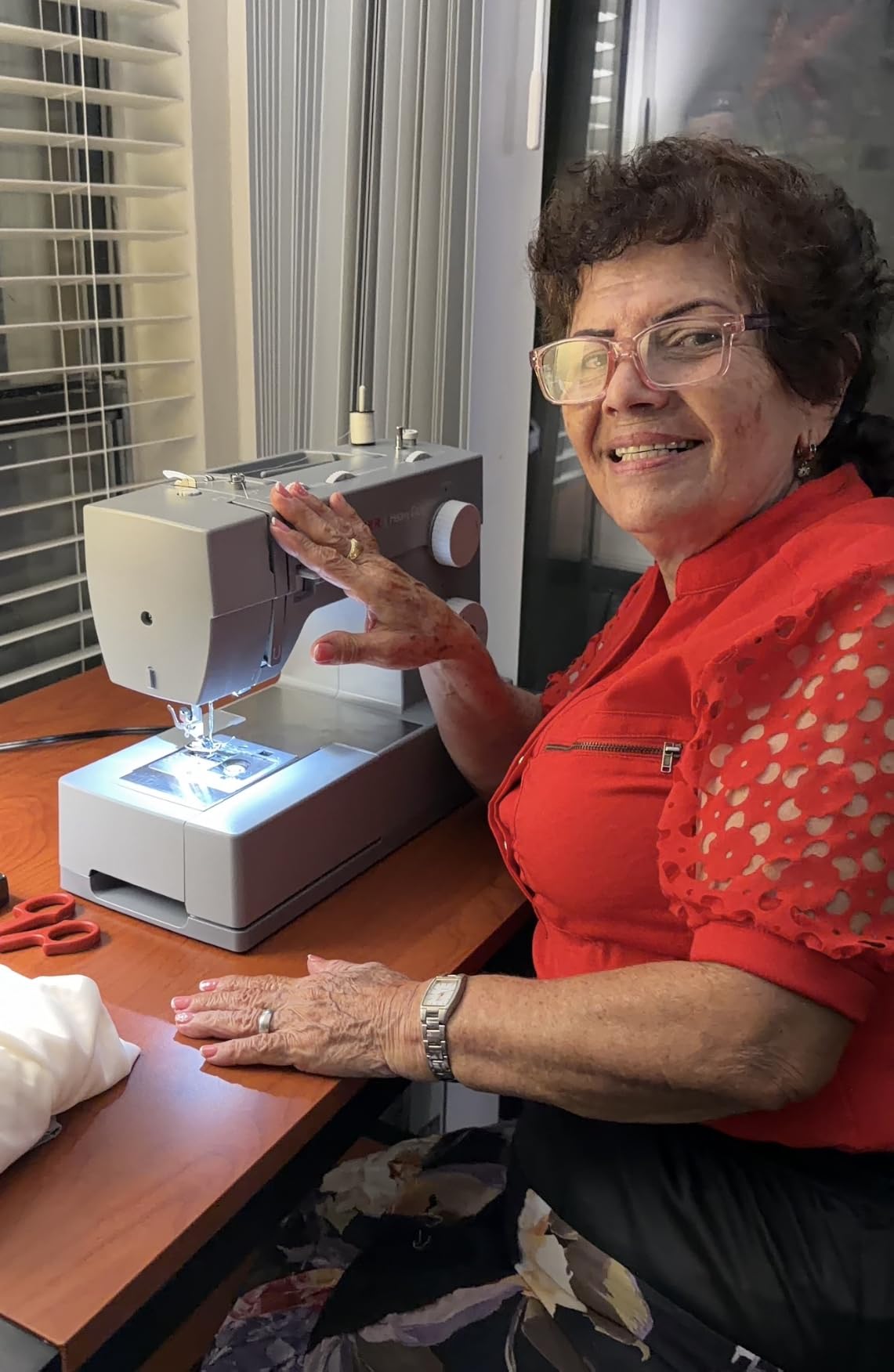
Where the speed control changes your sewing
A foot pedal that runs straight to full speed is the reason beginners break needles and bunch seams. Here the machine runs up to 1,000 stitches per minute but you set the ceiling, so short curves and small pieces get a controlled feed. Owners who sew heavy, bulky work say that difference is felt immediately on the first seam.
Drop feed and free arm open up free-motion work and cylindrical sewing, and the adjustable needle position is useful for topstitching. Our broader heavy duty sewing machine guide covers the models to consider when you need more force than this ceiling allows.
Where it falls short
Eleven built-in stitches is the fewest in this group. If your projects depend on a wide pattern library, the 4432 or the HC1850 serves you better, and no screen means no quick selection.
The presser foot and bobbin case are plastic despite the heavy duty positioning, and some owners report the presser foot loosening on its shank and breaking needles. Bird-nesting at the start of a seam happens if the thread tails are not held, and feed dogs can struggle to pull very heavy fabric straight without added weight. Several critical reviews also point to declining build quality on recent units, so check the machine on arrival.
What You Give Up Under 300, and How to Choose Instead
Buying inside a ceiling is about knowing which compromises you can live with. A 300 dollar machine handles hems, garments, denim, curtains and hobby quilting comfortably. It does not handle a bed-size quilt in one pass, a professional seam allowance guide, or embroidery beyond decorative stitching. Our team thinks that trade is worth taking for a first or second machine.
Machine type is the first thing to settle. A mechanical machine uses dials and levers and has the fewest parts to fail. An electronic machine adds a motor that controls stitch speed and tension. A computerized machine stores stitch patterns and lets you set width and length from buttons or a screen. Within this ceiling the real difference is not quality, it is how much guidance the machine gives you while you work.
If you want dials, the SINGER 4423, the SINGER 4432, the SINGER 4511 and the Janome Arctic Crystal are all mechanical. If you want a screen and pattern selection, the Brother HC1850 is the only option here, and the Brother XM2701 and XR3774 sit in between with threaders and one-step buttonholes but no display.
Second, judge the frame. A metal internal frame and a metal bedplate reduce vibration, which reduces pucker and skipped stitches. Of the seven machines here, five have a metal frame or interior metal frame, and two of those sit at the lower end of the price band. That is the single clearest quality divide inside this budget.
Third, count throat space. It is the open area to the right of the needle, and it is what limits quilting. Nothing under this ceiling gives you a large throat, so bed-size quilts mean turning the work. Our computerized machine guide covers what changes once you move up a band.
Fourth, check the buttonhole. A one-step buttonhole measures the button and sizes itself. A four-step buttonhole makes you guide the machine through four passes, which is a small daily annoyance that becomes a real one over a year. Three machines here offer one-step, and the Janome Arctic Crystal and the SINGER 4511 use four-step.
Finally, budget the extras. Beyond the machine most people need a pack of needles, thread in two weights, a pair of shears, a seam ripper, an iron, a walking foot and a few extra presser feet, and adding those up lands somewhere around 40 to 70 dollars. Adding that to a machine near the top of the band is how a 300 dollar budget quietly becomes 370. Buying a machine lower in the range leaves room for supplies, and it is the reason the Brother XM2701 and the Janome Arctic Crystal remain on this list.
Brother vs Singer vs Janome: Which Brand to Trust
Brother is the safest default for a first machine, and the reason is consistency rather than any single model. Owners describe them in the same short phrase across sewing forums: one, and it just works. The XM2701 and the XR3774 both pair an automatic needle threader with a jam-resistant drop-in bobbin, and both carry a 25 year limited warranty, so the brand’s beginner support is a real asset when you call with a question at nine at night.
Singer is split, and buyers should treat the brand name with care. The Heavy Duty machines in this roundup, the 4423, the 4432 and the 4511, are metal framed and hold up well, and experienced sewists often prefer their mechanical simplicity to electronics. Outside that line, threads in our research repeatedly recommend avoiding specific Singer models, so the brand alone is not a quality signal.
Janome is the durability answer, and the Arctic Crystal is the proof. An interior metal frame and a metal bobbin case at a lower price than the metal-framed Singers is unusual, and it is why experienced sewists who know what wears out still point at it. You trade stitch count and a top drop-in bobbin for a machine that tends to age well.
If you are deciding between Brother and Janome specifically: take Brother if you want the simplest setup and the easiest threading, and take Janome if you sew heavy fabrics often and want the more durable chassis. Take Singer only when you have decided you want maximum force on thick material and you are choosing a Heavy Duty model by number.
One broader piece of community wisdom is worth repeating. A Japanese-made or European-made machine is generally a safer long-term buy than the cheapest unbranded alternative, because parts and servicing still exist years later. Every machine on this list sits with a brand that has a service network, and that matters more at year five than any feature at purchase.
Reliability, Known Issues and Quick Fixes
Owner complaints cluster into a handful of patterns, and most of them have a fix. We would rather tell you what to watch for than list only the wins.
Bobbin jamming is the most frequent issue and nearly always comes down to the wrong bobbin type. Metal bobbins in a machine built for Class 15 plastic bobbins cause jams and bobbin-case failure on the SINGER 4423 and 4432. Use the plastic bobbins the machine shipped with, and check that the bobbin is seated correctly before every fill.
Skipped stitches show up on heavy projects in two specific places. The Brother XR3774 can skip on zigzag during very heavy rug-style work, and the Brother XM2701 struggles at the very edge of a fabric or on very thick multilayer seams. The standard remedy is the paper trick, placing a sheet of paper under the foot to support the fabric as it feeds.
Needle breakage is usually a speed or hardware issue rather than a machine failure. On the SINGER 4511 some owners report the presser foot loosening on its shank, so tighten the foot screw before starting a heavy seam. On the SINGER 4432 a small number of units arrive with needles breaking or feed misalignment, which is worth checking on arrival under the warranty.
Thread snagging and bird-nesting at the start of a seam is normal across every mechanical machine here, including the SINGER 4423 and 4511. Hold both thread tails for the first inch of stitching and the problem disappears. Threading problems in the Janome Arctic Crystal are more often a read-the-diagram issue, which is why the printed bobbin diagram in the housing exists.
Finally, plastic wear parts are the thing that ends most of these machines eventually. Presser feet, spool pins and bobbin cases on the SINGER models are plastic by design, and they are consumables. Keeping a spare foot and a spare bobbin case on hand costs almost nothing and prevents a stopped project later.
Frequently Asked Questions
What is the best sewing machine under 300?
The SINGER 4423 Heavy Duty is our top pick in this price range. It has a metal internal frame with a stainless-steel bedplate, 23 stitches delivering 97 applications, 1,100 stitches per minute, a one-step buttonhole and an automatic needle threader, and it holds a 4.5 rating across more than 21000 owner reviews.
What is the best reasonably priced sewing machine for beginners?
The Brother XM2701 is the easiest first machine in this range. It has 27 built-in stitches, an automatic needle threader, a jam-resistant drop-in top bobbin, a built-in thread cutter and six included feet, and owners commonly sew a first hem within about half an hour of setting it up.
What is the most reliable brand of sewing machine?
Within this budget, reliability splits by model rather than by logo. Brother is the most consistent for beginners, the SINGER Heavy Duty models are strong on force and metal frames, and the Janome Arctic Crystal stands out for its interior metal frame and metal bobbin case. Choose by model and frame material rather than by brand name alone.
Which sewing machine is better, Brother, Janome, or Singer?
Brother wins for the simplest setup and easiest threading, Janome wins for a durable metal chassis that resists wear, and Singer Heavy Duty wins when you want maximum piercing force on thick fabric. For a first garment machine take a Brother, for heavy fabrics on a smaller budget take the Janome, and for raw power take a SINGER Heavy Duty model.
Are cheap sewing machines worth it?
Yes, if you buy for a metal frame and a needle threader rather than for stitch count. Every machine in this roundup is built for hems, garments, denim and hobby quilting, and several carry 25 year limited warranties. A cheap machine without a metal frame is where the frustration starts.
Conclusion: The Best Sewing Machines Under 300, Final Word
The best sewing machines under 300 are genuinely good, and the ceiling is not the compromise people assume. The SINGER 4423 Heavy Duty takes the top spot for its metal frame, 1,100 stitches per minute and the largest owner base we found. The Brother XM2701 is the right first machine, the Brother XR3774 handles hobby quilting with its wide table and walking foot, and the Janome Arctic Crystal gives you a metal frame at a lower spend.
Pick on the frame material, the stitch set you will actually use, and the fabric you sew most. Leave room in the budget for needles, thread and feet, and any of these seven will serve you for years. Our picks stay current as new machines enter the band, so check back through 2026 before you decide.