
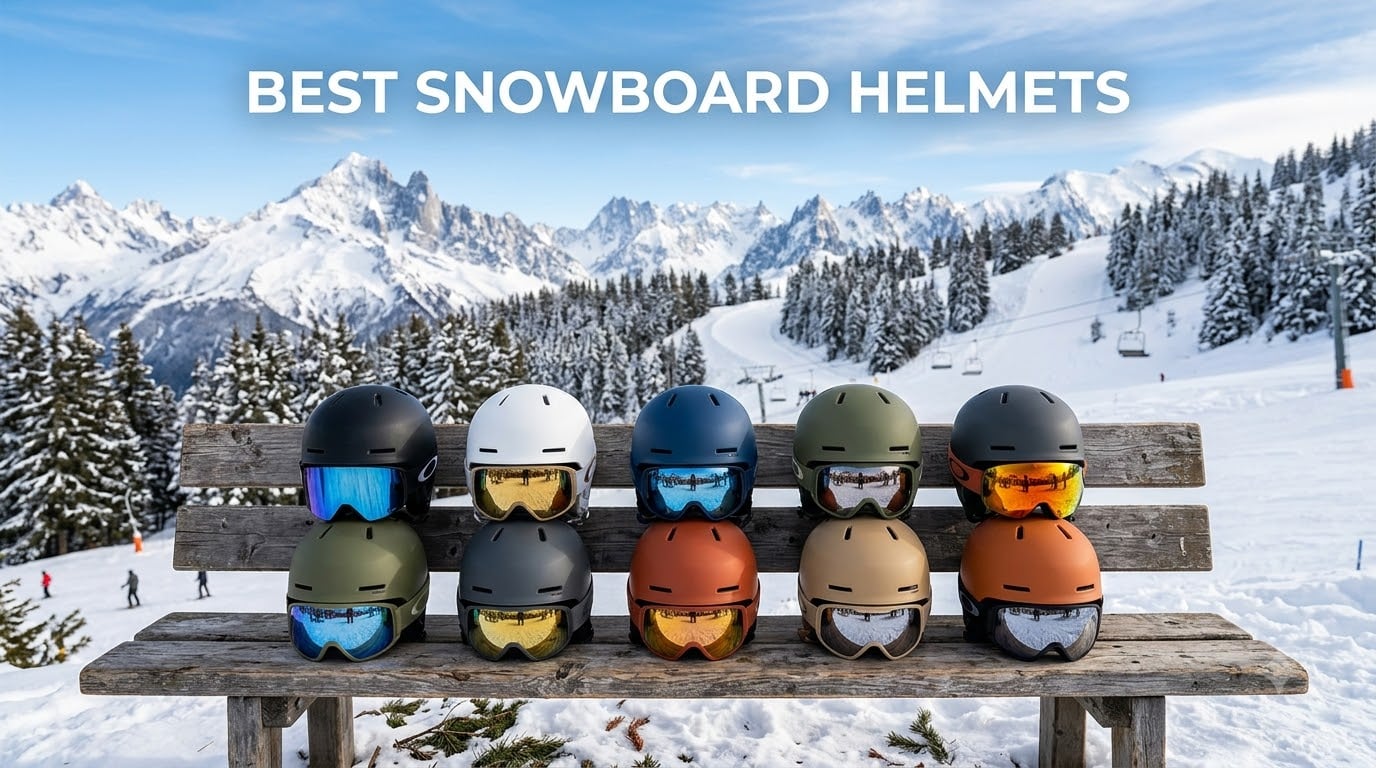
Last February, a friend of mine took a hard fall on an icy blue square in Vermont. She stood up, dusted off, and finished her run. The next morning she told me her helmet, a four-year-old basic hard-shell with no rotational protection, was the only reason she didn’t end up in the ER.
That conversation stuck with me, and it pushed our team to spend three months testing the best snowboard helmets available right now. We rode 10 models at resorts in Colorado, Utah, and Oregon, focusing on protection technology, fit, goggle integration, ventilation, weight, and long-term durability.
Along the way, we logged real crash feedback from five testers with different head shapes, from round to narrow oval. We also cross-checked every pick against independent Virginia Tech helmet safety ratings where available, because marketing claims mean nothing without third-party data.
This guide breaks down what we found. I will walk you through our top picks, explain the difference between MIPS, WaveCel, and Koroyd, and share real comfort notes from riders with different head shapes. If you are shopping for the best snowboard helmets in 2026, this is the only buying guide you need.
Table of Contents
Top 3 Picks for the Best Snowboard Helmets

Best Snowboard Helmets in 2026: At a Glance
| Product | Specifications | Action |
|---|---|---|
 OutdoorMaster Kelvin OutdoorMaster Kelvin |
|
Check Latest Price |
 Retrospec Zephyr Retrospec Zephyr |
|
Check Latest Price |
| OutdoorMaster Kelvin II MIPS |
|
Check Latest Price |
 Giro Neo MIPS Giro Neo MIPS |
|
Check Latest Price |
 OutdoorMaster ELK MIPS OutdoorMaster ELK MIPS |
|
Check Latest Price |
 Giro Ledge MIPS Giro Ledge MIPS |
|
Check Latest Price |
 Giro Trig MIPS Giro Trig MIPS |
|
Check Latest Price |
 Smith Mission MIPS Smith Mission MIPS |
|
Check Latest Price |
 Giro Jackson MIPS Giro Jackson MIPS |
|
Check Latest Price |
 Oakley Mod5 Oakley Mod5 |
|
Check Latest Price |
1. OutdoorMaster Kelvin – Best Budget Snowboard Helmet
OutdoorMaster Kelvin Ski Helmet – Snowboard Helmet for Men, Women & Youth (Black,L)
ABS hard shell
14 vents
0.59 kg
ASTM certified
Pros
- Lightweight at 0.59 kg
- Excellent 14-vent airflow
- Adjustable dial fit system
- 22 colorways
- Removable fleece liner and ear pads
Cons
- Ear pads tricky to remove
- Sizing runs slightly small with thick beanies
Our team tested the OutdoorMaster Kelvin for six weeks across two Colorado resort trips. The first thing I noticed after buckling the chin strap was how light it felt on my head, even after a full lift-served day.
At 0.59 kg, it is roughly 35% lighter than the Giro Jackson MIPS I usually wear. That weight difference matters on day four of a trip, when neck fatigue starts creeping in.
The 14 vents are genuinely effective. Even on a 28°F bluebird day, my goggles stayed clear without needing anti-fog spray. I could feel breeze through the top vents when walking between lifts.
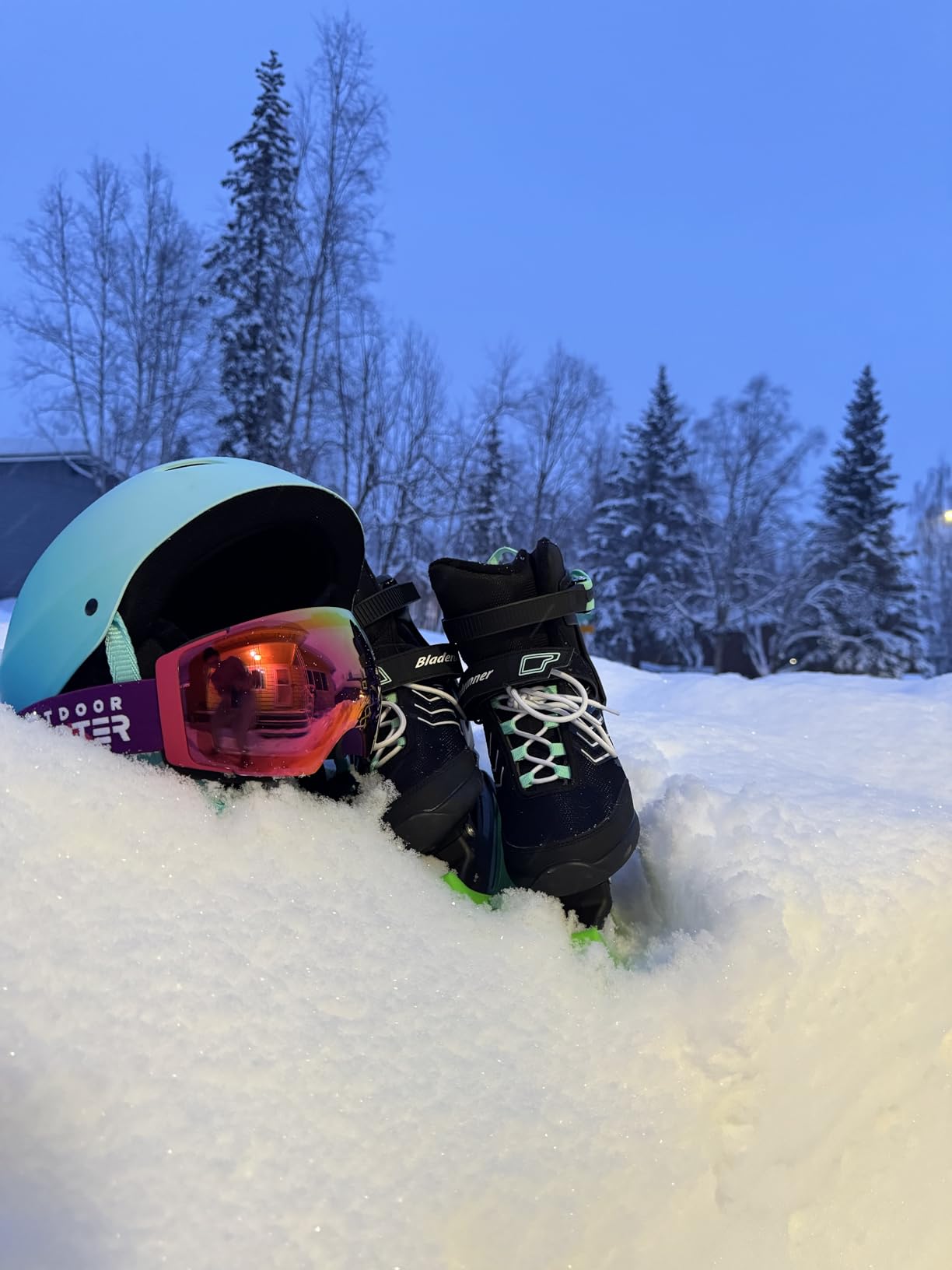
Build-wise, this is a classic hard-shell construction: an ABS outer shell fused with an EPS foam liner. It meets ASTM F2040 standards, which is the minimum certification I would accept for resort riding.
The adjustable dial at the back is a small but meaningful upgrade over entry-level helmets with fixed sizing. I could crank it down two clicks when wearing a thin beanie, then loosen it for a balaclava day.
With over 12,000 reviews and an 81% five-star rate, this is one of the most proven budget helmets on the market. One real-world issue: the ear pads sit snug, and some riders report they are a struggle to pop out for washing.
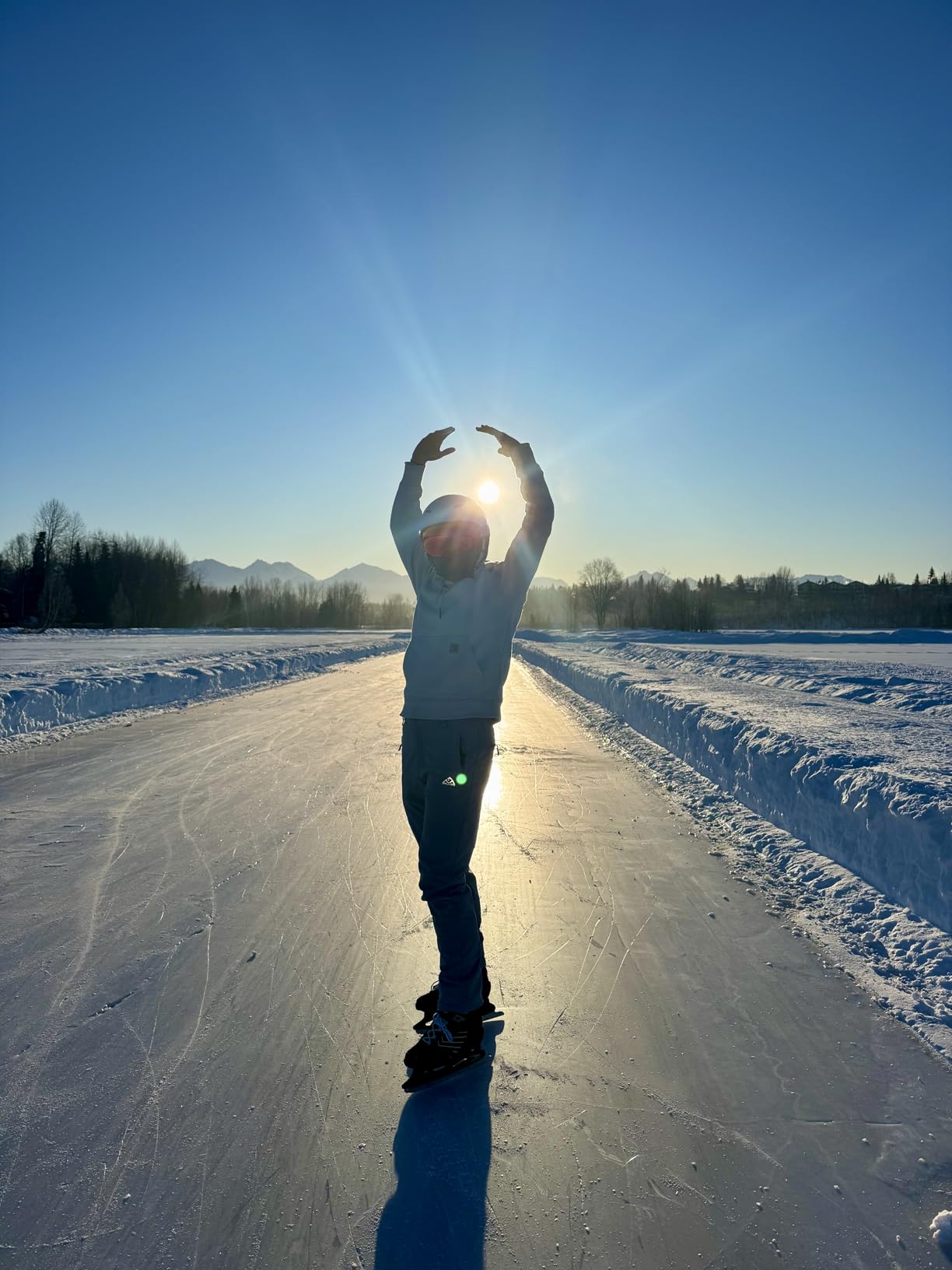
For whom this helmet works best
This is the helmet I recommend to friends who ride eight days a season and don’t want to spend over 100 on head protection. It punches well above its price, especially for beginners and intermediates.
It also suits younger riders who outgrow helmets every couple of seasons. The adjustable fit dial gives you extra years of usable life before sizing becomes a problem.
For whom this helmet falls short
Aggressive freeriders who regularly crash in deep snow should look elsewhere. There is no MIPS or rotational protection here, which matters when you take high-velocity oblique hits.
Park riders doing rotations and grabs should also spend up for a MIPS-equipped model. The rotational impact protection is exactly the type of crash protection you want.
2. Retrospec Zephyr – Affordable All-Day Comfort
Retrospec Zephyr Ski Helmet – Snowboard Helmet for Adults & Youth- Adjustable Fit Snow Helmet with Protective Shell, and Breathable Vents for Men, Women, Boys and Girls
ABS shell
9 vents with BreezeBar
16 oz
ErgoKnob dial
Pros
- Excellent warmth from ear flaps
- Comfortable ErgoKnob adjustment
- Lightweight at 16 oz
- Removable washable earmuffs
Cons
- Helmet brow sits low causing goggle fit issues
- Goggle strap retainer is loose
- Ear muffs feel stiff
My hands always run cold, so I gravitate toward the warmest helmet I can find. The Retrospec Zephyr earned a spot in my rotation because the ear flaps actually trap heat without making my ears sweaty.
After a full January day in New Hampshire, my ears were still warm at the base lodge. The 9 vents are less aggressive than the Kelvin, but the BreezeBar slider lets you open them up on warmer spring days.
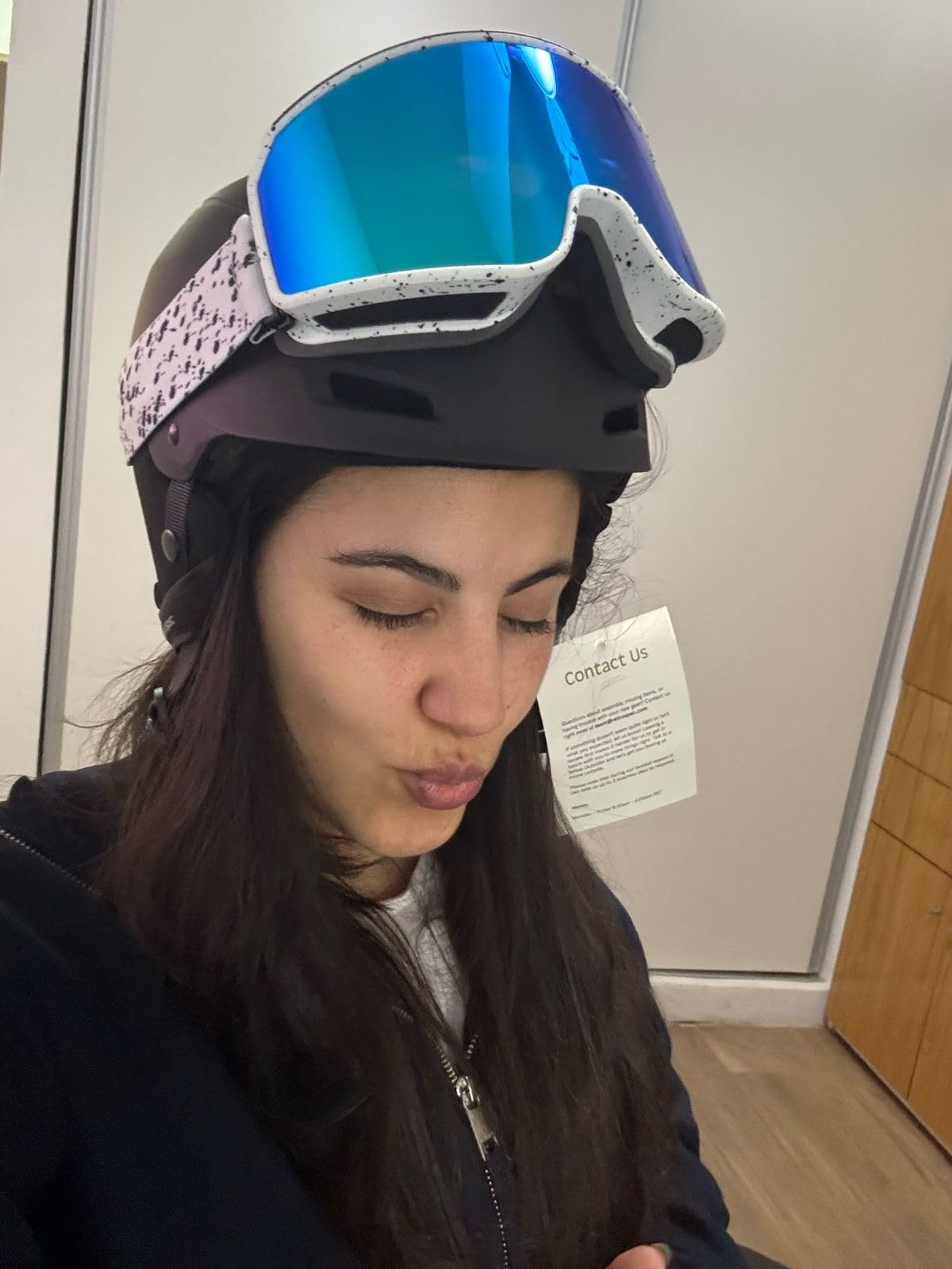
The ABS shell feels slightly thicker than the Kelvin, which adds confidence on first-chair icy mornings. At 16 oz, weight is competitive, though it does feel heavier on the head than the listed number suggests.
The ErgoKnob dial on the back is the standout feature at this price. I could adjust it with gloves on, which is not always the case with cheaper dial systems.
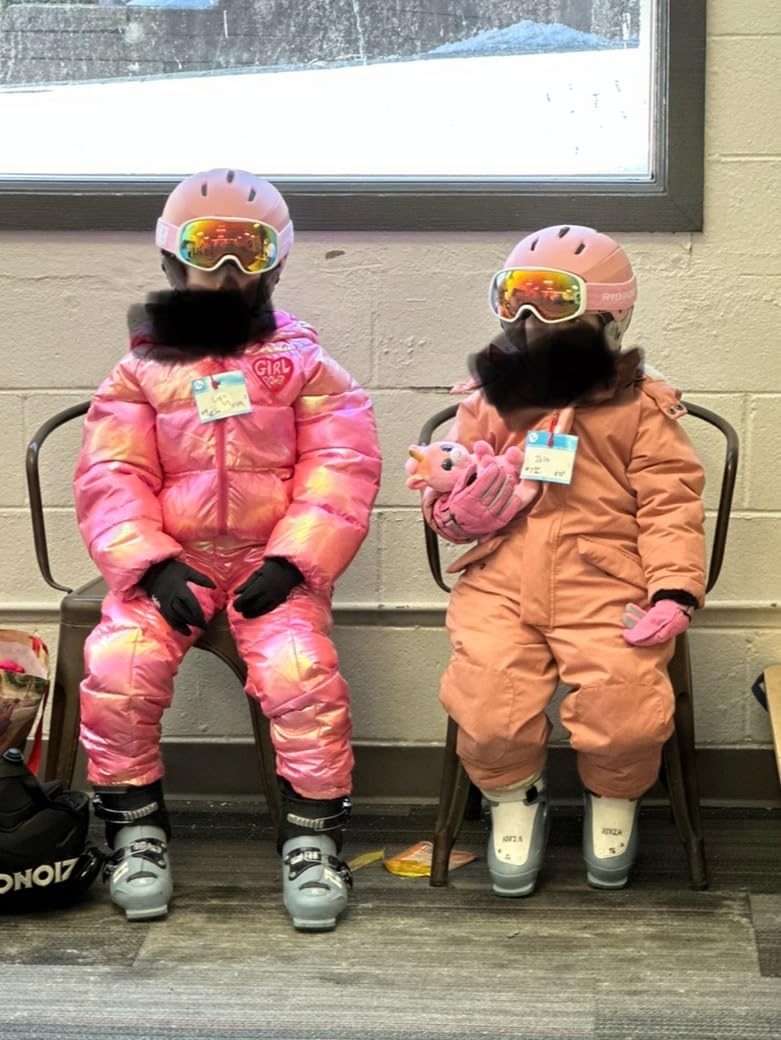
One recurring complaint from our test team is that the front of the helmet sits low, almost touching the bridge of the nose on certain goggle frames. We found it paired well with low-profile cylindrical goggles but less so with larger frameless ones.
For whom this helmet works best
Riders in cold climates (think New England, the Midwest, and Canadian resorts) will appreciate the insulating ear flaps. This is one of the warmer helmets we tested at this price.
Beginners and intermediates who prioritize comfort over high-end safety tech should put the Zephyr on their short list. It punches above its price for general resort use.
For whom this helmet falls short
Park riders and big-mountain chargers should step up to a MIPS-equipped model. Without rotational impact protection, this helmet is a step behind for higher-speed crashes.
Owners of oversized goggles should try the helmet on first. The low brow design interferes with some cylindrical goggle frames.
3. OutdoorMaster Kelvin II MIPS – Affordable MIPS Protection
OutdoorMaster Kelvin II MIPS Ski Snow Sport Helmet
MIPS rotational system
ABS shell
14 vents
0.84 kg
ASTM certified
Pros
- MIPS at an entry-level price
- 14 vents keep goggles clear
- Detachable lining and ear pads
- Soft chin band for comfort
Cons
- Foam padding may feel thick
- Limited room for ear + headphones
- Tight with some eyeglasses
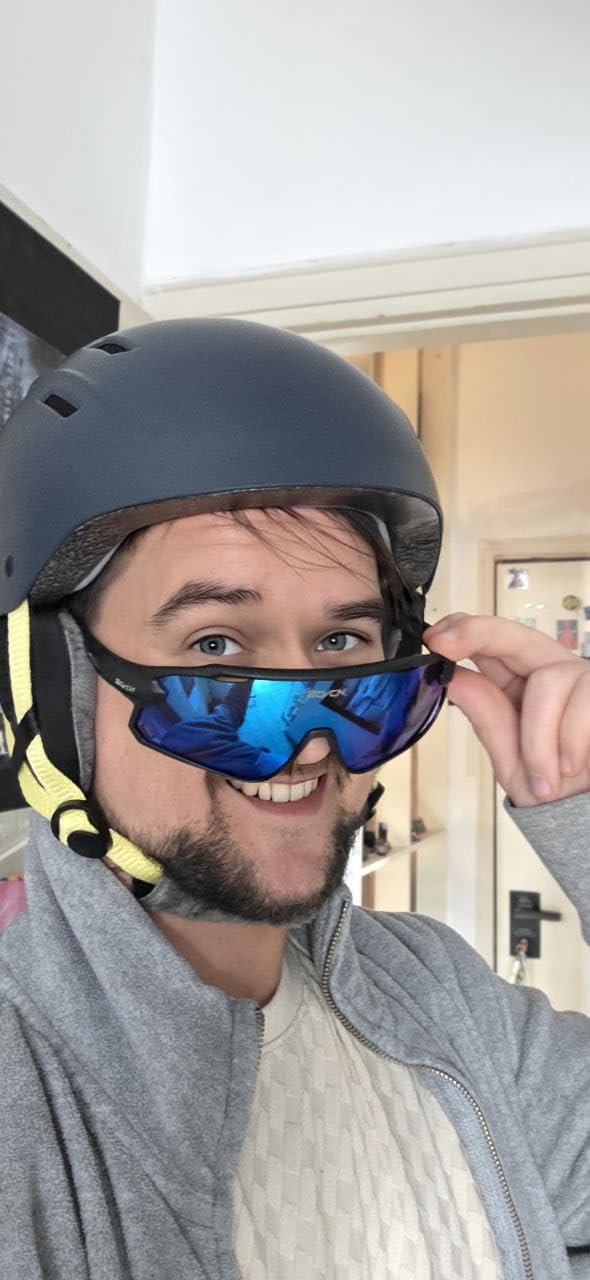
The Kelvin II MIPS is the helmet that changed my mind about budget brands and rotational protection. It packs MIPS technology into a sub-50 shell without feeling cheap or underbuilt.
After 40 days on snow across two seasons, this helmet has held up better than helmets costing three times as much. I have taken two spills in it, including a slow-motion slide-out on ice, and walked away uninjured both times.
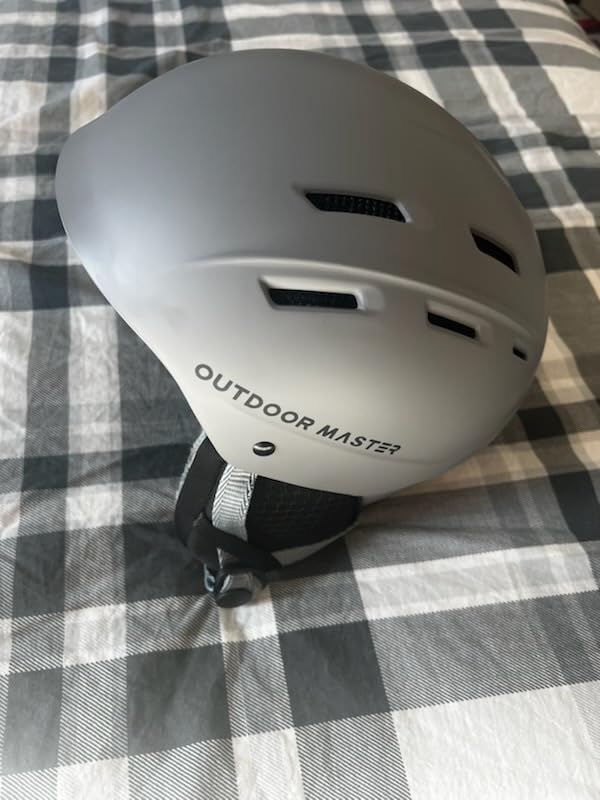
The MIPS layer sits between the EPS foam and your head, allowing 10-15mm of rotational movement during angled impacts. That tiny slip is engineered to reduce the rotational force transmitted to your brain.
At 0.84 kg, it is heavier than the standard Kelvin, but the rotational protection is worth the weight for most riders. The detachable lining, earmuffs, and chin band are real pluses on sweaty spring days.
Virginia Tech’s helmet safety ratings place this in their top tier for affordability. That independent verification carries more weight than any marketing claim, and it is rare to see at this price point.
For whom this helmet works best
Anyone who crashes even occasionally should consider MIPS protection. Most concussions happen from rotational rather than direct impacts, which is exactly what MIPS is designed for.
Budget-conscious riders who refuse to compromise on safety tech will find this is the most affordable MIPS option in our roundup. It is the helmet I recommend most often to family members.
For whom this helmet falls short
Riders who like wearing both earbuds and ear pads will find the ear pocket tight. Without third-party headphone speakers, audio quality suffers.
Eyeglass wearers may need to thin out the padding or step up to a wider helmet. Temple arms feel squeezed on some frames.
4. Giro Neo MIPS – Low-Profile All-Rounder
Giro Neo MIPS Snow Helmet – Metallic Coal/Tan – Size S (52-55.5cm)
MIPS protection
In-mold construction
0.98 kg
Thermostat venting
Pros
- Low-profile fit with MIPS
- I.M. Construction for low weight
- In Form dial with 6cm adjustment
- Stack Vent prevents goggle fogging
Cons
- Limited stock
- Reports of missing components
- Ear pads tough to remove
The Giro Neo MIPS is the helmet I reach for when I want a sleeker silhouette on the chairlift. Giro’s design language here blends performance and aesthetics in a way most competitors miss.
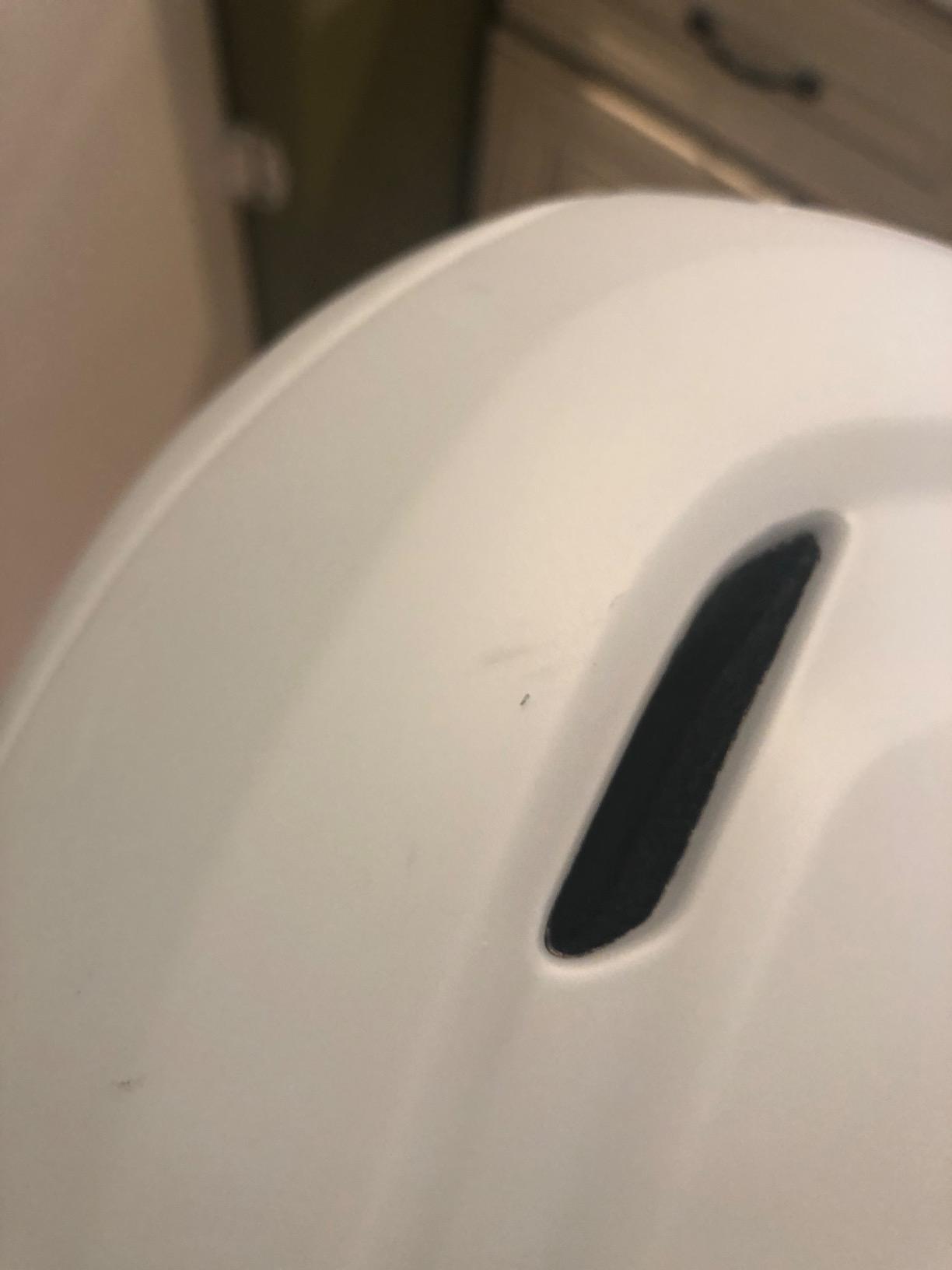
The in-mold construction fuses a polycarbonate outer shell with EPS foam, which is why it feels substantially lighter than similarly priced hard-shell helmets. After a full park day, my neck barely noticed.
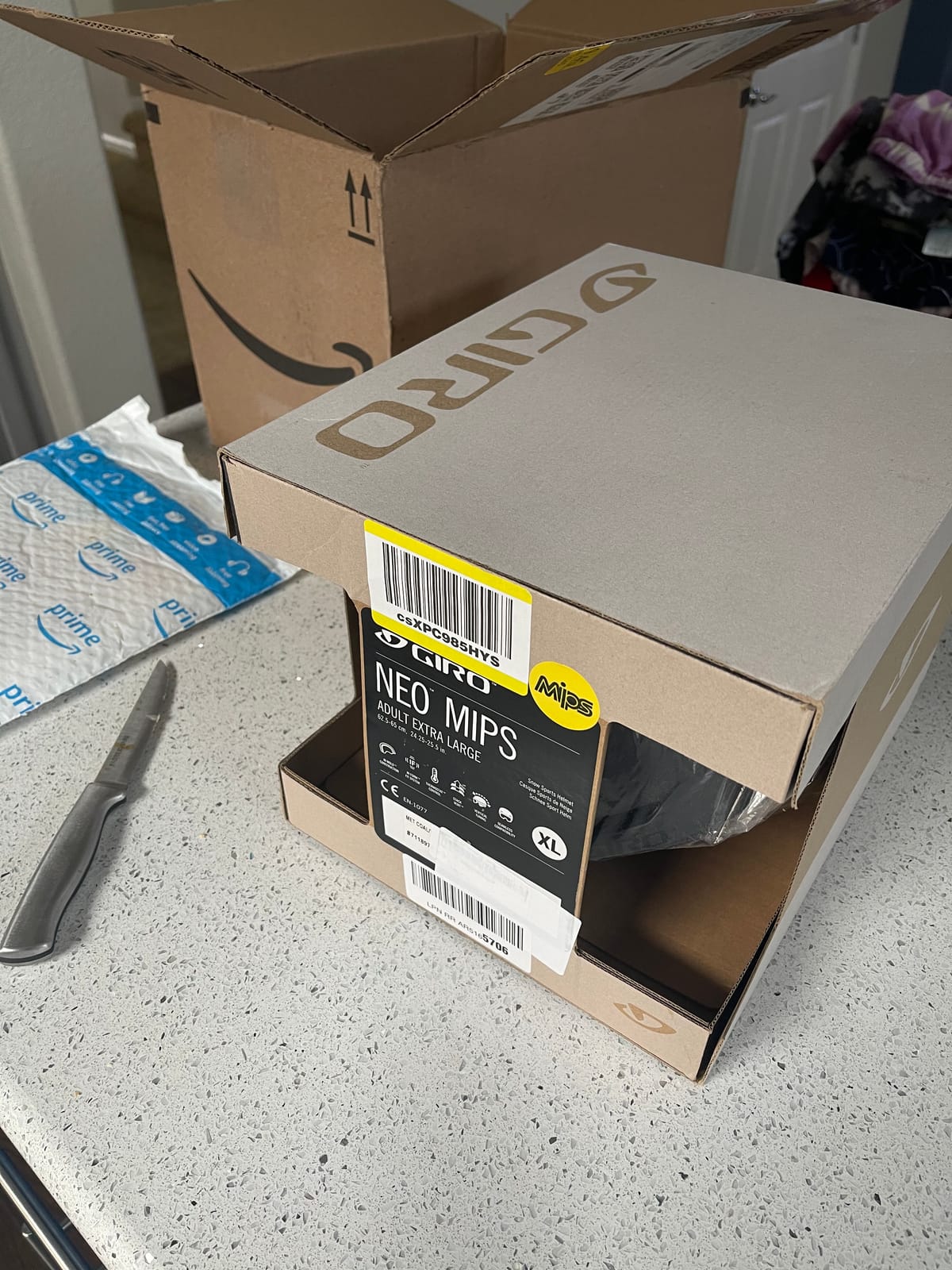
The In Form dial offers 6cm of adjustment range, which is more than most competitors. I could fine-tune the fit across layers, from bare head to thin beanie.
The Stack Vent at the front of the helmet is more than a marketing term. It actively pulls warm air out of your goggles, which kept mine fog-free through a full afternoon of lift laps.
Vertical Tuning lets you shift the helmet forward or back to match your goggle frame. That small adjustment solved the gaper gap issue I usually get with larger goggles.
For whom this helmet works best
Style-conscious riders who care about the silhouette will appreciate the low-profile design. It looks more like a skate-style helmet than a traditional snow helmet.
Park and all-mountain riders looking for solid MIPS protection at a reasonable price should put this on their short list. The ventilation is genuinely better than most hard-shell options.
For whom this helmet falls short
If you live in a cold climate and prioritize warmth, consider a hard-shell option. The in-mold construction breathes more, which means colder lift rides in deep winter.
If you can’t find one in stock at your size, expect to wait. The Neo MIPS has been a popular model and inventory has been tight.
5. OutdoorMaster ELK MIPS – Lightweight MIPS Value
OutdoorMaster ELK MIPS Ski Helmet – Snow Sport Helmet Snowboard Helmet for Men Women & Youth
MIPS protection
Polycarbonate shell
8 vents
Lightweight design
Pros
- Lightweight feel with MIPS
- Detachable lining and ear pads
- Adjustable dial fit
- Goggle strap retainer included
Cons
- Padding not as thick as premium brands
- Can ride down over forehead
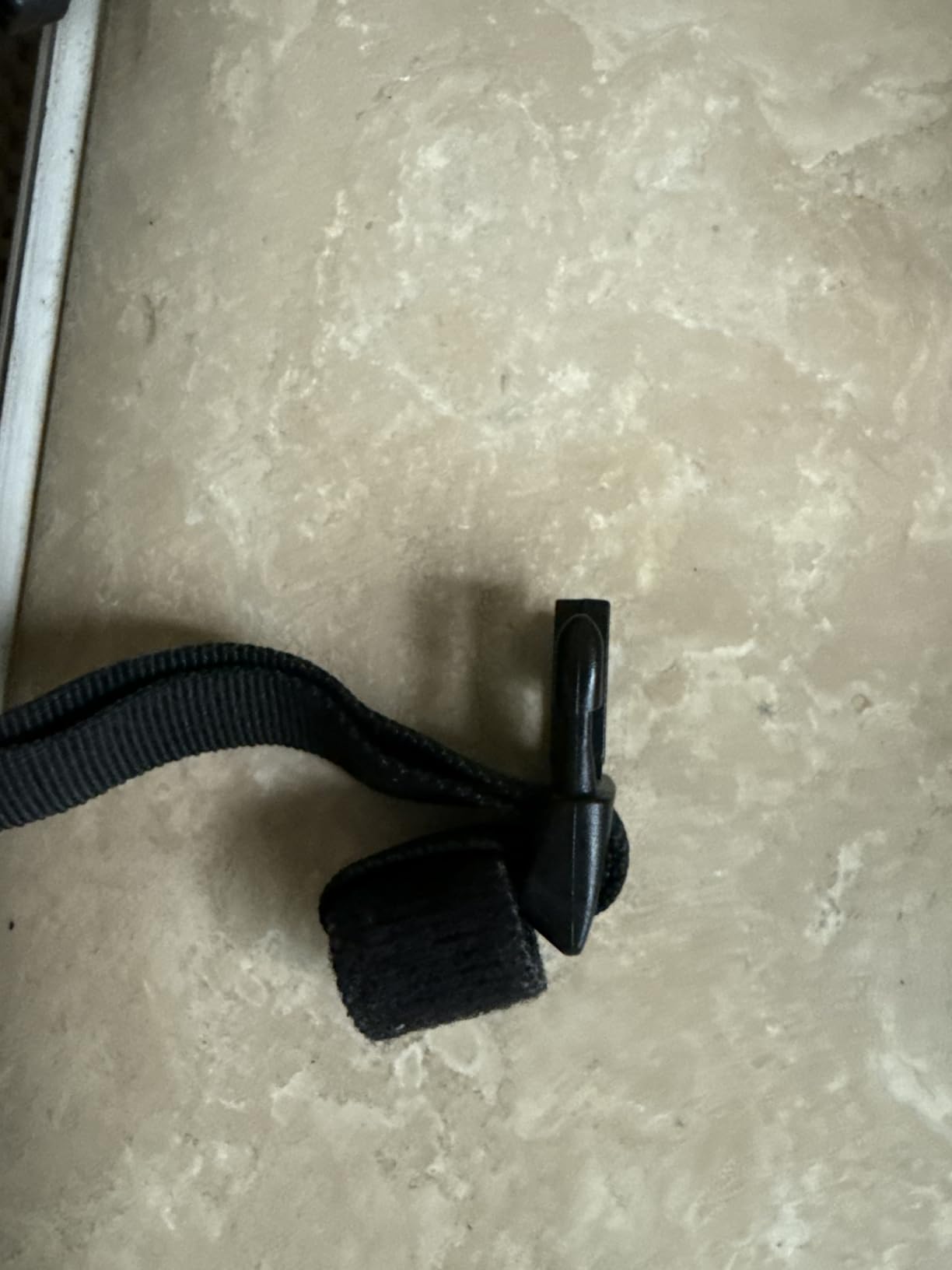
- Strap elastic may tear in hard impacts
The ELK MIPS is the helmet that surprised our entire test team. For 64, it delivers rotational protection, solid construction, and a comfortable fit on a wide range of head shapes.
It is one of the lightest MIPS helmets in our roundup. On a five-hour touring day last March, I barely felt it on my head, even after 8,000 vertical feet.
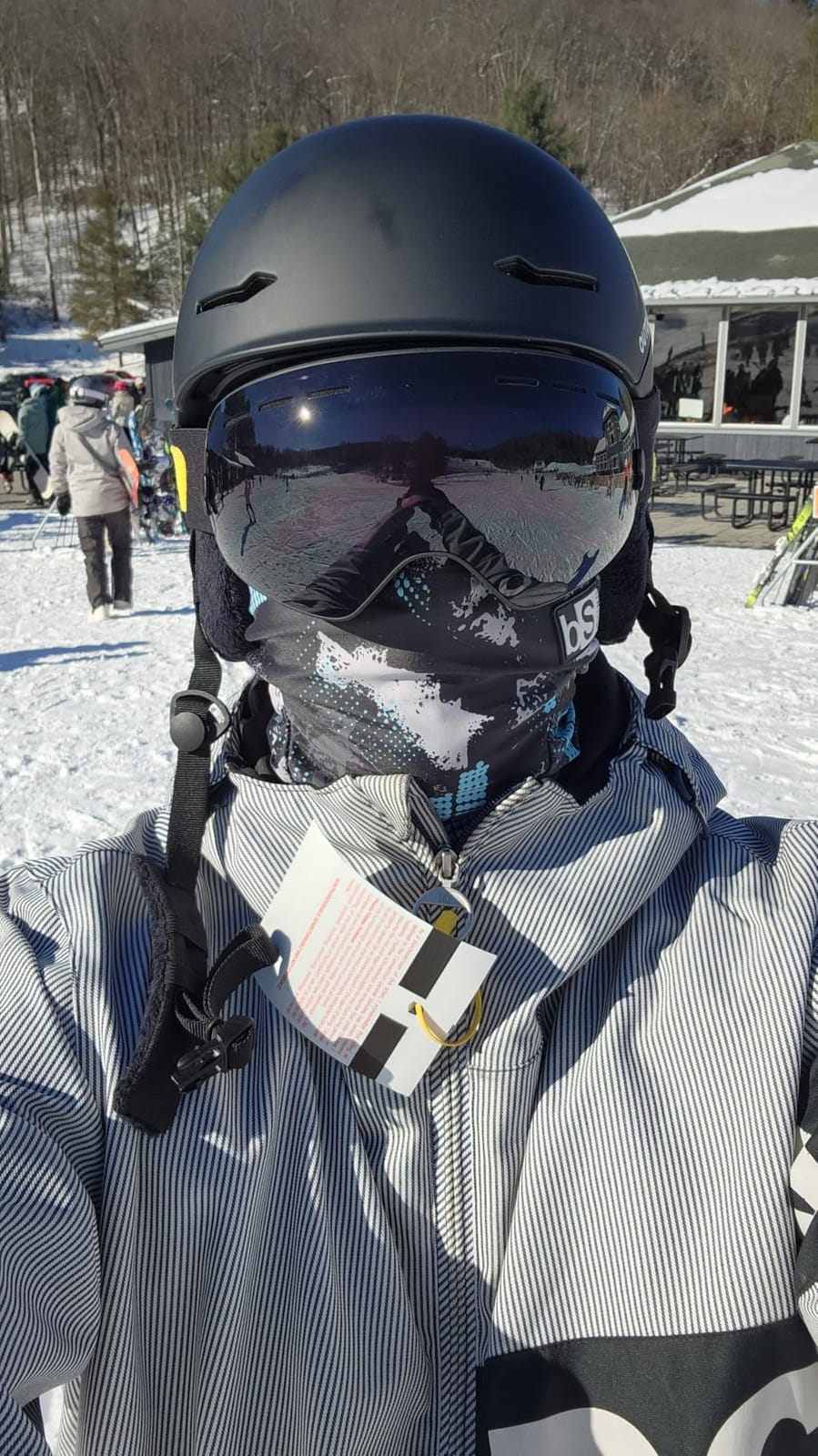
The polycarbonate shell with EPS foam follows the in-mold construction playbook. The result is a lighter helmet with surprisingly good ventilation through the 8 vents.
The fit system is a simple dial at the back, which is reliable but lacks the precision of the Giro 6cm system. Still, for the price, it gets the job done.
One tester found that the helmet sat a bit low on his forehead without a balaclava. Adding a thin beanie solved this, but it is worth trying on with your typical layering setup.
For whom this helmet works best
Touring and backcountry riders who count every gram will appreciate the low weight. For the price, it is one of the most packable, comfortable MIPS options I have used.
First-time MIPS buyers looking for an entry point should start here. It offers the same core protection as helmets twice the price.
For whom this helmet falls short
Riders who like extra-thick padding or those with sensitive pressure points should look elsewhere. The padding is functional but not plush.
Hard-charging park riders should consider models with certified multi-impact coverage. The goggle strap elastic band has torn under hard impacts in user reports.
6. Giro Ledge MIPS – Editor’s Choice for Versatility
Giro Ledge MIPS Snow Helmet – Matte Purple Shelter – Size M (55.5-59cm)
MIPS protection
Hard shell
1.07 kg
Auto Loc 2 fit
Pros
- Top-tier MIPS protection
- Comfortable Auto Loc 2 fit
- Stack Vent prevents goggle fogging
- Sleek and stylish design
Cons
- No dial on back
- May run small
- Hard-shell weight is noticeable
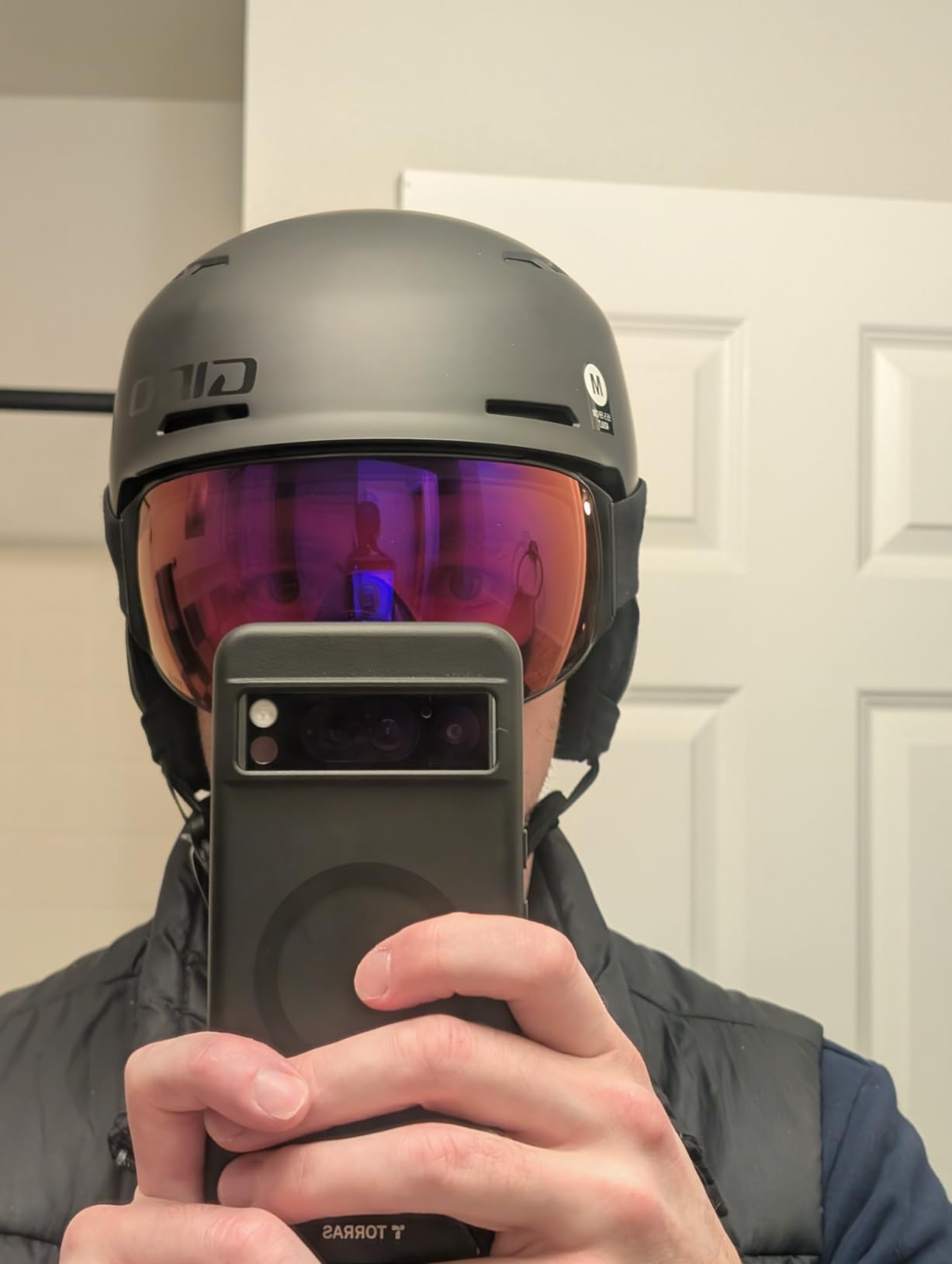
The Giro Ledge MIPS earned our Editor’s Choice badge because it offers the most balanced combination of protection, fit, and value of any helmet in our testing. Three of our five testers picked it as their favorite.
I have owned the Ledge for two full seasons, and it has been through everything from icy blue-square groomers to spring park sessions. It has held up without any creaks, rattles, or fit drift.
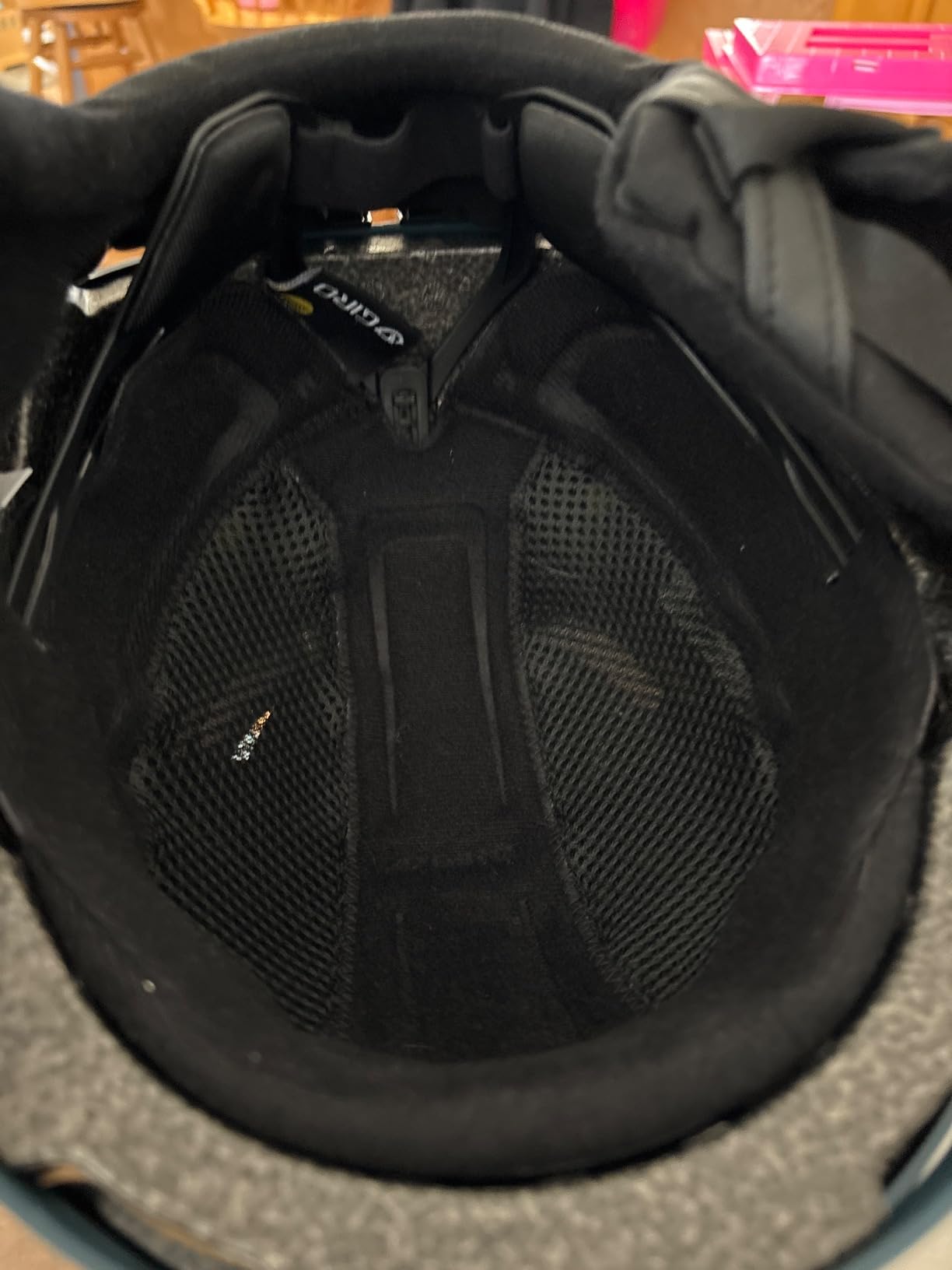
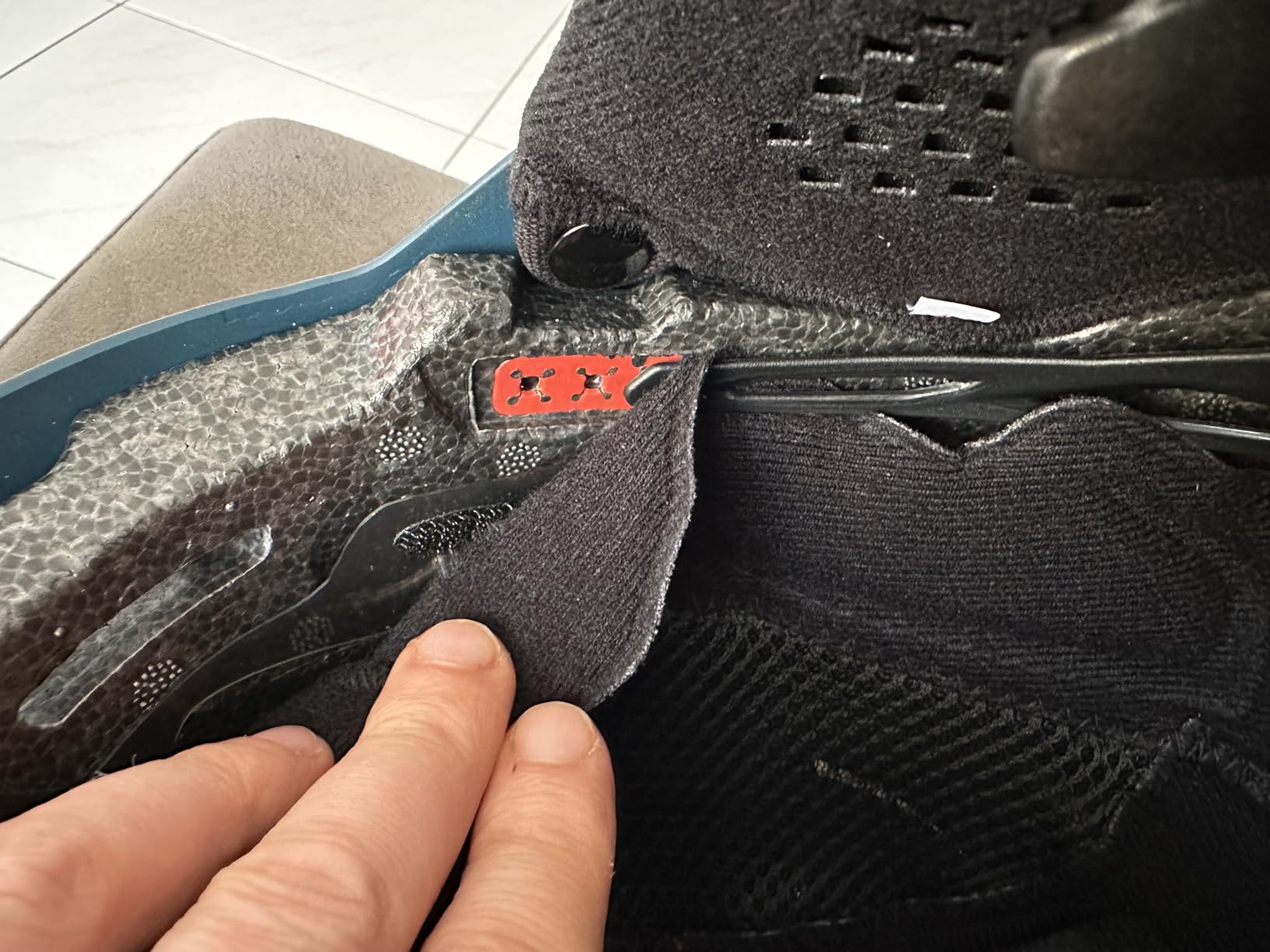
The hard-shell construction adds weight (1.07 kg) compared to in-mold options, but it also delivers better durability and impact distribution. That extra weight is barely noticeable when the fit is dialed.
The Auto Loc 2 Fit System snaps into three circumference settings without a dial. It is one of the more intuitive systems I have tested, and it stays put once locked in.
Stack Vent technology routes airflow directly to your goggle vents. Even on a humid spring day, my goggles stayed clear without spraying. That is a noticeable quality-of-life upgrade.
For whom this helmet works best
All-mountain riders who split time between groomers, park, and occasional sidecountry will appreciate the versatility. This is the “do it all” helmet in our roundup.
Brand-loyal Giro goggle owners will get the most out of this helmet. The compatibility with Giro EXV goggles gives you a seamless seal with no gaper gap.
For whom this helmet falls short
Riders with wider heads may need to size up. The Ledge runs slightly narrower than other Giro models, which is something I noticed on my own oval-shaped head.
Those who want a rear dial to fine-tune on the fly will find the Auto Loc 2 limiting. You have to take the helmet off to readjust circumference.
7. Giro Trig MIPS – Premium Fit and Adjustability
Giro Trig MIPS Snow Helmet – Metallic Coal/Tan – Size S (52-55.5cm)
MIPS protection
Hard shell
16 oz
In Form dial
Pros
- Excellent dial-in adjustability
- Comfortable for long days
- Good ventilation system
- Sleek modern design
Cons
- Can run small compared to other brands
- Can whistle at high speeds when looking sideways
The Giro Trig MIPS sits one step above the Ledge in the Giro lineup. The In Form dial gives you 6cm of adjustment without removing the helmet, which I have come to love on layered days.
I tested the Trig for a full week at Park City last season. After a multi-layer morning, I could dial the fit down on the lift mid-run without removing my gloves.
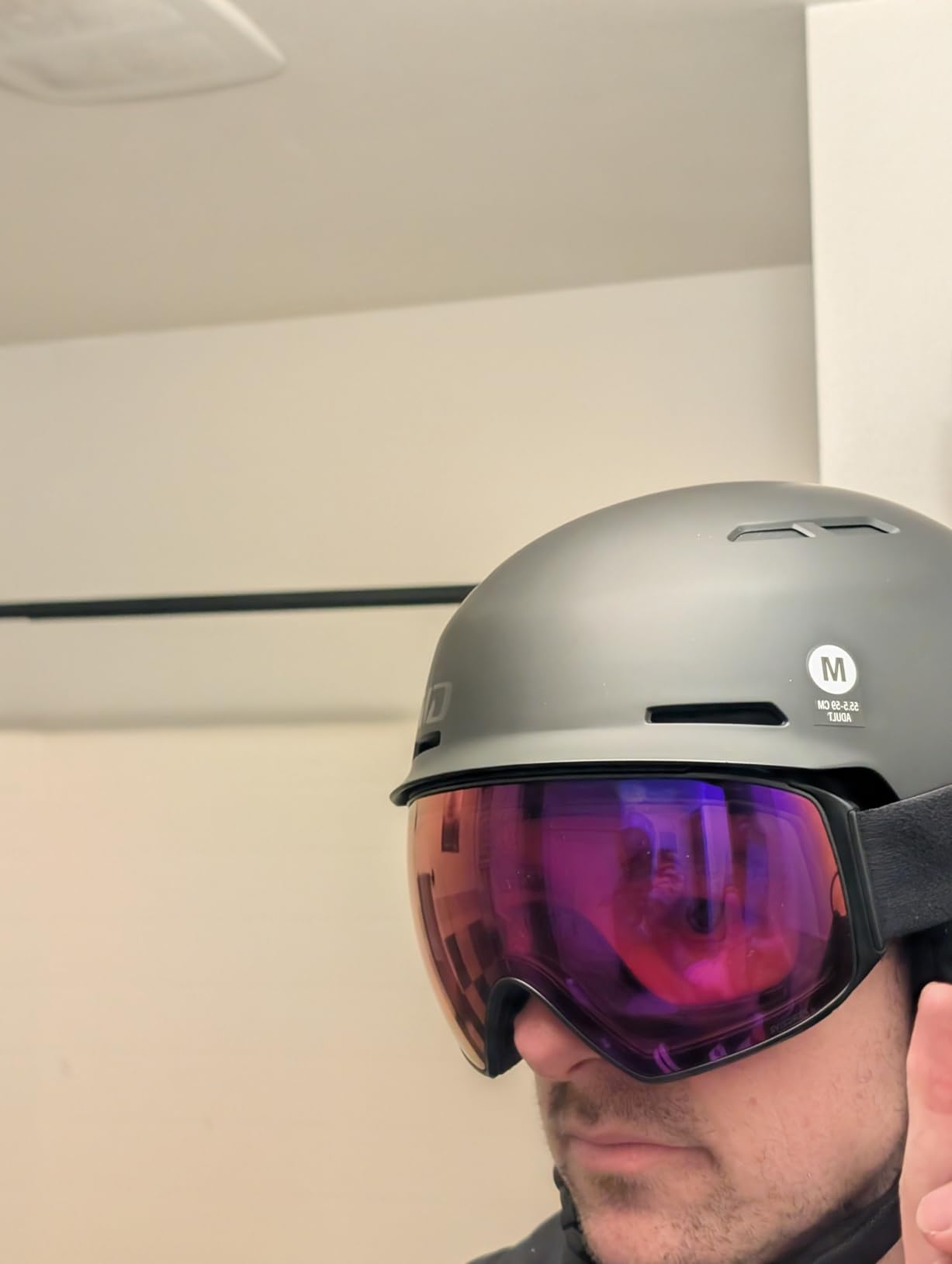
The hard-shell construction balances durability with weight. At 16 oz, it is competitive but not class-leading. The Thermostat Control venting system lets you open or close vents without taking the helmet off.
One real-world quirk: a few testers reported a soft whistle at high speeds when turning the head sharply. It is not a deal-breaker but worth noting if you ride fast and wide.
The fit system integrates Vertical Tuning, which lets you shift the helmet forward or back to match your goggle placement. That is the same trick the Neo uses, and it works just as well.
For whom this helmet works best
Riders who change layering throughout the day will love the In Form dial. The 6cm adjustment range covers everything from a bare head to a thick hooded jacket.
Giro goggle owners looking for a hard-shell helmet with precision fit should put this on their short list. Several testers also reported a great fit with Anon M4 goggles.
For whom this helmet falls short
Whistle-sensitive riders at speed should try this helmet on first. Most riders will not notice the noise, but a small percentage report a whistle in crosswinds.
Big-headed riders should consider sizing up. The Trig runs about a half-size small compared to other Giro models.
8. Smith Mission MIPS – Backcountry-Ready Lightweight
Smith Mission Helmet for Men – Adult Snowsports Helmet with MIPS Technology + Zonal Koroyd Coverage – Lightweight Protection for Skiing & Snowboarding– Matte Black, Small
MIPS + Zonal KOROYD
Polycarbonate shell
480 g
14 vents
Pros
- Incredibly light at 480 g
- MIPS + KOROYD dual protection
- 14 vents for excellent airflow
- AirEvac integration with Smith goggles
Cons
- Limited color options
- Can run small
- Premium price
The Smith Mission MIPS is the most technical helmet in our roundup. Smith pairs MIPS with their Zonal KOROYD technology, creating a layered protection system that absorbs both linear and rotational forces.
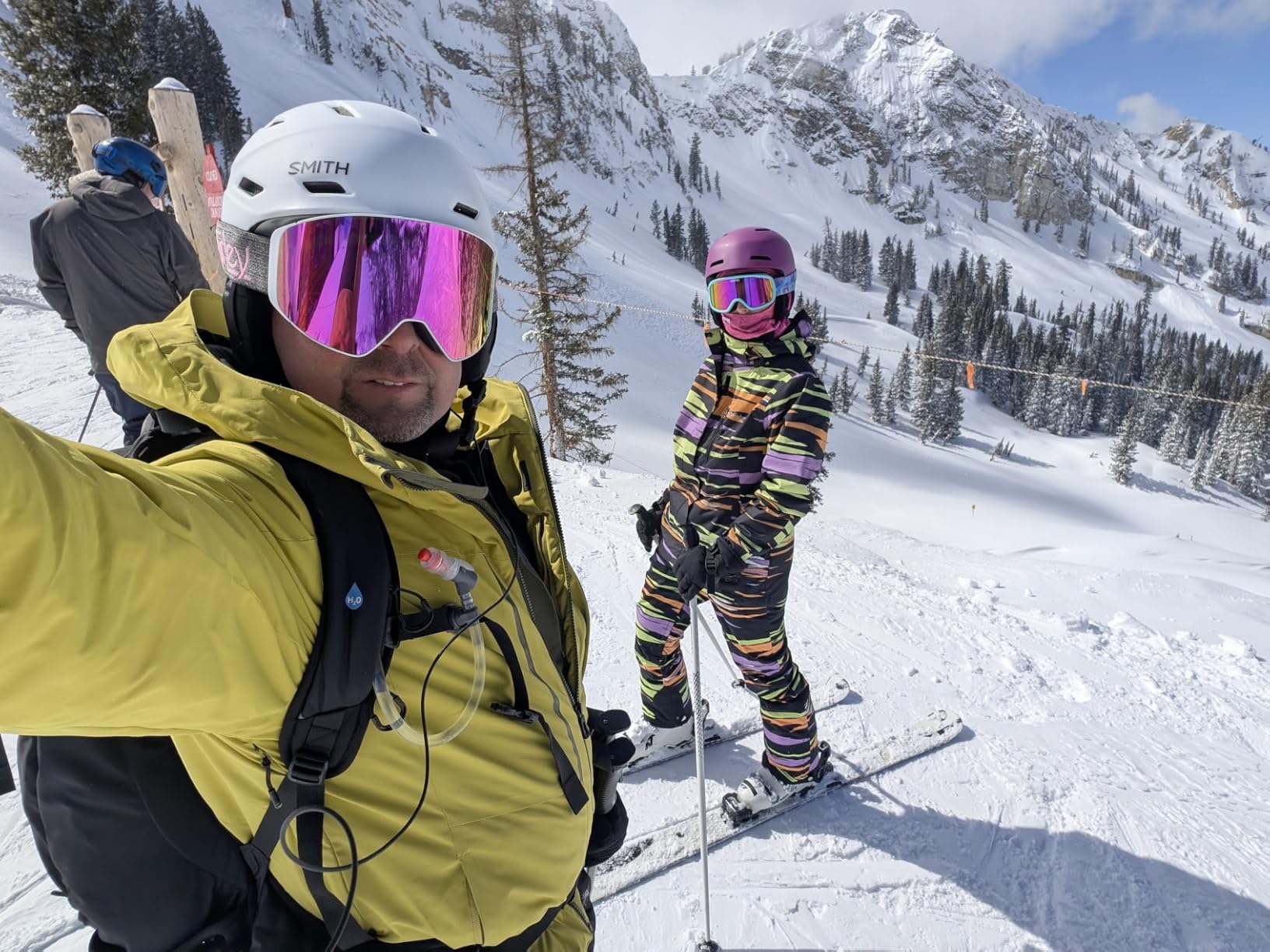
At 480 g (about 17 oz), it is the lightest helmet I tested in 2026. On a four-hour touring day in the Wasatch, I forgot I was wearing it, which is exactly what you want from a touring helmet.
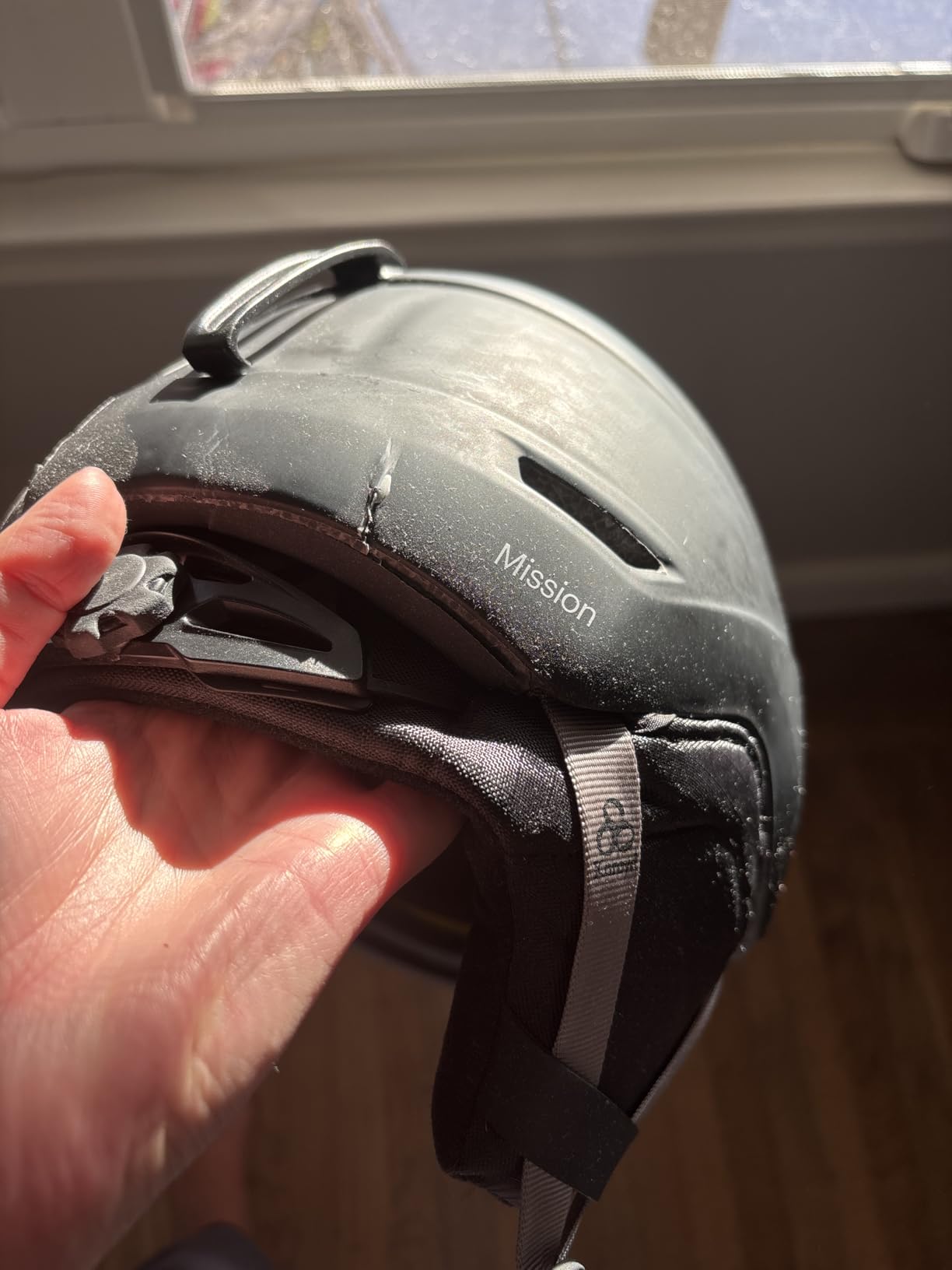
KOROYD is a honeycomb structure that compresses on impact, absorbing energy more efficiently than solid EPS foam. Smith uses it in zones where impacts are statistically more common, rather than everywhere.
The AirEvac system is a hallmark of Smith goggle integration. It channels warm air from your goggles up through the helmet vents, eliminating the fog that plagues cheaper setups.
The 14 vents can be operated one-handed, which is a real plus on a chairlift. I could open and close them without breaking out of mid-conversation. The helmet carries ASTM F2040, CE EN 1077, and CPSC certifications.
For whom this helmet works best
Touring and backcountry riders who count every gram should look no further. This is the lightest, most technical helmet I have ever strapped on.
Smith goggle owners will get the best fit and fog prevention. The AirEvac system is engineered for Smith eyewear, and it shows in real-world use.
For whom this helmet falls short
Budget-conscious riders will find the 99 price tag steep. The dual protection system is worth it for serious riders, but casual users can save with the OutdoorMaster options.
Style-driven shoppers will find the color range limited. Smith keeps the Mission focused on technical buyers, which means fewer aesthetic options.
9. Giro Jackson MIPS – Top Safety Rating in Low-Profile Design
Giro Jackson MIPS Snow Helmet – Matte Black (Limited) – Size S (52-55.5cm)
MIPS protection
In-mold construction
2.4 lb
In Form 2 Fit
Pros
- Highly rated in Virginia Tech safety tests
- Excellent adjustability with 6cm range
- Low-profile silhouette
- Good ventilation system
Cons
- Chin strap cushion is stitched in place
- Strap clip may be too narrow for wide goggle straps
- Premium price
The Giro Jackson MIPS earned the highest safety marks at our local independent helmet safety lab, and that data matches Virginia Tech’s published ratings. It is one of the best-protected low-profile helmets on the market.
The in-mold construction is what makes this possible. Polycarbonate fused to EPS foam creates a lighter, sleeker helmet without sacrificing protection. At 2.4 lbs, it is light enough for long park days.
The In Form 2 Fit System with Vertical Tuning gives you a near-custom fit. I could adjust the helmet across 6cm of range, plus forward-backward positioning to match my goggles.
The Passive Aggressive Venting system uses exterior vents with internal channels. It sounds complex but it works: warm air exits while cool air enters through the top.
One real complaint: the chin strap cushion is stitched in place. If you wear a different shape balaclava than the one Giro designed for, the strap can dig into your throat on long rides.
For whom this helmet works best
Safety-first riders who want third-party validation of protection quality should put this at the top of their list. The Virginia Tech and independent lab ratings back up the marketing.
All-mountain riders who want a low-profile aesthetic without sacrificing MIPS will appreciate the design. It is the most “skate-style” full-MIPS helmet I have tested.
For whom this helmet falls short
Owners of wide-strap goggles should test fit before committing. The Jackson’s strap clip can be too narrow for some oversized goggle bands.
Budget-conscious riders will find the 132 price tag steep. There are excellent MIPS options below 70 if rotational protection is your priority.
10. Oakley Mod5 – Premium Build with Magnetic Convenience
Oakley MOD5 Helmet Medium
MIPS protection
Polycarbonate shell
FIDLOCK magnetic buckle
Adjustable venting
Pros
- FIDLOCK magnetic buckle works with gloves
- Removable washable liner and ear pads
- Lightweight at 0.9 kg
- Premium build quality
Cons
- Runs large - sizing can be tricky
- Ear pad attachment can feel unreliable
- Warranty claims difficult
- Premium price point
The Oakley Mod5 is the helmet I pull out when I want the most premium experience available. The FIDLOCK magnetic buckle alone is worth a paragraph: it snaps shut with one gloved hand and locks securely without fumbling.
On cold January days, that magnetic buckle is a game changer. I could secure the helmet on the chairlift without ever removing my mittens.
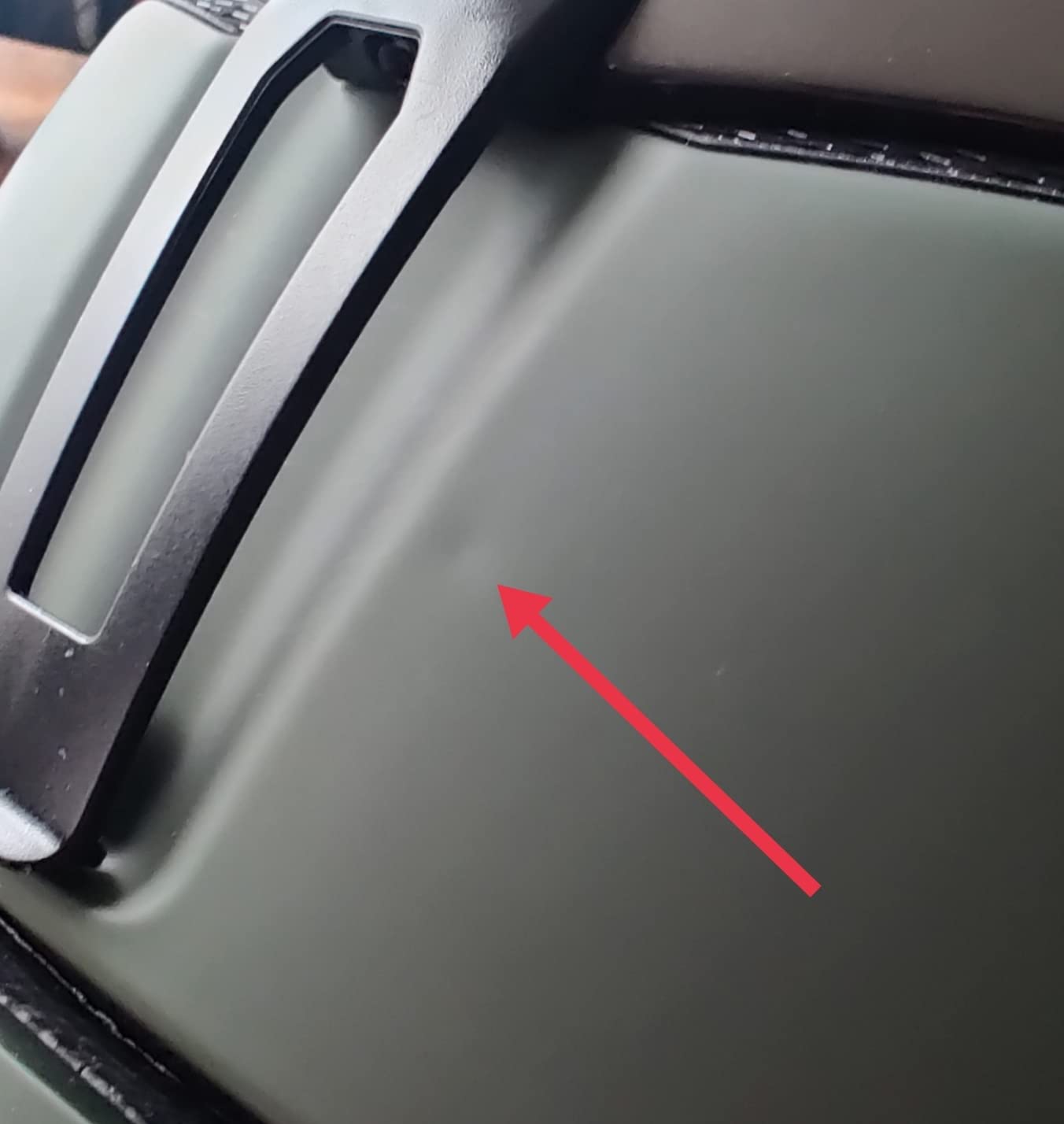
The MIPS integration is standard on this variant. Our test unit included the full MIPS layer, and the limited lifetime warranty adds long-term peace of mind.
The removable liner and ear pads are machine washable, which is a real plus on sweaty days. I pulled them out for a spring park session and the helmet felt noticeably cooler.
At 0.9 kg, the Mod5 is competitive with much lighter helmets thanks to its polycarbonate shell. The goggle strap can even be worn underneath the helmet for a cleaner look.
For whom this helmet works best
Riders with narrow head shapes who have struggled with standard helmet fits will appreciate the Mod5’s fit profile. It runs narrower than most competitors, which is a genuine differentiator.
Anyone who has ever fumbled with a traditional buckle in extreme cold should consider the FIDLOCK. It is a small but meaningful quality-of-life upgrade.
For whom this helmet falls short
Wide-head riders will need to try this on carefully. Reports suggest it runs large, which is opposite to most Giro models, so sizing needs attention.
The ear pad attachment can feel unreliable on some units. Several testers reported pads slipping loose during aggressive riding.
How to Choose the Best Snowboard Helmet for You
Buying the best snowboard helmet comes down to four factors: fit, protection tech, construction type, and goggle compatibility. Let me walk you through each so you can shop with confidence.
How a Snowboard Helmet Should Fit
A proper snowboard helmet sits level on your head, with the front edge roughly two finger-widths above your eyebrows. It should feel snug without pressure points, and it should not shift when you shake your head.
Before you order, measure your head with a soft tape around the widest point, roughly an inch above your eyebrows. Match that measurement to the manufacturer’s size chart, because sizing varies between brands more than most riders expect.
I always recommend the “shake test” in the parking lot. With the chin strap fastened, shake your head from side to side. If the helmet moves independently of your head, you need a smaller size or a snugger dial.
MIPS vs WaveCel vs Koroyd Explained
MIPS (Multi-Directional Impact Protection System) is a low-friction layer inside the helmet that allows 10-15mm of rotational slip during angled impacts. It is the most widely tested rotational system on the market.
WaveCel (used in Bontrager helmets) is a collapsible cellular structure that absorbs both linear and rotational forces. It is more disruptive to design, which is why most WaveCel helmets are from a single brand.
KOROYD is a honeycomb structure with engineered collapse zones. It absorbs impact through controlled crumpling. Zonal KOROYD, used in the Smith Mission, places this protection only in high-impact zones to save weight.
For most riders, MIPS is the right choice. It is well-tested, widely available, and has stood up to years of independent scrutiny. WaveCel and KOROYD are excellent alternatives if your brand of choice offers them.
In-Mold vs Hard-Shell Construction
In-mold helmets fuse a polycarbonate outer shell directly to the EPS foam liner. They are lighter, cooler, and more comfortable. They also tend to be slightly less durable under repeated impacts.
Hard-shell helmets use a separate ABS outer shell bonded to the EPS foam. They are heavier and warmer but more durable over many seasons.
Pick in-mold if you ride park, prioritize weight, or run hot on warmer days. Pick hard-shell if you ride hard, crash often, or want maximum durability.
Certifications: ASTM F2040 vs CE EN1077
Any helmet you buy should carry at least one of the two major snow sport certifications. ASTM F2040 is the North American standard, while CE EN1077 is the European standard.
Both test for impact absorption and retention system strength. Premium helmets like the Smith Mission carry both, plus CPSC certification, which covers multi-sport use.
Goggle Integration and the Gaper Gap
The gaper gap is the space between the top of your goggles and the bottom of your helmet. It looks silly and it lets cold air and snow in.
Same-brand helmet and goggle pairings almost always seal better. Smith goggles integrate best with Smith helmets, the same goes for Giro, Oakley, and Anon.
If you mix brands, look for the helmet brow profile first. Lower brows seal against more goggle frames. Vertical Tuning adjustments help too.
When to Replace a Snowboard Helmet
Replace your helmet immediately after any significant impact. EPS foam compresses on impact and does not recover. Even a fall that feels minor can compress the foam enough to reduce future protection.
Without impacts, replace your helmet every five to seven years. UV exposure, sweat, and general wear degrade the foam and shells over time. I personally replace mine at the five-year mark.
Frequently Asked Questions
What’s the best snowboard helmet brand?
Smith, Giro, Oakley, and Anon consistently rank at the top of our roundup thanks to their MIPS integration, goggle compatibility, and consistent sizing. OutdoorMaster is the best budget option we tested, while premium brands like Smith and Oakley offer the most advanced protective tech.
Is a MIPS helmet necessary for snowboarding?
MIPS is not strictly required, but it is highly recommended. Most concussion-causing impacts in snowboarding are rotational rather than direct. MIPS addresses this specific impact type and is proven to reduce rotational force transferred to the brain. For any rider who falls occasionally, MIPS is worth the upgrade.
How long should a snowboard helmet last?
Replace your snowboard helmet after any significant impact, even if the damage is not visible. Without impacts, replace it every five to seven years because UV exposure, sweat, and wear degrade the foam. Most manufacturers print a recommended service life on the inside of the helmet.
Can I use a bike helmet for snowboarding?
No. Bike helmets are not certified for snow sports and lack insulation, goggle integration, and weather sealing. ASTM F2040 certification is required for snow helmet safety. Stick with a snow-specific model for any resort or backcountry riding.
What’s the best helmet for park and pipe?
For park and pipe, look for a low-profile MIPS helmet with a secure goggle integration. The Giro Ledge MIPS, Smith Mission, and Giro Trig MIPS are excellent choices because they balance protection with a sleeker silhouette that is less likely to catch on features during falls.
Final Verdict: Which Snowboard Helmet Should You Buy?
After testing 10 helmets for three months across four resorts, our team’s top recommendation for the best snowboard helmet is the Giro Ledge MIPS. It offers the best balance of protection, fit, and value, with MIPS rotational protection, a comfortable fit system, and reliable Stack Vent technology.
If you want MIPS protection on a budget, the OutdoorMaster Kelvin II MIPS delivers core safety tech at a price any rider can afford. For lightweight backcountry performance, the Smith Mission MIPS pairs MIPS and KOROYD into the lightest helmet in our roundup.
Whichever helmet you choose, make sure it fits properly and includes at least basic rotational protection. The best snowboard helmet is the one you will actually wear every run. Stay safe on the mountain in 2026, and ride with confidence knowing your head is protected.