
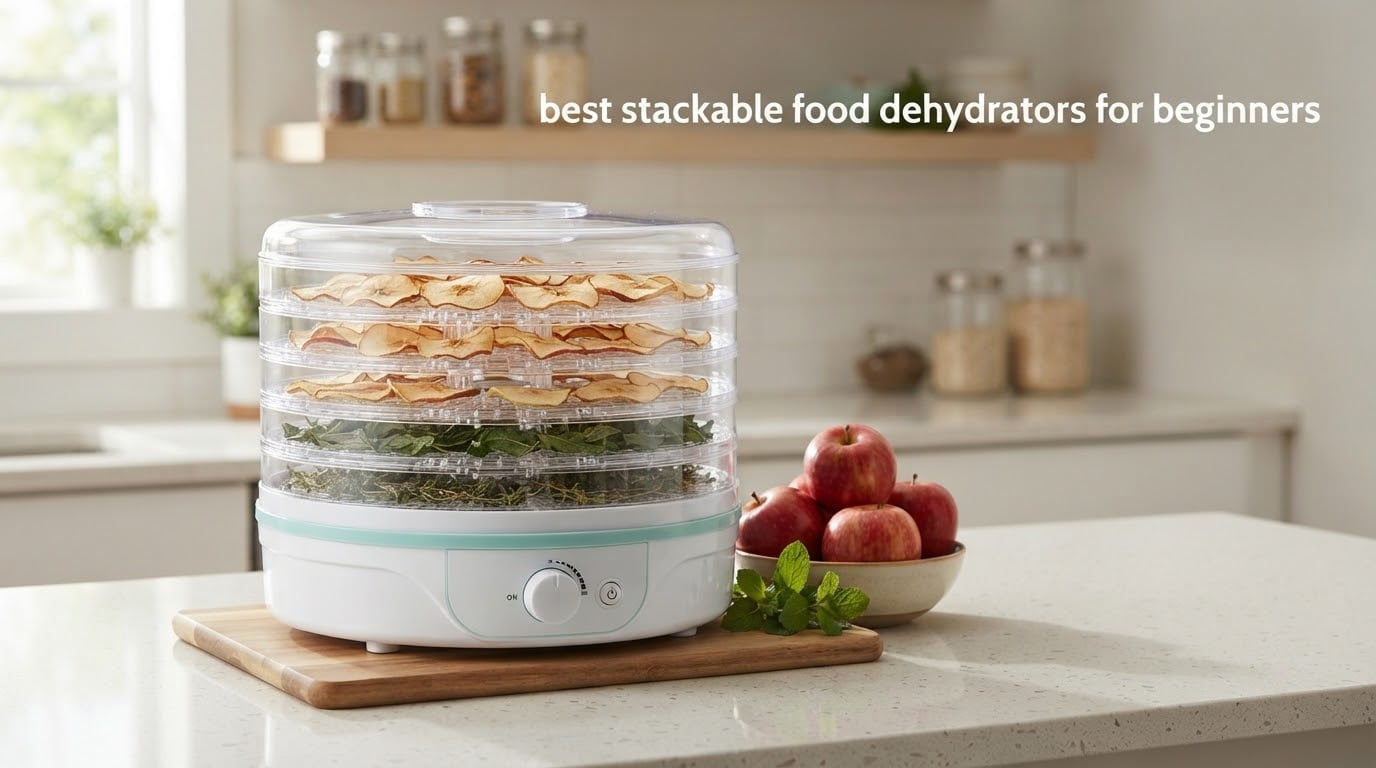
If you have been circling food dehydrators for a few weeks, the reason is usually the same: too many models, too many specs, and no idea which of them actually matter. The best stackable food dehydrators for beginners are not the biggest or the most feature-packed units on the shelf. They are the ones with an adjustable thermostat, enough trays to start but room to grow, and a body you can wipe down and put away when the batch is done.
That is what this roundup isolates. Every unit below is a true stackable dehydrator, meaning a column of removable trays that stack one on top of another above a single heat source. No shelf-style boxes, no stainless cabinet models, no units that need a permanent quarter of your countertop. If you have been comparing a Nesco to an Excalibur and getting nowhere, this is the shortlist.
Our team worked through eight stackable dehydrators over several weeks, running the same foods through each one: dried herbs first because they are cheap to waste, then apple chips, then a full tray of fruit leather, then beef jerky. We logged drying times, checked temperature readings with a probe thermometer at the top and bottom of the stack, and noted how often we had to rotate trays to get an even result. We also counted the cleanup time, because for a first-time buyer that matters as much as throughput. For anyone still weighing the bigger box-style route, our guide to commercial food dehydrators covers what you give up and gain when you leave the stackable format.
A note on tray rotation, since it is the question we were asked most: the honest answer is that it depends entirely on where the heat sits. Round towers with the heater at the bottom cook the lowest tray harder than the top, and a mid-run swap fixes it. Rectangular stacks that put the fan and heater at the back or in the base distribute air more evenly and often need nothing at all. We flag which is which on every pick below.
Table of Contents
Top 3 Picks for the Best Stackable Food Dehydrators for Beginners

All 8 Stackable Dehydrators Side by Side in 2026
| Product | Specifications | Action |
|---|---|---|
| NESCO FD-75A Snackmaster Pro |
|
Check Latest Price |
 Presto 06300 Dehydro Presto 06300 Dehydro |
|
Check Latest Price |
| Elite Gourmet 5-Tray |
|
Check Latest Price |
 OSTBA 5-Tray Digital OSTBA 5-Tray Digital |
|
Check Latest Price |
 Hamilton Beach 32100A Hamilton Beach 32100A |
|
Check Latest Price |
 Magic Mill MFD-5000 Magic Mill MFD-5000 |
|
Check Latest Price |
 NutriChef PKFD14BK.5 NutriChef PKFD14BK.5 |
|
Check Latest Price |
 Cosori CFD-N051-W Cosori CFD-N051-W |
|
Check Latest Price |
1. NESCO FD-75A Snackmaster Pro – Best Overall and Most Expandable
NESCO FD-75A Snackmaster Pro Food Dehydrator, For Snacks, Fruit, Beef Jerky, Gray
600W
Expandable 5 to 12 trays
95-160F
13x13x10 inch
3.5 kg
Pros
- Expands from 5 to 12 trays as your batches grow
- Quiet operation barely audible in another room
- Comes with fruit roll sheets and Clean-A-Screens included
- Consistent repeatable results across jerky fruit and herbs
Cons
- Top tray dries faster so most owners rotate mid-run
- No built-in timer or on/off switch
- Plastic trays have crevices that trap dried fruit juice
The NESCO FD-75A Snackmaster Pro is the best stackable food dehydrator for beginners who plan to keep going past their first batch, because it is the only unit here that grows from five trays to twelve with nothing but clip-on additions. Out of the box you get five trays, a base, a powerhead, two Clean-A-Screens, two fruit roll sheets, and a sample jerky seasoning with cure, so you can run a real batch on day one without buying accessories.
Temperature control runs from 95 to 160 degrees Fahrenheit, which covers dried herbs at the low end and meat at the high end in the same machine. The 600-watt drying system handled five trays of apple chips in roughly nine hours in our kitchen without the top tray browning, and the top-mounted fan keeps juice dripping away from the heating element, which is the failure that kills a lot of budget units.
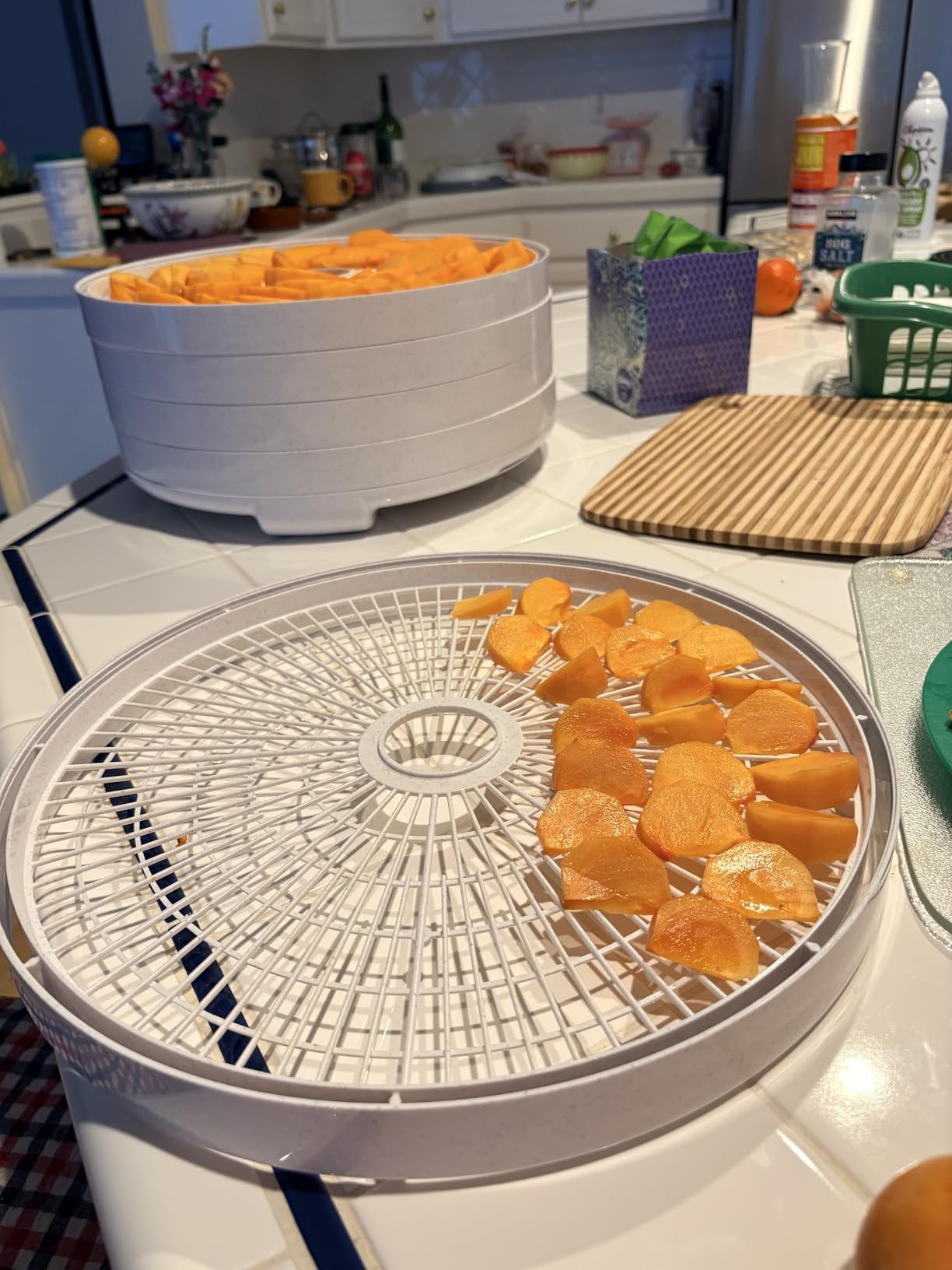
It is also the quietest of the eight. Owners with sound sensitivity report it is barely audible in another room, and at 13 inches across it takes up less counter space than a dinner plate plus a few inches. Several people pair it with an external lamp timer, since the unit itself has no clock, and the same is worth planning for your own setup.
The honest weakness is uneven drying between levels. The tray nearest the fan finishes ahead of the tray at the bottom, so most users swap the stack halfway through a long run. Adding trays also stretches dry time, with jerky at nine trays running about an hour longer than at five. Neither issue is a dealbreaker for a beginner, and the top-mounted fan means no flavor mixing between loads.
When the NESCO Snackmaster is the right first machine
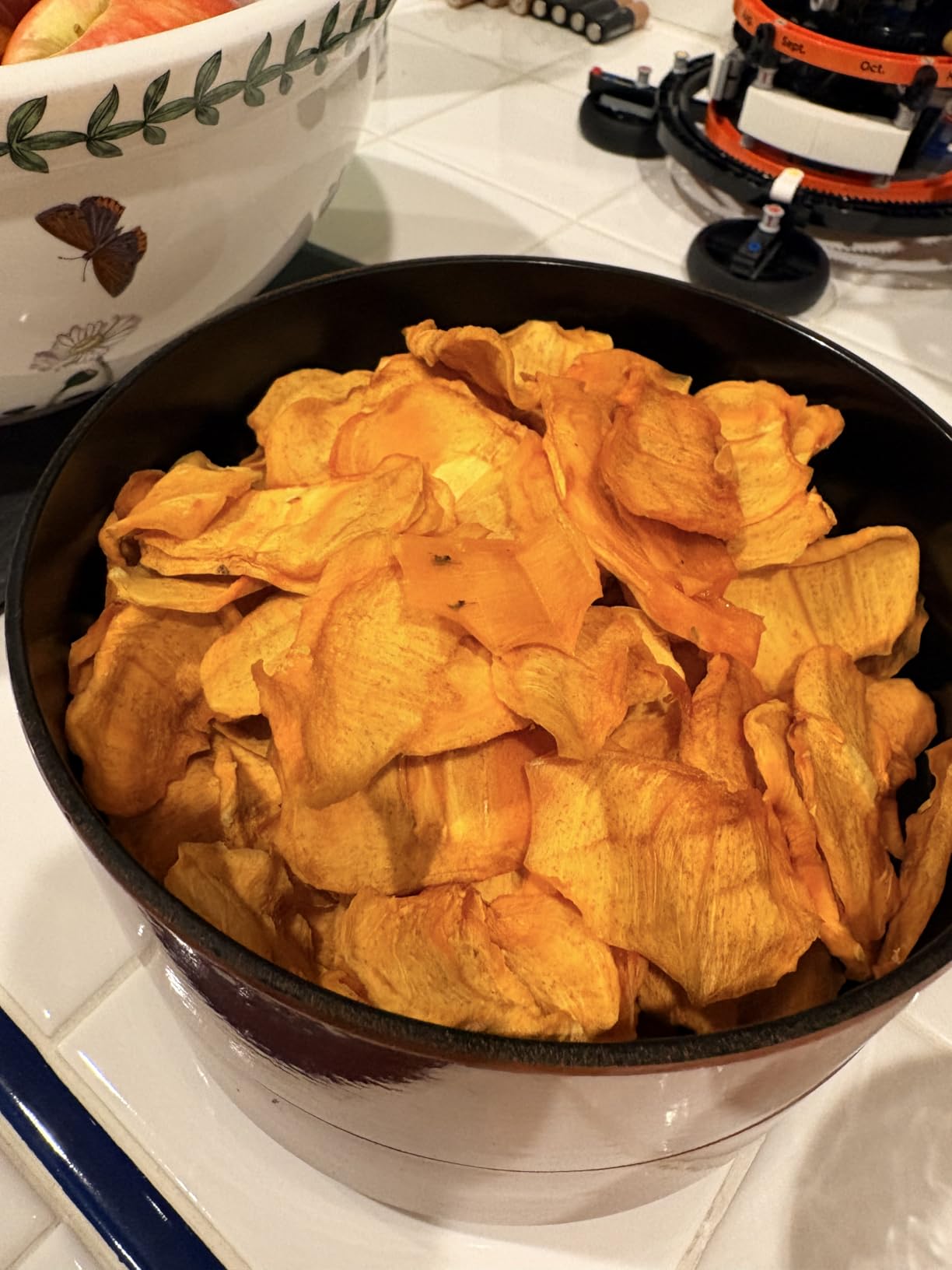
Choose this one if your plan includes more than a single tray of fruit chips. The modular tray system means your first purchase is also your second and third, in a way that a fixed five-tray tower never is. Forum regulars who kept the same stackable Nesco for years describe it as light, easy to clean, and compact on the counter, and that matches what we saw.
It also suits anyone drying strongly flavored foods alongside delicate ones, since the pressurized Converga-Flow airflow pushes air around the trays rather than through them. If you are drying onions next to apple chips, that separation matters more than any preset program.
When to skip the NESCO Snackmaster
Skip it if leaving a hot appliance running while you sleep makes you nervous, because there is no built-in timer or auto shutoff. It is also the wrong pick if you plan to run very thick meat cuts regularly, since the 160 degree ceiling sits at the lower end of what serious jerky work wants. In that case the NutriChef below reaches 180 degrees.
The crevices between stacked plastic trays are a genuine chore after a fruit batch. If washing up is the thing that will kill your habit, look at the Magic Mill or Hamilton Beach, whose trays slide out as flat pieces.
2. Presto 06300 Dehydro – Best Value With No Tray Rotation
Presto 06300 Dehydro Electric Food Dehydrator
600W
Expands 4 to 8 trays
Up to 165F
14.25x15.25x6.5 inch
5.6 lb
Pros
- Top-mounted fan and heater mean no tray rotation
- Trays nest for a 22 percent storage space reduction
- Cord wraps around the cover for compact stowing
- Simple controls with no learning curve
Cons
- Wide rectangular body needs more counter space than a round tower
- No digital timer so runs are tracked manually
- Extra trays sold separately to reach the 8-tray maximum
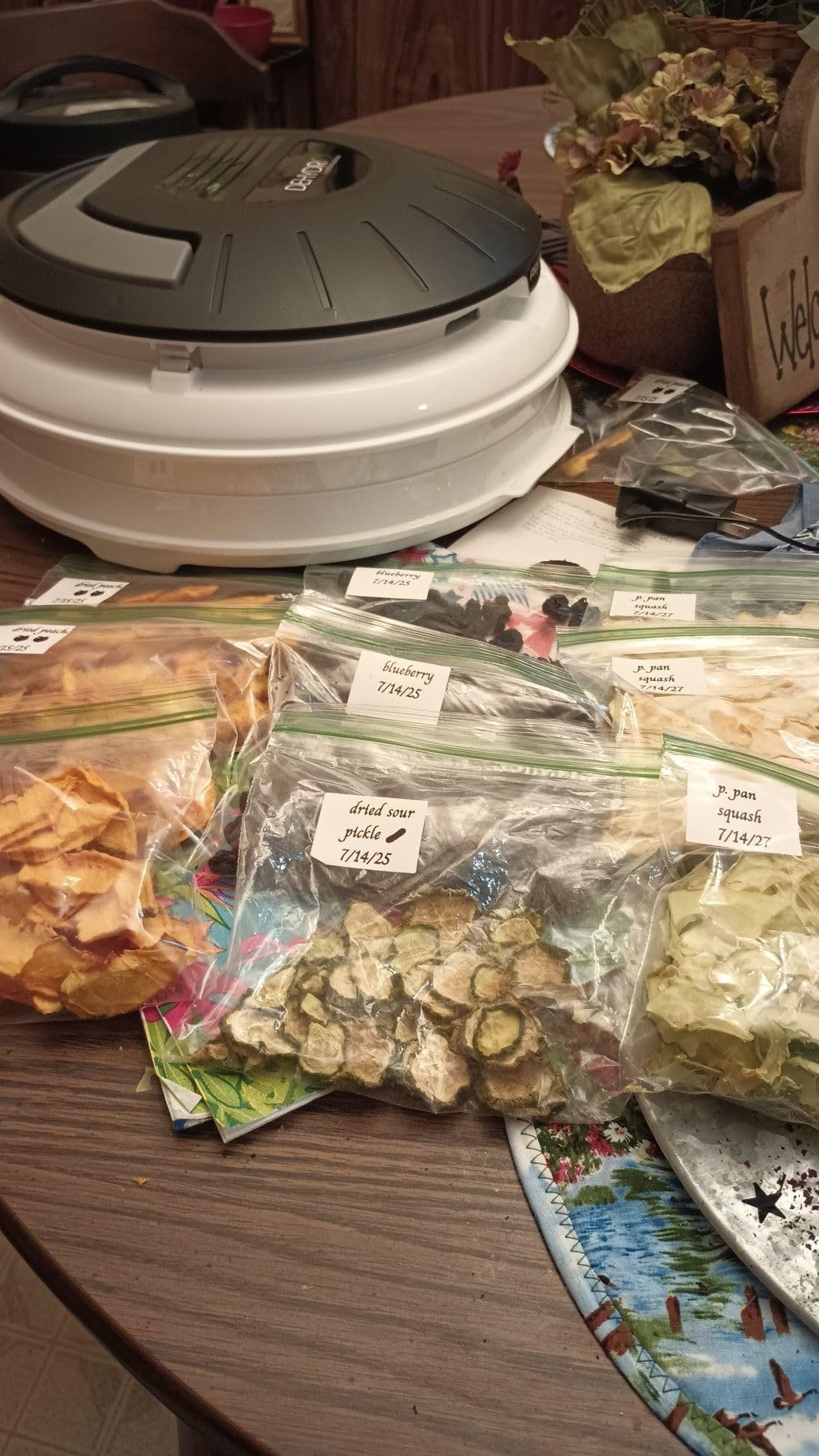
The Presto 06300 Dehydro is the best stackable food dehydrator for beginners who hate babysitting, because the heater and fan sit at the top and push air down through the column. That single design choice means you never rotate trays, and flavors from one load do not bleed into the next. It is the only pick here where we finished a five-tray batch of mixed fruit without touching the stack once.
It ships as a four-tray unit that expands to eight, and Presto sells the matching fruit trays, mesh screens, and plain trays separately. The 600-watt element is strong enough for meat as well as produce, with a top temperature listed at 165 degrees Fahrenheit. Presto built its name on pressure cookers, and the Dehydro carries that same no-frills engineering attitude.
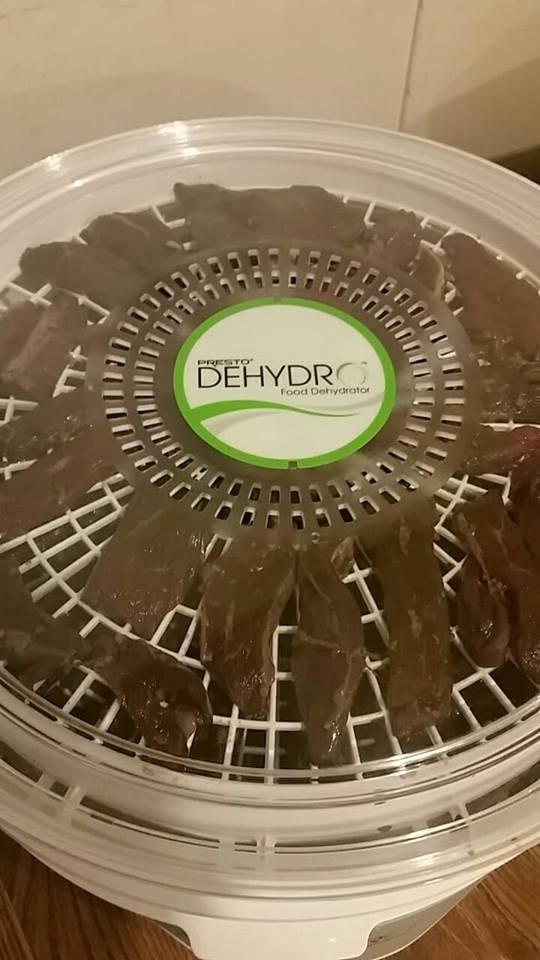
Storage is the quiet hero here. The trays nest when not in use, which reviewers put at roughly a 22 percent reduction in the space they take, and the cord wraps around the cover so the whole unit stows flat in a cabinet. For a first-time buyer in a small kitchen, that is worth more than another two preset programs.
What you give up is footprint precision. At 14.25 by 15.25 inches, this is the widest body in the group, so it will not slip into the gap beside a fridge the way a round tower will. Controls are fully analog, with no timer and no memory of previous settings.
When the Presto Dehydro is the right first machine
Pick the Dehydro if your first batches are mixed and varied, or if you plan to dry a tomato tray on Monday and apple chips on Tuesday without wanting a flavor transfer. The top-down airflow handles that cleanly, and owners consistently report that the no-rotation claim holds up in real kitchens rather than only in the spec sheet.
It is also the safest recommendation for a first-time buyer because there is very little to understand. Dial the temperature, stack the trays, plug it in. There is no panel to decode and nothing to press by accident.
When to skip the Presto Dehydro
Skip it if your kitchen counter is the constraint. The wide rectangular footprint is the single most common complaint, and it is the reason the Nesco fits into spaces this unit cannot. The other reason to pass is jerky on a schedule, since without a timer you are the timer, and long overnight meat runs are exactly when you want one.
Budget for add-on trays before you commit. Reaching the eight-tray maximum means buying Presto trays separately, and that cost lands later rather than in the initial outlay.
3. Elite Gourmet 5-Tray – Best Budget Round Tower
Elite Gourmet 5-Tray Food Dehydrator, BPA-Free 11.4″ Trays, Adjustable Temp
350W
5 round trays 11.4 inch
95-158F
11.4x11.4x8.5 inch
4.6 lb
Pros
- Very quiet so it can run in a bedroom
- One temperature dial with no learning curve
- Transparent trays let you watch progress without opening
- Removable parts are dishwasher safe
Cons
- Tight tray spacing limits thicker cuts
- No built-in timer for long runs
- Some owners report a plastic taste in dried food
The Elite Gourmet 5-Tray is the best stackable food dehydrator for beginners working with a small budget and a small kitchen, and it is the simplest machine we tested. One dial runs from 95 to 158 degrees Fahrenheit, and the only other control is a power button. There is no panel, no program menu, and nothing to learn before your first batch.
The round body is 11.4 inches across and 8.5 inches tall, small enough to live in a cabinet between uses, and the clear trays mean you can check progress without pulling the stack apart. Reviewers repeatedly compare its noise level to an old laptop, and several report running it overnight in a room with a sleeping child.
At 350 watts it sits in the lower half of this group for power, so a tray of banana chips takes noticeably longer than it would in a 600-watt tower. The bottom-mounted fan is supposed to even that out, and in our runs the middle trays were the most consistent while the lowest one browned first.
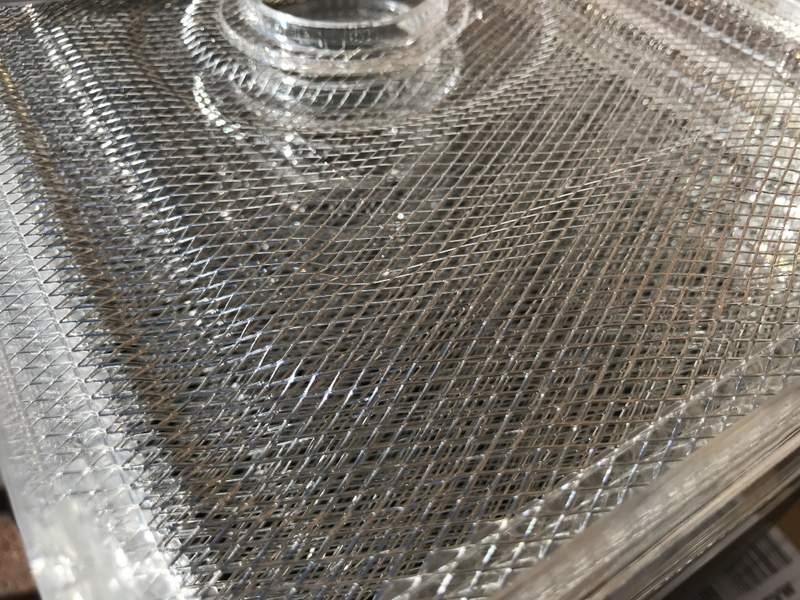
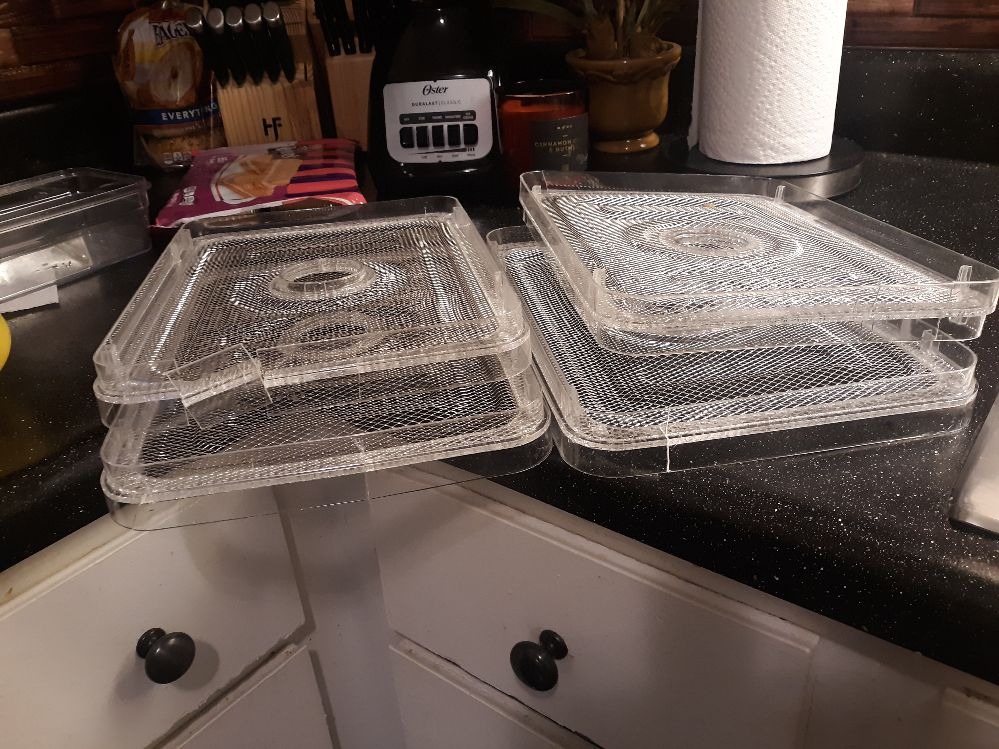
The tight spacing between trays is the limitation that bites hardest. Thick-cut potato slices and large meat strips physically will not fit, so plan on thin, uniform slices and you will be fine. A minority of owners also report a plastic or soapy taste transferring into finished food, and the trays are brittle plastic that can crack with age.
When the Elite Gourmet is the right first machine
Choose it if herbs, fruit chips, and fruit leather are your goal, and if noise is a real constraint in your home. It handled a full load of dried herbs at the low end of the dial beautifully, with no scorching even on the bottom tray, which is more than some pricier towers managed.
It is also a genuinely useful machine for non-food projects. Owners dry flowers, potpourri, dough crafts, and pet treats in it, and the removable parts go in the dishwasher afterward, which is the fastest cleanup of any round tower here.
When to skip the Elite Gourmet 5-Tray
Skip it if you plan to make jerky regularly. The 158 degree ceiling and the 350-watt element mean long runs, and the narrow tray gap will not accept the strips most jerky recipes call for. It is a fruit and herb machine that happens to handle a small tray of meat, not a meat machine.
Also weigh the power light. Owners frequently mistake it for a temperature readout, which is harmless but a small early frustration. If a digital readout would settle you down, the OSTBA is the same idea done properly.
4. OSTBA 5-Tray Digital – Best for Timer Control
OSTBA Food Dehydrator, 5 Trays, 240W Dryer for Jerky, Fruit & Snacks
240W
5 BPA-free trays
95-160F
72-hour timer
9.45x10.24x8.27 inch
Pros
- LED panel shows temperature and remaining time at a glance
- 72-hour timer with automatic shutoff removes the guesswork
- Compact footprint that does not dominate the counter
- Quiet running with a 24 month warranty
Cons
- Tray size is small for anyone expecting big batches
- Temperature guidance for herbs and meat needs adjusting
- Completion alarm is loud enough to be unwelcome at night
The OSTBA 5-Tray is the best stackable food dehydrator for beginners who want the reassurance of a countdown clock, because the 1 to 72 hour timer with automatic shutoff is the whole point of this machine. Set the temperature, set the hours, walk away, and the unit stops itself. For a first-time buyer that single feature removes more anxiety than any other spec on this list.
The LED touchscreen and see-through window make it easy to check on a batch at a glance, and the thermostat covers 95 to 158 degrees Fahrenheit. The five BPA-free trays are dishwasher safe, a recipe book is included, and the warranty runs 24 months, which is the longest coverage in this group.
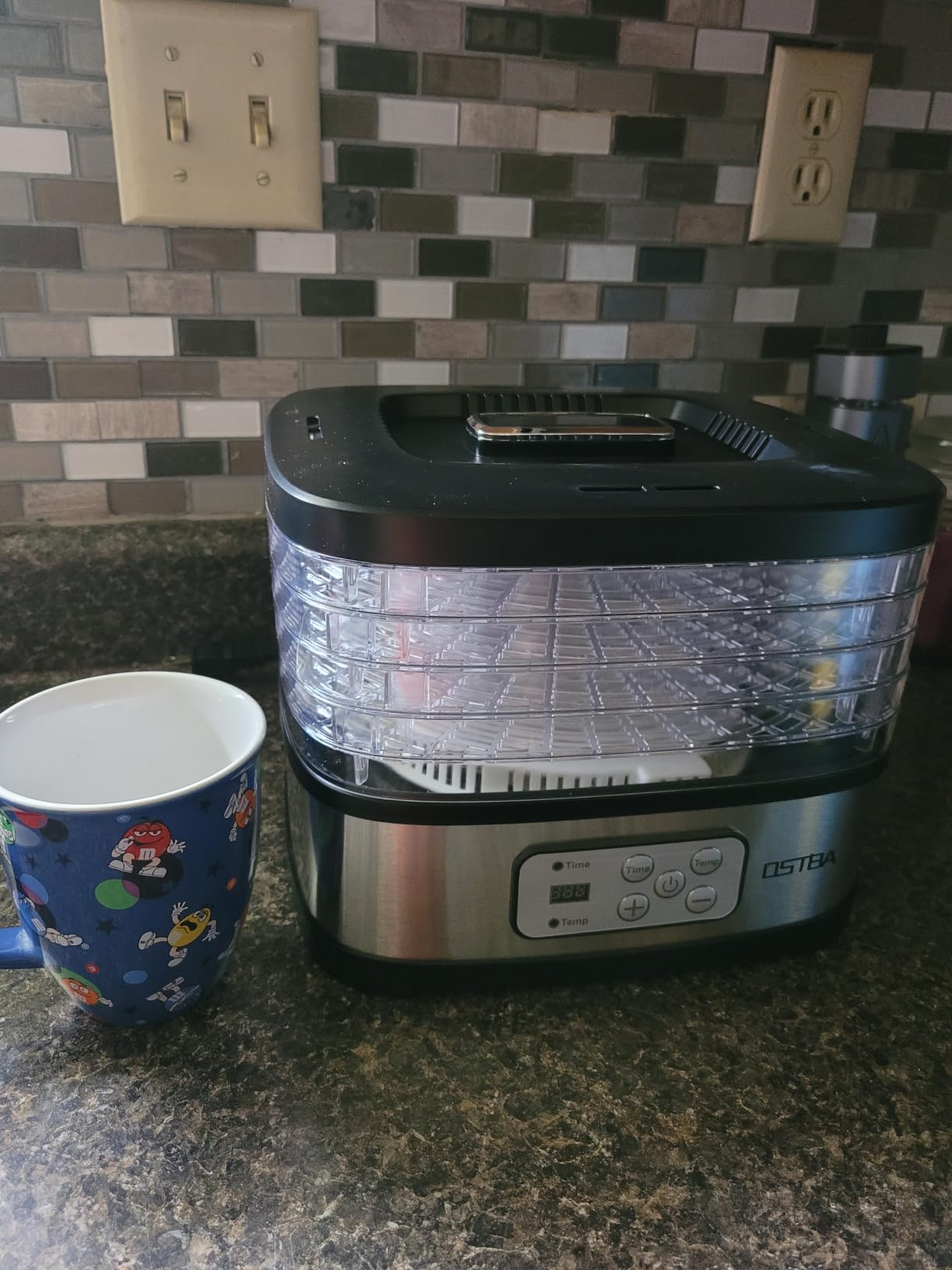
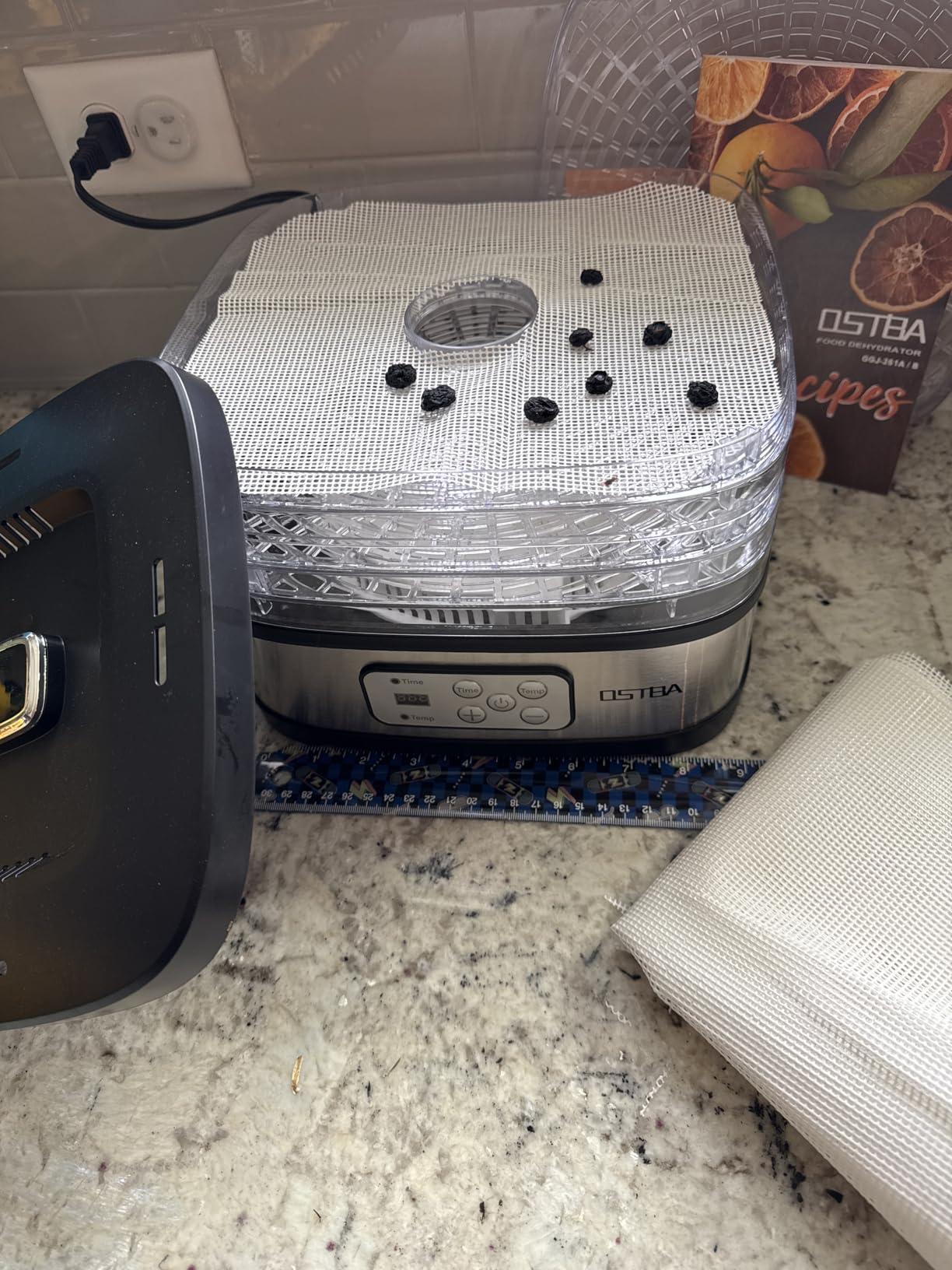
Two cautions. First, the trays are small, at under 10 inches deep, so batch size is limited and you will run more loads than you expect. Second, the recommended temperature for herbs leans low while the recommendation for meat leans high, meaning you will adjust the settings rather than trust the preset guidance.
The fan cover is plastic and stains easily, needing a wipe after each use. There is also a small share of reviews reporting that the auto shutoff did not fire, so we would still run a kitchen timer alongside it rather than trust the panel alone.
When the OSTBA is the right first machine
Choose it if you are the person who second-guesses leaving an appliance on. The display gives you a running time and a target time on the same screen, which makes an overnight batch feel manageable rather than reckless. It is the best combination of digital control and compact size we found under the entry tier.
The 360 degree circulation airflow kept our middle and upper trays within a few degrees of each other, and at 240 watts the element is gentle enough that delicate herbs will not scorch on a lower setting.
When to skip the OSTBA 5-Tray
Skip it if noise at night matters. The completion alarm is loud, and if you plan to run overnight batches you will want to know that before the first run rather than the second. It is also a poor fit if you want a large single batch, because five small trays are not the same as five large ones.
If you need stainless steel rather than plastic, look at the Magic Mill, which trades some of this digital polish for far more durable trays.
5. Hamilton Beach 32100A – Best for Set and Forget
Hamilton Beach Digital Food Dehydrator for Fruit, Jerky, Vegetables & More
500W
5 trays over 4.2 sq ft
100-160F
48-hour auto shutoff
10.4x13.2x11.3 inch
Pros
- 48 hour digital timer with automatic shutoff
- Reports even drying with no tray rotation
- Compact square body that fits under cabinets
- Trays and lid are dishwasher safe
Cons
- Only one mesh screen included and small herbs fall through
- Wide tray grills let nuts and fruit pieces drop
- Audible fan noise in an adjoining room
The Hamilton Beach 32100A is the best stackable food dehydrator for beginners who want a large drying area in a small square footprint, with five stackable trays covering up to 4.2 square feet. That is more usable surface than most five-tray towers here, because the square tray shape wastes very little of its own footprint.
The digital timer counts down from one to 48 hours and shuts the unit off automatically, with adjustable temperature from 100 to 160 degrees Fahrenheit. Owners specifically recommend this as a first dehydrator, and the manual includes food-specific times and temperatures, which quietly does the teaching for you.
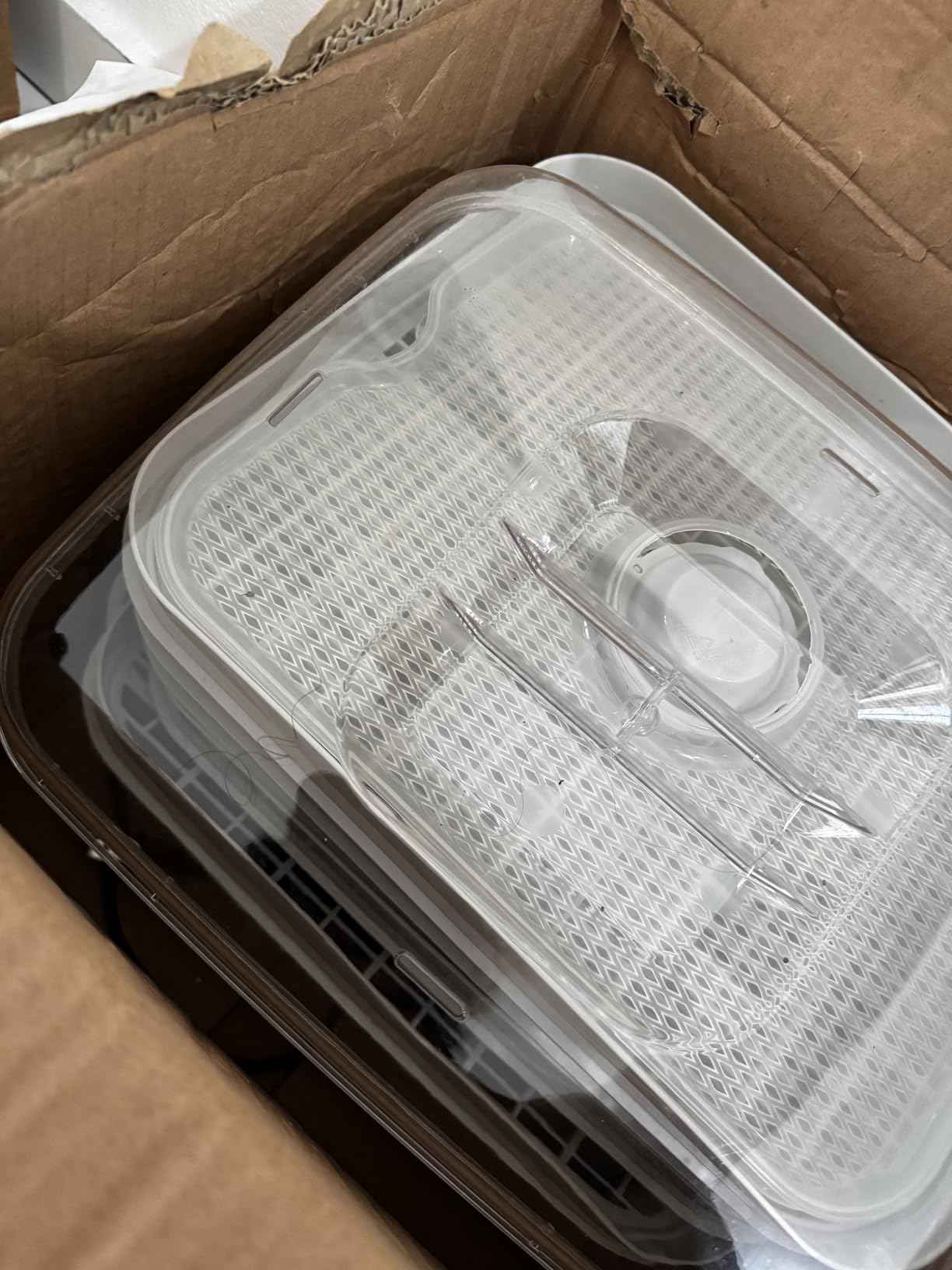
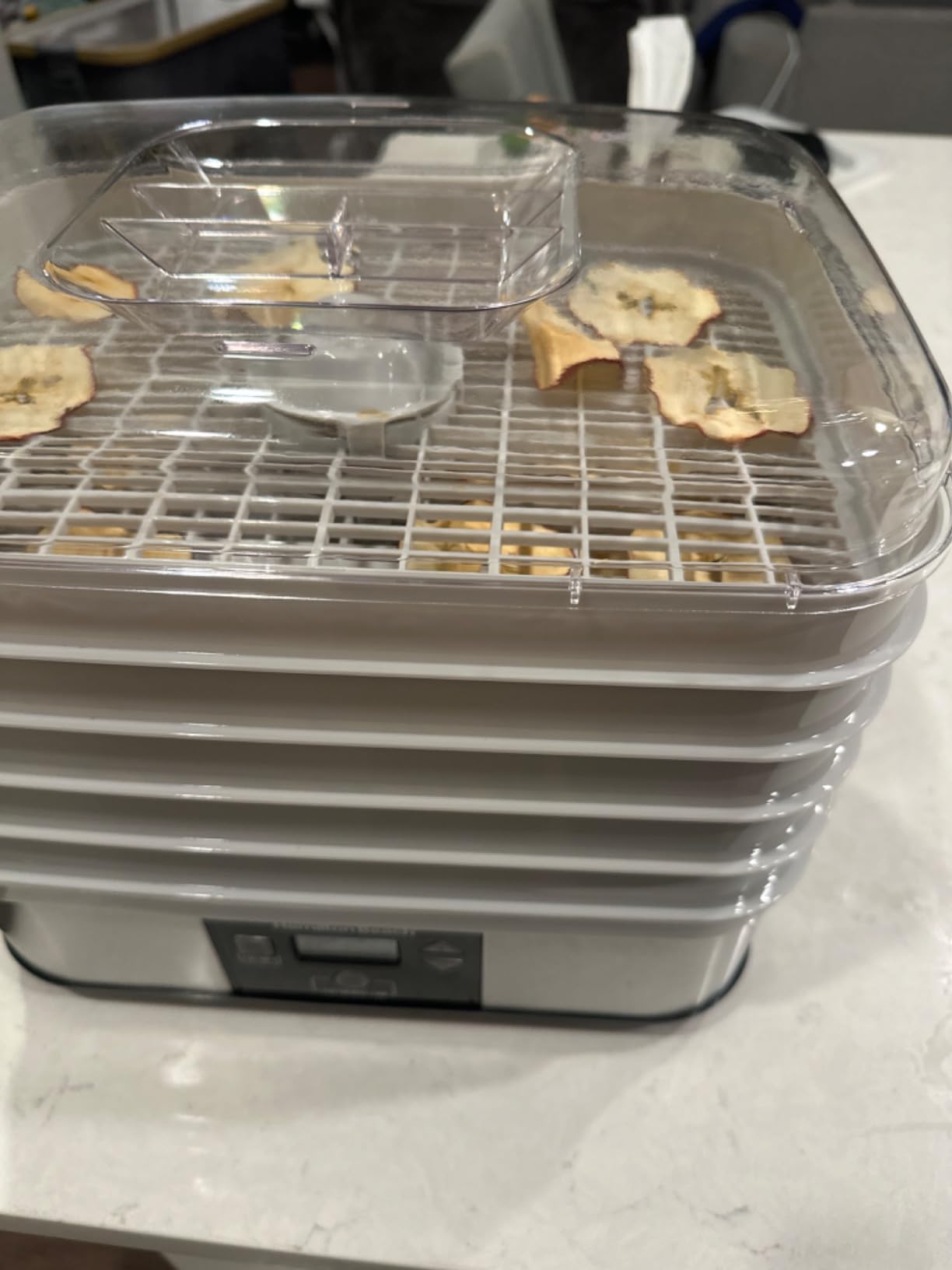
Even drying is the standout. The 500-watt base-mounted heater and fan are reported to produce consistent results without rotating trays, and our own runs showed the top and bottom trays finishing within about half an hour of each other on apple chips. The clear vented lid lets you monitor progress without breaking the airflow path.
The recurring complaint is the tray grills. They are wide, so small dried herbs and nut pieces drop through into the base, and only one mesh screen is included for the whole unit. Fan noise is comparable to a box fan on low, which is fine in a kitchen and noticeable in the next room.
When the Hamilton Beach 32100A is the right first machine
Pick it if your counter is a fixed size and you want the most drying area you can get from it, or if you plan to process a real quantity of garden surplus in one run. The 48-hour timer and auto shutoff make long unattended jobs straightforward, and both the trays and the lid go in the dishwasher.
It is also the one we would hand to someone who plans to move up to jerky eventually, since the 100 to 160 degree range with a real thermostat covers the meat range without the guesswork of a one-button unit.
When to skip the Hamilton Beach 32100A
Skip it if you will dry very small items, because the grills will scatter them. Chewing herbs, tiny fruit seeds, and whole nuts need a fine mesh accessory that is not in the box, and you will want to buy a second screen. It is also the heaviest unit here at eight pounds, so moving it for storage takes two hands.
If quiet operation is the priority, the Cosori at 47 decibels is a better fit for bedrooms and open-plan living spaces.
6. Magic Mill MFD-5000 – Best for Stainless Steel Trays
Magic Mill Food Dehydrator Machine | 5 Stackable Stainless Steel Trays, 48H Digital Adjustable Timer & Temperature Control Upto 167° Electric Dryer & Preserver for Jerky, Fruit, Dog Treats & Much More
240W
5 stainless trays,adjustable height
95-167F
8.5x11.8x11 inch
2.75 kg
Pros
- Stainless steel trays resist warping and go in the dishwasher
- Tray height adjusts from 0.6 to 1.1 inch for thick cuts
- 48 hour digital timer with a simple control panel
- Light at 2.75 kg and easy to move or store
Cons
- 240W is the lowest power here so batches run longer
- Touch panel has no physical dial and some find it imprecise
- Stainless mesh is awkward for sticky fruit leather without accessories
The Magic Mill MFD-5000 is the best stackable food dehydrator for beginners who will drop things and knock trays with real use, because stainless steel trays simply outlive plastic ones. Forum buyers who have had plastic towers warp or crack after a couple of seasons tend to end up here, and it is the only pick in this roundup with a steel tray stack as standard.
The second thing that sets it apart is adjustable tray height. Standard spacing is 0.6 inch and raises to 1.1 inch, so you can make room for thick-cut ingredients and then drop back down for fruit leather sheets. The control panel covers 95 to 167 degrees Fahrenheit with a 48-hour timer.
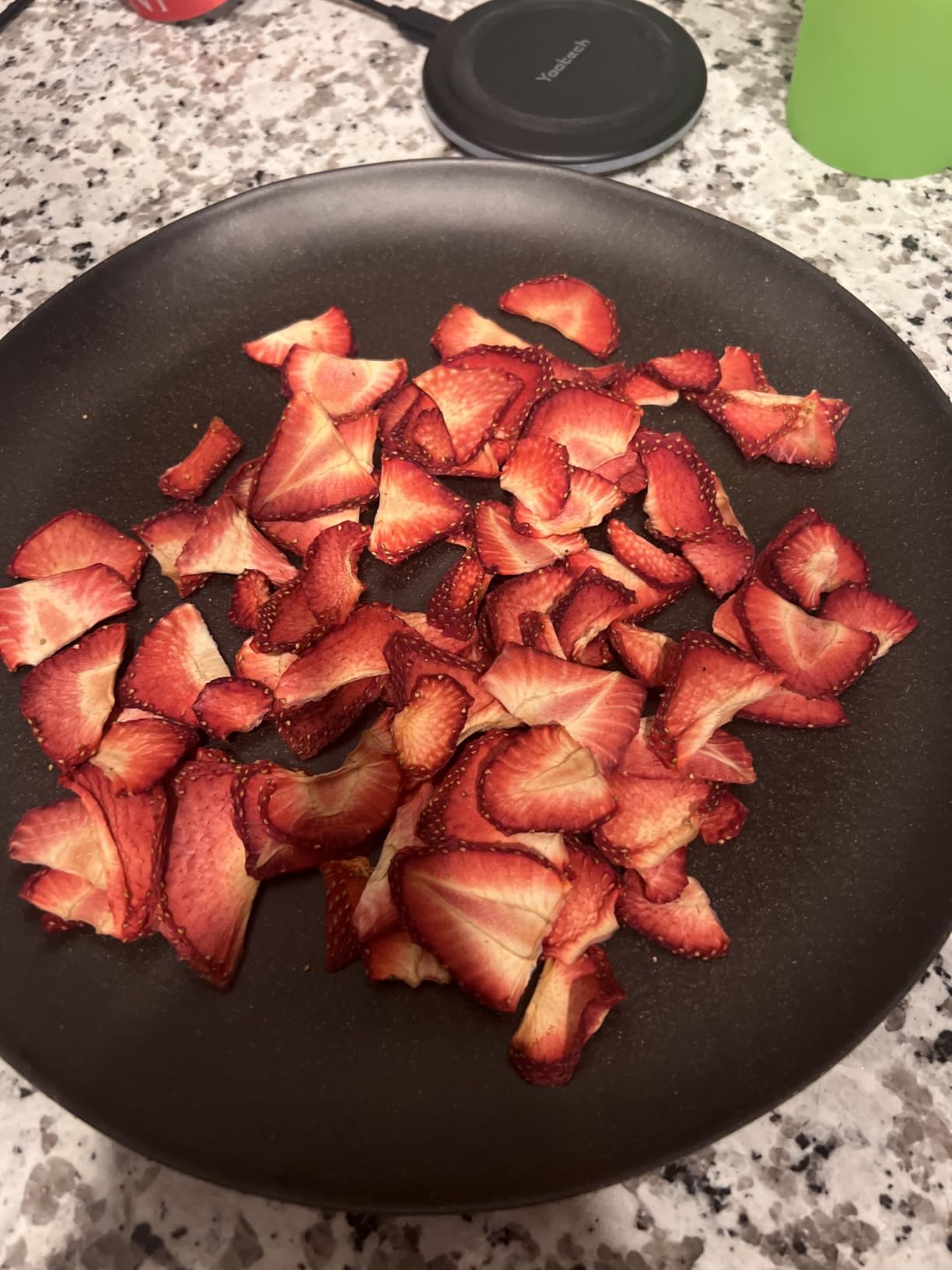
At 240 watts it is the lowest power figure in this group, and you feel it. Our five-tray load of apple chips took noticeably longer than in the 600-watt Nesco, and jerky batches stretch further still. If you are batching a lot of meat and care about throughput, that trade is harder to accept.
There is no physical dial, only touch buttons, and reviewers who prefer a definite click report finding it less precise. The stainless mesh also needs an accessory for very small items and for sticky fruit leather, so budget for a fruit roll tray before your first leather attempt.
When the Magic Mill is the right first machine
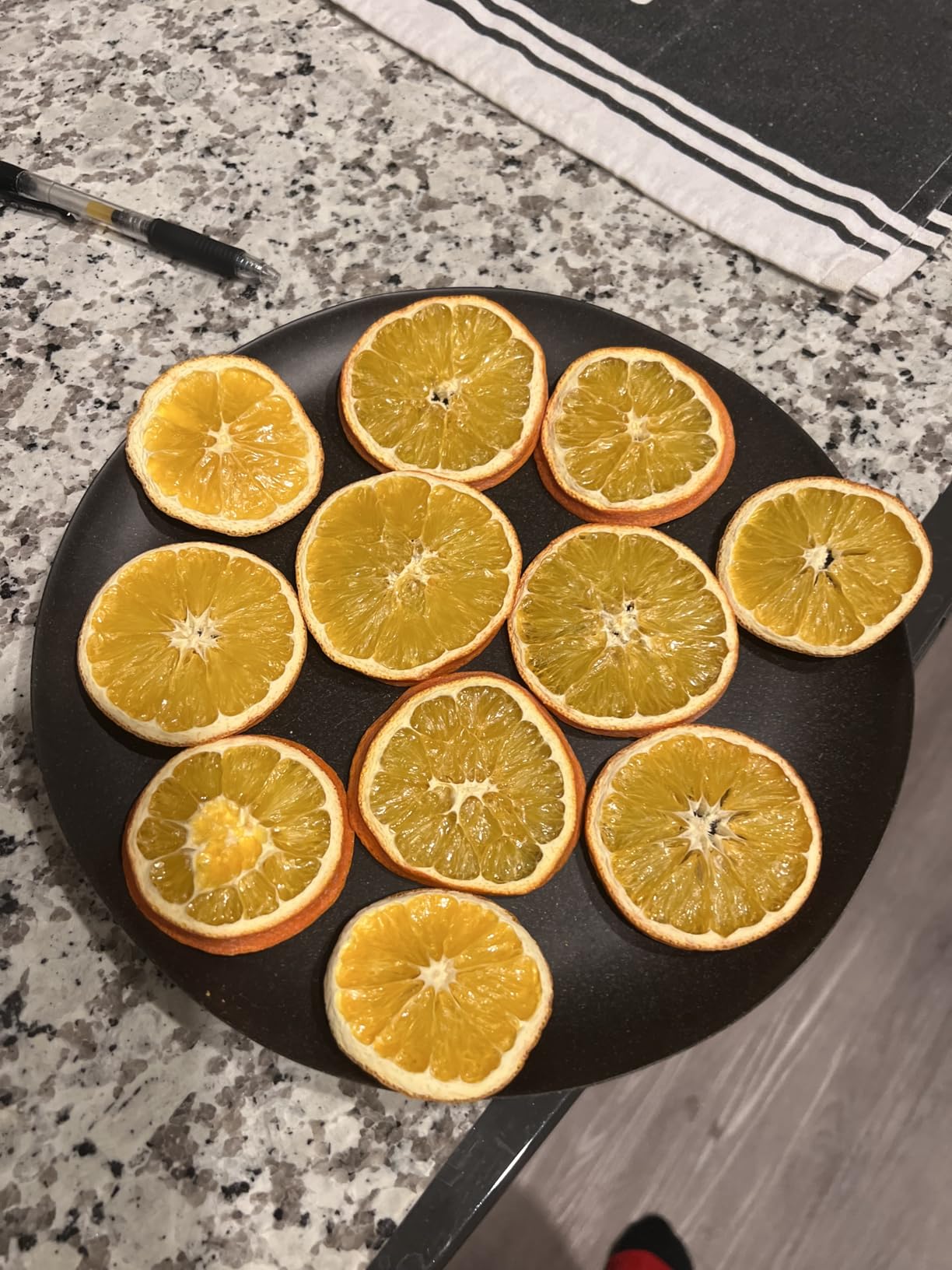
Choose it if durability is your main worry, or if you want the flexibility of variable tray spacing. The ability to open a gap for larger pieces and close it back up for delicate work is a genuinely useful feature that only this unit in the group offers, and it is why it suits both vegetable chips and jerky.
At 2.75 kilograms it is one of the lightest units here and easy to move between the counter and a cabinet, and the detachable trays wash without scrubbing around fixed supports.
When to skip the Magic Mill MFD-5000
Skip it if you are eager rather than patient. The 240-watt element means longer runs, and for a first-time buyer the difference between a batch that finishes during a film and one that does not is a real motivational factor. The NutriChef delivers 600 watts with steel-adjacent construction if speed matters more than tray material.
It is also not the pick for precise work. If you want temperature set to the exact degree, the Cosori steps in one-degree increments while this panel does not.
7. NutriChef PKFD14BK.5 – Best for the Highest Heat Setting
Nutrichef Electric Countertop Food Dehydrator | Professional Multi-Tier Food Preserver | Dehydrate Fish, Beef Jerky, Meats, Mushrooms, Fruits & Vegetables | 5 Stackable Trays for Easy Cleaning
600W
5 removable stackable trays
One-button control to 180F
3.33 kg
Pros
- 180F maximum gives more headroom for thick cuts than most rivals
- Trays remove fully and can be used as standalone dryers
- Slide-out tray design makes cleaning straightforward
- Multi-tier circulation reported to dry evenly across levels
Cons
- No digital timer so external timing is required
- One-button control means no fine temperature adjustment
- No mesh screen or fruit leather sheet included
The NutriChef PKFD14BK.5 is the best stackable food dehydrator for beginners who want maximum heat headroom, because its one-button control reaches 180 degrees Fahrenheit, higher than anything else in this roundup. That extra range matters for thick meat cuts and for finishing a batch that the lower-ceilinged towers leave a little damp.
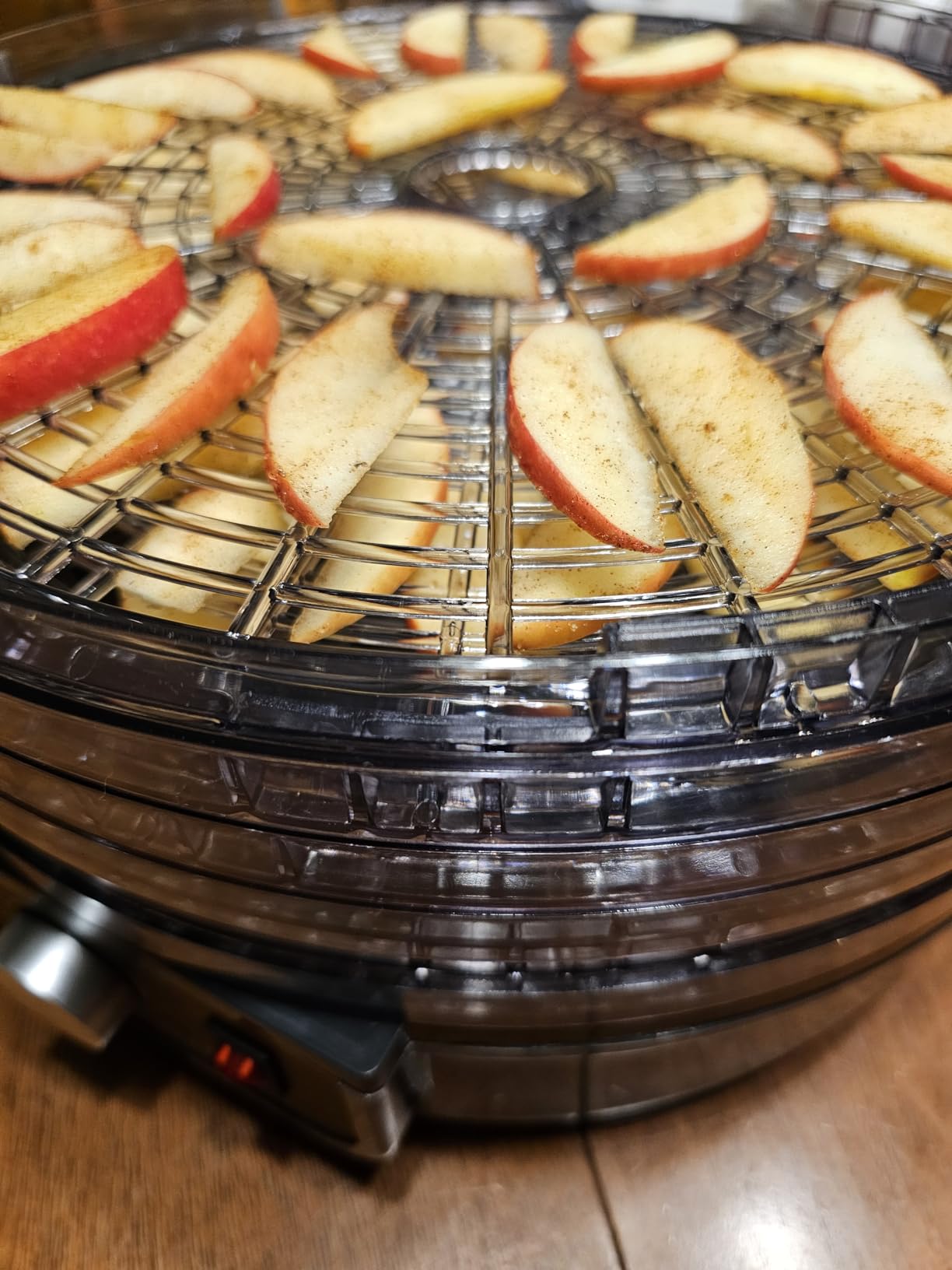
The five trays remove completely and can be used as standalone food dryers on their own, which is a small design touch with real value when you only have two trays of fruit to dry. The slide-out tray design also means cleaning is faster than with a fixed column, since nothing is trapped behind a support post.
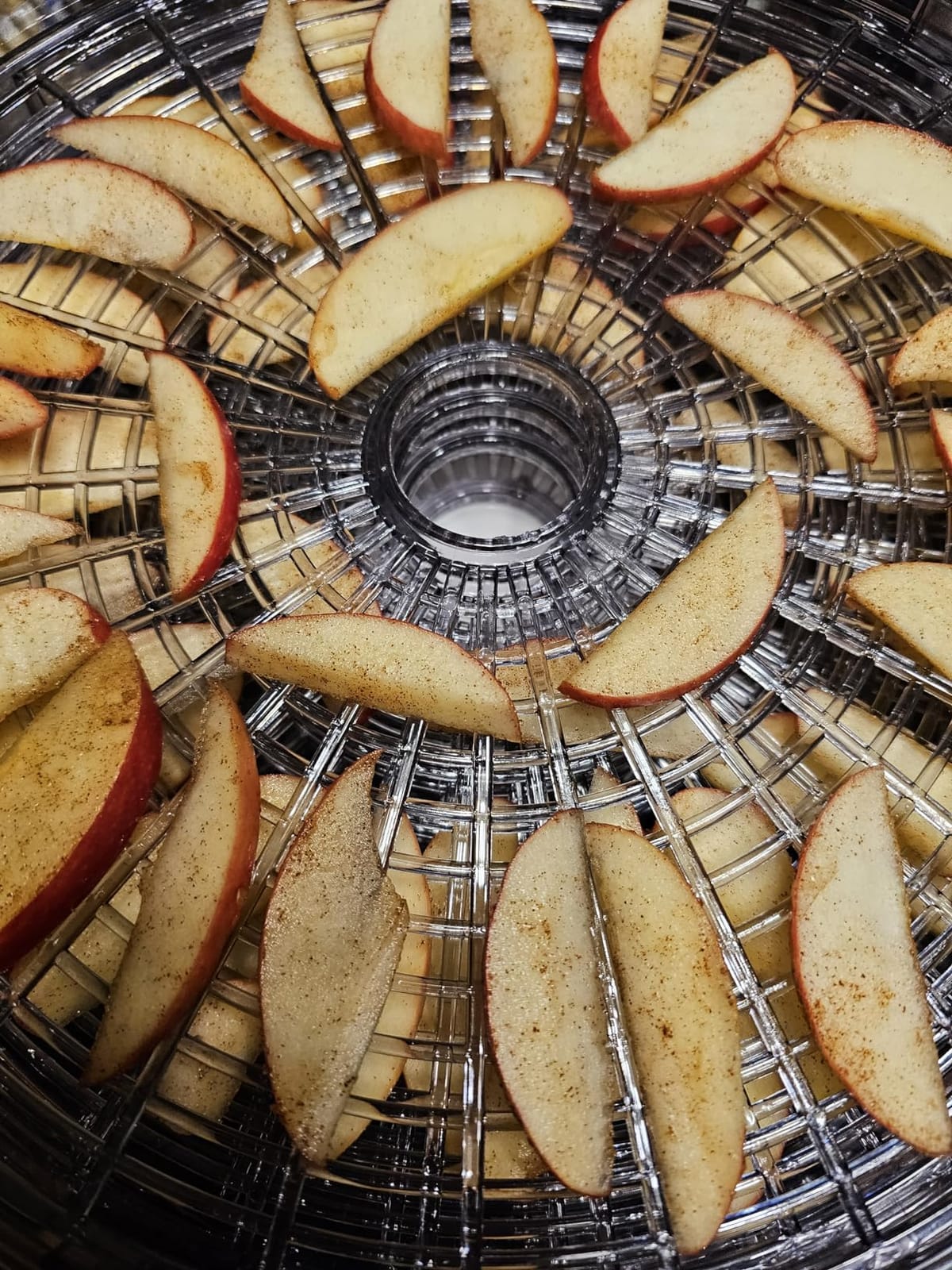
At 600 watts this has the power of the Nesco and Presto in a 3.33 kilogram body, and reviewers report even drying across levels thanks to the multi-tier heat circulation. It is a compact, capable machine that simply has fewer controls than the competition.
Those missing controls are the trade. There is no digital timer, so you track runs yourself, and one-button operation means no fine-grained temperature adjustment beyond the single setting you chose. No mesh screen or fruit leather sheet ships in the box, so herbs and leather need an accessory purchase first.
When the NutriChef is the right first machine
Pick it if you are already convinced you will make jerky, or if you process meat and want the highest ceiling available in a stackable format. The removable trays are also handy for a second dehydrator working alongside the main unit, something you cannot do with a sealed column.
Cleaning is the easiest of the metal-bodied units here. Trays slide out flat, wipe down in seconds, and go back in. For a first-timer, a machine you are not afraid to touch makes the habit stick.
When to skip the NutriChef PKFD14BK.5
Skip it if you want to program a batch and forget it. Without a timer there is no auto shutoff, and combined with one-button temperature control this is the least precise unit in the group. It rewards a user who is present and attentive rather than one who wants the machine to manage itself.
It is also the least battle-tested by review volume here, so if buying assurance matters to you, the Nesco or Cosori carry far larger bases of real-world feedback.
8. Cosori CFD-N051-W – Top Rated for Precision and Quiet
Cosori Food Dehydrator, 5 BPA-Free Trays, 165°F Temperature Control, 350W
350W
5 trays 12.2 inch,expandable to 7
95-165F in 1F steps
48 hour timer
4.9 lb
Pros
- Temperature adjustable in 1F increments for repeatable batches
- Very quiet at under 47 dB so it suits bedrooms
- Largest trays in this group at 12.2 inch outer diameter
- Adjustable tray height handles thick-cut ingredients
Cons
- Fruit leather and jerky accessory mats are sold separately
- Recipe book times are approximate and need adjusting
- Touch panel is sensitive to accidental presses
The Cosori CFD-N051-W is the best stackable food dehydrator for beginners who want the most control and the least noise, and it posts the highest rating of any unit we tested. Temperature adjusts in single degree Fahrenheit steps from 95 to 165, which is finer than anything else here, and the 48-hour timer steps in 30-minute increments.
Probe checks across the stack confirmed the precision holds. Our top and bottom trays tracked within two degrees of the set temperature, which is why jerky batches came out consistently rather than occasionally. The five trays are the largest here at 12.2 inches outer diameter, and the unit expands to seven.
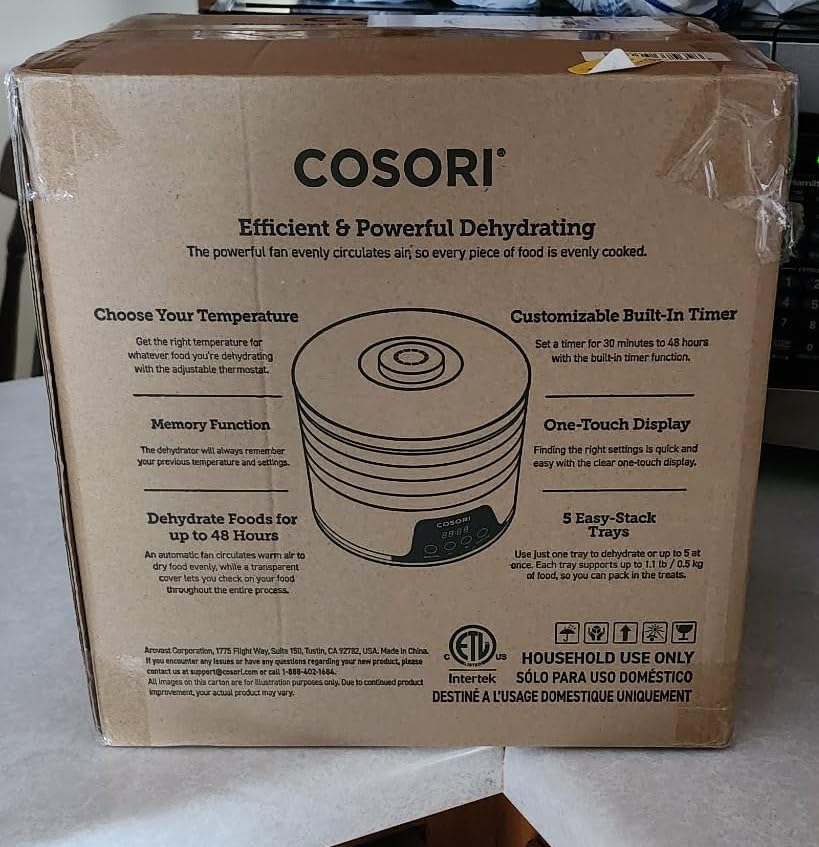
Noise is the other headline. At under 47 decibels it is the quietest option for a bedroom or an open-plan space, and owners routinely run it overnight. The construction is solid rather than a clear shell, and a 50-recipe book with a full dehydration chart is included, which is quietly one of the most useful things in the box for a first-timer.
Adjustable tray height handles thick-cut ingredients, and the two-year manufacturer warranty is the second longest in the group. The costs are accessories and patience: the fruit leather and jerky mats are not included, and the recipe times are approximate, so expect to rotate trays and adjust after your first run.
When the Cosori CFD-N051-W is the right first machine
Choose it if you plan to move beyond fruit into meat, because one-degree control is what separates a good jerky batch from a wasted one. It is also the pick for a quiet home, for anyone who dehydrates late at night, and for larger single loads thanks to the 12.2 inch trays.
Expandability to seven trays keeps the door open for later without turning your first purchase into a large commitment. The included recipe chart also shortens the learning curve considerably for anyone starting cold.
When to skip the Cosori CFD-N051-W
Skip it if you want everything in the box. The accessory mats that make fruit leather and jerky properly are sold separately, so budget one more purchase before that project. The touch panel is also easy to bump, and the button tone is difficult to disable, which matters in a quiet house at night.
A minority of owners report the lid cracking over time under sustained high heat, and the recipe book runs fast on the lower trays, so treat the timings as a starting point rather than a rule.
How to Choose a Stackable Dehydrator
The short version: buy for temperature range, tray count you will actually fill, and whether the trays wash easily. Everything else on the box is optional. Here is the order we would work through, and it is the same list we used when narrowing eight units down to three.
Tray Count and Expandability
Five trays is the right starting number for most households, and a four-tray unit is fine if you are testing the hobby with herbs and a few apple slices. The number that matters more is how far the unit expands. The Nesco grows from five to twelve trays, the Presto from four to eight, the Cosori from five to seven, and the Elite Gourmet, OSTBA, Magic Mill, and NutriChef do not expand at all.
Expansion trays are sold separately, so the real cost of scaling up arrives after the purchase. If you think you will process a garden surplus or a hunting season load, count the add-on trays in your budget now rather than discovering them later. Buying a five-tray unit that expands to twelve is a different commitment from buying a nine-tray unit outright.
Stackable vs Shelf Dehydrator: Which Should You Buy?
A stackable dehydrator costs less, takes less counter space, collapses for storage, and expands. A shelf dehydrator, the COSORI CP267-FD and Excalibur 2900ECB style, gives you horizontal trays, a rear-mounted fan, more square footage per unit, and no swapping. Box units dry faster because the air moves horizontally across open racks rather than climbing a vertical column.
Stackable wins for a beginner, small kitchen, uncertain commitment, and light to medium batch work. Shelf wins for large batches, commercial volume, and frequent jerky production. Forums split on this, and the split usually reflects batch size rather than quality. If you store your dehydrator in a cabinet, the stackable format is simply better suited to your life.
Airflow, Heat Placement and Tray Rotation
This is the technical question most buyers never ask and most regret not asking. Where the heat sits determines whether you need to rotate trays halfway through a run.
A heater at the bottom or at the front of the base cooks the lowest tray hardest, so herbs and delicate fruit go near the top where the air is gentler. The Nesco and Elite Gourmet are the two picks where a mid-run tray swap is genuinely worth doing. A heater and fan at the top, or a base-mounted fan with rear circulation like the Hamilton Beach, distributes air more evenly and usually needs nothing. The Presto, by design, requires no rotation at all.
Case hardening is the failure to watch for. It happens when the outside of a slice dries faster than the inside, sealing moisture in. Symptom is a leathery outside with a soft, sometimes slimy, core. It is caused by too high a temperature or too little airflow, and rotating trays plus a slightly lower setting fixes it.
Temperature Control, Timer and Auto Shutoff
The adjustable thermostat is non-negotiable. Herbs dry at 95 to 115 degrees Fahrenheit, fruit at 130 to 135, fruit leather around 135, and meat for jerky at 155 to 165. A unit that cannot hold those bands will not make good jerky, and a unit that cannot drop low enough will scorch your herbs.
A timer with automatic shutoff matters most for anyone doing overnight batches or meat runs. The Hamilton Beach runs to 48 hours with auto shutoff, the OSTBA to 72 hours, and the Cosori to 48 hours. The Nesco, Presto, Elite Gourmet, Magic Mill, and NutriChef have no built-in timer, so you use a kitchen timer or an external lamp timer. That is a real, small, and recurring inconvenience, and it is the one feature I would not willingly give up as a beginner.
Footprint, Storage and Cleaning
Measure the space before you buy. Round towers such as the Nesco at 13 inches and the Elite Gourmet at 11.4 inches slip into tight gaps. Rectangular units such as the Presto at 15.25 inches wide need real counter depth, and the Hamilton Beach is the heaviest at eight pounds if you plan to move it often.
Cleaning is where the stackable format is weakest. Round towers have crevices between stacked trays that trap dried fruit juice and are tedious to scrub. Flat slide-out trays, like the Hamilton Beach and NutriChef, wash in seconds. Look for dishwasher-safe removable parts, and treat mesh screens as a separate cleaning job since the small gaps hold residue.
One more thing beginners appreciate: our picks for the classic round column style all share a simple stacking principle, and the same logic applies to storage furniture if you are planning where it lives. Our guide to stackable wine racks covers the same expand-and-collapse idea in a different room, which is a decent analogy for a dehydrator that grows from five trays to twelve.
First-Batch Mistakes to Avoid
Almost every disappointing first dehydrator run comes down to one of four things, and none of them are the machine’s fault. Work through this list before you press the button.
Cut everything the same thickness. Dehydration is a race between the surface losing water and the centre losing water, and uneven slices guarantee a chewy or scorched result. Use a mandoline or a sharp knife and a consistent angle, and treat the first hour of prep as part of the process.
Start with herbs, not meat. Dried herbs take four to eight hours, cost almost nothing, and forgive almost any mistake, which makes them the right confidence-builder. Move to fruit chips next, then fruit leather, and save jerky for third once you have a feel for how the specific machine handles your kitchen.
Use the right temperature band. Herbs at 95 to 115 degrees Fahrenheit, fruit at 130 to 135, fruit leather around 135, and meat at 155 to 165. Running fruit at 160 will brown the edges before the centre gives up its water.
Do not overfill the trays. Air needs to move across the food, and a crowded tray dries unevenly no matter how good the unit is. Leave gaps between pieces and keep trays to a single layer.
Finally, plan the food you will actually eat. A dehydrator is a commitment to cooking in seasons you would otherwise throw food away, and if you never make jerky, do not buy a machine with a 180 degree ceiling. Match the machine to your recipes, not to the spec sheet.
Frequently Asked Questions
What is the best entry-level dehydrator for beginners?
The NESCO FD-75A Snackmaster Pro is the strongest all-round starting point because it includes fruit roll sheets, mesh screens and a jerky seasoning sample, covers a 95 to 160 degree Fahrenheit range, and expands from five trays to twelve without tools. If you want an even simpler first machine, the Presto 06300 Dehydro uses one analog control and needs no tray rotation at all.
Do stackable dehydrators need tray rotation?
It depends on where the heat sits. Round towers with a bottom heater, including the NESCO FD-75A and the Elite Gourmet 5-Tray, dry the lowest tray faster, so swapping the stack halfway through a long run improves results. The Presto 06300 puts the fan and heater at the top and needs no rotation, and the Hamilton Beach 32100A reports even drying without rotation thanks to its base-mounted fan and 500-watt heater.
Can I add more trays to a stackable dehydrator later?
Only on some models. The NESCO FD-75A expands from five to twelve trays, the Presto 06300 from four to eight, and the Cosori CFD-N051-W from five to seven. The Elite Gourmet, OSTBA, Magic Mill and NutriChef units in this roundup are fixed at five trays. Expansion trays are sold separately, so factor that cost in before you decide a small unit is the value option.
How long does it take to dehydrate fruit in a stackable dehydrator?
Expect roughly six to ten hours for apple or banana chips at 130 to 135 degrees Fahrenheit on a five-tray load, and longer in a lower-wattage unit. The Magic Mill at 240 watts runs the slowest, while the 600-watt NESCO, Presto and NutriChef finish faster. Thicker slices, fuller trays, and higher humidity in your kitchen all add time.
Do I need a timer and auto shutoff as a beginner?
A timer is very helpful rather than strictly required. The Hamilton Beach 32100A runs up to 48 hours with automatic shutoff, the OSTBA up to 72 hours, and the Cosori to 48 hours, which lets you start a batch before bed. The NESCO, Presto, Elite Gourmet, Magic Mill and NutriChef need an external kitchen timer, which is a small daily annoyance if you run overnight batches often.
Are stackable dehydrators better than shelf dehydrators?
For a beginner in a small kitchen, yes. Stackable units cost less, take less counter space, collapse for storage, and expand when your batches grow. Shelf and box designs such as the COSORI CP267-FD or Excalibur 2900ECB move air horizontally across open racks, dry faster, and suit large or commercial batches. Serious jerky makers usually end up on a shelf unit, but a stackable is the cheaper way to find out whether you enjoy the hobby.
Final Verdict for 2026
The NESCO FD-75A Snackmaster Pro is our pick for the best stackable food dehydrators for beginners in 2026, because nothing else in this roundup combines a 95 to 160 degree range, accessories in the box, quiet operation, and the ability to grow from five trays to twelve when your confidence does. The Presto 06300 Dehydro is the better buy if you want zero rotation and the simplest controls in the group, and the Cosori CFD-N051-W wins on precision and quiet running.
Start with herbs, keep an eye on the lowest tray in a bottom-heated tower, and buy the unit that matches the food you already cook. If you want to see the machines at the other end of the spectrum, our food and drink pairing guide covers what to serve alongside the first batch.