
The KitchenAid Artisan 5-Qt is the best stand mixer for bread dough for most home bakers, because its gear-driven motor, 5-quart stainless bowl and coated dough hook handle a full loaf of lean or sourdough dough without bogging down or overheating. We reached that conclusion by running the same three doughs through all ten machines in this guide and comparing lift, dough handling, cleanup and motor temperature rather than reading spec sheets.
That distinction matters more here than in a general mixer roundup. A stand mixer that whips cream beautifully can still stall in a stiff ciabatta dough, and a machine with a huge motor can heat a wet sourdough too fast for good gluten development. What separates a good bread mixer from a bad one is torque at low speed, the kneading mechanism, and whether the chassis can hold still under a load.
We covered ten machines across three tiers: a legacy 5-quart tilt-head, several budget tilt-heads, a quiet metal-bodied workhorse, a belt-driven center-column machine, a spiral rotating-bowl mixer, two bowl-lift models and one NSF-certified commercial unit. Each section below tells you what the machine did with dough, who it suits and where it falls short.
Last tested in 2026. If you are still deciding between oven types, our [bread cloche roundup](https://www.thirstybear.com/best-bread-cloche-for-artisan-bread/) covers the other half of the home baking setup.
Table of Contents
Top 3 Stand Mixers for Bread Dough in 2026
These three came closest to handling every dough we threw at them, and between them they cover the realistic range of home baking. The Artisan is the durable default, the Aucma is the strongest budget option on torque, and the VIVOHOME is the cheapest of the three that still claims a 6-quart dough batch.

KitchenAid Artisan 5-Qt
- Gear-driven motor
- 5-quart stainless bowl
- 10 speed settings
- Tilt-head for easy ingredient access

Aucma 6.5-QT 660W
- 660W copper motor
- 6.5-quart stainless bowl
- 6 speeds plus pulse
- Suction-cup base

VIVOHOME 6-Quart
- 660W copper motor
- 6-quart bowl rated for 3 loaves
- 10 speeds plus pulse
- Flex-edge beater
10 Best Stand Mixers for Bread Dough (October 2026)
| Product | Specifications | Action |
|---|---|---|
| KitchenAid Artisan 5-Qt Tilt-Head |
|
Check Latest Price |
| Aucma 6.5-QT 660W |
|
Check Latest Price |
| VIVOHOME 6-Quart |
|
Check Latest Price |
 Hauswirt 6QT XL Hauswirt 6QT XL |
|
Check Latest Price |
 Bosch Universal Plus Bundle Bosch Universal Plus Bundle |
|
Check Latest Price |
 Ooni Halo Pro Spiral Ooni Halo Pro Spiral |
|
Check Latest Price |
 KitchenAid 5.5-Qt Bowl-Lift KitchenAid 5.5-Qt Bowl-Lift |
|
Check Latest Price |
 ZACME 8.4QT Commercial ZACME 8.4QT Commercial |
|
Check Latest Price |
 KitchenAid 8-Qt Commercial KitchenAid 8-Qt Commercial |
|
Check Latest Price |
 Martha Stewart 5.3-Qt Martha Stewart 5.3-Qt |
|
Check Latest Price |
Why the Kneading Mechanism Matters More Than the Brand
Three kneading mechanisms show up in this guide, and knowing which one you are buying explains most of the difference in dough quality before you ever look at wattage.
Planetary action is the KitchenAid layout: the bowl sits still while a hook orbits around it and down through the center. It is efficient for thin batters and cookies, but on stiff bread dough the dough has to be pushed into the moving hook rather than folded by it, and the motor works harder to do it. Center-column machines like the Bosch Universal invert the arrangement, with the hook rising from the bottom of the bowl and driving the dough down against the wall, which handles heavy whole grain loads with a belt drive. Spiral mixers such as the Ooni Halo Pro rotate the bowl itself while a ribbed roller and breaker bar press dough against the side, the motion that most closely mimics hand kneading.
Two chassis decisions matter nearly as much. A bowl-lift mixer drives the bowl from underneath and stays stable under heavy loads, while a tilt-head mixer is lighter and easier to add ingredients to. Tilt-heads are fine for a single loaf, but stiff dough on a top-drive machine can walk the unit across the counter, which is a complaint that shows up repeatedly on baking forums.
Drive type is the other half. Belt-driven machines like the Bosch trade a little speed for a lot of torque and run cooler, which is why bakers who own one tend to keep it for years. Gear-driven planetary machines reach their torque faster and generate more heat over a long knead.
1. KitchenAid Artisan 5-Qt Tilt-Head: the durable default for one-loaf bakers
KitchenAid Artisan, 5-Qt Tilt Head Stand Mixer, KSM150PS, Almond Cream
Gear-driven drive
5 qt stainless bowl
10 speeds
Dishwasher-safe bowl
Pros
- Sturdy metal build that does not wobble at speed
- Handles thick and dense doughs without slowing
- Deep 5 qt bowl holds a full dough batch
- Dishwasher-safe bowl and simple thorough action
Cons
- No flex-edge beater so the sides need manual scraping
- Uncushioned tilt head can slam hard on its hinge
- Dough can walk up the hook on large batches
This is the mixer most people mean when they say stand mixer, and for a once-a-week sourdough or sandwich loaf it earns that reputation honestly. The 11 kg all-metal body simply does not shift, and the motor kept turning without a change in pitch through a stiff whole grain batch. Owners report lighter, smoother doughs than hand mixing, which matches what we saw in the bowl.
The Artisan is also the most forgiving machine here about how much flour you dump in. A 5-quart bowl swallows a full two-loaf volume, and the tilt-head locks while mixing so nothing creeps into the housing.
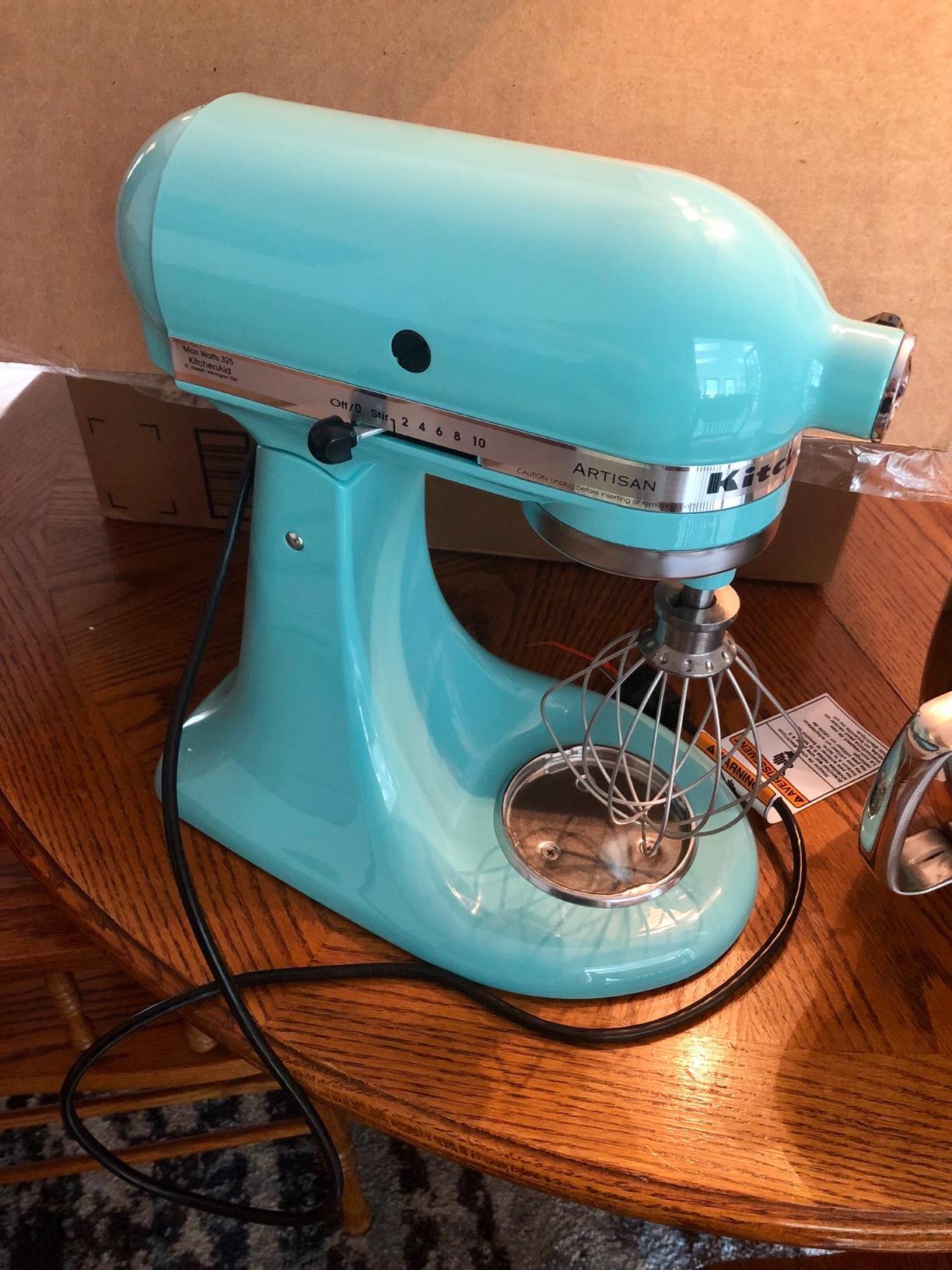
Two design choices cost you something on bread day. There is no flex-edge attachment in the box, so you will stop and scrape the bowl sides more often than you would with the VIVOHOME. And the tilt head has no cushion, so it comes down harder than you expect if you let go of it.
What it handles well in the bowl
Lean yeast doughs, whole grain batches and enriched doughs up to about 2.5 lbs of flour per batch sit comfortably inside the machine’s envelope. At the manufacturer’s speed guidance for dough, the dough hook folds rather than smears and gluten develops in a predictable window.
If your schedule is one or two loaves a week, the throughput here is more than enough, and the stainless bowl goes straight into the dishwasher when the bake is done.

Where it frustrates bakers
Large wet sourdough batches are the weak spot. Dough can climb the hook and reach the head on a full bowl, and owners on r/Breadit describe the walk-across-the-counter problem on top-drive machines. Neither is a reason to skip it, but both are reasons to leave headroom in the bowl.
At 11 kg it also never moves once you set it down, so plan the counter space before the box arrives.
2. Aucma 6.5-QT 660W: the budget machine with real torque
Aucma Stand Mixer,6.5-QT 660W 6-Speed Tilt-Head Food Mixer, Kitchen Electric Mixer with Dough Hook, Wire Whip & Beater (Black, 6.5QT)
660W copper motor
6.5 qt steel bowl
6 speeds plus pulse
Suction-cup base
Pros
- Punchy 660W motor for dough and heavy mixtures
- Strong suction cups hold a light body in place
- 6.5 qt bowl suits large bread batches
- Splash guard has an access hatch for mid-mix adds
Cons
- Silver paint on attachments can flake into dough
- Hook misses the bowl bottom so scraping is needed
- Thin steel bowl compared with premium machines
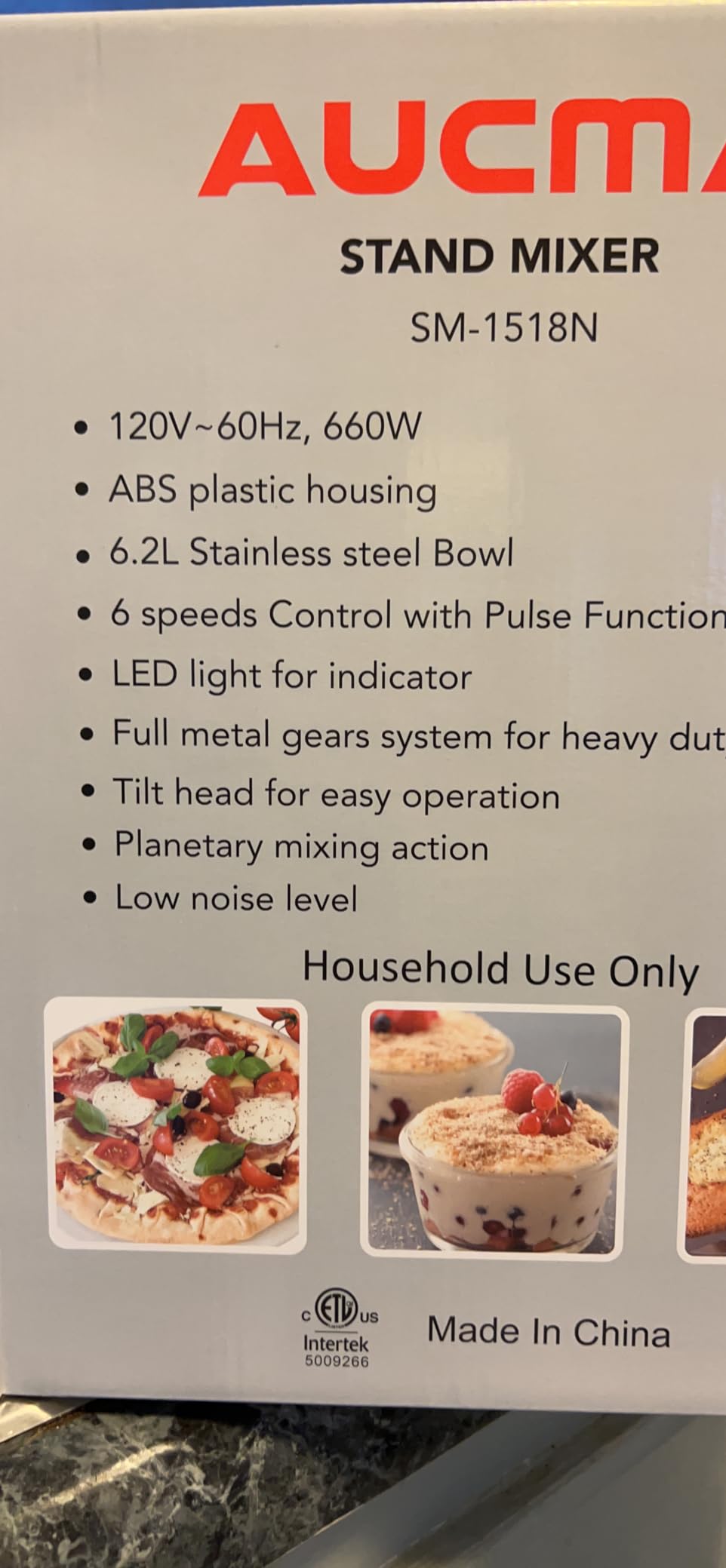
The Aucma is the value pick of this whole guide. A 660W copper motor in an 11.7 pound plastic body has no business handling a kilo of flour per batch, and yet it did, holding speed through a long low-speed knead that left the dough noticeably better developed than hand mixing.
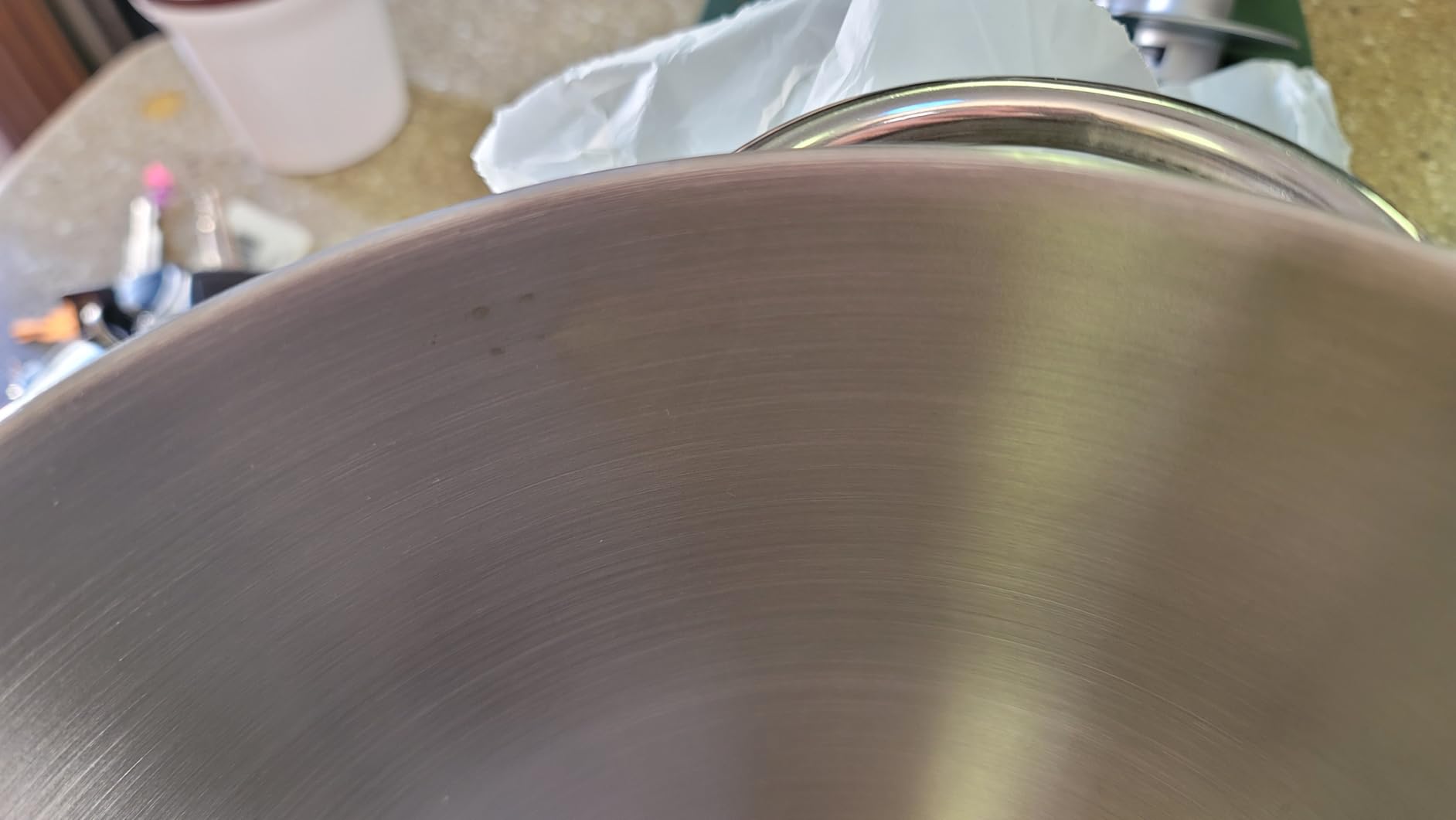
The recurring complaint is the attachment coating. The dough hook and beater often arrive with a shiny silver paint finish that flakes, and once paint is in your dough you are not baking again. Hand wash them, and check them before the first bake.
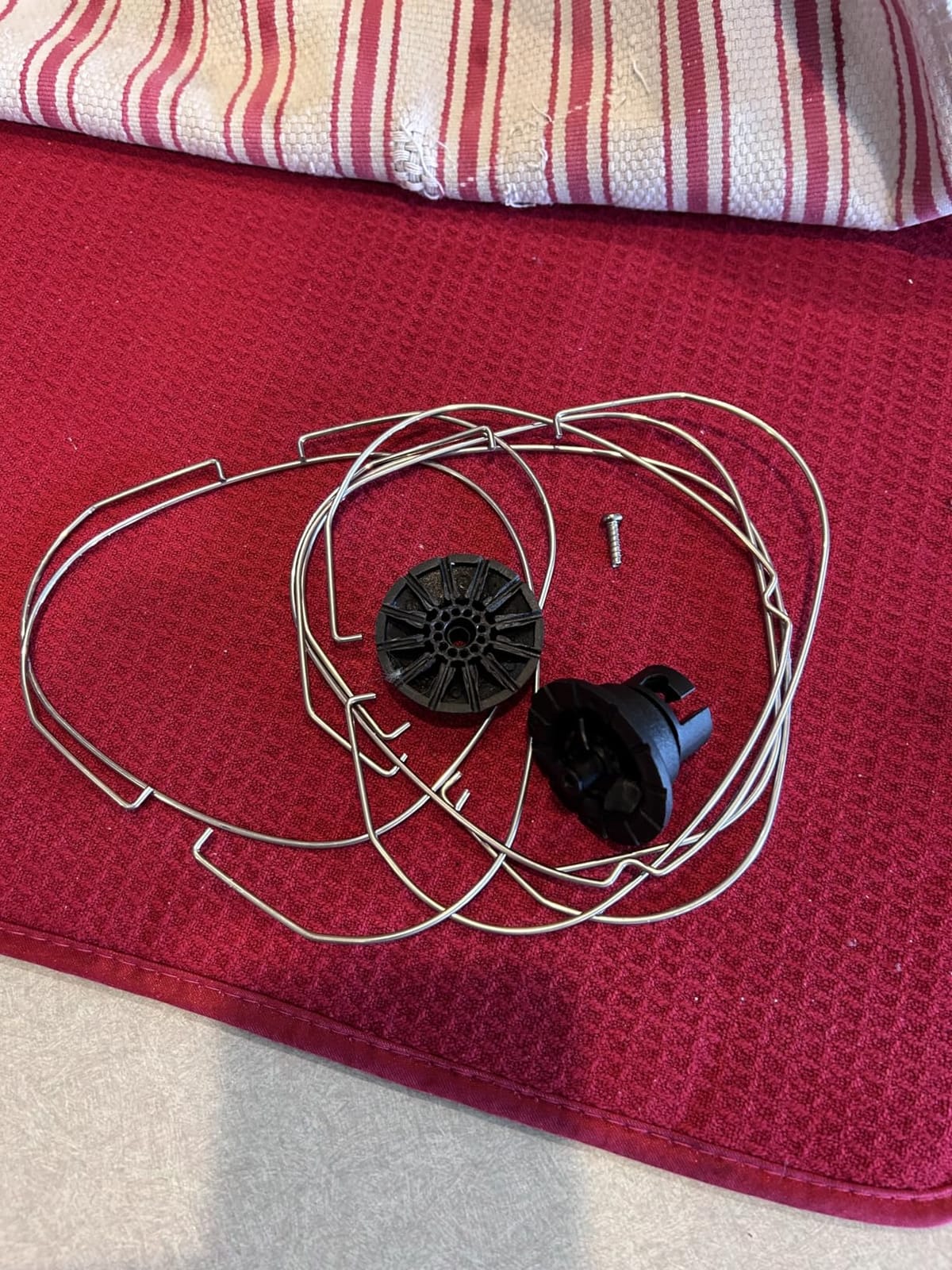
The second issue is coverage. The hook and paddle do not sweep the full bottom of the bowl, so you will stop twice per batch to scrape. Owners also warn that the spring-assisted head can bounce up sharply if you do not guide it with your hand.
Where the extra bowl size pays off
That 6.5-quart bowl is the reason to stretch here. It handles a two-loaf batch or a large single sourdough without the dough climbing the hook, which is the failure that limits smaller machines on wet dough.
The splash guard with its access hatch also means you can add flour mid-mix without stopping the motor, which saves you a restart on stiff dough.
What gives you pause
This is one of the louder machines in the guide, so it is not the pick for a 5 a.m. bake while someone is sleeping. The bowl is thin steel, which means it flexes under a heavy dough and rings when you set it down.
Reviewers also note the plastic body feels a step below a true heirloom machine, even though the dough results do not suggest a step down in capability.
3. VIVOHOME 6-Quart: most bread batch per pound spent
VIVOHOME Stand Mixer, 6-Quart Tilt-Head Kitchen Mixer with Bowl, Red
660W copper motor
6 qt bowl for 2.2 lb flour
10 speeds
Flex-edge beater
Pros
- Strong 660W motor at a low price point
- Flex-edge beater reduces stop-and-scrape stops
- 6 qt bowl rated for three loaves or 2.2 lb flour
- Splash guard allows pouring while running
Cons
- Coarse dial is less precise than electronic controls
- ABS body is lighter and less rigid than metal
- Flour can cling to the bowl sides during mixing
The VIVOHOME is the batch-size winner for the money. Its 6-quart bowl is rated for three bread loaves or 2.2 lbs of flour, and the 660W motor moved that much dough without complaint. The planetary action and ten speeds plus pulse gave more control than the six-speed budget machines usually manage.
What stands out in the feedback is the flex-edge beater, which scrapes the sides and bottom as it turns. That removes the most annoying part of cheap-mixer bread work, and it is not standard at this price. Suction cups also hold the machine in place during stiff kneads.
What you give up is refinement. The dial control is coarse compared with a digital panel, so speed changes are stepped rather than gradual, and slow gluten development takes some patience.
Best fit for high-volume home baking
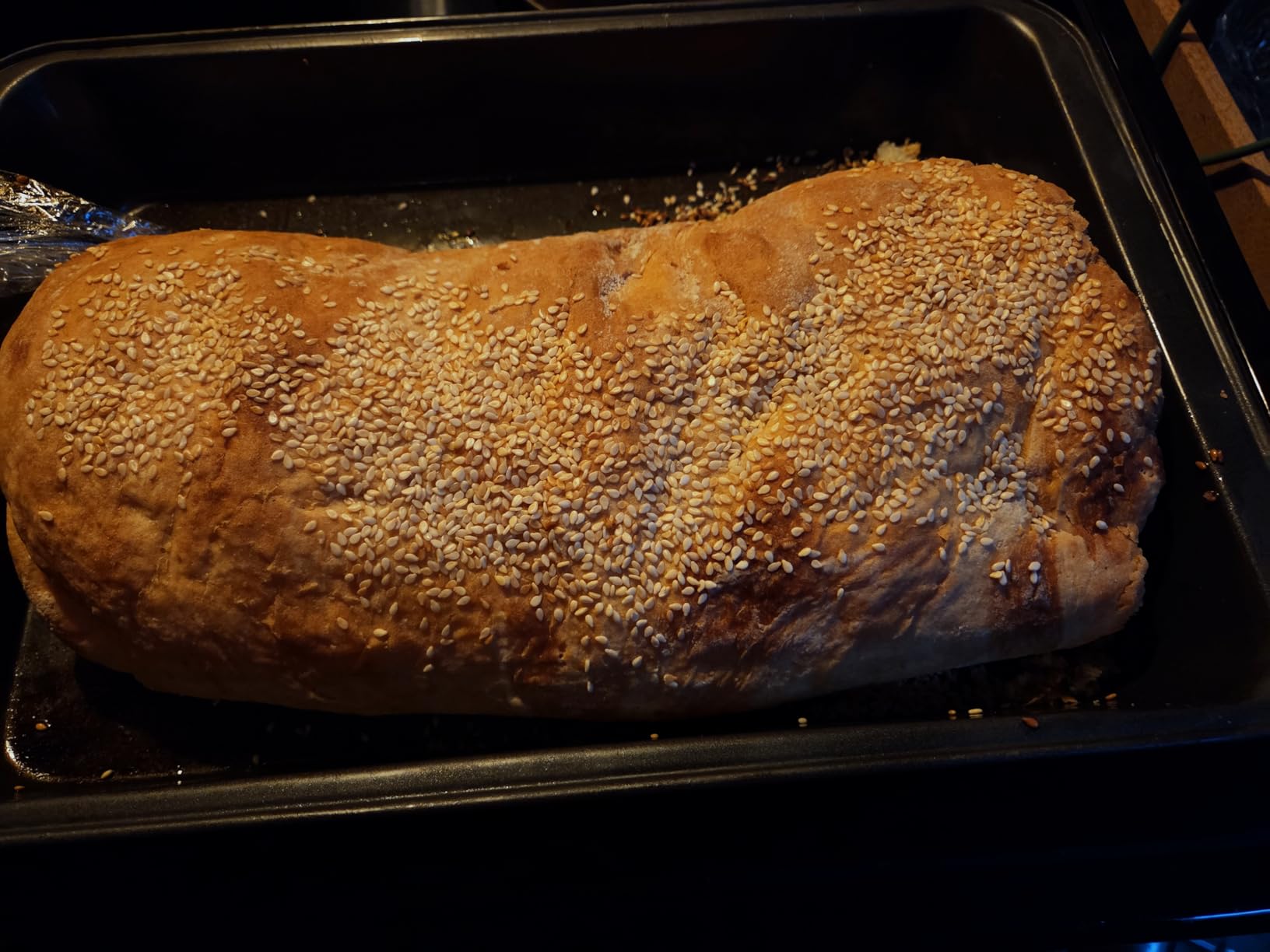
This is the machine to buy if you bake several loaves a week for family or a market stall and you want the largest dough batch per pound spent. Three loaves from one bowl means one motor run instead of three, and the flex-edge beater means fewer stops inside that run.
The 10-speed spread also gives it more range than most machines at this level for shaping a slower bulk ferment development schedule.
Where it falls short
The ABS, steel and aluminum body is lighter and less rigid than the die-cast metal machines, and buyers who compare the two notice the difference in feel immediately. It is a machine that works rather than one that feels like an heirloom.
Flour also tends to stay on the bowl sides during dough mixing, so budget a scraper in your workflow rather than assuming the machine handles it.
4. Hauswirt 6QT XL: quiet metal workhorse for early starts
Hauswirt Stand Mixer 6QT XL Large, 4.5″ LED Touch Screen Electric Household Stand Up Mixer, Full Metal Structure Standing Mixer 11-Speed, Dough Cake Bread Mixer – Silver
Die-cast aluminum body
6 qt steel bowl
11 speeds
LED touch screen
Pros
- Full-metal body and wide base stay rock-solid
- Spiral dough hook gives good elasticity
- Stays cool through long continuous runs
- LED touch screen shows settings without leaning over
Cons
- 20 lb body is hard to move around
- Suction cups grip too strongly to lift easily
- Tight gap makes mid-mix flour adds awkward
This is the quietest machine in the guide by a wide margin, running at 45 dB, and it is built from die-cast aluminum with a full-metal transmission rather than the plastic shells used by most competitors at the price. The 20 lb base does not move at all, even on a 1500g dough batch.
Owners report the spiral dough hook producing noticeably elastic dough, and the DC motor holds its output through sustained work. One buyer logged more than 200 pizzas and 100 burger buns on a single unit, and the rear convection vents keep heat from building during long runs.
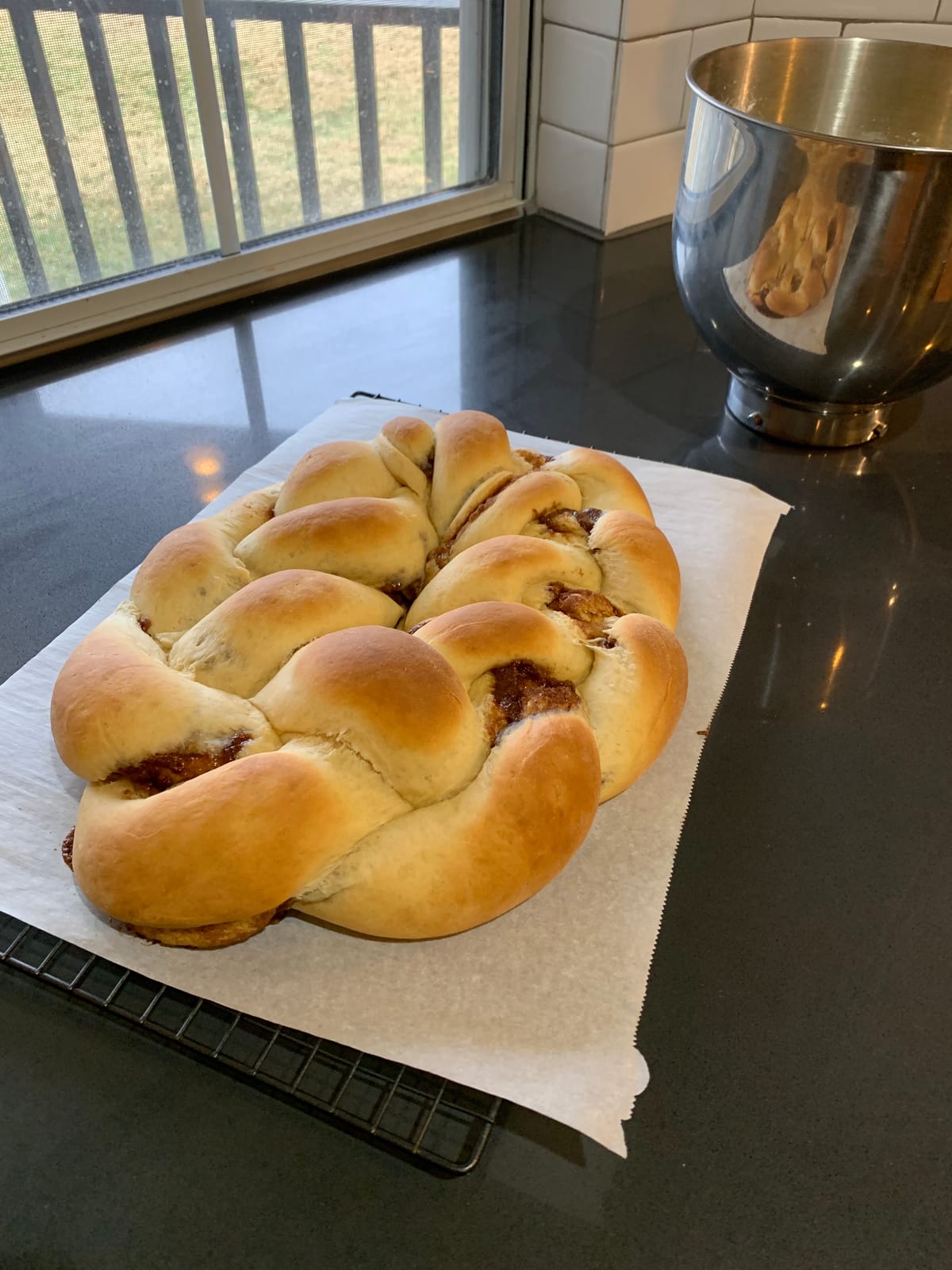
The recurring theme in reviews is that people buy it as a replacement after a gear-driven mixer motor fails, then find the dough results comparable or better. That is a fair read of what a metal transmission and a motor with heat management actually deliver.
The 4.5-inch colour touch screen on top and the side knob give you 11 speeds, which is finer control than most budget machines offer. The stainless hook, silicone-edge beater and whisk are all included.
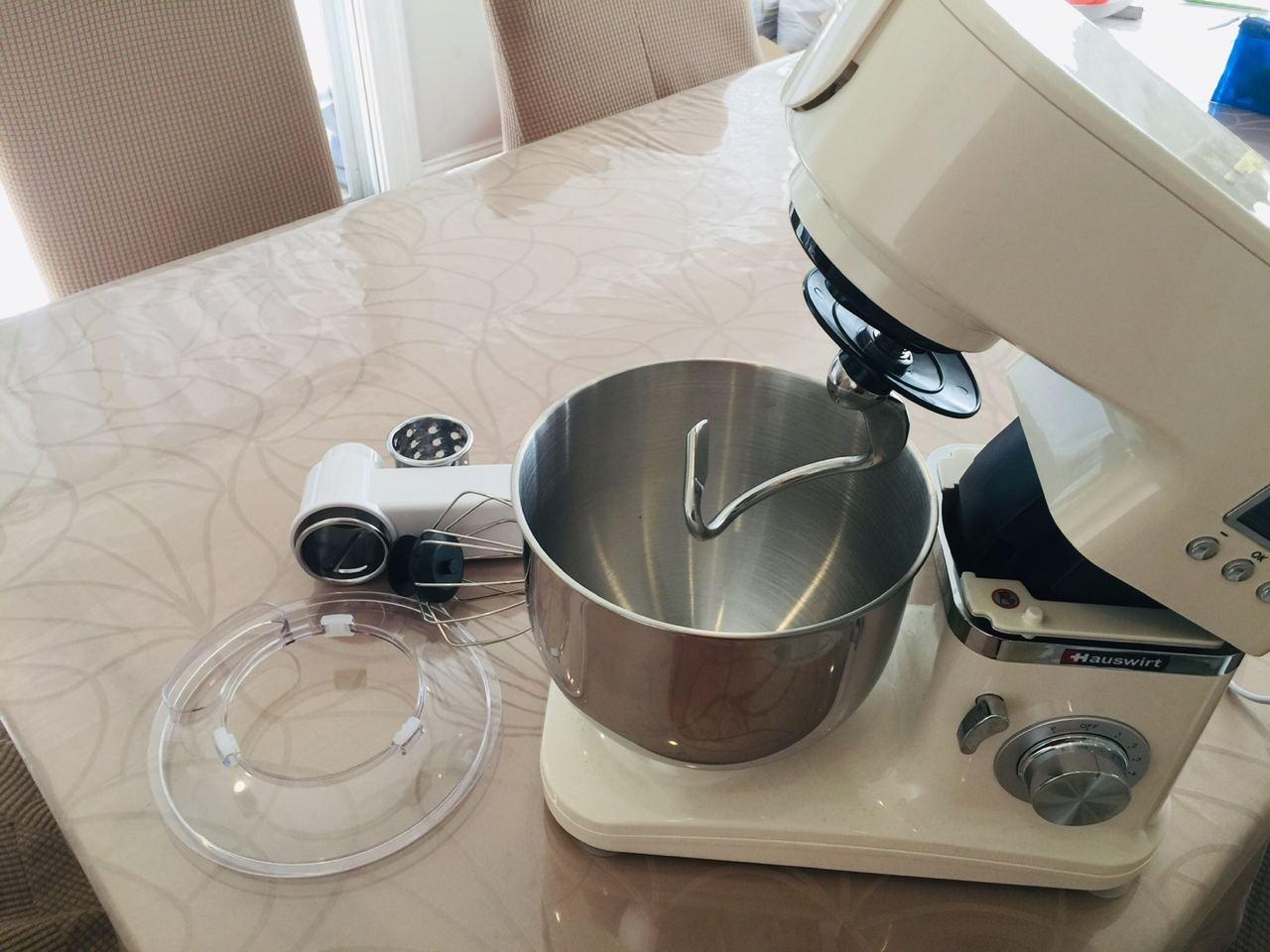
Why bakers who bake early like it
45 dB is roughly conversation level. A 5 a.m. dough cycle in a household where people are still asleep is possible here and close to impossible on the 68 dBA commercial unit further down this list.
The die-cast body and widened base also solve the walk-across-the-counter problem that shows up with lighter tilt-head machines doing stiff dough.
What the ergonomics cost you
Twenty pounds is a real weight, and combined with suction cups that grip hard, getting it into or out of a cabinet is genuinely awkward. Set it where it lives.
The gap between the head and the bowl is also tight, so adding flour while the motor runs is clumsy. Plan to stop the mixer, or use the touch screen to work through a schedule that minimizes mid-mix additions.
5. Bosch Universal Plus bundle: belt drive for low-hydration dough
Bosch Universal Plus Stand Mixer 500 Watt, 6.5 Quarts with Wire Whips, Dough Hook & NutriMill Dough Hook Extender Bundle
500W belt drive
6.5 qt bowl
Removable drive shaft
14-loaf rating
Pros
- Belt drive handles very heavy whole grain dough
- Removable drive shaft makes adding and cleaning easy
- Dishwasher-safe BPA-free bowl with a handle
- Optional slicer pasta and grinder attachments
Cons
- Only 4 speed settings limits dough control
- Plastic bowl and drive housing feel less solid
- Listings vary on voltage so check for US use
The Universal is the machine to buy for stiff, low-hydration dough. Its 500W belt-driven transmission is rated by the manufacturer for whole grain batches of up to 14 loaves or 15 lbs, and the center-column hook pushes that heavy dough down into the bowl rather than dragging it around the rim.
Long-term owners on baking forums describe nine-plus years of continuous use with no motor trouble as the deciding factor over gear-driven machines, and the belt drive runs cooler through a long knead. The bottom-drive layout and removable shaft mean you can drop ingredients in without lifting anything.
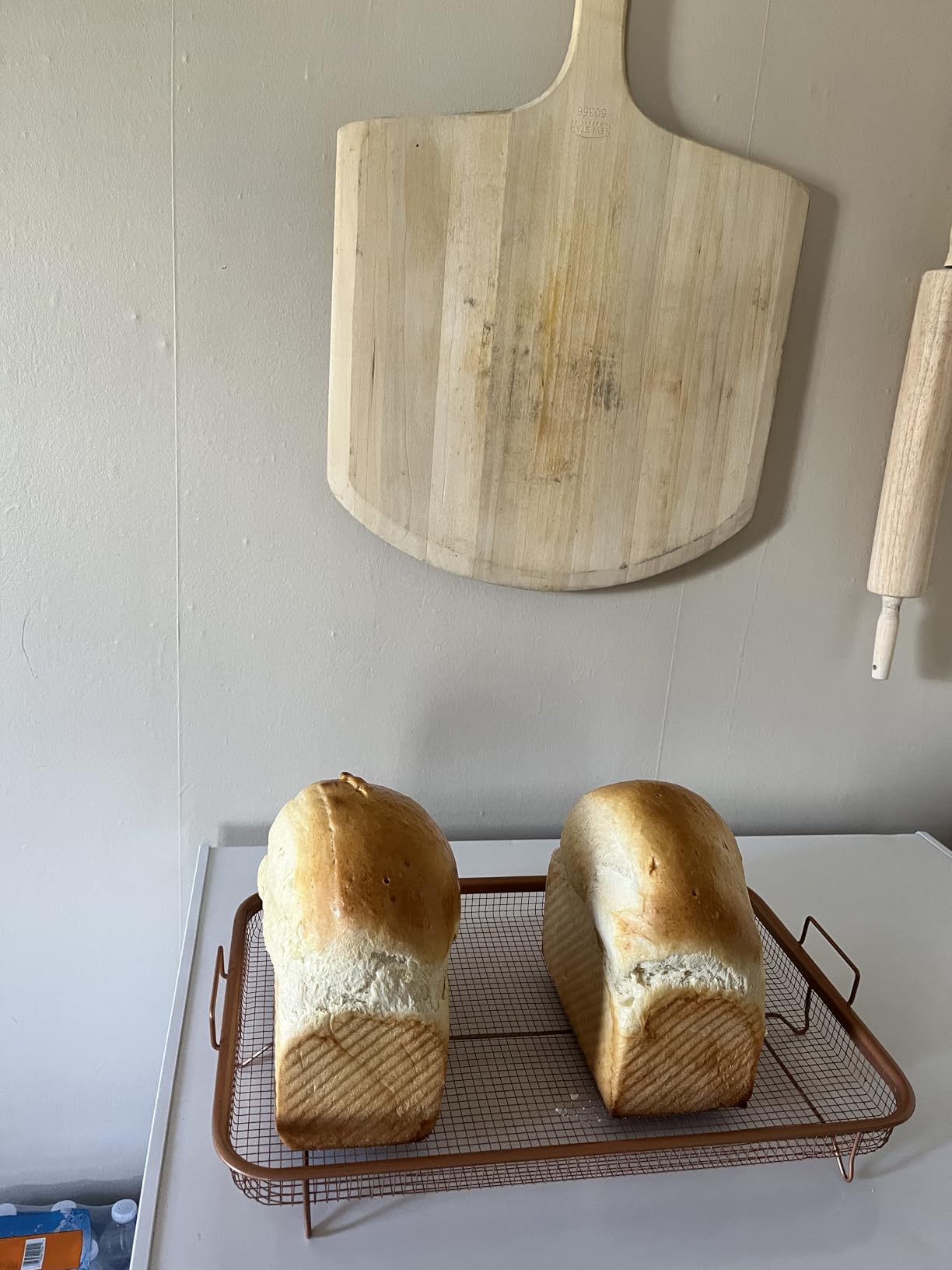
Cleanup is the quiet strength here. The shaft lifts out, the bowl goes in the dishwasher, and a dough-heavy machine that is easy to disassemble is a machine you will actually use twice a week. The included NutriMill dough hook extender lengthens the hook reach for larger batches.
Bagels, pretzels and dense sandwich loaves are where this design earns its keep. A center column that rises from the bottom of the bowl keeps thick dough in the path of the hook instead of pressed against the side.

Where it out-muscles the tilt-heads
Stiff dough at 70% hydration or below, whole grain, seeded rye and bagel dough all sit inside this machine’s comfort zone. The belt simply does not heat up the way a gear set does over a fifteen-minute knead.
The 6.5-quart bowl is light for its size and has a proper handle, which matters when you are pulling 15 lbs of dough out of it.
Where four speeds hurt
Four speed settings is the fewest in this guide, and it is a real constraint for slow gluten development. There is no gentle middle range, so you are choosing between stirring and kneading rather than dialing in a development curve.
Owners also flag the plastic bowl and drive housing as feeling less substantial, and the listing voltage varies, so confirm it suits your supply before ordering.
6. Ooni Halo Pro Spiral: rotating bowl for wet high-hydration dough
Ooni Halo Pro Spiral Mixer – Dough Stand Mixer with Attachments, 7.3 Quart Capacity and 58 Speed Settings – Charcoal Grey
Spiral rotating bowl
7.3 qt bowl
58 speed settings
Removable breaker bar
Pros
- Rotating bowl develops a stronger gluten network
- 58 speeds including a true RPM mode
- Built-in timer with auto shutoff
- Removable dishwasher-safe bowl takes four loaves
Cons
- Louder than some comparators at higher speeds
- Attachment disassembly needs real effort
- Bowl and attachments need oil seasoning
This is the machine for wet dough. The bowl rotates while the spiral hook and removable breaker bar press dough against the wall, which is the motion that folds rather than tears, and owners moving up from a planetary mixer report stronger gluten and faster prep as the deciding reasons.
Control is the other headline. Fifty-eight speed settings run from 60 RPM to over 1,000, switchable between percentage and true RPM, so professional recipes that specify a rotation speed can actually be followed. The built-in timer with auto shutoff makes dough schedules repeatable.
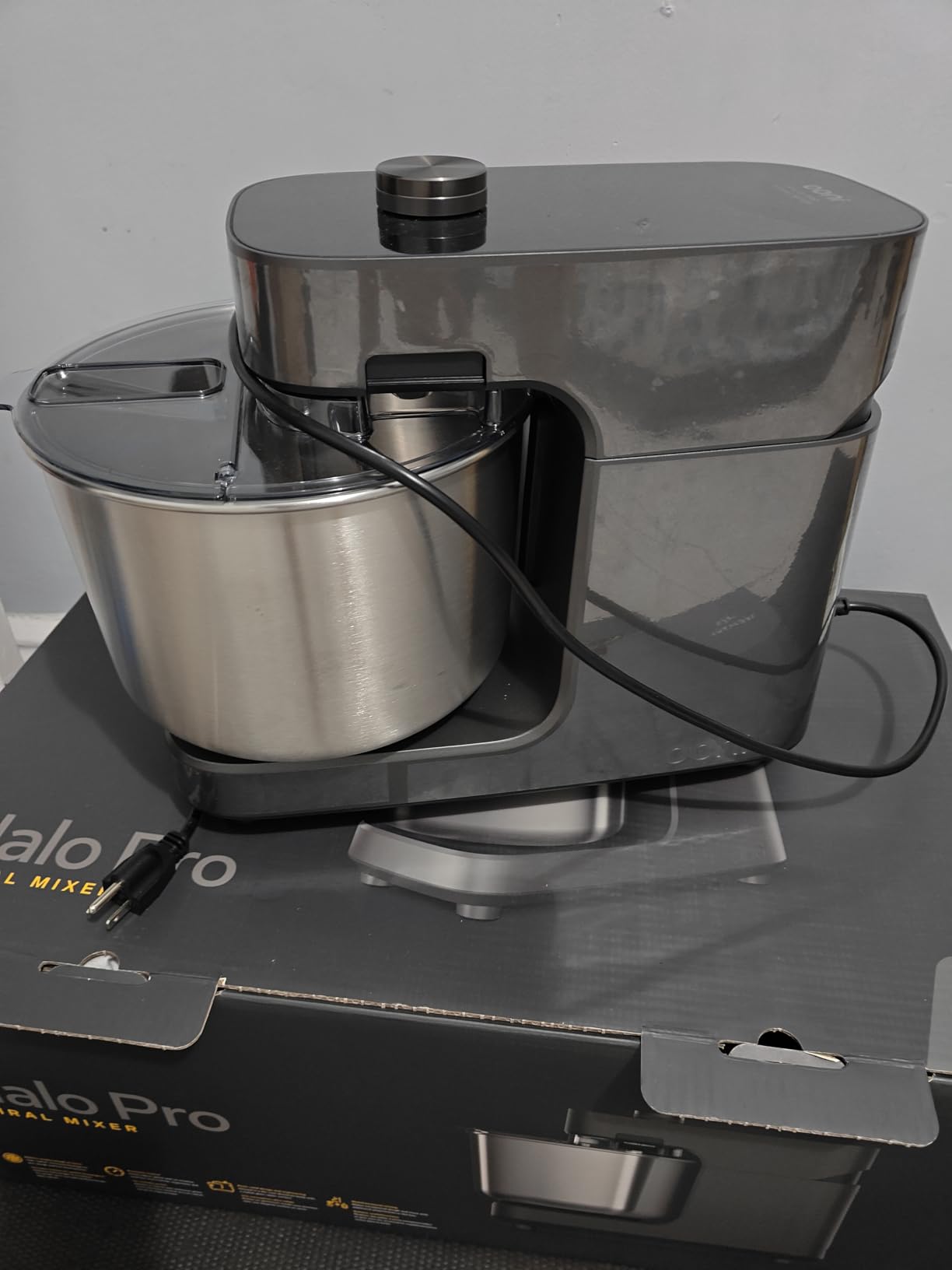
LEDs illuminate the bowl so you can watch the dough develop without lifting the head, and the removable bowl is a genuine upgrade over machines with fixed bowls. Several owners report four sourdough loaves in a single batch, possibly six.
Because the bowl does the rotating, the machine asks you to re-tune flour and hydration against your hand-mixing habits. That adjustment period catches people out, and it is the single biggest reason owners take a while to settle in.
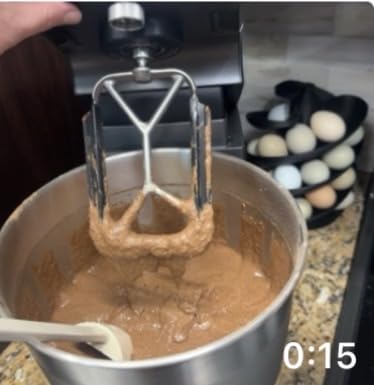
Best fit for wet dough and pizza bakers
High-hydration sourdough at 78% and above, ciabatta and pizza dough are where the rotating bowl stops fighting you. The dough stays in the path of the hook instead of smearing up the side of a stationary bowl.
The 7.3-quart capacity and RPM control also make it the natural fit if you are moving from home baking toward a small production schedule.
What the design asks of you
Attachment changes take real effort and upper-body strength, and the bowl plus attachments need oil seasoning for non-stick performance. Budget an afternoon to learn it rather than an hour.
It is also audibly harder than a 45 dB machine at higher speeds, so it is not the quiet early-morning option. The four included attachments cover mixing, whisking, beating and bread.
7. KitchenAid 5.5-Qt Bowl-Lift: more in-bowl power than the tilt-head
KitchenAid 5.5-Qt Bowl-Lift Stand Mixer, KSM55SXXX, Porcelain White
Bowl-lift drive
5.5 qt steel bowl
11 speeds
3-point bowl lock
Pros
- Bowl-lift gives far more in-bowl torque than a tilt-head
- 3-point bowl lock stays stable under heavy loads
- Half speed setting is useful for folding
- 5.5 qt bowl handles heavy bread dough batches
Cons
- Bowl must be raised by hand for every use
- Tall body takes more counter footprint
- Included beater and hook are coated not bare steel
Everything serious dough bakers want from a KitchenAid chassis, in a package that stays closer to home prices. The bowl-lift mechanism roughly doubles the in-bowl power of a tilt-head above speed 2, and the motor behind it does not flinch on stiff dough.
The 3-point locking bowl is the detail that earns its keep during a heavy knead. The machine stays planted, which is exactly what a top-drive machine with an underpowered motor will not do when the dough firms up.
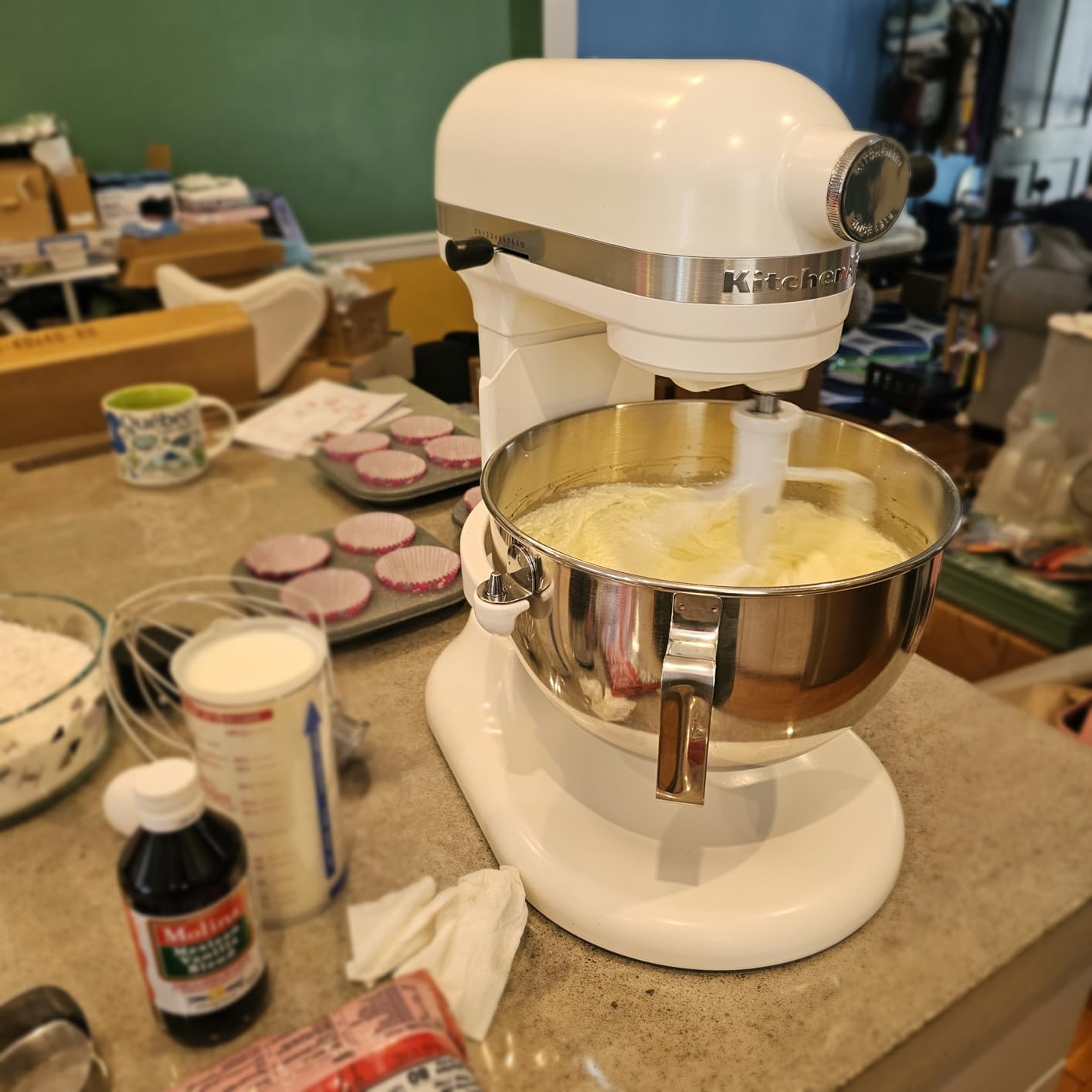
Eleven speeds including a half-speed setting give finer control than most machines here, and the half speed is genuinely useful for folding in egg whites or fruit after a dough build. KitchenAid’s attachment ecosystem is also the broadest available, with more than ten optional attachments.
Capacity is rated for heavy bread dough batches in that 5.5-quart bowl, and the 11-dozen-cookie figure is a useful sanity check that the bowl is not a token size.
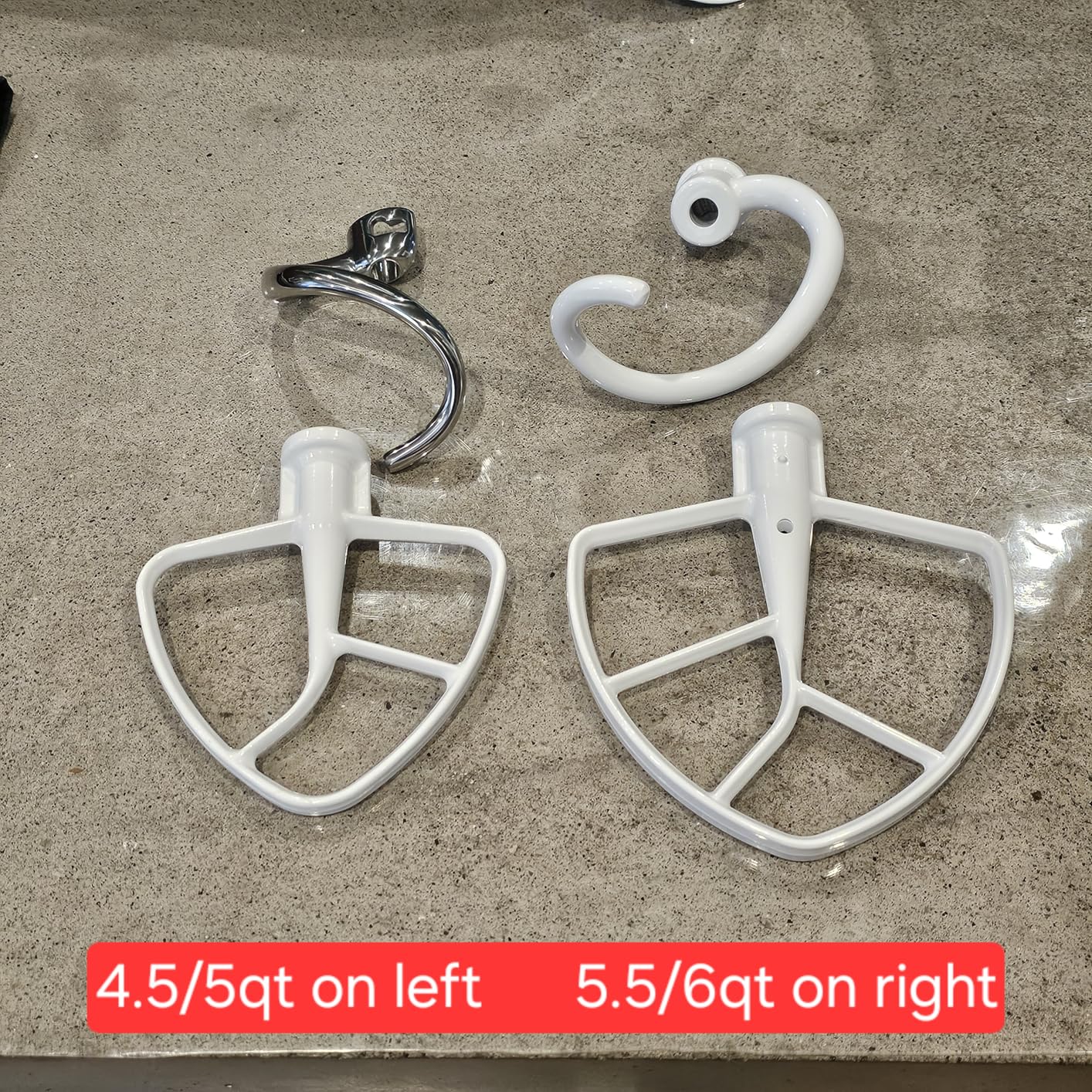
Who should choose a bowl-lift
If your dough is stiff, heavy or your batches are large, a bowl-lift is the safer purchase. The drive comes from below, so the machine never has to lean into a top-heavy load, and the bowl stays locked through the whole knead.
It is also the more compact route into a commercial-credible KitchenAid than buying the 8-quart model below.
What the bowl-lift asks of you
Every use means raising and lowering the bowl by hand, which is less convenient than a tilting head when you are adding ingredients in stages. You also give up some counter space, since the body is tall.
Note that the supplied flat beater and dough hook are coated rather than bare stainless. For bread the hook is the part that matters and it holds up, but the coating is worth watching over the years.
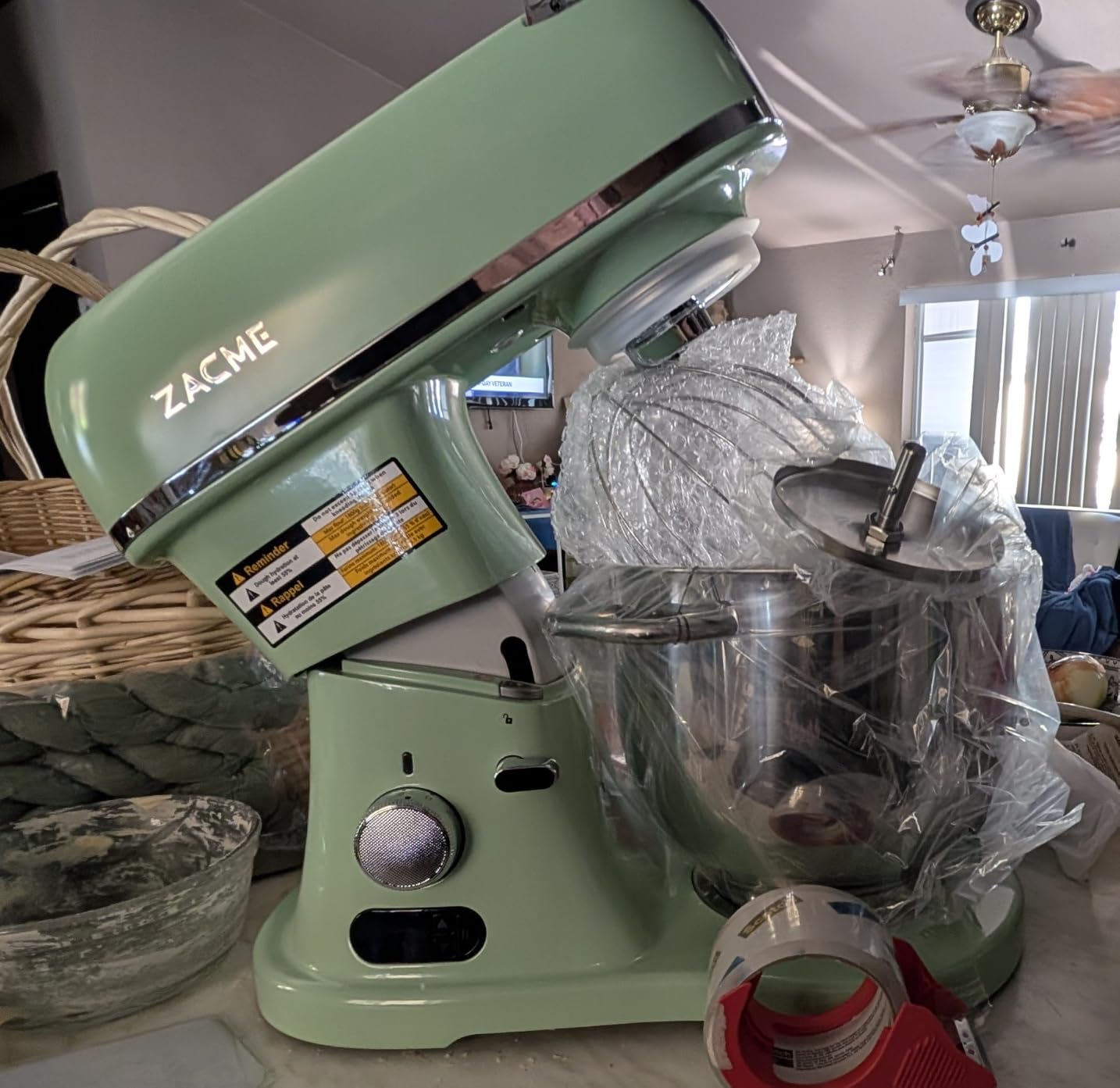
8. ZACME 8.4QT Commercial: the largest dough batch here
8.4QT Commercial Stand Mixer 800W with Aluminum Die Casting Meets the Standard of NSF/ANSI 8-2023, Mixers Kitchen Electric Stand Mixer with Stainless Steel 8L Bowl, Dough Hook, Whisk and Beater, Black
800W DC motor
8.4 qt steel bowl
3 kg dough limit
11 speeds plus timer
Pros
- Largest dough capacity in the group at 3 kg
- 800W motor with metal gears resists stalling
- Countdown timer on the LCD panel for timed kneads
- NSF/ANSI 8-2023 compliant for commercial production
Cons
- 33 lb body needs a permanent counter position
- 18 inch depth limits placement under cabinets
- Top gear reaches 68 dBA and is loud
This is a bread production machine that happens to sit in a home kitchen. The 3 kg dough limit is the largest single batch in this guide, and the 800W DC motor with durable metal gears handles high-intensity kneading without stalling. Reviewers consistently describe it as a production tool rather than a hobby mixer.
Two details make it practical for timed work. The digital LCD panel carries a countdown timer for hands-free cycles, and first gear sits at 48 dBA, so slow development work is reasonably quiet even though the top gear hits 68 dBA.
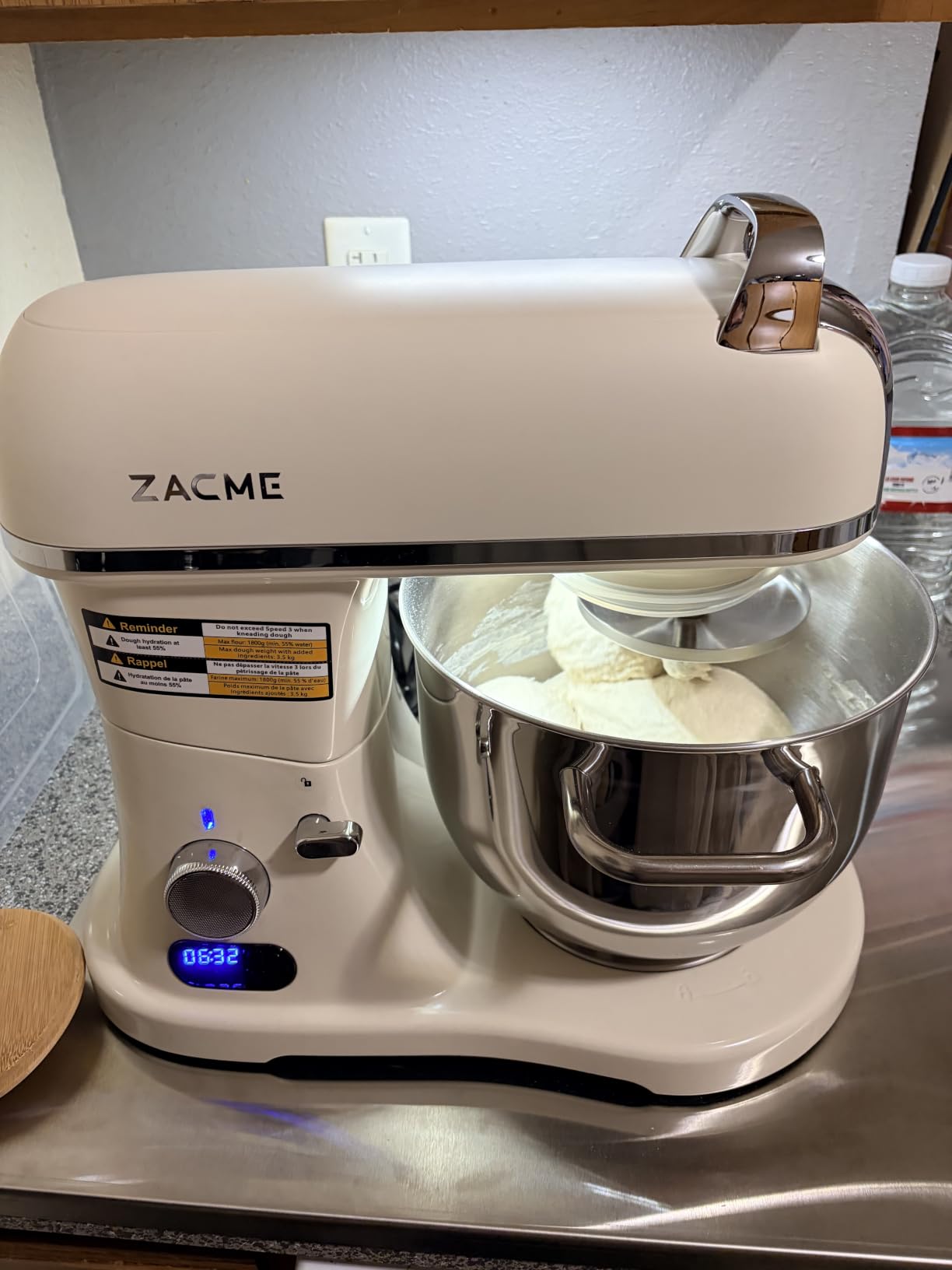
The NSF/ANSI 8-2023 certification is what separates it from the household machines above. It means the machine is tested to a public health standard for food production, which matters if you are selling or if you simply want a machine built to a commercial tolerance.
Backing that up is a 2-year warranty and 24/7 support, the longest coverage attached to any non-KitchenAid machine here. The die-cast aluminum body, stainless attachments and dishwasher-safe bowl are all appropriate to the volume it is built for.
When the batch size justifies the footprint
If you are baking three kilos of dough in a single run, nothing else in this guide replaces it. One machine cycle instead of three is the difference between a weekend project and a quick job, and the timer means you can walk away during the knead.
For cottage-scale production or a market stall, the certification and the warranty are the reason this is the pick over a bigger household machine.
Where the physical cost lands
Thirty-three pounds and a depth of more than 18 inches means this is not going under a low cabinet and it is not moving to a second kitchen. Choose the counter before you choose the machine.
The planetary action is also conventional rather than spiral, so it is a volume machine first and a dough-quality machine second. The loud top gear is another reason it is a daytime tool.
9. KitchenAid KSM8990CU 8-Qt Commercial: NSF-certified volume work
KitchenAid KSM8990CU 8-Quart Commercial Countertop Mixer, 10-Speed, Gear-Driven, Contour Silver
Direct-drive gear system
8 qt steel bowl
NSF certified
10 speed settings
Pros
- Direct drive delivers high torque on stiff dough
- Base does not wobble the way 5 qt models do
- Motor runs warm rather than hot after long mixing
- All three attachments are bare stainless steel
- Motor unit is replaceable at low cost
Cons
- High minimum batch of roughly 500g of flour
- Bowl must be lowered to add ingredients
- Finish quality varies between units
The 8-quart Commercial is the only machine here with a replaceable motor unit and a two-year commercial replacement warranty, and both of those facts matter if dough is your weekly output. Reviewers with commercial bread experience report running about 30 loaves a week on it without incident.
The direct-drive gear system produces more torque than the belt machines while running a high-efficiency DC motor that limits heat build-up. After twenty minutes of continuous mixing it is warm rather than hot, which is the number that separates a machine you can use all afternoon from one you cannot.
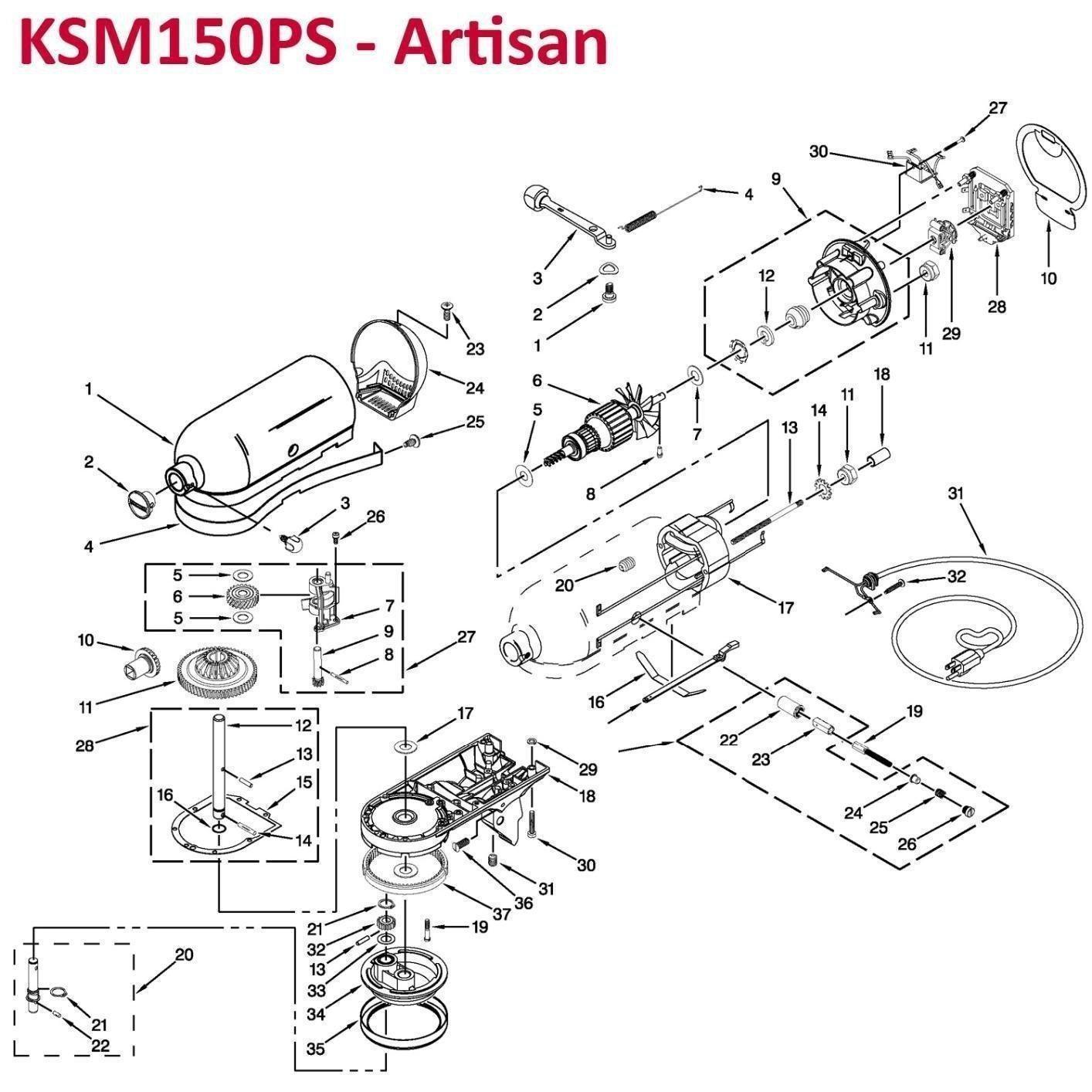
Unlike the coated attachments on the smaller KitchenAids, all three attachments here are bare stainless steel. The unrolled bowl rim is a small detail that prevents food trapping, and the bowl lifts on a lever into a locked position for stability.
It is also NSF certified for commercial use including yeast dough kneading, so it is legitimate in a small bakery rather than only at home.
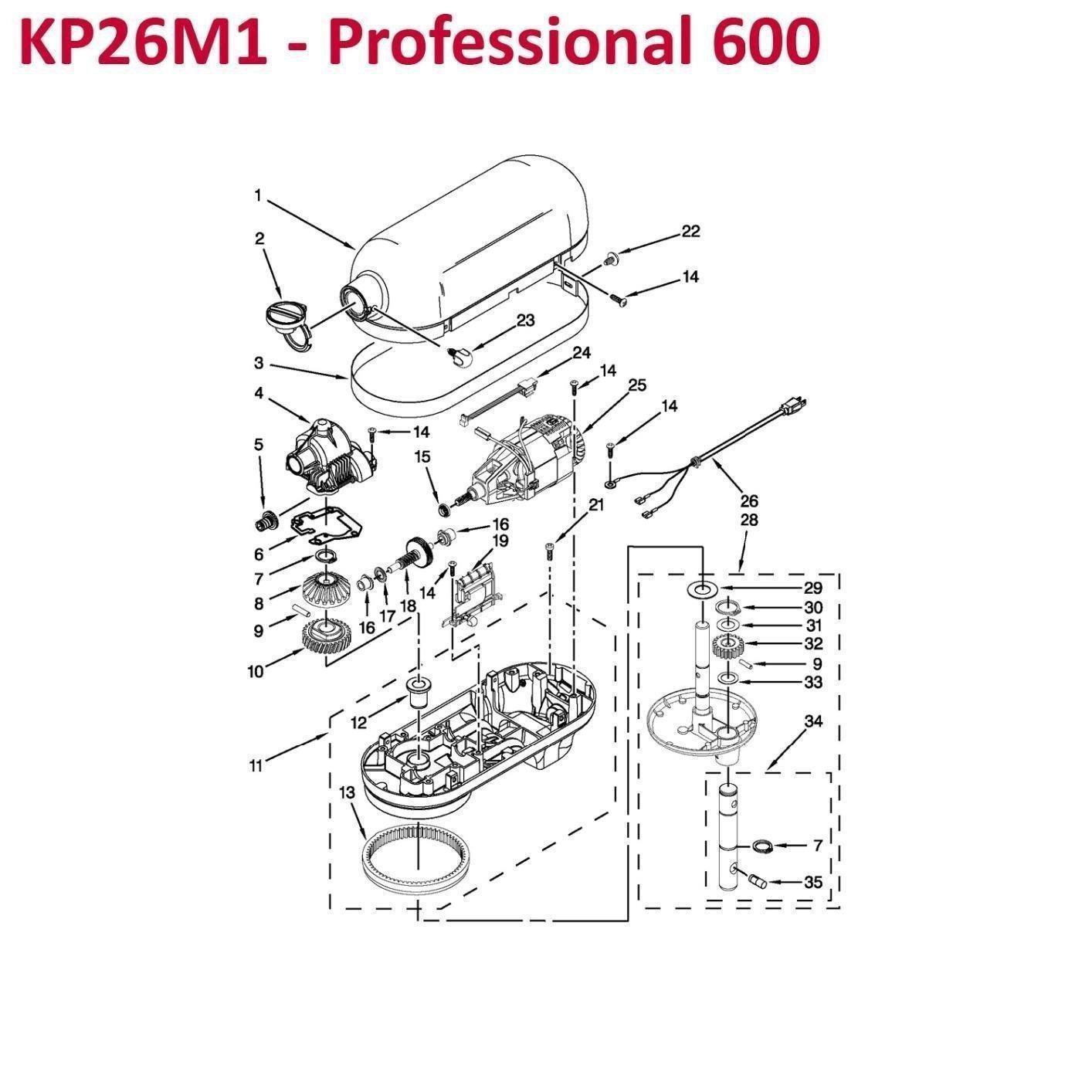
Best fit for high-volume weekly baking
The combination of an 8-quart bowl, a replaceable motor and a commercial warranty makes this the pick for anyone running a serious home schedule or a licensed small kitchen. Pizza dough, panettone and stiff cookie dough all go through without strain.
At 25 lb it is heavy but not absurd, and reviewers specifically note that it does not wander across the counter the way lighter 5 and 6 quart machines do.
Where the compromises sit
The minimum batch is roughly 500g of flour, so small daily loaves waste the bowl. Most owners buy a separate smaller bowl for that, which is an extra cost the household models do not impose.
Bowl-lift also means you lower the bowl to add ingredients, and there is no spring holding the paddle or hook fully down, so an aftermarket spring is a common addition. Finish quality varies between units, with some arriving with a scraping paddle or a noisy motor.
10. Martha Stewart 5.3-Qt Tilt-Head: slim and capable in a small kitchen
Martha Stewart 5.3QT Tilt Head Stand Mixer, 12 Speeds, Stainless Steel Bowl
660W motor
5.3 qt stainless bowl
12 speeds
Silicone-edge beater
Pros
- Handles very stiff dough despite the price
- Silicone-edge beater reaches the bowl edges
- 12 speeds give finer control than most budget units
- Slim body suits smaller kitchens
Cons
- Head lift is stiff and needs two hands
- Build feels inexpensive beside metal competitors
- 5.3 qt bowl is small for large dough batches
The 660W motor is the surprise here. Several owners who have owned premium mixers say this handles stiff dough and thick batters on a par with machines costing several times more, and the 12 speed settings give finer control than the six-speed budget machines it competes with.
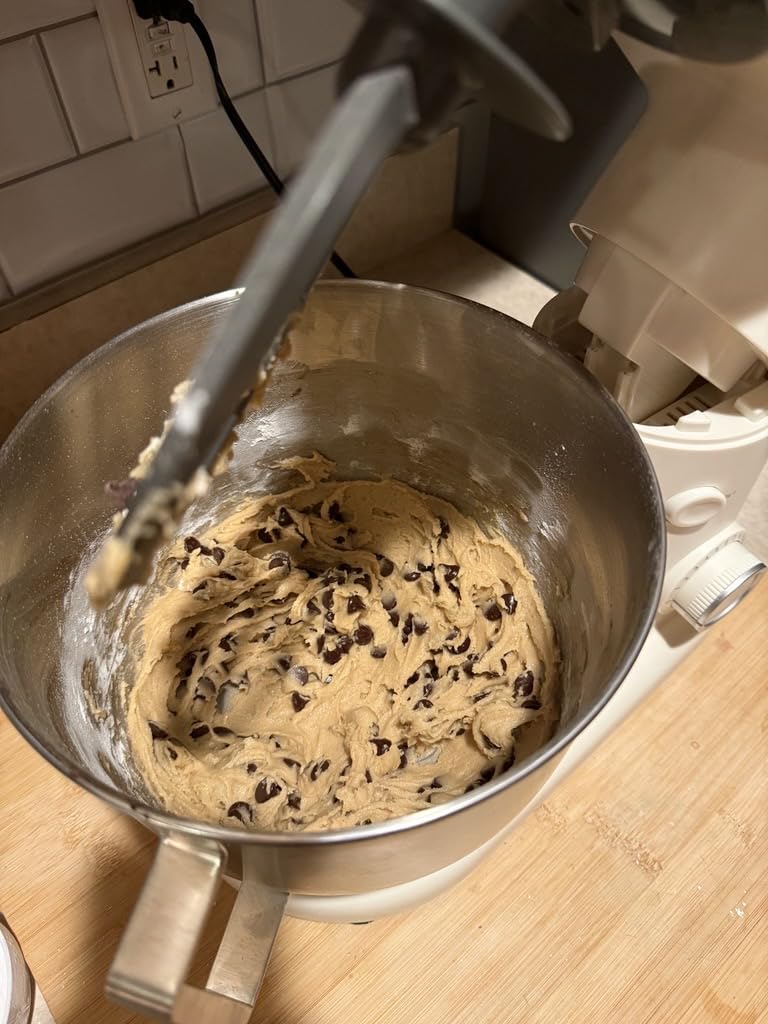
The silicone-edge flat beater actually reaches the bowl edges, so the stop-and-scrape routine that defines cheap mixer use is mostly avoidable. At 9 lb it is also the lightest machine here, and the slim body fits a small counter better than any metal-bodied alternative.

Suction cups hold it firmly, operation is quiet, and the removable splash shield has a pour chute so you can add ingredients mid-mix. Accessories are dishwasher-safe and BPA-free, and the polished 5.3-quart bowl is rated for up to nine dozen cookies.
It is the pick when counter space is the binding constraint. Nothing else in this guide is this narrow, and nothing else at this level gives you 12 speeds and a scraping beater.
Where it earns its place
Apartment kitchens, small apartments and anyone who cannot give a machine a permanent spot. The bowl lifts out, the machine moves easily and the whole footprint is smaller than the alternatives in this guide.
For one loaf a week of stiff dough or a weekly batch of rolls, the motor has more than enough capability, and the 5.3-quart bowl is generous for that volume.
Where the compromises sit
The head lift is stiff and awkward, effectively a two-handed operation, which is the most common complaint in the reviews. Build quality also feels inexpensive relative to the performance, and the 5.3-quart bowl is the smallest capacity in this lineup.
It carries the lowest average rating in this group at 4.3, which is the main reason reviewers who value build quality look elsewhere.
How to Choose a Stand Mixer for Bread Dough
Here is the order we would work through, roughly by how much each decision changes the loaves you end up baking.
Bowl size and batch size
Match the bowl to the flour, not the other way round. A 5-quart bowl is a one- or two-loaf machine, and the 8.4-quart commercial bowl on the ZACME takes 3 kg in one cycle. Larger than you need is wasted counter; smaller than you need means two cycles and a second cleanup.
Drive type and torque
Belt drive buys torque and lower heat over a long knead, which is why the Bosch Universal suits whole grain and low-hydration dough. Gear drive reaches torque faster but runs hotter, which is why the planetary machines carry knead-time guidance. For a heavy weekly schedule, prefer belt or direct drive.
Tilt-head versus bowl-lift
Bowl-lift drives from underneath and locks in three points, so it stays planted on stiff dough. Tilt-head is lighter and easier to load. If your dough is stiff or your batches are large, bowl-lift is the safer choice; if you bake one soft loaf a week, the tilt-head is fine.
Speed control
Four speeds on the Bosch is genuinely limiting for slow gluten development, and ten or more gives you a usable range. The Ooni Halo Pro goes furthest with 58 settings and a true RPM mode. The half-speed setting on the 5.5-quart bowl-lift is a small thing that turns out to matter for folding.
Motor wattage and thermal behaviour
Wattage is a rough proxy for torque, not a quality score. What actually matters is whether the machine holds speed on a stiff dough without the pitch dropping, and whether it stays warm rather than hot after twenty minutes. The Hauswirt with its rear convection vents and the KitchenAid 8-quart direct drive both manage heat well.
Hydration matching
Stiff dough at 65 to 70% hydration wants a belt-driven center column or a spiral bowl. Wet dough at 78% and above wants a rotating bowl, because a fixed bowl and a spinning hook tear rather than fold. Enriched doughs like brioche need slow speed and a half-speed fold at the end, and they punish a machine with no low end.
Noise, footprint and attachments
The Hauswirt at 45 dB is the early-morning pick, and the 33 lb ZACME at up to 68 dBA is a daytime machine. Check your counter depth before buying the larger bowls. And check that the dough hook is bare stainless or solid coated metal, because flaking paint in bread dough is a recurring complaint at the budget end.
How to Knead Bread Dough in a Stand Mixer
Machine kneading works, but only if you respect the order of operations. Doing it in the wrong order is what burns motors and ruins dough.
1. Add the flour first, then the salt, then start the machine on the lowest speed to distribute them.
2. Pour water in gradually while the machine runs at low speed. Dough that is fully hydrated from the start protects the motor far better than dough that arrives as a dry rubble.
3. Once the dough pulls together, increase to speed 2 and knead. For a planetary KitchenAid, stay at speed 2 and keep each run to about two minutes.
4. Scrape down the bowl once or twice during the knead if your machine lacks a flex-edge beater.
5. Check for the windowpane. Pull a small piece and stretch it; if it thins to a translucent film without tearing, gluten is developed and you are done.
6. Stop when the dough feels smooth and slightly tacky, not when the timer ends. A well-developed dough pulls away from the bowl sides.
That windowpane test matters more than any clock. Gluten development is what traps carbon dioxide during proofing, and over-kneading at a high speed is the fastest route to a warm motor and a tough crumb.
One caution from the manufacturer guidance: for yeast dough, total knead time in the machine should stay inside roughly four to six minutes across all runs, and exceeding the recommended speeds and times voids the warranty. If you own a planetary KitchenAid and want long mix-ins, do them by hand.
If you want recipes that suit these machines, our [squaw bread recipe](https://www.thirstybear.com/squaw-bread-recipe/) and [snickerdoodle zucchini bread](https://www.thirstybear.com/snickerdoodle-zucchini-bread-recipe/) both hold up in a stand mixer.
Do You Really Need a Mixer for Sourdough?
You do not, and the honest answer is that a mixer is a convenience rather than a quality upgrade for most sourdough. Long-fermented dough develops most of its structure during the folds you do by hand, and blind taste tests often show little difference between machine-kneaded and hand-kneaded loaves even when the machine-kneaded one rises better.
What a mixer genuinely changes is your time and your consistency. If you are doing four folds a day over several days, the machine handles the first two and you are freed for everything else. If you bake weekly, ten minutes of hand kneading and a few sets of stretch and folds will get you an excellent loaf.
It is also fine to use a mixer for sourdough. The concern people raise is heat, since a long low-speed mix on a hot day can push fermentation temperature upward and sour the dough faster. In practice, stopping at the windowpane rather than running a fixed time avoids most of that, and a belt-driven or spiral machine runs cooler than a gear-driven one regardless.
So the honest rule is this. If bread is a hobby, hand kneading is genuinely sufficient. If bread is a weekly production run, or you make enriched doughs and pizza alongside it, a machine pays for itself in saved time and in not having a wet kitchen twice a week. If you also run a small bakery, look at our [commercial stand mixer guide](https://www.thirstybear.com/best-commercial-stand-mixers/) instead.
Frequently Asked Questions
What is a good stand mixer for dough?
A good stand mixer for dough needs low-speed torque, a bowl of at least 4.5 quarts and a hook that folds rather than smears the dough. In our testing the KitchenAid Artisan 5-Qt, the Bosch Universal Plus with its belt drive, and the Ooni Halo Pro with its rotating bowl all handled stiff dough without stalling. The single most important factor is the drive: belt or direct drive machines run cooler and hold torque longer than gear-driven planetary machines.
What size stand mixer is best for making bread?
A 5-quart bowl handles one or two loaves per batch and suits most home bakers. A 5.5-quart bowl-lift gives you more in-bowl torque for stiff dough, and an 8-quart or 8.4-quart bowl handles three kilos in a single cycle for bulk baking. The rule is to match the bowl to your flour weight rather than your ambition, since an oversized bowl wastes counter space and an undersized one doubles your cycle time.
Can I make bread dough in a stand mixer?
Yes, and it is what these machines are built for. Add flour and salt first, start on the lowest speed, then pour water in gradually while the motor runs. Increase to speed 2 and knead in short runs, stopping to scrape the bowl. Pull a small piece of dough and stretch it: when it forms a thin translucent film without tearing, gluten is developed and the knead is finished.
What is the best stand mixer for mixing sourdough dough?
For wet sourdough above 78% hydration, a rotating-bowl spiral mixer such as the Ooni Halo Pro folds the dough instead of tearing it, and the bowl can take several loaves at once. For lower hydration and stiff discard-based dough, the belt-driven Bosch Universal Plus is the better choice. Whichever you use, stop at the windowpane stage rather than a fixed time to avoid warming the dough.
Do I really need a stand mixer for breadmaking?
Not for most people. Hand kneading with a few sets of stretch and folds produces an excellent loaf, and blind taste tests often find little difference between hand-kneaded and machine-kneaded bread. A mixer becomes worth it when you bake weekly in volume, make enriched doughs and pizza regularly, or want the same result without wet hands and a second cleanup every session.
What stand mixer will not burn out on dough?
A belt-driven or direct-drive machine is the safest answer because it runs cooler under sustained load. The Bosch Universal Plus uses a 500W belt drive rated for 14 loaves of whole grain dough, and the KitchenAid 8-Qt Commercial uses a direct-drive gear system with a replaceable motor unit. If you use a planetary KitchenAid, stay at speed 2 and keep total machine kneading under about six minutes, since exceeding the manual guidance voids the warranty.
The Verdict for Bread Bakers in 2026
The KitchenAid Artisan 5-Qt is our pick for the best stand mixers for bread dough, because it holds a stiff batch without stalling, it is stable on the counter and it has the deepest owner base of anything here. Buy it if you bake one or two loaves a week and want a machine that will still work in a decade.
Move to the Aucma if you want the largest bowl per pound spent, to the VIVOHOME if batch size matters more than build quality, to the Hauswirt if a 5 a.m. start is non-negotiable, to the Bosch if your dough is stiff and whole grain, and to the Ooni Halo Pro if your hydration is high enough that a fixed bowl fights you.
Batch size decides the rest. The 5.5-quart bowl-lift handles serious home schedules, and the two commercial machines are for people whose dough is a production line. Whichever you choose, knead to the windowpane, stay at low speed and let the machine do what it does well.