
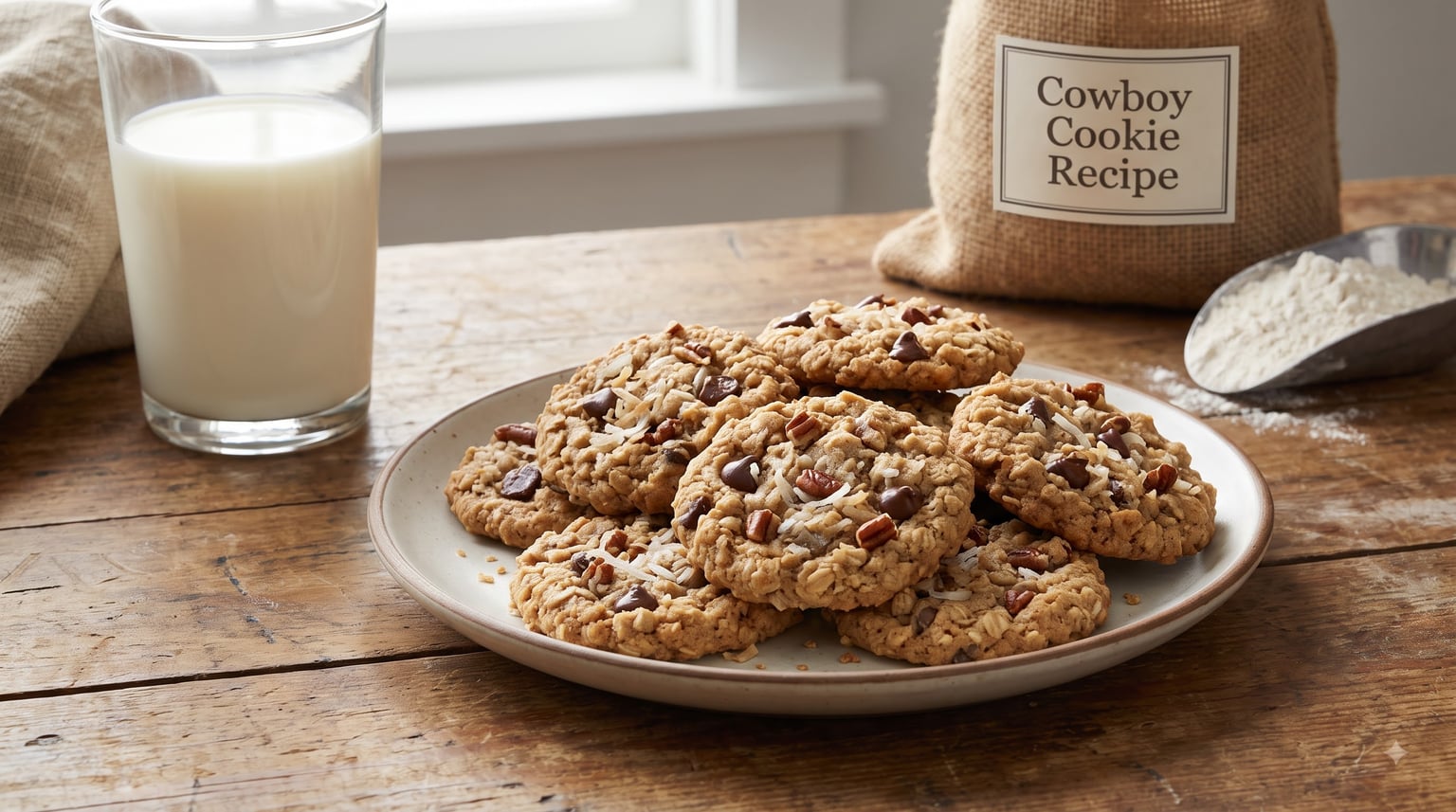
I have baked hundreds of cookie varieties over the years, but the cowboy cookie recipe keeps pulling me back. These loaded oatmeal cookies pack coconut, pecans, chocolate chips, and cinnamon into one thick, chewy treat that actually lives up to the hype.
What I love most about cowboy cookies is their no-nonsense approach. No chilling required. No fussy techniques. Just cream, mix, scoop, and bake. They are the kind of cookie you can throw together on a Tuesday afternoon and still impress everyone at the office potluck on Wednesday.
In this guide, I will walk you through my tested cowboy cookie recipe from scratch, including the ingredient science, step-by-step instructions, troubleshooting tips, and variations that keep things interesting. If you are looking for a simpler option after this, check out our single chocolate chip cookie recipe for a quick solo treat. And if you want to get creative with other loaded cookie ideas, our creative cookie recipes collection has plenty of inspiration.
Table of Contents
What Are Cowboy Cookies?
Cowboy cookies are hearty oatmeal cookies loaded with sweetened coconut flakes, chopped pecans, semi-sweet chocolate chips, and a generous pinch of ground cinnamon. Think of them as an oatmeal chocolate chip cookie that went to Texas and came back bigger, bolder, and stuffed with mix-ins.
The defining characteristics are a chewy center, crisp golden brown edges, and a substantial, satisfying texture that makes them feel like a complete snack rather than just a dessert. Most recipes produce thick cookies that hold their shape beautifully during baking.
The Story Behind the Name
The most famous cowboy cookie recipe comes from Laura Bush, who submitted it to Family Circle magazine during the 2000 presidential campaign. The magazine had been running a cookie bake-off between candidates’ spouses since 1992, and Laura Bush’s Texas-sized cowboy cookies went up against Tipper Gore’s ginger snaps. Laura Bush won, and the recipe became legendary in baking circles.
The cookies were reportedly served at the Texas Governor’s Mansion and quickly became associated with big Texan hospitality. The name “cowboy” fits perfectly because these cookies are rugged, portable, and packed with enough oats and nuts to fuel a long day on the range.
What Makes a Cowboy Cookie Different
Several things separate cowboy cookies from your standard oatmeal cookies or chocolate chip cookies:
The combination of oats and coconut creates a chewy texture that regular oatmeal cookies cannot match. The coconut adds moisture and sweetness without making the dough greasy.
Pecans bring a buttery crunch that walnuts or almonds do not quite replicate. The pecan is native to North America and has a natural affinity for warm spices like cinnamon.
Ground cinnamon is the secret ingredient that most people do not expect. It adds warmth and depth without overpowering the other flavors. If you want to learn more about how cinnamon and other spices work in baking, our guide to essential baking spices covers everything you need.
Most cowboy cookie recipes call for both baking powder and baking soda, which gives the cookies a slight lift while maintaining that dense, chewy texture people love.
Cowboy Cookie Recipe Ingredients
Here is everything you need to make about two dozen cowboy cookies. I have tested this recipe multiple times and these measurements produce consistently thick, chewy cookies every single time.
Dry Ingredients
2 cups all-purpose flour. Measure by spooning into the cup and leveling off with a knife. Packing the flour will give you dry, crumbly cookies.
1 teaspoon baking powder. This gives the cookies a gentle lift without making them cakey.
1 teaspoon baking soda. This works with the brown sugar to create spread and browning.
1 teaspoon ground cinnamon. Use fresh cinnamon for the best flavor. Old cinnamon loses its punch quickly.
1/2 teaspoon kosher salt. Salt enhances all the other flavors and balances the sweetness.
Wet Ingredients
1 cup (2 sticks) unsalted butter, at room temperature. Room temperature butter creams properly with sugar to create air pockets that give the cookies their texture.
1 cup packed brown sugar. Brown sugar adds moisture, chewiness, and a caramel flavor that white sugar cannot match.
1/2 cup granulated sugar. The white sugar helps create those crisp golden brown edges.
2 large eggs, at room temperature. Room temperature eggs incorporate more evenly into the dough.
2 teaspoons pure vanilla extract. Skip the imitation stuff. Real vanilla makes a noticeable difference.
The Mix-Ins
2 cups old-fashioned rolled oats. Do not use instant oats or quick oats. They absorb liquid differently and will change the texture completely.
1 cup sweetened coconut flakes. Sweetened coconut works best here because it adds both flavor and moisture.
1 cup semi-sweet chocolate chips. You can use chunks if you want bigger pools of melted chocolate.
1 cup chopped pecans. Toast them lightly first for maximum flavor. Walnuts work as a substitute if pecans are unavailable.
Ingredient Substitutions
If you need to adapt this cowboy cookie recipe, here are the substitutions I have personally tested and recommend:
No coconut? You can omit the coconut entirely and add an extra 1/2 cup of oats. The cookies will be slightly less chewy but still excellent.
No pecans? Walnuts are the closest substitute. You can also use chopped almonds or hazelnuts for a different flavor profile.
Brown butter version: Melt and brown the butter before using it, then chill it back to room temperature. This adds a nutty, caramelized flavor that takes the cookies to another level.
Gluten-free option: Use a 1-to-1 gluten-free flour blend and certified gluten-free oats. The texture will be nearly identical.
How to Make Cowboy Cookies: Step-by-Step
Follow these steps carefully and you will have bakery-quality cowboy cookies in about 30 minutes of active time. This is a no-chill recipe, which means you can go from mixing bowl to oven without waiting.
Step 1: Prep Your Equipment
Preheat your oven to 350 degrees F. Position the rack in the center of the oven. Line two baking sheets with parchment paper.
Parchment paper prevents sticking and helps the cookies bake evenly. If you only have one baking sheet, you can reuse it after it cools between batches.
Step 2: Whisk the Dry Ingredients
In a medium bowl, whisk together the all-purpose flour, baking powder, baking soda, ground cinnamon, and salt. Set this aside.
Whisking the dry ingredients together first ensures the leavening agents and spices are evenly distributed throughout the dough. This prevents pockets of baking soda or cinnamon in your finished cookies.
Step 3: Cream the Butter and Sugars
In a large bowl or the bowl of a stand mixer fitted with the paddle attachment, beat the room temperature butter, brown sugar, and granulated sugar on medium speed until light and fluffy. This takes about 3 minutes.
Do not rush this step. Properly creamed butter and sugar should look pale and almost whipped. This is where the air pockets form that give the cookies their texture. If you want to use brown butter instead, cool it to room temperature before proceeding.
Step 4: Add Eggs and Vanilla
Add the eggs one at a time, beating well after each addition. Then mix in the vanilla extract. Scrape down the sides and bottom of the bowl with a rubber spatula.
Adding eggs one at a time allows each to fully incorporate before the next goes in. This prevents the dough from splitting or looking curdled, which can happen if you add them all at once.
Step 5: Combine Wet and Dry
Turn the mixer to low speed and gradually add the dry ingredient mixture. Mix just until the flour disappears. Overmixing at this stage develops gluten and makes tough cookies.
Stop the mixer as soon as you no longer see streaks of flour. A few small spots of dry mixture are fine because the next steps will incorporate everything.
Step 6: Fold in the Mix-Ins
Using a wooden spoon or rubber spatula, fold in the rolled oats, coconut flakes, chocolate chips, and chopped pecans. Mix gently until everything is evenly distributed.
The dough will be thick and heavily loaded. That is exactly what you want. These cookies should look stuffed to the brim with mix-ins.
Step 7: Scoop the Dough
Using a cookie scoop or a tablespoon, portion the dough into balls about 2 tablespoons each. Place them on the prepared baking sheets about 2 inches apart to allow for spreading.
For Texas-sized cowboy cookies, use a 1/4 cup measure. You will get fewer cookies but they will be big, thick, and dramatic.
Step 8: Bake
Bake for 10 to 12 minutes for regular-sized cookies or 14 to 16 minutes for Texas-sized cookies. The edges should be golden brown but the centers will still look slightly soft and underdone.
This is the most important tip I can give you: take them out when the centers still look soft. They will continue to cook on the hot baking sheet after you remove them from the oven. This is what gives you that perfect chewy center.
Step 9: Cool
Let the cookies rest on the baking sheet for 5 minutes after removing from the oven. Then transfer them to a wire cooling rack to cool completely.
If you try to move the cookies too early, they will fall apart. The 5-minute rest lets them set up enough to hold their shape when you transfer them.
Pro Tips for the Best Cowboy Cookies
After making this cowboy cookie recipe dozens of times, I have learned a few things that separate good cookies from great ones. Here are the techniques that make the biggest difference.
Measure Your Flour Correctly
The number one cause of dry, crumbly cookies is too much flour. Spoon the flour into your measuring cup and level it off with a straight edge. Never scoop directly from the bag, which packs the flour and can add up to 25 percent extra.
Even better, use a kitchen scale. One cup of all-purpose flour weighs about 120 grams. Weighing eliminates all guesswork.
Use Room Temperature Ingredients
Room temperature butter, eggs, and even flour blend together more evenly than cold ingredients. Cold butter will not cream properly with sugar, and cold eggs can cause the dough to split.
Take your butter and eggs out of the refrigerator about an hour before you plan to bake. If you forget, cut the butter into small pieces to speed up softening, and place eggs in a bowl of warm water for 10 minutes.
Toast Your Pecans
Toasting pecans before adding them to the dough intensifies their flavor dramatically. Spread the chopped pecans on a baking sheet and toast at 350 degrees F for 5 to 7 minutes, watching carefully so they do not burn.
You can tell pecans are fresh by snapping one in half. If it snaps cleanly with a sharp sound, they are good. If they bend or feel rubbery, they have gone stale and should be replaced.
Do Not Overmix
Once you add the flour, mix as little as possible. Overmixing develops gluten in the flour, which makes cookies tough instead of tender. Fold in the mix-ins by hand rather than using the mixer to avoid overworking the dough.
Underbake Slightly
The best cowboy cookies are slightly underbaked in the center when you pull them from the oven. Carryover cooking on the hot pan finishes them perfectly. If you wait until the centers look fully done in the oven, they will be overbaked by the time they cool.
Troubleshooting Common Cowboy Cookie Problems
Even experienced bakers run into issues sometimes. Here are the most common problems people report with cowboy cookies and exactly how to fix them.
Why Did My Cowboy Cookies Go Flat?
Flat cookies are the most common complaint, and there are several possible causes. First, your butter may have been too warm or melted. If the butter is liquidy, it cannot hold air pockets and the cookies will spread immediately in the oven.
Second, your baking sheet may be too hot. If you are reusing a pan for a second batch and it has not cooled down, the dough starts melting before it has a chance to set. Always let baking sheets cool between batches.
Third, you may not have used enough flour. Try adding an extra tablespoon or two of flour to the dough if spreading is a recurring problem.
Why Are My Cookies Dry and Crumbly?
Dry cookies usually mean too much flour or overbaking. Measure flour by spooning and leveling, not scooping. Check your oven temperature with an inexpensive oven thermometer, as many ovens run hot.
Also check your oat type. Quick oats absorb more liquid than old-fashioned rolled oats and can dry out the dough. Stick with old-fashioned rolled oats for the best texture.
Why Is My Dough Too Sticky?
Sticky dough is typically caused by not measuring flour accurately or by using melted butter instead of softened butter. If your dough is too sticky to scoop, refrigerate it for 30 minutes to firm up the butter, then try again.
You can also add flour one tablespoon at a time until the dough reaches a workable consistency. Add flour slowly because too much will make the cookies dry.
Cookies Are Not Spreading Enough
If your cookies stay in tight balls and never spread, the dough may be too cold or you may have used too much flour. Let the dough sit at room temperature for 15 minutes before scooping, and double-check your flour measurement.
Cowboy Cookie Variations
Once you master the basic cowboy cookie recipe, there are plenty of ways to customize it. Here are the most popular variations I have tested.
Cowboy Cookies vs Ranger Cookies
Ranger cookies are the closest cousin to cowboy cookies, and the terms are sometimes used interchangeably. The main difference is that Ranger cookies traditionally include crispy rice cereal, which adds an extra layer of crunch. Some Ranger cookie recipes also use cornflakes.
If you want to turn this recipe into Ranger cookies, add 1 cup of crispy rice cereal along with the other mix-ins. The cereal gets slightly soft during baking but maintains a pleasant crunch.
Cowboy Cookies Without Coconut
Not everyone loves coconut, and the good news is you can leave it out entirely. Replace the coconut with an extra 1/2 cup of rolled oats to maintain the right dough consistency. The cookies will be slightly less chewy but still delicious.
Three-Ingredient Cowboy Cookies
For a simplified version, you can make a quick cowboy-style cookie using just peanut butter cookie dough, rolled oats, and chocolate chips. Mix 1 cup of peanut butter cookie dough with 1/2 cup oats and 1/4 cup chocolate chips. Scoop and bake at 350 degrees F for 10 minutes. These are not traditional cowboy cookies, but they capture the spirit in a pinch.
Other Fun Variations
White chocolate and cranberry: Swap the semi-sweet chips for white chocolate chips and replace the pecans with dried cranberries for a sweeter, fruitier cookie.
Double chocolate: Add 1/2 cup of cocoa powder to the dry ingredients and use dark chocolate chips for a chocolate lover’s version.
Spiced cowboy cookies: Add an extra 1/2 teaspoon of cinnamon and 1/4 teaspoon of nutmeg for a warm, holiday-ready variation.
Storing and Freezing Cowboy Cookies
One of the best things about cowboy cookies is how well they store. The oats and coconut help them stay moist longer than regular chocolate chip cookies.
Room Temperature Storage
Store cooled cookies in an airtight container at room temperature for up to 5 days. Place a slice of bread in the container to keep the cookies soft. The bread absorbs moisture and the cookies stay chewy.
Keep the container away from direct sunlight and heat sources. A cool pantry or cupboard works perfectly.
Freezing Baked Cookies
Cowboy cookies freeze beautifully for up to 3 months. Let them cool completely, then place them in a freezer-safe container with parchment paper between layers to prevent sticking.
Thaw frozen cookies at room temperature for about an hour, or warm them in a 300 degree F oven for 5 minutes for that fresh-baked taste.
Freezing Cookie Dough
My preferred method is freezing the dough. Scoop the dough into balls, place them on a baking sheet, and freeze until solid. Then transfer the frozen dough balls to a freezer bag.
You can bake frozen dough balls straight from the freezer. Just add 2 to 3 extra minutes to the baking time. This means you can always have fresh cowboy cookies on hand without making a full batch.
Frozen cookie dough lasts up to 3 months. Label the bag with the date and baking instructions so you do not have to look them up later.
Pairing Cowboy Cookies with Beverages
Cowboy cookies are substantial enough to stand on their own, but the right beverage pairing can elevate the experience. Here are my favorite pairings.
Cold milk: The classic pairing for a reason. The richness of the cookies pairs perfectly with cold whole milk, which cuts through the sweetness.
Coffee: A cup of medium-roast coffee complements the cinnamon and brown sugar flavors. The slight bitterness of coffee balances the sweetness of the chocolate and coconut.
Port wine: For a more sophisticated pairing, try a glass of tawny port. The caramel and nutty notes in the port echo the pecans and brown sugar in the cookies.
Stout beer: A milk stout or oatmeal stout is surprisingly excellent with cowboy cookies. The roasted malt flavors complement the chocolate and oats. If you are interested in exploring more about how beer pairs with different foods, our guide to beverage pairings for cookies goes into much more detail.
Frequently Asked Questions
What’s the difference between cowboy cookies and cowgirl cookies?
Cowboy cookies and cowgirl cookies are essentially the same thing. The terms are used interchangeably, though some bakers use cowgirl cookies to refer to a slightly smaller or sweeter variation. The core ingredients of oats, coconut, pecans, chocolate chips, and cinnamon remain the same in both.
What makes a cowboy cookie?
A cowboy cookie is defined by its loaded mix-ins: old-fashioned rolled oats, sweetened coconut flakes, chopped pecans, semi-sweet chocolate chips, and ground cinnamon. The combination of these ingredients in an oatmeal cookie base creates a thick, chewy, and hearty cookie with crisp golden brown edges.
What’s the difference between Ranger cookies and cowboy cookies?
The main difference is that Ranger cookies typically include crispy rice cereal mixed into the dough, while cowboy cookies do not. Both recipes share oats, coconut, chocolate chips, and nuts. Some recipes use the names interchangeably, but the addition of cereal is the traditional distinguishing factor for Ranger cookies.
Can cowboy cookies be frozen?
Yes, cowboy cookies freeze exceptionally well. You can freeze both baked cookies and raw dough for up to 3 months. For baked cookies, store in an airtight container with parchment between layers. For dough, scoop into balls, freeze solid on a baking sheet, then transfer to a freezer bag. Bake frozen dough balls straight from frozen, adding 2 to 3 extra minutes.
Why did my cowboy cookies go flat?
Flat cowboy cookies are usually caused by butter that is too warm or melted, a baking sheet that is too hot from a previous batch, or not enough flour in the dough. Make sure butter is softened but still cool, let baking sheets cool between batches, and measure flour by spooning and leveling rather than scooping.
Conclusion
This cowboy cookie recipe delivers everything you want in a loaded oatmeal cookie: chewy centers, crisp edges, and a flavor combination that keeps you reaching for another. The fact that it requires no chilling makes it one of the most convenient from-scratch cookie recipes you can make.
I have shared these cookies at bake sales, holiday cookie exchanges, and casual weeknight gatherings, and they disappear every single time. The recipe is forgiving enough for beginners but rewarding enough for experienced bakers who appreciate a well-constructed cookie.
If you enjoyed this cowboy cookie recipe, try our single chocolate chip cookie recipe for a classic alternative, or browse our full collection of creative cookie recipes for your next baking adventure. Happy baking, and remember that slightly underbaking is the secret to cookie perfection.