
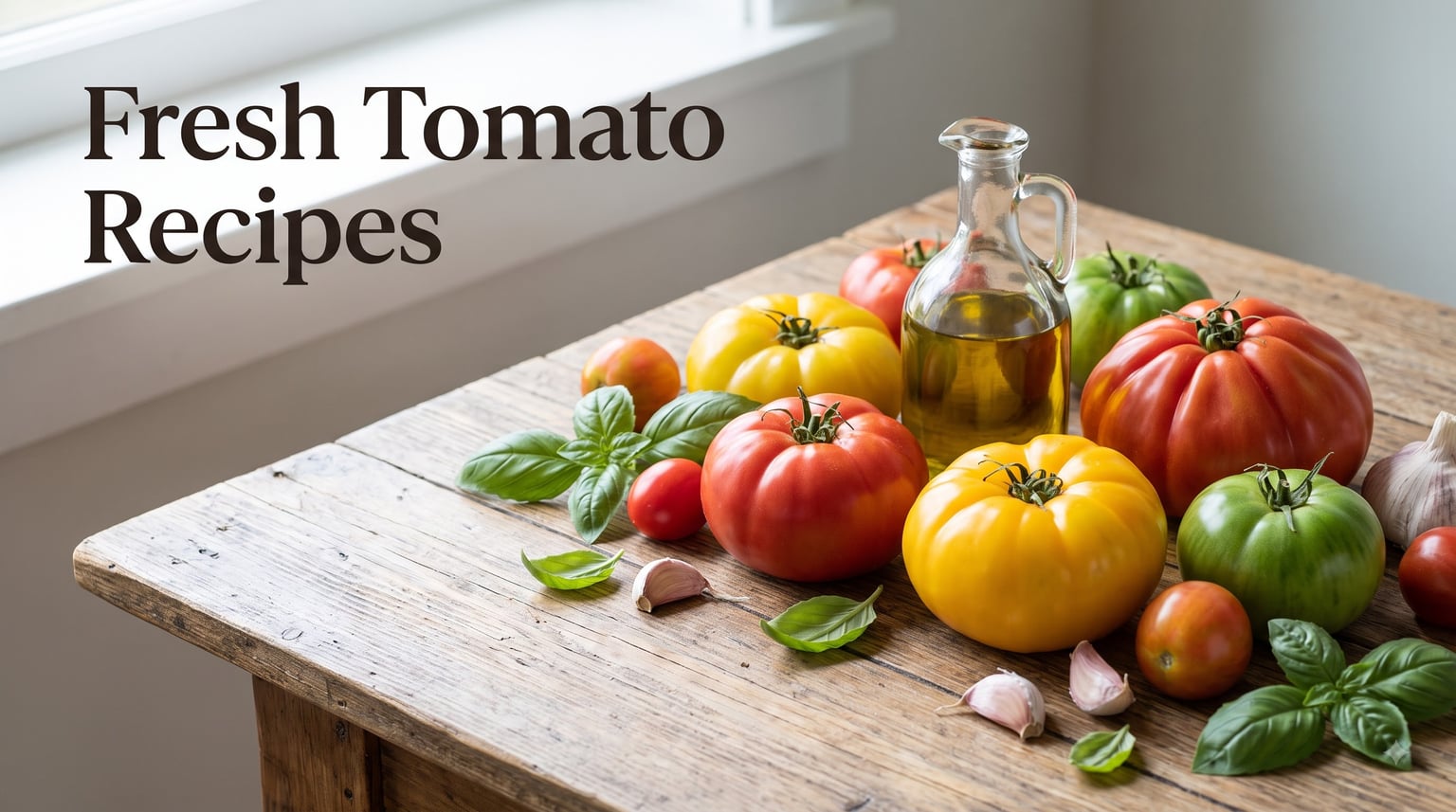
There is nothing quite like a sun-ripened tomato straight from the garden or farmers market in August. The juice, the sweetness, the way a perfect tomato makes everything around it taste better. That is what these fresh tomato recipes are all about.
Every summer, I end up with way more tomatoes than I planned for. Whether it is a CSA box overflowing with heirlooms or a garden that suddenly produces 30 pounds in a single week, the question is always the same: what do I do with all of these? Over the years, our team has tested, cooked, and eaten hundreds of fresh tomato recipes to find the ones worth making again and again.
This guide covers everything from five-minute salads to slow-roasted pasta sauces, plus the variety guide, storage methods, and preservation techniques that most recipe roundups skip entirely. If you have ever stood in your kitchen staring at a mountain of ripe tomatoes wondering where to start, you are in the right place.
For easy pairing ideas, our homemade pesto sauce works beautifully with many of these tomato dishes, and we have included several other no-cook tomato appetizers that come together in minutes.
Table of Contents
Quick Recipe Highlights: The Best Fresh Tomato Recipes
Here is a categorized list of the best fresh tomato recipes, organized by type so you can jump straight to what you need.
Raw Salads and No-Cook Dishes:
Classic Caprese Salad (tomatoes, mozzarella, basil, olive oil)
Panzanella (Tuscan bread and tomato salad)
Cucumber Tomato Salad with red onion and vinaigrette
Heirloom Tomato Salad with balsamic glaze
Fattoush (Middle Eastern bread salad with tomatoes)
Pasta and Main Dishes:
Raw Tomato Marinara (blended fresh tomatoes, garlic, olive oil)
One-Pan Cherry Tomato Pasta with Basil
Spaghetti al Pomodoro (simple tomato sauce)
Pasta Salad with Sun-Dried and Fresh Tomatoes
Shakshuka (eggs poached in tomato sauce)
Sandwiches, Toasts, and Bites:
Classic Tomato Sandwich (bread, mayo, salt, pepper)
BLT with thick-cut bacon and heirloom tomato
Bruschetta with diced tomatoes, garlic, and basil
Caprese Skewers (cherry tomatoes, mozzarella balls, basil)
Tomato Toast with ricotta and flaky salt
Soups and Salsas:
Classic Gazpacho (cold Spanish tomato soup)
Roasted Tomato Soup with grilled cheese
Pico de Gallo (fresh tomato, onion, cilantro, lime)
Fresh Tomato Salsa with jalapeno
Tomato Water (clear liquid from tomatoes for cocktails and soups)
Choosing the Right Tomato Varieties for Every Recipe
Not all tomatoes are created equal, and the variety you choose directly affects how your recipe turns out. This is something most recipe guides completely skip, but it is the single most important factor in how your dish tastes.
Beefsteak Tomatoes are large, meaty, and perfect for slicing. Use them for tomato sandwiches, BLTs, and any recipe where you want a thick, juicy slice. Brandywine and Cherokee Purple are popular heirloom beefsteak varieties with incredible flavor.
Roma and Paste Tomatoes have fewer seeds, thicker flesh, and less water content. They are the best choice for cooked sauces, tomato paste, and canning. San Marzano tomatoes are the gold standard for Italian-style sauce.
Cherry and Grape Tomatoes are small, sweet, and hold their shape well when roasted. They are ideal for pasta dishes, salads, roasting whole, and snacking. Grape tomatoes tend to be slightly less juicy than cherry tomatoes, which makes them better for pasta salads where you want less moisture.
Heirloom Tomatoes come in hundreds of varieties with colors ranging from deep purple to bright yellow. They generally have thinner skin and more complex flavor than hybrid tomatoes. Use them raw in salads where their flavor can shine, and avoid cooking them unless you are roasting.
Slicing Tomatoes are your everyday round tomatoes, like Early Girl or Better Boy. They work well for general-purpose cooking, sandwiches, and chopping into salads when you do not have a specific variety on hand.
Green Tomatoes are unripe and firm with a tart flavor. They are excellent for frying, pickling, and chutneys. Do not try to use them as a substitute for ripe tomatoes in any recipe.
Here is a quick reference: beefsteak for sandwiches, roma for sauce, cherry for pasta and roasting, heirloom for raw salads, and green for frying. Match the tomato to the method and your results improve instantly.
Fresh Tomato Salads That Let the Tomato Shine
The best fresh tomato recipes are often the simplest ones. When tomatoes are at their peak, the goal is to do as little as possible and let the natural flavor carry the dish.
Classic Caprese Salad
Slice large heirloom or beefsteak tomatoes about a quarter inch thick. Alternate them on a plate with fresh mozzarella slices and basil leaves. Drizzle with good olive oil, a splash of balsamic glaze, and flaky salt. That is it. The secret is using the best tomatoes and the best olive oil you can find.
Panzanella (Tuscan Bread and Tomato Salad)
Tear day-old crusty bread into chunks and toss with chopped ripe tomatoes, cucumbers, red onion, basil, and a red wine vinaigrette. Let it sit for 15 to 20 minutes so the bread soaks up the tomato juice. This recipe was built to use up both stale bread and abundant tomatoes.
Cucumber Tomato Salad
Combine diced tomatoes, sliced cucumbers, thin red onion slices, and a simple vinaigrette of olive oil, red wine vinegar, salt, and pepper. This is the salad I make most often during summer because it takes five minutes and keeps for two days in the fridge.
Heirloom Tomato Salad with Balsamic Glaze
Slice two to three different colored heirloom tomatoes and arrange them on a platter. Add a drizzle of store-bought balsamic glaze, olive oil, torn basil, and a sprinkle of sea salt. Use at least two colors for visual impact.
Reddit users in the cooking communities consistently mention caprese and cucumber tomato salads as weekly staples during tomato season. They are easy, require no cooking, and use up produce fast.
Fresh Tomato Pasta Dishes for Quick Summer Dinners
Pasta is where fresh tomatoes truly earn their keep. A quick sauce made from ripe tomatoes tastes brighter and sweeter than anything from a can, and most fresh tomato pasta recipes come together in under 30 minutes.
Raw Tomato Marinara (5-Minute Sauce)
This is one of my favorite discoveries. Blend four cups of cored, quartered ripe tomatoes with one garlic clove, a handful of basil, three tablespoons of olive oil, and salt. Toss immediately with hot pasta. The sauce is never cooked, which preserves the bright, sweet tomato flavor. It sounds too simple, but the result is remarkable with good tomatoes.
One-Pan Cherry Tomato Pasta
Halve two pints of cherry tomatoes and combine them in a large skillet with olive oil, minced garlic, red pepper flakes, and a splash of pasta water. Simmer for 10 minutes until the tomatoes break down into a chunky sauce. Add cooked pasta directly to the pan with torn basil and grated parmesan.
For more pasta inspiration, check out our cherry tomato pasta recipes that use fresh tomatoes as the star ingredient.
Spaghetti al Pomodoro
This is the classic Italian fresh tomato sauce. Blanch and peel two pounds of ripe roma tomatoes, then crush them by hand. Simmer gently with olive oil, a halved onion (removed before serving), and basil for 30 to 40 minutes. The onion infuses a subtle sweetness without overpowering the tomato.
If you want to explore how fresh tomato sauces compare to other options, our tomato-based pasta sauces ranking breaks down the most popular varieties.
Tomato Basil Pasta Salad
Cook rotini or fusilli, let it cool, and toss with halved cherry tomatoes, fresh mozzarella balls, basil, olive oil, and balsamic vinegar. This is the perfect potluck dish and actually tastes better after sitting in the fridge for a few hours as the flavors meld.
Fresh Tomato Sandwiches and Toasts
Sandwiches are where most home cooks start with fresh tomatoes, and for good reason. They require almost no effort and deliver maximum flavor when the tomatoes are great.
The Classic Summer Tomato Sandwich
Two slices of white bread, a generous spread of mayonnaise, thick slices of ripe tomato, and salt and pepper. This Southern staple is not about complexity. It is about using the best tomatoes you can find and enough mayonnaise to make the bread slightly soggy. Use a good heirloom or beefsteak tomato for the best results.
The Ultimate BLT
Thick-cut bacon, crisp lettuce, and a generous slice of heirloom tomato on toasted sourdough. The tomato is the star here, so do not skimp. Use a tomato that is ripe enough to hold its shape but juicy enough to drip slightly when you bite in.
Bruschetta with Fresh Tomatoes
Dice four ripe tomatoes and mix with minced garlic, torn basil, olive oil, salt, and a splash of balsamic vinegar. Let it sit for 10 minutes, then spoon onto grilled or toasted baguette slices. The longer the tomato mixture sits, the more juice it releases, so serve within 30 minutes for the best texture.
Tomato Toast with Ricotta
Spread thick slices of toasted sourdough with fresh ricotta cheese. Top with thick tomato slices, a drizzle of olive oil, flaky salt, and cracked black pepper. This makes an excellent light lunch or appetizer and works with any tomato variety.
Bruschetta and caprese skewers are also featured in our collection of no-cook appetizers that look impressive with minimal effort.
Fresh Tomato Soups: From Gazpacho to Roasted
Soup is an excellent way to use up a large quantity of tomatoes at once, and you can make it ahead and freeze it for later. Fresh tomato soups fall into two camps: cold and raw, or hot and roasted.
Classic Gazpacho
Blend ripe tomatoes, cucumber, bell pepper, red onion, garlic, olive oil, and a splash of sherry vinegar until smooth. Chill for at least two hours before serving. Gazpacho is the ultimate no-cook summer soup, though I will note that preferences are divided. Some people in the cooking forums love it, others find the cold texture off-putting. Try it once and see which camp you fall into.
Roasted Tomato Soup
Halve five to six pounds of roma or slicing tomatoes and roast them at 400 degrees Fahrenheit with olive oil, garlic, and onions for 45 minutes. Blend with vegetable stock and fresh basil until smooth. Roasting concentrates the tomato flavor and adds depth that raw soups cannot match.
Creamy Fresh Tomato Basil Soup
Start with the roasted tomato method above, then add a splash of heavy cream and extra basil before blending. This pairs perfectly with a grilled cheese sandwich for a classic comfort food combination.
If you want a beverage to serve alongside, fresh tomato juice is the base for Virgin Mary cocktails featured in our best mocktail recipes collection.
Salsas, Dips, and Appetizers with Fresh Tomatoes
Fresh salsa and dips are quick to prepare and use up a lot of tomatoes fast. They also happen to be the dishes that disappear first at any gathering.
Pico de Gallo
Dice tomatoes, red onion, jalapeno, and cilantro. Toss with fresh lime juice and salt. Let it sit for 10 minutes before serving with tortilla chips. Use roma tomatoes for the best texture because they have fewer seeds and less water.
Fresh Tomato Salsa (Blended)
Blend tomatoes, garlic, jalapeno, cilantro, lime juice, and a pinch of cumin until slightly chunky. This is faster than pico de gallo and works well as a sauce for tacos or enchiladas.
Caprese Skewers
Thread cherry tomatoes, fresh mozzarella balls, and basil leaves onto small skewers. Drizzle with olive oil and balsamic glaze before serving. These are perfect for parties because they require no utensils and look impressive.
Whipped Ricotta with Blistered Tomatoes
Spread whipped ricotta on a plate, top with cherry tomatoes blistered in a hot skillet with olive oil and garlic, and finish with fresh basil and flaky salt. This appetizer takes 10 minutes and works as both a dip and a crostini topping.
How to Store Fresh Tomatoes the Right Way
How you store tomatoes directly affects their flavor and texture. Here is what actually works based on testing and food science.
Keep them at room temperature. Never put ripe tomatoes in the refrigerator. Cold temperatures below 55 degrees Fahrenheit permanently stop the flavor-producing enzymes in tomatoes, making them mealy and bland. Store them stem-side down on a counter away from direct sunlight.
Refrigerate only as a last resort. If your tomatoes are fully ripe and you cannot use them within three to four days, you can refrigerate them to buy an extra day or two. Let them come back to room temperature for at least an hour before eating to restore some flavor.
Ripen tomatoes in a paper bag. If you have tomatoes that are slightly underripe, place them in a paper bag with a banana or apple. The ethylene gas from the fruit speeds up ripening. Check daily and remove them once they give slightly when pressed.
Separate by ripeness. Group your tomatoes by how ripe they are. Eat the softest ones first in raw preparations like salads and sandwiches. Save firmer ones for cooking later in the week.
Preserving Fresh Tomatoes: Freezing, Canning, and Drying
When you have more tomatoes than you can eat, preservation is the answer. This is the biggest gap in most fresh tomato recipe guides, and it is also the number one question on cooking forums during harvest season.
Freezing Fresh Tomatoes (Easiest Method)
Yes, you can freeze raw fresh tomatoes. The simplest method is to wash and core whole tomatoes, place them on a baking sheet in a single layer, and freeze until solid. Transfer to freezer bags and store for up to six months. The skins will slip off easily when they thaw, and the texture will be soft, so use them only for cooked sauces and soups, not raw preparations.
For faster use later, you can also blend raw tomatoes and freeze the puree in portion-sized containers. Pour into ice cube trays for small portions or two-cup containers for sauce-sized servings.
Canning Tomatoes (Long-Term Storage)
Water bath canning is the traditional method for preserving tomatoes at room temperature for up to 18 months. You need to acidify tomatoes with bottled lemon juice or citric acid because they are right on the borderline of safe acidity for water bath canning. Follow a tested recipe from the National Center for Home Food Preservation to ensure safety.
Basic process: peel tomatoes by scoring an X on the bottom, blanching for 30 seconds, and slipping off the skins. Pack into sterilized jars, add acid, cover with tomato juice or water, and process in a boiling water bath for 40 to 45 minutes for quart jars.
Oven-Dried and Sun-Dried Tomatoes
Slice roma tomatoes in half lengthwise and place cut-side up on a baking sheet. Drizzle with olive oil, sprinkle with salt and dried herbs, and roast at 200 degrees Fahrenheit for 6 to 8 hours until shriveled but still slightly moist. Store in olive oil in the refrigerator for up to two weeks, or freeze for longer storage.
Making Tomato Powder
Dehydrate tomato slices until completely brittle, then blend into a fine powder. Tomato powder adds intense tomato flavor to soups, stews, dressings, and rubs. It takes up very little space and lasts for a year in an airtight container.
Common Mistakes to Avoid When Cooking with Fresh Tomatoes
Even experienced cooks make these errors with fresh tomatoes. Avoiding them makes every recipe better.
Refrigerating ripe tomatoes. This is the most common mistake and the most damaging. Cold kills tomato flavor and texture. Keep them on the counter.
Using the wrong variety for the recipe. Cherry tomatoes in a sauce will be too watery. Roma tomatoes in a caprese salad will be too firm. Match the tomato to the dish.
Cooking great tomatoes when they should be eaten raw. If you have truly exceptional heirloom tomatoes, eat them raw. Save the cooking for average or slightly overripe tomatoes where heat can concentrate and improve the flavor.
Peeling tomatoes unnecessarily. Unless you are canning or making a smooth sauce where texture matters, leave the skins on. They contain flavor and nutrients.
Slicing tomatoes too far in advance. Cut tomatoes release juice and lose flavor as they sit. Slice them right before serving for the best results in salads and sandwiches.
Underseasoning. Fresh tomatoes need more salt than most people think. Salt brings out their natural sweetness. Taste and adjust before serving.
Frequently Asked Questions
What can I do with an abundance of fresh tomatoes?
With a large tomato harvest, focus on recipes that use volume quickly: blended raw tomato sauce, roasted tomato soup, gazpacho, and pico de gallo. For long-term storage, freeze whole tomatoes, can them using a tested water bath method, or oven-dry them. A five-pound batch of roma tomatoes makes roughly two quarts of sauce or soup.
What to make with fresh tomatoes easily?
The easiest fresh tomato recipes require no cooking: caprese salad (tomatoes, mozzarella, basil, olive oil), a tomato sandwich (bread, mayo, sliced tomato, salt), bruschetta (diced tomatoes on toast), and cucumber tomato salad. All of these come together in under 10 minutes.
Can you freeze raw fresh tomatoes?
Yes, you can freeze raw fresh tomatoes whole. Wash and core them, freeze on a baking sheet until solid, then transfer to freezer bags for up to six months. The skins slip off easily when thawed. Frozen tomatoes work best in cooked sauces and soups because freezing softens their texture.
What are some good recipes for summer tomatoes?
The best summer tomato recipes highlight raw flavor: caprese salad, panzanella, fresh tomato pasta, gazpacho, BLT sandwiches, and bruschetta. Summer tomatoes are at their peak sweetness and juiciness, so recipes with minimal cooking let their natural flavor shine.
How long do fresh tomatoes last on the counter?
Fully ripe tomatoes last three to five days at room temperature. Slightly underripe tomatoes can take one to three days to ripen on the counter, then another three to five days once ripe. Keep them stem-side down and away from direct sunlight for best results.
What tomato varieties are best for making sauce?
Roma and paste tomatoes are best for sauce because they have fewer seeds, thicker flesh, and less water content. San Marzano tomatoes are the Italian gold standard for sauce. Beefsteak and heirloom tomatoes work for fresh, no-cook sauces but produce a thinner result when cooked.
Wrapping Up: Make the Most of Tomato Season
Fresh tomato recipes are about celebrating a short, glorious window of the year when tomatoes actually taste the way they should. Whether you are making a five-minute caprese salad or spending an afternoon canning a garden harvest, the key is matching the right tomato variety to the right method.
Start with the simple no-cook recipes, then work your way into sauces, soups, and preservation as your confidence grows. Use the storage and preservation guide to extend your tomato enjoyment well beyond summer. And do not forget to check out our homemade pesto and pasta sauce rankings for even more ways to pair fresh tomatoes with great flavors.
The best fresh tomato recipes are the ones you will actually make. Pick two or three from this guide, grab the best tomatoes you can find, and start cooking. Tomato season does not last long enough to waste.