
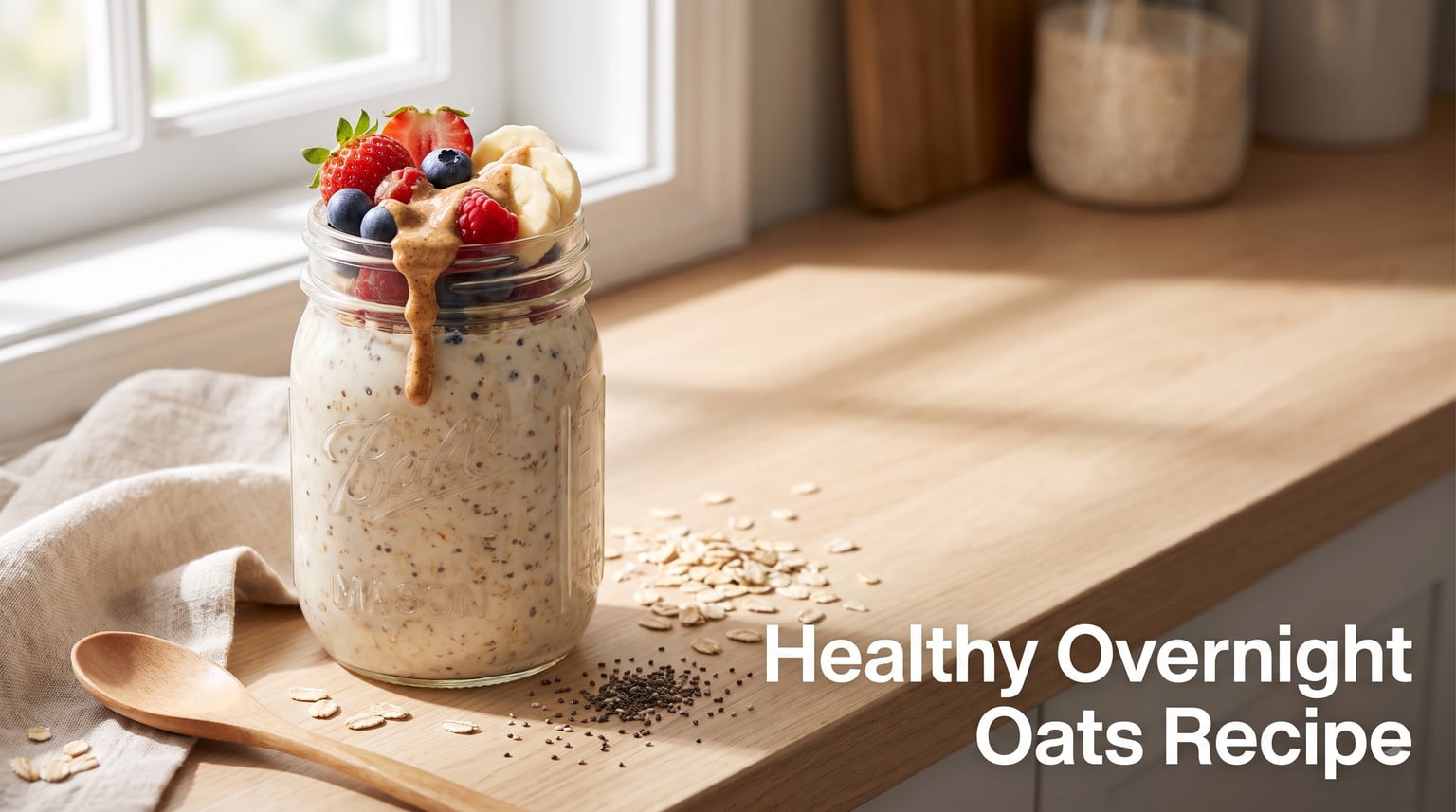
If you’ve ever wanted a breakfast that’s ready before you even finish brushing your teeth, this healthy overnight oats recipe is exactly what you need. I make a batch every Sunday and my mornings have never been smoother.
Overnight oats are simply raw oats soaked in milk and mix-ins in the fridge while you sleep. By morning, the oats soften into a creamy, pudding-like texture that tastes like dessert for breakfast. The method is hands-off, requires zero cooking, and gives you a balanced meal packed with fiber, protein, and complex carbs.
I’ve been making overnight oats for over five years, and I’m sharing everything I’ve learned in this guide. You’ll get the perfect base ratio, 10 flavor variations, troubleshooting tips for common texture problems, and storage advice to last the whole week.
Table of Contents
What Are Overnight Oats and Why They’re So Healthy?
Overnight oats are a no-cook breakfast made by soaking rolled oats in liquid (usually milk) in the refrigerator for several hours. The oats absorb the liquid and soften naturally, creating a creamy texture similar to cooked porridge.
Unlike hot oatmeal, you never touch a stove. The slow soaking process breaks down the starches, softens the oat fibers, and lets the flavors meld together. It’s a hands-off approach that fits busy mornings perfectly.
I started making overnight oats during a brutal work rotation when I had 15 minutes to get out the door. Now I can’t imagine going back to standing over a pot at 6 AM.
How the Soaking Process Works
Rolled oats absorb liquid slowly in the fridge. After 6 to 8 hours, they’ve absorbed most of the moisture and reached a soft, chewy texture. Chia seeds expand and create a thick, pudding-like consistency.
The cold soaking preserves the resistant starch in oats, which acts like soluble fiber and feeds your gut bacteria. Heat breaks this starch down, which is why overnight oats offer slightly different nutritional benefits than hot oatmeal.
Top Health Benefits
Overnight oats are one of the most balanced breakfasts you can make. Here’s why our team keeps coming back to them:
High in fiber: A single serving delivers 6 to 8 grams of fiber, mostly from beta-glucan, which supports heart health and stable blood sugar.
Steady energy: Complex carbs release slowly, keeping you full for 3 to 4 hours without a sugar crash.
Customizable protein: You can hit 15 to 30 grams of protein per jar with the right add-ins.
No cooking required: Less cleanup, less time, and better for hot summer mornings.
Budget-friendly: A week’s worth of breakfast costs less than a single coffee shop order.
The Best Ingredients for a Healthy Overnight Oats Base
The classic base ratio for overnight oats is 1 part oats to 1 part liquid by volume. That’s 1/2 cup rolled oats to 1/2 cup milk, plus any extras you want to mix in.
I tested dozens of ingredient combinations before settling on this formula. It produces a creamy but not soupy texture that holds up well overnight.
Which Oats Work Best
Old-fashioned rolled oats are the gold standard for overnight oats. They absorb liquid evenly and keep a pleasant chewy texture.
Here’s a quick breakdown of your oat options:
Rolled oats (old-fashioned): Best texture, soak in 6 to 8 hours, my top pick.
Quick oats: Softer and mushier, ready in 2 to 4 hours, good for thinner texture.
Steel-cut oats: Too tough to soak raw, need at least 24 hours or a quick pre-cook.
Instant oats: Work but turn into a paste, not recommended.
If you’re gluten-sensitive, make sure your oats are certified gluten-free. Oats are naturally gluten-free but often processed alongside wheat.
Best Milk and Liquid Options
Any milk works in overnight oats. The choice affects flavor, creaminess, and nutrition. Dairy milk gives the richest texture, while plant-based milks lighten things up.
Here are the liquids I rotate through my weekly prep:
Regular dairy milk: Whole or 2% gives the creamiest result and adds 8g protein per cup.
Almond milk: Light and neutral, my go-to for lighter calorie counts.
Oat milk: Naturally sweet and creamy, adds extra fiber.
Soy milk: Highest protein among plant milks, around 7g per cup.
Coconut milk (carton): Rich and tropical, great for flavor variations.
You can also swap a few tablespoons of milk with Greek yogurt for extra creaminess and a protein boost.
Optional Boosters for Texture and Nutrition
These three ingredients take basic overnight oats from fine to fantastic. I add at least one to every jar:
Chia seeds: 1 tablespoon thickens the mixture and adds omega-3s and fiber.
Greek yogurt: 2 to 3 tablespoons boosts protein by 5 to 7 grams and adds tang.
Nut butter: 1 tablespoon adds healthy fats, protein, and richness.
For higher protein needs, I add a scoop of protein powder and a splash more milk to compensate for thickness. Check our picks for protein powder deals if you’re looking to stock up.
How to Make Overnight Oats: Step-by-Step Instructions
This base recipe takes 5 minutes to assemble and serves 1. Multiply the ingredients for batch meal prep.
Ingredients:
1/2 cup rolled oats
1/2 cup milk of choice
1 tablespoon chia seeds
2 tablespoons plain Greek yogurt (optional)
1 tablespoon maple syrup or honey
1/2 teaspoon vanilla extract
Pinch of salt
Instructions:
Step 1: Add the oats, milk, chia seeds, yogurt, sweetener, vanilla, and salt to a jar or container. A 16-ounce mason jar works perfectly.
Step 2: Stir everything together until well combined. Make sure no dry chia seeds are clumped at the bottom.
Step 3: Seal the jar with a lid and refrigerate for at least 4 hours, ideally overnight (6 to 8 hours).
Step 4: In the morning, give it a quick stir. Add any fresh toppings like fruit, nuts, or extra nut butter.
Step 5: Enjoy cold straight from the fridge, or warm in the microwave for 30 to 60 seconds if you prefer it hot.
I usually prep 5 jars on Sunday night and grab one each morning. They stay fresh through Friday.
10 Healthy Overnight Oats Recipe Variations to Try
Once you master the base recipe, the flavor possibilities are endless. Here are 10 variations our team tested and approved. Each builds on the base recipe with simple add-ins.
1. Peanut Butter Banana
Mash half a banana into the base, then stir in 1 tablespoon peanut butter. Top with sliced banana and a drizzle of peanut butter in the morning. This combo delivers 15g protein per jar.
2. Chocolate Peanut Butter
Add 1 tablespoon cocoa powder and 1 tablespoon peanut butter to the base. Top with chocolate chips or cacao nibs. Kids go crazy for this one.
3. Mixed Berry
Stir in 1/2 cup fresh or frozen mixed berries before refrigerating. The berries break down slightly and tint the oats a beautiful purple. Top with extra berries and a spoonful of jam.
4. Apple Cinnamon
Dice half an apple and mix into the base with 1 teaspoon cinnamon. Top with chopped walnuts. This one tastes like apple pie in a jar. If you’re following a low-histamine diet, our low histamine recipes roundup has similar warming options.
5. Coffee Lovers
Replace 2 tablespoons of milk with cold brew coffee. Add 1 teaspoon cocoa powder and a splash of vanilla. Top with a sprinkle of espresso powder for an extra kick.
6. Pumpkin Spice
Add 2 tablespoons pumpkin puree, 1 teaspoon pumpkin pie spice, and 1 tablespoon maple syrup. Top with pecans. This is the perfect fall breakfast and works year-round with canned pumpkin.
7. Vanilla Almond
Use vanilla almond milk as your liquid and add 1 tablespoon almond butter. Top with slivered almonds and a drizzle of honey. Simple and elegant.
8. Tropical Coconut Mango
Use coconut milk as your liquid, add 1/2 cup diced mango before refrigerating. Top with shredded coconut and macadamia nuts.
9. Strawberry Cheesecake
Add 1/4 cup chopped strawberries and 2 tablespoons cream cheese (softened) to the base. Top with crushed graham crackers and a strawberry slice.
10. Chocolate Protein
Add 1 scoop chocolate protein powder and 2 extra tablespoons milk to compensate. Top with banana slices and a spoonful of nut butter. This packs 25 to 30g protein. Pair it with our protein chocolate brownie recipe for a high-protein day.
For pre-made inspiration, check out our Oats Overnight flavors ranked guide. We tested all 24 flavors and broke down which ones are worth buying.
How to Add Protein to Overnight Oats the Right Way?
The base recipe delivers around 8g protein. That’s solid for plain oats, but many of us need more to stay full until lunch. Here’s how to boost it.
Adding protein powder is the fastest route. Use 1 scoop (about 25g) per jar and add 2 to 3 extra tablespoons of liquid to compensate for the thickness. Whey, casein, and plant proteins all work. Whey gets slightly thicker; casein makes the creamiest result.
If you skip protein powder, Greek yogurt is your next best bet. Two tablespoons adds 5g of protein and creates a tangy, creamy texture. Cottage cheese blended smooth works even better, packing 7g protein per 1/4 cup.
Nut butters contribute 3 to 4g protein per tablespoon along with healthy fats. Almond, peanut, and cashew butter all perform well. Seeds like hemp hearts add 3g protein per tablespoon and pair nicely with any flavor.
For serious protein goals (post-workout, weight loss), stack two boosters. Try protein powder plus Greek yogurt for 30g protein per jar.
Troubleshooting Texture Issues: Too Thick, Too Thin, Too Dry
After helping readers troubleshoot for years, I’ve learned that almost every overnight oats problem comes down to liquid ratio. Here’s how to fix the most common texture complaints.
If Your Oats Are Too Thick
Add 1 to 2 tablespoons of milk and stir. Let it sit for 5 minutes to absorb. If still too thick, add another splash. The chia seeds are usually the culprit, as they absorb more than you expect.
Next time, reduce chia seeds to 2 teaspoons or increase milk by 2 tablespoons.
If Your Oats Are Too Thin or Soupy
Add another tablespoon of chia seeds and stir well. Refrigerate for another 2 hours. The seeds will absorb excess moisture.
You can also add a tablespoon of Greek yogurt or a spoonful of nut butter to thicken things up.
If Your Oats Are Too Dry or Chalky
Dry oats usually mean not enough liquid or too much chia. Add 2 to 3 tablespoons of milk and stir. Let sit 10 minutes before eating.
Cheap old oats can also absorb differently than fresh ones. If a new bag gives you trouble, your old ratio may need adjusting.
If Your Oats Are Gummy or Gluey
Quick oats cause this problem most often. They break down too fast in liquid. Switch to rolled oats and your texture will improve dramatically.
Stirring too aggressively can also release extra starch and create a gluey result. Mix gently until combined.
Storage and Meal Prep Tips for Overnight Oats
One of the biggest advantages of overnight oats is how well they keep. You can meal prep a full week in advance with no quality loss.
Refrigerator Storage
Overnight oats stay fresh in the fridge for up to 5 days when stored in airtight containers. Mason jars with tight lids are my go-to because they’re easy to grab and stack.
If you add fresh fruit, eat those jars within 3 days to prevent sogginess. Berries hold up better than bananas or apples, which can brown or turn mushy.
Freezer Storage
Yes, you can freeze overnight oats. Portion them into freezer-safe containers and freeze for up to 3 months. Thaw in the fridge overnight before eating.
Texture changes slightly after freezing, becoming softer. Some people love it, others don’t. Test one jar before committing to a full batch.
Batch Meal Prep Strategy
I prep 5 jars every Sunday night. I keep the base dry ingredients (oats, chia, salt) in one jar and add wet ingredients (milk, sweetener, vanilla) to each individual jar.
For toppings, I store chopped fruit, nuts, and nut butter in separate containers and add them fresh each morning. This keeps everything from getting soggy.
Dietary Modifications: Vegan, Gluten-Free, and Dairy-Free Options
Overnight oats are one of the easiest recipes to modify for dietary restrictions. Almost every ingredient has a swap.
Vegan and Dairy-Free
Replace dairy milk with any plant-based milk. Almond, oat, soy, and coconut milk all work beautifully. Skip the Greek yogurt or use a plant-based yogurt.
Swap honey for maple syrup or agave nectar. That’s the only change needed for a fully vegan jar.
Gluten-Free
Oats are naturally gluten-free, but cross-contamination is common. Buy oats labeled certified gluten-free to be safe. Brands like Bob’s Red Mill and GF Harvest offer reliable options.
All other ingredients in the base recipe are naturally gluten-free. Check your flavor add-ins like granola or flavored protein powder for hidden gluten.
Low-Calorie and Weight Loss
Use unsweetened almond milk (30 calories per cup), skip the sweetener, and rely on fruit and cinnamon for natural sweetness. This brings a jar down to about 200 calories.
Adding protein keeps you full longer and helps maintain muscle during weight loss. Greek yogurt or protein powder work well here.
Nutritional Breakdown and Health Benefits
A standard jar of overnight oats (base recipe with Greek yogurt and maple syrup) contains approximately:
Calories: 320 to 380
Protein: 12 to 15 grams
Carbohydrates: 50 to 55 grams
Fiber: 8 to 10 grams
Fat: 7 to 9 grams
Sugar: 10 to 12 grams (mostly from milk and fruit)
The high fiber content supports digestive health and keeps blood sugar stable. Beta-glucan, the soluble fiber in oats, has been shown to lower LDL cholesterol.
The complex carbs provide sustained energy without spikes and crashes. Combined with protein and healthy fats, overnight oats keep most people satisfied for 3 to 4 hours.
For post-workout meals, the carbs help replenish glycogen while the protein supports muscle recovery. Adding a scoop of protein powder makes this an even better recovery meal.
Frequently Asked Questions
Are overnight oats actually healthy for you?
Yes. Overnight oats are healthy because they preserve resistant starch and beta-glucan fiber, which support gut health and stable blood sugar. A standard jar delivers 8 to 10 grams of fiber, 12 to 15 grams of protein, and complex carbs for sustained energy. The no-cook method keeps nutrients intact and makes portion control simple.
How long do overnight oats need to soak?
Overnight oats need at least 4 hours to soak, but 6 to 8 hours delivers the best texture. Quick oats can be ready in 2 hours, while rolled oats benefit from a full overnight rest. You can safely soak them for up to 24 hours in the fridge, though they will get softer the longer they sit.
What kind of oats are best for overnight oats?
Old-fashioned rolled oats are the best choice for overnight oats. They absorb liquid evenly and maintain a pleasant chewy texture after soaking. Quick oats work but turn mushier, while steel-cut oats are too tough unless soaked for 24 hours or pre-cooked. Instant oats are not recommended as they turn into paste.
Can you heat up overnight oats?
Yes, you can heat overnight oats in the microwave for 30 to 60 seconds if you prefer them warm. Add a splash of milk before heating since they thicken slightly when warm. You can also eat them cold straight from the fridge, which is how most people enjoy them, especially in summer.
How long do overnight oats last in the fridge?
Overnight oats last up to 5 days in the fridge when stored in airtight containers. Mason jars with tight lids work perfectly. If you add fresh fruit, eat those jars within 3 days to prevent sogginess. For longer storage, freeze them for up to 3 months and thaw in the fridge overnight.
Do overnight oats need chia seeds?
No, overnight oats do not need chia seeds, though they help thicken the texture and add nutrition. Without chia seeds, your oats will be slightly looser and less pudding-like. You can substitute ground flaxseed, psyllium husk, or simply reduce the milk by a tablespoon to compensate.
Can you make overnight oats with protein powder?
Yes, protein powder works well in overnight oats. Add one scoop per jar along with 2 to 3 extra tablespoons of milk to compensate for thickness. Whey protein creates a thicker result, while casein makes the creamiest texture. Plant-based proteins work for vegan versions.
What not to add in overnight oats?
Avoid ingredients that get soggy or watery overnight, like fresh cucumber, watermelon, or tomato. Skip delicate herbs that lose flavor during soaking. Also avoid highly acidic ingredients like citrus juice in large amounts, as they can break down the oats into mush. Save crunchy toppings like granola and nuts for the morning.
Final Thoughts on This Healthy Overnight Oats Recipe
That wraps up our complete guide to making a healthy overnight oats recipe that actually tastes good. We’ve covered the perfect base ratio, 10 flavor variations, protein-boosting strategies, troubleshooting for texture issues, and storage tips that keep your prep fresh all week.
The beauty of overnight oats is that they fit any lifestyle. Busy professionals can grab a jar and go. Fitness enthusiasts can hit their protein goals. Parents can prep a week of breakfasts in 15 minutes. And everyone gets a breakfast that’s actually good for them.
Start with the basic recipe tonight. Once you’ve nailed the texture, experiment with the variations until you find your favorites. Within a week, you’ll wonder how you ever ate cold cereal on hectic mornings. For more breakfast inspiration, browse our full recipe collection and discover new ways to fuel your day in 2026.