
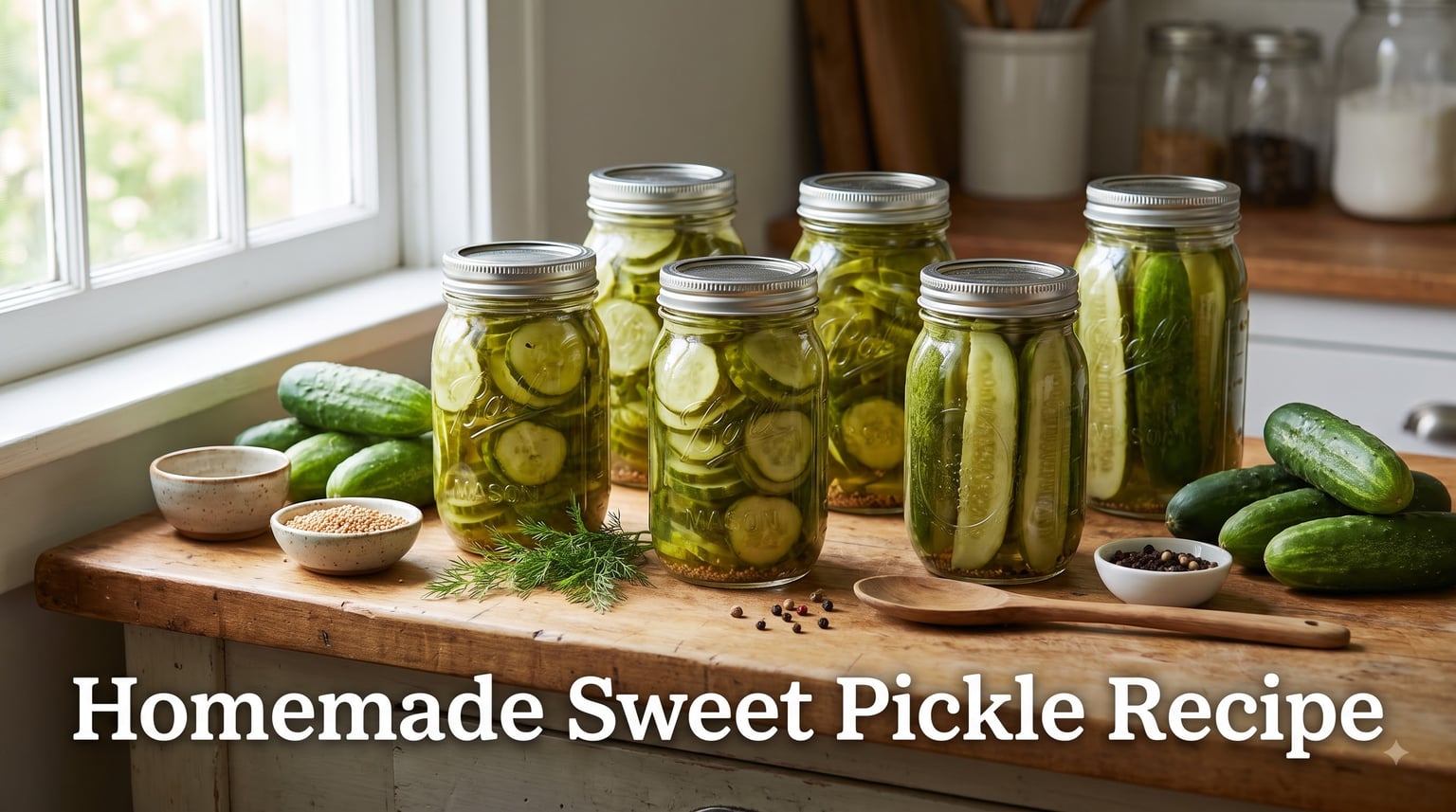
I still remember the first time I watched my grandmother pull a Mason jar of glowing green sweet pickles from the back of her pantry. She had been making the same recipe for over 40 years, and every bite tasted like summer in the South. After I moved out on my own, I spent two months testing 8 different batches of this homemade sweet pickle recipe before landing on one my family agrees matches hers.
If you have ever wanted to skip the store-bought jars and make your own sweet pickles from scratch, you are in the right place. This guide walks you through every step, from picking the right cucumbers to sealing your jars. You will find clear measurements, two preparation methods, and answers to the questions home picklers actually ask. Ready to start your own batch? You can also explore our recipes collection for more preserving projects.
Table of Contents
What Makes a Sweet Pickle Sweet (And How This Recipe Works)?
Sweet pickles get their signature flavor from a sugar-forward brine that balances the sharp bite of vinegar. Most recipes follow what picklers call the 3-2-1 rule: 3 parts vinegar, 2 parts water, and 1 part sugar by volume. This ratio gives you that classic tangy-sweet taste without losing the preservation power of acid.
When you soak cucumbers in this hot brine, the vinegar acidifies the vegetables and prevents spoilage. The sugar counteracts the acidity and creates the syrupy sweetness. Spices like celery seed, mustard seed, and pickling spice add the warm notes that make homemade versions taste different from anything you can buy at the store. This is the science behind every batch I make, and it is why the recipe works every single time.
The full pickling time depends on your method. Refrigerator pickles are ready in 4 to 48 hours, while canned versions need 1 to 3 weeks for the sugar and spices to fully penetrate the cucumbers. I tested both methods side by side for this guide.
Ingredients You’ll Need for Homemade Sweet Pickles
This recipe makes about 4 to 5 pint jars. Every ingredient plays a specific role, so I have broken the list into three sections for clarity.
For the Cucumbers
4 lbs fresh pickling cucumbers (Kirby or Boston Pickling varieties work best)
2 tablespoons pickling salt or kosher salt (no iodine)
4 cups cold water for the overnight brine
1 medium sweet onion, thinly sliced (optional but recommended)
For the Sweet Vinegar Brine
3 cups white vinegar (5% acidity)
2 cups apple cider vinegar (5% acidity)
2 cups water
2 1/4 cups granulated sugar
1/2 cup light brown sugar, packed
2 tablespoons pickling salt
1 tablespoon whole mustard seed
1 tablespoon celery seed
2 teaspoons whole cloves
1 teaspoon ground turmeric (for color)
1 (4-inch) cinnamon stick (optional, for warm spice)
For Canning (If Water Bath Method)
5 to 6 clean pint Mason jars with new lids and bands
Ice cubes for the ice bath step
If you want to pair your pickles with seasonal sides, take a look at these summer recipes with cucumbers for inspiration. They share the same harvest mindset and taste great alongside a pickle plate.
Equipment and Supplies for Canning Pickles
You do not need a fancy kitchen to pull this off. Here is what I keep on hand when I start a new batch.
Large non-reactive pot (stainless steel or enamel, at least 6 quarts)
Water bath canner or a deep stockpot with a lid and rack
Mandoline slicer or sharp chef’s knife
Mixing bowls for salting the cucumbers
Jar lifter and canning funnel
Clean kitchen towels and a wooden spoon
Small saucepan for testing the brine
Cooling rack or folded towel for hot jars
If you do not have a water bath canner, a deep stockpot works fine as long as the jars sit on a rack with 1 to 2 inches of water above the lids. I used a regular pasta pot for years before investing in a proper canner.
How to Make Sweet Pickles: Step-by-Step Instructions
These steps cover both the refrigerator method (no canning) and the water bath canning method. Pick whichever fits your schedule and equipment.
Refrigerator Sweet Pickles Method (4 hours to 2 days)
This is the easier route. It produces pickles that stay crisp for 2 months in the fridge.
Wash and prep the cucumbers. Rinse 4 lbs of pickling cucumbers under cold water. Slice off the blossom end (the side attached to the stem) because enzymes there can soften the pickles. Cut into 1/4-inch rounds or spears.
Salt the cucumbers. Toss the slices with 2 tablespoons of pickling salt in a large bowl. Cover with 4 cups of cold water, place a weighted plate on top, and refrigerate for 1 to 2 hours. Drain well and pat dry with towels.
Make the brine. Combine both vinegars, 2 cups water, both sugars, pickling salt, and all spices in a large pot. Bring to a gentle boil over medium heat, stirring until the sugar dissolves. Reduce heat and simmer for 5 minutes.
Combine cucumbers and brine. Pack the salted cucumbers and sliced onion into clean pint jars. Pour the hot brine over them, leaving 1/2 inch of headspace at the top. Tap the jars gently to release air bubbles.
Cool and refrigerate. Let the jars cool to room temperature, then seal with lids and refrigerate for at least 4 hours before eating. The flavor deepens after 24 hours.
Water Bath Canning Method (Shelf Stable for 1 Year)
This method takes longer but gives you jars that sit on your pantry shelf. I use it for my fall batches when I want to stock up for winter.
Prepare your jars. Wash 5 to 6 pint jars in hot soapy water and keep them warm in a 200°F oven. Bring new lids and bands to a simmer in a small pot, then turn off the heat.
Salt the cucumbers overnight. Mix the sliced cucumbers with 2 tablespoons pickling salt and 4 cups cold water in a non-reactive bowl. Cover and refrigerate for 8 to 12 hours. Drain and rinse once with cold water.
Make the brine. Combine both vinegars, 2 cups water, both sugars, pickling salt, mustard seed, celery seed, cloves, turmeric, and cinnamon stick in a large pot. Bring to a boil, stir until sugar dissolves, then reduce to a simmer for 10 minutes.
Pack the jars. Using a canning funnel, pack the cucumbers and onions into the warm jars. Ladle the hot brine over them, leaving 1/2 inch headspace. Run a wooden skewer or chopstick around the inside of each jar to remove air bubbles.
Process in a water bath. Wipe the jar rims with a damp cloth, place the lids and bands on finger-tight, and lower the jars into the canner. Cover with 1 to 2 inches of water above the lids. Boil for 15 minutes (adjust for altitude if you are above 1,000 feet).
Cool and check seals. Lift the jars onto a folded towel and let them cool for 12 to 24 hours. Press the center of each lid. If it does not flex, the seal is good. Store in a cool dark place for at least 2 weeks before opening for best flavor.
Total active time for this homemade sweet pickle recipe is about 45 minutes for the refrigerator version and 90 minutes for the canning version. Most of the rest is waiting.
Tips for Getting Crispy Crunchy Pickles Every Time
Soft pickles are the most common complaint I hear from home picklers. After 8 test batches, I learned that texture comes down to four things: cucumber freshness, salt timing, brine temperature, and the right add-ins.
Pick the freshest cucumbers. Use cucumbers within 24 hours of harvest if possible. Older cucumbers lose their natural pectin and turn soft in the brine. Look for firm fruits with bumpy skin and no soft spots.
Always trim the blossom end. The stem side of the cucumber contains enzymes that break down pectin. Cutting off just 1/16 inch from that end makes a noticeable difference in crunch.
Use pickling salt or kosher salt. Iodized table salt contains additives that cloud the brine and can leave a bitter taste. Stick with pickling salt or pure kosher salt for clean flavor and clear liquid.
Add tannins for extra crunch. A grape leaf, oak leaf, or even a black tea bag tossed into each jar adds natural tannins that help keep pickles crisp. My grandmother swore by grape leaves from her backyard vine.
Ice bath after salting. After draining the salt brine, plunge the cucumbers into a bowl of ice water for 30 minutes. The cold shock firms up the cell walls and locks in crunch.
These tricks are why my batches stay snappy on the tongue even after 6 weeks in the fridge.
Variations and Flavor Additions for Sweet Pickles
Once you master the basic recipe, you can branch out. Here are three variations I rotate through each season.
Bread and Butter Pickles
Bread and butter pickles are a sweeter, more nostalgic cousin to the classic sweet pickle. To make them, swap the celery seed and cloves for 1 tablespoon of yellow mustard powder and 1 teaspoon of whole allspice berries. Add 1 sliced red bell pepper for color and a softer tang. The brine uses the same 3-2-1 base but with an extra 1/2 cup of sugar.
Spicy Sweet Pickles
Add 2 to 4 sliced fresh jalapeños or 1 teaspoon of red pepper flakes to the brine. The heat builds over the first week, so taste a slice after 3 days to check the spice level. I use this version for burgers and charcuterie boards during summer cookouts.
Herb-Forward Sweet Pickles
Toss 4 sprigs of fresh dill, 3 crushed garlic cloves, and 1 tablespoon of black peppercorns into each jar before pouring the brine. The garlic and dill mellow into the sweet base without overpowering it. This style pairs well with potato salad and grilled fish.
How to Store Homemade Sweet Pickles Safely
Storage rules depend on which method you used. Following them keeps your batch safe to eat for months.
Refrigerator pickles stay good for 2 months in the fridge. Always use a clean fork or tongs to remove pickles from the jar. If you spot any fuzzy growth, cloudiness that does not settle, or a bad smell, discard the whole jar.
Properly canned pickles last 1 to 2 years in a cool, dark pantry. Once you open a jar, move it to the fridge and eat within 3 months. Check that every lid is sealed tight before storing. For readers following diet-conscious recipes, note that fermented or vinegar-heavy foods can sometimes trigger symptoms, so start with a small portion.
If brine level drops below the cucumbers in a stored jar, top it off with fresh brine using the same 3-2-1 ratio. That keeps the pickles covered and safe.
Serving Suggestions and Pairings
Sweet pickles are more versatile than most people think. Here are my favorite ways to use them.
Sandwiches and burgers. The classic pairing. A few slices on a sharp cheddar sandwich or a juicy burger cut through the richness with sweet tang.
Charcuterie boards. Pickle spears balance rich cheeses and cured meats. They also reset the palate between bites.
Potato salad and tuna salad. Dice sweet pickles into the mix for pops of sweetness. You can skip the extra sugar the recipe usually calls for.
Deviled eggs and picnic plates. Finely chopped sweet pickles are the secret to my grandmother’s deviled eggs. They add moisture and a tangy finish.
Snacking straight from the jar. Sometimes the best use is the simplest one. I keep a jar in the fridge at all times for late-night snacks.
Looking for more ways to bring pickles to the table? Browse these classic dishes to serve with pickles for hearty weeknight ideas.
Troubleshooting Common Sweet Pickle Problems
Even seasoned picklers hit snags. Here is how I fix the most common issues with this homemade sweet pickle recipe.
Soft or soggy pickles. Your cucumbers were probably too old, or you skipped the blossom end trim. Next batch, use cucumbers within 24 hours of picking and cut 1/16 inch off the stem end. Adding a grape leaf to each jar also helps.
Cloudy brine. Iodized salt or hard water can cause cloudiness. Switch to pickling salt or filtered water. Cloudiness combined with fizz, bad smell, or mold means the batch is unsafe. Throw it out.
Mold on top. If you see fuzzy growth on the surface, scoop it off with a clean spoon. If the pickles underneath look and smell fine, they are still safe. If the mold spreads deep or the brine smells off, toss the jar.
Pickles too sour. Cut the white vinegar by 1/2 cup and replace with water. Or add another 1/4 cup of sugar and let the jars sit another week. The flavor mellows with time.
Pickles not sweet enough. Boost sugar by 1/4 cup in the next batch, or pour a little extra sugar into the jar and shake it well. Let it rest for 48 hours before tasting.
Lids did not seal. You can reprocess the jars with new lids, or simply move them to the fridge and eat within 3 months. A failed seal does not mean the pickles are bad. It just means they need to stay cold.
Frequently Asked Questions
What is the best recipe for sweet pickles?
The best homemade sweet pickle recipe uses 4 lbs of fresh pickling cucumbers, a 3-2-1 brine of white vinegar, water, and sugar, plus pickling spices like celery seed and mustard seed. Salt the cucumbers for 1 to 12 hours before pouring the hot brine, then refrigerate or water bath can. This balances crisp texture, sweet flavor, and tangy finish in every batch.
What is the 3-2-1 rule for pickles?
The 3-2-1 rule for pickles means 3 parts vinegar, 2 parts water, and 1 part sugar by volume. This ratio creates the classic sweet pickle flavor while keeping the brine acidic enough to safely preserve the cucumbers. It is the foundation of most sweet pickle recipes, including the one in this guide.
What makes a sweet pickle sweet?
Sugar is what makes sweet pickles sweet. A typical sweet pickle brine uses 1 to 2 1/2 cups of sugar per 3 cups of vinegar, which counterbalances the sharp acid. Brown sugar, white sugar, or cane sugar all work, and the longer the cucumbers sit in the brine, the sweeter they become.
How long do homemade sweet pickles last?
Homemade sweet pickles last 2 months in the fridge for the refrigerator method, or 1 to 2 years on the pantry shelf when properly water bath canned. Once you open a canned jar, eat it within 3 months and keep it refrigerated. Always use clean utensils to remove pickles from the jar.
Can you make sweet pickles without canning?
Yes, you can make sweet pickles without canning using the refrigerator method. Salt the cucumbers, pour hot vinegar-sugar brine over them, and store the jars in the fridge. They are ready in 4 to 48 hours and stay crisp for 2 months. This is the easiest way for beginners to start pickling.
Why are my homemade pickles soft?
Soft pickles usually come from old cucumbers, skipping the blossom end trim, or using iodized salt. Use cucumbers within 24 hours of harvest, cut off 1/16 inch of the stem end, and stick with pickling salt or pure kosher salt. Adding a grape leaf or ice bath step also helps keep pickles crunchy.
What kind of cucumbers should I use for pickling?
Pickling cucumbers like Kirby, Boston Pickling, or National Pickling varieties are best for sweet pickles. They have thick bumpy skin, small seeds, and a firm texture that holds up in brine. Regular slicing cucumbers also work but often turn softer. Pick firm, fresh cucumbers with no wrinkles.
Can I use apple cider vinegar instead of white vinegar for sweet pickles?
Yes, you can substitute apple cider vinegar for white vinegar in sweet pickles. Apple cider vinegar adds a slightly fruity, mellow flavor, while white vinegar gives a sharper tang. Many recipes blend the two. Just make sure any vinegar you use is 5% acidity for safe preservation.
Start Your Sweet Pickle Tradition Today
This homemade sweet pickle recipe is the one I come back to every summer, and I hope it earns a spot in your kitchen too. You now have a tested method, clear measurements, two ways to preserve your batch, and answers to the most common pickling questions. Pick up some fresh cucumbers, gather your jars, and start small with a single batch.
Once you taste your first jar, you will understand why my grandmother kept her recipe card for four decades. Sweet pickles are simple to make, deeply nostalgic, and far better than anything from a store shelf. If you want more from-scratch inspiration, check out our traditional recipe inspiration for more heirloom-style cooking ideas.
Happy pickling, and enjoy every crunchy bite.