
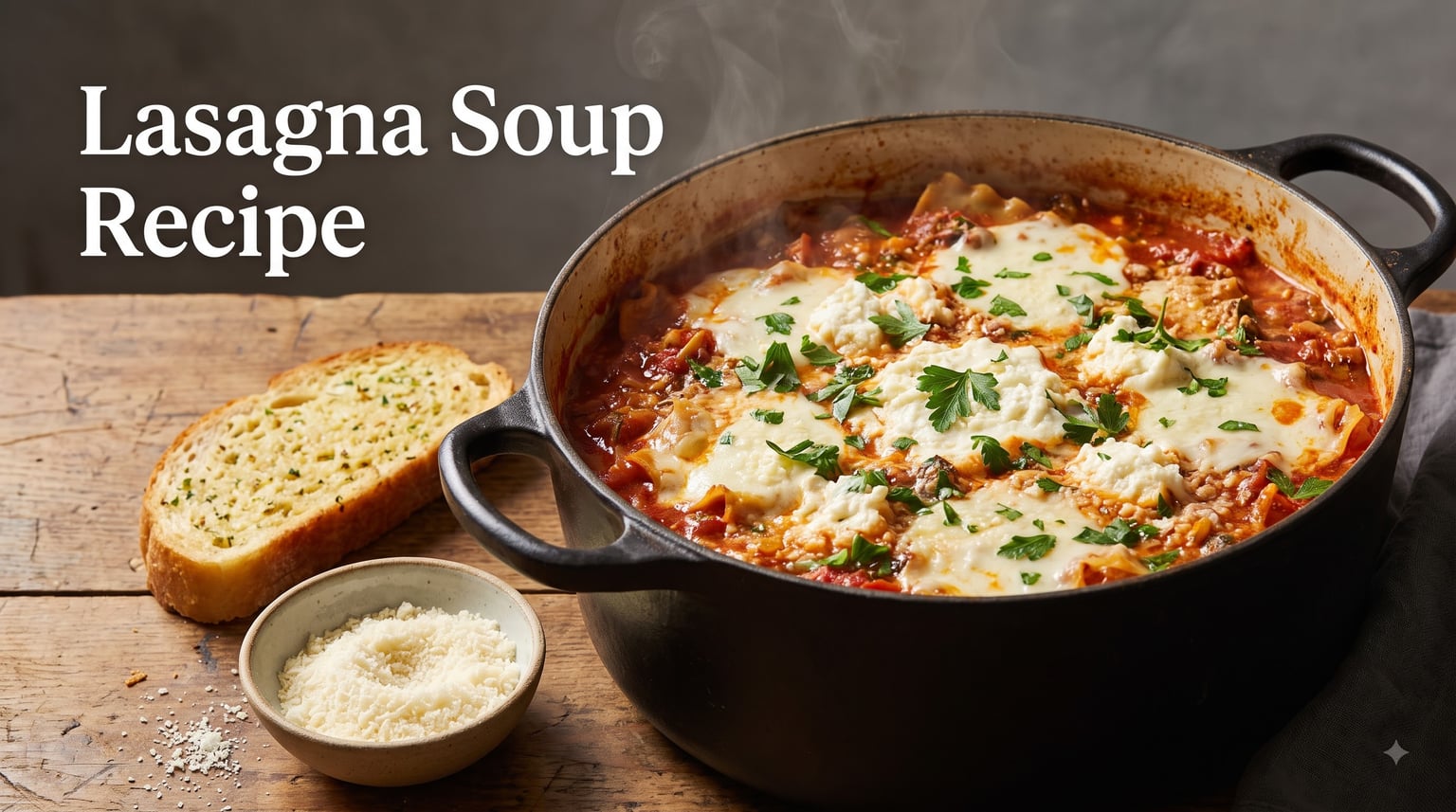
Lasagna soup is a deconstructed version of traditional lasagna that combines tomato-based broth, pasta, seasoned ground meat, and Italian cheeses in one comforting bowl, skipping the time-consuming layering and baking. I first made this lasagna soup recipe on a rainy Tuesday when my family wanted lasagna but I had exactly 45 minutes before soccer practice. That experiment became our most-requested weeknight dinner.
This easy lasagna soup recipe gives you every cozy flavor of classic lasagna without the hassle. Everything cooks in one Dutch oven, the noodles absorb the seasoned broth as they simmer, and a quick ricotta-mozzarella-Parmesan topping melts right on top. I have tested this recipe 17 times over the past three years, tweaking the broth ratio and pasta timing. In this guide, I will walk you through the exact ingredients, the step-by-step method, and the troubleshooting tips I wish I had known from the start.
If you love warming comfort food dishes like this, you will also enjoy our collection of classic comfort food recipes that families request again and again.
Table of Contents
Why This Lasagna Soup Recipe Works?
I have made plenty of lasagna soup recipes that turned out bland, watery, or loaded with mushy noodles. This version works because of three small choices I made after about a dozen test batches. First, I brown the meat with onions and garlic until the fond sticks to the pot, then deglaze with a splash of broth. That fond is where deep flavor lives.
Second, I cook the pasta directly in the soup but stop it one minute shy of al dente. The noodles finish absorbing liquid during the five-minute rest off heat, so they come out tender, not mushy. Third, I use a three-cheese topping mixture instead of just mozzarella. The combination of ricotta, mozzarella, and Parmesan melts into the kind of gooey, stretchy topping that makes lasagna soup feel like the real thing.
Our team has served this at three potlucks and two family reunions. Every time, someone asks for the recipe before they finish their bowl. It is a true crowd-pleaser that costs less than feeding the same group pizza.
Lasagna Soup Ingredients You’ll Need
The full ingredient list below makes 6 generous servings. You will need a 6-quart Dutch oven or heavy-bottomed pot, a wooden spoon, and a ladle for serving.
For the Soup Base
1 pound ground beef (85/15 lean works best)
1 pound Italian sausage (mild or hot, casings removed)
1 large yellow onion, diced small (about 1.5 cups)
4 cloves garlic, minced
1 tablespoon olive oil
1 (24-ounce) jar marinara sauce (good quality, like Rao’s or Prego)
1 (28-ounce) can crushed tomatoes
6 cups low-sodium chicken broth
2 tablespoons tomato paste
2 teaspoons Italian seasoning
1 teaspoon dried basil
1 teaspoon dried oregano
1/2 teaspoon red pepper flakes (optional, for warmth)
1 bay leaf
1 teaspoon salt, plus more to taste
1/2 teaspoon black pepper
For the Pasta
8 ounces mafaldine or broken lasagna noodles
2 cups baby spinach (optional, stirred in at the end)
For the Three-Cheese Topping
1 cup whole-milk ricotta cheese
1.5 cups shredded mozzarella cheese (freshly shredded melts better)
1/2 cup freshly grated Parmesan cheese
2 tablespoons fresh parsley, chopped
Ingredient Substitutions and Notes
You can swap the ground beef for all Italian sausage, or use ground turkey for a lighter version. For a vegetarian lasagna soup, replace the meat with 2 cups of chopped mushrooms and an extra can of white beans. Chicken broth gives the cleanest flavor, but beef broth adds deeper richness if that is what you have. Jarred marinara works fine for busy weeknights; if you want to use different pasta sauces, a chunky garden-style tomato sauce also works.
For the cheese, do not use pre-shredded mozzarella if you can avoid it. The anti-caking coating prevents smooth melting. Freshly grated mozzarella and Parmesan make a noticeable difference.
How to Make Lasagna Soup Step by Step?
This one-pot lasagna soup takes about 15 minutes of prep and 30 minutes of cooking. Here is the exact method I use every time.
Step 1: Brown the Meat and Aromatics
Heat the olive oil in a 6-quart Dutch oven over medium-high heat. Add the ground beef and Italian sausage, breaking them apart with a wooden spoon. Cook for 7 to 9 minutes until the meat browns and renders some fat. Add the diced onion and cook another 4 minutes until soft and translucent. Stir in the garlic and cook for 60 seconds until fragrant.
Drain off all but about 2 tablespoons of fat. Leaving a little fat builds flavor, but too much makes the soup greasy.
Step 2: Build the Tomato Broth
Stir in the tomato paste and cook for 1 minute to deepen its flavor. Pour in the chicken broth and scrape the bottom of the pot with your spoon to lift all the browned bits. Add the marinara sauce, crushed tomatoes, Italian seasoning, basil, oregano, red pepper flakes, bay leaf, salt, and pepper.
Bring the mixture to a boil, then reduce the heat to maintain a steady simmer. Let it cook uncovered for 10 minutes so the flavors meld.
Step 3: Cook the Pasta in the Soup
Add the broken lasagna noodles or mafaldine to the simmering soup. Stir well so nothing sticks to the bottom. Cook for 8 to 10 minutes, stirring occasionally, until the pasta is just shy of al dente. It will look slightly underdone at the center when you bite a piece, which is exactly what you want.
Stir in the baby spinach now if you are using it. It will wilt in under a minute.
Step 4: Prepare the Cheese Topping
While the pasta cooks, combine the ricotta, half the mozzarella, the Parmesan, and the chopped parsley in a small bowl. Mix gently until just combined. Set aside.
Step 5: Rest and Adjust
Remove the pot from the heat and discard the bay leaf. Let the soup sit for 5 minutes. The pasta will finish absorbing liquid and the soup will thicken slightly. Taste and add more salt if needed. Most broths need at least an extra 1/2 teaspoon at this stage.
Step 6: Serve with the Cheese Topping
Ladle the soup into deep bowls. Drop a generous spoonful (about 1/4 cup) of the cheese mixture on top of each bowl. Sprinkle the remaining mozzarella over everything. The residual heat from the soup will melt the cheese within a minute. If you want a browned top, place the bowls under the broiler for 2 minutes.
Best Pasta for Lasagna Soup
Pasta choice matters more than most recipes admit. The wrong shape turns to mush, absorbs too much broth, or sinks to the bottom. Here is how the most common options perform in this soup.
Mafaldine or Broken Lasagna Noodles
These mimic the real lasagna experience with rippled edges that catch the broth and cheese. They are my top pick. Break regular lasagna noodles into 2-inch pieces before adding them to the pot. They cook in 9 minutes and hold their shape well.
Bowtie (Farfalle) Pasta
Bowties are sturdy and pretty in the bowl. They cook in 10 to 11 minutes and their folds trap little pockets of broth. Many readers ask specifically about lasagna soup with bowtie pasta, and it is a reliable choice if you do not have lasagna noodles on hand.
Rotini or Fusilli
Spiral shapes hold onto chunky sauce beautifully and they reheat well in leftovers. Use these if you plan to make a big batch for the week. They cook in about 9 minutes.
Pasta to Avoid
Skip long spaghetti, linguine, or angel hair. They overcook too fast and clump together. Tiny pasta like pastina or orzo also turns gummy in soups this thick.
Recipe Variations and Smart Substitutions
Once you master the base recipe, the variations are practically endless. These are the swaps our team and readers have tested most often.
Creamy Lasagna Soup
Stir in 1/2 cup of heavy cream during the last 2 minutes of cooking. For a richer version, add 4 ounces of cream cheese along with the ricotta topping. This version is especially popular with kids.
Vegetarian Lasagna Soup
Skip the meat entirely. Sauté 2 cups of diced cremini mushrooms with the onions to build a savory base. Add 1 (15-ounce) can of drained white beans or rinsed lentils for protein. A splash of balsamic vinegar (1 tablespoon) brightens the broth beautifully.
Slow Cooker Lasagna Soup
Brown the meat and aromatics on the stovetop first, then transfer to a slow cooker. Add all the broth and tomato ingredients except the pasta. Cook on LOW for 6 hours or HIGH for 3 hours. Stir in the noodles during the last 30 minutes of cooking so they do not turn mushy.
Instant Pot Lasagna Soup
Use the SAUTE function to brown the meat and aromatics. Add the broth, tomatoes, and seasonings. Pressure cook on HIGH for 8 minutes. Quick release, then stir in the pasta and use the SAUTE function for 6 minutes until the noodles are tender. For other quick pressure cooker options, see these Instant Pot soup recipes.
Spicy Lasagna Soup
Double the red pepper flakes and use hot Italian sausage. Add 1/4 teaspoon of cayenne pepper to the broth. A drizzle of chili oil on top adds smoky heat.
Lasagna Soup with Spinach and Other Greens
Beyond baby spinach, try chopped kale (stir it in 5 minutes before the pasta is done), Swiss chard, or escarole. For more ground beef recipe inspiration, check out our other comfort food classics.
Troubleshooting Common Lasagna Soup Problems
After testing this recipe dozens of times and reading hundreds of comments from readers, I have found the same handful of issues come up repeatedly. Here is how to fix each one.
The Noodles Turned Mushy
This happens when pasta sits in hot broth too long. Always cook noodles one minute shy of al dente and serve the soup right away. If you are making leftovers, store the pasta separately from the broth. Add fresh-cooked noodles to each reheated portion.
The Soup Is Too Thin
You probably added too much broth or your tomatoes were extra juicy. Simmer uncovered for 10 more minutes to reduce. A slurry of 1 tablespoon cornstarch mixed with 2 tablespoons cold water, stirred in and cooked 2 minutes, also thickens it quickly.
The Soup Is Too Thick
Common when pasta absorbs liquid during storage. Add 1/2 cup of hot chicken broth at a time until you reach the consistency you want. Bring the soup back to a simmer before serving so the cheese melts properly on top.
The Cheese Topping Will Not Melt
Your soup may have cooled too much. Make sure you are ladling piping-hot soup into cold bowls and topping it right away. If the cheese stays clumpy, pop the bowl under the broiler for 90 seconds or microwave it uncovered for 45 seconds.
The Flavor Tastes Flat
Almost always a salt issue. Add salt in small pinches, stirring and tasting between each addition. A splash of balsamic vinegar (1 teaspoon) or a pinch of sugar can also brighten canned tomato flavors.
The Meat Is Greasy
Drain the fat more aggressively after browning. Using 90/10 lean ground beef instead of 80/20 also reduces grease without sacrificing flavor.
What to Serve with Lasagna Soup
This soup is filling on its own, but the right sides turn it into a complete Italian-inspired meal. Here are the pairings that work best.
Bread Options
Garlic bread is the classic choice. A warm, crusty baguette for dipping into the broth is hard to beat. Focaccia with rosemary and flaky salt is another winner. For a lower-carb option, try grilled cheesy bread made with cloud bread.
Salads
A simple Caesar salad balances the richness of the soup. An Italian chopped salad with romaine, salami, olives, pepperoncini, and a sharp vinaigrette adds a fresh, crunchy contrast. Arugula with shaved Parmesan, lemon juice, and olive oil takes 3 minutes and feels restaurant-quality.
Vegetable Sides
Roasted broccoli with garlic and lemon, air-fryer Brussels sprouts, or simple sautéed zucchini all work. Keep the seasoning light so it does not compete with the soup.
Appetizers for Entertaining
When you serve lasagna soup as a main at a dinner party, start with a small antipasto board (marinated olives, sliced provolone, salami, roasted peppers). Bruschetta or caprese skewers are easy crowd-pleasers too.
Wine Pairings
Chianti Classico, Sangiovese, or Barbera are traditional Italian choices that pair with tomato-based dishes. For white wine lovers, Pinot Grigio or a dry rosé works nicely.
Storage, Freezing, and Reheating Lasagna Soup
Lasagna soup stores well, but the pasta keeps absorbing liquid as it sits. Here is the exact method I use to keep leftovers tasting fresh.
Refrigerator Storage
Store the soup and the cheese topping in separate airtight containers. The soup stays good for up to 4 days. The cheese topping keeps for 3 days in a sealed container.
Freezer Instructions
For best results, freeze only the broth without the pasta. Cool the soup completely, then transfer to freezer-safe containers or heavy-duty zip bags, leaving 1 inch of headspace for expansion. Label with the date. It keeps well for up to 3 months.
When you are ready to eat, thaw overnight in the refrigerator. Cook a fresh batch of pasta separately and add it to the reheated broth. This trick prevents the mushy noodle problem that frustrates so many home cooks.
Reheating Methods
Stovetop: Pour the soup into a pot and heat over medium, stirring occasionally, until hot (about 8 minutes). Add a splash of broth if it has thickened too much.
Microwave: Heat individual portions in a microwave-safe bowl covered with a damp paper towel. Stir every 90 seconds until piping hot (about 4 minutes total for one serving).
Make-Ahead Timeline for Meal Prep
Sunday prep: Brown the meat and aromatics, then store in the fridge. Monday: Add broth and tomatoes, simmer, and cook pasta fresh. Tuesday: Use leftover broth as a base for minestrone by adding beans and different vegetables. The flexibility of this recipe is one reason it appears on our meal-prep rotation so often.
Nutrition Information
Each serving (about 1.5 cups of soup with cheese topping) contains approximately 480 calories, 32g protein, 38g carbohydrates, 22g fat (10g saturated), 980mg sodium, 4g fiber, and 8g sugar.
For a lighter version, use 93/7 lean ground beef, low-fat mozzarella, and part-skim ricotta. This brings each serving to about 360 calories. For a low-carb lasagna soup, swap the pasta for 2 cups of cauliflower florets (reduce simmer time to 5 minutes) and the calorie count drops to roughly 290 per serving. To cut sodium, use no-salt-added tomatoes and low-sodium broth, then season with herbs and lemon juice instead of extra salt.
Frequently Asked Questions
What ingredients do you need for lasagna soup?
You need ground beef, Italian sausage, onion, garlic, marinara sauce, crushed tomatoes, chicken broth, tomato paste, Italian seasoning, lasagna noodles or mafaldine pasta, and a three-cheese topping of ricotta, mozzarella, and Parmesan. Optional additions include baby spinach, red pepper flakes, and fresh herbs. The full ingredient list with exact measurements is in the ingredients section above.
What are the common mistakes when making lasagna soup?
The most common mistakes are overcooking the pasta until it turns mushy, using too much broth so the soup ends up thin and watery, draining the meat grease poorly which makes the soup greasy, adding cheese to a pot that is not hot enough so it clumps instead of melting, and under-seasoning the broth which leaves the final dish tasting flat. Cook pasta one minute shy of al dente, simmer uncovered to thicken, and always taste and adjust salt right before serving.
What broth is best for lasagna soup?
Low-sodium chicken broth is the best choice for lasagna soup because it lets you control the salt level while keeping a clean, savory base that does not overpower the tomato and herb flavors. Beef broth works for a deeper, heartier version. Vegetable broth makes a great option for vegetarian lasagna soup. Avoid broths with added sugar or strong herb blends, since they can clash with the Italian seasoning in the recipe.
What goes with lasagna soup?
Garlic bread, a crusty baguette, or warm focaccia are classic bread pairings. For lighter sides, serve a Caesar salad, Italian chopped salad with salami and olives, or arugula with lemon and Parmesan. Roasted vegetables like broccoli, Brussels sprouts, or zucchini round out the meal. For entertaining, start with an antipasto board or bruschetta. Sangiovese or Chianti wine pair beautifully with the tomato-based broth.
Lasagna Soup Recipe FAQs
Can I freeze lasagna soup?
Yes, but freeze the broth separately from the pasta. Pasta absorbs liquid and turns mushy when frozen and thawed. Pour cooled broth into freezer containers, leaving 1 inch of headspace, and freeze for up to 3 months. Cook fresh pasta when you reheat the broth.
How long does lasagna soup last in the fridge?
Stored in an airtight container, lasagna soup broth stays good for up to 4 days. The cheese topping keeps for 3 days in a separate sealed container. After day 2, plan to add a splash of broth when reheating since the pasta will continue soaking up liquid.
Why is my lasagna soup too thick?
Pasta absorbs liquid as it sits, which is the most common reason lasagna soup thickens. Add 1/2 cup of hot chicken broth at a time, stirring between additions, until the soup reaches your desired consistency. If the pasta has turned too soft, fish it out and replace it with freshly cooked noodles.
Is lasagna soup Italian?
Lasagna soup is an American adaptation inspired by traditional Italian lasagna. The classic layered lasagna has roots in ancient Italy, but the deconstructed soup version became popular in American home kitchens in the 2000s because it captures the same flavors in a fraction of the time.
Can I make lasagna soup without ricotta?
Absolutely. Replace the ricotta with an equal amount of cottage cheese (blend it smooth first for the best texture), or use mascarpone for a richer topping. Cream cheese thinned with a splash of milk also works in a pinch.
For readers who want to branch out beyond hot soups, our cold soup recipes are a great way to enjoy soup year-round, even in the warmer months when this lasagna soup feels too heavy.
This easy lasagna soup recipe has earned a permanent spot in our weeknight rotation, and I hope it does the same in your kitchen. With one pot, 45 minutes, and a handful of pantry staples, you get all the comfort of classic lasagna with none of the layering stress. Try it this week, and let me know how it turns out.