
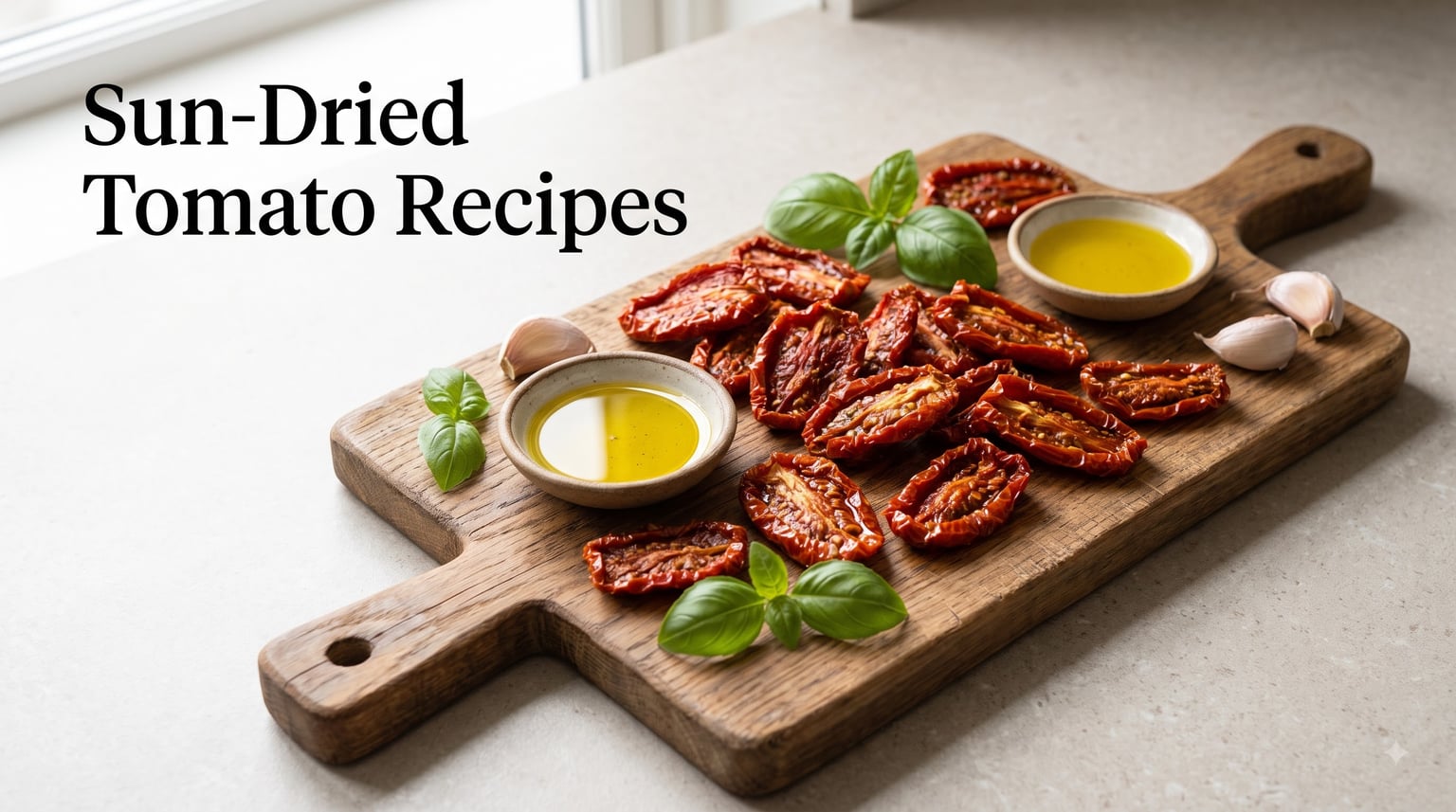
I still remember the first time I tasted a sun-dried tomato. It was on a focaccia sandwich at a tiny cafe, and that chewy, intensely savory bite changed how I thought about tomatoes forever. That one ingredient turned an ordinary sandwich into something I still think about years later.
If you have ever bought a jar of sun-dried tomatoes on impulse and then stared at them in your pantry wondering what to do, you are in the right place. Our team has spent months testing recipes, drying methods, and storage techniques to put together the most practical guide to sun-dried tomato recipes you will find.
In this guide, you will learn how to make your own sun-dried tomatoes at home, which tomato varieties work best, how to store them properly, and most importantly, dozens of creative ways to use them beyond the usual pasta. Whether you have a jar of oil-packed tomatoes from Costco or a handful of dry-packed ones from the farmers market, we have recipes and ideas for every situation.
Sun-dried tomato recipes are not just about pasta anymore. From dips and spreads to breads, egg dishes, and even sandwich inspiration from restaurants like Starbucks’ sun-dried tomato focaccia sandwich, these little flavor bombs deserve a permanent spot in your kitchen.
Table of Contents
What Are Sun-Dried Tomatoes?
Sun-dried tomatoes are ripe tomatoes that have lost most of their water content through a slow drying process. The result is a concentrated, intensely sweet and savory ingredient with a chewy texture and deep umami flavor.
Traditional sun-drying involves placing tomato halves in the sun for several days. Today, most home cooks and even commercial producers use low-temperature ovens or food dehydrators to achieve the same result in a fraction of the time.
What makes them special is the flavor concentration. A fresh tomato is mostly water, but when you remove that water, every bit of natural sweetness, acidity, and savory depth gets packed into a bite-sized piece. That is why a single sun-dried tomato can transform an entire dish.
You will find two main types at the store: oil-packed and dry-packed. Oil-packed tomatoes come submerged in olive oil, often with herbs and garlic, and they are softer and ready to use. Dry-packed tomatoes are sold in bags and have a leathery texture that usually requires rehydration before use.
Best Tomatoes for Sun-Drying
Not all tomatoes dry well. The best varieties for sun-dried tomato recipes are those with thick flesh, low moisture, and fewer seeds. Here is what our team recommends after testing several varieties.
Roma tomatoes are the gold standard for drying. They have a meaty texture, low water content, and minimal seed cavities. You get more dried tomato per pound of fresh fruit, and the flavor concentrates beautifully.
Cherry tomatoes are fantastic if you want bite-sized dried tomatoes for salads, pasta, and snacking. They dry faster than larger varieties and have a bright, sweet flavor that intensifies during drying. Cut them in half and place them cut-side up.
Campari tomatoes sit between Roma and cherry in size and offer a nice balance of sweetness and acidity. They dry well and produce a richly flavored result that works in almost any recipe.
Avoid large slicing tomatoes like beefsteak. They have too much water and too many seeds, which means longer drying times and a mushier final product. Stick with paste-type and smaller varieties for the best results.
Seasonal Considerations for Tomato Selection
The best time to make sun-dried tomatoes is late summer when tomatoes are at peak ripeness and lowest prices. Farmers markets overflow with Roma and cherry tomatoes in August and September, making it the perfect time to stock up and dry in bulk.
If you are making sun-dried tomato recipes in winter or spring, look for greenhouse-grown Romas or Campari tomatoes from the grocery store. They will not have the same depth as summer fruit, but they still produce excellent results.
How to Make Sun-Dried Tomatoes in the Oven?
Making sun-dried tomatoes at home is surprisingly simple. The oven method is the most accessible since every kitchen has one, and it produces results that rival anything you can buy at the store.
Here is our tried-and-tested method.
Step 1: Prepare the tomatoes. Wash and dry your tomatoes thoroughly. Cut Romas lengthwise in half, and cut cherry tomatoes in half as well. Use a spoon or your fingers to gently remove the seeds and gel from larger varieties. This speeds up drying and improves the final texture.
Step 2: Season them. Place the tomato halves cut-side up on a parchment-lined baking sheet. Drizzle with a small amount of olive oil and sprinkle with kosher salt. Add fresh herbs like thyme or rosemary if you want extra flavor. A pinch of black pepper or red pepper flakes adds a nice kick.
Step 3: Dry low and slow. Set your oven to 200 degrees Fahrenheit. Place the baking sheet in the oven and let the tomatoes dry for 6 to 8 hours. Check them every couple of hours after the 4-hour mark, since drying time varies based on tomato size and moisture content.
Step 4: Test for doneness. The tomatoes are done when they have shrunk significantly and have a leathery, slightly chewy texture. They should not be brittle or snap like a chip. If you want fully dried tomatoes for long-term storage, leave them in another hour or two until they are crisp.
Step 5: Cool and store. Let the tomatoes cool completely on the baking sheet before transferring them to storage containers. This prevents condensation from forming, which can lead to mold.
One batch fills your kitchen with an incredible aroma. My neighbor actually knocked on my door once to ask what I was cooking because it smelled so good.
Alternative Drying Methods: Dehydrator and Sun-Drying
The oven is not your only option. Here are two alternative methods that work just as well, depending on your equipment and climate.
Food Dehydrator Method
A food dehydrator gives you the most consistent results because it circulates warm air evenly around the tomatoes. Set your dehydrator to 135 to 140 degrees Fahrenheit and arrange the prepared tomato halves on the trays in a single layer.
Drying time in a dehydrator ranges from 8 to 12 hours. The advantage over the oven is that you free up your oven for other cooking, and the lower, controlled temperature produces a more even result. This is the method I reach for when I am doing a large batch from the farmers market.
Traditional Sun-Drying Method
If you live in a hot, dry climate with low humidity, you can dry tomatoes the old-fashioned way. Place seasoned tomato halves on a screen or rack elevated off the ground, cover them with cheesecloth to keep insects away, and leave them in direct sun for 4 to 10 days.
Bring them indoors at night to avoid moisture from evening dew. This method only works reliably in arid regions with daytime temperatures above 90 degrees. If humidity is high, the tomatoes may spoil before they dry.
For most home cooks, the oven or dehydrator methods are far more practical and produce consistent results regardless of weather.
Par-Dried vs Fully-Dried Tomatoes
One thing that confuses many home cooks is the difference between par-dried and fully-dried tomatoes. Understanding this distinction opens up more options for your sun-dried tomato recipes.
Par-dried tomatoes are dried until they are reduced in size but still soft and pliable. They retain some moisture, which gives them a tender, almost juicy texture. These are perfect for immediate use in pasta dishes, salads, and sandwiches. Store them in the refrigerator or freezer since their moisture content means they will not keep at room temperature.
Fully-dried tomatoes are crisp and leathery with almost all moisture removed. They have a longer shelf life and can be stored at room temperature in an airtight container. Before using, you typically rehydrate them in warm water, olive oil, or broth for 20 to 30 minutes.
Most store-bought oil-packed sun-dried tomatoes are par-dried. If you prefer that soft, ready-to-use texture, check your oven batch at around 6 hours and pull out the ones that feel right to you.
Oil-Packed vs Dry-Packed: What to Know
When you shop for sun-dried tomatoes, you will encounter two packaging styles. Each has its strengths and works better for different recipes.
Oil-packed tomatoes come in jars filled with olive oil, often with garlic, herbs, and spices. They are soft, ready to eat, and packed with flavor from the marinade. The infused oil itself is a treasure. Use it for salad dressings, sauteing vegetables, or drizzling over bread. These are ideal for quick recipes where you want maximum flavor with minimal prep.
Dry-packed tomatoes are sold in bags without oil. They have a longer shelf life and are usually more economical. You will need to rehydrate them or cook them in a sauce to soften them before use. These are great if you want to control the amount of oil in your recipes or if you are making your own flavored oil infusions.
For most sun-dried tomato recipes, oil-packed tomatoes are more convenient. But if you are buying in bulk or making a large batch of homemade dried tomatoes, dry-packed gives you more flexibility.
Sun-Dried Tomato Recipes and Usage Ideas
This is where the fun begins. Here are our favorite ways to use sun-dried tomatoes, organized by category so you can find exactly what you need.
Pasta Dishes
Sun-dried tomato pasta is the classic for a reason. The concentrated flavor turns a simple weeknight dinner into something special. Toss chopped sun-dried tomatoes with hot pasta, olive oil, garlic, and parmesan cheese for a five-ingredient meal that comes together in 15 minutes.
For a richer dish, make a cream sauce. Saute garlic in butter, add chopped sun-dried tomatoes, pour in heavy cream, and simmer until thickened. Toss with your favorite pasta and top with fresh basil and parmesan. This is the kind of sauce that restaurants like Carrabba’s built their reputation on with dishes like Chicken Bryan.
If you want something lighter, try sun-dried tomato pesto. Blend sun-dried tomatoes with fresh basil, garlic, pine nuts, parmesan, and olive oil. Toss with pasta or use it as a spread on sandwiches.
Spreads, Dips, and Condiments
One of the easiest sun-dried tomato recipes is a simple spread. Chop oil-packed tomatoes finely and mix them into softened cream cheese or goat cheese with a little garlic and fresh herbs. Spread it on crostini, crackers, or sandwiches for an instant appetizer.
For a Mediterranean-style condiment, combine chopped sun-dried tomatoes with olive oil, diced onion, dried thyme, and kosher salt. Let it sit for an hour to develop flavor, then use it as a topping for grilled chicken, fish, or roasted vegetables.
Hummus gets a major upgrade with sun-dried tomatoes blended right in. The result is a creamy, tangy dip with a beautiful reddish color that disappears fast at parties.
Bread and Baking
Sun-dried tomatoes add incredible flavor to homemade bread. Knead chopped tomatoes into focaccia dough, sourdough, or dinner rolls for a savory loaf that needs nothing but good olive oil for dipping.
If you enjoy bread baking, try adding sun-dried tomatoes and fresh rosemary to your next sourdough loaf. The combination is a bakery favorite and surprisingly easy to pull off at home.
Egg Dishes
Sun-dried tomatoes and eggs are a natural pairing. Fold chopped tomatoes into omelets, frittatas, and scrambled eggs. The concentrated flavor means a little goes a long way, and the savory depth pairs beautifully with cheese and fresh herbs.
For a weekend brunch, make a sun-dried tomato and goat cheese frittata. The tangy cheese and sweet tomatoes balance each other perfectly.
Sandwiches and Wraps
Sun-dried tomatoes elevate any sandwich. Layer them with mozzarella, fresh basil, and prosciutto on a ciabatta roll for an Italian-inspired sub. Or spread sun-dried tomato pesto on a wrap with grilled chicken and arugula.
Major chains have caught on to this. The sun-dried tomato sandwich on focaccia has been a staple at coffee shops and cafes for years because the flavor combination works so well.
Vegetable Sides and Salads
Toss sun-dried tomatoes into green salads, grain bowls, or roasted vegetable medleys. They add a punch of flavor that ties everything together without needing a heavy dressing.
For a hearty side dish, try stuffing vegetables with a sun-dried tomato and cheese filling. Our sun-dried tomato stuffed spaghetti squash is a reader favorite that works as a main or a side.
Chicken and Main Dishes
Sun-dried tomatoes and chicken are a classic restaurant pairing. Pan-sear chicken breasts, then make a quick pan sauce with sun-dried tomatoes, garlic, cream, and a splash of white wine. It tastes like something from a fine dining restaurant but takes 25 minutes.
For restaurant-inspired ideas, the Pasta Da Vinci at Cheesecake Factory uses sun-dried tomatoes in a rich cream sauce that you can easily recreate at home.
Flavor Pairings That Work
Sun-dried tomatoes play well with a wide range of ingredients. Knowing the best pairings helps you improvise your own sun-dried tomato recipes without always following a recipe.
Cheese pairings: Goat cheese, feta, mozzarella, parmesan, and ricotta are all excellent. The tangy creaminess of goat cheese is especially good, which is why sun-dried tomato and chèvre combinations show up in so many Mediterranean recipes.
Herb pairings: Fresh basil is the undisputed champion. Also try thyme, rosemary, oregano, and parsley. Dried herbs work too, but use them sparingly since the tomato flavor is already concentrated.
Other pairings: Garlic, olive oil, pine nuts, walnuts, capers, olives, artichoke hearts, prosciutto, anchovies, and red pepper flakes all complement sun-dried tomatoes beautifully.
Wine pairings: Medium-bodied reds like Chianti, Sangiovese, and Barbera work well with sun-dried tomato dishes. For white wine drinkers, a crisp Sauvignon Blanc or Pinot Grigio complements the tangy sweetness nicely.
How to Store Sun-Dried Tomatoes
Proper storage is the key to getting the most out of your sun-dried tomatoes. Many home cooks waste money by storing them incorrectly and losing them to mold or staleness.
Dry-packed tomatoes should go in an airtight container or zip-top bag. Store them in a cool, dark pantry for up to 6 months. For longer storage, keep them in the refrigerator for up to a year or freeze them indefinitely.
Oil-packed tomatoes need refrigeration after opening. Once you break the seal on the jar, transfer any remaining tomatoes and oil to the fridge and use them within 2 to 3 weeks. The oil may solidify in the cold, which is normal. Just let the jar sit at room temperature for 15 minutes before using.
Homemade tomatoes in oil require extra caution. If you pack your dried tomatoes in oil at home, always store them in the refrigerator and use them within 1 to 2 weeks. Homemade oil infusions carry a small risk of botulism if left at room temperature, unlike commercially processed jars that have been treated for safety.
Freezing is the best option for long-term storage of any type. Spread the tomatoes in a single layer on a baking sheet, freeze until solid, then transfer to a freezer bag. They keep for up to a year and thaw quickly when you need them.
Using the flavored oil from a jar of oil-packed tomatoes is one of the best kitchen secrets. That oil is infused with tomato, garlic, and herb flavor. Use it for sauteing, salad dressings, dipping bread, or finishing roasted vegetables. Never pour it down the drain.
Troubleshooting Common Problems
Even experienced cooks run into issues with sun-dried tomatoes. Here are solutions to the most common problems we have encountered and seen discussed in cooking forums.
Problem: Tomatoes turned out too salty. Some recipes call for salting the tomatoes before drying, but store-bought varieties can also be quite salty. To fix this, rinse the tomatoes briefly under warm water or soak them for 10 minutes before using. Adjust the salt in your recipe accordingly.
Problem: Mold appeared in storage. Mold means moisture was present. This usually happens with par-dried tomatoes stored at room temperature or homemade oil-packed tomatoes left out. Discard any moldy tomatoes immediately. To prevent it, make sure tomatoes are fully dry before room-temperature storage, and always refrigerate oil-packed varieties.
Problem: Dry-packed tomatoes are too tough. If your dry-packed tomatoes are hard as leather, they need rehydration. Soak them in warm water, broth, or wine for 20 to 30 minutes until they soften. You can also simmer them gently in a sauce, which softens them while infusing the sauce with flavor.
Problem: Oven-dried tomatoes burned. If the edges of your tomatoes are blackening, the oven temperature may be too high or they dried too long. Confirm your oven runs true to temperature with an oven thermometer. Check tomatoes every hour after the 4-hour mark, and remove smaller pieces that dry faster than larger ones.
Problem: Flavor is bland. Bland sun-dried tomatoes usually come from underripe fruit or a variety not suited for drying. Stick with Roma, cherry, or Campari tomatoes at peak ripeness. Adding olive oil, salt, and herbs before drying boosts flavor significantly.
Problem: Using oil-packed tomatoes without a blender. Many recipes call for blending sun-dried tomatoes into a paste, but not everyone has a food processor. Instead, finely chop them with a sharp knife, or place them in a zip-top bag and crush them with a rolling pin or heavy pan. They also mash well with a fork against a cutting board.
Frequently Asked Questions
What can I use my sun-dried tomatoes for?
You can use sun-dried tomatoes in pasta dishes, cream sauces, pesto, dips, spreads, sandwiches, salads, bread and focaccia, egg dishes like omelets and frittatas, chicken recipes, pizza toppings, and antipasto platters. They also work well blended into hummus, mixed into cream cheese for a quick appetizer spread, or chopped into grain bowls and roasted vegetable sides.
What meals can you make with sundried tomatoes?
Popular meals include sun-dried tomato chicken with cream sauce, sun-dried tomato pasta with garlic and parmesan, sun-dried tomato and goat cheese frittata, Mediterranean grain bowls, stuffed chicken breast, sun-dried tomato pesto pasta, focaccia sandwiches, and bruschetta. You can also stir them into risottos, soups, and casseroles for concentrated tomato flavor.
Is it worth it to make your own sun-dried tomatoes?
Yes, making your own sun-dried tomatoes is worth it if you have access to good quality Roma or cherry tomatoes at a low price, especially during summer farmers market season. Homemade sun-dried tomatoes taste fresher, let you control the salt and seasoning level, and cost significantly less than store-bought jars. A single batch from a few pounds of tomatoes can last months in the freezer.
Do I refrigerate sun-dried tomatoes after opening?
Oil-packed sun-dried tomatoes must be refrigerated after opening and used within 2 to 3 weeks. Dry-packed sun-dried tomatoes can be stored in a cool, dark pantry for up to 6 months but last longer in the refrigerator or freezer. Homemade oil-packed tomatoes should always be refrigerated and consumed within 1 to 2 weeks for safety.
Can you freeze sun-dried tomatoes?
Yes, sun-dried tomatoes freeze very well. Spread them in a single layer on a baking sheet, freeze until solid, then transfer to an airtight freezer bag. Both oil-packed and dry-packed varieties can be frozen for up to a year. This is the best option for preserving bulk purchases or large homemade batches.
How do I rehydrate sun-dried tomatoes?
To rehydrate dry-packed sun-dried tomatoes, soak them in warm water, broth, or wine for 20 to 30 minutes until they soften. For faster results, pour boiling water over them and let them sit for 10 minutes. You can also simmer them gently in a sauce or soup, which softens them while adding flavor to the liquid. Save the soaking liquid to use as a flavorful broth.
Wrapping Up: Making the Most of Sun-Dried Tomato Recipes
Sun-dried tomato recipes offer something few ingredients can match: intense, concentrated flavor that transforms ordinary dishes into memorable meals. Whether you make your own in the oven or grab a jar from the store, these versatile tomatoes deserve a permanent place in your kitchen.
Start simple. Pick one recipe from this guide, whether it is a quick pasta with garlic and parmesan or a goat cheese spread for your next gathering. Once you experience the depth of flavor these tomatoes bring, you will find yourself reaching for them again and again.
Remember the basics: choose meaty Roma or cherry tomatoes for drying, store oil-packed varieties in the fridge after opening, and never waste the flavored oil from the jar. With these fundamentals and the sun-dried tomato recipes in this guide, you have everything you need to turn that impulse jar purchase into dozens of delicious meals.