
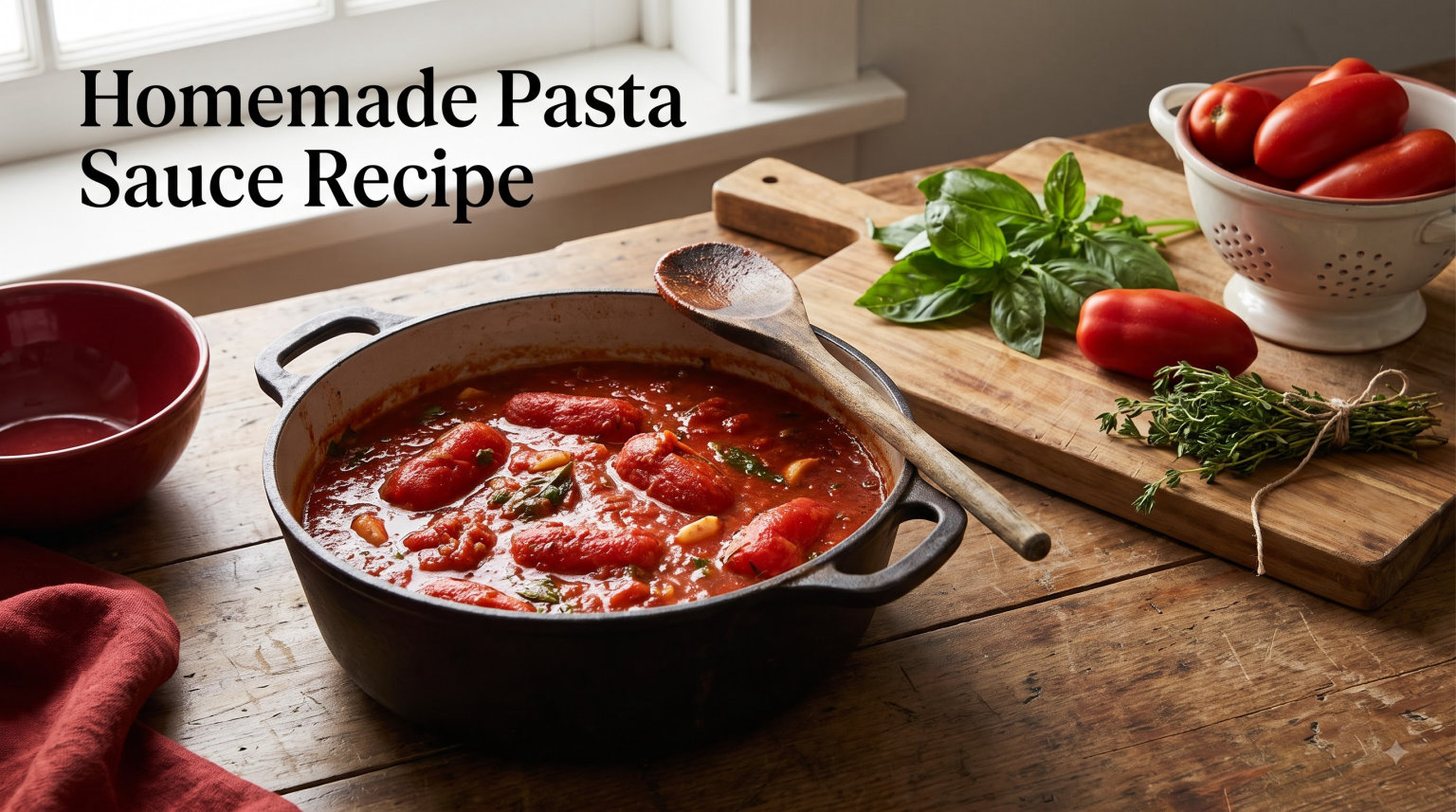
I have been making this homemade pasta sauce recipe for over a decade, and it has never let me down. It is the kind of sauce that turns a simple box of spaghetti into a meal that feels like it came from a neighborhood trattoria in Rome.
The secret is not in fancy equipment or expensive ingredients. It comes down to a few pantry staples, a bit of patience, and knowing when to let the tomatoes do the talking. Once you taste a sauce made from scratch, going back to the jar becomes really hard.
In this guide, I will walk you through every step of making an authentic Italian pasta sauce from scratch. We will cover ingredient selection, cooking technique, troubleshooting, storage, and variations so you can adapt this recipe to whatever you have on hand. If you want to explore types of pasta sauces beyond the classic red, this recipe is the perfect foundation.
Table of Contents
Why This Homemade Pasta Sauce Recipe Beats the Jar?
A homemade pasta sauce recipe gives you complete control over what goes into your food. No hidden sugars, no preservatives, no sodium bombs hiding in the ingredient list. Just tomatoes, aromatics, olive oil, and herbs working together the way they have for generations of Italian cooks.
The cost difference is real too. A good jar of marinara runs between four and seven dollars for about 24 ounces. Making the same amount from scratch costs roughly one to two dollars if you buy quality canned tomatoes on sale. That adds up fast when pasta is a weekly staple in your house.
Then there is the flavor. Jarred sauces are cooked for shelf stability, not for taste. They sit in warehouses for months, losing whatever brightness they once had. A sauce simmered on your stove for 30 to 45 minutes tastes alive. It has depth from the caramelized tomato paste, a slight sweetness from the onion, and a fresh finish from basil stirred in at the end.
I started making my own sauce because I was tired of reading labels and being disappointed. After a few attempts, I realized the process is genuinely simple, and the results blow anything from a jar out of the water.
The Best Ingredients for Homemade Pasta Sauce Recipe
Great sauce starts with great ingredients. You do not need a long shopping list, but the quality of each item matters. Here is exactly what I use and why.
Canned Tomatoes: The Foundation
Canned San Marzano tomatoes are the gold standard for a reason. Grown in volcanic soil near Mount Vesuvius, they have a natural sweetness and lower acidity than other varieties. Look for the DOP certification on the can, which guarantees authenticity.
If San Marzanos are not available or fit your budget, high-quality crushed tomatoes or whole peeled tomatoes work well. I prefer whole peeled because you control the texture. Crush them by hand for a rustic sauce, or use an immersion blender for something smoother.
Avoid diced tomatoes for this recipe. They are treated with calcium chloride to hold their shape, which prevents them from breaking down into a proper sauce consistency.
Fresh vs Canned Tomatoes
Many people ask whether fresh tomatoes work better than canned. The honest answer is that canned usually produce a better sauce year-round. Fresh tomatoes only shine when they are in peak season, which means late summer in most regions.
Canned tomatoes are picked and processed at peak ripeness, locking in flavor. Out of season, fresh tomatoes are pale, mealy, and bland. If you do use fresh, choose Roma or San Marzano varieties, roast them first to concentrate flavor, and peel them before cooking.
Aromatics and Herbs
Yellow onion provides a mellow sweetness that balances the tomatoes. Shallot works too if you want a more delicate flavor. I use one medium onion, finely diced, for every 28 ounces of tomatoes.
Garlic is non-negotiable. Three to four cloves, thinly sliced, infused into warm olive oil creates the flavor base for everything else. Add red pepper flakes if you want a gentle heat that does not overwhelm the sauce.
For herbs, fresh basil stirred in at the end makes a noticeable difference. Dried oregano added during cooking brings an earthy note. Italian seasoning blends work in a pinch, but individual dried herbs give you more control over the final taste.
The Secret Ingredients
Tomato paste is my not-so-secret weapon. A tablespoon or two, caramelized in the oil before adding the tomatoes, deepens the flavor dramatically. It concentrates the umami and gives the sauce a rich, brick-red color.
A pinch of sugar or a grated carrot helps balance acidity. I prefer the carrot because it adds natural sweetness without making the sauce taste sugary. A tablespoon of butter swirled in at the end rounds everything off with a silky finish.
Good extra-virgin olive oil ties everything together. Use it for sauteing the aromatics and for finishing. The oil carries flavor and gives the sauce body.
How to Make Homemade Pasta Sauce Recipe Step by Step?
This is the method I use every single time. It takes about 45 minutes from start to finish, with only 15 minutes of active cooking. The rest is hands-off simmering time.
What You Need
Equipment: a large heavy-bottomed pot or Dutch oven, wooden spoon, can opener, and optionally an immersion blender. A heavy pot distributes heat evenly and prevents scorching on the bottom.
Ingredients: 2 tablespoons extra-virgin olive oil, 1 medium yellow onion (finely diced), 4 cloves garlic (thinly sliced), 1 teaspoon red pepper flakes (optional), 2 tablespoons tomato paste, 2 cans (28 ounces each) whole peeled San Marzano tomatoes, 1 teaspoon dried oregano, 1 medium carrot (grated), 1 teaspoon kosher salt, half teaspoon black pepper, 1 tablespoon butter, and a handful of fresh basil leaves.
Step 1: Build the Flavor Base
Heat the olive oil in your pot over medium heat until it shimmers. Add the diced onion and cook for 5 to 7 minutes, stirring occasionally, until soft and translucent. You want sweat, not brown.
Add the sliced garlic and red pepper flakes. Cook for 60 seconds, just until the garlic is fragrant. If the garlic browns, it turns bitter, so keep the heat at medium and watch closely.
Step 2: Caramelize the Tomato Paste
Stir in the tomato paste and cook for 2 to 3 minutes. The paste will darken and stick slightly to the bottom of the pot. This caramelization step is what separates a flat sauce from one with real depth. Do not skip it.
Step 3: Add the Tomatoes
Carefully add the whole peeled tomatoes, crushing each one by hand as you drop it into the pot. The juice will sizzle when it hits the hot pan. Use a wooden spoon to scrape up any browned bits from the bottom, because that is pure flavor.
Stir in the grated carrot, dried oregano, salt, and pepper. The carrot will melt into the sauce as it cooks, adding sweetness and body without any visible texture.
Step 4: Simmer and Develop Flavor
Bring the sauce to a gentle bubble, then reduce the heat to low. Partially cover the pot and let it simmer for 30 to 45 minutes. Stir every 10 minutes to prevent sticking. The sauce will thicken as water evaporates and the flavors concentrate.
If the sauce gets too thick, add a splash of water or pasta cooking water. If it is too thin, simmer uncovered for another 10 minutes. Taste and adjust the salt near the end of cooking, because the flavor concentrates as the sauce reduces.
Step 5: Finish and Serve
Remove the pot from the heat. Stir in the butter until melted, then tear the fresh basil leaves and stir them in. The residual heat releases the basil oils without cooking away the fresh flavor.
If you prefer a smoother sauce, use an immersion blender to reach your desired consistency before adding the basil. I like a rustic texture with some chunks, but smooth is just as valid.
Pro Tips for Restaurant-Quality Sauce
After years of making this sauce, I have picked up a handful of techniques that take it from good to genuinely memorable.
Taste as you go. The single most important habit in cooking is adjusting seasoning throughout the process, not just at the end. Tomatoes vary in acidity and sweetness from can to can, so trust your palate over any recipe.
Save pasta cooking water. Before draining your pasta, scoop out a cup of the starchy water. Adding a splash to the sauce when tossing with pasta helps it cling to every strand. The starch emulsifies with the oil and creates a silky coating.
Do not rush the simmer. The difference between a 15-minute sauce and a 45-minute sauce is enormous. Time allows the tomatoes to break down, the herbs to infuse, and the flavors to marry. If you want fresh pasta techniques to pair with this sauce, making both from scratch is a game-changer for weeknight dinners.
Finish with fat. That tablespoon of butter at the end is not optional in my kitchen. It rounds the acidity, adds richness, and gives the sauce a glossy appearance. A drizzle of good olive oil works too.
Let it rest. If you have time, make the sauce a day ahead. Overnight, the flavors meld and deepen in a way that simply does not happen on the stove. Reheat gently before serving.
Troubleshooting Common Pasta Sauce Problems
Even experienced cooks run into issues. Here are the most common problems I hear about and how I fix them.
My Sauce Is Too Acidic
This is the number one complaint, and the fix is simple. Add a pinch of sugar, a grated carrot, or a pat of butter. All three reduce perceived acidity by adding sweetness or richness. Start with a small amount and taste before adding more.
Using San Marzano tomatoes in the first place helps enormously, because they are naturally lower in acidity than standard canned varieties.
My Sauce Is Too Watery
If your sauce is thin, you likely did not simmer long enough. Remove the lid and let it reduce for another 10 to 15 minutes. The water will evaporate and the sauce will thicken naturally.
If you are short on time, a tablespoon of tomato paste stirred in and simmered for 5 minutes adds body quickly. Avoid using flour or cornstarch, because they dull the flavor.
My Sauce Is Bland
A flat-tasting sauce usually needs more salt, more umami, or more time. First, add salt in small increments and taste after each addition. If that does not help, try a teaspoon of tomato paste or a splash of soy sauce for depth.
Sometimes the sauce just needs longer to cook. Flavor development happens slowly, so give it another 15 minutes on low heat.
Storing and Freezing Homemade Pasta Sauce
One of the best things about this recipe is that it scales beautifully. I always make a double batch because the storage options are excellent.
Refrigerator Storage
Let the sauce cool completely, then transfer it to an airtight container. It keeps in the refrigerator for up to 5 days. In my experience, the flavor actually improves on day two as the ingredients continue to meld.
Freezer Storage
This sauce freezes exceptionally well. Portion it into freezer-safe containers or zip-top bags, leaving an inch of space for expansion. Lay bags flat to freeze, and they stack neatly in the freezer.
Frozen sauce keeps for up to 6 months. Thaw overnight in the refrigerator, or reheat directly from frozen in a pot over low heat. Add a splash of water if it seems too thick after reheating.
I freeze sauce in 2-cup portions, which is exactly enough for one pound of pasta. This makes weeknight dinners effortless, since you can grab a portion, thaw it, and have dinner ready in the time it takes to boil water.
Serving Suggestions and Variations
This homemade pasta sauce recipe is a versatile base. Toss it with spaghetti for a classic weeknight dinner, or use it as the sauce layer in lasagna recipes that call for homemade sauce.
For a heartier version, brown Italian sausage or meatballs and simmer them directly in the sauce for the last 20 minutes. The meat flavors the sauce and the sauce flavors the meat. It is a two-way street of deliciousness.
Try it over polenta with grilled sausages, spooned over chicken parmesan, or spread on pizza dough as a base. If you are looking for other homemade pasta sauces, pesto makes a great alternative when you want something green and fresh.
For a regional variation, add a splash of red wine with the tomatoes for a Tuscan-style sauce. Stir in a cup of heavy cream at the end for a pink vodka-style sauce. Or add capers, olives, and anchovies for a puttanesca twist.
Frequently Asked Questions
How to make good pasta sauce from scratch?
Start by sauteing diced onion and sliced garlic in olive oil until soft. Add tomato paste and cook until caramelized, then add crushed canned tomatoes, dried oregano, a grated carrot, salt, and pepper. Simmer for 30 to 45 minutes, then finish with butter and fresh basil. The key steps are caramelizing the paste and giving the sauce enough time to simmer.
What is the famous 4 ingredient pasta sauce?
The famous 4 ingredient pasta sauce, popularized by Marcella Hazan, uses just canned tomatoes, an onion cut in half, butter, and salt. You simmer the tomatoes with the halved onion and butter for about 45 minutes, then discard the onion. It is stunningly simple and proves that quality ingredients need very little help.
What is the secret to really good spaghetti sauce?
The secret comes down to three things: quality canned tomatoes (San Marzano if possible), caramelized tomato paste for depth, and enough simmering time. A pinch of sugar or grated carrot balances acidity, and finishing with butter and fresh basil adds richness and brightness. Do not skip the simmer.
How to make a really easy pasta sauce?
For the easiest version, heat olive oil with sliced garlic and red pepper flakes for one minute, add a can of crushed tomatoes with salt and pepper, and simmer for 15 minutes. Stir in fresh basil and butter at the end. It takes 20 minutes total and tastes better than any jar.
Can I freeze homemade pasta sauce?
Yes, homemade pasta sauce freezes beautifully for up to 6 months. Let it cool completely, portion it into freezer-safe containers or bags, and thaw overnight in the refrigerator before reheating gently on the stove.
How long should pasta sauce simmer?
For the best flavor, simmer pasta sauce for at least 30 to 45 minutes. A quick 15-minute simmer works for a fast weeknight version, but the full 45 minutes allows the tomatoes to break down, the herbs to infuse, and the flavors to develop real depth.
Conclusion
This homemade pasta sauce recipe is the one I come back to again and again because it is simple, reliable, and genuinely better than anything from a jar. Quality tomatoes, caramelized paste, enough simmer time, and a butter finish are all you need to create a sauce worth building dinner around.
Start with the base recipe, then make it your own. Add meat, swap herbs, try different tomato varieties, or experiment with regional variations. Once you have the technique down, the possibilities are endless. Grab a pot, open a can of good tomatoes, and give it a try tonight. Your weeknight dinners will never be the same.