
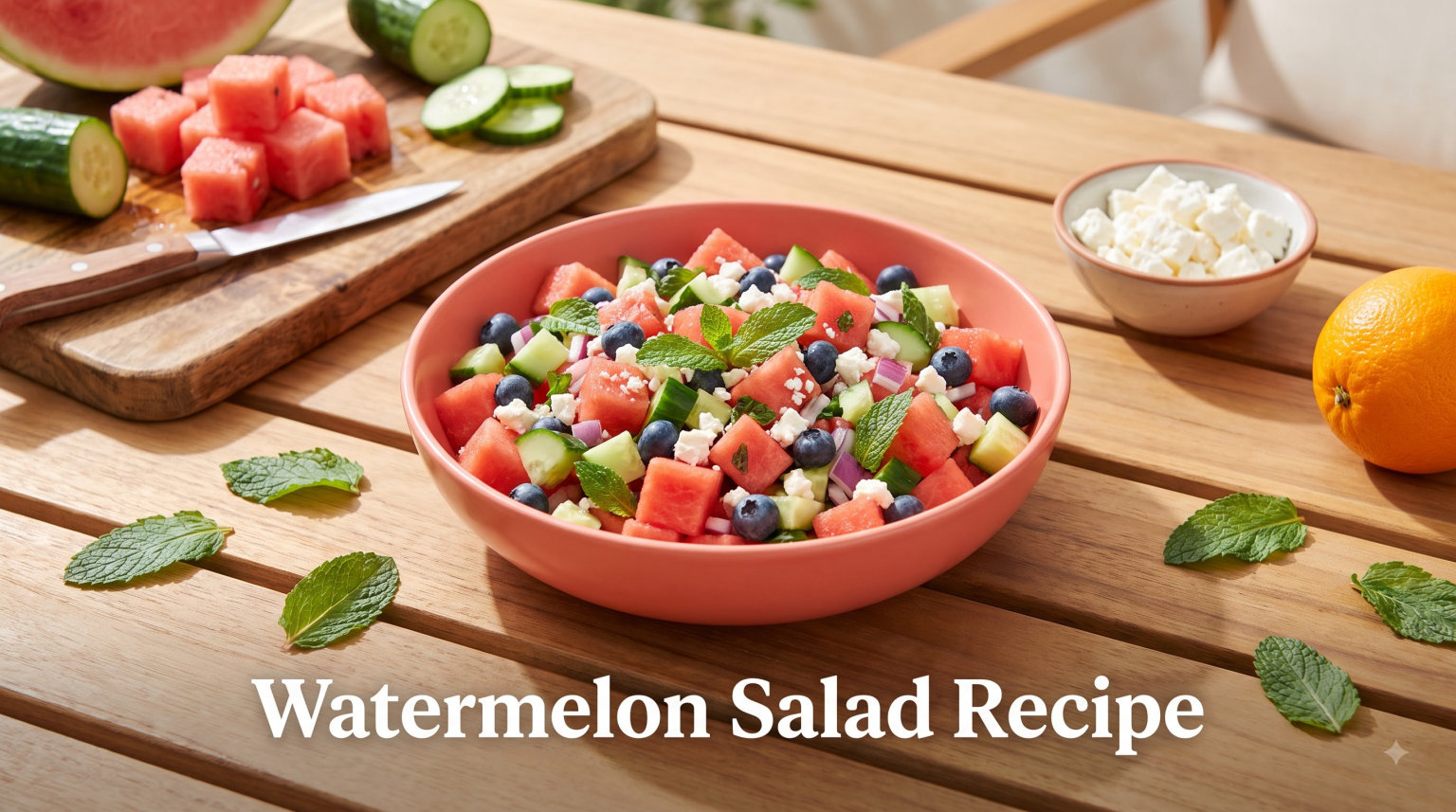
Nothing says summer quite like a cold, juicy bowl of watermelon. But cube that watermelon, toss it with salty feta and fresh herbs, and you have something far more memorable. This watermelon salad recipe has been my go-to potluck dish for years, and it disappears every single time.
I have tested this recipe more times than I can count across backyard barbecues, beach picnics, and weeknight dinners. What follows is the version that consistently gets recipe requests from friends and family. It takes about 15 minutes, needs zero cooking, and works with ingredients you can grab at any grocery store.
Whether you are new to the sweet-and-salty combo or you already love watermelon feta salad, this guide covers everything. I will walk you through ingredient selection, step-by-step instructions, substitutions for dietary needs, make-ahead strategies, and the pairing ideas that make this dish shine at any summer gathering.
If you enjoy simple summer sides, you might also like our 3-ingredient macaroni salad for another quick potluck favorite.
Table of Contents
What Is Watermelon Salad?
A watermelon salad is a refreshing summer salad that combines sweet, cubed watermelon with salty cheese (typically feta), crisp vegetables, and fresh herbs tossed in a light citrus dressing. The dish relies on the contrast between sweet and salty flavors, creating a balance that works surprisingly well together.
The natural sweetness of the watermelon plays off the briny creaminess of feta cheese, while herbs like mint and basil add brightness. A simple dressing of extra virgin olive oil, fresh lime juice, and a touch of honey ties everything together without weighing down the delicate ingredients.
This salad draws inspiration from Mediterranean flavors, where fruit and cheese pairings are common. It requires no cooking, which makes it perfect for hot days when you want to keep the kitchen cool. The result is a light, hydrating dish that works as a side or even a light main course.
Why This Watermelon Salad Recipe Works?
The magic of this watermelon salad recipe comes down to contrast. Watermelon is roughly 92 percent water, which means it is naturally cooling and refreshing. Pair that with the sharp saltiness of feta and you get a sweet and salty combination that keeps every bite interesting.
I have found that the key is restraint with the dressing. Many recipes drown the salad in liquid, which dilutes the flavors and makes everything watery. A light hand with olive oil and lime juice lets the watermelon and feta do the heavy lifting.
This recipe also works for almost any dietary preference. It is naturally vegetarian and gluten-free. With a few simple swaps, which I cover below, you can make it vegan, dairy-free, or lower in sodium. That flexibility is a big reason it has become my default dish for gatherings where I am not sure about everyone’s preferences.
Beyond taste, there is a practical side. Watermelon salad is hydrating, low in calories, and packed with vitamins A and C. It feels indulgent but is genuinely one of the healthier options at a summer cookout.
Watermelon Salad Recipe Ingredients
Here is everything you need for a watermelon salad that serves 6 to 8 people. The ingredient list is short, which means quality matters. I will walk through each component and share tips for picking the best versions.
The Core Ingredients
Seedless watermelon (about 6 cups cubed): This is the star of the dish. Look for a watermelon that feels heavy for its size, has a creamy yellow spot on the bottom (the field spot), and sounds hollow when tapped. A ripe watermelon should give a deep, resonant thud.
I prefer seedless watermelon for salads because it saves time and makes eating easier. If you only have seeded watermelon, just remove the seeds as you cube it. Either way, aim for uniform cubes about 1 inch thick so each bite has a good mix of ingredients.
One thing I learned the hard way is that watermelon quality varies enormously. A underripe melon will be crisp but bland, while an overripe one turns mushy fast. The field spot test is the most reliable indicator I have found. A deep yellow or orange spot means it ripened on the ground in the sun.
Feta Cheese
Crumbled feta cheese (1 cup): Feta provides the salty counterpoint that makes this salad work. I recommend block feta that you crumble yourself rather than pre-crumbled feta. Block feta retains more moisture and has a creamier texture.
For the best results, look for feta packed in brine, which tends to be higher quality than dry-crumbled options. Greek feta is made with sheep’s milk and has a tangy, slightly sharp flavor. French feta is milder and creamier. Both work well, so pick based on your preference.
If feta is too salty for your taste, soak the block in cold water for 10 minutes before crumbling. This pulls out excess salt without losing flavor. I do this regularly when serving the salad to kids or people watching their sodium intake.
English Cucumber
English cucumber (1 large, diced): English cucumbers are my pick over regular cucumbers because they have thinner skins, fewer seeds, and less water content. That means they add crunch without making the salad soggy.
If you cannot find an English cucumber, a regular cucumber works fine. Just peel it, scoop out the seeds with a spoon, and dice the flesh. Seed the cucumber over a bowl so the water drains away rather than into your salad.
Red Onion
Red onion (1/4 cup, thinly sliced): Red onion adds a sharp bite and a pop of color. I use a small amount because raw onion can easily overpower the delicate flavors of this salad.
One trick I always use is soaking the sliced onion in cold water for 5 to 10 minutes before adding it. This mellows the harsh bite while keeping the crunch and color. It is a small step that makes a noticeable difference, especially for guests who find raw onion too strong.
Fresh Herbs
Fresh mint leaves (1/4 cup, chopped) and fresh basil (1/4 cup, chopped): The herb combination is what gives this salad its fresh, summery character. Mint adds a cooling element that pairs naturally with watermelon, while basil brings a subtle peppery sweetness.
I use both herbs because together they create more dimension than either one alone. If you have to choose, go with mint, which is the more classic pairing. Cilantro and dill are also worth experimenting with for different flavor profiles.
Always use fresh herbs, never dried, for this recipe. Dried herbs will not provide the brightness this salad needs. Chop the herbs right before assembling to prevent them from wilting or turning dark.
The Honey Lime Dressing
Extra virgin olive oil (2 tablespoons), fresh lime juice (2 tablespoons), honey (1 tablespoon), and sea salt (1/2 teaspoon): The dressing is intentionally simple. Good olive oil provides richness, lime juice adds acidity, honey balances the tartness, and a pinch of salt ties it all together.
I whisk the dressing in a small bowl before adding it to the salad so the honey fully dissolves into the lime juice. This prevents pockets of concentrated honey from landing on individual bites.
If you want to explore more dressing ideas beyond the basics, our collection of exotic fruit recipes includes several citrus-based dressings that pair beautifully with watermelon.
Optional Add-Ins
These ingredients are not required, but they add great texture and flavor. Pick one or two rather than loading up the salad.
Avocado (1, diced): Adds creaminess and makes the salad more filling. Add it right before serving to prevent browning.
Serrano pepper or jalapeno (1, finely minced): Adds a spicy kick that plays beautifully against the sweet watermelon. Remove the seeds for less heat.
Pistachios or toasted walnuts (1/4 cup): Adds crunch and nutty depth. Toast them lightly in a dry pan for the best flavor.
Balsamic glaze (for drizzling): A popular alternative to the lime dressing. The syrupy sweetness and tang of balsamic pairs wonderfully with watermelon and feta.
How to Make Watermelon Salad?
Learning how to make watermelon salad is straightforward. The entire process takes about 15 minutes from start to finish. Here is the step-by-step method I use every time.
Step 1: Prep the Watermelon
Cut the watermelon into 1-inch cubes, removing the rind and any seeds. Aim for uniform pieces so the salad looks polished and every bite is balanced. A sharp knife makes this much easier and safer.
Place the cubed watermelon in a colander set over a bowl for 5 minutes. This lets excess juice drain off, which prevents the finished salad from becoming watery. I started doing this after one too many soggy batches, and it makes a real difference.
Transfer the drained watermelon to a large serving bowl. Make sure the bowl is large enough to toss everything without ingredients spilling over the sides.
Step 2: Prepare the Vegetables
Dice the English cucumber into pieces roughly the same size as the watermelon cubes. Consistent sizing matters here because it ensures even distribution and a professional look.
Thinly slice the red onion and soak the slices in a small bowl of cold water. Let them sit while you prepare the rest of the ingredients. Drain the onion well before adding it to the salad.
If you are adding serrano pepper or jalapeno, mince it finely now. Remember that the heat distributes as the salad sits, so start with less if you are unsure.
Step 3: Make the Honey Lime Dressing
In a small bowl, whisk together the fresh lime juice, honey, and sea salt until the honey is fully dissolved. Slowly drizzle in the extra virgin olive oil while whisking constantly to create a smooth emulsion.
Taste the dressing on a piece of watermelon before dressing the whole salad. This lets you adjust the balance of sweet, salty, and acidic to your liking. Add more honey if it is too tart, more lime if it needs brightness, or more salt if the flavors feel flat.
The dressing can be made up to 3 days ahead and stored in the refrigerator. Bring it to room temperature before using, as cold olive oil will seize and not blend properly.
Step 4: Chop the Herbs
Roughly chop the fresh mint and basil leaves just before assembling. Chopping releases the essential oils, so doing it at the last minute preserves the most flavor. A sharp knife prevents bruising, which causes herbs to turn dark and lose vibrancy.
Stack the leaves, roll them into a tight cylinder, and slice across to create a chiffonade. This technique produces thin, attractive ribbons that distribute evenly through the salad.
Step 5: Crumble the Feta
If using block feta, crumble it with your fingers into bite-sized pieces. Avoid crumbling it too finely, as larger pieces hold their texture better and provide satisfying bursts of saltiness.
If you soaked the feta in water to reduce saltiness, pat it dry with a paper towel before crumbling. Excess moisture will thin the dressing and make the salad watery.
Step 6: Assemble the Watermelon Salad
Add the cucumber, drained red onion, and chopped herbs to the bowl with the watermelon. Toss gently with a large spoon or your hands to combine without breaking the watermelon cubes.
Add most of the crumbled feta, reserving a small handful for garnish. Toss again lightly. Drizzle the dressing over the top and fold everything together with a few gentle turns.
If you are adding avocado, nuts, or balsamic glaze, do so now. Fold them in carefully. Taste and adjust the seasoning with a bit more salt or lime juice if needed.
Step 7: Serve
Transfer the salad to a serving platter or shallow bowl. Sprinkle the reserved feta on top along with a few extra herb leaves for a fresh look. Serve immediately for the best texture and flavor.
This salad is best at room temperature or slightly chilled. Ice-cold watermelon mutes the flavors, so if you have been storing ingredients in the fridge, let them sit out for 15 minutes before assembling.
Watermelon Salad Variations and Substitutions
One of the best things about this watermelon salad recipe is how easily it adapts. Whether you are working around dietary restrictions, ingredient availability, or just personal taste, there is a version that works.
Cheese Alternatives Beyond Feta
Feta is the classic choice, but several other cheeses pair beautifully with watermelon. Each brings a different personality to the salad.
Goat cheese: Softer and tangier than feta, with a creamier texture. Crumble it generously. It melts slightly into the dressing, creating a richer salad.
Halloumi: Grill slices of halloumi and layer them on top. The salty, squeaky cheese adds a warm element and satisfying chew that contrasts the cold watermelon.
Blue cheese: For bold flavor lovers, crumbled blue cheese adds a pungent kick. Use it sparingly, as it can dominate. If you enjoy bold salad flavors, check out our best blue cheese dressings for more ideas.
Cotija: A Mexican aged cheese with a crumbly texture and salty bite. It works especially well if you are taking the salad in a Latin direction with cilantro and lime.
Vegan option: Use a plant-based feta alternative or omit the cheese entirely and add a generous pinch of flaky sea salt. The salad is still delicious without dairy, especially with avocado for creaminess.
Herb Swaps
Mint and basil are my default, but other herbs open up entirely new flavor directions. Try cilantro for a Mexican-inspired version, dill for a Greek twist, or tarragon for an unexpected anise note.
Avoid using too many herbs at once. Two varieties is the sweet spot. More than that and the flavors compete rather than complement each other.
Dietary Modifications
Vegan: Skip the feta or use a vegan alternative. Replace honey with maple syrup or agave in the dressing. The salad is still bright and satisfying.
Dairy-free: Omit the cheese and add avocado or toasted nuts for richness. A sprinkle of nutritional yeast can add a savory depth.
Lower sodium: Reduce or soak the feta as described above. Go easy on the added salt in the dressing and let the herbs provide flavor.
Add-In Ideas from Real Home Cooks
I have gathered ideas from cooking forums and community discussions, and these are the variations that home cooks rave about most:
Grilled watermelon: Sear watermelon slices on a hot grill for 2 minutes per side. The heat caramelizes the sugars and adds smoky depth. Dice and use in place of raw watermelon for a completely different salad.
Arugula base: Toss the salad over a bed of arugula for peppery contrast and more substance. This turns a side dish into a light main course.
Berries: Add fresh blueberries or raspberries for extra sweetness and color. This works especially well for a fruit-forward salad.
Protein additions: Grilled chicken or shrimp turns this into a full meal. Toss the protein in right before serving so it does not sit in the dressing.
For more inspiration rooted in classic cooking traditions, browse our timeless vintage recipes for ideas that have stood the test of time.
What to Serve with Watermelon Salad
This watermelon salad recipe works as a side dish for almost any summer meal. The sweet, salty, and refreshing profile pairs well with grilled mains, light proteins, and other warm-weather sides.
BBQ and Grilled Mains
Watermelon salad is a natural companion to grilled food. The cool, juicy contrast cuts through the richness of grilled meats beautifully.
Serve it alongside grilled chicken breasts, burgers, or BBQ ribs. The acidity from the lime dressing acts as a palate cleanser between bites of smoky, charred protein. At my last cookout, this salad sat next to grilled jerk chicken and the combination was outstanding.
Grilled shrimp skewers are another great match. The sweetness of the shrimp echoes the watermelon, while the herbs complement any marinade you use.
Light Meal Pairings
For a lighter meal, pair the salad with a simple grain dish like couscous or quinoa. The salad provides freshness while the grains add substance and staying power.
Crusty bread is another option. A thick slice of sourdough or a warm pita lets you soak up the juices at the bottom of the bowl, which is honestly one of the best parts.
If you want to round out a summer spread, pair this salad with another easy side. Our 3-ingredient macaroni salad is a crowd-pleaser that requires almost no effort.
Beverage Pairings
The refreshing nature of watermelon salad makes it a great match for summer drinks. A crisp white wine like Sauvignon Blanc or Pinot Grigio echoes the citrus notes in the dressing. A dry rose is another excellent choice, with enough fruit to complement the watermelon without clashing.
For beer, go with something light. A wheat beer, pilsner, or session IPA works well. Avoid heavy stouts or strong ales, which will overwhelm the delicate flavors.
If you prefer non-alcoholic options, try sparkling water with a squeeze of lime or a cold iced tea. A mint lemonade would pick up on the herbs in the salad beautifully.
Occasion Ideas
This salad shines at summer potlucks, where it stands out among the usual mayo-heavy sides. It also works for beach picnics, since it travels well if packed correctly. For dinner parties, serve it as a starter course to wake up the palate before a richer main.
Storage and Make-Ahead Tips
The biggest challenge with watermelon salad is moisture. Watermelon releases liquid as it sits, which can water down the dressing and make the herbs wilt. Here is how I handle storage and make-ahead prep.
Can You Make Watermelon Salad Ahead of Time?
Yes, but with a strategy. The best approach is to prep all the components separately and combine them right before serving. Cube the watermelon and store it in an airtight container. Make the dressing and keep it in a jar. Chop the herbs and store them between damp paper towels.
When you are ready to serve, it takes about 2 minutes to toss everything together. This gives you the fresh texture of a just-made salad without the last-minute stress.
If you must dress the salad ahead, do it no more than 1 hour before serving. After that, the watermelon starts breaking down and the texture suffers noticeably.
How Long Does Watermelon Salad Last?
Dressed watermelon salad will keep in the refrigerator for up to 24 hours, but the quality declines after the first few hours. The feta absorbs moisture and loses its texture, and the herbs wilt.
For the best results, only dress what you plan to eat. Store leftover undressed components separately and combine small portions as needed. The prepped ingredients will last 2 to 3 days in the fridge.
Preventing a Watery Salad
This is the number one complaint I hear. Here are the techniques that solve it. Drain cubed watermelon in a colander for 5 minutes before assembling. Use English cucumber instead of regular cucumber to reduce added moisture. Seed and deseed any watery vegetables before adding them. Dress the salad at the last possible moment.
One more tip I picked up from experienced cooks: salt the watermelon cubes lightly and let them sit for 10 minutes, then drain the released liquid. This seasons the watermelon from the inside and removes excess water in one step.
Frequently Asked Questions
What to put in a watermelon salad?
A classic watermelon salad includes cubed seedless watermelon, crumbled feta cheese, diced English cucumber, thinly sliced red onion, fresh mint, fresh basil, and a honey lime dressing made with olive oil, lime juice, honey, and sea salt. Popular add-ins include avocado, pistachios, serrano pepper, and balsamic glaze.
What is the best combination with watermelon?
The best flavor combinations with watermelon include salty feta or goat cheese, cooling mint and basil, crisp cucumber, tangy lime juice, and a touch of honey. For protein, grilled chicken and shrimp pair well. For drinks, dry rose, Sauvignon Blanc, and wheat beer complement the sweetness beautifully.
How do you make watermelon salad without it getting watery?
Drain cubed watermelon in a colander for 5 minutes before assembling. Use English cucumber instead of regular cucumber. Salt the watermelon cubes lightly, let sit for 10 minutes, then drain the released liquid. Dress the salad right before serving, not ahead of time. Store components separately and combine at the last minute.
Can you make watermelon salad ahead of time?
Yes, but prep the components separately rather than combining them. Cube the watermelon, make the dressing, chop the herbs, and crumble the feta, then store each in its own container. Combine and dress the salad no more than 1 hour before serving. Prepped ingredients last 2 to 3 days in the refrigerator.
How long does watermelon salad last in the fridge?
Dressed watermelon salad lasts up to 24 hours in the fridge, but quality declines after the first few hours as the watermelon releases liquid and the herbs wilt. Undressed prepped components stored separately last 2 to 3 days. For best results, only dress what you plan to eat immediately.
What can I substitute for feta cheese in watermelon salad?
Good substitutes for feta include goat cheese (creamier and tangier), grilled halloumi (salty and chewy), crumbled blue cheese (bold and pungent), and cotija (salty and crumbly with a Latin flavor profile). For a vegan version, use a plant-based feta alternative or omit the cheese and add flaky sea salt and avocado for richness.
What dressing goes with watermelon salad?
The most popular dressing is a simple mix of extra virgin olive oil, fresh lime juice, honey, and sea salt. Other great options include a balsamic glaze drizzled on top, a lemon and olive oil dressing, or a champagne vinaigrette. Keep dressings light and acidic to complement the sweetness of the watermelon without overpowering it.
Conclusion
This watermelon salad recipe proves that the best summer dishes are often the simplest. Sweet watermelon, salty feta, crisp cucumber, and bright herbs come together in about 15 minutes with zero cooking required. Once you master the base recipe, the variations let you adapt it to any occasion, dietary need, or flavor preference.
The keys to success are choosing a ripe watermelon, draining excess moisture before assembling, and dressing the salad at the last minute. Follow those steps and you will have a dish that earns repeat requests all summer long. For more salad inspiration, check out our fast food salads ranked and keep exploring fresh, seasonal eating.