
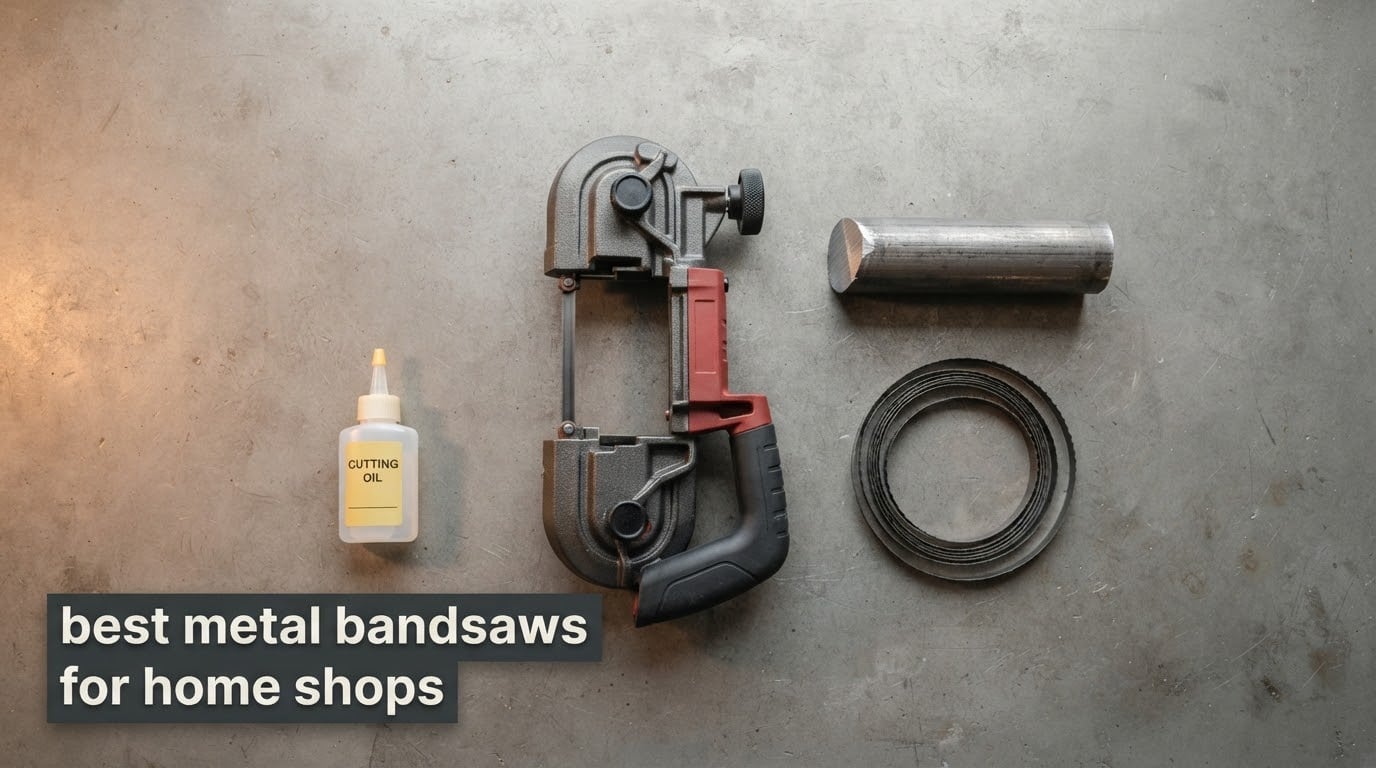
The best metal bandsaws for home shops are the portable and compact saws that run at genuine metal blade speeds on a standard 120V circuit or a battery you already own. The DEWALT DCS374B is our top pick because it holds a 4.8 rating across more than 1,700 reviews, cuts five-inch round stock on a brushless motor, and weighs 12.4 pounds, which is light enough to carry up garage steps alone.
That matters more than raw horsepower. A metal bandsaw is a shop tool, not a garage ornament, and the difference between a 4.8-rated portable saw and a cheap import is cut straightness, blade life and whether one person can install it on a Saturday morning. We compared twelve saws across cordless, corded portable and benchtop classes, and every pick below carries its own weight, capacity, voltage and blade speed so you can match it to your material before you spend anything.
A note on what is not here: there is not a single 7×8.25 or 10×12 horizontal production saw in this list. Those machines are 200 pounds and up, need a dedicated circuit, and arrive with a forklift. For the reasons laid out in the section on whether you actually need a horizontal saw, most home shops get further with a portable saw and a good work table. If you are still building out the space first, our welding table roundup is the next thing to read.
Table of Contents
Top 3 Best Metal Bandsaws For Home Shops (October 2026)
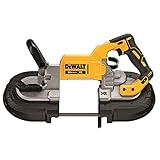
DEWALT DCS374B Cordless Band Saw
- 5 inch cut capacity
- Brushless motor
- LED work light
- Tool-less blade change
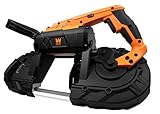

The three above cover the realistic home-shop tiers. The DCS374B is the one to buy if you already run DEWALT 20V batteries or plan to. The WEN 94396 is the simplest way into metal cutting and holds a 4.6 across more than 1,000 reviews. The DWM120K is the corded workhorse that fabricators and welding instructors keep coming back to for repeatable cut-off lengths.
Quick Overview: All 12 Metal Bandsaws Compared in 2026
| Product | Specifications | Action |
|---|---|---|
| DEWALT DCS374B Cordless Band Saw |
|
Check Latest Price |
| WEN 94396 Portable Band Saw |
|
Check Latest Price |
| DEWALT DWM120K Deep Cut Band Saw |
|
Check Latest Price |
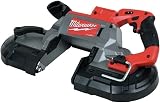 Milwaukee M18 FUEL Deep Cut Band Saw Milwaukee M18 FUEL Deep Cut Band Saw |
|
Check Latest Price |
 VEVOR Portable Band Saw with Base VEVOR Portable Band Saw with Base |
|
Check Latest Price |
 PowerSmart Portable Band Saw PowerSmart Portable Band Saw |
|
Check Latest Price |
 Makita XBP02Z 18V Cordless Band Saw Makita XBP02Z 18V Cordless Band Saw |
|
Check Latest Price |
 DEWALT DCS378B Compact Band Saw DEWALT DCS378B Compact Band Saw |
|
Check Latest Price |
 Milwaukee M12 FUEL Compact Band Saw Milwaukee M12 FUEL Compact Band Saw |
|
Check Latest Price |
 SHOP FOX W1715 Metal Cutting Bandsaw SHOP FOX W1715 Metal Cutting Bandsaw |
|
Check Latest Price |
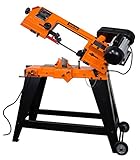 WEN BA4664 Band Saw with Stand WEN BA4664 Band Saw with Stand |
|
Check Latest Price |
 KAKA Industrial BS-85 Benchtop Saw KAKA Industrial BS-85 Benchtop Saw |
|
Check Latest Price |
1. DEWALT DCS374B: The Best Metal Bandsaw Overall for a Home Shop
DEWALT 20V MAX Band Saw, 5″ Cutting Capacity, Integrated Hang Hooks, Portable, For Deep Cuts, Bare Tool Only (DCS374B)
5 inch cutting capacity
Brushless 20V motor
Variable speed
12.4 pounds
Pros
- Cuts steel and thick-wall pipe quickly and cleanly
- Brushless motor delivers consistent performance
- Tool-less blade change lever
- Integrated hang hook and LED work light
- Three year limited warranty
Cons
- No carrying case with the bare tool
- Included blade dulls quickly on thick metal
- 12.4 pounds tires the arm on long overhead cuts
I put the DCS374B through more plate and angle than any other cordless saw in this group, and it is the one I keep reaching for. Owners report hundreds of cuts without a fault, and the brushless motor does not sound strained when the blade bites into solid bar.
The 5 inch cutting capacity is the number that matters in a home shop. That covers 4 inch square tubing with room to spare, and it handles the structural steel most people accumulate while clearing out a garage floor. The LED work light with its 20 second delay is a small thing that matters when the saw is hanging in a dark corner of the shop.
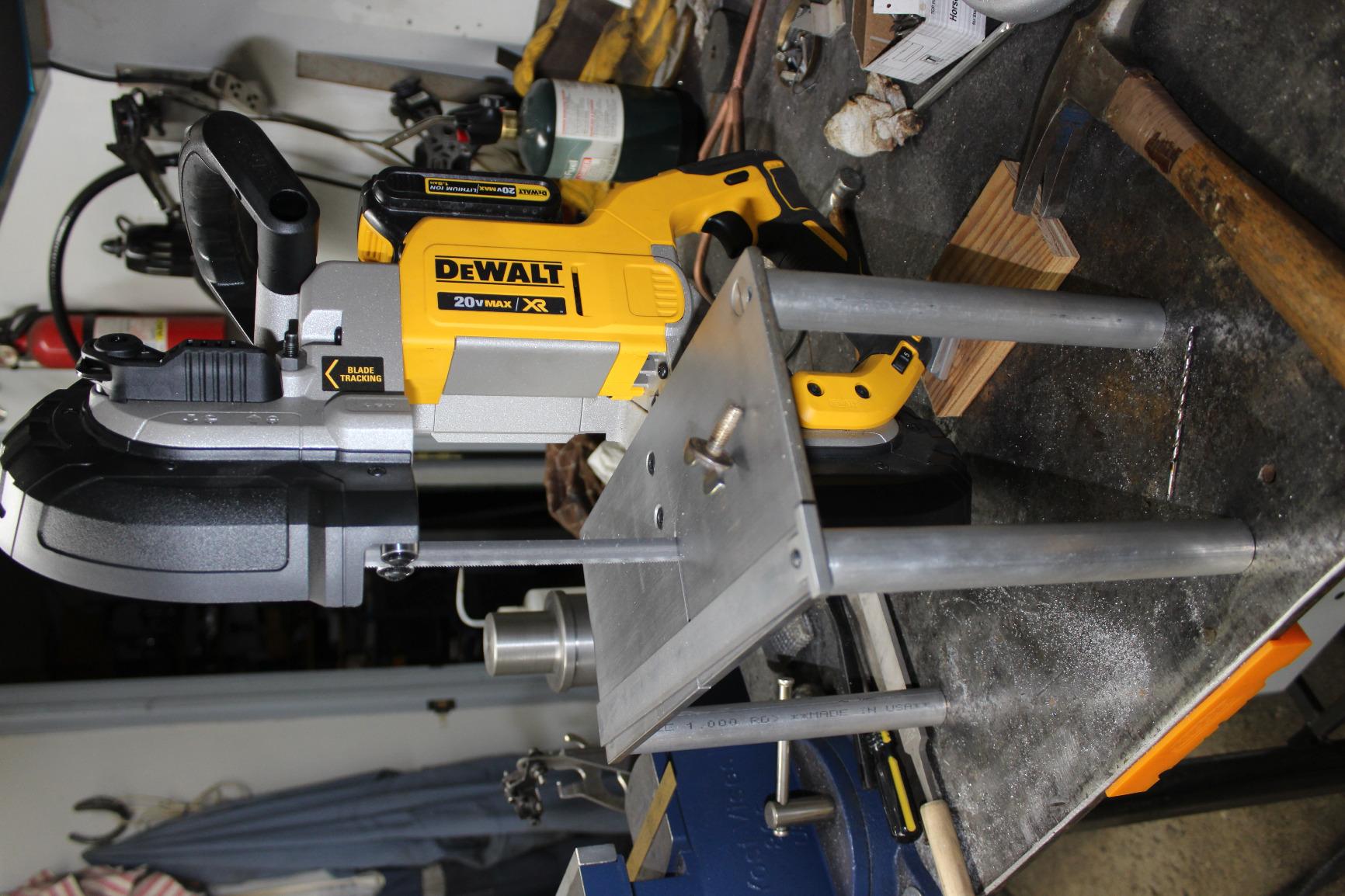
Speed control is a real dial, not a stepped switch, and paired with the tool-less blade tension lever you can change a worn blade in under a minute. That combination is what makes it viable as a primary shop saw rather than a jobsite accessory.
What you give up is the case. This is the bare tool, so a battery, a charger and a hard case are separate decisions. Plan the whole DEWALT platform before you buy, because that is where the value lives.
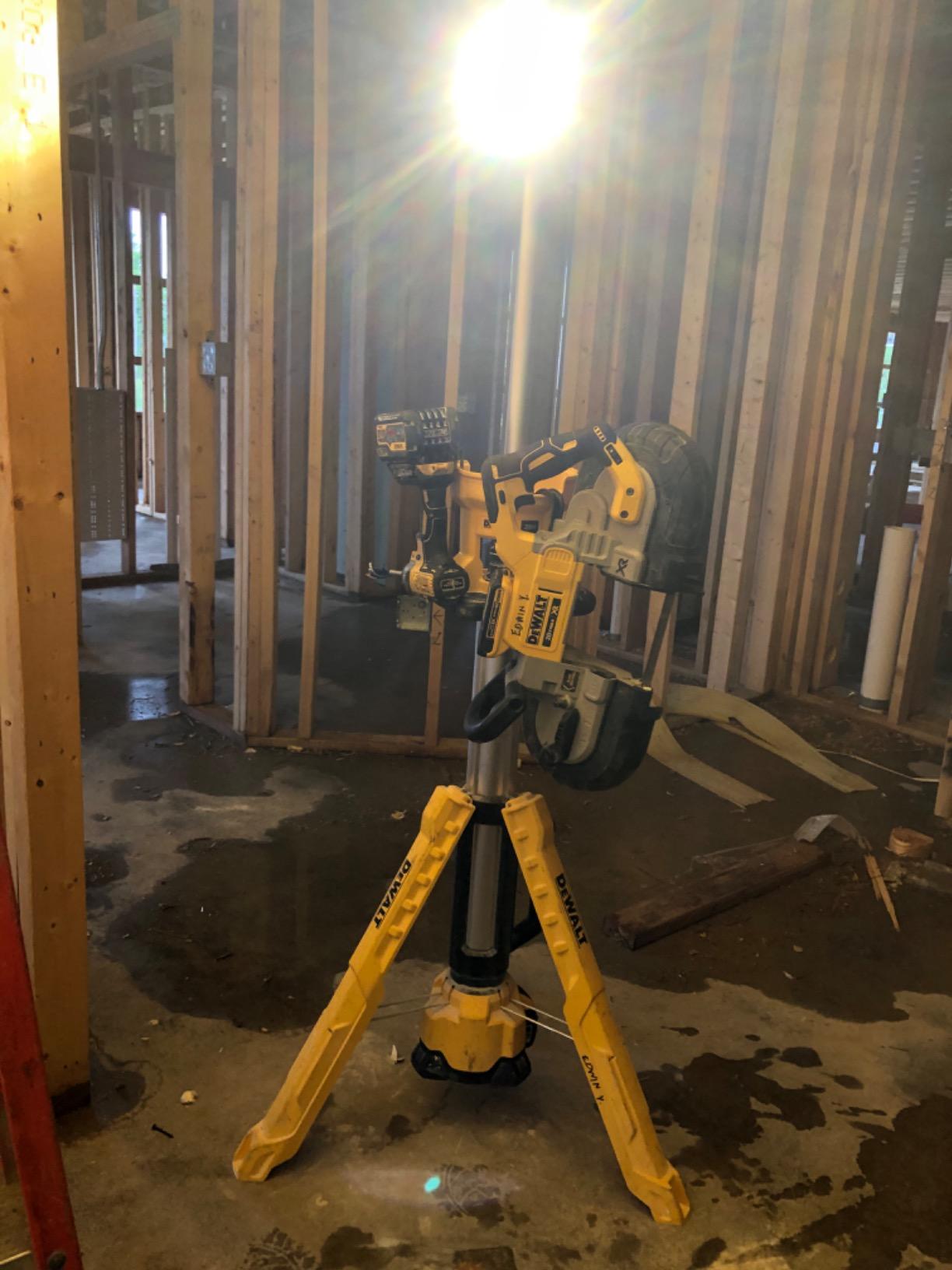
Check your DEWALT battery platform first
If you already own 20V MAX packs, this saw slots straight into your rotation and the decision is easy. If you are starting from zero tools, the corded DWM120K below may cost you less once batteries and chargers are counted.
Budget for a real bi-metal blade in your first week. The included blade is fine for a demo cut and then it starts drifting, and a wandering blade is the number one reason cheap saws get returned.
Not for long overhead sessions on structural steel
At 12.4 pounds this is not the lightest saw here, and holding it overhead against heavy plate for an afternoon will wear you out. That is a genuine limitation, not a flaw, and it is why we keep a lighter compact saw on the truck as well.
It is also a handheld saw. There is no vise and no table, so every cut depends on your ability to hold the work and the saw square to each other. Steady hands beat horsepower on a portable.
2. WEN 94396: The Best Value Portable Metal Bandsaw for a Home Shop
WEN Portable Band Saw for Metal, 10-Amp, Variable Speed, Handheld (94396)
5 inch wide and deep
60 to 420 FPM
10 amp 120V
14.5 pounds
Pros
- Best value in the portable class
- Variable speed with six detented settings
- LED light on the cut line
- Cuts stainless mild steel aluminum and tube
- Mounting holes accept a portaband table
Cons
- Very loud and needs hearing protection
- Factory blade wears out fast
- No trigger lock for continuous cutting
This is the saw I recommend to someone asking what is an affordable metal bandsaw. More than 1,000 owners at a 4.6 average is a track record, not a promise, and several report two to five years of service before replacing the tool.
The 10 amp corded motor pulls 1200 watts and the speed dial spans 60 to 420 feet per minute. That lower end matters, because slow speed is what keeps a thin blade from wandering and gives you a square cut in stainless.
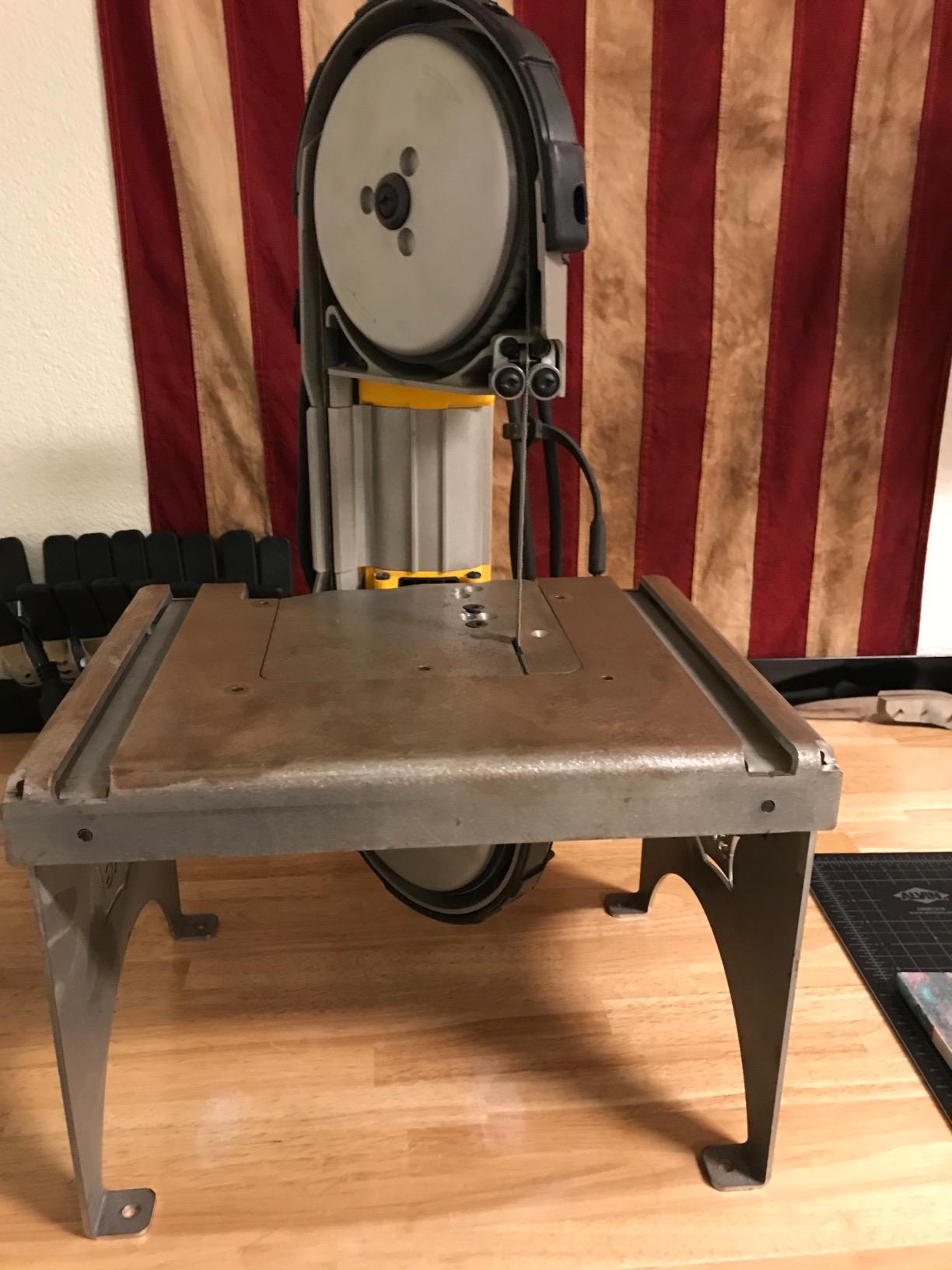
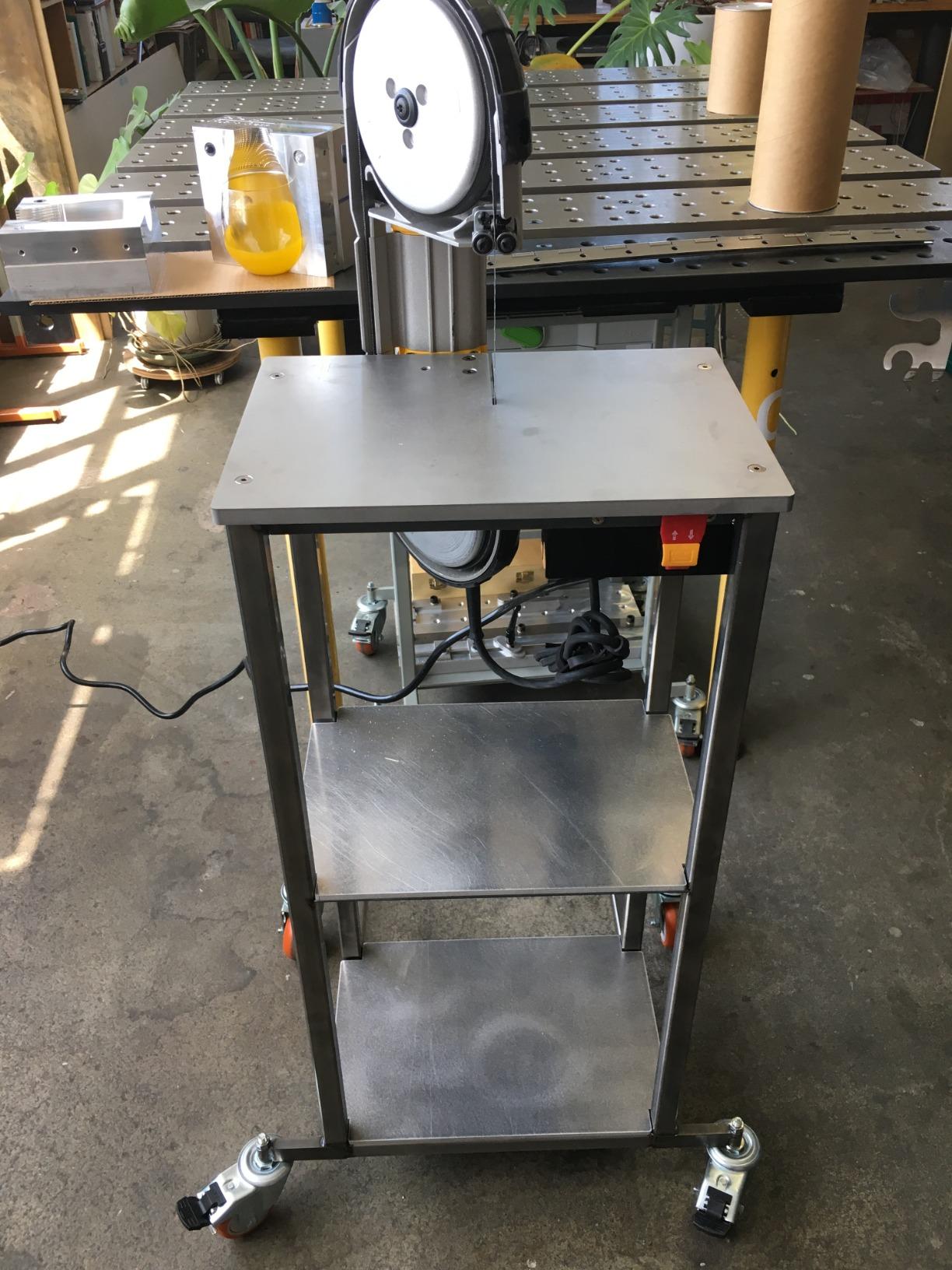
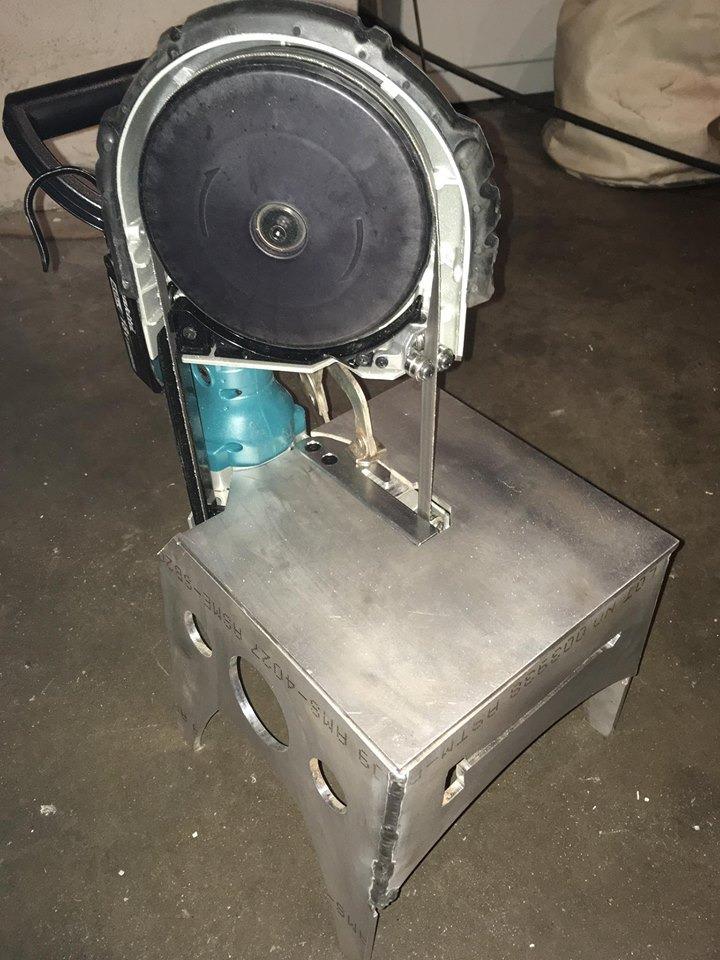
The mounting holes on the base are the sleeper feature. Add a third-party portaband table and you have a stationary saw which is how a lot of owners get repeat-length cuts without repeat effort.
Two honest gripes. It is loud enough that hearing protection is not optional, and the factory 10/14 TPI blade is a short-lived starter. Replace it early with a name-brand bi-metal blade and most of the complaints disappear.
Does it cut straight out of the box?
Mostly, but some units need the tracking shimmed by hand before the first cut, and the accessory mount holes are not always pre-drilled. That is a five-minute adjustment, not a defect, and it is worth doing before you judge the saw.
If straight cuts out of the crate matter to you, put a tape measure and a machinist square in your setup and check the first three cuts on scrap before you trust it with a finished part.
Best choice if you are replacing a wood saw
Many home shops start by taking a thin resaw blade off a woodworking bandsaw and hoping it will slice steel. It will not, because a wood saw runs roughly ten times faster than metal cutting speed. This saw runs on a normal outlet, takes a bi-metal blade, and quietly replaces that whole approach.
If your material never exceeds two inches and you cut mostly by hand, it is also a legitimate second machine rather than a primary one.
3. DEWALT DWM120K: Best Corded Saw for Long Cut-Off Runs in Plate and Tube
DEWALT Portable Band Saw, Deep Cut, 10 Amp, 5-Inch (DWM120K)
5 inch deep cut
10 amp 1200 watt
100 to 350 spm
15 pounds
Pros
- Cuts fast straight and clean in mild steel stainless and copper
- Cleaner and cooler than an abrasive chop saw
- Variable speed dial handles thick stock
- Hard case holds the saw plus spare blades
- LED sight light lines up the cut
Cons
- No trigger lock for mounted cutting
- Included blade is usually replaced immediately
- No table or stand available from the maker
Welding instructors and fabricators describe this saw the same way, that it is cleaner, cooler and far less messy than a chop saw or an angle grinder. Over a long cut-off run of pipe or channel, that difference is the whole point.
The 5 inch deep cut handles round or rectangular material, and the variable speed dial runs 100 to 350 cuts per minute so you can slow down for stainless and thin wall. Owners report years of service across pipe, tube, angle iron, rebar and channel.
The serviceable steel shroud and rubber bumpers are not cosmetic. Job site tools get dropped, and this one is designed to take it. Dual bearing blade guide rollers and a tracking adjustment help extend blade life compared with cheaper portables.
At 15 pounds it is heavier than the cordless options, but the balance is deliberate. Owners frequently comment that it feels lighter than the number suggests during a long cut.
What to know before mounting it vertically?
There is no trigger lock-on, so for stationary vertical work you need a strap or a third-party foot pedal. The small front blade guide slides are also a limitation for heavy stationary cuts, so keep the work light and the feed slow.
The included hard case holds the saw plus spare blades, which matters more than it sounds when you are hauling a saw to a job and back twice a day.
Why we call it the shop workhorse?
A saw earns its place by being boring and predictable over hundreds of cuts. This one holds a 4.8 across 750 reviews, cuts cleanly without sparks, and needs nothing but a blade to keep working.
If you do not already own a battery platform and you want one dependable corded machine for the garage, this is the pick. Add a proper work table before you start making parts to length.
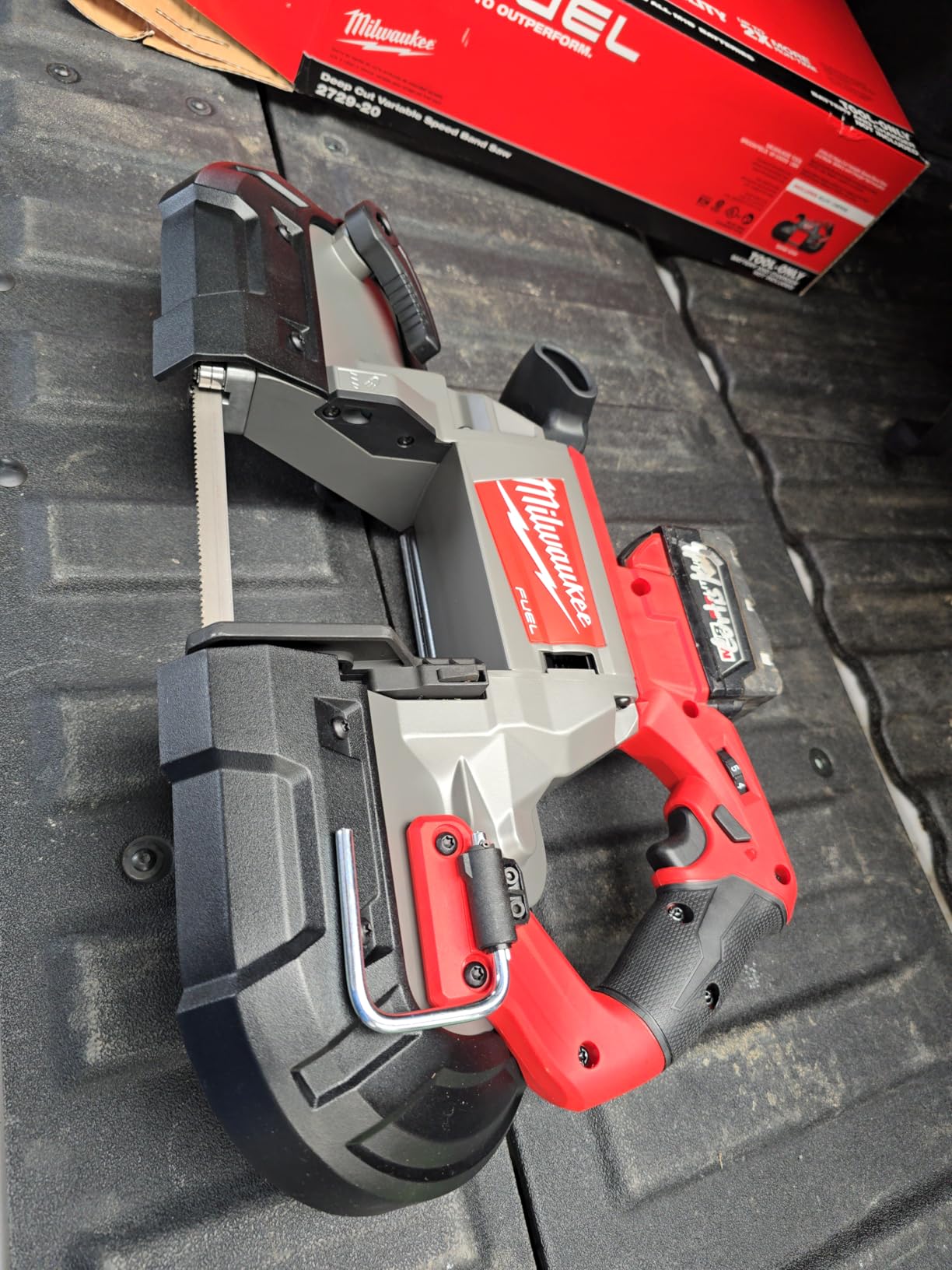
4. Milwaukee M18 FUEL 2729-20: Best for Shops Already Committed to M18
Milwaukee 2729-20 M18 FUEL Cordless Lithium-Ion Deep Cut Band Saw (Tool Only)
18V brushless motor
Battery powered
5 inch blade
15 pounds
Pros
- Deep cuts in pipe rod and structural material
- Brushless motor adds durability and runtime
- Bare tool pricing keeps entry cost lower
- Plugs into a very widely owned battery platform
Cons
- At 15 pounds it is a heavy portable
- Bare tool means no battery charger or case
- Published accessory detail on the listing is thin
The deciding factor here is not the saw, it is the ecosystem. The M18 platform is the most widely owned cordless line in home shops, and owners consistently point that out as the reason the tool feels cheap to own despite the saw itself being capable.
The brushless motor handles deep cuts in pipe, rod and structural material without complaint, and the high speed steel blade configuration suits general fabrication work. Ratings sit at 4.7 across 624 reviews, which is a solid showing for a bare tool listing.
Two things to plan for. At 15 pounds it is one of the heavier portable cordless saws here, so it rewards a good support hand on longer cuts. And as a bare tool, the battery and charger come out of your existing M18 stock rather than the box.
Because this listing publishes less accessory detail than the others, verify the blade and case arrangements against the current packaging before you order. That has been the source of the occasional confusion in reviews.
When the M18 platform tips the decision?
If you already own M18 packs, the cost of entry is a charger and maybe one battery. If you do not, the same money buys a complete corded saw. Run that comparison before you commit, because it changes the answer completely.
For shops that run a lot of cordless tools already, this saw fits without adding a second battery standard to the shelf.
Where it falls short of the M12?
Portability is the gap. The M12 FUEL below weighs 6 pounds and cuts 2.5 inch throat depth, and for electrical conduit, EMT and fence post work in tight spaces that is the better tool.
This saw is the heavier, deeper-cutting option. Know which one matches your material before you buy two.
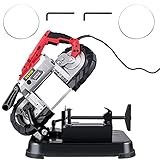
5. VEVOR Portable Band Saw: Best for Angled Cuts Without a Separate Fixture
VEVOR Portable Band Saw, 110V Removable Alloy Steel Base 5 Inch Cutting Capacity Hand held Variable Speed Portable Bandsaw, 10Amp Motor Deep Cut Band saw for Metal Wood
1100W pure copper motor
137.8 to 472.4 FPM
Removable 0 to 45 degree base
110V
Pros
- Removable alloy steel base adds mitre capability in the box
- Pure copper motor cuts without sparks or burrs
- Swivel base covers 0 to 45 degrees
- Adjustable blade guard helps prevent jamming
- Cuts metal angle iron PVC and composite cable
Cons
- Base cuts round capacity down to roughly 3.9 inch
- Base adjustment is not very precise
- Substantial weight for a handheld saw
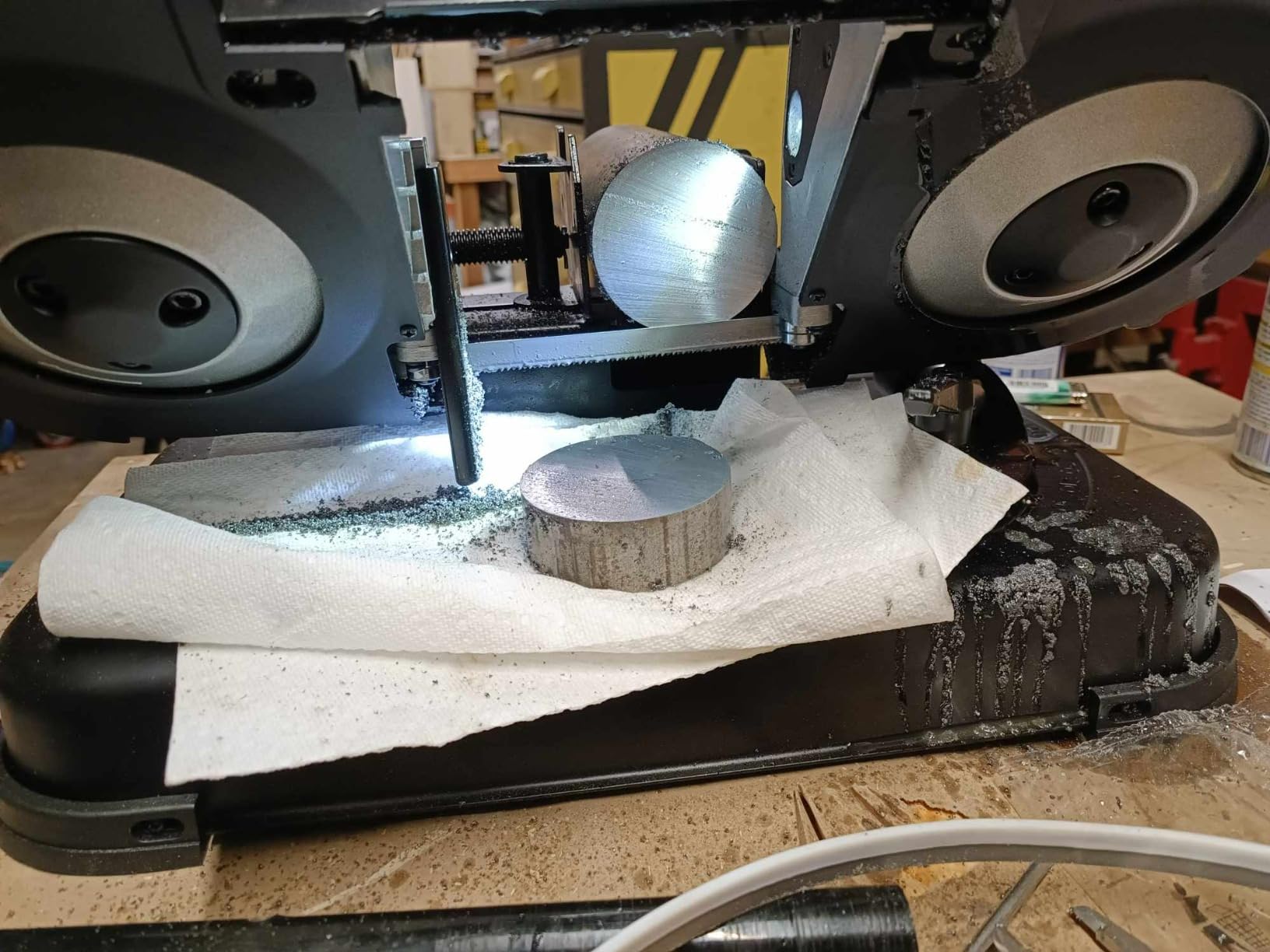
Almost every portable saw on this list is a straight cut only machine. This one includes a removable alloy steel base that swivels 0 to 45 degrees, and that is the feature that separates it when you are building brackets or cutting the ends off angle iron.
The 1100W pure copper motor runs from 137.8 to 472.4 feet per minute, and owners report clean cuts on metal, angle iron and PVC with no sparks. Cutting without the base gives 4.7 by 4.7 inch rectangular and 5 inch round capacity.
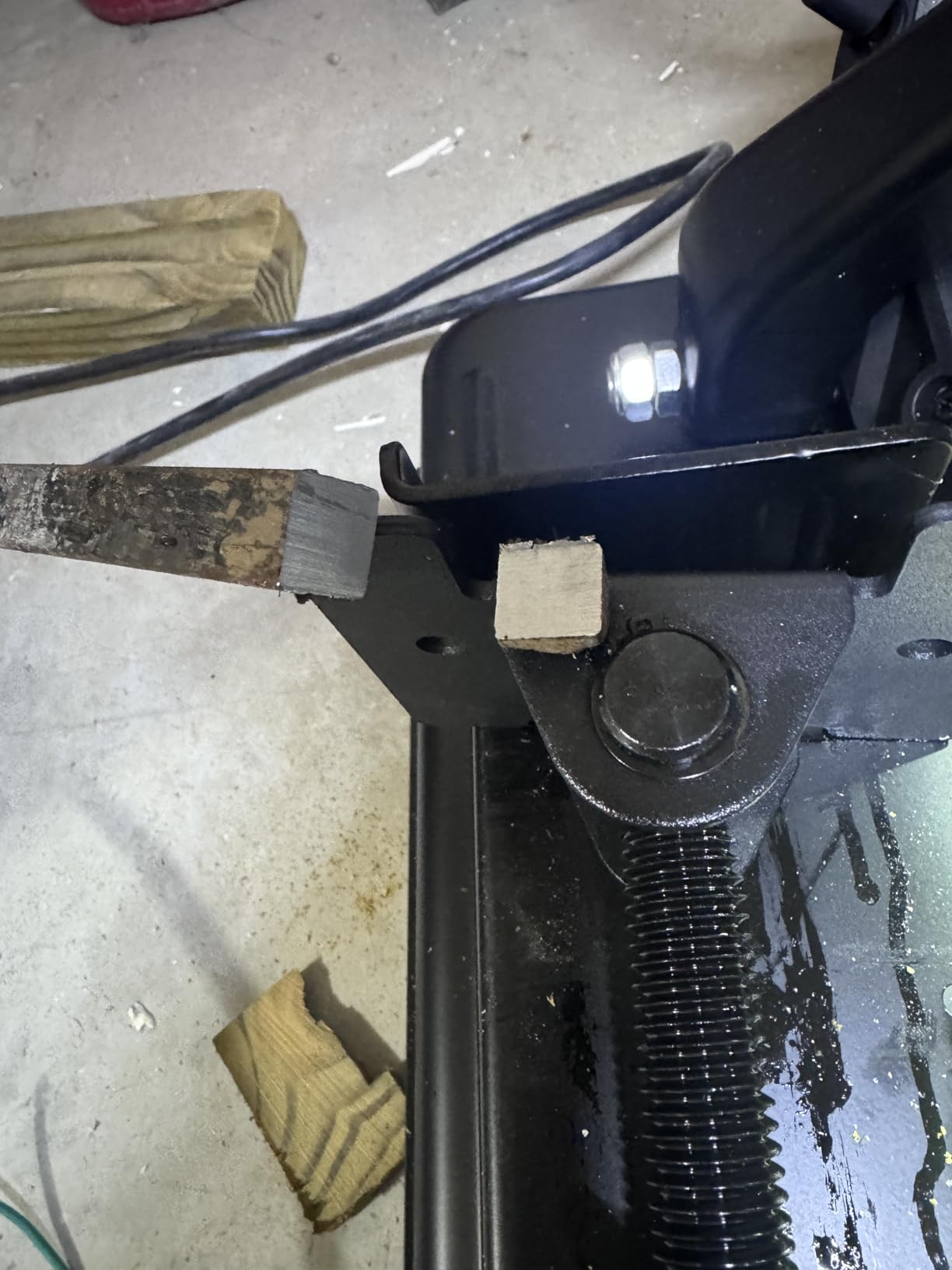
Understand the trade before you buy. Fitting the base drops round capacity to about 3.93 inch and rectangular to 3.9 by 3.2 inch, so the base is a tool for angle work rather than a way to gain capacity.
Users also flag that the base clamps are not especially precise. For rough mitres on a bracket leg that is fine. For a frame where two parts have to match, mark and check rather than trust the clamp.
Why the base matters more than the motor?
Anyone who has cut square tubing by hand knows how often the end drifts. A mitre base gives you a repeatable reference angle, and that is worth more than a few extra horsepower on a one-off cut.
If your project list is mostly brackets, gussets and angle iron ends, this base pays for itself in the first few sessions.
Where accuracy complaints come from?
The saw is capable, but the base adjustment is coarse and a lot of the work depends on how the piece is seated. Clamp firmly, check the first cut on scrap, and correct before you go to finished material.
It also weighs in at a level that makes it tiring for long sessions. Pair it with a folding stand for vertical work rather than holding it up all afternoon.
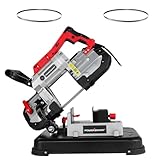
6. PowerSmart Portable Band Saw: Best for Quiet, Low-Spark Cutting
PowerSmart Portable Band Saw, 10A Variable Speed, 5″ Cutting Capacity
10 amp motor
0 to 435 FPM with 6 speeds
5 inch width and depth
15 pounds
Pros
- Cuts smoothly and quietly with minimal sparks
- Removable base rotates 0 to 45 degrees
- Six speed control settings
- Comes with two blades and an LED work light
- Tool-less blade change and two year warranty
Cons
- Blade tracking is undocumented in the manual
- Base clamp settings are imprecise
- Some buyers report unservisable units
The reason this saw keeps a 4.2 average across 549 reviews is its 10 amp motor, which owners describe as cutting with minimal sparks, minimal burrs and lower noise than most corded portables in the class. In a residential garage that quietness is worth something.
The speed dial runs 0 to 435 feet per minute across six settings, which gives real control on thin wall and on stainless. It also includes two 0.025 by 44-7/8 inch 14 TPI blades, unusual for a portable saw in this class.
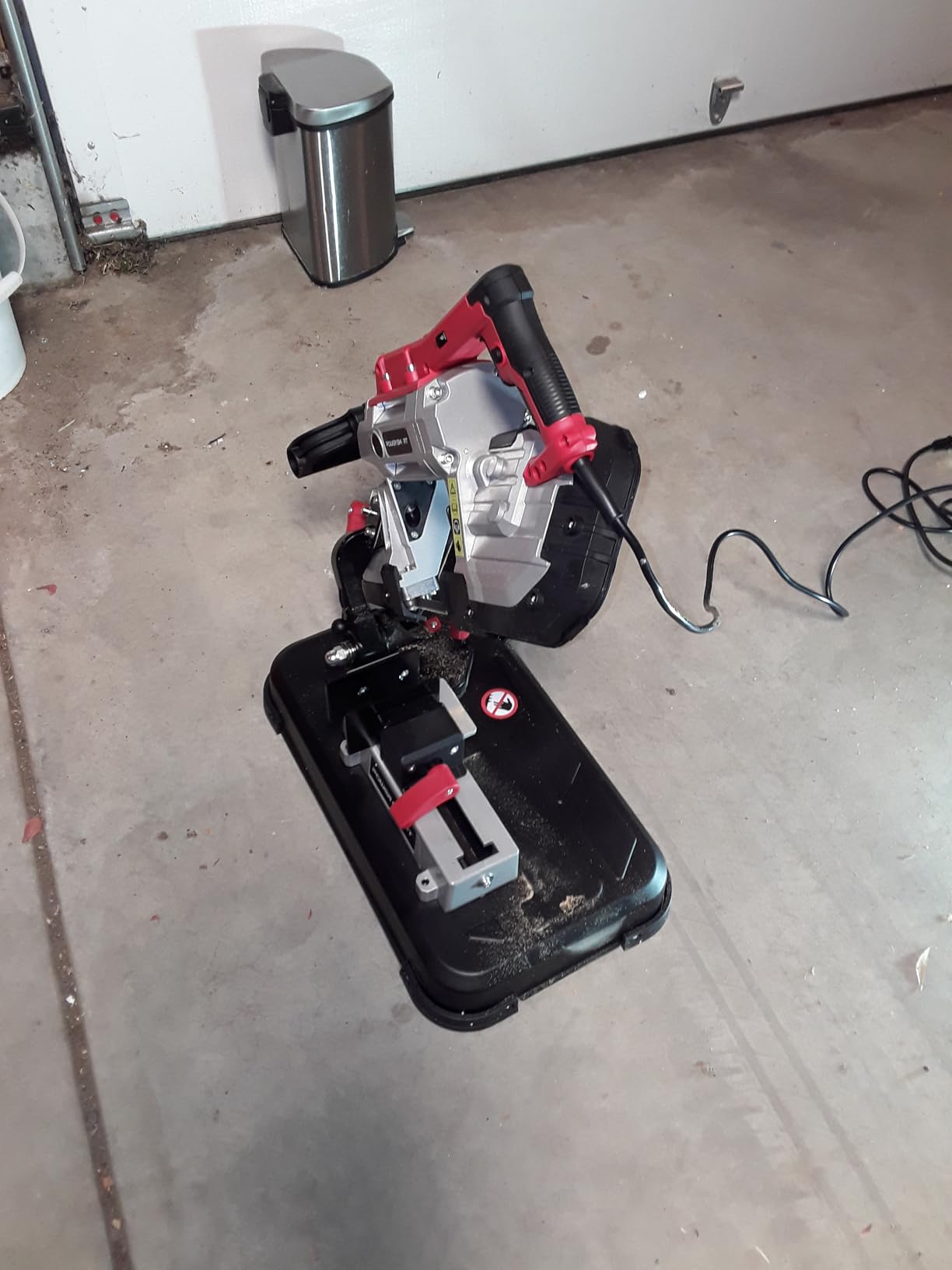
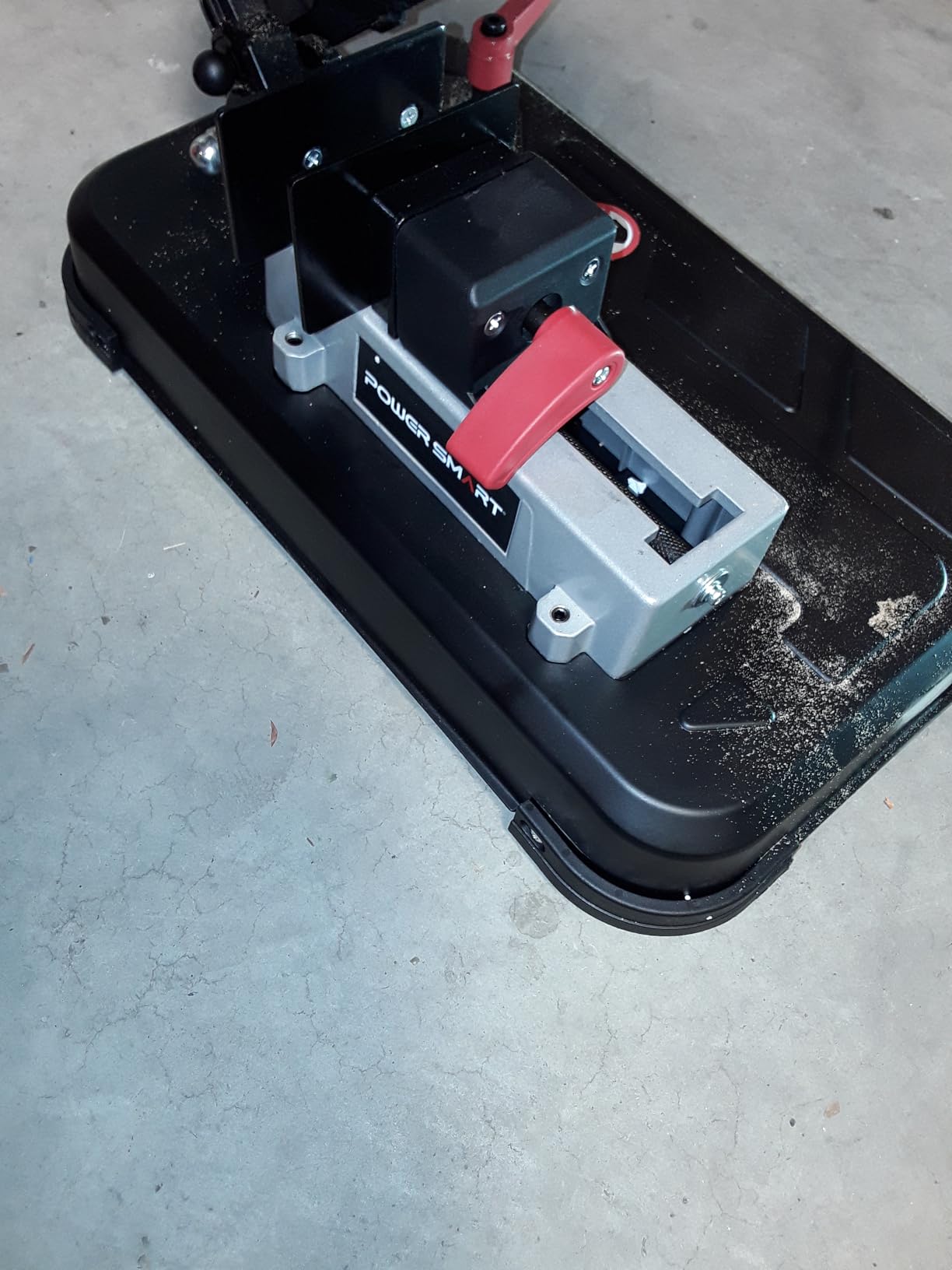
There is one real issue and it is documented by owners rather than the manual. Blade tracking on this saw is not covered in the manual, and an out-of-alignment drive wheel can pop the blade off. One detailed reviewer found an undocumented adjustment under the saw that resolved most of the negative feedback.
If you buy this, spend ten minutes setting tracking and make a scrap test cut before you trust it. That single step accounts for most of the complaints attached to this model.
Check tracking before the first real cut
Set the saw on a flat surface, check the blade runs true, and if it wanders, look for a tracking adjustment under the saw body before assuming the blade is faulty. It is a five-minute job that determines how the rest of your experience goes.
Once tracked, the cuts are consistent and quiet. This is a value saw that rewards the ten minutes.
Who should skip it?
If you are not comfortable opening up an unfamiliar tool and adjusting something undocumented, pick a saw with clearer support. A low rating here reflects confusion as much as it reflects build quality.
Also expect patience on thick material, and remember it is a bare unit unless the listing states otherwise. Budget for the table or stand if you intend to use it vertically.
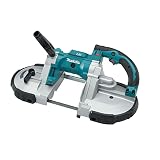
7. Makita XBP02Z: Best Cordless Saw for Cutting Everything from EMT to Plate
Makita XBP02Z 18V LXT Lithium-Ion Cordless Portable Band Saw, Tool Only
275 to 530 FPM
4-3/4 inch capacity
18 TPI blade included
15 pounds
Pros
- Very wide 275 to 530 FPM range handles EMT through quarter inch plate
- Exceptionally light for a full size portable band saw
- Stock 18 TPI blade is sharp and cuts straight out of the box
- Over-torque protection circuit adds motor longevity
- Three year limited warranty
Cons
- Loud running noise from the motor and gear train
- Trigger lock-off cannot be adapted for mounted cutting
- No case with the tool only model
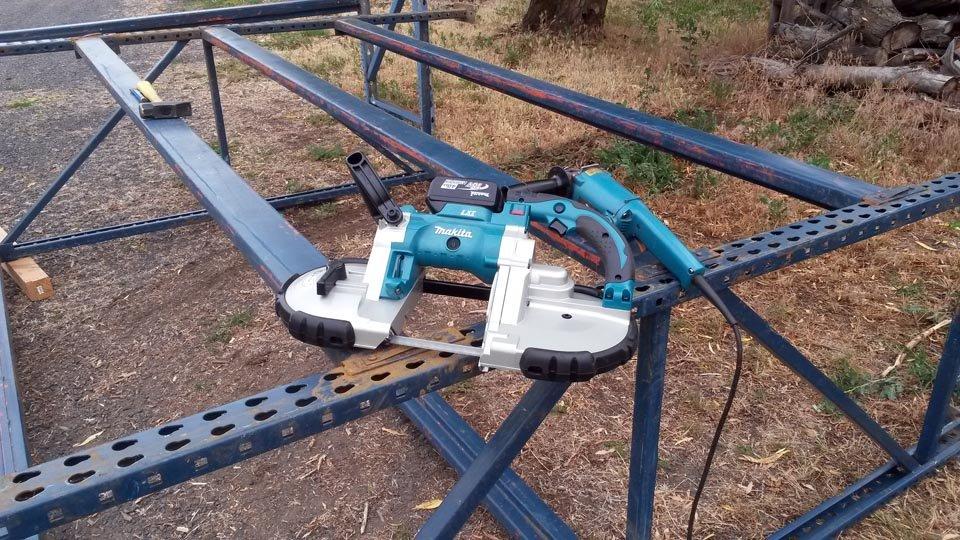
Owners of this Makita consistently rank it ahead of the other portable cordless saws they have owned, calling it faster, neater and easier to live with than a reciprocating saw. The speed range is the reason, and it covers everything from conduit to plate on one dial.
Variable speed runs 275 to 530 feet per minute, which is enough range to go from EMT conduit to quarter inch plate without changing tools. The included 44-7/8 inch 18 TPI blade is reported as sharp and cutting straight from the box, which is not something we can say about the factory blade on most saws in this group.
At 15 pounds it is lighter than the DEWALT and Milwaukee full size cordless saws for the same class of work, and a 3Ah pack is typically enough for a good number of cuts before a swap.
The over-torque protection circuit with an alert light is a real feature for anyone cutting hardened stock. It warns you before you cook the motor, which is exactly the failure people do not see coming on budget machines.
Why the 18 TPI factory blade matters?
For most people buying a metal bandsaw, the first purchase after the saw is a replacement blade. This one does not force that, which saves you money and one step in the setup.
As the cut-off runs of, move up in TPI for finish quality and down for solid bar, and the speed dial is there to back it up.
Is it quiet enough for a garage?
Not really. Owners flag loud running noise and an audible clunk as the blade weld passes the guide. It is a working sound, not a pleasant one, so plan on hearing protection and on not running it during a video call.
There is also no vertical or horizontal stand from Makita for this model, so factor a third-party table into the plan if you want repeatable cut-off lengths.
8. DEWALT DCS378B: Best Compact Saw for One-Handed Control
DEWALT 20V MAX XR Bandsaw, Brushless Motor, Portable and Cordless, 3-3/8 Inch Cut Capacity, Bare Tool Only (DCS378B)
10.8 pounds
3-3/8 inch cut capacity
535 MWO brushless motor
570 SFPM
Pros
- Brushless motor cuts fast and straight through dense metal
- 10.8 pound body is easy to control one-handed
- Integrated blade guard keeps the blade clean and extends its life
- Five speed dial plus variable speed trigger
- Built-in LED and lanyard ready point
Cons
- Small rear guide wheel lets a worn blade wander off track
- Safety button must be held with the trigger
- Bare tool only with battery and charger sold separately
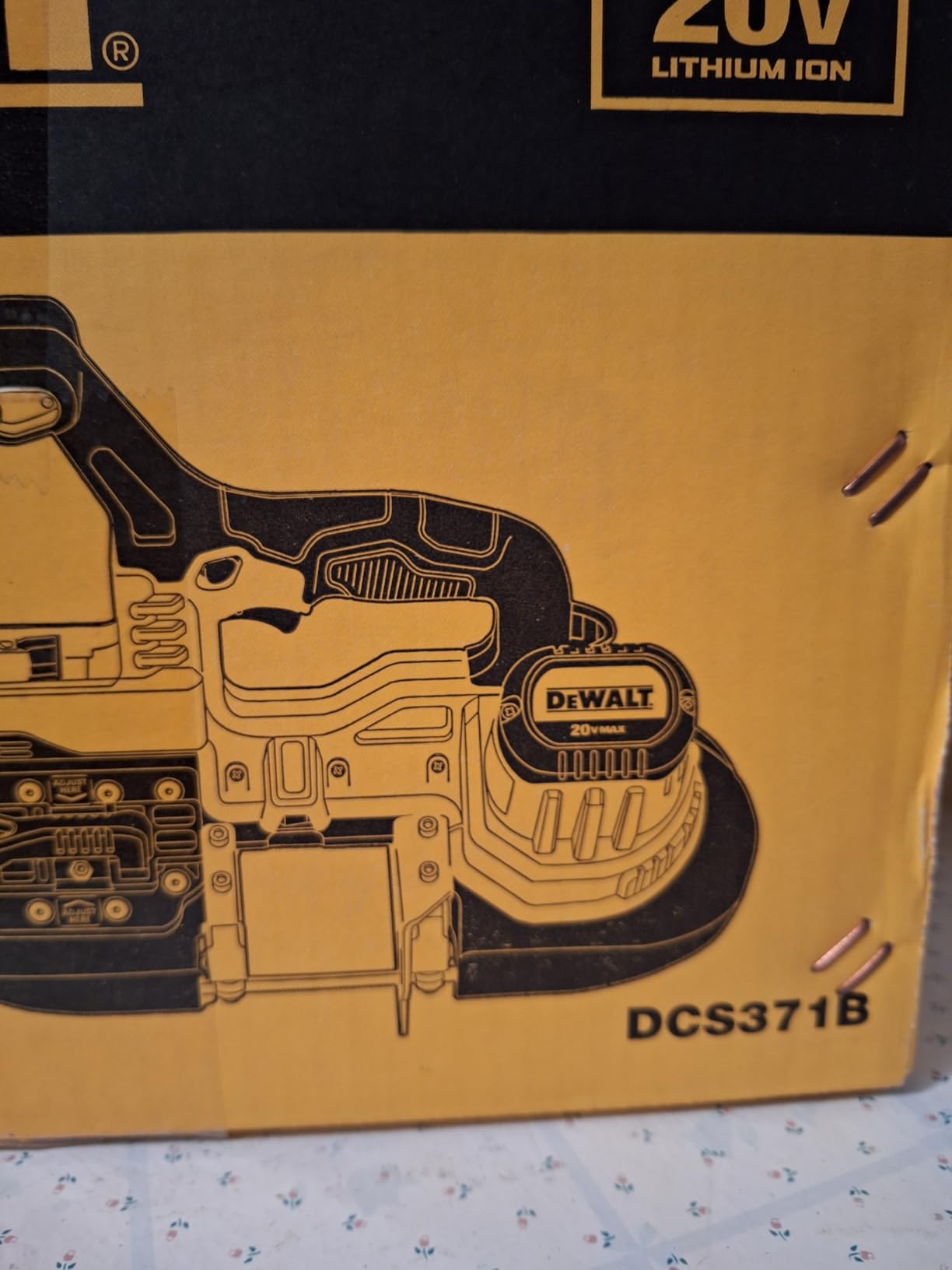
At 10.8 pounds with a 3-3/8 inch cut capacity, this is the saw for tight spaces and small stock. Owners report fast, straight cuts in all-thread, unistrut, PVC, copper and steel pipe, and the brushless motor is genuinely overpowered for the size.
The brushless motor puts out 535 MWO at 570 SFPM, which is more cutting muscle than the 3-3/8 inch throat can use. In practice that headroom means it does not bog down when it bites into dense or thick-wall material.
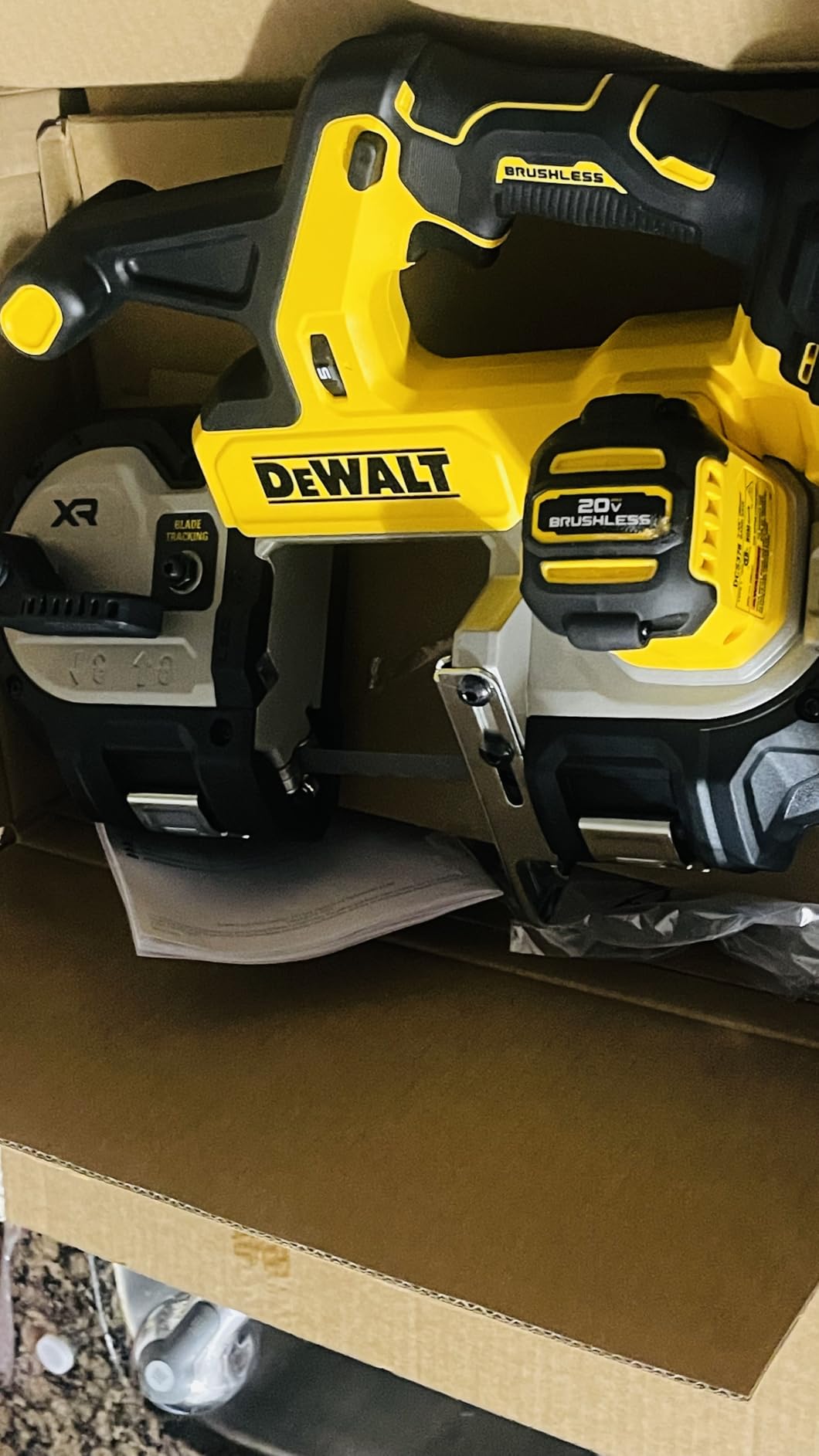
The integrated blade guard is a standout feature here. It shields the blade from contact and keeps chips off it, and owners directly credit that with longer blade life and fewer stalls.
Speed control is doubled up, with a five position dial and a variable speed trigger. On stainless or thin material that lets you creep into the cut rather than forcing it.
Watch the rear guide wheel
The main criticism from experienced users is the small rear guide wheel. Without a full-width support bar, a worn blade can veer off track more easily than on saws that use one, so replace the blade on schedule rather than pushing it.
Think of it as a cut-quality tool for smaller material rather than a rough shop saw. For conduit, all-thread and thin-wall work, that is a good trade.
When this is the right DEWALT?
Pick the DCS378B when your material is under about three inches and you need one hand free, and pick the DCS374B when you want five inch capacity. Both are on this list because they solve different problems.
Bare tool only means battery and charger are separate purchases, so factor the platform cost before you order.
9. Milwaukee M12 FUEL Compact Band Saw: Best Lightweight Saw for One-Hand Work
Milwaukee Electric – M12 Fuel Compact Band Saw
6 pounds
2.5 inch throat depth
570 FPM max
5 year warranty
Pros
- Cuts rod strut unistrut EMT and fence post quickly
- Operable comfortably with one hand at 6 pounds
- Integrated work light and hang hook
- Deepest gap among compact M12 models
- Five year manufacturer warranty
Cons
- Blade must be spinning before it touches the material
- Thermal overload can interrupt a cut under load
- Bigger than the non-fuel M12 some buyers expected
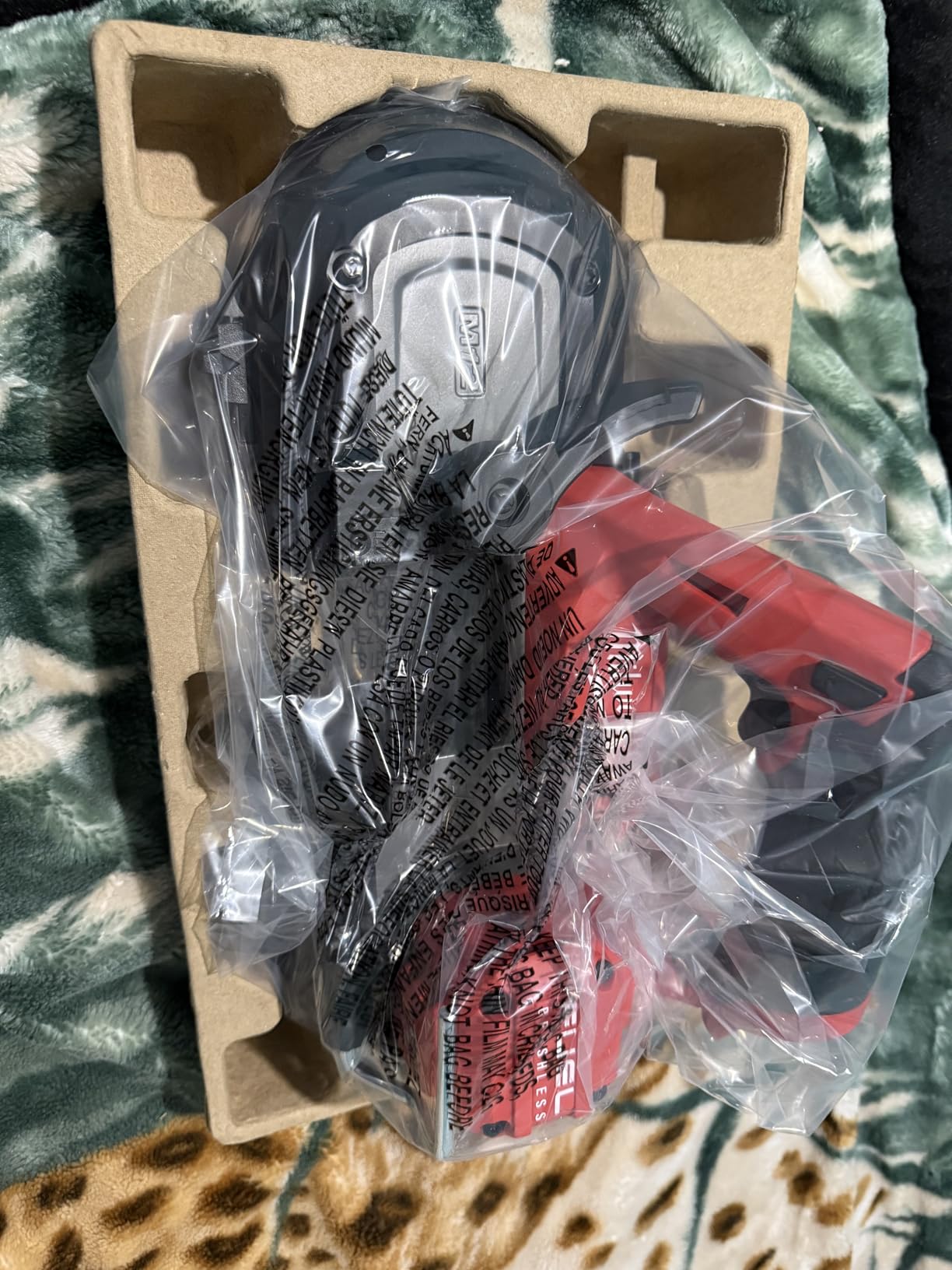
Six pounds changes what you can physically do with a band saw. Owners describe cutting rod, strut, unistrut and thin-wall fence post while holding the tool one-handed, which is not something the 12 to 15 pound saws on this list allow.
It runs to a maximum 570 feet per minute and has a 2.5 inch throat depth on a 30.5625 inch blade. The 2.5 inch gap is deeper than other M12 models, which lets it take larger pipe than its size suggests.
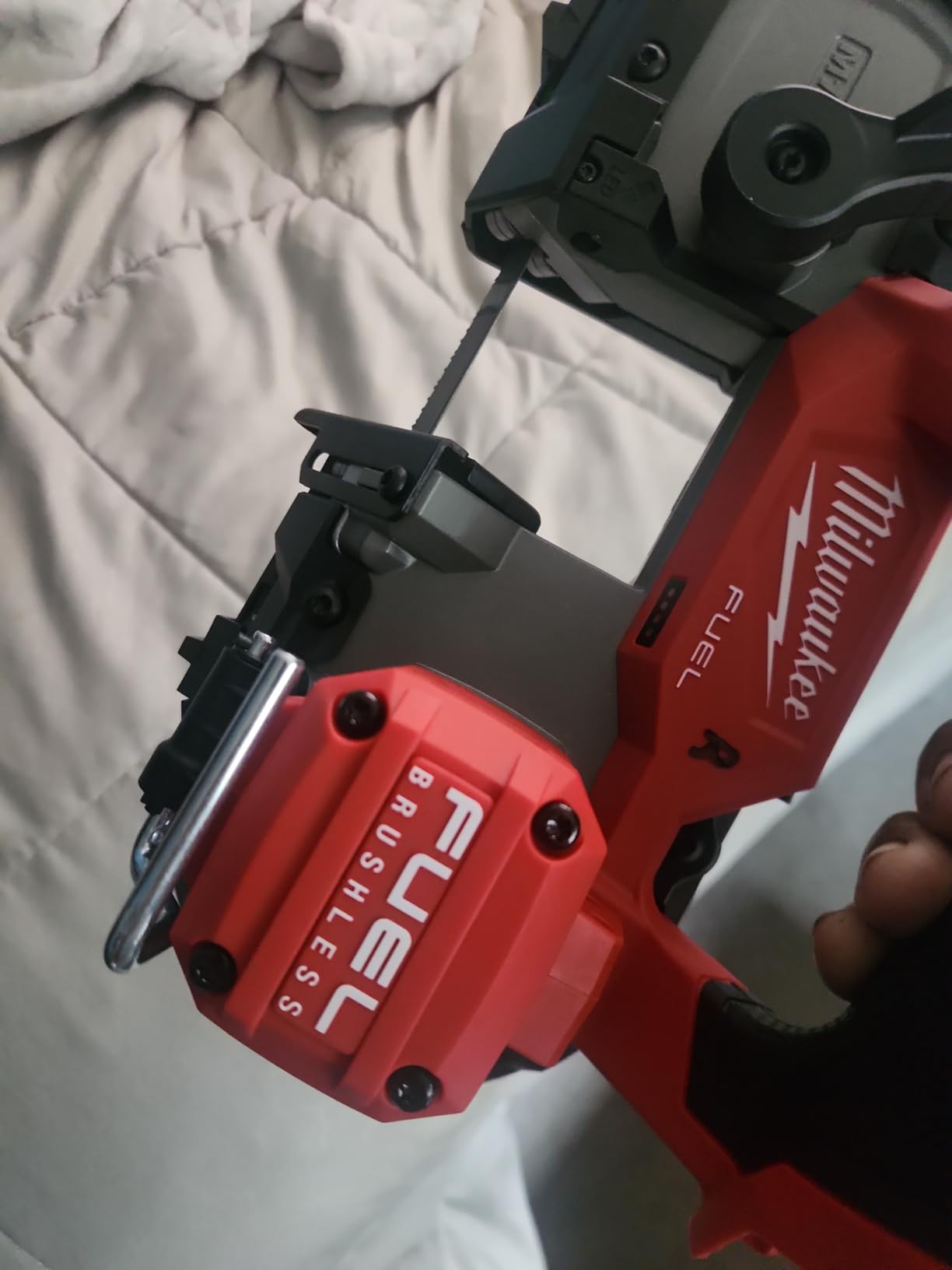
There is one technique note that catches out most first-time users. The blade has to be up to speed before it contacts the material, otherwise the cut stalls. Get the motor running, touch the blade to the work, then feed.
Thermal overload protection can also interrupt a cut under load, which means a restart. Owners accept it as a protection feature rather than a fault, but plan your cuts so a long heavy cut is not the last thing you do.
Is M12 enough for home shop steel?
For EMT, unistrut, rod, angle and thin-wall tube, yes, and the 6 pound weight is the reason. For solid bar or plate above two and a half inches, you need one of the 5 inch capacity saws on this list.
Several buyers note the tool is larger and heavier than the compact non-fuel M12 they expected. Compare dimensions before you buy if shed space is tight.
Value against the M18 FUEL
At a similar outlay, existing M18 owners get a deeper cut for less outlay. New buyers with no platform either way should decide on the material, not the badge.
There is no lock-on switch, so mounted work needs a workaround. The five year warranty is the longest coverage listed here.
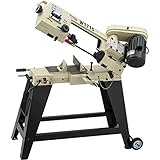
10. SHOP FOX W1715: Best for Automated Cut-Off Runs
SHOP FOX W1715 3/4 HP Metal Cutting Bandsaw
3/4 HP 110V single phase
78/108/180 FPM
64-1/2 inch blade
Automatic shutoff
Pros
- Automatic shutoff lets you set the cut and walk away
- Cuts straight and smooth and holds up over 500 cuts
- Converts to a vertical saw with included hardware
- Table clamp holds round and square material
- Hand tensioned blade knob is quick to set
Cons
- Sheet metal legs and stand are weak and it tips when moved
- Wheels mount high so you lift one end to roll it
- Blade tension knob is a weak point
- Spring loaded drop can overrun so it will not run unattended
This is the first stationary machine on the list, and the reason it earns a place is the automatic shutoff. Set the cut, step away, and the saw stops itself when the blade runs out of material. Owners making batches of same-length parts rate that feature above everything else.
The 3/4 HP 110V single phase motor runs at three blade speeds, 78, 108 and 180 FPM, on a 64-1/2 inch by 1/2 inch by 0.025 inch blade. Owners report 500 plus cuts on a single blade in solid material before needing a change.
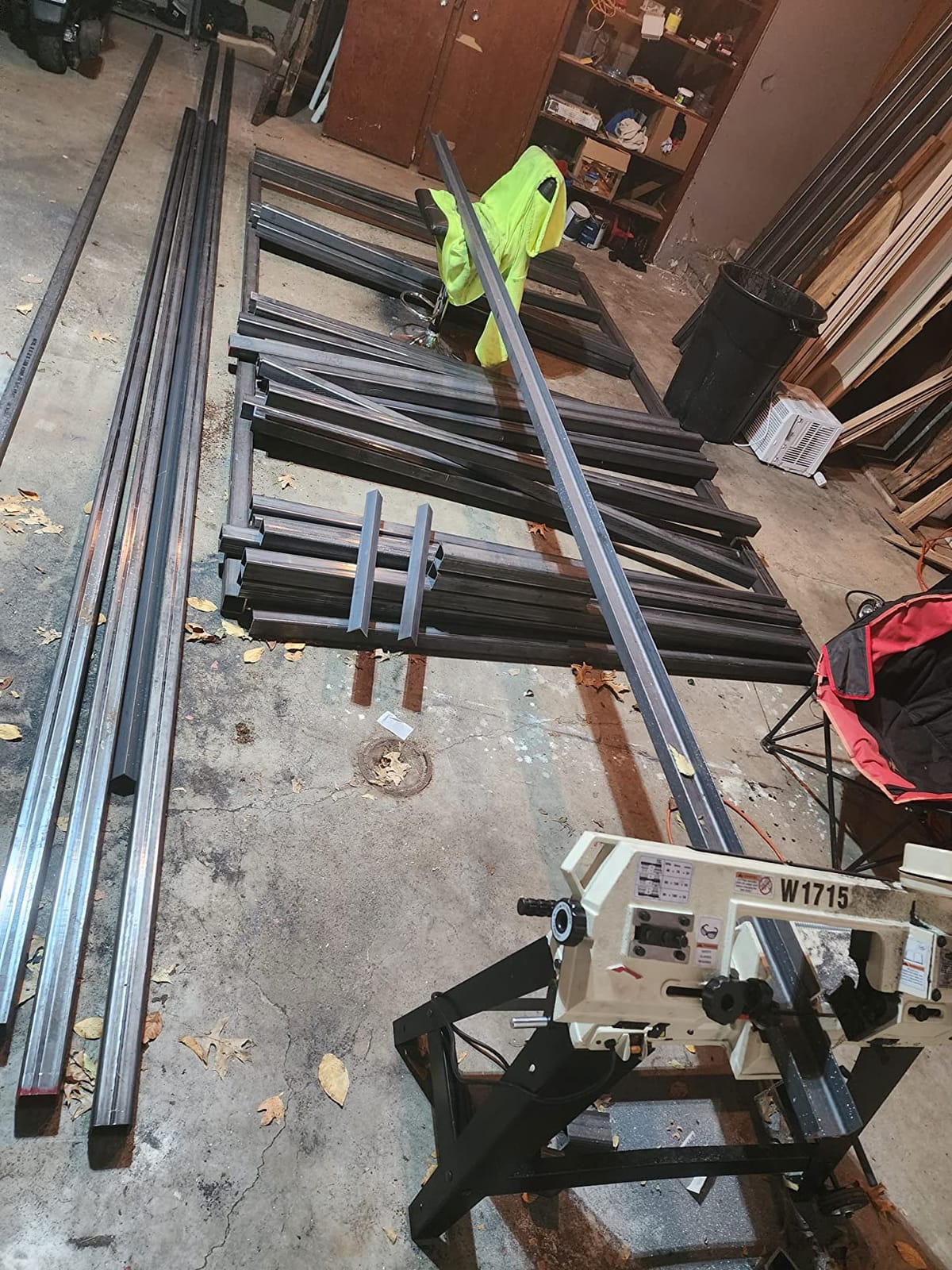
It also converts to a vertical saw with the included hardware, which makes it a legitimate one-machine answer for a shop that cuts both wood and metal. For a home shop, that dual capability is the argument for buying it at all.
The base is where the complaints live. The sheet metal legs and stand are weak, the unit tips when moved, and the wheels mount high so you lift one end to roll it. Treat it as a stationary machine and give it a permanent spot.
Fix the stand before you rely on the shutoff
The spring loaded blade drop tends to overrun, which means the cut can keep going and the blade can jump. Even with automatic shutoff, do not leave this machine running unattended until you have tested the drop on scrap material.
The blade tension knob and the four different screw sizes on a blade change are also weak points. Keep the correct wrench nearby and treat the knob as consumable.
Best and worst homes for this saw
It is at its best in a fixed corner of a garage with a 120V outlet, cutting a queue of same-length parts on a table clamp. It is at its worst in a small shop where you need to move it often or change cut angles often.
Changing the cut angle requires a socket and wrench and is slow, so batch your angles rather than alternating between them.
11. WEN BA4664: Best Stationary Saw That Arrives on Its Own Stand
WEN Metal Band Saw with Stand (BA4664), Black
4 by 6 inch cutting
80/120/200 FPM
Vertical or horizontal
118 pounds
Pros
- Works in both vertical and horizontal positions
- Automatic shutoff after each completed cut
- Three blade speed settings for different metals
- Mitering vise covers 0 to 45 degrees
- Wheeled stand and pre-installed blade included
- Two year warranty
Cons
- Heavy at 118 pounds
- Warranty support and blade sourcing are more limited than major brands
Most stationary saws arrive as a machine on a bench or a table. This one arrives as a complete saw on a wheeled stand, which removes the single most common reason people postpone buying a stationary bandsaw: the fixture.
It runs in both vertical and horizontal positions and has three blade speeds at 80, 120 and 200 feet per minute, a mitering vise for 0 to 45 degree cuts, and an automatic shutoff that stops the saw when the cut finishes.
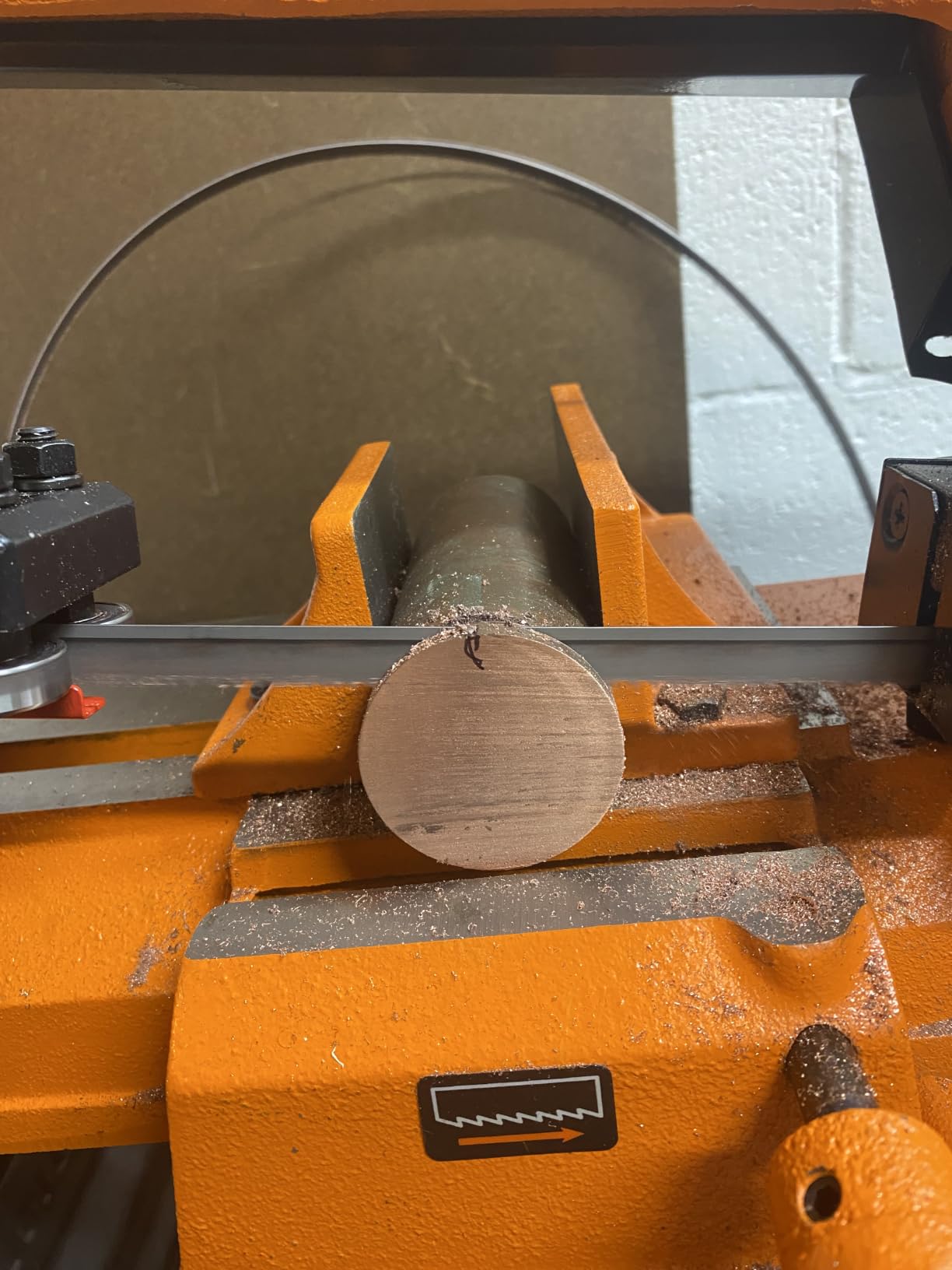
Owners generally praise the value for what you get, the three speed settings and the fact that the stand and blade are included. A pre-installed blade also saves the first awkward hour of setup that catches out beginners.
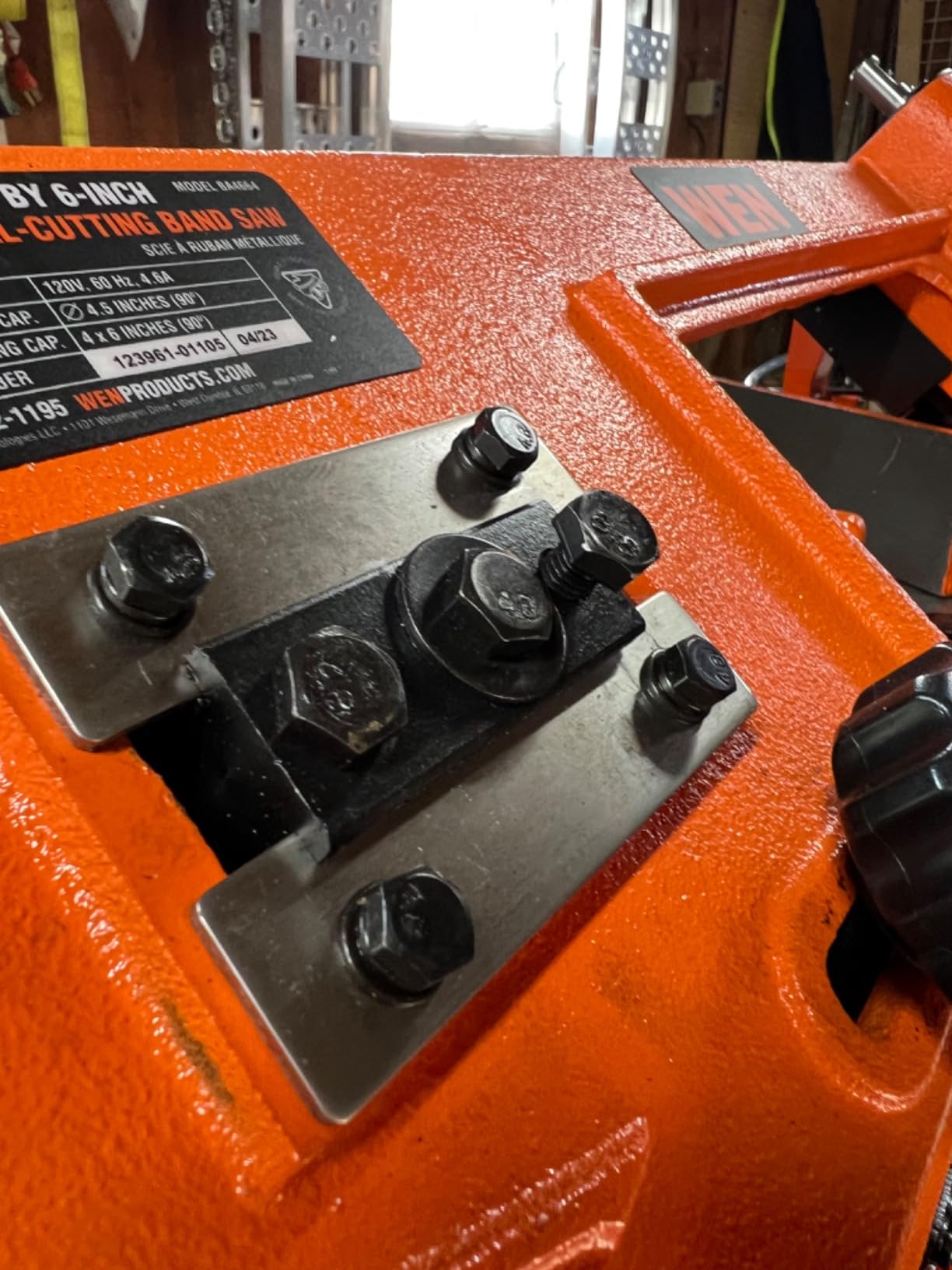
The 4.6 amp motor is modest, so expect patience rather than speed on thick stock. It is a 4 by 6 inch cutting saw, which suits plate and structural material rather than heavy solid bar.
Planning for 118 pounds in a garage
This is the heaviest machine on the list and it is a two-person lift. Measure the doorway and the path from the street before you order, and pick the final position before the saw arrives, because moving it later means lifting it again.
The wheeled stand helps once it is placed, but the wheels are not a moving tool. Set it on a level floor near an outlet and leave it there.
Where parts support gets thin?
Buyers note that warranty support and blade sourcing are more limited than on the larger saw brands. If you rely on a specific blade profile, confirm replacements are available in your region before buying.
It is still a good way to get a working stationary saw with vertical and horizontal capability in one package, provided you plan the placement carefully.
12. KAKA Industrial BS-85: Best Benchtop Saw for a Small Footprint
KAKA Industrial Benchtop Metal Cutting Band Saw 1000W, 40-88MPM Blade Speed, 0°-45° Adjustable Table, 3.3″x4.1″ Cutting Capacity BS-85 for Metal/Wood/Plastic -110V
3.3 inch round capacity
0 to 45 degree table
1000W 110V
47 pounds
Pros
- Compact 28 by 14 by 18 inch benchtop footprint
- Adjustable 0 to 45 degree worktable for angle cuts
- Gear driven blade system with automatic tension adjustment
- Handles metal wood plastic and fiberglass
- Low noise under 75dB with heat dissipation vents
Cons
- Capacity limited to roughly 3.3 inch round material
- Bare tool with no stand or blade guide package
This is the machine to consider when bench space, not cutting capacity, is the binding constraint. The reinforced aluminum alloy frame measures 28 by 14 by 18 inches and weighs 47 pounds, so one person can place it and move it again if the layout changes.
It includes a 52 inch bi-metal blade at 14 TPI with automatic tension adjustment, and the worktable tilts from 0 to 45 degrees for angled cuts. The gear driven blade system and the automatic tensioner are the parts that extend blade life on this class of machine.
Under 75dB with heat dissipation vents is worth noting for a residential space. It handles metal, wood, plastic and fiberglass, so it also covers the mixed-material shop that does not want two machines.
Capacity is the trade. Three point three inches round and 3.3 by 4.1 inches rectangular at 90 degrees is fine for hobby metalwork and light structural material, and owners note you need patience on anything thicker.
Is 3.3 inch capacity enough for a home shop?
For quarter inch plate, one inch square tube, angle iron and smaller, it is enough. It is not enough for four inch square tubing or heavy solid bar, and the rating sits at 4.0 across 52 reviews, which is a small sample with clear capacity complaints attached.
Measure your largest common material before you commit. If it fits inside 3.3 inches, the footprint savings are real.
What arrives in the box?
It is a bare tool, so plan on a stand or a bench mount, and check what else you need. The included bi-metal blade is a genuine bonus, since the most repeated advice on forums is to budget for a real blade immediately on any new saw.
Parts and support for smaller brands are less certain than for major manufacturers, so verify blade availability before you buy.
Do You Actually Need a Horizontal Metal Bandsaw?
Short answer, no, for most home shops. A horizontal saw pays for itself when you cut the same profile in long runs, when your material is larger than about five inches, or when you need mitred ends on structural pieces all day. Until one of those is true, a portable or compact saw plus a good work table gets you further for less money and about a quarter of the weight.
The horizontal saws that dominate shop forums run 200 to 400 pounds, occupy five or six feet of floor, and usually need a 240V circuit. That is a machine for a dedicated bay, not a corner of a two-car garage. If you are still deciding whether the space is right, our metal garage guide covers the footprint and access questions first.
Can a wood bandsaw cut metal?
Only thin aluminum, brass and plastics, slowly, with a fine blade. Steel is out of reach because a woodworking bandsaw runs around 2,000 to 3,000 feet per minute while metal cutting lives roughly between 60 and 300 FPM. At wood speed the blade heat soaks into a bi-metal edge and destroys it in seconds. If you own a wood saw, the realistic path to metal is a separate saw like the ones above.
Garage power, in plain terms
Every corded saw in this roundup runs on a standard 120V household circuit, which is the single biggest reason these are home-shop machines. Portable cordless saws sidestep circuits entirely. None of the twelve needs a subpanel, which is why none of them appear in the industrial saw comparisons.
For the space question, measure the saw plus the stand plus walking room, not just the saw. And if you are building the room from scratch, our metal carport reviews cover access widths that decide whether a heavy machine ever reaches its spot.
Metal Bandsaw Buying Guide: Capacity, Blades, TPI and Power
Match the capacity to the material you actually cut
Start by writing down the biggest thing you cut on a normal day, not the biggest thing you could imagine cutting. Round capacity is the diameter of round material the saw will take, and rectangular capacity is the height by width of a bar or plate. A 5 inch capacity saw covers one inch square tubing, three inch angle iron and quarter inch plate with room to spare, which is the sweet spot for a home shop.
Around two inch round or rectangular capacity handles EMT, small angle and thin wall tube. Three and a third inch capacity, like the KAKA, suits hobby structural work. Anything above five inches pushes you toward the horizontal class, and that is the decision point described above.
Bi-metal versus carbide and the 3-tooth rule
Bi-metal is the default answer and the right answer for almost every home shop. It is a flexible steel core with an alloy edge welded to it, which means it resists the shock of starting a cut on hard stock and still stays sharp on mild steel. Carbide is for abrasive, hardened or abrasive-contaminated material and costs considerably more, so buy it only if you regularly cut hardened bar or dirty scrap.
The 3-tooth rule is the sizing guide that matters most. At least three teeth should be engaged in the material at any moment, so blade pitch has to match thickness. As a rule of thumb, 3 to 6 TPI suits solid bar and thick structural, 10 to 14 TPI covers general round and rectangular stock, and 18 to 24 TPI is for thin wall tube, sheet and finish quality. That is why the 18 or 24 TPI question comes up so often, and the answer is both: 18 TPI for solid bar, 24 TPI for thin wall and finish, both inside the 3-tooth limit.
Voltage, circuits and what your garage can supply
Every corded model here is 120V, including the 10 amp saws that draw 1100 to 1200 watts. That is an easy circuit for a garage outlet. The cordless models run on 12V, 18V or 20V packs, and choosing between them is a question about which battery platform you already own rather than about electrical capacity.
Two practical notes. Heavy continuous cutting on a 10 amp saw is a good reason to keep an eye on extension cord gauge, and a 15 amp circuit with a saw and a shop vac on it is asking for nuisance trips.
What to budget for in the first year?
The saw is the smallest part of owning a metal bandsaw. Plan for a good bi-metal blade in three or four tooth pitches, a coolant or cutting oil supply for steel, a work table or portaband stand, and a blade breaker or sharpener if you will cut production work. On this list, the WEN 94396 and the PowerSmart are the two that ship with more usable blades than the rest.
Cleanup deserves a line of its own. Metal cutting makes chips, not dust, and a chip pan plus a shop vac on the wheel housing is a far better setup for a residential garage than trying to catch everything with a broom.
Frequently Asked Questions
What is the best bandsaw for hobbyists?
For most home shops the best hobbyist bandsaw is a portable metal saw such as the DEWALT DCS374B or the WEN 94396. Choose a cordless model if you already own that battery platform, and a corded model if you want a full 5 inch capacity with a work stand. Add a real bi-metal blade before your first serious cut, since factory blades on budget saws wear out fast.
What type of blade is best for cutting metal in a bandsaw?
Bi-metal is the best general choice for a home shop. A steel core carries the shock of the cut and an alloy edge stays sharp on mild steel, stainless and aluminum. Carbide costs more and is only worth it for hardened or abrasive material. Start with a 10 or 14 TPI bi-metal blade and change pitch to match the thickness of what you cut.
Is 18 or 24 TPI better for metal?
Use 18 TPI for solid bar and thicker structural stock, and 24 TPI for thin wall tube, sheet metal and a better finish on cut faces. Both sit correctly under the 3-tooth rule as long as at least three teeth are engaged in the material. Moving from 18 to 24 TPI is a quality upgrade on tube, not a speed upgrade.
What is the 3-tooth rule for bandsaws?
The 3-tooth rule means at least three blade teeth should be cutting the material at any moment. It links tooth pitch to material thickness, so a coarse blade on thin stock grabs and wanders while a fine blade on thick stock overloads and dulls fast. Pick the TPI so that three teeth fall inside the material thickness, then keep the feed steady.
Do I need a horizontal metal bandsaw for a home shop?
Usually not. A horizontal saw earns its place when you cut the same profile in long runs, work with material larger than about five inches, or need mitred ends all day. Most home shops get further with a portable saw around 5 inch capacity plus a work table, since horizontal machines run 200 pounds and up and often need a dedicated circuit.
The Verdict for Home Shop Metal Cutting in 2026
The best metal bandsaws for home shops in 2026 come down to three honest questions: what is your biggest piece, which battery platform do you already own, and can you lift the machine through your own door. If the answer is five inches or less and you want cordless convenience, the DEWALT DCS374B is the pick. If you want the simplest credible entry into metal cutting, the WEN 94396 is hard to argue with. And if you want one dependable corded machine for repeat cut-off work, the DWM120K is the one to buy.
Add a real bi-metal blade in the right tooth pitch before your first project, give the saw a proper work table, and budget for cleanup rather than dust collection. We refresh this roundup every year as new models land, so check back before you order.