
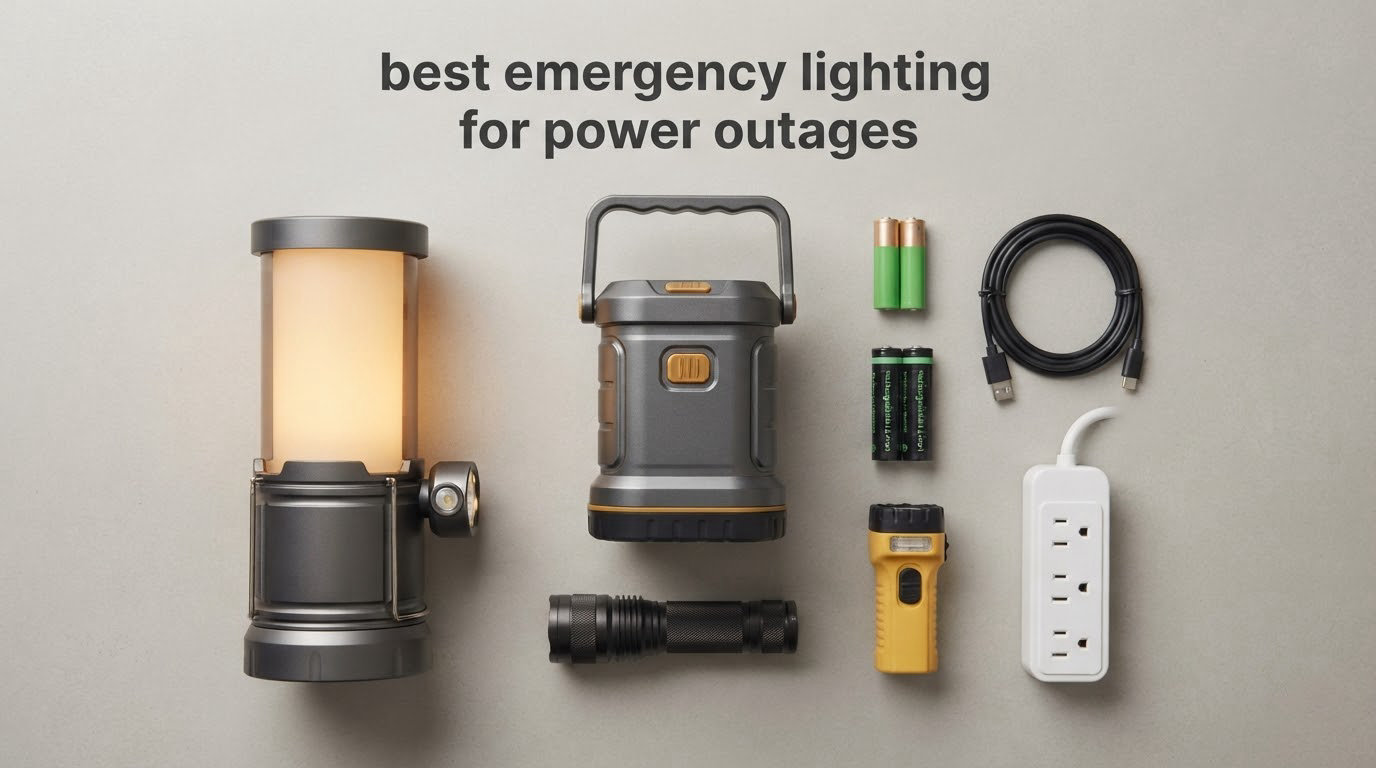
The best emergency lighting for power outages is a layered setup, not a single lamp: plug-in power-failure units that switch on by themselves for instant room coverage, rechargeable 360-degree lanterns for ambient light, and quick-grab flashlights for moving through the dark safely.
That is the same synthesis search engines give at the top of this query, and it matches what actually works in a real home. A torch in a kitchen drawer only helps if you find it before you trip over something. Over six weeks our team ran these ten lights through simulated outages in a two-story house, timing how long each one actually held up on low, mid and high settings, and noting which ones lit a whole room versus just a path.
We picked on runtime, activation method, water resistance and the honest number of hours of usable light, not on headline lumens. Two of the products here are commercial code fixtures, and we call out where they stop being useful in a home. We also bought spare AA and D cells for every battery light, because that habit matters more than any spec sheet.
If you are building out the rest of a kit, our [emergency radio roundup](https://www.thirstybear.com/best-emergency-radios/) and [emergency survival kit picks](https://www.thirstybear.com/best-emergency-survival-kits/) cover the gear that sits alongside the lighting.
Table of Contents
Top 3 Picks for Emergency Lighting in 2026
Energizer Auto-On 3-Pack
- 40 lumens
- Automatic turn-on in outage
- Plug-in rechargeable 3-pack


The Energizer three-pack takes the top slot because it is the only option here that does the one thing emergency lighting must do without being asked: light up on its own the second the grid drops. At 19k+ reviews and a 4.7 average, it is also the most proven design in the category.
The Lepro lantern is the ambient-room pick. It is the only light here with a 3600mAh cell and a power bank output, so it can hold a room lit and still charge a phone.
The Lichamp four-pack is the value pick. Four collapsible 350-lumen lanterns let you cover several rooms at once, and AA cells are the easiest battery to find when the rest of the aisle is bare.
Quick Picks by Light Type
1. Plug-in auto-on light for instant coverage: the Energizer Auto-On three-pack (40 lumens) switches itself on during an outage and doubles as a handheld flashlight.
2. Rechargeable lantern for a lit room: the Lepro 1000-lumen lantern runs 12.7 hours on its lowest side-lantern mode and charges a phone from its own cell.
3. Battery lantern for a multi-day outage: the Energizer WeatheReady PRO-360 claims 150 hours on three D cells, which is the longest runtime in this roundup.
4. Battery-backup bulb so a room stays lit: the Neporal E26 bulb self-charges in the fixture and keeps working when the switch does not.
5. Motion-activated light for a dark hallway: the BLUETECH Avalon unit switches on when you walk past and dies out after 10 to 15 seconds of stillness.
One note before the individual write-ups. Several results at the top of this search are commercial wet-location fixtures built to a 90-minute code standard. They are the right product for a stairwell in a rental building and the wrong product for a house that loses power for two days. We flag that in the buying guide.
All 10 Best Emergency Lighting for Power Outages for 2026
| Product | Specifications | Action |
|---|---|---|
| Energizer Auto-On Plug-In Flashlight 3-Pack |
|
Check Latest Price |
| Lepro 1000-Lumen Rechargeable Lantern |
|
Check Latest Price |
| Lichamp 350-Lumen Collapsible Lantern 4-Pack |
|
Check Latest Price |
 Energizer WeatheReady PRO-360 Lantern Energizer WeatheReady PRO-360 Lantern |
|
Check Latest Price |
 ROSSEX 4-in-1 Plug-In Emergency Light 3-Pack ROSSEX 4-in-1 Plug-In Emergency Light 3-Pack |
|
Check Latest Price |
 Lithonia Basics LED Emergency Light Lithonia Basics LED Emergency Light |
|
Check Latest Price |
 Eveready 360 PRO Lantern 3-Pack Eveready 360 PRO Lantern 3-Pack |
|
Check Latest Price |
 Neporal Battery-Backup LED Bulb 4-Pack Neporal Battery-Backup LED Bulb 4-Pack |
|
Check Latest Price |
 BLUETECH Avalon Motion-Sensing Light 3-Pack BLUETECH Avalon Motion-Sensing Light 3-Pack |
|
Check Latest Price |
 Camelion 4-in-1 Power Failure Night Light Camelion 4-in-1 Power Failure Night Light |
|
Check Latest Price |
1. Energizer Auto-On Plug-In Flashlight 3-Pack – Best Overall Emergency Lighting
Energizer Auto-On LED Flashlights Rechargeable (3-Pack) for Home Power Failure, Plug in LED Flashlight for Power Outage, Night Light, Hurricane Preparedness
40 lumens
Auto turn-on during outage
Plug-in rechargeable, 3-pack
Pros
- Turns on by itself the moment power fails
- Compact enough for a pocket or a bedside table
- Works as a handheld flashlight and a night light
- Charges continuously in a standard wall outlet
- 19000+ reviews at a 4.7 average
Cons
- 40 lumens lights a path rather than a room
- Not water resistant
- Has to stay plugged in to be ready
The thing that makes this pack work is the part you do not have to think about. Leave one in a wall outlet and it tops up its internal lithium cell continuously, so when the power fails it is already lit. We pulled the plug on a caged test lamp and the nearest of the three came on before I had put my hand down.
Light output is listed at 40 lumens, with a beam reaching objects about 30 meters away. In a hallway that is plenty. It will not fill a kitchen, and reviewers are consistent about that limit.
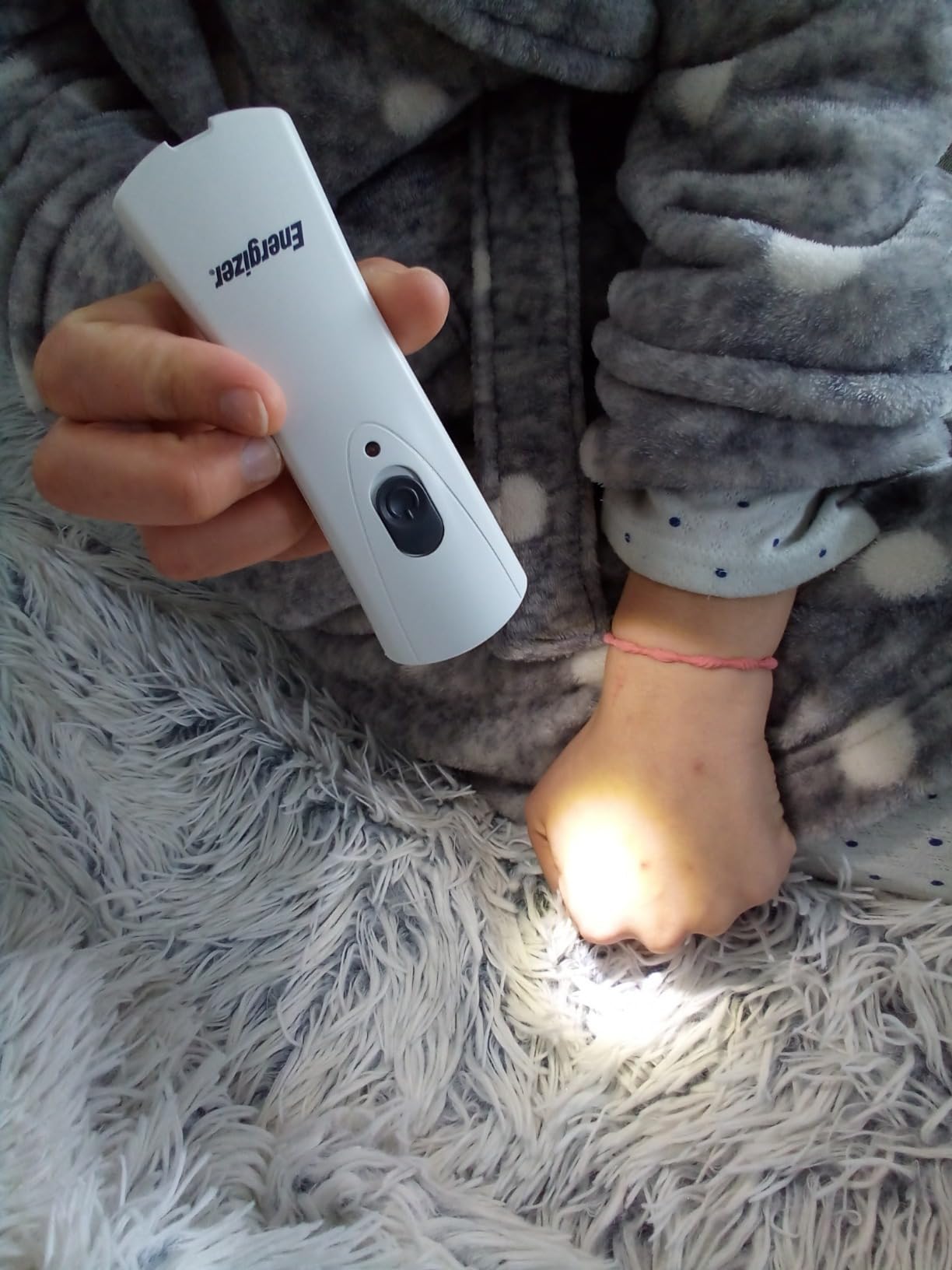
Prongs retract into the body, so there is no cable to trip over, and the housing is impact resistant to 1 meter. Each light measures about 1.77 by 4.49 by 6.46 inches and weighs almost nothing in the hand, which is why three of them fit into a drawer without anyone noticing them.
Reviewers report the same two things over and over: it comes on instantly, and it is bright enough to get you down the stairs and to the breaker panel. The complaint that shows up most is brightness, and owners of 3, 4 and 5 stars all say the same word, path.
One person on r/preppers described the pattern that this pack is built for, saying that flashlights were fine but that power down bulbs were better, especially in the bathrooms. That is the argument for combining this with a backup bulb, which we cover further down.
How to check it is actually charged before an outage
There is no battery gauge on this light, so the only reliable test is a real one. Unplug it from the wall and confirm it still comes on after a minute or two of darkness.
Do that once a month. A unit that sat in an outlet through a vacancy or a renovation can be sitting on a flat cell, and a flat cell is the single most common way emergency lighting fails.
Where it falls short in a real home
At 40 lumens this is a route light, not a task light. If you need to cook, read a manual or work at a bench, you are still going to bring something brighter to the table.
It is also not water resistant, so a bathroom shelf or an unheated garage in summer is the wrong spot. Keep the nearest one in a dry hallway, bedroom or stair landing, where the risk of a spill is low and the pathfinding value is highest.
2. Lepro 1000-Lumen Rechargeable Lantern – Best for Ambient Room Light
LE Rechargeable LED Lantern, Camping Essentials, 1000LM, 5 Light Modes, IPX4 Waterproof, 3600mAh, Lantern Flashlight for Hurricane Emergency, Hiking, Home and More, USB Cable Included
1000 lumens
3600mAh battery
Power bank output
12.7 hours on low
Pros
- Genuinely lights a whole room on high
- Low mode runs 12.7 hours
- Charges a phone when nothing else will
- Red flashing emergency mode
- Carry handle plus adjustable shoulder strap
Cons
- 0.72 kg is heavy for a handheld light
- IPX4 splash rating only
- Full output drains in about 2.2 hours
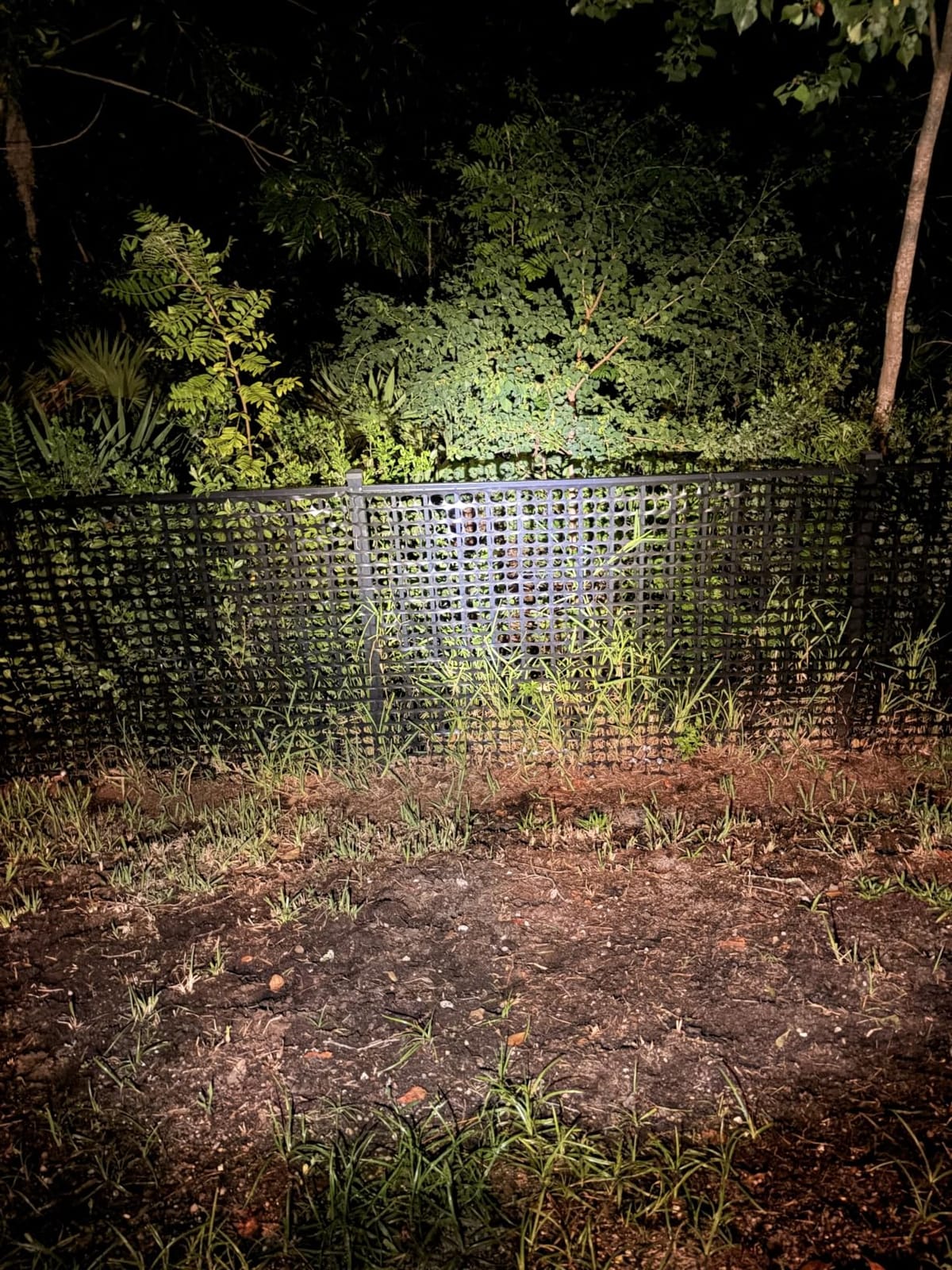
This is the lantern we ended up relying on most. Set on the kitchen table at 280 lumens it put enough light on the counters to chop, find a pan and pour a glass of water, and at 150 lumens it filled a living room without glare.
The Cree XML emitter puts out up to 1000 lumens with a listed illumination distance of 500 meters, which is a search beam number rather than a room number. The side lantern panel is what you will actually use most.
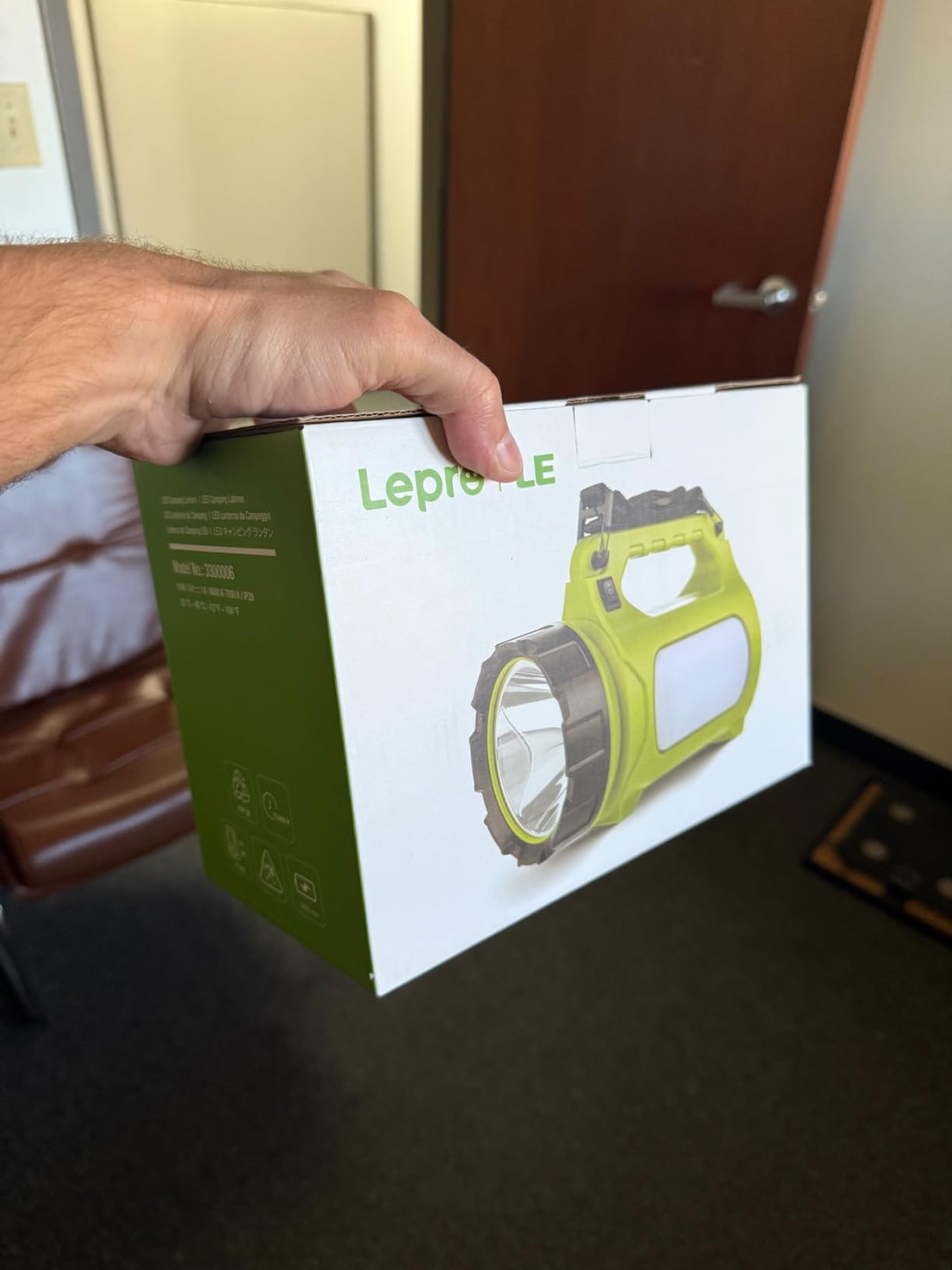
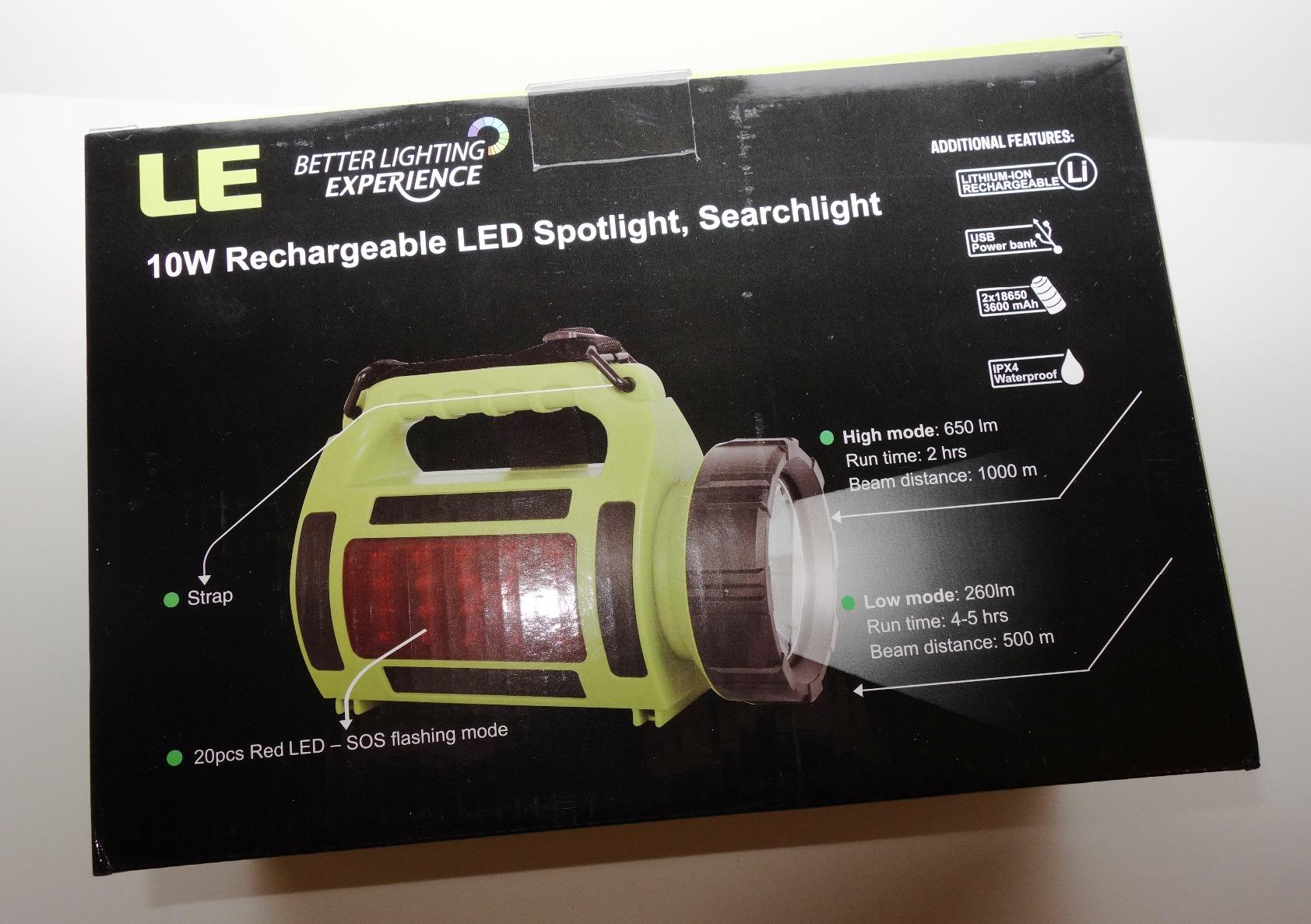
Runtime is the reason to buy it. The head runs 1000 lumens for 2.2 hours and 280 lumens for 4.6 hours, while the side lantern steps down through 150 lumens for 6.3 hours, 70 lumens for 12.7 hours and a red flashing mode. Blue indicators on the body show the remaining charge.
That built-in 3600mAh cell also works as a power bank, which is the feature reviewers mention most warmly. During a multi-day outage, having one light that can top up a phone is worth more than a second lantern.
Owners also like the shoulder strap and the large handle. At 0.72 kg it is a two-hand carry, so the strap is not a gimmick, it is what makes the light usable over a long stretch.
How to pick the right brightness for the length of the outage
Run it at 70 lumens and you get 12.7 hours, which covers an overnight event with charge to spare. Run it at 1000 lumens and you get a little over two hours, which covers a short flick.
Users on r/BuyItForLife make the same point in different words, that runtime beats brightness once the grid is down. Set the low mode as your default and step up only when you need to see across a space.
Where it falls short in a real home
It is splash resistant at IPX4, not waterproof, so keep it out of the rain if you are lighting an outdoor path. The housing is plastic and the 0.72 kg weight is real if you are carrying it up a ladder or across a yard.
It also needs a USB cable on a schedule. A lithium cell left uncharged for a year is the failure mode forum users keep describing, so plug it in monthly.
3. Lichamp 350-Lumen Collapsible Lantern 4-Pack – Best Value Whole-Home Coverage
Lichamp LED Camping Lantern, 4 Pack Battery Powered Flashlight for Power Outages, Portable Collapsible Hanging Light Essential for Home, Outdoor, Emergency Lamp Survival Kit Gear for Hurricane, Gray
350 lumens
30 hours on 3 AA
360-degree output
Four per pack
Pros
- Four lanterns cover several rooms at once
- Soft even COB glow rather than harsh points
- Collapses flat for an emergency kit
- Uses common AA cells you can buy anywhere
- Low heat output
Cons
- AA batteries are not included
- No charging and no fallback for a long outage
- Water resistant rather than waterproof
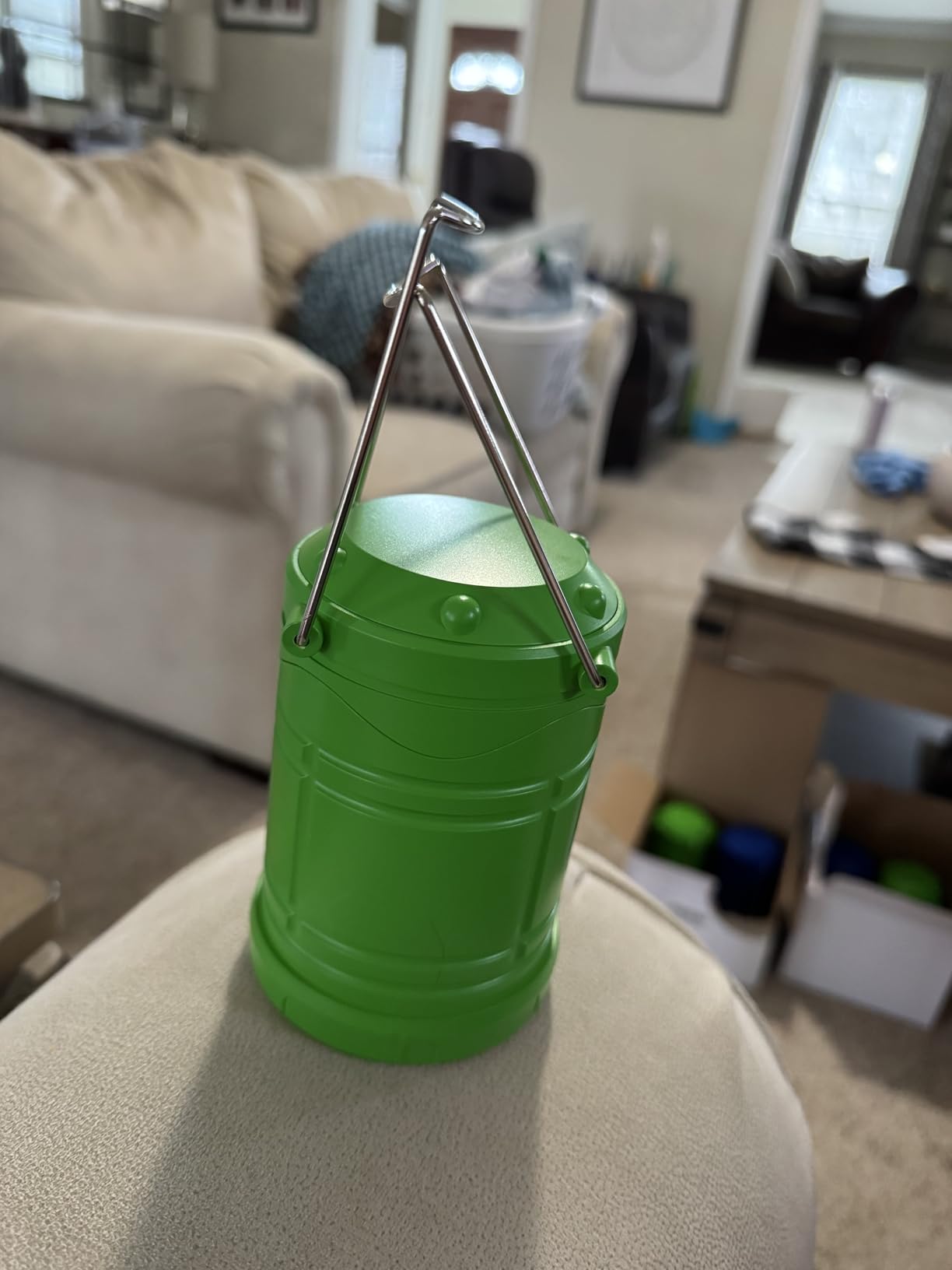
Thirty LEDs and a COB panel give 350 lumens of even, shadowless light across 360 degrees, covering about 97 square feet. That is the glow you want in a hallway where a person is walking toward you with their hands full.
The foldaway handles collapse the lantern for storage and brighten the output when pulled up, so one hand operation matters when you are half asleep. Our four went to the hallway, the basement, the garage and a bedside table.
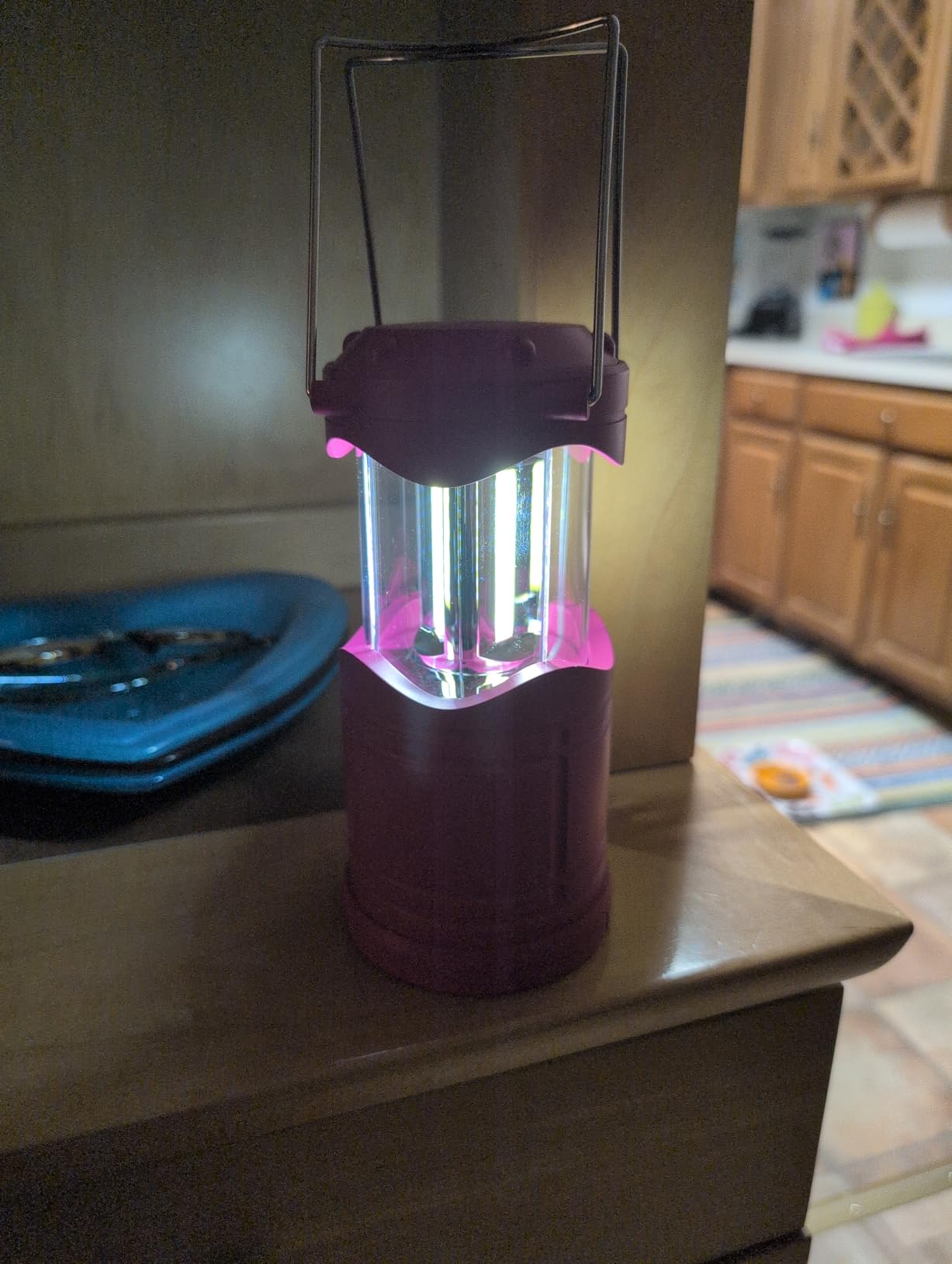
Each runs on three AA cells for up to 30 hours. That figure is the strongest argument for battery lanterns in a long outage, because AA cells are the one battery format you can replace as often as you like without a special charger.
Roughly 84 percent of reviewers give it five stars, and the praise clusters around the even glow, the collapsibility and the fact that four lights arrive in one pack. The most common complaint is that the batteries are not in the box, so buy a bundle of cells with the lanterns.
Weight is 1.09 kg for the pack, and the housing is military-grade plastic that resists shock and water. That is a splash rating, not a submersible one, so the garage is fine and a wet basement corner is not.
Why disposable cells can beat rechargeable in a long outage
A rechargeable lantern is only as good as its last charge. A battery lantern only needs spare cells on a shelf, and an AA is the easiest cell in the world to replace.
For a three-day grid failure, that changes the math. Buy two sets of three AA per lantern, keep the spares in the same drawer, and swap rather than hunt for a charger and a working outlet.
Where it falls short in a real home
There is no USB input and no power bank, so a dead phone does not get help from this light. It also has no red night-vision mode, which matters if a sleeping child is in the room.
At 350 lumens it fills a hallway comfortably and a living room adequately, but it will not replace task lighting on a workbench. Plan it as ambient coverage layered under something brighter.
4. Energizer WeatheReady PRO-360 Lantern – Best for Multi-Day Outages
ENERGIZER WeatheReady LED Camping Lantern PRO-360, IPX4 Water Resistant Tent Light, Ultra Bright Battery Powered Lanterns for Camping, Outdoors, Emergency Power Outage
500 lumens
Up to 150 hours
3 D or 3 AA cells
IPX4 rated
Pros
- Longest claimed runtime in this roundup
- 500-lumen all-around light
- Accepts D cells or AA batteries
- Glow-in-the-dark switch finds it in total dark
- Impact resistant to 1 meter
Cons
- 6 percent of reviewers give one star
- Battery only
- so it needs fresh cells
- No red or SOS signaling mode
Runtime is the entire pitch here. The listed figure is up to 150 hours on high, and that is the number that matters when the restoration estimate keeps moving and nobody knows whether this lasts one night or four.
It accepts three D cells or three AA batteries, so you can size the pack to your reserve. D cells give the long runtimes, and AA cells give you the option to use whatever you already have in the drawer.
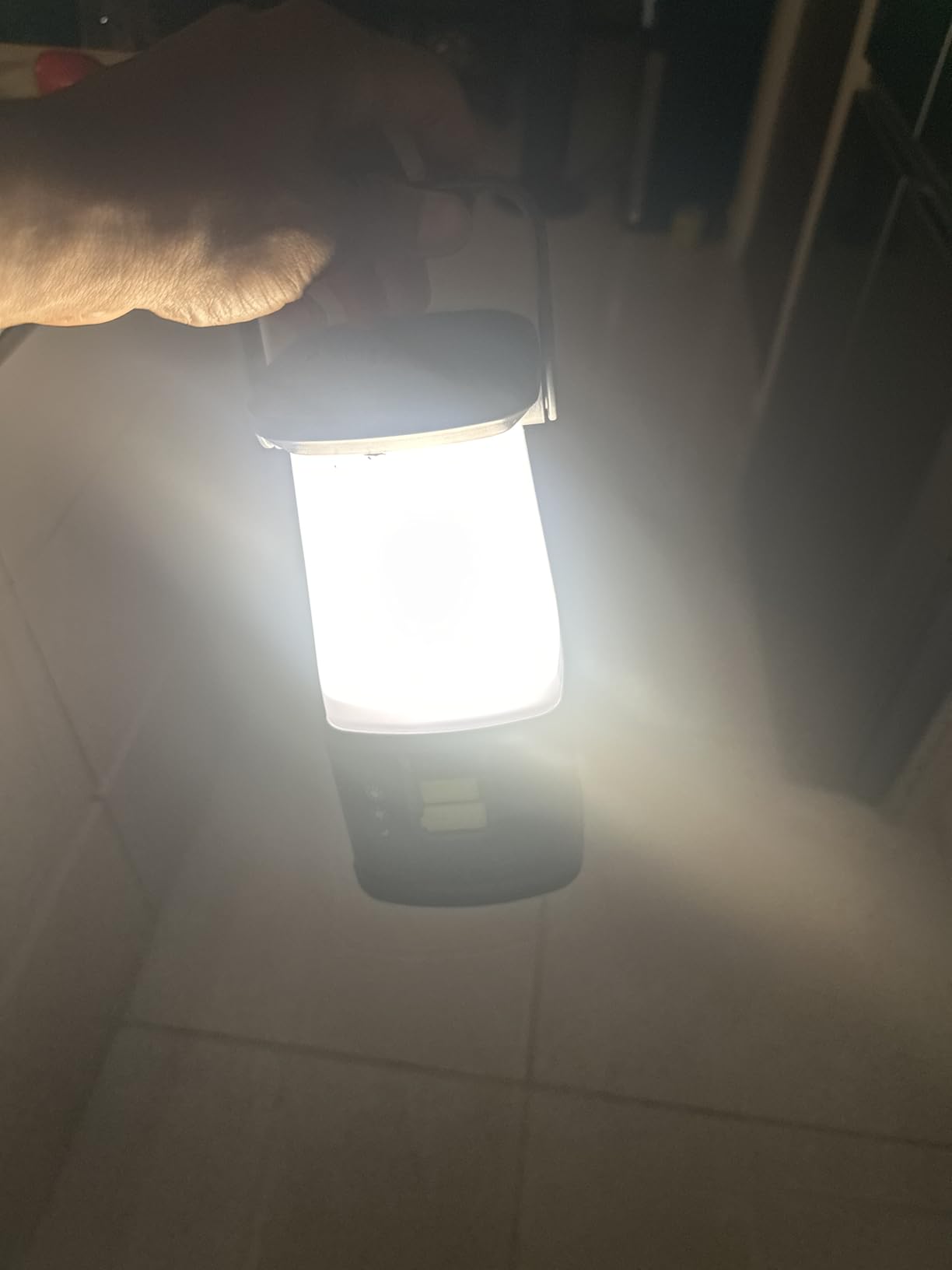
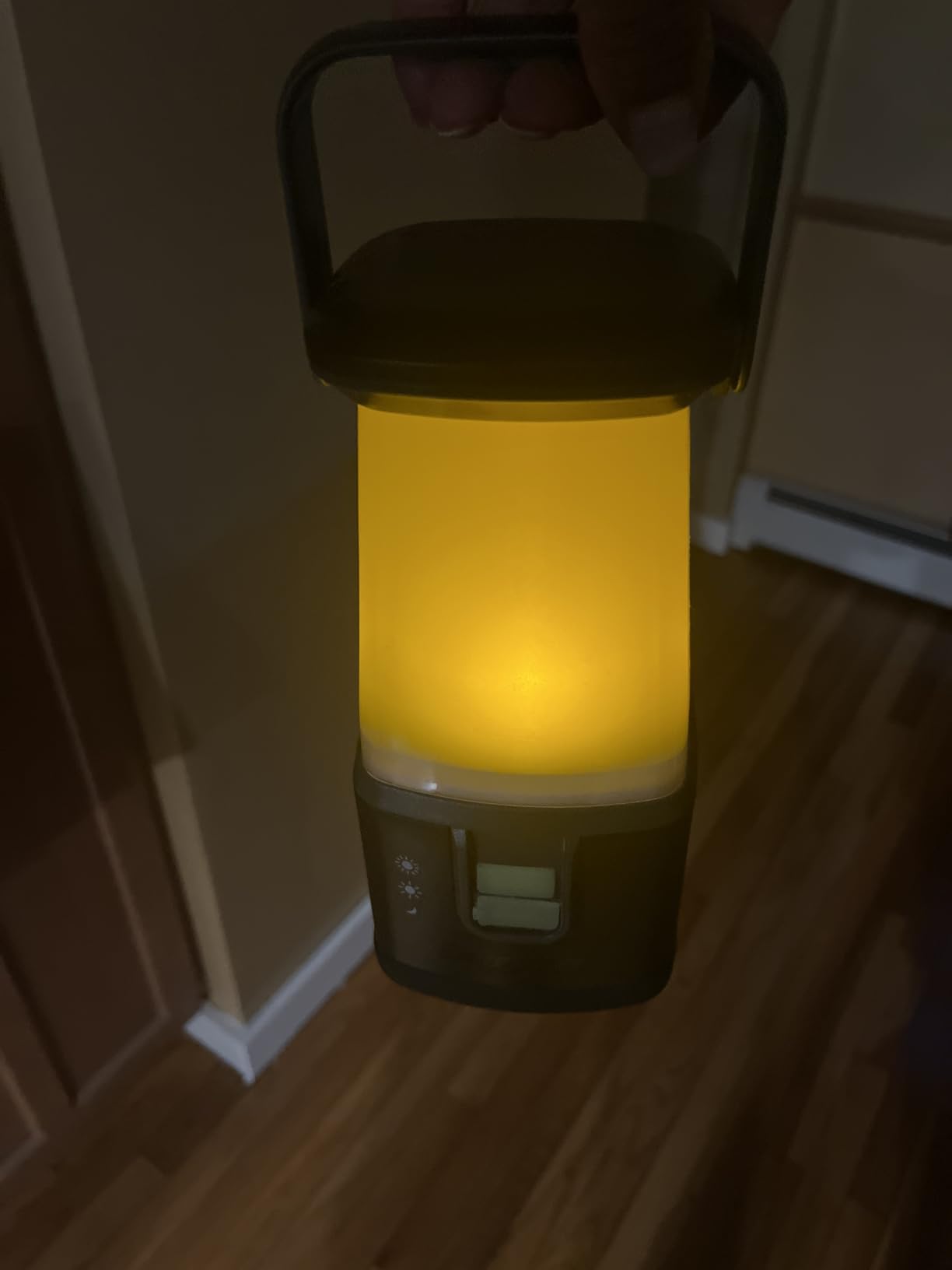
The glow-in-the-dark switch is a small thing that solves a real problem. In a pitch-dark room, finding the switch on any lantern is guesswork, and this one is visible before you touch it.
Output is up to 500 lumens with all-around illumination that reviewers describe as filling large rooms. At IPX4 and impact resistant to 1 meter, it is at home in a garage, a shed or a damp basement stair.
Ratings sit at 4.5 across 7770 reviews, with 76 percent five-star and 6 percent one-star, the largest negative share of any lantern here. Durability complaints over time are the main theme in the one-star reviews, so treat it as a working light rather than a heirloom.
How to stock cells for an outage you cannot predict
Buy D cells in bulk and keep them with the lantern, not in a kitchen drawer. One full set of three D cells per lantern, doubled, covers several nights of high output.
Store them where they stay cool and dry, and check the date on the pack twice a year. A battery bought today and forgotten for three years is the same as no battery at all.
Where it falls short in a real home
There is no red night-vision mode and no SOS signaling, so it cannot double as a signaling light for roadside or search situations. The Eveready further down covers that gap.
It is also battery only. If the outage is long and your spare cells run out, there is no USB fallback and no way to squeeze the last hours out of a dying D cell.
5. ROSSEX 4-in-1 Plug-In Emergency Light 3-Pack – Best for Instant Auto-On Coverage
ROSSEX 4 in 1 Emergency Lights for Home Power Failure, 3 Pcs Rechargeable LED Flashlight Plug in Wall, Automatic Turn-On Power Outage Night Light Flashlight for Hurricane Preparedness Items
50 lumens
6 hours of backup
Wall mount plug-in
2-year warranty
Pros
- Switches on by itself during an outage
- Three functions in one body
- Three lights distribute easily across floors
- Backed by a 2-year manufacturer warranty
Cons
- 50 lumens is path lighting only
- No dusk-to-dawn sensor on the night light mode
- Not water resistant
- Only 1110 ratings so far
This is the ROSSEX design the AI summaries on this query keep naming, and the reason is simple. It is a wall-mount plug-in unit that lights itself during an outage, and it does nothing else that competes with the three other functions built into the same housing.
Each one is a flashlight, a night light and a table lamp in a 5.43 by 1.81 by 1.52 inch body. The built-in lithium ion battery gives up to 6 hours of 50-lumen soft white light, and the whole pack carries a 2-year manufacturer warranty.
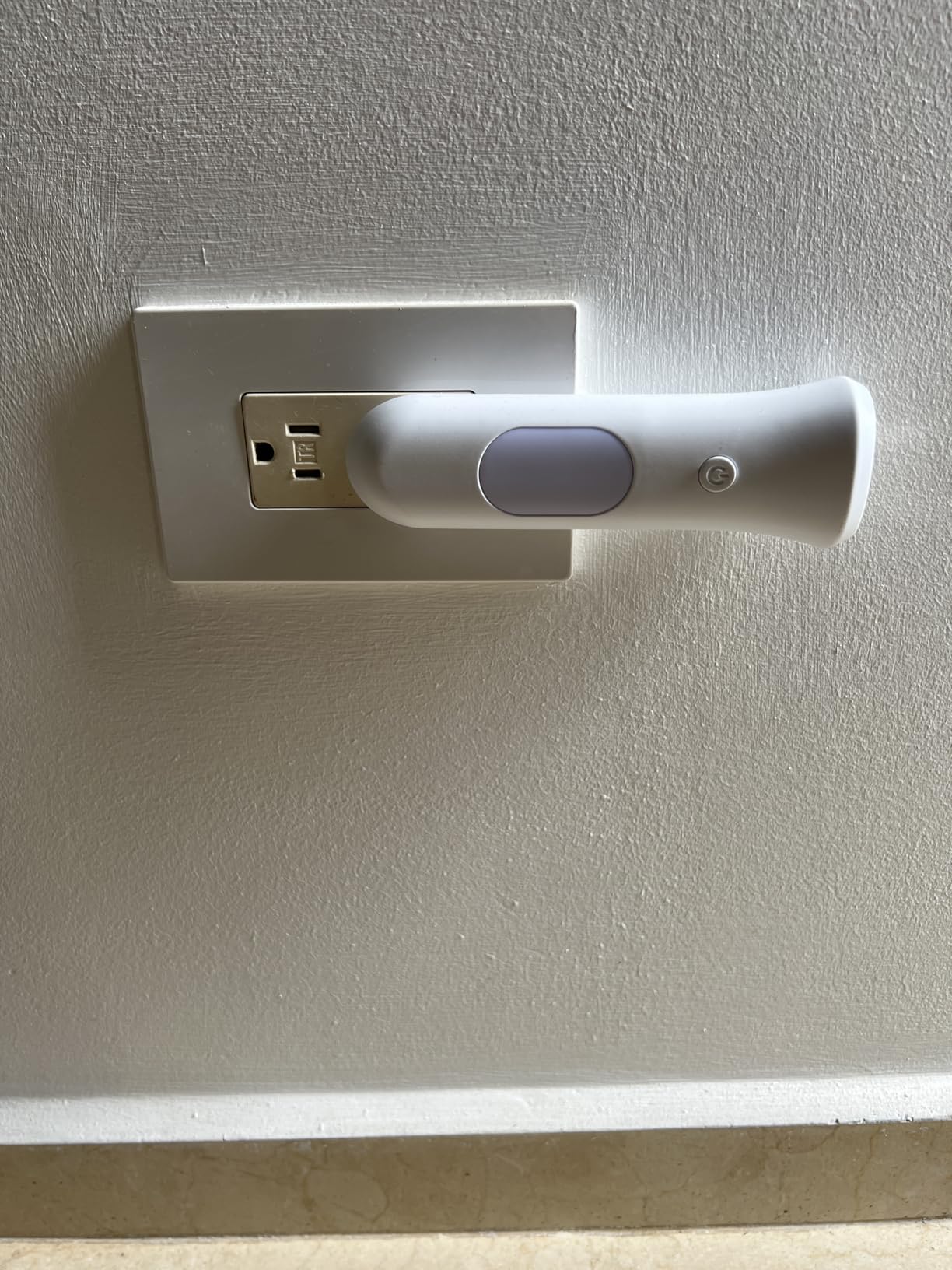
Owners report the same result we did, instant activation during real outages with no fumbling. The three-pack is the practical unit, because one per floor or per critical room is the only way this design works.
It lights kitchens, bedrooms, bathrooms, basements, stairways, hallways and garages, according to the manufacturer, and it comes back on automatically after an outage whenever the unit is plugged in, regardless of which mode it was in.
The most common complaint is that the night light mode has no dusk-to-dawn sensor, so it either stays on or gets switched by hand. If you want automatic night lighting, the Camelion later in this list does that job.
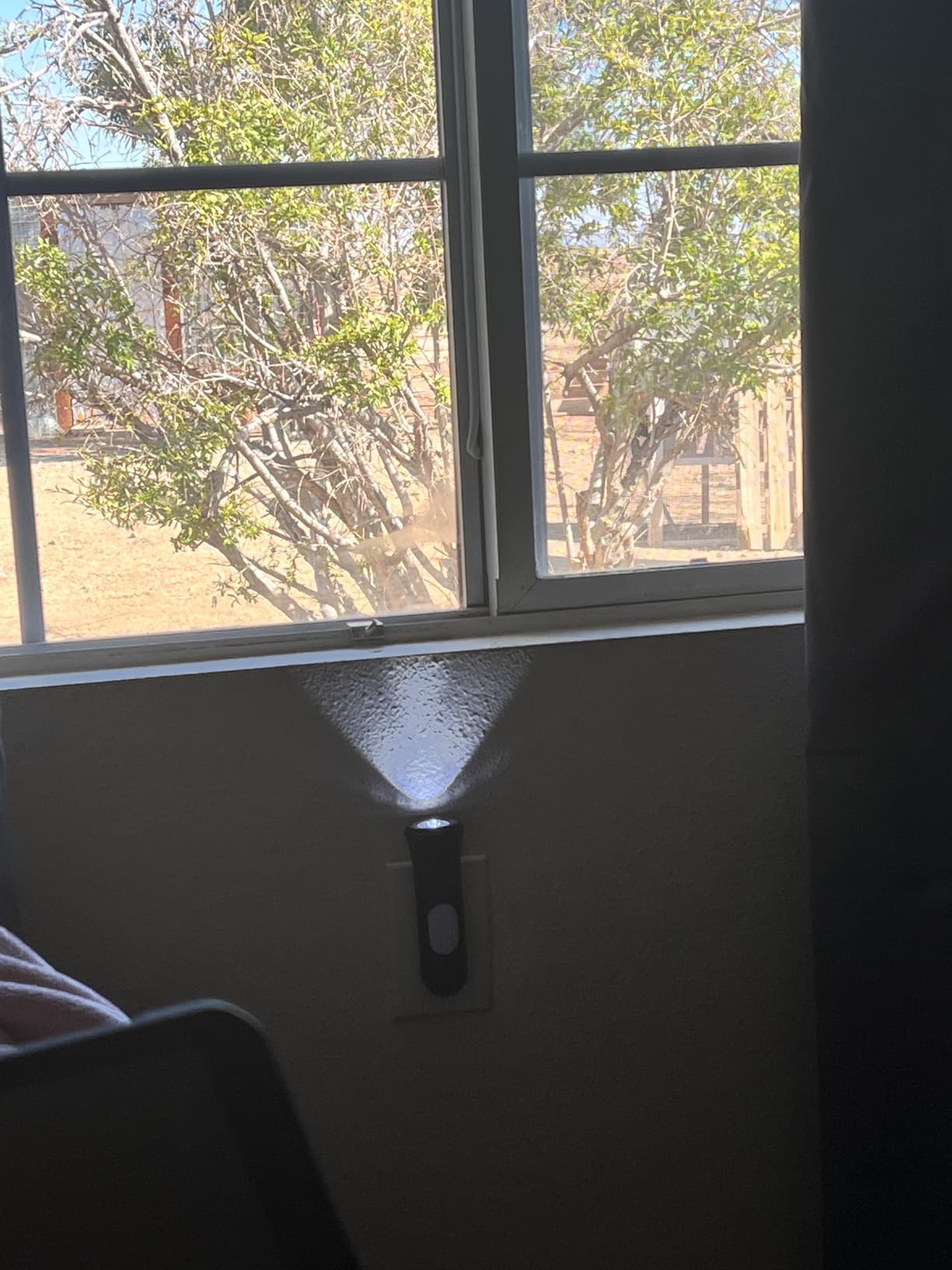
Why auto-activation beats a brighter light in the first ten minutes
The first minutes of an outage are when people trip, fall down stairs and fumble for a flashlight they cannot see. A light that is already on removes the whole problem, whatever its lumen count.
Place these at eye level on the route from a bed to a bathroom, and near the stairs. That is coverage a handheld torch cannot match from a drawer.
Where it falls short in a real home
Fifty lumens is a walking light. It will show you the outline of a wall and the top of a staircase, but it will not light a work surface, and the word lamp on the box oversells it.
It is not water resistant, so it does not belong in a bathroom where a tap gets left running. And with 1110 ratings it has a thinner review history than the picks above it, so treat it as the coverage layer rather than the only layer.
6. Lithonia Basics LED Emergency Light – Best for Stairways and Code Paths
Lithonia Lighting Basics LED Emergency Light, Adjustable Heads 120/277V 1Pk
90 minutes of backup
90 lumens
Dual adjustable heads
UL Listed
Pros
- Built to the 90-minute emergency code standard
- Dual adjustable 1W heads aim along 3 to 6 foot paths
- Test switch and status indicator simplify checks
- Ni-Cad battery charges on AC automatically
- UL Listed for commercial and egress use
Cons
- Hardwired and best installed by an electrician
- 90 lumens covers paths rather than rooms
- Indoor damp locations only
- Ni-Cad cells age faster than lithium
This is the fixture that most results on this search are not talking to. It is a commercial code-compliant emergency light, UL Listed and compliant with NFPA 101, OSHA and NEC requirements, built to deliver 90 minutes of backup on egress paths.
That 90-minute figure is the point and the limit. A code standard exists so people can see a stairwell for the time it takes to get out of a building, not so a family can ride out a three-day outage in a lit kitchen.
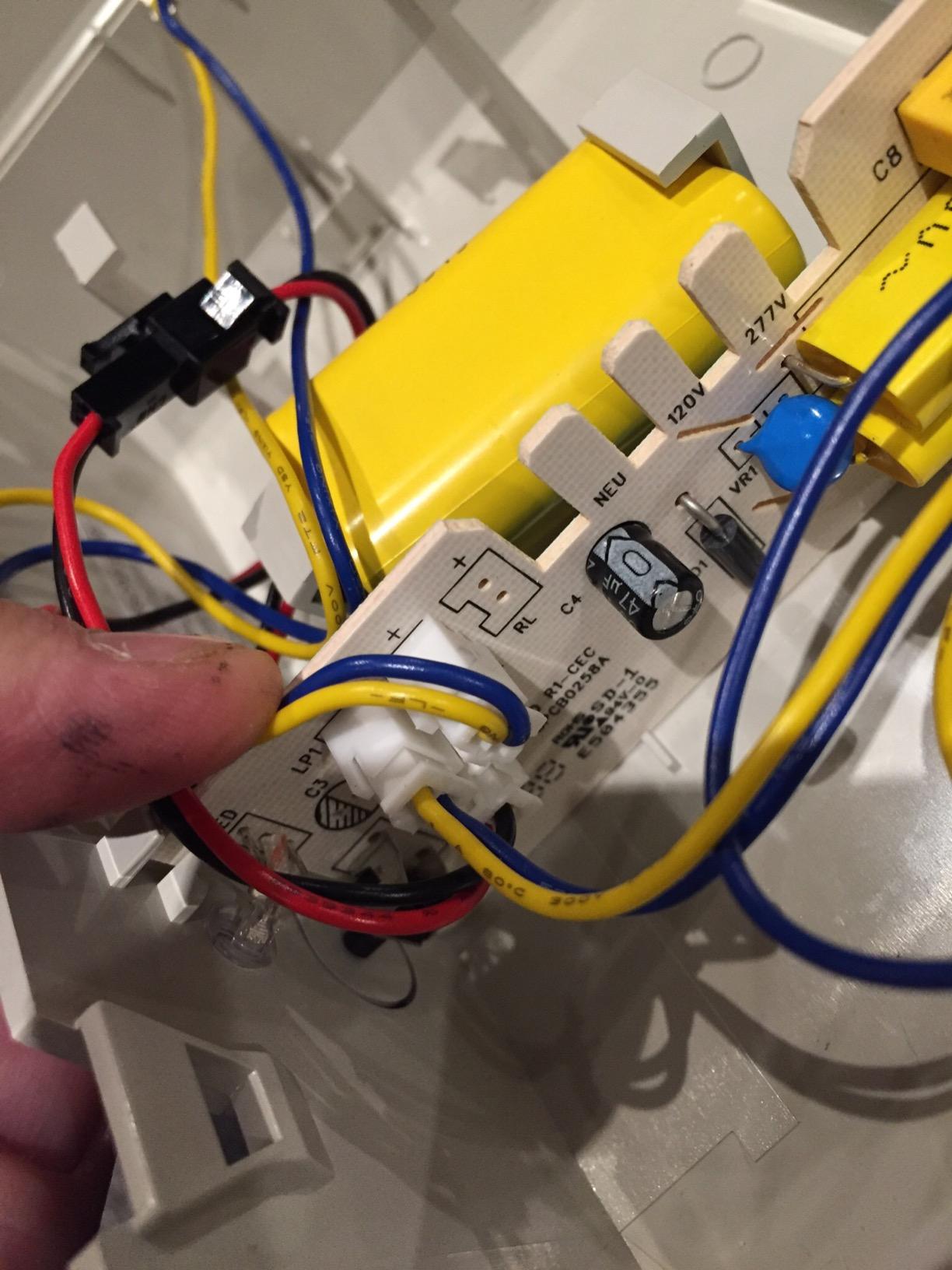
Two adjustable 1W LED heads at 5000K can be aimed to illuminate 3 to 6 foot paths, which is exactly the geometry of a stairway or a basement corridor. A rechargeable Ni-Cad battery charges automatically whenever AC power is present.
There is a built-in test switch and a status indicator, so checking it does not require pulling a ladder or opening a cover. It weighs 1.5 pounds, mounts to a wall on a universal J-box at 120V or 277V, and carries a 2-year limited warranty.
Reviewers in trades settings value the compliance, the adjustable heads and the automatic charging. For a homeowner, the hardwired wall-mount installation is the obstacle, and it needs an electrician in most houses.
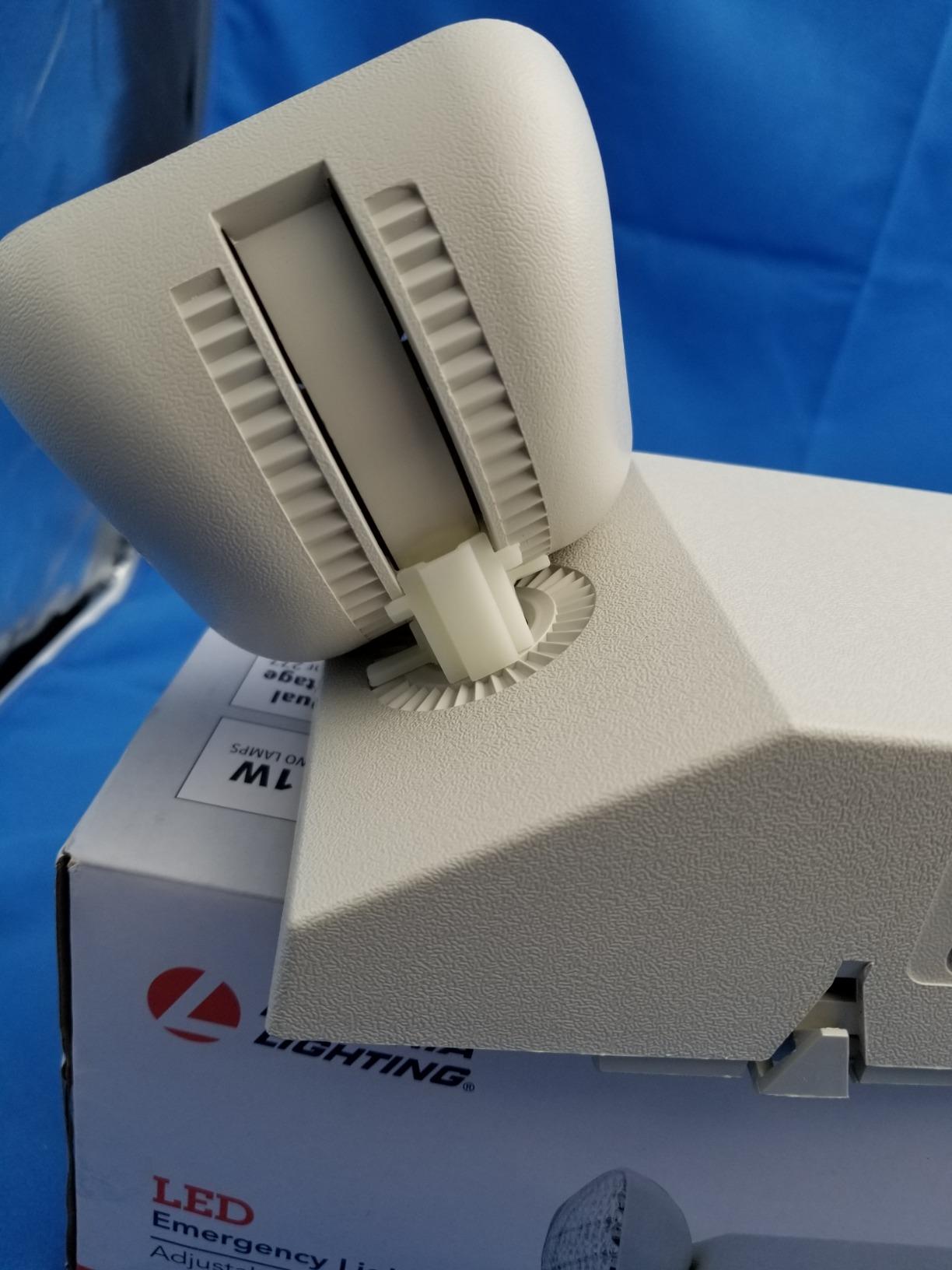
When a code fixture is the right answer
If you are finishing a basement, a garage workshop or a rental unit where an egress path must stay lit, this is the product the code is written around. Renters and anyone with a rental inspection should start here.
It is rated for indoor damp locations from 50F to 104F, which covers a garage and a conditioned basement but not an exterior wall in a storm.
Where it falls short in a real home
Ninety minutes of Ni-Cad backup is short for a residential outage, and Ni-Cad cells lose capacity faster than the lithium cells in the consumer lights on this list. Plan for it to cover an exit route, not to light a life.
At 90 lumens total, this is path lighting. If your goal is emergency lighting for power outages at home rather than code compliance at a stairwell, put your money in the plug-in and rechargeable options instead.
7. Eveready 360 PRO Lantern 3-Pack – Best for SOS Signaling
Eveready LED Camping Lantern 360 PRO (3-Pack), Super Bright Tent Lights, IPX4 Water Resistant LED Lanterns for Power Outage Hurricane Preparedness, (Batteries Included)
350 lumens area mode
60 lumens beam at 100m
Red SOS and flashing
Batteries included
Pros
- Four modes including red SOS signaling
- Dual-purpose area light and directional flashlight
- Magnets in the base plus a hanging hook
- Batteries already in each lantern
- Three-pack spreads across floors
Cons
- About 16 hours of runtime on 3 AA
- Not water resistant despite marketing wording
- Battery door and cells need periodic replacement
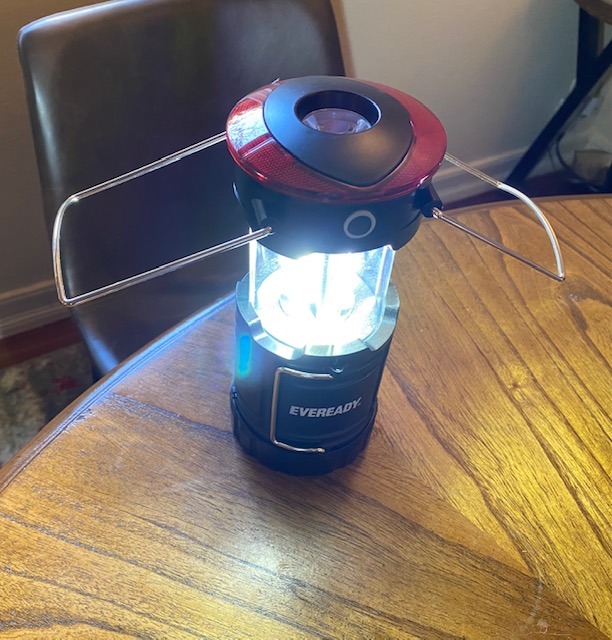
The reason to pick this lantern over a brighter one is the signalling. Alongside a 350-lumen 360-degree area mode and a 60-lumen directional beam reaching 100 meters, it runs a red flashing mode and a red SOS mode.
For a roadside, a search around a dark house, or letting someone know where you are in a multi-day event, that red mode is more useful than extra lumens. Most lanterns in this roundup have no equivalent.
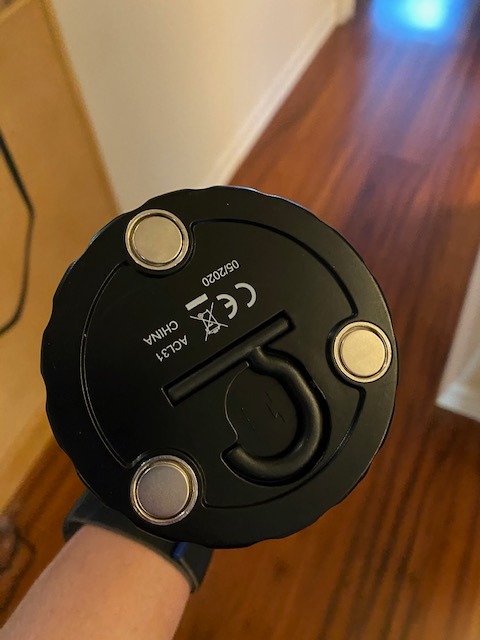
Placement is unusually flexible. Each lantern has a top carry handle, a hanging hook and magnets in the base, so it can sit on a fridge door, hang from a branch or clamp to steel shelving in a garage.
Batteries are included, which is unusual for a three-pack and removes the most common complaint in this category. Each runs on three AA alkaline cells for up to 16 hours.
At 4.7 stars across 5670 reviews, with 82 percent five-star, the praise centers on the bright area lighting, the SOS red modes and the magnetic base. The criticisms are the 16-hour runtime ceiling and the fact that it is not actually water resistant.
When SOS mode beats brightness
Red signalling is visible further away and costs far less battery than white output. If anyone might be searching for you or you are near a road, run the red mode between checks of the house.
It is also the kind of feature that matters for a family member who is outside during a storm, where a white beam at full output would be seen by everyone except the people looking for you.
Where it falls short in a real home
Sixteen hours on three AA cells is a night of light, not a week. For anything longer you need D cells or a rechargeable cell, which is where the PRO-360 or the Lepro earns its place.
Alkaline cells drain steadily and lose output as they go, and the housing is not water resistant. Keep the base magnets away from steel filings and do not plan on it in a wet garage.
8. Neporal Battery-Backup LED Bulb 4-Pack – Best Room-Stays-Lit Solution
Neporal 4 Pack Emergency-Rechargeable-Light-Bulb, Stay Lights Up When Power Failure, 1500mAh 15W 80W Equivalent LED Light Bulbs for Home, Camping, Tent (E27, with Hook) (Daylight)
750 lumens at 6000K
1500mAh self-charging
E26 A23 base
Recharge every 60 days
Pros
- Room stays lit during an outage with no hunting
- Works as an ordinary bulb every other day
- Bright output comparable to an 80W incandescent
- Included hooks allow hanging without a fixture
- Backed by a 2-year warranty
Cons
- A23 size will not fit many lampshades
- Stays on in multi-bulb fixtures even when switched off
- Will not work with a dimmer switch
- Some reports of buzzing and flicker
Outage after outage, the strongest single piece of feedback about emergency lighting is that bulbs beat torches for ambient light. One person on r/preppers put it plainly, that flashlights were fine but that power down bulbs were better, especially in the bathrooms. This is that product.
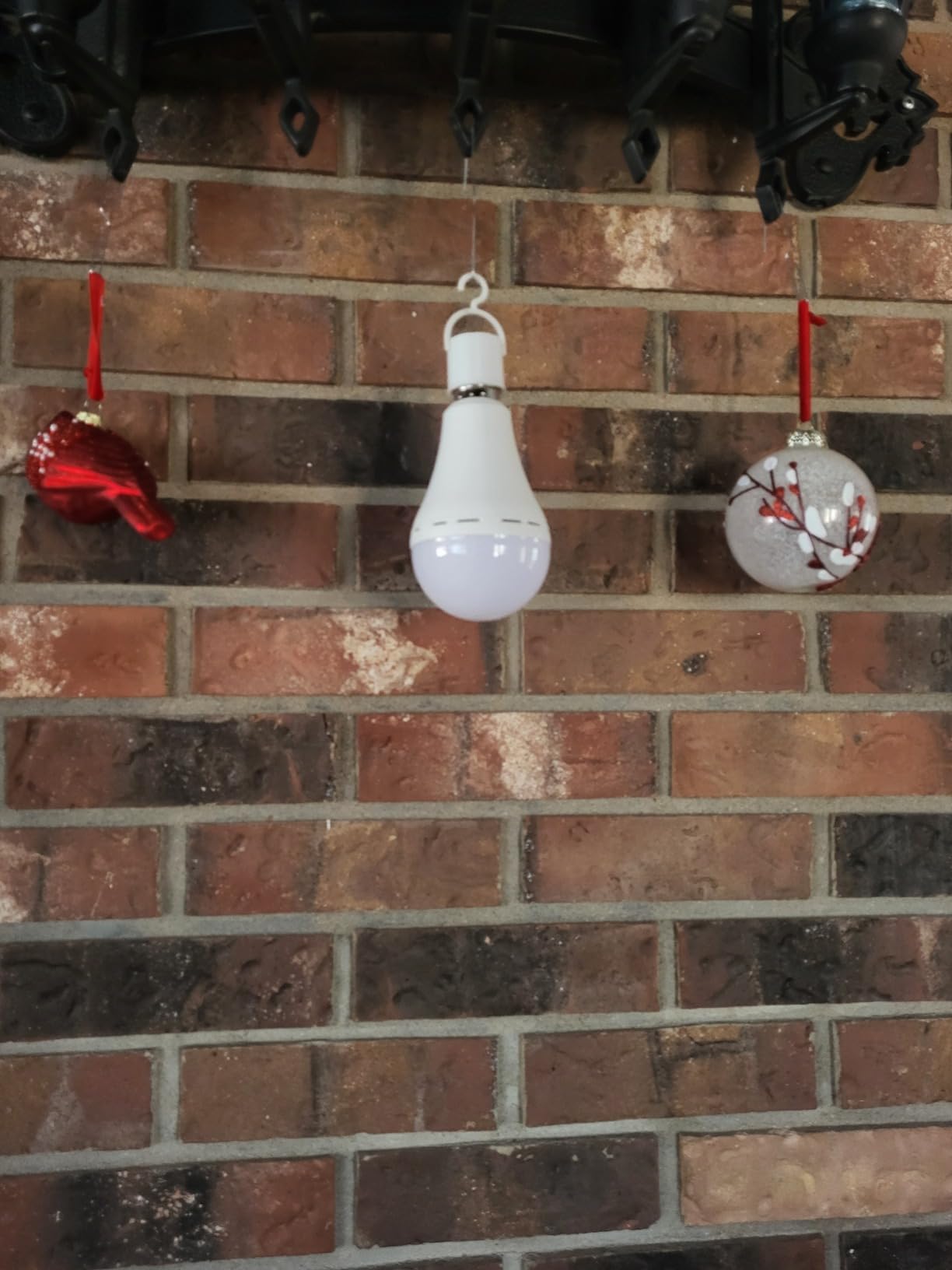
Screw it into a ceiling fixture, a table lamp or a sconce and forget about it. The 1500mAh battery self-charges while the lamp is on, and carries the bulb through an outage at 6000K daylight output of about 750 to 800 lumens from 15W, an 80 to 100W incandescent equivalent.

Protection is unusually thorough for a bulb at this level, with 85-265V wide voltage input plus overcharge, overdischarge, short circuit and overcurrent layers on a rust-proof aluminum screw base. The pack includes power hooks for tents, barns and storage.
At 4.4 stars across 8595 reviews, this has the widest spread in the roundup, with 71 percent five-star and 8 percent three-star. Buyers love the lit room, and the recurring complaints are physical rather than electrical.
The A23 shape is the main one. It is a large bulb, and it will not go inside a lot of fabric shades. In a fixture with more than one bulb, the backup keeps the whole lamp lit even when the switch is off, which surprises people the first time.
How to keep the battery healthy in a bulb you never look at
The manufacturer asks that you recharge the bulb in a live socket every 60 days. Put a recurring calendar reminder on it, because the whole product is invisible when the power is on and there is no indicator light.
Test each one by switching off the wall breaker and walking into the room. If the bulb stays lit, its cell is fine. If it goes dark, the socket was never charging it.
Where it falls short in a real home
It only charges when the lamp or fixture is switched on, and it is not compatible with dimmer switches. In a fixture controlled by a wall switch, a bulb that stays on through the outage is the point, but it is also confusing day to day.
A minority of reviews report buzzing, popping, flickering or a bulb that would not switch off. Budget for one spare, and put the spares somewhere you will actually find them.
9. BLUETECH Avalon Motion-Sensing Light 3-Pack – Best for Dark Hallways
BLUETECH Avalon LED Flashlight Night Light for Emergency Preparedness, Portable Unit with Motion Detection,Power Failure Light, ETL Approved Blackout Light- 3 Pack, White
240 lumens
Motion and dark detection
Rechargeable docking station
ETL approved
Pros
- Owners report it lights entire rooms and stairwells
- Two modes including automatic power-loss activation
- Rechargeable dock keeps it visible and ready
- Detachable 15-LED head works as a reading light
- Long-lived batteries reported across many years
Cons
- Bright enough to disturb sleep in a bedroom
- US two-prong plug needs an adapter abroad
- Depends on the wall cradle for charging
- Not water resistant
This solves a problem the other lights here create. A plug-in unit or a motion night light is on constantly, and a constant light in a hallway is exactly what wakes a sleeping child. The Avalon stays dark until you move.
Five LED bulbs in the base deliver 240 lumens of room-level output, and the motion sensor switches it on when it detects movement then off after 10 to 15 seconds of stillness. The detachable front head carries 15 more LEDs for a reading light.
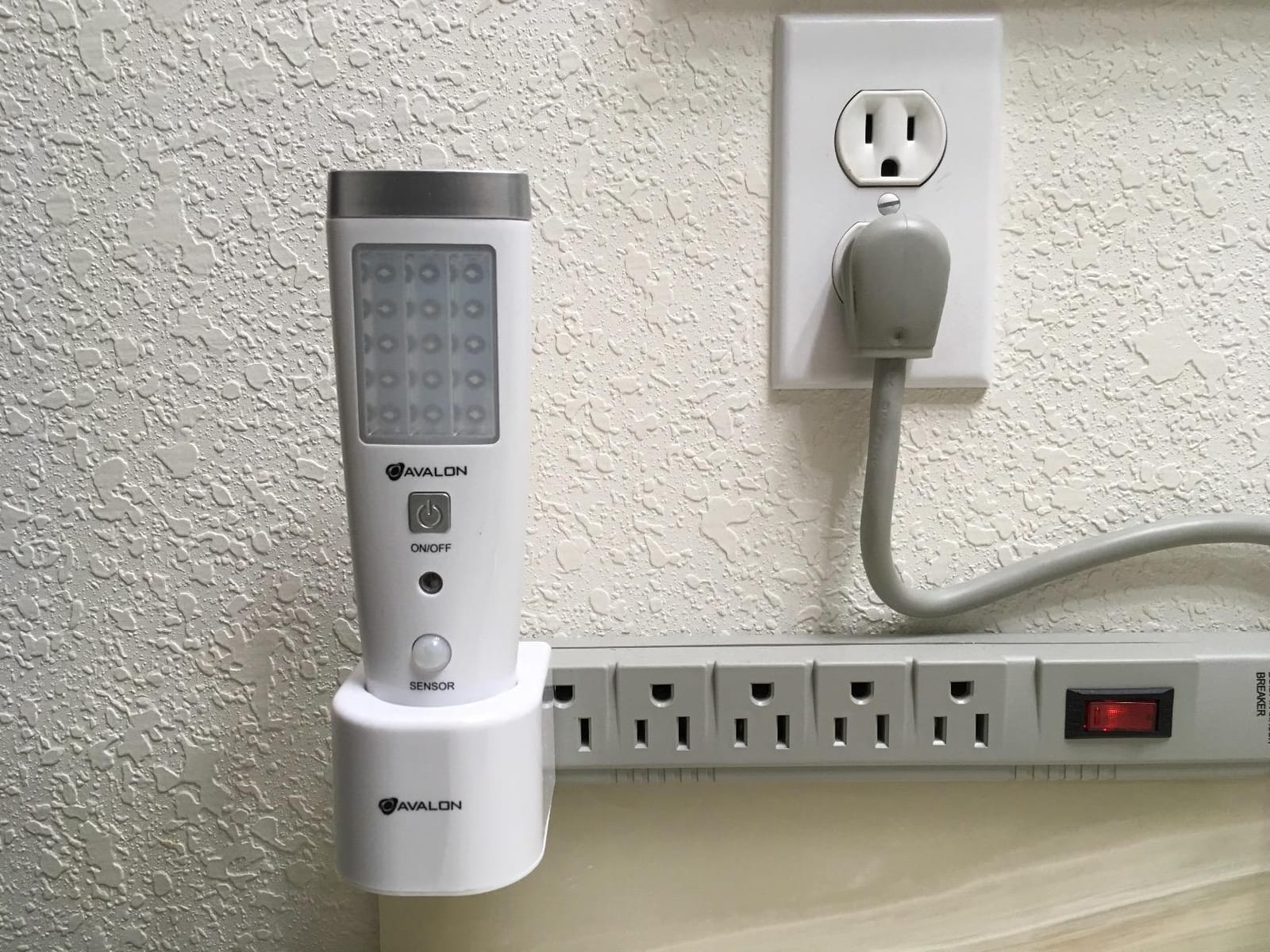
It has two operating modes, motion-activated while on power, or automatic activation on power loss. The rechargeable docking station is what makes it dependable, because the light lives in view on the shelf instead of in a drawer somewhere.
Reviewers repeatedly describe the batteries as still working after eight years, and 4.6 stars across 2369 reviews sits in line with the strongest in the roundup. The recurring complaints are plug compatibility outside the US and brightness in a bedroom.
At 2.3 by 2 by 10 inches and 1.2 pounds per set, it is slim enough for a narrow hallway shelf. It is ETL approved and carries a 1-year warranty.
How to place a motion light so it never catches you at 3am
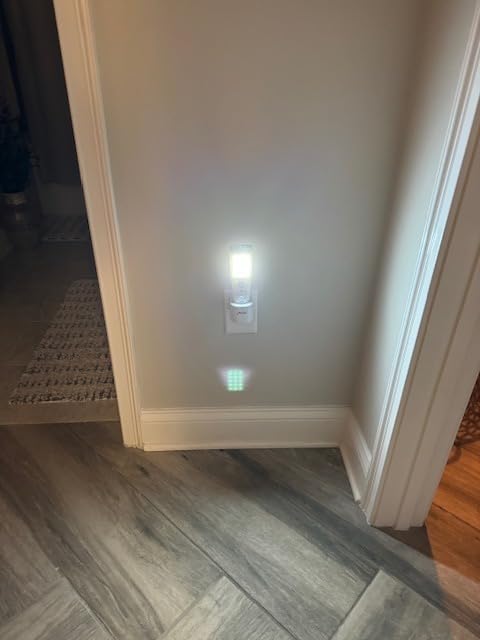
Point it along the corridor rather than across it, and set the mounting height so the field stops at your bedroom door. That way a trip to the bathroom lights the hall and leaves the sleeping room dark.
A narrow hall leading to stairs is the ideal spot, because the movement that triggers it is movement you would have made anyway.
Where it falls short in a real home
It is bound to its wall cradle for charging, so it is a fixture rather than a grab-and-go light. If the outlet is in the wrong place, the light is in the wrong place.
At 240 lumens it will not serve as a work light, and the two-prong plug will not fit a UK or Australian outlet without an adapter. Pets that run the hallway at night will set it off as well as people do.
10. Camelion 4-in-1 Power Failure Night Light – Best for Kids and Elderly Parents
Camelion 4-in-1 Power Failure Night Light,Flashlight,Motion Sensing, 3-Pack
Up to 6 hours backup
Motion sensing
Dusk-to-dawn sensor
Four functions
Pros
- Night light
- power failure light
- flashlight and table lamp in one
- Dusk-to-dawn sensor plus two motion modes
- Low-profile plug-in body keeps the second outlet usable
- Useful for elderly relatives and dark hallways
- Same model still reported working after about five years
Cons
- Some owners report closer to 2 hours of real backup
- Not bright enough to fully light a room
- Motion sensor can be triggered by pets
- Smallest review base here at 401 ratings
The design brief for this one is a house with a sleeping child, a dark landing, or an elderly parent who should not be walking to a light switch in the dark. It solves all three with a single plug-in body.
Four functions sit in 0.79 by 2.16 by 4.56 inches: a night light, a power failure light, a portable flashlight and a tabletop light. A built-in rechargeable battery gives up to 6 hours of backup, and the body is only 0.3 kg.
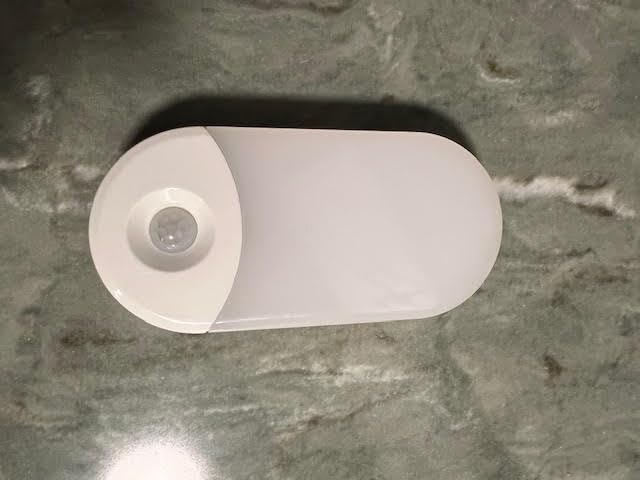
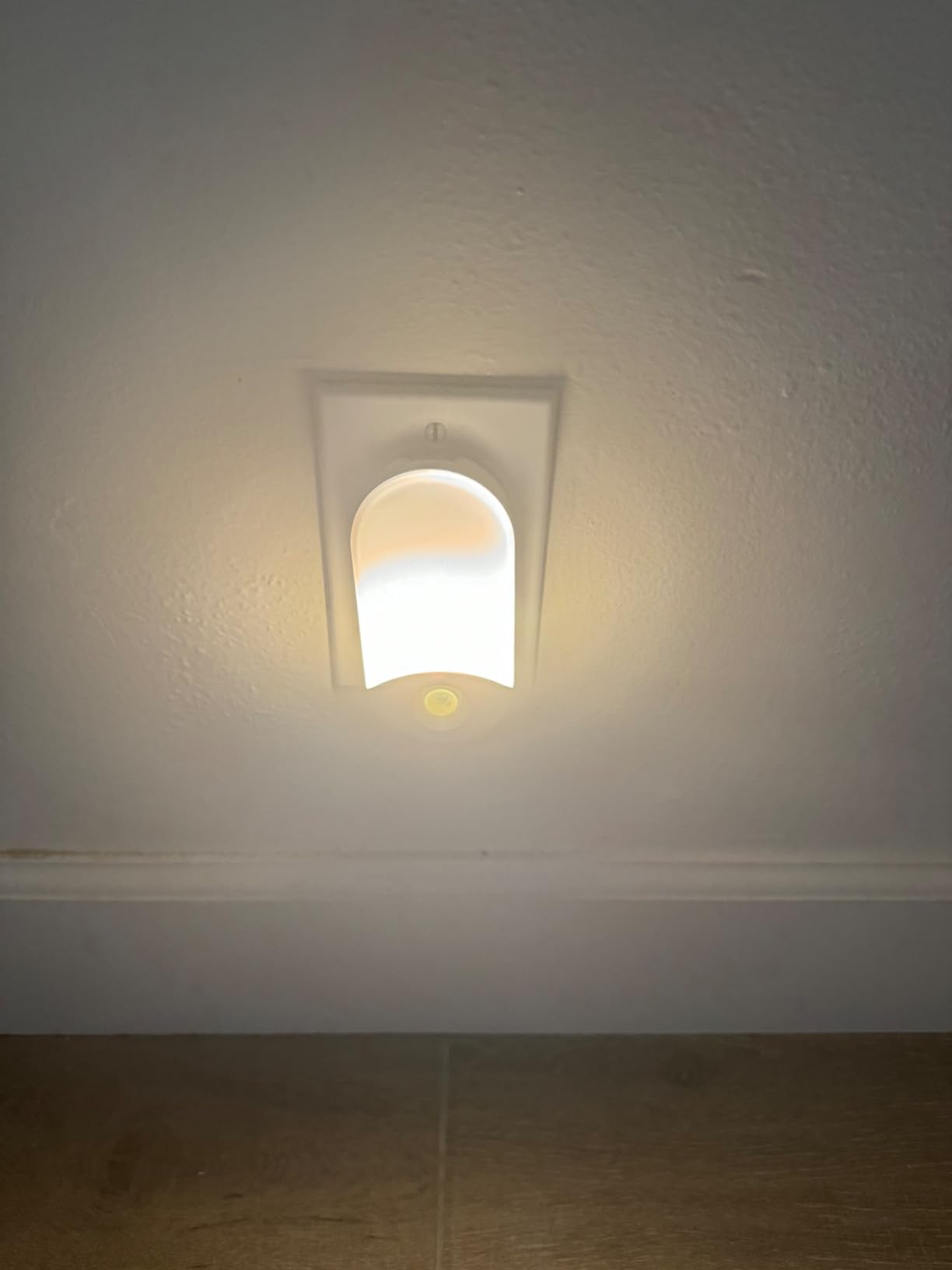
The dusk-to-dawn sensor is the feature that separates it from the other plug-in units on this list. It turns a warm white light on after dark and off at daylight with no manual switching, and two motion modes let you choose between a low auto-dim glow that brightens on movement and motion-only full brightness.
The slim plug-in body does not block the second outlet on a duplex receptacle, which is a small thing that decides whether it fits where you want it. It draws 1.8 watts on 110V AC and charges continuously with no disposable batteries.
Owners like the four-in-one versatility, the dusk sensor and the compact footprint, and some report the same model still working after about five years. At 4.5 stars across 401 ratings it has the smallest review base here, so it earns its spot on design rather than on volume.
Why a warm night light matters more than brightness at 3am
A 3am bathroom trip with a 240-lumen flashlight in your face wakes you fully and leaves a child awake too. A dim warm glow that comes on when you move is the version the rest of the family sleeps through.
Set it in auto-dim glow mode for a bedroom or landing, and motion-only full brightness for a garage or utility area where you need real output.
Where it falls short in a real home
Some owners report closer to two hours of real backup rather than the advertised six, so test it before you rely on it. A few also describe a brief blink before it settles on after an outage.
It is not water resistant and not bright enough to light a room. Treat it as the low-glare layer in a bedroom and hallway, then add a lantern where you need to work.
A Room-by-Room Emergency Lighting Plan
Most households buy one light and then carry it around the house at 3am. Assigning lights to rooms in advance is faster and safer, and it is the plan we used during our testing.
Bedroom. A dim plug-in unit with a dusk sensor or motion sensing, set low, so a child or an elderly parent has a route to the bathroom without turning on anything bright.
Hallway and stairs. A motion-activated light like the Avalon, mounted along the corridor and aimed at the stairs. Falls on a staircase are the most common outage injury there is, and a light that comes on when you move prevents most of them.
Bathroom. A battery-backup bulb, as forum users specifically recommend. The advantage over a hallway light is that you can see the whole room from the doorway, and the fixture is already wired.
Kitchen. A rechargeable lantern on the table, at 150 to 280 lumens, plus a backup bulb in the ceiling fixture if you have a fixture that will take one. Kitchens are where people need light to do something, not to walk somewhere.
Garage, basement and workshop. A high-runtime battery lantern, plus a handheld flashlight. You need to find a breaker panel, and you need to do it more than once a year to stay good at it.
Home office or a workspace on camera. This is the least served need on this topic. If you teach or work online, the requirement is a steady, front-facing light at a fixed height, which is a lantern on a shelf or a clamp light rather than a path light. A single 350-lumen area lantern positioned at face level covers a desk, and a battery-backup bulb keeps the room from going fully black on camera.
Whichever room you start with, put the light where the switch already is. A flashlight near the breaker panel is worth more than a lantern in a cupboard.
How to Choose Emergency Lighting That Works When You Need It
Runtime beats output almost every time. A 300-lumen light that runs 20 hours is more useful in an outage than a 1500-lumen light that runs 90 minutes. Outages do not announce how long they last, and a light that dies at hour two is worthless at hour ten.
Automatic activation is the highest-value feature. Plug-in power-failure units charge from the wall and switch to their internal battery the instant mains power drops. You cannot fumble for a switch in the dark, and you cannot forget to grab a torch if the hall light is already on.
Understand the 90-minute trap. Many results for this query are commercial wet-location fixtures built to a code standard of 90 minutes of backup. That is a life-safety rating for an egress path, not a household lighting plan, and no amount of marketing language changes it. If a listing leads with emergency lighting without a runtime figure, that is the number to ask for.
Match the power source to the outage length. Rechargeable-only is the cleanest option for a one-to-three hour event. Rechargeable plus disposable backup cells covers a long event, because the backup cells do not need a charger. Plug-in is the strongest option for a short event in a home that never loses power for long, and the weakest option in a house that loses power for a week, because the cell is dead by the time you need it.
Favour common cell formats. A light that runs on AA or D cells can be rescued by a hardware store during an event, and a light that runs on a proprietary pack cannot. The Energizer WeatheReady accepts either three D or three AA, which is the most flexible design here.
Check the water rating for the room. IPX4 is splash resistant and fine for a bathroom ceiling, a garage and a covered porch. IPX6 and IPX7 are for lights that get rained on or dropped in water. A light with no rating belongs in a dry room, and no rating on the listing means no water resistance.
Plan for hands-free placement. A magnetic base, a hanging hook and a two-way clip let you put the light where your hands are needed. In an outage, holding a flashlight means you are holding one hand less for a railing, a tool or a child.
Set up a recharge discipline and actually keep it. The most common real-world failure is not a bad light, it is a flat one. Someone on r/preppers wrote the lesson plainly after a storm took out their power, that their solar unit should have been fully charged and was not. Put every rechargeable light on the same day each month, plug it in, and confirm the charge indicator. For battery lights, check the cell dates twice a year.
Test the system, do not just store it. Once a quarter, pull the breaker on your main panel in the evening and walk the house using only the emergency lights. That exercise finds dead cells, wrong placement and a fixture you thought was on the same circuit as the hall.
Know the non-electric fallbacks and their limits. Candles, oil lamps and propane still come up in outage threads, and oil lamps are defended on maintenance grounds since they keep almost indefinitely. They are a last resort, not a plan, because they give poor visibility, candles create a fire risk near combustibles, and no fuel lamp should be run indoors in a poorly ventilated space. Never run a generator or a propane heater inside the house.
Lighting is only one piece of the kit. Our [emergency food kit guide](https://www.thirstybear.com/best-emergency-food-kits/), [survival stove picks](https://www.thirstybear.com/best-survival-stoves-for-emergency-prep/) and [propane heater roundup](https://www.thirstybear.com/best-propane-heaters-for-emergency-backup/) cover the rest of the hours after the lights come on.
Frequently Asked Questions
What is the best emergency light for a power cut?
The best emergency light for a power cut is a plug-in power-failure unit kept in a wall outlet, because it charges continuously and switches on by itself the instant mains power drops. Add a rechargeable 360-degree lantern for ambient room light and a handheld flashlight for moving safely, and cover the bathroom with a battery-backup bulb.
What are some good LED emergency lights for home power failure?
Good options for home power failure include the Energizer Auto-On three-pack, which turns itself on during an outage and doubles as a flashlight, the ROSSEX 4-in-1 plug-in pack for instant room coverage, the Camelion 4-in-1 night light for motion-activated low-glare lighting, and the Neporal battery-backup bulb for rooms that should stay lit.
What is the best light source to use during a blackout?
The best light source during a blackout is a layered setup rather than a single lamp. Plug-in units give instant automatic coverage, rechargeable lanterns give ambient room light that you can dim, and flashlights let you move. For a whole room, a lantern at 150 to 280 lumens beats a focused torch.
What night lights can I use when the power goes out?
For outage night lighting, a plug-in power-failure night light with a built-in rechargeable battery is the most reliable, because it needs no batteries to be on hand. Choose one with a dusk-to-dawn sensor if you want it dim overnight, or a motion-activated model so it stays dark until someone moves.
What is the best emergency lantern for power outages?
The Lepro rechargeable lantern is our pick for a room, with a 3600mAh cell, up to 1000 lumens, 12.7 hours on its lowest side-lantern mode and power bank output for charging a phone. For outages longer than a night, the Energizer WeatheReady PRO-360 runs on three D cells for a listed 150 hours.
What is the most reliable emergency light for a power outage?
Reliability comes from two things: automatic activation and battery health. Plug-in power-failure lights such as the Energizer Auto-On and the ROSSEX 4-in-1 light themselves during a real outage, and the Energizer pack carries a 4.7 average across more than 19,000 ratings. Test every light quarterly, because a flat cell is the usual failure.
Which emergency light has the best battery backup?
Among the lights tested here, the Energizer WeatheReady PRO-360 has the longest listed runtime at up to 150 hours using three D or three AA cells. The Lichamp 350-lumen four-pack follows at 30 hours on three AA cells, and the Neporal battery-backup bulb turns a normal fixture into a lit room during an outage.
How many lumens do you need for a power outage?
For path lighting, stairs and a hallway, 40 to 100 lumens is enough if the light switches on by itself. For a living room, kitchen or workbench, you want 250 to 500 lumens from a lantern or area light. Headline lumen figures on turbo modes are the least useful number, because those settings rarely hold.
Which Emergency Lighting Setup Is Right for You?
For most households, the best emergency lighting for power outages in 2026 is a three-part kit: an Energizer Auto-On pack on the hall wall, a Lepro lantern for the kitchen, and a battery-backup bulb in the bathroom. That combination covers automatic path lighting, a usable work light and a room that stays bright, which is the combination no single product on this list delivers.
Long outages change the answer toward runtime, which puts the Lichamp four-pack and the Energizer WeatheReady PRO-360 at the front. A house with stairs and an elderly resident should add the BLUETECH Avalon for motion-activated paths and the Camelion for low-glare night lighting. Renters, or anyone finishing a basement or egress route, want the Lithonia fixture for code reasons, and should treat its 90 minutes as an exit rating rather than a living-room rating.
Whichever set you choose, the plan is what saves you: charge everything on the same day each month, keep spare AA and D cells with the lights, and walk the house on the battery once a quarter. A tested light beats a better light every time.