
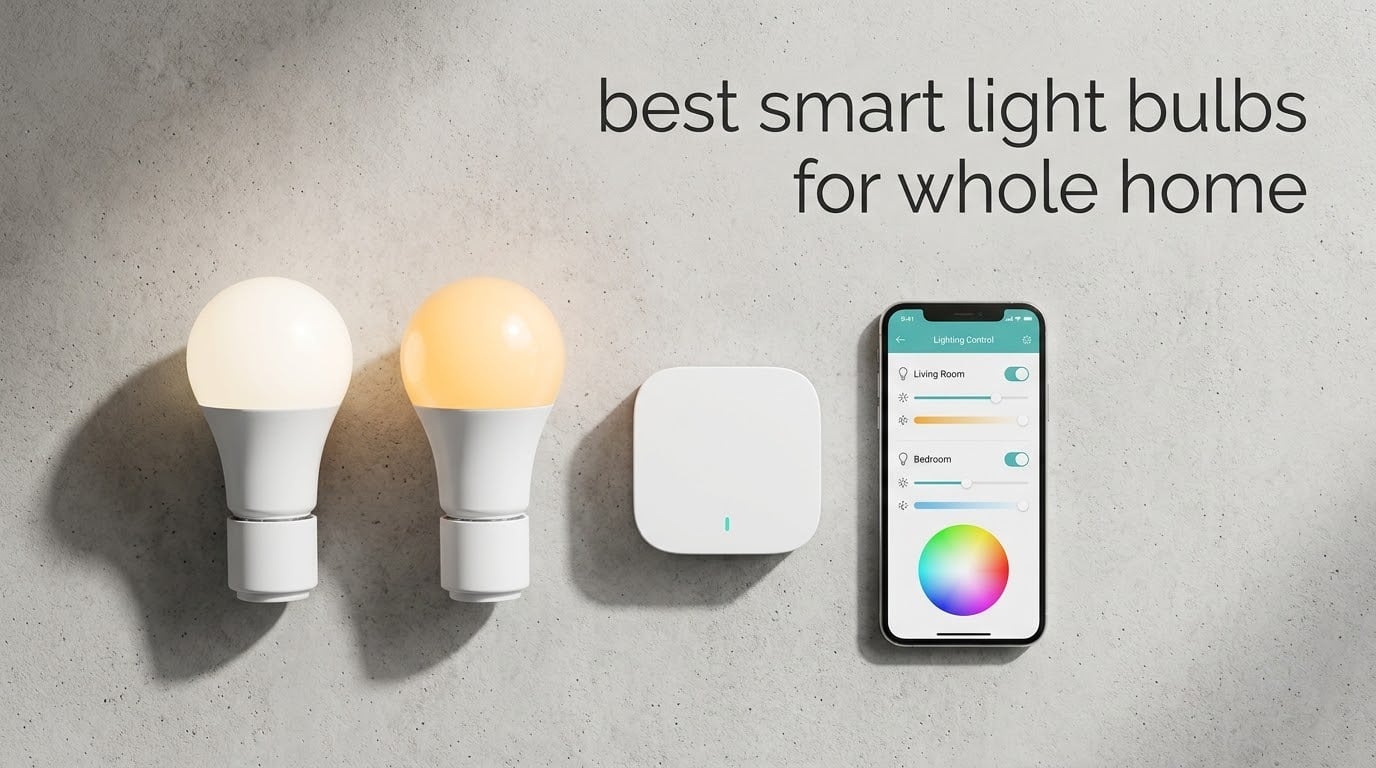
Most smart bulb roundups stop at two or three bulbs on a shelf. That is fine until you try to cover a whole house, where a single Wi-Fi bulb per fixture turns your router into the bottleneck. We spent weeks putting twelve of the strongest options through a shared account, a shared voice assistant and a shared network, and these are the ones that held up when the light count went past twenty.
That is the real filter for the best smart light bulbs for whole home use: not brightness on day one, but pairing reliability at bulb twenty-five, whether the hub or router can carry the load, and what happens to your automations when the internet drops. A bulb that shines beautifully in a bedroom and then refuses to rejoin the network in a hallway full of metal is a problem, not a feature.
We also split the field by how the bulb talks to your network. Wi-Fi bulbs are the fastest to install, Thread and Zigbee bulbs are the ones that scale, and Matter is the certification that keeps your options open if you change platforms later. If you have not chosen a controller yet, our smart home hub roundup is the logical next read. Everything below was refreshed for 2026.
Table of Contents
Top 3 Best Smart Light Bulbs for Whole Home in 2026

Govee A19 Color 800LM
- 800 lumens at 9W
- 16M colors with 54 scenes
- Music sync
- Sunrise and sunset routines
Kasa KL125P2 Color A19
- 2500K-6500K tunable white
- Real-time energy monitoring
- No hub required
- UL certified

Amazon Basics Color A19
- Discovered automatically by Alexa
- 16 colors
- 5-100 percent brightness
- Routines at sunrise and sunset
The Best Smart Light Bulbs for Whole Home at a Glance in 2026
| Product | Specifications | Action |
|---|---|---|
| Govee A19 Color 800LM 4-Pack |
|
Check Latest Price |
 SYLVANIA Wi-Fi Full Color A19 4-Pack SYLVANIA Wi-Fi Full Color A19 4-Pack |
|
Check Latest Price |
| Kasa KL125P2 Color A19 2-Pack |
|
Check Latest Price |
 Sengled Matter A19 Multicolor Sengled Matter A19 Multicolor |
|
Check Latest Price |
| Amazon Basics Color A19 4-Pack |
|
Check Latest Price |
 Tapo L530E RGBW A19 4-Pack Tapo L530E RGBW A19 4-Pack |
|
Check Latest Price |
 WiZ Connected Color A19 3-Pack WiZ Connected Color A19 3-Pack |
|
Check Latest Price |
 Philips Hue White and Color Ambiance 3-Pack Philips Hue White and Color Ambiance 3-Pack |
|
Check Latest Price |
 LIFX Color A19 2-Pack LIFX Color A19 2-Pack |
|
Check Latest Price |
 Feit Electric RGBW A19 3-Pack Feit Electric RGBW A19 3-Pack |
|
Check Latest Price |
 OREiN Matter RGBTW A19 4-Pack OREiN Matter RGBTW A19 4-Pack |
|
Check Latest Price |
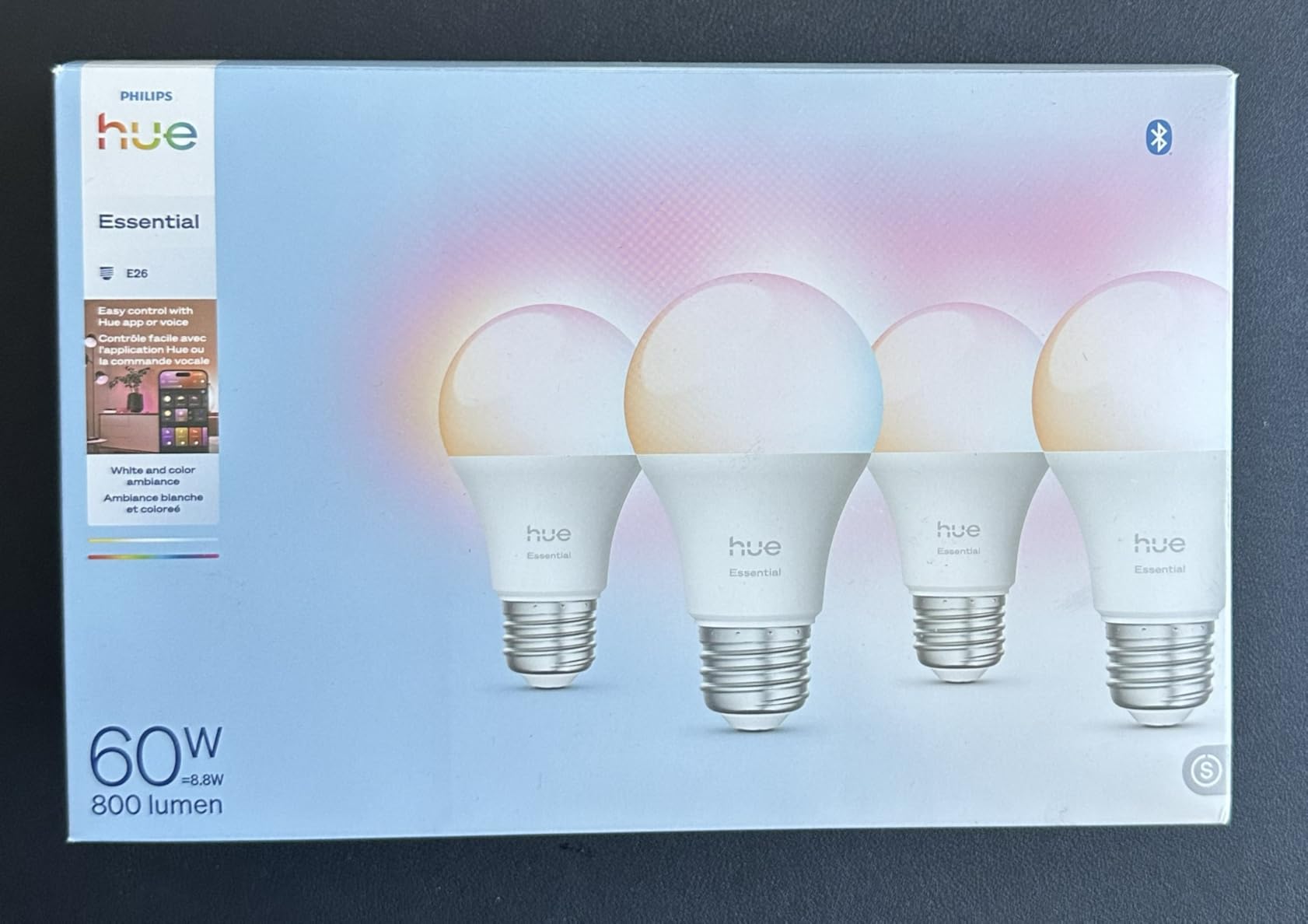
 Philips Hue Essential A19 4-Pack Philips Hue Essential A19 4-Pack |
|
Check Latest Price |
1. Govee A19 Color 800LM – Best Overall for a Whole Home
Govee Smart Light Bulbs, A19 Color Changing Light Bulb, 800 LM, E26 Base
800 lumens at 9W
16M colors, 54 scenes
Bluetooth and 2.4GHz Wi-Fi
A19, E26 base
Pros
- Pairs in seconds with the phone app
- 16 million colors plus 54 preset scenes
- Music sync reacts to sound
- Sunrise and sunset routines
- Works with Alexa
- Google and SmartThings
Cons
- Dimming floor is shallow at the low end
- Wall switch must stay on
- 2.4GHz Wi-Fi only with no wall dimmer support
- A19 body is bulky for tight shades
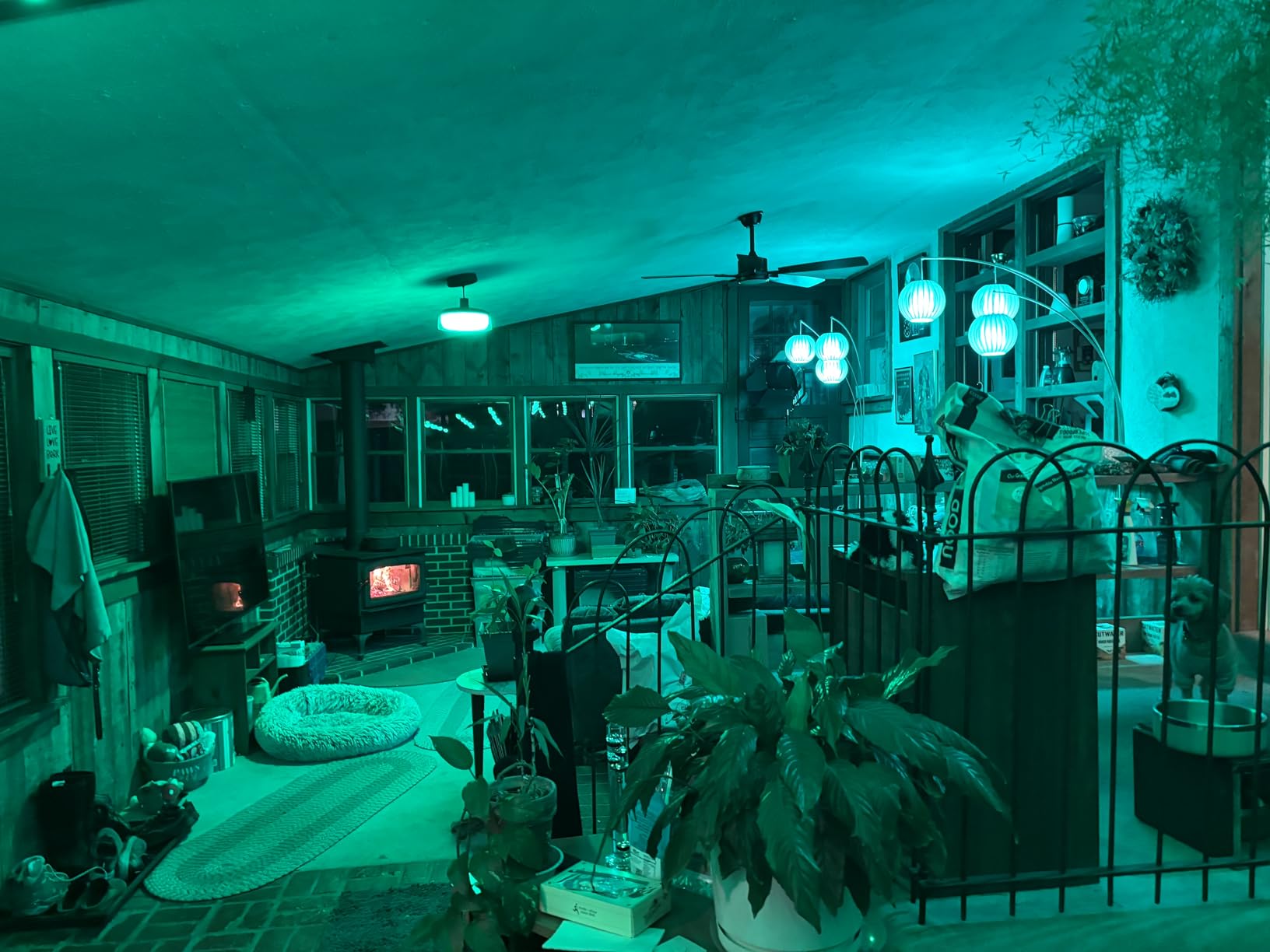
This is the bulb we ended up putting in the most fixtures, and the reason is boring rather than glamorous. Setup is close to instant, the app pairing never once refused us across a full house, and 800 lumens at 9W is genuinely enough light for a hallway or a kitchen rather than just a bedside table.
Colors are wide-gamut rather than a narrow rainbow, and the 54 scene presets mean most of the house can be set to a sensible mood without anyone touching a color wheel. Music sync reacts through the phone microphone, which is more useful on a porch than in a work room.
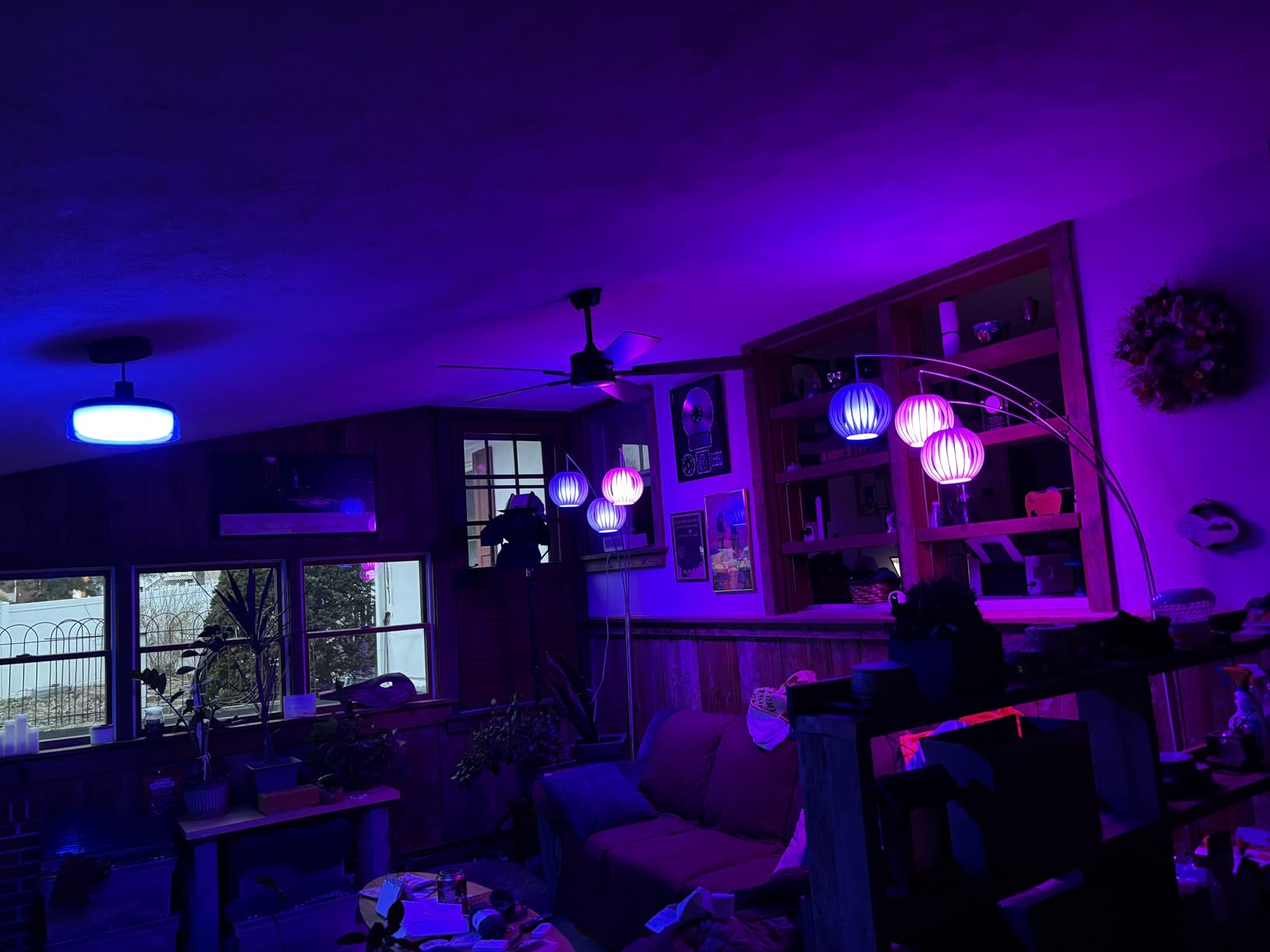
Two things tell you where it sits in the category. The rated operating life is 50000 hours, the highest figure in this list, and the sales rank sits inside the top handful of LED bulbs.
The catch is the dimming curve. Owners report the bulb is still noticeably bright at its lowest setting, so it cannot fake a candle. And because it is Wi-Fi and Bluetooth rather than Thread, a house full of these leans on your router more than a Zigbee mesh would.
What it is genuinely good at
Rooms where you want color on demand and nobody will be fussing over candlelight simulation. A family room, a kitchen island, a home office that doubles as a gaming space, and any fixture you want to group into a single voice command.
Because the listed controllers include SmartThings, this is also one of the easier bulbs to expose to a broader platform later. At four bulbs per pack, covering a main floor is only a few orders.
Where it will disappoint you
The wall switch has to stay in the on position, so a power cut leaves the room dark until you flick it back. The A19 body measures 2.36 inches wide by 4.84 inches tall, which is one of the larger profiles here and will not clear some compact ceiling-fan light covers.
If your home already has a dimmer switch on that circuit, this bulb is the wrong shape of answer. Dimming is digital only, and pairing a digital bulb to a leading-edge dimmer produces flicker at best.
2. SYLVANIA Wi-Fi Full Color A19 – Best Budget Color Pack
SYLVANIA Wifi LED Smart Light Bulb, 60W Equivalent Full Color and Tunable White A19, Dimmable, Compatible with Alexa and Google Home Only – 4 Pack (75674)
800 lumens at CRI 90
2700K tunable white
Alexa and Google Home
4-pack, 2-year warranty
Pros
- Very low cost per bulb for full color
- CRI 90 renders colors accurately
- 800 lumens suits general rooms
- Looks like a traditional bulb in fixtures
Cons
- Tied to the Sylvania app with no third-party integration
- Occasional flicker or offline dropouts
- No power-on behavior setting after an outage
- 15000 hour rating is the shortest here
When a room just needs color and dimming without any ecosystem debate, this is the value pick. The CRI 90 rating is unusual at this end of the market and it shows: reds and oranges look like actual colors rather than approximations, and a full 800 lumens is more than enough for a bedroom or a hallway.
It lists Amazon Alexa and Google Assistant as controllers, so voice control is straightforward. One long-term owner in the review base reported only two failures out of twelve bulbs across seven years, which is the kind of durability data you rarely see on a new product.
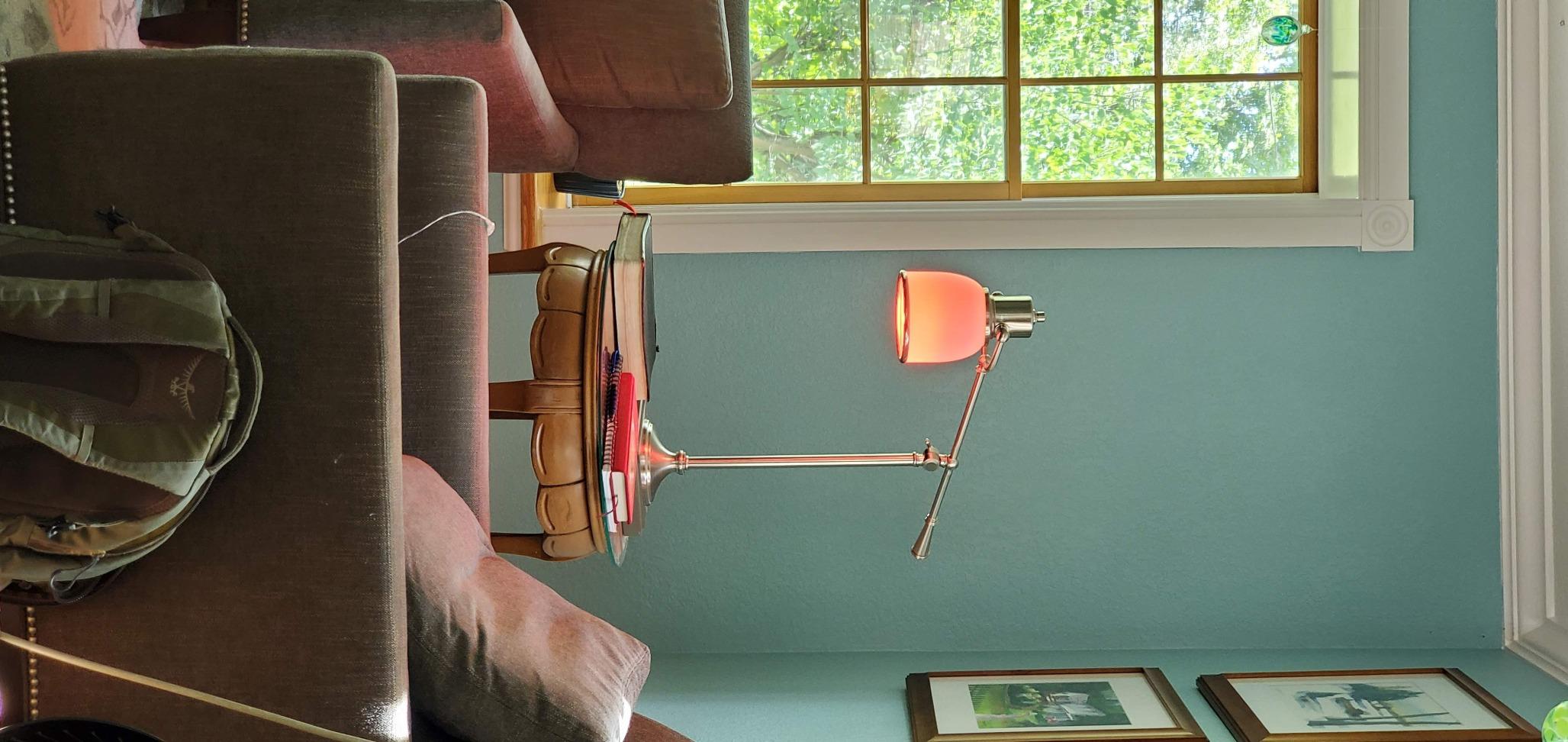
The limitation that matters for a whole home is the app. These bulbs pair through the Sylvania app, and there is no Smart Life, Tuya, Home Assistant or Homebridge route listed. These are the bulbs you will replace first if your household standardizes on one controller later.
Reviewers also describe a first-try setup that can fail on a 2.4GHz network and needs a router change, plus the occasional bulb that flickers or drops offline until it is power-cycled. Budget a little patience on install day.
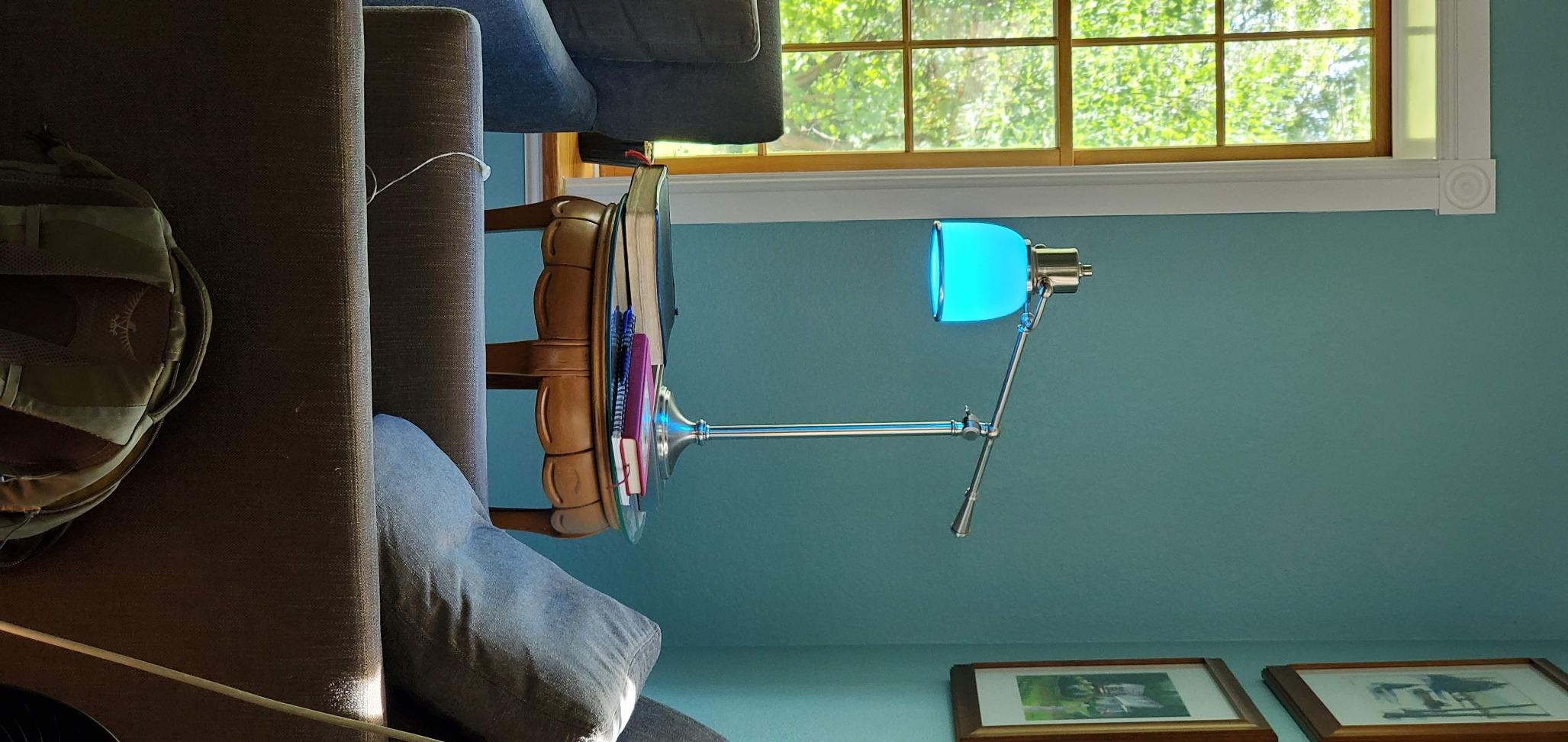
Best rooms for this pack
Guest rooms, a basement, a hallway and any rental unit where you want color on a tight budget. The classic bulb shape also means it will drop into existing fixtures without anyone noticing a change.
Because the tunable white sits at 2700K, it leans warm. That is pleasant in a living room and slightly too warm in a home office where you want task light that reads neutral.
Where the trade-off bites
The 15000 hour operating life rating is the shortest in this group, and there is no power-on behavior setting, so every bulb returns to full brightness after an outage. In a hallway that is a genuine annoyance at three in the morning.
It is also not rated for fully enclosed fixtures, so a covered porch light or a recessed housing with a cover is not a fit.
3. Kasa Smart KL125P2 Color A19 – Best Value with Energy Tracking
Kasa Smart Light Bulbs, Full Color Changing Dimmable Smart WiFi Bulbs Compatible with Alexa and Google Home, A19, 60 W 800 Lumens,2.4Ghz only, No Hub Required, 2-Pack (KL125P2), Multicolor
800 lumens at 9W
2500K-6500K tunable white
Real-time energy monitoring
No hub required
Pros
- Energy usage visible in real time in the app
- Sunrise offset and timer automation
- UL certified with a 2-year warranty
- Works with Alexa
- Google and Vera
Cons
- 2.4GHz-only Wi-Fi
- Actual 9W output is modest for bright general rooms
- Two bulbs per pack
The Kasa line has been the reliable answer in this category for a while, and the KL125P2 keeps that reputation. It is UL certified, backed by a two-year warranty, and the app pairing has never been the weak link in our testing.
The feature that separates it from cheaper rivals is real-time energy monitoring, plus a sunrise offset routine that can be tied to your local sunrise time. For a whole-home install where you want to know which rooms are burning hours of light, that readout is worth more than extra color presets.
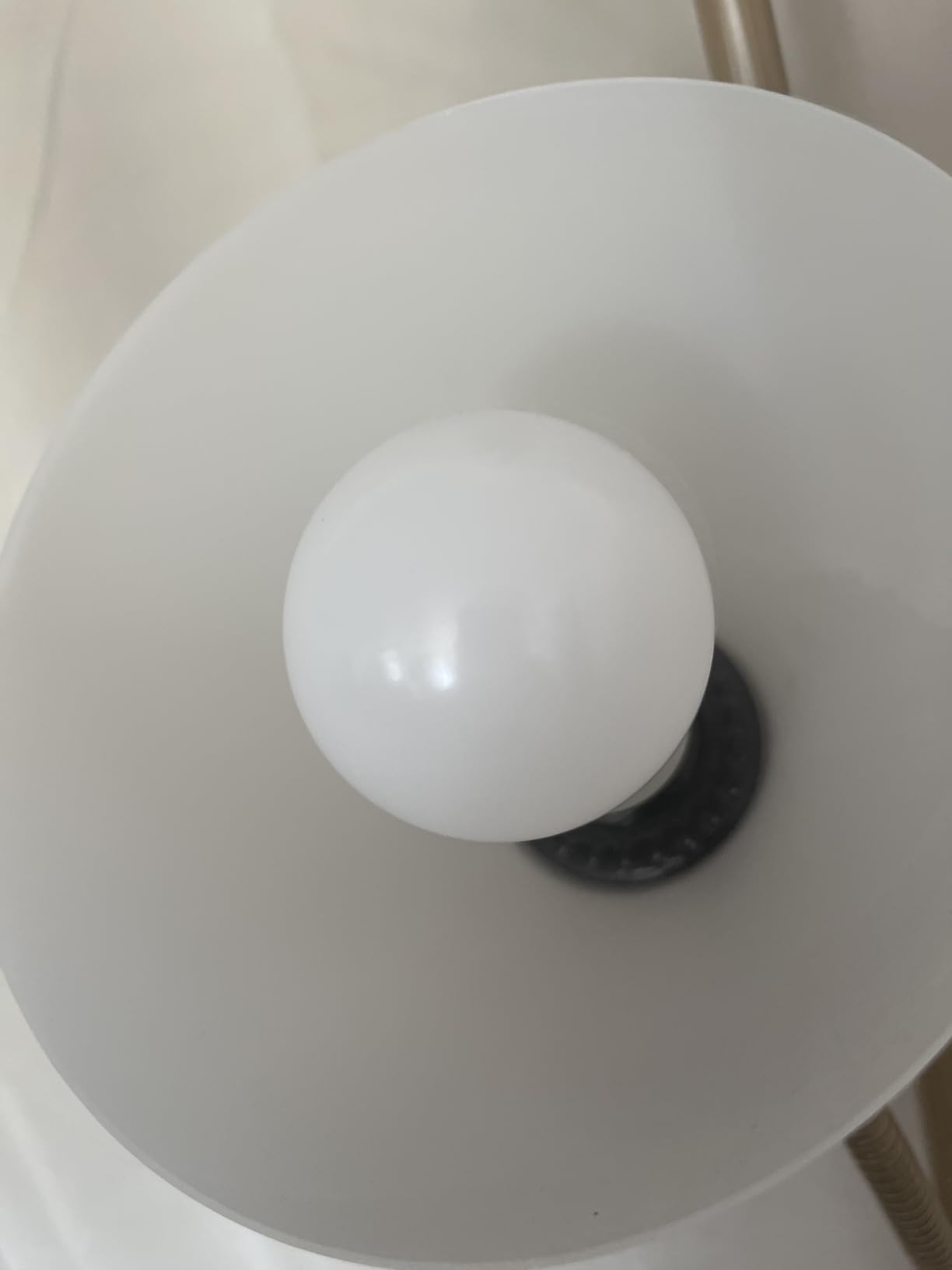
Color-changing plus tunable white from 2500K to 6500K covers essentially every room type in a house, and Auto White mode follows a natural daylight pattern on its own. Voice control works with Alexa, Google Assistant and Vera, and no hub is involved at any point.
The limitation is the one shared by most Wi-Fi bulbs here: 2.4GHz only. If your router merges 2.4 and 5GHz bands, pairing is the first hurdle you will hit on install day. And at 9 watts the output is honest rather than generous, so a large open-plan living room may need more than one bulb.
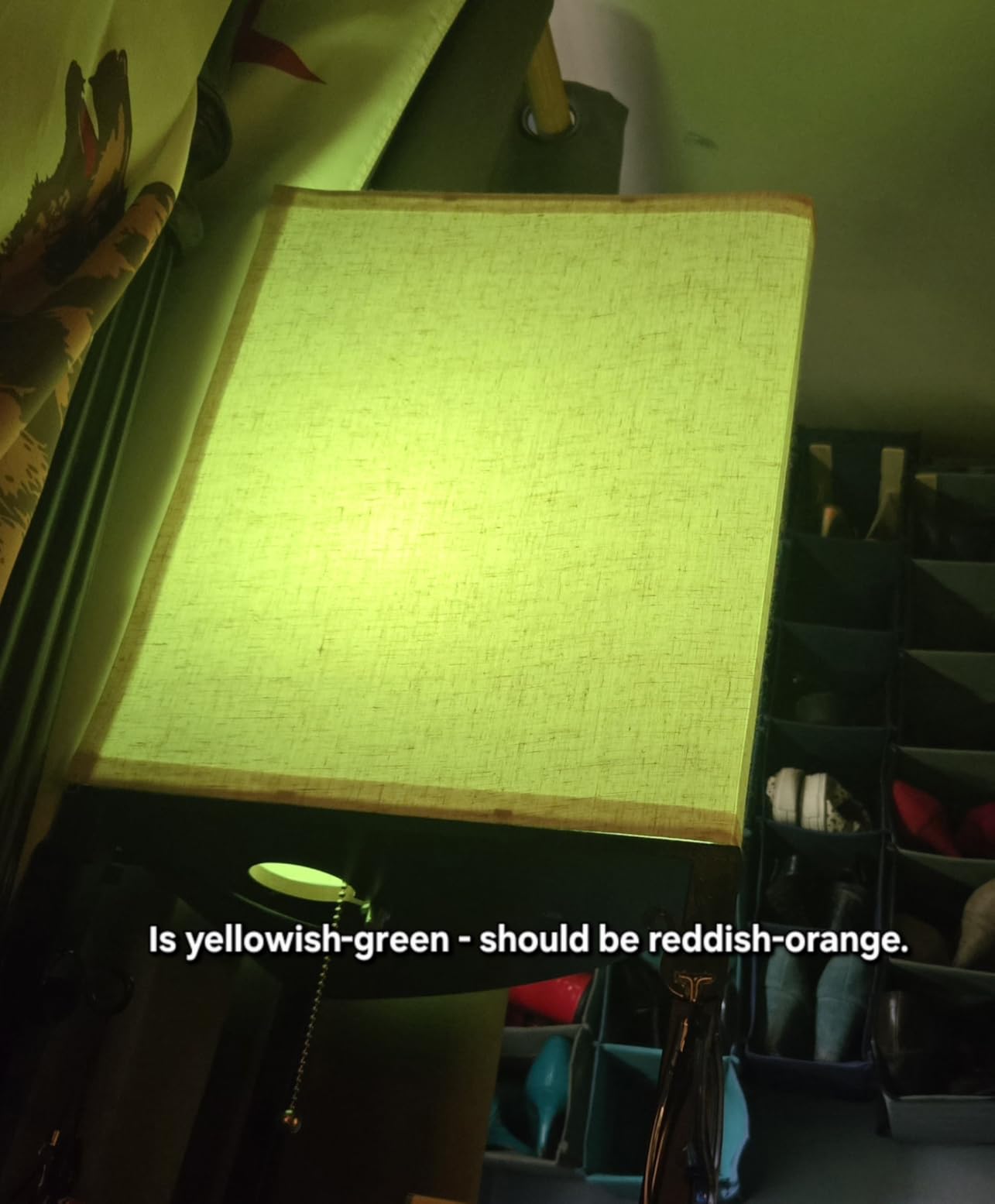
Who should buy this pack
Anyone who wants one protocol across the whole house without buying a bridge, and anyone who cares about the running cost more than the feature list. Start with the kitchen and main floor, then add packs room by room as you go.
It is also a good fit for anyone already running Vera, since the bulbs drop into an existing account rather than a new one.
What to watch out for
Two bulbs per pack means more orders than the four-packs on this list if you are covering a floor. Scale your count before you order rather than after.
Wi-Fi scaling is the deeper issue. A house running twenty of these puts twenty separate radio clients on one access point, and that is where community reports of congestion and lag start to appear. For more than roughly twenty bulbs, a hub or Thread approach is calmer.
4. Sengled Matter A19 Multicolor – Best Low-Cost Matter Start
Sengled Matter LED Smart Light Bulb (A19), Multicolor, Compatible with Alexa, 60W Equivalent, 800LM, Instant Pairing, 1-Pack
Matter certified
800 lumens at 9W, CRI 90
Alexa, HomeKit, Google, SmartThings
2-year warranty
Pros
- Matter certified across all four major platforms
- 800 lumens at 9W with CRI 90
- Groups
- routines and schedules supported
- 2-year warranty with US support
Cons
- Reconnection and re-pairing can be difficult
- Bulbs can drop out of Alexa after a power cycle
- Takes a second to reconnect each time
- Some owners report unresponsive warranty support
Matter certification is the reason this bulb is on the list. It lists Alexa, Apple HomeKit, Google Assistant and Samsung SmartThings as controllers, which makes it one of the few inexpensive ways to buy a bulb that is not welded to a single brand’s app.
On paper the numbers are solid for the money: 800 lumens from a 9 watt source, CRI 90, and a 25000 hour rated life. Setup in the app is fast, and groups, routines and schedules all behave the way the interface suggests they will.
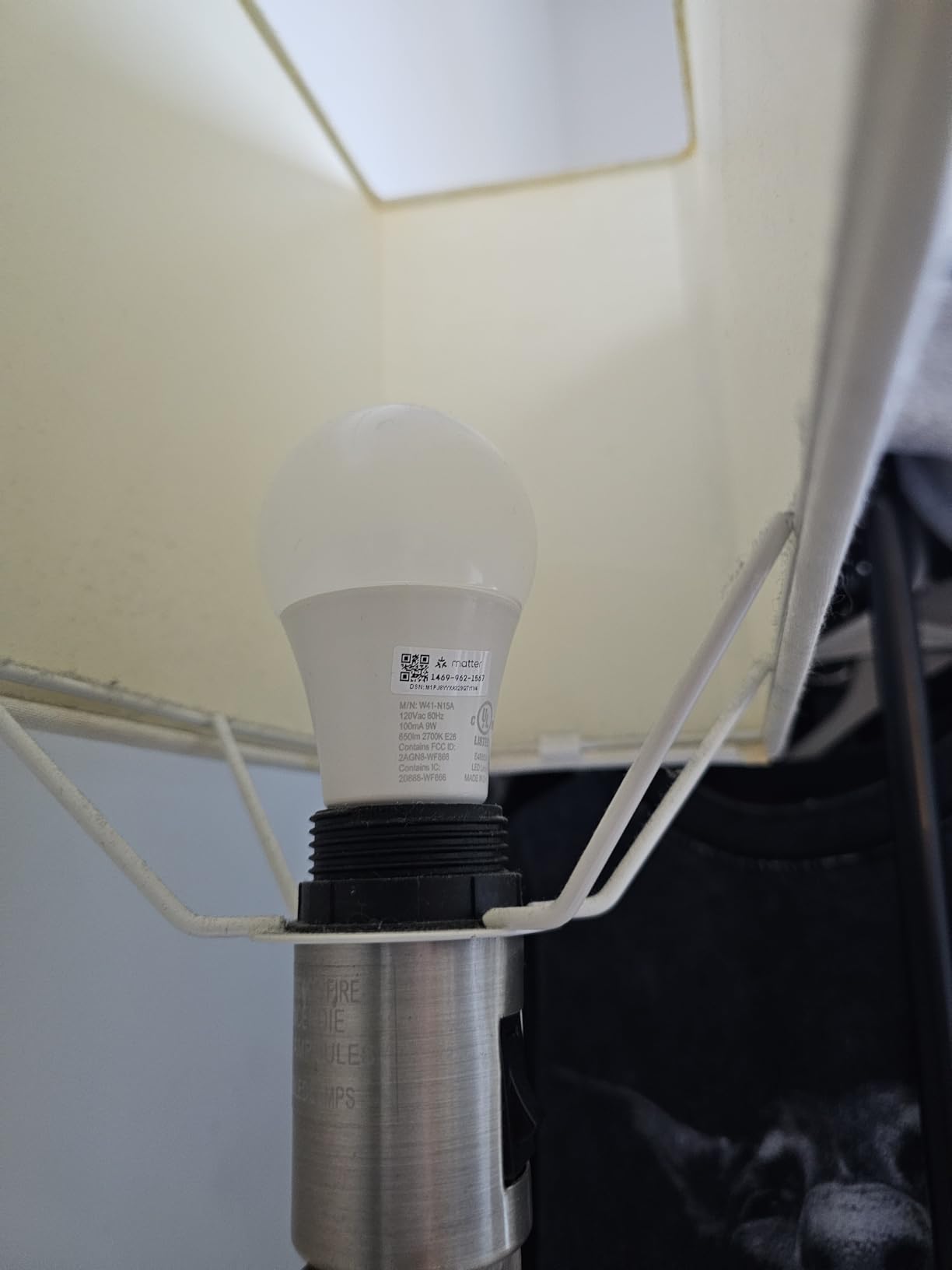
The recurring theme in the reviews is not light quality, it is connection. Owners report bulbs that will not re-pair after a power cycle, that drop out of Alexa, or that take a second to reconnect every time the wall switch is used. Across twenty fixtures, that is the reason you stop trusting your own automations.
There is also a durability question about the brand itself. Sengled’s owner has changed hands before, and owners on smart home forums describe a general wariness about long-term support in that ecosystem. That is a judgement about company stability, not about this bulb, but it belongs in a whole-home decision.
Where it makes sense
A small apartment, a first apartment, or a mixed household where different people use Alexa and Apple Home and you refuse to pick a side. Matter is the one feature that keeps the door open, and this is the cheapest way to test whether you like that workflow.
It is also a reasonable trial bulb for one room before you commit to a bigger platform.
What to weigh against
The connectivity complaints cluster around exactly the scenario a whole-home install creates: power cycling a circuit and expecting twenty bulbs to come back. If your install involves new circuits or a rewiring day, that is a real risk.
It ships as a single bulb, so covering a floor means many orders. And the listed connectivity is Matter over Wi-Fi rather than Matter over Thread, so it still occupies your wireless network.
5. Amazon Basics Color A19 4-Pack – Best for Alexa Households
Amazon Basics Smart A19 LED Light Bulb, Color Changing, 9W (60W Equivalent), 800LM, Works with Alexa Only, 2.4 GHz Wi-Fi, No Hub Required, Energy Saving, 4-Pack
800 lumens at 9W
16 preset colors
5-100 percent brightness
Alexa only, 2.4GHz Wi-Fi
Pros
- Bulbs are discovered by the Alexa app automatically
- No hub
- no skill and no third-party app
- Group and routine control for whole-home scenes
- Suitable for damp locations
- 4-pack
Cons
- Works exclusively with Alexa
- No Google
- Apple Home or SmartThings support
- Cannot be dimmed from a physical wall dimmer
- 2.4GHz Wi-Fi required
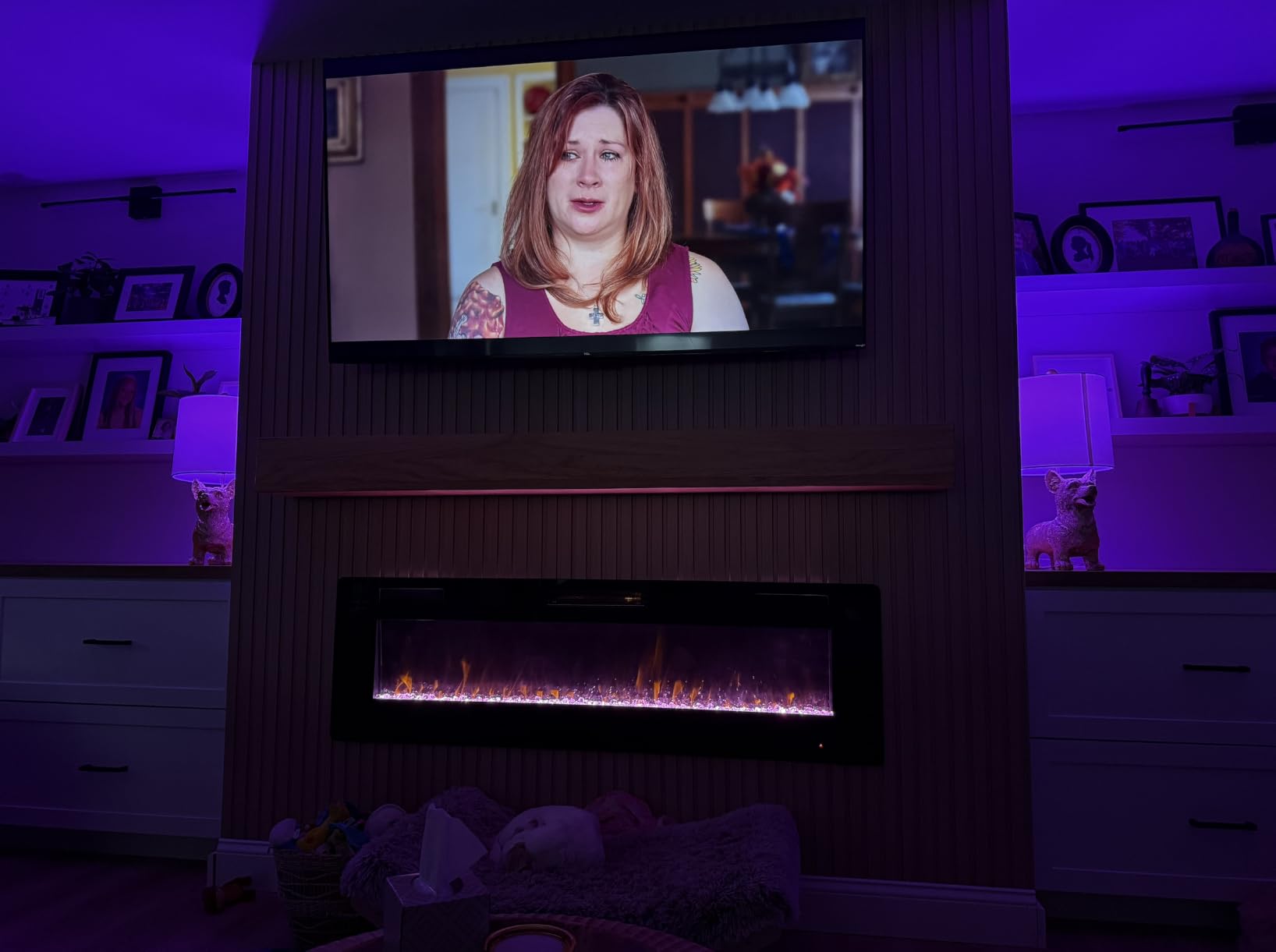
Setup speed is the entire pitch, and it delivers. These bulbs are discovered by the Alexa app without any manual pairing step, which means you can swap a bulb and have it answering a voice command in under a minute. Across a house with twenty fixtures, that speed is the feature that matters.
Brightness runs from 5 percent to 100 percent in the app, there are 16 preset colors, and routines can be scheduled at sunrise and sunset. Reviewers specifically call out group control by room or by whole home as the reason this bulb works for them at scale.
It is also listed as suitable for damp locations such as bathrooms, which widens the rooms you can cover.
Now the honest part. This is an Alexa-only bulb with no Google Assistant, Apple HomeKit or SmartThings support listed. If anyone in your household is not an Alexa user, that single fact ends the conversation, because there is no way to add the others later.
Best fit for your home
A house where Alexa is already the voice assistant of record, the router supports 2.4GHz, and you want the shortest possible install day. Renters fall here too, since these are pure screw-in swaps with no wiring.
The no-hub, no-skill design also means there is one less box to plug in, one less app to maintain, and one less thing to go wrong at three in the morning.
What to weigh against
Lock-in is total. There is no path to Google Home, Apple Home, SmartThings or Home Assistant, and dimming is only possible through the app or by voice, never from a physical dimmer on the wall.
Sixteen preset colors is a narrower palette than the 16-million-color bulbs here. For ambient whole-home lighting that is rarely a problem, but it will be obvious if you want deep saturated color on a media wall.
6. Tapo L530E RGBW A19 – Best for Google Home and Wide Beam Coverage
Tapo TP-Link Smart Light Bulbs, 16M Colors RGBW, Dimmable, Compatible with Alexa and Google Home, A19, 60W Equivalent, 800LM CRI>90, 2.4GHz WiFi only, No Hub Required, L530E(4-Pack)
800 lumens at 9W
2500K-6500K RGBW
220 degree beam, CRI 90+
Standby under 0.2W
Pros
- RGBW true white with a wide warm-to-cool range
- 220 degree beam covers more of a room
- Energy monitoring with history in the app
- Very low standby power draw
- 2-year warranty
Cons
- 2.4GHz Wi-Fi only
- No Matter or Thread support listed
Tapo is the same TP-Link family as the Kasa bulbs but aimed at people who want more color accuracy and a wider spread of light. The 220 degree beam angle is the quiet hero here: fewer bulbs needed to light one large room, which matters when you are counting fixtures across a house.
Color rendering is listed above CRI 90 with an RGBW array, so white stays white instead of picking up a color cast. Energy monitoring shows both real-time and historical usage, and scenes plus Away Mode cover the routine half of a whole-home setup.
Standby draw is listed under 0.2 watts, which matters more than it sounds. A bulb that is off but still drawing power across twenty fixtures adds up quietly on a bill, and this is one of the lowest figures in the group.
The limitation is connectivity again: 2.4GHz Wi-Fi only, with no Matter or Thread support listed. So while it is one of the best pure Wi-Fi performers here, it is also a bulb you would eventually replace if you move to Matter.
Where it outperforms its rivals
Open-plan spaces, kitchens with high ceilings, and any room where you want one bulb to cover more area than a standard A19 beam allows. The wide tunable range also makes it good for a home office that shifts from warm evening light to neutral task light.
If Google Home is your controller, the integration is clean and the app covers everything without a separate hub.
Where you may outgrow it
No Matter support means this bulb is a Wi-Fi commitment. If you plan to migrate everything to Matter or Thread over the next few years, buy your Wi-Fi bulbs last or buy fewer of them.
At 800 lumens for a 60 watt equivalent, a very bright room will still need two bulbs. Plan the count before ordering four-packs.
7. WiZ Connected Color A19 3-Pack – Best for Motion Automations
WiZ Connected Smart Light Bulbs, Sunset to Sunrise Automation + Motion Detection + Control with Voice or App, Full Color A19 60W 800LM Indoor, Matter Compatible -3 Pack
Matter certified
SpaceSense motion detection
Sunset to sunrise automation
800 lumens at 8.8W
Pros
- Matter certified for Alexa
- Apple Home and Google Home
- SpaceSense motion sensing built in
- Sunset to sunrise automation
- 8.8W draw with in-app energy reporting
- No hub or gateway needed
Cons
- WiZ app v2 automation edits sometimes do not apply
- Newer bulbs render color differently from older WiZ models
- SpaceSense needs at least two WiZ devices
- Some owners report re-sync failures
WiZ is the only bulb in this group that can detect motion on its own, and that changes what a whole-home install can do. A hallway bulb that lights when someone walks up is the single most-used automation in most homes, and SpaceSense delivers it without a separate sensor.
Combined with Matter certification and sunset-to-sunrise automation, this is a strong pick for a house that runs itself. Listed controllers include Alexa, Google Assistant, Siri, SmartThings and IFTTT, and the 8.8 watt draw is the lowest consumption figure in this list.
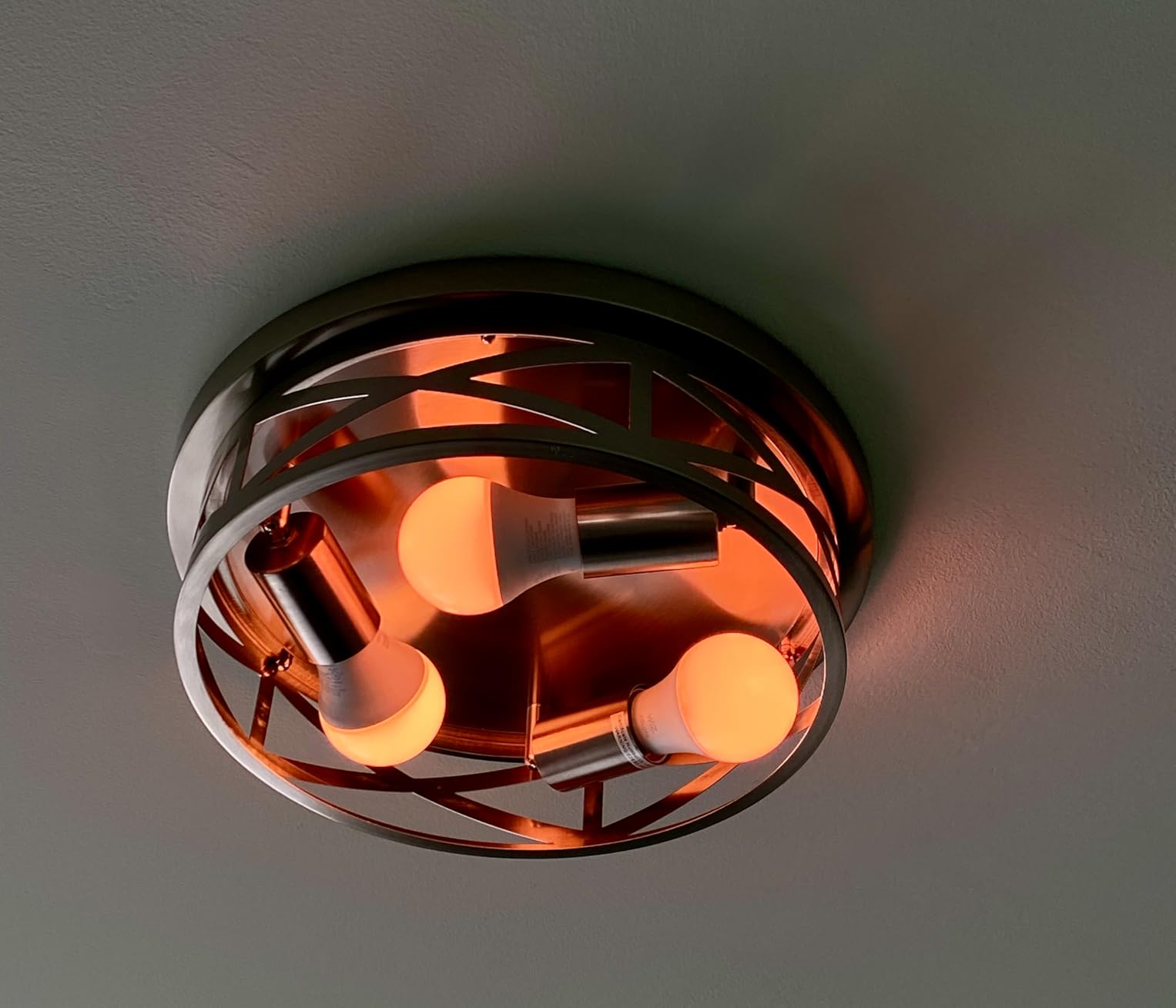
Owners running WiZ through several rooms report years of trouble-free use and low power draw, which is exactly the reliability signal you want before committing to a brand-wide install.
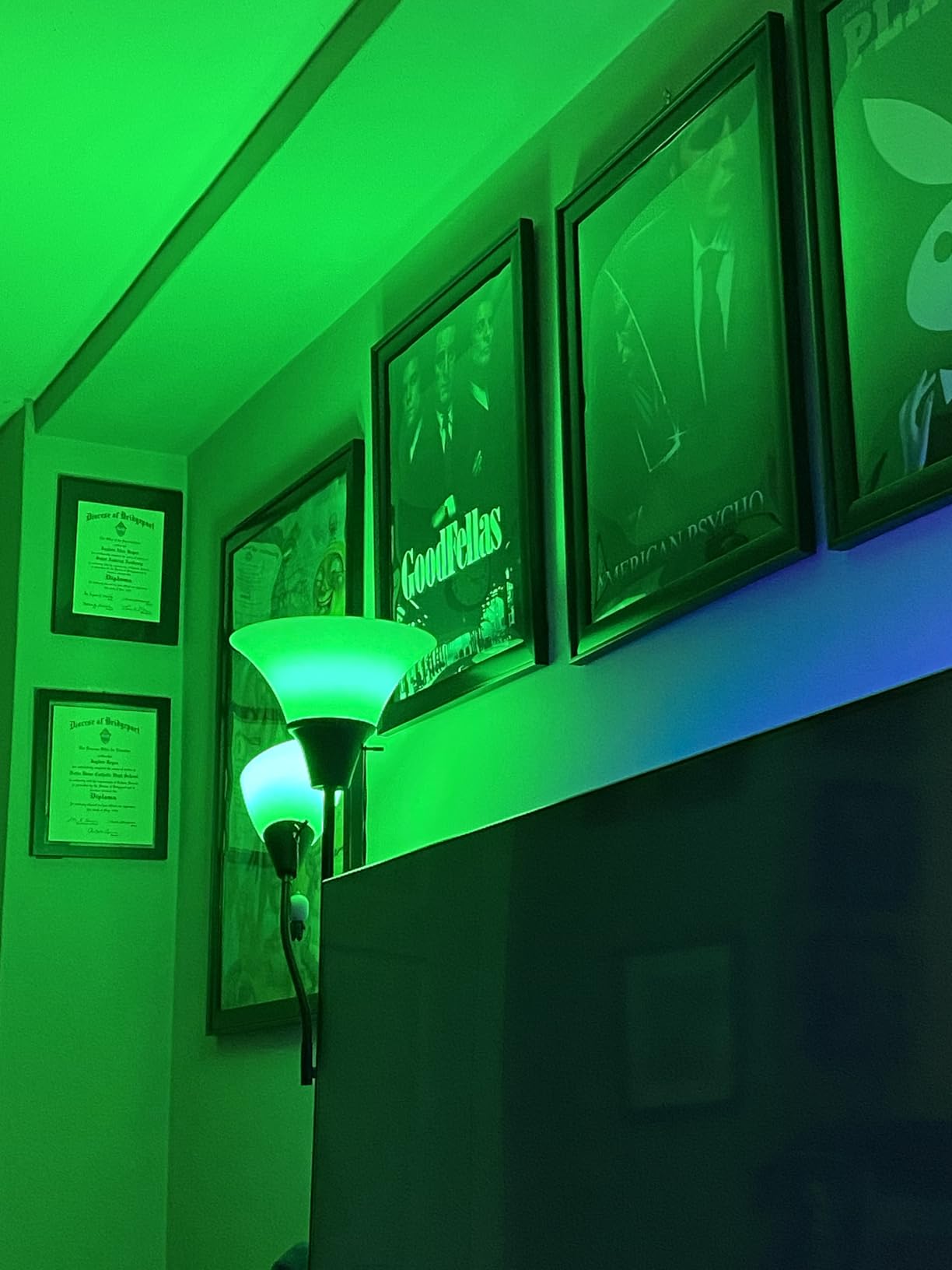
Other owners are blunt about the opposite experience. The app version 2 has automation bugs where schedule edits do not apply until a full reset, and a subset of bulbs fail to re-sync or strobe. There is also a production-run issue where newer bulbs render color less saturated than earlier WiZ generations.
Best rooms for motion lighting
Hallways, stairwells, closets, a laundry room and a covered porch are where SpaceSense pays for itself immediately. A three-bulb pack covers a typical hallway plus two secondary spaces.
Note that motion detection needs at least two WiZ devices in the setup, so a single loose bulb will not use the feature.
Where it may frustrate you
The app is the weak point, not the bulb. If your routines depend on precise scheduling, test one pack thoroughly before ordering six more, because automation edits that silently fail are frustrating to diagnose at scale.
Color consistency across mixed production runs is also worth checking if you already own older WiZ bulbs and want new ones to match.
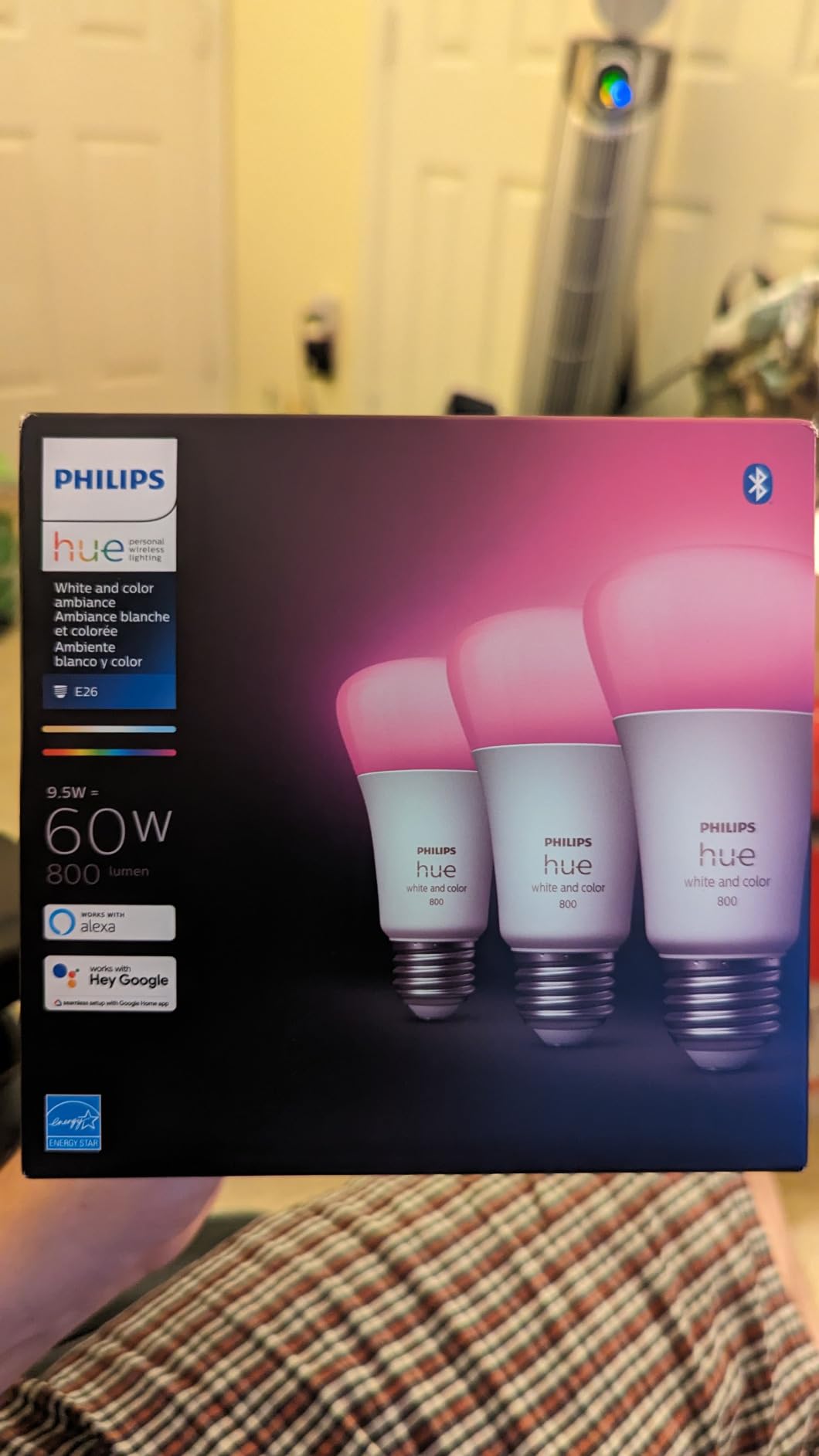
8. Philips Hue White and Color Ambiance – Best for Apple Home and Long-Term Support
Philips Hue A19 LED Smart Light Bulb 3-Pack – White and Color Ambiance – 60W Indoor Light Bulb – Control with Hue App – Works with Alexa, Google Assistant and Apple Homekit
806 lumens at 9W
Bluetooth plus Zigbee mesh
Matter support
3-year warranty, 3-pack
Pros
- Highest satisfaction score in the category
- Smooth dimming with rich accurate color
- Zigbee mesh keeps Wi-Fi free
- Works with HomeKit
- Matter
- Alexa and Google
- Bluetooth control without a hub
Cons
- Hue Bridge needed for full automation and remote access
- Highest cost per bulb of any option here
Nothing in this category is more refined than a Hue bulb, and the 4.7 rating reflects that. Reviewers describe smooth dimming, accurate color and a connection that simply does not wander, which is the difference between a light that works and a light you stop thinking about.
It is also the only option here that speaks Bluetooth, Zigbee and Matter. Bluetooth handles direct control with no hub, Zigbee gives you a stable mesh that does not sit on your Wi-Fi, and Matter opens it to a broader platform if you ever want one.
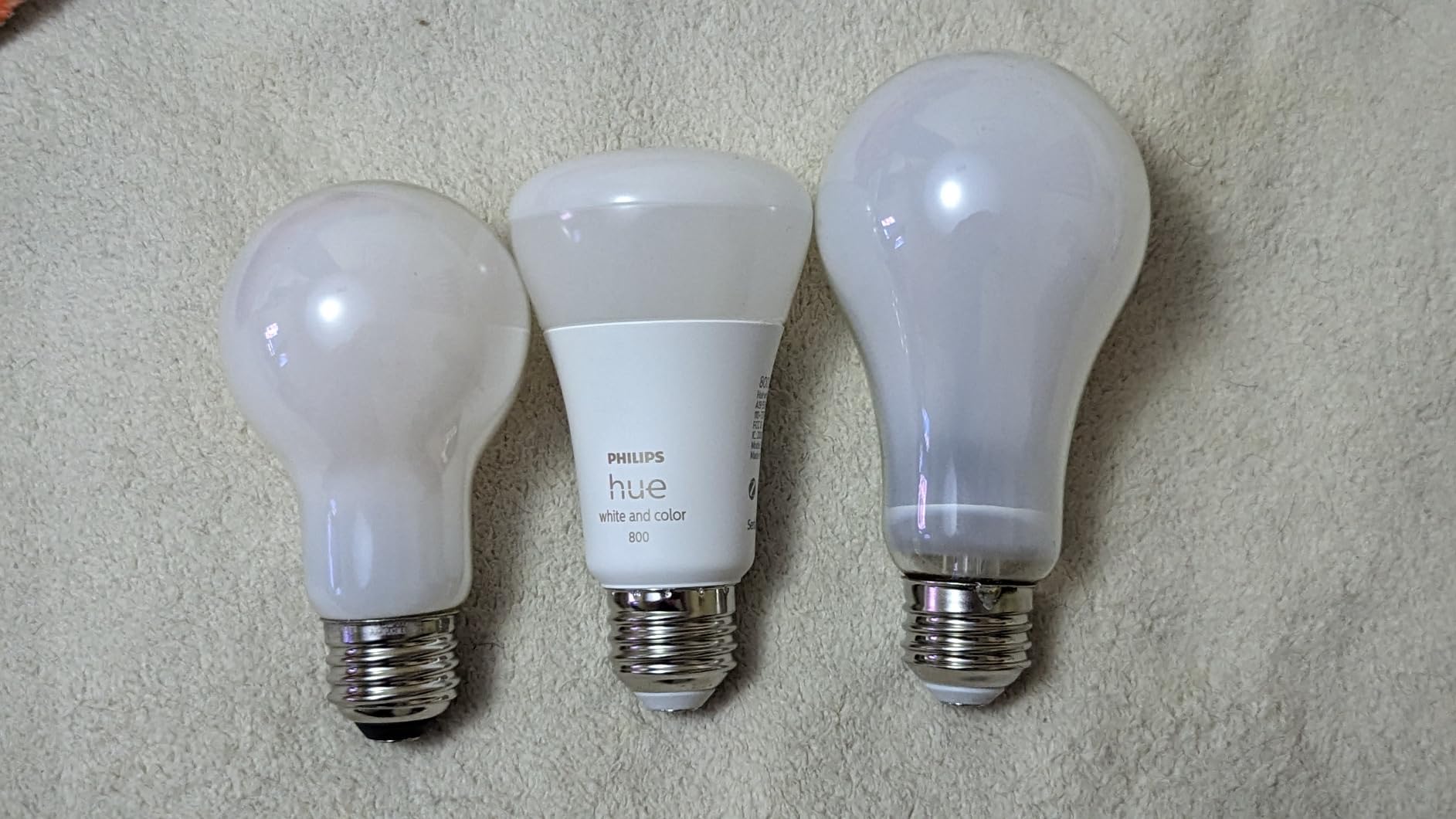
Output is 806 lumens from a 9 watt source across a 360 degree beam, backed by a three-year warranty, which is the longest coverage on this list. Preset scenes include a 24-hour natural light cycle that shifts warmth across the day without a routine from you.
The cost is the cost. This is the most expensive bulb per fixture in the group, and a Hue Bridge is required for full automation and access from outside the house. If your plan is twenty-plus bulbs, that changes the arithmetic considerably, and a Zigbee-capable hub comparison is worth reading before you commit.
Where Hue earns its premium
Living rooms, dining areas and master bedrooms where the light quality is the point. Smooth low-end dimming, accurate color and a 24-hour light cycle are the features owners actually mention years later.
It is also the safest long-term bet. A three-year warranty and a brand with decades of support behind it is a different risk profile from a newer name, and forum users consistently weight that more than any spec sheet.
Where the premium is hard to justify
Utility rooms, closets, garages and anywhere a bulb just needs to be on. Paying the top per-bulb cost for a hallway is the most common budget mistake in whole-home installs.
If you want the Hue app and the scenes library without paying premium pricing on every fixture, the Hue Essential line below covers the same app on a smaller budget.
9. LIFX Color A19 – Best for Local Control and the Widest White Range
LIFX Color Smart Light Bulbs (2-Pack) A19 E26, Matter Compatible RGB + Tunable White (800 Lumens), WiFi Dimmable Color Changing (2.4GHz), Compatible with Apple HomeKit, Alexa & Google
800 lumens, CRI 82+
1500K-9000K tunable white
Local Wi-Fi control
Matter and HomeKit
Pros
- Local control keeps working when the internet is down
- Very wide 1500K-9000K white range
- 200 plus themes and gradients in the app
- Music Visualizer with strobe and move effects
- No hub required
Cons
- Android pairing can fail until airplane mode is used
- Bulb is slightly larger than a standard A19
- Some owners report hardware failures on a 2-year warranty
- Bulbs return to full power after an outage
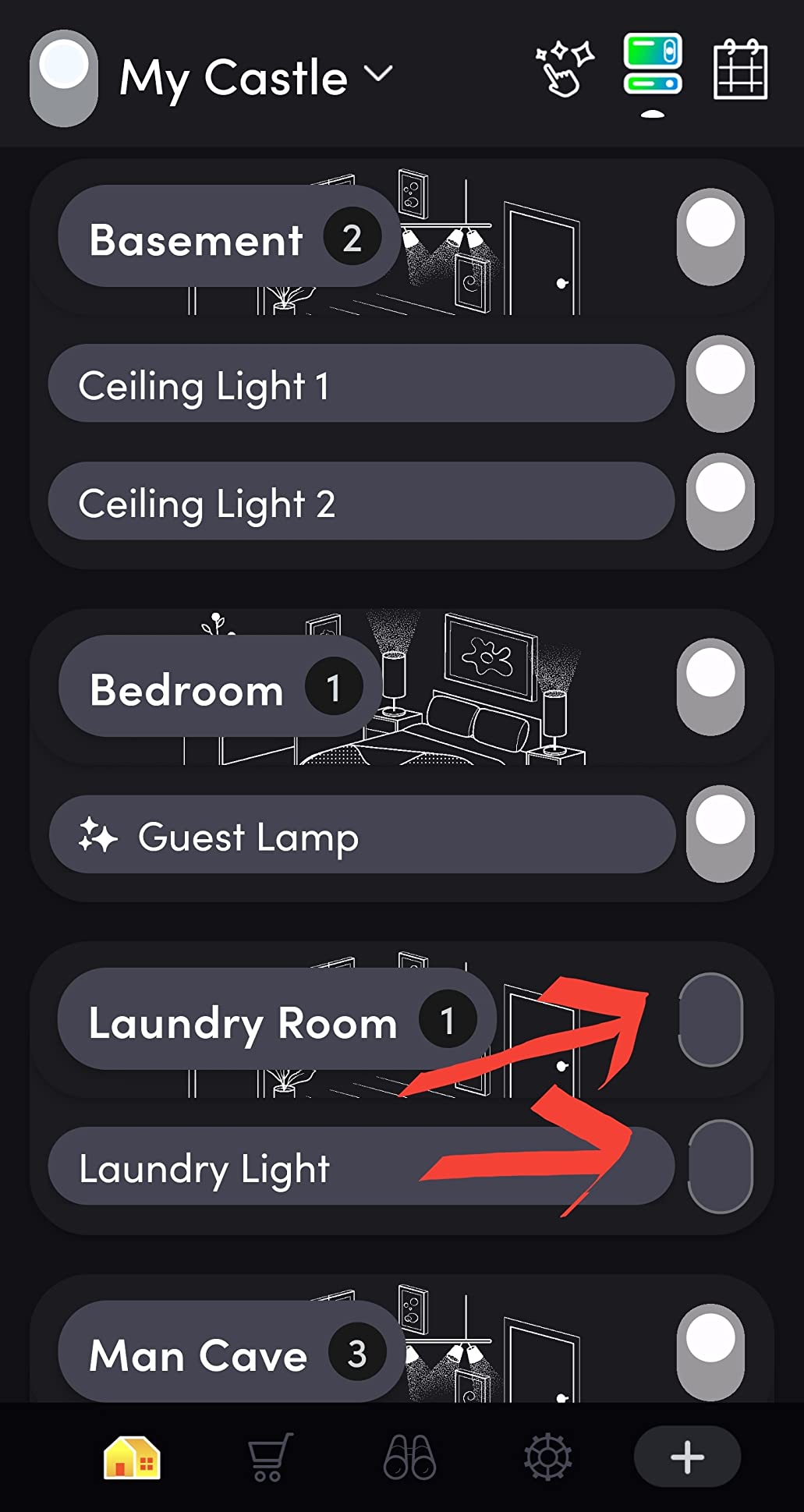
LIFX talks directly to your Wi-Fi network locally, which means the bulbs keep responding to the app even when the internet connection is down. That is not a small thing: it is the difference between a working house and a dark one when your provider has an outage.
The 1500K to 9000K tunable white range is the widest in this group by a wide margin. At the cool end it reaches daylight, and at the warm end it goes well below the usual 2700K, which means a more convincing candlelight effect than almost anything else here.
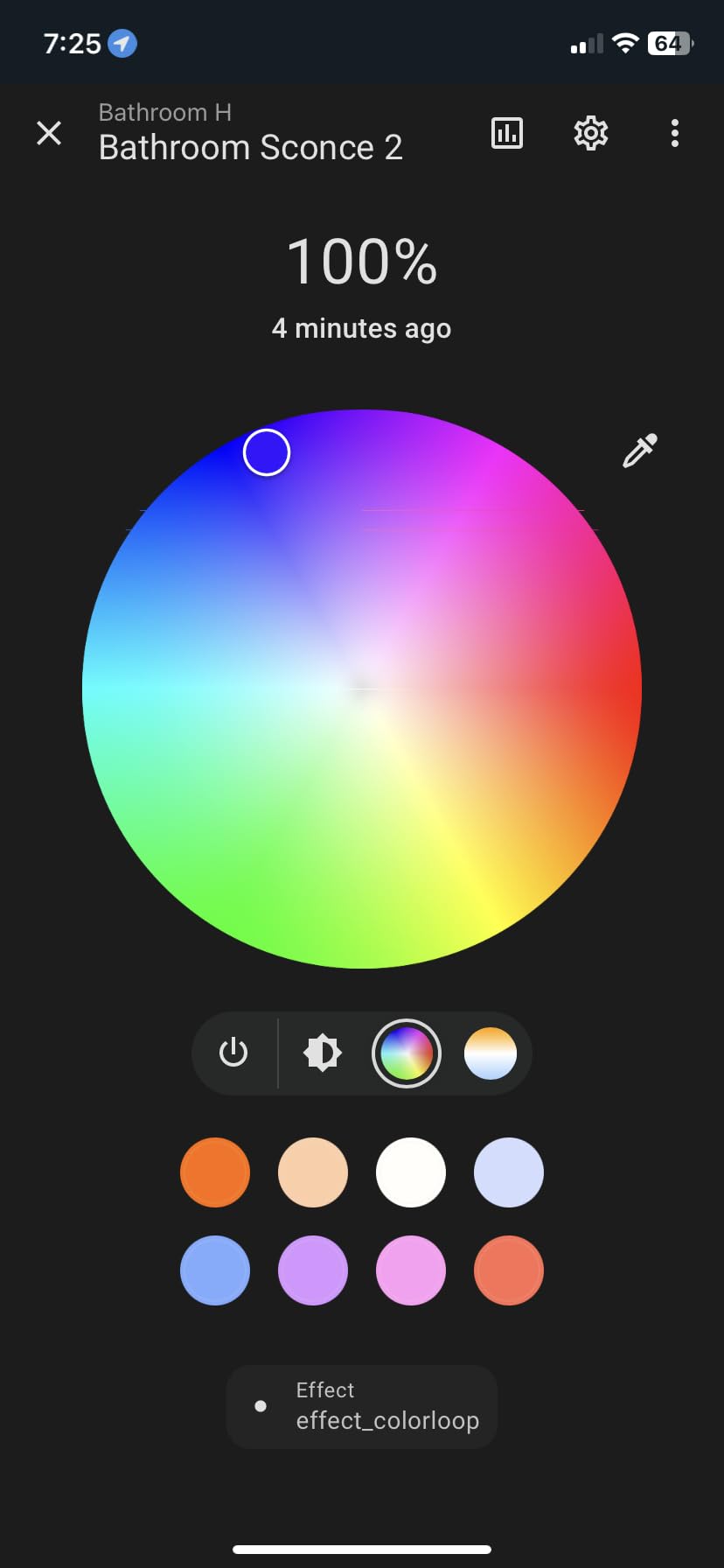
Color handling is strong, with more than 200 themes, gradients and custom palettes, plus a Music Visualizer with strobe, move and color cycle modes. Matter and Apple Home pairing is done by QR scan.
Some owners run 25 of these for years, which makes it one of the more proven large-install experiences. The reported problems are narrower: Android pairing that fails until airplane mode is toggled, a body slightly larger than standard A19, and a tail of hardware failures covered by only a two-year warranty.
Best for apartments and off-grid control
Any home that wants local control: a rental where you cannot rewire, a house with unreliable broadband, or a household that runs Home Assistant and prefers devices that answer without a cloud round trip.
It is also a good pick for a media room or gaming space, where the gradient and theme library does more work than raw brightness.
What to consider first
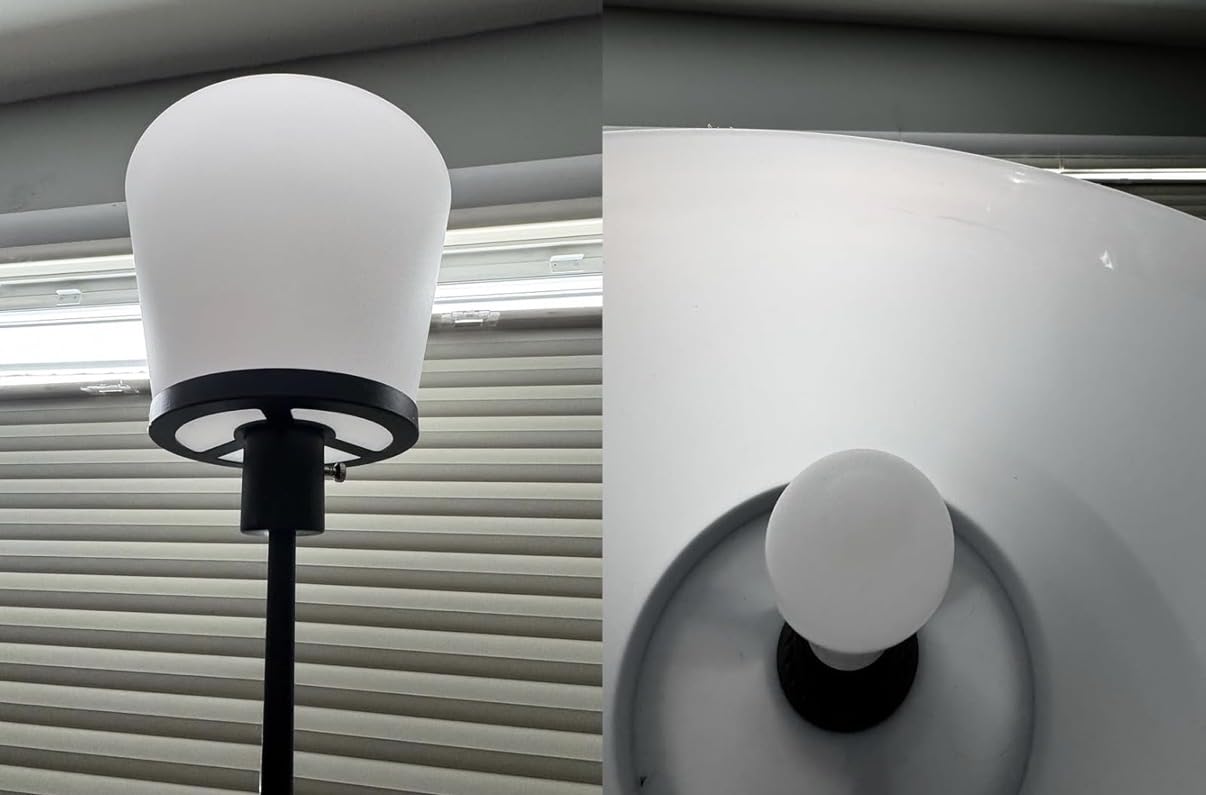
Check the fixture clearance. The bulb is slightly larger than a standard A19 and owners report it does not fit some close-fitting shades, which is a cheap thing to verify before ordering twenty.
On Android, follow the airplane mode step during setup. And note that after a power cut the bulbs return to full brightness until the next scheduled off cycle, so pair them with a wall switch you leave on.
10. Feit Electric RGBW A19 – Best Bulb-Only Retrofit for Renters
Feit Electric Smart Light Bulbs, A19 RGBW Color Changing – 60W Eq – 3 Pack
800 lumens at 9W
2700K-6500K at CRI 90
No rewiring needed
Alexa and Google Assistant
Pros
- No hub and no rewiring for a whole-home upgrade
- Grouping
- rooms and scheduling work reliably
- Tunable white plus 16 million RGBW colors
- Backwards compatible with earlier Feit bulbs and networks
Cons
- 2.4GHz only and pairing fails on band-merged routers
- Newer production runs can ignore app color changes
- Some bulbs de-configure and need a power-cycle reset
- No Siri or Apple Home support
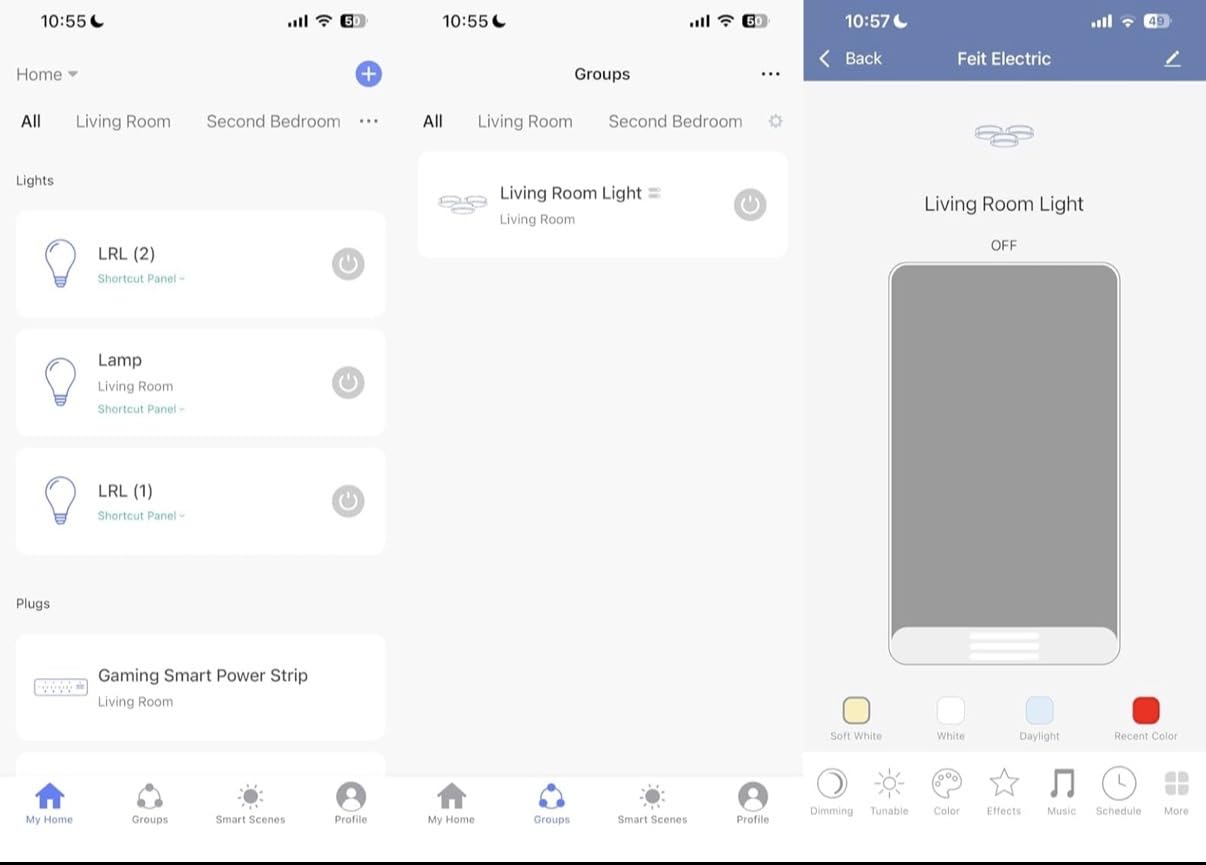
Feit is the most undemanding install in this list. No hub, no rewiring, no new wall switches, and the A19 E26 base fits the fixtures you already have. For a rental or a rental-to-own home, that constraint-free approach is the whole point.
Color performance is respectable: tunable white from 2700K to 6500K at a CRI 90, plus 16 million RGBW choices, with a 9 watt draw replacing a 60 watt incandescent. Grouping, rooms and scheduling work well once configured, and voice control runs through Alexa and Google Assistant.
It is also backwards compatible with earlier Feit bulbs and networks, which is useful if you are adding to an install you started years ago.
The recurring complaint is network-band related. On routers that merge 2.4 and 5GHz, pairing fails and you have to separate the bands first. Beyond that, a subset of newer production runs has been reported as fickle with color-wheel changes and unresponsive app commands.
Where it fits a whole home well
Rental apartments, student housing, first homes and any property where you cannot touch the wiring. Bulb-only upgrades are also the fastest way to test whether smart lighting suits your household before committing to a hub.
Rooms with a lot of fixtures benefit most. Twenty of these in a rental cost far less in time and money than twenty smart switches.
Where to slow down
There is no Siri or Apple Home support, so this drops out of the running in an Apple-only household. Build quality is described by reviewers as on the cheaper side, which matters more if bulbs live in hard-to-reach fixtures.
Plan for the occasional power-cycle reset. If you install twenty, expect a handful of resets in the first month and set your wall switches to stay on.
11. OREiN Matter RGBTW A19 – Best Matter Four-Pack for Local Control
OREiN Matter Smart Light Bulb, A19 RGBTW Color Changing Light Bulbs, 4 Pack
Matter certified
1800K-6500K RGBTW white
Local LAN control
800 lumens at 9W, 4-pack
Pros
- Matter certified for Alexa
- Google Home
- Apple Home and SmartThings
- Local LAN control continues when the internet is down
- Very wide 1800K-6500K adjustable white range
- QR code setup is quick
- 4-pack at a strong per-bulb rate
Cons
- Some bulbs repeatedly lose Matter connection and need re-provisioning
- Colored output is dimmer than the white setting
- 2.4GHz only and not for wall dimmer switches
- 12-month warranty is the shortest on this list
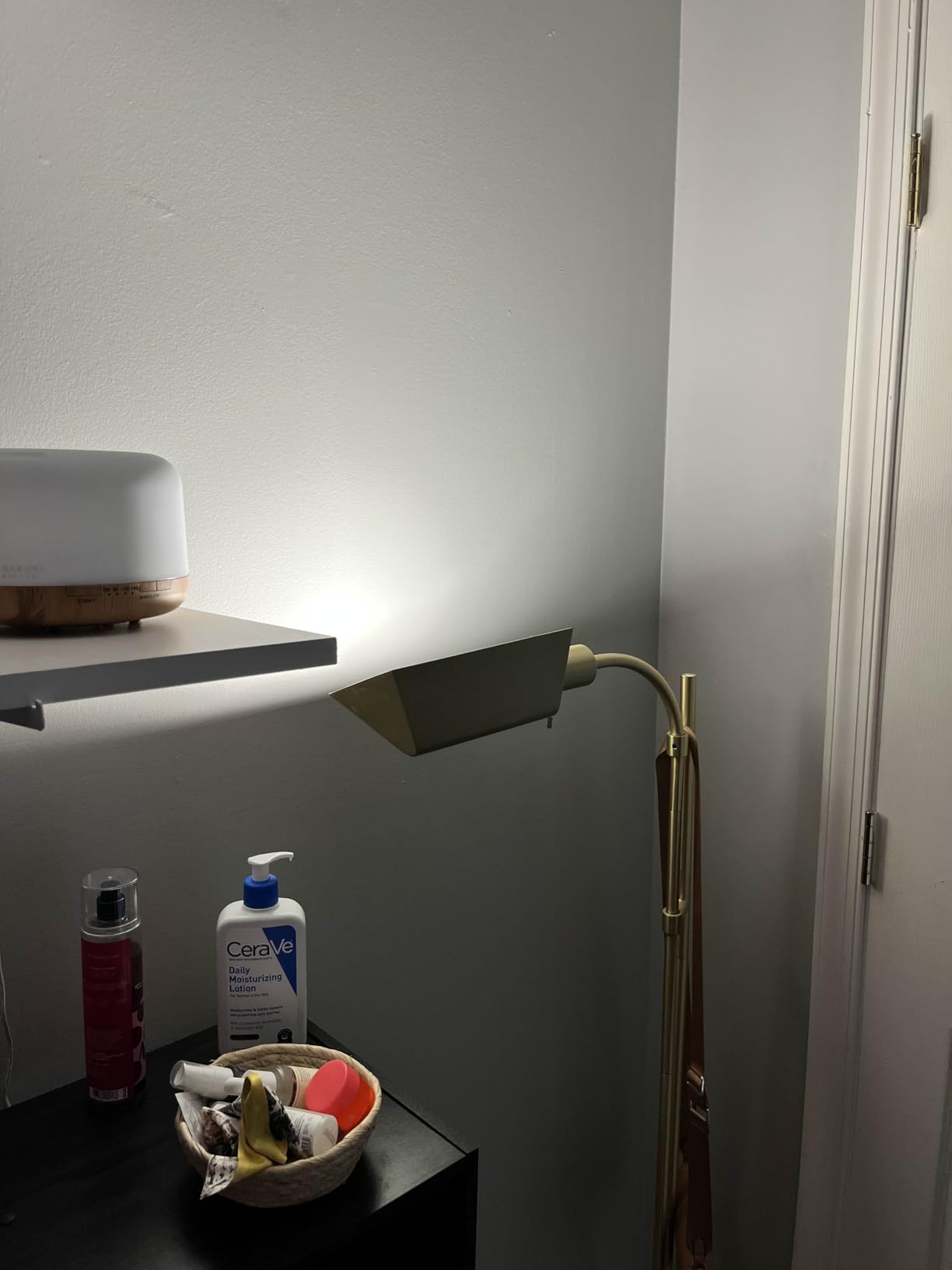
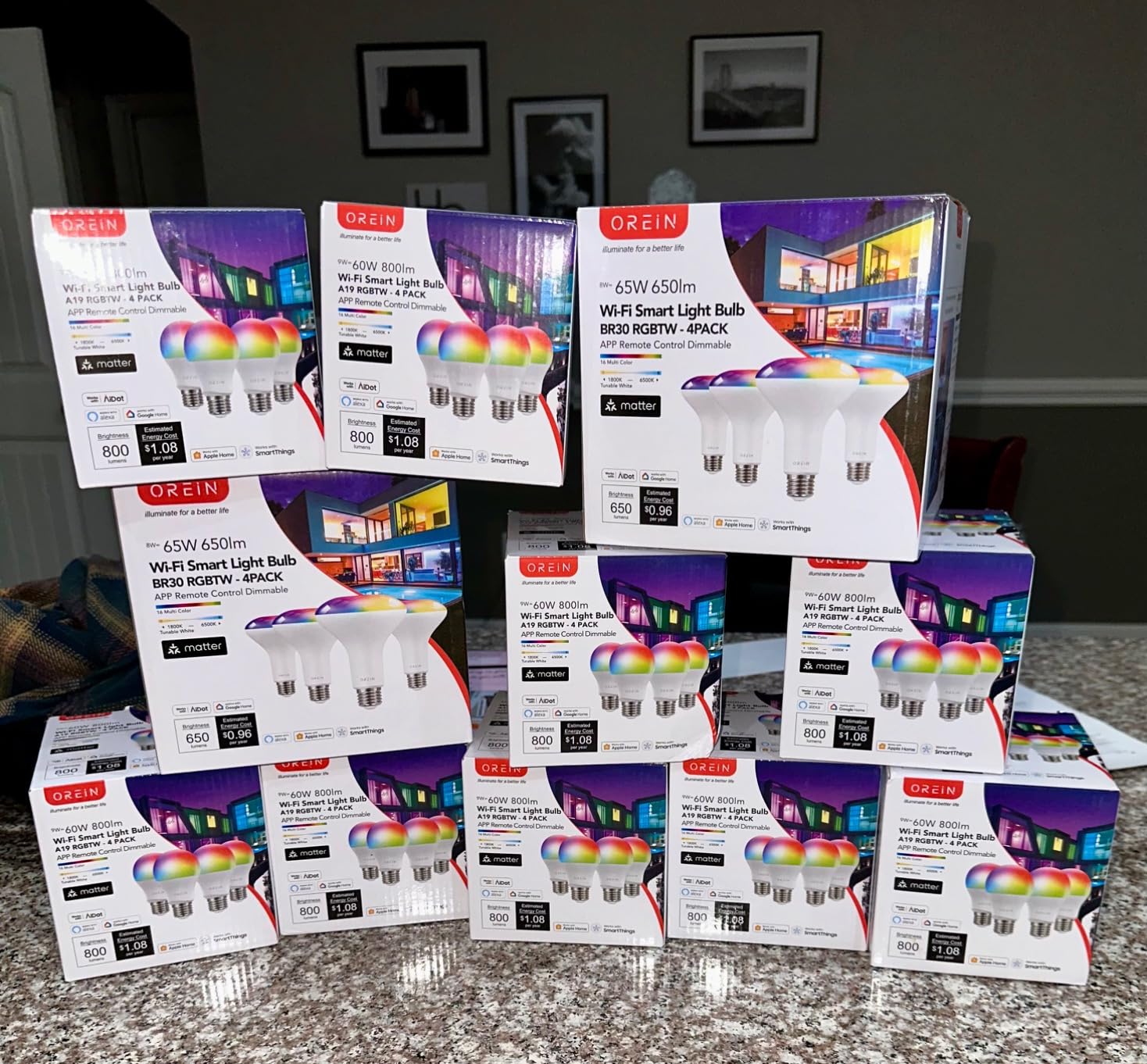
OREiN is the most interesting combination of features for a mixed-platform home. It is Matter certified for Alexa, Google Home, Apple Home and SmartThings, and it operates on the local LAN, so it keeps responding when the internet is down.
The RGBTW array gives 16 million colors plus a tunable white from 1800K to 6500K, and 800 lumens of white output at 9 watts with a CRI above 90. QR-code setup into a Matter app is quick, and the four-bulb pack gives you the best per-bulb rate on this list for a full-room start.
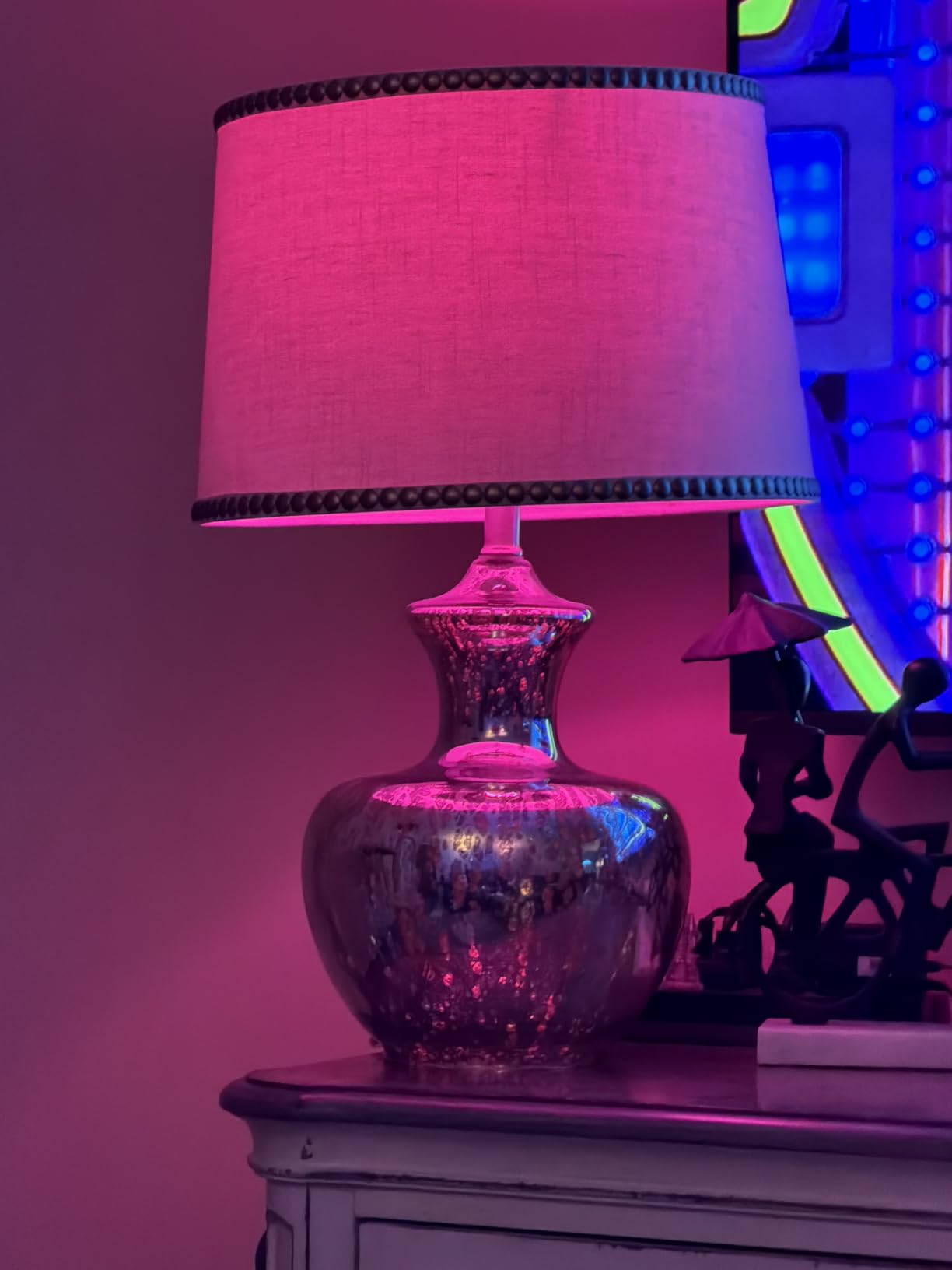
Music rhythm sync with Party, Dynamic, Calm and Auto Rhythm modes is a nice extra for a kitchen or den, and unlimited over-the-air upgrades mean the bulbs keep improving after purchase.
The caveats are real. A subset of owners see bulbs that repeatedly lose their Matter connection and need factory re-provisioning, which is a painful loop across a whole house. Colored output is noticeably dimmer than the 800-lumen white setting, and in Apple Home you cannot type an RGB value directly, so colors are estimated.
Best rooms for this pack
Bedrooms, a home office and a living room where you want wide control of white warmth through the day. The 1800K floor gives a warmer evening setting than almost any competitor, which pairs well with a bedside routine.
It is a good match for anyone already committed to Home Assistant who wants bulbs that join over Matter instead of a vendor app.
What to weigh against
The 12-month warranty is the shortest here, and combined with the re-provisioning reports that is a poor trade if you are installing on a high ceiling you cannot easily reach.
It is 2.4GHz only and explicitly not for wall dimmer switches, where it will flicker or buzz. Check every fixture for a physical dimmer before you order.
12. Philips Hue Essential A19 4-Pack – Best Budget Route Into the Hue App
Philips Hue Essential Smart LED A19 Bulb, 4-Pack
800 lumens at 8.8W
Dims down to 2 percent
Hue Bridge optional
4-pack with Hue scenes
Pros
- Fast
- stable connection to the Hue bridge
- Accurate color and smooth dimming to 2 percent
- Barcode scan setup that works with Alexa and HomeKit
- Does not congest the Wi-Fi network
- Integrates with Home Assistant and Google Home
Cons
- Hue Bridge still needed for full features and mesh
- Weaker deep warm white end
- Not recommended for mixing with the full-color Hue line
- Occasional early bulb failures
This is how you get the Hue app, the Hue scene library and the smooth dimming curve without paying the premium price on every fixture. Reviewers consistently call the connection to the bridge fast and free of random disconnects, which is the reliability that makes a Hue install feel premium.
Dimming runs from full brightness down to 2 percent, color reproduction is rich and accurate, and setup is a barcode scan in the Hue app followed by linking to Alexa or Apple Home. It works with Home Assistant and Google Home as well.
At 8.8 watts for 800 lumens it is also one of the more efficient bulbs here, and because it runs over the Hue mesh it keeps your wireless network free.
The trade-off is the deep warm end. Reviewers note there is no true sub-2700K orange glow and an occasional pink cast at the warmest setting, plus it is slightly dimmer and slower to fade than the premium Hue bulbs. Mixing it with the full-color Hue line is not recommended.
Best rooms for the essential line
Bedrooms, hallways, home offices and a basement suite, anywhere the app and smooth low-end dimming matter more than perfect white rendering. For a whole-home Hue setup on a mixed budget, this is the value tier under your premium fixtures.
Anyone already in the Hue ecosystem, or converting room by room over a few years, gets the same scenes and routines for less per bulb.
What you give up
The Hue Bridge is still required for the mesh connection and for advanced features like security and media sync, so that cost is part of the plan either way.
If your household is set on true candle-warm light or deep color, save your budget for the premium Hue bulbs in your main rooms and use this line elsewhere. A few reviewers also report individual bulbs failing within a couple of months, so check each new fit early.
How Many Smart Bulbs a Whole Home Actually Needs
Here is the number nobody puts in a roundup: a three-bedroom house with a basement typically runs 30 to 45 light sockets once you count hallways, closets, bedside lamps and outside fixtures. That is where the whole-home conversation gets real, and it changes which protocol you should buy.
Count them room by room before you order anything. A typical layout lands around 6 to 8 bulbs for a main living area, 3 to 4 per bedroom, 2 for a kitchen, 4 to 6 for hallways and stairs, 2 for a bathroom, and 3 to 5 for an office, den and laundry combined.
The floor at which the protocol starts to matter is around twenty bulbs. Below that, almost anything on this list works. Above it, Wi-Fi bulbs begin competing for the same radio band, and community reports consistently describe lag and re-pairing trouble in the 20 to 30 bulb range.
The three ways to handle more than twenty bulbs
Run a hub or bridge. A Zigbee mesh handles dozens of bulbs without touching your router, and you can read our Zigbee smart home hub roundup to find a controller that fits the bulbs you want.
Go Matter over Thread. A Thread border router forms its own low-power mesh alongside Wi-Fi, which is why Home Assistant users on forums often describe Matter bulbs as working straight out of the box across most of the house.
Keep Wi-Fi for a few rooms only. Use Wi-Fi bulbs where a small number of devices will not strain the network, such as a home office and a kitchen, and run the rest over a hub.
Mixed ecosystems are fine
You do not have to pick one brand for the entire house. A common approach is a Hue Bridge for the main rooms where color quality and scenes matter, plus Matter-certified bulbs for the bedrooms and outdoor spots. Just keep them in separate groups in your voice assistant so routines stay predictable.
One rule matters more than the rest: do not run a Hue Bridge and a large Wi-Fi fleet on the same access point without checking your router. If you are building a big setup during a sales window, our smart home deals roundup is where the hardware and hub tend to overlap.
What to Look For Before You Buy Smart Bulbs for Every Room
Hub, Wi-Fi or Thread
Wi-Fi bulbs need no hub and pair in minutes, which makes them the right pick for a first room or a rental. Their limit is scale, because every bulb is a permanent client on your access point.
Zigbee bulbs need a bridge or hub, and that hub has a device ceiling you should check before filling a house. Thread bulbs need a Thread border router, which is usually something you already own if you have a recent Apple HomePod, Nest or Echo device.
Matter matters more than brand
Matter is the cross-platform standard that lets one bulb work in Apple Home, Google Home, Alexa and SmartThings. If you might change platforms, or your household is split between voice assistants, buy Matter-certified bulbs even if a cheaper non-Matter option is available.
Thread is the radio that carries Matter in a low-power mesh. Matter over Wi-Fi works too but gives you none of the scaling benefit, so check whether a product lists Matter over Thread specifically if you plan on more than twenty bulbs.
Color temperature and brightness
Color temperature in Kelvin runs from about 2000K for warm candlelight to 5000K and above for cool daylight. The bulbs here span 1500K to 9000K at the extremes, with most sitting between 2500K and 6500K.
Lumens are actual brightness, and 800 lumens is the standard for a 60 watt equivalent. Wattage equivalence tells you nothing about how bright a bulb is, which is the most common mistake in a whole-home order.
Check the dimmer switches before you buy. A leading-edge dimmer, which is what most older homes have, will make a digital smart bulb flicker, buzz or fail outright. A trailing-edge or LED-rated dimmer is required, and ideally you replace the switch with a smart one instead.
Energy and long-term support
Smart bulbs do not raise your electric bill. A 9 watt LED replacing a 60 watt incandescent uses roughly 85 percent less power, and a household that dims lights and switches them off on schedules usually uses less than it did before.
The honest caveat is standby draw. A bulb switched off through the app still consumes a small amount, and Tapo lists under 0.2 watts while others draw more. Across thirty bulbs that difference is measurable on an annual bill, so it is worth weighing if you are running a full house.
Brand longevity is the last thing buyers skip and the thing owners regret. Community forums show people abandoning ecosystems entirely after an acquisition or a support collapse, which turns a twenty-bulb investment into wasted money. Favor longer-standing brands with long warranties, and check that the rated lifetime is 25000 hours or better.
Frequently Asked Questions
Which Matter smart bulbs are the best?
The strongest Matter options in this roundup are the OREiN Matter RGBTW A19 for a four-bulb pack with local LAN control, the WiZ Connected A19 for built-in SpaceSense motion detection, and the Sengled Matter A19 as the lowest-cost way in. All three are certified for Alexa, Apple Home and Google Home, and all three work without a separate hub.
Do smart light bulbs need a hub?
Most bulbs on this list do not. Every Wi-Fi option pairs directly to your 2.4GHz network, and Matter over Wi-Fi bulbs do the same. You only need a hub for Zigbee bulbs like Philips Hue when you want full automations and remote access, or for Thread bulbs if you do not already own a Thread border router.
What are Matter and Thread smart bulbs?
Matter is a cross-platform standard that lets one smart bulb work in Apple Home, Google Home, Alexa and SmartThings without a vendor app. Thread is the low-power mesh radio that usually carries Matter, forming its own network alongside Wi-Fi so dozens of bulbs do not compete with your router. Matter over Wi-Fi exists but scales less well.
Do smart bulbs raise the electric bill?
No. These bulbs draw about 9 watts against a 60 watt incandescent, so a whole-home swap cuts consumption sharply. The only caveat is standby draw: bulbs switched off through the app still use a small amount, and that varies by model. Dimming and scheduling further reduce usage rather than adding to it.
What are the disadvantages of smart bulbs?
The main drawbacks are dimmer-switch incompatibility with leading-edge dimmers, the need to keep wall switches in the on position, a shallow dimming floor on some budget models, and ecosystem lock-in on single-platform bulbs. Above roughly twenty Wi-Fi bulbs, network congestion and slower re-pairing after a power cut also become real problems.
Our Whole-Home Verdict for 2026
The Govee A19 Color 800LM is our pick as the best smart light bulb for whole home use, on the strength of the highest review count in the group, a 50000 hour rated life, 800 lumens from 9 watts and the fastest pairing we saw across a shared network. Buy the four-packs and work outward from the rooms you use most.
Then adjust for your ecosystem. Amazon-only households should take the Amazon Basics pack for its zero-touch setup, Google Home households should take the Tapo for beam coverage and standby draw, Apple Home households should take the Hue White and Color Ambiance, and anyone automating hallways should take the WiZ for motion sensing.
Above roughly twenty bulbs, stop adding Wi-Fi clients and start planning a hub or a Thread border router. That single decision will do more for the reliability of your whole-home lighting than any individual bulb choice.