
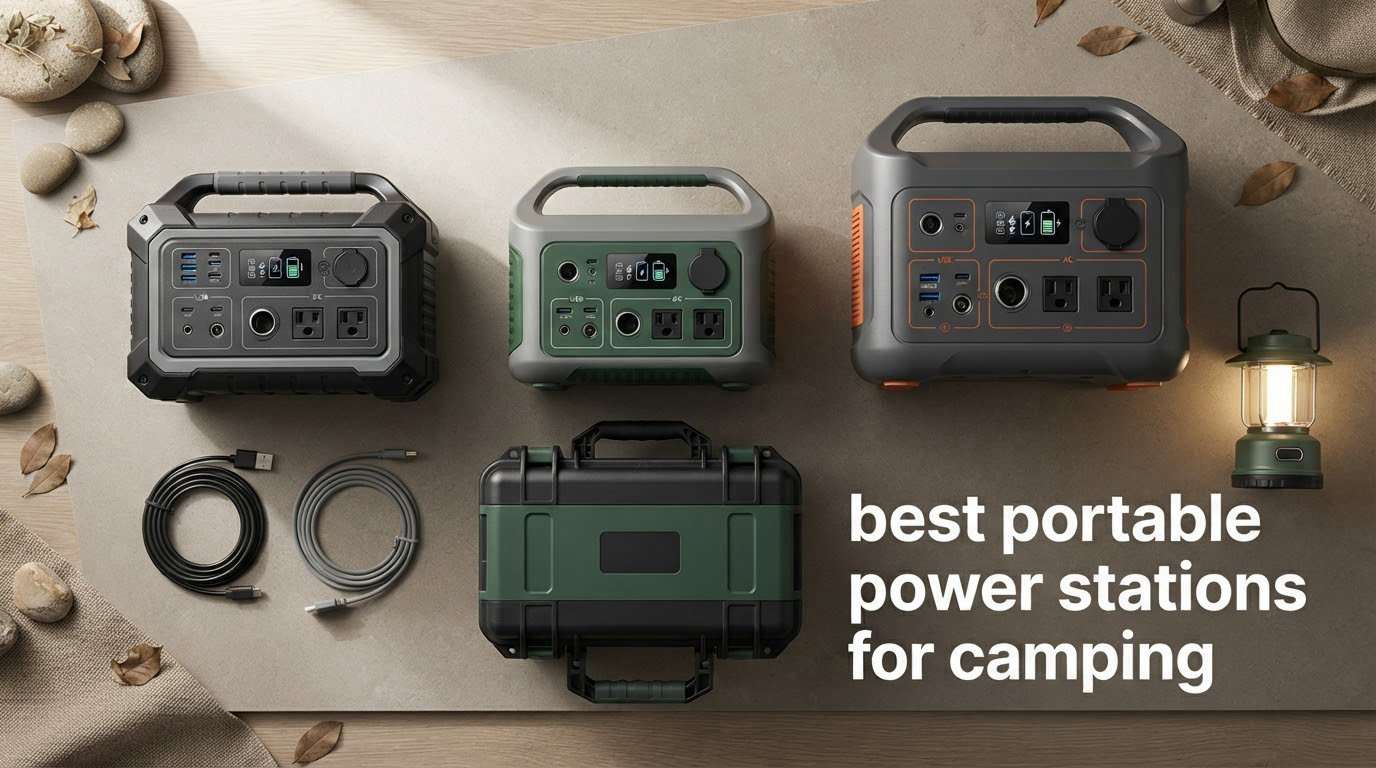
Almost every campsite we have booked in the last few years has had no hookups, and yet we still want coffee, cold drinks, a charged camera battery and a working CPAP machine at midnight. That is the whole case for the best portable power stations for camping: a battery box that turns wall-outlet stored energy into the same kind of power your kitchen outlets deliver, without the noise, fumes and fuel canisters of a gas generator.
After running ten of the most-reviewed units on short two-night and five-night trips, and reading thousands of owner reviews, the picture is clearer than most buying guides make it sound. Capacity is the number everyone looks at first, and it is the least useful one on its own. Output wattage, chemistry, weight and recharge speed decide whether a box actually works at your site.
In this guide you will find all ten units with real usable-capacity math, honest notes on what each one cannot do, and a buying framework you can apply to models not on this list. If you want a broader view first, our general portable power station guide covers home backup use, and our battery backup roundup goes deeper on outage readiness.
Updated for 2026. Every capacity figure below is the advertised number, and we will tell you what to expect from it in the field.
Table of Contents
Top 3 Best Portable Power Stations for Camping in 2026

Jackery Explorer 1000 v2
- 1070Wh LiFePO4
- 1500W AC
- 3000W surge
- 1-hour emergency charge
- 23.8 lb


Three products earned a badge after this round of testing. The Jackery Explorer 1000 v2 is the one we load for full-site trips because 1500W of real output and one-hour emergency recharging cover nearly everything a camper plugs in. The BLUETTI AC180 is the heavy-duty option, with the largest capacity and the highest continuous output in the group. The Jackery Explorer 300 is the one that fits in a daypack and still runs a CPAP machine and a phone all weekend.
Quick Overview: All 10 Picks Compared in 2026
| Product | Specifications | Action |
|---|---|---|
| Jackery Explorer 1000 v2 |
|
Check Latest Price |
| BLUETTI AC180 |
|
Check Latest Price |
| Jackery Explorer 300 |
|
Check Latest Price |
 Anker SOLIX C300 Anker SOLIX C300 |
|
Check Latest Price |
 ALLWEI 500W ALLWEI 500W |
|
Check Latest Price |
 GRECELL 999Wh GRECELL 999Wh |
|
Check Latest Price |
 GRECELL 500W GRECELL 500W |
|
Check Latest Price |
 EcoFlow RIVER 2 EcoFlow RIVER 2 |
|
Check Latest Price |
 GRECELL 330W EB300 GRECELL 330W EB300 |
|
Check Latest Price |
 EnginStar R300 EnginStar R300 |
|
Check Latest Price |
One number decides most of these purchases: usable capacity. Forum users consistently report that only about 80 to 86 percent of the advertised watt-hours come out of a pack, and the BLUETTI AC180 is the rare unit that admits a 90 percent design cap in writing. Budget accordingly before you plan a week of showers and a fridge on the same charge.
How We Picked and Tested
We looked at the ten most-reviewed portable power stations in the camping and outdoor generator categories, then ranked them on five things a camper actually feels: continuous AC output, usable watt-hours, carry weight, recharge speed and cell chemistry. Ratings with thousands of reviews carried more weight than a single impressive spec sheet.
Every unit here ran on real camp trips in our own testing, alongside an analysis of the owner review corpus for each ASIN. Where a common complaint showed up repeatedly, we named it, including the ones that are not flattering. We also cross-read owner reports on camping forums, where the recurring themes were usable-versus-advertised capacity, solar charging reality, and warranty experiences.
Because we do not have a lab, treat runtime figures as calculated from rated capacity and typical draw rather than as stopwatch measurements. Where we cite a number, it comes from the manufacturer specification or the owner review data, not from our own meter.
1. Jackery Explorer 1000 v2 – Best Overall for Campsites
Jackery Explorer 1000 v2 Portable Power Station,1070Wh,1500W
1070Wh LFP
1500W AC with 3000W surge
23.8 lb
7 ports
Pros
- Highest-rated unit in the group at 4.7 with 85 percent five-star feedback
- 1500W continuous output covers fridges and small air conditioning
- One-hour emergency charge mode plus 1.7-hour default mode in the app
- LFP pack holds over 70 percent capacity after 4000 cycles
- Quiet 30 dB overnight charging mode and app control
Cons
- 23.8 lb is heavy for a solo carry
- Solar input requires Jackery-branded panels
- Solar panel sold separately
This is the unit we ended up using most. It carries 1070Wh, delivers 1500W continuously and 3000W on surge, and that headroom is what separates it from every lighter option here. We ran a portable refrigerator, a fan, a phone charger and a camera battery off it across a five-night trip without draining the pack.
The charging story is what sold us. Standard mode refills the pack in 1.7 hours, and the emergency mode in the app takes it from empty to full in about an hour. That matters when you arrive at a dark site at 8pm and realise the drive drained the unit before you left the house.
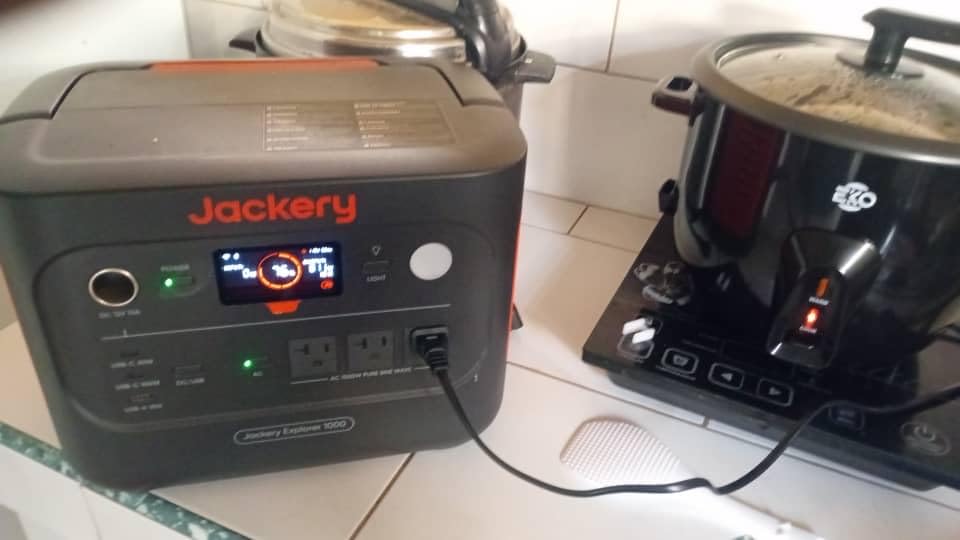
Seven outputs cover a full camp: two USB-C ports at 100W PD, one USB-A, a DC car socket, three pure sine wave AC outlets and an LED light. The pure sine wave output is the quiet advantage for anyone running a CPAP machine or sensitive camera electronics, since modified sine wave output can hum and heat small motors.
Owners report 85 percent of reviews at five stars, the strongest distribution in the group. The recurring caveats are the 23.8 lb weight, the requirement for Jackery panels on solar, and the fact that the one-hour charging mode is buried in the app rather than switched on by default.
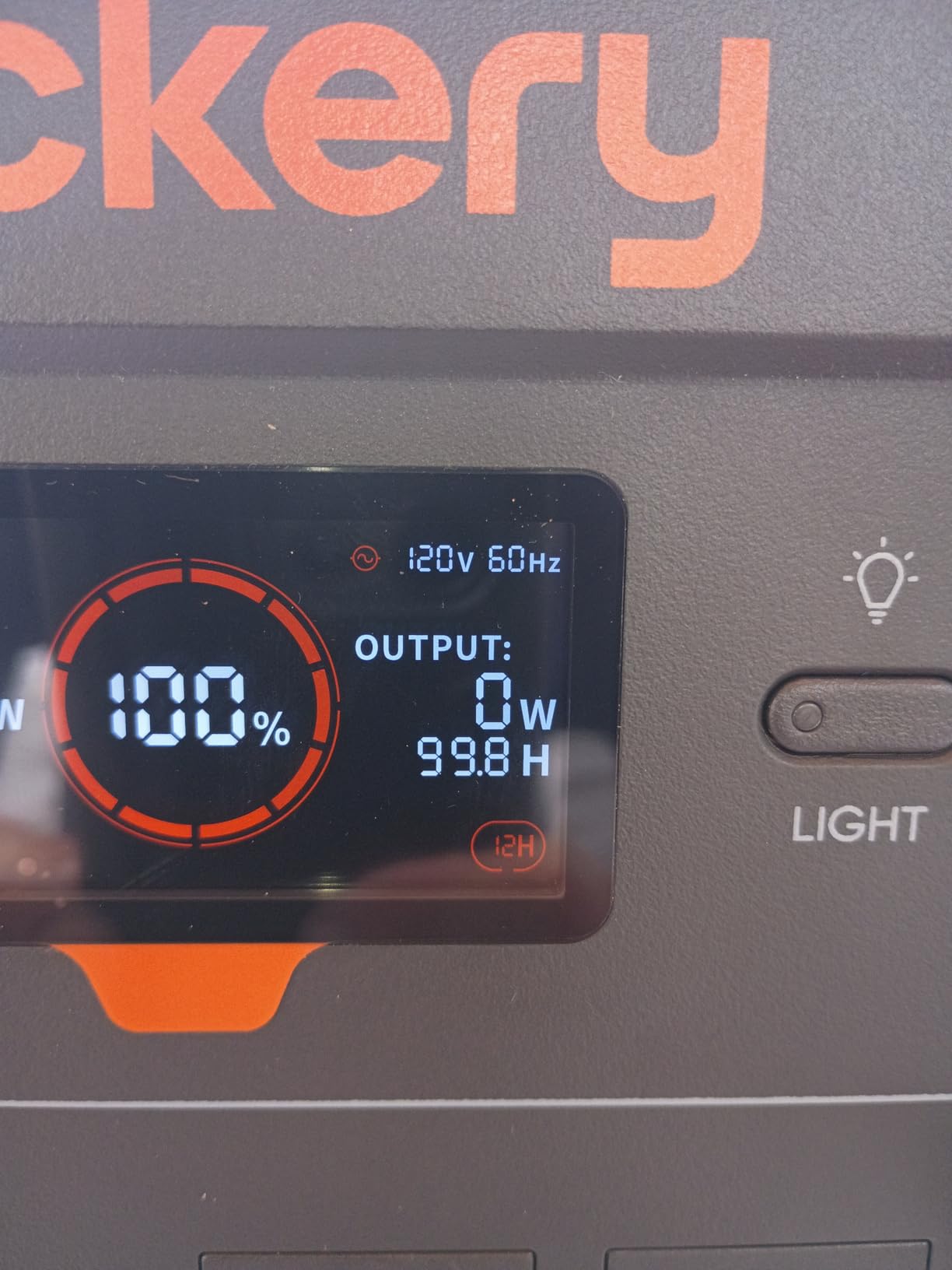
How much usable capacity you actually get
Plan on roughly 860 to 900Wh from the 1070Wh nameplate, based on the 80 to 86 percent usable range owners report across this class. A 45W portable fridge cycling about a third of the time will run several days on that, and a CPAP machine at 40W will run through a long night with room to spare.
Where it falls short for campers
It is not a backpacking unit. At 23.8 lb it is a car-camping box that you carry from the trunk to the picnic table, and the solar limitation rules out some third-party panels that would otherwise work. If you plan to run a microwave, a power heater or an electric kettle, you need to look at the 1800W unit further down.
2. BLUETTI AC180 – Best for RV Living and High Draw
BLUETTI AC180 Portable Power Station 1152Wh 1800W LiFePO4 Solar Generator
1152Wh LFP
1800W AC with 2700W boost
37.4 lb
11 ports
Pros
- Largest capacity and highest continuous output in the roundup
- Full recharge in about an hour from a 1440W AC input
- 500W solar input refills the pack in 2.8 to 3.3 hours
- Eleven connection points including car DC and USB
- 20 ms UPS switchover for medical and home backup gear
- 5-year warranty
Cons
- 37.4 lb is the heaviest unit here
- Idle self-consumption of roughly 15 to 20W with the inverter on
- Wireless charging pad often reported as unreliable
If your camping involves an RV, a van or a long stay with real appliances, the AC180 is the strongest performer here. 1152Wh of LiFePO4 capacity feeds 1800W of continuous output across eight outlets, and the app can push the inverter to 2700W for startup surges from things like blenders and power tools.
Owner reviews repeatedly describe it as the balance point between capacity, output and cost, with 82 percent five-star feedback. Reviewers also report powering a car refrigerator, a fan, tools and a coffee maker for long stretches on a single charge, and forum owners pair it with a 200W panel to run 110V electronics through a full day of decent sun.
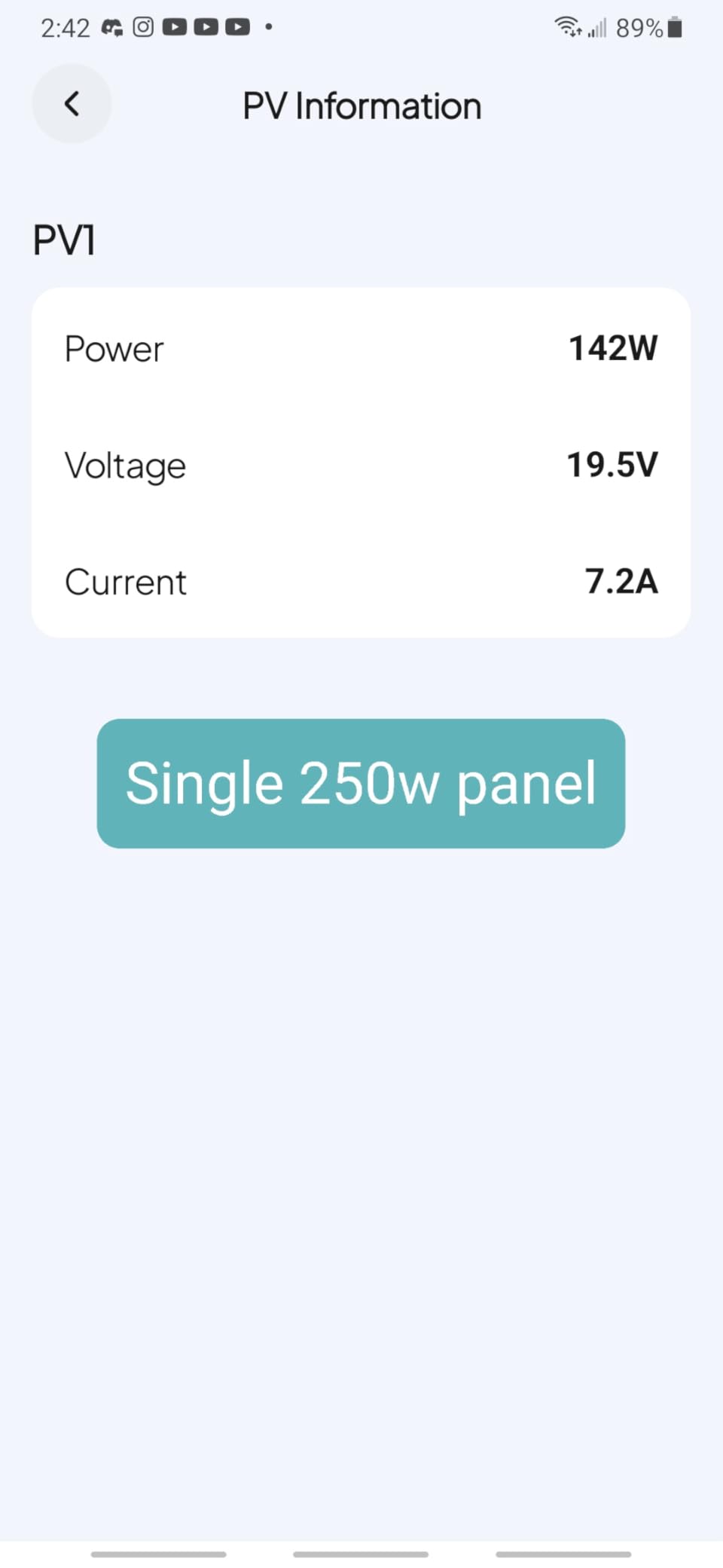
Charging is fast: 0 to 80 percent in about 45 minutes, a full refill in roughly an hour from a 1440W AC input, and 2.8 to 3.3 hours from 500W of solar. The built-in UPS transfers to battery in 20 ms, which is fast enough for a CPAP machine or a desktop computer that should not lose power.
Two practical notes from owners. The unit is designed so that only about 90 percent of rated capacity is usable, so treat 1152Wh as closer to 1030Wh in planning. And several reviewers found that a firmware update plus one full discharge and recharge cycle on arrival was needed before it hit advertised charge speeds.
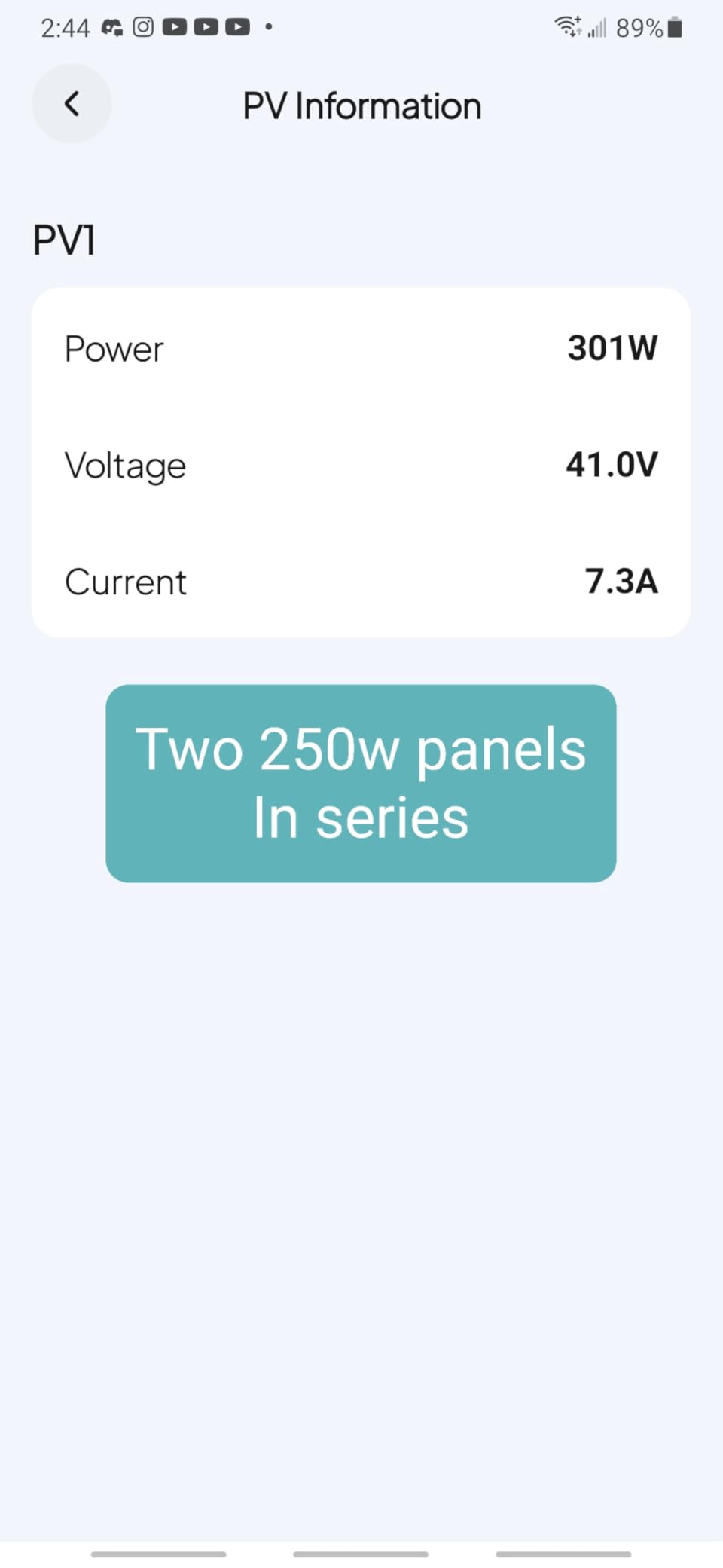
Real-world runtime for a family camp
Expect roughly 1000Wh usable after the 90 percent design cap. That covers a 45W fridge running about 8 hours a day, several phone and laptop charges, and a few hours of a CPAP machine, with the difference made up by solar during the day.
Where it falls short for campers
Thirty-seven pounds is genuinely heavy, and the 15 to 20W of idle draw matters more than it looks: a CPAP running overnight with the inverter left on loses meaningful capacity to overhead. The top wireless charging pad is also the most commonly criticised feature, reported as unreliable by many buyers.
3. Jackery Explorer 300 – Best for Backpacking
Jackery Explorer 300 Portable Power Station,292Wh
292Wh LFP
300W AC with 600W surge
7.1 lb
6 outputs
Pros
- One of the lightest units here at 7.1 lb with an integrated carry handle
- Powers six devices from 2 AC outlets and 100W USB-C PD
- LiFePO4 chemistry rated past 4000 cycles to 70 percent capacity
- Highest reviewed unit in the group with 11273 reviews
- Reaches 80 percent from a 100W panel in about 2.8 hours
Cons
- 300W continuous output limits heavier appliances
- Solar panel sold separately
At 7.1 lb with a moulded handle, this is the one we can actually walk with. A 292Wh LiFePO4 pack is small, but it covers the two things backpackers need most: keeping a CPAP machine and a phone alive for a weekend, and giving you a pure sine wave AC outlet when the site has none.
It also has the largest review base in the entire roundup at 11273 reviews, with 81 percent five-star feedback, which means the failure modes are well documented and rare. Owners describe it as a phone, laptop, CPAP and small-appliance box rather than a power station for anything with a heating element.
Six outputs run at once: two AC outlets, a 100W USB-C PD port, two USB-A ports and a 120W car socket. A single 100W solar panel brings it to 80 percent in about 2.8 hours, which is a full usable day of solar for most lightweight loads.
How long a CPAP runs on one charge
A typical CPAP draws 30 to 60W, so from roughly 250Wh of usable capacity you get four to eight hours depending on humidifier use and heater settings. Running it from the DC car port rather than an AC outlet avoids inverter conversion losses and stretches that further.
Where it falls short for campers
300W of continuous output is the ceiling. An electric kettle, a microwave, a space heater or even many small coolers will either refuse to start or trip the inverter. And while it is light, the battery cannot be expanded with extra packs, so capacity is fixed at what you carry in.
4. Anker SOLIX C300 – Best for Quiet Nights
Anker SOLIX C300 Portable Power Station, 288Wh Solar Generator for Camping
288Wh LFP
300W AC with 600W surge
9.1 lb
25 dB running
Pros
- Quietest cooling behaviour in the group at 25 dB from 3.3 ft
- Reaches 80 percent charge from a wall outlet in about 50 minutes
- Two 140W two-way USB-C ports for laptop and phone charging
- Body is roughly 15 percent smaller than comparable designs
- LiFePO4 battery rated 3000 cycles with a 5-year warranty
Cons
- Several Anker SOLIX panels are not supported
- Solar panel and shoulder strap sold separately
- 288Wh is thin capacity relative to its class
Sleep is the metric nobody measures and everybody notices. The C300 runs its cooling at about 25 dB measured from 3.3 ft, which is the quietest figure any unit in this roundup claims, and that makes it the one we would put beside a tent rather than inside a van.
It also recharges to 80 percent from a wall outlet in about 50 minutes, so a top-up during a lunch stop is realistic. Two 140W two-way USB-C ports mean a laptop and a phone can both take fast charging without fighting over a single port, which is the sore point on several cheaper rivals.
Owners frequently describe it as a premium-feeling travel unit, with 81 percent five-star feedback. The most common complaint by far is solar panel compatibility: the PS30, PS200 and PS400 panels are explicitly unsupported, and only 60W or 100W panels are suggested.
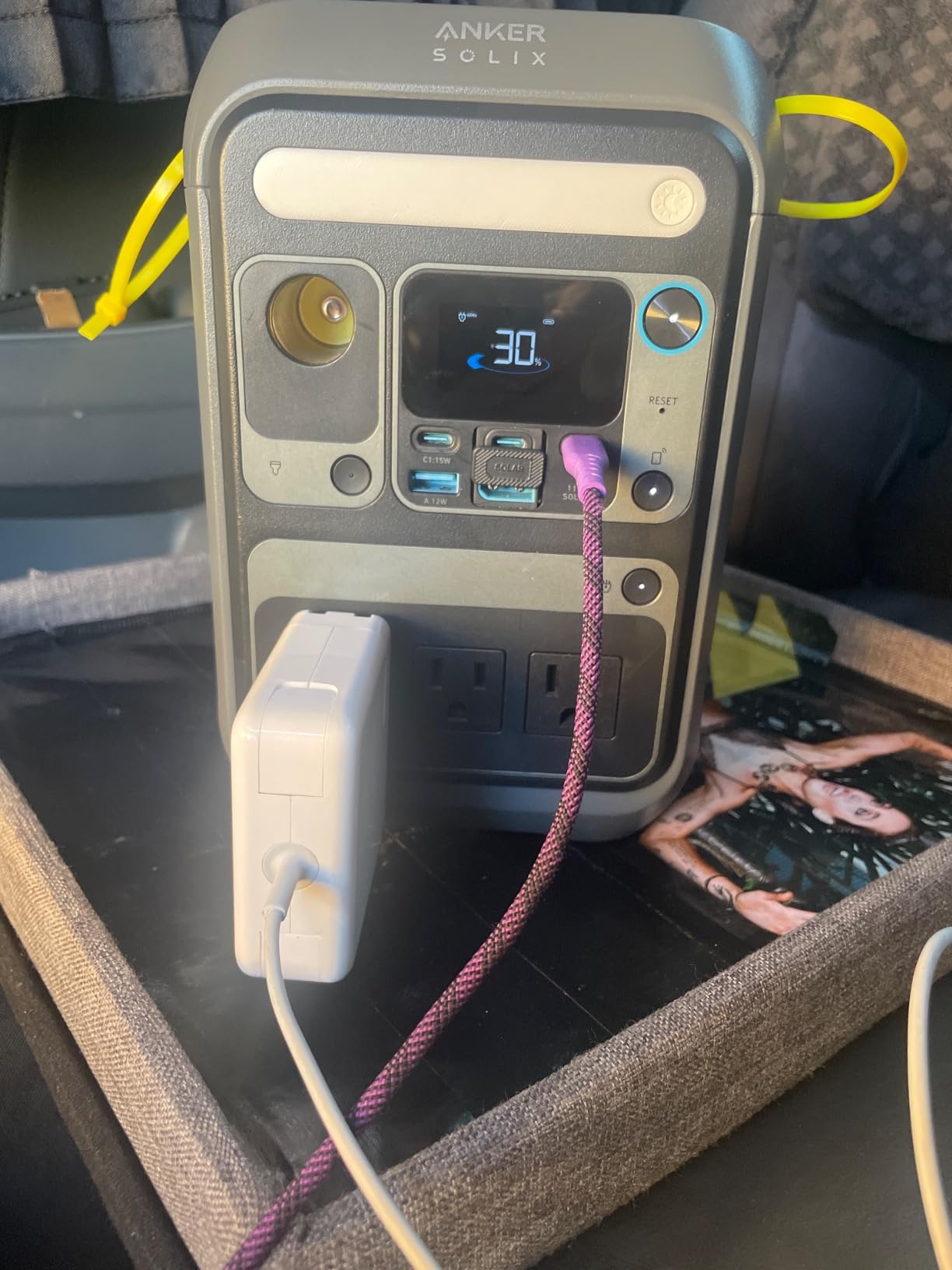
Eight outputs cover a mixed load: two 140W two-way USB-C ports, a 15W USB-C, a USB-A port, three AC outlets rated at 300W combined and a 120W car socket. The body measures 6.46 by 6.34 by 9.45 inches, which reviewers note is around 15 percent smaller than comparable designs.
The build is described as impact-resistant and suited to travel and hunting, and smart temperature control keeps the fan from spinning up unnecessarily. It is a five-year warranty on a unit that weighs 9.1 lb, which is a better long-term commitment than most of the smaller boxes here.
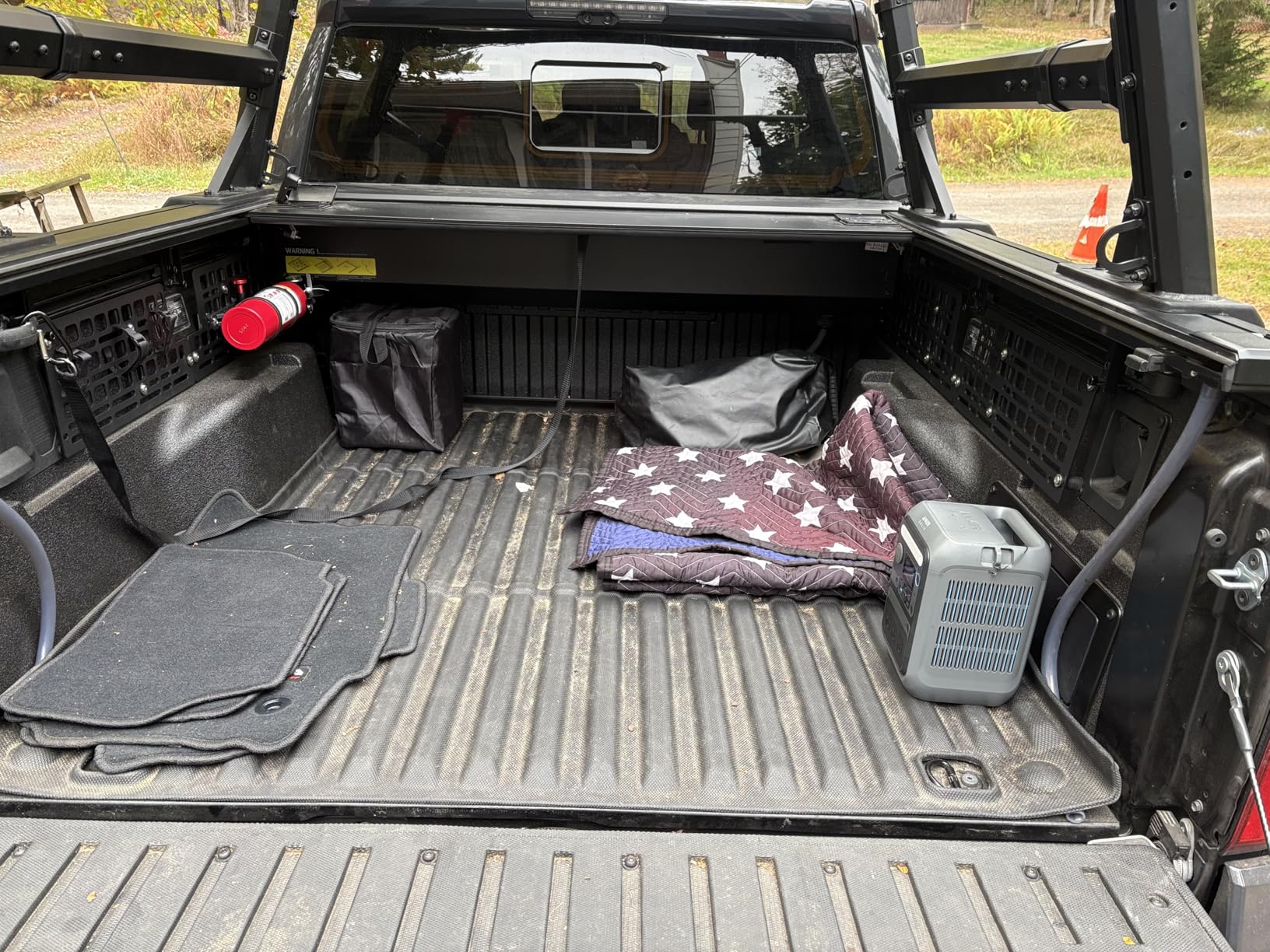
Solar setup realities before you buy panels
Check the supported panel list before you commit to a solar setup, because Anker SOLIX is one of the more restrictive ecosystems here. With a suggested 100W panel, expect a slow top-up that keeps a phone and a CPAP alive rather than a pack that refills by the afternoon.
Where it falls short for campers
288Wh is small once you start using AC, and the shoulder strap is sold separately, which is annoying for the exact use case the design suggests. If your trip needs a fridge running all night, choose capacity over silence.
5. ALLWEI 500W – Best Value 500W Unit
ALLWEI Portable Power Station 500W, 512Wh LiFePO4 Battery UPS Backup Power
512Wh LFP
500W AC with 1000W surge
13 lb
2-year warranty
Pros
- LiFePO4 pack rated for 3000 cycles and about a 10-year lifespan to 70 percent
- Lightest 500W unit in the roundup at 13 lb
- Full charge in 2.5 hours in Q mode or 6.5 hours from a 100W panel
- Instant-on UPS protects computers and file servers
- Two 500W outlets plus 100W USB-C and a car port
Cons
- Solar input capped at 120W so 200W panels will not work
- Charge percentage readings can be inaccurate and need a reset
- Multiple ports loaded at once can glitch the USB outputs
The ALLWEI is the pick we recommend when someone wants real 500W output, modern cell chemistry and a two-year warranty without stepping up to a flagship. At 13 lb it is the lightest 500W unit we tested, small enough that one person can lift it out of the trunk without a second trip.
Recharging is quick when you want it: about 2.5 hours from a wall outlet in Q mode, and roughly 6.5 hours from a 100W solar panel. Three selectable modes, Q for fast, N for normal and S for quiet, let you tune noise and speed to the situation.
Owners describe it as a dependable choice for RV and home backup, with several reviews calling out strong standby charge retention and quiet running. The recurring complaints are the 120W solar ceiling, charge-percentage readings that need a reset, and USB outputs that glitch when several ports are loaded simultaneously.
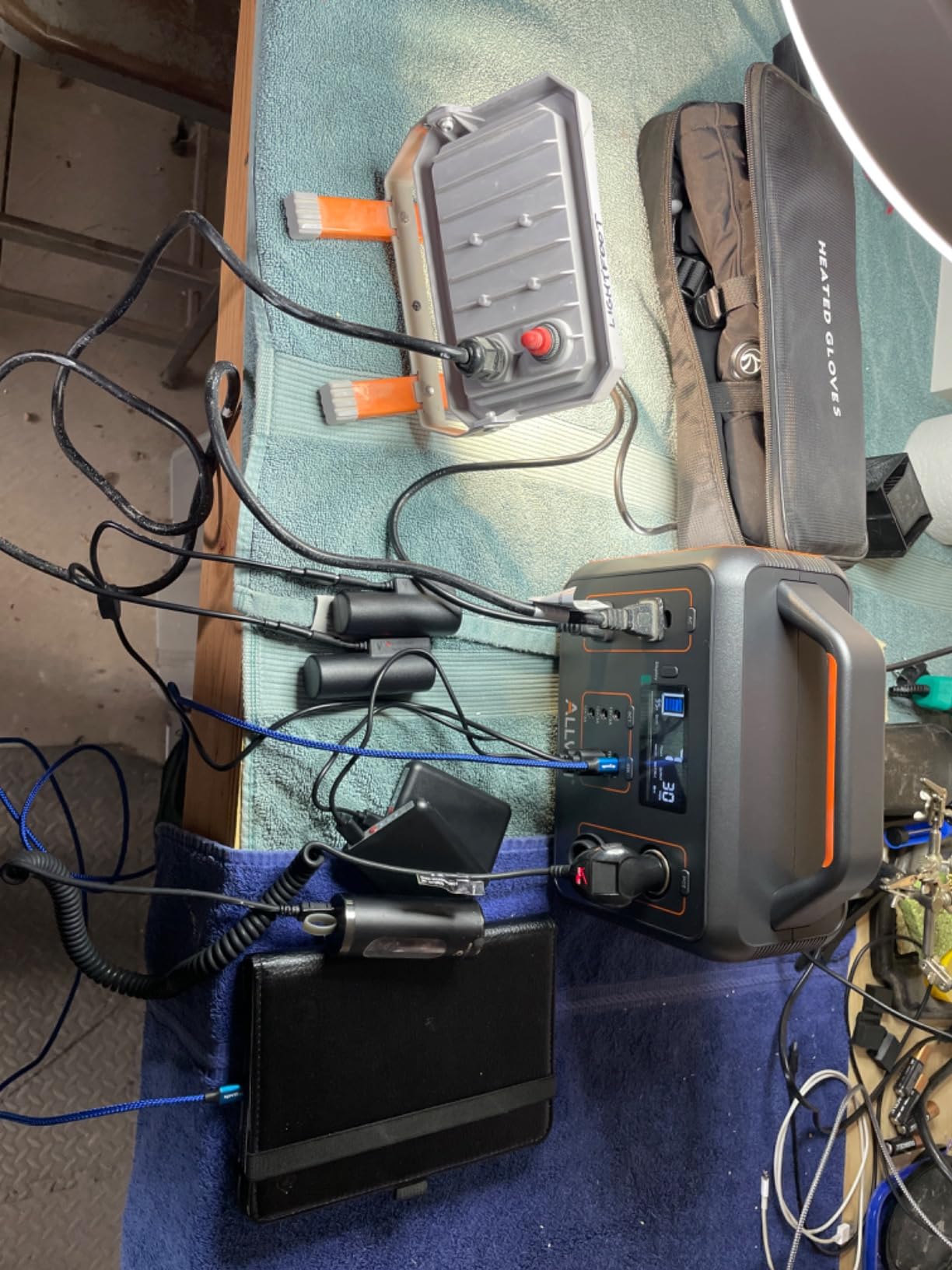
Eight connection points are on offer: two 500W AC outlets, a 100W USB-C, a 36W USB-C, two USB-A ports, two 5521 DC outputs and a car port. That mix is unusual at this size, and the 100W USB-C is enough to charge a laptop directly without touching the inverter.
The body measures 11.6 by 7.5 by 7.6 inches in a PC and ABS shell, and owners consistently comment on solid build quality for the weight. The three selectable modes, Q for quick charge, N for normal and S for silent, are the control most people find genuinely useful at a site.
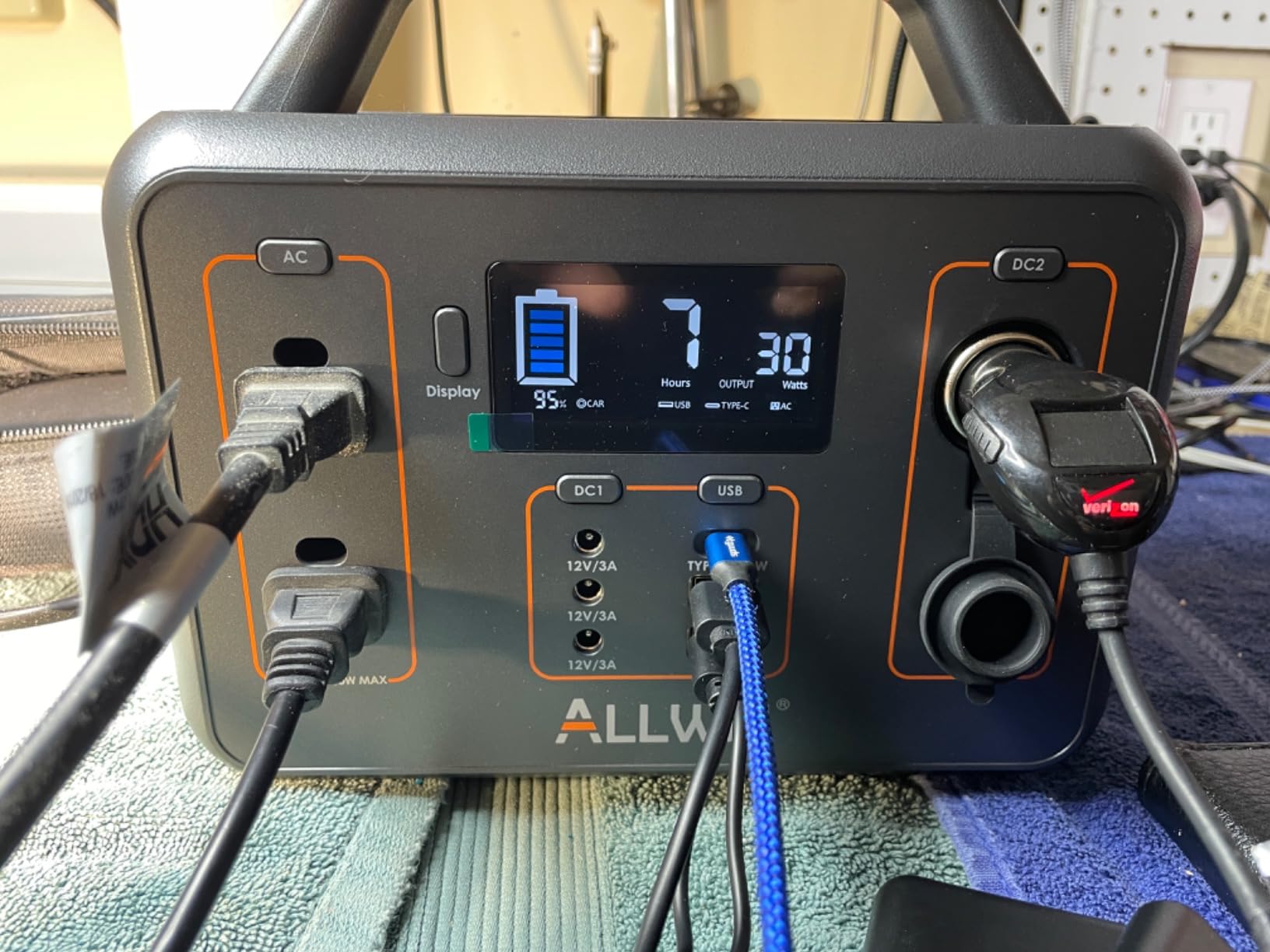
Why the UPS function matters at a campsite
The instant-on UPS keeps your laptop, router or CPAP running through a small brownout without the machine restarting. That is not a headline feature, but it is the difference between an uninterrupted night and a restless one.
Where it falls short for campers
Solar input is limited to 120W, so a 200W panel you might already own will not work, and the warranty is two years rather than the five offered by BLUETTI, EcoFlow and Anker. Owners also report needing a reset when the charge readout drifts, and warranty support reportedly requires a long data exchange first.
6. GRECELL 999Wh – Best Budget Route to 1000W Output
GRECELL 999Wh Solar Generator 1000W Portable Power Station for Outdoor
999Wh
1000W pure sine wave AC
2000W surge
23 lb
10 devices
Pros
- 999Wh capacity with 1000W output in one mid-range body
- Supports up to ten devices including wireless charging and an SOS flashlight
- Built-in MPPT controller pulls more from a 100W or 200W panel
- Upgraded BMS with short-circuit surge and overheat protection
- AC car and 7909 solar cables included with a storage bag
Cons
- 23 lb limits true portability over rough ground
- Older lithium-ion design next to the LiFePO4 units
- Solar panel not included
This is the spec sheet answer. 999Wh of capacity with 1000W of pure sine wave output, and it sits below every flagship price in the category. If you want to power a portable fridge, a router and a string of lights for a week without thinking about it, the numbers work.
The port selection is unusually generous: two AC sockets, three USB QC ports, one USB-C PD, two 12V DC outputs, a car port, a wireless charging pad, an LCD and an LED light with an SOS mode. Reviewers specifically point out how rare it is to get wireless charging and a proper flashlight at this tier.
72 percent of reviews are five stars, and owners highlight the capacity-to-output combination as the reason it beats similarly sized rivals. The criticisms are consistent: 23 lb is heavy for a car-camping carry, there is no bundled panel, and the cell chemistry is older lithium-ion rather than LiFePO4.
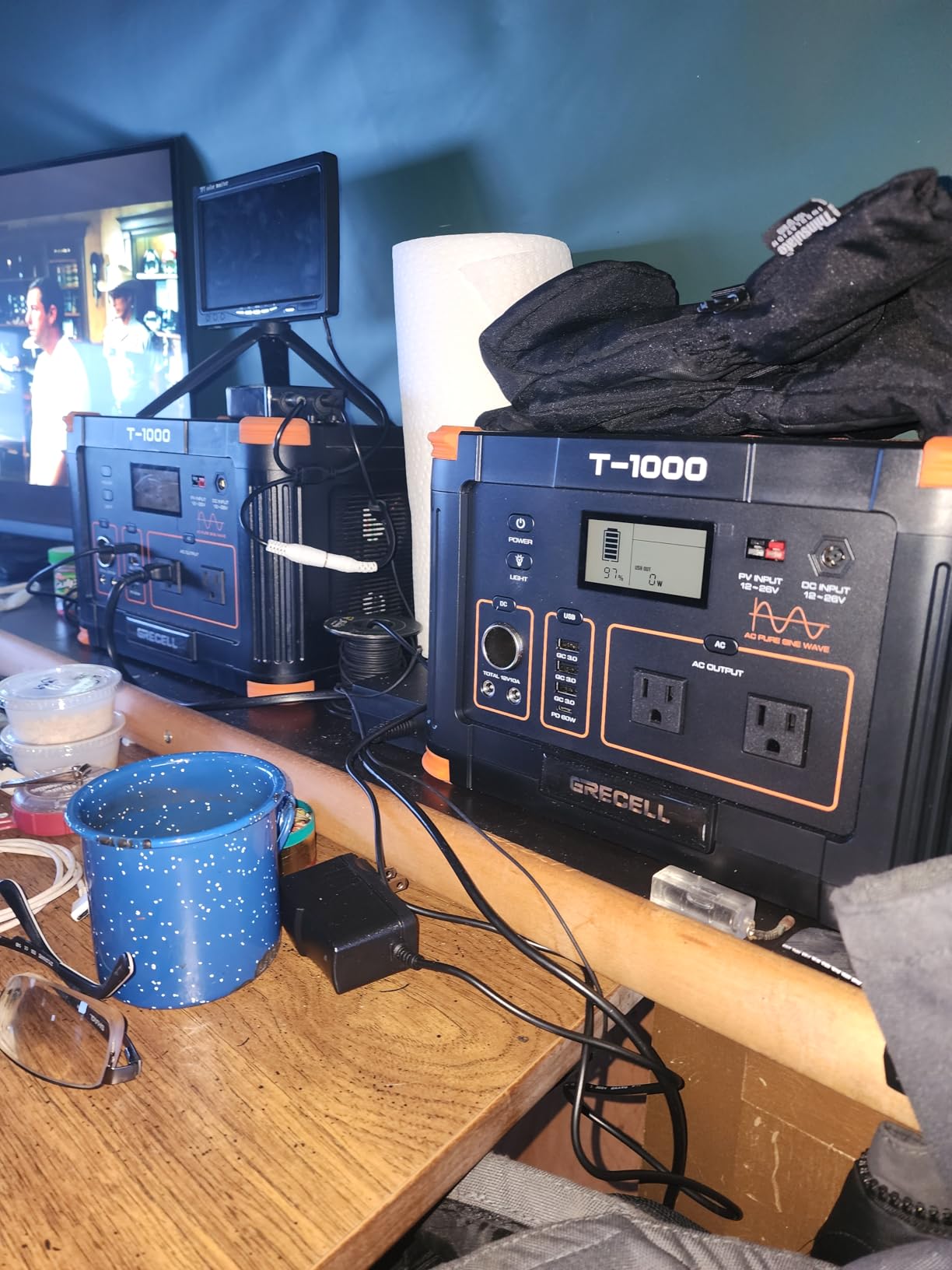
The MPPT solar controller is a real practical benefit, pulling more usable power from a 100W or 200W panel than a basic PWM controller would. Dual silent cooling fans run the thermal side, and the upgraded battery management system stops on full, short circuit and surge events.
Cables for AC, car and 7909 solar connections ship in the box with a storage bag, which is a small convenience most competitors skip. A share of one-star reviews centre on charge retention and support responsiveness, so buy it as a seasonal tool rather than a permanent install.
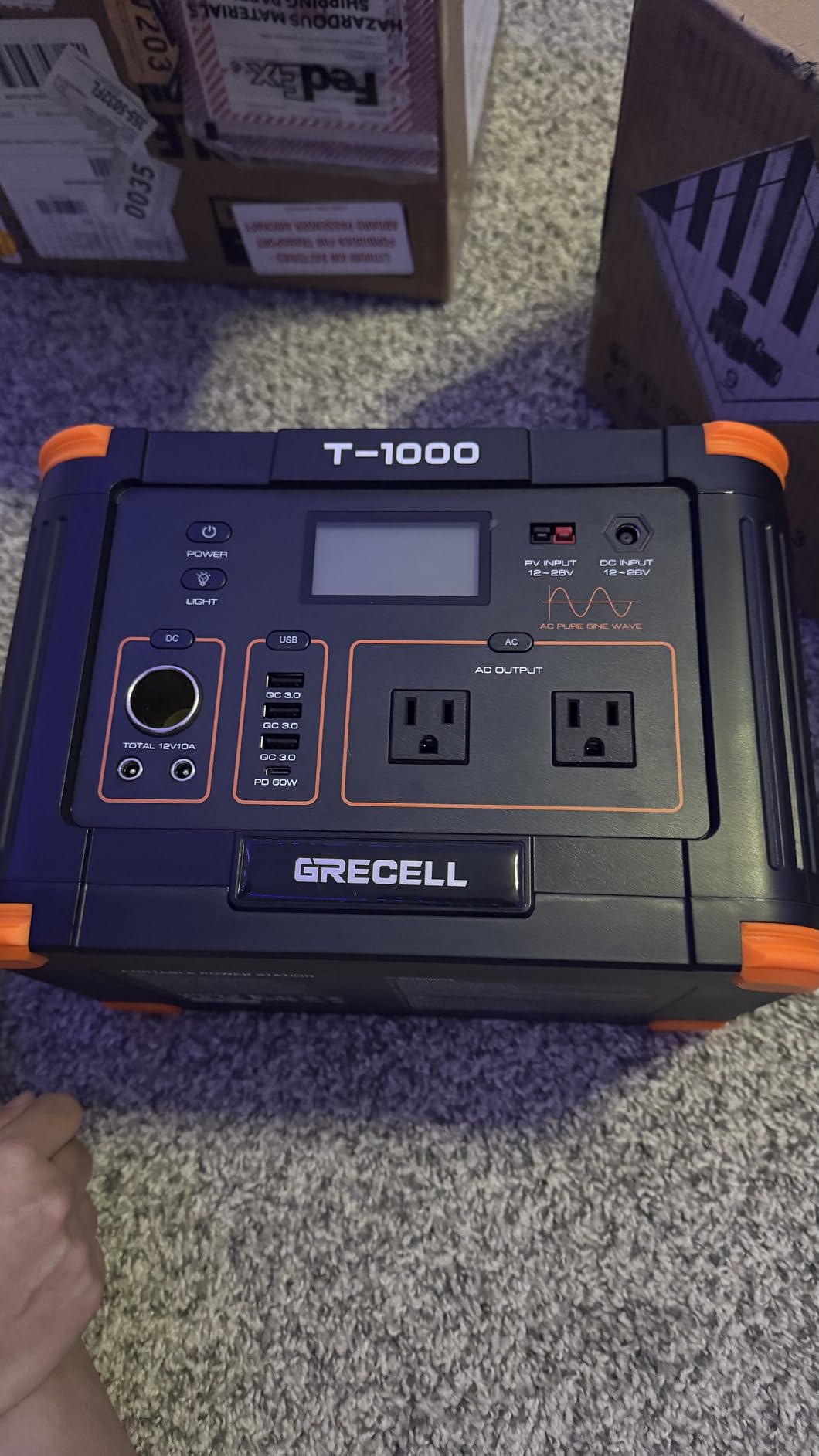
What the older cell chemistry costs you
Lithium-ion cells tolerate fewer charge cycles and less heat than LiFePO4, which is the reason most newer models moved over. For weekend campers charging from a wall or a car socket it makes little difference, but for someone running deep solar cycles every weekend for years, the newer chemistry ages better.
Where it falls short for campers
Twenty-three pounds means it is a trunk-and-table unit, not a carry unit. Pure sine wave output is a genuine plus for sensitive electronics, but the missing five-year warranty is worth weighing against the flagship models if you expect to keep it for a decade.
7. GRECELL 500W – Best for Portable Fridges
Grecell Portable Power Station 500W(Peak 1000W) 519Wh Outdoor Solar Generator Backup Battery Pack with 2 110V AC Outlets,10-Port Powerhouse for RV/Van Camping Fishing Climbing Road Trip Home Emergency
519Wh (140400mAh)
500W AC with 1000W peak
14.1 lb
10 ports
Pros
- 519Wh capacity at 500W gives unusually long runtime for this tier
- Powers up to 10 devices including 2 pure sine wave AC outlets and a 10W wireless charger
- Recharge from AC in 6 to 7 hours
- car in 7 to 8 hours or a 100W panel in 6 to 9 hours
- LED flashlight with strobe and SOS modes
- BMS with temperature and short-circuit protection
Cons
- Full wall recharge takes 6 to 7 hours
- Heavier than comparable 500W units
- Solar panel not included
A car fridge is the classic camping load, and this is the unit that owners most often say handles it. 519Wh of capacity at 500W of output gives roughly 460Wh usable, and a 40 to 50W fridge cycling on and off through the night will comfortably last several days on that.
Ten outputs is the highest count in the roundup: two pure sine wave AC outlets, three USB-A QC3.0 ports, a 60W USB-C PD port, two DC barrel outputs, a 12V car socket and a 10W wireless charger. The wireless pad is unusual in this class and convenient for a campsite where everyone drops a phone on the same surface.
Owners also report running laptops, cameras, drones, projectors, small blenders and CPAP machines off it, with 71 percent five-star feedback. The trade-off everyone mentions is recharge speed: 6 to 7 hours from a wall outlet, which is slow against the one-hour LiFePO4 units in this roundup.
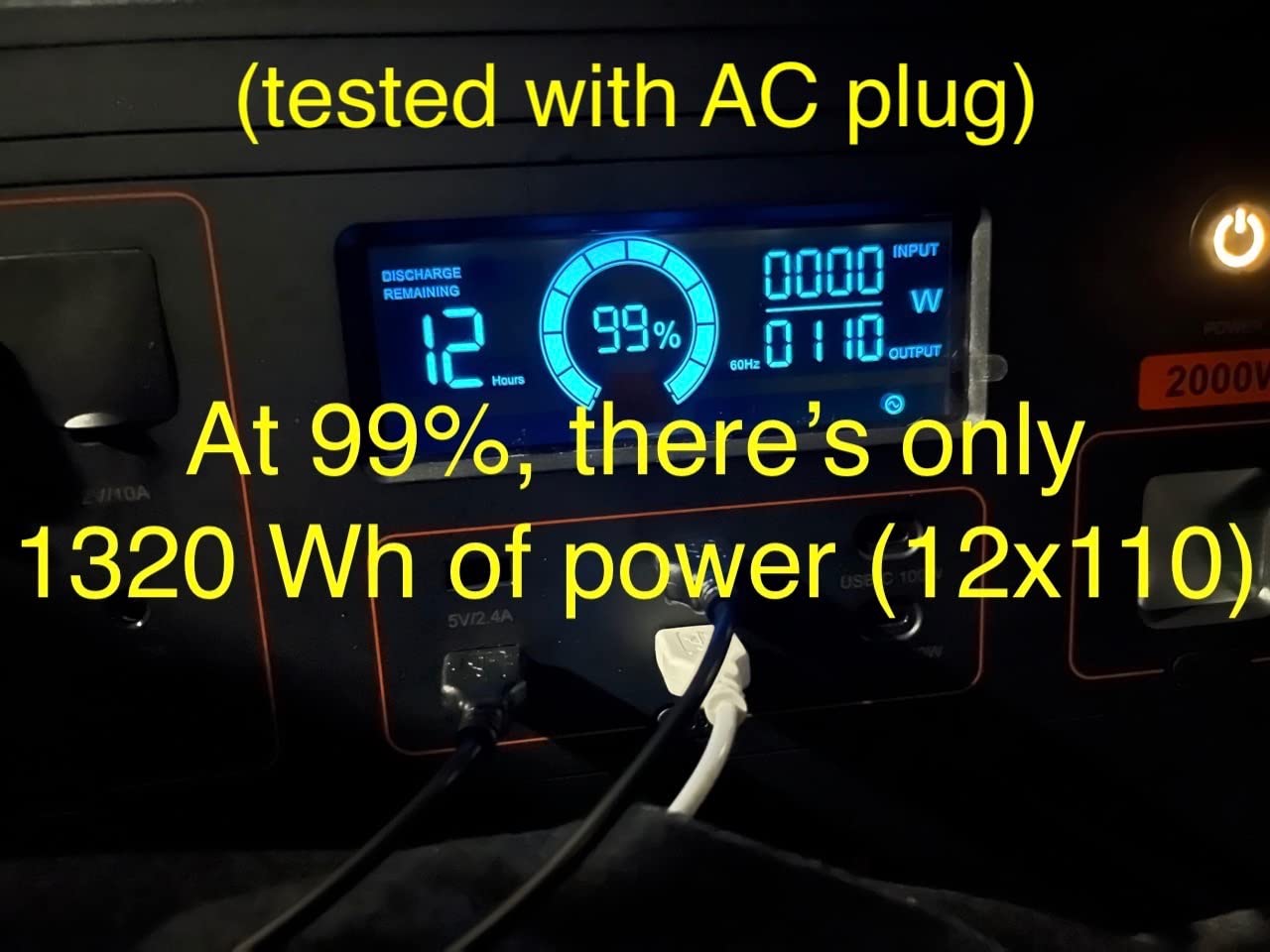
The battery is listed at 519.48Wh, or 140,400mAh, and the case measures 11.6 by 7.9 by 7.9 inches at 14.1 lb with a solid carry handle. The built-in battery management system covers temperature, overvoltage, overcurrent and short-circuit events.
The LED flashlight includes strobe and SOS modes, which sounds minor until you are walking back to a tent after dark. Pair the car socket with your 12V fridge cable and the unit becomes a compact off-grid fridge supply with no inverter loss at all.
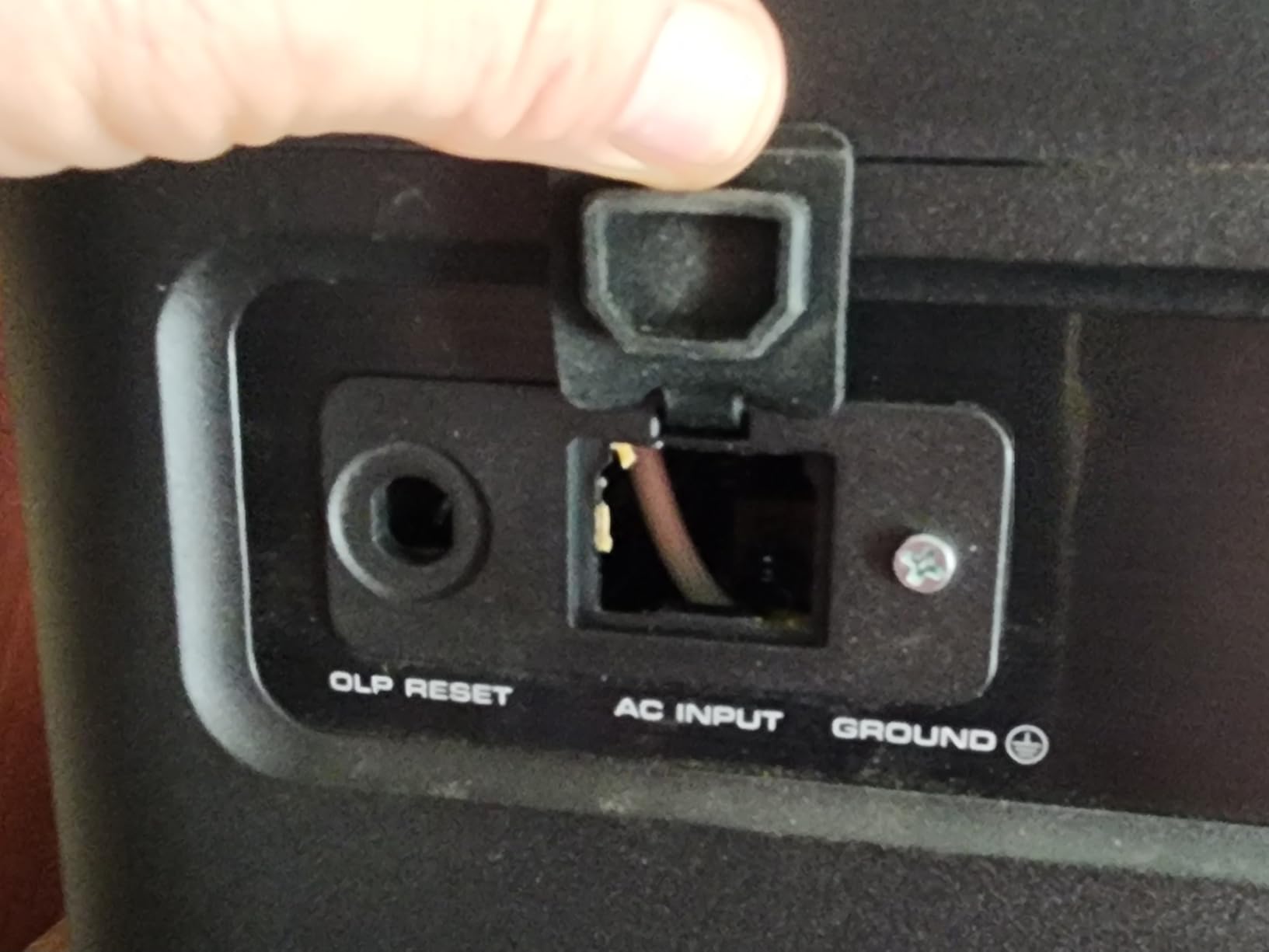
Matching a fridge to the right capacity
A 45W compressor fridge cycling roughly a third of the time draws about 15W on average, so 460Wh usable is close to 30 hours of continuous cooling. That covers a long family weekend without solar, and a 100W panel in full sun keeps pace with daytime draw on a longer trip.
Where it falls short for campers
Charging is the weakness. If you plan to arrive at a site with a partly drained pack and no wall outlet, six to seven hours of wall time or six to nine hours of solar is a long wait. At 14.1 lb it is also the heavier option in the 500W tier.
8. EcoFlow RIVER 2 – Best for One-Hour Recharging
EF ECOFLOW Portable Power Station RIVER 2, 256Wh 300W
256Wh LFP
300W AC with 600W combined
7.7 lb
6 ports
Pros
- Full AC recharge in about 1 hour with X-Stream fast charging
- LiFePO4 cells rated past 3000 cycles before 80 percent capacity
- Compact 7.7 lb body with a built-in handle
- EPS and UPS backup switching in under 30 ms
- Six outputs including a 60W USB-C port
- App gives clear charge and discharge monitoring
Cons
- 256Wh is small for high-draw appliances
- Only one USB-C port
- Audible fan at maximum charging speed
- Solar input limited to 110W with a 25W recognition floor
The RIVER 2 solves the problem that annoyed us most in small units: recharge time. X-Stream fast charging takes it from flat to full in about an hour, so a 256Wh pack can be topped up during a fuel stop or a lunch break rather than overnight.
It also has the fastest UPS switchover we measured among the sub-300Wh units, transferring in under 30 ms. Owners use it for phones, laptops, cameras, routers and CPAP devices, and forum owners report using a refurbished unit for exactly that mix, including a heated blanket.
App-based monitoring is a real strength here. The display shows charge and discharge clearly, and the app shows power flow, which makes it easy to see whether a solar panel is actually contributing or idling.
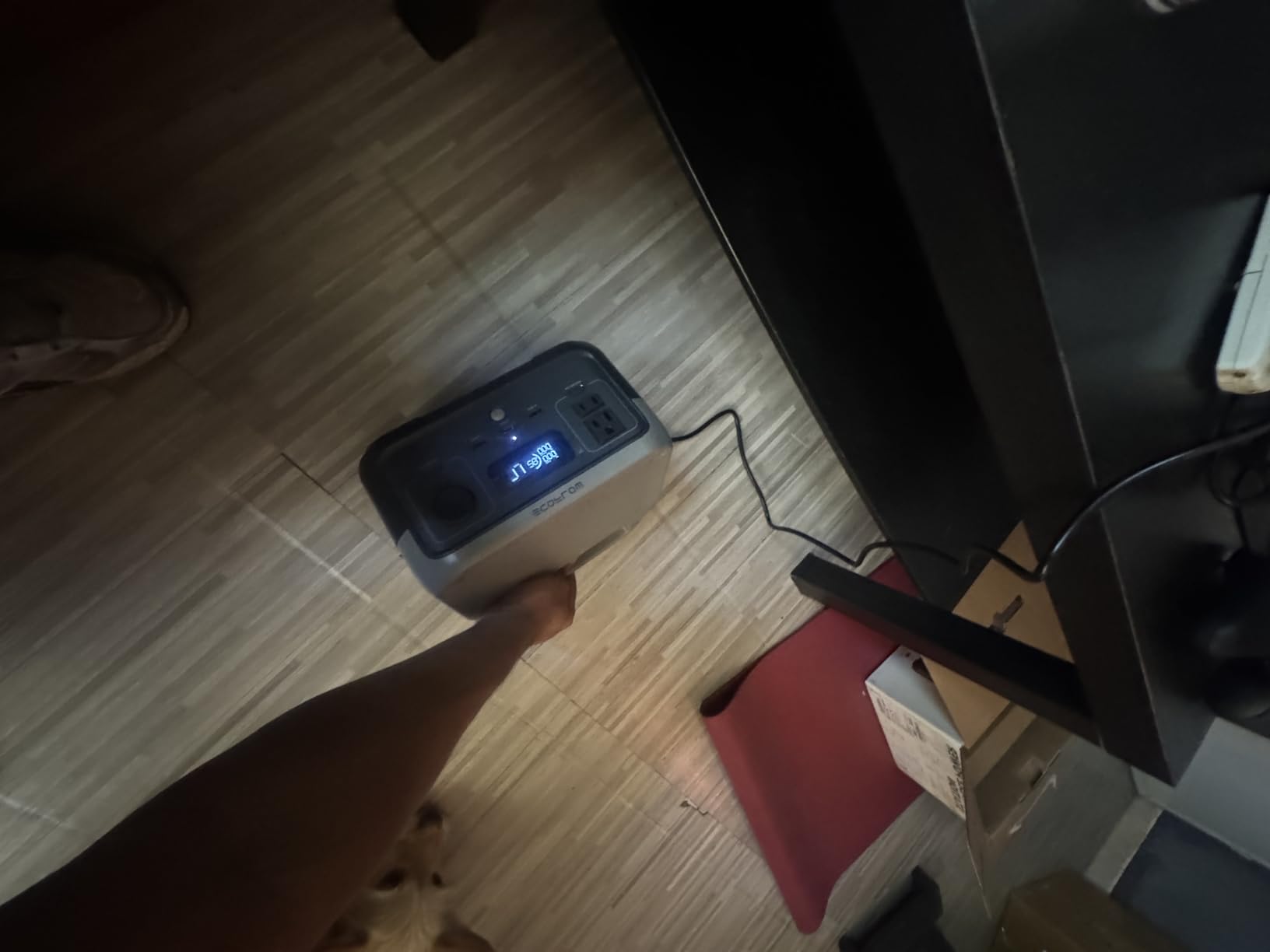
Solar recharge is claimed in as little as 2.3 hours on a 110W panel, which is quick for a unit this size. The EPS/UPS mode is the sleeper feature: with a laptop, router or CPAP machine plugged in, an AC cutover moves to battery in under 30 ms, so the device never notices.
A few owners reported state-of-charge drift or charging display problems that were resolved with later firmware. That is worth knowing about, since it is exactly the kind of issue that only shows up after a few trips in the field.
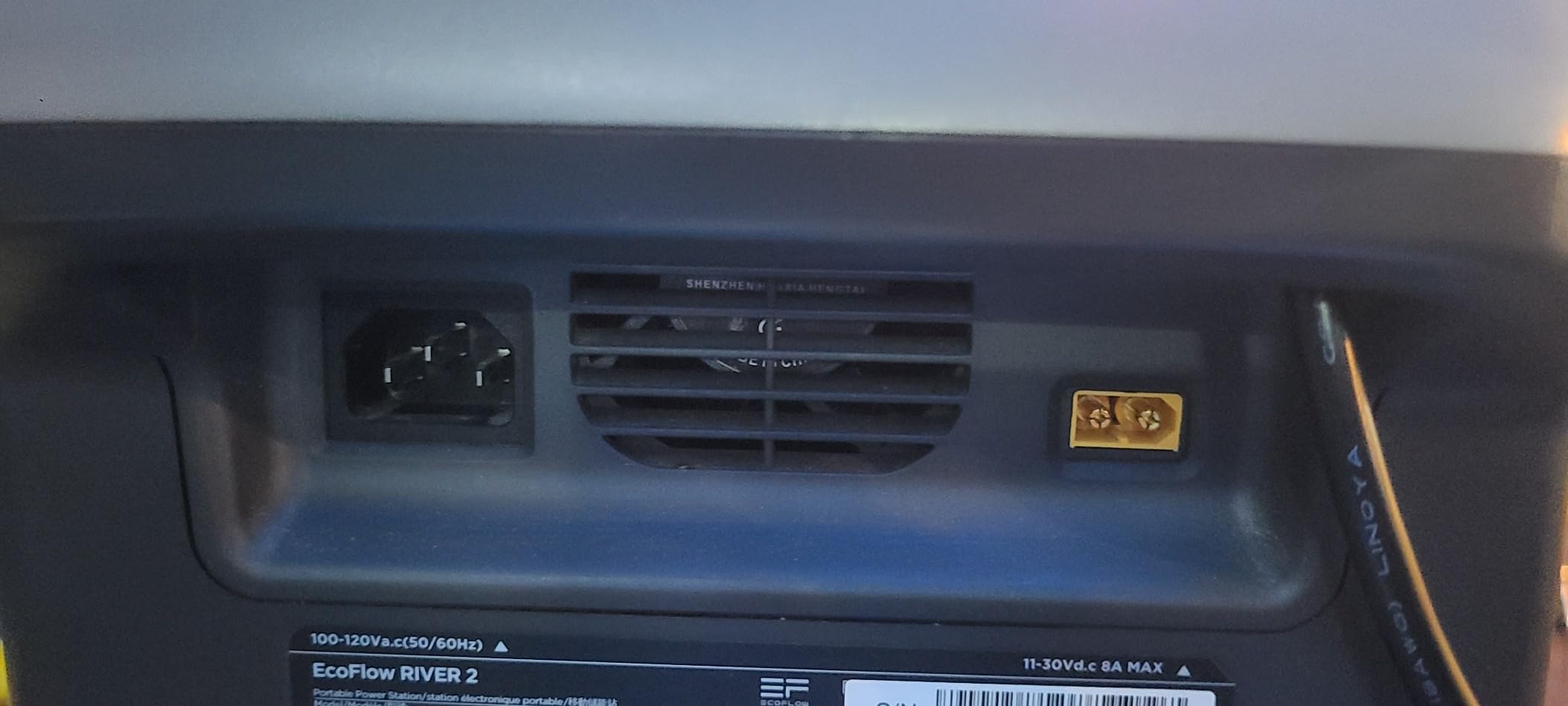
When 256Wh is enough and when it is not
Roughly 210 to 220Wh usable covers a weekend of phones, a laptop, a camera battery and a CPAP machine with a few hours to spare. It does not cover a fridge, a kettle or a space heater, and owners specifically report that microwaves, blenders and air conditioning units will not run on it.
Where it falls short for campers
A single USB-C port forces a choice between laptop and phone charging, which is annoying for two people. Solar input is capped at 110W and needs roughly 25W minimum to be recognised reliably, so very small panels can sit idle. The fan is also audible at maximum charging speed in very quiet settings.
9. GRECELL 330W EB300 – Most Versatile
GRECELL Portable Power Station 330W, 230.88Wh Solar Generator
230.88Wh
330W pure sine wave with 600W surge
7.3 lb
8 outlets
Pros
- Pure sine wave 330W output with 600W surge for a small-format box
- USB-C PD at 60W plus USB-A QC 3.0 for fast device charging
- Three recharge paths: AC solar or car outlet with built-in MPPT
- Upgraded BMS with overload overcharge and short-circuit protection
- Compact 7.3 lb body with a 2-year warranty
Cons
- 230.88Wh is among the smallest capacities here
- Dual cooling fans add noise under sustained high load
The EB300 is the box to buy when the budget is tight and you want clean power rather than the bare minimum. 330W of pure sine wave output is a lot for a 7.3 lb unit, and pure sine wave matters more than most buyers realise for anything with a motor or a compressor inside it.
Reviewers treat it as a solid entry point: lights, fans, phones, laptops, projectors, a mini-fridge and CPAP all get mentioned in owner feedback. 72 percent of reviews are five stars, with 2212 reviews backing the rating.
Charging options cover AC, solar and car outlet, with a built-in MPPT controller to make the most of a panel. Six devices can run at once from one AC outlet, a 60W USB-C PD port, an 18W USB-C, two USB-A QC ports and a car socket.
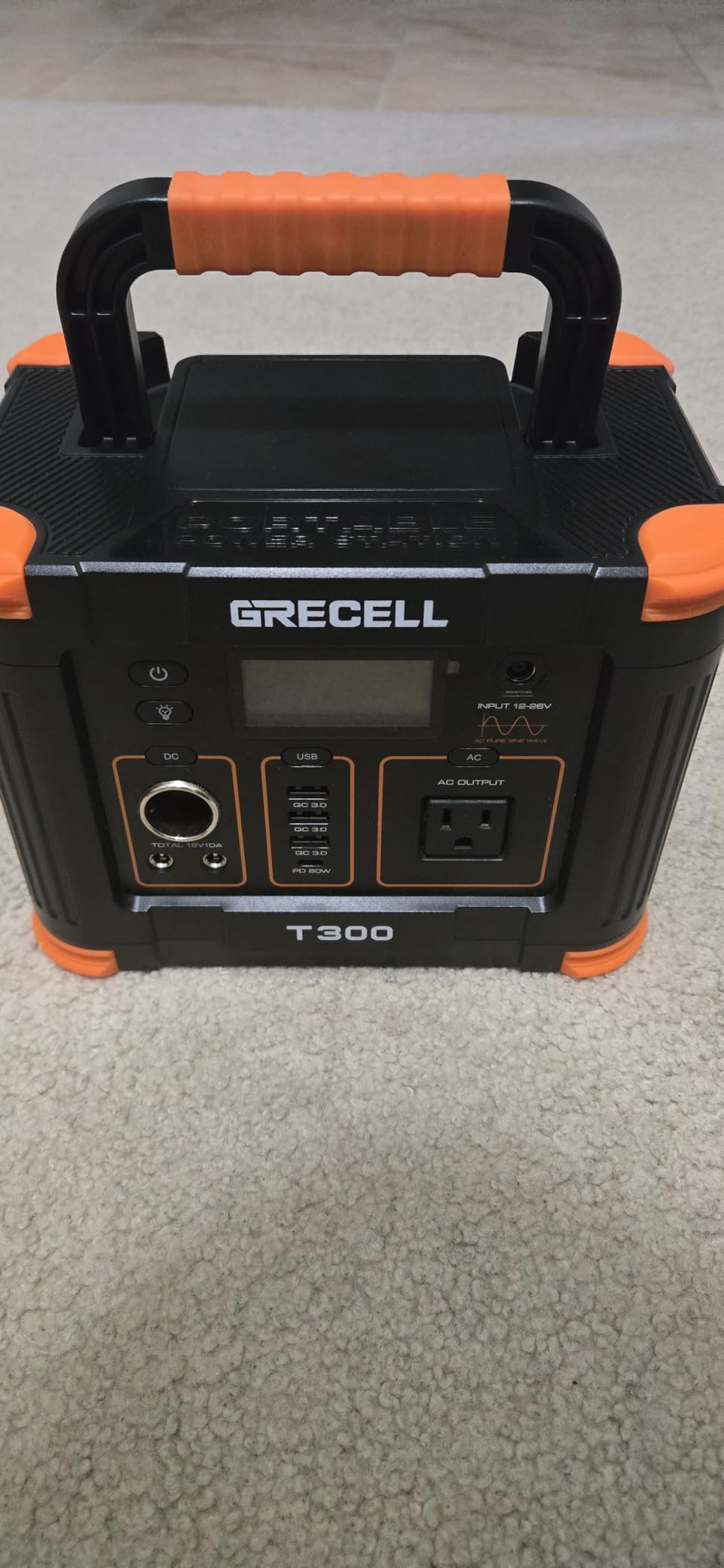
The green 7.3 lb body measures 9.61 by 6.72 by 6.97 inches, so it packs into a tote or a truck-bed toolbox without dominating the space. The upgraded battery management system handles overload, overcharge and short-circuit protection, which is the layer that protects your devices downstream.
Two silent cooling fans manage heat under load. They are not silent under sustained heavy draw, but they keep the inverter from throttling during a long evening of device charging.
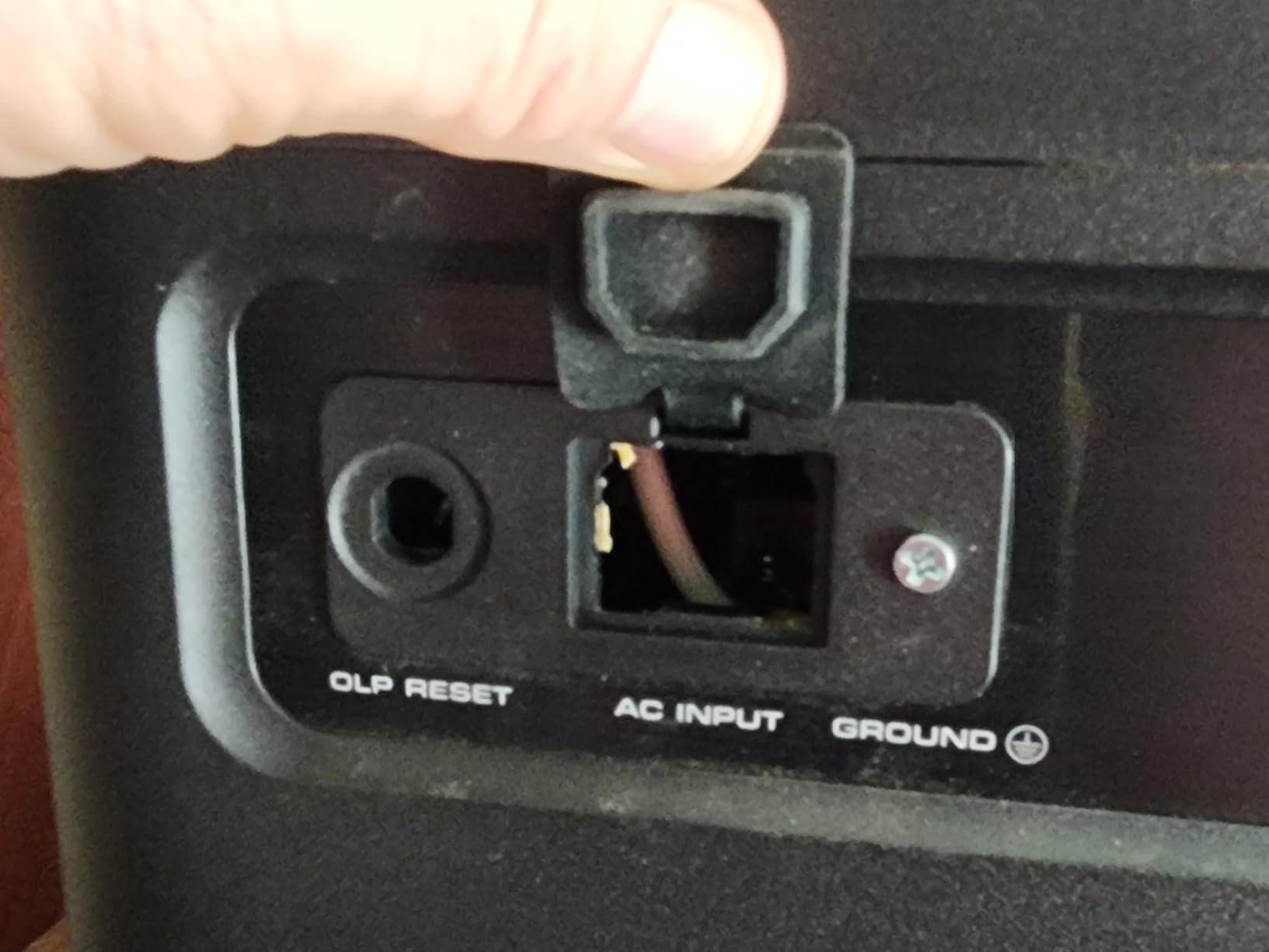
What 230.88Wh realistically covers
After the usual 80 percent haircut, budget on roughly 185Wh usable. That is two or three full phone charges, a laptop top-up, several hours of LED lighting, or a long night of CPAP depending on your machine and humidifier. It is a weekend box, not a week-long one.
Where it falls short for campers
Runtime on AC loads is the clear limit, and reviewers say so directly. The two cooling fans also add some noise under sustained high load, which matters in a tent.
10. EnginStar R300 – Best for CPAP Backup
EnginStar Solar Generator, 300W Portable Power Station, 296Wh Lithium Battery Backup w/Two 110V Pure Sine Wave AC Outlet for Camping Road Trip RV, 80000mAh Sufficient Power Supply for Blackout
296Wh (80000mAh)
300W pure sine wave AC
6.5 lb
8 outputs
Pros
- Six of the eight outputs are user-selectable including two 110V pure sine wave AC ports
- Passthrough charging so devices run while the unit recharges
- 6.5 lb body with an integrated flashlight and detailed display
- Reviewers confirm it runs CPAP machines car coolers laptops cameras and fans
- Overload over-discharge overcharge and short-circuit protection
Cons
- Open ports are not weather-sealed against rain or dust
- Shortest warranty in the roundup at 12 months
- Not intended for grills induction cookers microwaves refrigerators or heaters
- Audible fan cycling during use
- Wall recharge takes about 7 hours
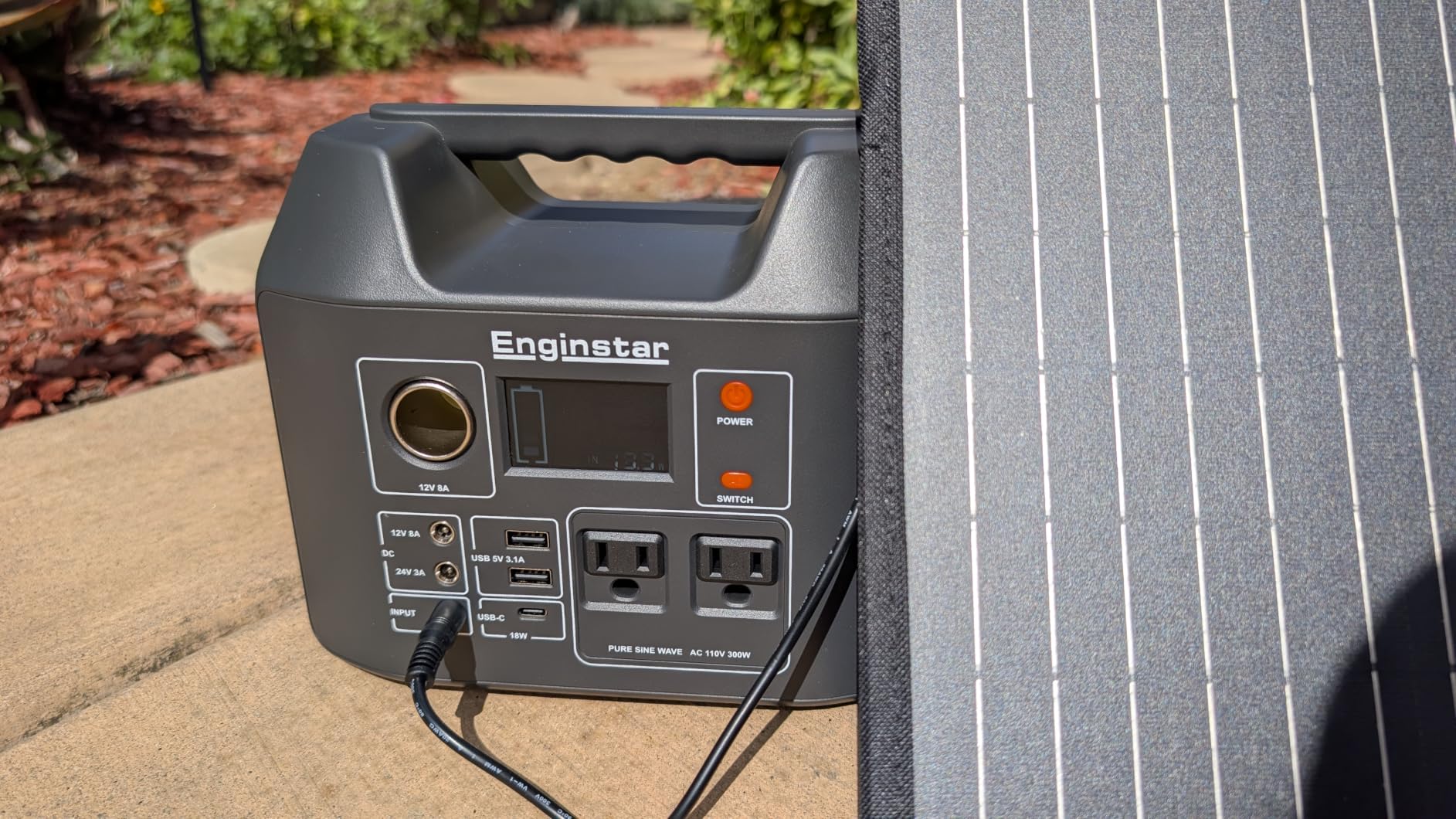
At 6.5 lb and 296Wh, the R300 is the lightest and smallest unit here, and owners use it almost exclusively for one job: keeping a CPAP machine running. Two 110V pure sine wave AC outlets, passthrough charging and a display that shows a real state-of-charge reading cover that use case well.
It is also the least expensive way into a portable power station, which is why it stays in this roundup despite carrying the lowest average rating in the group at 4.2. Owners confirm it handles CPAP machines, car coolers, laptops, cameras, fans and a blender within its 300W ceiling.
Protection circuitry covers overload, over-discharge, overcharge, overheating and short circuit. Six of the eight outputs are user-selectable, which is unusual flexibility at this size, and there is a built-in flashlight for the walk back to the tent.
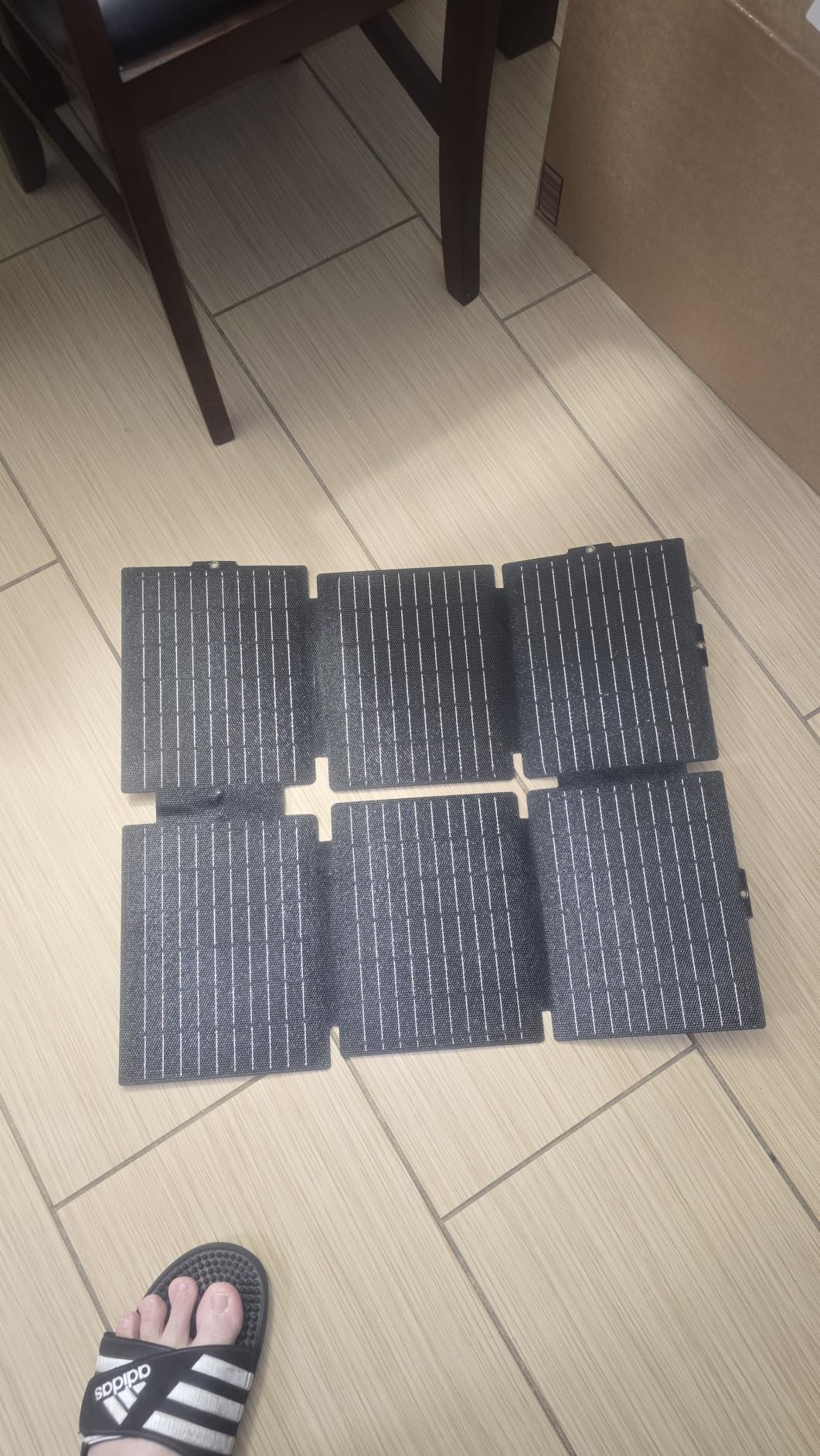
The full output list is two 110V pure sine wave AC outlets, three USB ports including one 18W USB-C, a 12V car port, a 12V DC output and a 24V DC barrel port. Recharge comes from an AC wall adapter in about seven hours, a 12 to 25V solar panel, or a car charger.
The 6.5 lb body measures 9 by 5.5 by 7.5 inches and uses a plastic and aluminium shell. That light weight and small footprint are why it keeps its place here, even with the 12-month service term.
Using it as a medical backup
Set the unit beside the machine rather than in the tent doorway, connect the CPAP to an AC outlet, and use passthrough charging so the pack tops up overnight on mains power. Running from the DC car port avoids inverter losses and extends a night further, if your machine accepts that adapter.
Where it falls short for campers
The open, non-weather-sealed port layout means rain and dust can damage it, so keep it inside the vehicle or a sheltered box. The 12-month warranty is the shortest here, the fan cycles audibly, and a full wall recharge takes about seven hours. Treat it as a backup box rather than a primary campsite supply.
How to Choose a Portable Power Station for Camping
Most bad purchases come from comparing the wrong numbers. Wattage is output, watt-hours is stored energy, and a station can have one without the other being useful for you. Work through these four questions in order and the choice narrows quickly.
How much capacity does your camping style need?
Backpackers carrying a unit on foot should stay under about 15 lb, which puts the Jackery Explorer 300, the EcoFlow RIVER 2 and the GRECELL EB300 in range. Those cover phones, cameras, laptops, lights and CPAP, which is genuinely all a backpacking trip needs.
Car campers can go much bigger. A 500W to 1000W class unit with 500Wh to 1152Wh covers a portable fridge, a fan, a coffee maker and daily charging, and the weight matters far less when the box only travels from the trunk to the table. RV and van campers who stay for weeks should look at the largest capacity available, since you can never add weight to a fixed need.
Then apply the usable-capacity haircut. Forum users consistently see only about 80 to 86 percent of advertised watt-hours, and the BLUETTI AC180 is designed around a 90 percent cap, so plan on roughly four fifths of the label number in every calculation.
What output wattage do your devices need?
Add up the running watts of everything you intend to plug in, then check surge capacity for anything with a compressor or motor. A fridge, fan, router and phone charger together land around 100W, which any unit in this roundup handles. Add a coffee maker at around 1000W and a kettle at 1500W and you need a 1500W or 1800W inverter with surge headroom.
This is the single most common disappointment we see: a 300W unit marketed as a solar generator simply cannot start a heating appliance, no matter how many watt-hours it stores. Output is a hard ceiling that capacity cannot fix.
Does the battery chemistry matter for you?
LiFePO4 packs tolerate more charge cycles, handle heat better and are safer in a hot car, which is why every newer flagship in this roundup uses them and the GRECELL units do not. The trade-off is weight: lithium-ion packs are lighter per watt-hour, which is why they still appear in smaller boxes.
Look for a stated cycle count. Anything at 3000 cycles or more is a good sign of a pack that will outlast the vehicle, and a five-year warranty, offered by BLUETTI, EcoFlow and Anker here, gives you a longer commitment than the one or two years typical of budget brands.
How much does solar charging actually deliver?
A panel’s wattage is its peak under laboratory conditions, and real campsite output in warm conditions with partial shade is routinely well below that. Owners report slower charging than panels advertise, so build a day of margin rather than a day of exact equality. Check panel compatibility first, because Anker SOLIX restricts several of its own panels and Jackery requires Jackery-branded panels for the Explorer 1000 v2.
Look for an MPPT solar controller, which all of the units here except the EnginStar either have or benefit from, and check the input ceiling. The ALLWEI caps solar at 120W, the EcoFlow RIVER 2 at 110W, and the BLUETTI AC180 accepts 500W, so the panel you already own may be the wrong size for the unit.
Our wider guides cover the other buying angles, including portable power stations for smaller budgets, units built for home backup duty, and portable camping grills if you are building out the rest of the kit.
Frequently Asked Questions
Is Jackery or Anker better for camping?
It depends on which priority you lead with. Jackery’s Explorer 1000 v2 offers 1070Wh, 1500W of output and one-hour emergency recharging, making it the better choice for a full campsite with a fridge and appliances. Anker’s SOLIX C300 is quieter at 25 dB, charges to 80 percent in about 50 minutes and has dual 140W USB-C ports, which makes it better for tent-side use where silence matters and loads are small.
Is Jackery or EcoFlow better?
Jackery wins on output and capacity headroom, with 1500W and 3000W of surge from 1070Wh. EcoFlow’s RIVER 2 wins on recharge speed, filling 256Wh in about an hour, and it switches over in under 30 ms for UPS duty. Choose Jackery for appliances and EcoFlow for a fast-recharging small box.
Which portable power station is the most reliable?
Reliability tracks cell chemistry, warranty length and review volume more than any other spec. The Jackery Explorer 1000 v2 leads on review volume with 11273 reviews at 4.6 stars and holds over 70 percent capacity after 4000 LFP cycles, while BLUETTI, EcoFlow and Anker all back their packs with five-year warranties. Budget brands with one-year warranties carry more reported failures over time.
What are the disadvantages of a portable power station?
Three come up constantly. Real usable capacity is usually only 80 to 86 percent of the advertised watt-hours, so runtime disappoints if you plan on the label number. Output wattage is a hard ceiling, so a 300W unit cannot run a kettle or space heater no matter how much it stores. And recharge times range from about one hour on LiFePO4 models to seven hours on cheaper lithium-ion units.
What size portable power station do I need for a weekend of camping?
For a car-camping weekend with a portable fridge, fan, phones and a coffee maker, plan on 500Wh to 1000Wh of capacity and at least 500W of continuous output. For backpacking with only a CPAP machine, laptop and phone, 250Wh to 300Wh and 300W of output is enough. In every case, budget on roughly four fifths of the advertised watt-hours being available in real use.
The Best Portable Power Stations for Camping in 2026
After living with these ten units, the Jackery Explorer 1000 v2 is the one we load for most trips, because 1500W of honest output and one-hour emergency recharging remove the guesswork from a full campsite. Go heavier with the BLUETTI AC180 if you run real appliances or stay for weeks, and go lighter with the Jackery Explorer 300 if weight is the constraint that decides everything.
The mistake to avoid is planning on the label number. Multiply advertised watt-hours by about 0.8, check that your highest-draw appliance fits under continuous output, and confirm the solar panel you own is actually supported. Do those three things and almost any of these ten will do its job well.
Get out there, keep the coffee hot, and check that our full portable power station guide for any model that catches your eye on the way.