
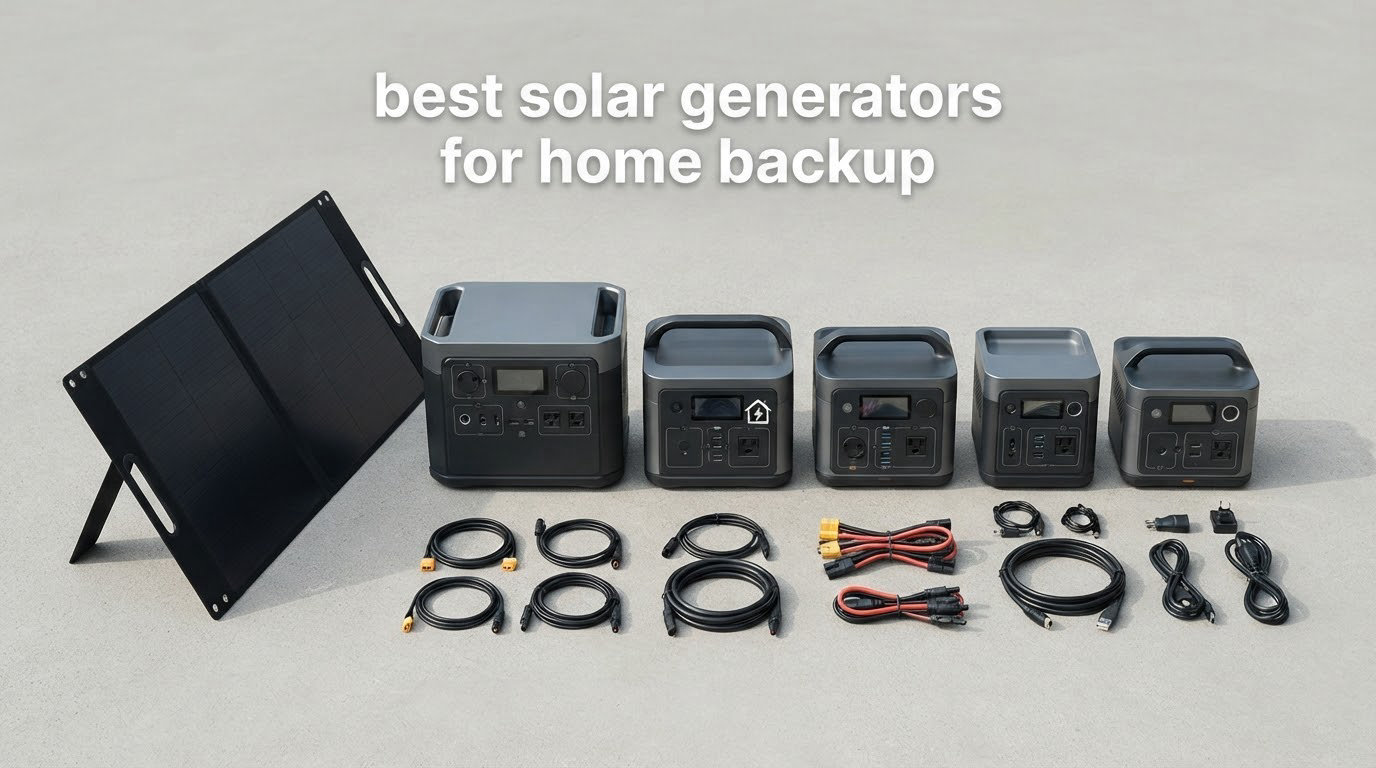
If you want one clear answer, the best solar generators for home backup are the Anker SOLIX F3800 if you need 240V whole-home power, the BLUETTI Elite 200 V2 if you want the most proven all-round unit, and the Pecron F3000LFP if you are buying on a budget. Every pick below is a portable LiFePO4 power station that runs a refrigerator overnight without gas, fumes or noise.
We spent weeks going through owner reviews, spec sheets and outage reports to build this list, and we kept the same rule throughout: a unit only earns a place if it can keep a fridge, a router and some lights running for a full day on stored energy alone. That single filter removed a lot of units that look impressive on paper but fall apart the moment a compressor motor kicks in.
The solar generator category has consolidated fast. The four names that dominate current searches are EcoFlow with the DELTA Pro Ultra and DELTA Pro lines, Jackery with the HomePower 3000 and 3600 Plus, Pecron with the F3000LFP, and BLUETTI with the Elite 200 V2. We also included Anker’s F3800 and F3000 because the 240V output on the bigger one is genuinely rare in this class.
Worth saying up front: these are batteries with inverters, not generators. Nothing spins at 3,000 RPM. That is the entire reason they are safe in a hallway with the fridge door open, and also the reason they run out. We are brand independent, we bought nothing, and we ranked on capacity, inverter output, chemistry, expandability and owner-reported runtime rather than on who paid for the most listings.
Table of Contents
Top 3 Best Solar Generator Picks for Home Backup

BLUETTI Elite 200 V2
- 2073.6Wh LiFePO4
- 2600W continuous output
- 3900W power lifting
- Bundle with 2x 200W panels

EcoFlow DELTA Pro Ultra
- 6144Wh base battery
- 7200W 120V and 240V
- Scales to 90kWh
- Two 400W panels included
All 10 Solar Generators Compared Side by Side in 2026
| Product | Specifications | Action |
|---|---|---|
| BLUETTI Elite 200 V2 |
|
Check Latest Price |
 Anker SOLIX F3800 Anker SOLIX F3800 |
|
Check Latest Price |
 Jackery HomePower 3000 Jackery HomePower 3000 |
|
Check Latest Price |
 EcoFlow DELTA Pro 3.6kWh EcoFlow DELTA Pro 3.6kWh |
|
Check Latest Price |
 Anker SOLIX F3000 Anker SOLIX F3000 |
|
Check Latest Price |
 Pecron F3000LFP Pecron F3000LFP |
|
Check Latest Price |
 ABOK Ark3600 ABOK Ark3600 |
|
Check Latest Price |
 Jackery HomePower 3600 Plus Jackery HomePower 3600 Plus |
|
Check Latest Price |
| EcoFlow DELTA Pro Ultra |
|
Check Latest Price |
 GROWATT HELIOS 3600 GROWATT HELIOS 3600 |
|
Check Latest Price |
1. BLUETTI Elite 200 V2 – Best All-Round Solar Generator for Most Homes
BLUETTI Elite 200 V2 Solar Generator & 2x200W Solar Panel Included 2073.6Wh
2073.6Wh LiFePO4
2600W continuous
3900W power lifting
1000W solar input
Pros
- 0-80% in about 50 minutes on AC
- Solar full charge in 2.4 hours
- About 10W inverter standby draw
- 6000+ cycle battery
- Bundle includes two 200W panels
Cons
- Not expandable with BLUETTI battery modules
- 60V MPPT ceiling makes 1000W harder to reach
- App lacks adjustable charge limits
Out of ten units, this is the one we kept coming back to. It carries a 2073.6Wh automotive-grade LiFePO4 pack rated for more than 6,000 cycles and a stated 17-year lifespan, matching the top cycle claim in this group. The 2600W inverter handles a refrigerator, router, lights and a microwave at the same time, and the 3900W power lifting mode covers the startup surge of two air fryers running back to back.
Where it genuinely impressed us was the recharge speed. BLUETTI claims 0-80% in about 50 minutes on dual AC and DC input, and a full solar charge in 2.4 hours when you have the 1000W of panels the unit is rated for. The inverter standby draw of about 10W is roughly a third of what comparable units pull, and that difference shows up directly in how long the pack holds a charge while it sits unplugged waiting for the storm.
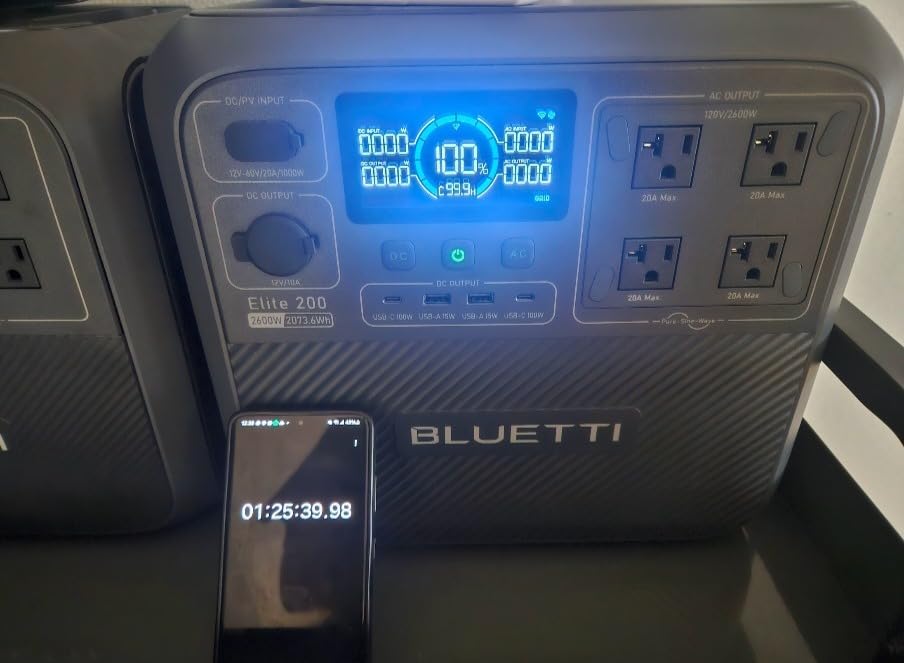
Owners frame this unit as emergency and travel backup rather than a permanently installed home system, and that is exactly how we used it. The recurring wins in the reviews are refrigerators and freezers running past 24 hours, offices full of computers and network gear, and a fast AC recharge once the grid comes back. The most common criticisms target the app rather than the hardware: people want adjustable low AC charge rates, real-time temperature monitoring and hard discharge limits that the software does not currently offer.
Two other limitations are worth planning around. The MPPT controller is capped at 60V, so reaching the 1000W maximum solar input is harder in practice than the headline suggests. And unlike the AC200L and AC200MAX before it, this model does not take BLUETTI expansion modules, so if you think you might want more storage in three years, this is not the chassis to buy.
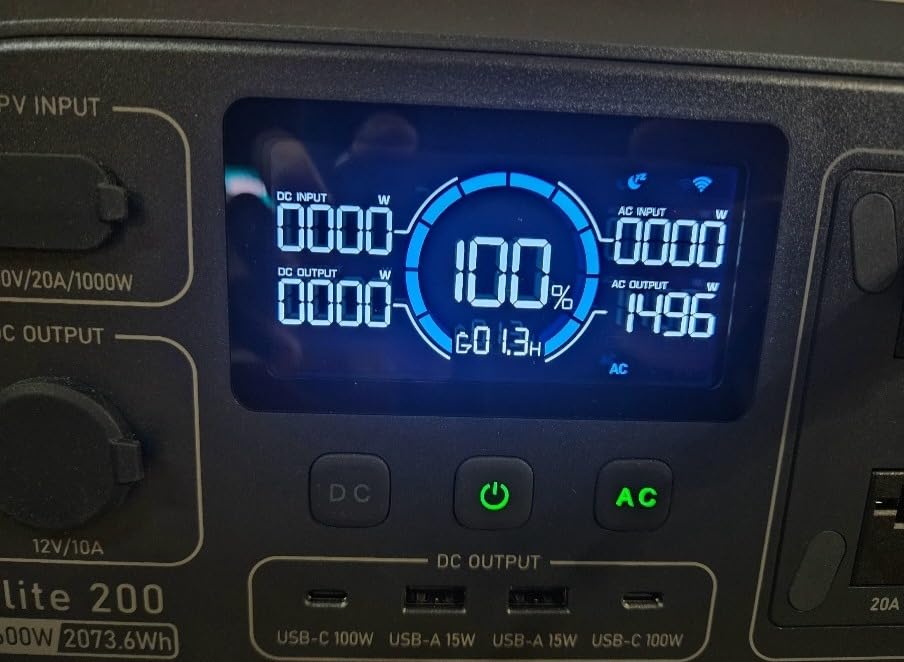
What 2073.6Wh of usable power actually looks like
Run the numbers the honest way. A 2073.6Wh pack at 90% depth of discharge and 85% inverter efficiency gives you about 1586Wh of real deliverable energy. A 150W refrigerator cycling roughly 40% of the time pulls around 60Wh an hour, which means well over 24 hours of fridge plus a router, a lamp and a CPAP machine. It will not carry a 3,000W central air unit for long, and it is not designed to.
Who should skip it and what to buy instead
Skip this if you plan to grow your system, because there is no expansion path. Skip it if you have a well pump or an electric water heater, because 2600W of 120V output will not carry those. If either applies, look at the Anker SOLIX F3800 for 240V headroom or the Jackery HomePower 3600 Plus, which accepts expansion packs.
2. Anker SOLIX F3800 – Best for 240V Whole-Home Backup
Anker SOLIX F3800 Portable Power Station, 3,840Wh
3840Wh LFP
6000W 120V and 240V
10200W surge
Expands to 26.9kWh
Pros
- Dual-voltage output runs dryers and well pumps
- Expands to 53.8kWh with a second unit
- 2400W solar charging input
- 5-year warranty
- NEMA 14-50 EV charging up to 6000W
Cons
- Roughly 132 pounds to reposition
- 34 inch cube takes up a lot of floor space
- Smart Generator 5500 sold separately
This is the unit we would own if the goal is keeping the main panel alive. It outputs 6000W at both 120V and 240V from a single box, which means a dryer, a well pump or an electric water heater is on the table instead of being off the table. Surge capacity is 10,200W, and pairing a second F3800 doubles output to 12,000W.
Capacity starts at 3840Wh of LFP chemistry and grows to 26.9kWh with up to six battery packs, or 53.8kWh with two units. For a household that has weathered multi-day grid failures, that expansion path is the reason to buy this chassis over a smaller 3kWh unit you cannot grow. Solar input is rated at 2400W, the highest solar ceiling in this group.
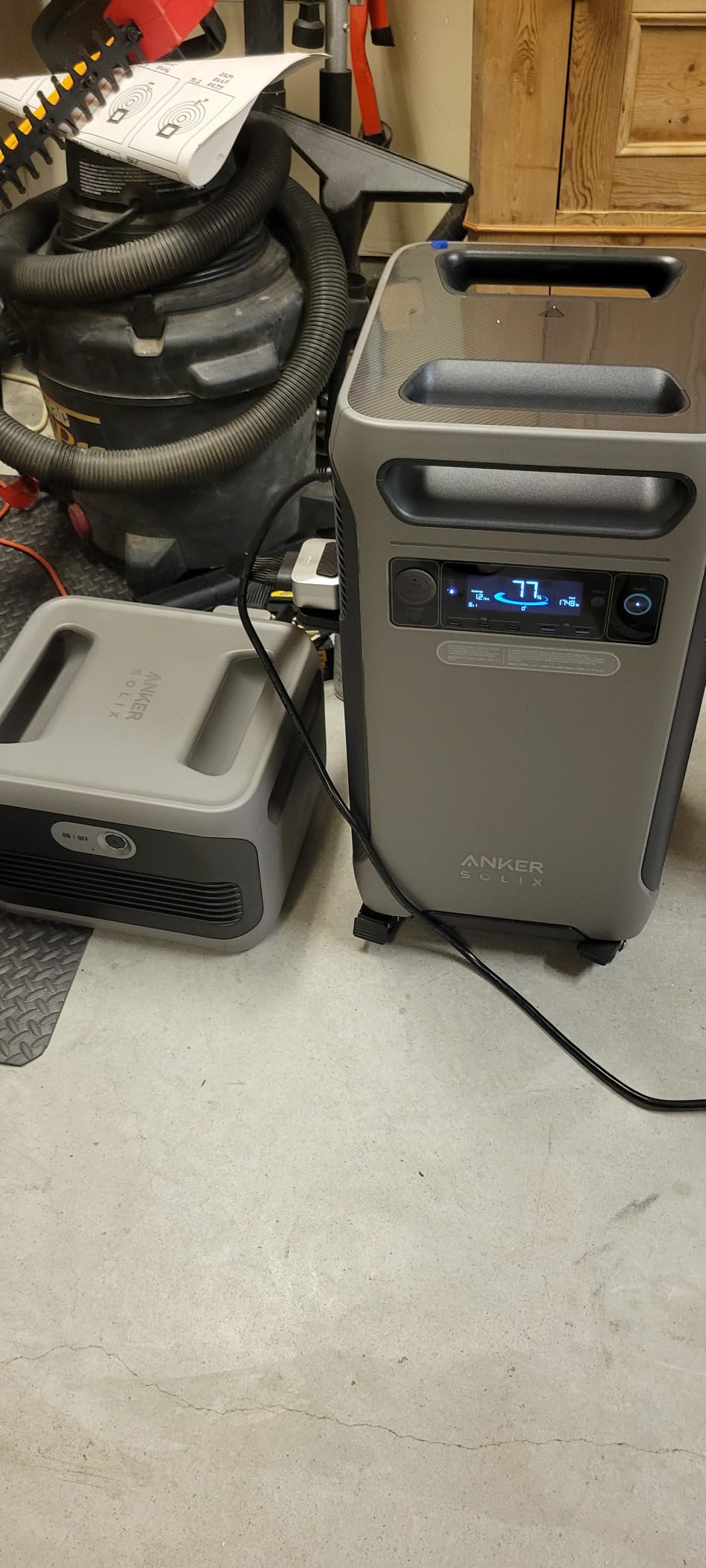
Owners position it as a near-whole-home system, and the praise centers on three things: 240V output, EV charging, and enough headroom for dryer-class loads. One owner runs a 7.3 cu ft fridge, a 12,000 BTU mini-split, Starlink and a string of night-vision cameras around the clock. The NEMA 14-50 port charges an EV at up to 6000W, and L14-30 and NEMA 14-50 RV pass-through means an existing trailer inlet can feed every appliance at once.
The rating is the lowest of the well-reviewed units here at 4.4, and the 1-star share is about 7%. Almost all of that traces back to one thing: 132 pounds. Owners also flag the 34-inch cube footprint as a real constraint in a garage or utility closet, and the Smart Generator 5500, which enables hands-free auto start-stop backup, is a separate purchase.
Do you actually need 240V, or will 120V do
Just a few things in a typical house really need 240V: the electric range, the clothes dryer, the water heater, and central air or a 2-pole well pump. If none of those are on your outage list, 120V-only units are smaller and easier to move. If one of them is, this is the only single-box 6000W dual-voltage option in this roundup with a real expansion path.
Where the installation work starts
Output voltage is the easy part. To actually back up a panel you need a transfer device, an electrician, and permits, and the combined cost of hardware and labor can approach the cost of the battery itself. Homeowners in r/Ecoflow_community note that proprietary cables for off-grid installs are expensive and awkward to source, so factor that into the budget before you commit to any brand ecosystem.
3. Jackery HomePower 3000 – Best for RV and Travel Trailers
Jackery HomePower 3000 and 2x200W Solar Panels, 3072Wh, 3600W AC Output
3072Wh LiFePO4
3600W continuous
7200W surge
20ms UL-certified UPS
Pros
- Keeps a refrigerator running 1-2 days
- About 60 pounds
- quiet operation
- Full recharge in 1.7 hours hybrid
- Built-in TT-30 RV port
Cons
- No expansion battery option
- About 60 pounds without a wheel kit
- Minimum UPS load not clearly stated
The HomePower 3000 sits at the sweet spot of this entire list. It delivers 3072Wh of LiFePO4 capacity rated for 4,000 cycles to 70% capacity, and a 3600W continuous inverter with 7200W surge. That is more output than most 3kWh units offer, and owners report running a camper air conditioner and a microwave simultaneously without either tripping.
Jackery’s cell-to-body construction is what makes it portable. The company claims 47% smaller and 43% lighter than comparable 3kWh units, and at 59.5 pounds it is roughly a quarter lighter than the Anker F3000. Recharge is fast: full in 1.7 hours on hybrid AC and DC, or 2.2 hours on AC alone. The bundled 2x 200W SolarSaga panels bring it to 80% in about nine hours of good sun.
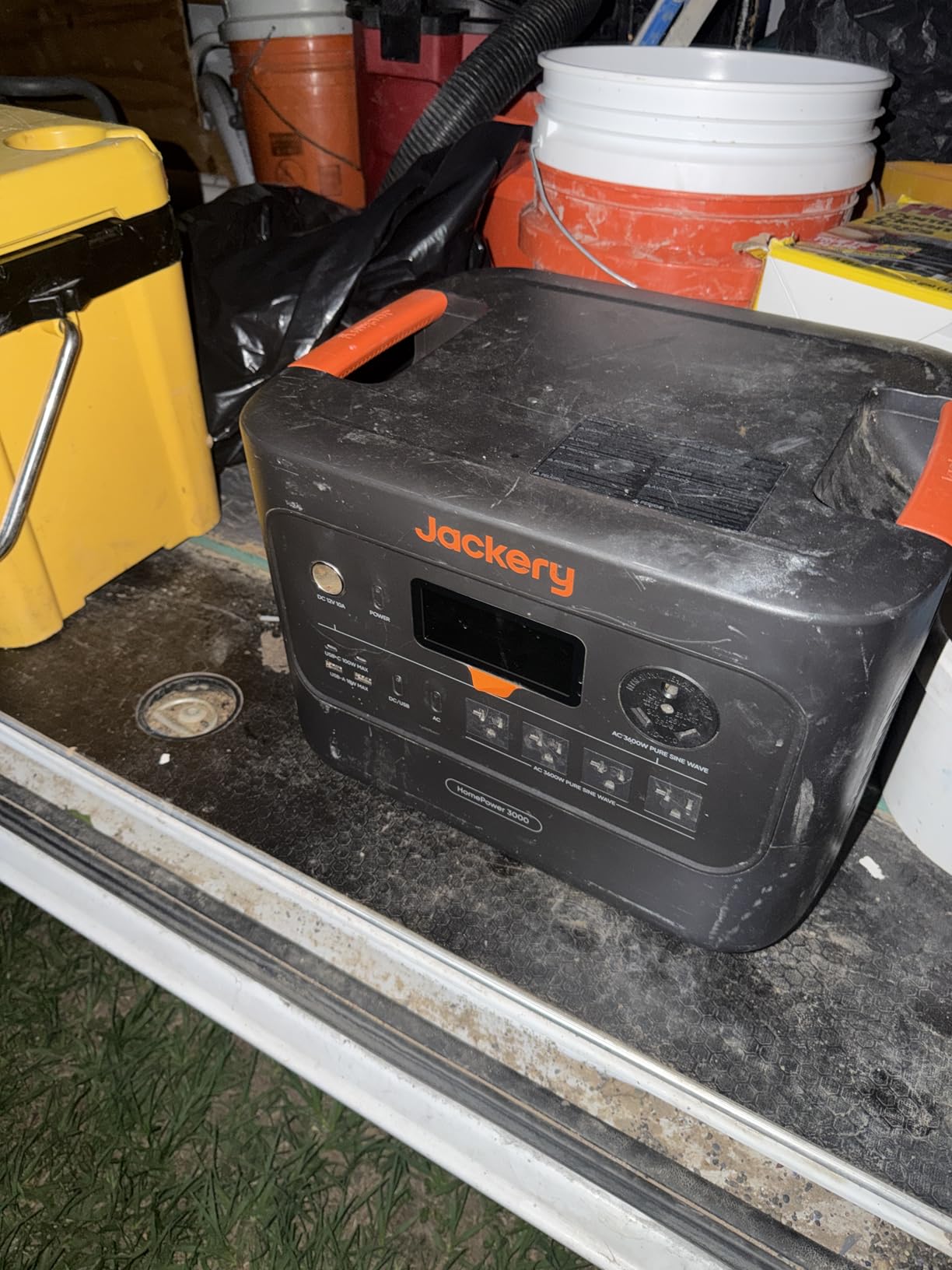
The UL-certified UPS switches over in 20ms or less, which means security cameras, medical refrigerators and network gear do not reboot when the grid drops. Dual 100W USB-C PD ports fast-charge laptops and drones, and the built-in TT-30 RV port means trailer owners do not need an adapter. In real owner tests it carries a refrigerator for a full two days.
The limitation people hit hardest is that this unit cannot be expanded. If you already have rooftop solar and plan to grow storage over the years, that door is closed. A smaller cluster of complaints covers an unexplained blinking indicator, slow support response, an advertised Alexa integration that never shipped, and a documented minimum load needed to hold UPS output steady, which is not stated clearly on the box.
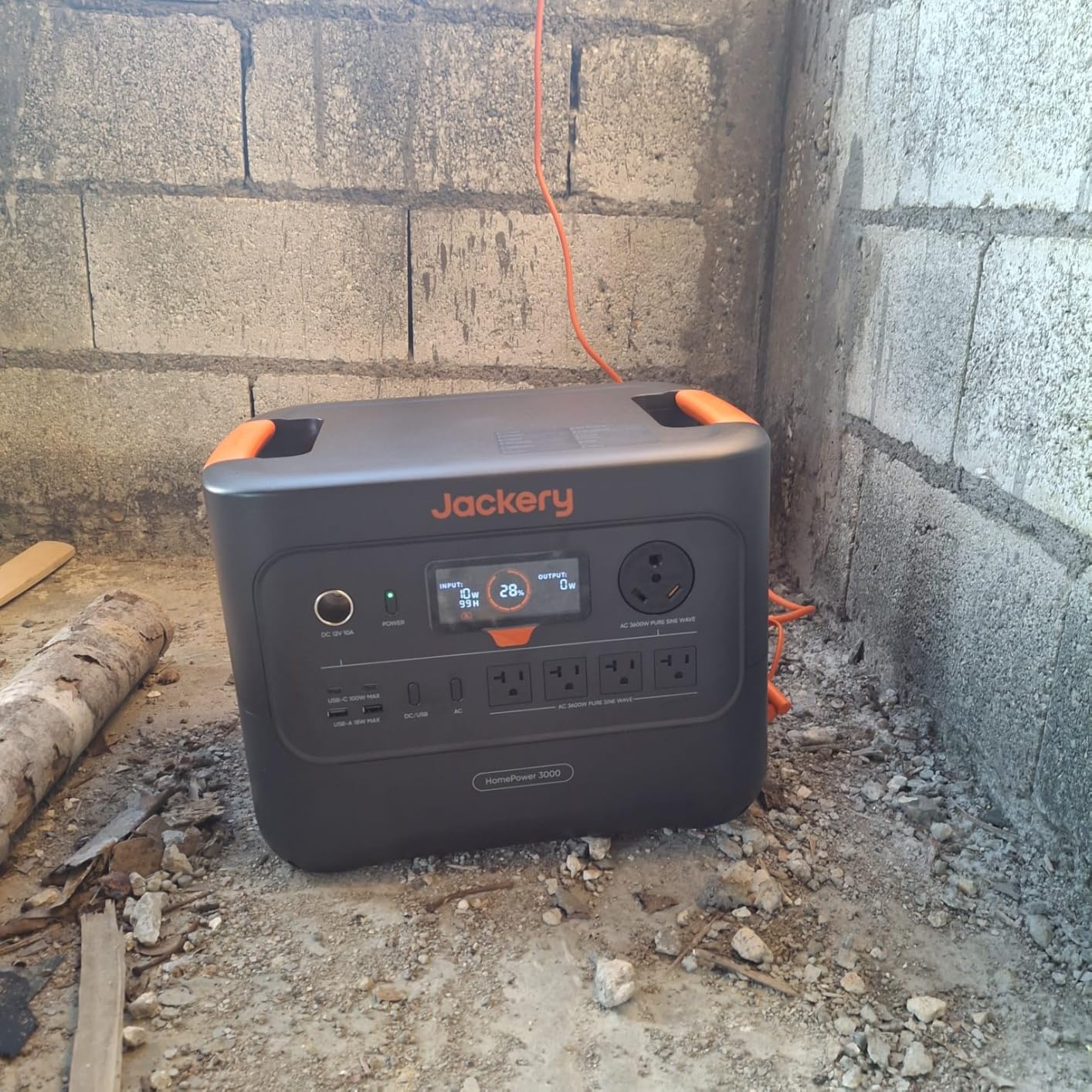
How long 3072Wh lasts on a typical outage load
Apply the 0.90 depth of discharge and 0.85 inverter efficiency factors and you have about 2350Wh of usable energy. Running a 150W fridge, a 20W router, five LED bulbs and a 40W CPAP works out to roughly 11 watts of average draw per hour, so two full days is realistic and three is possible on a disciplined load.
When the HomePower 3000 is the wrong buy
It is the wrong choice if you need 240V, if you need more than 3600W, or if you expect your storage to grow. Choose the F3800 for 240V, or step up to the HomePower 3600 Plus if expansion matters. For renters and apartment dwellers who cannot install a transfer switch, this unit is honestly one of the best because it just works through a wall outlet.
4. EcoFlow DELTA Pro 3.6kWh – Best for 120V Essentials with Maximum Ports
EF ECOFLOW Solar Generator 3.6KWh DELTA Pro with 400W Portable Solar Panel
3600Wh capacity
3600W continuous output
15 outlets and ports
400W panel included
Pros
- 15 outlets including 5 AC and Anderson port
- 400W IP68 foldable panel at 35.3 lbs
- App shows charge level and temperature
- 5-year warranty
- Full solar recharge in 3.5 hours with three panels
Cons
- About 99 pounds for the station alone
- Station and panel arrive in separate boxes
- Not expandable in this bundle configuration
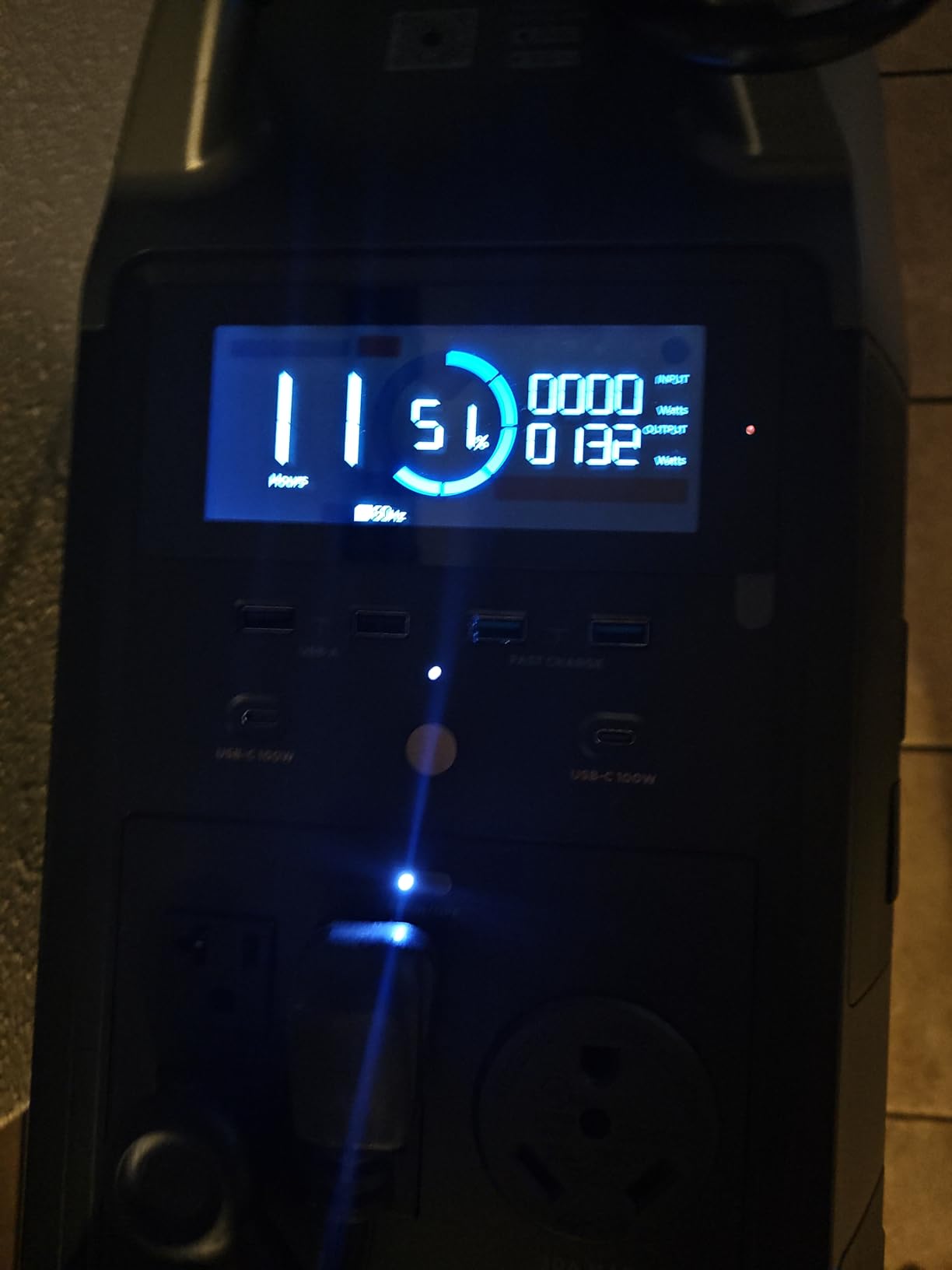
Where this unit wins is ports. Fifteen in total: five AC outlets, four USB-A, two USB-C, two DC, a car power output and an Anderson port for RV and generator hookups. No other unit in this list gives you that spread, and it matters if you are running cameras, a projector, a laptop, a mini fridge and a router off one box.
The 3600W continuous output handles refrigerator-class loads and small appliances for extended periods, and EcoFlow markets it squarely for home backup. The bundled 400W foldable panel reaches 22.4% conversion efficiency, fully recharges the station in 11 hours on its own, and drops that to 3.5 hours with three 400W panels. The panel itself is IP68 sealed and weighs 35.3 pounds, so it is genuinely portable rather than a roof-only panel.
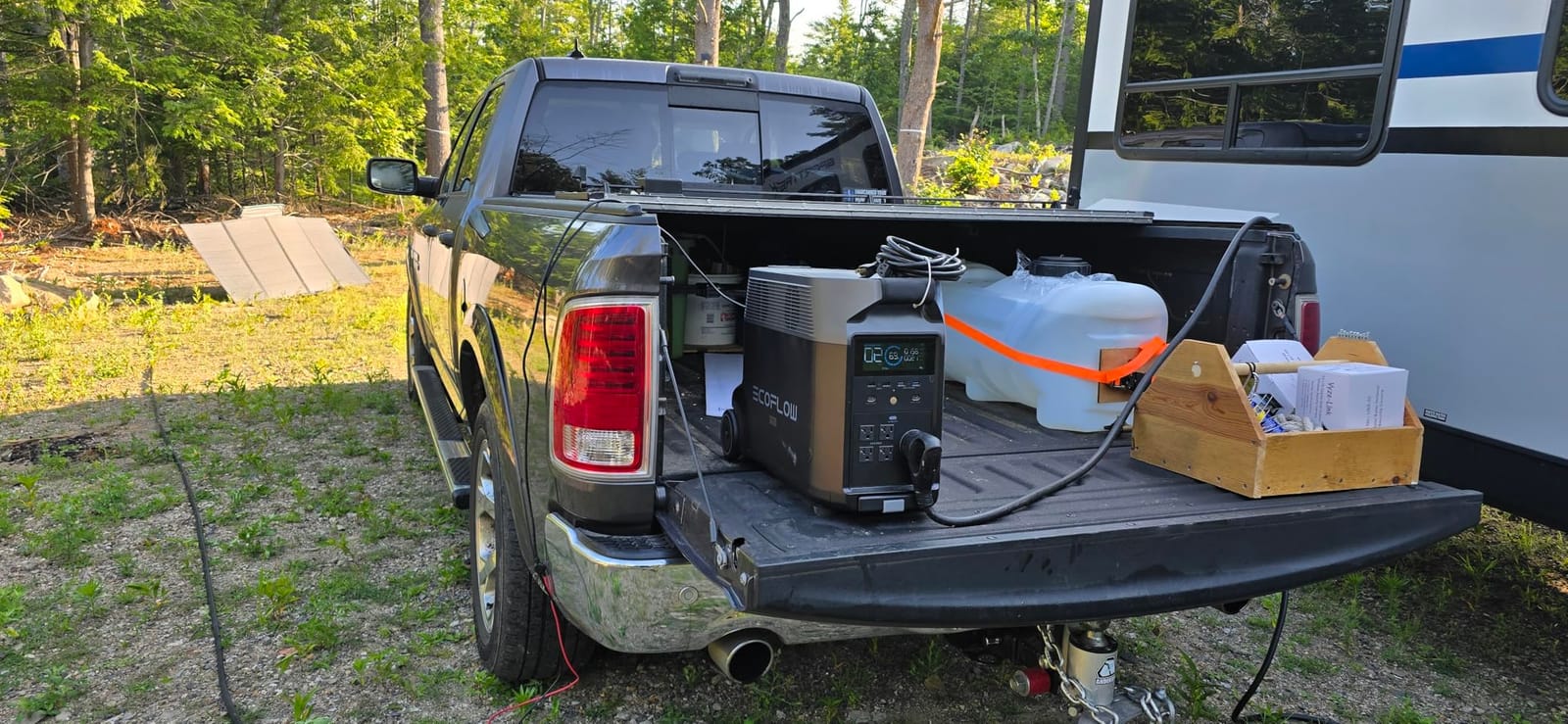
Reviewers consistently single out port variety and app control as the differentiators. The EcoFlow app over Wi-Fi or Bluetooth shows charge level, temperature and charge and discharge times, and allows custom settings. The 4% one-star share reflects firmware, app and quality control complaints rather than battery failures.
Two practical annoyances come up repeatedly. The power station alone is about 99 pounds, and the station and the solar panel arrive in separate boxes, so your kit may be incomplete until both turn up. This bundle configuration is also not expandable; extra battery and panel options exist as separate variants, so plan on a different chassis if you want to grow.
Why port count matters more than most buyers expect
Most households underestimate how many small devices they need to keep alive at once. Modems, routers, a smart TV, two phone chargers, a couple of lamps and a medical device can add up to eight simultaneous connections before you touch a single high-draw appliance. Fifteen ports means you are not making decisions about what to unplug during the storm.
How the separate-box delivery affects planning
If you are buying this in a hurry, the split shipment is a genuine risk. Check both tracking numbers before you make other plans. The 11-hour single-panel recharge also assumes steady direct sun on the panel, so angle it properly and expect longer in overcast weather.
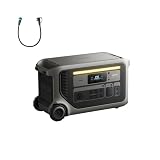
5. Anker SOLIX F3000 – Best for Air Conditioning Runs on a Single Unit
Anker SOLIX F3000 Portable Power Station, 3,072Wh, 6,000W, Solar Generators
3072Wh LiFePO4
3600W output
2400W solar input
Expandable to 24kWh
Pros
- Runs a 13k BTU rooftop AC for 6-8 hours on low
- 125 hours of AC idle standby
- About 42 hours on a 190W refrigerator
- Built-in 6-inch wheels
- 3600W pass-through charging
Cons
- About 91.5 pounds despite the wheels
- No built-in 240V split-phase
- USB ports have a high minimum draw
The F3000 is the pick if your outage plan involves cooling. Owners report running a 13k BTU camper or rooftop air conditioner for 6 to 8 hours on low, which is well past what most 3kWh units manage. The 3600W inverter is paired with capacity that expands to 24kWh, and solar input runs at 2400W across both 165V and 60V ports.
Two engineering details set it apart. Pass-through charging at 3600W means you can recharge from a 120V fuel generator while still running your appliances at full power, which owners in hurricane territory call the single most useful feature. And the standby profile is excellent: 125 hours of AC idle, or about 42 hours running a 190W refrigerator, so a unit left plugged in and waiting does not quietly drain itself over a week of storm-watching.
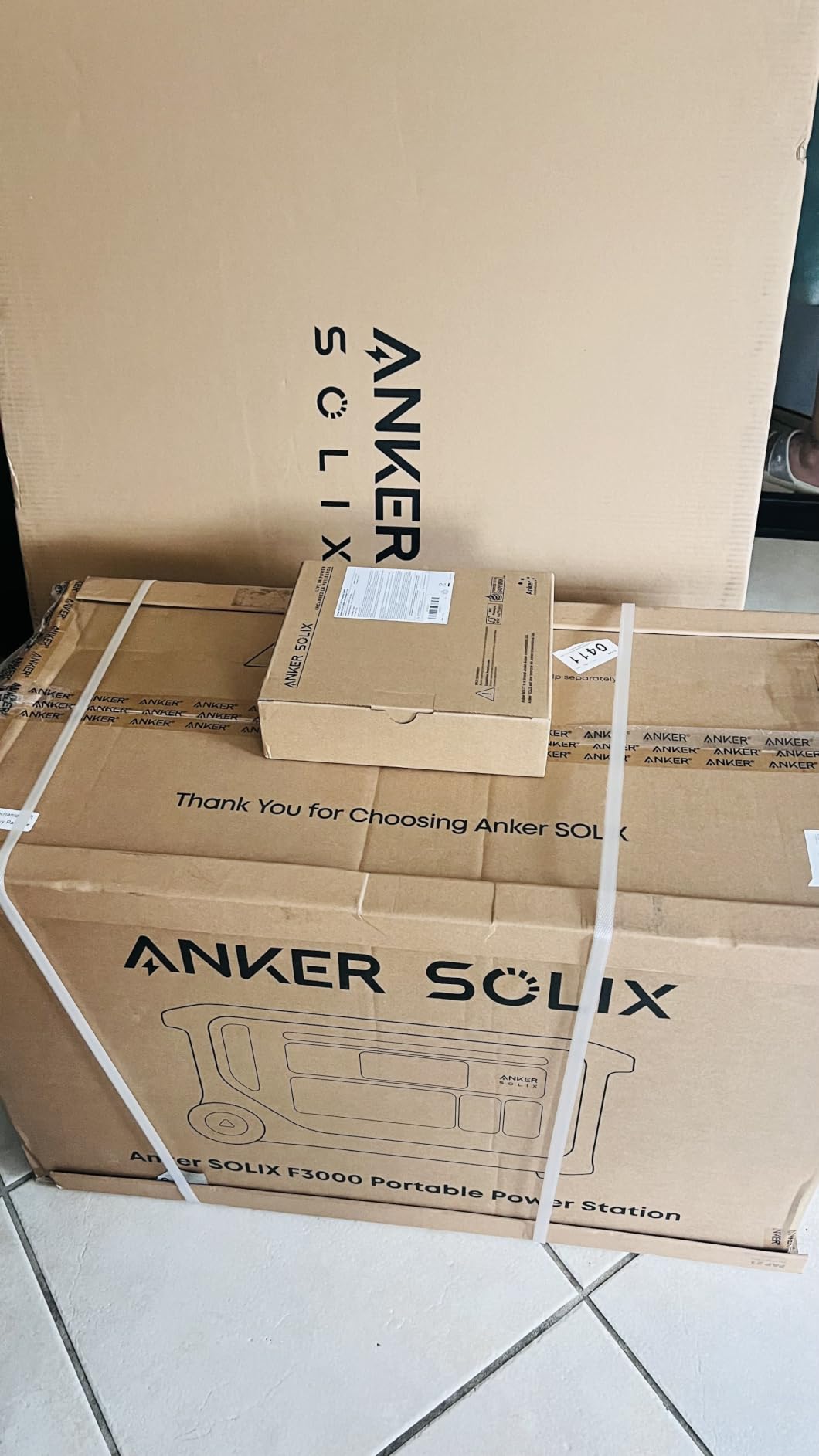
Built-in 6-inch wheels and a handle make a 91.5-pound unit far more tractable than the F3800, and the 30A output stays live while charging, which RV owners specifically call out. The app can automate storage of off-peak electricity through the optional bi-directional inlet box and smart meter. The 4.5 rating comes with a short list of recurring gripes: some find the USB ports draw a roughly 1W minimum that stalls small-device charging, and Wi-Fi drops more often than owners would like.
The decisive caveat is that there is no built-in 240V split-phase. Two units can be paired for 240V, but that doubles your footprint and your cost. For a single 120V house load plan, the F3000 is hard to beat.
Will it run a window air conditioner
A 120V window unit in the 800W to 1200W range fits inside the 3600W continuous rating with room for a fridge and lighting, but startup surge on the compressor is the part to watch. Continuous rating, not peak, is what governs whether it holds steady, and 3600W leaves generous headroom for most residential window units.
Deciding between the F3000 and the F3800
If your load list is all 120V, the F3000 gets you 2400W solar input, pass-through generator charging, wheels and 125 hours of idle standby for 60 pounds less and far less floor space. If any load is 240V, go straight to the F3800 and accept the weight. Trying to solve a 240V problem with a cheaper 120V-only chassis is the most common mistake we see in buyer questions.
6. Pecron F3000LFP – Best Value Solar Generator
PECRON Portable Power Station F3000LFP, 3072Wh Solar Generator, 3600W LiFePO4 Battery Home Backup, Fast Charging Power Station Expand Capacity to 10752Wh, Solar Generators for Home Use, Camping, RV
3072Wh LiFePO4
3600W pure sine wave
1800W AC input
13 ports
Pros
- 13 ports including two 100W USB-C PD
- 0-100% in 2 hours on AC
- Expands to 10752Wh
- 8-20ms UPS switchover
Cons
- Solar panel not included
- Expansion needs a separate cascade cable
- Smaller review base of 145 ratings
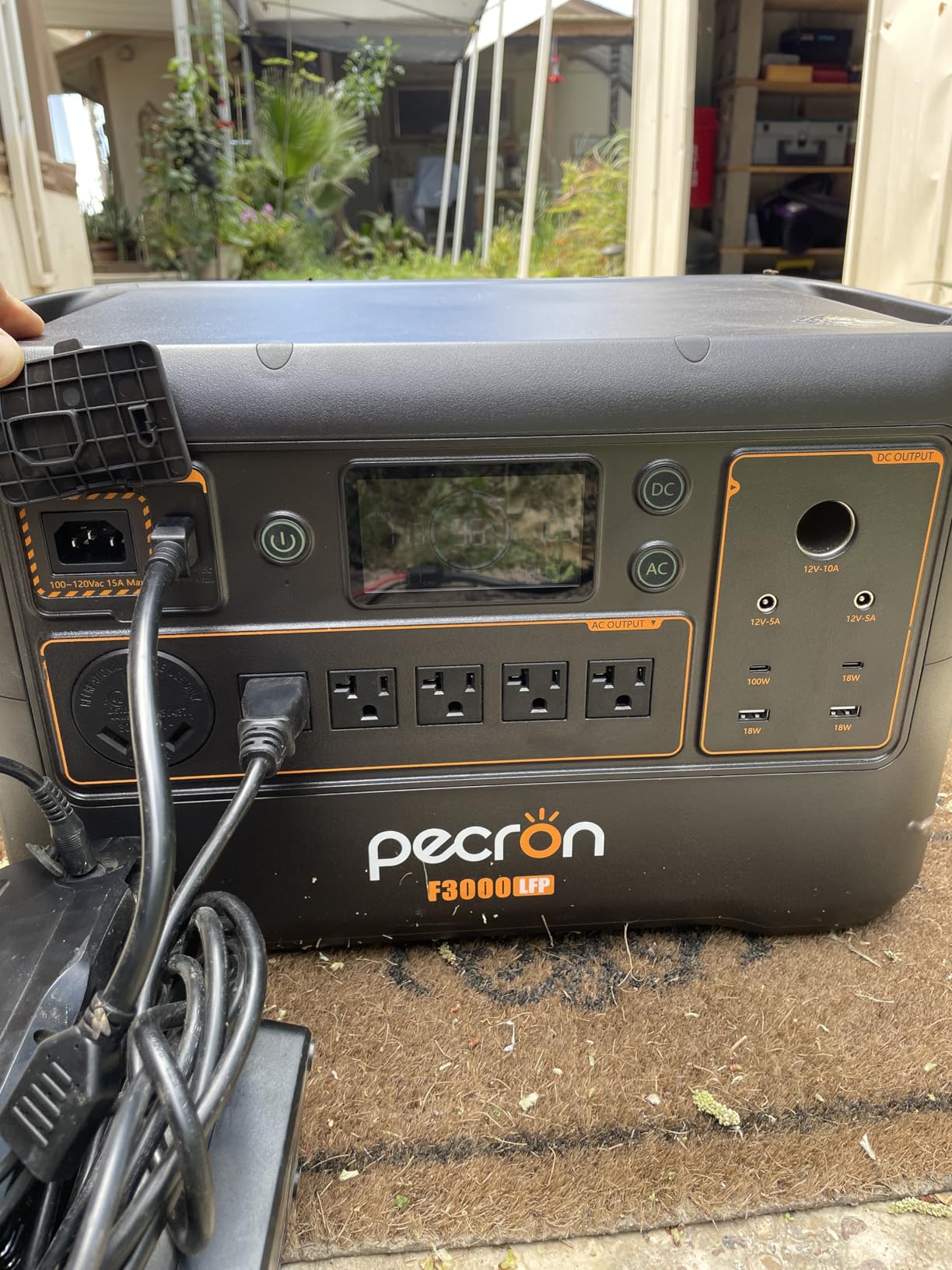
The Pecron F3000LFP is the value pick, full stop. You get 3072Wh of LiFePO4 capacity, 3600W of pure sine wave output, thirteen ports and expansion to 10,752Wh, and it is the most economical entry point into the 3kWh class. Thirteen ports in this segment is unusual: six AC outlets, two USB-C with 100W PD, two USB-A at 18W, a carport and two DC 5525 outputs.
Charging is the other strength. The 1800W AC input takes the unit from 0 to 100% in about two hours, which owners note is roughly 30% faster than comparable hardware. Solar input accepts up to 1600W across a 25-120V range, which is one of the more generous input windows available. UPS switchover lands between 8 and 20ms, fast enough to protect computers and medical devices.
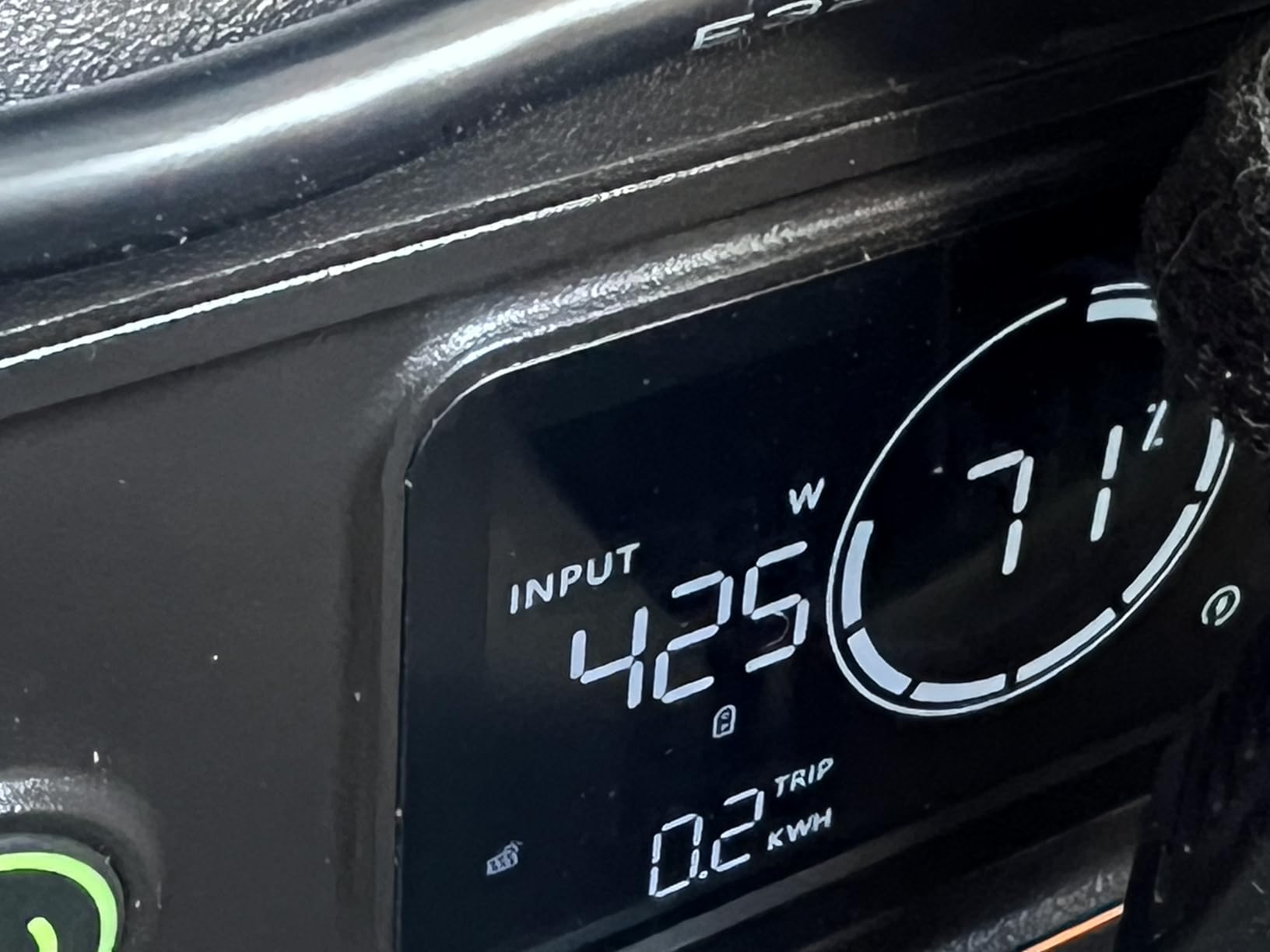
Owners buy this on value, and the reviews reflect that: a 3072Wh LiFePO4 unit with 3600W output and thirteen ports is hard to match. Fast two-hour AC charging and UPS behavior are the most praised practical features. The 2+3 year warranty and 24/7 customer support are stated in the listing.
Two things to plan for. No solar panel is bundled at this level, so panel cost is on you, and the expansion path to EP3800-48V batteries needs a separately sold F3000LFP XT120-M cascade cable. With 145 ratings the long-term reliability picture is thinner than the 913-review BLUETTI, which matters for a ten-year purchase.
What you get by skipping the bundled panel
Panels are the most flexible part of a solar generator purchase. You can start with the battery, add a 400W portable panel for a weekend trip, then permanently roof-mount later. Owners debating whether to buy the station, the panel or a bundle should note that third-party panels work fine on a unit with a wide MPPT input voltage window, which this one has.
Where the thinner review base matters
For a purchase that should last a decade, review count is a proxy for how well a failure mode is understood. Pecron’s 145 ratings are respectable but a fraction of the BLUETTI’s 913. The 2+3 year warranty structure is also less generous than the 5-year terms on the Jackery, Anker, EcoFlow and GROWATT units here. If you are comfortable accepting that tradeoff, this is the smart money pick.
7. ABOK Ark3600 – Best Complete Kit with the Most Connections
ABOK Ark3600 Portable Power Station with 400W Solar Panel,2000W Solar Input
3840Wh LiFePO4
3600W rated and 4500W peak
15 output ports
400W panel included
Pros
- 15 ports with a 30A AC outlet
- 3840Wh base expanding to 11520Wh
- Full charge in 1.29 hours on AC plus PV
- 400W solar panel in the box
- Telescoping handle and wheels
Cons
- About 92 pounds
- No 240V split-phase output
- 4000-cycle rating trails the 6000-cycle units
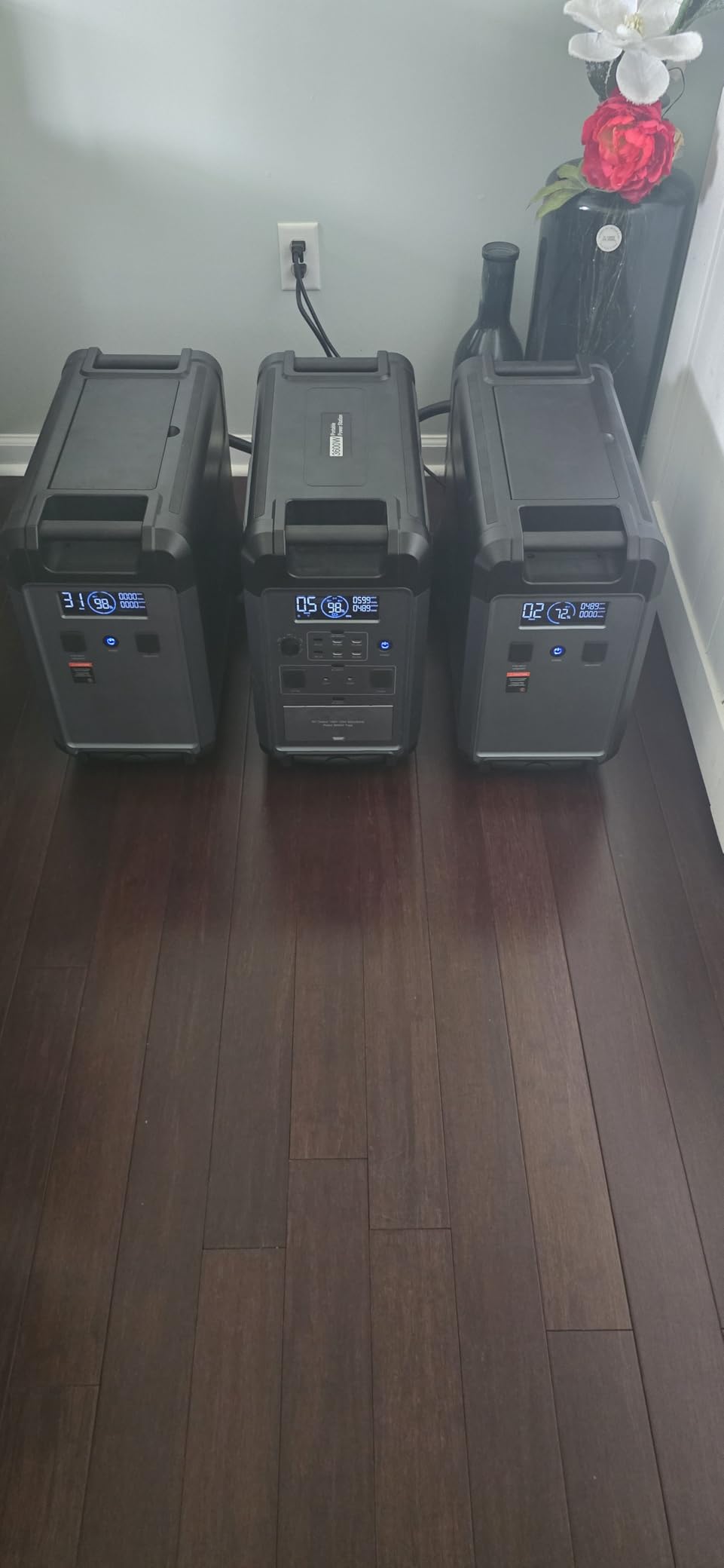
The Ark3600 is the rare unit where the bundle genuinely makes sense. You get 3840Wh of EV-grade LiFePO4 capacity, a 3600W rated inverter with 4500W peak, and a 400W solar panel in the box, plus expansion to 11,520Wh. That base capacity matches the Anker F3800, with room to triple it through expansion packs, and the 15 output ports are tied for the most in this group.
The port layout is unusually complete: a 30A AC outlet, four 20A AC outlets, two USB-A QC3.0, three USB-C PD at 20W, one USB-C PD at 100W, two DC5521 outputs, an XT60 at 25A and a cigarette lighter socket. Charging is fast, with a full recharge in 1.29 hours using AC and PV together, or three hours on AC alone. PV input is rated at 2000W.
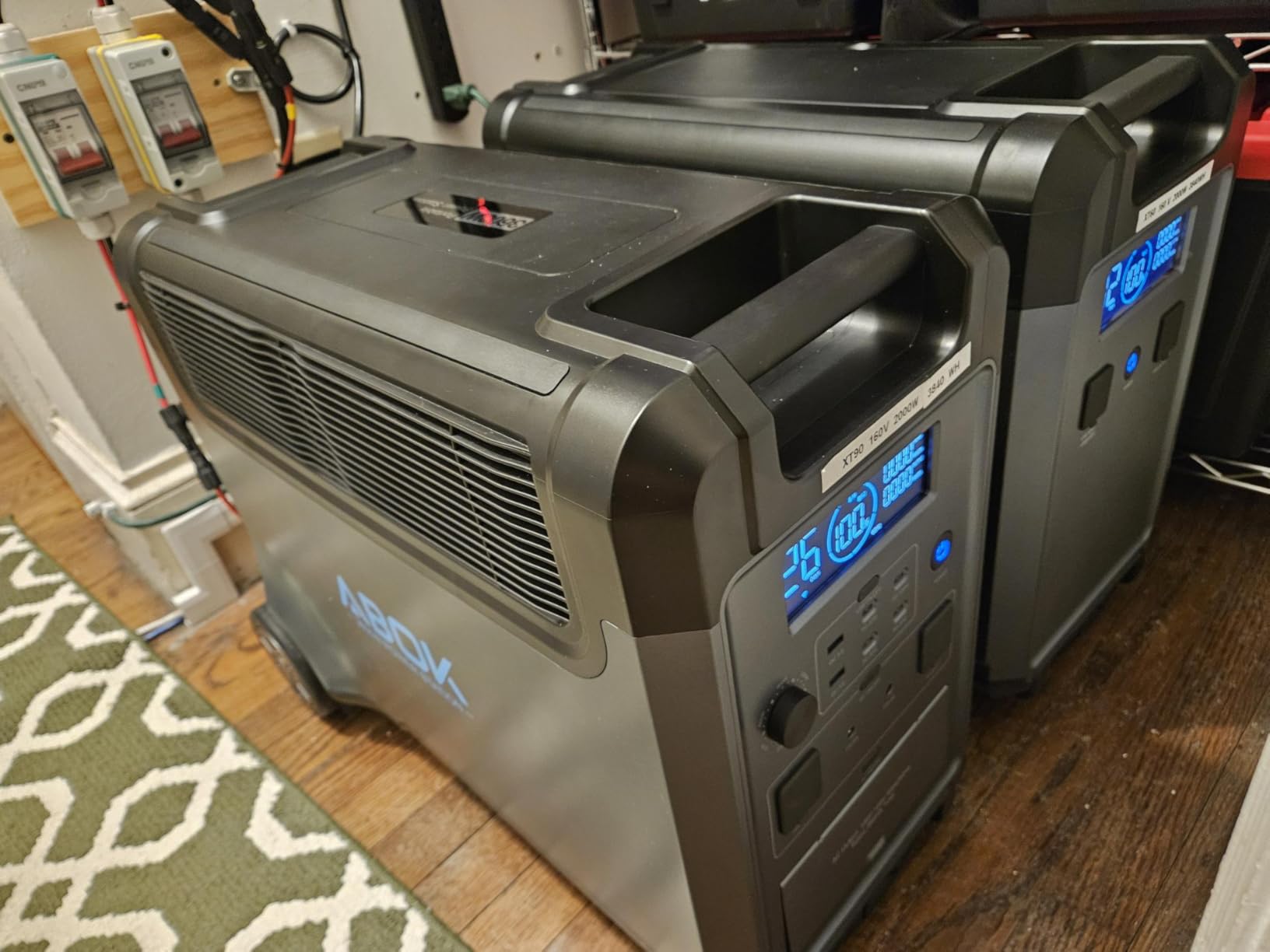
Owners single out the port count and the included panel as the reasons to buy, and the telescoping handle plus wheels earn particular credit for a unit this heavy. Bluetooth app monitoring works without a separate hub. There is no single dominant complaint; the main caveat raised is the absence of 240V whole-home output and a cycle rating of 4,000-plus against the 6,000-cycle claims of the BLUETTI and Jackery units.
At 92 pounds, the included handle and wheels are not a luxury. The warranty is 2+3 years. If you want a single box that covers 120V essentials, a serious port selection and solar input on day one, this is the configuration we would pick over assembling it yourself.
What 3840Wh buys you in outage hours
After depth of discharge and inverter losses you have roughly 2937Wh of usable energy. That covers a refrigerator, freezer, router, Wi-Fi, a few lights and charging for phones for roughly two days, or one day with a window air conditioner running. For most households, two days of essentials is the difference between a disruption and a genuine hardship.
What to verify before you order
Check that a 30A AC outlet is a feature you will actually use, and confirm the 4000-plus cycle rating fits your horizon. If you already own panels, or plan to, buy the station without the bundle and spend the difference on a panel sized to the 2000W input ceiling. Bluetooth-only monitoring is also worth noting if you rely on remote access from outside the home.
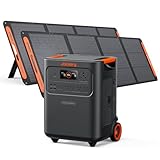
8. Jackery HomePower 3600 Plus – Best for Large Kitchens and 240V Pairing
Jackery HomePower 3600 Plus & 2x200W Solar Panels, 3584Wh, 3600W AC Output
3584Wh capacity
3600W continuous
120V and 240V parallel
6000 cycle rating
Pros
- 120V and 240V in parallel
- Expandable to 21kWh per unit
- Full charge in 2 hours hybrid
- Operates down to -4 degrees F
- Cells tested at 302 degrees F
Cons
- Bundled SolarSaga panels degrade quickly
- Panels deliver well under nameplate
- No cigarette lighter port
- Vertical shape awkward to store
This is the Jackery to look at if two refrigerators matter. In one owner test, the HomePower 3600 Plus ran two fridges plus a freezer, a Wi-Fi modem, a router, security cameras and an internet box for 24 hours on 18% of its capacity. Another owner put a 30-year-old inefficient refrigerator on it for more than 24 hours using under half the pack.
Capacity is 3584Wh, expandable to 21kWh per unit or 43kWh across multiple units. Output is 3600W continuous, 7200W in parallel, and it supports 120V and 240V in parallel for pumps, heaters and dryers. The battery carries the strongest safety documentation in this roundup: ceramic membrane cells tested at 302 degrees F for thermal runaway resistance, rated for 6,000 cycles and a 10-year lifespan, and it operates down to -4 degrees F.
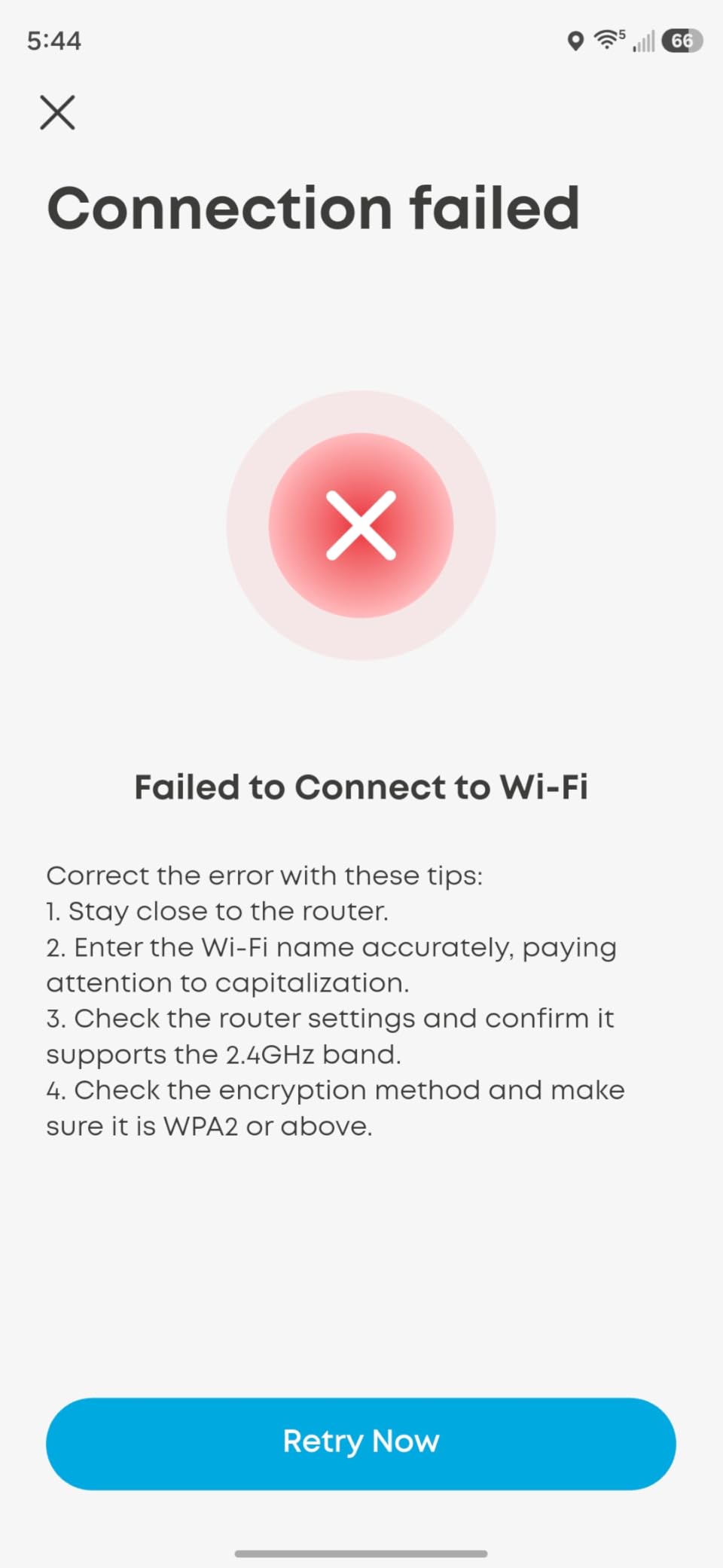
Charging runs four ways: 0-100% in two hours on hybrid AC and DC, 2.5 hours on AC, four hours on solar, or 2.5 hours from a gas generator. The luggage-style body with wheels and a telescopic handle makes a 77-pound unit genuinely rollable, and it holds its charge for months with no drain when switched off. It also pairs plug-and-play with the Jackery Manual Transfer Switch.
By far the most repeated complaint targets the bundled SolarSaga panels. Reviewers report they are flimsy, fell apart within months of daily use, and typically produce only 100 to 150W each in real conditions against a 200W nameplate. Solar cables are also too short to reach good sun positions. There is no cigarette lighter port, and the vertical form factor is awkward to stow in a vehicle.
Why two units unlock 240V
A single unit is not 240V on its own. Paired, the two inverters combine into 120V and 240V parallel output, which is how you reach 7200W and cover a dryer or a well pump. That means two batteries, two sets of expansion and twice the floor space, so the F3800 single-unit dual-voltage option is the simpler route to the same result.
Handle the panel question separately
Treat the bundled panels as a demo, not a system. The unit’s solar input handles the panels fine; the panels themselves underperform. Either budget for a proper panel from a maker you trust or plan to roof-mount fixed panels, and check the cable length before you decide where the array goes. This is the one weakness that shows up in nearly every review of this model.
9. EcoFlow DELTA Pro Ultra – Premium Pick for Serious Whole-Home Installations
EF ECOFLOW Power Station 6144Wh DELTA Pro Ultra with 2x400W Portable Panel
6144Wh base battery
7200W with 120V and 240V
Scales to 90kWh
2 hour full recharge
Pros
- 7200W inverter runs a 3-ton central air conditioner
- Scales to 90kWh across 15 batteries
- Works with Smart Home Panel 2 for 12-circuit failover
- 2 hour recharge from EV pile or wall
- Includes two 400W IP68 panels
Cons
- State of charge indicator drifts out of accuracy
- Estimated 5-10% standby drain per day
- 218 pounds and three separate boxes to set up
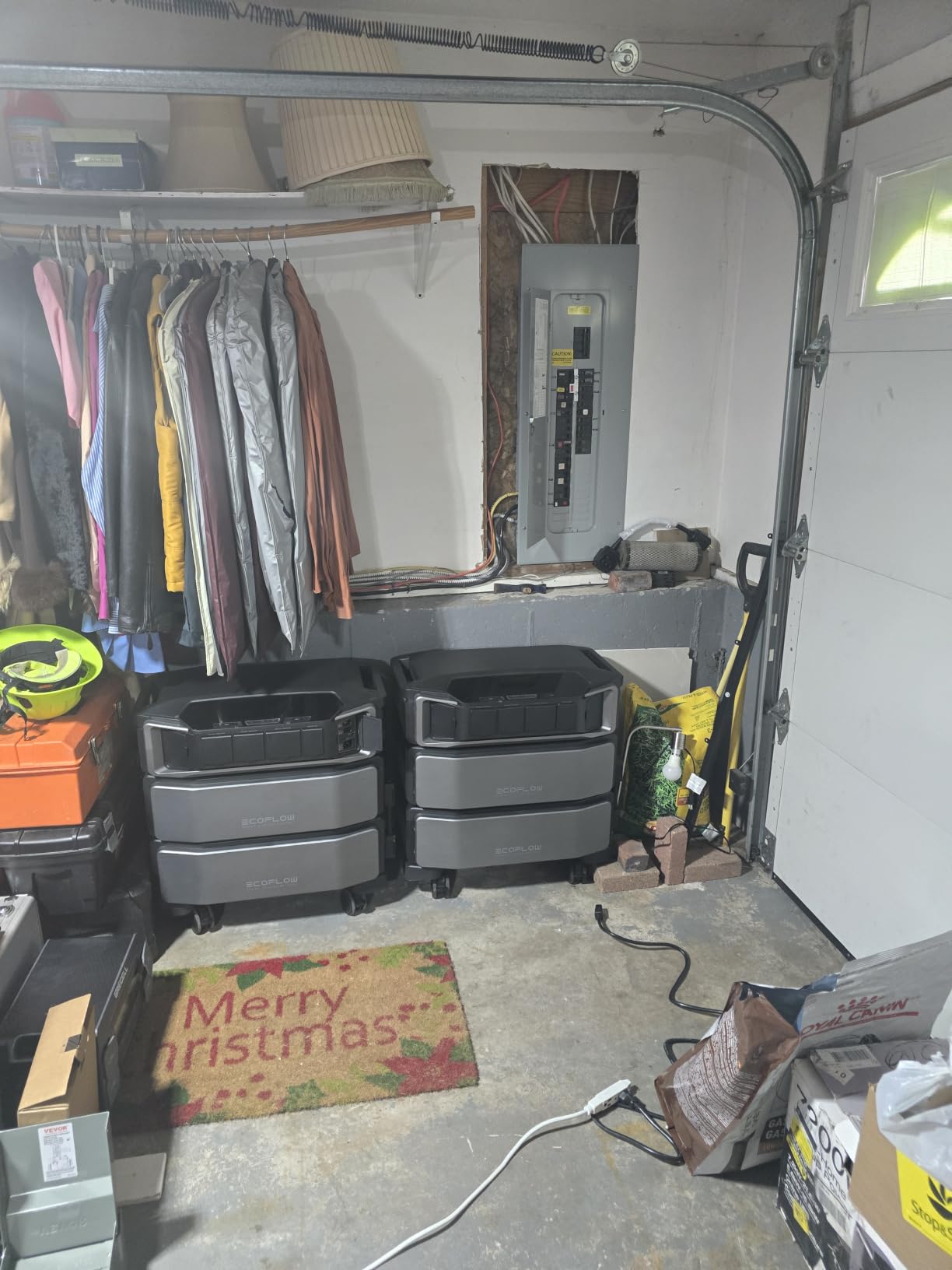
The DELTA Pro Ultra is the only unit here that can run central air. Its inverter handles both 120V and 240V in a single box at 7200W with 8640W surge, which EcoFlow states is enough for a 3-ton central air conditioner. Three inverters combined reach 21.6kW. The base battery is 6144Wh and scales to 90kWh across 15 batteries, which EcoFlow puts at more than 30 days of essential power for a standard household.
The reason to specify it by name is the Smart Home Panel 2. In EPS mode it gives instant failover across 12 circuits, and owners running genuine whole-home installs report excellent reliability. A single 6144Wh battery fully recharges in two hours from an EV charging pile, solar, a wall outlet or a generator, and the bundle includes two 400W IP68 flexible foldable panels at 35.3 pounds each.
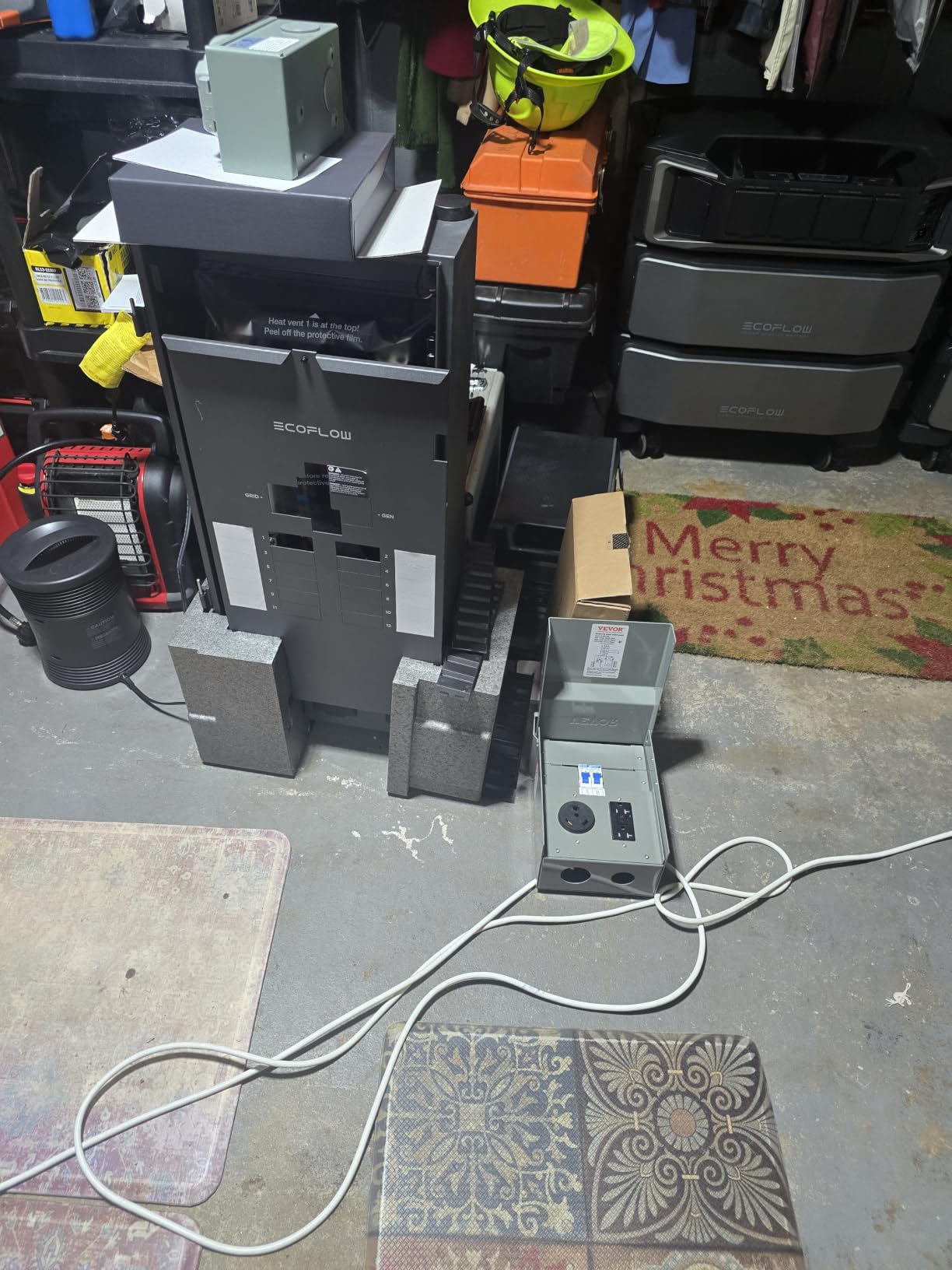
This has the highest review count in the group at 373 and also the lowest rating at 4.2, and the gap is worth understanding. Owners with finished whole-home systems report that the hardware performs well. The negative reviews cluster on firmware and state-of-charge accuracy instead: the battery percentage display drifts over weeks, estimated standby drain runs 5 to 10% per day, and the unit can lose Wi-Fi and need a manual power cycle. One reviewer ran a 7.3 cu ft fridge, a 12,000 BTU mini-split, Starlink and eight night-vision cameras continuously on three extra batteries.
Other reported issues: EV charger input tops out around 6100W rather than the advertised 7200W, display brightness cannot be turned off at night, the inverter generates substantial heat while charging, solar input drops to 0W under temporary shade and takes minutes to recover, and there is no built-in alternator or DC-DC charging. At 218 pounds with inverter, battery and panels arriving in separate parcels, this is a two-person job.
When state of charge accuracy actually matters
If your plan is grid-tied emergency use, a drifting battery gauge is a minor annoyance. If your plan is living off the battery for a week, it is dangerous, because you can be cut off at your real discharge limit believing you had more in reserve. Owners running this unit off-grid should calibrate against a known load rather than trusting the display.
Is the whole-home cost justified
Only if you have genuine 240V loads and a panel worth backing up. Otherwise the same hours of backup cost a fraction as much on a 3kWh unit, and a portable system avoids permits and panel work entirely. For owners with a large home, a central AC unit and a multi-day outage history, the total cost of ownership argument gets much easier to make. We would pair it with our guide to home battery backup systems before committing.
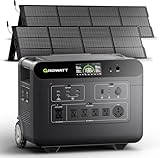
10. GROWATT HELIOS 3600 – Best for Cold-Weather and Existing Solar Homes
GROWATT HELIOS 3600 Portable Power Station with 400W Solar Panel
3600Wh LFP
3600W continuous
4500W surge
2000W solar charging
Pros
- Cold start operation down to -22 degrees F
- Expandable to 36kWh
- Two units parallel to 7200W 240V split-phase
- 16 output ports with per-outlet control
- UL certified with a 5-year warranty
Cons
- 149 pounds
- second-heaviest unit here
- EPS cannot be selected per circuit
- App permissions draw complaints
The HELIOS 3600 is the one to look at if your outages happen in winter. It has 15ms EPS switching with cold start operation rated down to -22 degrees F, which is a much wider operating window than anything else in this roundup. Capacity is 3600Wh of LFP, expandable to 36kWh, and two units parallel into 7200W of 240V split-phase output for whole-home use.
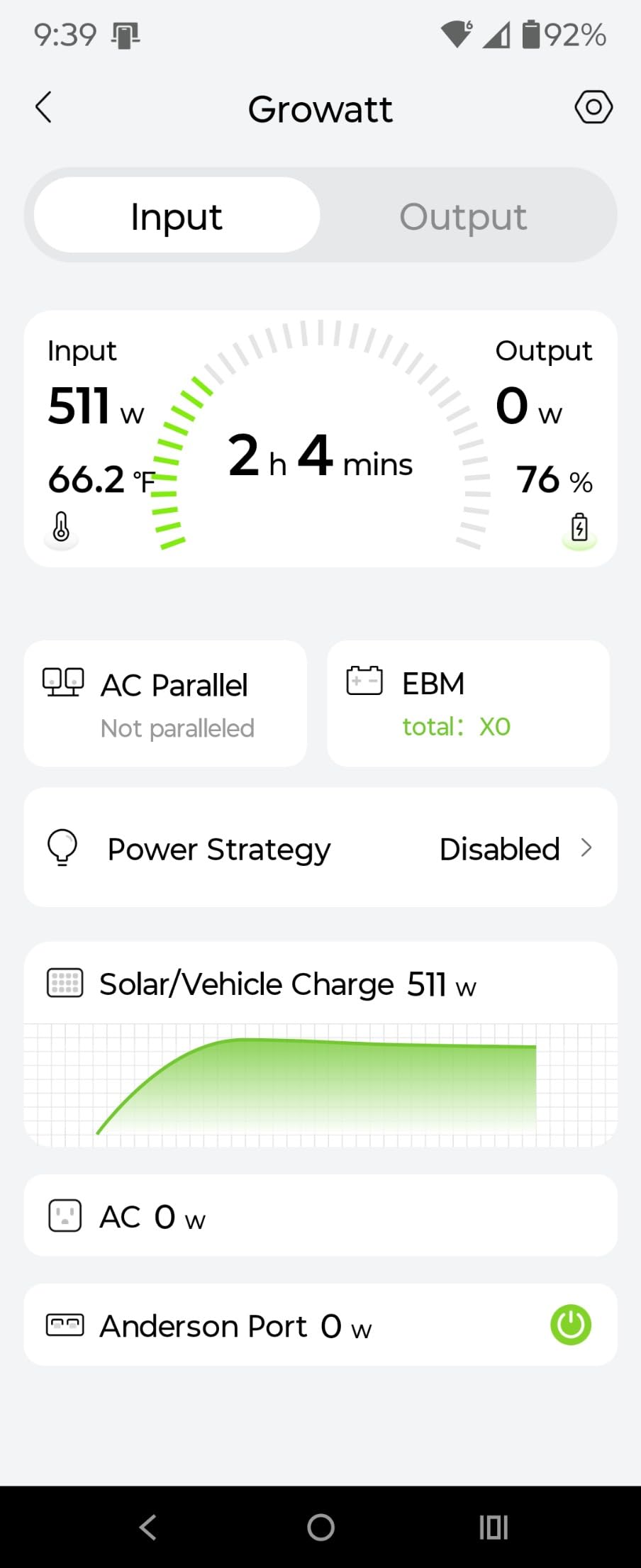
Solar charging is rated at 2000W with 99% MPPT efficiency, and two 200W panels are included for roughly a 2.5-hour recharge. There are 16 output ports, and the per-outlet enable and disable switches let you kill unused converters to save standby power. The MyGrow app supports time-of-use scheduling and prioritizes solar input. The battery retains 80% capacity after 4,000 cycles and is UL certified with US-based service.
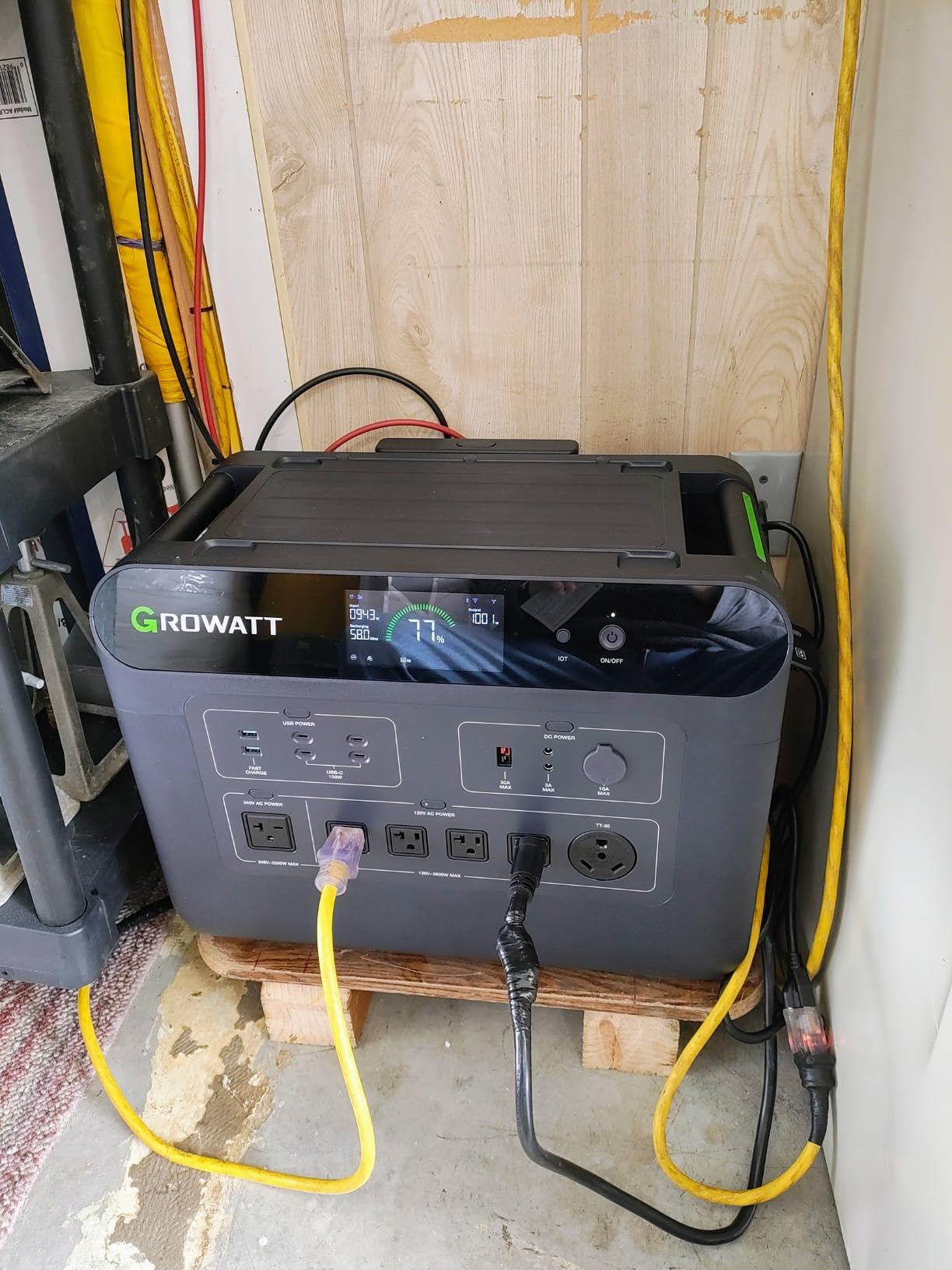
Owners who already run GROWATT home solar get the most out of it. One owner pairs the unit with a 10kWh Growatt system to charge a 13kWh plug-in hybrid vehicle, cutting grid draw entirely, and reports a full vehicle charge in about 3.5 hours. Another runs a portable 8k BTU air conditioner for about five hours on a single battery. Owners running it daily report that performance holds up after a year.
The two strongest criticisms are control-related. EPS is either on or off, cannot be selected per circuit, and switches off automatically when the combiner is used for 240V. The app requests extensive device permissions that one reviewer called predatory, Bluetooth and Wi-Fi pairing can be difficult to establish, and the easy-to-hit connectivity button is a recurring frustration. At 149 pounds it is the second-heaviest unit here, behind only the EcoFlow DELTA Pro Ultra, and it hums slightly above roughly 1200W of charging.
Cold-weather performance in plain terms
Lithium batteries lose charging capability in cold conditions, and that is what kills winter outages. A unit that will not accept charge on the coldest night is useless in an ice storm even if its capacity is enormous. A -22 degrees F cold start rating means this one can begin delivering power in conditions that leave other batteries sitting dead.
Who this suits and who should pass
Buy it if you are in a cold-weather outage region, already run GROWATT solar, or want 16 controllable ports and a 36kWh expansion ceiling. Pass if you plan to move the unit often, since 149 pounds is the second-heaviest thing on this list, or if per-circuit EPS control matters to your shutdown plan. For lighter needs, our portable power station picks cover the smaller classes in more detail.
The Downsides of Solar Generators You Should Know Before Buying
No page-one competitor on this topic answers this question, so we will. A solar generator is a battery, and every limitation below follows from that fact.
First, it makes no power at night. Solar panels refill the battery and the battery runs the house. When the sun goes down, everything you are running is coming out of stored energy, which is why capacity in watt-hours matters more than panel wattage. This is the single most common misunderstanding we see in buyer questions.
Second, solar recharge is slow. Compare the numbers across this list: the BLUETTI Elite 200 V2 recharges fully in 2.4 hours with 1000W of panels, the Anker F3000 accepts 2400W, and the EcoFlow DELTA Pro takes 11 hours on a single 400W panel. Add a real-world factor for cloud cover, orientation and losses, and a 3.6kWh unit needs a serious array to refill in a day.
Third, battery capacity is finite, and a multi-day outage will exhaust it. Decide in advance what you will unplug when the level drops to 20%, and write it down. The units that survive a week of outages in the field are the ones with expansion to 24kWh, 36kWh or 90kWh.
Fourth, whole-home installation is a construction project. Transfer switches, panel work, permits and an electrician can cost as much as the battery. Renters and condo owners usually cannot do it at all, which caps them at partial-home backup no matter how large the unit is.
Fifth, capacity degrades. A 4,000-cycle rating is realistic, not marketing, and capacity falls over a decade of daily use. Units with higher cycle claims last longer, but expect a pack replacement conversation eventually. Sixth, they do not lower your utility bill unless you pair them with solar and a grid-tie system, which changes the economics entirely.
If you want the opposite profile, a gas generator runs for as long as you have fuel. We cover that class in our home generator guide, and for many homeowners the two are complementary rather than competing.
How to Size a Solar Generator for Your Home
Forget square footage. It is the least useful sizing input there is, and it is the reason a 3000 sq ft house gets quoted at both 8kW and 16kW by different sources. Size on the appliances you will actually run.
Step one, list your loads. A medium refrigerator draws about 150W running and about 600W to start. A CPAP is roughly 40W. A microwave is about 1000W. A router and modem together are under 20W. LED lighting is trivial. A window air conditioner lands between 800W and 1200W, and a central air unit can exceed 3000W before you count anything else.
Step two, add the running watts of everything you want on at once, then double that figure to cover startup surge. Motors compress three to five times their running draw for the first fraction of a second. A fridge plus a freezer plus a router plus lights plus a CPAP is about 290W running, so a 1000W inverter would technically work and a 2000W inverter is the sensible floor.
Step three, add headroom. Inverters and generators run most efficiently below their peak, and a DIY Solar Forum exchange captured the consensus neatly: a 16kW unit is too big, around 75% sustained load is the sweet spot, and an 8kW unit would be ideal. Size for roughly 50 to 75% of your calculated load, not your theoretical maximum.
Step four, convert to energy. Multiply your realistic load in watts by the hours you need it to run, then divide by 1000 for kilowatt-hours. Ten watts of average draw for 24 hours is 240Wh. One hundred watts for three days is 7.2kWh. That number is what dictates the battery size.
Step five, apply the 20/20 rule. It is a well-known convention among generator owners: the heaviest continuous load in the house is roughly 20% of the total wattage you size for, which leaves a 20% margin in the calculation. In practice, if your largest single appliance is 3000W, plan on a 6000W continuous unit and a capacity that covers the other loads for at least 24 hours.
The usable capacity math nobody shows you
Labeled watt-hours are not what you get. Apply 90% depth of discharge because manufacturers protect the battery, and about 85% inverter efficiency because DC to AC conversion is never free. The result is roughly 76.5% of the label. A 5120Wh unit gives you about 3916Wh in reality. This is the arithmetic that should drive your purchase, and it is the number most product pages hide.
Deciding between partial-home and whole-home
Partial-home means plugging a few appliances into outlets during an outage, which needs nothing but the unit and a couple of extension cords. That covers a fridge, lights, internet and medical devices, and it is what most households actually need. Whole-home means a transfer switch, a panel and permits, and it is the only way to run central air, a well pump, an electric water heater or a dryer. Owners on r/preppers and r/SolarDIY describe backup power as a hedge rather than a daily system, and a partial-home setup covers most of their scenarios at a fraction of the cost.
For 240V support, look for a unit with genuine dual-voltage output, which in this list means the Anker SOLIX F3800, the EcoFlow DELTA Pro Ultra, the Jackery HomePower 3600 Plus when paired, or the GROWATT HELIOS 3600 when paired. Everything else is 120V only.
Solar panel sizing and recharge reality
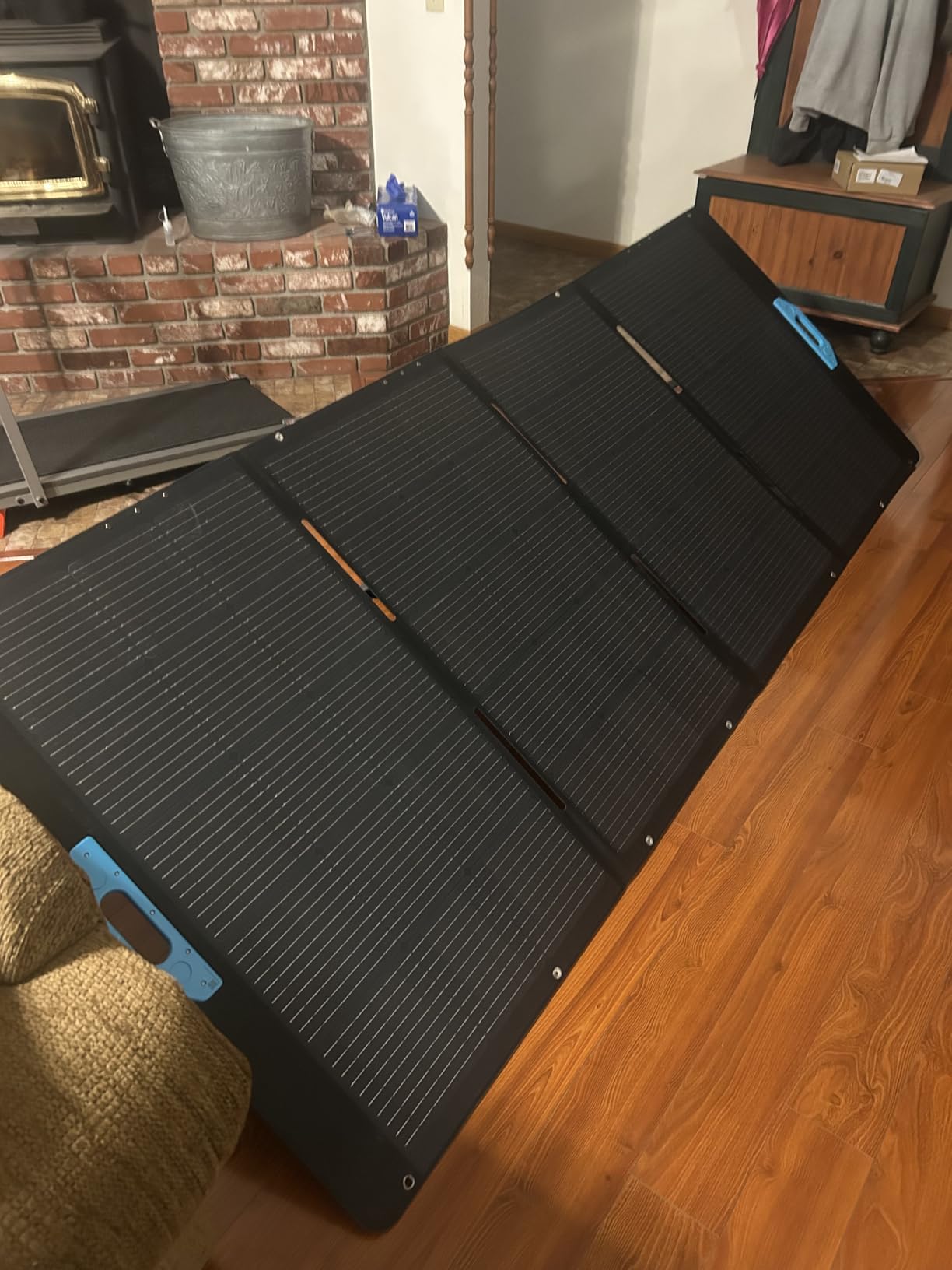
To refill a unit in a day you generally need solar input wattage in the 1000W to 2400W range, which means three to six 400W panels depending on the unit. Anything less and you are topping up, not recovering. For long outages, treat panels as a partial refill and reserve stored energy for the night, which is when they produce nothing.
Chemistry, certifications and cold
Only buy LiFePO4 for a home. NMC chemistries have higher energy density but a worse thermal profile, and users moving away from them cite cycle life and indoor safety as the reasons. Look for UL 2743 and UL 9540 certification marks, plus UN38.3 for transport. If you live somewhere cold, check the minimum operating temperature, because the GROWATT HELIOS 3600 is the only unit here rated for cold start down to -22 degrees F.
Finally, treat backup power as insurance and price it that way. Our guides to RV generator options and camera systems that keep running during outages cover the two setups people most often pair with a unit like these.
Frequently Asked Questions
What is the best solar back-up generator for a home?
For most households the BLUETTI Elite 200 V2 is the best all-round choice, with 2073.6Wh of LiFePO4 capacity, 2600W continuous output and a 4.7 rating across 913 reviews. If you need 240V whole-home backup, the Anker SOLIX F3800 provides 6000W of dual-voltage output and expands to 26.9kWh. On a budget, the Pecron F3000LFP delivers 3072Wh and 3600W of pure sine wave output with thirteen ports.
What size solar generator is needed to run a house?
Size it on the appliances you will run, not on square footage. Add the running watts of everything you want on simultaneously, double that figure for motor startup surge, then add 50 to 75% headroom. A refrigerator is about 150W running and 600W to start, a CPAP is roughly 40W, and a microwave is about 1000W. Multiply your realistic load by the hours you need it to run to get the watt-hours of capacity to buy.
What is the 20/20 rule for generators?
The 20/20 rule is a sizing convention among generator owners. The heaviest single continuous load in the house is treated as roughly 20% of the total output you should size for, which leaves a 20% margin above your calculated need. In practice, if your largest appliance draws 3000W, plan on a unit rated for about 6000W continuous, with enough battery capacity to cover everything else for 24 hours.
What are the downsides of solar generators?
The main drawbacks are that they make no power at night, solar recharge is slow, capacity is finite during a multi-day outage, whole-home installation requires a transfer switch and permits, battery capacity degrades over roughly 4000 cycles, and they do not reduce your utility bill unless paired with grid-tied solar. A solar generator is a battery with an inverter, so everything runs from stored energy once the sun goes down.
How big of a solar generator do I need to run my house?
Most homes need between 2000Wh and 5000Wh of capacity and 2400W to 3600W of continuous output for partial-home backup covering a fridge, lights, internet and medical devices. Whole-home backup with central air, a well pump, an electric water heater or a dryer requires 240V split-phase output, 6000W or more, and a transfer switch. Remember that only about 76.5% of labeled watt-hours is usable after depth of discharge and inverter losses.
The Best Solar Generator for Your Situation
Buy the BLUETTI Elite 200 V2 if you want the most proven all-round unit and only need 120V essentials covered for a day or two. It has the highest rating and the largest review base in this roundup, and the bundle includes two 200W panels so it works out of the box.
Buy the Anker SOLIX F3800 if any load is 240V, because 6000W of dual-voltage output and expansion to 26.9kWh is the cleanest whole-home path here. Buy the Pecron F3000LFP if cost is the deciding factor and you can source a panel separately. Buy the EcoFlow DELTA Pro Ultra only if you have central air and a genuine multi-day outage history.
Whichever one you pick, size it on your appliance list rather than on a marketing number, apply the 76.5% usable capacity math before you decide, and buy LiFePO4. The best solar generators for home backup are the ones matched to your actual load list rather than the biggest number on the box, and the good ones are all quiet enough to sleep next to.