
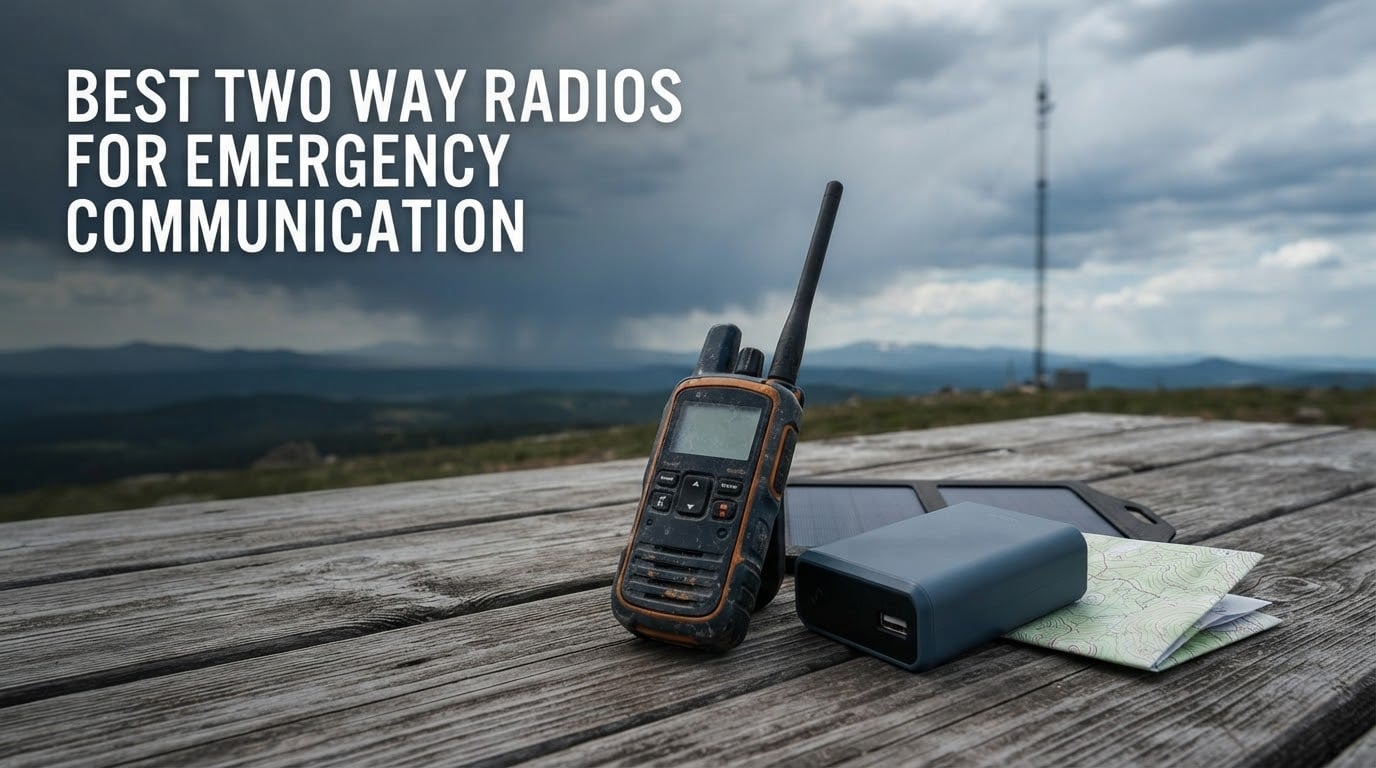
Two-way radios talk radio-to-radio with no cell tower, no internet and no subscription, which is why they are the first thing to reach for when a hurricane, flood, wildfire or outage takes your phones offline. For the best two way radios for emergency communication, the deciding factors are not the marketing range on the box but the battery type, the waterproofing rating, the weather alert function and the radio service class. We compared 10 sets across those criteria to build this list.
I grew up in a hurricane zone where the towers go first and the power goes with them, and the family lesson learned early was that a phone is useless in a dark house with a flat battery. A handheld radio has its own power, its own antenna and its own network, and none of those three things run through a utility company. That single fact changes how you plan a 72-hour kit.
What follows is a practical roundup rather than a spec dump. Each pick gets the same treatment: what it is genuinely good at, where it falls short, and which emergency scenario it fits. We also cover what these radios cannot do, because the gap between expectation and reality is where most disappointed buyers end up.
If your kit is still built around a hand-crank radio and a battery-powered fan, our guide to emergency radios covers the rest of the 72-hour gear picture.
Table of Contents
What to Look for in an Emergency Two-Way Radio
These four criteria decide whether a radio is useful in a real outage or just another box in a drawer. Everything else on the spec sheet is secondary.
NOAA weather alert receiver — scans official National Weather Service channels so you get watches and warnings even with no internet.
Dual power options — rechargeable battery for daily use, plus AA cells or a hand crank for when the charger is dead.
IP67 waterproofing — dust-tight and submersible to one meter for about 30 minutes, which is what floods and river crossings demand.
License tier — FRS works with no paperwork, while GMRS needs a federal license and amateur bands need an exam.
Understanding the IP ratings
IP54 and IP55 stop splashes and dust. IP56 survives heavy rain, spray and snow. IP67 adds full submersion to one meter for roughly half an hour. A radio that floats is a separate feature from a waterproof radio, and a floating body is what actually saves it when it drops in a river at dusk.
Privacy codes are not encryption
A CTCSS or DCS privacy code is a filter that silences other chatter on a channel. Anyone on the main channel can still hear your conversation, so treat privacy codes as noise control rather than security. Only encrypted systems, such as an AES-enabled LTE set, protect what you say from other listeners.
Radio class in one paragraph
FRS is license-free and capped at 2 watts. GMRS allows more power and repeater access but requires a federal license that lasts ten years and covers your immediate family. Amateur bands need a written exam and unlock long-range propagation, but they are illegal to transmit on without it. Our deeper coverage sits in the GMRS radio guide and the ham radio guide.
Top 3 Best Two Way Radios for Emergency Communication
The Midland leads the list because it does the two things that matter most in a grid-down scenario: it scans NOAA weather channels and it keeps talking when the rechargeable pack drains, thanks to AA backup. The Retevis is the durability answer, and the pxton pair is the honest answer for households on a tight budget who need working radios at a distance across a neighborhood.

Midland GXT1000VP4
- 50 GMRS channels and 142 privacy codes
- NOAA weather alert scan
- Rechargeable packs plus AA backup
- Two headsets included

Retevis RB48
- IP67 waterproof and floats face up
- MIL-STD-810H drop tested
- 2000mAh batteries up to 20 hours
- License-free FRS
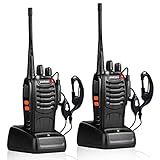
pxton PX-888S
- 16 UHF channels with 50 CTCSS and 105 CDCSS
- Two 3.7V Li-ion batteries
- VOX and built-in flashlight
- IP54 rain-resistant housing
All 10 Radios at a Glance
Use this table to narrow the field before reading the individual reviews. Column six is the honest one: the range each set realistically delivers rather than the number on the box.
| Product | Specifications | Action |
|---|---|---|
| Midland GXT1000VP4 |
|
Check Latest Price |
| Retevis RB48 |
|
Check Latest Price |
| pxton PX-888S |
|
Check Latest Price |
 Baofeng UV-5R 10W Upgrade Baofeng UV-5R 10W Upgrade |
|
Check Latest Price |
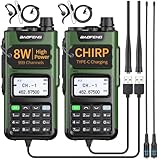 Baofeng GM-15 Pro Baofeng GM-15 Pro |
|
Check Latest Price |
 KOMVOX GT60 KOMVOX GT60 |
|
Check Latest Price |
 Baofeng BF-F8HP PRO Baofeng BF-F8HP PRO |
|
Check Latest Price |
 Motorola T605 H2O Motorola T605 H2O |
|
Check Latest Price |
 Rocky Talkie Mountain Radio Rocky Talkie Mountain Radio |
|
Check Latest Price |
 Rapid Radios G1 Rapid Radios G1 |
|
Check Latest Price |
1. Midland GXT1000VP4 — Best Overall for Grid-Down Preparedness
Midland GXT1000VP4 GMRS Two-Way Radios with Headsets, Black, 2 Pack
50 GMRS channels
142 privacy codes
NOAA weather scan
Dual power with AA backup
Pros
- 50 channels and 142 privacy codes for flexible group channels
- NOAA weather alert scan for official warnings
- Rechargeable NiMH packs plus a desktop charging cradle
- AA dual power and EVOX hands-free
- SOS siren and silent operation mode
Cons
- JIS4 water resistance rather than true waterproofing
- Proprietary rechargeable packs cannot be swapped mid-use
- Menus take time to learn for first-time GMRS users
The GXT1000VP4 is the set I keep a pair of in the house and a pair in the truck, and it earns that spot on one feature more than any other: it runs on AA cells when the rechargeable pack is dead. Outages that take out power usually take out chargers too, so a radio that accepts standard alkaline cells keeps working on the second day when most USB-charged units are finished.
It is also a genuine GMRS set, meaning 50 channels and 142 privacy codes rather than the 22 channels most entry-level walkie-talkies give you. That flexibility matters when you are coordinating a neighborhood group where two families picked different radios and you want to hand out specific channel assignments instead of arguing.
The NOAA weather alert scan is the second reason this is number one. It listens to official National Weather Service channels and will sound an alert tone when a watch or warning is issued for your area, which covers the very common case where a storm warning arrives after the towers are already congested. Reviewers consistently single out that scan as the feature that made them keep the set.
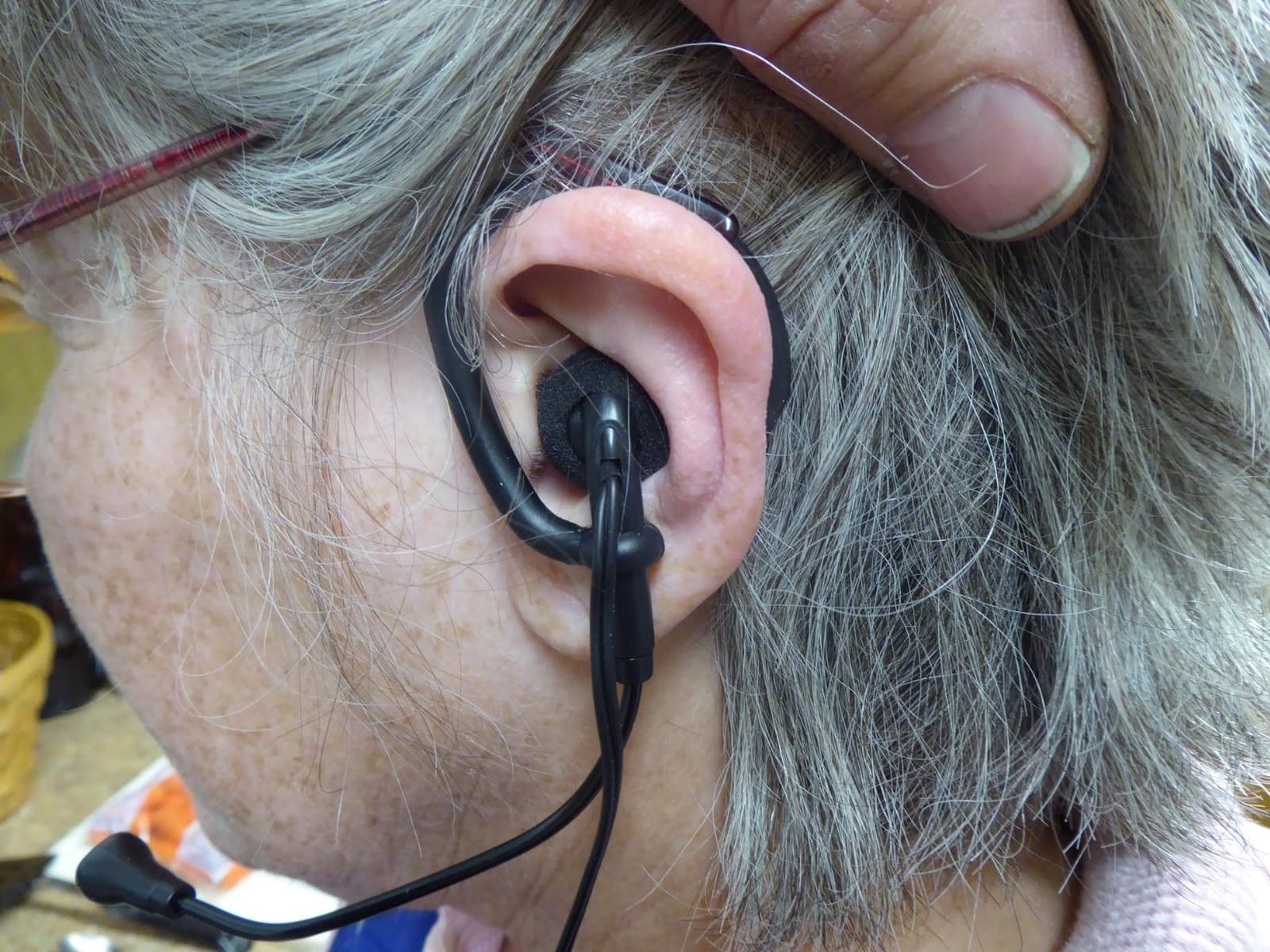
Two rechargeable battery packs and a desktop cradle are in the box, along with two headsets, so the kit is complete on arrival. The EVOX hands-free mode lets you drive with one hand and still talk, and the SOS siren gives you a way to signal a rescuer that carries further than your voice.
What this radio does well in a real outage
The dual power design is the standout. Day one, the rechargeable packs handle it quietly. Day two, when the grid is still down and the car is not charged, you pull eight AA batteries from the drawer and swap them in under a minute.
The 50-channel, 142-privacy-code grid also makes it the easiest set to run a neighborhood coordination scheme on. You can hand one household channel 3 code 20, another channel 3 code 41, and a roaming volunteer channel 7 with no code, and nobody has to learn a menu to move between them.
Where it falls short
Water resistance is the main gap. The JIS4 rating means rain and splashes, not immersion, so it stays out of the canoe and away from the flood line. If your scenario involves water, the Retevis RB48 below is the safer pick.
The rechargeable NiMH packs are proprietary and cannot be replaced with standard AA cells while the radio is powered, so the AA fallback means physically swapping the whole pack. Some buyers also find the button-driven menu system takes an afternoon to feel natural.
2. Retevis RB48 — Best Waterproof Pair for Floods and Boating
Retevis RB48 FRS Walkie Talkies Long Range,Mil-Standards 810H Two Way Radio
IP67 dust-tight and submersible
Floats face up
2000mAh Li-ion batteries
MIL-STD-810H drop tested
Pros
- IP67 waterproof and dustproof with a floating body
- Passed 1000 two-meter drop tests
- 2000mAh batteries rated up to 20 hours
- Silicone button covers work with gloves on
- License-free FRS with a 5-year body warranty
Cons
- Only 22 channels and no programmability
- Heavy and bulky compared with slim FRS handhelds
- Claimed building-to-building range drops sharply in real terrain
The RB48 is the one I would hand to a family that lives on a flood plain, works on boats or spends time on the water. It carries a true IP67 rating, which means dust-tight and submersible to one meter for about half an hour, and the chassis floats face up if it goes over the side. That combination is rarer than the marketing suggests.
Durability testing is the other story here. The set is built to MIL-STD-810H standards for drop, dust, vibration, heat and cold, and the manufacturer reports passing a thousand two-meter drops. Silicone covers over the buttons keep them usable with wet or gloved hands, which matters more than it sounds when you are trying to press a radio in a rainstorm with numb fingers.
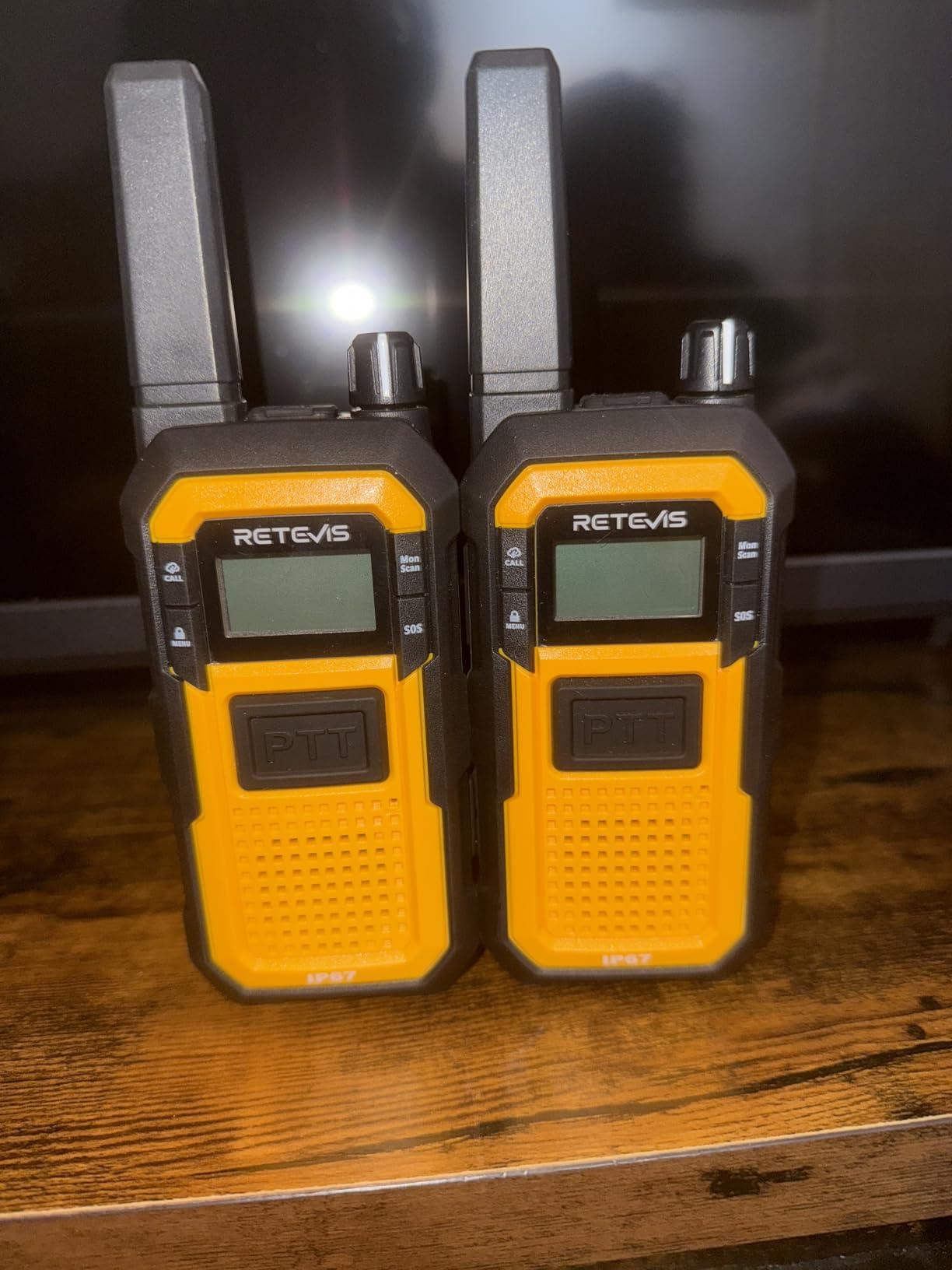
The batteries are 2000mAh packs rated for up to 20 hours of use, charging over USB-C or in the included dock. For a family walking a flooded street, a weekend evacuation or a multi-day outage where you cannot recharge, that runtime headroom is worth more than extra channels.
Because it is FRS, there is no licensing to think about, which keeps the setup to a single step. Turn it on, agree on a channel, talk. In an emergency the last thing anyone needs is paperwork.
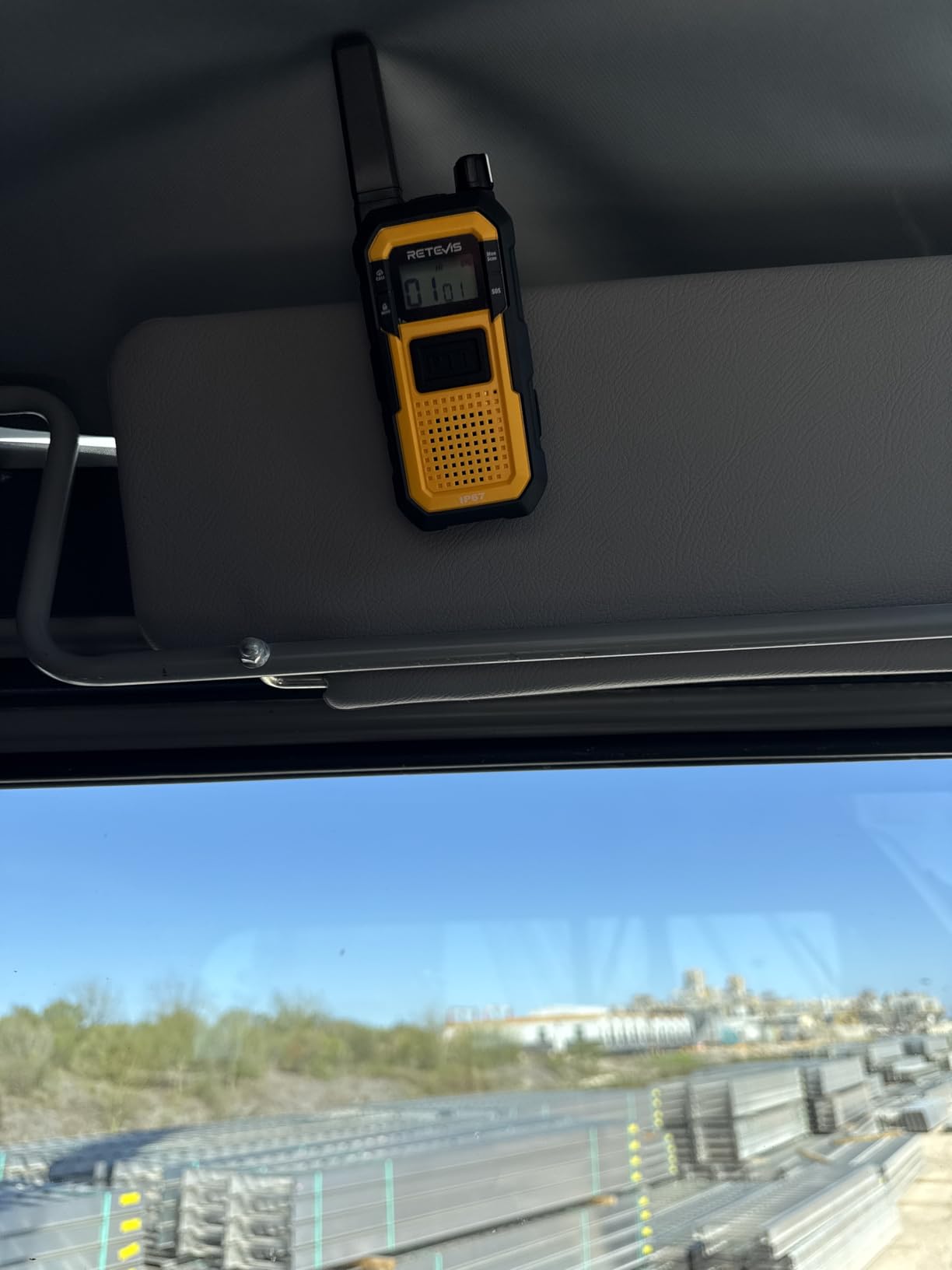
Where the IP67 rating actually pays off
River crossings, kayak trips, dockside fishing and a flooded street are exactly the situations that destroy a splash-resistant radio. A radio that floats face up is retrievable in daylight; one that sinks is gone within a minute of hitting murky water.
The glove-friendly buttons solve a related problem. During a wildfire evacuation, most of your gear is gloved and wet, and radios with bare membrane buttons are frequently skipped in favor of phones that at least have a touchscreen.
What you give up for the ruggedness
It is a fixed 22-channel FRS set with no programmability and no repeater access, so it cannot be tuned around a congested channel or extended through infrastructure. It is also noticeably heavy and bulky next to a slim FRS handheld, which is a real cost if the radio has to sit in a pocket all day.
The advertised range figure of many floors or a large floor area is a best-case number in ideal indoor conditions. Outdoors with terrain between you and the other person, plan on far less.
3. pxton PX-888S — Best Budget Pick for Basic Family Comms
pxton Walkie Talkies Rechargeable Long Range Two-Way Radios with Earpieces,2-Way Radios UHF Handheld Transceiver Walky Talky with Flashlight Li-ion Battery and Charger(2 Pack)
16 UHF channels
50 CTCSS and 105 CDCSS tones
VOX and flashlight
IP54 housing
Pros
- Low per-unit cost with cables
- earpieces and belt clips included
- Simple rotary knob channel selection
- VOX hands-free
- scanning and a low battery alarm
- Built-in flashlight for blackout use
Cons
- No NOAA weather alert receiver
- Only 16 channels and a modest 2-mile stated range
- Programming the subtones channel by channel is tedious
- IP54 is splash-level only
This is the honest low-cost option, and for the right scenario it is genuinely good. A pair of pxton radios covers a house, a yard and a nearby street for a very small outlay, which means you can put one in every family member’s jacket without budgeting for ten devices.
Setup is the easiest in this entire roundup. A rotary knob selects from 16 preset UHF channels, and there is nothing to program before you can talk. That simplicity is why it works as a giveaway for kids or for a group that will not read a manual during a crisis.
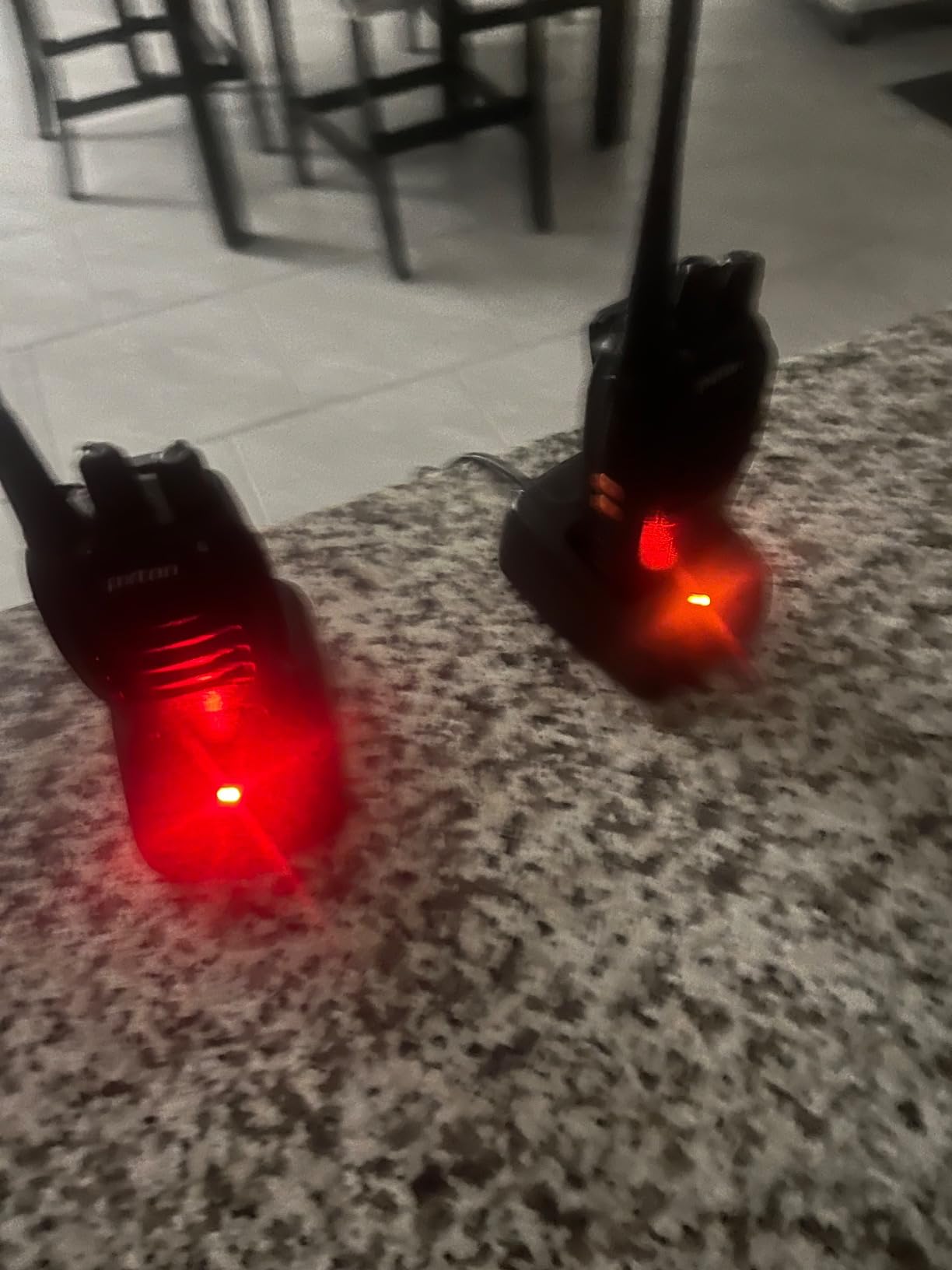
Two 3.7V lithium-ion batteries and charging cables are included, and the housing is drop-proof and rain-resistant at IP54. The VOX mode, channel scanning, low battery alarm and built-in flashlight cover the basics you would want at midnight with the power out.
Under continuous use a full charge lasts roughly 8 to 12 hours, which is a real limitation compared with the AA-powered sets. If your plan involves multi-day coordination, budget for spare batteries or choose a set with a longer runtime.

Good for short-range household check-ins
The 16 channels with 50 CTCSS and 105 CDCSS privacy tones give you plenty of combinations to split a group into private pairs. In a duplex household or a family with two apartments, one channel per family keeps conversations separate without any fuss.
The included earpieces, belt clips and hand straps mean the set is wearable out of the box, which matters because a radio sitting on a counter does not get used.
Where the low price shows
There is no NOAA weather alert receiver. If your emergency plan depends on being warned about a tornado or a flash flood warning, this radio cannot do it and you will need a separate weather receiver.
Sixteen channels and a stated 2-mile maximum mean urban use is realistically a block or two, and setting the privacy tones one by one is a tedious process if you need many combinations. Treat it as a family indoor and yard radio, not a range solution.
4. Baofeng UV-5R 10W Upgrade — Best for Long Range on Difficult Terrain
Baofeng Radio Ham Radio Handheld UV-5R Upgrade Long Range Rechargeable AR-5RM 10W NOAA Weather Emergency Tactical Two Way Radio with Programming Cable for Survival Gear Hunting Camping,2 Pack
10 watts on VHF and UHF
999 memory channels
1.77-inch color display
NOAA weather receiver
Pros
- 10 watts noticeably outperforms consumer FRS sets in city and rural tests
- 999 channels with a color display
- NOAA alerts received clearly in wind and rain
- Frequency copy function plus included programming cable
- Two 2500mAh batteries
- speaker mics and earpieces per set
Cons
- Not water resistant at all
- Menus and button layout are daunting for newcomers
- Stock antennas are tuned for ham bands
- Side accessory jack is fragile
Power is the whole argument for this radio. At 10 watts it transmits with roughly five times the output of a 2-watt FRS handheld, and that difference is what gets a signal over a ridge, into a valley or across a suburban sprawl where the license-free sets simply stop carrying. Owners comparing it against Midland GXT-series units in city tests consistently report the Baofeng wins.
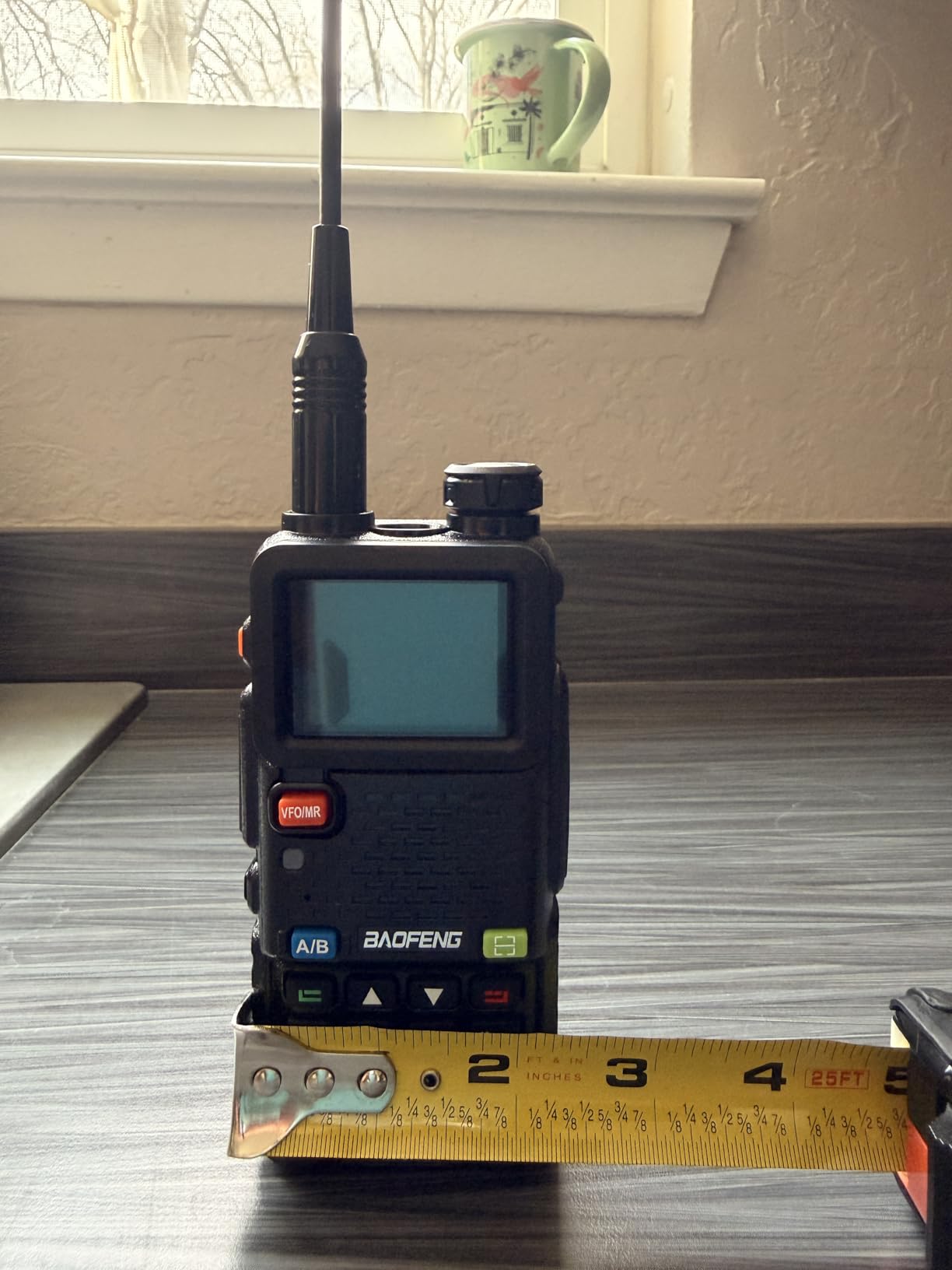
This is a 999-channel radio with a 1.77-inch color display and a frequency copy function that lets you clone settings from one unit to another. Three antenna lengths are included, so you can match the antenna to the band you are actually using instead of living with one compromise.
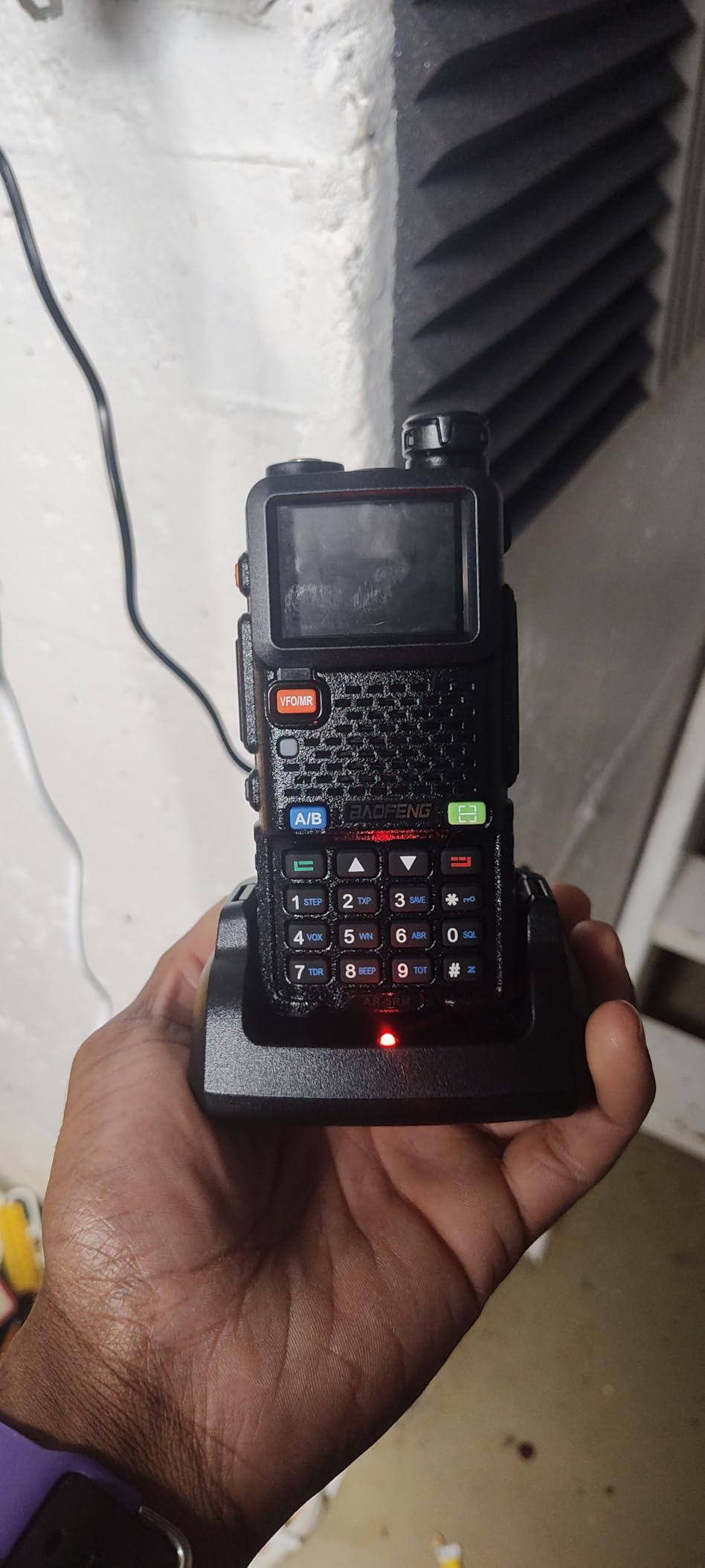
Each set includes two 2500mAh batteries, USB-C cables, base chargers, two speaker mics, two earpieces and a programming cable that works with CHIRP and TidRadio Bluetooth software. Programming from a PC is what lets you set channels and codes once and push them to a whole group.
The NOAA weather receiver is present and reviewers report hearing alerts clearly even in wind and rain, which is a meaningful addition over most hobby handhelds.
When extra power earns its keep
Hill country, dense woods, large open properties and rural road networks are the situations where a 2-watt FRS set disappoints and a 10-watt handheld does not. If your communication plan depends on reaching a house, a vehicle or a regroup point that is not in clear view, the wattage difference is real.
Programming matters just as much as power. A channel and code list pushed to every unit in ten seconds is the difference between a working group and the mismatched-code problem forum users complain about constantly.
The tradeoffs you accept for range
This radio is not water resistant in any meaningful sense, so it stays indoors or in a dry pocket bag. The menu system and button layout are steep for a first-time user, and the manual is thin on detail, so budget an evening with the CHIRP software to get it configured.
The bundled antennas are tuned for the amateur bands, which means GMRS performance improves with a better antenna. The side accessory jack is also the most fragile part on the unit, so unplug external mics when you are not using them.
5. Baofeng GM-15 Pro — Best for GMRS Power and Repeater Access
BAOFENG GMRS Radio Handheld Long Range GM-15 Pro 8W Walkie Talkie with Earpiece NOAA Weather Receiver Rechargeable GMRS Repeater Two Way Radio with USB-C Charger for Hunting Survival Gear,2Pack
8 watts GMRS
22 channels plus 8 repeaters
250 memory channels
11 NOAA channels
Pros
- Eight watts of GMRS output with 22 channels preloaded
- GMRS repeater capable with 24 customizable repeater channels
- 154 privacy codes and 250 memory channels
- NOAA alerts across 11 channels
- USB-C charging with battery saver and SOS alarm
Cons
- No water resistance whatsoever
- GMRS still requires a federal license
- Very tall antenna assembly adds bulk
- Programming beyond preloaded channels needs a PC
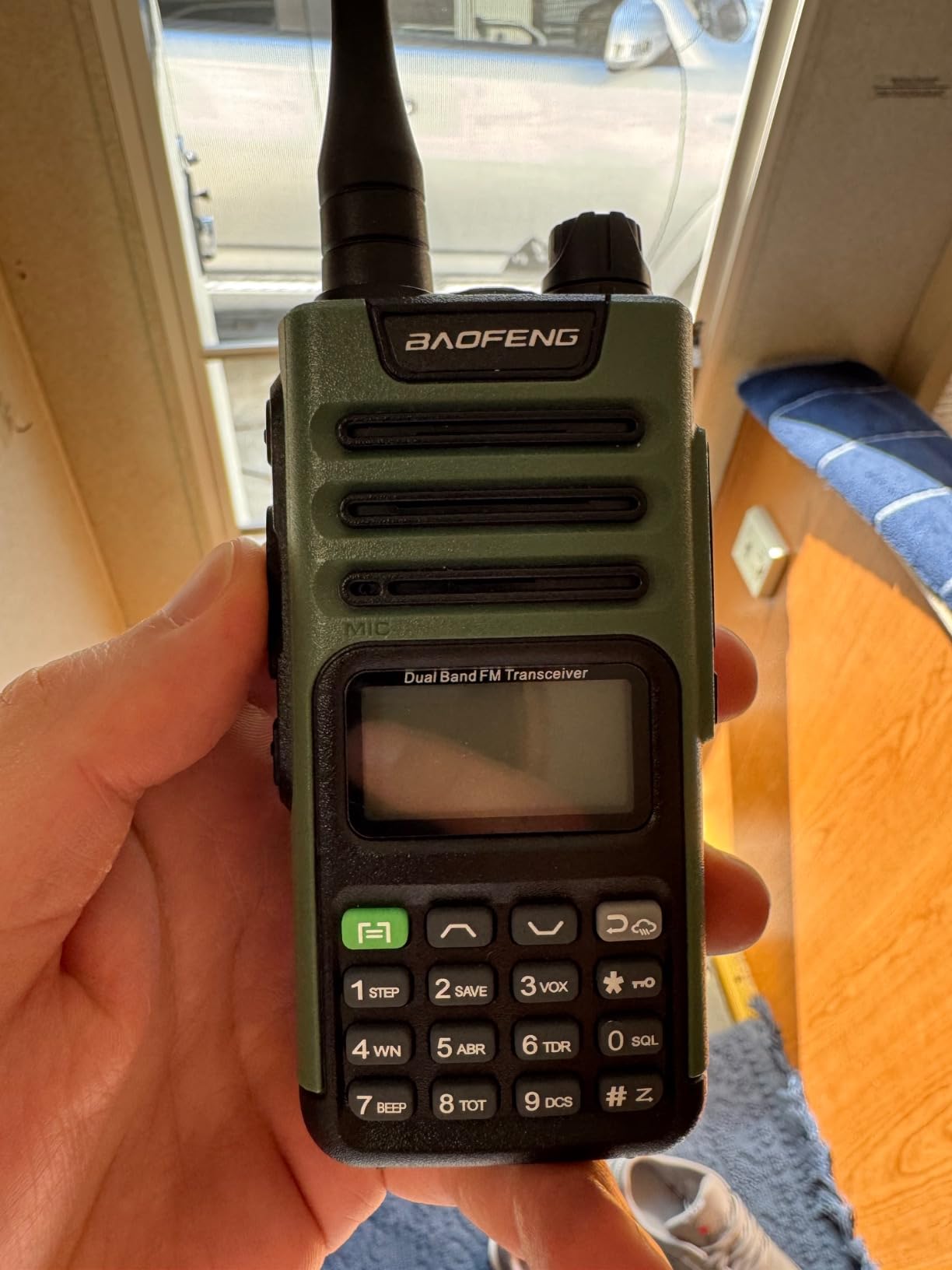
The GM-15 Pro is the pick for people who want GMRS specifically rather than by accident. Twenty-two GMRS channels and eight repeater channels are preloaded, so a group can start talking on a repeater with no programming session, and the license question is settled in advance by the hardware.
At 8 watts it sits between a 2-watt FRS handheld and the 10-watt Baofeng, with a stated 4 to 5 miles in open areas, 3 to 4 in forest and 2 to 3 in the city. Those are the honest numbers, and they are closer to reality than most listings on this page.
NOAA alerts run across 11 channels, there are 154 privacy codes, and the 250 memory channels hold more than a household emergency plan ever needs. USB-C charging, a 1500mAh battery, battery saver mode, SOS alarm, flashlight, VOX and keypad lock round out a well-equipped radio.
For anyone who already holds a GMRS license and wants to reach a local repeater that covers a valley or a dead zone in their coverage map, this is the most purpose-built option in the group.
What repeater access adds to a backup plan
A repeater is a fixed station that rebroadcasts your signal, so it can turn a handheld that reaches one mile into a handheld that reaches ten if a compatible repeater is positioned above your area. Twenty-four repeater channels are customizable, which is more than most buyers will ever need.
It also keeps hobby channels and emergency channels separate, so your family can run a fixed GMRS channel for check-ins while a ham-oriented user explores other bands on the same hardware.
What to plan around
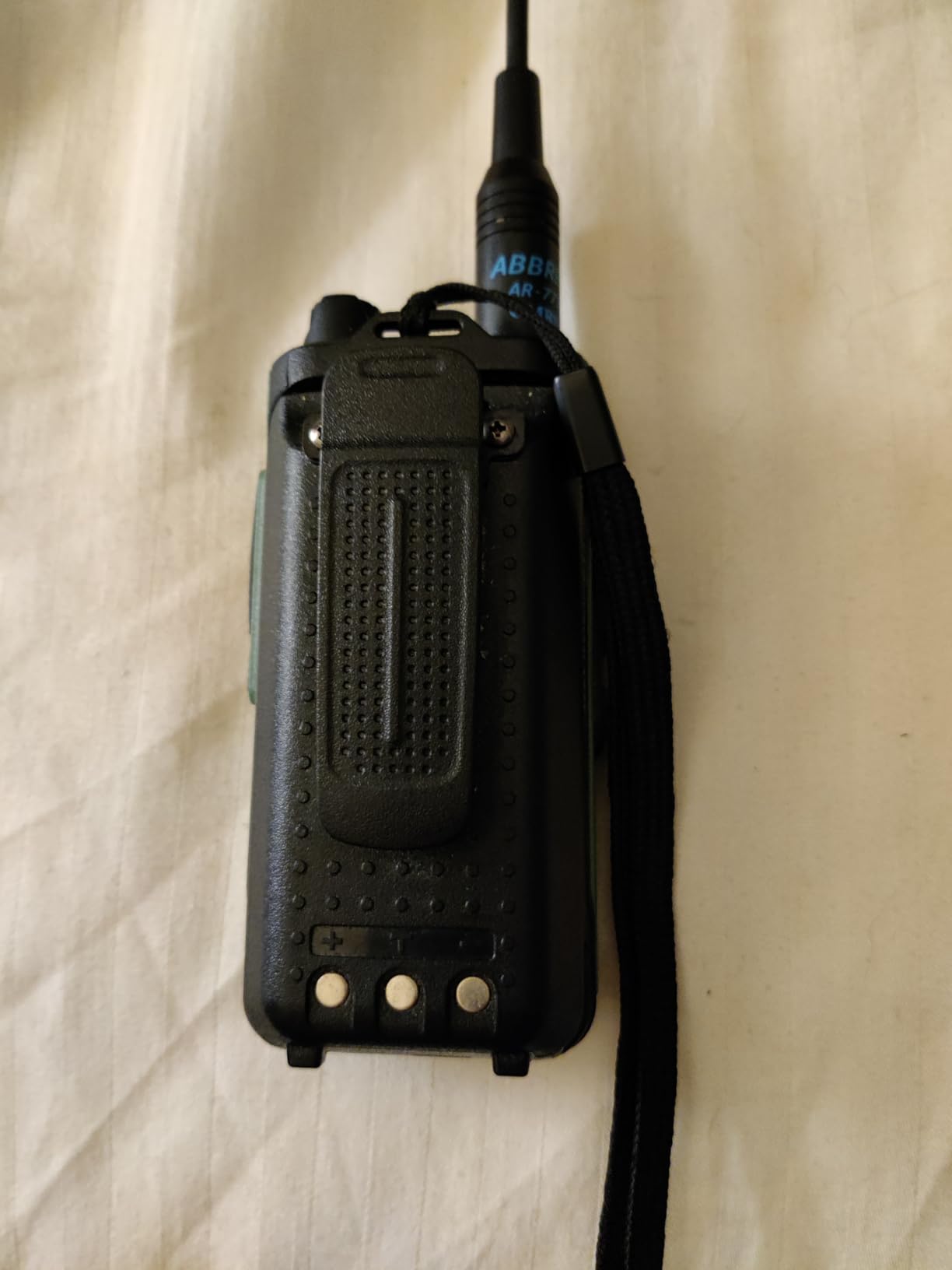
There is no water resistance, so heavy rain and immersion are off the table. The 10.6-inch antenna assembly is much bulkier than a typical FRS handheld, which is awkward on a belt clip for a long shift.
GMRS requires a federal license, and anyone under 27 or transmitting for a business needs one as well. Channel customization beyond the preloaded set requires a PC, so do that configuration before you need it.
6. KOMVOX GT60 — Best Value NOAA Alert Radio
Rechargeable Walkie Talkies for Adults, Long Range Two Way Radios with NOAA Weather Alert, 36 Channels 2 Way Radio Type-C Charging VOX for Camping Hiking Hunting
NOAA scan on 10 weather channels
36 channels with 142 CTCSS
Type-C USB charging
Three-level VOX
Pros
- Weather alert scan locks onto 10 channels and broadcasts severe weather alerts
- 36 channels and 142 CTCSS privacy codes
- Type-C USB charging with a built-in lithium polymer battery
- Three-level VOX hands-free
- High-visibility yellow housing
Cons
- About 6 hours of stated battery life with charging reliability complaints
- Bulky round channel control is confusing to operate
- Sealing proved unreliable despite the IP65 listing
- Charging cables not included in the box
If NOAA alerts are your main requirement and you want the lowest per-unit cost, the GT60 delivers that feature set and little else. Ten weather channels, 36 radio channels, 142 CTCSS privacy codes and 3124 total combinations, with a weather alert broadcast rather than a silent scan.
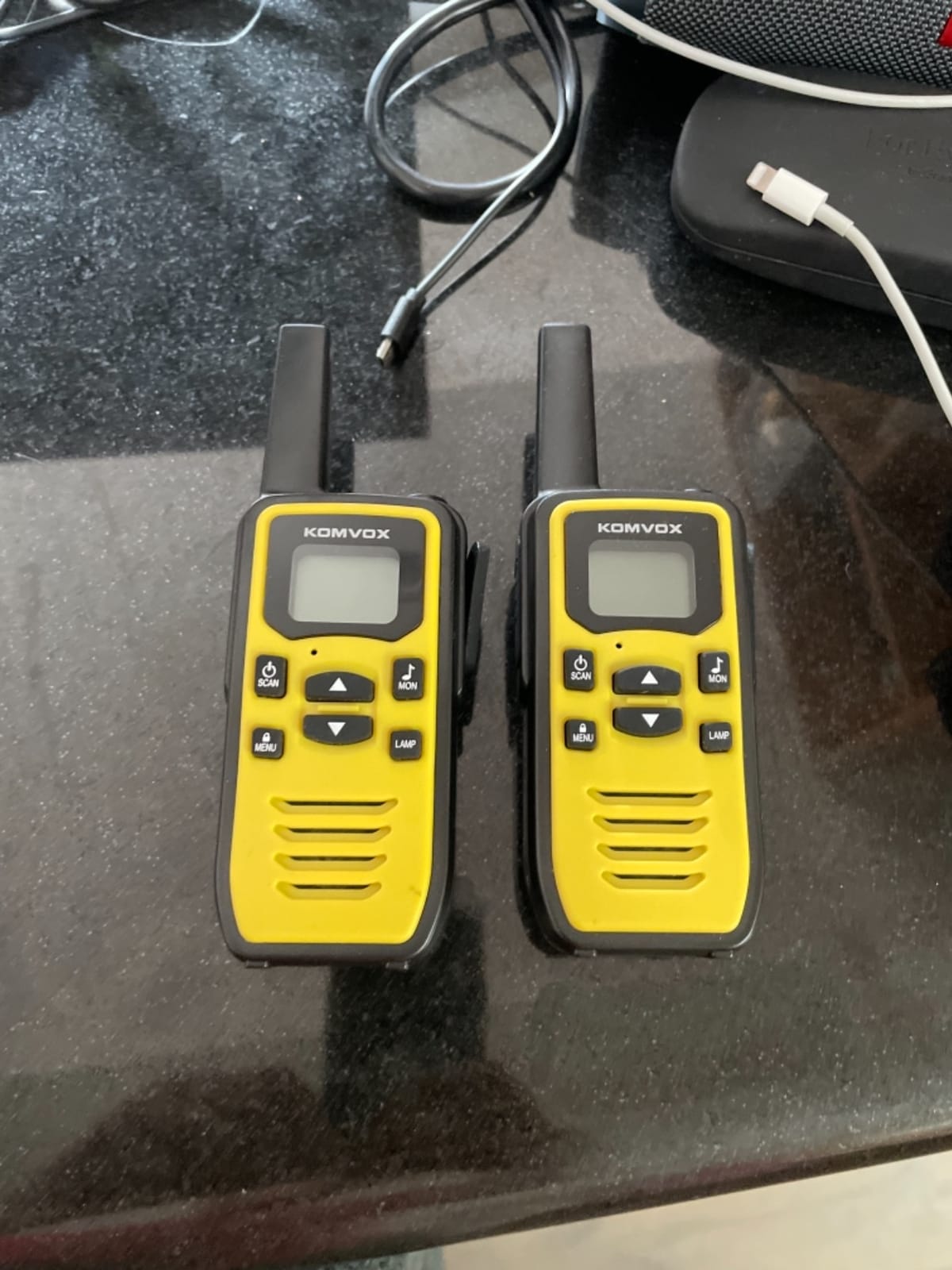
The high-visibility yellow housing is a small touch with real emergency value. A black radio in a dark hallway, a car floor or a pile of debris is easy to lose, and a bright one gets found. A built-in flashlight and a universal 3.5mm headset jack are also included.
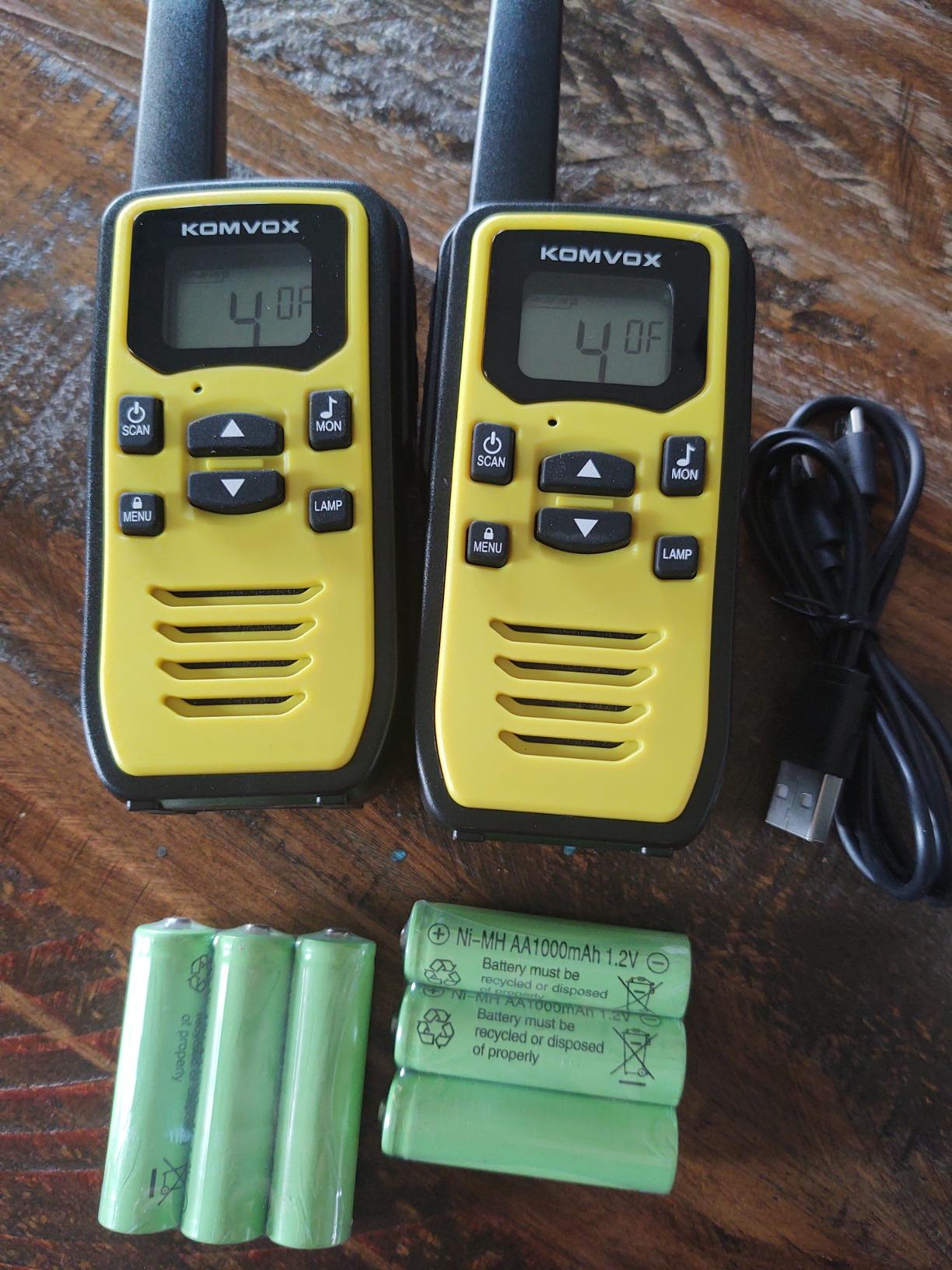
Type-C USB charging with a built-in lithium polymer battery keeps recharging simple with cables most people already own. Three levels of VOX let you pick how sensitive hands-free transmit is, which is useful when a child is carrying one.
Our reservations are about power, not features. The stated battery life is around 6 hours, and a fair number of reviews report units that did not hold a charge reliably. For a radio meant to work during a power outage, that is the wrong weakness.
Where a cheap NOAA radio still makes sense
Property owners, caretakers, hikers and anyone who wants severe weather warnings without carrying a phone are the natural users. At this per-unit cost you can cover several adults or a small team, and the yellow shells make a group easy to identify.
The 36-channel grid with 142 subtones also gives a neighborhood more room than the 16-channel budget sets offer, at a price that stays within a stocking-up budget.
Battery life is the weak point
Roughly six hours of stated life is short compared with the AA-powered and 2000mAh sets in this list. A multi-day event means charging overnight, which may not be possible in the scenario you are buying for.
Several reviewers also describe the round channel-change control as awkward to operate, and one reported a unit failing after getting wet despite the IP65 listing. Buy a spare, and do not make it your only waterproof-capable radio.
7. Baofeng BF-F8HP PRO — Best for Programming and Long-Term Flexibility
BAOFENG BF-F8HP PRO Tri-Band Ham Radio, Clear English Menus, 1,000 Memories, Updatable Firmware, Airband & NOAA Reception, USB-C Charging
Tri-band VHF UHF and 1.25m
1000 channels in 10 zones
Updateable firmware
2500mAh with USB-C
Pros
- Tri-band transmit with receive-only airband
- NOAA and FM broadcast
- 1000 memory channels organized into 10 named zones
- Updateable firmware with CHIRP-next support
- IP54 water resistance and better build than older models
Cons
- Airband AM reception is muddy and distorted
- Programming cable sold separately and firmware needs Windows
- No brightness control and squelch is not adjustable
- Transmitting on amateur bands requires a license
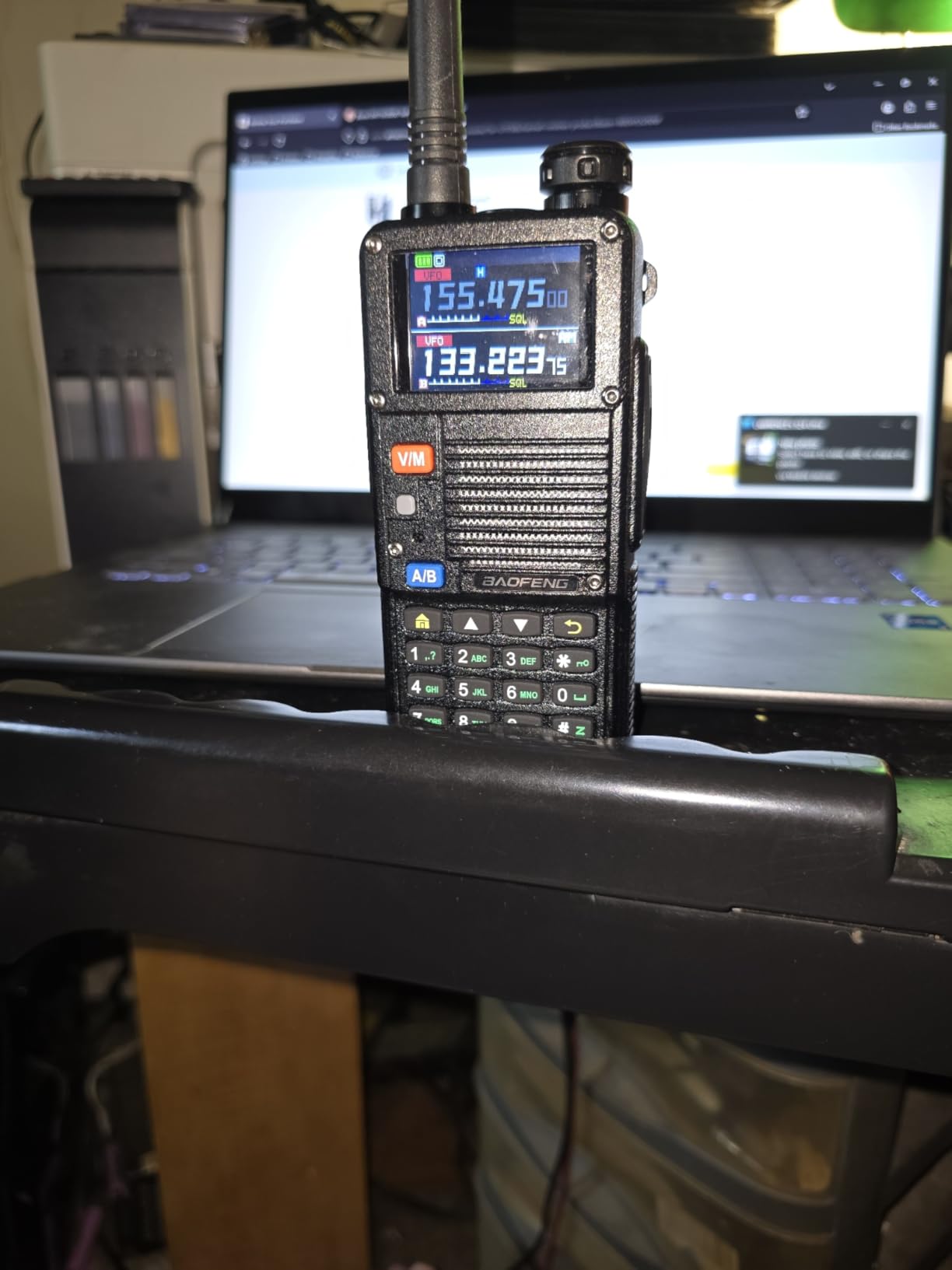
This is the one to buy if you expect your radio needs to change over time. A 1000-channel memory with 10 named zones means you can organize channels by purpose, family group or event rather than scrolling through a flat list during an outage.
It is also the most approachable of the programming-capable radios. Owners consistently point to clear English menus, dual watch and single watch display modes, and a signal strength readout as a genuine step up from the confusing interfaces on older models in the same class.
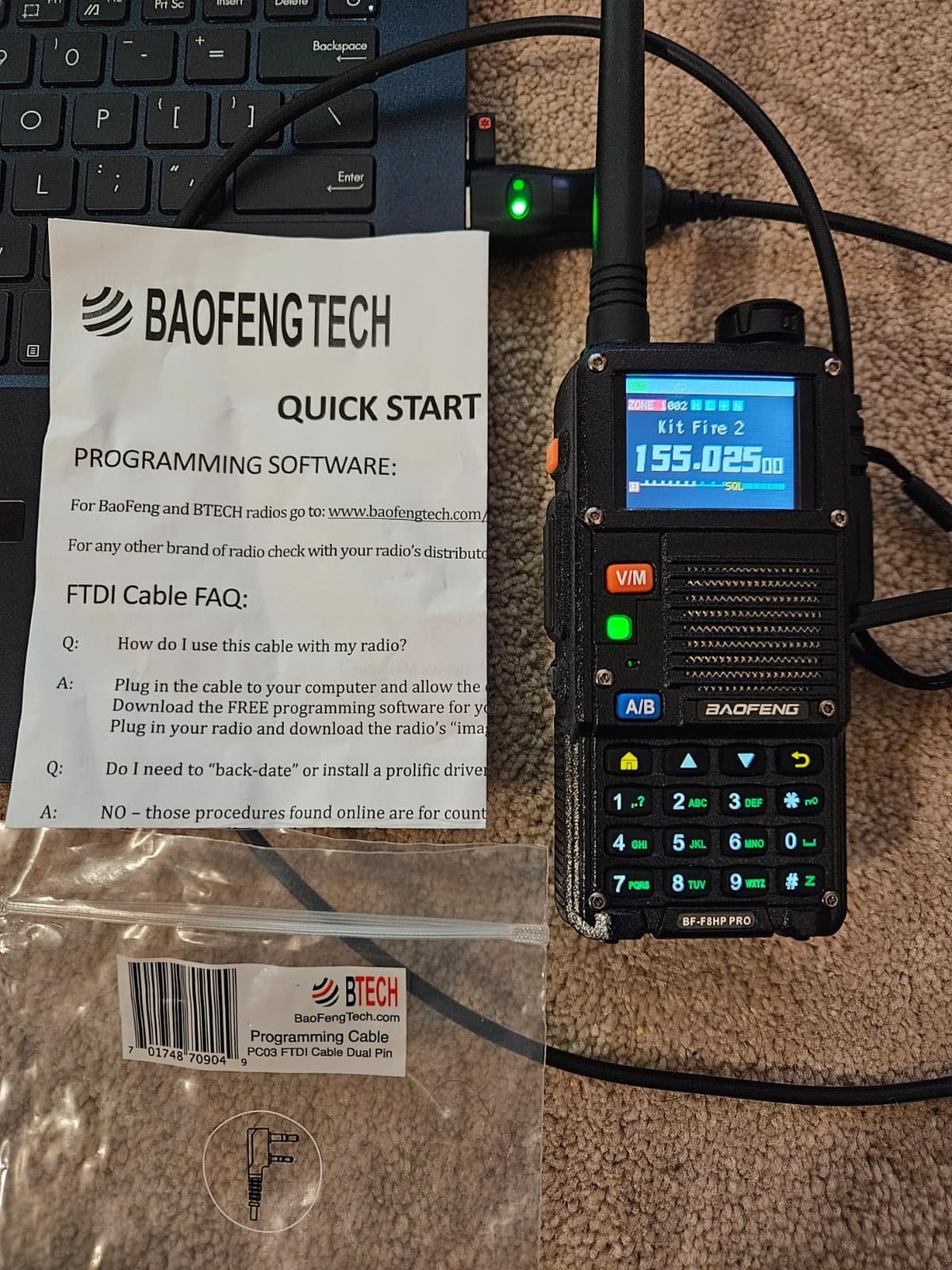
The 2500mAh battery charges over USB-C or in a desktop cradle, and IP54 water resistance takes care of rain and dust. Direct radio-to-radio location sharing works between two compatible units, which is a simple way to say where the group is without a phone.
Radio-to-radio location sharing does not pass through repeaters, and it needs two compatible handsets rather than a network, so treat it as a convenience rather than a tracking system.
Why firmware and zones matter for a standby kit
Updateable firmware means a radio that was bought this year can receive fixes and improvements later, which reduces the risk of owning a device that feels finished the day it arrives. Named zones also cut setup time, because a channel list can be loaded and labeled once instead of rebuilt by hand.
Receive-only NOAA and FM broadcast reception gives the set a use beyond talking, which matters when the group is sheltering and needs information without draining a phone battery.
Where the marketing runs ahead of the hardware
Airband AM reception is described as muddy and distorted, and the included antennas do not improve it. Treat aviation listening as a curiosity rather than a feature to buy for.
The programming cable is sold separately, firmware updates require a Windows PC, and the firmware has gaps reviewers repeatedly flag: no brightness adjustment, squelch set to an arbitrary number, and side keys that trigger a nuisance alarm. Transmitting on amateur bands also requires a valid license.
8. Motorola T605 H2O — Best for Beginners and Mixed-Age Groups
Motorola Solutions, Portable FRS, T605_H2O, Talkabout, Two Way Radios Waterproof Walkie Talkie Emergency Preparedness, Rechargeable, 22 Channel, 35 Mile, Orange W/Black, 2 Pack
IP67 waterproof and floats
Water-activated flashlight
22 FRS channels
USB-C with AA dual power
Pros
- True IP67 waterproofing and a floating body
- Water-activated flashlight turns on when the radio hits water
- USB-C rechargeable batteries plus AA dual power
- Backlit display and one-button pairing
- Two-year manufacturer warranty
Cons
- No NOAA weather alert receiver
- Only 9 hours of stated battery life
- Fixed 22 channels with no programming or repeater access
- Highest one-star share of the ten picks at 14 percent
The T605 H2O is the set I recommend when the people using it have never held a radio before. Pairing is a single button, the display is backlit, and the automatic squelch means you do not have to understand why a channel sounds hissy before you can talk.
It is also genuinely waterproof at IP67 and floats face up, which puts it in the same durability class as the Retevis but in a softer, less technical package. The water-activated flashlight is a nice touch: when the unit hits the water the light switches on, so a dropped radio announces its own location.
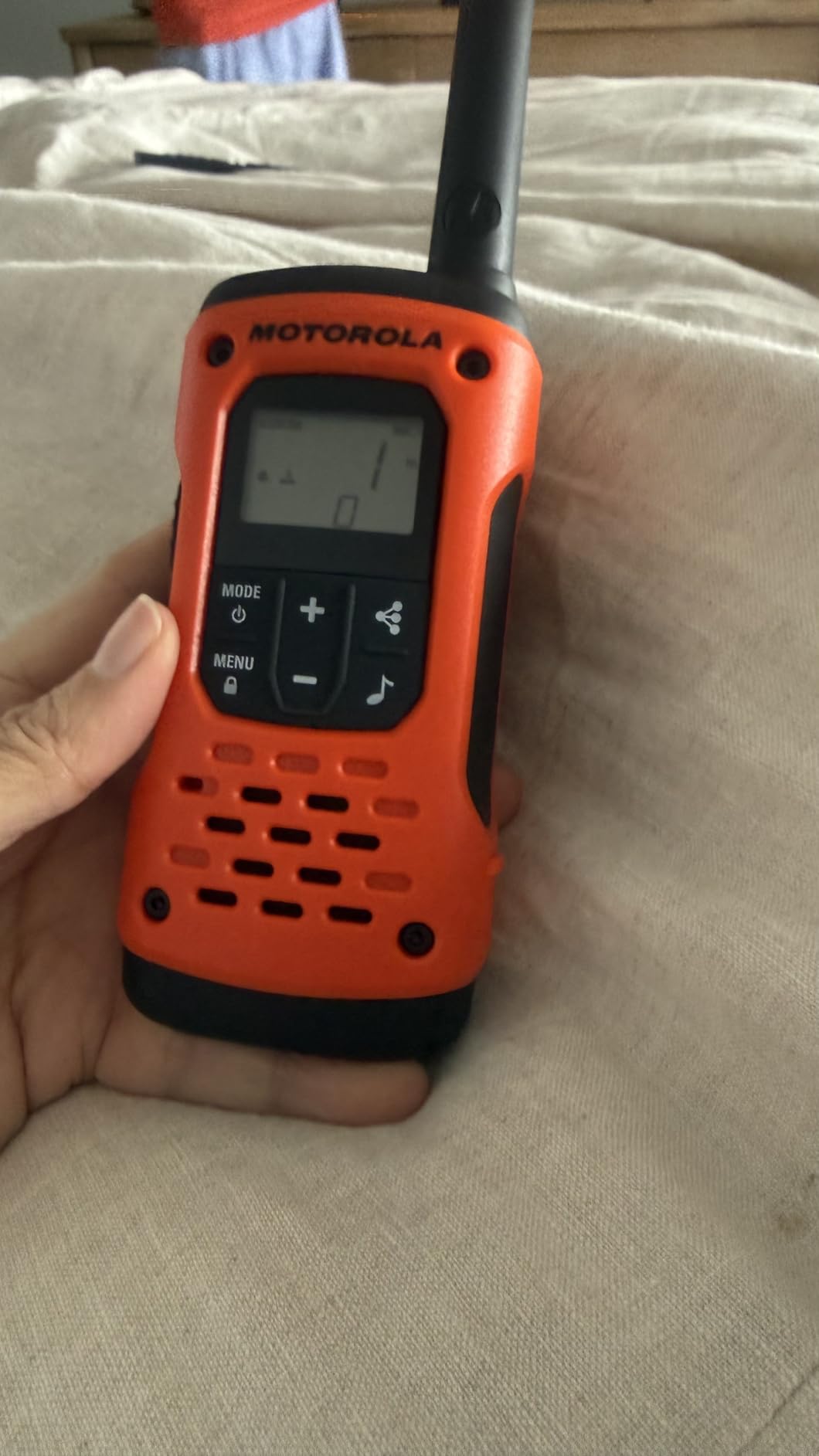
USB-C rechargeable batteries are included with AA dual power capability, so this set also solves the day-two charger problem that trips up most rechargeable-only radios. Twenty-two channels with 121 privacy codes give 2662 combinations, and FRS means no license.
A two-year manufacturer warranty sits behind it, and the 7.84-ounce weight is comfortable for a belt clip or a neck lanyard during a long evacuation walk.
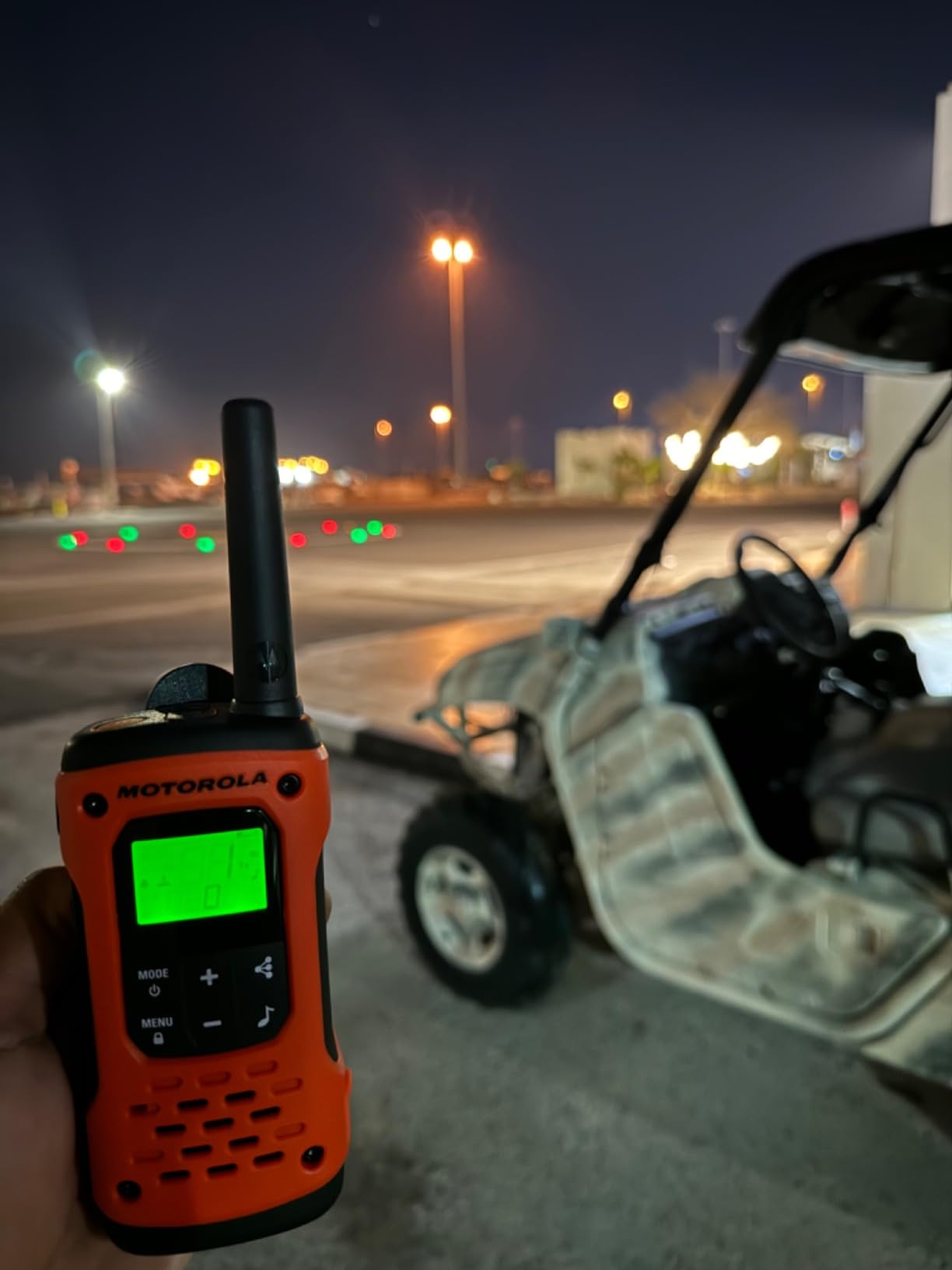
Best for mixed-age and mixed-skill groups
Grandparents, teenagers, volunteers and neighbors all learning at once is where a simple interface pays off. Nothing needs configuring, nothing needs a PC cable, and the AA fallback means a caregiver with a dying battery can swap cells rather than troubleshoot.
For family trips to the coast, kayaking with beginners or a neighborhood storm-response group, the waterproofing and simple controls are the two things that matter.
Where it falls behind the field
There is no NOAA weather alert receiver, so it cannot warn you about official watches and warnings. That is a significant omission for a product marketed for emergency preparedness.
Stated battery life is 9 hours, the shortest among the rechargeable pairs here, and the design is fixed at 22 channels with no programmability, repeater access or privacy-code customization. It also carries the highest one-star share in this group at 14 percent, with the lowest average rating, which is worth weighing against the brand name.
9. Rocky Talkie Mountain Radio — Best for Backcountry and Cold Weather
Rocky Talkie Mountain Radio – Long Range Walkie Talkie, FRS Handheld Radio, 4 Day Battery Life, Max Durability, 2 Pack
2 watts FRS
Four-day battery life
IP56 and shatterproof screen
Climbing carabiner included
Pros
- Four-day battery from a lithium-ion pack that holds up in cold
- Shatterproof LED screen and a shell with no fragile belt clip
- Climbing-rated carabiner plus a metal-reinforced back-up leash
- IP56 rated against splashes and snow
- Zero configuration with only five buttons to learn
Cons
- No NOAA weather alert receiver
- No programmability or privacy codes
- Two watts is below comparable ham-band handhelds
- Replacement batteries and accessories sold separately
The Mountain Radio solves a specific problem that most walkie-talkies create: a broken belt clip at hour six of a hike. It ships with a climbing-rated carabiner and a metal-reinforced back-up leash, and it has no fragile plastic clip to snap on a pack strap in the first place.
The battery is the other headline. Four days of life from a replaceable lithium-ion pack, and owners consistently report that it holds up in cold conditions where ordinary consumer batteries sag. For a winter storm, a ski trip or a multi-day evacuation in cold weather, that is the difference between a working radio and a dead one.
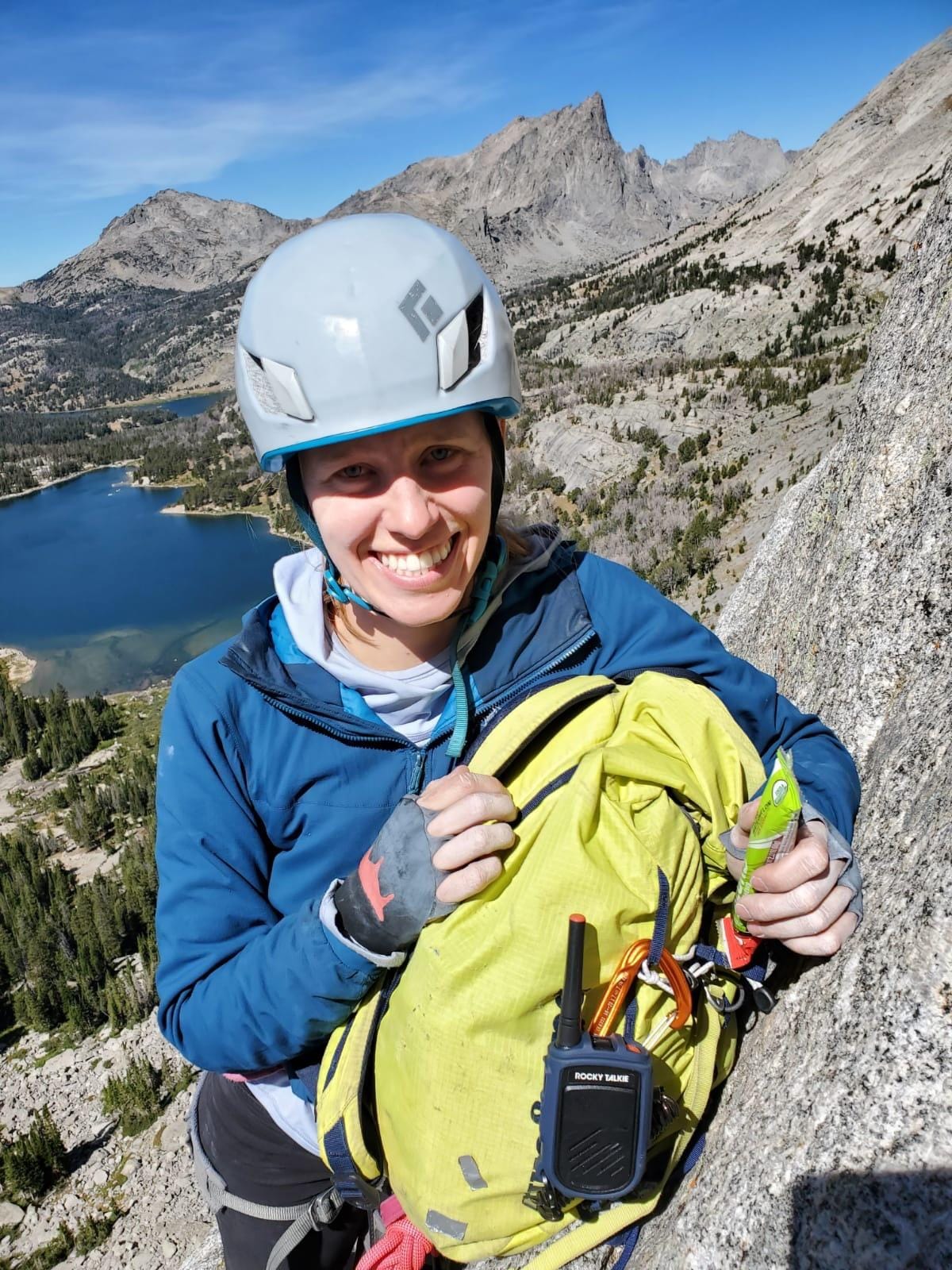
It runs at 2 watts, the maximum legal without a license, across 128 FRS channels, and it is IP56 rated against splashes and snow. The screen is shatterproof and the shell is thermoplastic with protective covering rather than a bare display.
Operation is five buttons with no configuration, which is why it works for people who will not set up programming software. Realistic backcountry range is 1 to 5 miles depending on terrain, and that is the number to plan around rather than the 35-mile maximum.
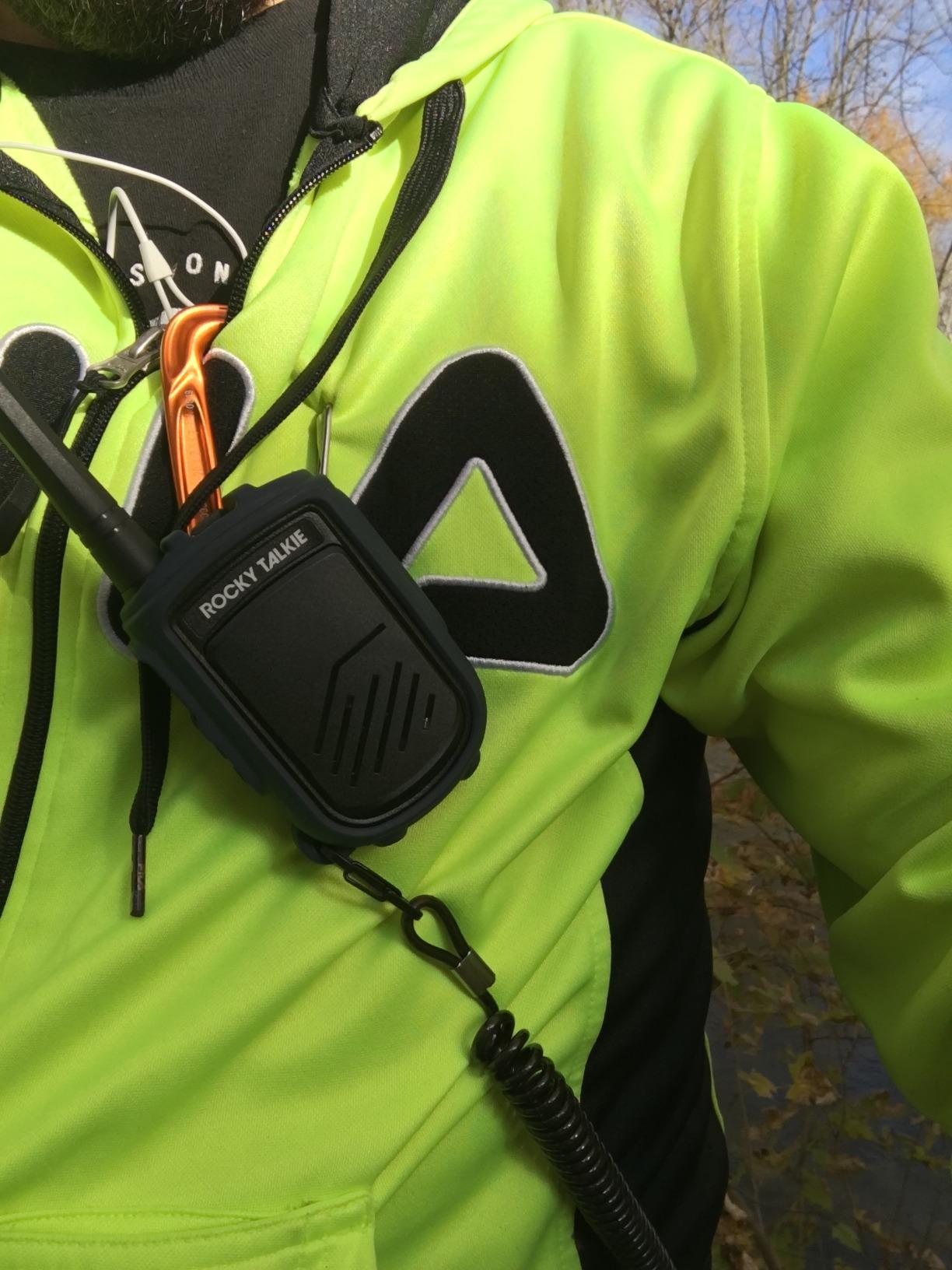
Built for movement rather than for a desk
Secure attachment is the quiet hero feature. A radio on a carabiner stays reachable on a harness or a pack and does not vanish into brush when the strap slips, and the back-up leash covers the case where the carabiner gate opens.
Cold-weather battery performance is what makes it a genuine emergency pick in winter rather than a hiking accessory, because most rechargeable packs lose a large share of their capacity when they get cold.
The gaps in a premium package
There is no NOAA weather alert receiver, which is a real absence for a product aimed at backcountry and emergency use, and there is no programmability or privacy codes beyond the fixed 128-channel FRS set.
It transmits one watt less than comparable ham-band handhelds, replacement batteries and accessories are sold separately, and the premium per-unit cost makes it a poor choice for stocking a go-bag with several units. Buy one or two as a lead radio rather than as the whole family kit.
10. Rapid Radios G1 — Best for Nationwide Coverage Beyond the Tower Line
Rapid Radios G1 – Nationwide LTE Walkie-Talkies – Unlimited Range Cellular Push-to-Talk Two-Way Radios Set
LTE push-to-talk
Group talks up to 200 people
256-bit AES encryption
Five-day battery
Pros
- Nationwide LTE coverage with no terrain-based dead zones
- Private one-to-one or group push-to-talk for up to 200 people
- Advanced noise cancellation for loud environments
- Five-day battery with USB-C charging
- 256-bit AES encryption and US-based phone support
Cons
- Requires an active LTE plan and fails where there is no cell coverage
- Ongoing service cost per radio per year after the first year
- About one in eight reviews is one-star over activation issues
- No GPS or location sharing of any kind
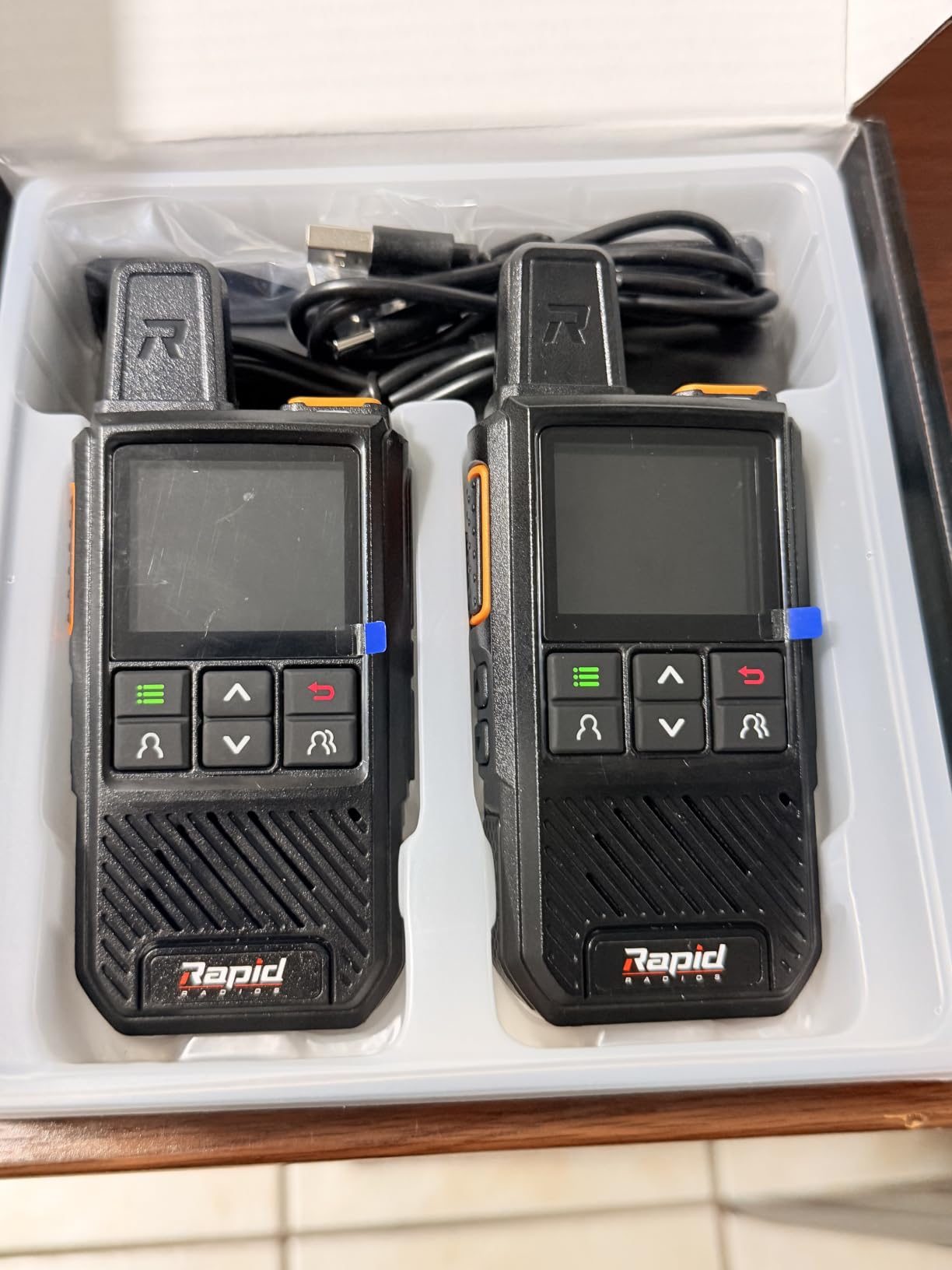
The G1 is not a traditional radio at all. It is a cellular push-to-talk device on the national LTE network, which means two people anywhere in the country can talk with no radio range limit at all, including across states. For a family split between a city and a rural county, that is a capability no handheld can match.
Groups of up to 200 people can share one channel, private one-to-one channels are available, and 256-bit AES encryption makes the audio genuinely private rather than merely code-filtered. Battery life is stated at five days on USB-C, which comfortably outlasts most multi-day events.
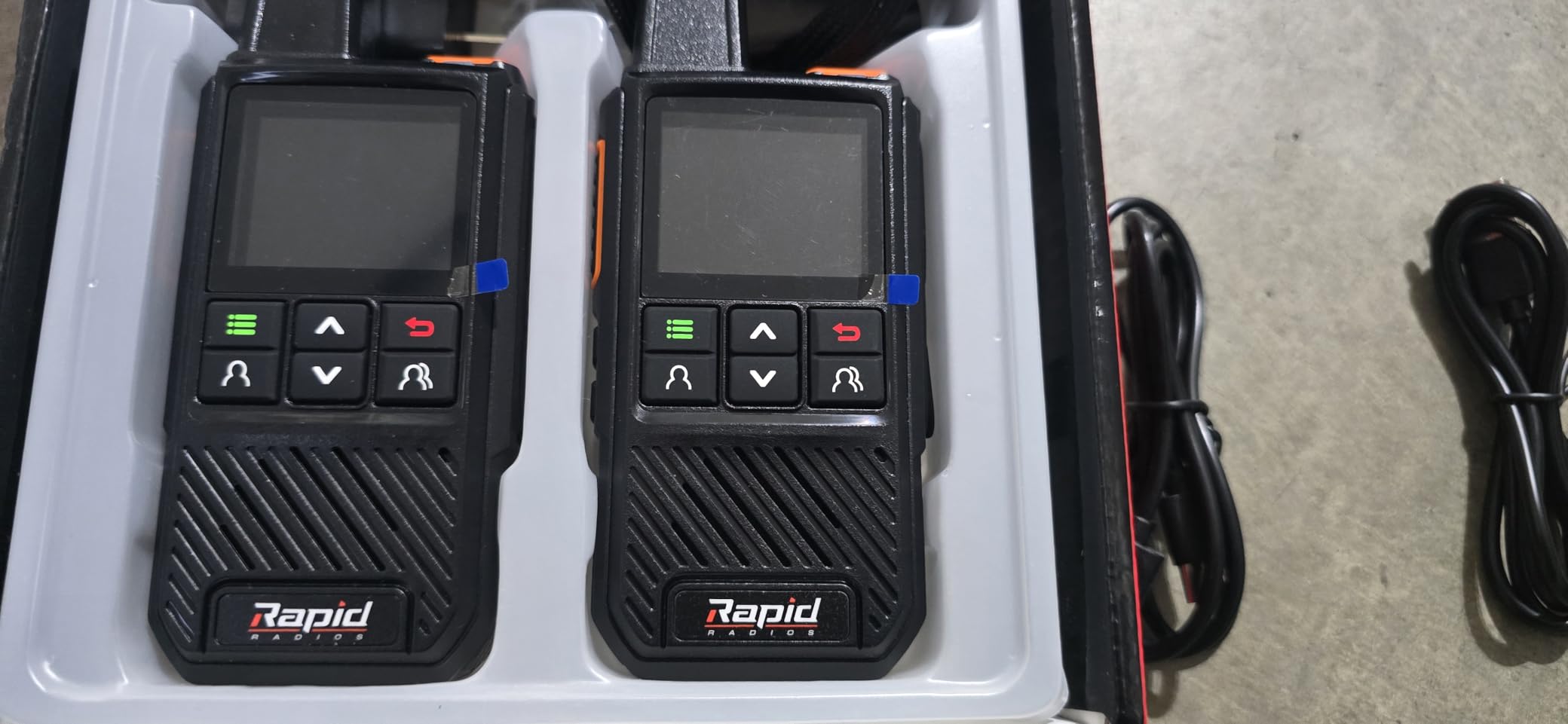
Owners point to the noise cancellation holding up in loud environments, and to US-based phone support that walks non-technical buyers through activation, which solves the single biggest complaint about the set.
It is also the only encrypted option in this roundup, and for anyone whose conversations involve medical details, financial information or evacuation routes, that difference is real.
Where cellular push-to-talk beats a handheld
Long-distance coordination is the obvious case. Road trips, family spread across multiple states, volunteer teams working a wide area and event staff who need one channel across a large site are all situations where a handheld simply cannot reach.
Encrypted audio and five-day battery life also remove two compromises that come with radio sets, and a rugged water-resistant housing rated for minus 10 to 60 degrees C handles ordinary weather.
The dependency that should decide your purchase
This set requires an active LTE plan with a SIM, so it fails in exactly the areas where traditional radios win, including remote stretches with no coverage and some disaster zones where towers are down. It should never be your only emergency radio.
Service renewals cost per radio per year after the first included year, about one in eight reviews is one-star due to activation and connection failures, third-party chargers void the warranty, and there is no location sharing at all. It works best as a complement to a handheld kit, not a replacement for one.
Before the Emergency: Test and Store Your Radios
A radio that has never been range-tested is a hope, not a plan. Five steps, about an hour of work, and you turn a guess into a known capability.
1. Charge everything fully, then label each radio
Charge every unit and write the owner’s name on the back with a permanent marker or a piece of tape. In a dark hallway with six identical radios, a labeled set saves ten minutes of confusion. Assign one radio per person, and keep one spare in the go-bag.
2. Run a walk-apart range test in your own area
Two people start at opposite ends of a street, then walk apart while talking, marking the last point where audio stayed clear. Repeat it from the most important point in your life, such as the school pickup or the neighborhood assembly point, because terrain and buildings decide the result more than wattage does.
3. Agree on a channel and a privacy code, then write it down
Any two radios on the same frequency, in the same service class, on the same channel and the same privacy code hear each other regardless of brand. Agreeing on one channel and one code beforehand is the single most common fix for the group-split problem that forum users report, where one radio sits on code 5 and another on code 0 and nobody hears anybody.
4. Know what you can and cannot hear
Your radio cannot receive a phone call, cannot reach the internet and does not send to emergency services. Write down the local mutual aid or search and rescue channel for your area, and listen rather than transmit on official emergency frequencies, which is reserved for actual responders.
5. Recharge and rotate the batteries
Rechargeable packs slowly self-discharge in a drawer, and dead-in-the-drawer is the most common emergency radio failure reported in preparedness forums. Top every radio up every few months, keep spare cells with each unit, and mark the date you checked them.
Our broader two-way radio roundup covers more models for hiking and everyday use if you want a second set for non-emergency purposes.
How Far a Two-Way Radio Really Reaches
Advertised range numbers assume open water, flat ground, a clear view and fully charged batteries. Here is roughly what to expect once buildings, trees and hills enter the picture.
Open land or water — about 6 miles for a 2-watt FRS handheld, up to 4 to 5 miles for an 8-watt GMRS set.
Woodland or light urban — about 3 miles for a 2-watt set, 2 to 3 miles in the city for higher-powered units.
Dense urban or heavy forest — often under 1 mile, sometimes a few blocks.
Line of sight is the governing rule. FM propagation is essentially visual, which is why forum users are blunt that radio reaches a few miles in real conditions and point to satellite messengers for anything beyond that. A 2-watt license-free set with 1 watt of real-world difference is not going to bend a hillside.
What two-way radios cannot do
They cannot call emergency services, send a text, work without power, or reach around terrain. Privacy codes filter chatter but do not encrypt. And every transmission is half-duplex, so both sides take turns on one channel, which means a long message blocks anyone else from talking.
When something other than a radio is the right call
If you need to reach beyond line of sight or across state lines, a satellite messenger is the honest answer. Ham radio with a directional antenna and knowledge of propagation can beat a handheld for long distance, and it is the only option that keeps working with no infrastructure at all, at the cost of an exam and a steeper learning curve.
FRS vs GMRS vs Amateur Radio: Which One Do You Need
Choosing the wrong class is the most common buying mistake, and it is easy to reverse later only at the cost of the radio itself.
FRS is license-free, capped at 2 watts and sits in the 462 to 467 MHz range. Everyone can buy and transmit without paperwork, which makes it the right default for families, neighbors and anyone who needs a radio working tonight.
GMRS allows higher power, adds repeater access and lets a family share a single federal license that lasts ten years and covers immediate family members. The license itself is a modest one-time federal fee, with no exam and no code test. It is the best balance of power and paperwork for most preparedness buyers.
Amateur radio requires a written exam and unlocks far more spectrum, including bands that propagate around terrain and over long distances. It also gives you a community, contesting, and emergency communication legitimacy that FRS and GMRS lack.
How to get a GMRS license in four steps
Register an account with the FCC, pay the one-time ten-year license fee, note that it covers your immediate family, and start on a GMRS or FRS channel without any further paperwork. There is no test to pass. The main legal catch is that anyone under 27, and anyone transmitting for a business, must hold the license.
GMRS is also the only one of the three with a licensing requirement that people routinely forget. Transmitting on GMRS without a license is a fineable offense, and it applies even during an emergency.
Which Radio Fits Which Emergency
Match the radio to the scenario rather than to the spec sheet, because the scenarios have very different demands.
Neighborhood and family check-ins — the Midland GXT1000VP4, for NOAA alerts and AA backup when the power is out.
Flood, river and boating — the Retevis RB48 or Motorola T605 H2O, both IP67 and both floating.
Wildfire evacuation across open terrain — the Baofeng UV-5R 10W upgrade, where the extra watts carry over ridges.
Long-distance family contact across states — the Rapid Radios G1, paired with a handheld as a backup.
Winter storm or backcountry travel — the Rocky Talkie Mountain Radio, for cold-weather battery life and secure mounting.
Large volunteer or neighborhood group — a pair plus a spare, on a shared GMRS channel with a repeater if one is available.
Tight budget, short range — the pxton PX-888S, for house-to-yard communication where NOAA is not required.
Frequently Asked Questions
Are walkie-talkies good for emergencies?
Yes. Walkie-talkies work radio-to-radio with no cell tower, no internet and no subscription, so they keep functioning when phones stop. The best emergency sets add NOAA weather alerts, dual power with AA fallback and an IP67 waterproof rating, and they only fail if the batteries die.
Will walkie talkies work when cell towers go down?
Yes, and that is their main advantage. A handheld two-way radio transmits and receives directly between units, so a dead tower, a dead power grid or a congested network has no effect on it. The only things that stop a radio are flat batteries, being on the wrong channel, or terrain between you and the other person.
Which walkie talkie is best for survival in an emergency?
For most households the Midland GXT1000VP4 is the strongest all-round choice, because it scans NOAA weather channels, runs on rechargeable packs and falls back to AA cells when the power is out. For water-heavy scenarios the Retevis RB48 is the pick with true IP67 waterproofing and a floating body. Match the radio to the scenario rather than the range claim.
Do I need a license to use a GMRS radio?
Yes. GMRS requires a single federal license that lasts ten years and covers your immediate family, with no exam to pass. Anyone under 27 or transmitting for a business must hold one, and transmitting without it is a fineable offense. FRS radios need no license at all, and amateur bands require passing a written exam.
How far can a walkie talkie really reach?
A 2-watt FRS handheld realistically covers about 6 miles in open land, 3 miles in light woodland and often under 1 mile in a dense city or heavy forest. Higher-powered GMRS units reach further, but line of sight is the governing rule. The 30-plus mile figures on packaging assume flat open ground with no obstacles.
Can different brands of walkie talkies talk to each other?
Yes, as long as they operate in the same radio service class and share the same frequency, channel and privacy code. FRS and GMRS sets interoperate on the shared channels. Privacy codes reduce chatter but are not encryption, so anyone on the main channel can still hear your conversation.
Are there EMP proof walkie-talkies?
No consumer handheld is certified EMP proof, and no certification scheme exists for it. The practical protections are simple: use standard AA cells you can replace, keep spare alkaline batteries with every radio, and avoid sets that depend entirely on a proprietary rechargeable pack. That way a radio affected by an event is still replaced in minutes.
What is the 3-3-3 rule for radios?
The 3-3-3 rule is a general stockpiling guideline meaning three weeks of supplies, three months of independent resources and three years without help. It applies to radio kits too: three radios per group as spares, three sets of spare batteries per radio, and three separate ways to contact outside your group beyond the radio itself.
The Bottom Line
The best two way radios for emergency communication come down to three honest questions: will it run when the power is out, will it warn you about the weather, and can your group actually reach each other where you live. Answer those and the model matters far less than the marketing range claim.
For most households the Midland GXT1000VP4 covers all three with NOAA scanning and AA fallback, and it is the set I would buy first. If water is part of your scenario, add a floating IP67 set like the Retevis RB48. If terrain is the problem, add power, and if distance is the problem, add a cellular push-to-talk unit alongside the handheld rather than instead of it.
Then spend the hour that matters: charge everything, run a walk-apart test, agree on one channel and one privacy code, label the radios and set a reminder to recharge them every few months. A tested radio in a drawer beats an untested one in a sealed package, and that gap is where most emergency plans quietly fail.