
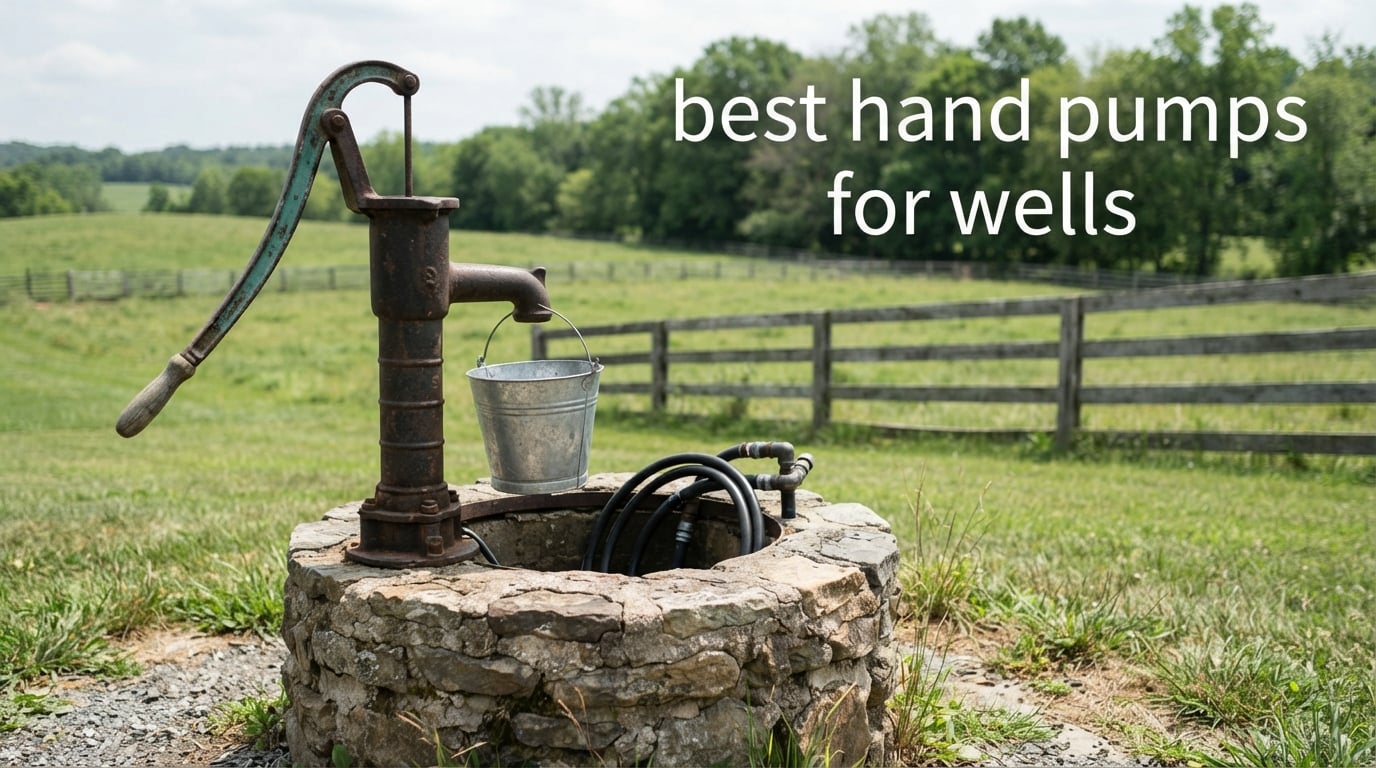
The best hand pumps for wells are chosen by one number: your static water level. If your water sits less than about 25 feet below the surface, a cast iron pitcher pump will serve you for decades. If it sits deeper than that, no pitcher pump on the market will lift it, and the pump you need is a different category of machine entirely.
That is the whole decision. Everything else, material, brand, price, styling, is a preference layered on top of a depth you cannot change. I have gone through the current shallow-well hand pump market line by line, read the customer feedback on each one, and grouped the results by what they actually deliver: lift height, construction, flow, and the maintenance you will be doing in five years when the novelty has worn off.
One thing to say up front, because the search results bury it. Every hand pump reviewed here is a shallow-well pitcher pump rated between 25 and 30 feet. That is not a limitation of this list, it is the limit of physics for this pump design. If you own a deep well, a 100 foot or 200 foot well, none of the seven products below will help you, and I explain in the buying guide what does.
The failure mode I see most often is a buyer who assumes every hand pump is a pitcher pump, spends a modest amount on one, mounts it on a well head, and discovers that the water level sits 40 feet down. The pump is fine. The well is simply outside its reach, and no amount of priming or adjustment changes that.
Table of Contents
Top 3 Best Hand Pumps for Wells in 2026

Simmons 1160/PM500 Pitcher Pump
- 25 ft maximum lift
- 10 gpm flow rate
- All close grain cast iron
- 6.8 pounds

VEVOR 25 ft Hand Pitcher Pump
- 25 ft maximum lift
- NPT 1-1/4 in connection
- Installs in 2-3 minutes
- 12.9 pounds

Boshart Pe-Hp(110) Pitcher Pump
- 30 ft maximum lift
- Antifreeze equipped
- Handle-trip drain valve
- 3 in cylinder
Hand Pumps for Wells in 2026 Quick Overview
All seven products below lift from 25 to 30 feet, install on a 1-1/4 inch pipe tap, and need no electricity. The differences are in cylinder size, material, sealing system, and whether the pump can be winterized in place.
| Product | Specifications | Action |
|---|---|---|
| Simmons 1160/PM500 Cast Iron Pitcher Pump |
|
Check Latest Price |
| VEVOR 25 ft Cast Iron Hand Pitcher Pump |
|
Check Latest Price |
 SWP 300 Cast Iron Pitcher Pump SWP 300 Cast Iron Pitcher Pump |
|
Check Latest Price |
 XtremepowerUS Vintage Hand Pitcher Pump XtremepowerUS Vintage Hand Pitcher Pump |
|
Check Latest Price |
 Locci Stainless Steel Hand Well Pump Locci Stainless Steel Hand Well Pump |
|
Check Latest Price |
| Boshart Pe-Hp(110) Cast Iron Pitcher Pump |
|
Check Latest Price |
 HFS 25 ft Cast Iron Hand Well Pump HFS 25 ft Cast Iron Hand Well Pump |
|
Check Latest Price |
1. Simmons 1160/PM500 No.2 Pitcher Pump: The One to Buy for Most Wells
Simmons 1160/PM500 No.2 Pitcher Pump
Cast iron body
25 ft maximum lift
10 gpm flow rate
6.8 lb unit weight
Pros
- All close grain cast iron with reinforced bolt lugs
- 10 gpm flow rate handles buckets and barrels
- Adjustable cap for different handle positions
- Backed by 999 customer reviews
Cons
- Leather seals dry out between uses
- Spares may be needed on arrival
- Can lose prime without a check valve
Simmons model 1160/PM500 is the pump I recommend to anyone whose water sits in the mid teens. The spec sheet says 10 gpm and 25 feet of lift, and owners consistently report lifting reliably from wells in the 14 to 20 foot range, which is exactly the band this pump is built for.
What stands out against the newer garden-market cast iron pumps is the material spec. Every part is close grain cast iron, including the bolt lugs, which are reinforced for long service. At 6.8 pounds it is the lightest unit in this group by a wide margin, and that matters if you are bolting it to a wooden platform over a well vault rather than setting it into concrete.
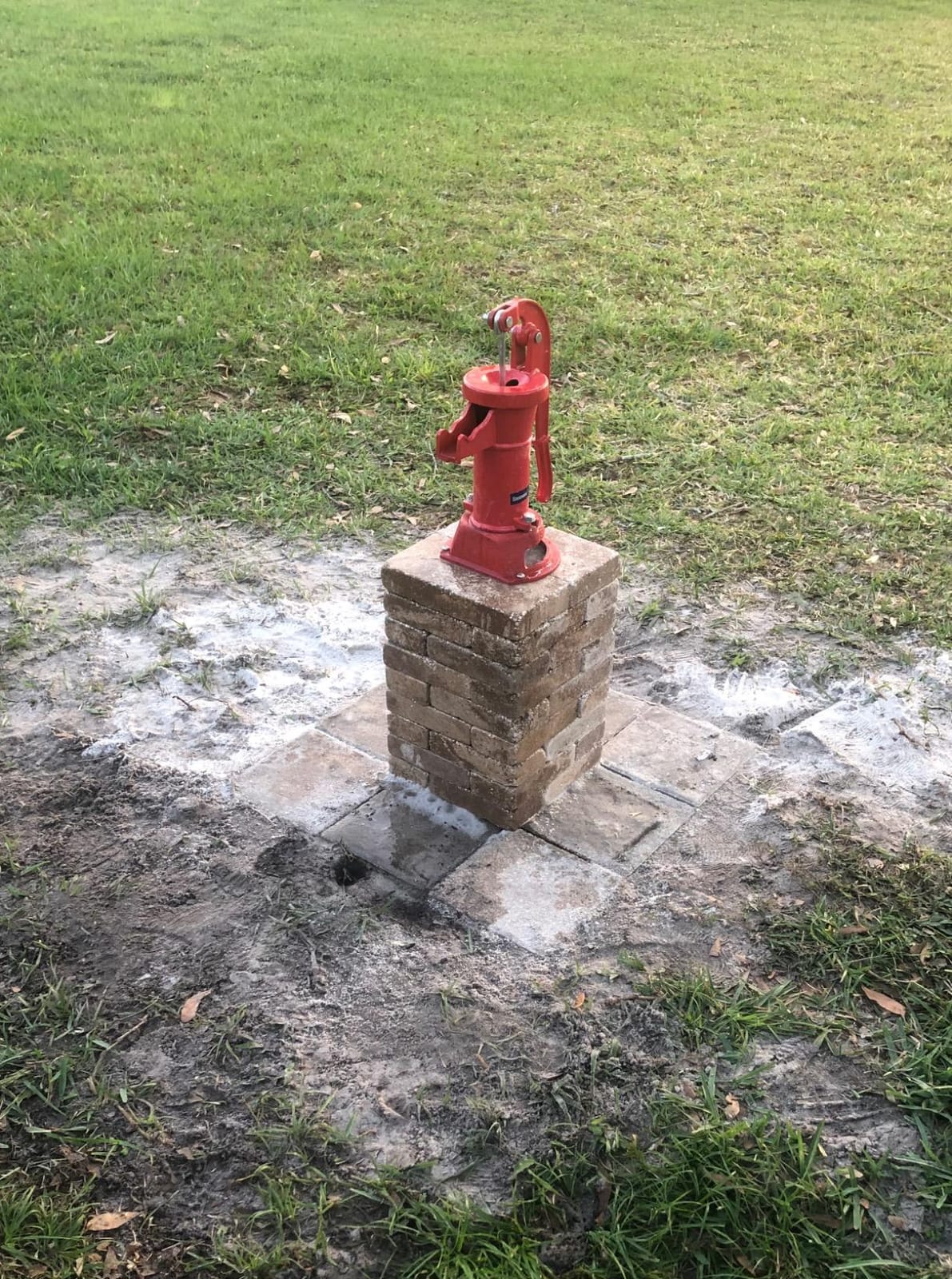
The cap is adjustable for a wide range of handle positions, which is a small engineering detail that pays off. It lets you set the leverage to match the person doing the pumping, and it means a child or an older adult can each get a stroke that works for them instead of one person straining and the other barely moving water.
With 999 customer reviews behind it, this is by far the best-documented pump in the lineup, and that documentation is worth something in a category where most listings have fewer than 100 reviews. The consistent theme in the feedback is dependable cast iron construction that primes easily and keeps working.
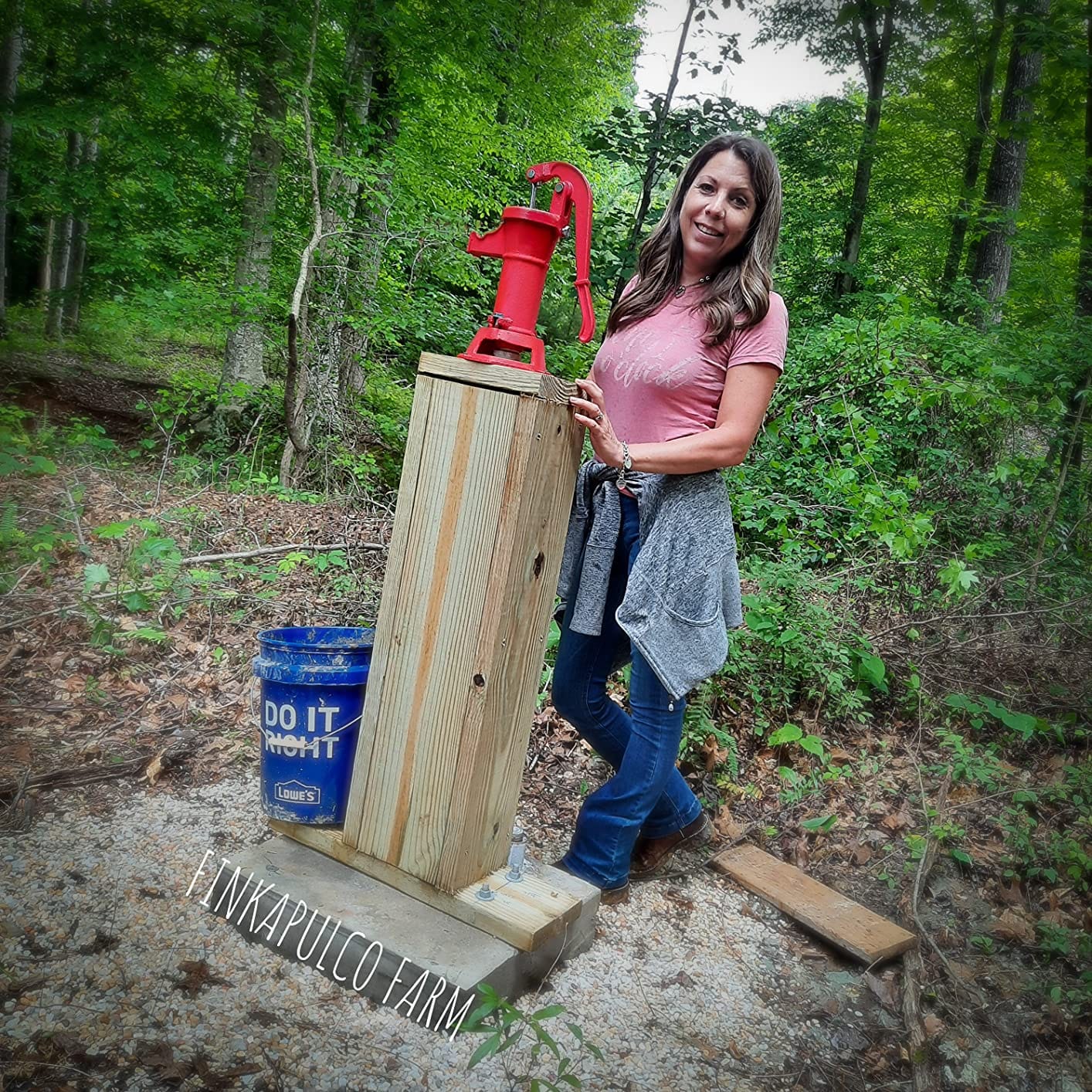
Is the Simmons worth the higher spend over a budget pitcher pump?
Yes, if this pump will be your primary water source during outages rather than a garden ornament. The reinforced cast iron and the 10 gpm flow rate are the difference between filling a bucket in a reasonable number of strokes and filling it in a number you will regret. The flowing rate also makes it usable for a livestock tank, which most of the others in this list are not really sized for.
The honest caveat is the sealing. The factory leather and gasket seals dry out when the pump sits unused, which is exactly what happens to a backup pump. Owners report having to soak, reshape, or replace them before the pump will hold prime. A spare seal kit is not optional if you buy this as an outage pump.
Who should skip the Simmons 1160/PM500?
Skip it if your water sits below 25 feet, because the lift rating is the ceiling and the pump will simply run dry. Also skip it if you are installing in a climate with hard freezes and do not want to drain the unit every autumn, since this model has no antifreeze provision or drain-by-handle valve listed.
And skip it if you only need water for a garden pond. For that use case the pump is overbuilt, and the lighter budget cast iron models do the same job with less effort. The Simmons earns its place when water needs to move fast and repeatedly.
2. SWP 300 Cast Iron Manual Well Pump: Highest Rated in the Group
6699 Durable Cast Iron Pitcher Pump Antique Manual Hand Shake Suction Well Pump Water Transfer Pump 25ft Maximum Lift Easy Installation for Outdoor Garden Pond Backyards SWP 300 Black
Cast iron with painted finish
25 ft max lift
5 gpm and 300 GPH
16 lb unit weight
Pros
- Highest customer rating in the group at 4.5
- 3 in cylinder moves serious volume
- All mounting hardware included in the box
- 16 lb build resists deformation and rust
Cons
- Must be emptied before winter
- 25 ft lift ceiling
- Listing details inconsistently named
The SWP 300 carries the highest average customer rating of any pump I reviewed, at 4.5 stars across 212 reviews. That is a useful signal in a category where ratings cluster tightly, and it is backed by 212 reviews rather than a handful, so it is not a thin sample.
Flow is the headline number here. Maximum flow is listed at 300 GPH, with a 5 gpm rate and a 3 inch cylinder diameter, which puts it in the same delivery class as the Simmons while using a larger cylinder to do it. The cast iron body carries a painted surface specifically to resist rust and corrosion.
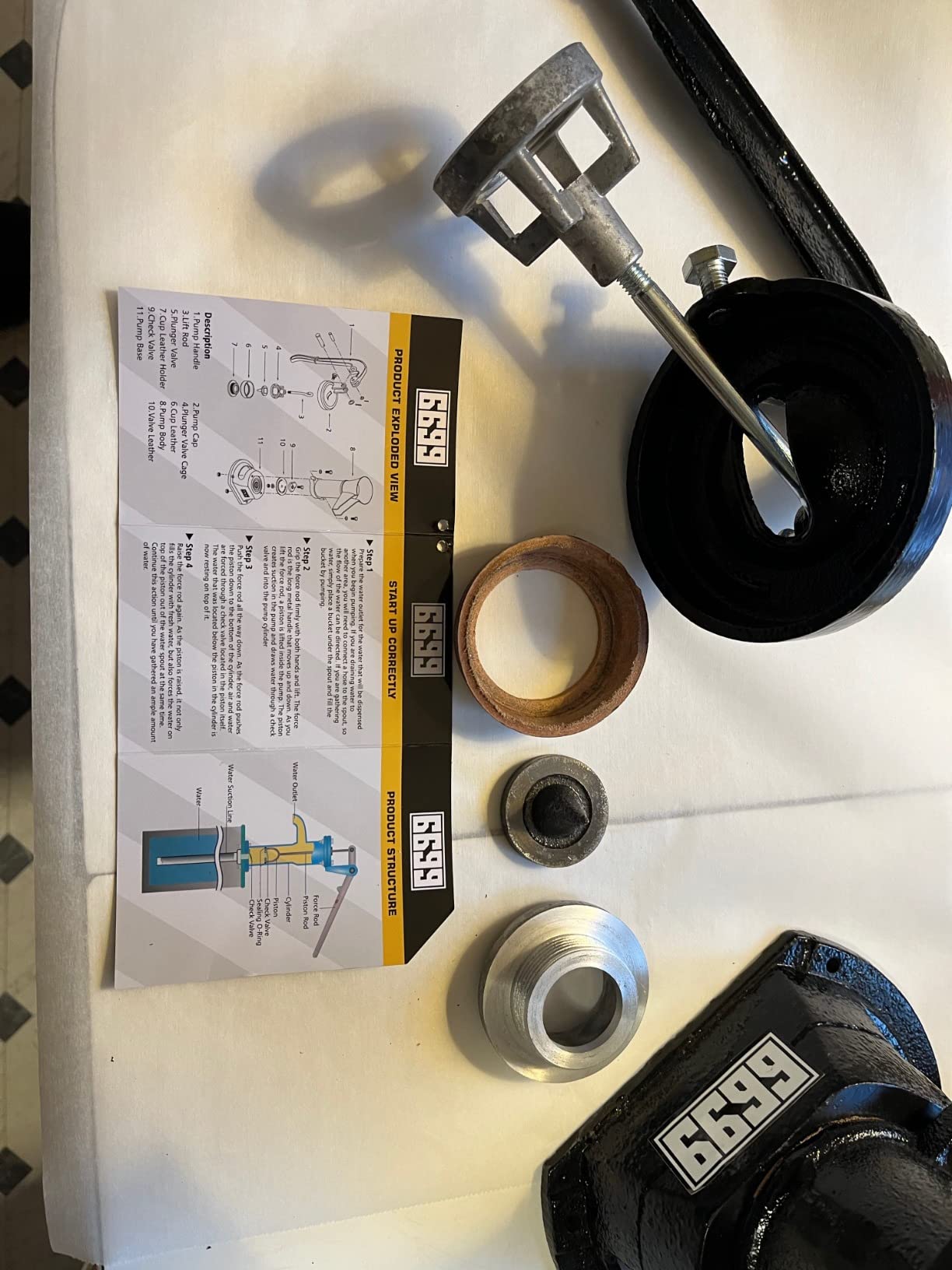
At 16 pounds it is the second heaviest unit in the lineup, and the box includes the mounting hardware you would otherwise be hunting for, including number 8 by 40mm anchors, M5 by 40mm screws, M6 nuts, and M6 by 60mm bolts. Owners single out the fact that the screws are included as a genuine convenience, since this pump mounts to a deck, a rail, or a wall bracket.
The integrated hook groove lets a bucket hang securely without a second hand on the handle, which sounds minor until you have filled forty buckets in an afternoon and understand how much that matters.
Is the SWP 300 the best hand crank pump for a well on a budget?
Among the products with meaningful review counts, it is. A 4.5 rating with 212 reviews is a stronger evidence base than any other option here except the Simmons, and the included hardware removes the most common reason a cheap pump gets returned.
The trade is weight and finish. Sixteen pounds of cast iron is a commitment when it is mounted above a well vault, and the painted finish, while rust resistant, will show wear at the spout and base faster than bare or stainless material will.
Who should skip the SWP 300?
Skip it in a freezing climate. The manufacturer recommends emptying the pump in winter to prevent freezing damage, which means a manual drain ritual every autumn and again before the first freeze. Buyers in northern states should look at a model with an integrated drain valve instead.
Skip it if your water is deeper than 25 feet, and note the listing itself is inconsistently named on brand and style, so buy the physical description, not the metadata. If you need something lighter to carry between a garden and a cistern, this is the wrong weight class.
3. Boshart Pe-Hp(110) Cast Iron Pitcher Pump: Best for Cold Climates
Pe-Hp(110) Cast Iron Pitcher Pump 033308 Boshart
Antifreeze equipped cast iron
30 ft maximum lift
3 in cylinder, 1-1/4 in tap
Handle-trip drain valve
Pros
- Highest lift rating in the group at 30 ft
- Antifreeze equipped for rural installs
- Winterizing valve trips by raising the handle
- 3 in cylinder suits standard well plumbing
Cons
- Most expensive model in the lineup
- Sparse written customer feedback
- Must still be winterized in hard freezes
Two specifications set this pump apart from everything else on the list. The first is a 30 foot maximum lift, the highest rating in the group, and the second is that it is antifreeze equipped, which means it is the only pump here designed to be left in a well through freezing weather.
The winterizing method is the part I like. Instead of pulling a plug or finding a drain port, you raise the handle to its extreme height, and the valve trips, emptying the pump body. That is a five second job you can do with gloves on in the cold, and it removes the single most common way backyard hand pumps get destroyed.
It is adapted for cisterns as well as wells under 30 feet, with a 3 inch diameter cylinder and a standard 1-1/4 inch pipe tap, so it will accept the same plumbing as the cheaper models. For a rural or off-grid install where freezing is a certainty rather than a risk, that combination is the whole argument.
The reason this is not my top pick is straightforward: the review pool is 66. A 4.4 rating is encouraging, and owners do approve of the cast iron construction and the 30 foot reach, but there is simply not much written long-term maintenance history to draw on.
Does a 30 ft lift rating matter in practice?
Sometimes, and it is worth understanding exactly when. A 30 foot rating gives you roughly five feet of margin over the 25 foot practical ceiling, which covers a well that is a little deeper than you estimated or a water level that drops seasonally. It does not turn a shallow pump into a deep-well pump, and it will not help you at 60 feet.
Antifreeze equipment is the more valuable feature here. Most pumps destroyed in winter were destroyed while full of water, and this one is built to be left connected.
Who should skip the Boshart Pe-Hp(110)?
Skip it if this is a garden and pond project. You are paying for freeze protection and extra lift that a decorative yard pump does not need, and you are buying from the smallest documented review pool in the lineup. Buyers wanting the 30 ft headroom on a budget have better documented options in the mid tier.
Also skip it if you refuse to winterize anything. Even an antifreeze equipped pump benefits from having its body drained before deep cold, and the handle trip takes seconds once you know the motion.
4. VEVOR 25 ft Cast Iron Hand Pitcher Pump: Best All-Round Garden Pump
VEVOR Well Hand Pitcher Pump, 25 ft Maximum Lift, Antique Cast Iron Manual Hand Water Pump, NPT 1-1/4 in Connection, Easy Installation, Old Fashioned for Outdoor Garden, Pond, Backyard, Farm, Red
Rust resistant cast iron coat
25 ft maximum lift
NPT 1-1/4 in connection
12.9 lb unit weight
Pros
- 400 customer reviews at 4.4 stars
- Thickened pipe rated for 20 lb hammer impact
- Hook spout for splash-free bucket hanging
- Installs with a screwdriver in 2-3 minutes
Cons
- Requires manual priming before flow
- Drain before winter to prevent freeze
- 25 ft lift limits it to shallow wells
VEVOR sells a lot of hardware, and the reason this pitcher pump holds a 4.4 rating across 400 reviews is that it does a narrow job quickly and cheaply. Installation is genuinely a two to three minute screwdriver job through a standard NPT 1-1/4 inch connection, with no special fittings and no drilling.
The build detail I would not have expected at this tier is the thickened pipe rated to handle 20 pounds of hammer impact. That tells you something about the casting quality behind the vintage red coating, and the coating itself is a rust resistant finish rather than bare paint.
The handle is shaped to the palm curve, which reduces the effort per stroke over a straight bar, and the hook spout lets you hang a bucket so the water lands in it rather than down the side. Owners mention the vintage styling as a genuine benefit, since plenty of these pumps end up mounted where the yard is on camera.
At 15.75 inches tall and 12.9 pounds, it is compact enough to mount on a well vault lid without dominating the space above it.

What is a good hand crank pump for a garden or pond?
This one. It hits the combination that matters for decorative and utility outdoor use: enough customer history to trust the design, a finish that survives weather, a comfortable handle for repeated strokes, and an installation that does not require a plumber.
If your primary goal is drinking water, livestock, or outage supply for a household, I would move up to the Simmons or the SWP 300 instead, both of which have better flow characteristics and heavier castings.
Who should skip the VEVOR pitcher pump?
Skip it as a primary household pump, because it needs manual priming before water will flow. In a storm with the power out and a line drained overnight, priming is a step that can turn a working backup into a frustrating one, and the review feedback shows that is exactly the experience some owners had.
Skip it if you live where it freezes and you are not willing to drain it each autumn. And skip it entirely if your static water level is past 25 feet, because the 25 ft rating is a hard limit rather than a guideline.
5. Locci Stainless Steel Hand Well Pump: Best for Rust Resistance
Locci Stainless Steel Manual Hand Well Pump, Heavy Duty Deep Well Hand Pitcher Pump with Integrated Base Design, Corrosion-Resistant Water Pump for Farm, Garden, Homestead & Emergency Water Supply
Stainless steel body
26 ft maximum lift
4 lb unit weight
Integrated base design
Pros
- Stainless steel resists rust and corrosion
- Only 4 pounds so easy to reposition
- Spare leather bowls and pads included
- Integrated base cuts movement while pumping
Cons
- 26 ft lift ceiling caps it at shallow wells
- Leather bowls and pads wear over time
- Notable share of buyers rate it 3 stars or below
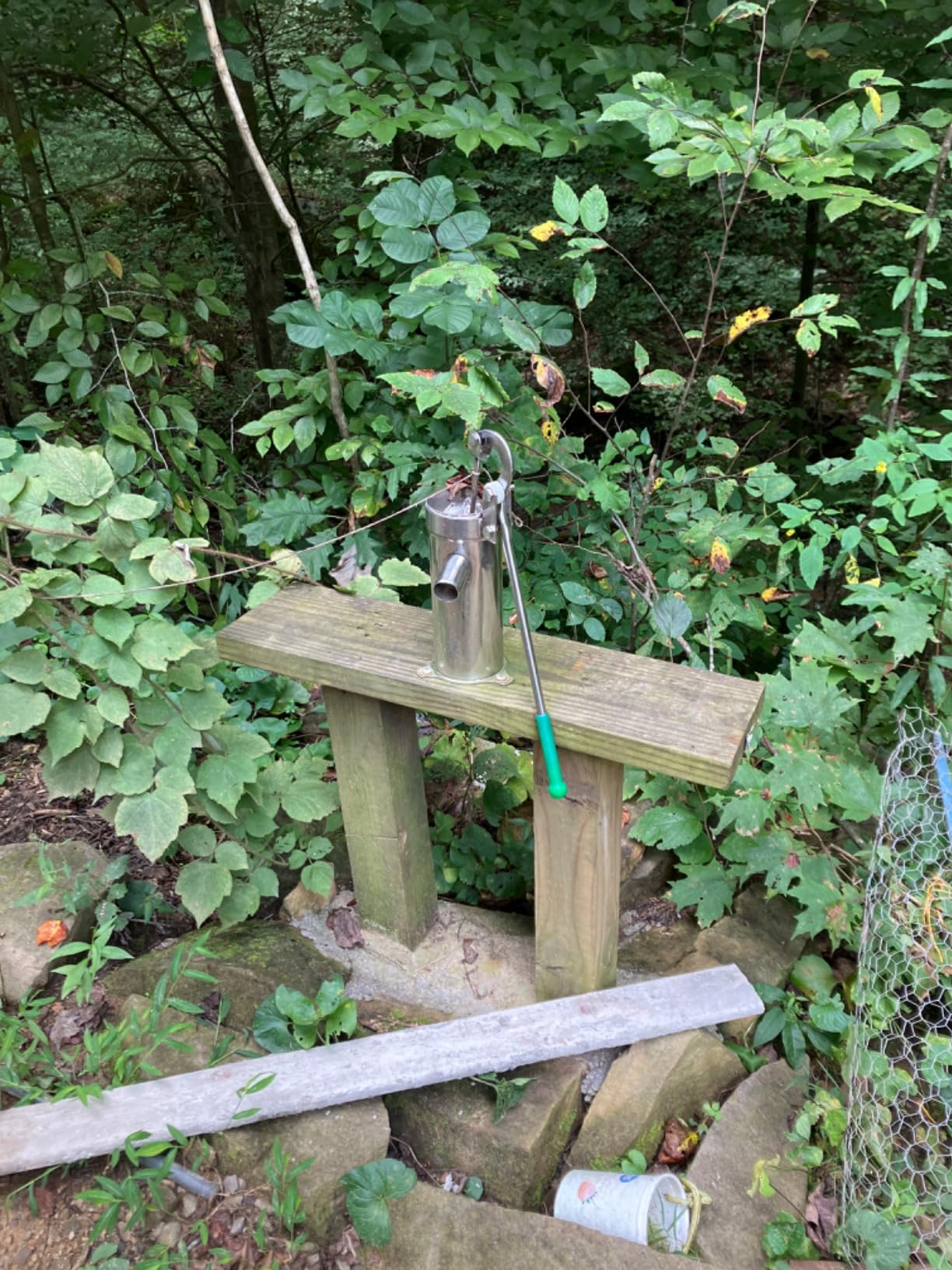
This is the only stainless steel pump in the lineup, and that single material choice changes where you can put it. Cast iron needs a coating maintained and will pit in a saline or acidic well; stainless simply does not care. For coastal property, livestock water, or irrigation water with minerals in it, that difference is worth more than any other spec on this list.
It is also the lightest unit here at 4 pounds, roughly half the weight of the cast iron models, which makes it the easiest to move between a garden, a stock tank, and a cistern when you need it in more than one place.
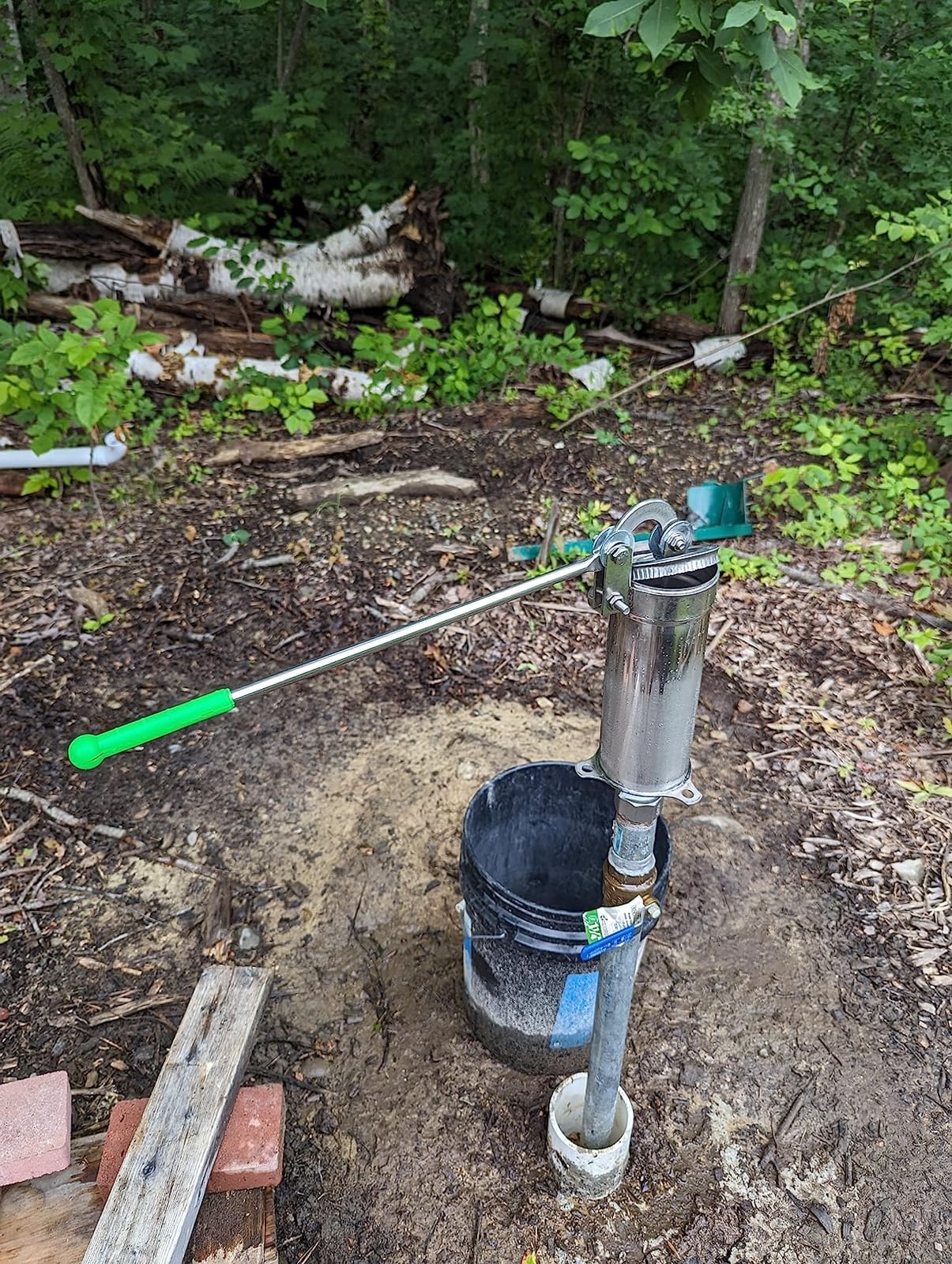
The upgraded integrated base design is a real improvement over the multi-piece bases on older pumps. Fewer joints means less movement while you pump, and movement at the base is what wears seals out faster. Owners with good units specifically call out the stability.
The kit is unusually complete. You get the pump, five leather bowls, five water stopping pads, three fixing screws, PTFE tape, a PVC direct, and a conversion hand, which means the consumable parts that normally fail first are already in the box.
Is stainless steel better than cast iron for a hand well pump?
For corrosion resistance, yes, clearly. Stainless outlasts coated cast iron in wet, salty, or mineral heavy water, and it needs no repainting. Cast iron wins on two other counts: absolute weight, which resists tipping and vibration, and repairability, since iron components are easier to machine and source than stainless ones.
Over a long horizon in a clean freshwater well, both will last. The difference matters most when the water itself is aggressive.
Who should skip the Locci hand pump?
Skip it if you need volume. The rating is 4.1 out of 5 across 235 reviews, which means a noticeable share of buyers rated it 3 stars or below, and the recurring complaints are the consumable leather bowls and pads wearing out and needing periodic replacement. Deep-well and high-flow buyers should look at the cast iron models instead.
Skip it if your water is deeper than about 26 feet. And skip it if you want something you can leave installed through winter without draining.
6. XtremepowerUS Vintage Hand Pitcher Pump: Best for Off-Grid and Campsites
XtremepowerUS Well Hand Pitcher Antique Pitcher Manual Hand Pump Operated up to 25′ ft Max Lift Patio Water Well Fountain for Outdoor Garden, Pond, Backyard, Farm
Cast iron and aluminum build
25 ft maximum lift
NPT 1-1/4 in connection
9.5 in by 8.5 in by 19 in
Pros
- Contoured handle smooths repeated strokes
- Quick NPT install with no special fittings
- Rated for ponds
- farms
- and campsites
- Works with no electricity at all
Cons
- Leather seals dry out and need soaking
- Needs manual priming after disuse
- Drain before winter
- Published item weight appears misstated
The XtremepowerUS pump is built around a cast iron body with an aluminum alloy handle and internals, which is why it is 19 inches tall and noticeably lighter in the hand than a pure iron pump. That combination makes it a good fit for a camp, a park, or a remote cabin where the pump is being handled by different people.
The labor-saving handle is contoured to the palm, and with 279 reviews at 4.2 stars the feedback repeats that the handle makes repeated pumping smooth rather than tiring. Owners like the retro look as much as the function, and it installs through a standard NPT 1-1/4 inch connection in a couple of minutes.
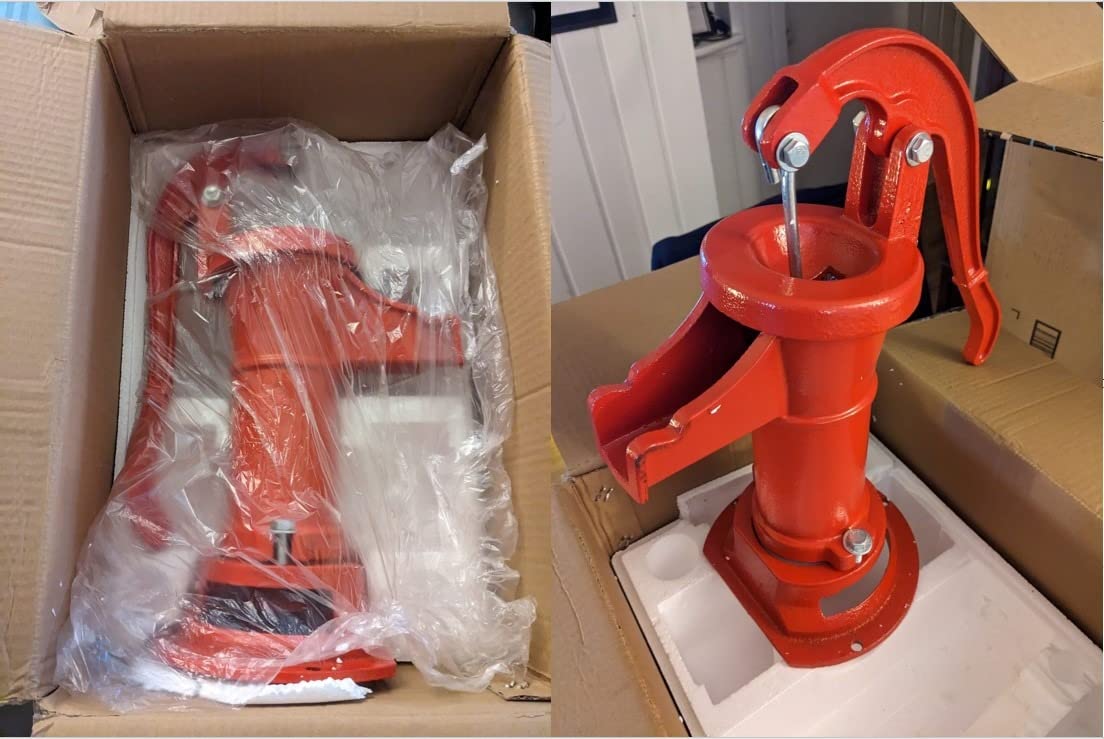
The thickened pipe is built for harsh weather, which matters for a pond or campsite installation that sits outside year round. Rated for ponds, gardens, wells, campsites, yards, farms, and parks, it is genuinely a general outdoor pump rather than a well specific one.
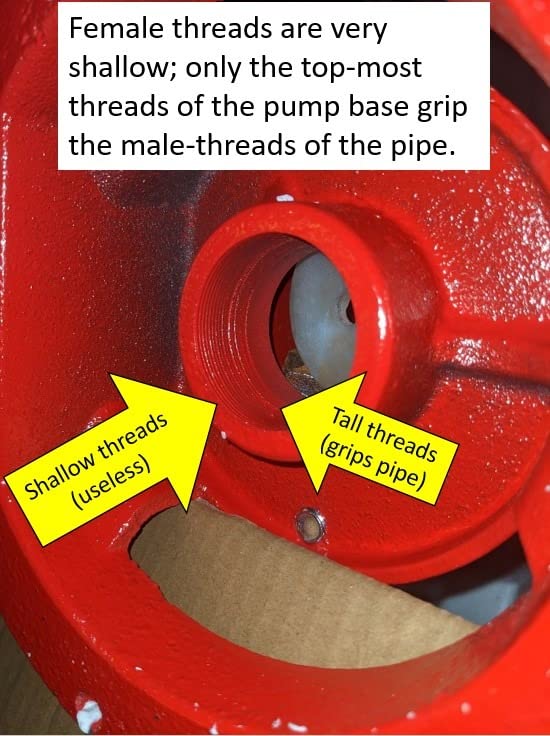
One data quality note worth flagging: the published item weight is listed as 0.27 g, which is obviously a listing error. The real weight is closer to the ten pound range based on the body and dimensions, so plan your mounting accordingly.
Is this the right pump for daily off-grid use?
For moderate daily use, yes. The handle comfort and the quick install make it a good fit where someone is drawing a few buckets a day for cooking and sanitation, or topping up a garden reservoir. It needs no electricity at all, which is the whole point of the category.
It is not a livestock pump or a household pressure source. Those need more flow than a 25 foot pitcher pump delivers, and they need a pressure tank that a pitcher pump cannot charge on its own.
Who should skip the XtremepowerUS pump?
Skip it if you are installing it as an emergency backup and do not want to prime after the lines have sat. The feedback specifically calls out needing manual priming after periods of disuse, and a backup pump that needs attention at the exact moment of need is a poor backup.
Skip it in freezing climates unless you will drain it, and skip it if you are after the longest documented service life, because the leather seal maintenance is recurring and the review pool shows a few reports of leaks and units that stopped pumping.
7. HFS 25 ft Cast Iron Hand Well Pump: Most Versatile for Yards and Bars
HFS(R) Hand Water Well Pump Manual Pitcher Pump Antique 25 FT Max. Lift Red Cast Iron for Home, Yard, Garden, Farm, Pond
Cast iron with aluminum internals
25 ft maximum lift
12 oz per stroke
1-1/4 in NPT inlet
Pros
- Reinforced bolt lugs for long service
- 12 oz delivered per stroke fills barrels fast
- Hooked spout makes barrel filling tidy
- Heavy 14 lb build looks well made
Cons
- Quality control issues reported on arrival
- Plunger rod can be too long on some units
- Non-iron internals criticized
- Some units leak at the base
The HFS pump is the budget end of the cast iron range, and it does deliver a real amount of water per stroke, 12 ounces, which is the highest per-stroke figure listed by any pump in this group. If your job is filling rain barrels rather than carrying buckets, that number is the feature that matters.
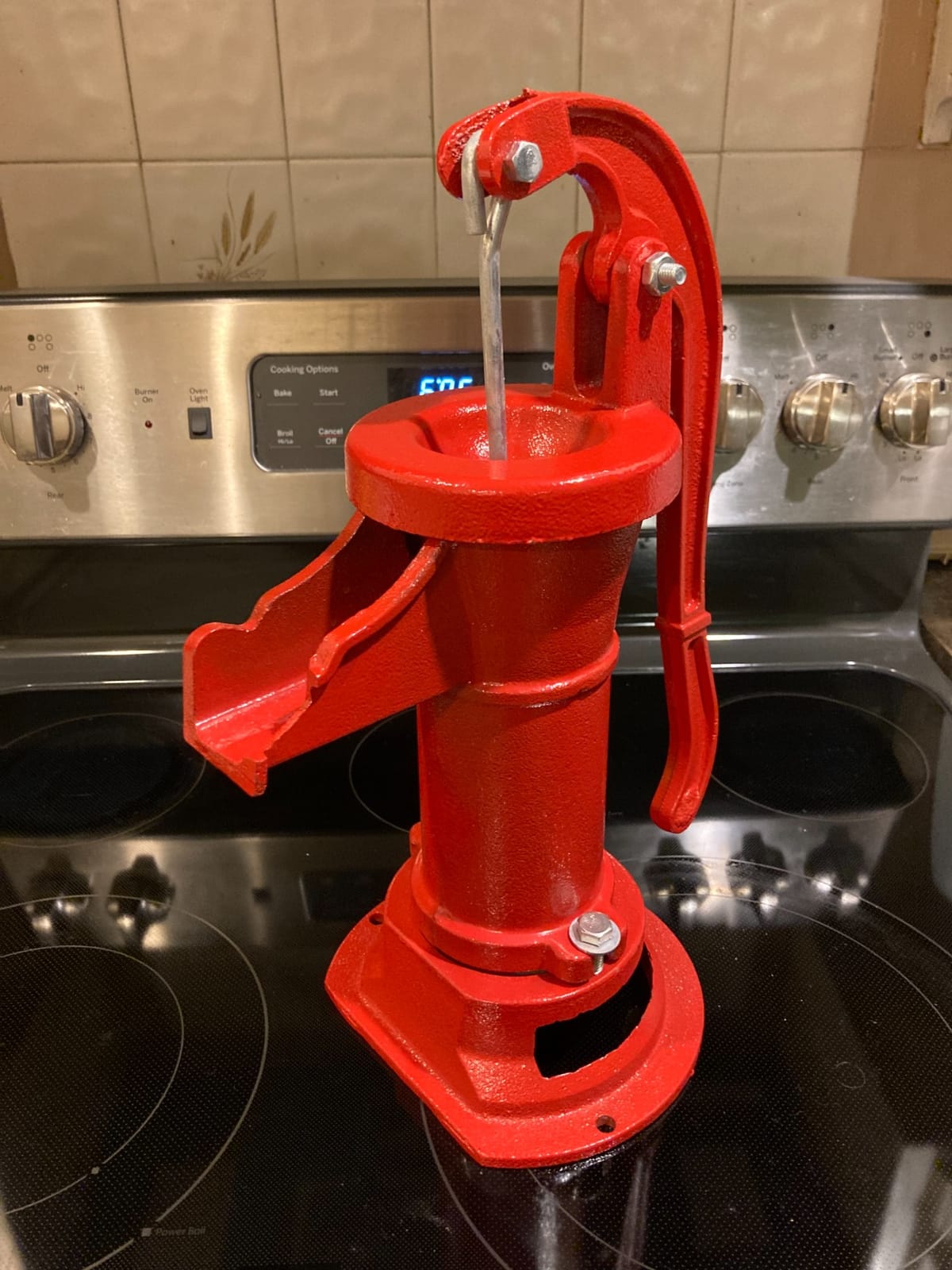
Construction is a cast iron body painted against rust with aluminum alloy base and handle internals, weighing 14 pounds, with reinforced bolt lugs described as built for rugged long-life service. The 1-1/4 inch NPT inlet accepts the same plumbing as everything else here.
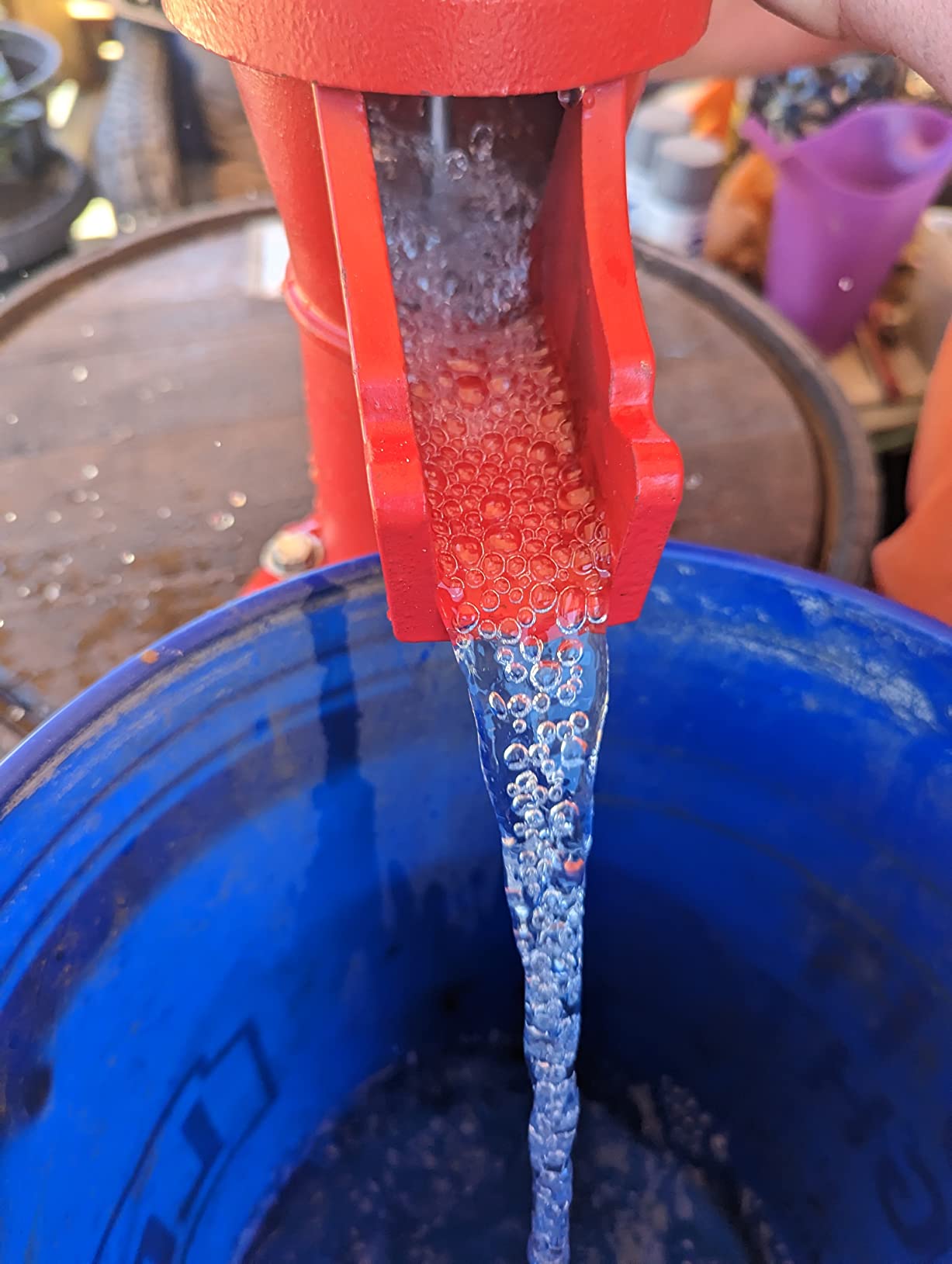
The hooked spout hangs a bucket conveniently and keeps the stream from running down the side, and owners with good units describe a heavy build that looks well made. It is a 25 foot lift unit in the standard pitcher format, intended for backyards, campsites, farms, and picnic areas.
This is also the pump with the most uneven customer feedback in the group, at 4.1 stars across 58 reviews. Owners who get a good unit are happy, and the recurring negative theme is assembly quality rather than the design.
Is a budget pitcher pump good enough for a yard or a garden?
Yes. The design is sound and the price band is appropriate for a secondary water source. At 12 ounces per stroke, it fills a rain barrel faster than the lighter budget models, and the reinforced lugs suggest a casting that will hold up to weather.
Where budget matters is consumables. Unlike the Locci, this pump does not ship with spare leather seals, so budget for a seal kit before you need it.
Who should skip the HFS hand pump?
Skip it if you cannot tolerate a possible return. Owners report loose or missing hardware, a chipped spout, no instructions, a plunger rod that is too long and limits handle travel, and units that leak at the base or break within weeks. The non-iron internals, including the flat leather and the plunger cage, draw specific criticism from people who bought it expecting solid iron.
Skip it as a household or livestock pump, and skip it if you will be depending on it during an outage. For those roles, buy the one with the best documented long-term ownership instead.
How to Choose a Hand Pump for a Well: Buying Guide
The 25-foot suction lift ceiling is physics, not marketing
A pitcher pump pulls water by suction. The pump creates a partial vacuum above the water, and the weight of the atmosphere presses the water up the pipe to replace it. How hard can the atmosphere press? At sea level, a column of water about 33 feet tall, once you account for the vapour pressure of water and the losses through the pipe and fittings, leaves a practical working ceiling of roughly 20 to 25 feet.
That is why every pump on this list stops at 25 or 30 feet, and why you will not find a manufacturer willing to claim more from this design. Real-world users put the same figure in slightly different places, with community estimates clustering anywhere from 20 feet to 30 feet, but every measurement lands in the same band. Plan on 25 feet as your working limit and 20 feet as your safe one.
How to measure your static water level
Static water level is the resting depth from the surface to the top of the water in your well, and it is the one number that decides which pump you can buy. Measuring it is not a specialist job.
Find the well casing and identify the static level you need. If the well has a submersible pump installed, the water level is the same, but you will need a way past the pump.
Lower a weighted tape line on a marked string or a hose into the well. Mark the string in one foot increments before you start.
Lower the line slowly until you feel the weight go slack, then allow several minutes for the water to recover and the level to rise.
Read the mark on the string at the point where it is just touching the water, then raise it and repeat once to confirm.
Subtract the depth of any submersible pump or foot valve assembly, since a hand pump cylinder has to clear those components.
Record the number twice, in a wet season and a dry one, if you can. Water levels move, and a well that measures 20 feet in spring can measure 24 feet in August. Buy for the deeper of the two readings, and buy with headroom beyond that.
Cast iron versus stainless steel
Cast iron is the traditional choice and the right default. It is heavy, which means stable on a mount and resistant to vibration, and it machines and repairs easily. Its weakness is corrosion, which is why quality cast iron pumps carry a coating and why a coated iron pump in a humid or saline well will eventually pit.
Stainless steel resists corrosion outright and needs no coating, at the cost of being lighter, more expensive per unit, and harder to repair. For a well with aggressive water, a coastal site, or livestock and irrigation use where the pump gets wet constantly, stainless is the better long-term material. For a clean freshwater well in a shed or a protected well vault, cast iron is harder to argue against.
What a hand pump cannot do
This is the part most roundups skip, and it is where buyers get disappointed. A hand-operated pitcher pump cannot deliver sustained household pressure. It cannot run a shower, fill a tub, or push water through a dishwasher. It will not supply a hydrant or an irrigation system that needs pressure.
It also generally cannot flush a toilet on its own, unless you pair it with a pressure tank and a way to recharge that tank, which pushes you into the force pump and positive displacement category rather than the pitcher pump category.
Expect roughly one to two gallons per minute of real effort from a good shallow-well pitcher pump, and understand that filling a toilet tank or a shower bucket will take real work. If your outage plan depends on daily household routines, a generator serving your existing submersible pump is very often the better answer, and that is a fair comparison to make before you buy anything.
Deep well installation reality
If your water sits below 25 feet, none of these pumps will serve you, and the products that will are a different, more expensive, more complex category. A deep well hand pump works by positive displacement rather than suction, pushing water up a drop pipe on the downstroke and lifting a cylinder with a sucker rod on the upstroke, which is why it can reach anywhere from about 100 feet to well past 300 feet.
Manufacturer claims in this category range from systems starting in the low hundreds for shallow well units to premium stainless deep-well systems quoted in the many hundreds and low thousands, rated to static water levels around 325 feet. Those systems install alongside an existing submersible in a 4 inch or larger well, which is what allows them to be a backup rather than a replacement.
Installation is not a weekend for most people. The pipe goes down in threaded sections because a glued joint is unrecoverable if a section drops during lowering, and a ten foot threaded section needs overhead clearance and lifting equipment. Plan on a professional installer for anything past the pitcher pump category.
Freeze protection and winterizing
Nearly every customer complaint about early pump failures in cold regions comes down to water left inside the body. Cast iron and the water in it expand together, and the cylinder or spout cracks.
Three approaches exist. The simplest is a drain plug you open each autumn, which is what the manufacturer recommends for the SWP 300 and the VEVOR. The better version is a handle-trip valve, where raising the handle to its extreme height opens the drain, which is how the Boshart handles it. The most complete is antifreeze equipped construction, which is a specification rather than a habit, and only one pump in this group carries it.
If you cannot commit to any of those, plan on removing the pump body for winter and storing it indoors. That is a real option, and for a lightweight stainless model it is an easy one.
Frequently Asked Questions
What is the maximum depth a hand pump can pump water?
A pitcher pump works by suction, so atmospheric pressure sets the limit at roughly 20 to 25 feet in practice. At that depth you get a dependable stream, which is why nearly every hand pump for wells is rated at 25 or 30 feet. Below 25 feet you need a positive-displacement deep well hand pump, which pushes water up the pipe instead of sucking it, and can reach from about 100 feet to past 300 feet.
How deep does a hand pump well need to be?
Measure your static water level, which is the resting depth from the surface to the top of the water, not the total depth of the casing. A hand pitcher pump works when that number is under about 25 feet. Buy a pump rated deeper than your deepest reading rather than matching it, because water levels fall in dry months and a pump at its exact limit is unreliable at exactly the moment you need it.
What is a good hand crank pump for a well?
The Simmons 1160/PM500 is the strongest all-round choice, with an all cast iron body, 10 gpm flow, a 25 foot lift rating, and 999 customer reviews behind it. For a garden or pond on a tighter budget the VEVOR 25 ft model installs in minutes and holds 4.4 stars across 400 reviews. For corrosive or coastal water, the Locci stainless steel pump resists rust where coated cast iron would pit.
What is the best hand pump for a deep well?
Above about 25 feet, look at positive-displacement deep well hand pump systems rather than pitcher pumps. They lower a lift cylinder on a drop pipe, move water on the downstroke, and lift it on the upstroke, reaching static levels from around 100 feet to more than 300 feet depending on the system. Quality units install in parallel with an existing submersible in a 4 inch or larger well and need no electricity, but professional installation is normal.
Is a 100 foot well deep enough?
Far too deep for any pitcher pump. A 100 foot well is a deep well, and it sits well past the 25 foot suction ceiling, which means the pump at the surface has to push water a hundred feet up rather than pull it. That requires a deep well jet pump, a submersible, or a positive-displacement hand pump system, and none of the shallow hand pumps in this roundup will lift water from that depth.
Do hand pumps need to be primed?
Many do, and this is the detail people miss. The VEVOR and the XtremepowerUS both require manual priming before water flows, and leather-sealed pumps like the Simmons can lose prime after a few minutes of use without a check valve. If you are buying a pump as an outage backup, assume it has been sitting dry for months, and either prime it as part of your seasonal maintenance or choose a self-priming design.
Can you flush a toilet with a hand well pump?
Not on its own. A hand pitcher pump delivers a trickle with no sustained pressure, so it can fill a bucket or a container but will not pressurize a toilet line. To flush during an outage you need a positive displacement force pump paired with a pressure tank, or you need a generator running your existing submersible pump. Know this before you buy, because it changes which category of pump you should be shopping.
Final Verdict: Which Hand Pump for Wells Should You Buy?
Start by measuring your static water level, because that number decides everything and takes an afternoon to get. Under about 25 feet, the best hand pumps for wells are pitcher pumps like these, and the choice comes down to how much water you need and how cold your winters are.
The Simmons 1160/PM500 is my pick for 2026 as the one to buy, with the highest flow rate, an all cast iron body, and 999 reviews of evidence that it keeps working. The SWP 300 carries the best customer rating in the group and ships with all its mounting hardware. The Boshart Pe-Hp(110) is the answer if freezing weather is a certainty, thanks to its antifreeze construction and 30 foot lift. For a yard or a garden, the VEVOR is the cheapest route to a working pump, and the Locci stainless unit is the one for corrosive water.
If your water is deeper than 25 feet, stop reading pitcher pump reviews and start looking at deep well hand pump systems, or accept that a generator running your existing submersible is the honest answer for household water during an outage. Either way, buy the seal kit while you are thinking about it, and drain the pump before the first freeze.
While you are stocking up on dependable gear, our guides to the best hand trucks and the best commercial hand sinks cover the other half of moving water and working with it. The best hand mixers guide covers the other reason people buy hand-powered tools, and the best boxing hand wraps roundup covers hand gear that needs no power at all.