
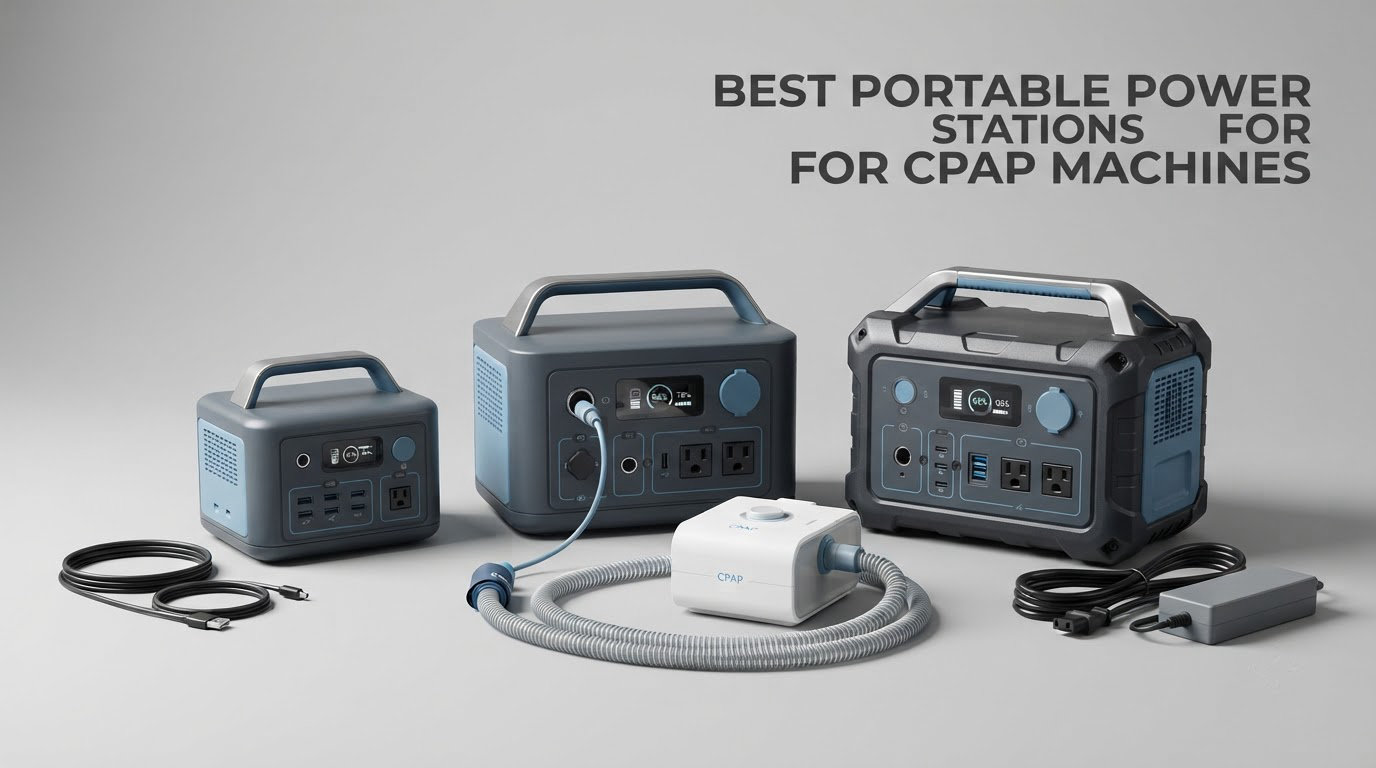
Yes, a portable power station will run a CPAP machine, as long as it holds enough watt-hours and delivers clean output. A standard CPAP draws roughly 30-65W without humidification, so a 256Wh to 500Wh station covers a full 8-hour night and most of them cover two.
Here is the sizing math before the picks: multiply your machine’s average overnight watts by your sleep hours, then add a 20 percent margin. That works out to about 480Wh for an 8-hour night with the humidifier off, and about 864Wh for the same night with a heated humidifier running. In practice, 1,000Wh is the sensible floor if you sleep with heated humidification.
We went through ten stations that people actually run CPAPs from, checking capacity, continuous output, battery chemistry, whether the inverter is pure sine wave, and how fast they recharge. Our broader picks are in the best portable power stations roundup, and if your machine is the problem rather than the power, our CPAP machine rankings cover that side. If you also need a rig for flying, the travel CPAP guide matters because travel machines draw far less power.
One safety note up front. A portable power station is not a medical device, and it is not a substitute for a ventilator or any life-support equipment. If your therapy is life support, talk to your clinician. And never drop your prescribed pressure to stretch battery life.
Table of Contents
Top 3 Best Portable Power Stations for CPAP Machines in 2026


Every Pick at a Glance in 2026
| Product | Specifications | Action |
|---|---|---|
| Jackery Explorer 300 |
|
Check Latest Price |
 MARBERO 300W MARBERO 300W |
|
Check Latest Price |
 EcoFlow RIVER 2 EcoFlow RIVER 2 |
|
Check Latest Price |
| Jackery Explorer 1000 v2 |
|
Check Latest Price |
 BLUETTI AC180 BLUETTI AC180 |
|
Check Latest Price |
 ALLWEI 300W ALLWEI 300W |
|
Check Latest Price |
| Anker SOLIX C1000 |
|
Check Latest Price |
 EcoFlow River 2 Max EcoFlow River 2 Max |
|
Check Latest Price |
 EASYLONGER ES720 EASYLONGER ES720 |
|
Check Latest Price |
 EnginStar 300W EnginStar 300W |
|
Check Latest Price |
1. Jackery Explorer 300 Portable Power Station Review
Jackery Explorer 300 Portable Power Station,292Wh
292Wh capacity
300W pure sine wave AC
7.1 lb
LiFePO4, 4000+ cycles
Pros
- Lightest reviewed build we liked for its size at 7.1 lbs with an integrated handle
- Two AC outlets plus 100W USB-C PD and a 120W car port
- LiFePO4 cells rated beyond 4000 cycles to 70 percent
- Rated 4.6 stars across 11273 reviews
Cons
- 292Wh gets tight on heated-tube nights
- 300W continuous output limits larger electronics
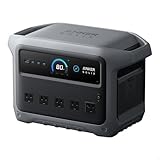
The Explorer 300 is the pick we keep coming back to because the math works for a humidifier-off night without turning the unit into a project. At 292Wh it clears the 480Wh mark roughly once at full charge, so plan on one night per charge with the heated tube off.
Output is 300W of pure sine wave AC, which is the clean waveform that sensitive electronics prefer. Jackery includes an AC adapter, a car charger cable and a user guide, but not a solar panel.
Solar input is the quiet strength here. With a 100W panel, roughly 80 percent of the charge comes back in about 2.8 hours, which is fast for the class.
The honest limitation is capacity, not quality. With 11k+ reviews averaging 4.6 stars, this is the most proven unit on the list, but the two AC outlets and 300W ceiling mean it is a CPAP-and-phones station rather than a backup for household loads.
Who the Explorer 300 suits
It suits a camper, a renter in a storm-prone area, or anyone who wants a proven, light station they can carry with one hand. Two people can charge phones off the USB ports while the machine runs on AC.
It also suits anyone who wants a station with a very deep review history, which matters when you are trusting it with therapy overnight.
Where the Explorer 300 falls short
It falls short when you run heated tubing for a long time, or when you want the router, the CPAP and a laptop alive through a multi-day outage. That job belongs to a 1,000Wh unit.
It also falls short for anyone who wants to recharge by solar without buying a branded panel first.
2. MARBERO 300W Portable Power Station Review
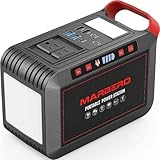
Portable Power Station 300W MARBERO 237Wh Camping Solar Generator Backup Lithium Battery with Pure Sine Wave 110V AC Outlet, USB C, USB A, DC for Outdoors Camping CPAP Home Blackout Emergency
237Wh capacity
300W output
4.6 lb
Eight ports
Pros
- Only 4.6 lbs and small enough for a backpack
- Two AC outlets plus USB-C PD and USB-A QC3.0
- Listed by the maker as suitable for CPAP machines
- Dual LED lanterns with steady
- twinkle and SOS modes
Cons
- 237Wh is the smallest capacity here
- Some owners report units not holding charge after a year or two
- 4.1 average with a 12 percent one-star share
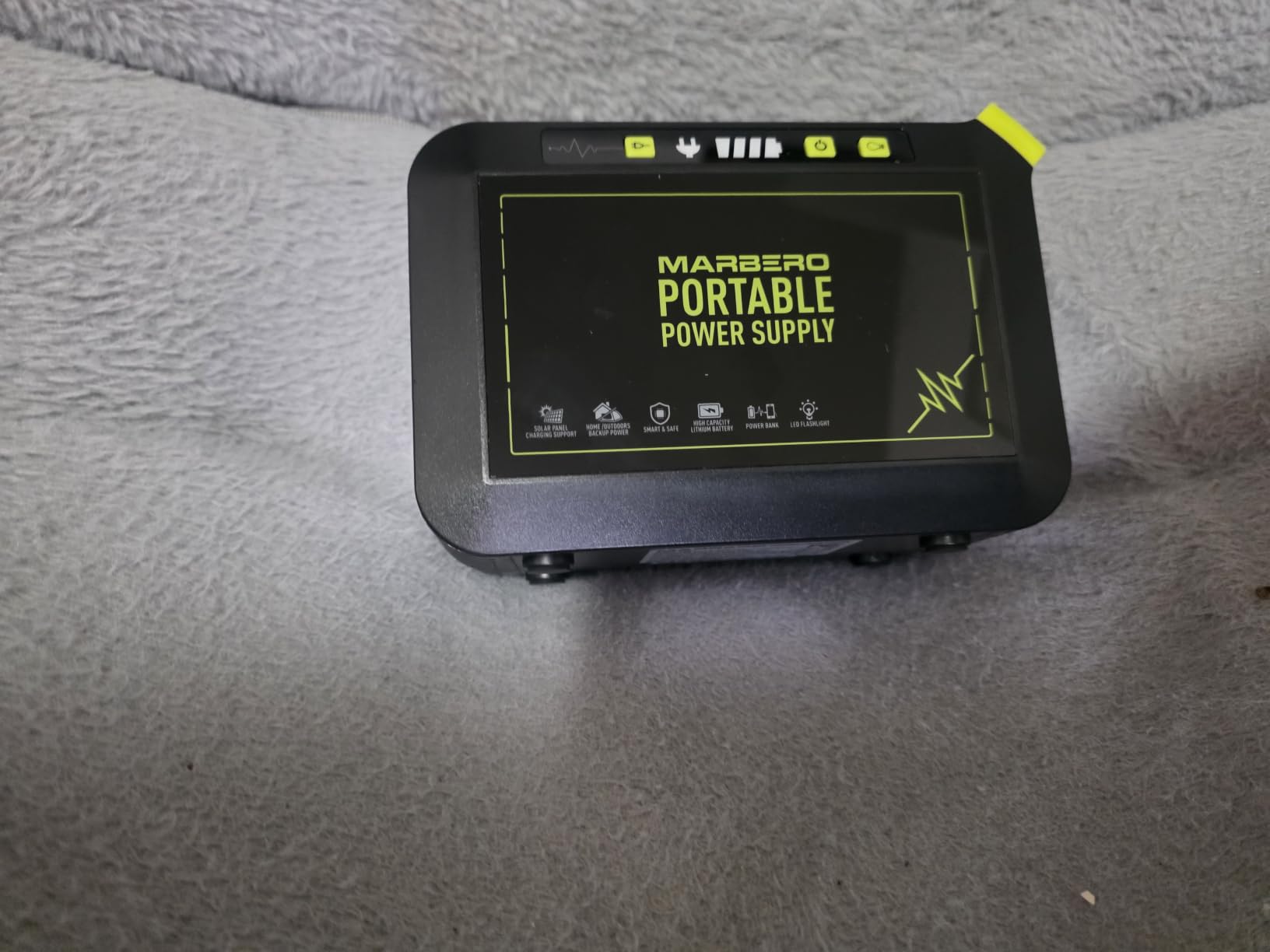
This is the smallest and lightest thing on the list at 4.6 lbs and 237Wh, and the listing names CPAP machines as a use case. That honesty is refreshing in a category full of vague claims.
Eight outputs cover the basics: two AC outlets, two USB-A QC3.0 ports, two more USB-A ports, one USB-C PD and one DC output. Recharging works three ways, including wall, car adapter or solar.
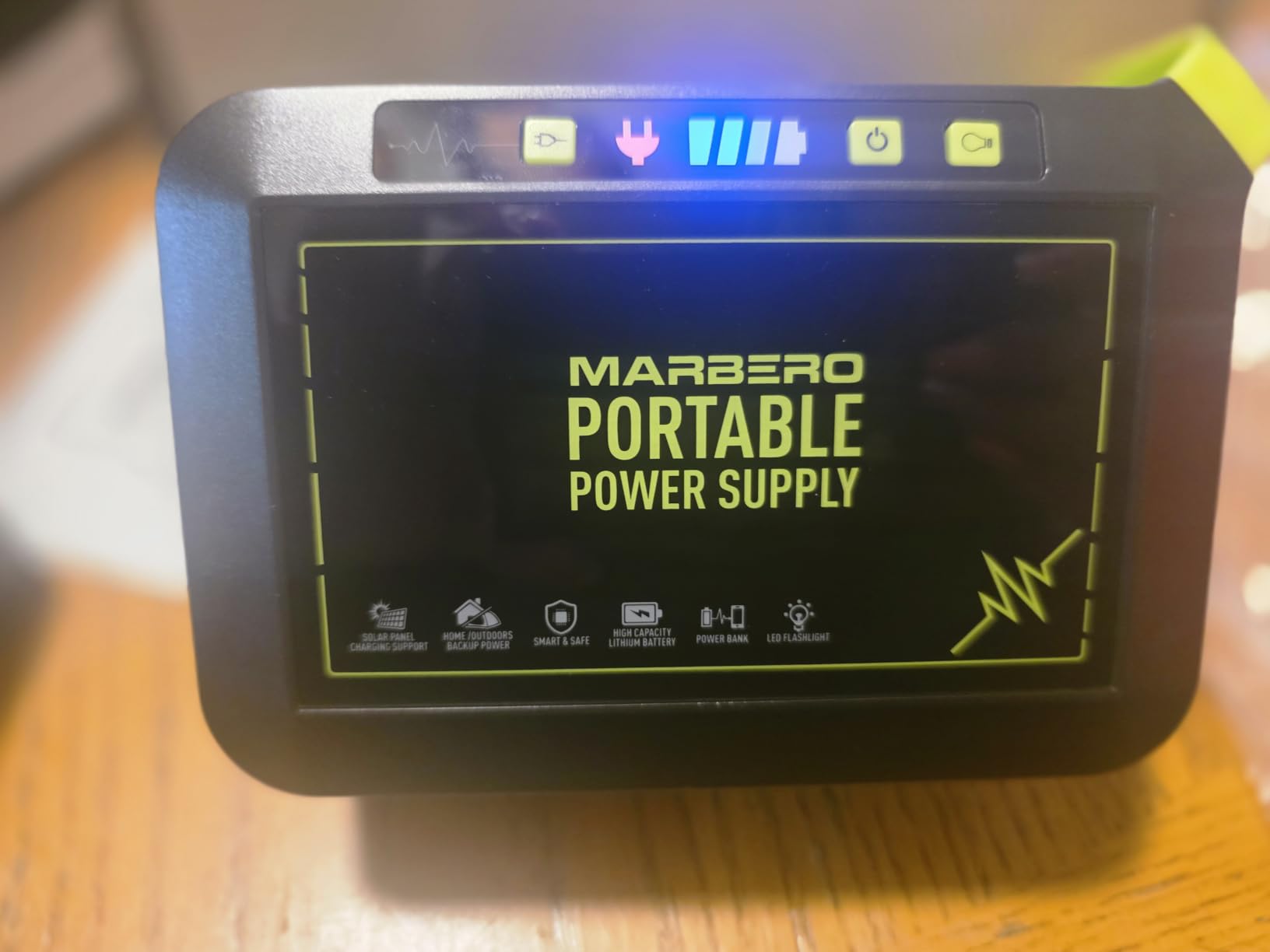
Be realistic about the ceiling. At 237Wh, a 60W humidifier-off load runs about four hours, which is half a night. Owners also report the cooling fan draining the pack faster than expected.
Several owners report units that stopped holding a charge after a year or two, and the 4.1 average with a 12 percent one-star share is the second-weakest rating here. If you buy one, test a full cycle before you rely on it for therapy.
Who the MARBERO suits
It suits a travel CPAP user on a budget who only needs a couple of hours of backup and a light to read by. The lanterns have an SOS mode, which is a small touch that fits camping.
Where the MARBERO falls short
It falls short for anyone sleeping a full night on AC power, and for anyone who values cycle life. The warranty is 12 months, the shortest coverage most buyers should accept on a device meant to sit ready for years.
3. EcoFlow RIVER 2 Portable Power Station Review
EF ECOFLOW Portable Power Station RIVER 2, 256Wh 300W
256Wh LiFePO4
300W AC
1 hour X-Stream charge
UPS under 30 ms
Pros
- Full AC recharge in about one hour with X-Stream charging
- UPS mode with under 30 ms switchover for outage backup
- LiFePO4 cells rated 3000+ cycles to 80 percent
- 7.7 lb with a built-in handle and clear display
Cons
- 256Wh and a 300W AC limit mean modest humidifier runtimes
- Only one USB-C port
- 110W solar input needs real sun
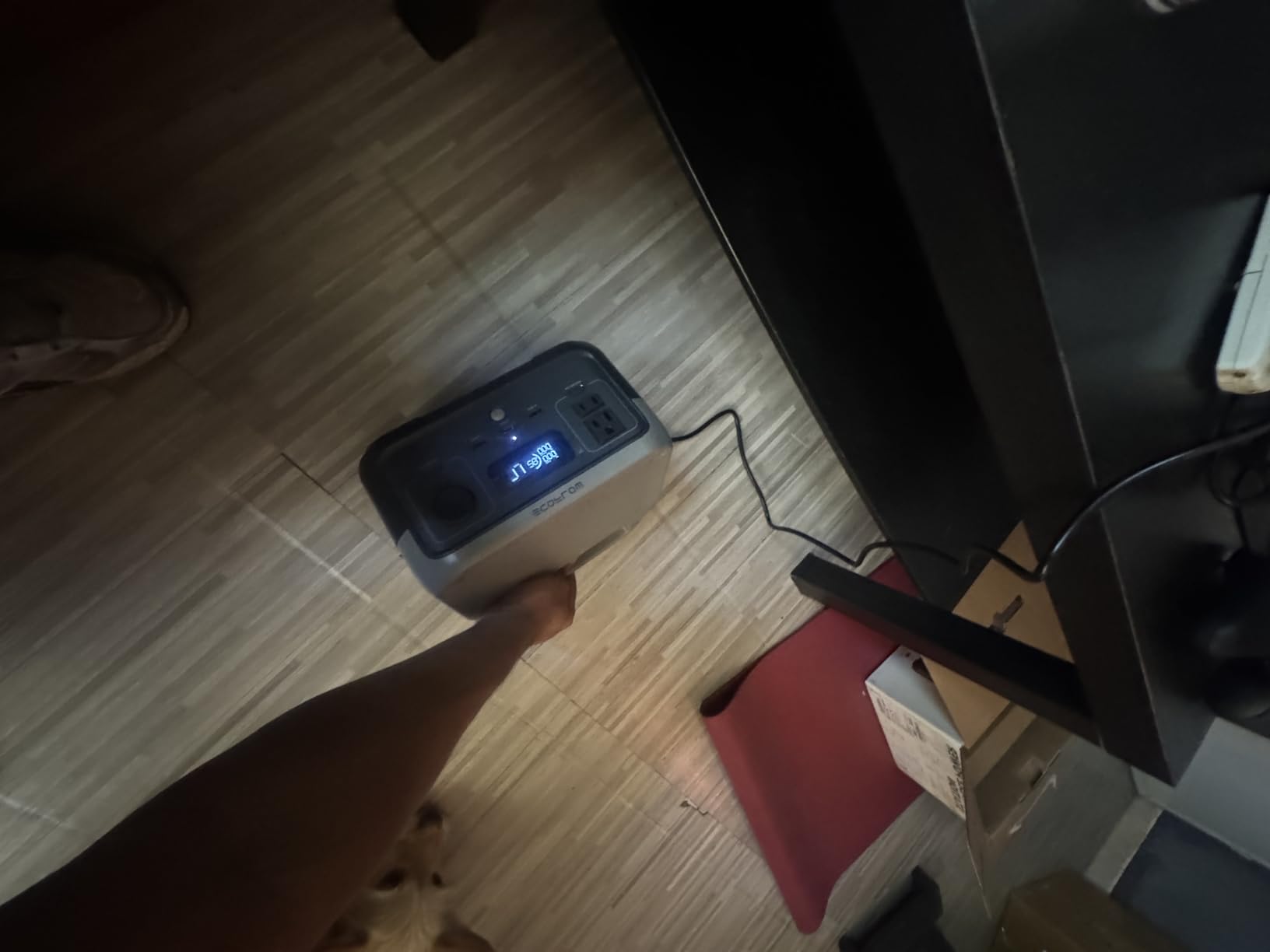
The RIVER 2 is the fastest-recharging unit in this class, and that matters more than raw capacity when a storm is already overhead. X-Stream brings it from empty to full in about an hour, and solar can refill it in as little as 2.3 hours at 110W input.
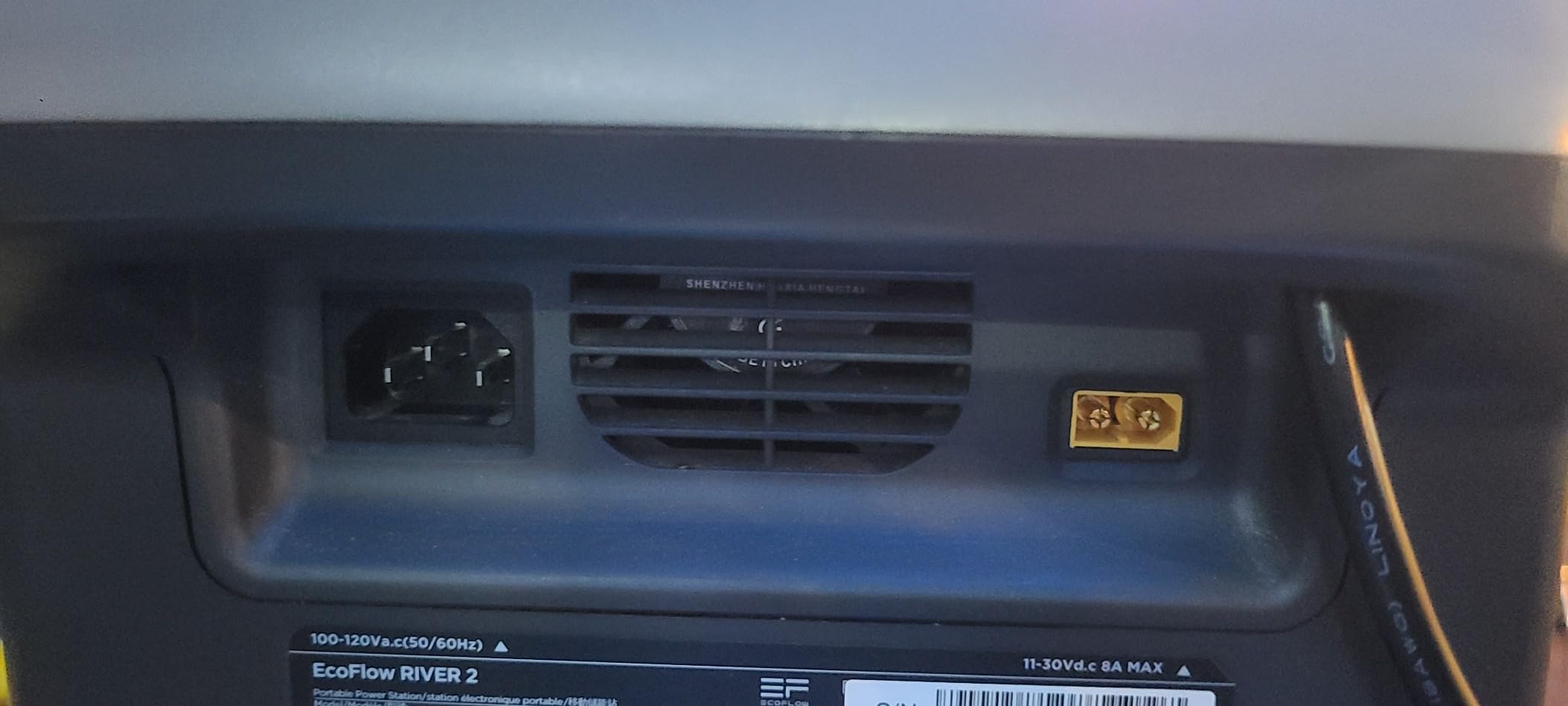
It also runs as a UPS with under 30 milliseconds of switchover, which is short enough that most CPAP machines do not notice the transfer. Several owners describe keeping a router or a CPAP running straight through an outage without a reboot.
Capacity is 256Wh, so it is a one-night unit with the heated tube off and a partial night with humidification on. That keeps it under the 864Wh figure from our opening math, which is the main reason it is not our top pick.
A minority of owners report battery percentage drift or a unit that would not hold charge, and the 9 percent one-star group is larger than on the Jackery units. The single USB-C port also creates arguments at a campsite.
Who the RIVER 2 suits
It suits someone whose outage usually lasts one night and who wants the battery back to full before dark the next day. Fast recharge is the feature that changes the outcome in that scenario.
It also suits solar users, since 2.3 hour solar recharging is the best figure among the sub-500Wh picks here.
Where the RIVER 2 falls short
It falls short for heated-humidifier sleepers who want a full night without fuss, and for households that need more than one USB-C device at a time.
4. Jackery Explorer 1000 v2 Review
Jackery Explorer 1000 v2 Portable Power Station,1070Wh,1500W
1070Wh LiFePO4
1500W AC, 3000W surge
1 hour emergency charge
23.8 lb
Pros
- 1070Wh gives real multi-night headroom
- 1500W AC output with 3000W surge
- Full charge in one hour in emergency mode via the app
- LFP battery holds over 70 percent after 4000 cycles
- Three pure sine wave AC outlets plus two USB-C
Cons
- 23.8 lbs is heavy to carry on foot
- Solar charging works only with Jackery panels
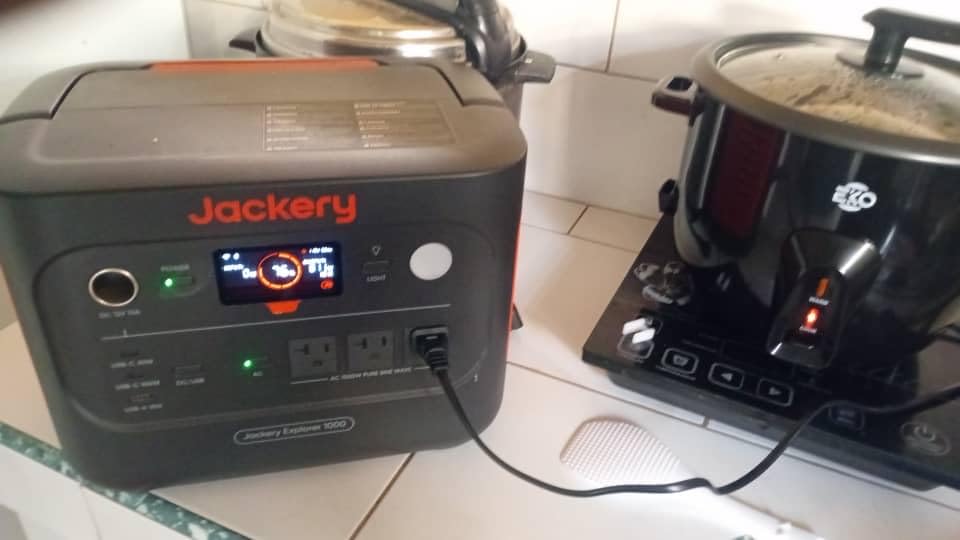
This is the highest-rated unit in the group at 4.7 stars, and it is the first one we would put in a home for storm season. At 1,070Wh it clears our heated-humidifier sizing target with room for three or four nights on a single charge.
Output is 1,500W continuous with a 3,000W surge peak, so it handles more than therapy gear. Owners run air conditioners, refrigerators and kettles alongside a CPAP without trouble.
Charging is fast: one hour through the app’s emergency mode, or about 1.7 hours by default. Seven outlets include three pure sine wave AC outlets, two USB-C including 100W PD, one USB-A and a car port.
The LFP pack is rated to hold over 70 percent of capacity after 4,000 cycles, which is the longevity you want in a unit that stays plugged in. The catch is weight, at 23.8 lbs, plus solar input that only accepts Jackery panels.
Who the Explorer 1000 v2 suits
It suits anyone whose outage lasts more than one night, or who wants to keep the router, the CPAP and the phone charger alive at the same time. One r/CPAP user framed the same logic when they moved off a dedicated battery.
It suits RV and truck-camp setups too, since the output headroom leaves room for other appliances.
Where the Explorer 1000 v2 falls short
It falls short for backcountry users who have to carry it on foot, and for anyone who already owns solar panels from another brand.
5. BLUETTI AC180 Review
BLUETTI AC180 Portable Power Station 1152Wh 1800W LiFePO4 Solar Generator
1152Wh LiFePO4
1800W out, 2700W peak
20 ms UPS
37.4 lb
Pros
- 1152Wh capacity with the most power headroom in this group
- UPS switchover in 20 ms keeps devices running
- 0-80 percent in 45 minutes and full charge in about an hour
- Quiet operation with an LCD showing live wattage
- 500W solar input refills in 2.8-3.3 hours
Cons
- 37.4 lbs is the heaviest unit here
- Draws 15-20W for its own inverter and display
- Wireless charging pad widely reported not to work
The AC180 is the most powerful station on this list and the one we would trust with a longer outage. It holds 1,152Wh of LFP capacity and pushes 1,800W continuously, with a 2,700W peak through app boost.
Its UPS mode transfers in 20 milliseconds, which keeps a CPAP or router alive through an outage without a reboot. That is one of the more useful numbers on this list for anyone afraid of waking up mid-night to a silent machine.
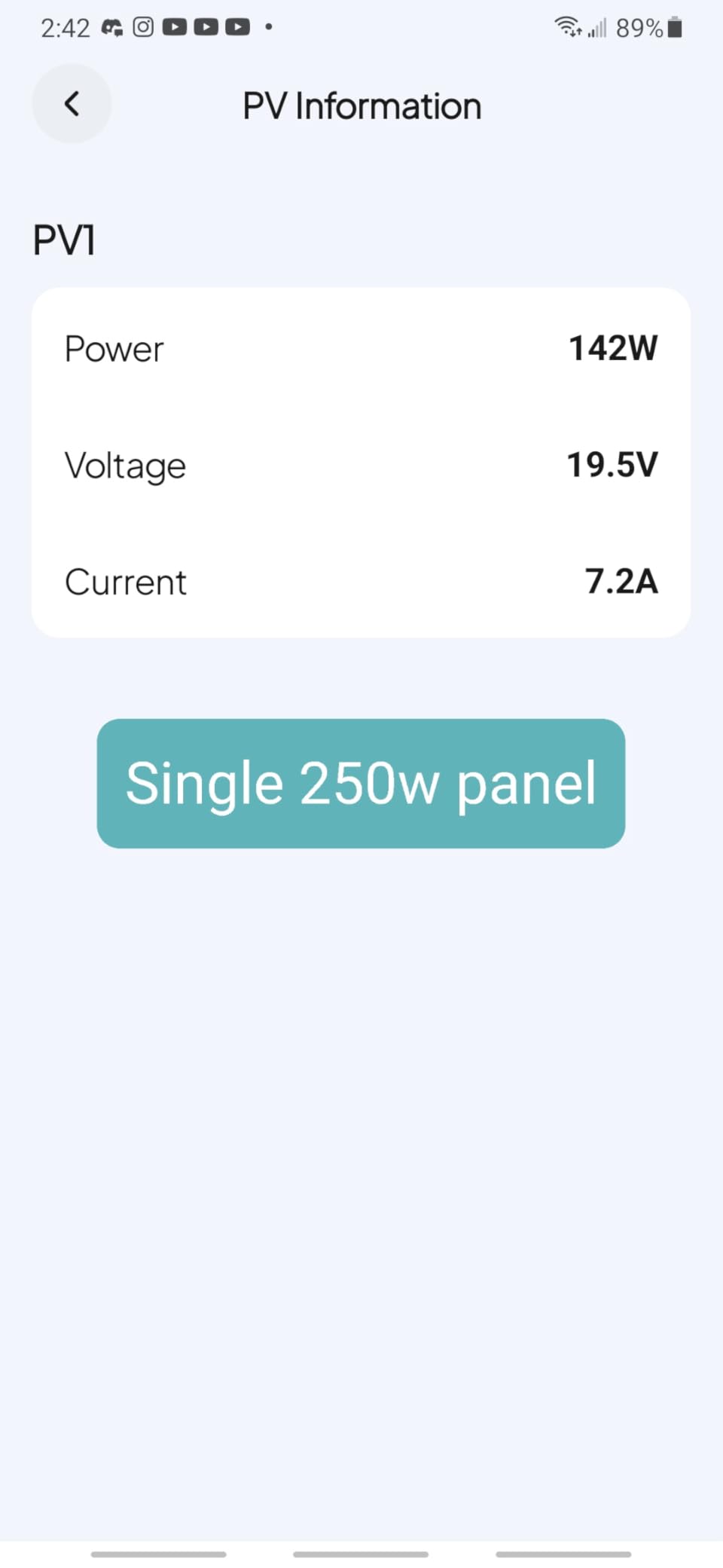
Eleven outlets cover AC, USB and car ports, and the LCD shows live wattage in and out so you can see your actual overnight draw rather than guessing. Recharging runs 0-80 percent in 45 minutes at 1,440W AC input, and solar takes about 2.8 to 3.3 hours at 500W.
Two things work against it. It weighs 37.4 lbs, so it lives in a vehicle or a spare room rather than a pack, and it draws roughly 15-20W for its own inverter and display. BLUETTI also holds back about 90 percent of rated capacity by design for battery protection, which is the same 90 percent planning factor we used in our sizing.
Who the AC180 suits
It suits people with long outages, home office users who want one box for a computer and a CPAP, and anyone who wants a real 500W solar input for multi-day off-grid runs.
The 20 ms switchover is the deciding factor for anyone who has been woken by a machine that stopped mid-night.
Where the AC180 falls short
It falls short on portability, and it falls short for anyone buying it purely as a CPAP battery. You are hauling 37 lbs for a machine that draws 60W.
Skip it if the wireless charging pad on top is part of your plan, since owners report it does not work.
6. ALLWEI 300W Portable Power Station Review
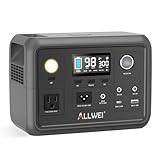
ALLWEI Portable Power Station 300W, 256Wh Solar Generator LiFePO4 Battery
256Wh capacity
300W pure sine wave
6.4 lb
Explicitly CPAP rated
Pros
- Owners report 20 hours across three nights with a BMC Luna G2
- Pure sine wave AC that does not disturb sensitive devices
- Best capacity-to-cost figure in this group
- LiFePO4 cells rated 3000 cycles
- Display shows runtime estimate and charge level
Cons
- Single AC outlet limits mains devices
- Solar input is limited compared with larger units
- Cooling fan can be audible during sleep
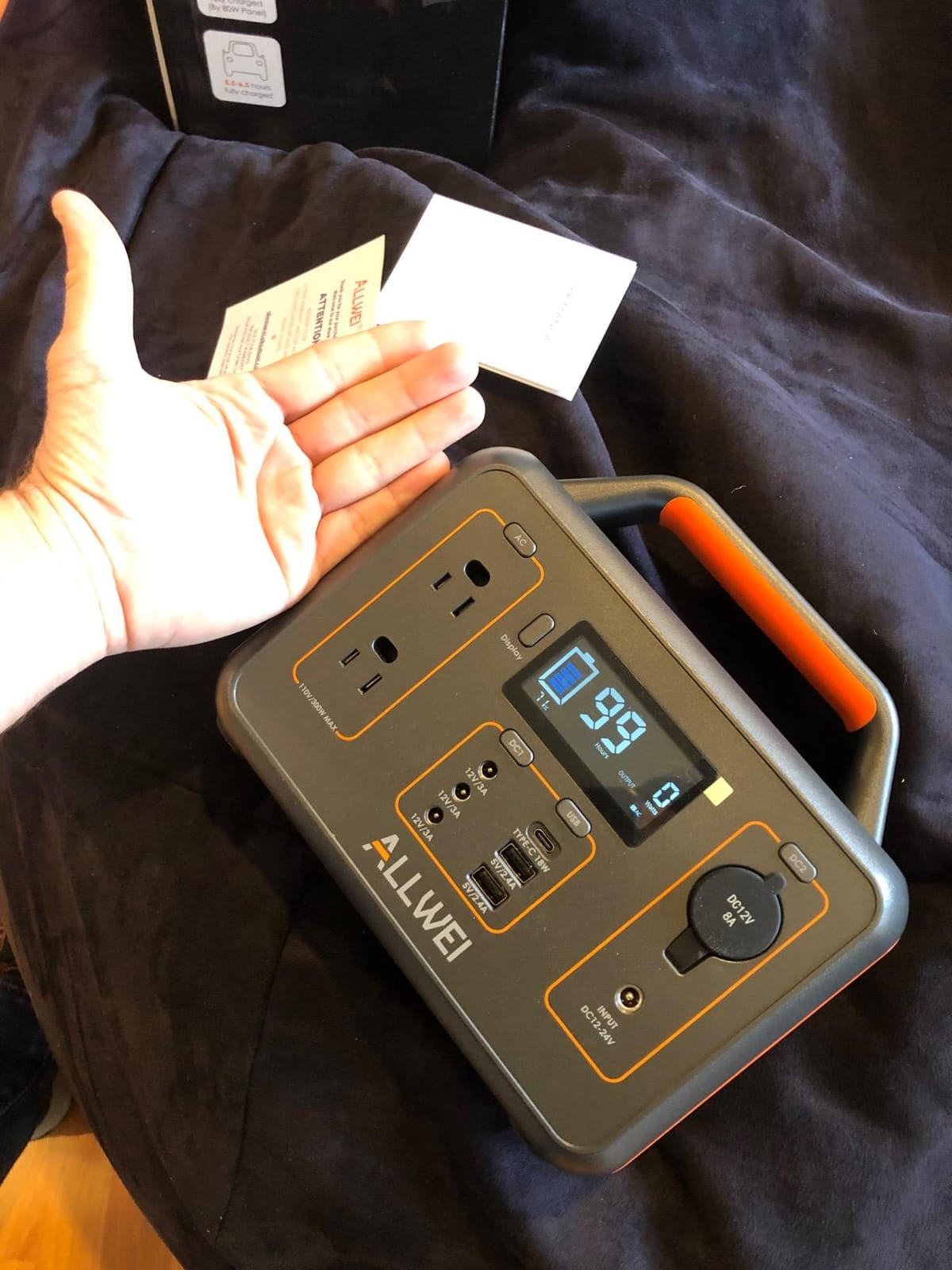
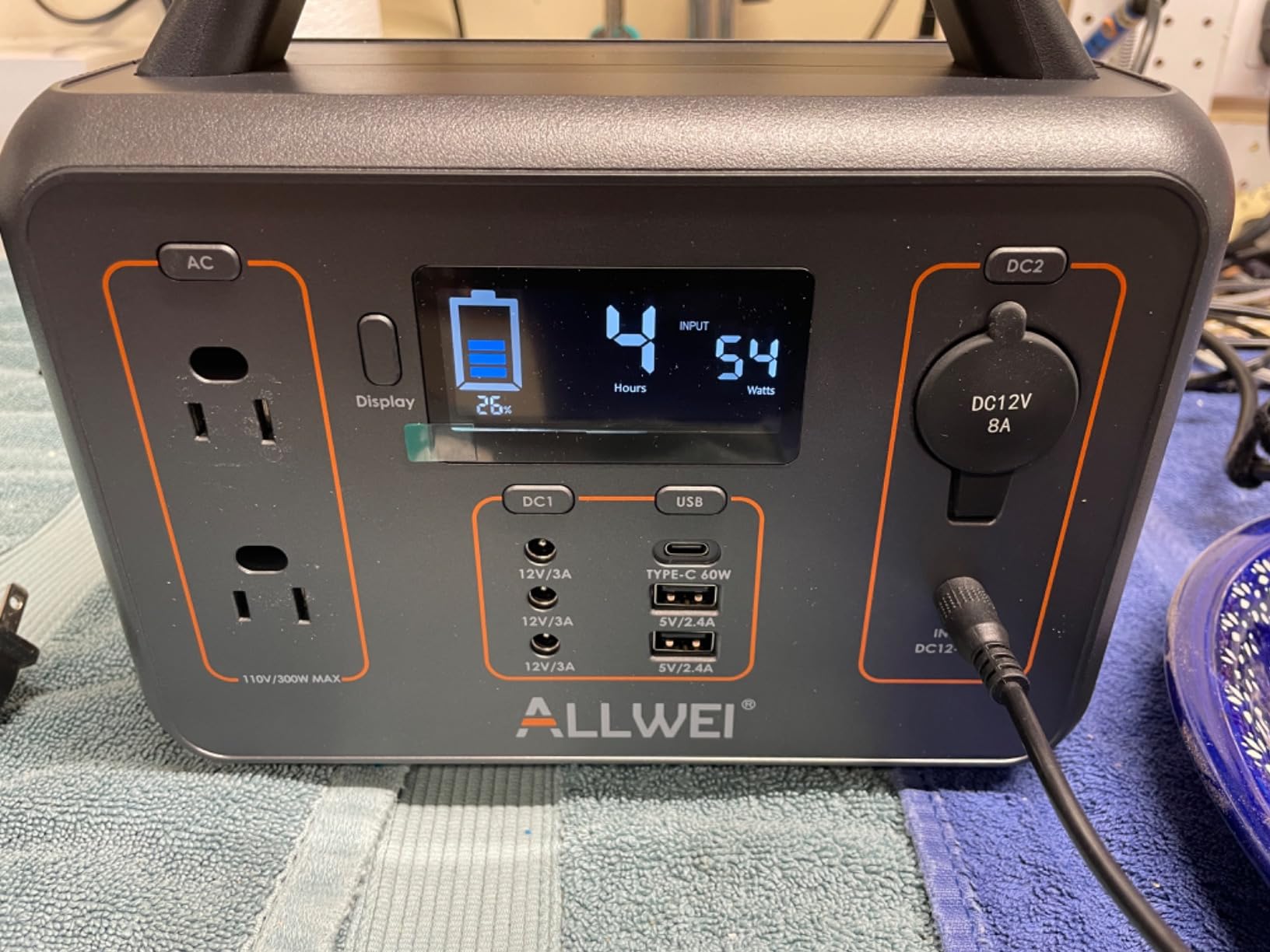
Few products in this category name CPAP machines outright, and this one does, with owners reporting real measured results rather than marketing language. Reviews describe 20 hours of runtime across three nights with a BMC Luna G2, plus about 12 hours with heated humidity on.
Output is 300W of continuous pure sine wave AC with 600W surge, at 256Wh and 6.4 lbs. Six outputs include one AC outlet, two DC5521 ports, a car port, an 18W USB-A and a 60W USB-C PD.
Recharging runs through AC, 12V car, solar or dual input with a built-in MPPT, and pass-through charging lets the unit run a device while it refills. The LiFePO4 cells are rated for 3,000 cycles behind a six-layer BMS.
Two caveats worth knowing. It has a single AC outlet, so only one mains device at a time. At least one CPAP owner also reported the cooling fan audible enough to disturb sleep, which matters more here than it would for a fridge.
Who the ALLWEI suits
It suits someone who wants a CPAP-only station and nothing else, who wants pure sine wave output, and who wants to spend as little as possible for documented overnight runtime.
It also suits buyers who like seeing runtime estimates on the display rather than a percentage alone.
Where the ALLWEI falls short
It falls short for anyone also powering a router and phone from AC, since there is one outlet, and for multi-night outages beyond three nights.
Buyers should note the warranty wording is inconsistent between listing copy and the stated 2 year manufacturer coverage.
7. Anker SOLIX C1000 Gen 2 Review
Anker SOLIX C1000 Gen 2 Portable Power Station
1024Wh LiFePO4
2000W out, 3000W peak
Under 10 ms UPS
5-year warranty
Pros
- 1024Wh capacity with 2000W output across 10 ports
- Under 10 ms UPS switchover marketed for CPAP and laptop backup
- 49 minute full recharge at 1600W input
- Owners report running an AirSense 11 CPAP three nights on one charge
- 5-year warranty with 80 percent capacity after 4000 cycles
Cons
- Gen 2 dropped the expansion battery option of Gen 1
- About 25 lbs is heavy for backcountry use
- No cable storage case included
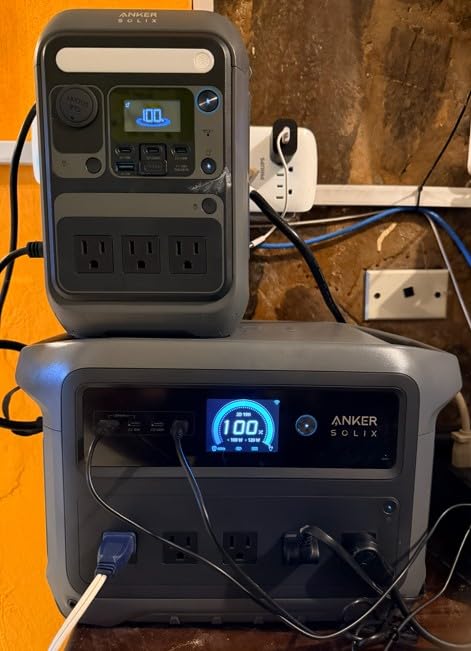
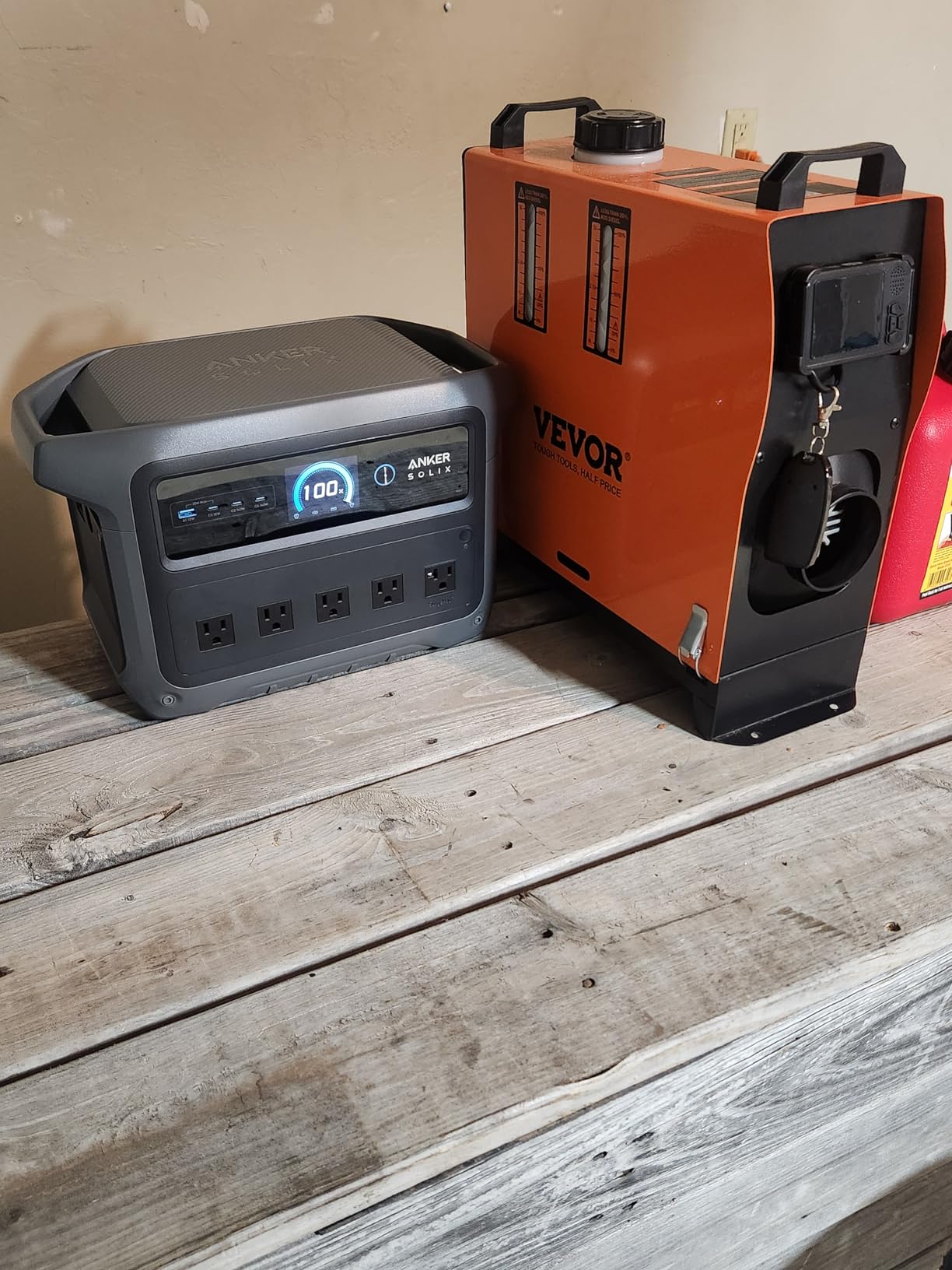
The C1000 Gen 2 has the tightest UPS switchover we saw, at under 10 milliseconds, and manufacturer documentation specifically names CPAP machines as a reason for it. That is the single most important spec for anyone nervous about a mid-night reboot.
Capacity is 1,024Wh with 2,000W continuous output and 3,000W peak across 10 ports. Owners report powering a ResMed AirSense 11 for three nights straight on one charge, and one measured a typical night at about 17 percent of capacity.
Recharge speed is the headline: 49 minutes for a full charge at 1,600W input, or about 1.8 hours on 600W of solar. The app adds time-of-use scheduling and emergency charging control.
Two reservations. The Gen 2 dropped the expansion battery option found on the Gen 1, so you cannot grow past 1,024Wh. It also weighs about 25 lbs, and one engineer reviewer measured 15-20 percent harmonic distortion on microwave loads, though nothing in the CPAP use case depends on that.
Who the C1000 Gen 2 suits
It suits anyone who wants the fastest possible recharge between nights and the shortest possible transfer gap. It also suits AirSense 11 owners who want three nights per charge.
Buyers who want a long warranty will like the 5 years of coverage here.
Where the C1000 Gen 2 falls short
It falls short for anyone who plans to expand capacity later, and for hikers who need something lighter than 25 lbs. Buy a small station for the trail and keep this one as the home unit.
8. EcoFlow River 2 Max Review
EF ECOFLOW Portable Power Station River 2 Max 500, 499Wh 500W
499Wh LiFePO4
Up to 1000W output
1 hour recharge
13.3 lb
Pros
- 499Wh is nearly double the capacity of the RIVER 2
- Full AC recharge in about one hour
- Up to 1000W output across 11 outlets
- Only 13.3 lb for this much capacity
- 220W solar input refills in as fast as 2.3 hours
Cons
- Pass-through is not a true UPS according to one reviewer
- Bundled 160W solar panel underperforms
- Occasional app reliability complaints
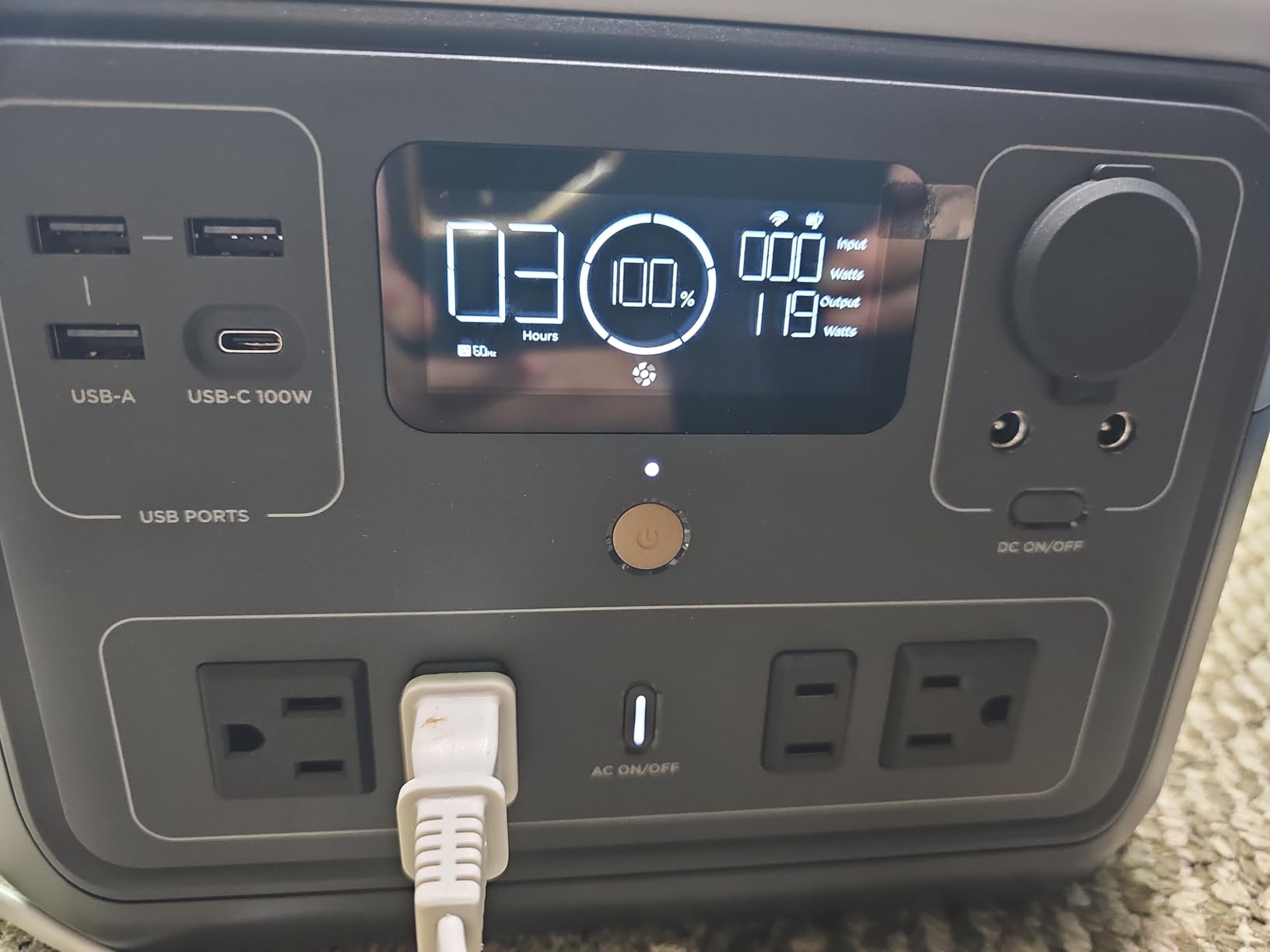
The River 2 Max is the sweet spot for most campers, and it is the unit an r/CPAP user recommended when sizing a starter station for moderate humidity, naming a 500Wh LFP model as the right starting point.
It holds 499Wh, nearly double the RIVER 2, and reaches full charge in about an hour with X-Stream charging. Output is up to 1,000W across 11 ports, so there is room for the CPAP plus a fridge or a kettle.
At 13.3 lbs with a carry handle it is the lightest station on this list with this much capacity. Solar input is 220W, and EcoFlow claims a full recharge in as fast as 2.3 hours. Owners also report running a 12V fridge for two full days on one charge.
The warning that matters for CPAP users is about pass-through. One reviewer reports that its pass-through behavior is not a true UPS and can fail when mains power fails, so do not plan on uninterrupted transfer from this unit without testing it yourself first. Some owners also report intermittent fan noise.
Who the River 2 Max suits
It suits van and tent campers who want two nights of humidified therapy plus other gear, without hauling 37 lbs across a campsite.
It suits buyers who want fast charging and real solar input without stepping up to a 1,000Wh unit.
Where the River 2 Max falls short
It falls short for anyone whose outage backup depends on a verified zero-gap transfer, and for anyone who buys the bundle expecting the included 160W solar panel to hit its rating.
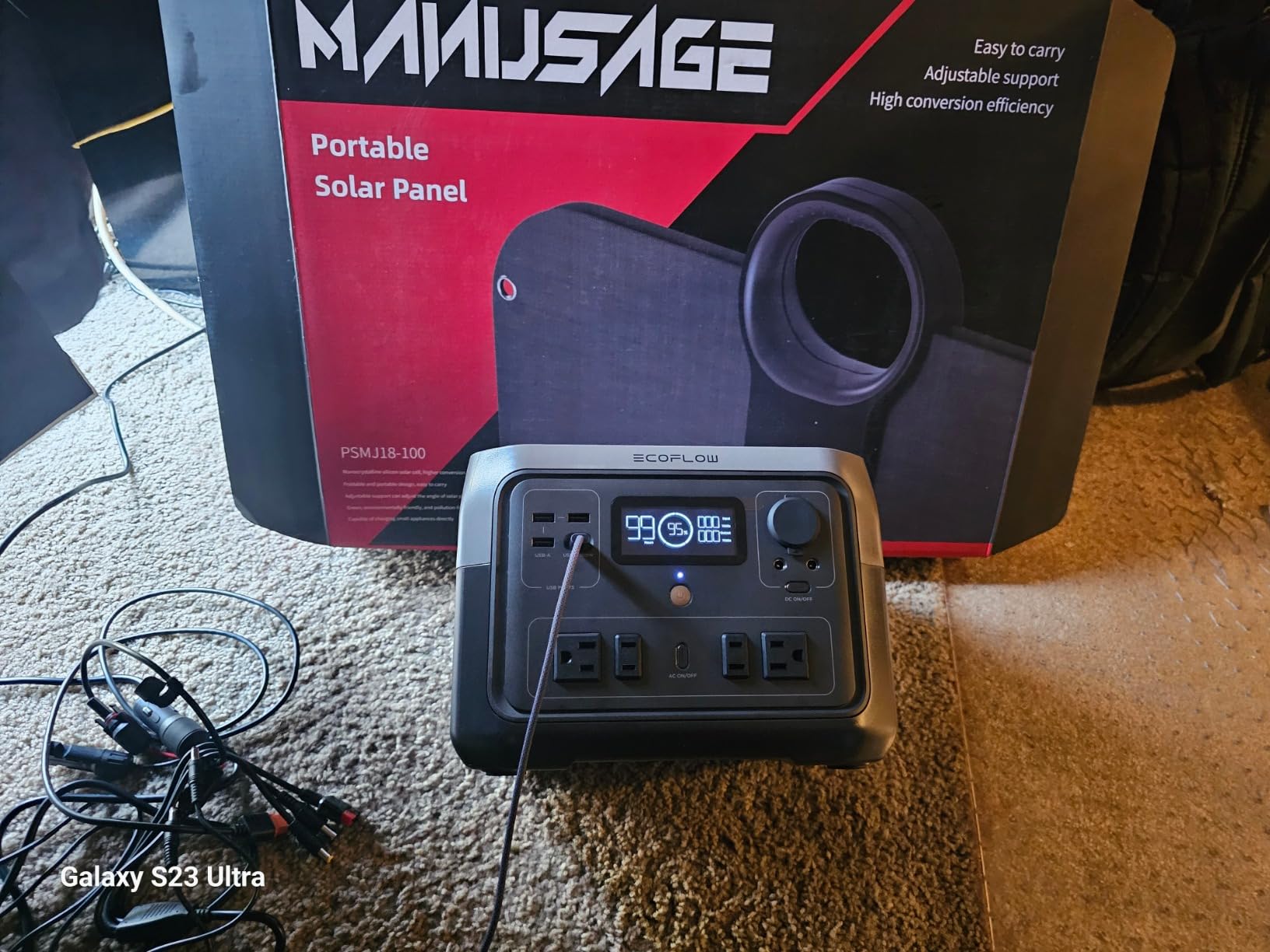
9. EASYLONGER ES720 CPAP Battery Review
EASYLONGER ES720 CPAP Battery Backup, 266.4Wh Portable CPAP Power Supply
266.4Wh
Built-in ResMed and Philips cables
3.31 lb
FSA or HSA eligible
Pros
- Purpose-built for CPAP with four DC cables for ResMed
- Philips and Luna models
- FSA or HSA eligible
- unlike general purpose stations
- 266.4Wh in a 1.7 inch thick pack at only 3.31 lb
- Adjustable DC output plus 180W car socket and 4 USB ports
- Recharges four ways including 60W USB-C PD and 100W solar
Cons
- Heated tube not supported on the Luna G3
- Cigarette lighter connection needs a separate voltage converter
- Only 372 reviews with a 14 percent one-star share
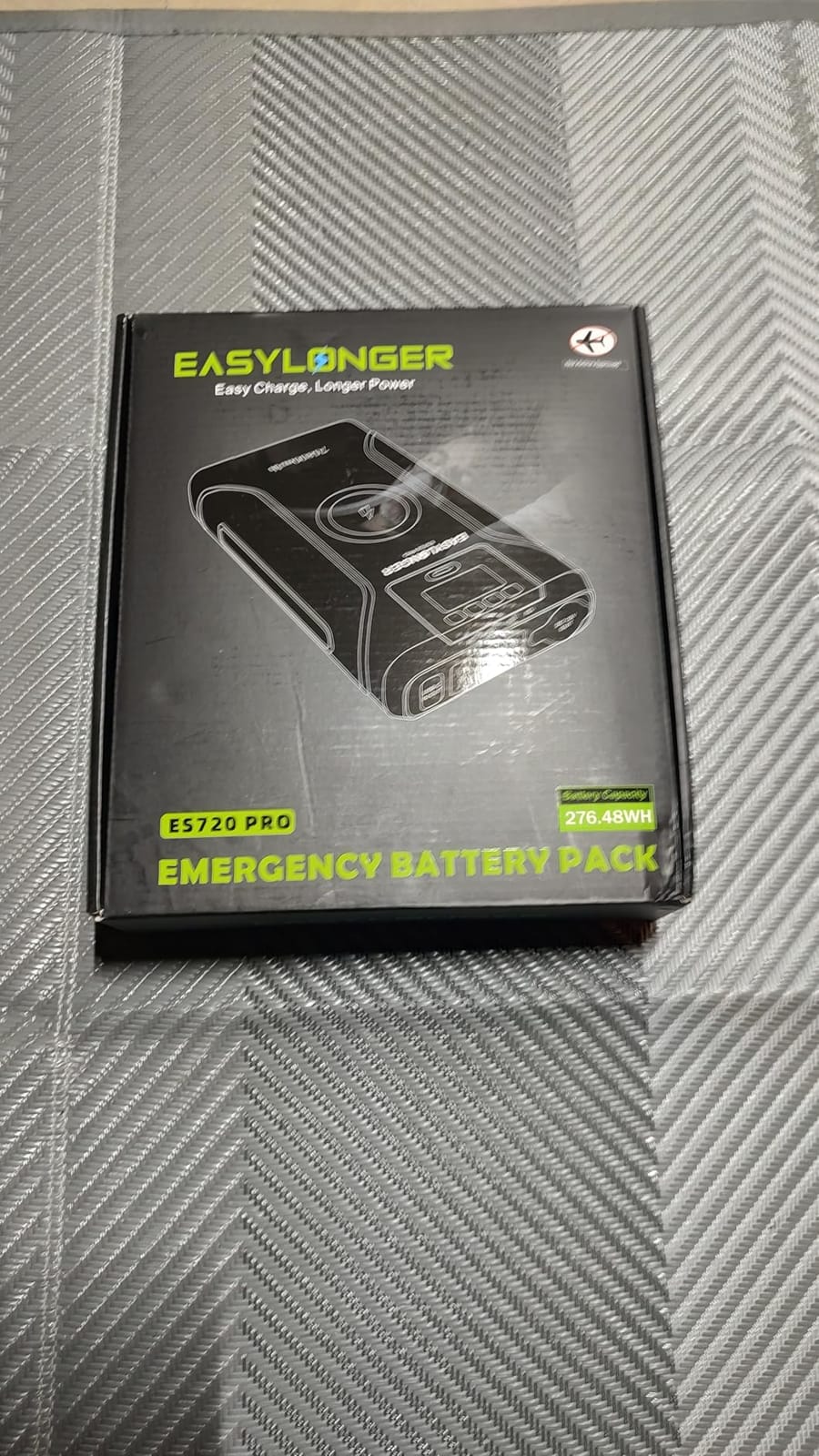
This is not a general power station, and that is the point. The ES720 ships with four DC cables covering ResMed S9, AirSense 10 and 11, AirCurve 10 and 11, AirMini and Philips DreamStation models, so there is no guessing about connectors.
At 266.4Wh and 3.31 lbs in a 1.7 inch thick body, it is one of the more travel-friendly options here. Output covers adjustable DC at 12V, 16.5V, 20V and 24V, plus a 180W car socket and four USB ports.
The feature no general power station on this list offers is FSA or HSA eligibility, which can turn this category from an out-of-pocket cost into a reimbursed one. Recharging runs through a 72W AC adapter, 60W USB-C PD, 100W solar or a car outlet.
Be honest about the trade-offs. The heated tube is not supported on the Luna G3, the car connection needs a separate voltage converter, and with only 372 reviews at 4.2 stars and a 14 percent one-star share, this is the least proven unit in the group.
Who the ES720 suits
It suits anyone using flexible spending or health savings account funds, and anyone who wants the correct cable in the box the night before an outage. Travel CPAP users on AirMini get support out of the box.
It also suits buyers who want a slim pack that fits in a carry-on rather than a box.
Where the ES720 falls short
It falls short for anyone who needs more than about 266Wh of headroom, for Luna G3 owners who use heated tubing, and for buyers who want a deep review history behind the product.
10. EnginStar 300W Review
EnginStar Portable Power Station 300W 296Wh Solar Generator
296Wh capacity
300W pure sine wave
6.5 lb
Eight output ports
Pros
- 296Wh with two 110V pure sine wave AC outlets for sensitive devices
- Only 6.5 lb in a compact body
- Eight output ports covering AC
- regulated DC
- USB-A and USB-C
- 80 percent charge in 2 hours from a 65W AC input
- ETL certified with a battery management system
Cons
- Only 12 months of limited warranty
- Standard lithium-ion cells rated at 1000 cycles
- 300W output ceiling limits heated-humidity setups
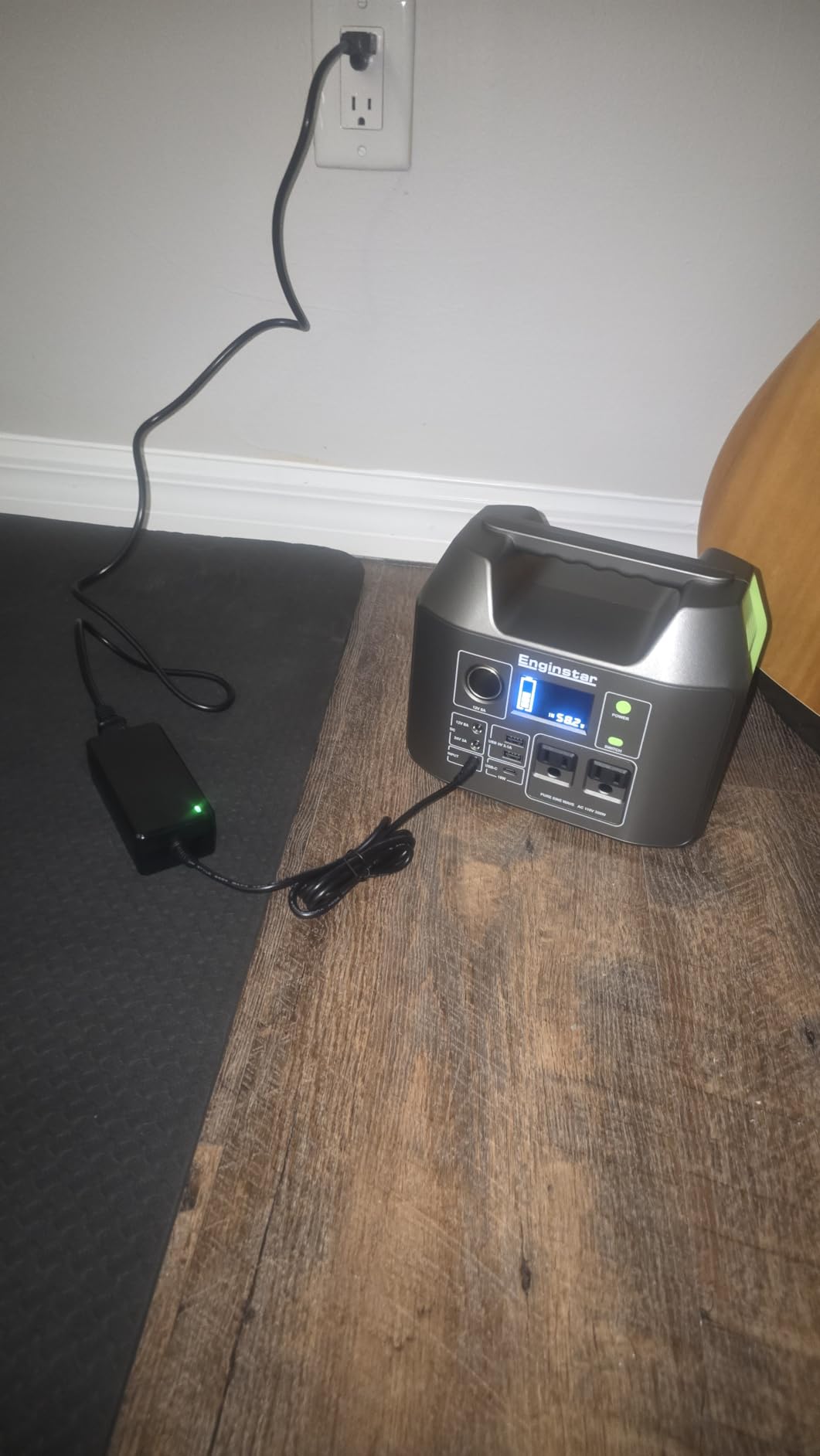
The EnginStar R300 is the plainest sleeper on this list. It holds 296Wh and puts out 300W of pure sine wave AC from two outlets, which owners specifically note runs a CPAP quietly with no fan noise complaints of the kind we saw elsewhere.
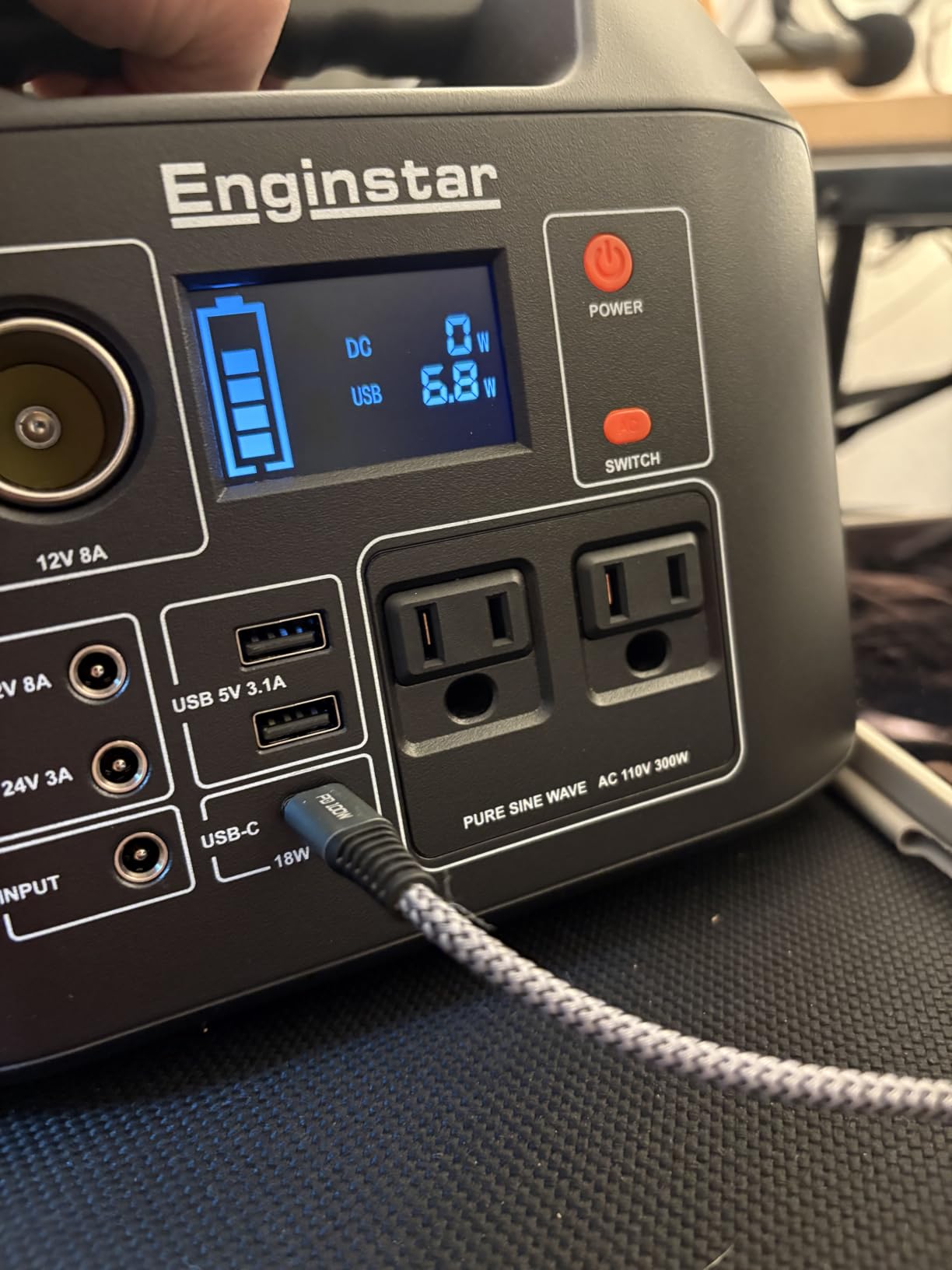
At 6.5 lbs it is one of the easier units to carry, and eight output ports cover AC, regulated DC at 12V and 24V, USB-A and an 18W USB-C. An 80 percent charge takes about two hours from a 65W AC input.
It is also ETL certified, with a battery management system handling voltage and temperature control. That certification detail matters more than it sounds for a device sitting next to your bed during therapy.
The limitation is chemistry. These are standard lithium-ion cells rated at 1,000 cycles, well short of the 3,000-plus cycle LFP units here, and the warranty is 12 months. For a device expected to stay plugged in and ready for years, that combination is the weakest durability story on the list.
Who the EnginStar suits
It suits someone who wants a quiet, light, pure sine wave station for a single overnight and does not plan to keep it for a decade.
It also suits buyers who want ETL certification at this capacity level.
Where the EnginStar falls short
It falls short on long-term durability, given the 1,000 cycle cells and 12-month coverage, and on heated-humidifier setups that push past the 300W ceiling.
How to Size a Power Station for Your CPAP
The formula is simple: average overnight watts multiplied by sleep hours, plus a 20 percent margin. Most CPAPs draw 30-65W without humidification and 90W or more with a heated humidifier, so plan on roughly 480Wh for a humidifier-off night and about 864Wh for a heated-humidifier night at 8 hours. Then remember that BLUETTI-style units hold back about 90 percent of rated capacity by design, so a 1,000Wh label is closer to 900Wh of usable energy.
Find your real number rather than the label. Adapter labels print maximum wattage, not average draw. If your station has a live wattage readout, plug the CPAP in for 20 minutes after the humidifier reaches temperature and write that number down. Our own guide to battery backup power stations covers the larger units if you want more headroom than one machine.
Pick your connection path first, because it changes everything. A dedicated CPAP battery with a DC cable runs the machine directly and wastes little energy. A power station with a DC converter skips the inverter and gives more runtime, but watch the voltage. A power station through the original AC supply is the most compatible route and the least efficient, since the inverter burns roughly 10-15 percent of stored energy.
Check voltage compatibility carefully. A poster on diysolarforum warned that a 12V converter may not power some devices because some equipment is designed around 13.5V nominal, which causes random shutdowns in the middle of the night. Confirm the converter’s output voltage matches your machine before you rely on it, and be aware that some DC ports cut power to loads below their threshold.
UPS mode is what prevents a reboot. A station that switches in under 10 milliseconds will be invisible to your machine; the EcoFlow RIVER 2 and BLUETTI AC180 both document transfer times in that range or close to it. Pass-through charging is not the same thing as UPS, so test any unit you intend to leave running overnight.
A dedicated CPAP battery such as the EASYLONGER ES720 is the better buy when you need only one night of humidifier-off backup, want the correct cable in the box, or can claim the purchase through an FSA or HSA. Buy a general station when you also need to run a router, charge phones, or cover an outage longer than a single night. Our broader buying guide covers how to keep one of these ready between uses.
Flying with one is straightforward as long as you know the thresholds. Spare lithium batteries under 100Wh are ordinary baggage, batteries from 100Wh to 160Wh need airline approval with a maximum of two, and anything over 160Wh is not permitted in passenger baggage. Check each carrier and use the FAA PackSafe tool before you pack.
Frequently Asked Questions
Will a portable power station run a CPAP?
Yes, provided the station holds enough watt-hours and delivers clean output. A standard CPAP draws 30-65W without humidification, so a 500-1,000Wh power station covers a full 8-hour night and most run two. Use pure sine wave AC output and a station with UPS mode so the machine does not reboot when mains power drops.
What is the best portable power station for a CPAP machine?
For most people the Jackery Explorer 300 is the best balance of proven reliability, weight and runtime at 4.6 stars across more than 11,000 reviews. The Jackery Explorer 1000 v2 is the pick for multi-night outages, the Anker SOLIX C1000 for the fastest recharge and shortest UPS gap, and the BLUETTI AC180 if you want the most power headroom for other devices.
What size portable power station do I need to run a CPAP machine?
Multiply your average overnight watts by your sleep hours, then add 20 percent. That is about 480Wh without a humidifier and about 864Wh with heated humidification for an 8-hour night. Since stations reserve some capacity for battery protection, 1,000Wh is the practical floor for heated-humidifier users and roughly 500Wh is enough with the heated tube off.
Can you run a CPAP machine on a power bank?
Yes, but only with the right DC cable and enough capacity. Most general power banks lack the regulated 12V output and the current rating a CPAP needs, and a small bank will not last the night. A purpose-built CPAP battery with the manufacturer cable is safer than an improvised cable from a phone power bank.
How long will a 500Wh power station run a CPAP?
A 500Wh station runs a 60W humidifier-off CPAP for roughly seven usable hours, and about four to five hours with a heated humidifier at 90W. Allowing for the 10-20 percent lost to inverter overhead and the capacity some units hold back by design, plan on one full night of humidified therapy per charge and two nights without it.
Which Portable Power Station Should You Buy?
Start with the sizing formula rather than the brand. If you sleep with the heated tube off, a proven sub-500Wh station such as the Jackery Explorer 300 covers the night, and its 11k+ reviews at 4.6 stars make it the safest default in this group. If humidification stays on, move up to 1,000Wh class, where the Jackery Explorer 1000 v2 or the Anker SOLIX C1000 give you multiple nights per charge and documented UPS transfer times.
Add the BLUETTI AC180 when you need real power headroom for a router and other gear alongside therapy, and consider a dedicated CPAP battery such as the EASYLONGER ES720 if an FSA or HSA can cover it. Whatever you pick, test a full charge-and-discharge cycle before the first storm, and never reduce your prescribed pressure to save power.