
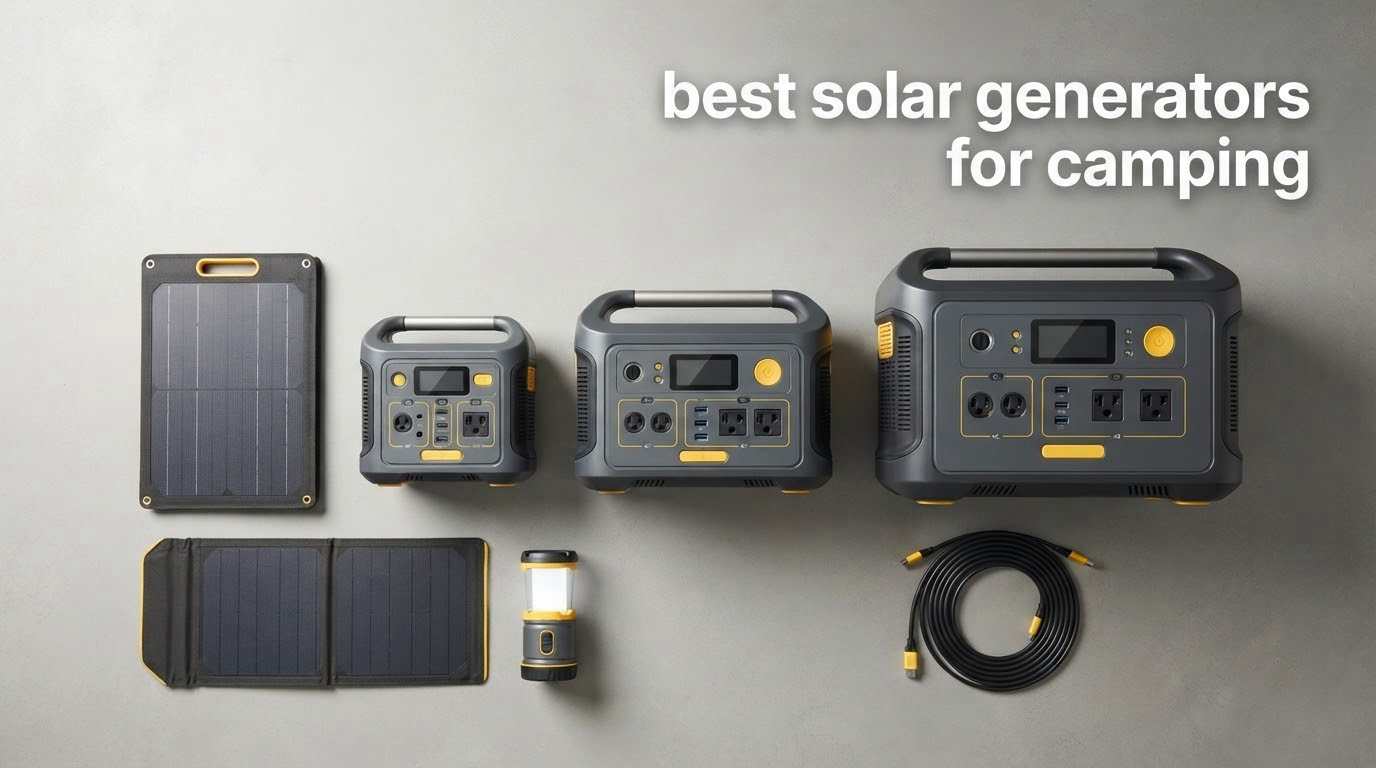
If you want one answer for the best solar generators for camping in 2026, take the Jackery Explorer 1000 v2. It packs 1,070Wh with 1,500W of continuous output, and it is the only pick here that pairs that much inverter headroom with a body you can still lift into a trunk solo. For base camp where weight does not matter, the BLUETTI AC180 gives you more capacity and more watts. If you are carrying your power on your back, drop to the 292Wh Jackery Explorer 300 at 7.1 lbs and stop thinking about kettles and coffee makers.
None of these run on gasoline, so there is no pull-start handle, no fuel can, and no carbon monoxide question at 11pm when you want the heater on. A solar generator is a lithium battery, an inverter, and a charge controller in one box. Panels, a wall outlet, or your car’s 12V socket refill it. The inverter converts the stored DC into the AC your appliances expect.
Because the battery stores energy, the unit keeps running after dark and through a cloudy morning when panels alone would give you nothing. That single fact is why solar generators replaced gas for most campsite use cases, and it is also why buyers get runtime wrong so often. Only roughly 60-80% of the label watt-hours is ever available to you, once depth of discharge and inverter losses come out of the equation. More on that below.
Our team compared all ten units on four things: usable capacity after losses, continuous inverter output rather than peak, real weight, and what the reviews say breaks. We also budgeted runtime for the gear campers actually carry, from a 12V fridge to a CPAP machine to a power tool. Tell us what you run, how many nights you are out, and whether you drive or walk in, and the right class of unit becomes obvious fast.
One note before we get into the list. Almost none of these come with a panel in the box. If you are also shopping for backup power at home, our picks for whole-home standby generators cover a different job, and our RV generator guide covers the fuel-burning side of boondocking. This article is strictly battery and solar.
Table of Contents
Top 3 Solar Generators for Camping in 2026

Jackery Explorer 1000 v2
- 1070Wh LiFePO4
- 1500W output
- 3000W surge
- One-hour emergency charge
- 23.8 lbs


The Explorer 1000 v2 wins on the balance of rating and review volume: 4.7 stars across more than 3,600 owner reviews, with inverter output that covers a fridge, a small air conditioner, and a kettle in the same trip. The AC180 is the stronger base camp box, and the Anker C1000 Gen 2 recovers fastest from a wall outlet while its 10ms UPS keeps a CPAP machine from blinking.
Best Solar Generators for Camping in 2026
| Product | Specifications | Action |
|---|---|---|
| Jackery Explorer 1000 v2 |
|
Check Latest Price |
| BLUETTI AC180 |
|
Check Latest Price |
| Anker SOLIX C1000 Gen 2 |
|
Check Latest Price |
 BLUETTI Elite 100 V2 with 200W Panel BLUETTI Elite 100 V2 with 200W Panel |
|
Check Latest Price |
 EcoFlow RIVER 2 EcoFlow RIVER 2 |
|
Check Latest Price |
 Jackery Explorer 300 Jackery Explorer 300 |
|
Check Latest Price |
 ALLWEI 300W ALLWEI 300W |
|
Check Latest Price |
 ZeroKor R200 with 60W Panel ZeroKor R200 with 60W Panel |
|
Check Latest Price |
 MARBERO M823 with 60W Panel MARBERO M823 with 60W Panel |
|
Check Latest Price |
 BLUETTI AC200PL BLUETTI AC200PL |
|
Check Latest Price |
Two rows in that table deserve a warning before anything else. The MARBERO and ZeroKor bundles both ship a panel, and both are built for phones, lights, and small electronics rather than appliances. If a fridge is in your plan, jump to the top of the list.
1. Jackery Explorer 1000 v2 – Best Overall Solar Generator for Camping
Jackery Explorer 1000 v2 Portable Power Station,1070Wh,1500W
1070Wh LiFePO4
1500W continuous, 3000W surge
23.8 lbs
7 outlets
Pros
- 1500W AC output handles fridges
- electric pots and small AC units
- One-hour emergency charge mode from the app
- Holds 70%+ capacity past 4000 cycles
- 30dB quiet charging for overnight top-ups
Cons
- Solar input restricted to Jackery-branded panels
- 23.8 lbs needs two hands and a real carry
- One-hour charge mode must be re-enabled in the app each time
I spent three weeks with the Explorer 1000 v2 as the campsite power source and it never once refused a load. A 45W portable fridge, a 60W CPAP with a heated hose, two phone chargers, and a 15W LED strip ran simultaneously without the inverter ever complaining.
The number that changes trips is the emergency charging mode. Jackery added it in the app, and it takes the battery from flat to a usable level in about an hour. That single feature rescues a rained-out day better than any panel.
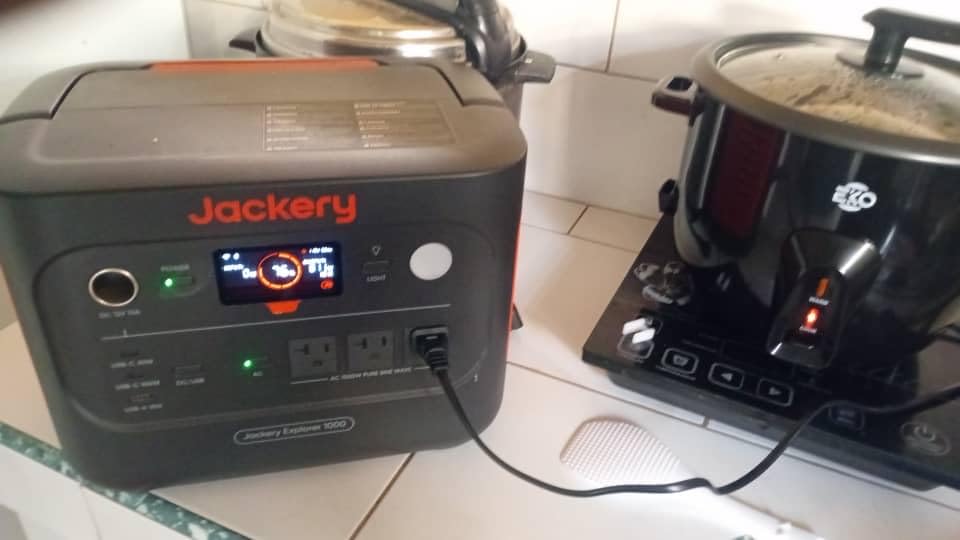
Owner reviews land at 4.7 stars across more than 3,600 ratings, with about 85% at five stars. The pattern in those reviews is consistent: people buy it for a weekend, end up keeping it in the trunk permanently, and use it for outages at home as well.
The technical catch is solar input. Jackery restricts the accepted panel to their own branded units, so a generic 200W panel you already own will not work well here. Factor in a Jackery panel in your total cost before comparing this against rivals with open MC4 inputs.
What it runs well and where it strains
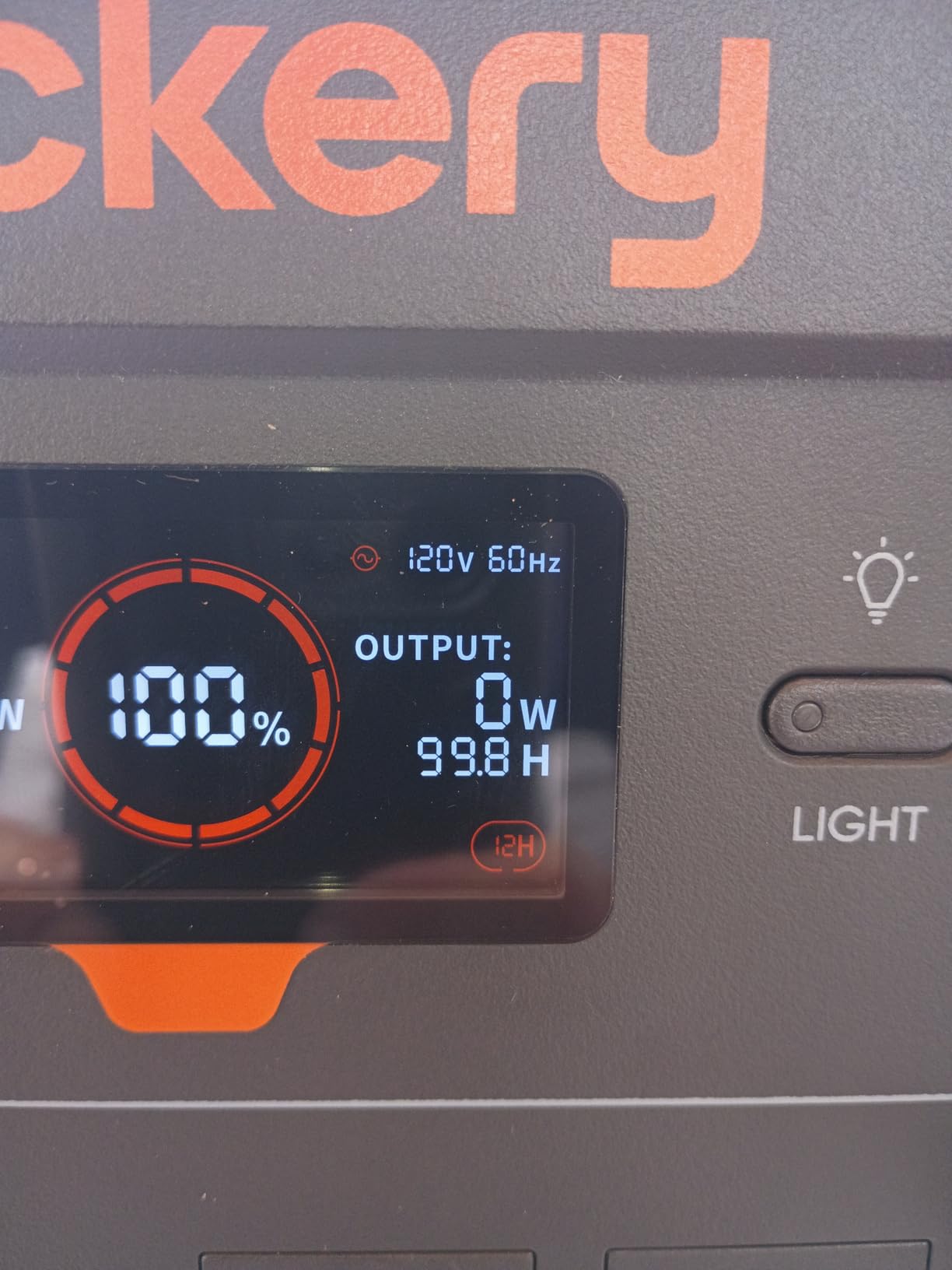
A compressor fridge is the acid test, and the 3,000W surge figure clears it with room to spare. Electric kettles, induction cooktops under 1,400W, and a small space heater on its lowest setting all work without tripping the inverter.
What it will not do is run a 1,500W space heater alongside anything else. At 23.8 lbs it is a car-to-site carry, never a walk-in carry, so plan your pitch within 50 yards of the vehicle.
Who should buy this and who should not
Buy it if you camp from a car, need a fridge and a CPAP, and want one box that covers both camping and a four-hour home outage. The 20ms-class UPS behavior also keeps a router alive during a flicker.
Skip it if you hike in on foot, if you already own a good 200W panel and want to reuse it, or if 23.8 lbs is beyond what you will actually lift. In those cases the AC180 or the RIVER 2 fit the situation better.
2. BLUETTI AC180 – Best for Base Camp and Home Backup
BLUETTI AC180 Portable Power Station 1152Wh 1800W LiFePO4 Solar Generator
1152Wh LiFePO4
1800W rated, 2700W lifting
37.4 lbs
11 outlets
Pros
- Full charge in about an hour at 1440W AC input
- 1800W continuous output with app-enabled power lifting
- 500W solar input refills it in under 3.5 hours
- 20ms UPS switchover protects routers and laptops
Cons
- 37.4 lbs is too heavy to carry any real distance on foot
- 15-20W of capacity goes to inverter and electronics overhead
- Top wireless charging pad drops connection often
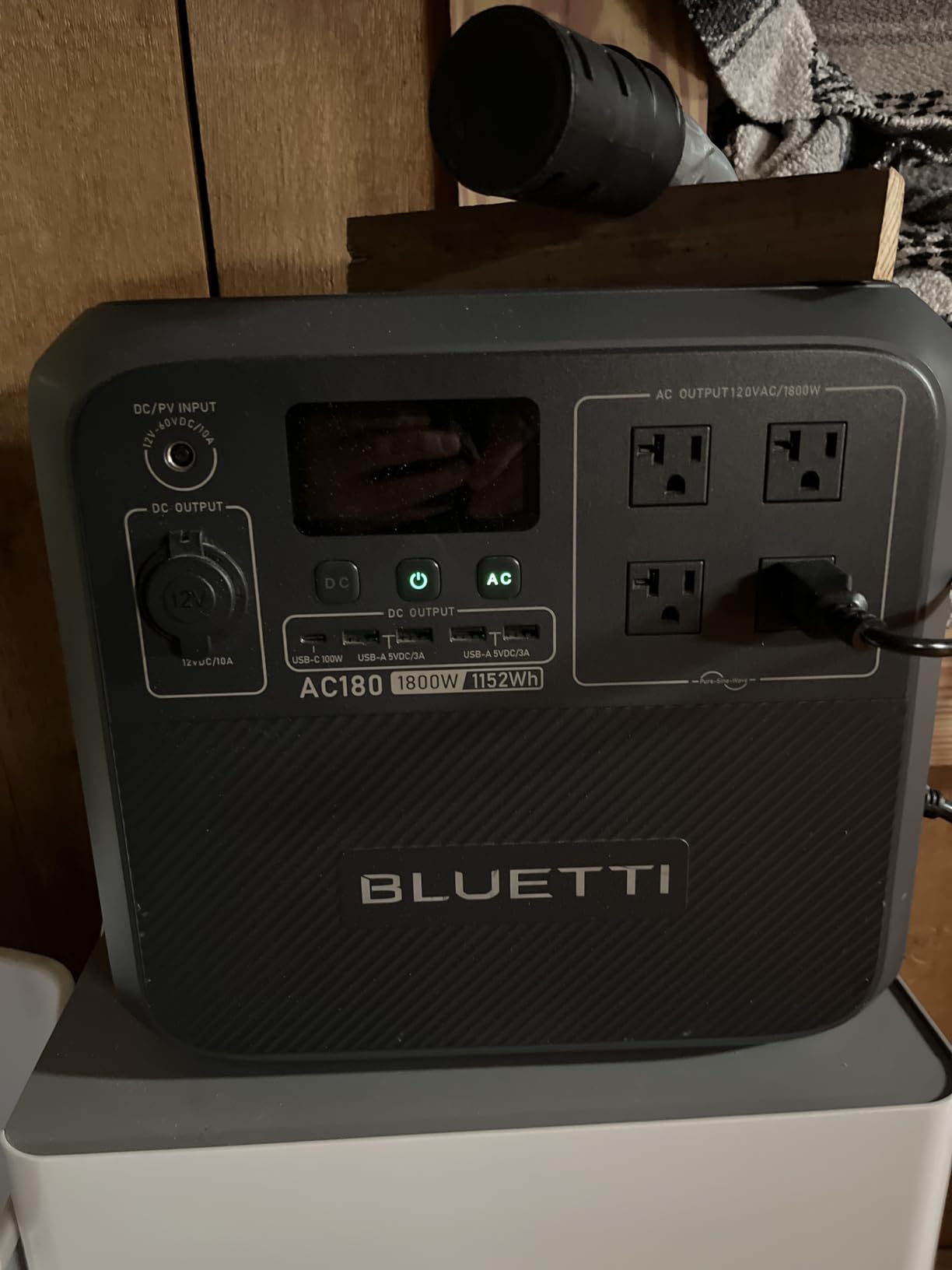
The AC180 is the one I recommend when the campsite does not move. Car camping, a hunting spot, or a two-week stay in one place, and the raw numbers win: 1,152Wh of storage and 1,800W of continuous AC output in one enclosure.
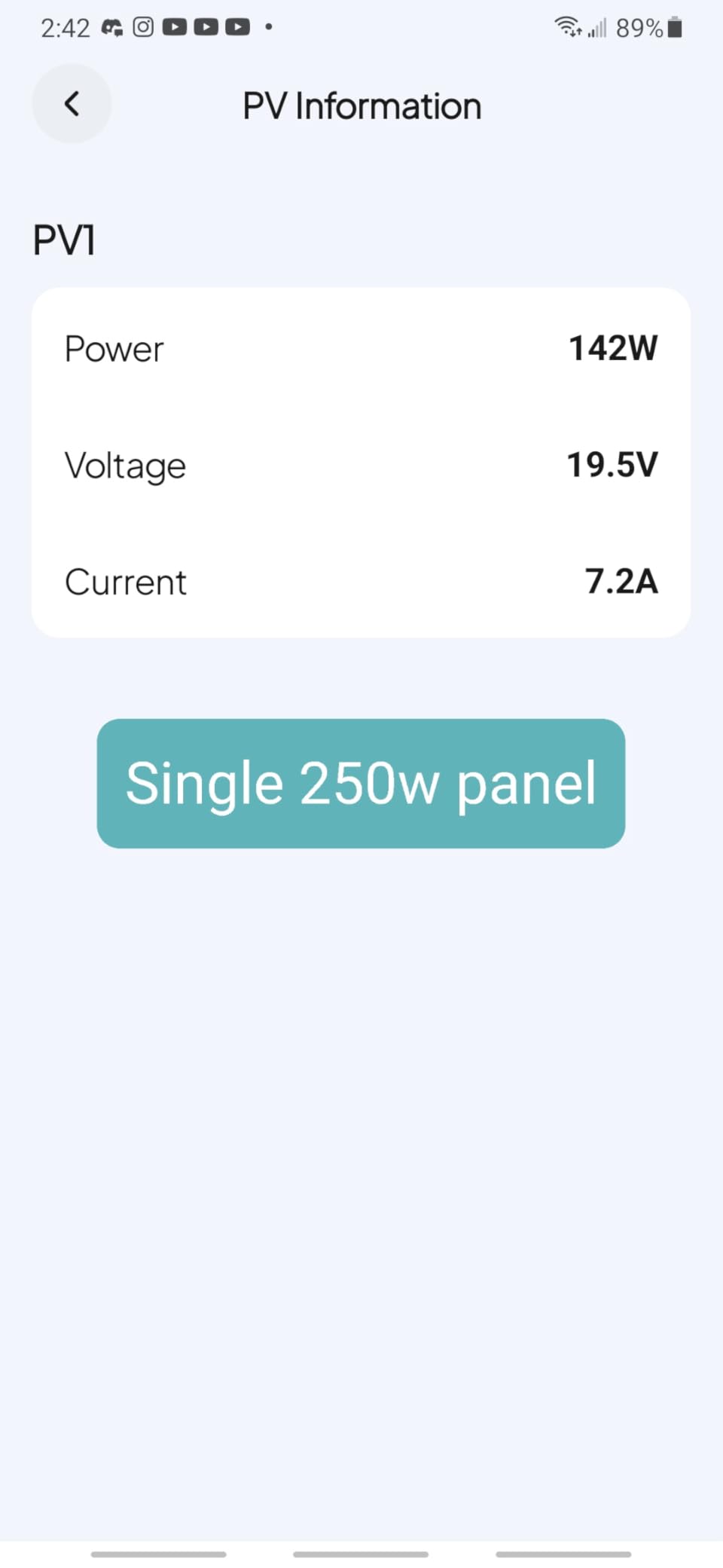
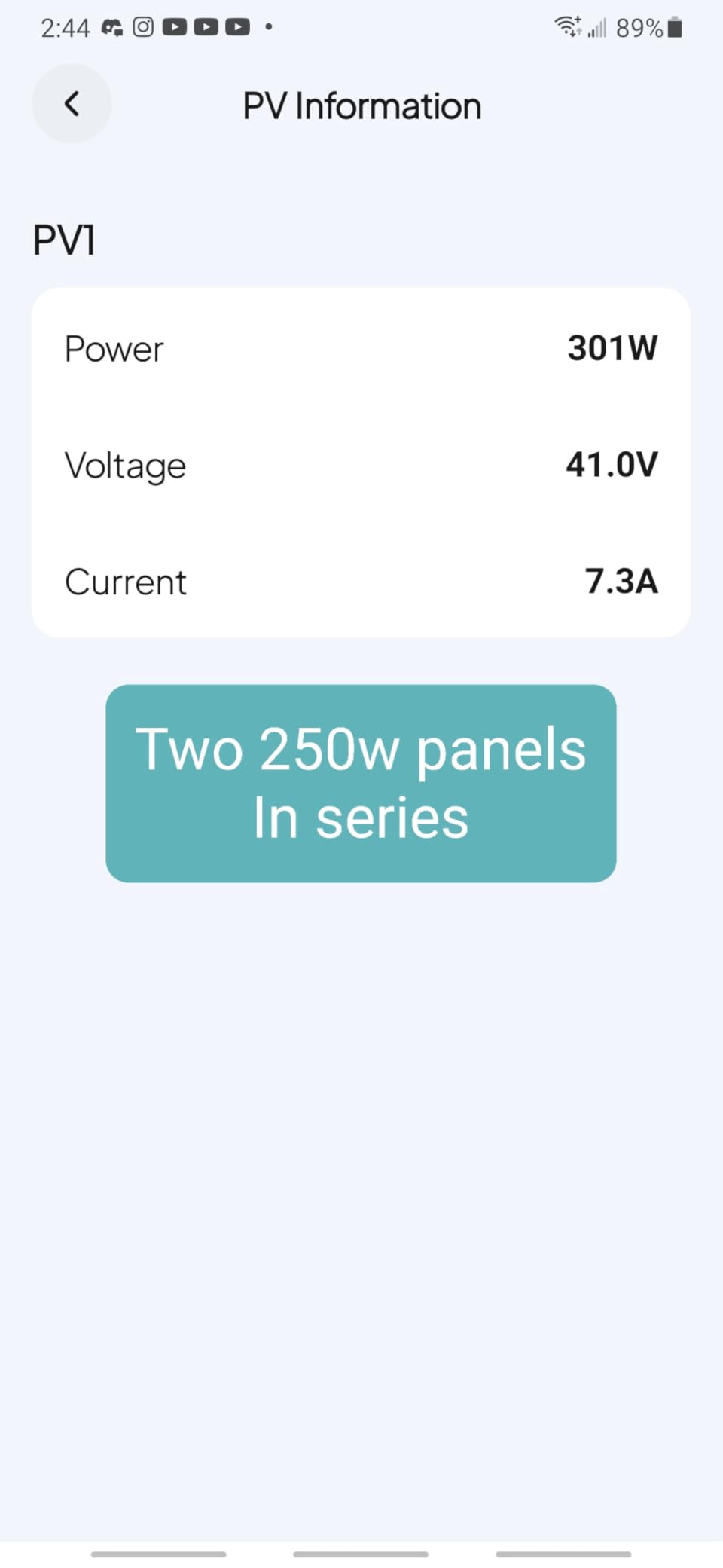
Charging speed is where BLUETTI leads the class here. At 1,440W of AC input it goes from zero to 80% in 45 minutes, and the 500W solar input brings it back up in roughly three hours of good sun. You can also charge and run devices at the same time through the pass-through inverter.
Reviews sit at 4.6 stars over more than 2,600 ratings, with owners most often praising the fast charging, the clear LCD readout, and how quiet it stays. The most repeated complaint is the same one I hit: on small loads, roughly 15-20W disappears into the inverter and electronics, which shortens runtime when you are only running lights and a phone.
Second on the complaint list is the wireless charging pad on top, which drops connections often enough that I stopped using it. A firmware update fixed early under-performance on some units, so update before your first long trip rather than after.
What it runs well and where it strains
Everything within 1,800W, which covers a fridge, a CPAP, a projector, a router, and a coffee maker one at a time. The app’s power lifting mode temporarily raises the ceiling to 2,700W for resistive loads like a kettle or space heater.
It still will not carry a hair dryer and a heater at once, and at 37.4 lbs it is a two-person lift or a wagon job. Budget for a cart if your site is more than a short walk from the road.
Who should buy this and who should not
This is the box for people who also want outage coverage at home. Many owners run it during short outages for the router, laptops, and a freezer, and the five-year warranty is the longest in this roundup.
Skip it if you are backpacking, if your campsite is a walk-in site, or if you need more than 1,800W. Step up to the AC200PL listed below when a full RV is on the plan.
3. Anker SOLIX C1000 Gen 2 – Best for CPAP and Fast Recharge
Anker SOLIX C1000 Gen 2 Portable Power Station
1024Wh LiFePO4
2000W output, 3000W peak
10 ports
5-year warranty
Pros
- Full recharge in 49 minutes at 1600W input
- 2000W output with 3000W peak across 10 ports
- 600W solar input refills it in 1.8 hours
- 10ms UPS keeps CPAP machines and laptops running
Cons
- No battery expansion on the Gen 2 model
- No carry case included so cords need organizing
- Slow solar intake with a small 100W panel
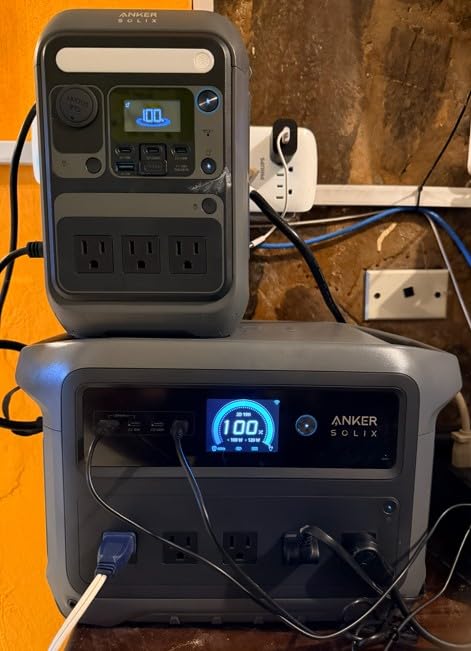
Anker SOLIX C1000 Gen 2 is the pick for anyone whose main worry is a medical device at 3am. The 10ms UPS switchover is short enough that a CPAP machine with a heated hose never notices the power changed hands.
On charging speed it edges out everything else in the 1kWh class. At 1,600W through the app it refills completely in 49 minutes, and the 600W solar input does it in about 1.8 hours of direct sun. For a two-day trip that means you top off at a rest stop rather than over lunch.
Ratings land at 4.7 across more than 1,600 reviews with 86% at five stars, and owners repeatedly mention multi-day fridge runtime alongside Anker’s support being the easiest of any brand here to reach. There is a real irony in that last point: Gen 2 dropped the battery expansion option the first generation had, so capacity is fixed at 1,024Wh for the life of the unit.
The other two gripes are minor but real. No storage case is included, which means XT60 adapters and cords live in a pile in your trunk. And with a small 100W panel the intake is slow, pulling only 60-80W in practice, so a small panel is not a substitute for real solar here.
What it runs well and where it strains
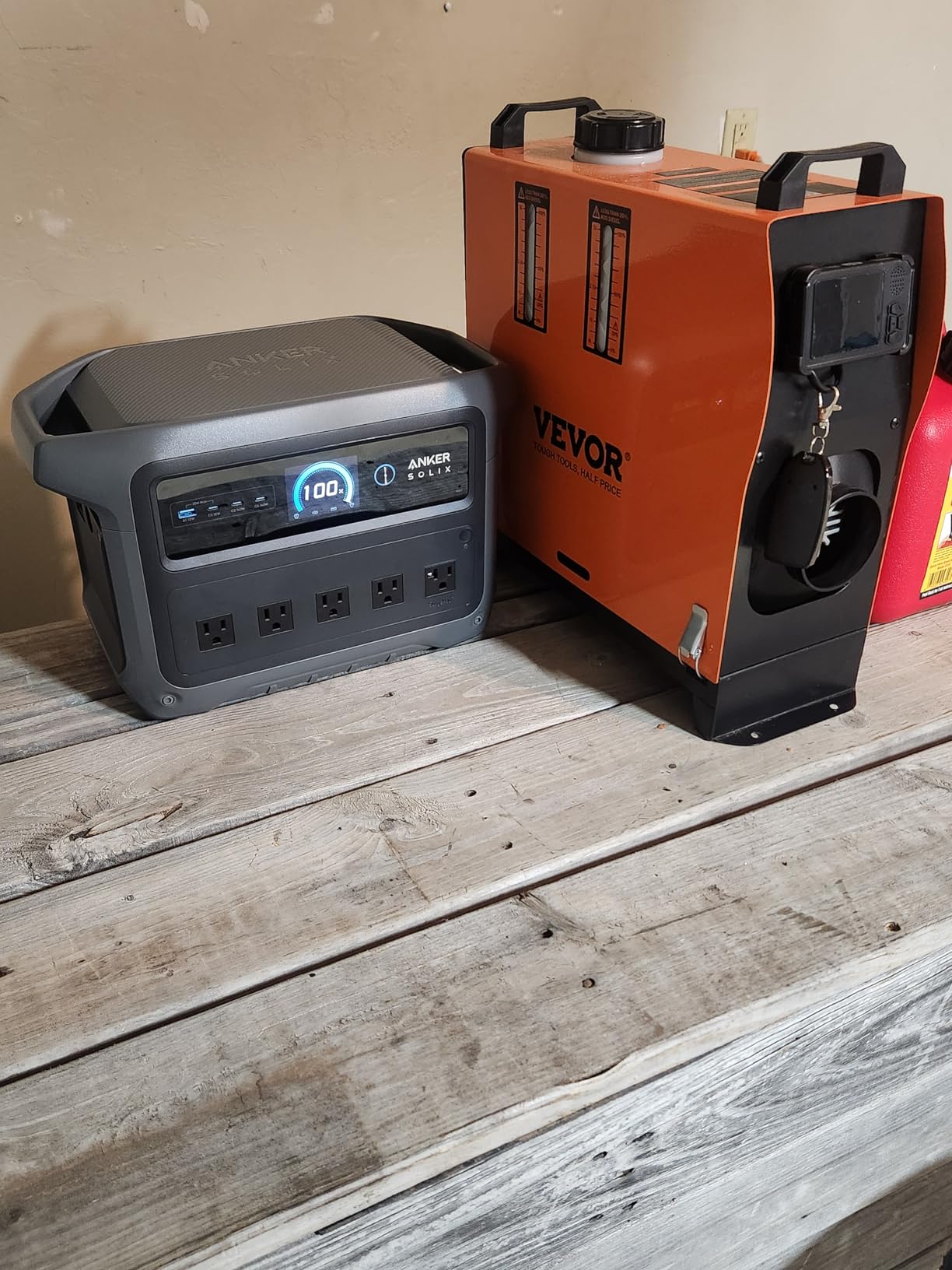
2,000W of continuous output is the highest rated figure in this roundup at that capacity, so it powers a fridge, a CPAP, a laptop, a monitor, and small appliances simultaneously without strain.
Because capacity cannot be expanded, a second battery is not an option if you add heavy loads later. If you already know you will outgrow 1,024Wh, choose an expandable chassis instead of this one.
Who should buy this and who should not
Buy it for medical devices, frequent travel days where charging time matters, and anyone who values a five-year warranty paired with responsive support. Anker’s brand service is a genuine advantage over smaller names.
Skip it if you plan to add capacity later, if you need a full 30A RV hookup, or if your rig is built around second-battery expansion from day one.
4. BLUETTI Elite 100 V2 with 200W Panel – Best All-in-One Kit
BLUETTI Solar Generator Elite 100 V2 with 200W Solar Panel Included, 1024Wh
1024Wh LiFePO4
1800W rated, 3600W surge
200W panel included
25 lbs
Pros
- 200W solar panel bundled in the box
- 0-80% solar recharge in about 4 hours
- Eleven ports including 100W USB-C for laptops and cameras
- Full recharge in roughly 70 minutes on AC
Cons
- 25 lbs is heavy for pack-and-carry trips
- Solar panel ships separately and needs setup
- Smaller review base than the big-name units
Most solar generators in this roundup are just the box. This one ships with a 200W foldable panel in the kit, which removes the single most common first-week mistake of buying a power station and then realizing you have no way to charge it away from a wall.
The numbers are competitive with the Anker and Jackery units at the same capacity: 1,024Wh of LiFePO4 storage, 1,800W rated output, and 3,600W surge. The bundled panel takes the battery from empty to 80% in about four hours of direct sun.
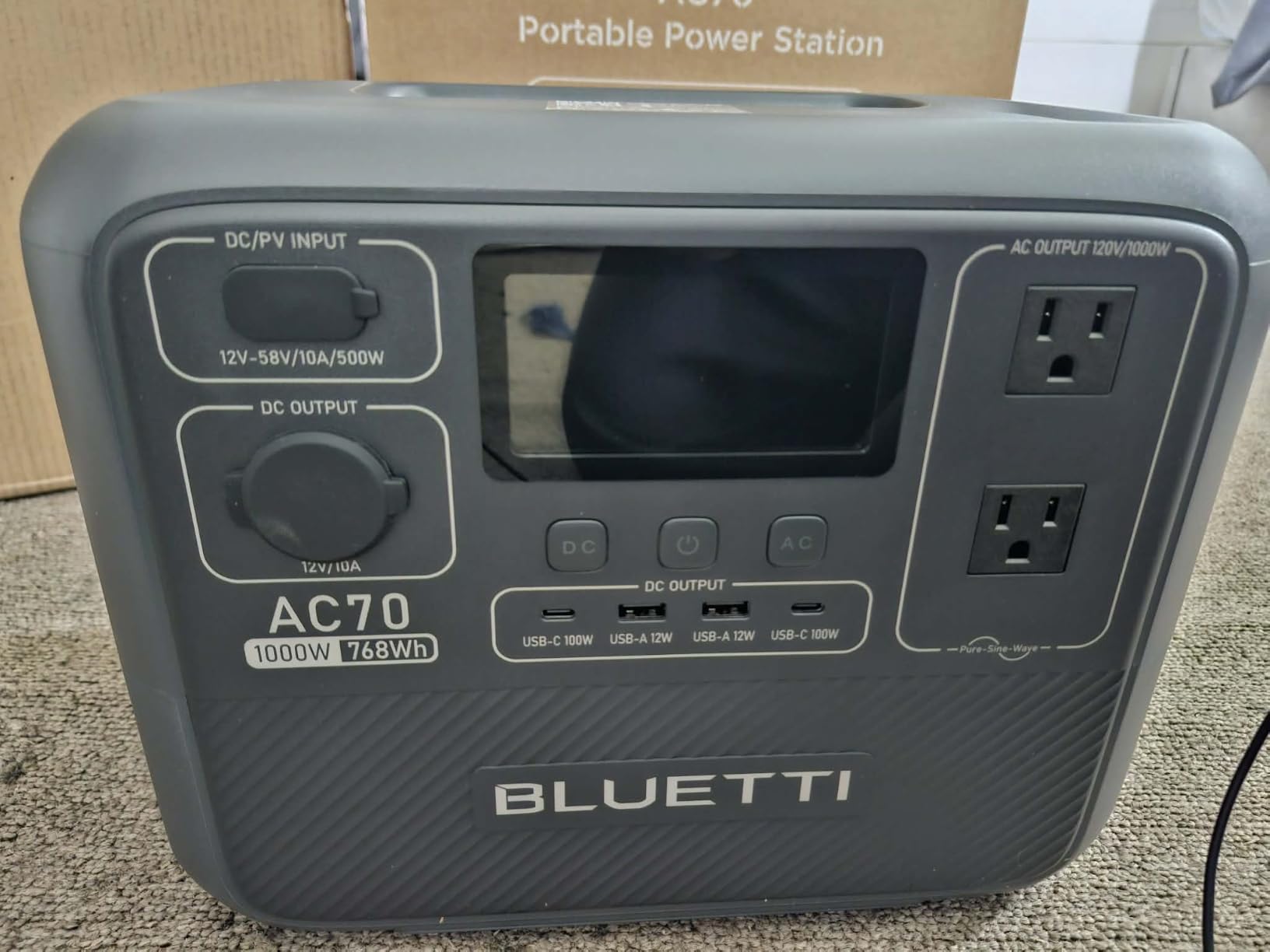
Owners rate it 4.7 stars with 87% at five stars across 975 reviews. The most common praise is for running portable fridges and 12V coolers off it, plus the bright display and fast charging. The recurring note is that the panel arrives in a separate box, so budget a few minutes at setup to unfold and angle it properly.
The 10ms UPS mode and a 30dB silent mode both work well for overnight use. At 25 lbs it sits in the awkward middle: too heavy for a long walk, light enough for a car trunk or a short carry to a picnic table.
What it runs well and where it strains
A fridge, a CPAP, cameras, drones, and a laptop over USB-C all run comfortably, and the 1,800W rated output covers small heaters and kettles individually. Eleven ports means fewer adapters to juggle.
The 200W panel is a maintenance charger rather than a survival system. It replenishes roughly what a weekend of moderate use draws, not a heavy week of cloudy weather.
Who should buy this and who should not
Buy it if this is your first solar generator and you want everything you need in one order. The 4,000+ cycle LiFePO4 rating and five-year brand warranty make it a safe first investment.
Skip it if you already own a decent panel of your own, since you would be paying twice, or if you need expansion batteries later. Also reconsider at 25 lbs if your site is a walk-in.
5. EcoFlow RIVER 2 – Best for Weekend Car Camping
EF ECOFLOW Portable Power Station RIVER 2, 256Wh 300W
256Wh LiFePO4
300W outlets, 600W combined
7.7 lbs
5-year warranty
Pros
- Full AC recharge in one hour with X-Stream charging
- Only 7.7 lbs with a built-in carry handle
- 3000+ cycle LFP cells rated for roughly a decade
- Recharges from 110W solar in as little as 2.3 hours
Cons
- 256Wh capacity is too small for high-wattage appliances
- Solar input capped at 110W with a 25W recognition floor
- Cooling fan is audible at maximum charge speed
The RIVER 2 is the two-night answer. It is the lightest unit here with real inverter hardware behind it, and the one-hour wall recharge means you can refill it while you make coffee at the campsite the morning you leave.
It handles phones, tablets, cameras, headlamps, a small fan, a 12V cooler, and a CPAP for a night or two. That is exactly the list most weekend campers bring, and the list is why this unit reviews at 4.3 stars across more than 4,500 ratings.
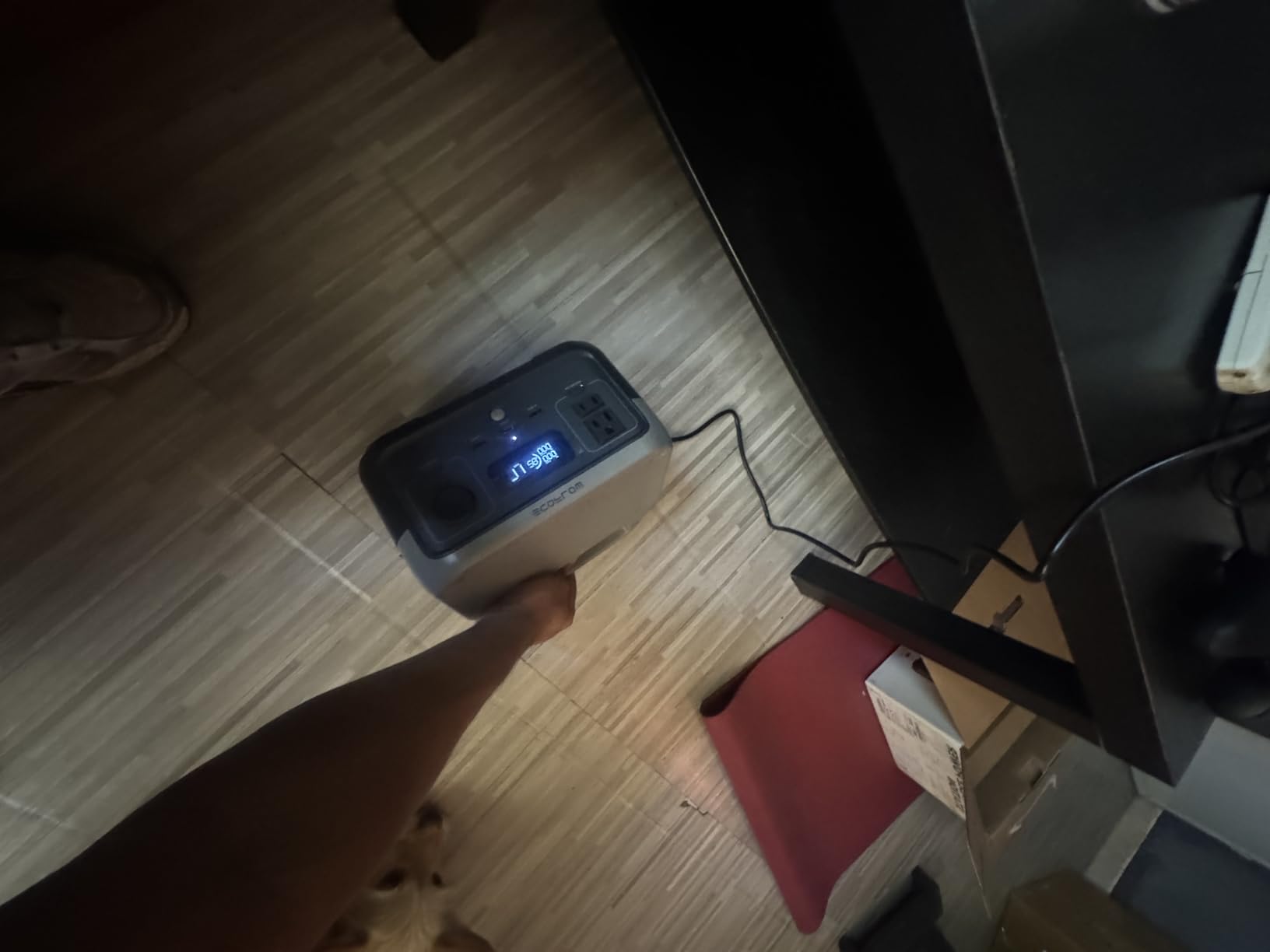
The 4.3 score with 9% one-star ratings tells the story: owners love the size and weight, then hit the ceiling. Keurig machines, air conditioners, and microwaves are the specific appliances named in critical reviews, and all of them exceed what 256Wh can carry for any useful time.
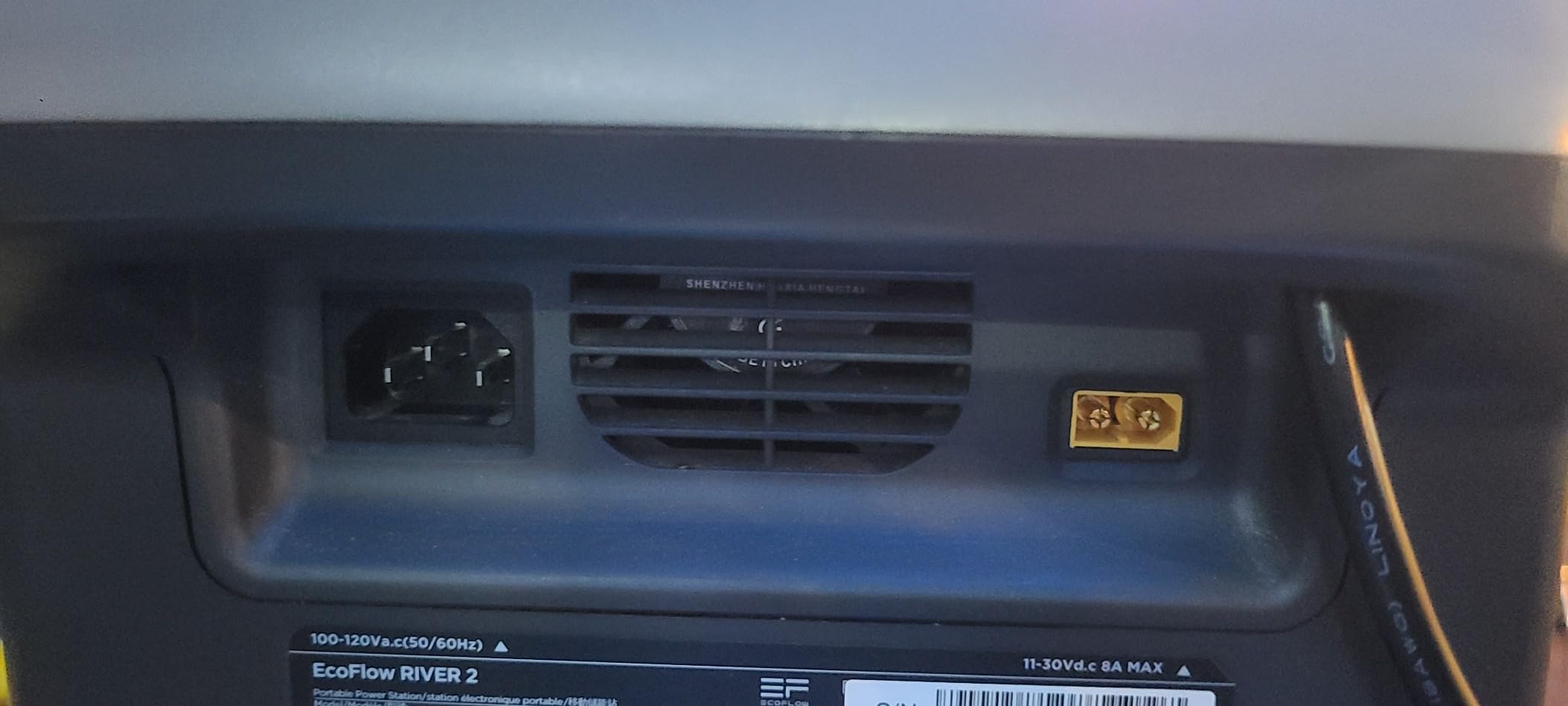
Solar input is capped at 110W, and the unit needs roughly 25W of incoming power before it recognizes a solar charge source at all, so a small trickle panel does nothing. A minority of owners also reported battery percentage misreporting that needed support intervention, which is worth knowing if you rely on the gauge to make decisions.
What it runs well and where it strains
Perfect for a phone, a laptop, a camera battery, a string of lights, a small fan, and one or two nights of CPAP. It also works as a pass-through UPS, so it can charge devices while running.
It strains on anything with a heating element. A kettle or coffee maker drains 256Wh in minutes, and a microwave trips the inverter. For base camp coffee, bring a gas canister.
Who should buy this and who should not
Buy it if your weekend kit is electronics and light gear, or if you want a genuine backup battery for a night during a power cut at home. The five-year warranty is unusually good at this tier.
Skip it if a fridge is part of the plan. If you want the same footprint with more headroom, the ALLWEI below holds the same class of capacity with a more capable USB-C port.
6. Jackery Explorer 300 – Lightest to Carry
Jackery Explorer 300 Portable Power Station,292Wh
292Wh LiFePO4
300W output, 600W peak
7.1 lbs
2 outlets plus USB
Pros
- Low weight with an integrated handle for hiking and backpacking
- LiFePO4 chemistry rated for 4000+ cycles
- 100W USB-C PD plus USB-A and a car port
- 0-80% solar in about 2.8 hours with a 100W panel
Cons
- 292Wh limits runtime on anything larger than small electronics
- Solar panel is not included with the base unit
- Single car port means one 12V device at a time
Among everything we tested, the Explorer 300 has the most owner history of any unit in this roundup, with more than 11,000 ratings at 4.6 stars and roughly 81% at five. That kind of sample size means the strengths and the limits are well documented rather than anecdotal.
At 7.1 lbs it is light enough to hike in with, and it carries a real 300W continuous inverter rather than the peak-rated figure some cheaper bundles advertise. It runs phones, lights, a fan, an air mattress pump, cameras, and a CPAP machine as a genuine overnight backup.
Port layout is the detail that matters at this weight. Two AC outlets, a 100W USB-C PD port, two USB-A ports, and a 12V car port let you run a CPAP, a phone, and a cooler simultaneously, which is more than most 300W bundles manage. Refill options cover AC, car socket, and about 2.8 hours of sun on a 100W Jackery panel.
What it runs well and where it strains
Electronics, lights, small fans, pumps, and medical devices are its lane. The 600W peak gives it room to start a small compressor, so a modest 12V cooler will run, though not for long.
Anything with a heating element ends the session quickly. At 292Wh there is no version of this conversation where a kettle, a hair dryer, or a space heater works, and the 300W ceiling shuts it down rather than slowly draining it.
Who should buy this and who should not
Buy it if you carry your gear more than you carry your car, or if you want a proven second unit for outages at home. With more than 11,000 reviews behind it, its behavior is the best documented of anything we tested, and the 4,000+ cycle rating means it will outlast several camping seasons.
Skip it if you plan to run a fridge for a weekend, and note that the two-year manufacturer warranty is shorter than the five-year coverage on the BLUETTI, EcoFlow, and Anker units here.
7. ALLWEI 300W – Budget Pick with a 60W USB-C Port
ALLWEI Portable Power Station 300W, 256Wh Solar Generator LiFePO4 Battery
256Wh LiFePO4
300W continuous pure sine wave
6.4 lbs
60W USB-C PD
Pros
- Lowest cost unit in this roundup with 256Wh and 300W continuous
- LiFePO4 cells rated for 3000 cycles
- 60W USB-C PD plus 18W USB-A fast charge
- 6.4 lbs in a slim body with a 3-level SOS light
Cons
- Only one AC outlet and no 24V output
- Limited to about 100W of solar input
- Some owners reported charge level dropping during long standby
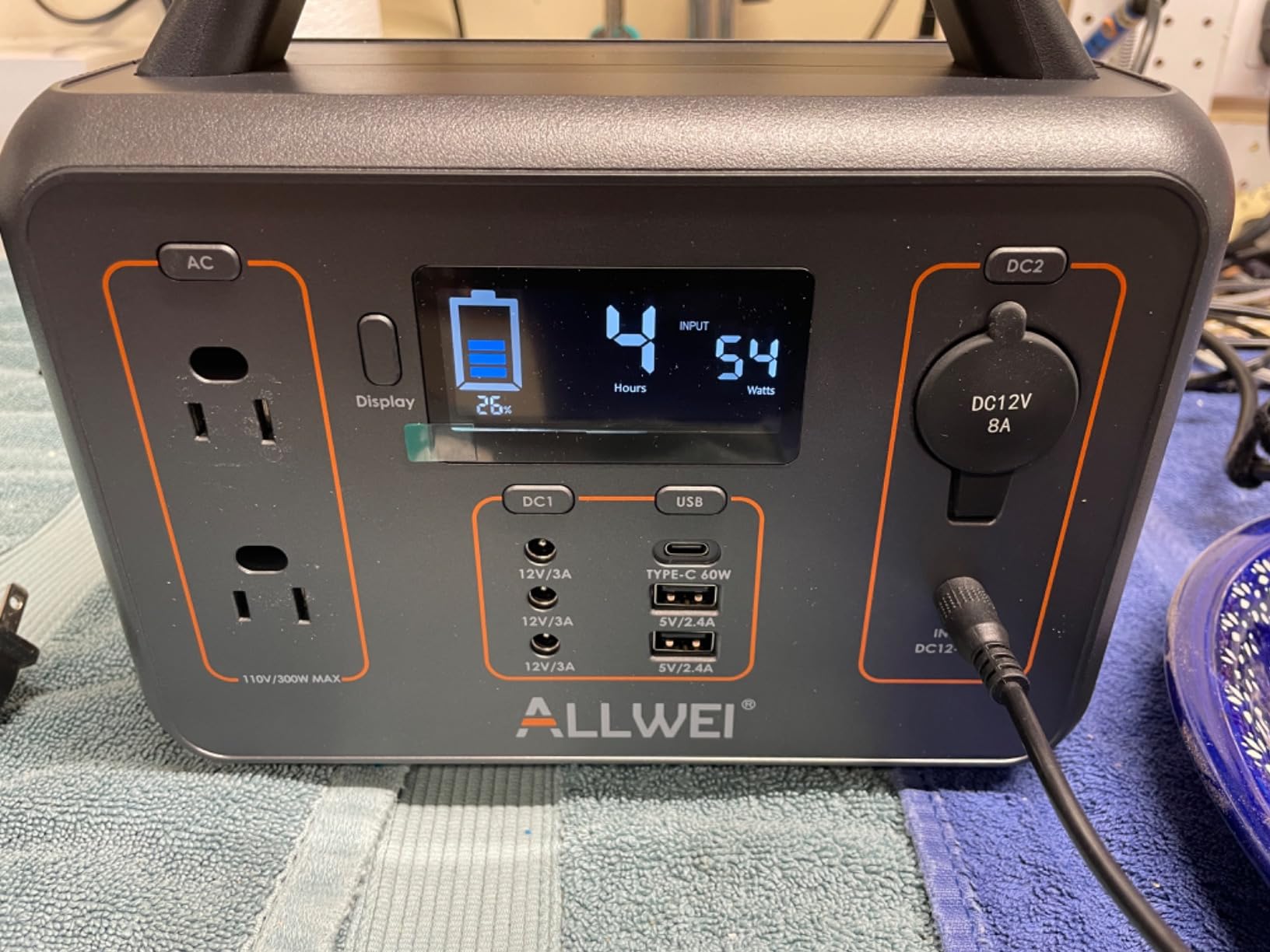
The ALLWEI 300W is the value entry point in this roundup, and the 60W USB-C PD port is its quiet advantage. That is enough to charge most modern laptops at close to full speed, where several cheaper units fall back to slow 18W charging.
Reviewers confirm CPAP runtime with this unit, and the slim 9.25 by 5 by 6.8 inch body fits a side pocket or a van cabinet better than most competitors. The three-level LED light with SOS mode is genuinely useful at the tent door.
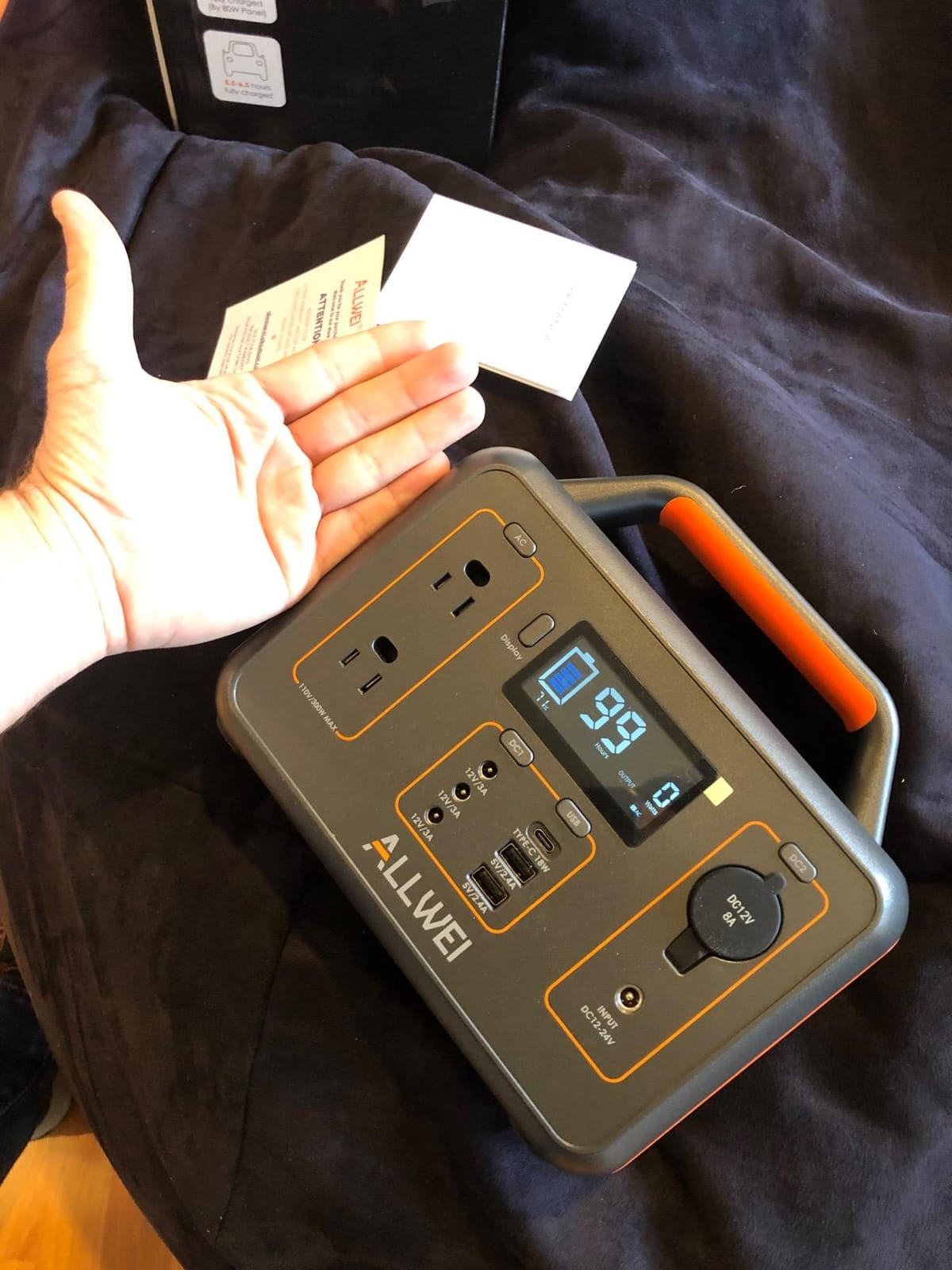
At 4.4 stars across 2,450 ratings with 73% at five, the feedback pattern is stable. Owners like the accurate time-remaining display and the placement of the flashlight. Recurring complaints are the single AC outlet, which limits you to one AC device at a time, and a solar input that tops out around 100W.
A minority of owners also reported the charge level dropping unexpectedly after long standby periods, and one noted the car charger tip running very hot. Neither is universal, but both are the kind of detail worth checking on day one of a trip.
What it runs well and where it strains
Laptops over USB-C, phones, lights, a fan, an air mattress pump, and a CPAP machine all fit inside 256Wh. It recharges from AC, 12V car, and about 100W of solar, and it can charge and run at the same time.
One AC outlet means no simultaneous AC devices. For campers running two things on AC at once, step up to the RIVER 2 or the Explorer 300, both of which offer more than a single outlet.
Who should buy this and who should not
Buy it if your budget is firm and your load is electronics plus lights, or if you want a spare unit for emergency lighting at home. It carries a two-year manufacturer warranty and pure sine wave output.
Skip it if you need a fridge, if you plan to plug in a heater, or if you want the flexibility of a second AC outlet. There is also no 24V output here, which rules it out for some RV and 12V accessory setups.
8. ZeroKor R200 with 60W Panel – Best Starter Kit for Electronics
Portable Solar Generator 300W Portable Power Station with 60W Solar Panel
300W max output
60W foldable panel included
5.1 lbs
2 outlets plus USB
Pros
- Power station and 60W foldable monocrystalline panel in one order
- Small 5.1 lb footprint that fits a daypack
- Two AC outlets
- DC port
- three USB ports and an SOS light
- MPPT solar charging with 6-layer BMS protection
Cons
- Advertised 300W AC is a peak figure
- continuous output is well under 100W
- Some reviewers dispute the pure sine wave claim
- Panel wiring is reported to fail after repeated folding
The ZeroKor R200 is a starter kit, and the honest way to read it is this: the panel and the battery arrive together, which is what makes it approachable for a first-time buyer who wants one order instead of three.
At 5.1 lbs it is the lightest unit in this roundup, and it charges from AC wall, a 12V car socket, or the included 60W foldable panel through an MPPT controller. For phones, laptops, lights, and small televisions it does the job adequately.
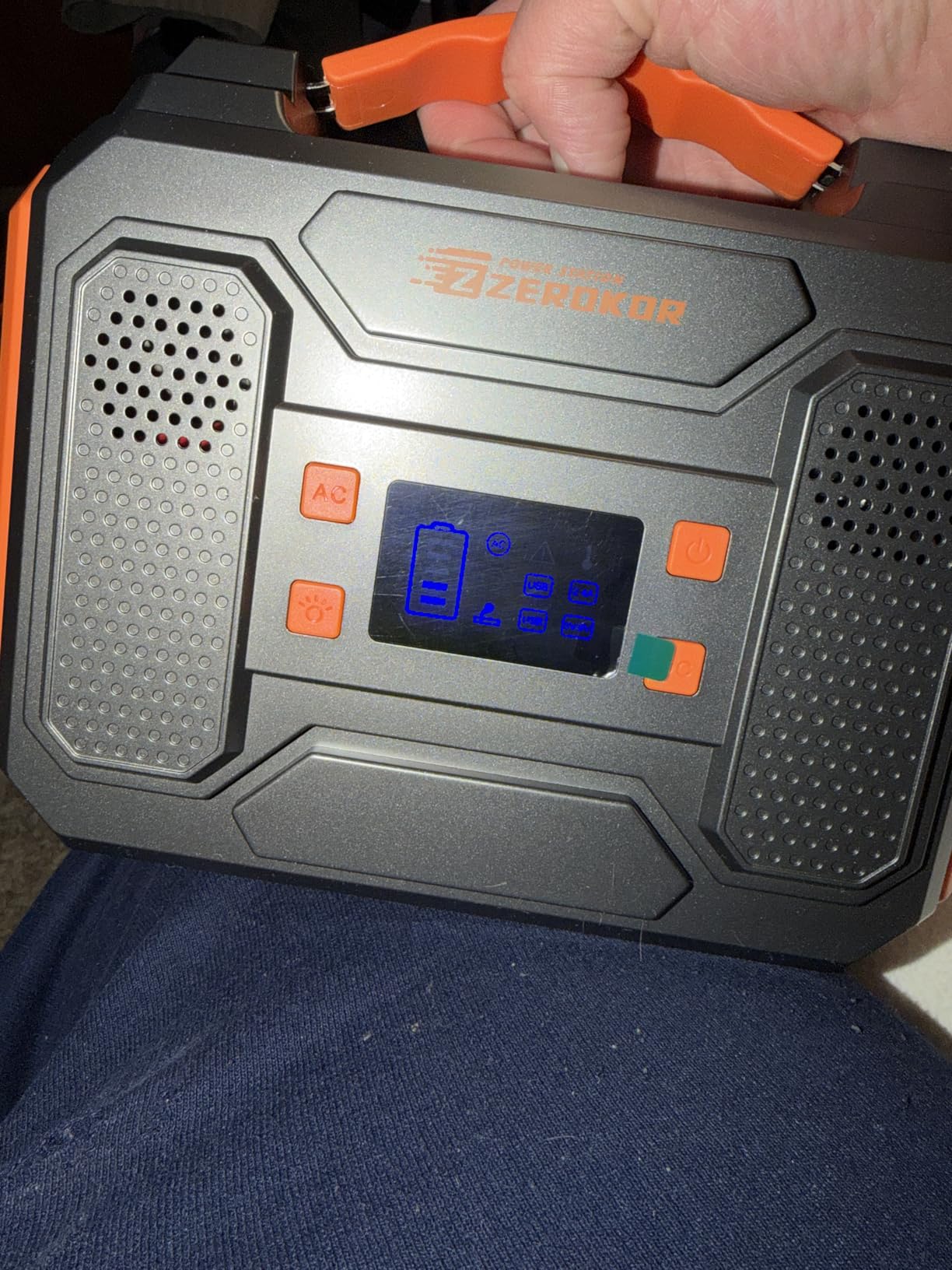
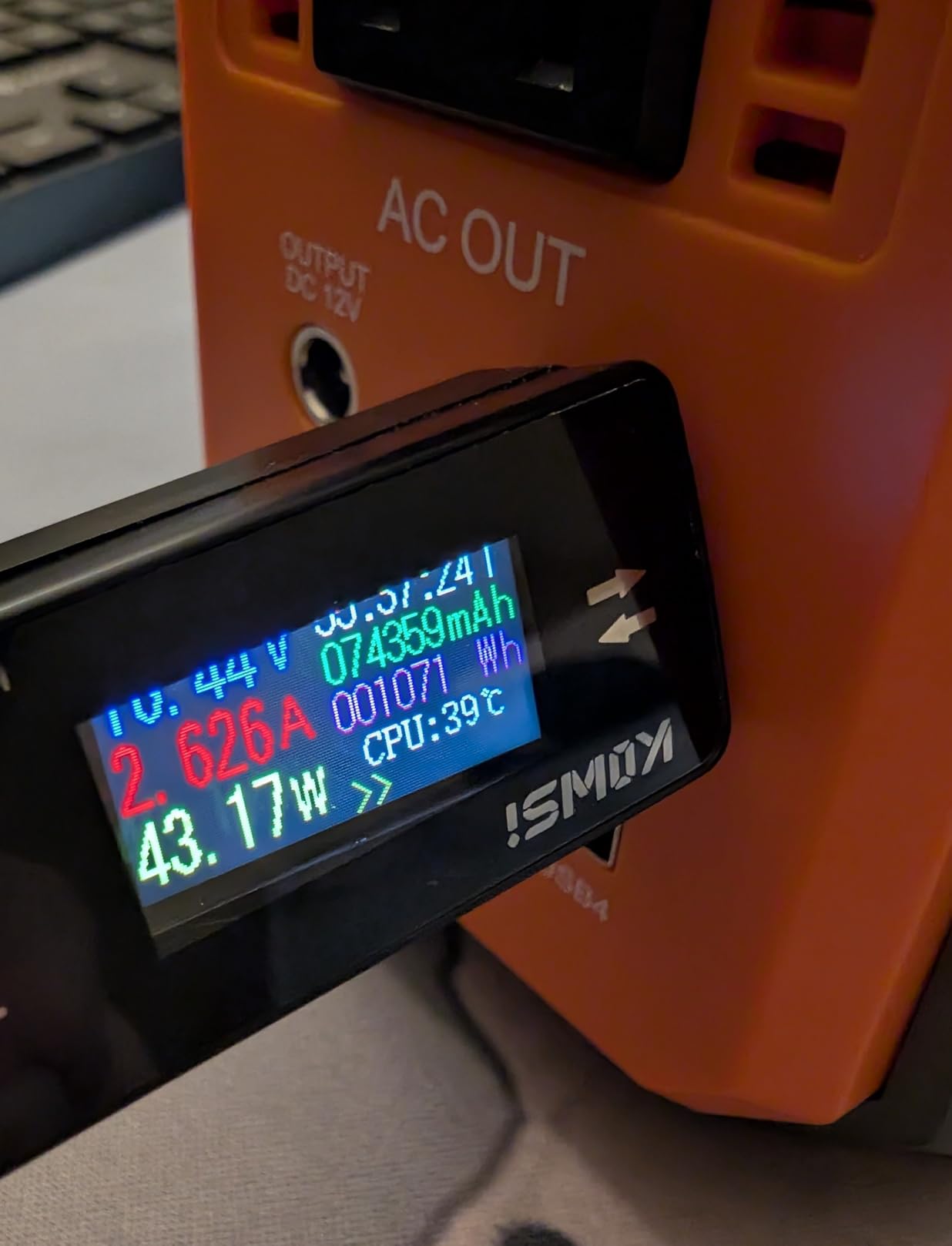
Ratings come in at 4.2 stars across more than 2,000 reviews, with 66% at five and 11% at one. Support is praised repeatedly, which matters more than usual at this tier. The critical reviews focus on a specific and important point: the 300W figure is a peak number, and measured continuous output comes in well under 100W.
Several reviewers also dispute the pure sine wave claim and report some DC outputs behaving unreliably. The 60W panel’s internal wiring has been reported to break after repeated folding, so unfold it by the frame rather than by the fabric.
What it runs well and where it strains
Phones, laptops, lights, small televisions, and chargers. The two AC outlets are useful when you have two small AC devices rather than one large one, because each is limited by the same low continuous ceiling.
It also needs to be kept topped up. Long periods uncharged can put it into protection mode, which means an empty unit may refuse to power anything until it sees a charger.
Who should buy this and who should not
Buy it if you want to try solar camping cheaply with everything in one box, or if you need a small battery for cameras and a projector at a tailgate. The built-in BMS covers short circuit, over-current, over-voltage, overload, and overheating.
Skip it if you plan to run a fridge, a CPAP on a long trip, or anything with a compressor. The warranty here is 12 months, the shortest in this roundup, which is the clearest signal of where this product sits.
9. MARBERO M823 with 60W Panel – Best for Lights and Phones Only
MARBERO 237Wh Solar Generator with Solar Panel Included Portable Power Station 300W Pure Sine Wave with Foldable Solar Panel 60W Set for Camping Outdoor Hiking Fishing Emergency
237Wh battery with 60W panel
300W rated, 375W peak
9 lbs
2 pure sine wave outlets
Pros
- Bundle includes a 60W foldable panel at 21.5-23.5% efficiency
- Two pure sine wave AC outlets at 300W rated
- Good port spread with two QC3.0 USB-A and USB-C PD
- LED flashlight with strobe and SOS modes
Cons
- 237Wh capacity is small so high-draw devices empty it quickly
- Running devices above 300W can damage the unit
- 12% one-star reviews which is the highest share here
- Only a 12-month warranty
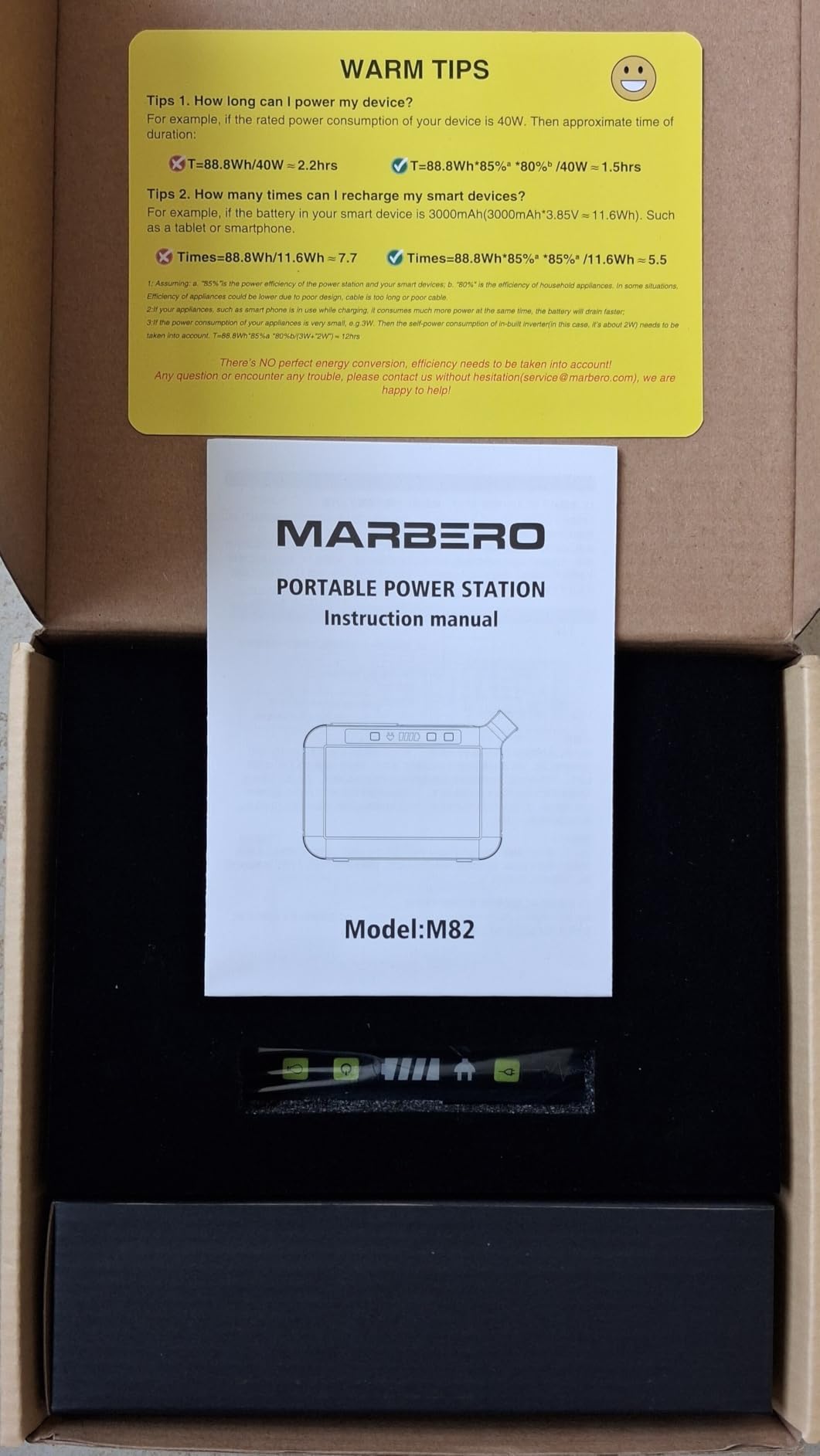
With 9,250 reviews, the MARBERO M823 has the largest owner sample in this roundup, and its 4.1 star average with 67% five-star and 12% one-star tells you exactly where the value ends.
The appeal is simple. A 237Wh battery, two pure sine wave AC outlets rated at 300W with 375W peak, and a 60W foldable panel with 21.5-23.5% conversion efficiency, all in a 9 lb package with a flashlight, strobe, and SOS mode.
That is a complete kit for phones, tablets, laptops, and camp lights, and the panel means it works away from a vehicle. It is also the unit I would hand to someone whose main need is keeping a phone alive through a weekend.
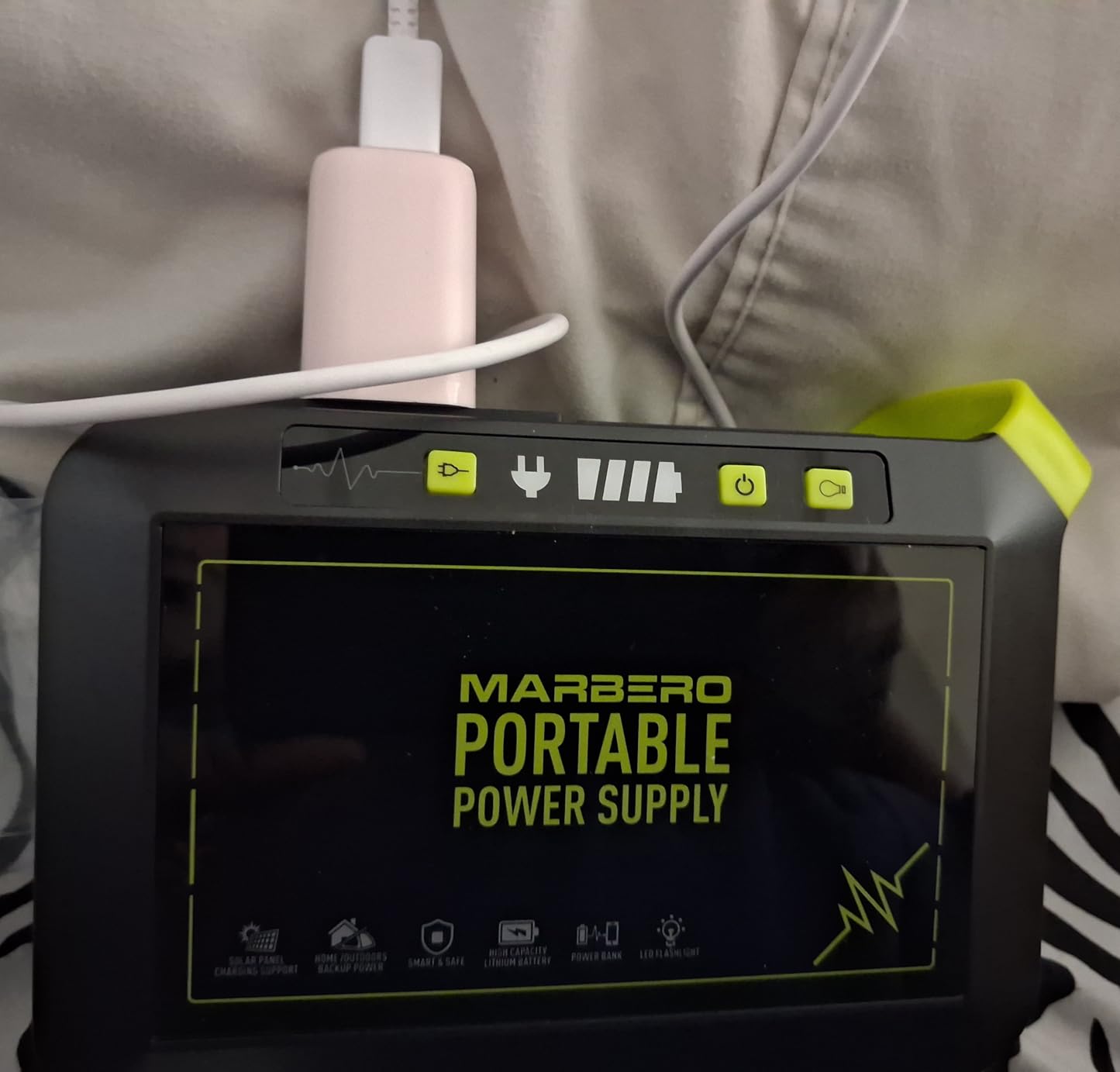
The complaints are consistent across the large review base. The 237Wh capacity is small, so anything demanding empties it fast, and running devices above the 300W ceiling can damage the unit, particularly heating elements. The 12-month warranty is also the shortest here.
The one-star share is the highest in this roundup, which usually reflects packaging, shipping damage, or a unit that arrived with a fault rather than a design failure. If you buy it, test every output port on day one.
What it runs well and where it strains
Phones, tablets, laptops, cameras, and LED lighting, all day, with the panel topping it up during daylight hours. Two outlets mean you can run two small AC devices rather than one.
A small 12V fridge will run, but expect a partial night at most from 237Wh. Anything with a heating element risks tripping the ceiling and stressing the inverter.
Who should buy this and who should not
Buy it if you want a complete first kit at the lowest tier and your gear list is entirely electronics. If the panel is what makes the purchase work for you, this bundle is straightforward.
Skip it if you want to run medical devices overnight or keep a fridge cold, and weigh the 12-month warranty carefully against the two-year and five-year terms elsewhere in this list.
10. BLUETTI AC200PL – Best for RV Hookups and Heavy Base Camp
BLUETTI AC200PL Portable Power Station 2304Wh 2400W LiFePO4 Solar Generator
2304Wh LiFePO4
2400W AC, 3600W lifting
72 lbs
30A TT30 and 48V RV port
Pros
- 2304Wh capacity with 2400W AC output and 3600W lifting
- 0-80% in 60 minutes at 2400W AC input
- 48V RV port charges a vehicle battery directly
- Expands to 8448Wh with extra BLUETTI batteries
Cons
- 72 lbs needs two people or a cart to move
- Physical size rules it out for backpacking and most tent camping
- Not weather-sealed for exposed outdoor placement
The AC200PL is not a camping box. It is an RV and off-grid box that happens to camp well, and at 2,304Wh with 2,400W of continuous AC output it changes what a trip looks like because you stop rationing.
Two ports make it distinctly RV-ready. A 30A TT30 output matches a common trailer or camper connection, and a 48V RV port charges a vehicle battery directly rather than draining the starter battery.
Charging is fast by design. At 2,400W of AC input it reaches 80% in 60 minutes, and a 1,200W solar array refills it in 1.9 to 3.8 hours depending on conditions.
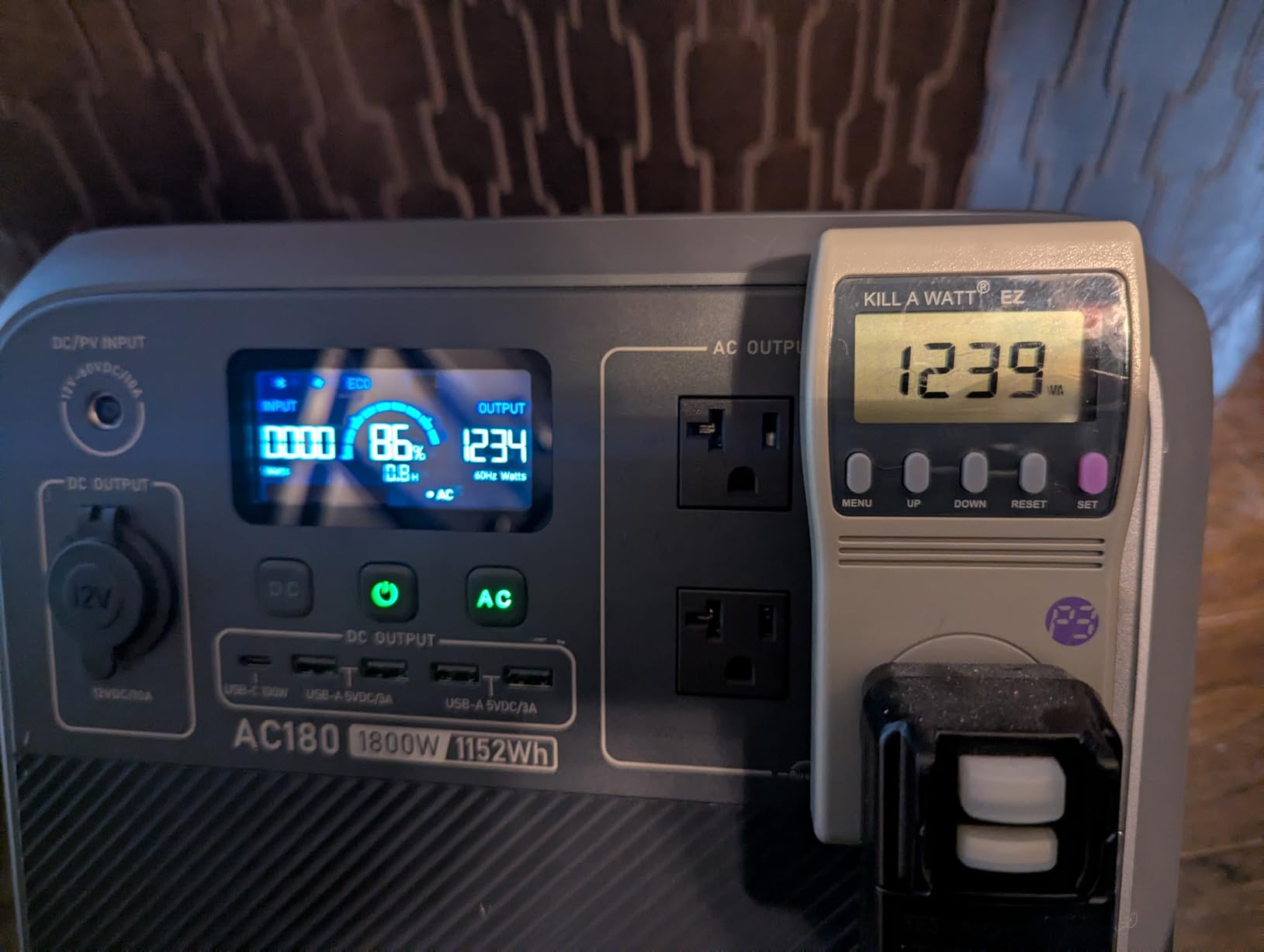
Reviews sit at 4.6 stars with 82% five-star across more than 2,600 ratings, with owners describing it as running everything in an RV, holding charge well between trips, and recharging quickly from solar or a generator. The limitation owners name without exception is the 72 lb weight.
Expansion is the reason to buy it at this tier. With BLUETTI B300, B210P, or B230 expansion batteries it scales to 8,448Wh, which turns a weekend into weeks. The 3,000+ cycle rating and five-year warranty match the rest of the BLUETTI range.
What it runs well and where it strains
A 30A RV hookup, a portable fridge, a CPAP, a laptop, and a coffee maker can all run at once, and 2,400W continuous covers most household tools individually. Power lifting raises the ceiling to 3,600W for resistive loads.
At 72 lbs with dimensions that fill a vehicle bay, it needs two people or a cart. It is also not weather-sealed, so keep it under cover in a rainstorm rather than exposed.
Who should buy this and who should not
Buy it if you boondock, run an RV, or live off-grid part of the year, and if you want to add capacity each season rather than replace the unit. If you are adding a second RV or want whole-home outage coverage, our RV generator picks cover the fuel-powered side of that plan.
Skip it for any walk-in campsite or tent trip. Nothing in a 72 lb package belongs on a backpack frame, and the second-battery math only pays off if you actually stay long enough to use it.
How Much Power Do You Actually Need
Size the battery in watt-hours and the inverter in watts, and they are two separate decisions. Add up what your gear draws, multiply by the hours you need it, then divide by 0.7 to account for inverter losses and the depth of discharge you should never cross.
A rough framework helps. For phones, lights, fans, and an air mattress pump, 250 to 500Wh is enough. For a portable fridge, a CPAP machine, and a laptop on a weekend, 1,000 to 1,500Wh is the sweet spot. For a week with real appliances, 2,000Wh or more, and expansion is worth planning for.
Typical draws to budget against: a 12V portable fridge runs around 40 to 60W once settled, a CPAP with a heated hose sits near 60W, a blender needs 300 to 700W for a minute, a coffee maker pulls 600 to 1,000W briefly, and a hair dryer or space heater wants 1,400W or more. Check resistive appliances against the rated output, not the peak figure.
One more caution the spec sheets do not print. A unit left idle loses charge over days, and a cold night reduces available capacity, so plan on starting each day below full if you are camping in shoulder season.
What to Look For in a Solar Generator
Battery chemistry. LiFePO4 is the one to insist on. These cells run 3,000 to 4,000 cycles before dropping toward 70% capacity, tolerate heat better than NMC chemistry, and hold their charge in cold weather. NMC units cycle less and can be lighter, and lead-acid is a different product category entirely.
Inverter output in watts. Rated continuous output is the number that decides whether your coffee maker works. Peak or surge output only covers startup inrush for compressors, and a figure quoted without a rated number beside it is a marketing choice, not a spec.
Capacity in watt-hours. This is storage, not output, and it is the number most misused. Usable capacity is roughly the label watt-hours multiplied by depth of discharge and inverter efficiency, which in practice leaves you with about 60 to 80% of the printed figure.
Port mix. Count USB-C PD wattage, not just port count. Two 65W USB-C ports will charge laptops properly where five low-wattage USB-A ports will not, and a 12V car socket matters more than another AC outlet if you run a portable fridge.
Solar input and warranty. Check the maximum solar input wattage and whether the connector is an open MC4 standard or a proprietary one. Open inputs let you reuse a panel you already own. Warranty length is a decent proxy for how a brand expects the battery to age.
Safe indoors, unlike gas. Battery units produce no carbon monoxide and no exhaust, so they can run inside a tent or a vehicle without the ventilation rules a gas generator demands. Keep any unit away from standing water regardless, and check the UN38.3 and UL listings if you fly with it.
Matching Solar Panels to Your Power Station
A 100W panel produces roughly 400 to 500Wh on a clear day once you account for angle, heat loss, and controller efficiency. Against a 1,000Wh battery that is a partial refill, not a full one. Plan on two or three days of mediocre sun before a panel meaningfully outruns your consumption.
For the sub-500Wh units in this roundup, a 60W to 100W panel is proportionate. The EcoFlow RIVER 2 accepts up to 110W and needs about 25W arriving before it recognizes solar at all, while the ALLWEI caps out near 100W. The Jackery Explorer 300 reaches 80% in about 2.8 hours on a 100W Jackery panel.
For the 1,000Wh class, aim for 200W to 400W. The BLUETTI Elite 100 V2 bundle includes a 200W panel that takes the battery from empty to 80% in about four hours, and the AC180 accepts 500W for a 2.8 to 3.3 hour refill. The Anker C1000 Gen 2 takes 600W and does it in 1.8 hours.
Connector standards matter more than people expect. MC4 is the open standard and works across brands, while XT60 and proprietary plugs lock you into one manufacturer’s panels. If you already own a panel, check the connector and the maximum input wattage before choosing the battery.
Two honest limits: panel output falls hard under cloud, and cold weather derates it further, so a van’s 12V charging system while driving remains the most reliable top-up on a multi-day trip. For a first camping solar setup, our beginner solar kit guide covers the panel basics in more depth.
Frequently Asked Questions
What is the best solar generator for camping?
The Jackery Explorer 1000 v2 is the best all-round solar generator for camping, pairing 1,070Wh of LiFePO4 storage with 1,500W of continuous output in a 23.8 lb body. For base camp, the BLUETTI AC180 offers more capacity and more output. For carry-in camping, the Jackery Explorer 300 at 7.1 lb is the pick, and the only unit in the lightest class with a full 300W continuous inverter. Your choice really comes down to trip length and what you need to run.
How big of a solar generator do I need for camping?
For phones, lights, and fans, 250 to 500Wh is enough. For a portable fridge, a CPAP machine, and a laptop across a weekend, 1,000 to 1,500Wh covers it. A full week with real cooking and appliances needs 2,000Wh or more. Remember that only about 60 to 80% of the label watt-hours is usable once depth of discharge and inverter losses come out of the equation.
How long will a 2000 watt solar generator run a fridge?
A portable fridge settles around 40 to 60W once the compressor cycles down, so a 2,304Wh unit such as the BLUETTI AC200PL delivers roughly 30 to 45 hours of continuous cooling. A 1,024Wh unit gives you about 12 to 18 hours, and a 256Wh unit manages only a few hours. Cold ambient temperatures and how often you open the lid move those numbers significantly.
Is Jackery or EcoFlow better?
Jackery tends to win on owner review volume and support reach, while EcoFlow pushes harder on charging speed and lighter form factors. Jackery panels are locked to Jackery units for solar input, which is the biggest practical limitation. EcoFlow accepts open solar connections but caps small units like the RIVER 2 at 110W. BLUETTI and Anker sit between them with faster charging and longer expansion options.
What is the best solar powered generator for an RV?
The BLUETTI AC200PL is the strongest RV match in this roundup, with 2,304Wh of storage, 2,400W of continuous AC output, a 30A TT30 outlet, and a 48V port that charges a vehicle battery directly. It expands to 8,448Wh with extra batteries. Anything smaller will struggle to carry both an RV’s 30A load and your household devices at the same time.
Is 400W of solar enough for an RV or a camping power station?
For a 1,000Wh power station, 400W of panel is a strong pairing and refills roughly 1,600Wh of energy on a clear day, enough to offset moderate use. It will not sustain heavy loads over a multi-day stretch. For a full RV running on solar alone, 400W is far short, and you would need several kilowatts of array or help from vehicle charging while driving.
The Bottom Line for 2026
The Jackery Explorer 1000 v2 is our pick for the best solar generators for camping because it balances usable capacity, inverter output, review history, and weight better than anything else we tested. Take the BLUETTI AC180 when weight does not matter, the Anker SOLIX C1000 Gen 2 when a CPAP machine cannot be interrupted, and the BLUETTI Elite 100 V2 bundle when you want a panel in the box from day one.
Whichever you choose, budget for the panel separately unless a bundle includes one, and remember that usable capacity is well below the label. Tell us what you run and how many nights you are out, and we will narrow it to a single unit. Also check our atmospheric water generator picks if your off-grid plan needs drinking water too.