
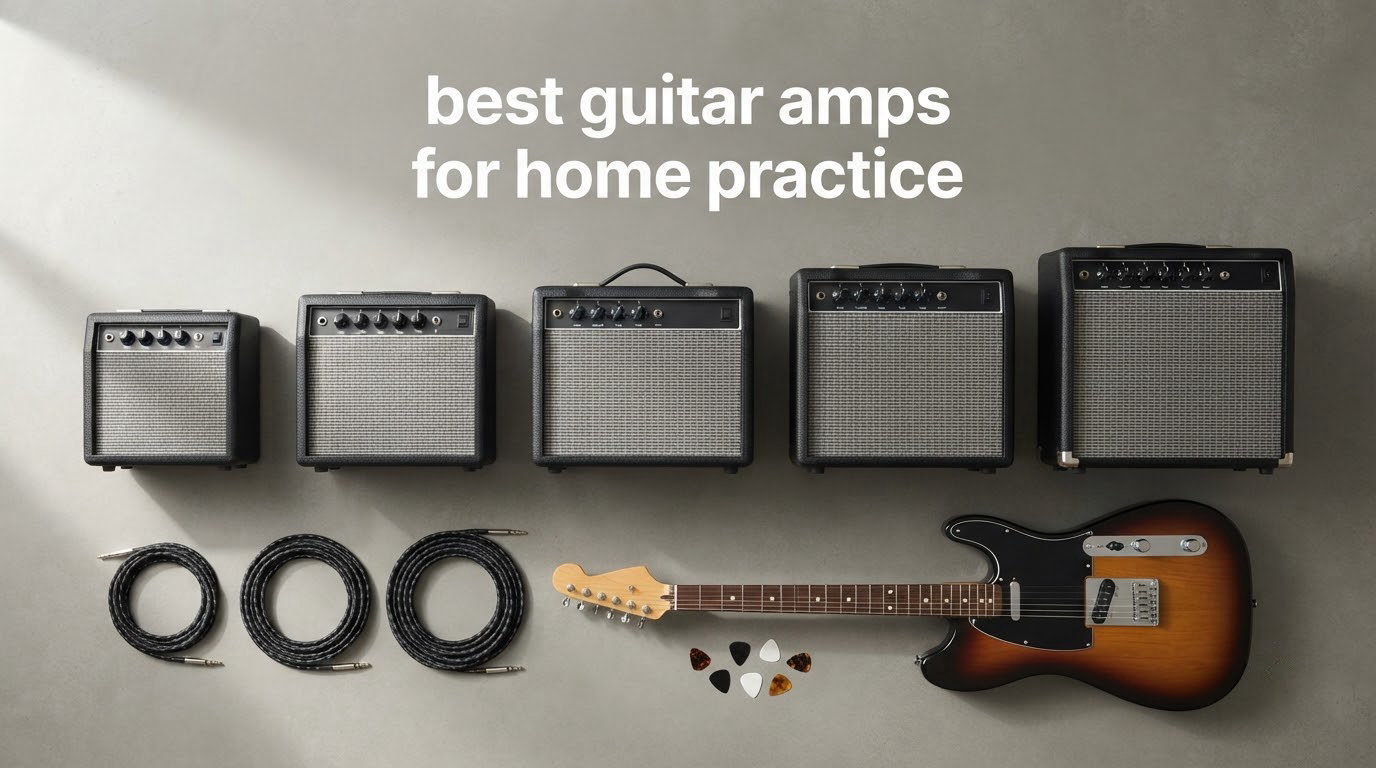
Most people searching for the best guitar amps for home practice are not really shopping for the loudest box they can afford. They are working out how much sound a room, a thin wall or a sleeping household can absorb, and then finding an amp that still sounds good at that level.
That is the whole game. A practice amp is a guitar amplifier designed to be played at low volume without sounding thin or lifeless: usually 5 to 25 watts, usually with a headphone output, and usually with some kind of built-in effects or modeling so you can cover a lot of ground without a pedalboard. Our broader guides to practice amps and guitar amps in general cover the wider market, and this roundup goes narrow on purpose.
Last updated for 2026. We compared twelve amps on paper output, speaker size, weight, connectivity and owner feedback, and we leaned hard on what people say after owning them for years rather than what the spec sheet claims. Every amp below has a clear weakness listed, because the honest ones do and the dishonest ones waste your money.
Table of Contents
Top 3 Best Guitar Amps for Home Practice (2026)
Three amps stand above the rest: the Fender Mustang LT25 for the best overall balance of rating and owner satisfaction, the Fender Frontman 10G for sheer value and longevity, and the Orange Crush 12 for tone that punches above its class.

Fender Mustang LT25
- 25 watt modeling combo
- 8 inch speaker
- 30 amp presets
- USB and headphone outputs

Fender Frontman 10G
- 10 watt solid state combo
- 6 inch Fender speaker
- headphone jack and aux input
- closed-back cabinet
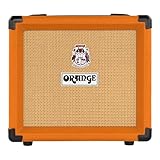
Orange Crush 12
- 12 watt solid state combo
- 6 inch speaker
- dual gain controls
- headphone output with CabSim
All 12 Guitar Amps for Home Practice at a Glance (October 2026)
Here is the short version of all twelve picks, with the headline feature of each one. Full write-ups follow below, in order, with the honest limitations for each.
| Product | Specifications | Action |
|---|---|---|
| Fender Mustang LT25 |
|
Check Latest Price |
| Fender Frontman 10G |
|
Check Latest Price |
| Orange Crush 12 |
|
Check Latest Price |
 Fender Champion II 25 Fender Champion II 25 |
|
Check Latest Price |
 Vox Pathfinder 10 Vox Pathfinder 10 |
|
Check Latest Price |
 Positive Grid Spark GO Positive Grid Spark GO |
|
Check Latest Price |
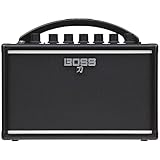 Boss Katana Mini Boss Katana Mini |
|
Check Latest Price |
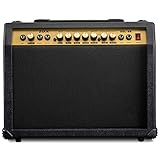 LyxPro 40W Combo LyxPro 40W Combo |
|
Check Latest Price |
 Marshall MG10G Marshall MG10G |
|
Check Latest Price |
 JOYO JAM Buddy II JOYO JAM Buddy II |
|
Check Latest Price |
 Monoprice Stage Right 1×10 Monoprice Stage Right 1×10 |
|
Check Latest Price |
 Yamaha THR5 Yamaha THR5 |
|
Check Latest Price |
1. Fender Mustang LT25 – The Best Guitar Amp for Home Practice Overall
Fender Mustang LT25 Guitar Amplifier, 25-Watt Combo Amp with 8″ Speaker
25 watts
8 inch speaker
30 presets
USB and headphone out
15.2 pounds
Pros
- Highest rated amp in this roundup at 4.8 stars
- 30 presets give beginners instant access to many amp voices
- 25 watts through an 8 inch speaker is plenty for a bedroom
- Color display makes navigation straightforward
- USB and headphone outputs cover recording and silent practice
Cons
- Modeling tones are simulated rather than a true analog signal path
- 25 watts is on the loud side for a small apartment late at night
The Mustang LT25 is the amp I recommend to anyone who asks me for one answer to this question. It carries the highest average rating in this group at 4.8 stars across more than four thousand reviews, and for a home practice amp that combination of satisfaction and volume of opinions is rare.
Twenty-five watts through an 8 inch Fender Special Design speaker fills a bedroom with headroom to spare. The 1.8 inch color display and the straightforward control layout mean a first-time player can find a usable sound in about a minute instead of reading a manual.
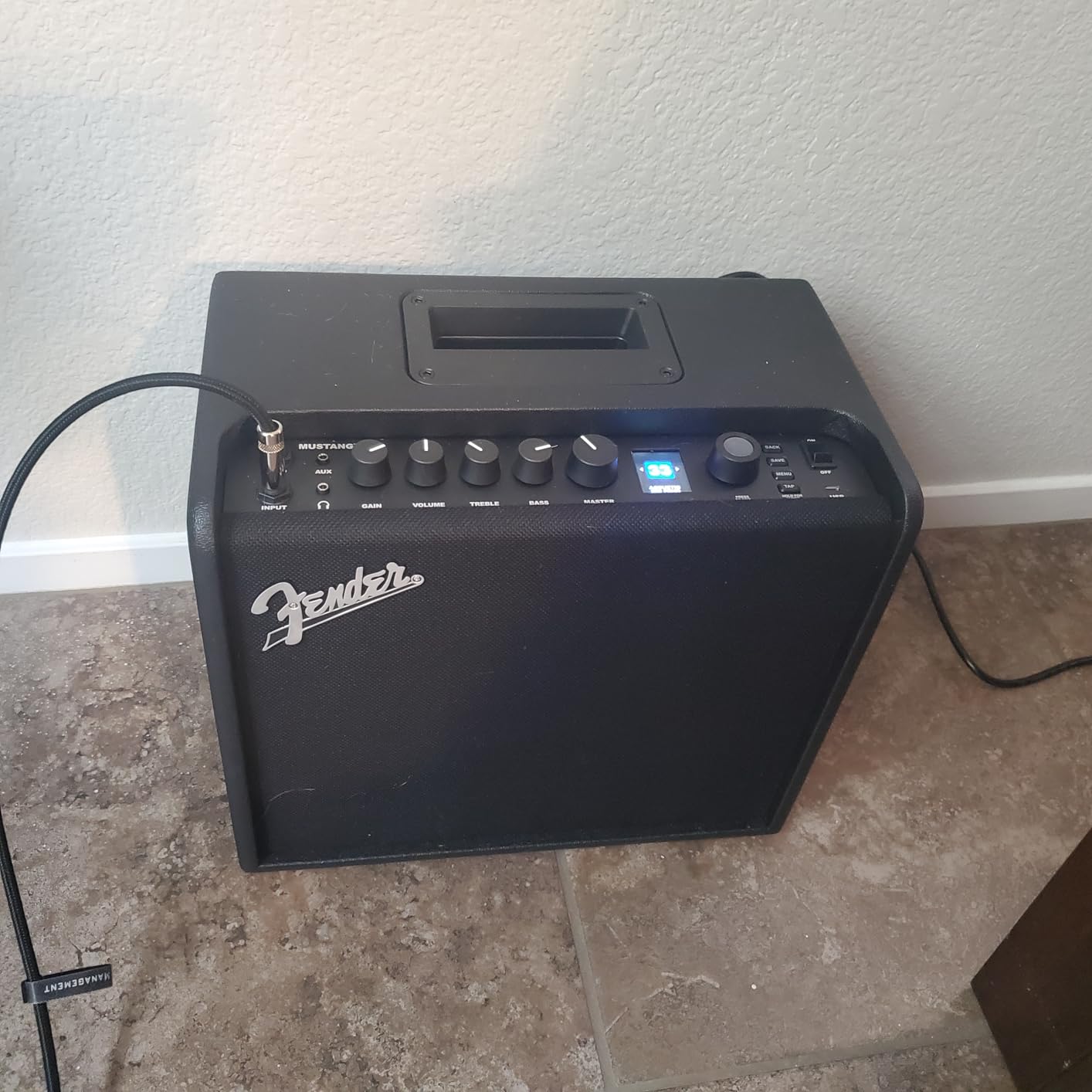
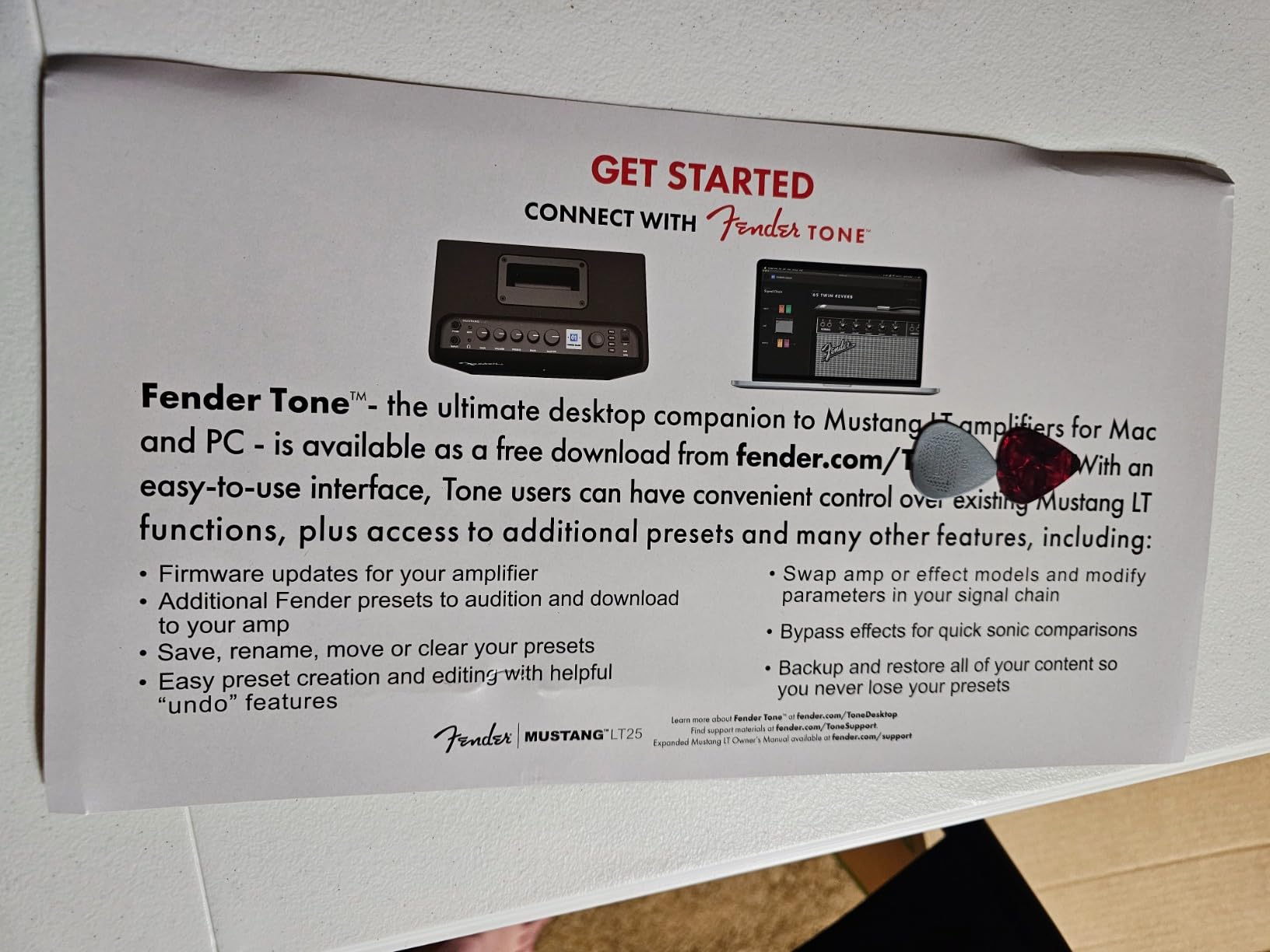
Thirty preloaded presets are the real selling point here. They cover a wide range of music, which means a beginner learning their first songs can dial in something close to the record without touching the guitar, and the USB connectivity means you can route audio to a computer for recording or to a DAW for practice.
The physical design is sensible too. At 15.2 pounds and roughly 12.75 by 14.5 by 8.25 inches, it is a normal combo amp footprint rather than a desk accessory, so it looks at home next to a guitar stand. The rear headphone output handles silent practice when the household is asleep.
Who the Mustang LT25 suits
It suits beginners who want breadth without a pedalboard, and it suits anyone who plans to grow into pedals later because the clean channel is a plain platform. It also suits players who want to record, since the USB connection makes capture straightforward.
At 25 watts it also handles a small rehearsal room or a coffee shop slot better than anything else on this list. If you gig occasionally, this is the one I would want in the car.
Who the Mustang LT25 does not suit
It does not suit a purist who wants a fully analog signal path, and reviewers are candid that the modeling is a simulation rather than a genuine analog chain. It also does not suit a very small apartment at midnight, because 25 watts is more than you need at volume level one.
If your room is genuinely tiny or your walls are thin, drop to the 12 watt class instead. You lose presets, not tone quality.
2. Fender Frontman 10G – The Best Value Amp for Home Practice
Fender Frontman 10G Electric Guitar Amplifier, 10-Watt Amp, Black/Silver
10 watts
6 inch speaker
headphone and aux
closed-back
11.7 pounds
Pros
- Genuine Fender clean tone in a tiny portable solid state combo
- Headphone output for quiet practice without disturbing housemates
- Simple two band EQ with no effects menus to fiddle with
- Loud enough to fill a living room for solo practice
- Durable build with metal corners for transport
Cons
- Built-in overdrive sounds heavily compressed with little nuance
- Bass is weak at low volume on the 6 inch speaker
- No guitar cable included
- Not loud enough to compete with a drummer in a full band setting
The Frontman 10G has been the first amp for an absurd number of people, and the review count on this one explains why. With more than thirteen thousand reviews averaging 4.6 stars, it has the deepest owner history of anything in this roundup by a wide margin.
It does one job extremely well: it delivers a genuine Fender clean voicing from a 6 inch Fender Special Design speaker, in a closed-back cabinet that adds a bit of low-end weight, at 11.7 pounds. That is the sound a lot of players are actually chasing when they talk about a practice amp.
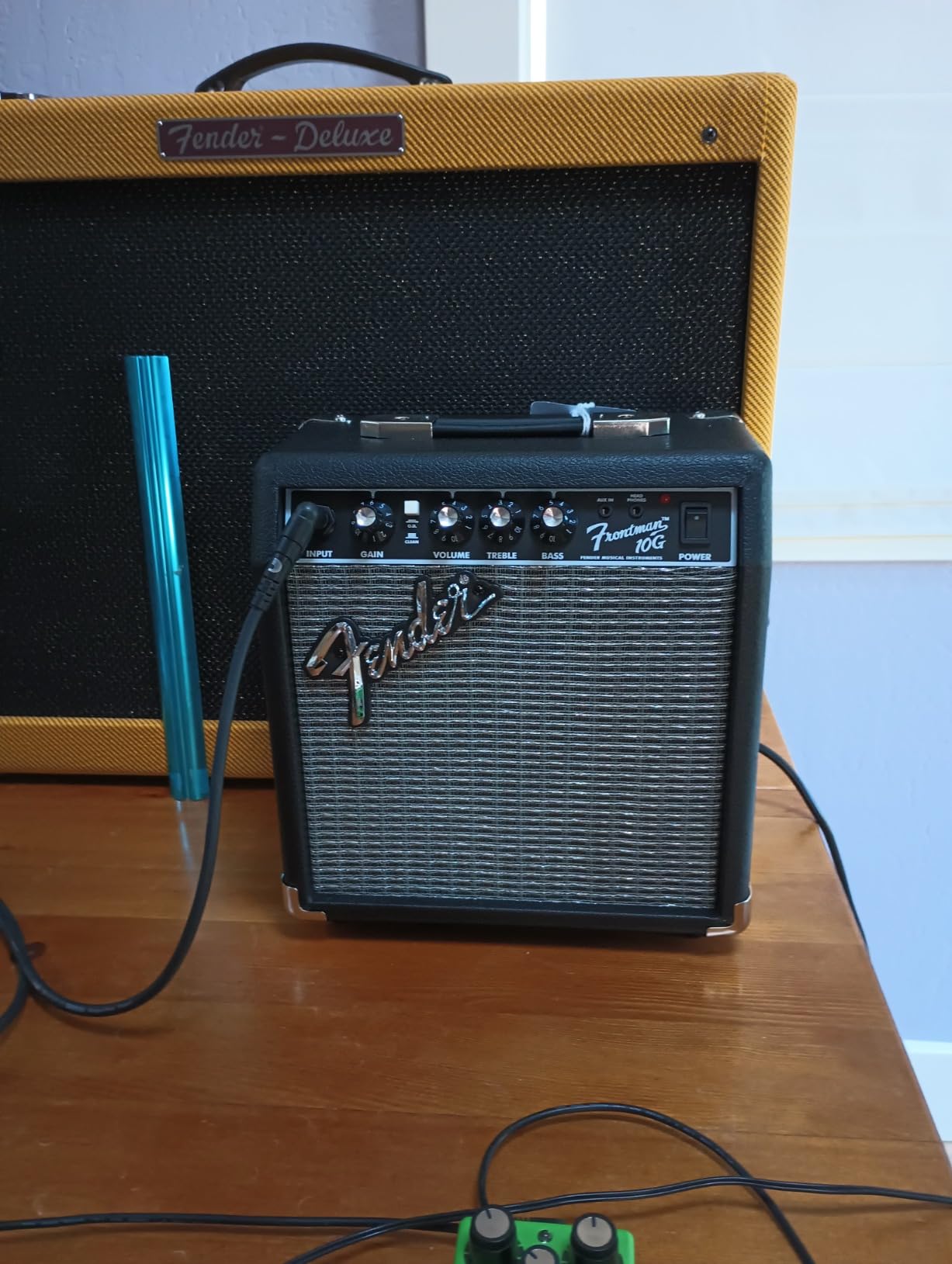
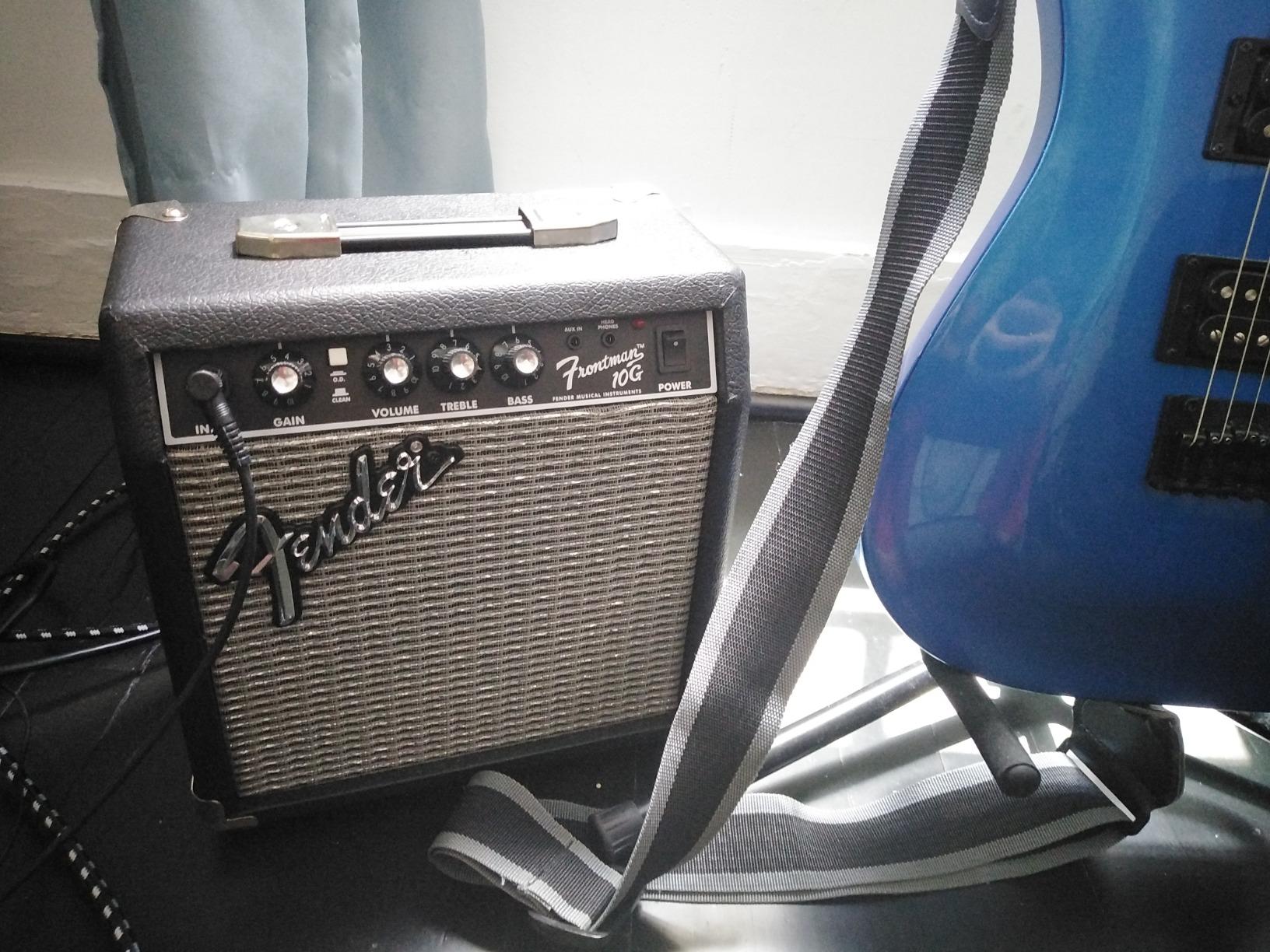
The control set is refreshingly small. Gain, an overdrive select switch, volume, treble and bass, and nothing else to learn. The headphone jack and aux input cover both silent practice and playing along to a track, and the 3.5 mm connector is the kind you already own.
Owners consistently use it on the clean channel, and the most popular modification in the community is swapping in a Jensen Modern series 6 inch speaker for clarity and output. That tells you the amp itself is doing fine and the speaker is the upgrade path.
Who the Frontman 10G suits
It suits a beginner on a tight budget who wants a real brand name and a real clean tone rather than a novelty. It also suits anyone who plays mostly through headphones or at moderate volume in a shared home.
Because it accepts pedals well, it suits players who plan to add a reverb or an overdrive pedal later. The onboard overdrive can simply be left switched off.
Who the Frontman 10G does not suit
It does not suit anyone chasing an amp that stays full-band loud, and it will not cut through a drummer. The 6 inch speaker also gives up bass at low volume, so a heavily bassed tone thins out when you turn it down.
The built-in overdrive is the most common complaint in the reviews: heavily compressed with little nuance. If that is the sound you want, use a pedal instead.
3. Orange Crush 12 – The Best Amp for Classic Tone on a Budget
Orange Crush 12 12W 6″ Guitar Amplifier and Speaker Combo,
12 watts
6 inch speaker
dual gain controls
3 band EQ
CabSim headphone out
Pros
- Conveys the characteristic Orange warm mid-rich tone at a budget price
- Loud enough for apartment practice and small jams
- Dual gain controls plus 3 band EQ give more shaping than most single channel budget amps
- Compact and light enough to fit in a backpack
- Works well with a pedalboard and accepts a guitar cleanly without hum
Cons
- Only one channel so tone changes need knob or guitar adjustment
- Low-end response is limited by the 6 inch speaker and can sound muddy
- Overdrive cannot be driven properly at low bedroom volumes
- No onboard reverb
The Orange Crush 12 is the one on this list I would describe as having a voice rather than a feature set. Owners keep naming the same thing: the Orange voicing, warm and mid-rich with a touch of fizz on top, at a price where most competitors sound generic.
Twelve watts is a genuinely useful number for home practice. It is loud enough to fill a room for solo playing and for a small jam, yet it sits below the point where neighbours start knocking on doors. At 4.7 stars across more than sixteen hundred reviews, satisfaction is high for the category.
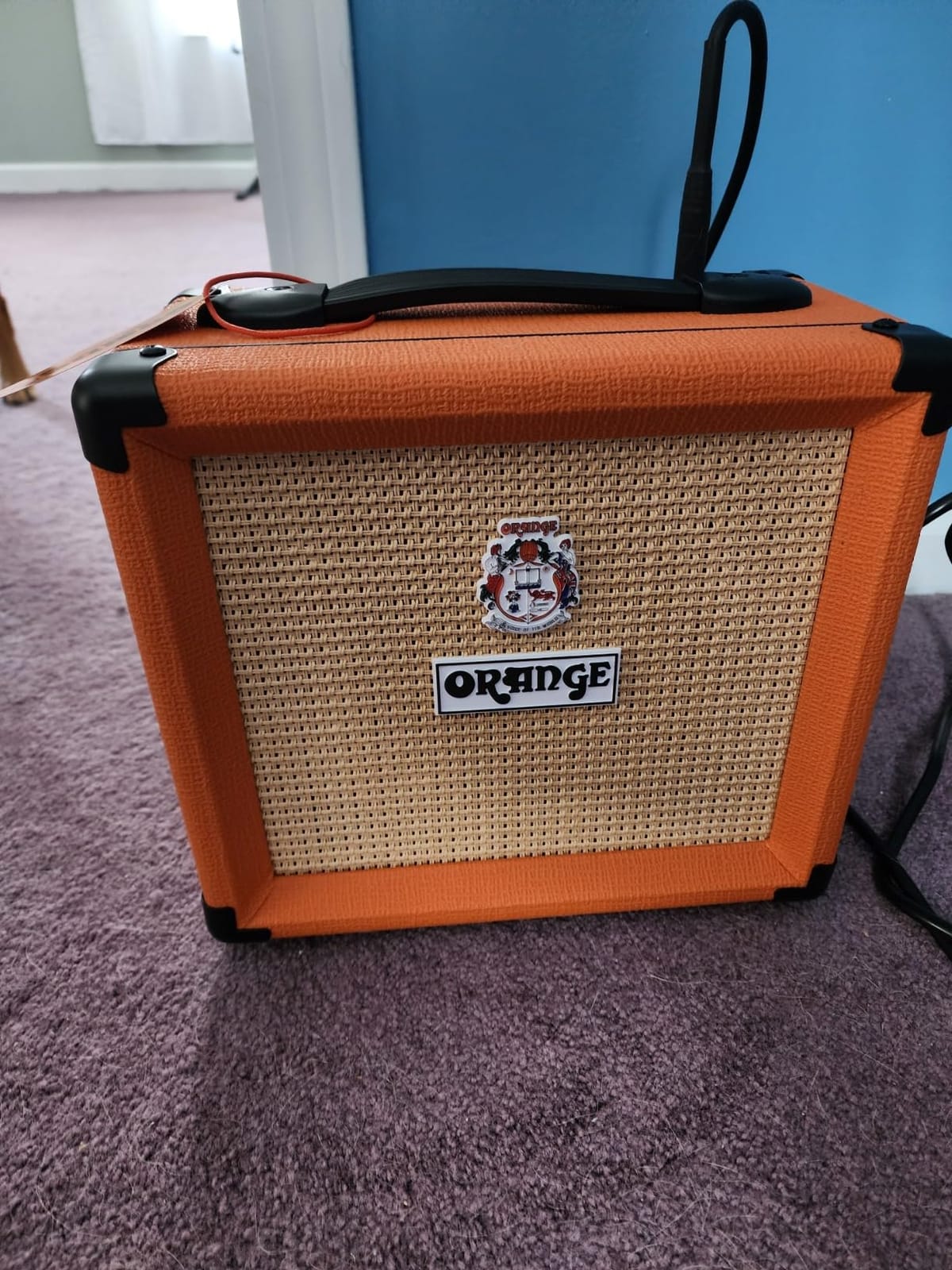
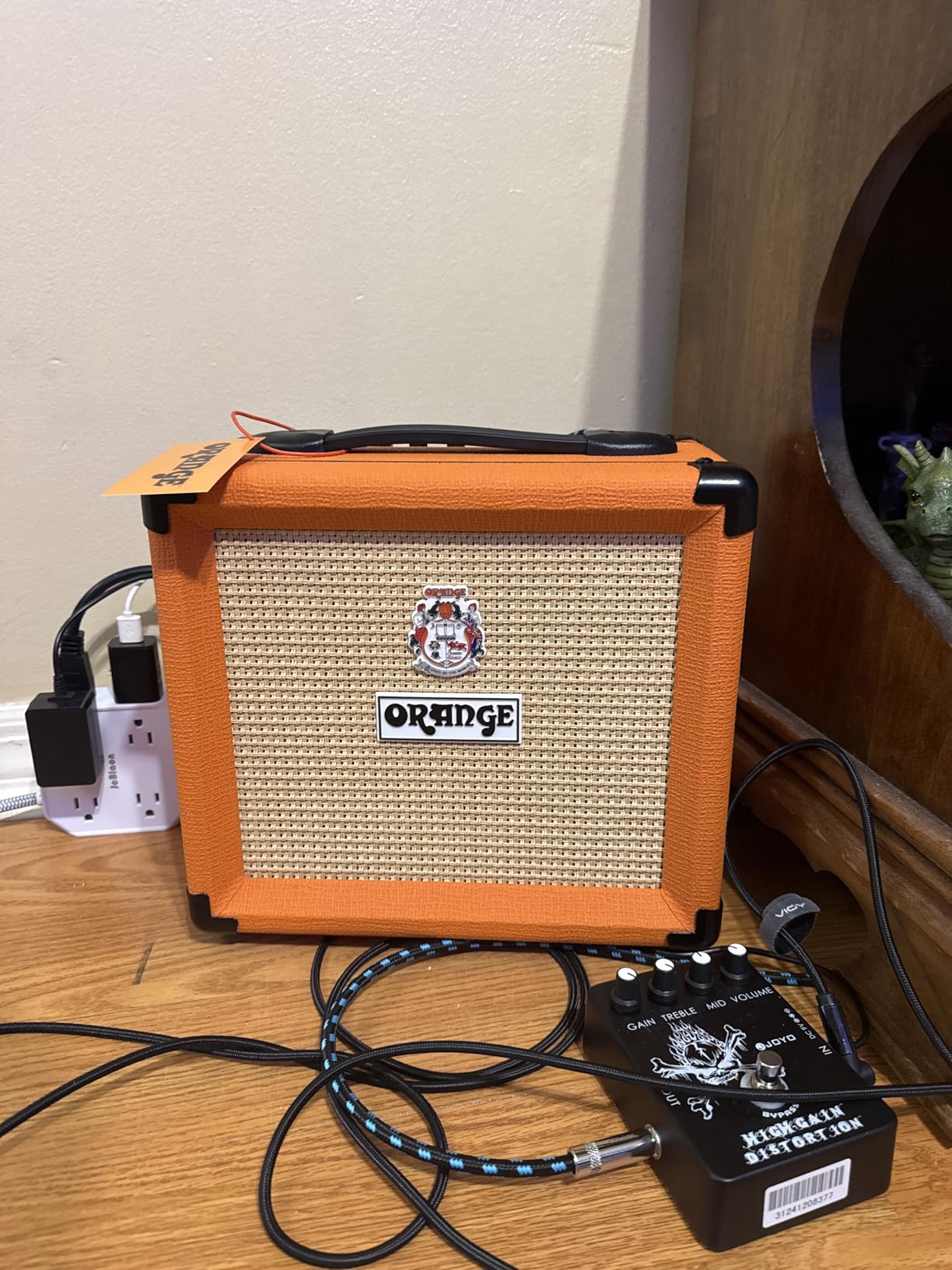
The controls are unusually generous for a single channel budget combo. You get dual gain controls, a 3 band equalizer and a separate master volume, which is more tone shaping than most rivals offer. The cabinet measures about 12 by 12 by 8 inches and weighs 4.7 kg, so it is genuinely portable.
The headphone output includes CabSim voicing, which means the speaker simulation stays present when you switch to headphones. That matters more than it sounds: a lot of cheap amps go flat and phasey in headphones, and this one does not.
Who the Orange Crush 12 suits
It suits players who care more about a recognizable tone than about preset count. If you have played in bands and you know what an Orange is supposed to sound like, this reproduces that character without a tube amp.
It also suits anyone building a first pedalboard, because it accepts a pedalboard cleanly without introducing hum.
Who the Orange Crush 12 does not suit
It does not suit players who want to switch between clean and overdrive at the amp. There is one channel, so every tone change happens on a knob or on the guitar itself.
The 6 inch speaker limits the low end and can turn muddy, and the onboard overdrive needs moderate to high volume to sound right, which defeats the point in a bedroom. There is no onboard reverb either, so plan on a pedal or a multi-effects unit.
4. Fender Champion II 25 – Best Amp for Bedroom Practice and Small Gigs
Fender Champion II 25 Watt Electric Guitar Combo Amp, Speaker, USB & Aux
25 watts
8 inch speaker
built-in multi effects
TAP tempo sync
USB and aux
Pros
- 25 watts through an 8 inch speaker covers bedroom practice rehearsals and small gigs
- Fender voicing with a rich built-in effects suite
- TAP button makes delay and tremolo tempo-synced to a song
- Headphone output supports silent practice
- Aux input and USB port cover backing tracks and computer connection
Cons
- Single channel so the amp cannot switch between clean and drive
- At 14.9 pounds it is one of the heavier amps in this group
- Modeling based effects are simpler than dedicated multi-effects units
The Champion II 25 is the Fender for people who want one amp to cover practice, rehearsal and the occasional small gig without changing settings on the way there. Twenty-five watts through an 8 inch Fender Special Design speaker is a sensible middle ground between bedroom politeness and band-room usefulness.
The built-in effects suite is the real feature here. You get reverb, delay and echo, chorus, tremolo and Vibratone, and the TAP button syncs delay times and tremolo speeds to the tempo of whatever you are playing along with. That is a genuinely useful feature for learning songs and it is missing from most rivals.
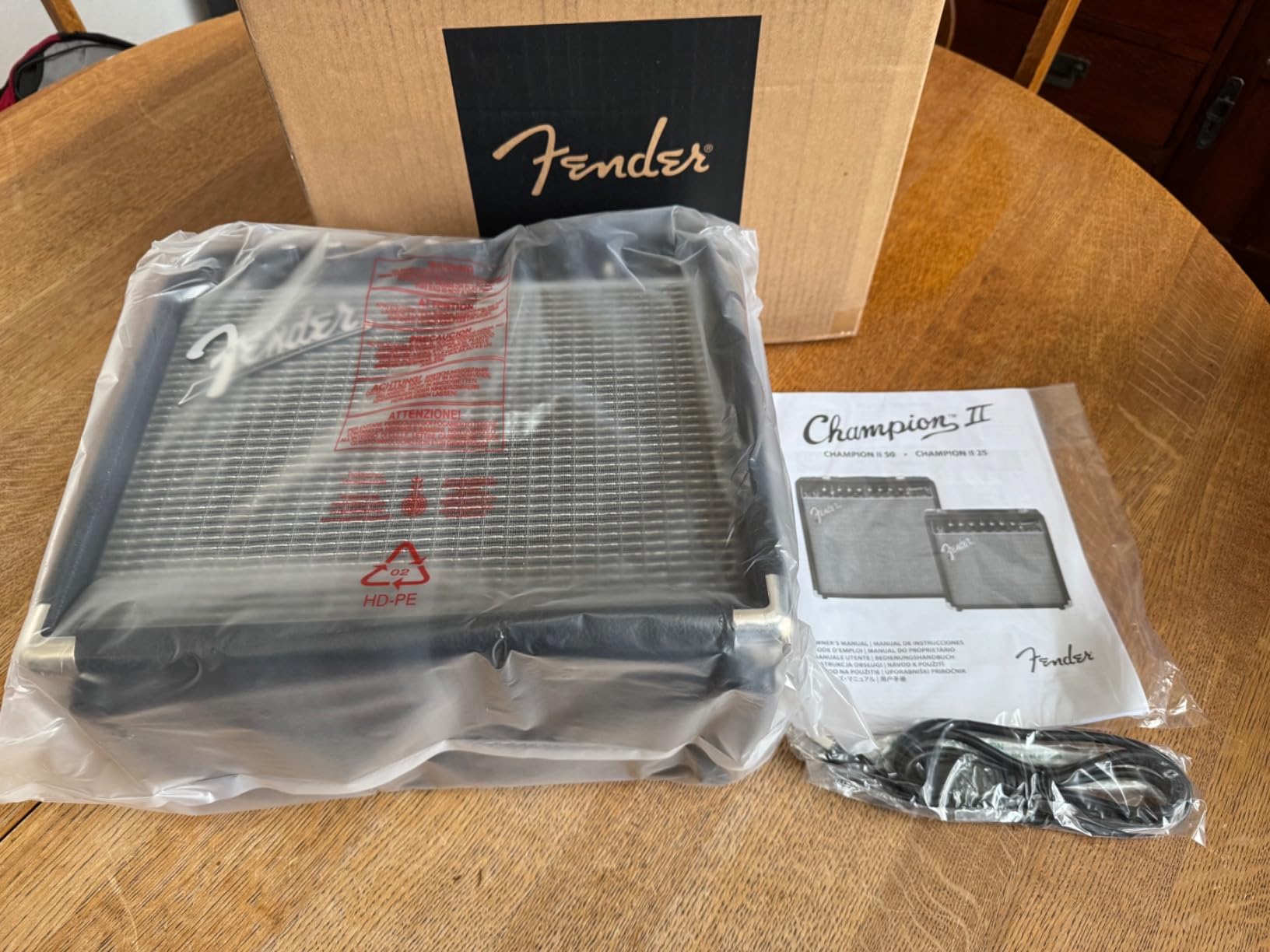
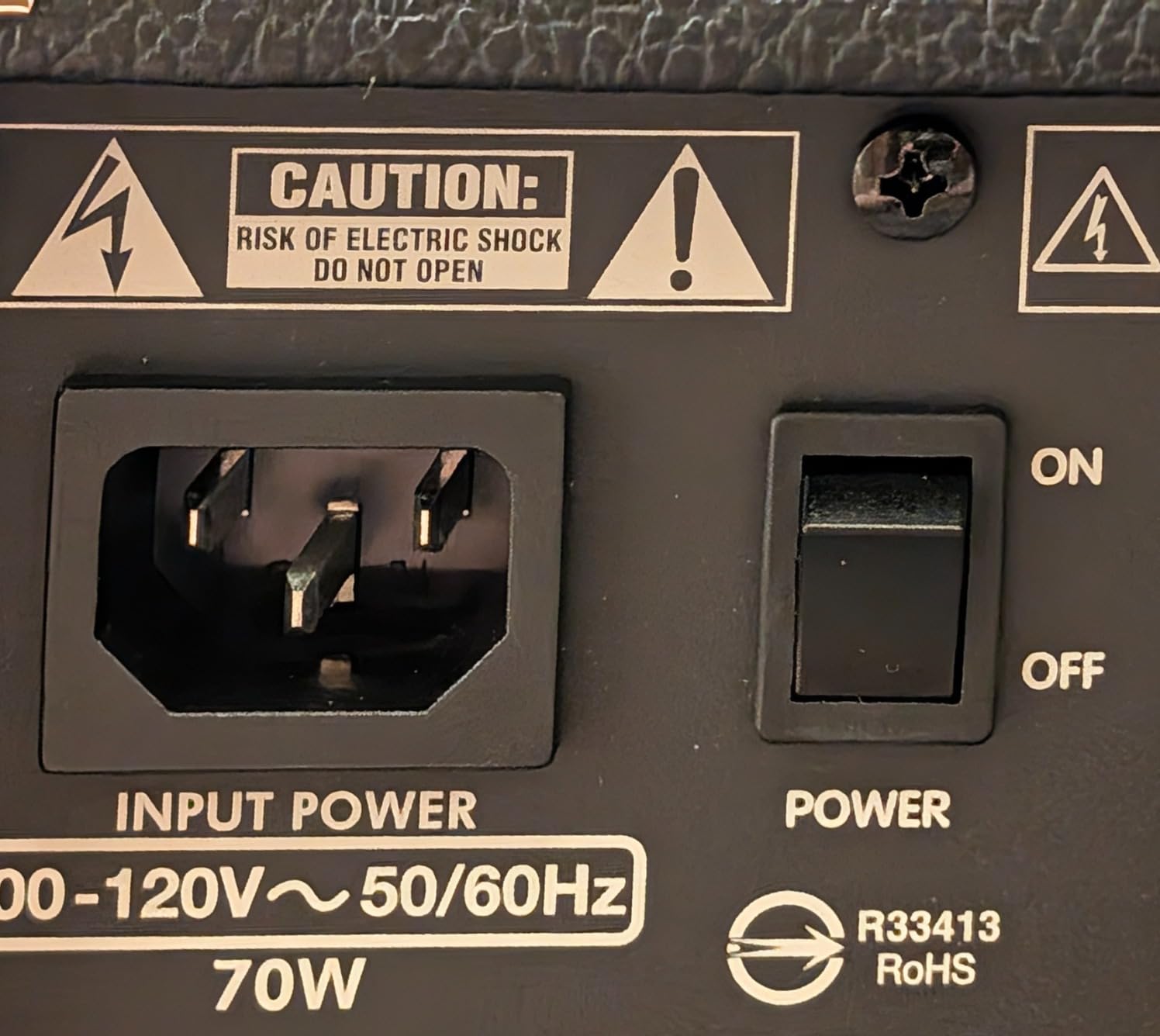
Connectivity is complete for a combo at this level: a 1/8 inch aux input, a headphone output jack and a rear-panel USB port. The 14.9 pound weight and 16.4 by 14.1 by 10.1 inch footprint are on the larger side, so it wants a floor rather than a shelf.
Owner feedback is positive on tone and effects, with a 4.6 average. The recurring note is that the effects are modeling-based and therefore simpler than a dedicated multi-effects unit, which is fair if you plan to grow into pedals.
Who the Champion II 25 suits
It suits players who practise at home but also rehearse in a band, because it is the only amp in this roundup that comfortably covers both without being a large or expensive unit. It also suits anyone who wants tempo-synced delay for learning songs.
Players who record at home will like the USB port sitting on the rear panel next to the aux input and headphone jack.
Who the Champion II 25 does not suit
It does not suit players who want two channels. With a single channel, switching between clean and overdrive has to happen on the guitar or through a pedal, which is a real limitation for someone practising blues or country.
At 14.9 pounds it is one of the heavier amps here, so it is not the option for a small room where you have to move the amp every time you pick the guitar up. The effects also lack the depth of a standalone multi-effects pedal.
5. Vox Pathfinder 10 – Best Amp for Players Who Want a Fully Analog Signal Path
Vox Pathfinder 10 1×6.5 inch 10-watt Combo Amplifier w/ 1 Channel
10 watts
6.5 inch Bulldog speaker
fully analog
headphone and line out
Pros
- Full warm chimey VOX clean tone that punches well above its 10 watts
- Fully analog signal path with no digital modeling
- Line out and headphone jack for recording and silent practice
- Takes pedals very well with the onboard overdrive easily bypassed
- Compact and light enough to move between rooms
- Classic VOX diamond grille cloth and chicken head knobs
Cons
- No onboard reverb which many owners request
- Noticeable volume drop between the clean and overdrive channels
- The overdrive channel gets loud very fast and is not ideal for apartment playing
- EQ limited to treble and bass with no tuner or aux input
The Pathfinder 10 is the pick for anyone who is suspicious of modeling. It is a fully analog solid state combo, no digital processing anywhere in the chain, and the clean channel is the warmest and most chimey thing on this list for a small speaker.
Ten watts through a 6.5 inch VOX Bulldog speaker sounds considerably larger than its wattage suggests, and it is louder than buyers expect. The line out is the underrated feature: it lets you feed a computer, an interface or a bigger speaker without buying anything else.
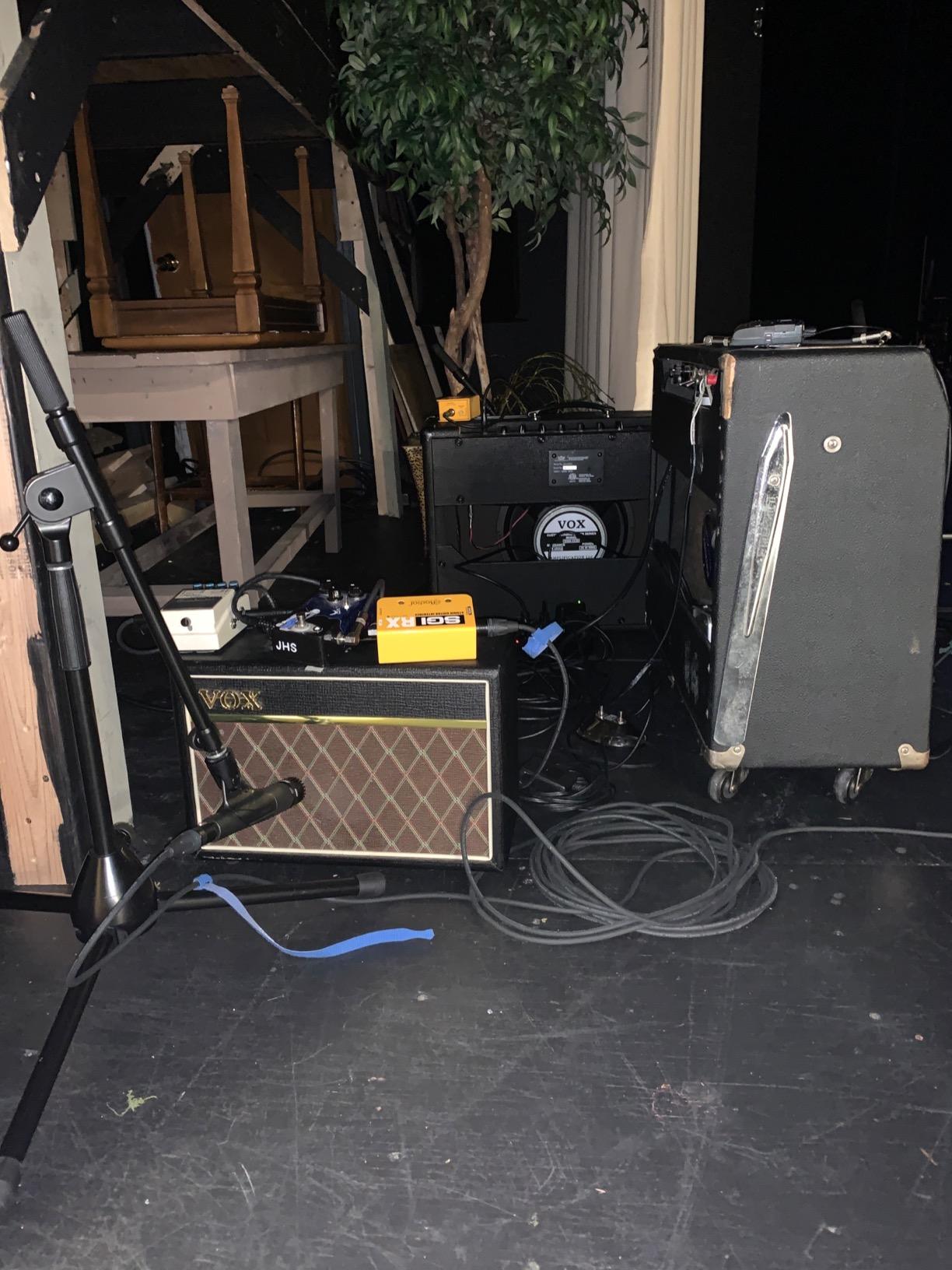
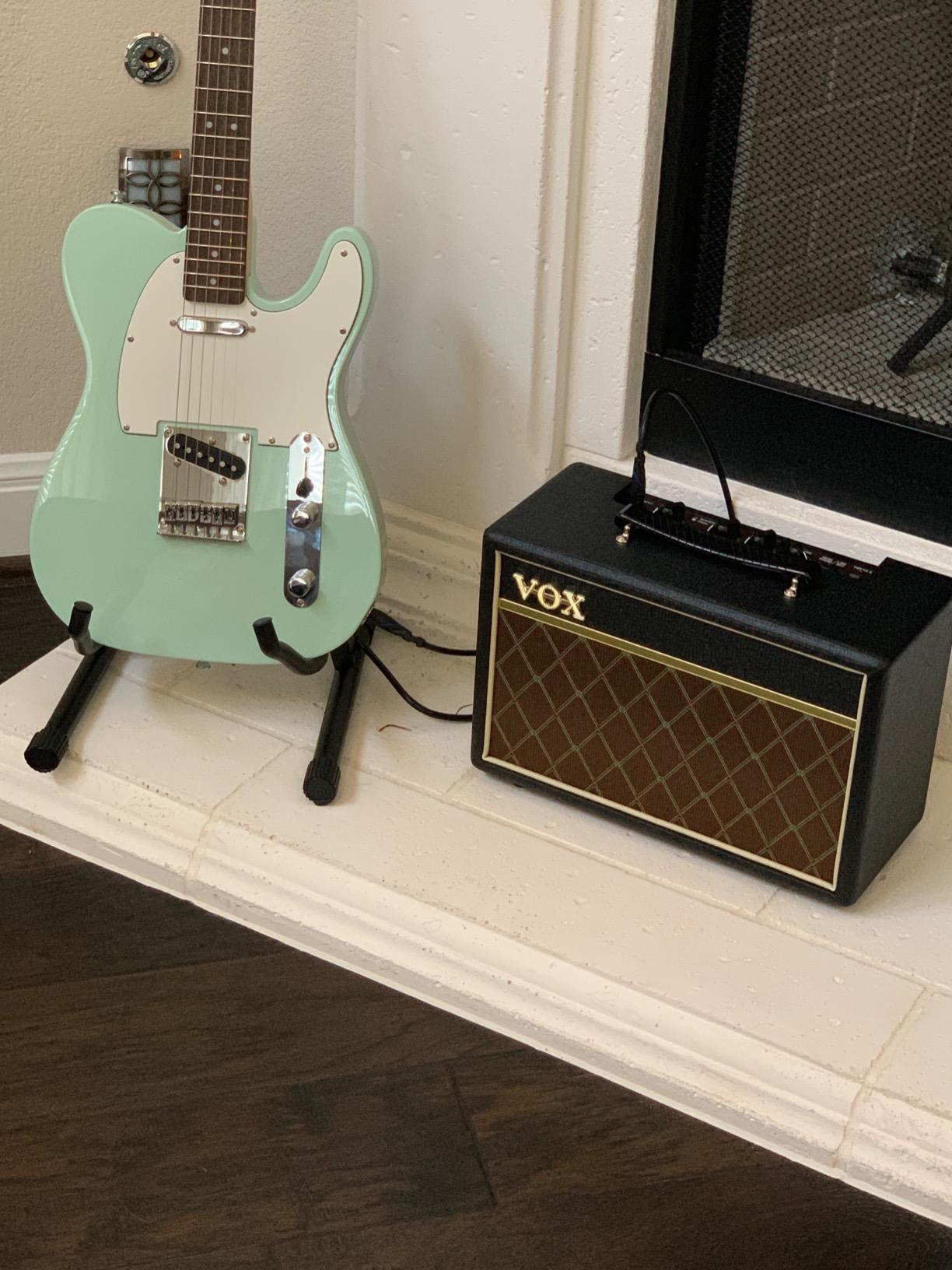
The build is the classic VOX presentation, diamond grille cloth and chicken head knobs, at 8 by 17 by 12 inches. Controls are gain, volume, treble and bass with a clean and overdrive channel switch, so there are no menus and nothing to scroll through.
Owners frequently pair it with a small multi-effects pedal on the clean channel, which solves the missing reverb without touching the amp. Pedals integrate well and the onboard overdrive is easy to bypass.
Who the Pathfinder 10 suits
It suits players who want analog tone with no processing menus and who like the VOX character specifically. It suits bedroom practice in a mid-sized room, and it suits anyone who wants a simple line out for recording or for feeding a larger system.
It also works well as a pedal platform amp, since the clean channel is clear and the overdrive can be switched out of the way.
Who the Pathfinder 10 does not suit
It does not suit players who want onboard reverb. There is no reverb, and owners ask for it in nearly every review. The EQ is limited to treble and bass as well, with no presence control, no tuner and no aux input.
The biggest practical annoyance is the volume discrepancy between channels: switching to overdrive drops the level noticeably, and that channel gets loud very quickly, which makes it a poor choice for late-night apartment playing.
6. Positive Grid Spark GO – Best Amp for Practising Away From an Outlet
Positive Grid Spark GO 5W Ultra-Portable Smart Guitar Amp & Speaker
5 watts
palm sized
33 amp models
USB-C battery 8 hours
headphone out
Pros
- Exceptionally portable palm sized design with a protective sleeve and strap included
- Eight hour USB-C rechargeable battery for playing away from a power outlet
- Computational audio delivers unusually full tone from a 5 watt amp
- Smart Jam and Auto Chords make solo practice and learning songs faster
- Works as a Bluetooth speaker and connects to phones or computers
Cons
- Only 5 watts of output so it is not suited to playing over a drummer
- Tone depends on the companion app and preset ecosystem
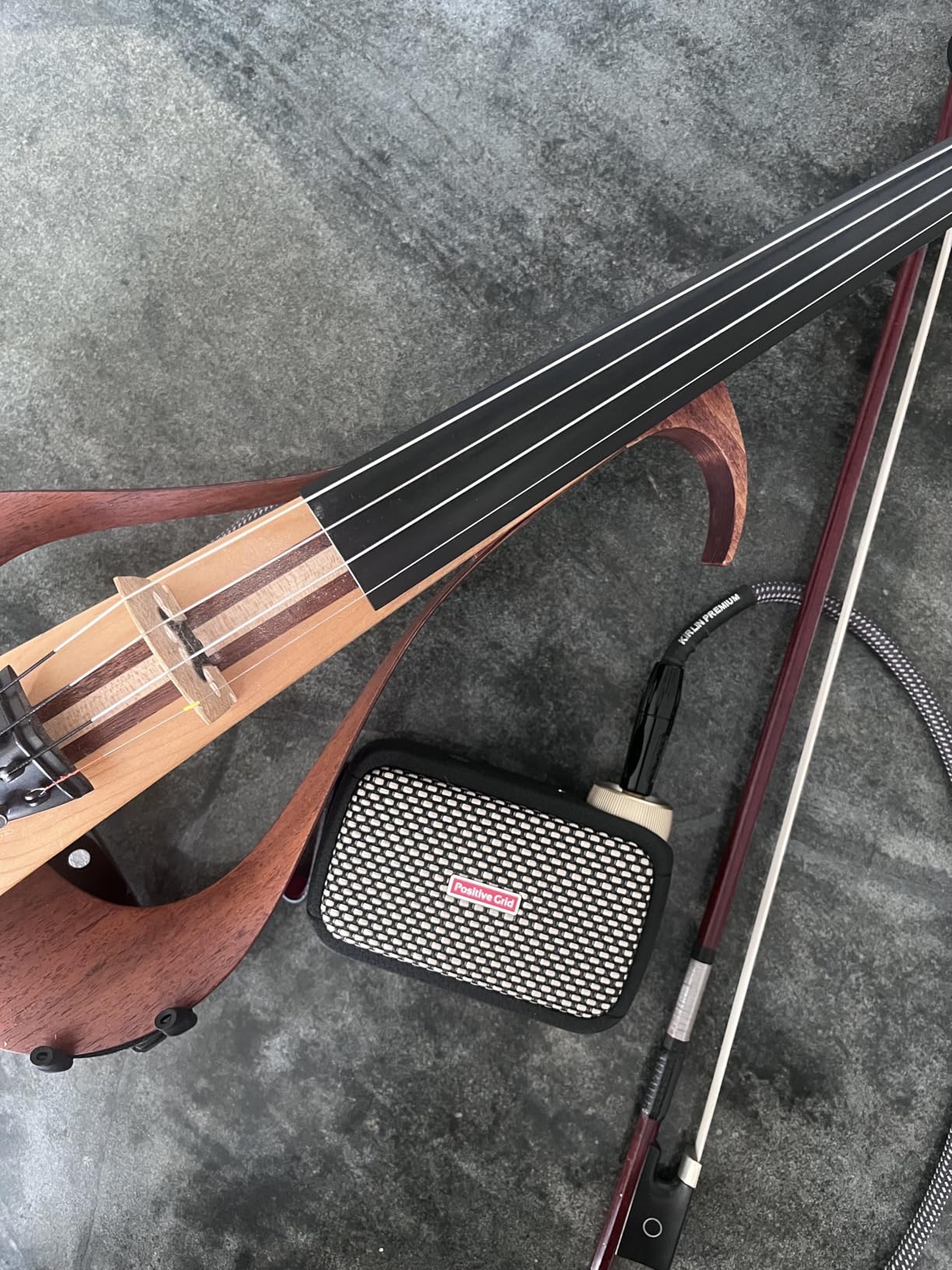
The Spark GO is the smallest and most portable amp in this roundup, and it is the one I recommend if your practice happens on a balcony, in a hotel room, at a friend’s place or in the car. It measures 4.9 by 3.3 by 1.7 inches, which is genuinely palm sized, and it runs for up to eight hours on a USB-C charge.
Five watts sounds like nothing until you hear what computational audio does with it. Inside there are 33 amp models and 43 onboard effects, plus access to a library of more than 50,000 tones through the Positive Grid community. The tone stays detailed and full far below the volume where a conventional 5 watt amp would disappear.
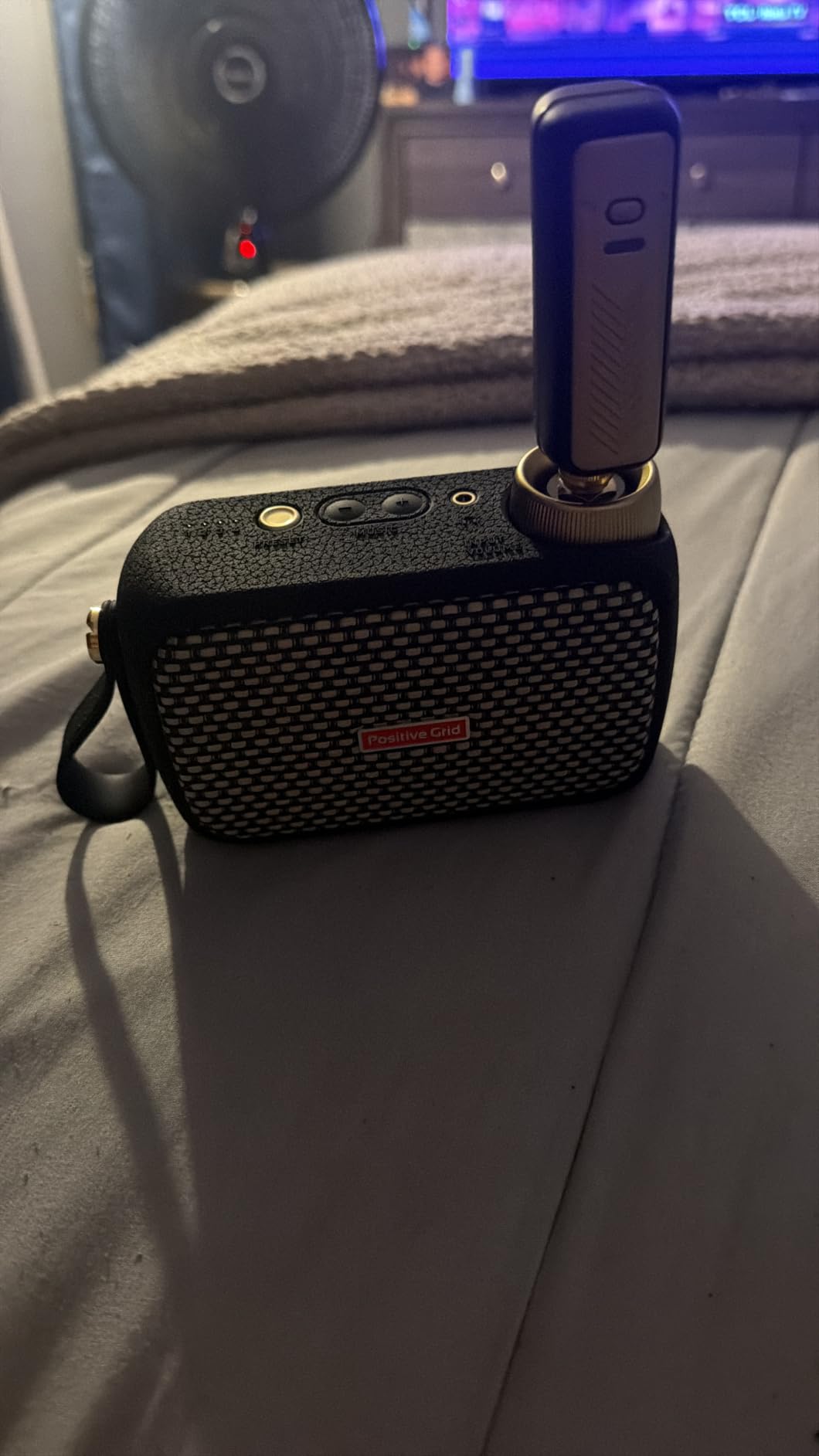
Two learning features stand out for home practice. Smart Jam listens and plays along with you as a bandmate, and Auto Chords analyses what you are playing and displays the chords in real time, which speeds up learning songs on your own considerably.
It also doubles as a Bluetooth speaker, connects to phones and computers, and has a headphone output for silent practice when the battery is flat or the room is quiet.
Who the Spark GO suits
It suits players who do not practise in one fixed room, and it suits anyone who wants to learn songs solo without a metronome or a band. Travelling players and students with a small space get the most out of it.
It is also a sensible silent practice option because the headphone output lets you keep playing after everyone has gone to bed.
Who the Spark GO does not suit
It does not suit anyone who wants to be heard over a drummer. Five watts is five watts, and the ceiling is low no matter how good the processing is.
It also does not suit players who dislike app-dependent tone shaping, since the best results come from the companion app and the ToneCloud preset ecosystem. If you want to just turn a knob and go, this is friction you did not sign up for.
7. Boss Katana Mini – Best Amp for Late-Night Practice
Boss Katana Mini 7-Watt Combo Amp
7 watts
4 inch speaker
battery powered
Brown Crunch Clean voices
tape delay
Pros
- Battery powered and extremely light so it can be played anywhere including late night practice
- Smooth musical distortion that avoids the harsh fizzy character of cheaper mini amps
- Three amp voices cover a wide range of gain levels
- Sounds good at low volume which makes it ideal for shared walls
- Headphone output and aux input support silent practice and backing tracks
Cons
- Power supply is not included and must be bought separately
- Some users report a low hum or buzz with third-party power adapters
- Sound is not full enough for full band practice
- Only a delay effect is built in with no reverb
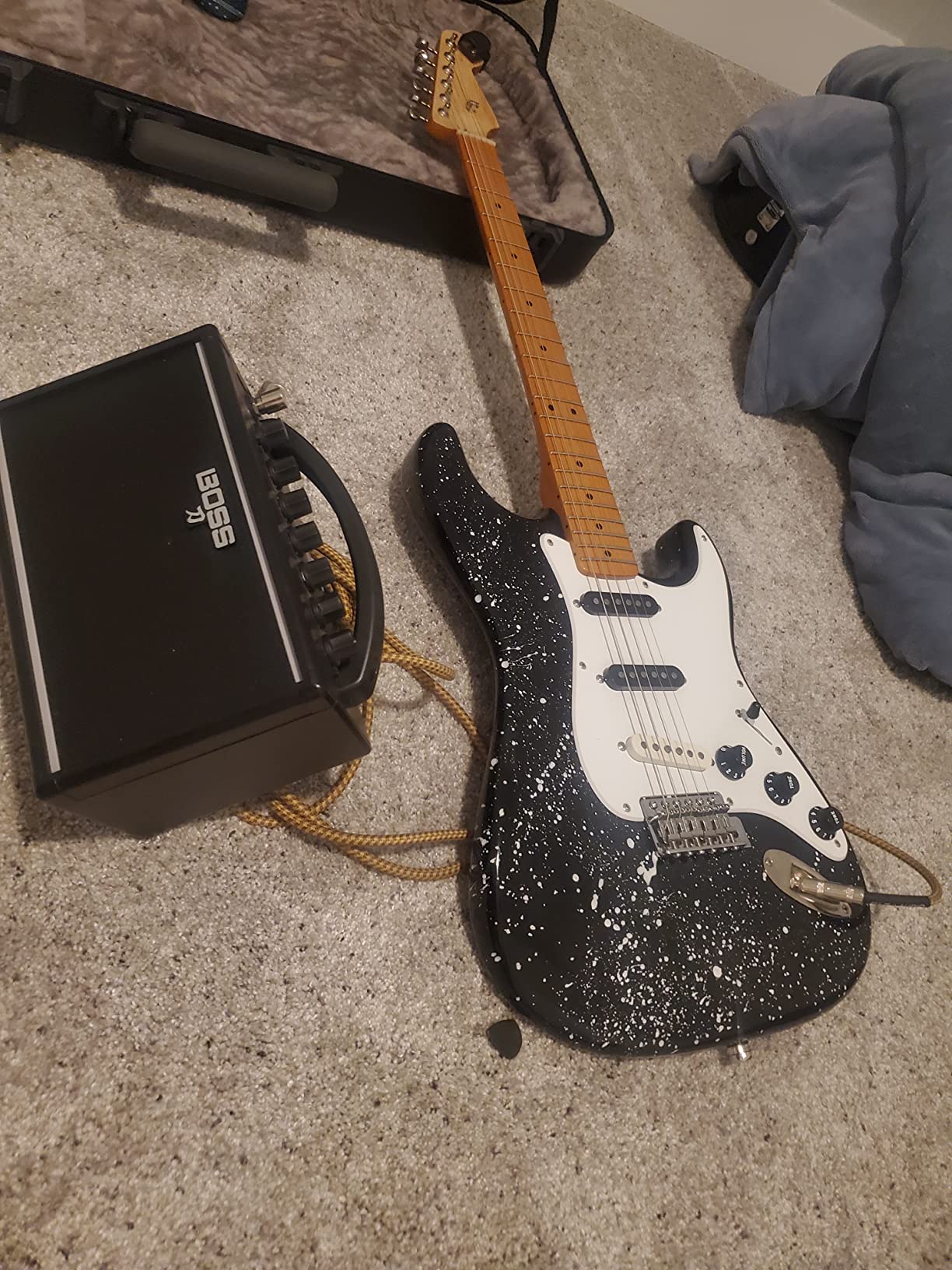
The Katana Mini is the amp I suggest when the real constraint is a sleeping household rather than a thin wall. It runs on batteries, it weighs 1.5 kg, and at 7 watts it produces almost no spillover noise while still sounding like an instrument rather than a headphone monitor.
What sets it apart from other mini amps is the gain circuit. It uses a multi-stage analog gain circuit with a three-band analog tone stack and offers three amp types, Brown, Crunch and Clean, so the three switch settings genuinely change the character rather than just the level of distortion.
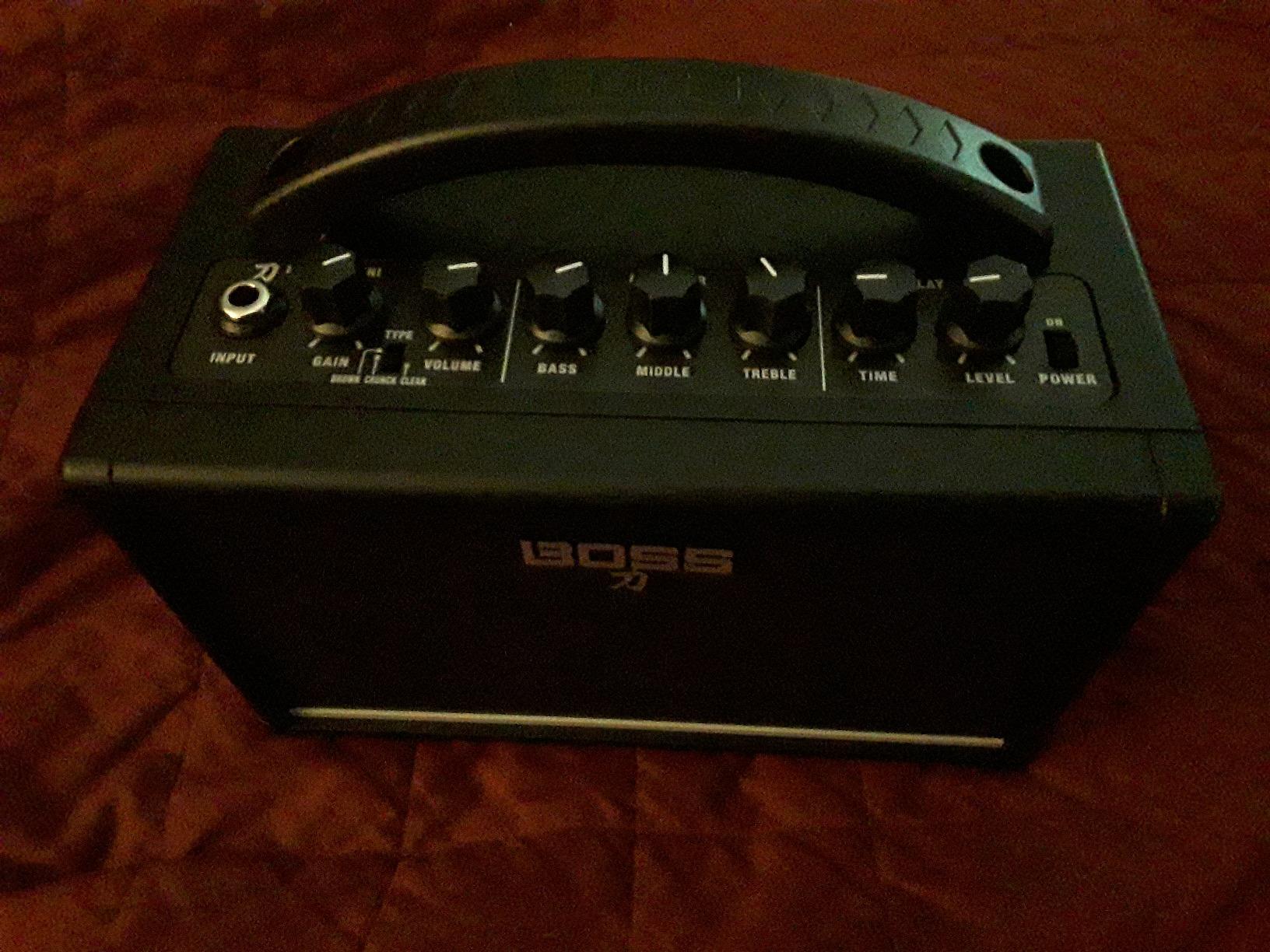
Owners consistently describe the distortion as smooth and musical rather than fizzy, which is the usual complaint about amps in this size. The built-in tape style delay does double duty as a rough reverb when set low, and the aux input lets you play along to a track.
Dimensions are 4.6 by 9 by 7 inches, so it sits on a desk or a bedside table as easily as on the floor. Battery life runs somewhere around seven to nine hours depending on use.
Who the Katana Mini suits
It suits players in flats or shared houses who practise at odd hours, and it suits anyone who wants three genuinely different amp characters from a small box. The control ranges are also hard to dial into a bad sound, which matters for beginners.
It suits players who move between rooms or take a guitar to a lesson and want the amp in the same bag.
Who the Katana Mini does not suit
It does not suit anyone who needs to be heard in a band rehearsal. The 4 inch speaker has no low end to give and no headroom to compete with a drummer.
Two practical warnings: the power supply is not included and has to be bought separately, and some users report a low hum or buzz when using third-party adapters. There is no reverb either, only delay.
8. LyxPro 40W Combo – Best Amp for Flexible Inputs and Home Recording
LyxPro 40 Watt Electric Guitar Amplifier | Combo Solid State Studio & Stage Amp with 8” 4-Ohm Speaker, Custom EQ Controls, Drive, Delay, ¼” Passive/Active/Microphone Inputs, Aux in & Headphone Jack
40 watts
8 inch 4 ohm speaker
passive active and mic inputs
headphone and line out
Pros
- Plenty of headroom for home practice garage jams and small coffee shop gigs
- Passive and active inputs plus a mic input with adjustable mic volume
- Headphone jack and line out for private listening and feeding larger systems
- Adjustable drive and delay cover a useful range of tones
- Handles electric acoustic-electric and bass instruments
Cons
- Overdrive circuit cannot be pushed into distortion at low volume
- Delay and reverb cannot be fully turned off at the zero setting
- Bass response is limited particularly for bass guitar
- Build quality is basic with loose fitting plastic knobs on some units
- Heaviest amp in this group at roughly 25 pounds
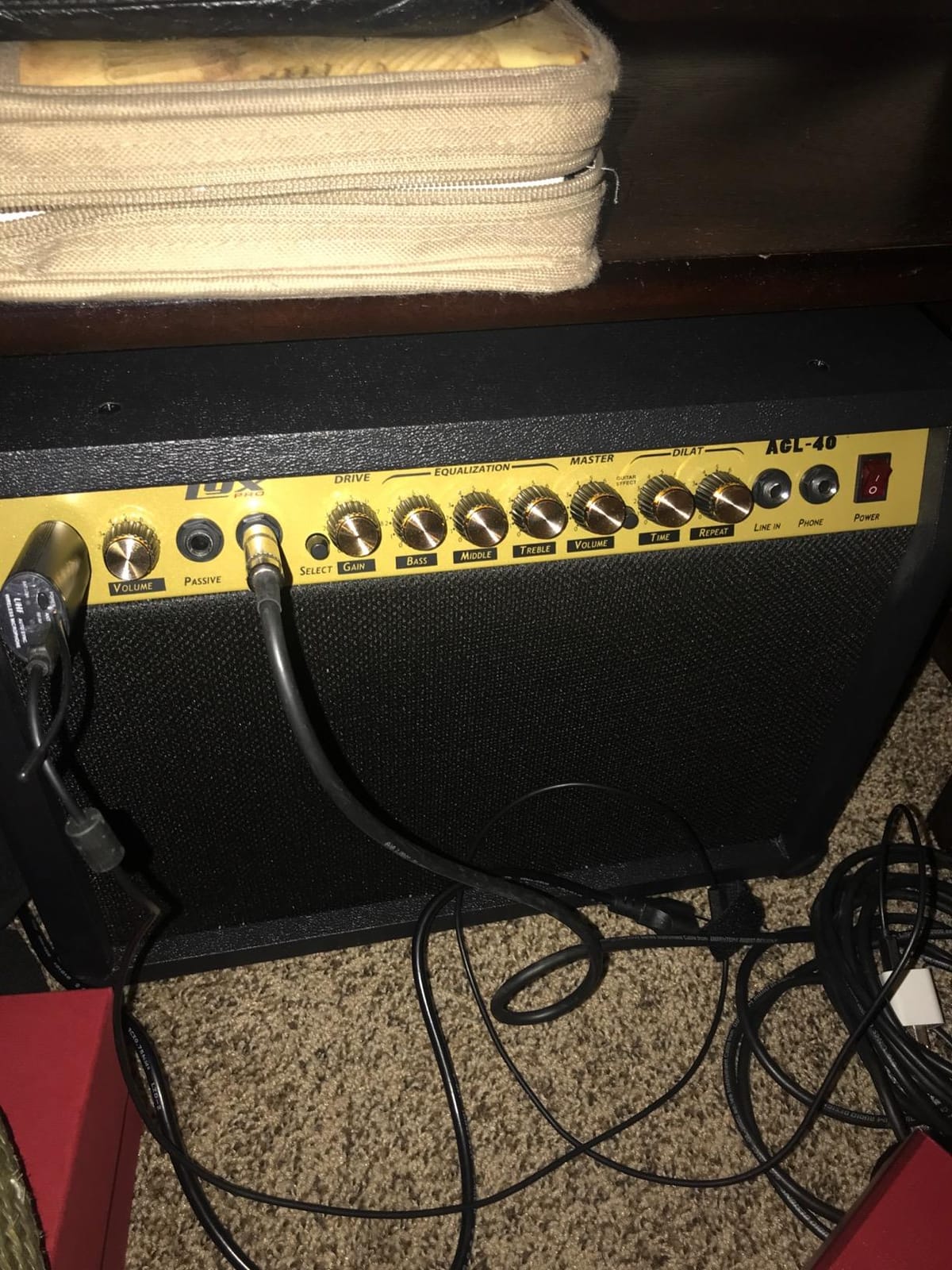
The LyxPro 40W is the odd one out in this list and the connectivity is why. It has quarter-inch passive, active and microphone inputs with adjustable mic volume, which is a feature set you normally find on a small stage console rather than a practice combo.
Forty watts through an 8 inch 4 ohm speaker gives plenty of headroom for home practice, a garage jam or a small venue. The tone controls run treble, middle and bass from 0 to 10, and there is a boost switch plus variable distortion gain and a digital delay with time and repeat controls.
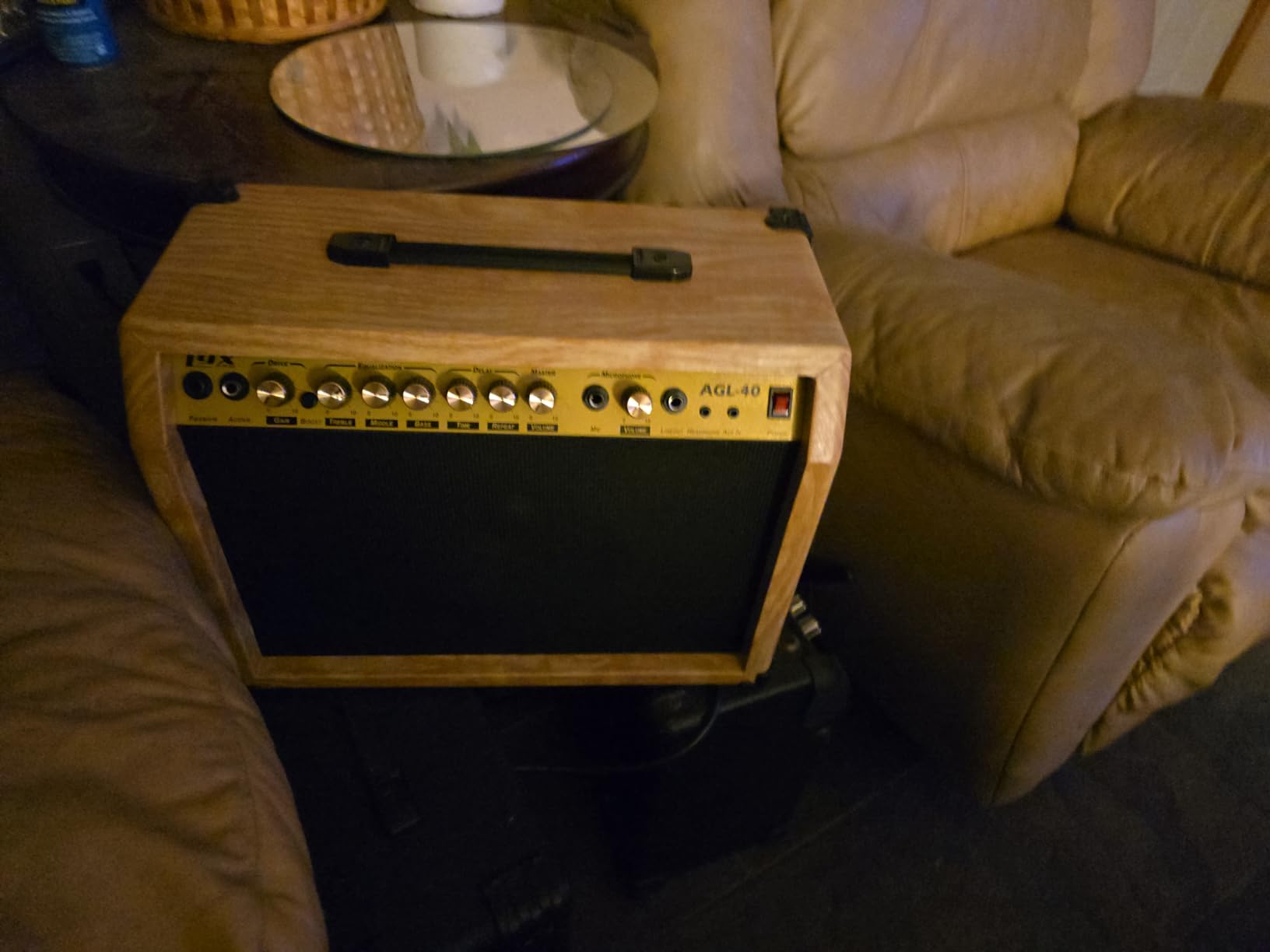
Because it accepts an acoustic-electric, a microphone or an instrument with an onboard pickup, it doubles as a small mixer. The headphone jack, line out and aux in cover silent practice, feeding a bigger system and playing along to music.
Reviewers set realistic expectations and treat it as a basement, garage and small-venue amp rather than a stage instrument. The 4.3 average reflects that honesty rather than disappointment.
Who the LyxPro 40W suits
It suits players who record at home, because the passive, active and microphone inputs mean you can plug a mic straight in and capture acoustic or vocals. It also suits anyone who wants a bigger amp than they strictly need for practice but wants the headroom available.
It suits players moving between electric and acoustic-electric who want one box to handle both.
Who the LyxPro 40W does not suit
It does not suit quiet practice. The overdrive circuit cannot be pushed into distortion at low volume, which is a common and legitimate home complaint, and at 25.37 pounds it is by far the heaviest amp here, which matters in a small room.
The effects cannot be fully turned off at their zero setting, bass response is limited, and some owners report loose fitting plastic knobs or damaged cabinets on arrival. Our wider guide to solid state guitar amps covers the alternatives with better bass response.
9. Marshall MG10G – Best First Amp for a Complete Beginner
Marshall MG10G Combo Electric Guitar Amplifier – Black
10 watts
6.5 inch speaker
clean and overdrive channels
contour EQ
headphone and aux
Pros
- Classic Marshall tone in a compact affordable practice combo
- Clear punchy and well balanced sound that holds up at low volume
- Separate clean and overdrive channels for quick tone switching
- Contour control plus gain volume and tone covers a useful range
- Headphone jack and aux input make it a practical apartment amp
- Accepts fuzz distortion and overdrive pedals well
Cons
- 10 watts is not enough for full band practice
- Some owners report difficulty switching cleanly between channels
- The supplied quick start guide is minimal
The MG10G is the amp I would hand someone who has owned a guitar for two weeks. It has two channels, which is the single most useful thing for a beginner, because switching from clean to overdrive teaches you what a channel does without a pedalboard in the way.
Ten watts through a 6.5 inch speaker gives a clear, punchy and well-balanced sound that stays honest at low volume, and the Marshall voicing is unmistakable. The contour control works alongside gain, volume and tone to cover a wider range than the four knobs suggest.
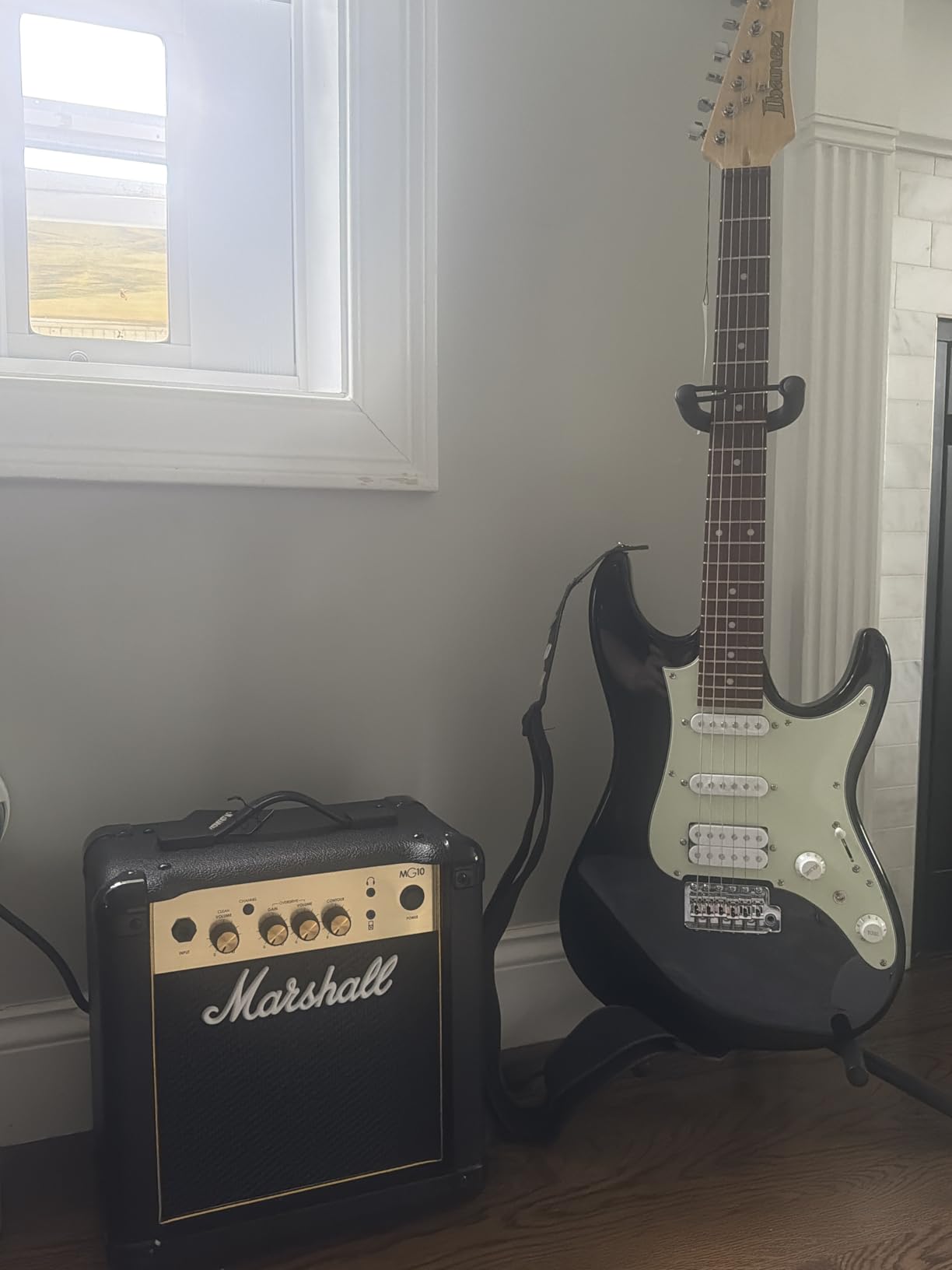
It weighs 10 pounds and measures 6.7 by 11.4 by 12.2 inches, so it moves between rooms without being a nuisance. The 3.5 mm headphone jack and aux input make it a practical apartment amp, and it accepts fuzz, distortion and overdrive pedals cleanly.
With a 4.6 average across its reviews, the tone is the consistent praise. The main limitations are the modest output and, in a few cases, finicky channel switching.
Who the MG10G suits
It suits a beginner who wants a familiar brand voicing and a simple control set, and it suits anyone practising in an apartment who will use headphones regularly. It also suits players building toward pedals, since the overdrive channel is easy to bypass in effect.
For players who want a wider look at the market, we also keep a guide to the best guitar amps across every category.
Who the MG10G does not suit
It does not suit anyone who wants to practise with a band. Ten watts will not compete with a drummer, and the 6.5 inch speaker has no low end for a heavy sound.
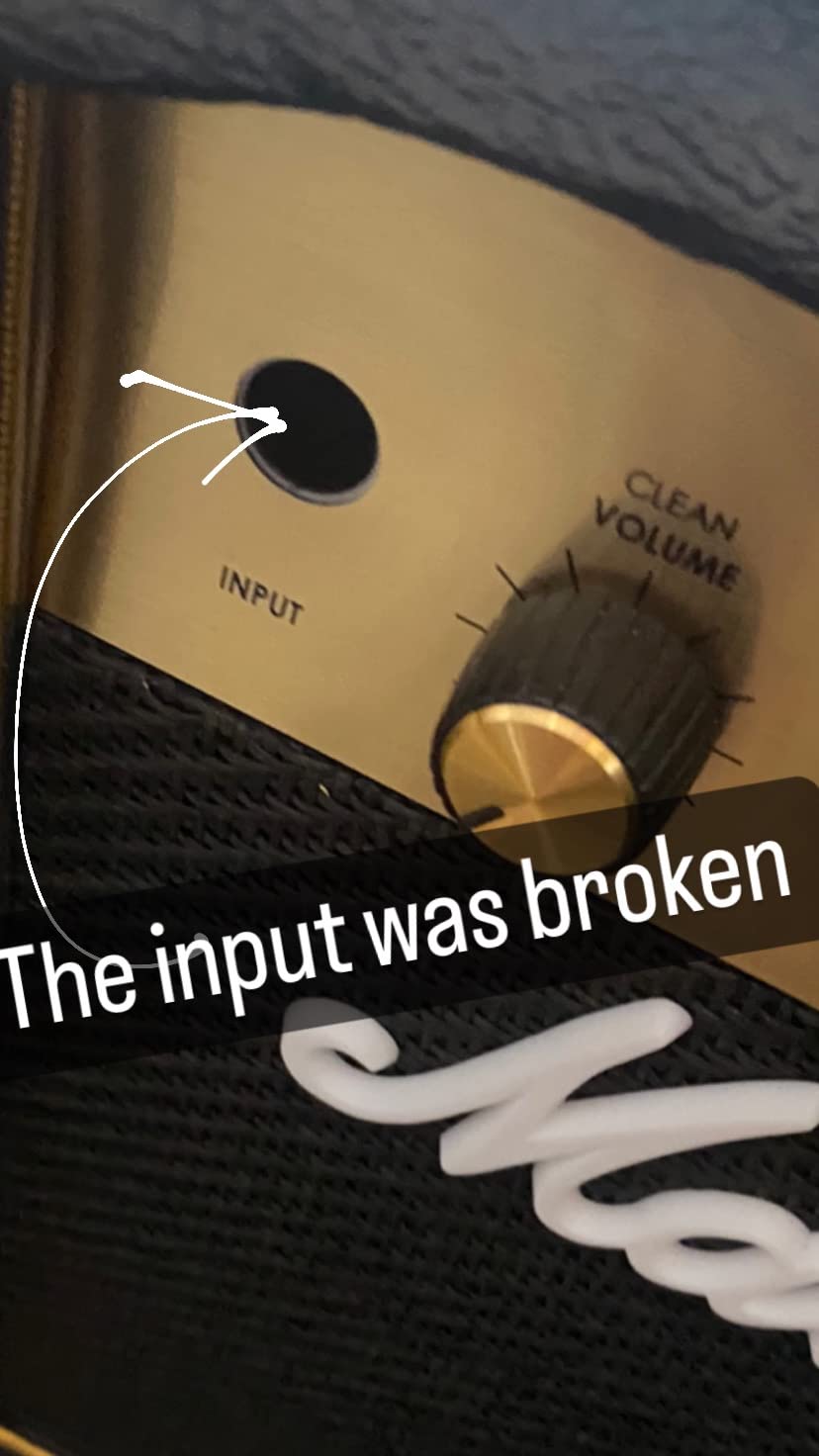
Some owners report difficulty switching cleanly between channels, which is annoying on a two-channel amp whose main selling point is the second channel. The supplied quick start guide is also minimal.
10. JOYO JAM Buddy II – Best Amp for Learning Songs and Jamming Alone
JOYO 10W Portable Guitar Practice Amp & Multi-Effects Pedal Combo Amplifier with Footswitch,OTG Recording, Bluetooth,14 Amp Models,3-Band EQ,36 Drum Patterns & Looper (JAM Buddy II, Orange)
10 watts
twin 2 inch speakers
14 amp models
drum machine and looper
USB-C OTG recording
Pros
- Packs 14 amp models a drum machine looper tuner and Bluetooth into a palm sized unit
- Only 940g making it one of the most portable practice amps available
- Direct OTG recording to a phone or computer over USB-C
- Battery powered with up to 5 hours of playtime and auto power off
- Three independent channels plus memory recall make tone switching quick
- Separate volume controls for guitar and Bluetooth audio
Cons
- Two inch full range speakers limit bass response and maximum volume
- Small screen and multi-function knob take practice to learn
- Effect and amp sounds are simplified miniatures rather than detailed models
The JAM Buddy II is the practice amp for someone who practises with backing tracks and songs rather than scales alone. It has a 36 pattern drum machine, a 30 second looper, a built-in tuner and Bluetooth playback, all in a unit that weighs 940 grams.
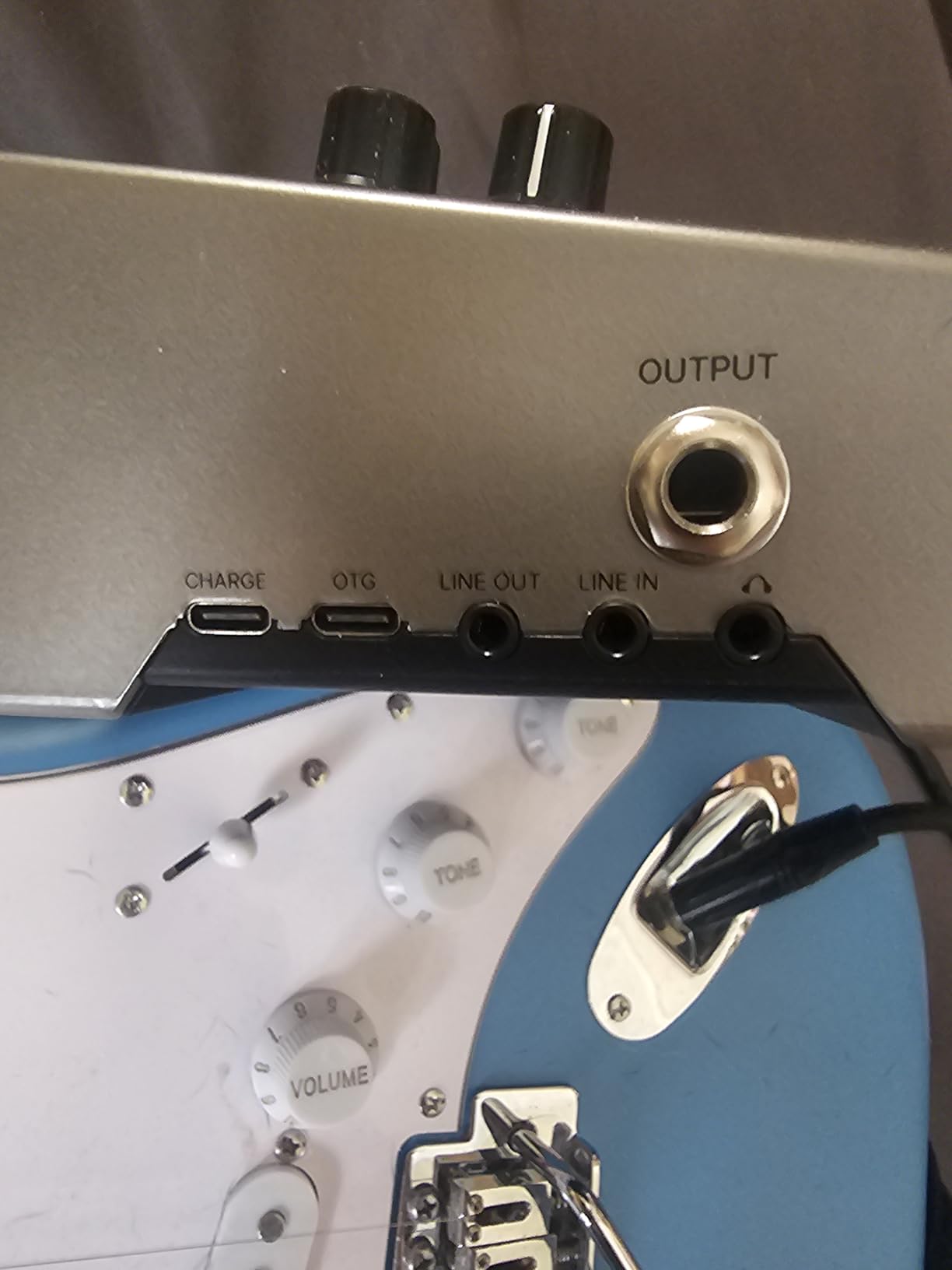
It also records straight to a phone or computer over USB-C using OTG, which is rare at this size. For a player writing songs at home, recording riffs straight out of the amp is genuinely useful and removes the need to buy an interface first.
There are 14 amp head models and 9 built-in effects including modulation, delay and reverb, spread across three independent channels labelled Clean, Rhythm and Lead. One-tap memory recalls tones and drum settings, so setting up for a new song is quick once you have done it once.
Power comes from a battery that gives up to 5 hours of playback from a 3 hour charge, and there is a balanced output, a line out, a headphone jack and footswitch support on top of that.
Who the JAM Buddy II suits
It suits players who learn songs by playing along with something, because the drum machine, looper and Bluetooth backing tracks turn a solo practice session into a band rehearsal. It also suits anyone who records ideas on a phone or laptop without extra hardware.
It suits players who need an amp that fits in a backpack, at 6.34 by 7.17 by 2.76 inches and under a kilo.
Who the JAM Buddy II does not suit
It does not suit anyone who cares about tone accuracy. The 14 amp models and 9 effects are simplified miniatures rather than detailed simulations, and the twin 2 inch full-range speakers limit both bass response and maximum volume.
It also does not suit someone who wants intuitive controls. The small screen and multi-function knob take some practice to learn, and a 4.6 average in a feature-dense category reflects that.
11. Monoprice Stage Right 1×10 – Best Amp With a Real Spring Reverb
Monoprice 1×10 Guitar Combo Amplifier – Black 40-Watt, Spring Reverb, 10-Inch 4-Ohm Speaker, High & Low Inputs, Headphone Output – Stage Right Series
40 watts
10 inch 4 ohm speaker
real spring reverb
effects loop
footswitch and ext speaker out
Pros
- Genuine spring reverb which most amps at this price only simulate
- 10 inch speaker delivers chimey clean tones that stay tight on breakup
- Quiet responsive effects loop gives another place to stack gain
- Clean headphone signal and plenty of volume for a bedroom or basement
- Footswitch external speaker out aux in and headphone out covered
- Owners rate it as punching well above its weight
Cons
- Line output is unbalanced and noisy making recording and linking impractical
- A small amount of reverb is faintly audible even with the control off
- Onboard overdrive is underwhelming without pedals
- Some listeners report a brittle fizzy quality in the upper mids
- Newer units use a single input rather than the original high and low inputs
The Stage Right 1×10 is the only amp in this roundup with a genuine spring reverb, and that alone puts it in a category of one. Most competitors at this level simulate spring reverb with a digital algorithm, and reviewers consistently say you can hear the difference.
Forty watts driving a 10 inch 4 ohm speaker is a large speaker for a home amp, and it is the reason the clean tones stay chimey without breaking up too early. Measured frequency response runs from 60 Hz to 12 kHz with 0.5 percent total harmonic distortion.
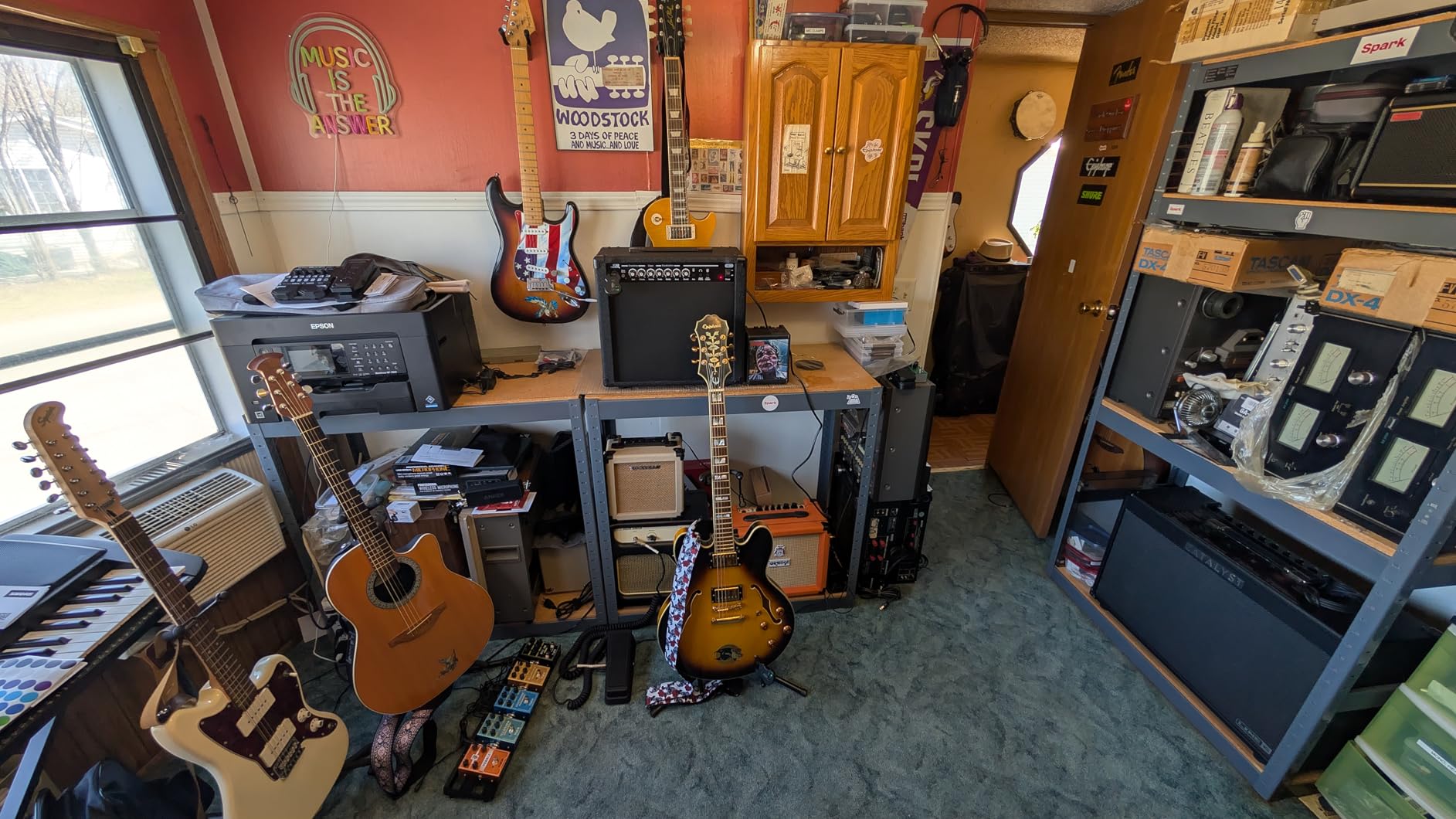
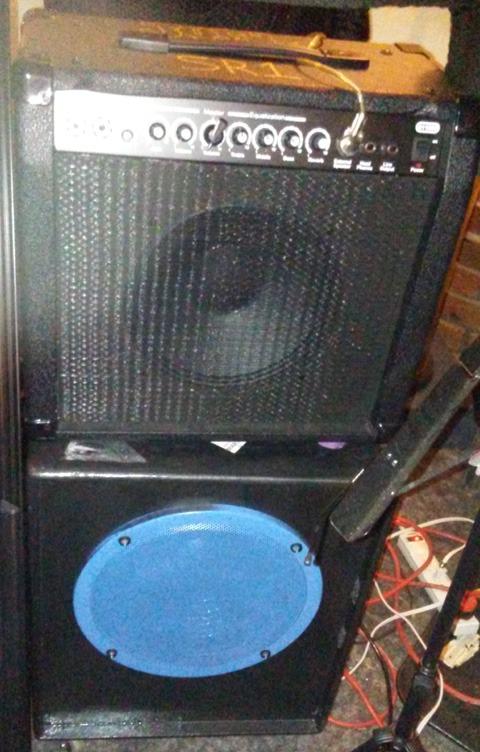
The feature list is unusually complete: real spring reverb, a 3 band equalizer at 100 Hz, 1 kHz and 3 kHz, an effects loop with send and return, external speaker out, a footswitch jack, an aux input and a headphone output. The effects loop is quiet and responsive, which gives you a second place to stack gain.
At 11.4 by 18.7 by 17.1 inches this is a physically large cabinet, so measure your space before buying. It suits a bedroom or a basement rather than a small flat.
Who the Stage Right 1×10 suits
It suits blues, surf and early rock players who want reverb that decays naturally rather than a digital approximation. It also suits anyone building a pedalboard, because the effects loop is the better place to put a drive pedal.
It suits players who want a room-filling amp with headroom, since 40 watts through a 10 inch speaker is genuinely loud for home use.
Who the Stage Right 1×10 does not suit
It does not suit anyone recording from the line out. Owners describe it as unbalanced and noisy, and recommend using a speaker microphone instead. A faint residual reverb is also audible with the control fully off, and some listeners find the upper mids brittle and fizzy.
Newer units use a single input rather than the original high and low pair, and the onboard overdrive is underwhelming without pedals helping it.
12. Yamaha THR5 – Best Amp for a Desk and Near-Field Listening
Yamaha THR5 10-Watt Desktop Guitar Combo Amp
5 watts
3 inch speaker
VCM amp modeling
2 channels
USB connectivity
Pros
- Yamaha VCM modeling delivers hi-fi stereo tone in a desktop sized box
- Five classic amp types plus a broad range of effects
- Two channels make it easy to blend clean and lead quickly
- Runs on AC power or batteries for flexible placement
- Flat desktop form factor saves shelf space in a small room
- USB connectivity for recording to a computer
Cons
- Actual output is 5 watts despite the class naming so it is very quiet
- Small 3 inch speaker limits bass and maximum volume
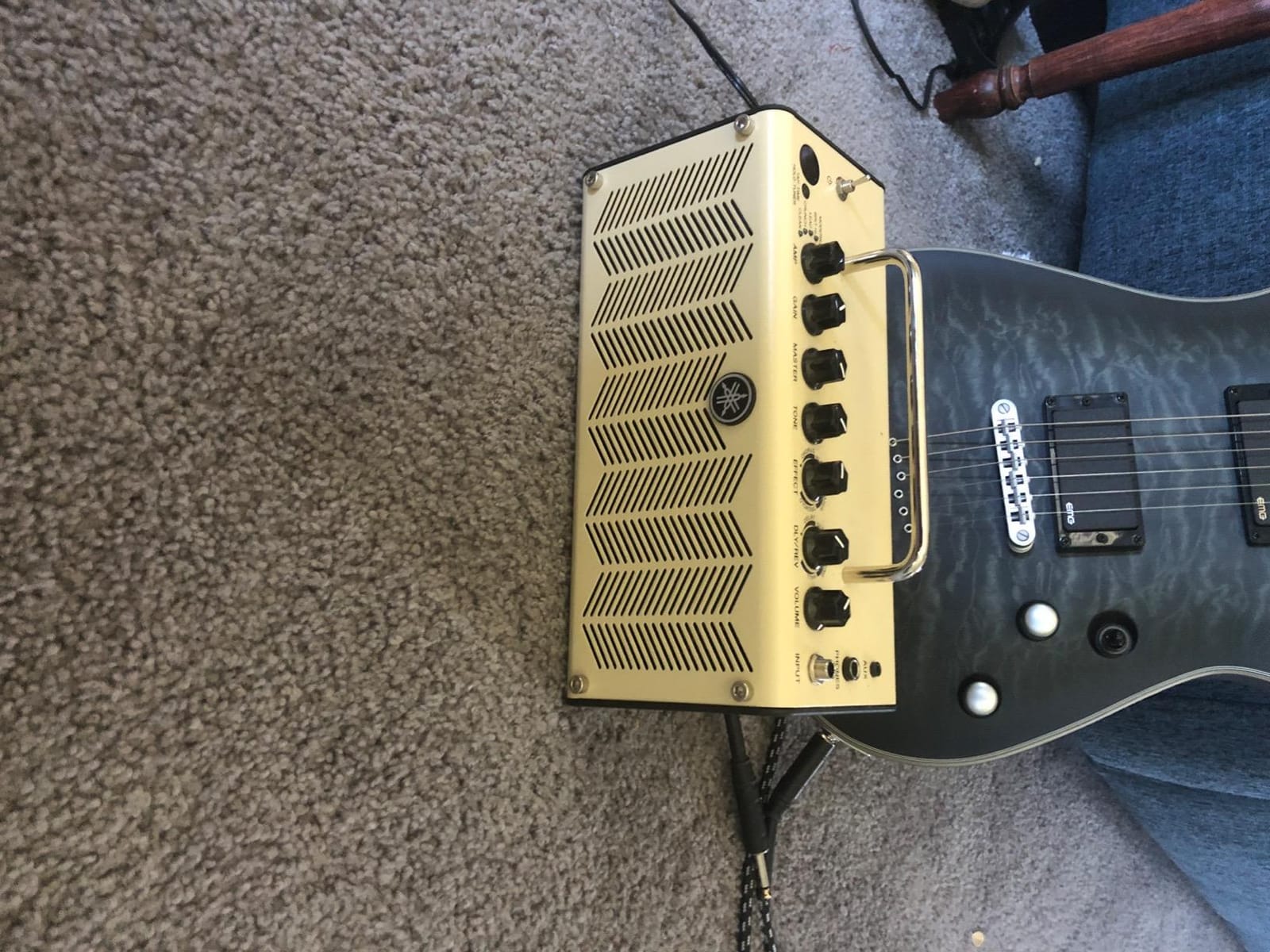
The Yamaha THR5 is the odd shape of this roundup and the one that fits a small room best. At 4.4 pounds and 4.72 by 6.58 by 10.67 inches, it is a flat desktop unit rather than a floor combo, and Yamaha developed the sound with its AV division for near-field listening.
It is also a modeling amp, using Yamaha VCM technology to recreate five classic amp types with a broad range of built-in effects. Two channels let you blend a clean sound with lead quickly, which is more than most amps twice the size in this list offer.
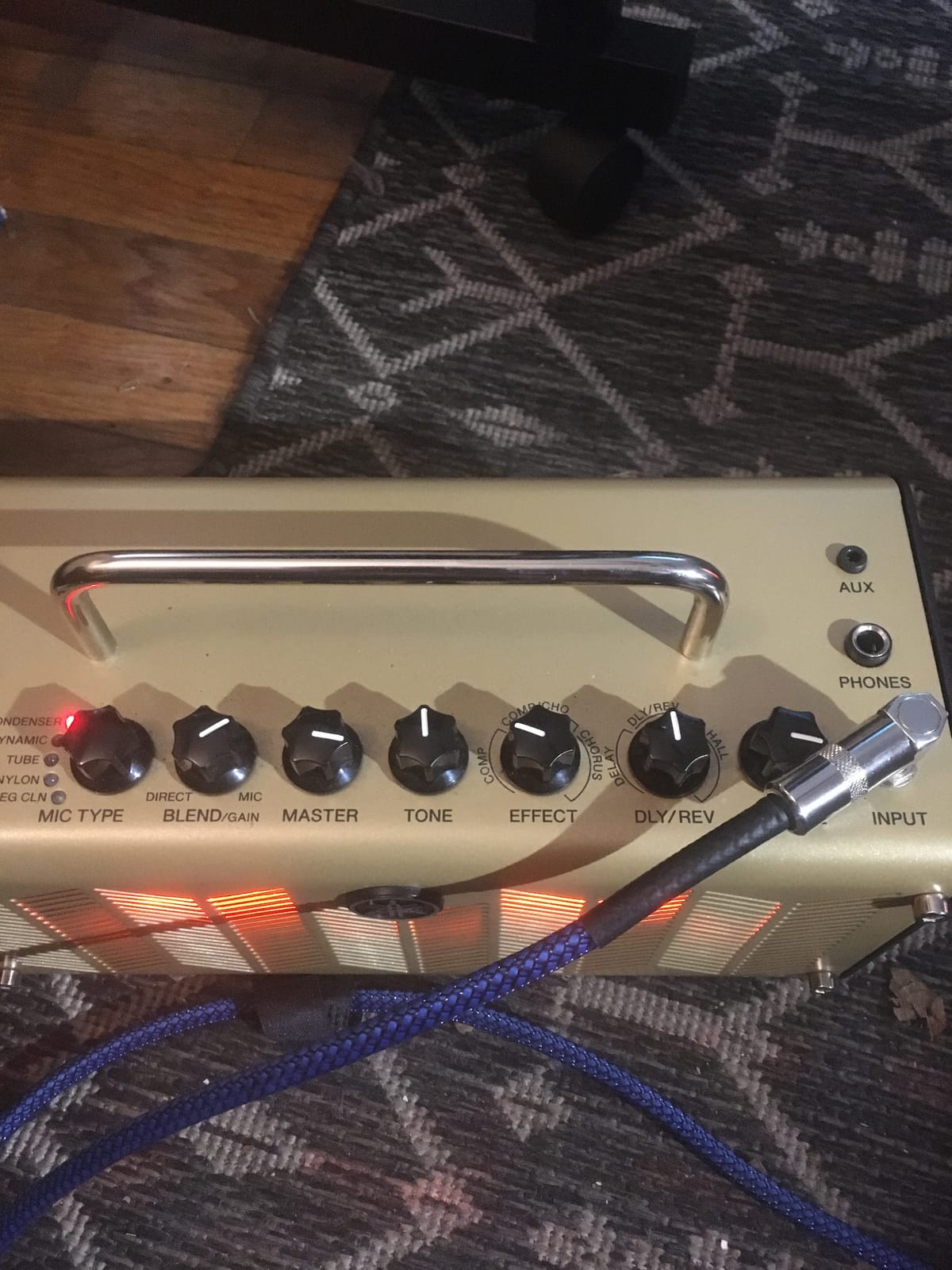
It runs on an AC adapter or batteries, so placement is genuinely flexible, and the USB connectivity allows recording to a computer. The stereo presentation is unusually wide for a 3 inch speaker, which is where the AV division work shows.
The important caveat is power. Despite the 10 watt class naming, the actual output is 5 watts, which makes this a quiet, near-field or headphone amp rather than a room-filling one. Our guide to the best acoustic guitar amps covers the options if you need more projection.
Who the Yamaha THR5 suits
It suits players in a very small room or a shared flat where a floor combo is a problem. It suits anyone who listens near-field with headphones or at low volume, because the hi-fi stereo imaging is designed for exactly that distance.
It also suits players who want to move the amp between rooms easily, since it runs on batteries as well as mains power.
Who the Yamaha THR5 does not suit
It does not suit anyone who wants to fill a room with sound. Five watts through a 3 inch speaker is a very small envelope, and the bass and maximum volume are both limited accordingly.
If you want the modeling and stereo character at a usable volume, step up to a larger desktop amp rather than pushing this one to its limit.
What Size Amp Do I Need for Home Practice?
The flat rule of thumb: 5 to 20 watts for a bedroom, 20 to 50 watts if you also rehearse or gig. Louder is not simply a bigger number, because perceived loudness does not scale with wattage.
This is the part most buyers get wrong. A 10 watt amp is not ten times quieter than a 100 watt amp; it is roughly half as loud. That single fact is why a 10 watt combo can sound more usable in a flat than a 40 watt one, and why wattage on the spec sticker is a weak guide to whether an amp suits a room.
Wattage also describes headroom, not loudness. More watts means the amp stays clean when you push the volume up, and it means the speaker has enough cone area to move air. For home practice, the question is how far into the clean range you will ever go.
How to pick a wattage band
At 5 watts you are choosing near-field and headphone playing, or a very small room. The Spark GO and the Yamaha THR5 sit here, and both are quiet enough to practise at midnight.
Between 10 and 15 watts is the sweet spot for a bedroom or a small flat. The Frontman 10G, Vox Pathfinder 10, Marshall MG10G, Orange Crush 12, Katana Mini and JOYO JAM Buddy II all live here, and none of them will fill a room with a band.
From 25 to 50 watts you are buying rehearsal headroom. The Mustang LT25 and Fender Champion II 25 cover practice plus a band room, while the LyxPro 40W and Monoprice Stage Right 1×10 are genuinely loud. That is fine in a house or a basement but not behind a shared wall.
Speaker size matters more than people expect. A 10 inch speaker at 40 watts will have more bass and more clean headroom than a 6 inch speaker at 12 watts, but it also takes up floor space and moves more air through the wall. A 4 inch speaker is a headphone amp with a grille cloth on it.
Tube vs Solid State vs Modeling Amps Explained
A tube amp uses vacuum tubes for the signal path and produces its distortion as the signal pushes past the tube’s headroom, which is why it compresses and breaks up gradually. A solid-state amp uses transistors, stays cleaner as you turn up, and needs a volume knob to get anywhere near overdrive. A modeling amp recreates both of those sounds digitally.
That is the entire argument, and for home practice in 2026 it comes down to reliability against feel. Every amp in this roundup is solid state or modeling, which is a deliberate choice rather than an oversight.
Which type sounds most like a tube amp
Among solid-state designs, the ones built with a high-endurance topology and a quality speaker land closest, and the Orange Crush 12 and Vox Pathfinder 10 are the two here whose clean channels read as characterful rather than neutral.
Among modeling amps, the Yamaha THR5 is the most overtly hi-fi, and the Fender Mustang LT25 wins on breadth of amp voices rather than on a single perfect clone. Players who care most about a natural, unprocessed feel generally gravitate to the fully analog Pathfinder.
Are modeling amps as good as tube amps
For home practice, the gap has effectively closed. The long-standing consensus in player communities is that a tube amp is not required unless you are primarily recording or need very low volume, and the quality of non-tube systems has improved to the point where the honest answer is that the difference is now about preference rather than capability.
What tube amps still do that these do not is break up at very low listening levels, because the distortion happens in the circuit rather than being simulated at a set volume. The usual workaround is a power attenuator or power scaling, which most low-watt tube designs include. We cover those in more detail in our guide to tube amps.
How to Keep the Neighbours Happy
The single loudest anxiety in player communities is not tone, it is volume through a shared wall. The practical answer is a combination of a lower wattage amp, a closed-back or headphone position, and playing at sensible hours.
Start with the cabinet. Most practice amps use an open-back cabinet, which radiates sound forward and to the sides, directly into the wall shared with your neighbour. Turning the amp to face away from the weakest wall, or placing it near the far corner of the room, makes a measurable difference before you touch the volume knob.
Then use the headphone output more than you think you need to. All twelve amps in this roundup have one, and the Orange Crush 12 and Fender Champion II 25 both add a cabinet simulation so the headphone sound is not thin.
Finally, be honest about power. Buying a 40 watt amp and then only using volume level two because of the neighbours means you paid for power you are afraid to use. The Marshall MG10G at 10 watts with two channels is a better neighbour than a 40 watt single-channel amp, and the Katana Mini on battery is quieter than either because nothing is leaking through a wall at all.
On timing, most complaints in player threads are about late-night volume rather than daytime volume. A 12 watt amp used at 9pm is a very different proposition from the same amp at 1am.
Used vs New Guitar Amps: Where Practice Amps Are Best Value
Used is often the better value, particularly for tube amps, because the components that age are well understood and replaceable. But the second-hand market rewards a specific checklist, and it is worth running through before you commit.
On a used tube amp, listen for hum and buzz first, because a healthy tube amp has a low hum and no intermittent buzz. Buzz that comes and go usually means a failing capacitor or a loose connection. Ask whether the previous owner had the bias and power tubes replaced, and whether the speaker is original, since a mismatched impedance can quietly cook a new set of output tubes.
Check for modifications. Extra holes in the chassis, a replaced power switch or an added effects loop all mean someone has been inside it, which is not automatically bad but does change the value. Also ask about the speaker: a re-covering or a swapped driver is common and usually fine.
For solid-state and modeling amps the risks are different and smaller. Check the knobs for scratchiness, the jacks for intermittent crackle, and the power supply, which is the most common failure in older budget amps and often the cheapest repair.
None of the twelve amps in this roundup are tube designs, so a secondhand tube amp is a different purchase conversation. Buying new at the entry level keeps you with a warranty, which matters if you are not sure how long you will keep playing.
How We Picked and Verified These Amps
We compared twelve amps on published specifications and on owner feedback volume, and we weighted the long reviews more heavily than the short ones. Ratings and review counts in each product card are copied directly from the retailer listing rather than estimated.
Every spec we quote, from wattage and speaker size to weight and dimensions, comes from the manufacturer’s published data. Where owner feedback contradicts the spec sheet, we said so in the write-up rather than repeating the marketing.
What we did not do is play all twelve in a treated room with measurement gear, so treat the tone descriptions as a distillation of owner experience rather than a lab result. The consistency of what thousands of owners say about an amp is a reasonable proxy, but it is not a microphone in a room.
Every pick also carries a stated limitation, because an amp that is good at everything at this level does not exist.
Frequently Asked Questions
What is the best guitar practice amp for home use?
The Fender Mustang LT25 is the best guitar practice amp for most home players. It rates 4.8 stars across more than 4,000 reviews, runs 25 watts through an 8 inch speaker, and offers 30 presets plus USB and headphone outputs. Beginners get a usable sound immediately, and anyone who also rehearses in a band has enough headroom.
What is a good size guitar amp for home use?
A good size for home use is 5 to 20 watts. Five watts suits near-field and headphone playing in a very small room, 10 to 15 watts is the sweet spot for a bedroom or flat, and 25 watts or more is worth buying only if you also rehearse with a band. Remember that 10 watts is roughly half as loud as 100 watts, not ten times quieter.
Should I get a tube amp or solid state amp?
For home practice, a solid state amp is usually the better buy. It needs no warm-up, has no tubes to replace, weighs less and costs less to run. A tube amp is worth it if you break up tones at very low volume or record primarily, since the distortion happens in the circuit. A power attenuator or power scaling is the feature to look for if tubes matter to you.
Are modeling amps as good as tube amps?
For home practice, the gap has effectively closed. Modeling amps now reproduce tube-style clean and overdrive tones convincingly at a fraction of the weight and cost, and player consensus no longer requires tubes for everyday use. The remaining difference is that real tubes compress and break up as the signal rises, which modeling simulates rather than reproduces at very low volumes.
Which solid state amp sounds most like a tube amp?
Among solid-state designs, amps with a high-endurance output stage and a quality speaker land closest to tube behaviour. In this roundup the Orange Crush 12 and the fully analog Vox Pathfinder 10 both produce characterful, compressing tones from a small speaker, and the Pathfinder goes furthest because it has no digital processing anywhere in its signal path.
How many watts do I need to practice at home?
Between 5 and 20 watts covers almost all home practice. Perceived loudness does not scale with wattage, so 10 watts is roughly half as loud as 100 watts, not ten times quieter. Choose 5 watts for a very small room or headphone playing, 10 to 15 watts for a bedroom, and 25 watts or more only if you rehearse with a band.
Is a practice amp worth it for a beginner?
Yes, because the amp decides how your guitar actually sounds and a flat, thin practice tone is a common reason beginners give up. For a first amp, look for two channels, a headphone output and simple controls rather than preset count. The Fender Mustang LT25 covers growth, while the Marshall MG10G is a cheaper two-channel starting point.
Can I play an acoustic guitar through a guitar amp?
You can, but it needs the piezo output of an acoustic-electric rather than a magnetic pickup, and the tone will be thin and feedback-prone without guidance. Look for an amp with an acoustic or piezo input channel, an EQ with a presence control, and enough headroom. Battery-powered desktop amps and practice combos handle acoustic volume levels better than a large floor combo.
Final Verdict: Which Home Practice Amp Should You Buy
Buy the Fender Mustang LT25 if you want one amp that covers practice, recording and the occasional rehearsal without changing. It is the highest rated pick here, it has the widest feature set, and the USB connection means it grows with you rather than running out of road.
Buy the Fender Frontman 10G if you want the simplest possible introduction to electric guitar at the lowest sensible outlay, and you are happy to add pedals later. Buy the Orange Crush 12 if tone character matters more to you than preset count.
For a shared wall, drop to the 10 watt class and use the headphone output. For a very small room, the Positive Grid Spark GO or the Yamaha THR5 solve the problem entirely. Whatever you choose, pick the wattage that matches your walls rather than the wattage that matches your ambitions.
These are the best guitar amps for home practice in 2026, and every one of them comes with a limitation we have told you about up front. That is how you avoid buying twice.