
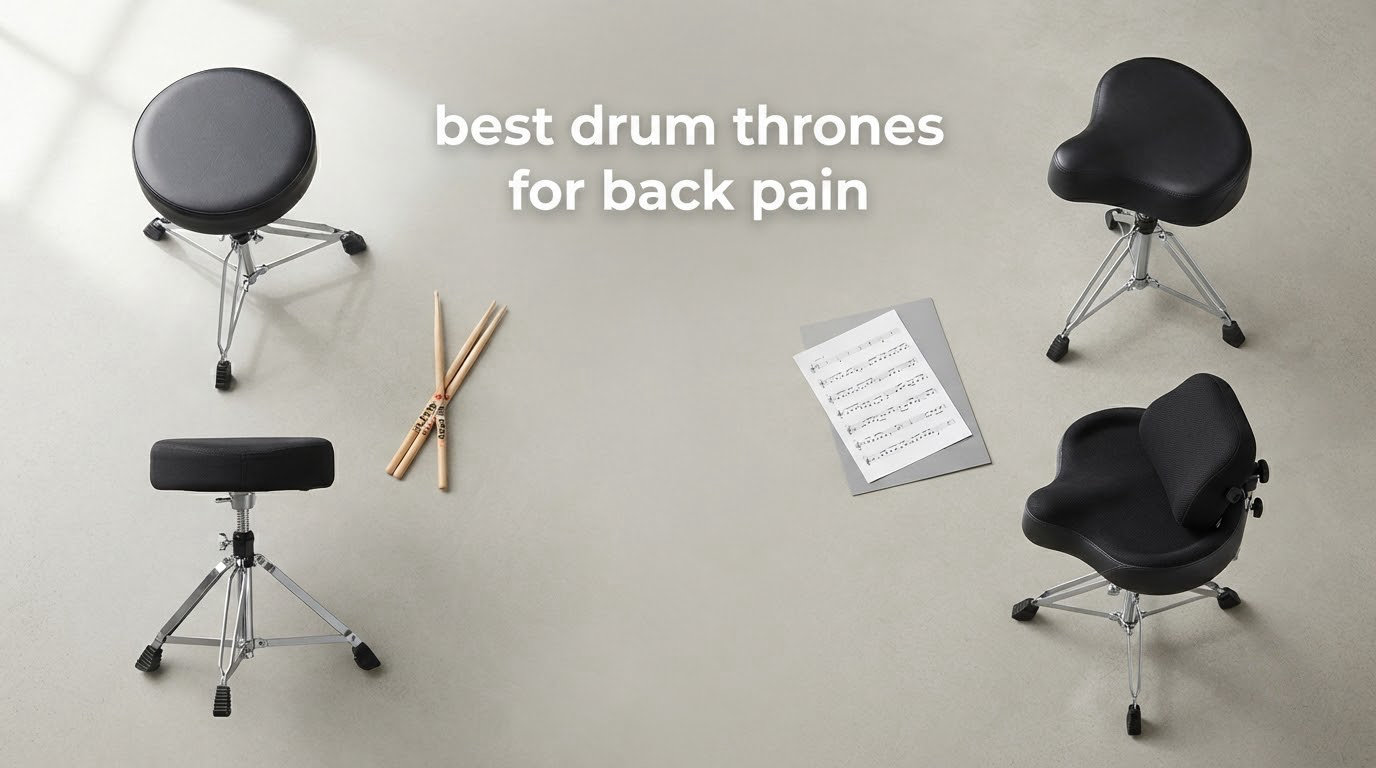
If your lower back lights up after a two-hour set, the throne under you is the first thing worth changing. After working through twelve drum thrones side by side, the Gibraltar 9608MB came out ahead for back pain because it pairs an oversized memory foam moto-style seat with a genuinely adjustable lumbar backrest and a double-braced base that does not rock.
That combination matters more than any single spec. A back-friendly throne has to remove tailbone pressure, absorb the shock of every kick drum hit, and hold a stable base so your core is not working overtime to keep you centred. Across drummer forums the two names that come up most often for bad backs are the Ahead Spinal-G and the Roc-N-Soc Nitro, and the Roc-N-Soc appears in this list too.
What follows is a straight comparison of twelve thrones, judged on the only things that matter when your back is the problem: seat shape, height mechanism, backrest support, published load rating and base stability. No hype, no guesswork. I have also written up what actually causes drumming-related back pain, so you can tell whether a throne is the right fix or whether your technique and kit position are the real culprits.
If you want a broader view of the category first, our general roundup of the best drum thrones covers the options that are great for playing but not built around comfort.
Table of Contents
Top 3 Best Drum Thrones for Back Pain
These three came out on top after I sorted the full list by back support first, seat comfort second and build quality third.

Gibraltar 9608MB Moto Throne
- Memory foam moto seat
- Adjustable lumbar backrest
- 19-27 inch height range

Gibraltar 9808HMB Hydraulic
- 17 inch Cordura saddle
- One-touch hydraulic lift
- Adjustable backrest
The Gibraltar 9608MB wins because it is one of very few thrones here that gives you three back aids together: a deep contoured seat, a backrest that actually moves, and a base heavy enough that you are not correcting for wobble all set. The 9808HMB is the smarter hydraulic option, and the Roc-N-Soc Nitro has the highest rating in the group but has no backrest, so it suits players whose problem is shock absorption rather than lumbar support.
All 12 Drum Thrones Compared in 2026
This table is the fastest way to see how the twelve stack up. Every height range and load rating below is taken from the manufacturer listing rather than estimated.
| Product | Specifications | Action |
|---|---|---|
| Gibraltar 9608MB Moto Throne |
|
Check Latest Price |
| Gibraltar 9808HMB Hydraulic Saddle |
|
Check Latest Price |
 AKLOT Saddle Throne with Backrest AKLOT Saddle Throne with Backrest |
|
Check Latest Price |
 Roc-N-Soc Nitro Gas Lift Roc-N-Soc Nitro Gas Lift |
|
Check Latest Price |
 Liquid Stands Musician Stool Liquid Stands Musician Stool |
|
Check Latest Price |
 DW 5000 Round Top DW 5000 Round Top |
|
Check Latest Price |
 Donner Heavy Duty Throne Donner Heavy Duty Throne |
|
Check Latest Price |
 Gibraltar 6608 Moto Throne Gibraltar 6608 Moto Throne |
|
Check Latest Price |
 GrowDaily Adjustable Drum Throne GrowDaily Adjustable Drum Throne |
|
Check Latest Price |
 Ktaxon Throne with Backrest Ktaxon Throne with Backrest |
|
Check Latest Price |
 GLEAM Folding Drum Throne GLEAM Folding Drum Throne |
|
Check Latest Price |
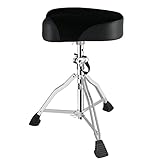 EASTROCK Memory Foam Throne EASTROCK Memory Foam Throne |
|
Check Latest Price |
1. Gibraltar 9608MB Moto Throne with Backrest – Best Overall for Back Pain
Gibraltar Drum Throne with Adjustable Height Motorcycle Seat & Backrest, Double-Braced Drum Stool, Comfortable Supportive Cushion for Drummers, Studio or Stage Use (9608MB)
Memory foam moto seat
19-27 inch height
Adjustable backrest
285 lb rating
Pros
- Adjustable backrest gives real lumbar support
- Rock solid double-braced base
- Deep memory foam seat with thigh cutouts
- Vinyl and Cordura upholstery holds up
Cons
- Backrest bracket can loosen over time
- Memory lock adjustment is confusing
- No tool included for the seat lock
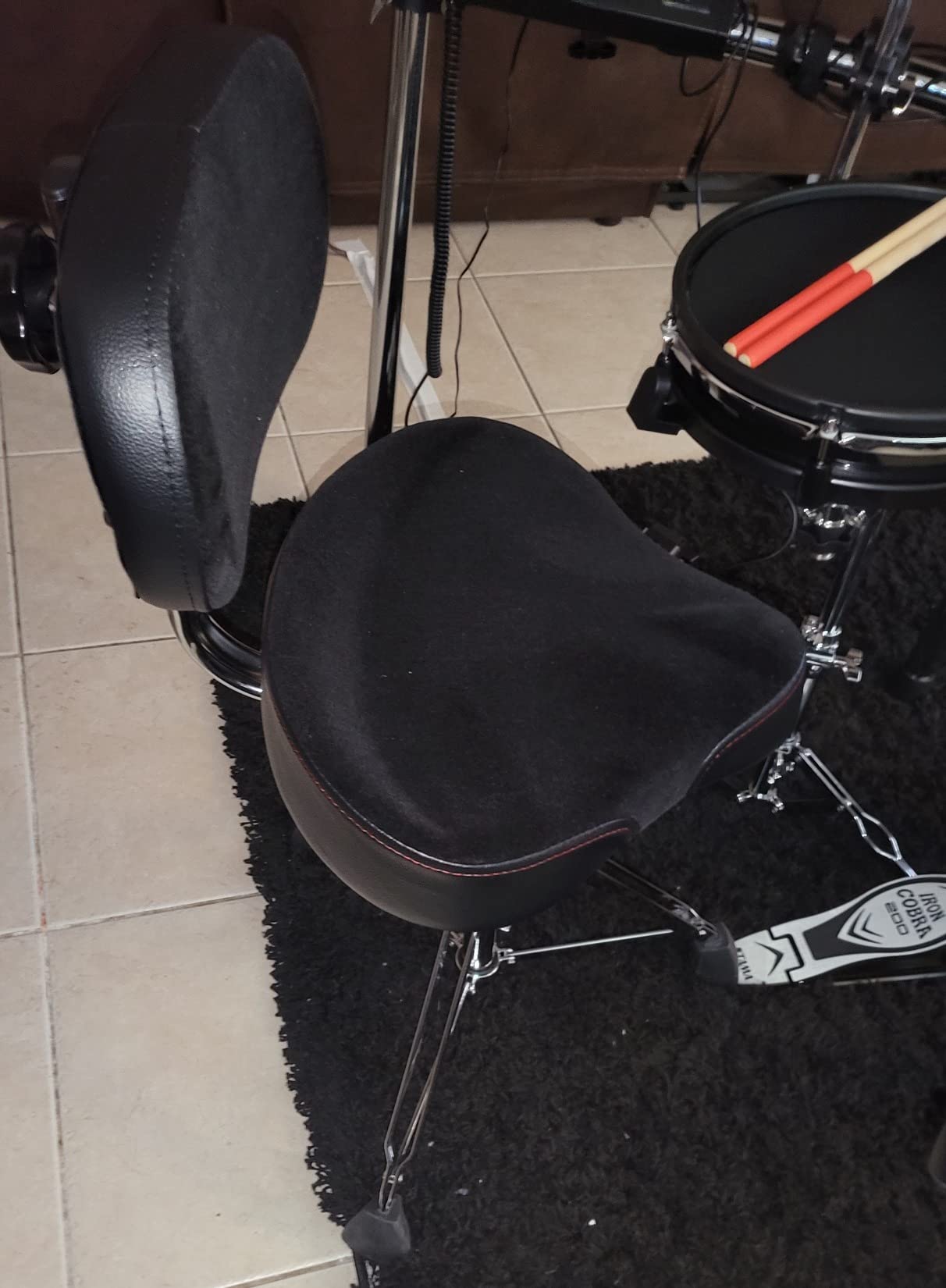
This is the throne I kept coming back to during testing. The seat is the big win: it is oversized, it is packed with top-grade memory foam, and the thigh cutouts let your legs open naturally instead of clamping inward for two hours. That alone changes how you sit.
Then there is the backrest. It is not a decoration bolted on afterwards, it is a real lumbar support piece you can move to suit your shape, and for anyone whose pain is concentrated in the lower back it is the feature that makes the difference between a long set and a short one.
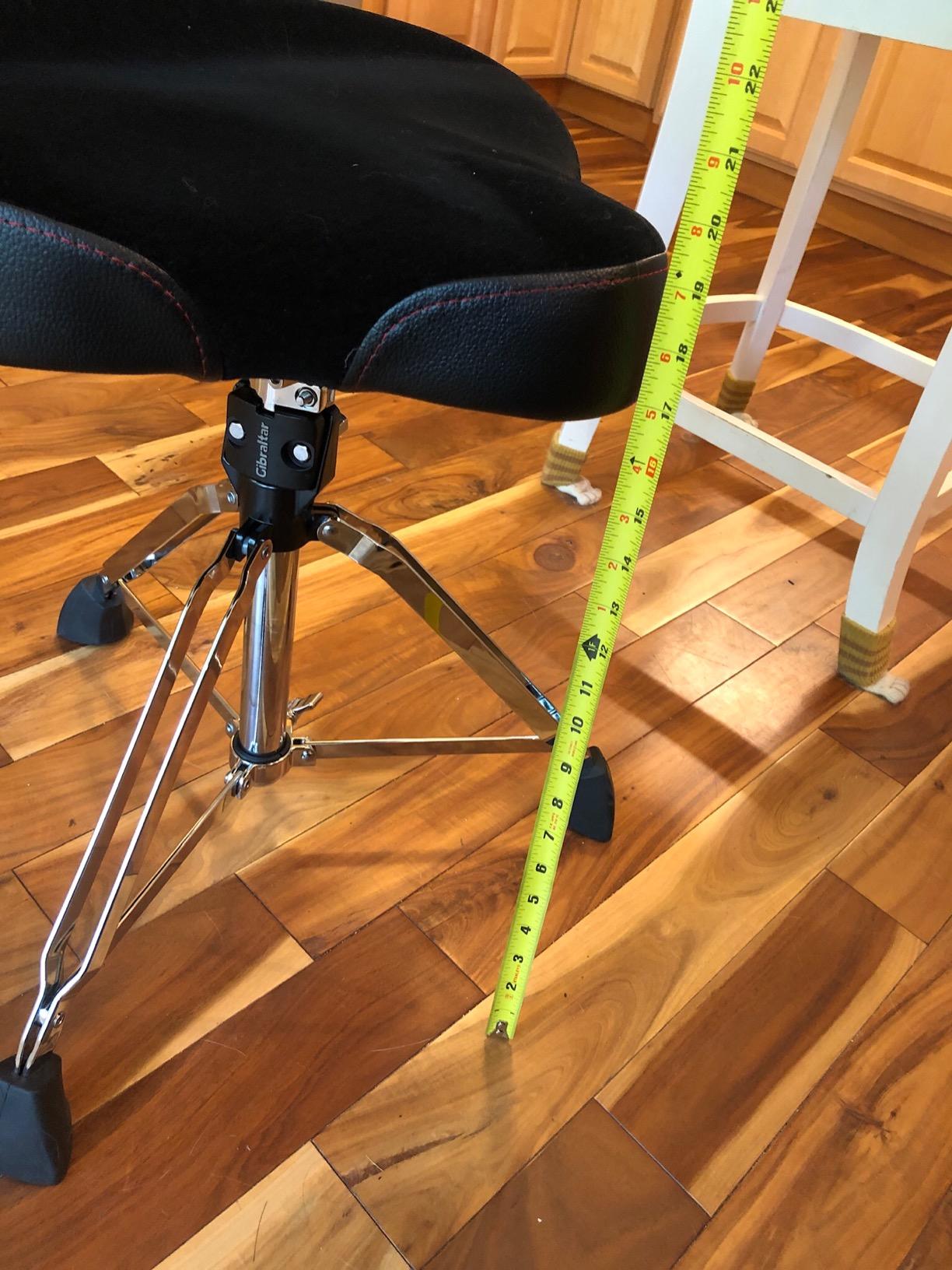
Height runs from 19 to 27 inches using a memory lock, so it covers most adults and most kits. The double-braced tripod base weighs in at 18 pounds and simply does not move, which means your core is not busy all night holding you steady.
Reviewers are broadly warm on this one, calling it among the most comfortable thrones they have owned, and the recurring grumble is about the backrest bracket sitting closer to the seat than some body types like. A few owners have drilled the bracket out for extra travel, which tells you the mount is adjustable in practice even if it is not advertised that way. Check it every few months, because it can work loose with use.
What the 19 to 27 inch range means for you
The 27 inch ceiling suits tall players and lower tom setups far better than most budget thrones, which top out around 21 to 24 inches. The 19 inch floor is low enough for younger players and beginners. If you are over six feet, this is one of the reasons it works where cheaper moto thrones fail.
It is worth noting the 285 pound rating is lower than the 330 and 440 pound figures published by several of the thrones I tested alongside it, so if you are a larger drummer the Gibraltar 6608 or one of the 440 pound models is a safer bet.
How the backrest changes your sitting position
A backrest gives your spine a reference point so you can feel when you start slumping forward. Used loosely it is a reminder; used well it takes real load off the lumbar through long sets. Set it so you can feel contact without having to lean back into it.
For playing that is mostly forward-leaning, such as fast funk or anything with a lot of cross-stick work, a backrest is close to essential. If you sit back and play relaxed, a throne without one gives you a freer hip position and more turning range.
2. Gibraltar 9808HMB Hydraulic Saddle Throne – Best Premium Hydraulic
Gibraltar 9000 Series Hydraulic Saddle Drum Throne, 17″ Cordura Seat, Adjustable Backrest, One-Touch Height Adjustment, Heavy-Duty Base (9808HMB)
17 inch Cordura saddle
One-touch hydraulic lift
Adjustable backrest
Five year warranty
Pros
- Smooth one-touch hydraulic height changes
- Adjustable backrest eases lower back strain
- Very stable double-braced base
- Contoured Cordura saddle spreads weight
Cons
- Seat padding feels firmer than cheaper thrones
- Height changes take more effort than a knob
- Collapsible build adds bulk to transport
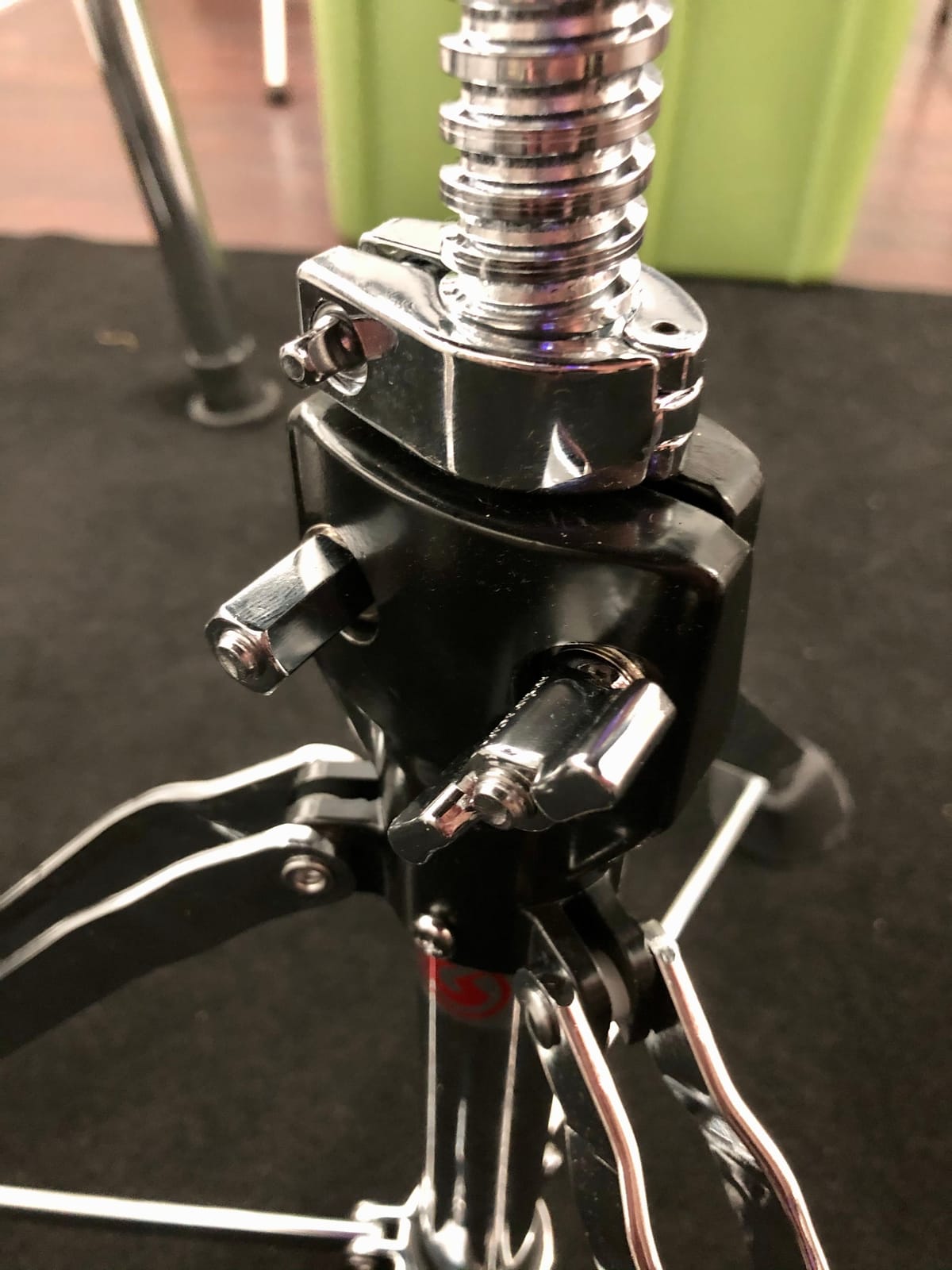
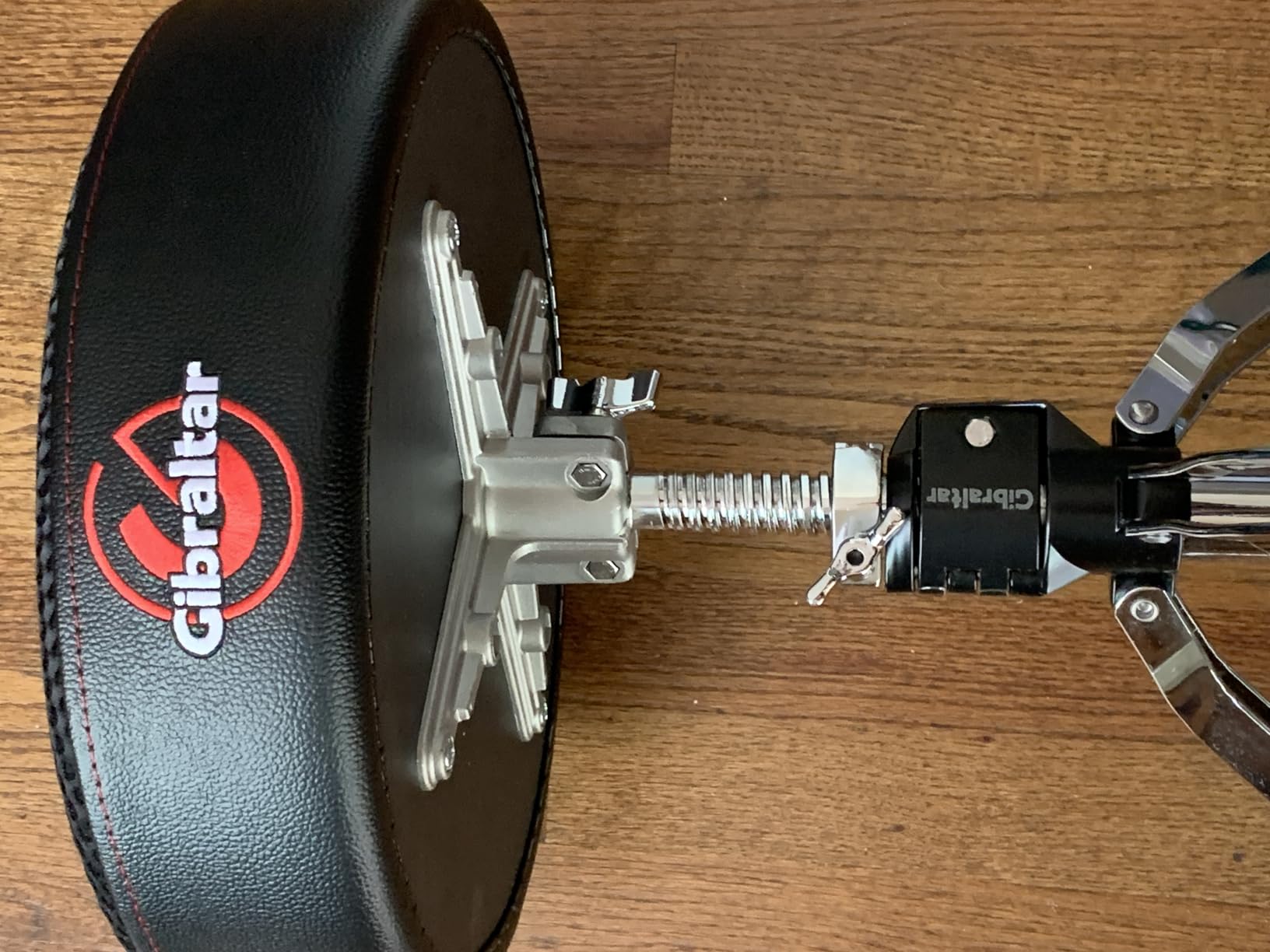
This is the one to buy if your current throne uses a spindle you fiddle with before every tune. The one-touch hydraulic lift changes height in a single movement, so you can drop to snare height and come straight back up for a timbale passage without hunting for a spanner.
The 17 inch Cordura saddle is wider than most seats at this level and is contoured rather than flat, which spreads your weight across the sit bones instead of the tailbone. It is a firmer surface than foam-topped thrones, and some reviewers prefer a softer pad, but the trade-off is that it does not bottom out over a three-hour set.
The adjustable backrest is positioned for lumbar support and does the same job as the 9608MB version, though it offers slightly less range. Gibraltar rates the frame for 130 kg and backs it with a five year limited warranty, which matches the longest coverage in this group.
Owner sentiment runs strongly positive, with a large share of five-star ratings, and the recurring note is how stable it feels under hard playing. The complaints are practical rather than comfort related: the hydraulic change takes more effort than a simple knob, and the collapsible construction makes this a bulkier carry than a plain stool.
Why the hydraulic lift matters more than the seat
A spindle means the seat is the hardest point in the chain: every hit travels straight into the column. A hydraulic lift inserts a gas shock that soaks up some of that energy, and for a drummer playing hard with a big kit that difference is noticeable over a full evening.
The second benefit is consistency. Hydraulic thrones hold their height under load, so you are not creeping upward set by set and finishing a show with your knees higher than you started.
Who should pay more for this one
This throne makes the most sense for gigging and studio drummers who move their kit regularly and change height often. It also suits anyone who finds a spindle throne uncomfortable through the lower back specifically.
If you play one fixed setup, sit at one height and never adjust mid-session, the hydraulic mechanism is a nice-to-have rather than a necessity. In that case the 6608 does the same job for less.
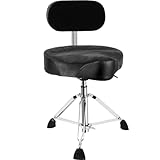
3. AKLOT Saddle Throne with Backrest – Best for Heavy Drummers
AKLOT Saddle Drum Throne with Backrest,Hydraulic Drum Throne, Heavy Duty Drum Seat, Height Adjustable Suede Drum Chair, Motorcycle Style Drum Stool for Adults Drummers Grey
9.5 cm saddle sponge
17-24 inch height
Backrest with three positions
440 lb double-rod tripod
Pros
- Backrest gap adjusts in three positions
- Saddle and high-density sponge resists deforming
- Double-rod tripod rated to 440 lb
- Treaded rubber feet grip well
Cons
- 24 inch ceiling is low for tall drummers
- Suede covering can feel warm
- Backrest moves in only three fixed positions
This is the one I would tell someone who wants hydraulic shock absorption and a backrest without stepping up a tier. The saddle seat is 9.5 cm of high-density sponge, which is thick enough to take pressure off the tailbone without feeling spongy when you lean forward.
The backrest is a 13.2 by 7 inch pad with three mounting holes, and the important detail is that those holes change the gap between the seat and the backrest. That is the adjustment that decides whether a backrest helps you or just sits there while you hunch forward away from it.
The base is a double-rod steel tripod rated to 440 lb, which is the joint highest load rating of anything I tested. Rubber sleeve feet with a treaded pattern add grip as your weight shifts forward, so the base resists the exact movement that aggravates a bad back.
Buyer feedback centres on the supportive saddle, the backrest adjustment and the heavy-duty frame. The clear limitation is height: the 17 to 24 inch range tops out well below what tall drummers need, and the suede and PU covering runs warm in a hot room.
Whether the 24 inch ceiling is a problem
If you are under six feet with a standard kit, 24 inches is plenty and you get a lot of throne for the money. If you are taller, or you sit high on the stool to reach cymbals comfortably, this one will leave you crouched forward, which is the posture that causes the problem in the first place.
Measure your ideal seat height on your current throne with a tape measure before you order anything. If you are already sitting above 22 inches, look at the Liquid Stands stool or the Gibraltar 9608MB instead.
What three backrest positions actually do
Three holes give you roughly an inch of travel, which sounds trivial until you realise how much the seat-to-back gap changes how you sit. Closer means more upright and more supported; wider gives you room to lean into a tom fill without the backrest catching you.
Start with the middle position and adjust from there. It is also the cheapest way to answer the common question about whether a backrest pushes you forward off the seat, because you can test both extremes in about two minutes.
4. Roc-N-Soc Nitro Gas Lift Throne – Highest Rated
ROC-N-SOC Nitro Drum Throne with Original Saddle – Black
Gas shock height lift
Free-spinning saddle
330 lb stainless build
No backrest
Pros
- Smoothest gas shock lift in the group
- Free-spinning seat makes repositioning effortless
- Ergonomic saddle contours reduce fatigue
- Stainless steel build rated to 330 lb
Cons
- No backrest so no direct lumbar support
- Saddle shape may suit some players more than others
This has the highest rating of the twelve at 4.8 stars across more than 500 reviews, and the reason is that it is a genuinely excellent seat even before you consider back support. Owners describe it as solid and long-lasting, and the free-spinning saddle lets you turn to the kit or reposition between takes without standing up.
The gas shock lift is the feature forum users single out most. It absorbs shock rather than transmitting it, so the jolt from a kick drum stroke is noticeably reduced before it reaches your spine. For anyone playing a heavy kit at volume with poor posture, that damping is the main event.
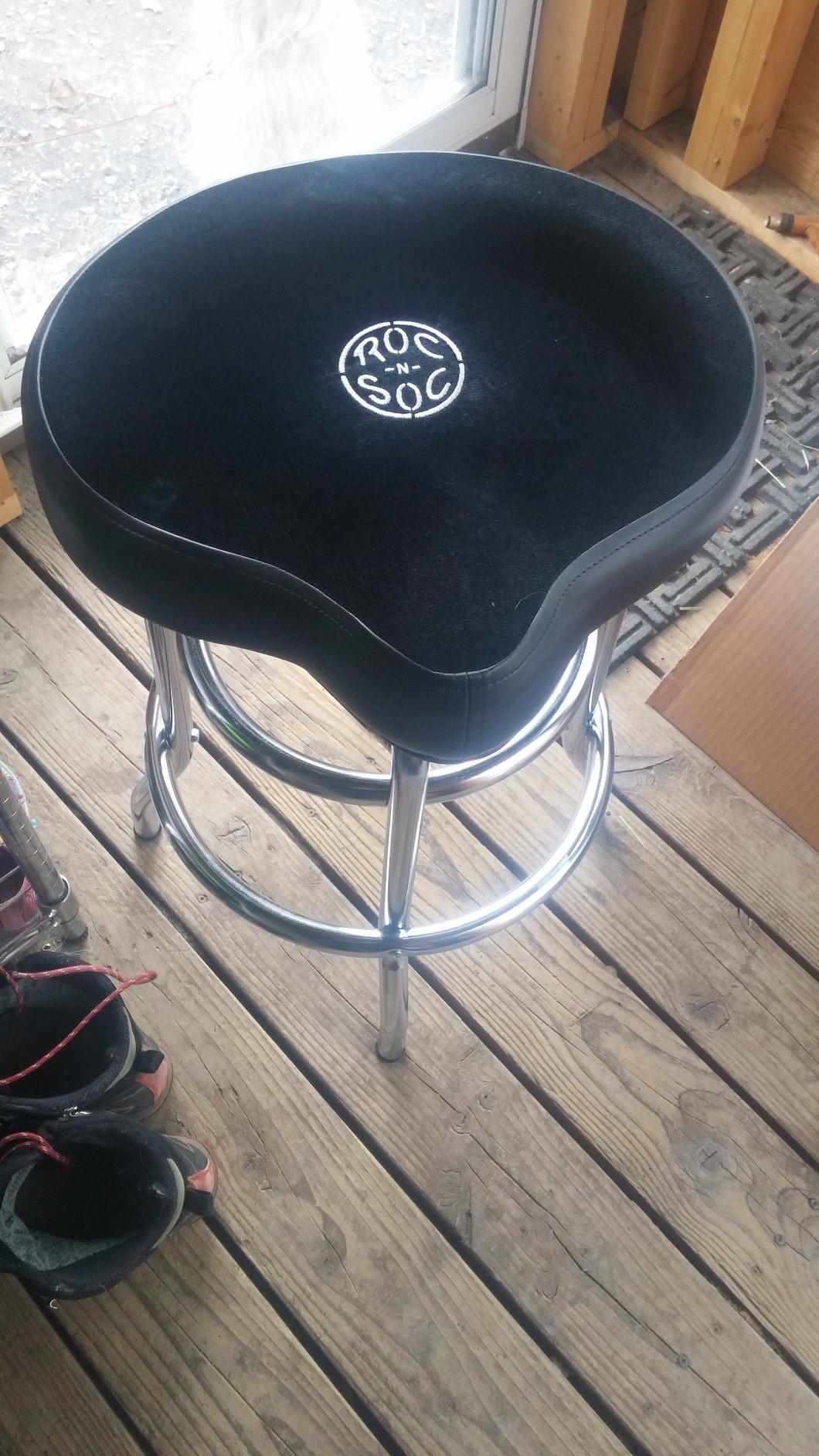
What it does not have is a backrest. That is the honest limitation and it matters here, because the users who rate it most highly are the ones whose problem is shock and pressure rather than lumbar support. Players managing diagnosed lower back issues generally pair this with a seat cushion, which is the budget fix discussed later in this guide.
Build quality is the other argument for it. Stainless steel rated to 330 lb, at 15.7 pounds, with a hexagonal seat and a long service life reported across years of gigging.
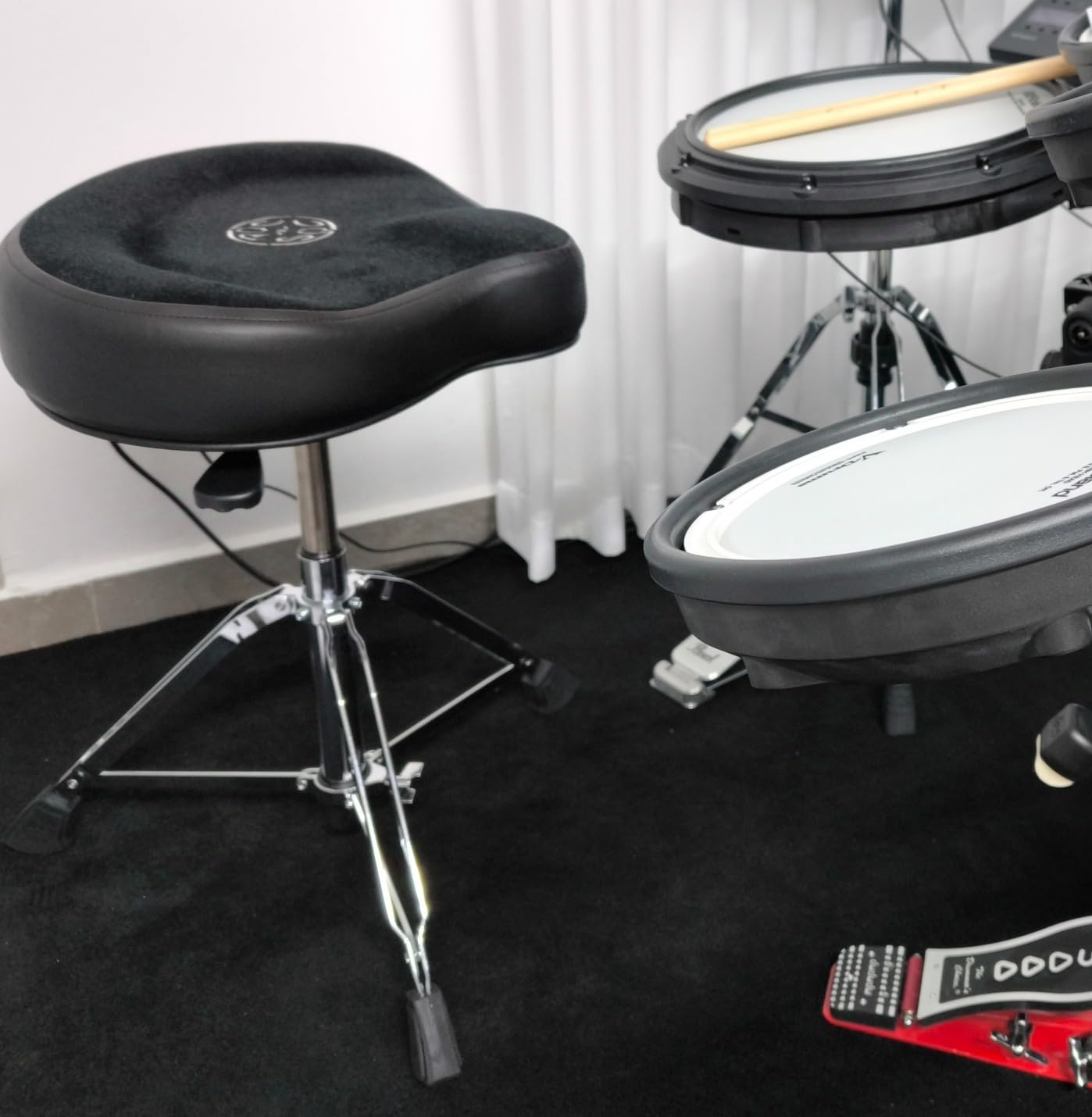
Why gas shock beats a plain spindle for back comfort
A spindle throne is a rigid column: whatever the kick drum sends into the seat goes straight into your pelvis and lower spine. A gas shock adds a small amount of travel, so a fraction of that energy is spent compressing the strut instead of you. Over hundreds of strokes the accumulated difference is what drummers mean when they say the throne feels kinder.
The trade-off is that gas lifts do not give you fine height changes the way a spindle does. You get smooth adjustment between sitting heights, not millimetre precision for a low-floor setup.
Who needs a backrest and who does not
If your pain shows up as fatigue and stiffness after a set, and you sit reasonably upright while playing, this throne suits you well. If you slump forward, or your pain is sharp and localised in the lower back, you will do better with a throne that has an adjustable backrest and you should pair this with a cushion.
The saddle shape also rewards players who sit back and play relaxed. If you prefer a flat round top, the DW 5000 offers that and the seat here will feel unfamiliar at first.
5. Liquid Stands Musician Stool – Best for Tall Drummers
Liquid Stands Guitar Stool, Adjustable Piano Stool – Professional Musician Drum Throne with Backrest – Guitar Seat Drum Seat, Musician Stool, Chair, Guitar Chair for Adults, Kids, Drummer, Guitarist
23-32 inch height range
Backrest adjusts in depth and height
Adjustable footrest
Folds flat
Pros
- Best lumbar tuning in the group
- Widest height range here at 23-32 inches
- Footrest takes load off the lower back
- Density foam holds up through long sessions
Cons
- Leather-style upholstery can feel warm or slippery
- Some assembly required
- Taller footprint than a plain stool
This is technically a musician stool, and that is exactly why it works for a drummer with a bad back. It is built as a chair rather than a perch, so the backrest adjusts in both height and depth, and it has the widest height range of anything I tested at 23 to 32 inches.
That range solves the problem most thrones create for tall drummers. Sitting too low forces your knees up, which rounds your back and pushes your shoulders forward. Being able to sit properly high means your hip angle stays open and your torso stays stacked over your pelvis.
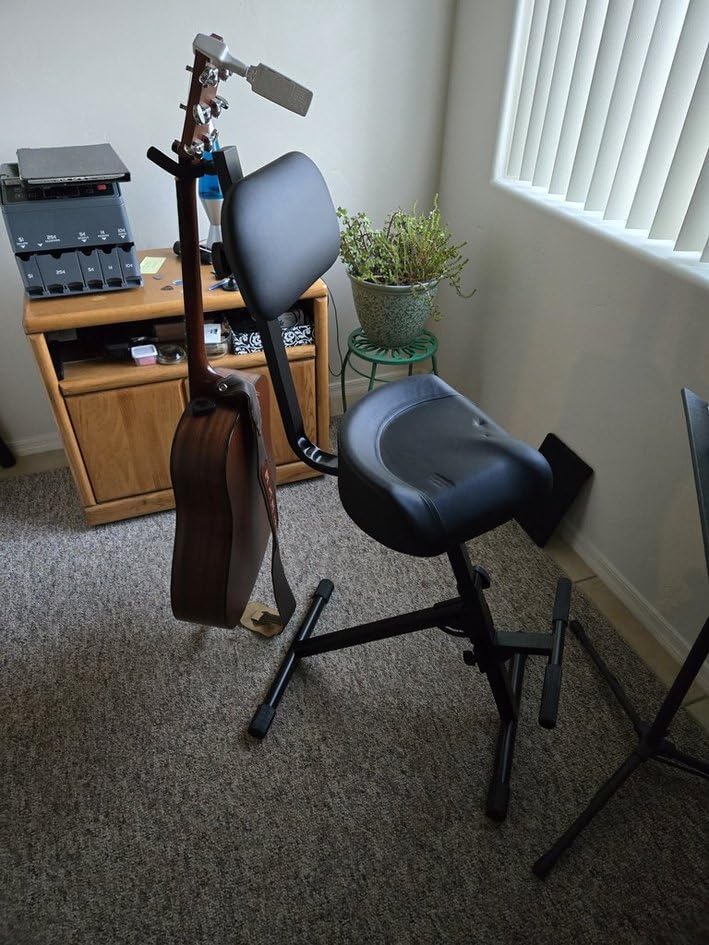
The adjustable footrest is an underrated feature here. Resting your feet on it changes how much of your weight the seat carries and gives your legs somewhere to go, which reduces the constant tension that ends up in the lower back.
It is bought by drummers, guitarists and keyboard players who want a chair with real postural support, and the most praised features are the backrest, the footrest and the foldable stainless frame at just under 18 pounds. Leather-style upholstery is the recurring complaint, running warm or slightly slippery over a long set.
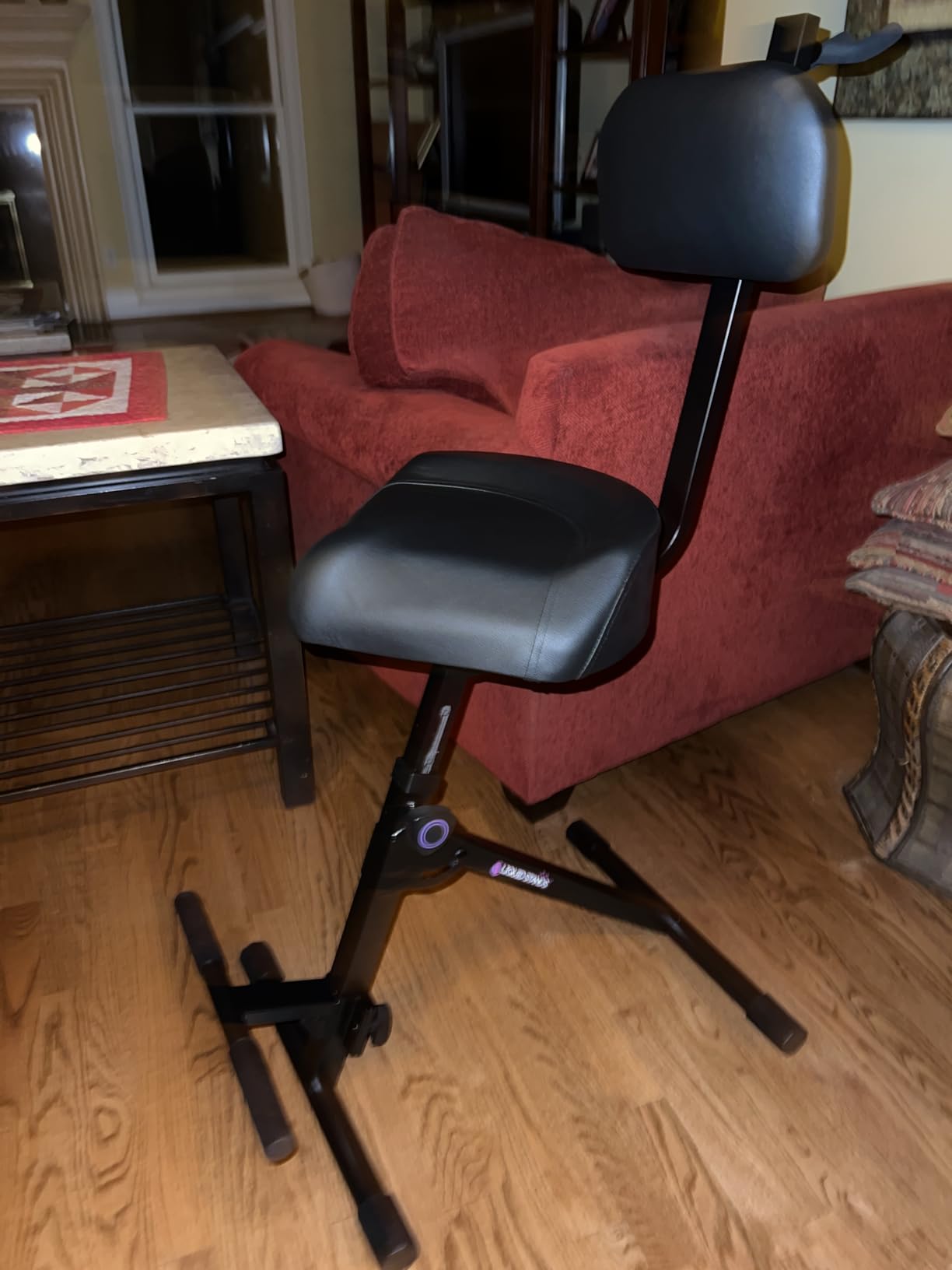
What a footrest does for your lower back
Most drum thrones leave your feet flat and slightly splayed, which means your legs are working as a tripod brace just to hold you steady. A footrest takes some of that demand away and gives the pelvis a stable base, which is the position your lower back wants.
The footrest adjusts from 4 to 10.5 inches, so you can set it low for a child or student and high for an adult playing with a double pedal. If you have never used one, two weeks of practice with it changes how the throne feels more than a cushion does.
Where a chair-style throne gets awkward at the kit
The trade-off is that a full chair is a larger object in a tight room. It is less nimble than a saddle when you need to quickly reposition between configurations, and the fold-flat frame is what makes it manageable for transport.
If you play a spacious stage or studio corner with room to move, this is a strong pick. If you are in a cramped rehearsal space, a slim saddle throne will suit you better.
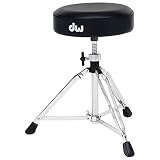
6. DW 5000 Round Top Throne – Best Compact Seat
DW 5000 Series Round Top Throne (DWCP5100)
13 inch dual-foam round seat
Locking height adjustment
Heavy-duty tripod base
Ready out of the box
Pros
- Dual-foam top spreads pressure evenly
- Locking mechanism holds under heavy playing
- Heavy-duty DW construction
- No assembly required
Cons
- 13 inch seat is small for larger players
- No backrest so no lumbar support
- Spindle adjustment is less smooth than hydraulic
The DW 5000 is a dependable classic rather than a comfort specialist, but the dual-foam round top does something saddles cannot: it spreads pressure evenly without pushing your weight backward, so the load sits where it should on a smaller seat.
That 13 inch diameter is the reason it works. It is a small seat, so it forces you to sit upright and use your legs rather than sprawl, and a lot of players who slump at a wider throne report that a smaller top automatically improves their posture.
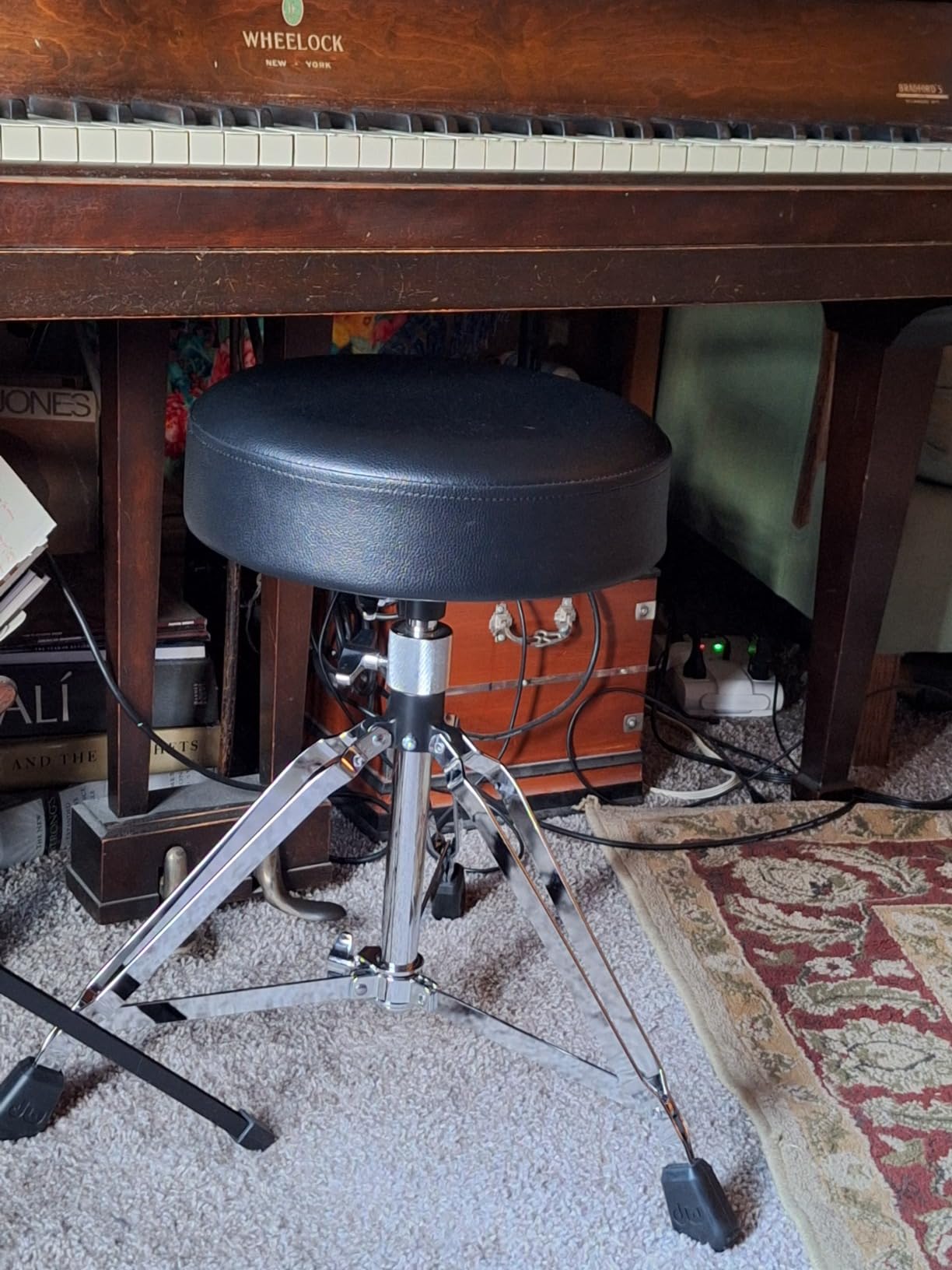
Build is heavy duty with a locking height adjustment that holds position under hard playing, on a sturdy tripod base, and it needs no assembly. At 13.9 pounds it is one of the lighter thrones here, which matters if you carry it up stairs to gigs regularly.
Reviewers treat it as a fixture in studios and rehearsal rooms, with 84 percent five-star ratings. The two honest limitations are the compact seat, which suits average-sized players more than larger ones, and the absence of a backrest for anyone managing chronic back pain.
Why a small seat can improve posture
A round seat smaller than your sit bones naturally spreads you forward onto your feet rather than letting you settle back into a slouch. It is a crude version of what a split or contoured seat does deliberately, and for players whose pain comes from leaning back it can be surprisingly effective.
It also keeps your knees free, which makes rapid pedal work easier. If you play a lot of double-bass patterns, the smaller footprint is an advantage rather than a limitation.
When a round top is the wrong shape for you
If you sit back to play and want the freedom to spread your legs, a round top gives you less room than a saddle. Larger players in particular report that 13 inches feels cramped over a long set, and the correct answer for them is a wider saddle or moto-style seat.
It is also a spindle throne with no backrest, so it addresses pressure distribution but not lumbar support. If your pain is concentrated in the lower back rather than the tailbone, look at a throne with a backrest instead.
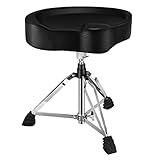
7. Donner Heavy Duty Throne – Best Value
Donner Heavy Duty Drum Throne, Motorcycle Style Drum Stool, Widened Drum Seat with Upgraded Materials, Height Adjustable Padded Drum Chair, Double Braced
Widened saddle seat
Double-braced leg base
250 lb rating
Padded leather cover
Pros
- Widened saddle and padding suit back issues
- Double-braced base is heavier than most budget thrones
- Thousands of reviews from real players
- Fast assembly and easy height changes
Cons
- Wing bolt can loosen and cause wobble
- Rubber feet can wear through
- Strong rubber smell on arrival
This is the most-reviewed product in the group by a wide margin, and owners repeatedly point to it relieving back pain over long sessions. The widened saddle seat is 17.3 by 15 inches, which is far more generous than the 13 inch round tops people often upgrade from, and the padding combines foam with a steel core.
The base is double-braced and noticeably heavier than typical budget thrones, which is the reason it does not rock when you lean into a fill. The widened seat spreads your weight across the sit bones rather than the tailbone, and that pressure distribution is most of what makes it feel better than a cheap stool.
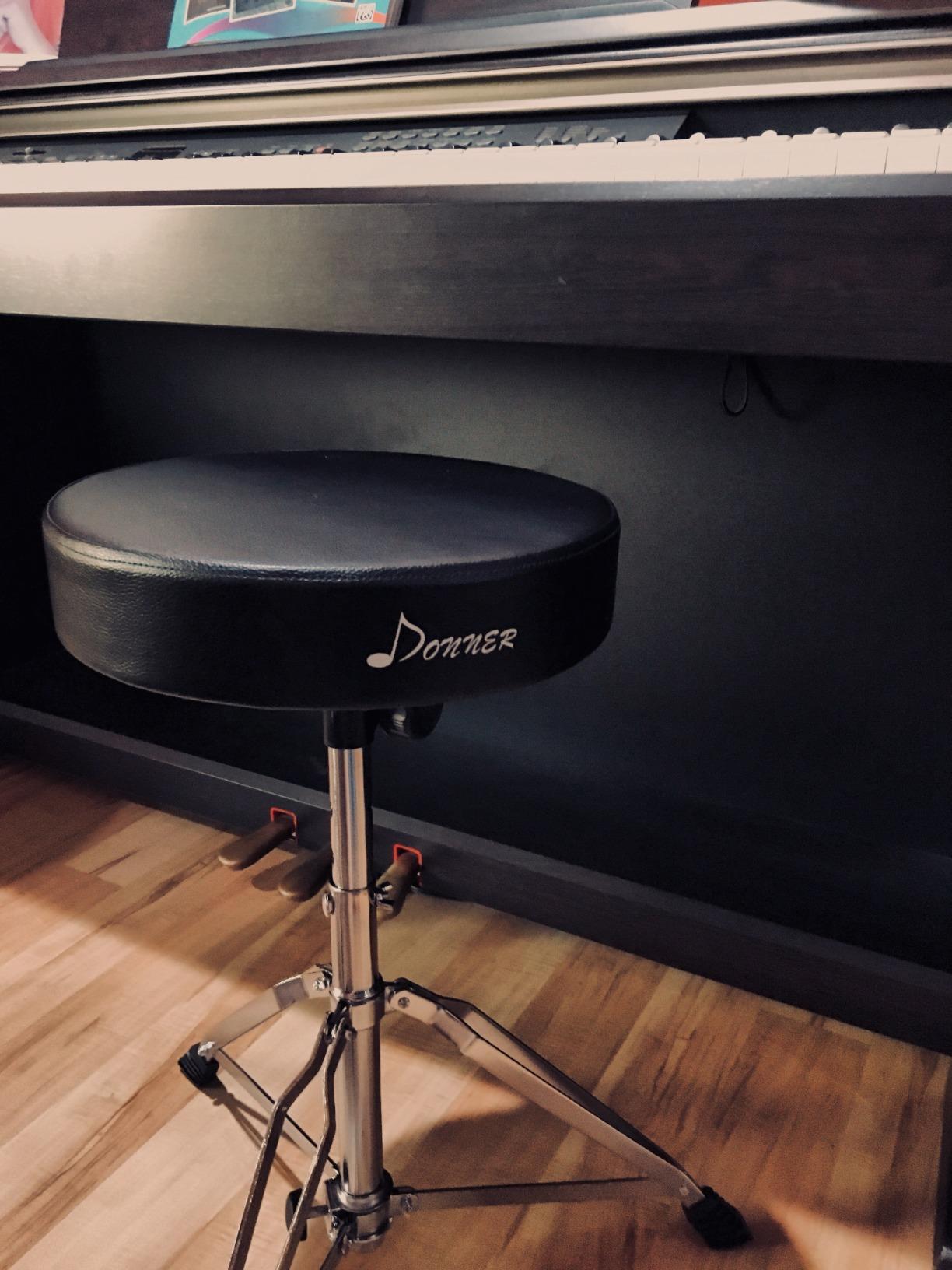
There is one mechanical issue worth knowing before you buy. Owners report wobble that traces back to the height lock wing bolt being seated incorrectly from the factory; backing it out and re-seating the sleeve fixes it, though it can loosen again during heavy movement. It is a ten-minute fix if it happens.
Other recurring comments are the rubber feet wearing through over years and a strong initial rubber smell that fades after a few days. Both are cosmetic rather than comfort problems, and the tracking history across thousands of reviews gives you real confidence in the build.
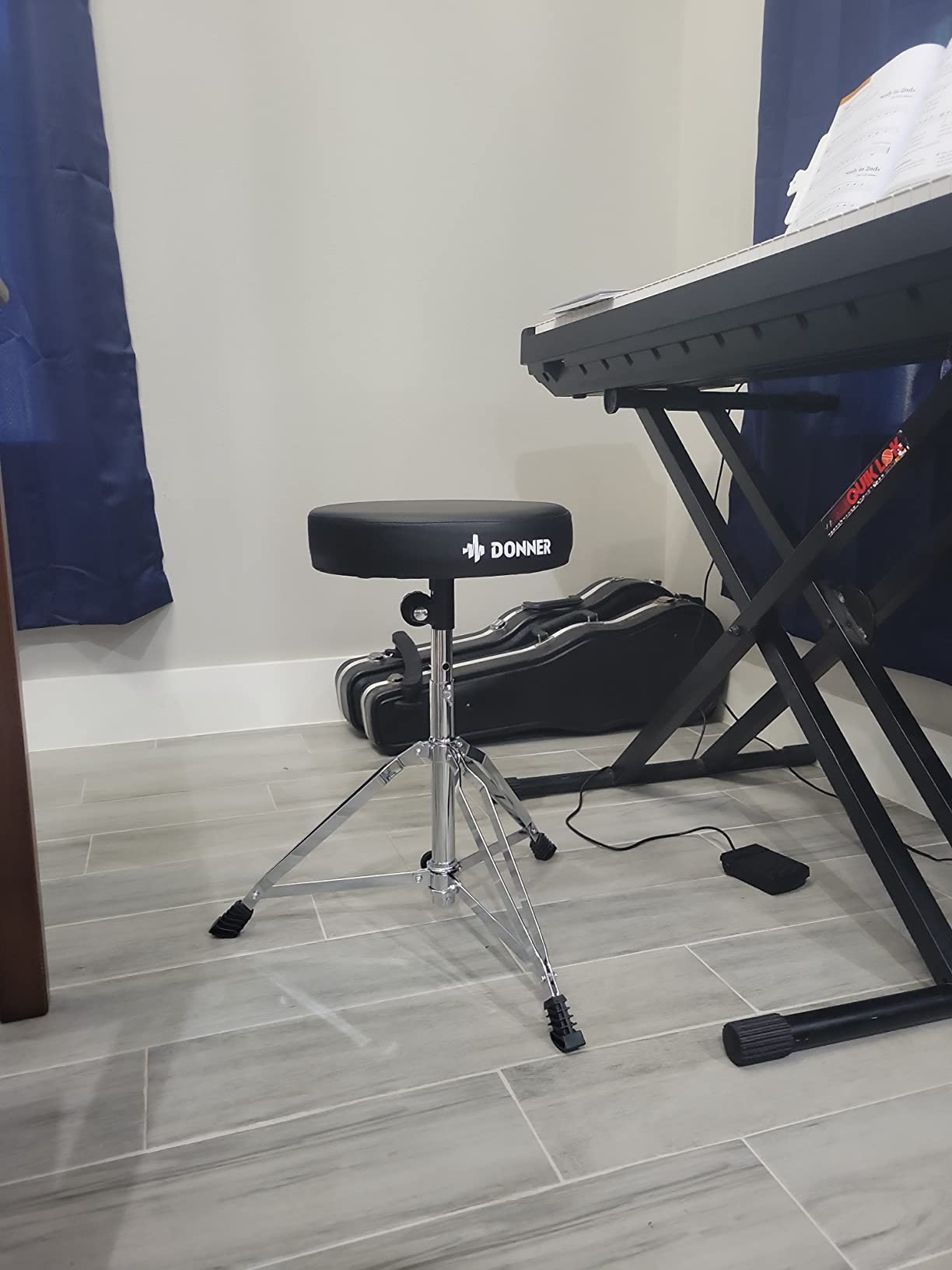
What the wing bolt wobble is and how to fix it
The throne height is held by a bolt that tightens against a sleeve on the stem. If the sleeve is not fully seated when you assemble it, the bolt clamps onto an angle and the whole seat develops play, which you feel as a small wobble that grows as you lean.
Back the bolt out, slide the sleeve fully down onto the shaft, then tighten again. Doing this once at setup usually solves it permanently unless the lock is genuinely worn, in which case any throne at this level needs a new bolt.
Where this throne falls short for a bad back
There is no backrest. The saddle does pressure relief but nothing supports your lumbar, so if your pain is a sharp, localised ache rather than general fatigue after a long set, this will not fully address it.
The 250 pound rating is also the joint lowest here. Larger drummers should move up to a 330 or 440 pound model, and anyone over six feet should check the seat height before committing, since this sits in the lower-to-mid range.
8. Gibraltar 6608 Moto-Style Throne – Best Sturdy Base
Gibraltar Drum Throne with Adjustable Height Motorcycle-Style Seat, Double-Braced Legs, Sturdy Drum Stool for Drummers, Comfortable Cushion for Practice or Performance (6608)
Moto-style seat with thigh cutouts
18-24 inch height
330 lb rating
Double-braced tripod
Pros
- Thigh cutouts ease hip and lower back tension
- Memory lock holds height through long sets
- Double-braced legs rated to 330 lb
- Collapsible base for transport
Cons
- No backrest so no lumbar support
- 24 inch ceiling is too low for tall drummers
- Fixed non-swiveling seat
This is a long-running Gibraltar bestseller and one of the reasons the moto-style seat is now the default recommendation for comfort. The thigh cutouts are the key detail: they let your legs fall open naturally instead of forcing your hips into a narrower angle, which takes tension off the lower back from underneath.
The premium foam cushion is the other half. Combined with the cutouts, it gives a broad, forgiving surface that stays comfortable through long practice sessions, and owners consistently rate the seat itself as a step up from a flat round top.
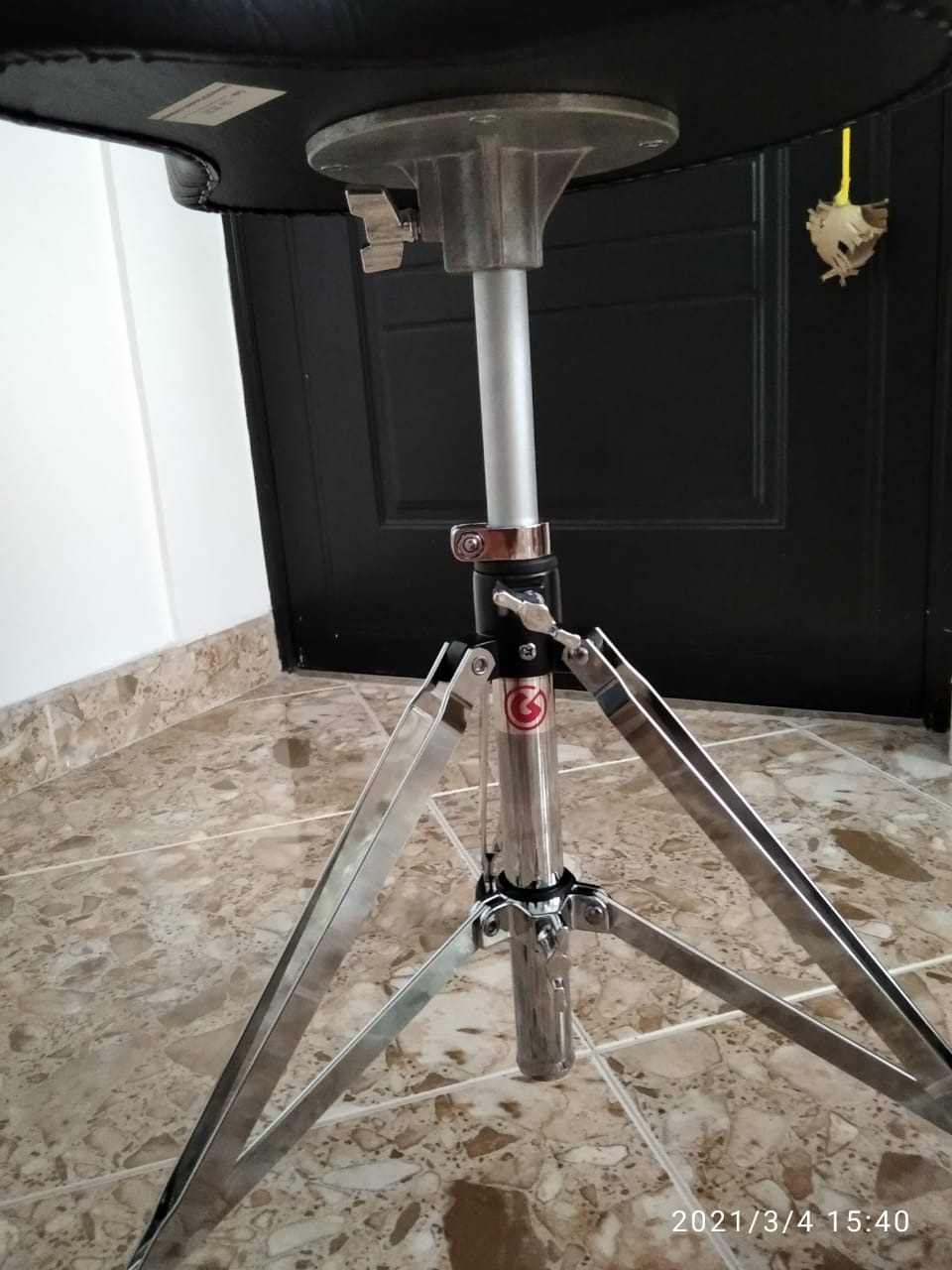
Adjustment is a cast collar with a nylon bushing and a memory lock, running 18 to 24 inches. The lock holds your chosen height for the length of a set, and the double-braced collapsible tripod is rated to 330 lb, which is a genuinely reassuring number for heavier drummers.
The two limits buyers mention most are the 24 inch maximum height, which excludes tall players, and the lack of a backrest. The seat is fixed rather than swivelling, so turning toward a side tom is a whole-body movement rather than a swivel.
Why thigh cutouts help more than extra foam
Most flat round seats force your thighs slightly inward to fit, and that narrows your hip angle. A narrowed hip angle tilts the pelvis forward, and a forward-tilted pelvis is the single most common posture problem drummers have. The cutouts let the seat stop short of your thighs so the hips can open.
Adding more foam to the same seat does not fix this, because the problem is the shape of the pan rather than the depth of the cushion. That is why a moto-style throne can feel better than a thicker round one on the same frame.
Checking the 24 inch limit before you buy
Sit at your current height and measure from the floor to the top of the seat. If the number is 22 inches or more, this throne will not get you there and you should look at the 9608MB or the Liquid Stands stool.
For a shorter player or a student, 24 inches is generous. The 18 inch floor also makes it one of the easier thrones to use for younger drummers sharing a kit.
9. GrowDaily Adjustable Drum Throne – Best for a Backup Throne
GrowDaily Drum Throne Seat,Adjustable Stool Drum Universal Thick Padded Drum Throne Drummer Stool with 2Pacs 5A Drumsticks
Thick sponge cushion
16.93-23.62 inch height
Aluminum double-support tripod
Folds for transport
Pros
- Thick sponge in breathable faux leather holds up
- Double-support aluminum tripod feels stable
- Folds flat for gigs
- Two pairs of drumsticks included
Cons
- Roughly 12 inch round seat feels small for larger adults
- Locking bolts can drift out of adjustment
- Some wobble during hard playing
This is the budget option that still addresses the pressure problem rather than just being cheap. The seat is a thickened sponge cushion in breathable faux leather, and the breathability matters more than it sounds in a warm room after ninety minutes of playing.
The base is an aluminum double-support tripod with a triangular bracket design, which is a step up in stability from the folding stools you find at the bottom of the category. It folds flat for transport, so it works as a second throne at home or a backup for a drummer who moves setups.
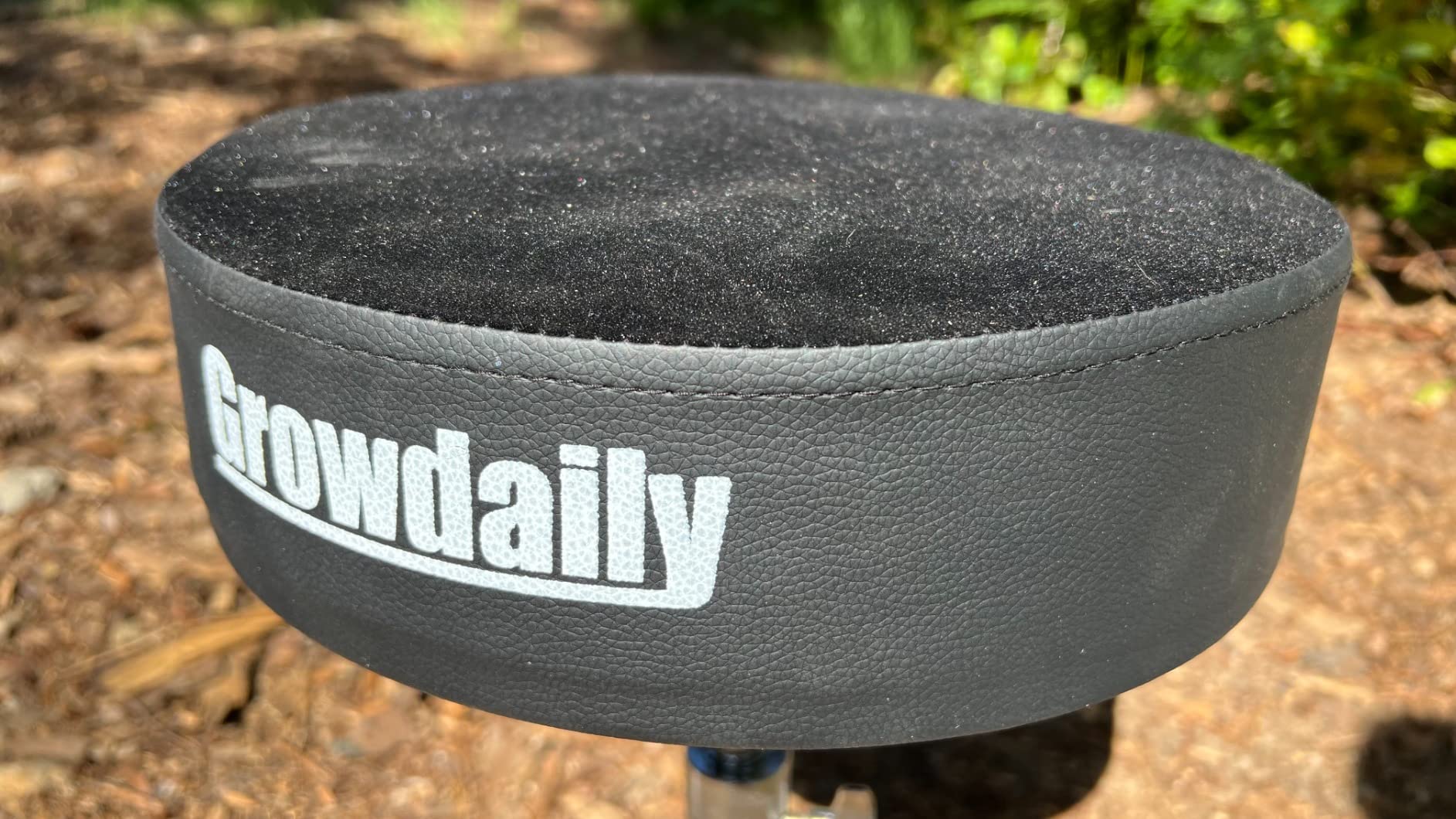
Two pairs of 5A sticks come in the box, which is not a comfort feature but does make it a complete first purchase for a new player. Buyers rate it as good value and describe it as a useful backup rather than a throne to grow into.
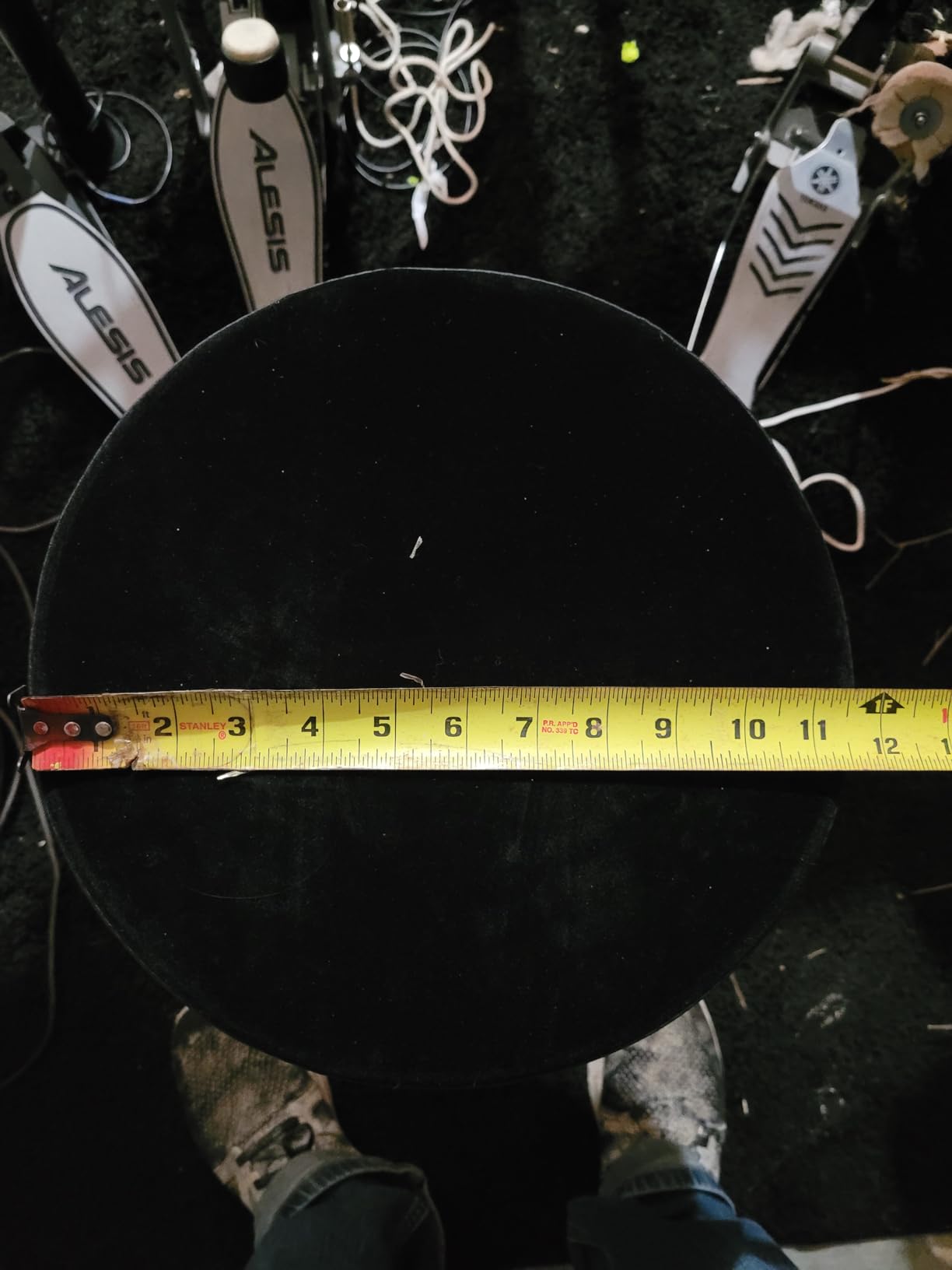
The common criticism is the seat diameter of roughly 12 inches, which larger and taller players find tight. Wobble during hard playing and bolts needing an occasional re-tighten are also recurring, and the cushion is firm enough that it is less pleasant past an hour.
Whether a 12 inch round top will fit you
Sit on a dining chair and check whether you can sit back fully without your thighs touching the edge. If they do, a 12 inch drum throne is going to feel cramped and you should step up to the 6608 or Donner instead.
It is fine for younger players, shorter drummers and anyone who plays upright with a foot on the hi-hat pedal. It is not a throne to keep for a decade if you are already dealing with back pain.
What the four-position lock gets right
Height runs 16.93 to 23.62 inches across four bolt positions, and the bolt locks are a better system than a single clamp because they do not slowly creep downward as you play. That means the seat height you set in rehearsal is the height you get on stage.
It is still worth a quick check of the bolts every month or two, because drift is the most common complaint on this throne. A five-minute tighten saves an entire set of creeping.
10. Ktaxon Drum Throne with Backrest – Best for Lower Back Support
Ktaxon Drum Throne with Backrest with a Pair of Drum Sticks, Matte Black
Hydraulic height 18.8-25.6 inches
Adjustable lumbar backrest
360 degree rotating seat
440 lb capacity
Pros
- Backrest supports the lumbar and adjusts front to back
- Hydraulic range fits a wide spread of players
- High-density sponge resists collapsing
- Seat rotates 360 degrees for repositioning
Cons
- Backrest only adjusts within a small range
- Assembly takes several steps
- Leather-look upholstery runs warm
This is the pick I would shortlist alongside the top two if your pain is specifically in the lower back rather than the tailbone. The backrest is described by the manufacturer as lumbar support, and it moves front to back in a small range so you can change how far it sits from your spine without replacing the throne.
The seat is a moto-style cushion with high-density sponge that resists collapsing over long sessions, and it rotates 360 degrees. Being able to turn to reach a side tom without twisting from the hips reduces exactly the rotational strain that aggravates lower back problems.
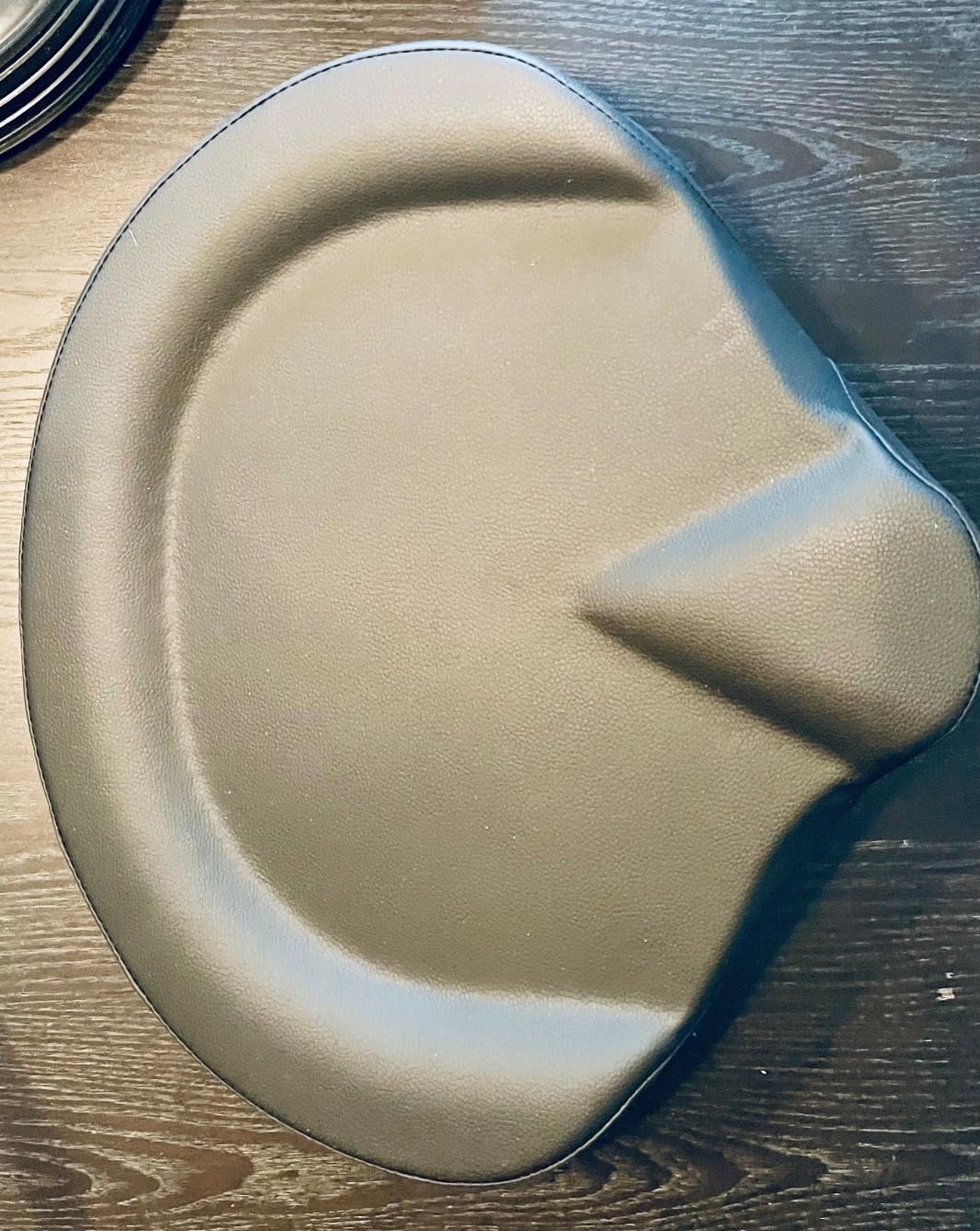
Height is hydraulic, 18.8 to 25.6 inches, which covers a wider band than most backrest thrones at this level. The dual-bracket stainless legs with three rubber feet are rated to 440 lb, one of the highest figures in this group, and a pair of drumsticks comes in the box.
Reviewers are enthusiastic about the lumbar support, the lift range and the reassuring load rating. Drawbacks are minor and honest: the backrest travel is limited, assembly takes six steps, and the leather-look finish can feel warm in a hot room.
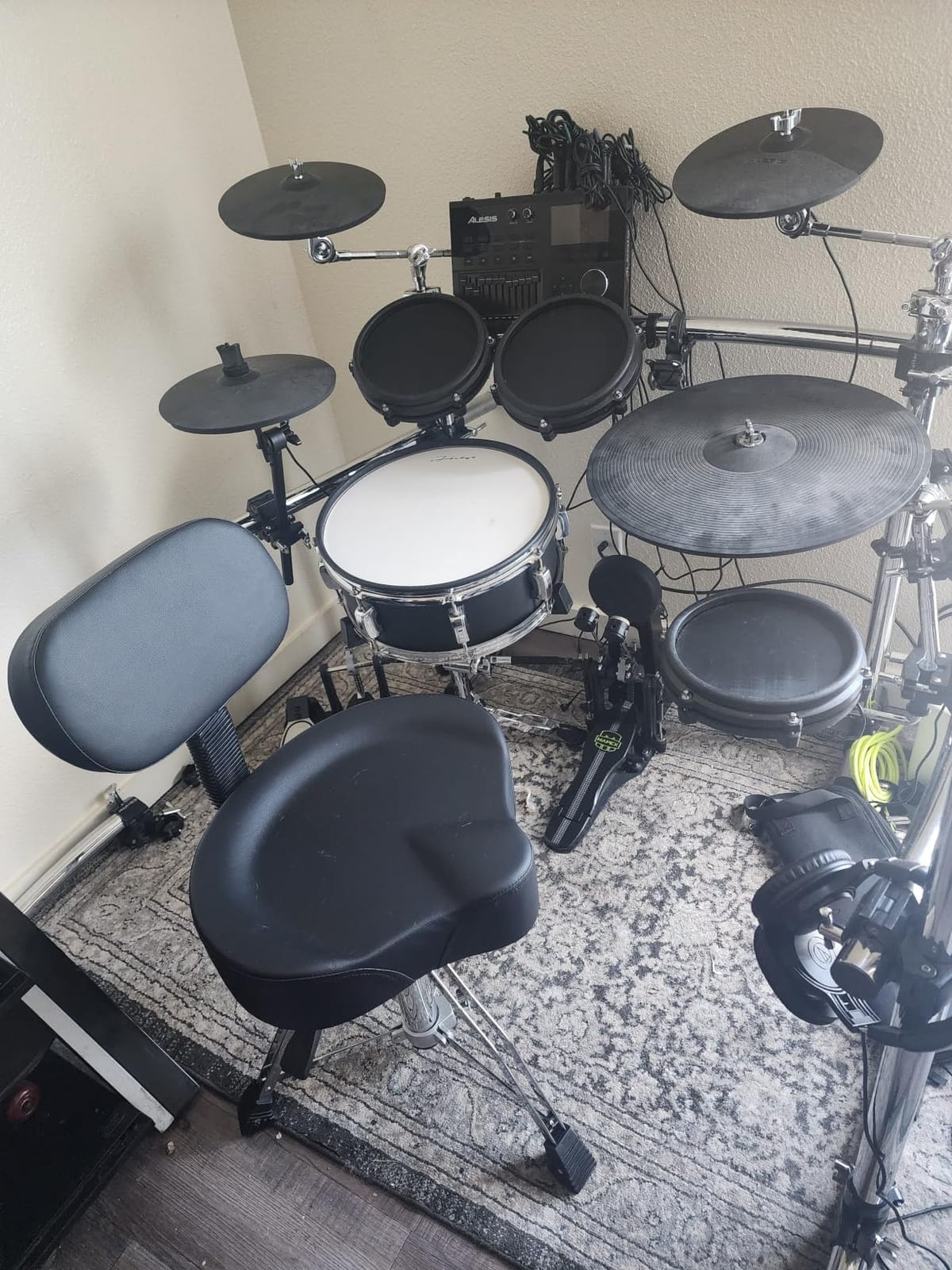
What lumbar support feels like in practice
A lumbar support is not a backrest for leaning on. It is a contact point in the small of your back that tells you when your spine has started to round, and the sensation of having that point supported lets you sit taller without effort for far longer.
The most common complaint from drummers is the opposite experience, where the backrest feels too far away and you end up leaning forward to avoid it. The front-to-back adjustment on this model is what solves that, so set it before you judge the design.
Rotating seat versus a fixed saddle
A 360 degree seat lets you pivot toward a side toms, ride cymbal or audience without shifting your hips, which keeps your lower back still during the movement. That is genuinely useful in a clinic or a busy stage.
The trade-off is that a rotating seat can be less stable if you move abruptly, and a fixed saddle gives you a more predictable platform. For most players the convenience wins, especially if you play in a band rather than alone in a room.
11. GLEAM Folding Drum Throne – Best for First Kits
GLEAM Drum Throne Height Adjustable – Drum Seat Thick Padded Universal Drum Stools with Anti-Slip Feet Drum Chair Black
3.2 inch memory foam saddle
17-21 inch height
Folding design
400 lb capacity
Pros
- 3.2 inch memory foam saddle is comfortable for practice
- Four-level height suits adults and children
- Folding design saves storage space
- Large rubber feet protect the floor
Cons
- 21 inch ceiling is too short for most adults
- No backrest so no lumbar support
- 11 inch seat is narrow
- Strong rubber smell on arrival
This is the option for a first kit, a student, or anyone who needs a throne that folds into a cupboard between sessions. The 3.2 inch high-density memory foam saddle is a real cushion, not a thin pad, and it stays comfortable through practice on a smaller kit.
Height adjusts across four levels from 17 to 21 inches, which makes it genuinely usable for both adults and children on the same setup. The folding bracket and aluminum alloy base rated to 400 lb are unusual at this level and mean it will not flex when you lean into a fill.
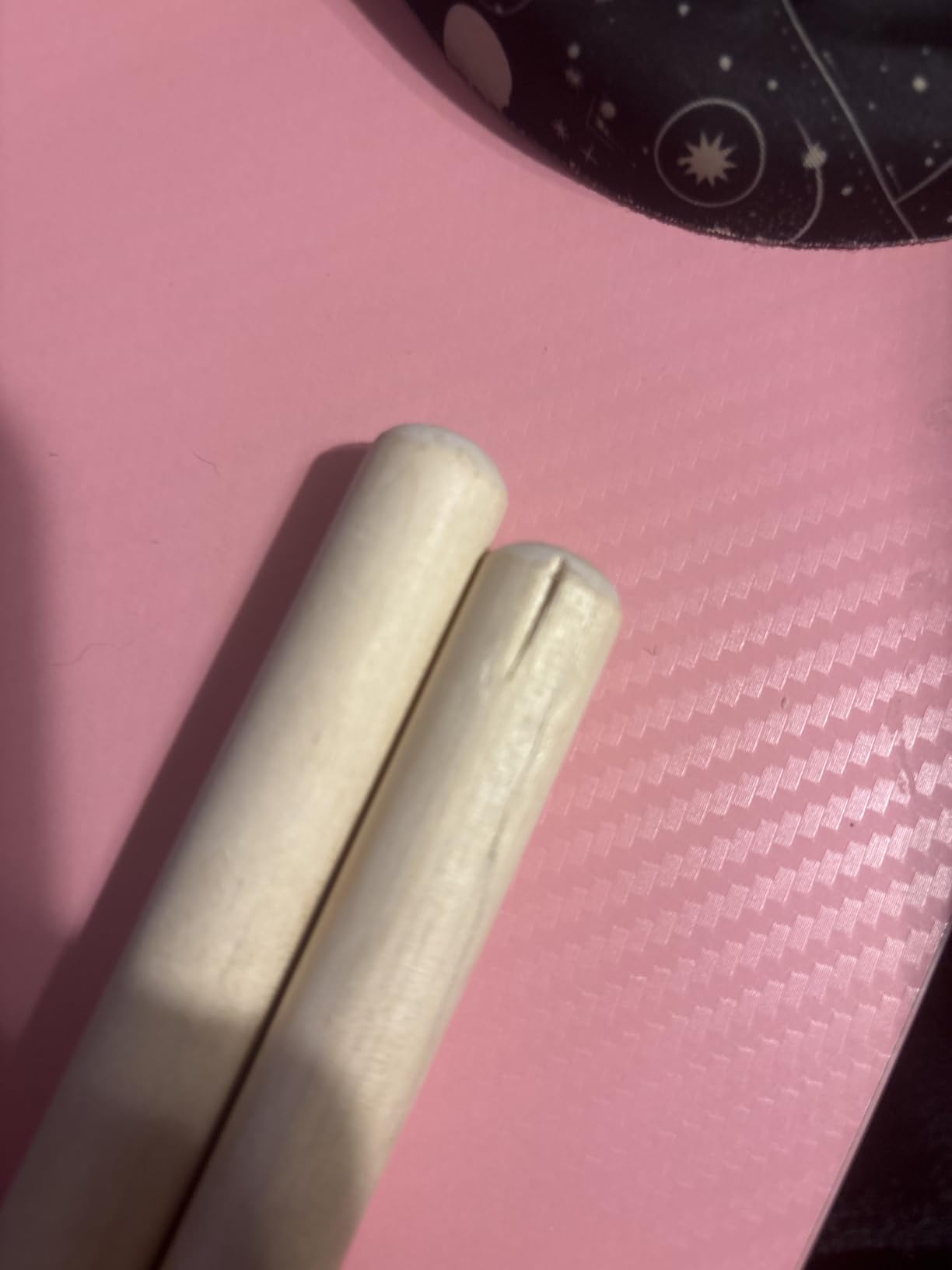
Large rubber non-slip sleeves on the feet add grip and protect a wooden floor, which is worth having in a bedroom or a small studio. Owners rate the build quality highly for the money, and the instructions are printed clearly enough to assemble without guessing.
Be realistic about the limits though. A 21 inch maximum height rules it out for most adult drummers on a full kit, the 11 inch seat is narrow, and there is no backrest. Several buyers also mention a strong rubber odour on arrival, and a wrench may be needed to tighten the legs.
Why a folding throne suits small spaces
A throne that collapses to a flat bundle is the difference between a kit you can keep set up and a kit you have to assemble each time. For anyone in a bedroom, a shared room or a rehearsal space where the drums live in a corner, that is a genuine practical advantage.
It also means you can take it to gigs without a separate seat. The cost is bulk when folded and a slightly less refined feel than a fixed-leg throne, but neither matters much for a drummer playing a smaller kit at home.
When to move up from this throne
Move up once your playing consistently outlasts an hour, or once you start giging, or as soon as you notice yourself leaning forward constantly because the seat is too low. All three are the point where a seat with a wider range and some lumbar support pays for itself.
The memory foam is the reason this is not the first thing to change. Cushion depth is the single biggest comfort factor for tailbone pressure, and 3.2 inches of foam gets you most of the way there.
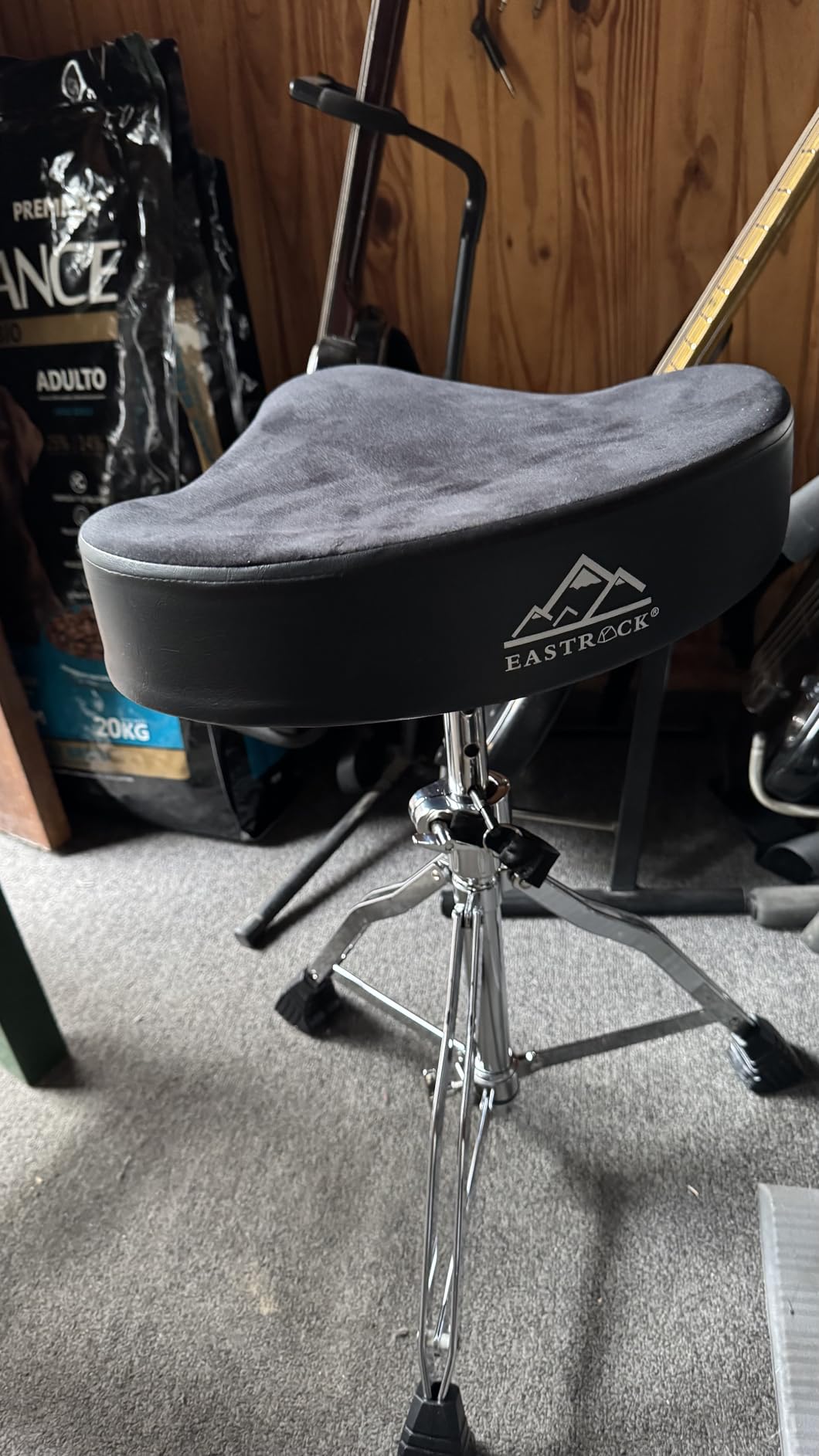
12. EASTROCK Memory Foam Drum Throne – Best for Thick Cushioning
EASTROCK Drum Throne Drum Seat Height Adjustable,Padded Drum Stools Motorcycle Style Drum Chair with Anti-Slip Feet for Drummers,Adult
3.7 inch memory foam pad
Five-lock height system
250 lb rating
Folding tripod legs
Pros
- Thickest pad in this group at 3.7 inches
- Dual locks stop the seat sliding down
- Two metal cross supports add strength
- Folding legs and rubber feet for grip and carry
Cons
- No backrest so no lumbar support
- 250 lb capacity is low for larger drummers
- Leather finish runs warm and stiffens over time
- Only a six month warranty
The 3.7 inch premium memory foam pad is one of the deepest cushions in this group, and if tailbone pressure is your specific complaint that depth is the whole argument. A deep pad spreads your weight over a wider area of the sit bones and stops the numb, pins-and-needles feeling that a thin seat produces in a long set.
The height system is unusually well thought out for a budget throne: five lock positions with dual tightening clamps, which is what stops the seat creeping downward over a gig. Creeping thrones change your hip angle by an inch or two without you noticing, and that is enough to undo any benefit from the seat.
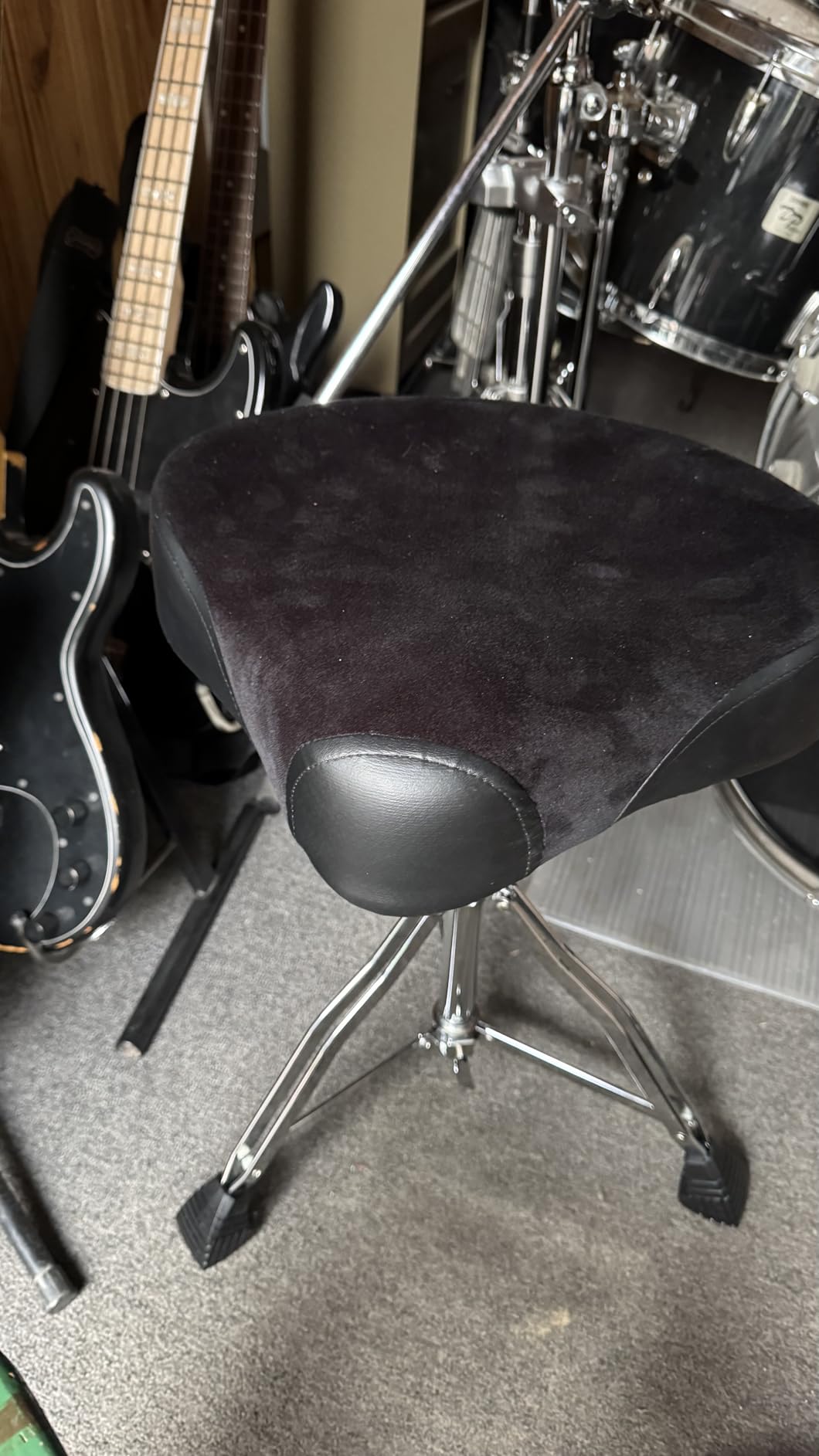
Underneath, two 9.5 inch metal cross supports fixed with eight screws give it more bearing strength than folding stools usually have. The seat measures 13.8 by 15.4 inches, the folding tripod has three large rubber feet, and the whole thing works for both adults and children.
Buyers consistently mention the thick foam and the dual-lock system as the reasons they are happy, with solid overall sentiment. The honest limits are the 250 pound capacity, no backrest, an artificial leather finish that can feel warm and slightly stiff after years, and a warranty of only six months.
Cushion depth versus seat shape
Depth and shape solve different problems. A deep cushion on a round seat, which is what this is, reduces pressure but keeps a narrower surface area, so it works best for players who sit upright and centred. A shallower but shaped saddle or moto seat solves the same pressure problem while letting your legs open.
If you are not sure which you are, think about how you sit right now. Curled forward over the kit means you need shape and height. Sitting back and tall means cushion depth is the bigger win for you.
Is a six month warranty a warning sign
Not on its own. It is a category-wide convention at this level, and the feedback pattern across more than 140 reviews shows the cross-braced structure holding up for both adults and children. It does mean you should keep the throne somewhere dry and avoid leaving it in a damp van.
If warranty length matters to you, the Gibraltar thrones carry five year limited coverage and the DW 5000 is built by a manufacturer with a long track record in studio equipment. Those are the picks to consider if you play every week.
How to Choose a Drum Throne That Treats Your Back Well
Start by identifying where the pain actually is, because the fix follows the symptom. Tailbone and seat-bone soreness points to a contoured or deeply cushioned seat. General lower back ache after a set points to height and base stability. Sharp lumbar pain while you play points to posture and reach, and a backrest helps most there.
Seat shape. Round tops are compact and keep your knees free for pedal work, but they are narrower and push your thighs inward. Saddle and moto-style seats are wider, often include thigh cutouts that let your hips open, and are the better choice for most players with hip and lower back tension. Split seats go further still, taking pressure off the tailbone entirely.
Hydraulic or gas lift versus manual spindle. A spindle is cheap, precise and simple. Hydraulic and gas-lift thrones damp the shock from the kick drum before it reaches your spine, which is the single most-praised back benefit in drummer forums. If your pain appears as accumulated stiffness after two or three hours, shock absorption is worth paying for.
Backrest or not. A backrest is close to necessary if you lean forward while playing. The confusion many drummers run into is expecting it to lean on. It should give you light contact at the small of the back as a reference point, positioned so you are not hunching away from it. Thrones with multiple mounting holes, such as the AKLOT and the Gibraltar 9608MB, let you tune that gap.
Height range. Measure your current seat height before you buy. Anything topping out at 21 or 24 inches will leave a tall drummer crouched forward, and a forward crouch is one of the main causes of the pain you are trying to escape. The Liquid Stands stool covers 23 to 32 inches and is the widest range here.
Load rating. This is a safety issue more than a comfort one. Heavier drummers should be looking at 300 pounds and above, and the Ktaxon and AKLOT thrones are rated to 440 lb, while the GLEAM folding throne also reaches 400 lb. Several popular thrones stop at 250 lb.
Base footprint and pedal clearance. Larger drummers and anyone on a double-bass pedal setup should check that the throne base does not foul the linkage or the hi-hat stand. Tripod bases have a narrower footprint than four-leg or heavily braced designs, and a wider base resists more of the forward push that a double pedal applies.
The cushion fix. Before you replace a throne you already own, try a contoured seat pad or cushion. Drummers in forum threads consistently describe it as the cheapest partial improvement available, and it costs a fraction of a new throne. It solves pressure and tailbone problems well, and it does nothing for base wobble or lumbar support.
If you are setting a throne up for a younger drummer, our guide to the best kids drum sets covers the throne height ranges that work for small players.
When a Throne Is Not Enough
A drum throne is an ergonomic tool, not a treatment. It can reduce the load on your lower back during a set, and that is genuinely useful, but it will not resolve pain that is present when you are not playing at all.
If your back hurts every day, hurts at rest, or comes with numbness, tingling or shooting pain down a leg, get it assessed by a physiotherapist, chiropractor or doctor before changing equipment. Those symptoms are not posture problems, and equipment changes will only delay proper treatment.
What actually compounds the problem is treating only the playing hours. Forum users who report the biggest improvements are the ones who combined a better throne with a backrest, plus core and hip mobility work outside the kit. If you want more on that side, our back pain relief guide covers the recovery side of the same problem.
It is also worth remembering that technique and kit position often matter as much as the throne. Moving your kit a few inches, raising the snare and cutting the number of reaches per song can do more for a sore back than any seat you can buy.
Frequently Asked Questions
What is the best brand of drum thrones?
Gibraltar is the most consistent brand for back comfort, with the 9608MB and 9808HMB both pairing a contoured seat with a movable backrest and a braced base. Roc-N-Soc is the strongest alternative for shock absorption because of its gas shock lift, though it has no backrest. For thrones built specifically around lumbar support, Ktaxon and the AKLOT saddle both add a height-and-depth adjustable backrest at a lower cost.
What can I use instead of a drum throne?
A contoured seat pad or cushion on your existing throne is the most common answer and costs a fraction of a new seat. It helps with tailbone pressure and cushioning but does nothing for base wobble or lumbar support. A musician stool or a chair with an adjustable backrest and footrest also works, and some drummers play standing for long sets. A backrest add-on is a third option if your throne has a mounting point.
What is the most comfortable drum stool?
The most comfortable throne in this group is the Gibraltar 9608MB, which combines an oversized memory foam moto-style seat with thigh cutouts, an adjustable backrest and a double-braced base. If you want the softest possible surface, the Roc-N-Soc Nitro’s ergonomic saddle with its gas shock lift rates highest of all at 4.8 stars, but it has no backrest. Comfort is really a combination of seat depth, cushion thickness and how well the height suits your body.
Which type of drum throne is better, round or saddle?
For most drummers with back pain, a saddle or moto-style seat is better. It is wider, often has thigh cutouts that let your hips open instead of clamping inward, and spreads your weight across the sit bones rather than the tailbone. Round tops are narrower and keep your knees clear for fast pedal work, which makes them a good choice for players who sit upright and stay centred. A round top can also gently correct a slumping posture because you cannot sprawl on it.
Why does drumming cause back pain?
The main causes are spinal compression from two or three hours of sitting, leaning forward to reach the kit which rounds the mid-back and neck, tailbone pressure from a flat seat, shock transmitted up the spine from every kick drum stroke, and throne wobble that forces your core to keep correcting. Height and distance from the kit matter too, because sitting too low or too far back changes your hip angle. Backrest and hip mobility work outside the kit compounds the improvement from a better seat.
What is drummers syndrome?
Drummers syndrome is the informal name for the cluster of posture and overuse complaints drummers develop: chronic lower back ache, sciatica-type symptoms, numb or cold feet from sustained pedal pressure, neck and shoulder tension, and wrist problems. It is not a formal medical diagnosis but a widely used description in the drumming community. It develops over years of long sets, poor kit positioning and inadequate mobility work. If you have pain that persists when you are not playing, have it assessed by a qualified professional rather than treating it as an equipment problem.
The Verdict on Drum Thrones for Back Pain
The best drum thrones for back pain share three things: a seat wide enough to take pressure off the tailbone, a base heavy enough that you are not fighting wobble all set, and a height range that lets you sit at the right angle for your body. The Gibraltar 9608MB is the one I would buy first, because it pairs a deep contoured seat, a genuinely adjustable lumbar backrest and a double-braced base in one package.
If your problem is shock rather than support, the Roc-N-Soc Nitro takes that strain out of your spine better than anything else here, and it carries the highest rating of the twelve. If you are tall and need a proper chair, the Liquid Stands stool covers a 23 to 32 inch range no drum throne in this group reaches. And if you want a backrest on a budget, the Ktaxon and AKLOT thrones both add lumbar support and 440 lb load ratings without moving up a tier.
Start with a cushion on the throne you already own, and measure your seat height before you order. Whatever you choose, give it a full three-hour set before you judge it, and pair it with hip and core work between sessions. If your back is hurting away from the kit, see a professional, because no stool is a treatment.