
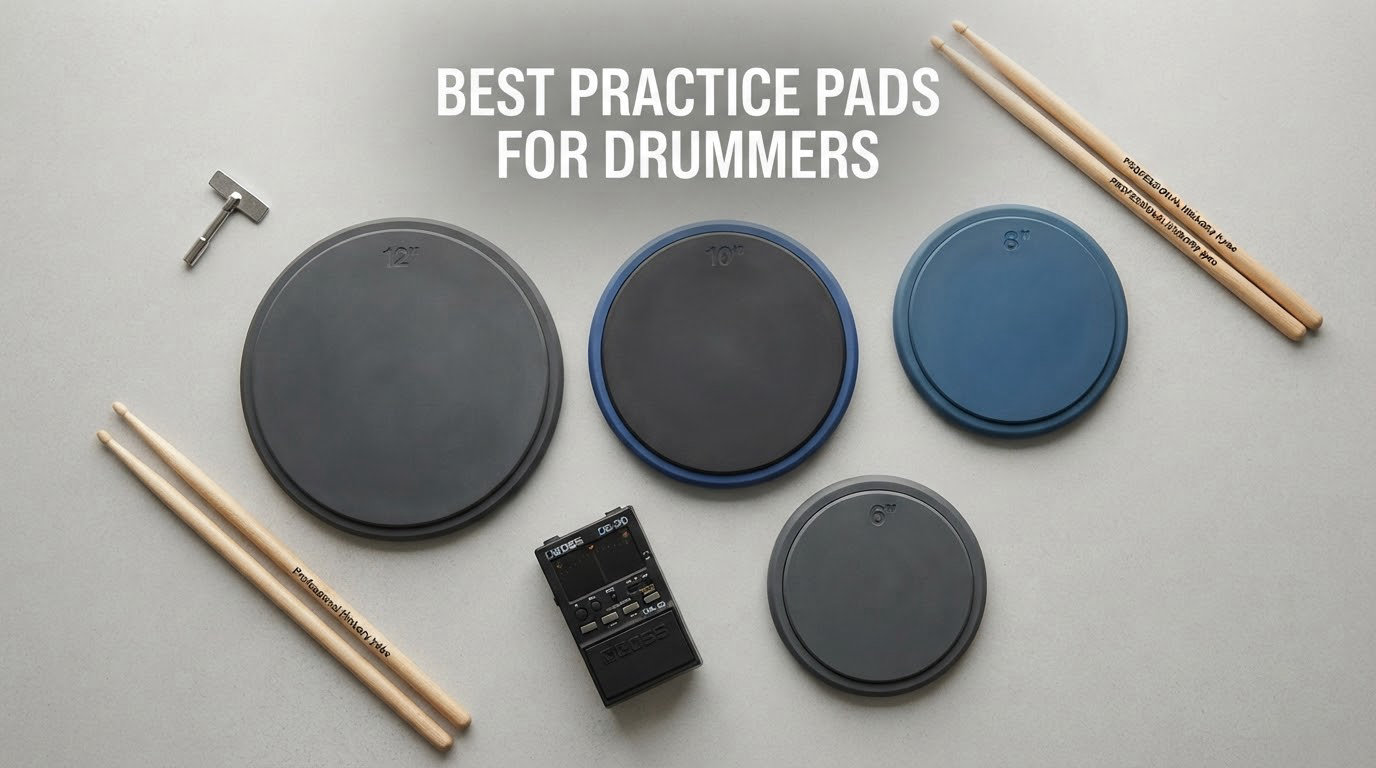
A drum practice pad is a compact, low-volume playing surface made of rubber, silicone, foam or a coated mesh head. It gives you a place to practise stick control, rudiments and hand strength without a full kit, a loud room or a big footprint. It teaches you how your hands move. It does not teach you cymbal feel, shell resonance, or how a real resonant head blooms at full volume.
That second sentence matters more than most roundups will admit. A pad is a technique tool, not a substitute for a drum set, and the pads that get recommended most loudly on r/drums and drumforum.org are rarely the ones that sound the most impressive. What you are really choosing between is surface material, rebound, noise level and whether the thing lives in a backpack or beside the sofa.
We spent weeks putting these ten through the same routine: single strokes, double strokes, rudiments at tempo, and a long conditioning block to see how the surface treated our hands afterwards. We also weighed every one of them, because a heavy pad does not travel and a pad that does not travel does not get practised. Several of these pads have been in our rotation for long enough that we know how their surfaces look after heavy use, not just out of the box.
If you are still setting up a room for practice, our guide to practice amps for home guitar covers the same noise-and-neighbours problem from the electric side. And if you are the sort of person who practises in short bursts wherever you land, the thinking behind our walking pad picks about gear that survives being moved around applies here too.
One honest note before the list. Forum threads often recommend a DIY pad: a real drum head pulled over a snare basket and tensioned by hand. It sounds better than anything on this list and costs a fraction of one. It is fiddly, it needs a stand, and for most beginners it is a second project, not a first one. Buy a pad first, and treat the DIY build as an upgrade once you know what you want from the surface.
Table of Contents
Top 3 Picks for Best Practice Pads for Drummers

Evans RealFeel Two-Sided 12 Inch
- Gum rubber and recycled rubber sides
- 1.65 kg
- Works on lap table carpet or snare basket

Donner 12 Inch Two-Sided Pad with Sticks
- Elastic rubber on wood core
- EVA polymer base for grip and quiet
- Maple sticks included
Remo 10 Inch Tunable Practice Pad
- Replaceable coated Ambassador head
- Standard drum key tuning
- Rubber non-scuff base
Best Practice Pads for Drummers in 2026 at a Glance
Here is everything in one place, with the specification that actually changes how a pad plays. The weight column is the one most roundups skip and the one you will notice on a long carry.
| Product | Specifications | Action |
|---|---|---|
| Evans RealFeel Two-Sided 12 Inch |
|
Check Latest Price |
 Evans RealFeel Single-Sided 12 Inch Evans RealFeel Single-Sided 12 Inch |
|
Check Latest Price |
 Evans RealFeel Apprentice 7 Inch Evans RealFeel Apprentice 7 Inch |
|
Check Latest Price |
| Remo RT-0010-58 10 Inch Tunable Pad |
|
Check Latest Price |
| Donner 12 Inch Two-Sided Pad with Sticks |
|
Check Latest Price |
 HAIRIESIS 12 Inch Pad Sticks and Bag HAIRIESIS 12 Inch Pad Sticks and Bag |
|
Check Latest Price |
 Donner Snare Stand and Pad Set 12 Inch Donner Snare Stand and Pad Set 12 Inch |
|
Check Latest Price |
 Donner 12 Inch Pad with Snare Simulator Donner 12 Inch Pad with Snare Simulator |
|
Check Latest Price |
 EASTROCK 12 Inch Double-Sided Pad EASTROCK 12 Inch Double-Sided Pad |
|
Check Latest Price |
 Sovvid 12 Inch Pad with Sticks and Bag Sovvid 12 Inch Pad with Sticks and Bag |
|
Check Latest Price |
1. Evans RealFeel Two-Sided 12 Inch Pad – the best practice pad overall
Evans RealFeel – Drum Practice Pad – Drum Pad – Drummer Practice Pad – Gum Rubber & Neoprene, 2 Sided, 12 Inch
12 inch playing surface
1.65 kg
Gum rubber and recycled rubber
Made in the USA
Pros
- Realistic gum-rubber rebound close to a real head
- Two surfaces that respond noticeably differently
- Sturdy weight keeps it put on a lap table or in a snare basket
- Quiet enough for early practice in shared spaces
- Dark grey fabric finish resists stick wear
Cons
- The recycled-rubber side is louder with less rebound
- The 12 inch model is not mountable on a standard snare stand
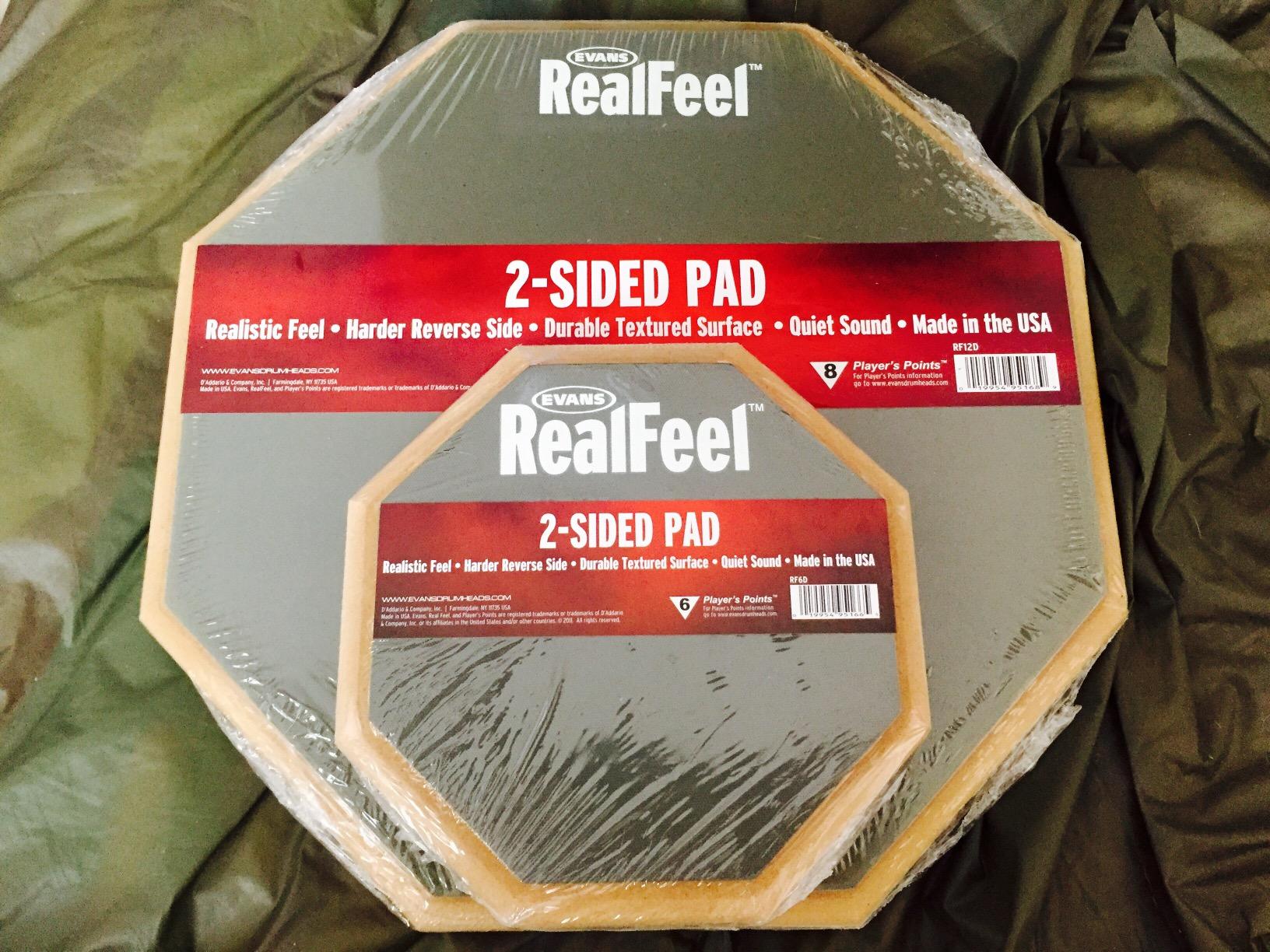
This is the pad the community keeps coming back to, and after weeks of alternating between it and the others, it is the one we kept reaching for. The grey gum-rubber side has a slightly textured finish that gives back close to the bounce of a resonant head, so single strokes, doubles and a 26 rudiment practice all behave the way they will on a snare. It sits at #2 in Practice Pads and Devices on Amazon with 5698 reviews at a 4.8 star average, and that consistency of feedback is itself useful data.
What sets it apart from every other double-sided pad here is that the second side is a genuinely different tool rather than a thinner copy. The black recycled-rubber face is harder, absorbs more of the stick’s energy and gives you a low-rebound surface for conditioning work. Flipping between the two is the closest thing to having two pads.
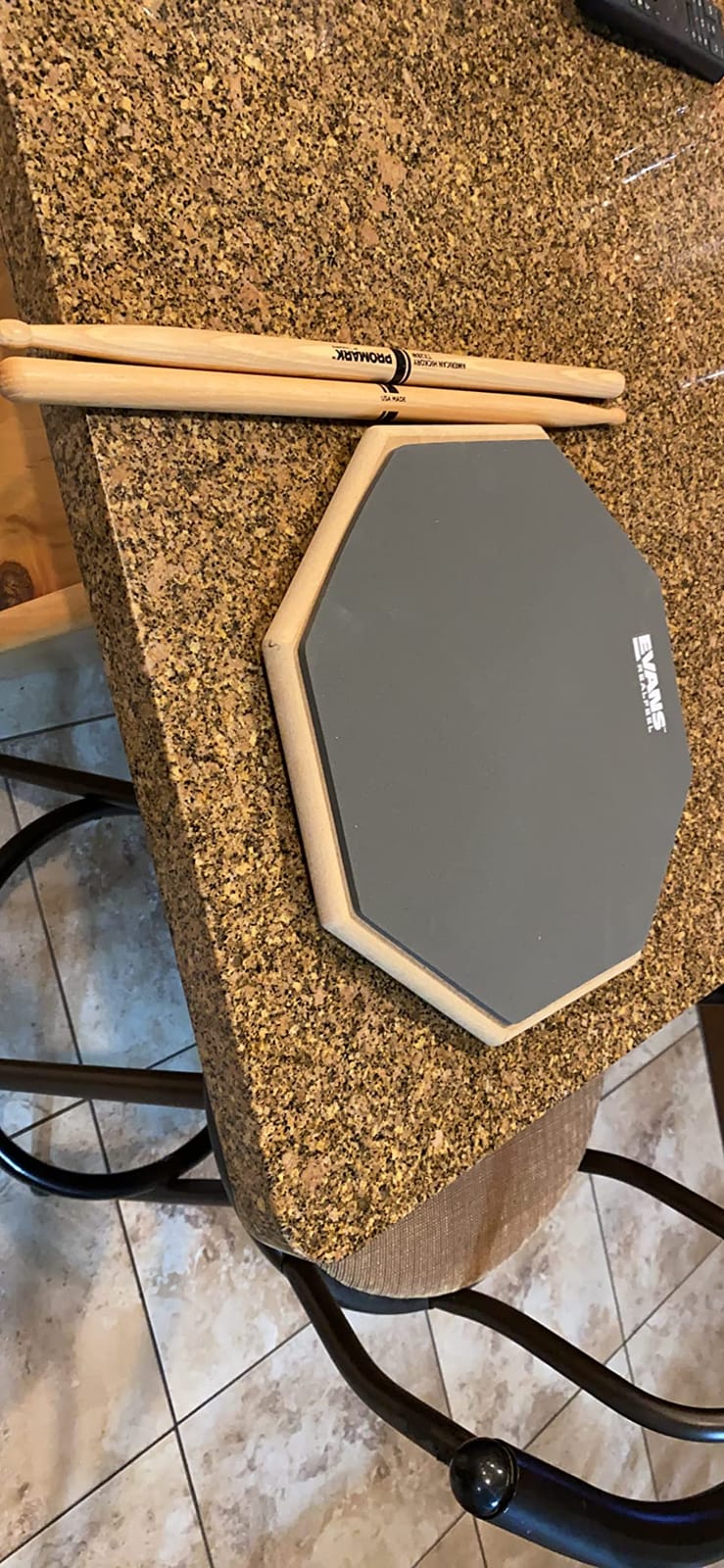
At 1.65 kg it is heavy in the way a good practice tool should be. Put it on a table, a carpet, your lap or drop it into a standard snare basket and it stays exactly where you put it, so you are not fighting a sliding surface while you work on stroke height. The 12 inch playing area is close enough to a 14 inch snare that hand placement does not flatten out the way it does on the small pads.
Durability is the other quiet win. The playing surface is finished with a dark grey fabric that resists wear and tear, and the construction is designed, engineered and manufactured in the USA to stringent quality controls, with a replacement promise if it is defective. That is a longer service life than the fabric-wrapped budget pads in this list.
Who this pad suits
This is the one to buy if you are the near-unanimous community default: it is repeatedly named in r/drums, r/percussion and drumforum.org threads as the sensible first pad, and the reviews back that up. A beginner gets a surface that will not lie to them about how a stick is supposed to bounce, and an experienced player gets a second face for endurance work. Families in flats and shared houses report that it is quiet enough to practise early.
If you travel, note the 1.65 kg. It is carryable in a backpack but it is not a travel-first pad, and the 12 inch version will not mount to a standard snare stand. Plenty of owners simply use it flat on a table or on their lap, which is exactly what the design is built for.
Who this pad does not suit
If your priority is a real drumhead response with a tunable pitch, look at the Remo in position four instead. This pad is a rubber tile, so there is no head tension to adjust and no shell resonance underneath it. Drummers who want snare buzz and wires will not find them here.
Players who already have solid hand strength and want a long conditioning session may find the gum side fatiguing over an hour, since it hands energy back to the stick and therefore to your hands. Long blocks on the firmer side are the better answer. And if your setup is a stand-mounted practice station, this pad needs a flat surface or a snare basket rather than a threaded mount.
2. Evans RealFeel Single-Sided 12 Inch Pad – the purist rebound option
Evans RealFeel Single-Sided Drum Practice Pad, 12 Inch
12 inch playing surface
1.4 pounds
Natural gum rubber
Made in the USA
Pros
- Rebound that reviewers repeatedly call the most realistic they have tried
- 12 inch size feels like a real snare rather than a cramped surface
- Weighs enough to stay put on a table or lap
- Durable wear-resistant dark grey fabric finish
Cons
- Single-sided so there is no harder second surface for endurance work
- Costs more than many entry-level rubber pads
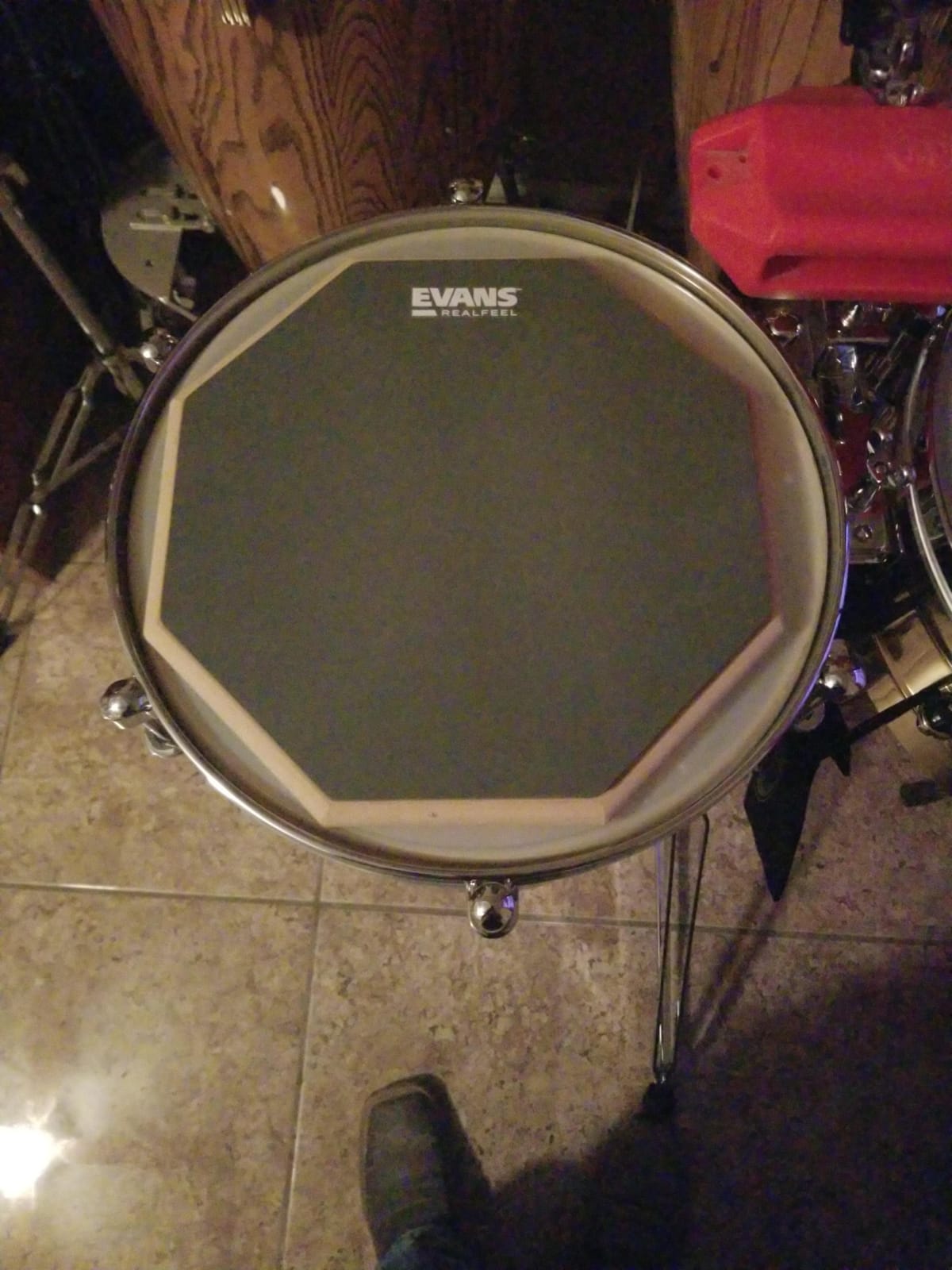
Strip the second surface away and you get the most natural-feeling rubber practice pad here. Owners describe the rebound as the best in class and say it beats other pads they have owned, which is a strong claim that the 4.8 star average across 3209 reviews at least does not contradict. If your whole aim is to make a pad stroke feel like a snare stroke, this is the cleanest version of that.
It is also the lighter of the two 12 inch RealFeel pads at 1.4 pounds, so it moves between rooms more easily than the two-sided model. The 12.01 x 12.01 inch footprint and 0.98 inch thickness make it a comfortable object to hold on a lap during a lesson, and the same textured gum rubber finish is used here as on the two-sided version.
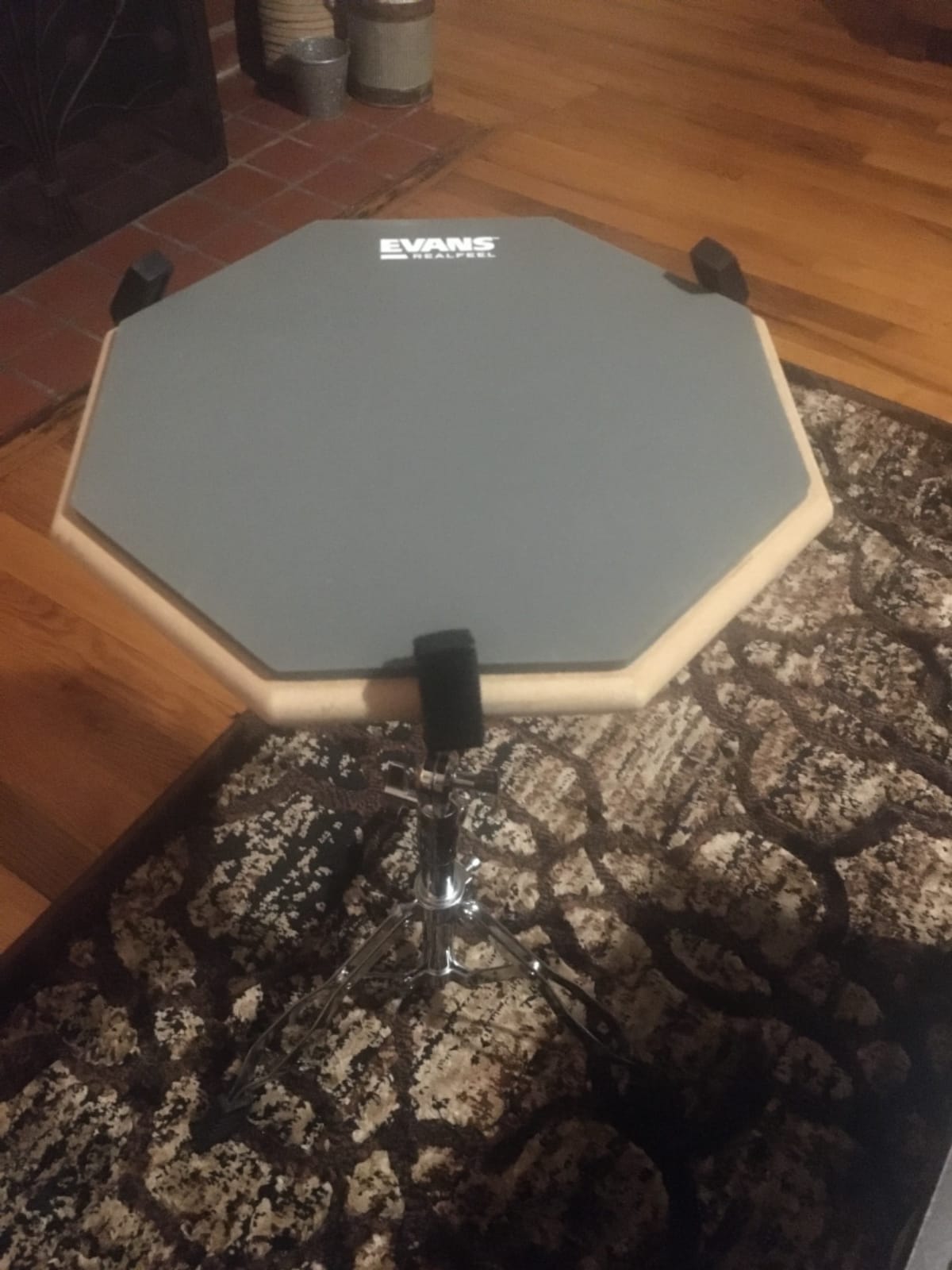
Where the extra side on the two-sided pad earns its keep is conditioning. With one face you get a consistent, lively response for every stroke, which is what you want for rudiments and for rebuilding a weak hand. What you give up is the option to switch to a dead, low-bounce surface when a session turns into a marathon.
There is a practical note for anyone comparing this to cheaper rubber pads: reviewers frequently flag the price as high next to budget alternatives. That is a fair criticism. You are paying for the feel and the build rather than for a novelty bundle, and the wear-resistant dark grey fabric surface is why the pad still looks right after heavy use instead of going slick.
Who this pad suits
Players who are working on a specific weakness: single stroke consistency, buzz rolls, or rebuilding chops after a break. A lively, predictable rebound shortens the loop between a mistake and the correction, and one good face means you are not thinking about which side is up.
It is also a good choice for a student who already owns a stand and wants the pad to sit in a snare basket. Like the two-sided version, the 12 inch model is not mountable to a threaded stand, so the basket route is the one to plan for.
Who this pad does not suit
Long conditioning sessions are the weak spot. A single springy face under a heavy hour of doubles will fatigue hands faster than a two-surface pad, because the stick keeps giving energy back. If hand strength and endurance are your training goal, the firmer side of the two-sided RealFeel is built for it.
It is also not the pad to buy on a tight budget, and it is not for you if you want snare buzz, rimshot practice or a surface you can tune. If those matter more than pure rebound, the Remo in position four is the better tool.
3. Evans RealFeel Apprentice 7 Inch Pad – the compact pick for kids and travel
Evans RealFeel Apprentice Drum Practice Pad, 7 Inch
7 inch playing surface
1.22 pounds
Single-sided gum rubber
Made in the USA
Pros
- Compact and light enough for younger players lessons and travel
- Same quality gum-rubber feel as the larger RealFeel models
- Sturdy enough not to shift while playing
- Quiet operation for practice in shared rooms
Cons
- The 7 inch surface is small for full-stroke hand placement on larger drums
- Single-sided so there is no firm second surface for endurance work
This is the smallest RealFeel and the most overlooked. It uses the same slightly textured natural gum rubber as the 12 inch pads, so the feel is not a downgrade, it is simply a smaller canvas. At 1.22 pounds and 7.87 inches across, it is the one in the line that genuinely goes into a backpack, which for a drummer who practises on tour or between rooms is worth more than diameter.
It works on carpet, on a table, on a lap or inside a standard snare basket, and the 7 inch footprint is friendly for younger hands learning where to place strokes. Owners rate the construction as sturdy enough that it does not shift while playing, which is more than several lighter pads in this roundup manage.
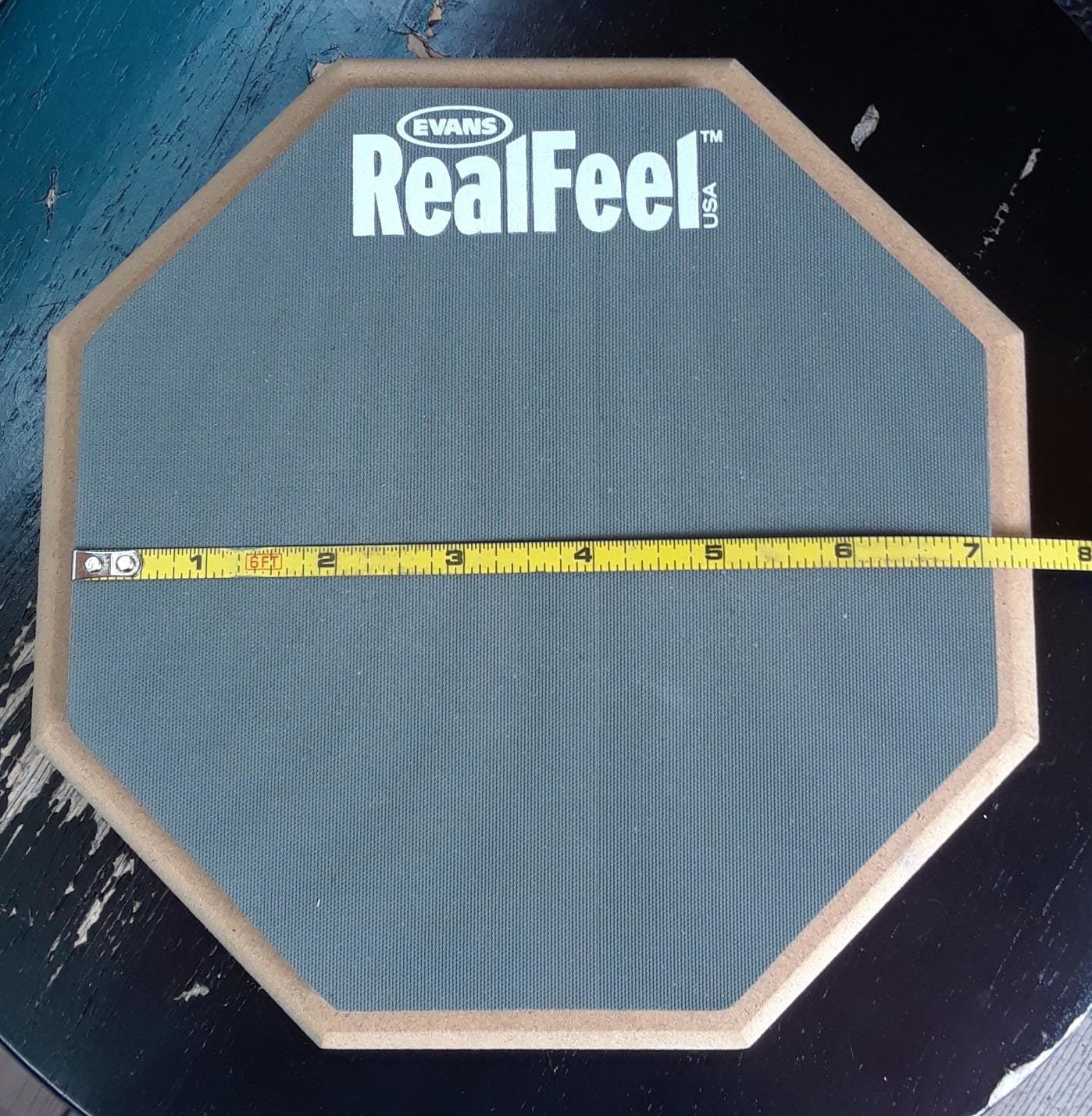
Where the size becomes a genuine problem is full-stroke technique. A 7 inch head invites you to play inside a small sweet spot, and that habit of narrow hand movement flattens out dynamics when you transfer to a 14 inch snare. Younger players working on a matched pair of 13 or 14 inch drums will feel this fastest.
The rating tells the rest of the story: 4.8 stars from 2579 reviews, and reviewers consistently call it the compact entry into the RealFeel line with the same realistic rebound and durable construction as the bigger versions. It is a genuine step up from a foam practice pad and a sensible first purchase for a child or a smaller-framed player.
Who this pad suits
Children and younger students who need a real rebound to learn on, plus anyone who practises in short bursts away from a fixed setup. At 1.22 pounds it is the easiest pad here to carry, and the fact that it fits inside a standard snare basket means you can mount it on hardware you probably already own.
Touring and hotel-room players will also like it. The pad is quiet, it works on any surface, and it does not need a stand, which removes the single biggest reason a portable practice pad never leaves the house.
Who this pad does not suit
Adults practising on full-size drums, for the reason above. If your hand position is already good and you are pushing technique, stay on a 12 inch pad. A small head tends to hide lazy stroke placement, and you will not notice the problem until you are back on the kit.
It is also single-sided, so there is no firm surface for endurance work, and at 7 inch it is not the pad for rimshots or hoop-height practice. Buy this one for portability and for young hands, and add a larger pad later if you keep playing.
4. Remo 10 Inch Tunable Practice Pad with Ambassador Head – the best real head feel
Remo RT-0010-58 10″ Red Tunable Practice Pad with Ambassador Ebony Drumhead
10 inch coated head
8 ounces
Tunable with a standard drum key
Non-scuff rubber base
Pros
- Real drumhead feel and bounce so rolls and control transfer straight to a snare
- Replaceable and tunable head extends the life of the pad
- Rubber base grips tables without scratching them
- Light at 8 ounces so it moves between rooms easily
Cons
- Audible when struck so it is not a silent practice surface
- The 10 inch head can be tight for beginners practising hand placement
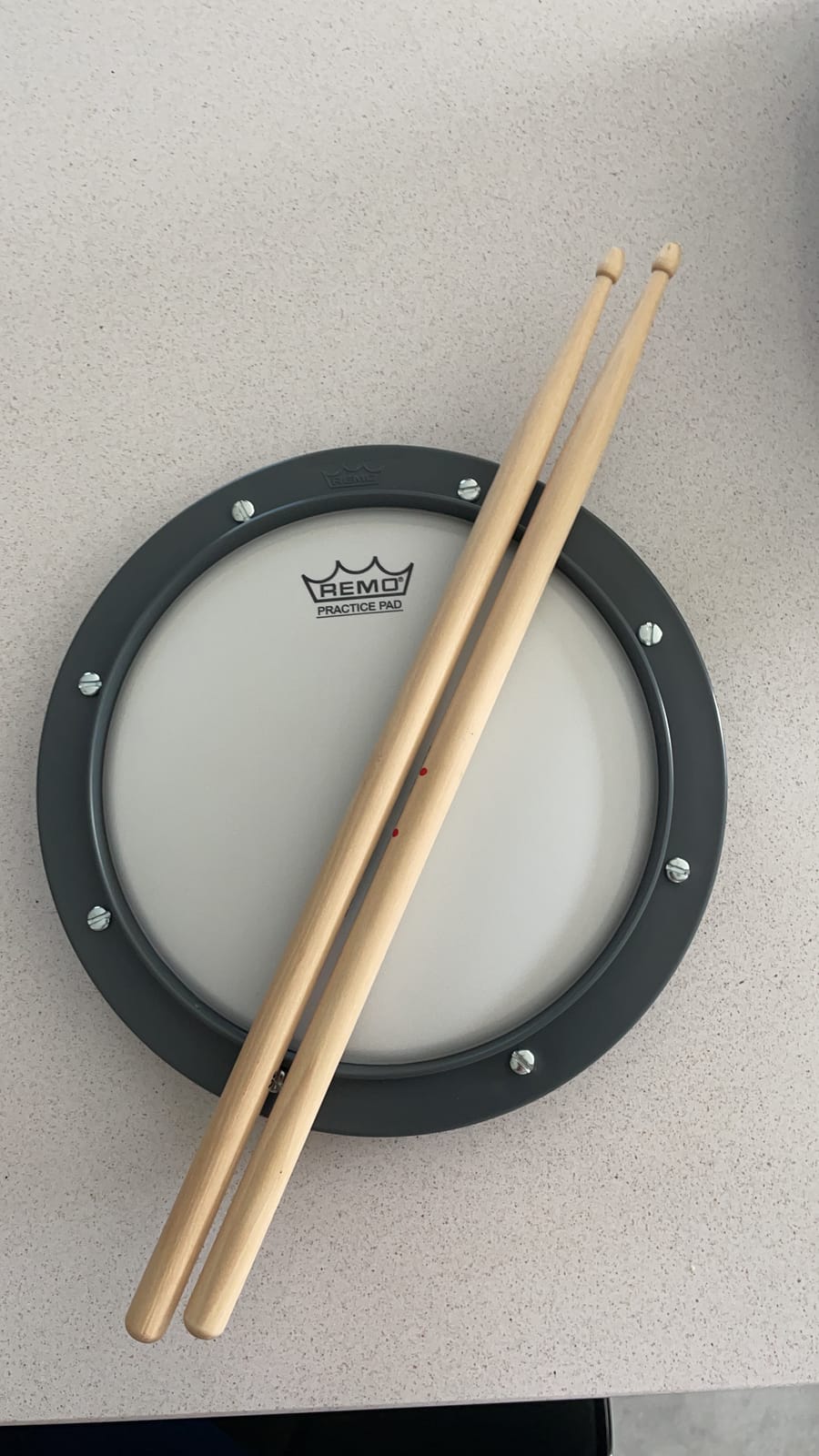
Every other pad here is a rubber or polymer surface pretending to be a head. This one is a head. The coated Ambassador drumhead gives you the bounce and the feel of a real drum, and because you can tension it with a standard drum key, you can loosen it for endurance work and pull it back up when you want a live response for rolls. That adjustability is the thing no rubber tile can offer.
It is also the lightest meaningful pad in this roundup at 8 ounces. The protective rubber bottom means you can set it straight on a dining table without scratching it or sliding it around, and the 10 inch diameter fits standard 10 inch to 14 inch snare stands, so it mounts properly rather than needing a flat surface or a basket.
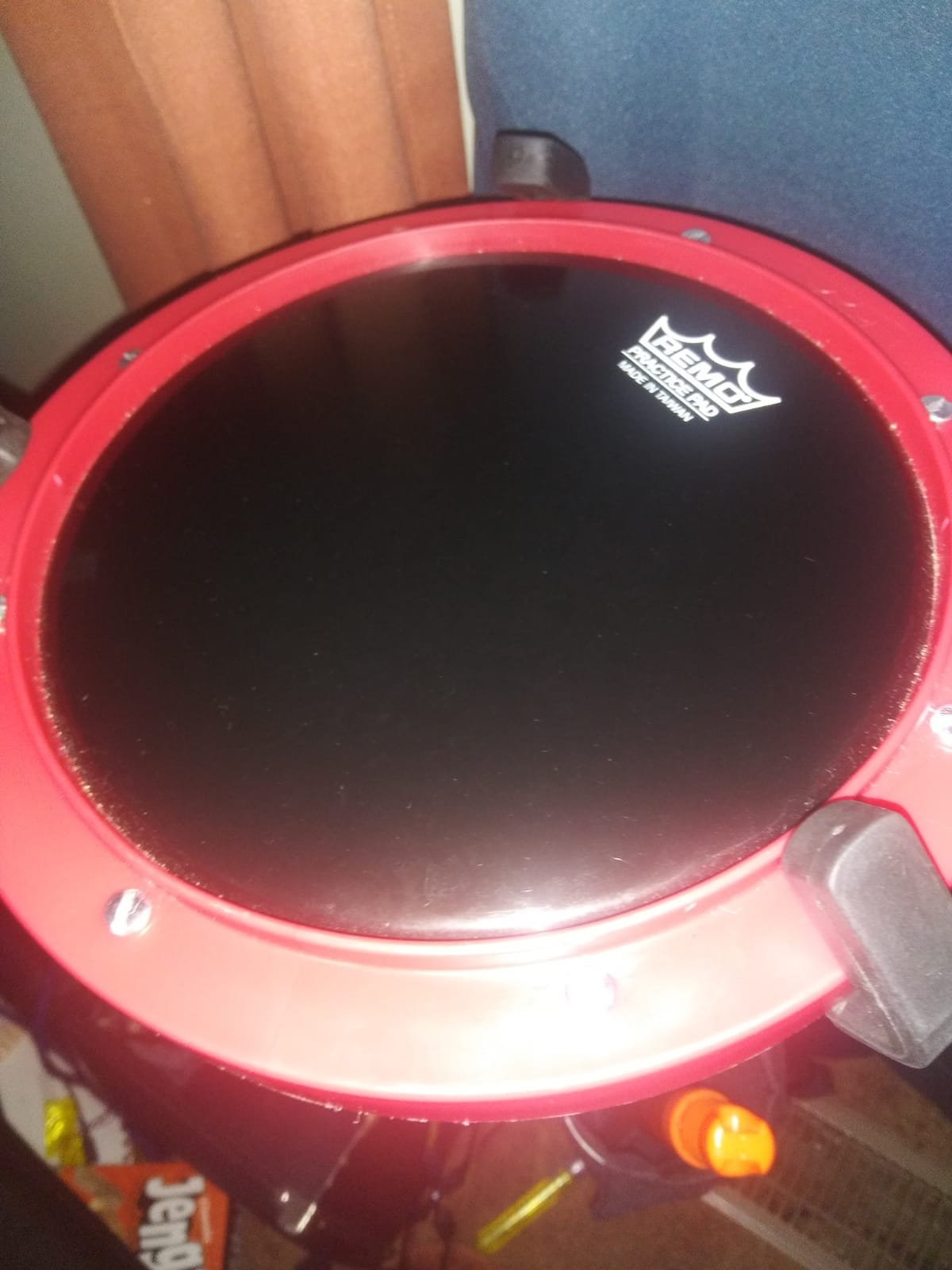
Long-term owners report using the same pad for years, and the 4.6 star average across 4277 reviews comes with a lot of comments about it feeling like an actual snare. The single head, one year warranty and replaceable design mean the pad is a long-term purchase rather than something that ends up in a drawer once the surface goes slick.
The honest drawback is volume. A real drumhead makes a real sound, and reviewers are clear that this is not a silent practice surface. That is fine in a practice room, a rehearsal space or a bedroom after everyone has gone to sleep, but it is the wrong tool for shared-wall apartment practice where the goal is silence.
Who this pad suits
Anyone whose biggest problem is transferring pad technique to an actual snare. A real head under your sticks, tensioned the way you tension a snare, is the closest thing in this list to playing the real thing. It also suits players who like a 10 inch diameter, since that matches a common marching and smaller concert snare size and cuts down the mental adjustment.
Mounting is a genuine advantage here. If you have a snare stand, this pad drops in and looks like part of a kit, which makes it far more likely that you will set it up and play it instead of leaving it under a sofa.
Who this pad does not suit
It is out of the running for anyone who needs silence. There is no way to dampen a coated head into a practice surface, and a hard stroke on this pad makes a sound that carries. If you live in a flat with thin walls, this is the wrong purchase no matter how good it feels.
Beginners also report that the 10 inch head is tight for hand placement, and a coated head gives you almost no hand-absorbing cushion over a long session. If hand fatigue is the reason you are reaching for a pad in the first place, this is the wrong shape of tool.
5. Donner 12 Inch Two-Sided Pad with Maple Sticks – the best value pick
Donner 12 Inches Drum Practice Pad Silent Drum Pad Set Blue 2-Sided With Drum Sticks
12 inch playing surface
2.9 pounds
Elastic rubber on a wood core
EVA polymer base
Pros
- Very quiet so owners can practise in apartments without bothering housemates
- Realistic rebound that helps build wrist control and timing
- Comes with a pair of maple drumsticks so it is playable out of the box
- Compact enough for beginners kids and small rooms
Cons
- The bundled maple sticks are lightweight and better suited to casual use
- The reverse side is thinner and lower quality than the playing face
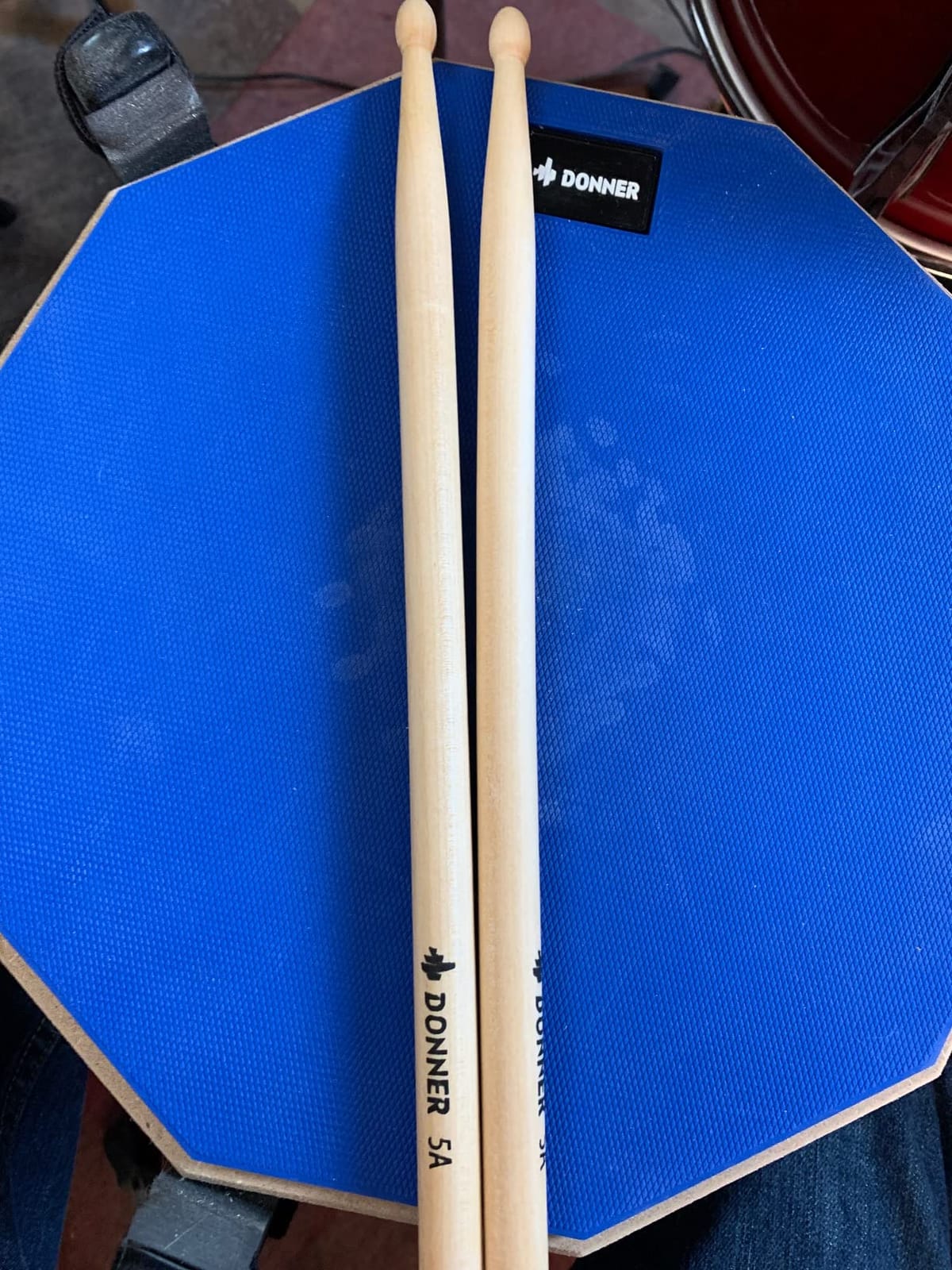
This is the set most people should actually start with. The high-density compressed wood board core gives the pad some weight and rigidity, the elastic rubber playing surface delivers a rebound that reviewers describe as realistic enough to build wrist control and timing on, and the EVA polymer mat base underneath does three jobs at once: it grips, it soundproofs, and it takes a bit of pressure off your wrists.
At 4.7 stars from 3282 reviews it is not a compromise disguised as a deal, and buyers often say it feels better than the price suggests. It ranks in the top five of the Practice Pads and Devices category, and it is the option we would hand to a student or a parent buying a first pad without much deliberation.
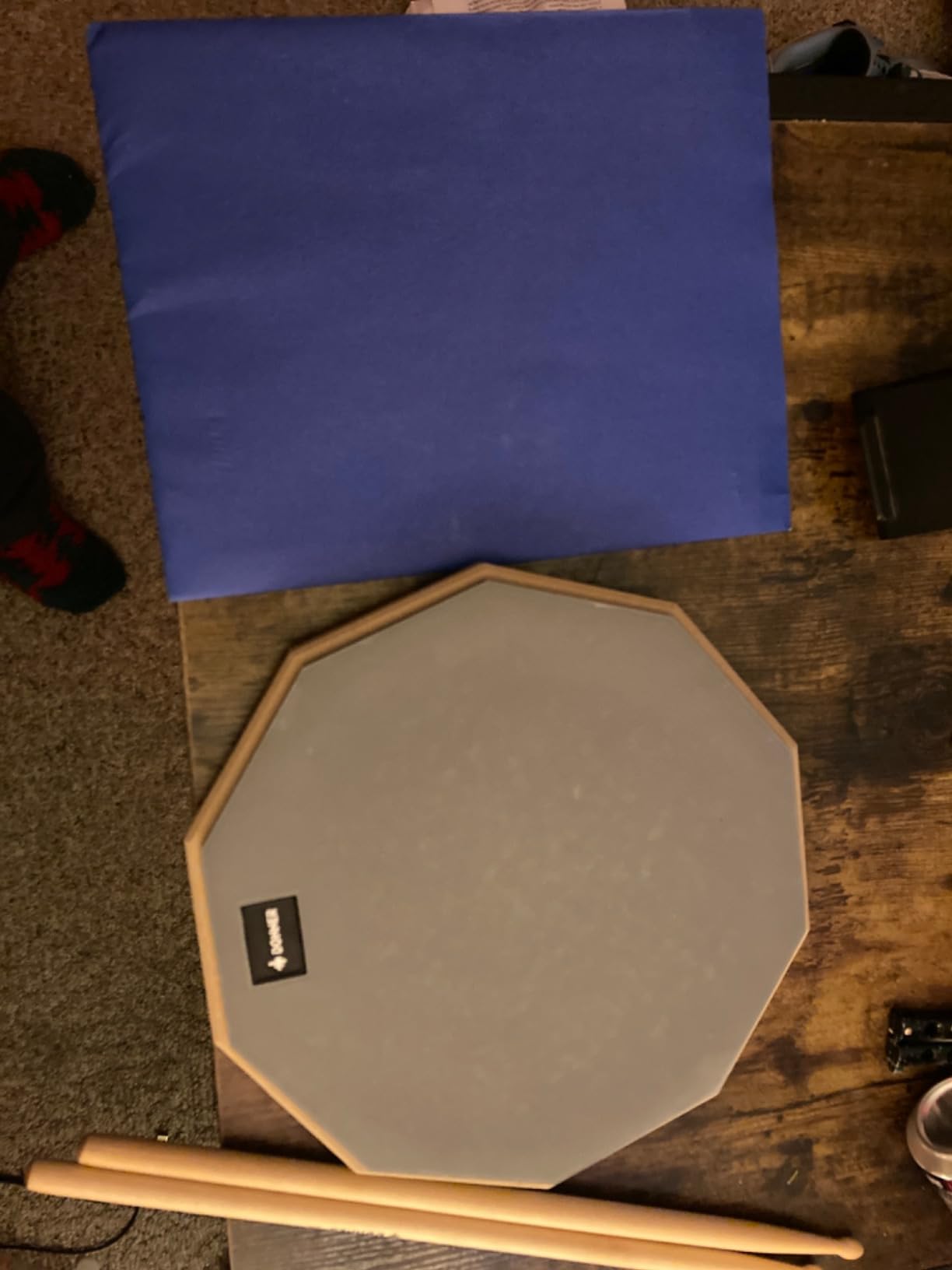
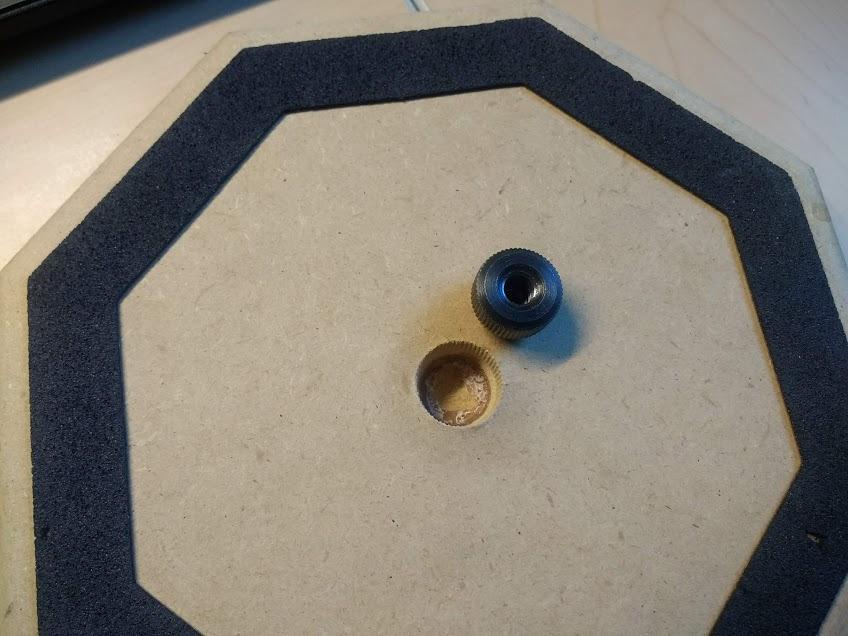
Two details make it more flexible than a plain slab of rubber. It comes in 8 inch and 12 inch versions in blue and grey, and the two-sided construction includes a cavity for screwing the pad onto a stand, so it can be mounted properly rather than just dropped into a basket. A pair of maple drumsticks is in the box, which means the set is playable the moment it arrives.
The common complaint is the sticks. They are genuinely basic maple pairs, better suited to a student than to anyone running heavy conditioning work, and the back side is thinner and lower quality than the playing face. Neither problem affects the pad itself, but do expect to buy your own sticks eventually.
Who this pad suits
Beginners, families in apartments, and anyone who needs a genuinely quiet surface for evening practice. The rubber on EVA combination is a real sound-damping stack rather than marketing language, and multiple owners specifically say they can practise without bothering housemates.
It is also a good gift, since the box includes sticks and the pad works on carpet, table, lap or in a snare basket without any assembly. If you are undecided between the cheap end and a premium rubber pad, this is the middle point where most of the benefit and almost none of the risk lives.
Who this pad does not suit
Players who are chasing snare response. A rubber surface with a wood core gives you a decent bounce, but it will never feel like the coated head on the Remo, and there is nothing to tune. If the whole point of the pad is to make practice feel like the kit, look elsewhere.
It is also 2.9 pounds, so it is a home pad rather than a travel pad, and the reverse side is not good enough to be a second serious practice surface. Buy one of these for a first setup, and move up to a two-sided gum-rubber pad once you are sure you will keep playing.
6. HAIRIESIS 12 Inch Pad with Sticks and Carry Bag – the complete starter bundle
HAIRIESIS Snare Drum Practice Pad,12-Inch Practice Drum Pad,Double Sided Silent Drum Pad and Sticks,Drum Pads Carry Bag
12 inch playing surface
3.36 pounds
Elastic rubber surface
Anti-slip sound-insulating base
Pros
- Cuts noise enough for children to practise while others work or study
- Behaves like a snare head so rolls and rudiments transfer well
- Carry bag makes the set easy to take to lessons or travel with
- Includes two pairs of 5A sticks
Cons
- The playing surface marks or stains fairly quickly with use
- The included bag and sticks are basic
- Some sets arrive with missing sticks or damaged packaging
The pitch here is completeness. You get a 12 inch pad, two pairs of 5A sticks and a waterproof Oxford fabric carry bag in one box, which removes the three small problems that stop a first practice pad from getting used: no sticks, nowhere to put them, and no way to move the thing.
Owners value the noise reduction first and foremost. Families report that a child can practise while someone else is working or studying in the same room, which is a specific and difficult problem to solve. The high-density elastic rubber surface behaves enough like a snare head that rolls and rudiments transfer to a real kit, and the anti-slip, sound-insulating base with shock absorption keeps it steady.
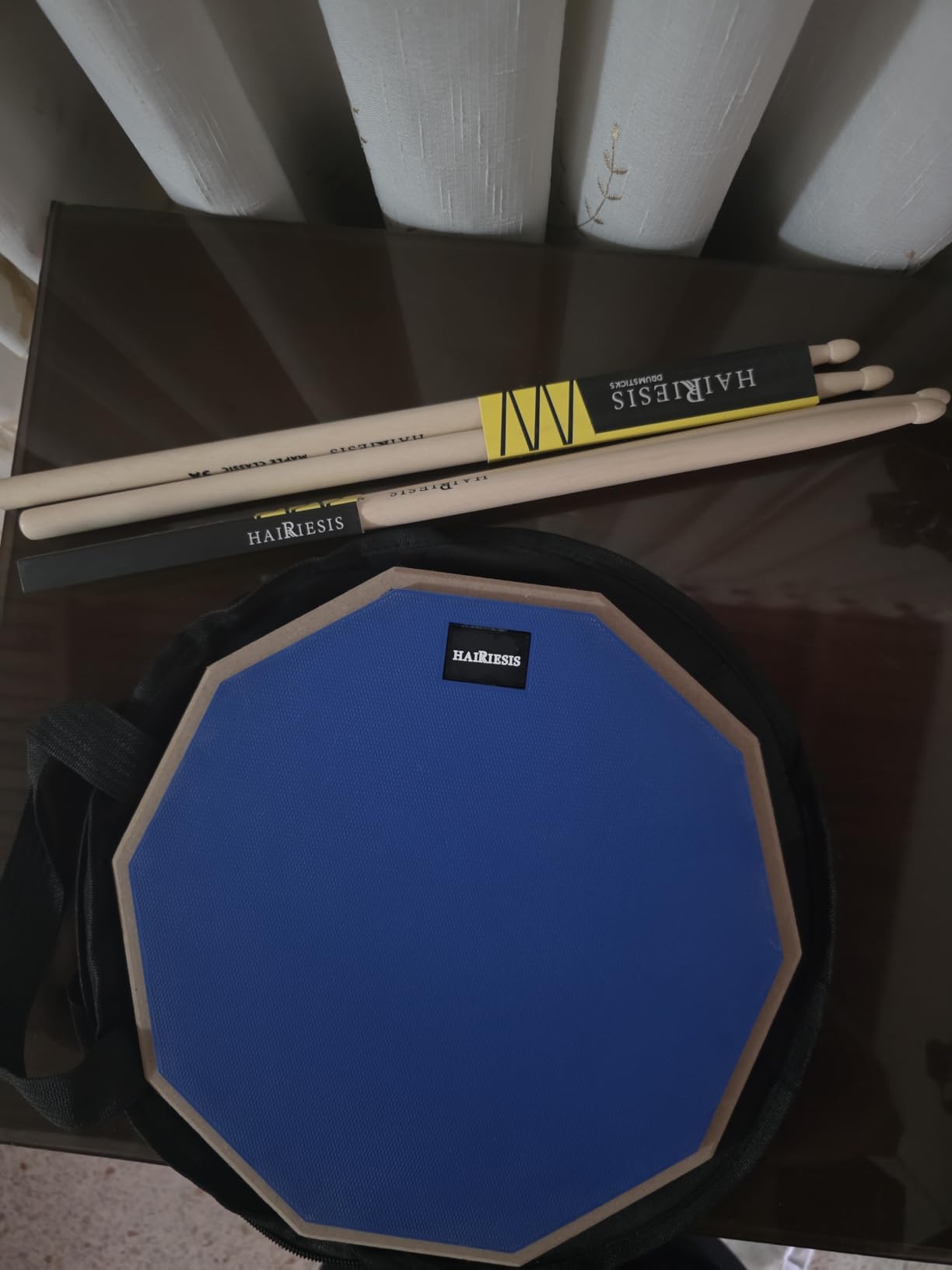
Build quality holds up for heavy practice, and there is a support contact that responds within 24 hours, which is more than most bundles in this category offer. It comes in black, grey, orange and blue, and the bag is the detail reviewers mention most often as a genuinely useful addition rather than filler.
At 3.36 pounds this is the second-heaviest pad we tested, and that is a real consideration if you take it to lessons. The 4.6 star average from 693 reviews is solid but based on a smaller pool than the Evans models, and the recurring negatives are worth reading: the surface stains fairly quickly, the accessories are thin, and occasional sets arrive with missing sticks or damaged packaging.
Who this pad suits
Parents buying for a child who needs a quiet place to practise, and anyone who wants a pad, sticks and a bag without making three separate purchases. The bag means the pad can go to a lesson and come home again, and a heavy 3.36 pound build is not going to slide around a table while a beginner works on grip.
It is also a reasonable second pad for a household, since you can leave one at home and one elsewhere without worrying about splitting the difference.
Who this pad does not suit
It is not for you if surface longevity matters. Reviewers report the playing surface marking or staining fairly quickly, and a pad that looks scuffed early puts you off practising on it. The bundled accessories are basic, and if a set arrives incomplete, you are chasing a replacement rather than playing.
It is also not portable in any real sense at 3.36 pounds, and it offers nothing beyond a rubber surface: no tuning, no snare buzz, no rim practice. If you already play and want a tool that challenges you, spend your money on the Remo or the two-sided RealFeel instead.
7. Donner Snare Stand and Practice Pad Set – the best full home setup
Donner Snare Drum Stand Set with Drum Practice Pad, 12” Double-sided Silent Drum Pad set, Drumsticks, Backpack Adjustable Stand Fits 10”-14” Dia Drums
12 inch double-sided pad
3.8 kg with stand
Double-braced tripod stand
Backpack with dividers
Pros
- Everything needed to practise at home in one kit including a sturdy stand
- Stand is quick to assemble and adjust with rubber feet that grip the floor
- Backpack with internal dividers makes transport to lessons or gigs easy
- Playing surface feels responsive rather than flimsy
Cons
- The stand tops out at 22.8 inches which is short for taller players
- The included maple sticks are basic and may not suit heavy practice
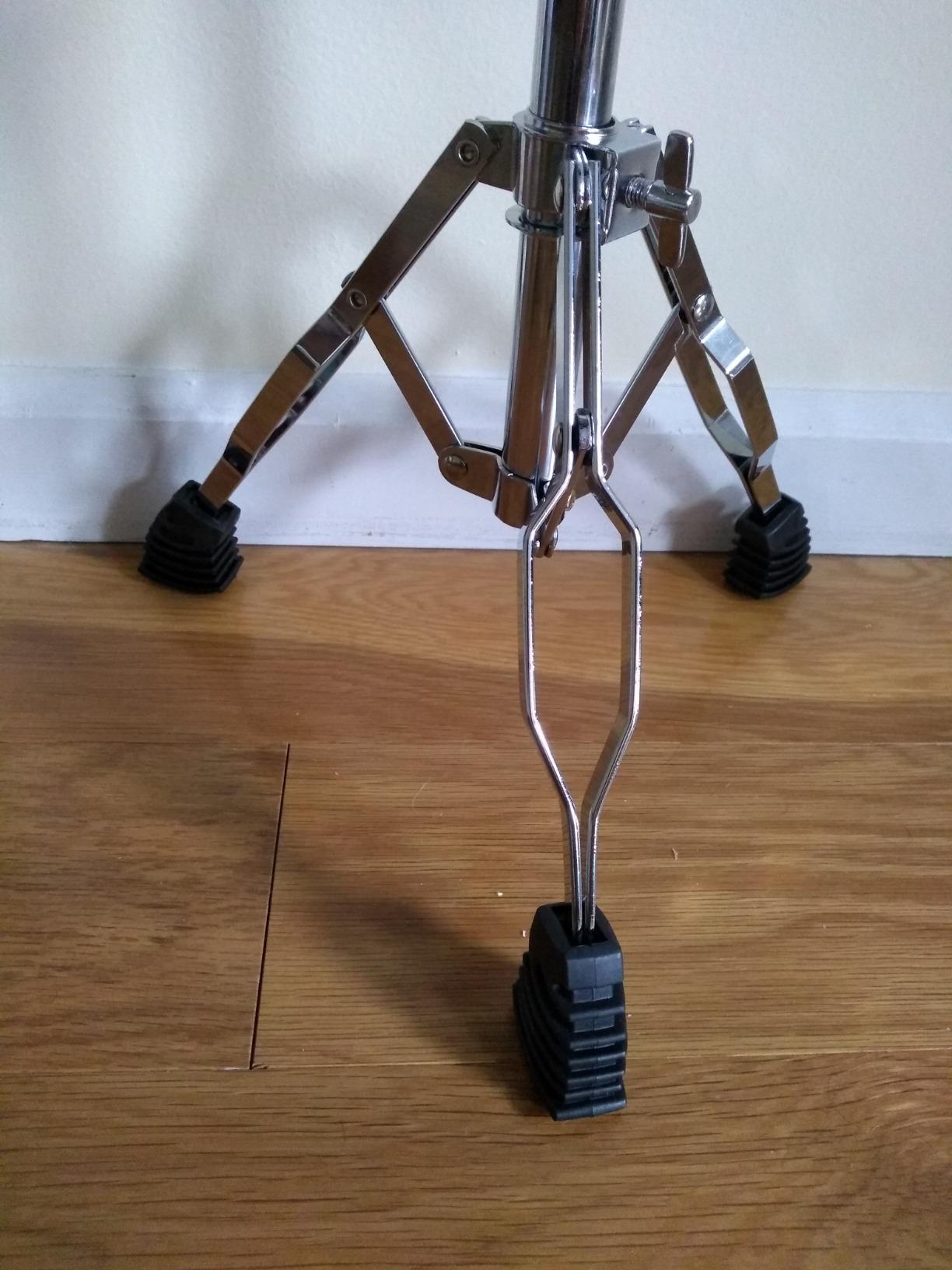
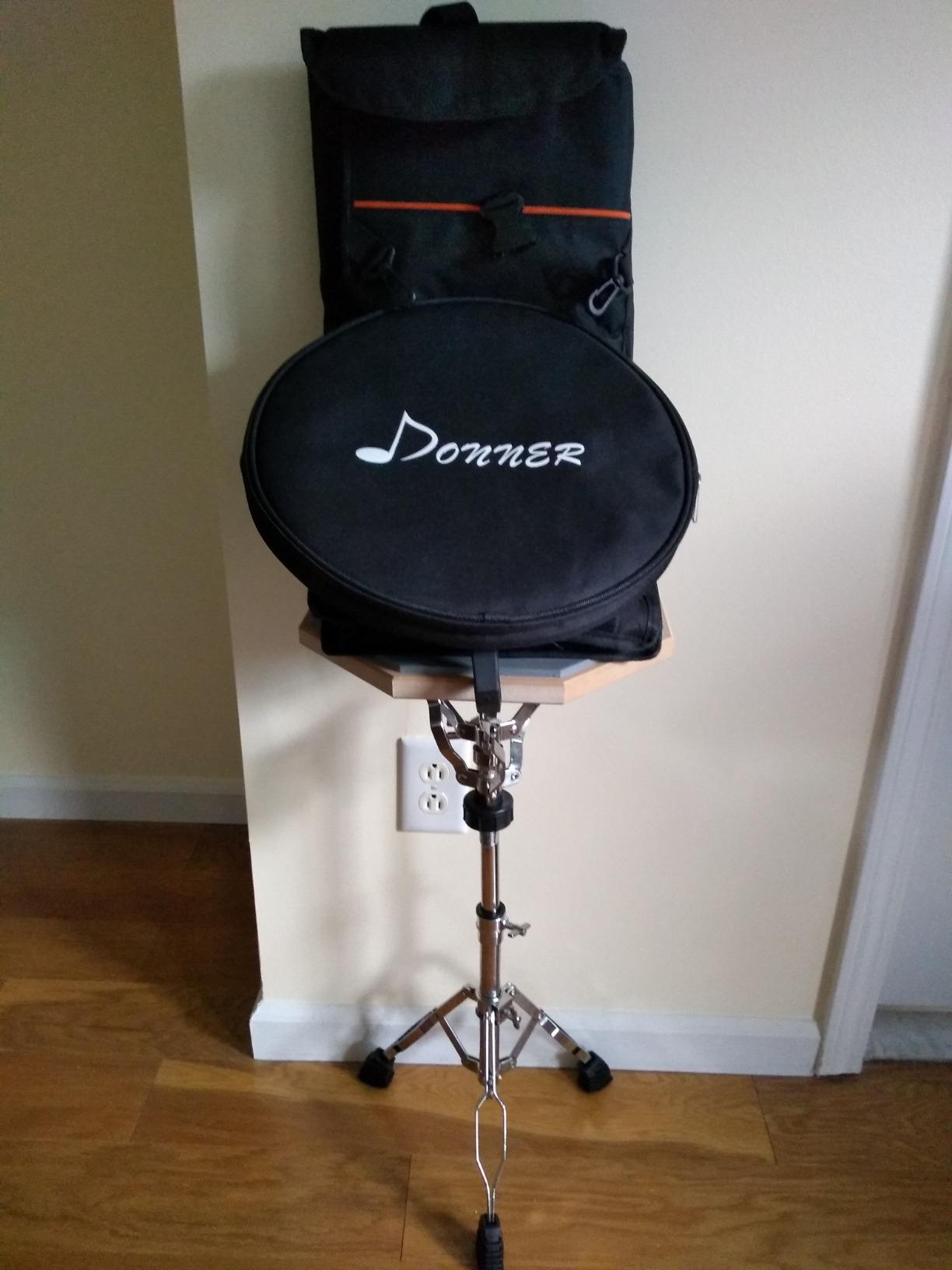
Most people buying a practice pad also need a stand, and this set solves that in one box. You get the same 12 inch double-sided high-density elastic rubber pad, an EVA polymer mat over a high-density compressed wood board for insulation and stability, and a double-braced tripod snare stand with rubber feet that grip the floor properly rather than skating when you play hard.
The stand is the reason to pay more here. It adjusts from 14.2 inches to 22.8 inches and its basket fits 10 inch to 14 inch drums, so it is a real piece of hardware rather than a folding prop. Families and instructors rate the set highly for exactly that reason: it looks and behaves like part of a kit, so the pad gets set up and used.
The bag is the other reason this set stands out. The 600D Oxford backpack has thickened sponge and internal dividers, so the pad, the sticks and the gel all have a place. For someone who practises at home but also needs to take the setup to a lesson or a rehearsal, that is the difference between a pad that stays in the corner and one that travels.
You also get three pairs of drumsticks, a stick bag and six drum gels for use on real drums. Quiet enough for flats and condos, and the 4.6 star average from 1461 reviews is consistent with what the set actually does.
Who this pad suits
Anyone setting up a permanent practice station, especially in a small home where a full kit is not an option. The stand plus double-sided pad means you can work on a firm surface for conditioning and a softer one for technique without buying a second pad, and the height adjustment means the pad can sit where your arms want it.
Teachers and parents benefit from the completeness. One purchase covers the pad, hardware, sticks and a proper bag, and the reviewers who rate it most highly are the ones describing it as a complete, quiet home solution.
Who this pad does not suit
Taller players. The 22.8 inch maximum height is the single most common complaint, and some buyers replace the stand entirely. Measure the height you need with a drum throne and sit on it before you commit, because a stand that is too short produces exactly the flat posture the pad is meant to fix.
It is also the heaviest item here at 3.8 kg, so this is a home setup and not a travel kit, and the bundled maple sticks are average. The pad itself is a good quiet rubber surface, but if your goal is realistic head feel you still want the Remo in position four, mounted on the stand instead.
8. Donner 12 Inch Pad with Removable Snare Simulator – the best for snare buzz
Drum Practice Pad 12 Inches, Donner Quiet Drum Pad with Removable Snare Simulation Built-in 800 Steel Balls, Drum Sticks, 40 Standard Rudiments(Black)
12 inch playing surface
1.62 kg
Removable 800 steel bead insert
Silicone surface
Pros
- The 800 steel bead snare simulation gives the most realistic snare response in this roundup
- Stays put on a table stand or lap thanks to the non-slip EVA base
- Standard-height rim and hoop slot allow rim shots and stick storage
- Includes a rudiment chart and a pair of maple sticks
Cons
- Heavier than most practice pads which matters for long carries
- The snare bead insert is removable and can be lost
- No clear replacement path if the bead insert wears out
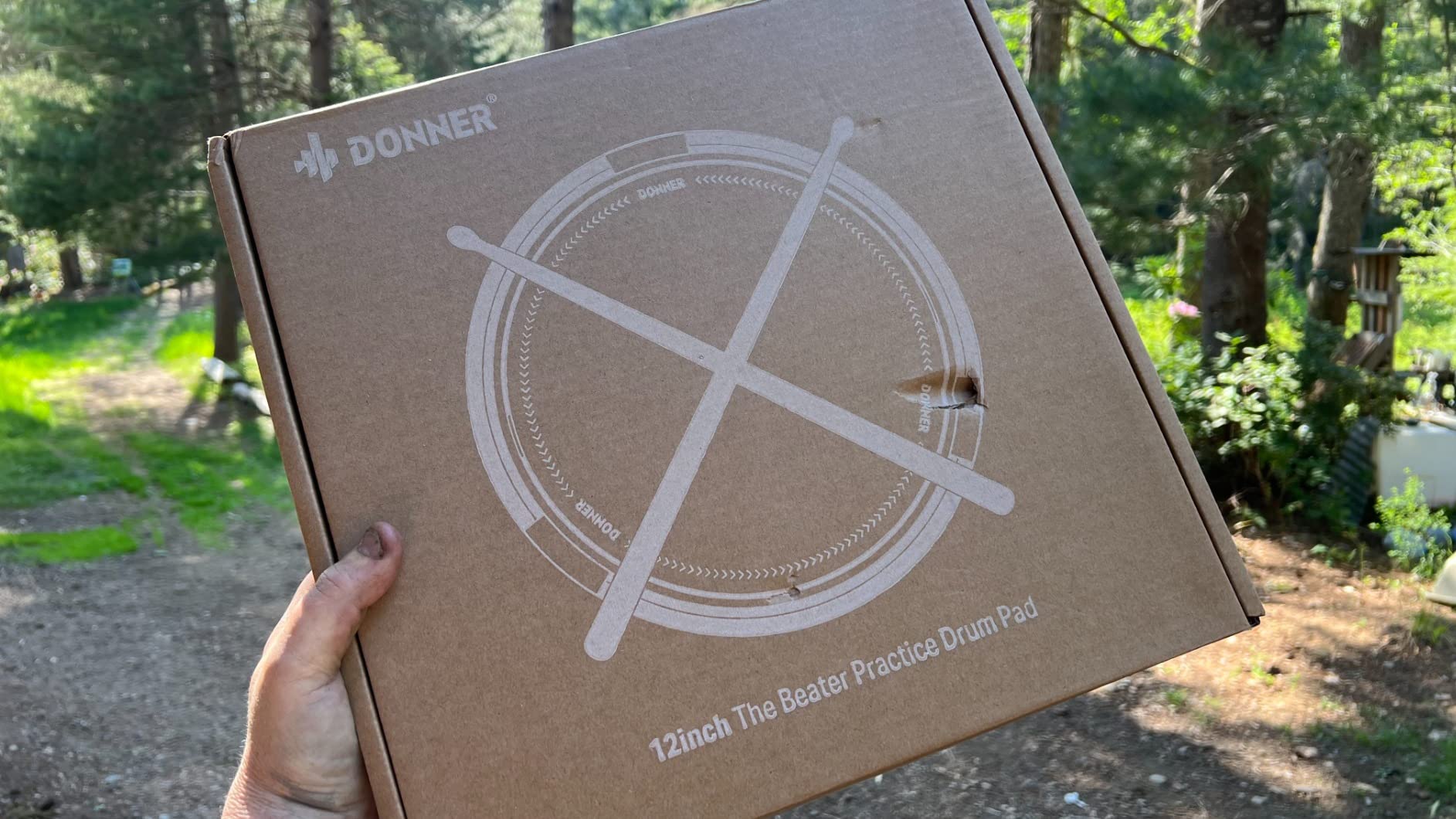
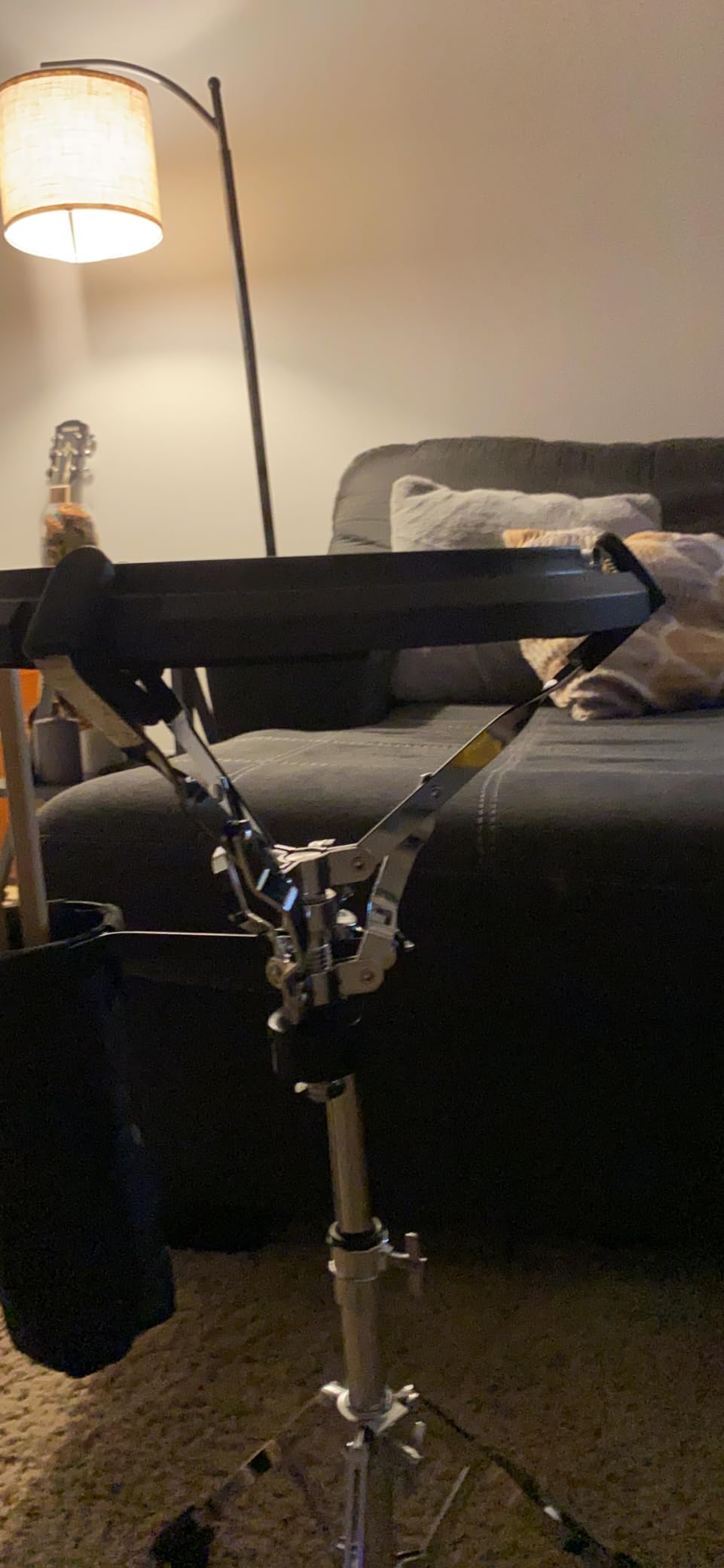
This is the most interesting pad in the list for anyone who cares about snare character rather than just bounce. The detachable snare simulator holds 800 steel beads, and reviewers single that feature out above everything else, comparing the result favourably to real acoustic snares. Pull the insert out and you have a quiet rubber pad; drop it back in and you have snare buzz and a much closer match to a wired head.
It is also a modern-player pad. The rim sits at standard height and there is a hoop slot that holds your sticks, so you can keep them within reach and practise rim shots on a pad rather than on a table edge. The high-density compressed wood body, durable silicone surface and non-scuff EVA base make it feel like equipment rather than a toy.
Quiet operation is a genuine strength here, and owners report practising late at night with the family asleep. That is surprising for a pad with a steel insert, and it is down to the compressed wood body and the EVA base absorbing what the beads do not. The rudiment printout of 40 standard patterns and a pair of maple sticks make it beginner-ready.
The weakness is the insert itself. It is removable, which means it can be lost, and reviewers raise a fair question about what happens when the beads wear out, because there is no obvious replacement path. At 1.62 kg it is also heavier than most pads here, though not by much.
Who this pad suits
Drummers who want to practise rim shots, buzz rolls and modern snare technique on something that is not a full kit. The rim height and hoop slot are the details that matter, and the removable insert means one pad serves both quiet warm-ups and realistic snare work depending on the day.
Beginners benefit too, because the rudiment chart and included sticks remove the two most common reasons a first practice pad sits unused. And if you are rehearsing in a room where a real snare would be refused, the bead insert gets you closer than any rubber tile in this list.
Who this pad does not suit
Anyone who travels with their practice setup. At 1.62 kg plus the risk of losing the bead insert, this is a pad that lives in one room. It is also the smallest pool of reviews here at 522, which means fewer long-term owners have stress-tested the silicone surface or the insert.
If you want real head feel you will still need the Remo, because a bead insert simulates snare buzz rather than head response. And if rimshots are not part of your practice, you are paying for a feature you will not use.
9. EASTROCK 12 Inch Double-Sided Pad – the best for stick control work
EASTROCK 12 Inches Practice Drum Pad Double Sided Silent Drum Pad, Gray
12 inch playing surface
1.82 kg
Elastic rubber on wood
Block-patterned anti-slip back
Pros
- Quiet enough to practise without neighbours objecting while still giving audible hit feedback
- Double-sided design offers a second playing surface
- Anti-slip block-patterned backing keeps the pad stable while playing
- Supplied with drumsticks and a waterproof storage bag
Cons
- Entry-level rebound compared with higher-end rubber pads
- Some buyers find it better as a learning or transition tool than a serious practice surface
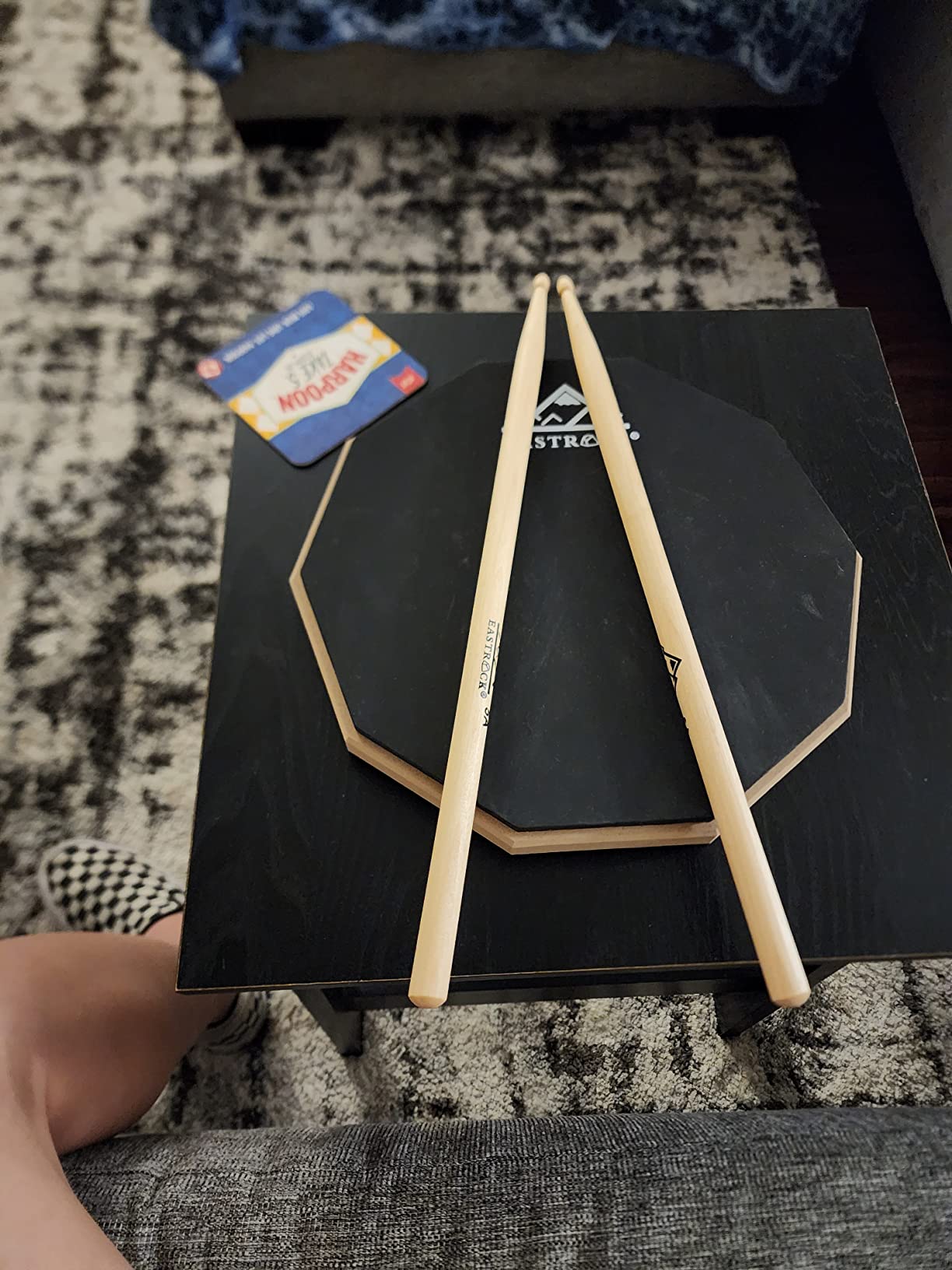
The EASTROCK occupies the useful middle of the market. It is a 12 inch double-sided pad with a high-density elastic rubber front and a block-patterned rubber back designed not to slip on a flat surface, and it comes with a pair of drumsticks and a waterproof storage bag. That is a complete, quiet, stable setup for the price of one serious pad plus accessories elsewhere.
What you give up is refinement. The rebound is entry-level next to gum-rubber models, and advanced players consistently treat this as a secondary or learning surface rather than their primary one. That is not a criticism so much as a description of the job it does well: teaching stroke height, hand placement and basic coordination without loud noise.
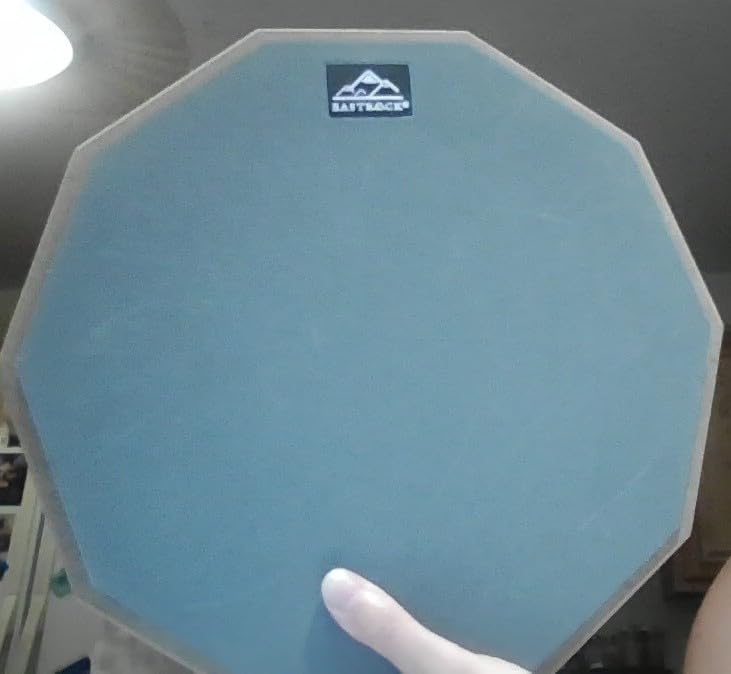
The noise behaviour is the underrated part. Owners like that it is quiet enough for shared walls while still producing audible hit feedback, which matters more than it sounds. A completely silent pad leaves you guessing about dynamics, and a pad that makes a snare-like crack defeats the purpose. This one sits in the useful gap between the two.
There is also a two year manufacturer warranty here, which is longer than most competitors offer, and the compact size fits on a drum set or on a stand. It comes in black, blue and grey. The 4.6 star average from 459 reviews is a smaller sample than the Evans models, so treat it as a well-made entry option rather than a proven long-term investment.
Who this pad suits
Beginners working on stick control and hand placement, and anyone who wants a quiet surface that still tells them how hard they hit. The double-sided design lets you change surface without buying a second pad, and the block-patterned back stays put on a desk or table where lighter rubber tiles wander.
It is also a good stopgap for a player who is between pads. Buy this while you decide what you actually want, and move up to gum rubber or a real head once you know whether you practise technique or feel.
Who this pad does not suit
Advanced players. Once your strokes are consistent, an entry-level rebound stops teaching you anything, and the second side is not a substitute for a real conditioning surface. If you already own a snare, this pad will not tell you much you cannot learn from it.
It also does nothing about head feel, tuning or snare buzz, and at 1.82 kg it is a home pad. Buy the Remo for a mounted, tunable head, or the Donner bead-simulator pad for snare response, and use this one for what it is good at.
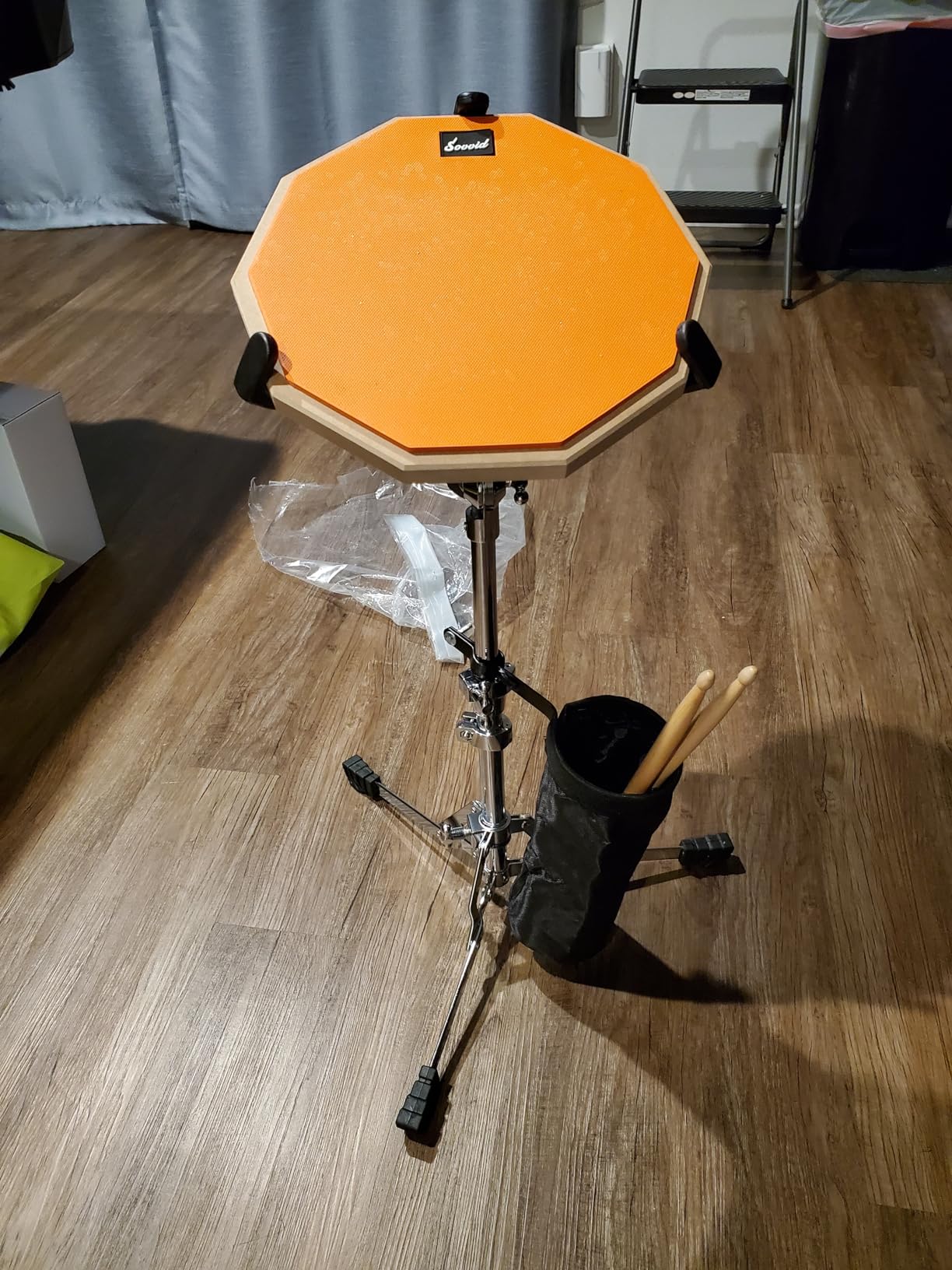
10. Sovvid 12 Inch Double-Sided Pad with Sticks and Bag – the best for storage and wall mounting
Sovvid 12 Inches Drum Pad and 5A Drum Sticks, Double Sided Snare Drum Practice Pad for Drummers, Silent Practice Drum Pad with Storage Bag – Gray
12 inch playing surface
1.48 kg
Textured high-density elastic rubber
EVA polymer base
Pros
- Realistic rebound that helps build endurance and muscle memory
- Silent enough for home practice without noise complaints
- EVA base cushions impacts and protects wrists
- Lightweight Oxford bag with a stick pocket for carrying or wall hanging
Cons
- The textured surface is less authentic than a coated drumhead
- Bundled sticks are basic 5A pairs
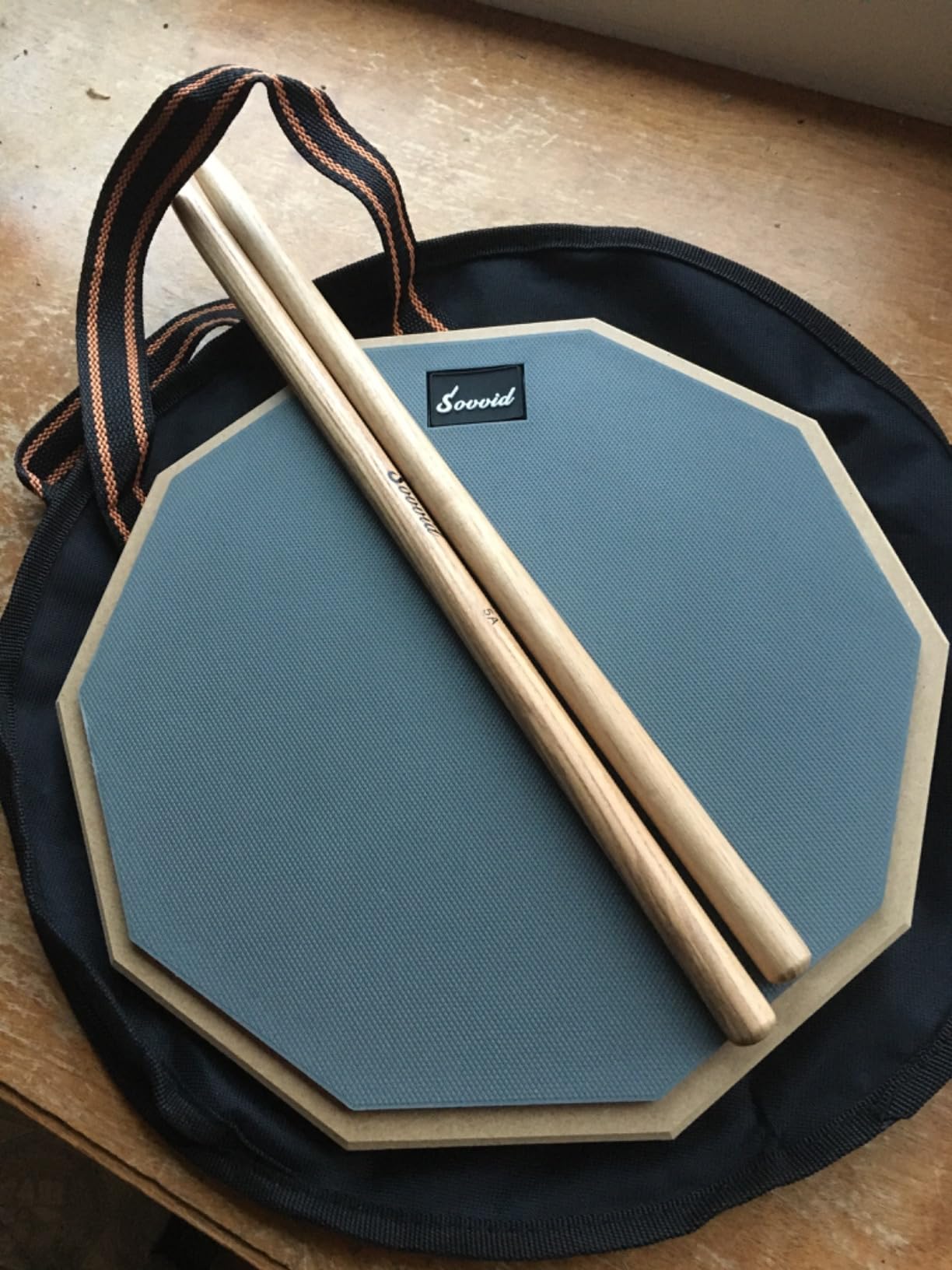
The Sovvid is a well-judged 12 inch pad for anyone whose practice spot is temporary. The slightly textured high-density elastic rubber surface gives a rebound that owners say helps build endurance and muscle memory, and the high-density compressed wood panel with an EVA polymer base grips, soundproofs and cushions. You can work on a carpet, a table, your lap or inside a standard snare basket.
At 1.48 kg it is one of the lighter full-size pads here, and the bag is the detail that makes it practical. The lightweight waterproof Oxford fabric bag has stick storage, so the whole thing can be carried to a lesson or hung on a wall when you are not using it. In a small flat where floor space is the scarce resource, a pad you can put away is worth more than a pad with a slightly better surface.
The 4.7 star average from 323 reviews is good for a smaller product, and customers treat it as a solid starter setup for building coordination and basic technique, for adults and kids alike. It comes in grey, orange and black, and the sound profile is genuinely silent rather than merely quiet.
The limit is authenticity. Feedback consistently notes that the surface feels more like a rubber practice pad than a real coated head, and players who want acoustic response tend to move up. The bundled sticks are basic 5A pairs, which is fine to start and not fine to keep.
Who this pad suits
Beginners of any age, and players who practise in short bursts in different rooms. The bag with a stick pocket means the pad, the sticks and the setup travel together, and the EVA base takes pressure off your wrists when you are working on endurance rather than speed.
It is also a strong option for shared accommodation where noise is the constraint and floor space is tight. Double-sided construction, silent operation and a light weight cover the three things a renter actually needs.
Who this pad does not suit
Anyone who wants the response of a real head. The textured rubber is a compromise, and once your technique is solid you will notice the difference between it and a coated surface. That is the moment to move to the Remo or to a gum-rubber RealFeel.
There is also no mounting thread, no rim and no snare buzz here, so if you want rimshots or buzz rolls this pad will not get you there. And the small review pool means less long-term wear data than the established models.
How to Choose a Practice Pad for Drumming
Most wrong purchases come down to buying the wrong surface for the wrong goal. A pad that is excellent for technique work can be miserable for a two-hour conditioning block, and a pad that is superb for conditioning can be useless for learning where your strokes land. Work through these factors in order and the decision makes itself.
Size and diameter
Match the pad to the drum you play. A 12 inch pad sits close to a 14 inch snare, so hand placement and stroke height transfer directly. A 7 inch pad is a travel and youth option that encourages narrow hand movement, which you will have to unlearn later. The 10 inch Remo suits players who use a smaller snare and want the head size to match exactly.
Community advice on r/drums is consistent on the beginner question: a pad can sit on a table or a countertop, and no stand is required. Stand height only becomes important once you are playing with a full kit in front of you. Related thinking about gear that suits a small room is in our sleeping pad guide, where footprint is the deciding factor too.
Surface material and rebound
This is the single biggest decision. Gum rubber, as on the RealFeel pads, gives the closest rebound to a real head and is the standard for technique work. Recycled rubber is harder and absorbs more, which makes it a conditioning surface that reduces rebound and forces cleaner strokes. Silicone and compressed-wood constructions like the Donner pads sit between the two and are quieter.
A foam or gel surface absorbs almost all rebound, which is deliberate: it stops your hands from learning to rely on the stick bouncing back. A coated drumhead like the Ambassador on the Remo behaves like a real snare and is tunable, which lets you flatten the response for endurance work and tighten it for rudiments.
Noise level and shared walls
Pads that are advertised as silent are not silent, they are quiet. The noise floor comes from the stick contacting the surface, not from any drum shell, so a rubber pad on an EVA base is a fraction of the volume of a real kit. Remo and other head-based pads make an actual acoustic sound, and they are the wrong tool for thin walls.
If your neighbours are the deciding factor, choose from the rubber-and-EVA group: the Donner blue pad, the Sovvid, the EASTROCK, or either Donner stand set. Reviews on these consistently mention practising in apartments or family homes without complaints.
Weight and portability
Weight decides whether a pad gets used, and it is the column most roundups ignore. The Remo is the clear travel winner at 8 ounces. The Evans 7 inch apprentice at 1.22 pounds and the Sovvid at 1.48 kg are the next tier. At the heavy end, the Donner stand set is 3.8 kg and the HAIRIESIS set is 3.36 pounds, both of which are home pads.
Our advice: buy the weight you will actually carry. A pad that stays beside the sofa and a pad that comes to every rehearsal are both useful, but you only get one. If the answer is undecided, look at our golf practice mat picks for the same habit-versus-portability thinking in a different sport.
Mounting and stands
Check the mounting before you buy. The Remo fits standard 10 inch to 14 inch snare stands, which is proper hardware mounting. The Donner blue pad has a cavity for screwing onto a stand. Most rubber tiles, including every 12 inch RealFeel, are designed to sit flat or drop into a standard snare basket, and the manufacturer states the 12 inch model is not mountable.
Budget pads without a threaded insert or a cavity are the ones that frustrate owners, because they slide around and need a workaround. If you already own a snare stand, the basket route works for almost every pad here.
What a practice pad cannot teach you
A pad will not teach you cymbal feel. There is no cymbal on it, and the physics of a 14 inch cymbal on a stand are not reproducible on a rubber tile. It will not teach you shell resonance, how a resonant head blooms at volume, or how a room reacts to a full kit. Nor does it teach tuning, because rubber surfaces do not tune.
What it does teach is where the most useful practice actually happens: stroke height, hand placement, rebound control, rudiments, and the endurance to play a single stroke evenly two hundred times. The 80/20 rule in drumming is usually framed as the idea that most results come from a small number of fundamentals repeated with accuracy, and a pad is the cheapest way to run that loop. A mouse pad on a desk, or a pillow, is a legitimate free starting point before any of the pads on this list. The same discipline we apply to short daily sessions in our walking pad roundup applies here: consistency beats intensity.
Frequently Asked Questions
What is the best practice pad for drumming?
For most drummers the Evans RealFeel two-sided 12 inch pad is the best all-round choice, because the gum rubber side gives a realistic snare rebound and the firmer recycled rubber side is a built-in conditioning surface. If you want a real head response rather than rubber, the Remo 10 inch tunable pad is the alternative. If you need silence above all else, any rubber pad on an EVA base will do.
What is the best drum practice pad for beginners?
A beginner should start with a 12 inch pad rather than a small one, because full-stroke hand placement learned on a 7 inch surface has to be unlearned later. The Donner 12 inch two-sided pad with maple sticks is the most complete starting package, and the Evans RealFeel single-sided 12 inch pad is the better long-term surface. You do not need a stand, since most pads work on a table, carpet or lap.
Are practice drum pads worth it?
Yes. A pad lets you practise rudiments, stroke height and endurance anywhere at a fraction of the volume, cost and footprint of a kit or electronic module. The limitation is honest: no pad teaches cymbal feel, shell resonance or tuning. Think of it as a technique tool that keeps you playing consistently on the days a full kit is not an option.
Can you learn drums with just a practice pad?
You can learn most of the important stick technique with only a practice pad, including grip, stroke height, rudiments, single and double stroke control and hand strength. What it cannot do is prepare you for cymbal technique, pedal work, tuning or dynamics on a resonant head. Most players use a pad between kit sessions rather than as a replacement for one.
How loud are practice pads and do they wear out?
Rubber pads on an EVA or wood base are quiet rather than silent, and they are fine in most apartments. Head-based pads such as the Remo make a real acoustic sound and are unsuitable for shared walls. Durability depends on the surface: gum rubber with a fabric finish resists stick wear for years, while cheaper fabric-wrapped rubber surfaces mark or stain noticeably within months of regular use.
Our Final Verdict for 2026
The Evans RealFeel two-sided 12 inch pad is the best practice pad for drummers in 2026 because it is the only one here that gives you a realistic snare rebound and a genuine second conditioning surface in the same object, with the largest review base of anything we tested. Buy that one and you have covered technique, endurance and portability in a single purchase.
Pick the Remo 10 inch tunable pad instead if you need real head feel, a mounted fit and the ability to change the response on demand. Pick the Donner snare stand set if you want a complete home station with hardware and a bag rather than a bare pad, and pick the Donner bead-simulator pad if snare buzz and rimshots are what you actually want to practise.
Whichever you choose, buy it, keep it somewhere you will actually hit it, and use it on the days a full kit is not an option. The pad is not a substitute for the drums. It is the reason you still get better on them.