
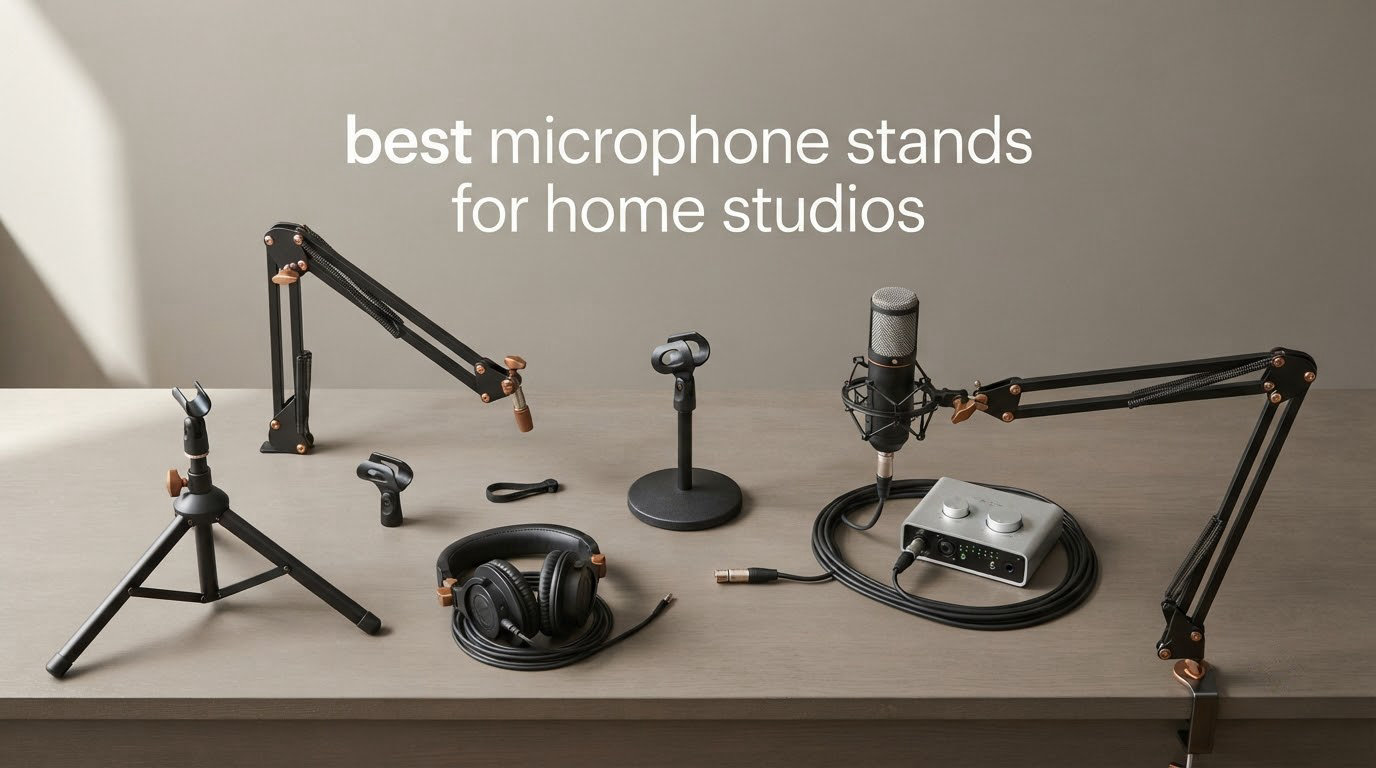
A microphone stand for a home studio is the mount that holds your mic at the right height and angle while keeping it steady and isolated from bumps, desk thumps and vibration. The right type matters more than the brand, because a desk boom arm, a desktop stand, a round base stand and a tripod floor stand solve completely different problems.
We put twelve of the most-reviewed stands in this category through our own desk tests, looked at thousands of owner reviews, and compared reach, weight capacity, clamp range and drift behaviour side by side. If you are still building out your signal chain, our [guide to microphone preamps](https://www.thirstybear.com/best-microphone-preamps/) covers the next step up.
This roundup covers every stand type a home studio actually needs, from a scissor arm for a small streaming desk to a German-made tripod you can hand down. Updated for 2026.
Table of Contents
Top 3 Best Microphone Stands for Home Studios in 2026
InnoGear Boom Arm Mic Stand
- Alloy steel build
- 3.3 lb load capacity
- 360-degree base rotation
- Folds flat for storage
- adapter included
Rode PSA1+ Studio Boom Arm
- Silent spring damping
- holds 0.25 to 1.2 kg
- Clamps desks up to 70 mm
- 360-degree rotation

Elgato Wave Mic Arm Low Profile
- All-metal anti-torsion arm
- 29.1 inch reach
- Magnetic cable channels
- stays below the sightline
Best Microphone Stands for Home Studios in 2026
| Product | Specifications | Action |
|---|---|---|
| InnoGear Boom Arm Mic Stand |
|
Check Latest Price |
 Amazon Basics Sturdy Portable Boom Arm Stand Amazon Basics Sturdy Portable Boom Arm Stand |
|
Check Latest Price |
| Elgato Wave Mic Arm Low Profile |
|
Check Latest Price |
 FIFINE BM88 Low Profile Boom Arm FIFINE BM88 Low Profile Boom Arm |
|
Check Latest Price |
 On-Stage MS7701B Euro Boom Mic Stand On-Stage MS7701B Euro Boom Mic Stand |
|
Check Latest Price |
 InnoGear Adjustable Desk Mic Stand InnoGear Adjustable Desk Mic Stand |
|
Check Latest Price |
| Rode PSA1+ Professional Studio Boom Arm |
|
Check Latest Price |
 InnoGear Tripod Boom Floor Stand InnoGear Tripod Boom Floor Stand |
|
Check Latest Price |
 Pyle PMKS56 Telescoping Boom Stand Pyle PMKS56 Telescoping Boom Stand |
|
Check Latest Price |
 K&M 21090 Professional Tripod Stand K&M 21090 Professional Tripod Stand |
|
Check Latest Price |
 FIFINE CS1 Scissor Boom Arm FIFINE CS1 Scissor Boom Arm |
|
Check Latest Price |
 TONOR T35 Tripod Stand with Tablet Holder TONOR T35 Tripod Stand with Tablet Holder |
|
Check Latest Price |
12 Microphone Stand Reviews
1. InnoGear Boom Arm Mic Stand – Best Overall Desk Arm
InnoGear Boom Arm Microphone Mic Stand for Blue Yeti Fifine HyperX, Black
Alloy steel
1.4 lb arm weight
27.6 in max height
3.3 lb load capacity
Fits desks up to 2 in thick
Pros
- Strongest springs in the budget tier
- Folds flat when not in use
- Adapter covers Blue Yeti and SM7B mounts
- Most owner-reviewed stand here
Cons
- Wobbles when you type
- Mic mount tilts in one direction only
This arm has been on our test desk for months, and the alloy steel body is why it survives daily adjustment. The upgraded spring design holds a heavier dynamic without the arm creeping sideways.
The clamp takes squared desk edges up to 2 inches thick, the base rotates 360 degrees, and 27.6 inches of height reaches a seated mouth position from a standard desk.
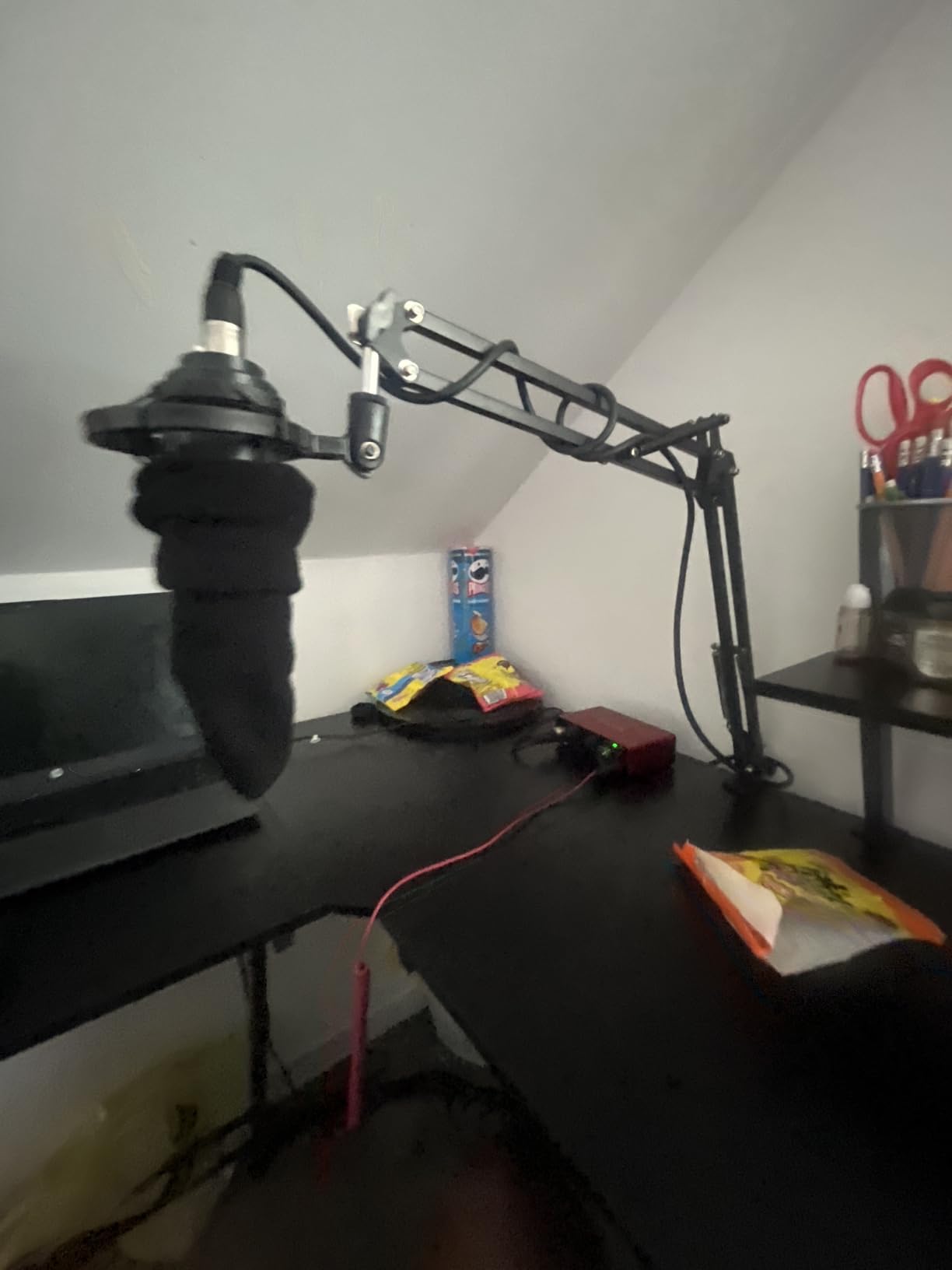
Owners report years of service without failure, which is rare in this category. Three eighths and five eighths inch threading means you can move between a Blue Yeti and an SM7B without buying anything else.
That flexibility is why it leads our list for most home studios.
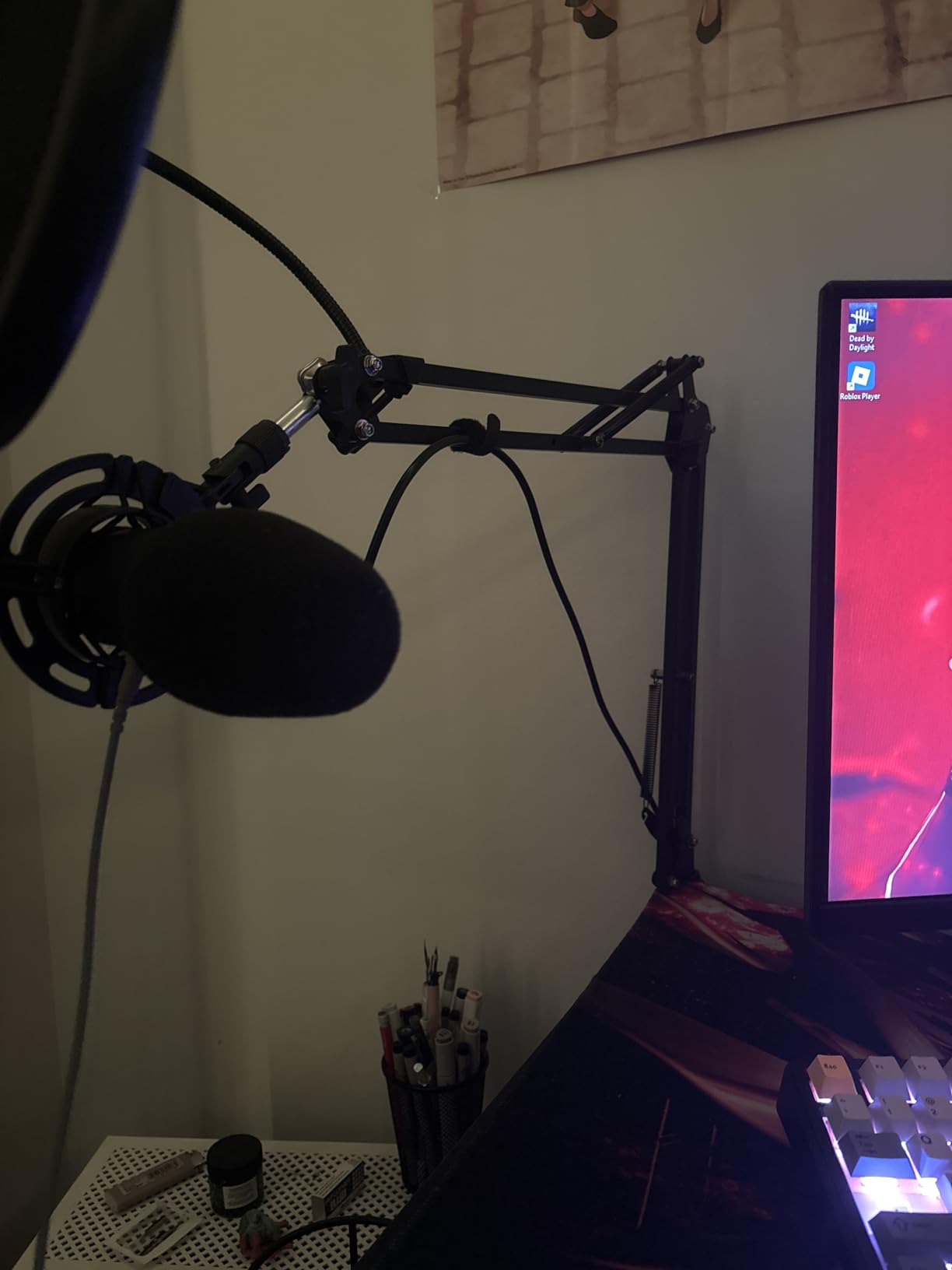
When the typing wobble shows up
The arm flexes under keyboard force. Keep the mic closer to the clamp than to the far desk edge, and tighten the socket knob where the arm enters the clamp until the friction stops.
When to pick something else
A desktop thicker than 2 inches, or a curved glass top, will not seat in this clamp. Above 3.3 pounds of load, move up to the Rode or the desktop InnoGear.
2. Amazon Basics Sturdy Portable Boom Arm Stand – Best for On-the-Go Recording
Amazon Basics Sturdy Portable Microphone Boom Arm Stand, Height Adjustable with Cable Management, Foldable Tripod Base, Up to 85.75″, Black
Steel construction
3.3 lb stand weight
85.75 in max height
Holds mics up to 2 lb
Folds flat for storage
Pros
- Long 85.75 inch reach for seated and standing use
- Folds flat and survives a car trunk
- Pivot indentations help it hold position
- Clip-on cable holder
Cons
- Top-heavy with no weighted base
- Tilts under a heavy load
- Microphone clip sold separately
This is the stand for a bedroom corner that doubles as a mobile rig. It reaches 85.75 inches on a 21 inch base width, with a molded counterweight keeping the far end light.
What impressed us is that it holds position once set. Indentations inside the pivot mean the friction is not purely spring-loaded, so it does not creep the way cheaper clutches do.
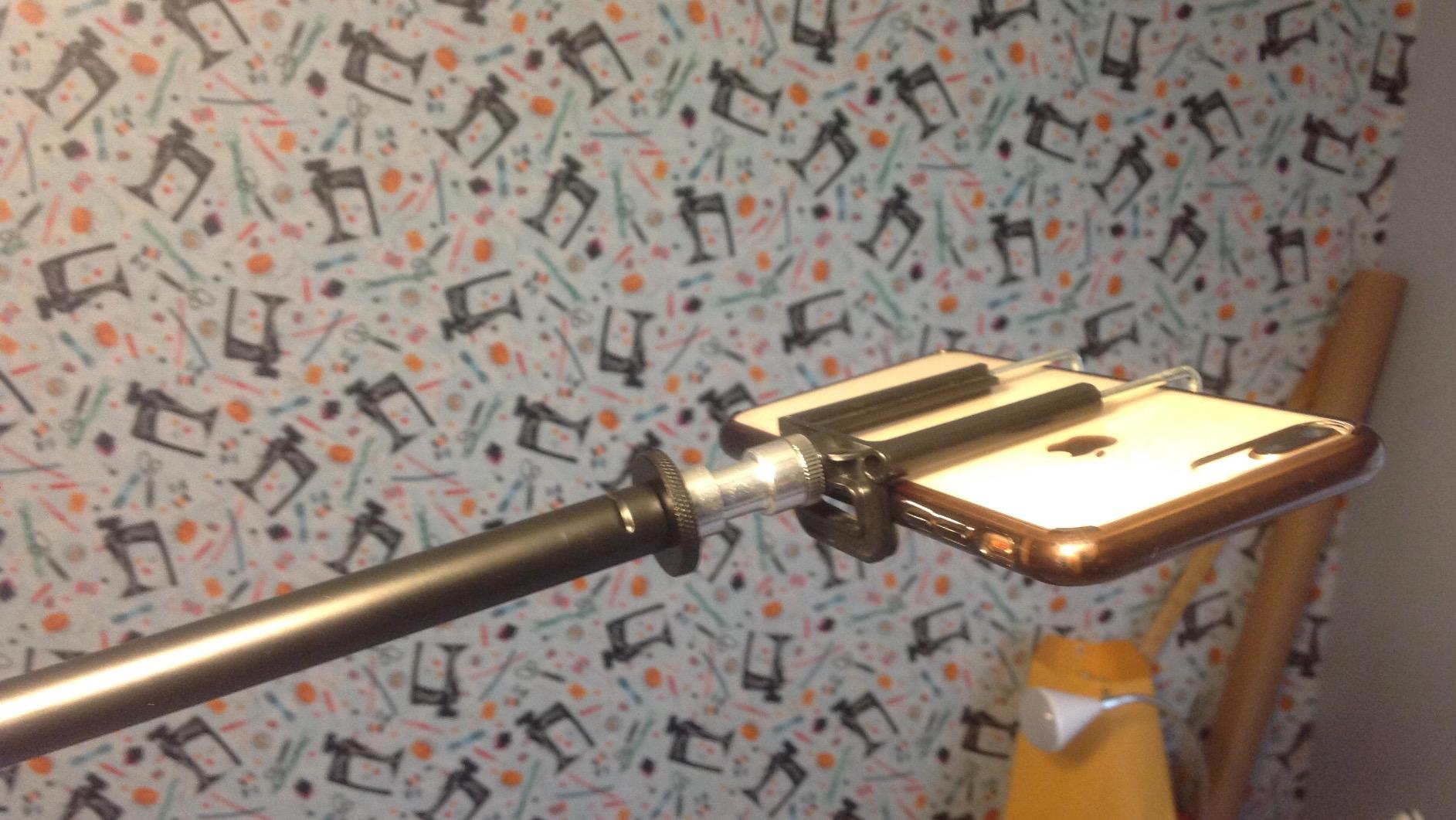
The trade-off is mass. At 3.3 pounds with a plastic counterweight, it is top-heavy when the boom is fully extended with a heavy condenser, which is the failure reviewers describe most.
For a dynamic or a mid-weight condenser within a sensible extension, it is dependable, and it folds flat enough to slide under a bed.
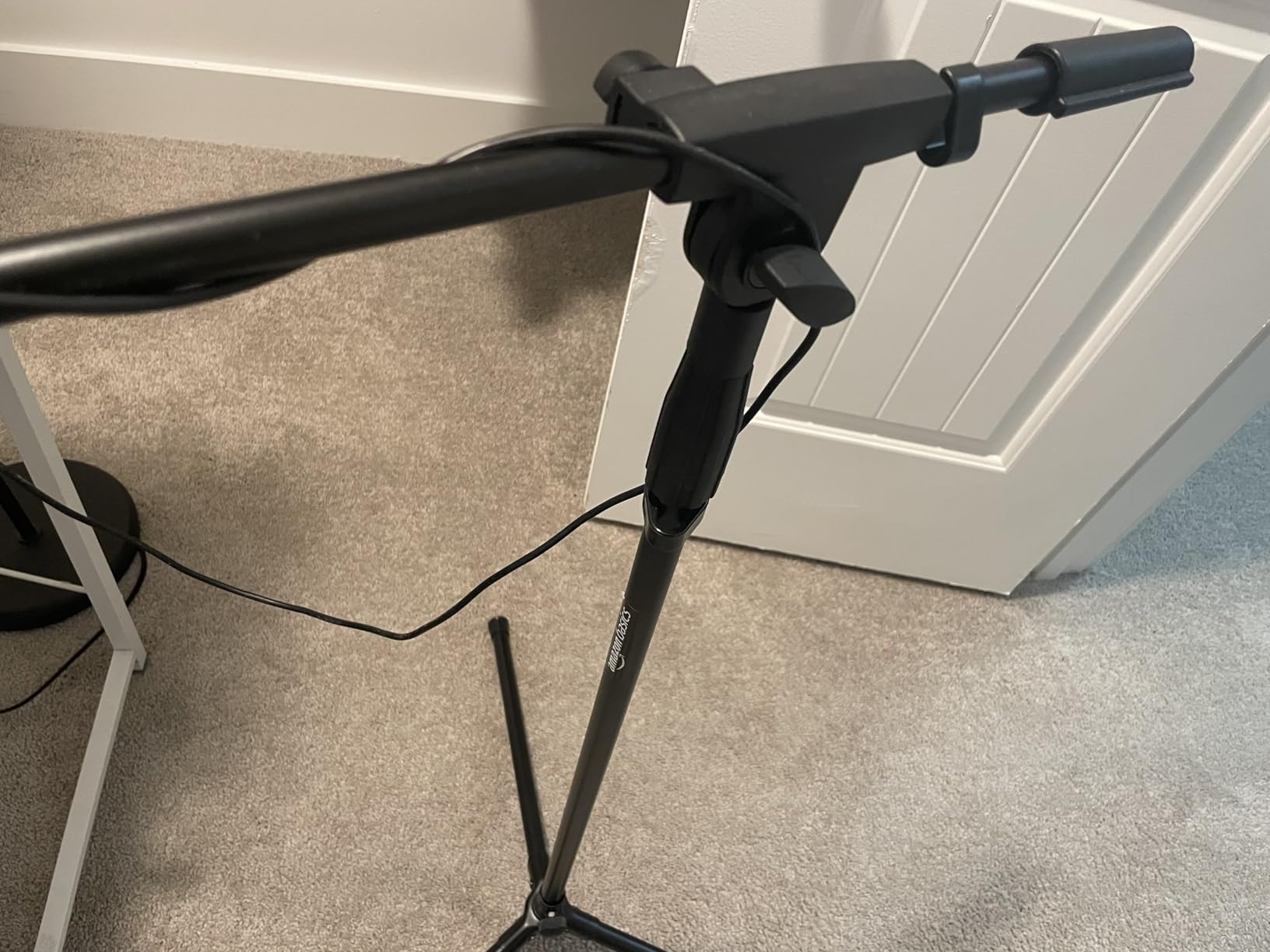
Why extension matters more than height
Height is the headline number, but extension decides whether it tips. Keep the counterweight end heavier than the mic end and the stand stays planted through a take.
Before you buy for live use
Owners are consistent that this is a home and studio stand. For live work use the On-Stage MS7701B or the K&M below, which use proper clutch hardware and much heavier bases. Budget for the clip and adapter separately.
3. Elgato Wave Mic Arm Low Profile – Best for Streaming Desks
Elgato Wave Mic Arm Low Profile Microphone Boom Arm
All-metal build
1692 g arm weight
29.1 in horizontal reach
2 kg load capacity
2 year warranty
Pros
- All-metal anti-torsion construction
- Sits below the shoulder line for an unobstructed view
- Magnetic cable channels hide XLR runs
- Wide padded clamp with a machine screw
Cons
- Ball head gets jerky as tension rises
- Slow sag with 500 to 600 g mics
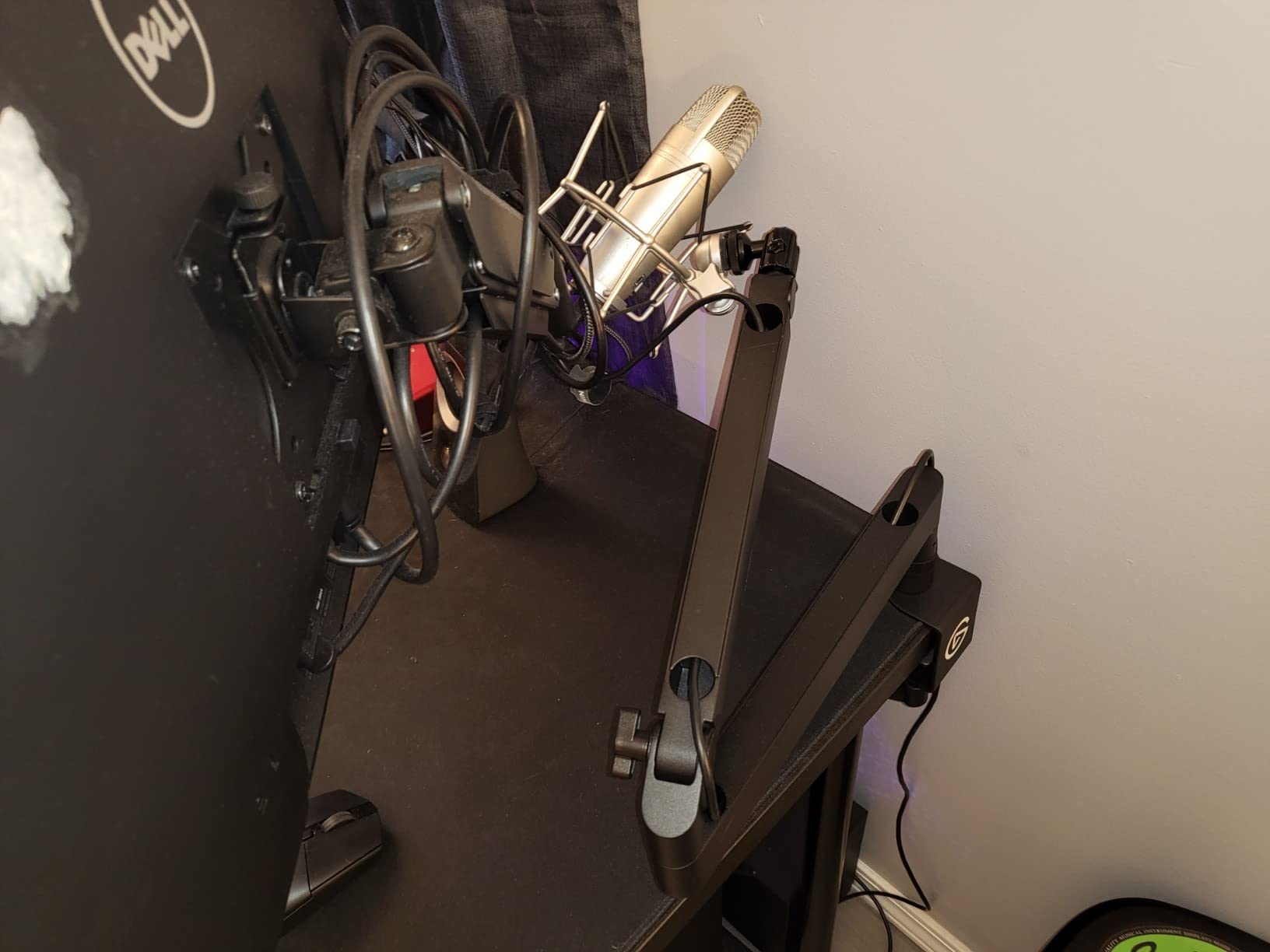
The defining feature is height. The arm sits low enough to stay under your monitor, so it does not eat into a camera frame or a dual-monitor sightline.
It is an all-metal, anti-torsion arm with 740 mm of horizontal reach, and the movement is quiet enough to adjust between takes without handling noise.
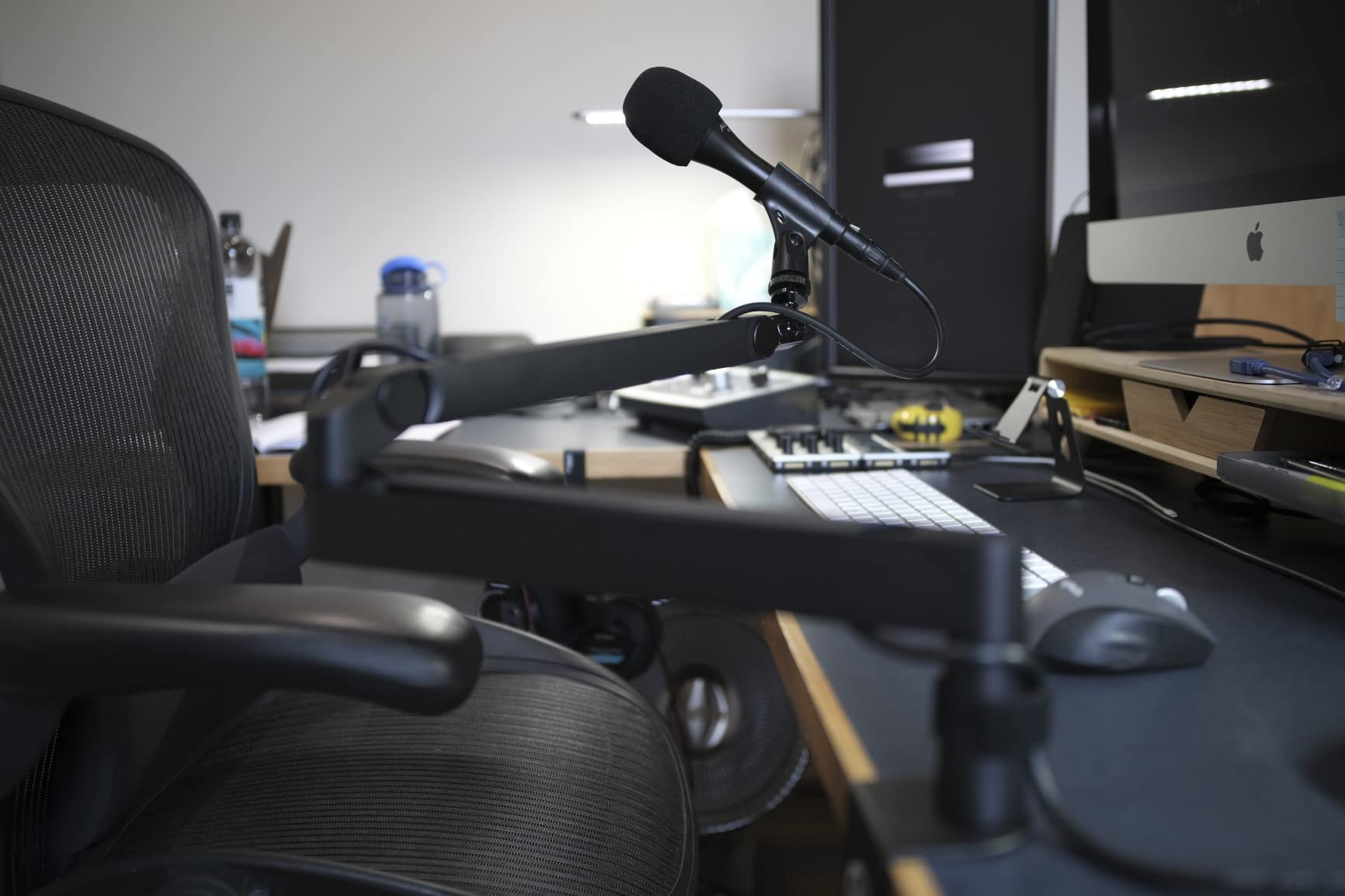
The magnetic cable channels are the detail other arms copy and rarely match, with covers that slide on and off so routing an XLR and a headphone cable takes seconds.
The weak point is joint hardware. Owners report the ball head feeling lower quality than the arm itself, and the upper clamp needing periodic re-tightening.
Checking weight before you commit
Rated to 2 kg, but comfort drops around 500 to 600 g with the arm fully extended. A heavy tube mic at full reach belongs on the Rode PSA1+ instead.
Where the clamp will not work
It is a clamp rather than a grommet mount, and no through-desk plate is included. Thread adaptors for one quarter, three eighths and five eighths inch come in the box.
4. FIFINE BM88 Low Profile Boom Arm – Best for Compact Setups
FIFINE BM88 Low Profile Microphone Boom Arm Stand for Gaming Streaming
All-metal arm
1300 g arm weight
29 in reach
Fits desktops 0.8 to 2.4 in thick
1 year warranty
Pros
- All-metal arm resists wobble when extended
- Padded C-clamp grips without slipping
- Hidden internal cable channels
- Three thread sizes pre-mounted on the ball head
Cons
- 29 inch reach is short on wide desks
- Clamp screw is awkward against a wall
The BM88 feels heavier than 1300 g should, and that is why it does not wobble. We extended it fully, typed on the desk, and the arm barely moved.
The padded C-clamp grips flat desktops from 0.8 to 2.4 inches, a wider range than most arms here, and owners call out that it resists slipping and is less likely to scratch.
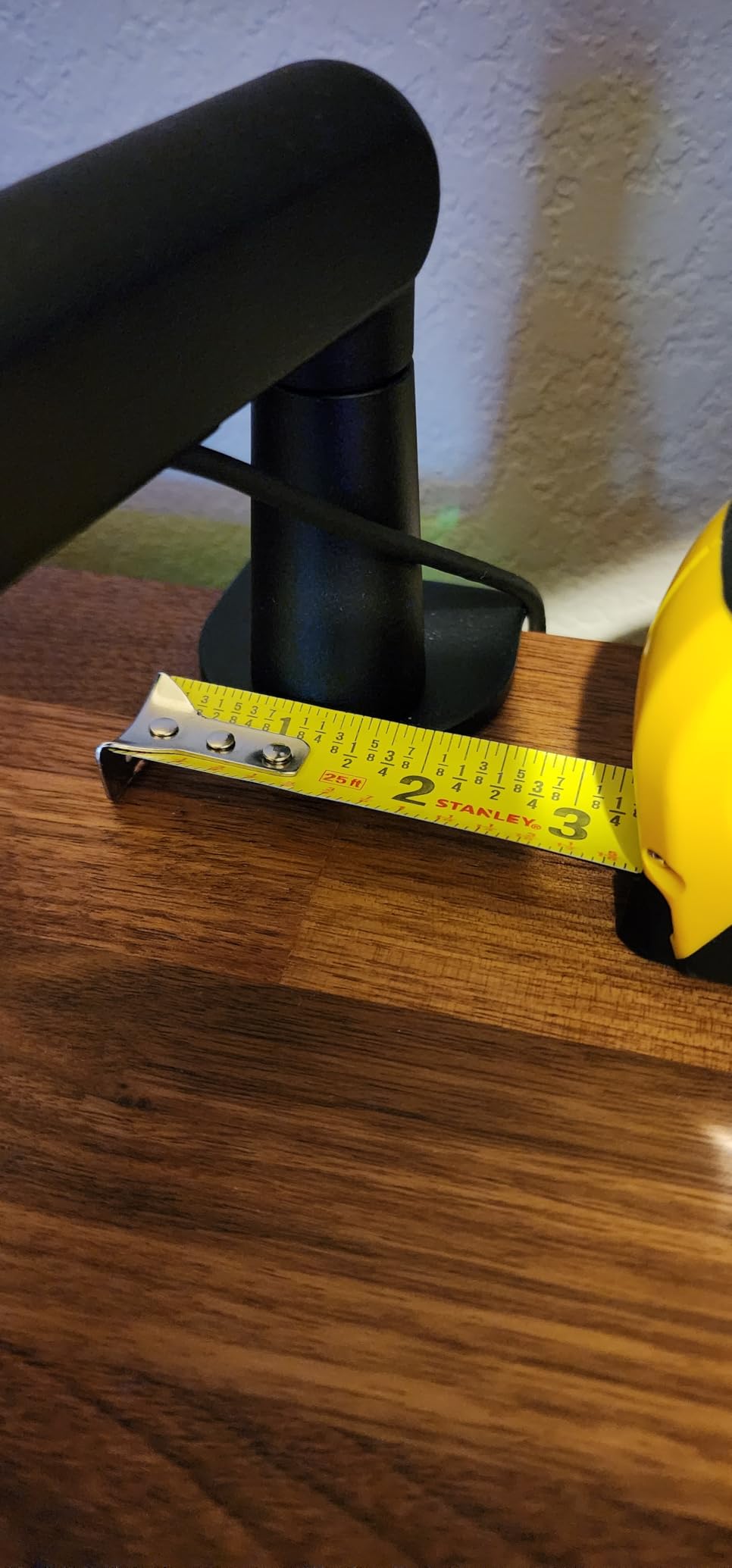
One quarter, three eighths and five eighths inch adaptors come pre-mounted on the rotatable ball head, so almost any microphone works without a separate adapter purchase.
Cable management runs inside the arm rather than as external clips, which keeps the profile clean in a camera shot.
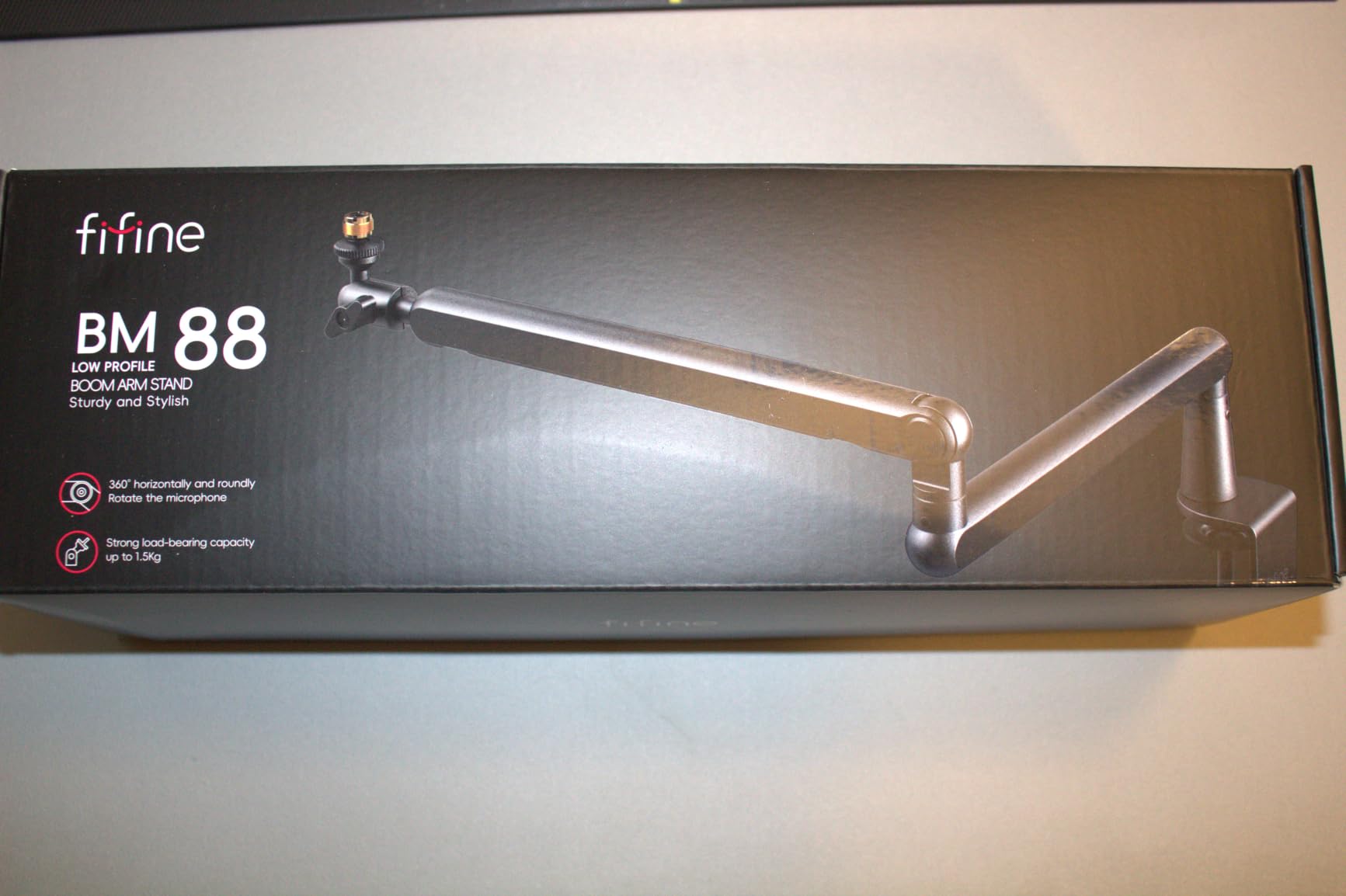
Measuring reach before you commit
On a desktop deeper than about 32 inches the arm cannot stretch to the far front edge, and owners there report needing a separate extender.
Working around the clamp screw
The hand screw sits under the desk and is hard to reach against a wall or a drawer unit. Set the arm up before the desk goes into its final position.
5. On-Stage MS7701B Euro Boom Mic Stand – Best for Studio and Stage
On-Stage MS7701B Euro Boom Mic Stand (For Vocal and Instrument Microphones
Alloy steel tripod
5.3 lb stand weight
61.5 in max height
30 in boom reach
5/8 inch threading
Pros
- Steel construction with non-slip rubber feet
- 30 inch boom on standard threading
- Removable boom that adjusts angle
- Folds flat for transport
Cons
- No built-in cable channel for XLR runs
- Telescoping collar wants periodic re-tightening
This is the floor stand we recommend when a room has to do more than one job. It handles vocals, a snare, a guitar amp and a rehearsal setup, and it folds flat enough to move between them.
At 5.3 pounds of alloy steel with rubber feet, it plants properly on carpet and hardwood. The boom unscrews entirely if you want a straight stand for tight spaces.
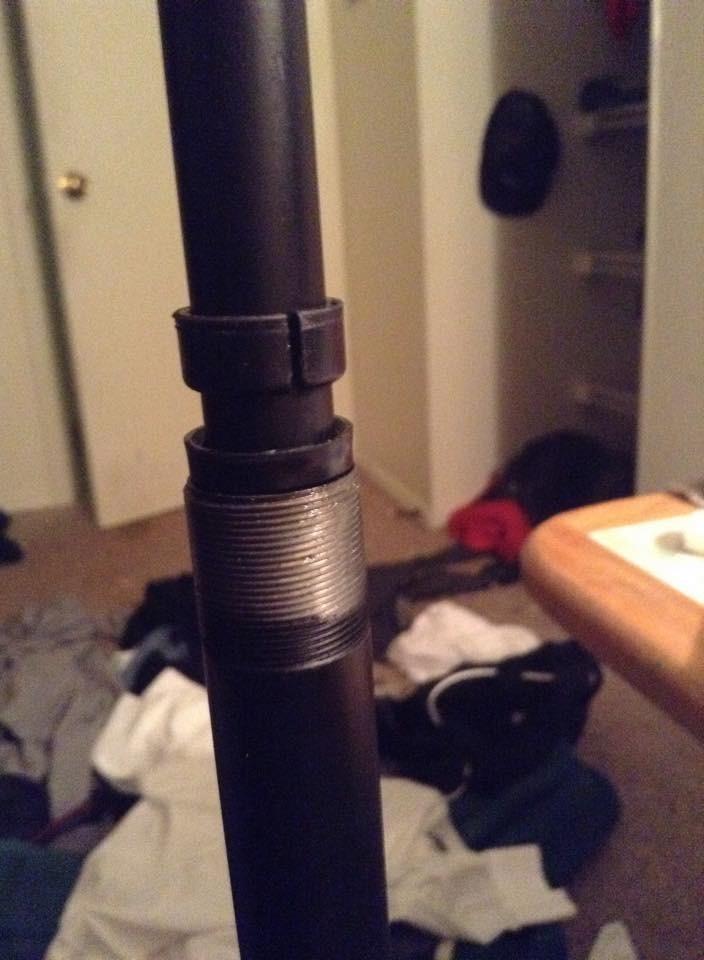
Standard five eighths inch threading means almost every studio mic in circulation mounts directly, with no adapter hunting.
Height runs to 61.5 inches, covering a seated singer, a standing speaker and most instrument positions without any accessory.
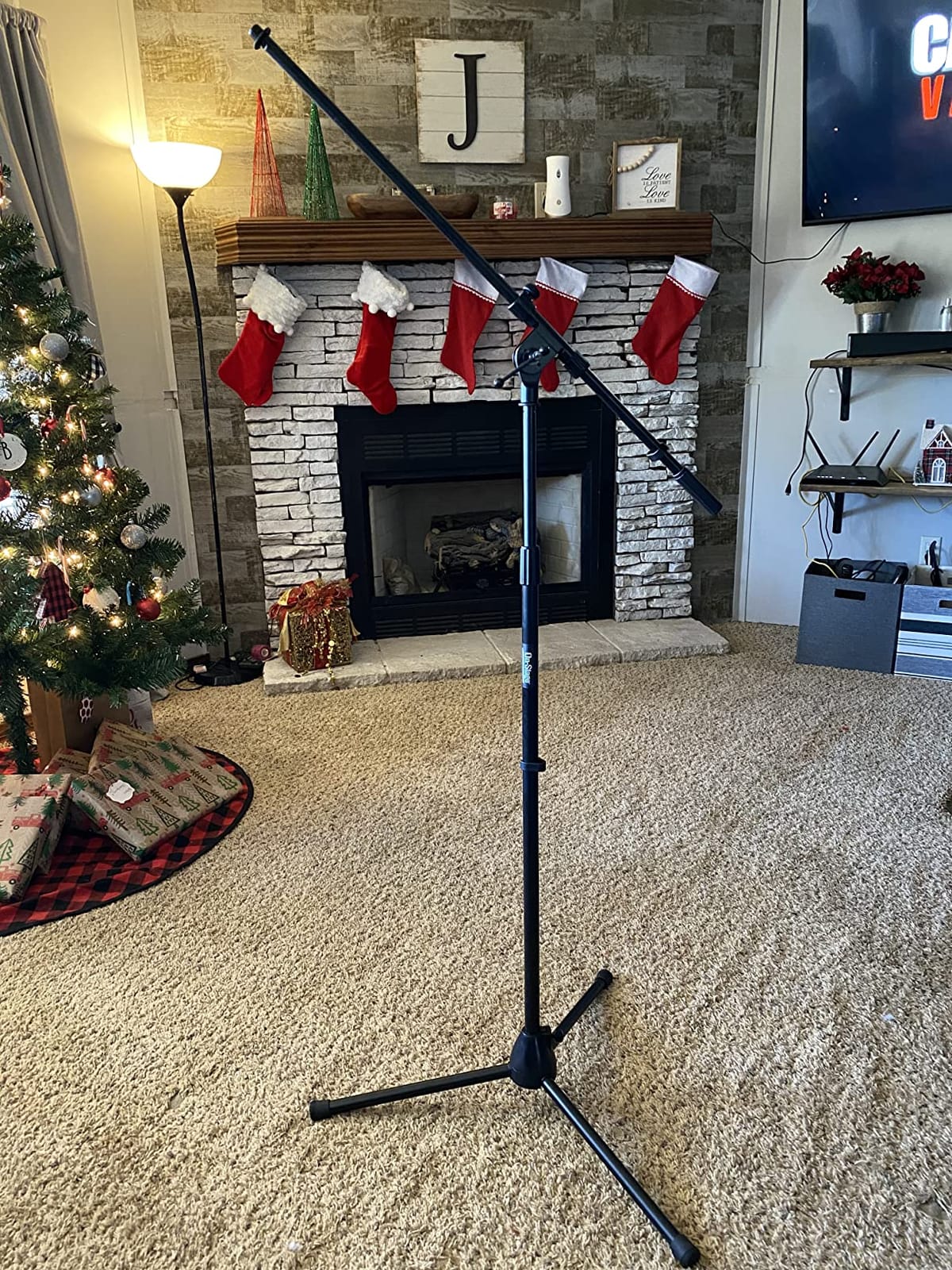
Room tone and vibration
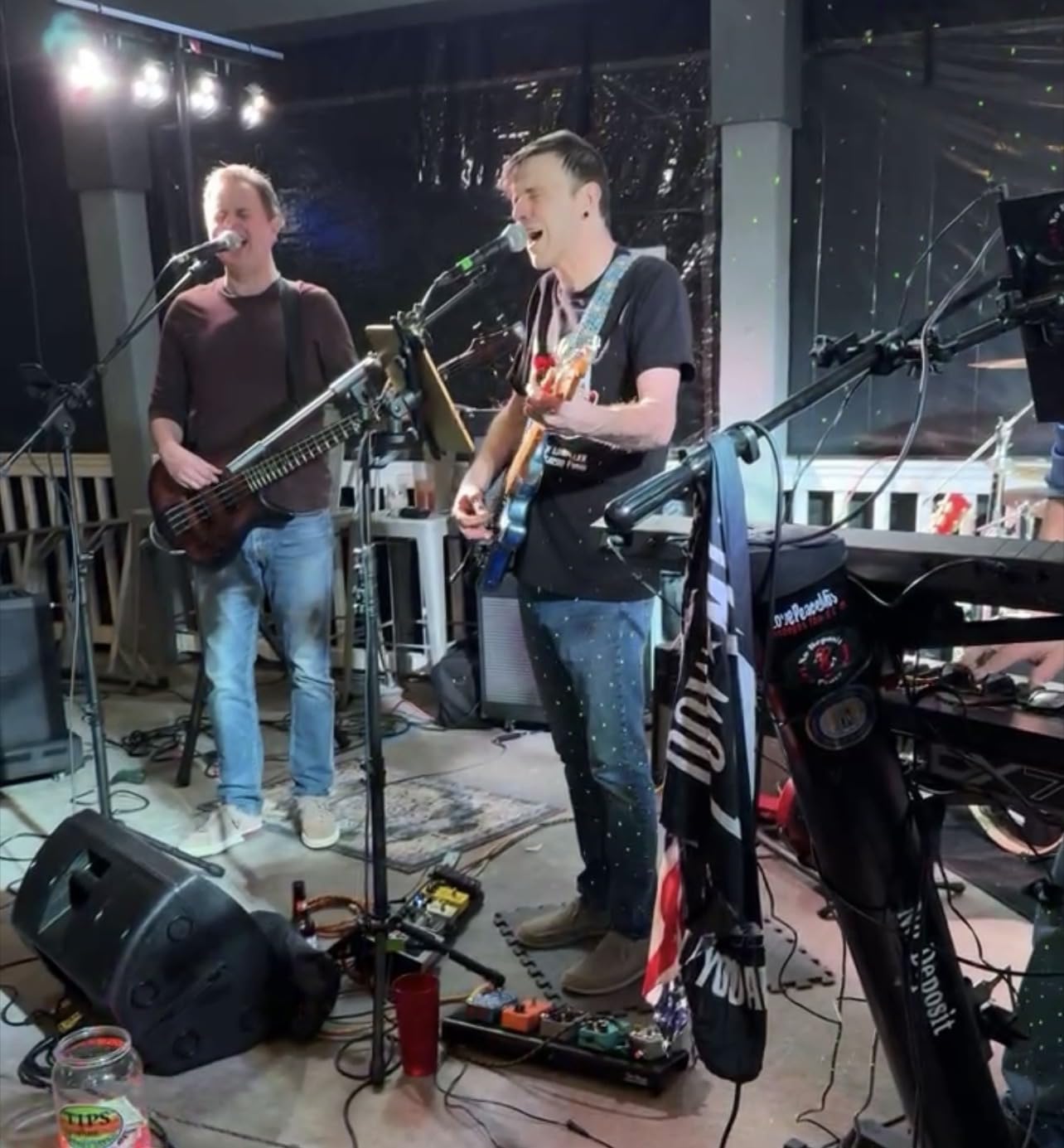
Three legs spread load over a wide area, so a heavy mic at boom height does not translate floor vibration the way a narrow pedestal base does. It is also the stand to reach for when miking a kick drum or an amp.
Where it will not go
It is a floor stand, so in a small apartment studio the footprint is the problem rather than the hardware. There is no built-in cable channel either, so plan your XLR run before setup.
6. InnoGear Adjustable Desk Microphone Stand – Best for Desktop and Instrument Miking
InnoGear Adjustable Desk Microphone Stand, Weighted Base with Soft Grip Twist Clutch, Boom Arm, 3/8/” and 5/8/” Threaded Mounts for Blue Yeti and Blue Snowball, Kick Drums, Guitar Amps, Black
Cast iron base
4.4 lb stand weight
11 to 15.8 in height
4.4 lb capacity extended
12 month warranty
Pros
- Cast iron base with a rubber gasket that absorbs vibration
- Twist clutch locks tight and resists creeping
- Works for kick drums and guitar amps
- Cable clips and adapter included
Cons
- Tips over if swivelled off-axis under a heavy mic
- Friction height adjustment can creep down
This is the most versatile stand in the roundup. It is a desktop stand for your Blue Yeti, and the same unit works as a kick drum or guitar amp stand, which no clamp arm here can do.
The base is the reason. A powder-coated cast iron disc with a rubber gasket underneath resists sliding and absorbs vibration.
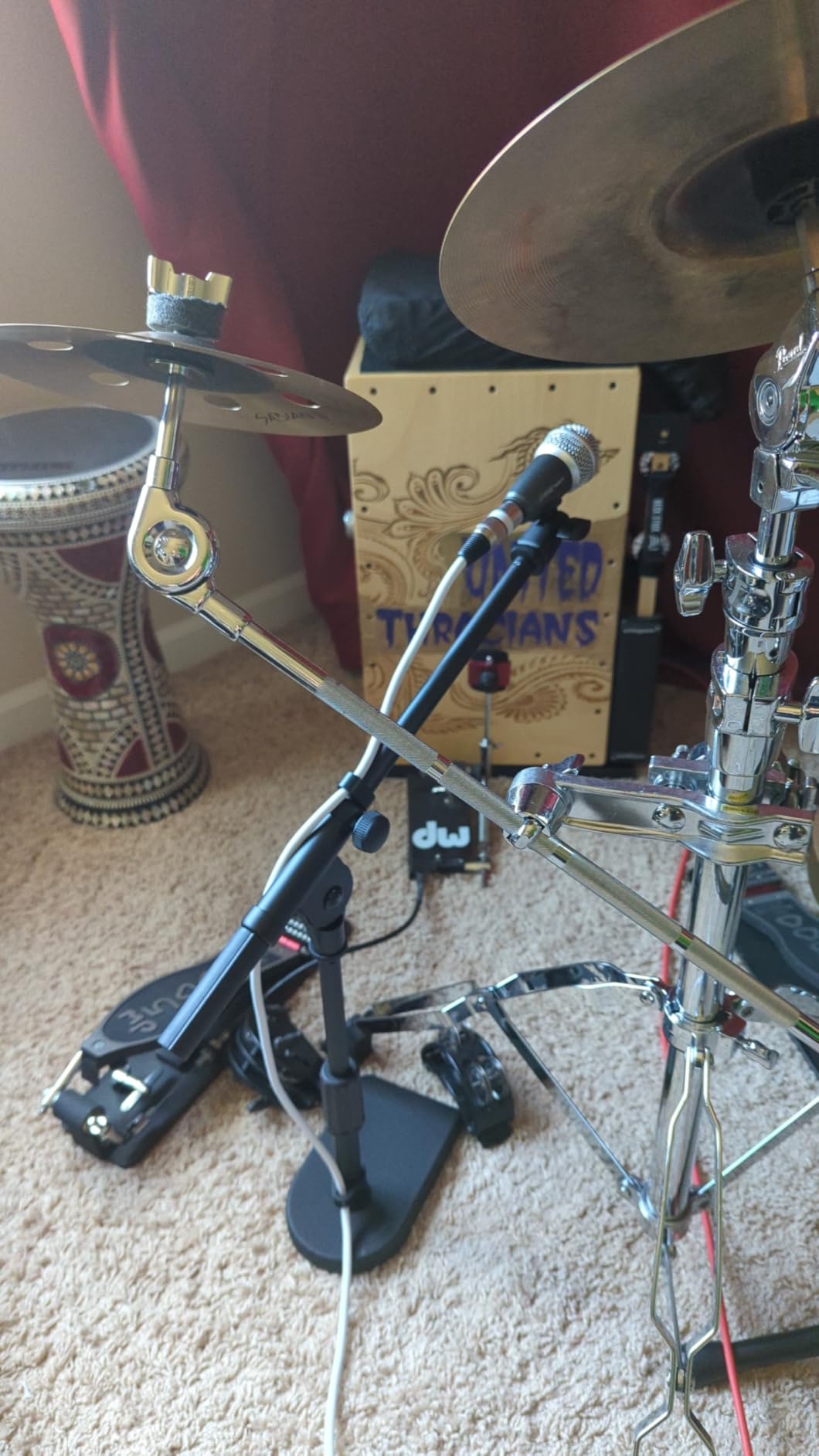
Adjustment runs from 11 to 15.8 inches through a soft-grip twist clutch, and rated capacity is 4.4 pounds with the arm extended halfway, which takes an SM7B on a shock mount.
The included U-shaped cable clips and thread adapter mean nothing else needs buying.
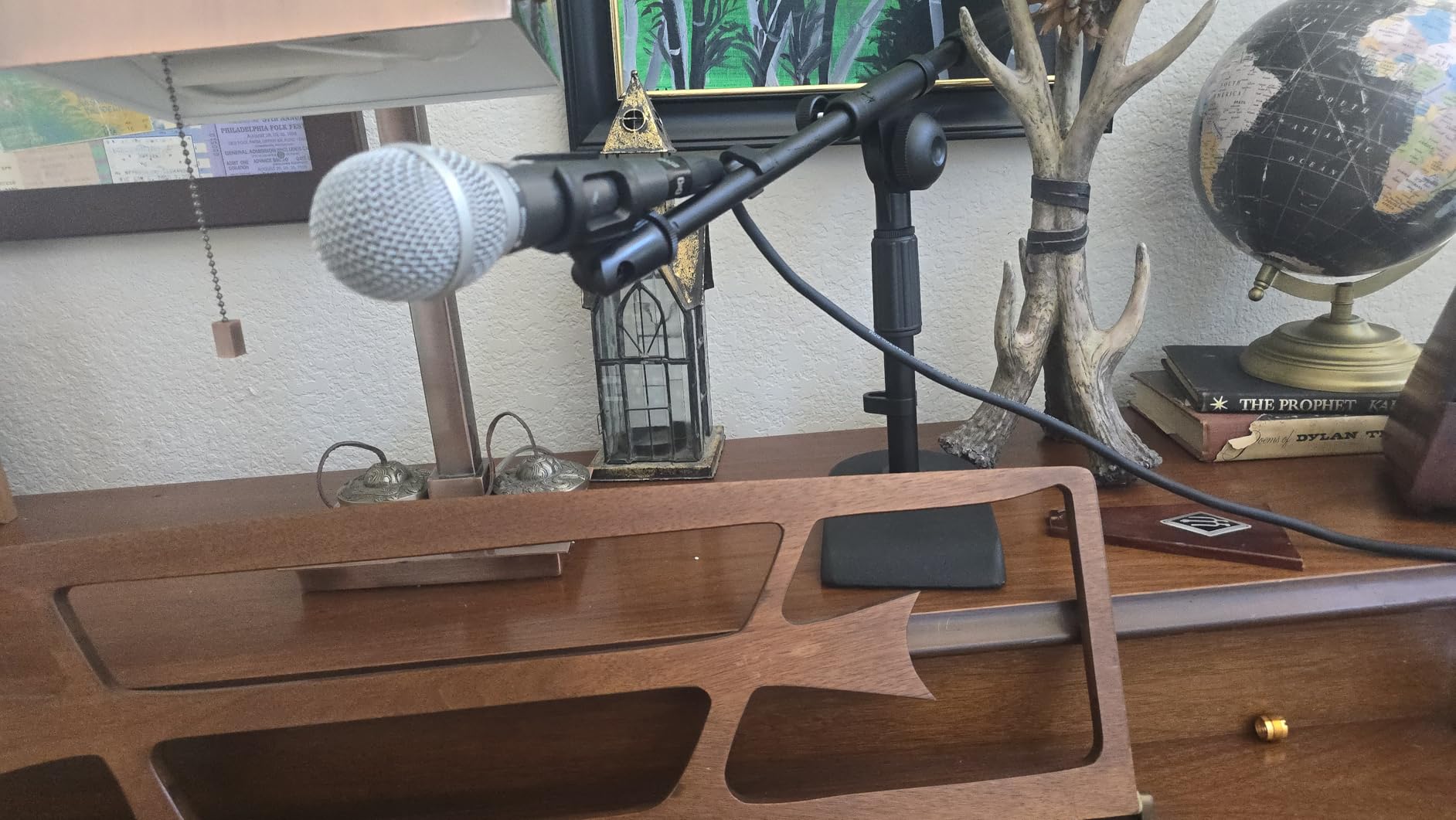
The extension myth
Owners consistently report roughly 5.5 inches of usable boom beyond the base, so the product photos overstate it. Keep the mic over the base and it stays planted.
Pick this for instruments
For amp and kick positions this is the one we would buy. A clamp arm cannot reach the floor and a tripod is overkill when you need one fixed low position.
7. Rode PSA1+ Professional Studio Boom Arm – Best for Vocal Booths
RØDE PSA1+ Professional Studio Boom Arm with Spring Damping, Black
Desk clamp mount
1520 g arm weight
Holds 0.25 to 1.2 kg
Desk thickness up to 70 mm
2 year warranty
Pros
- Internal spring damping moves the arm without creaks
- Holds 0.25 to 1.2 kg including shock mounts
- Clamps desks up to 70 mm thick
- Integrated cable management hides XLR runs
Cons
- Clamp will not reach past 70 mm
- No through-desk grommet plate included
- Arm needs a firm pull to move
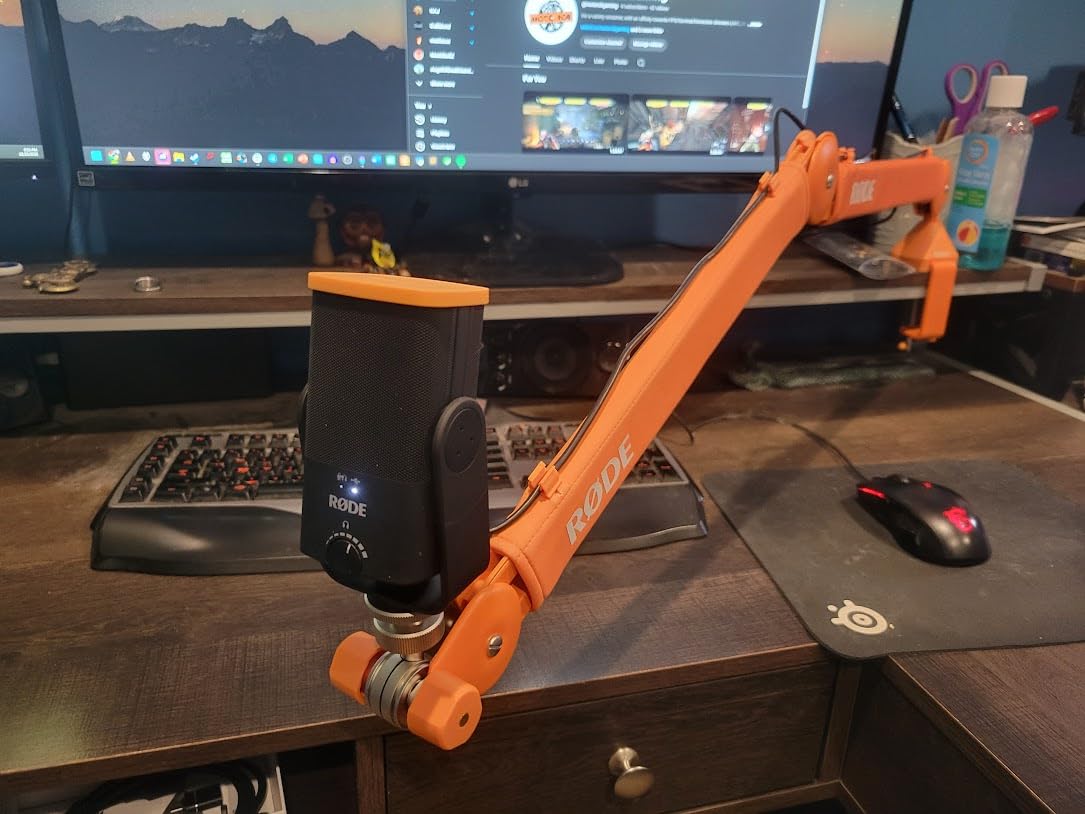
This is the arm in a dedicated vocal booth. Internal spring damping means you can reposition the mic mid-recording without a creak or a spring squeak landing in the take, and at 4.7 stars from more than 2,600 reviews it has the highest average rating here.
Load handling is the reason serious vocalists buy it. It holds anything from 0.25 kg to 1.2 kg including shock mounts, and 86 percent of owners gave it five stars.
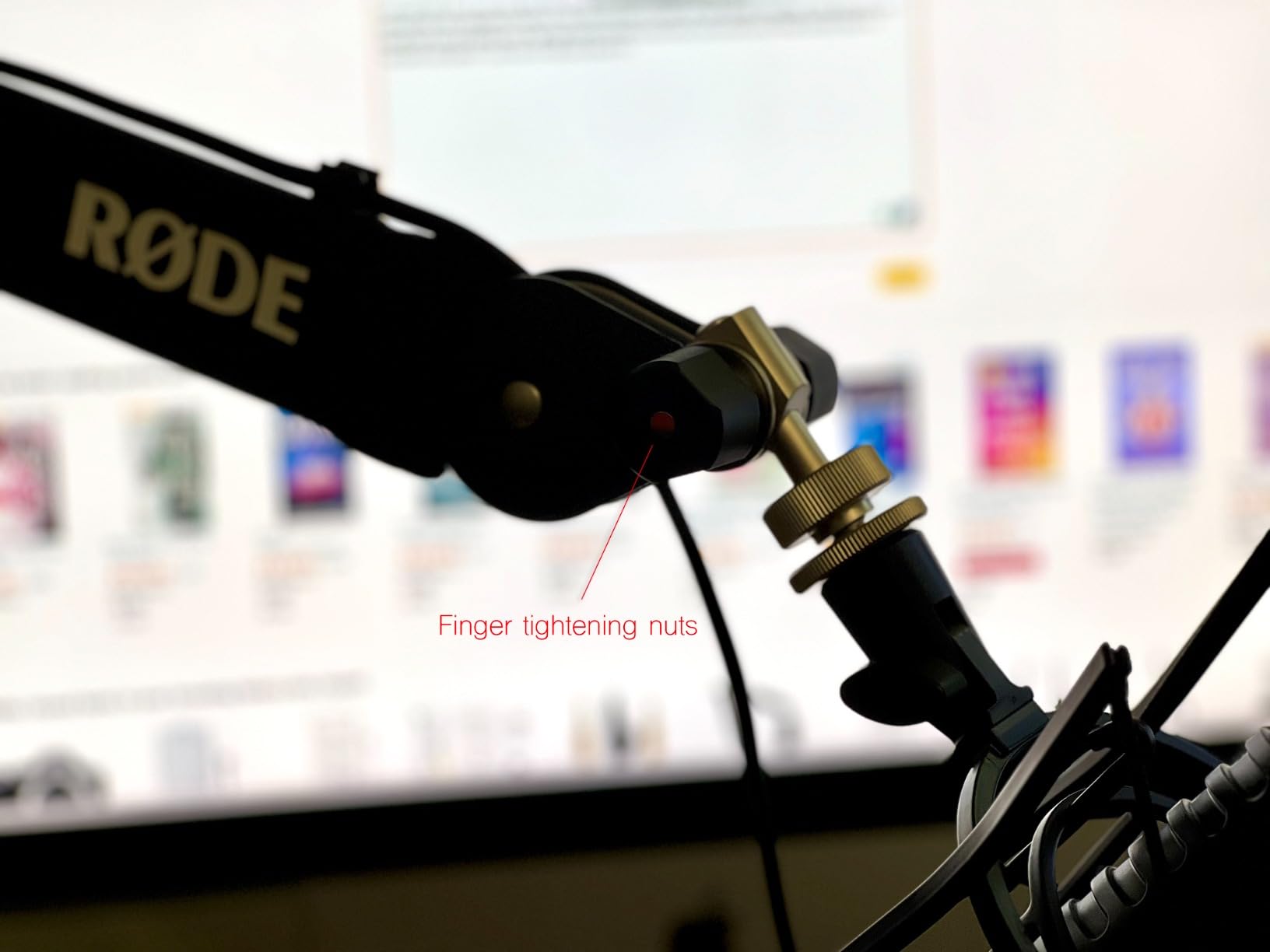
The clamp reaches 70 mm of desktop thickness, the thickest range of any desk arm in this roundup, and cable management is integrated so an XLR run disappears into the arm.
Why spring damping matters in a booth
Every take where you lean in to adjust a friction-based arm risks a mechanical noise. Spring damping absorbs the movement itself, which is why this arm suits narration and podcast booths where a re-record costs real time.
The mounting ceiling
Check your desktop thickness before anything else, because beyond 70 mm the clamp will not seat and no through-desk plate is included. Expect a firm two-handed pull, which is correct behaviour for a mic holding position mid-take.
8. InnoGear Tripod Boom Arm Floor Stand – Most Versatile
InnoGear Mic Stand Tripod Boom Arm Floor Microphone Stand Height Adjustable
Alloy steel tripod
4.2 lb stand weight
28.1 to 89.8 in height
Boom 16 to 30 in
2 kg load capacity
Pros
- Wide height range for singers
- podcasters and drummers
- 4.0 lb steel tripod base
- Boom adjusts 360 degrees horizontally and 180 vertically
- Converts to a straight stand
Cons
- Top-heavy and tips with a heavy mic
- Needs re-tightening after every reposition
- Not stiff enough for a Shure SM7B
If a floor stand has to cover a 28 inch to 89.8 inch height range and still pack into a car, this is the one.
The boom is detachable and adjustable from 16 to 30 inches with 360 degree horizontal and 180 degree vertical movement, and pulling it off converts the whole thing into a straight stand.
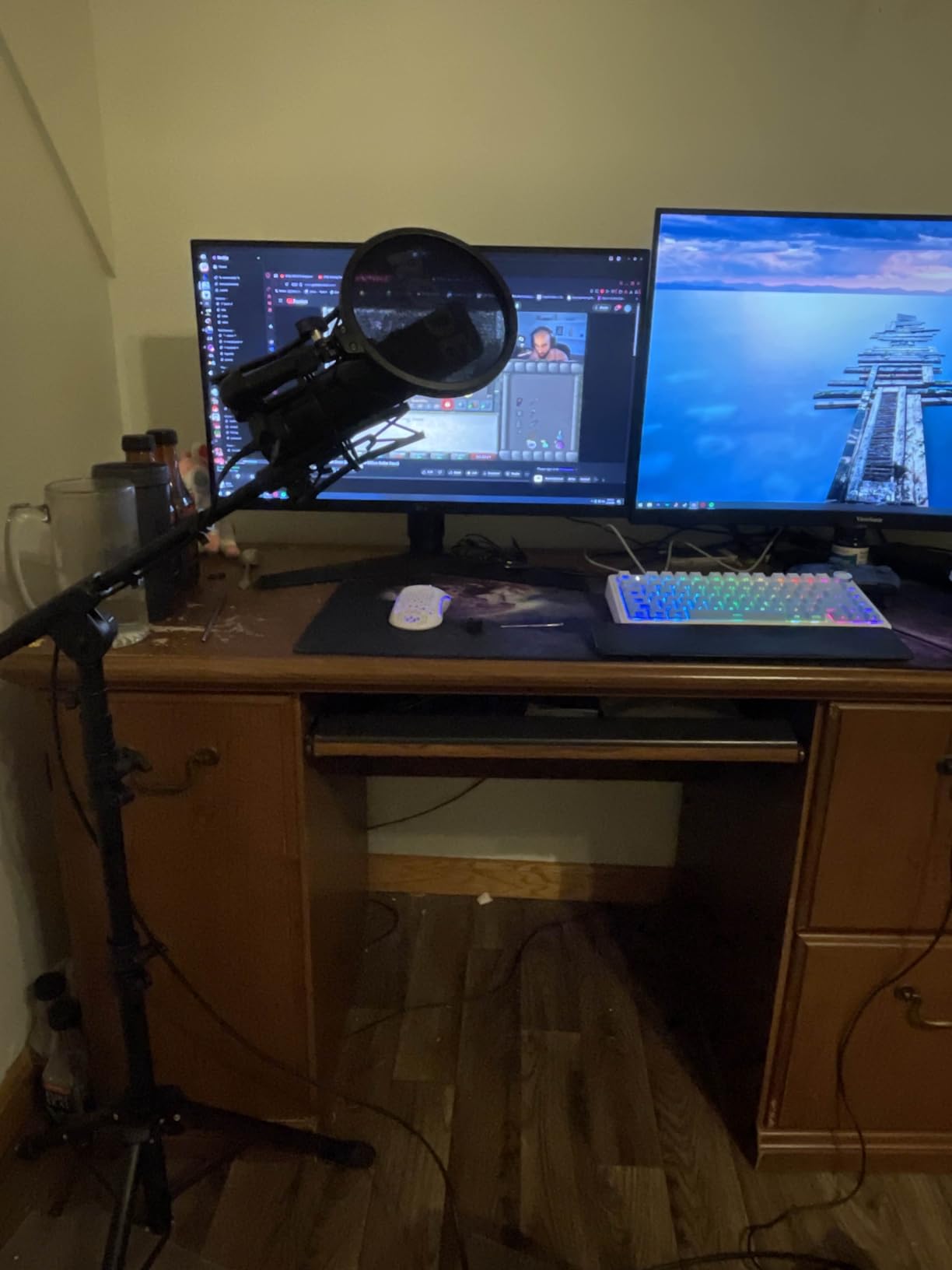
The box is unusually complete for a budget stand. Two mic clip styles, cable clips, a thread adapter and a carrying bag all come included.
Setting it up so it stops tipping
Tighten the boom pivot bolts after every reposition, and do not spread the legs wider than intended, since a wider stance moves weight outside the base.
The honest limits
Reviewers are direct that it is not stiff enough for a Shure SM7B, and the leg sections have no end stoppers, so a section can slide out during height adjustment.
9. Pyle PMKS56 Telescoping Boom Stand – Best for High Reach
Pyle Heavy Duty Microphone Stand-Height Adjustable from 51.2” to 78.75” Inch High w/Extendable Telescoping Boom Arm 29.5” and Stable Tripod Base-Clutch in T-Bar Adjustment Point PMKS56
Steel tripod
16 oz stand weight
51.2 to 78.75 in height
29.5 in telescoping boom
1 year warranty
Pros
- Telescoping boom extends to 29.5 inches
- Wide 51.2 to 78.75 inch height range
- T-bar clutch keeps the mic elevated
- Universal adapter fits nearly every studio mic
Cons
- Light at 16 oz for very heavy microphones
- Glossy black finish shows fingerprints
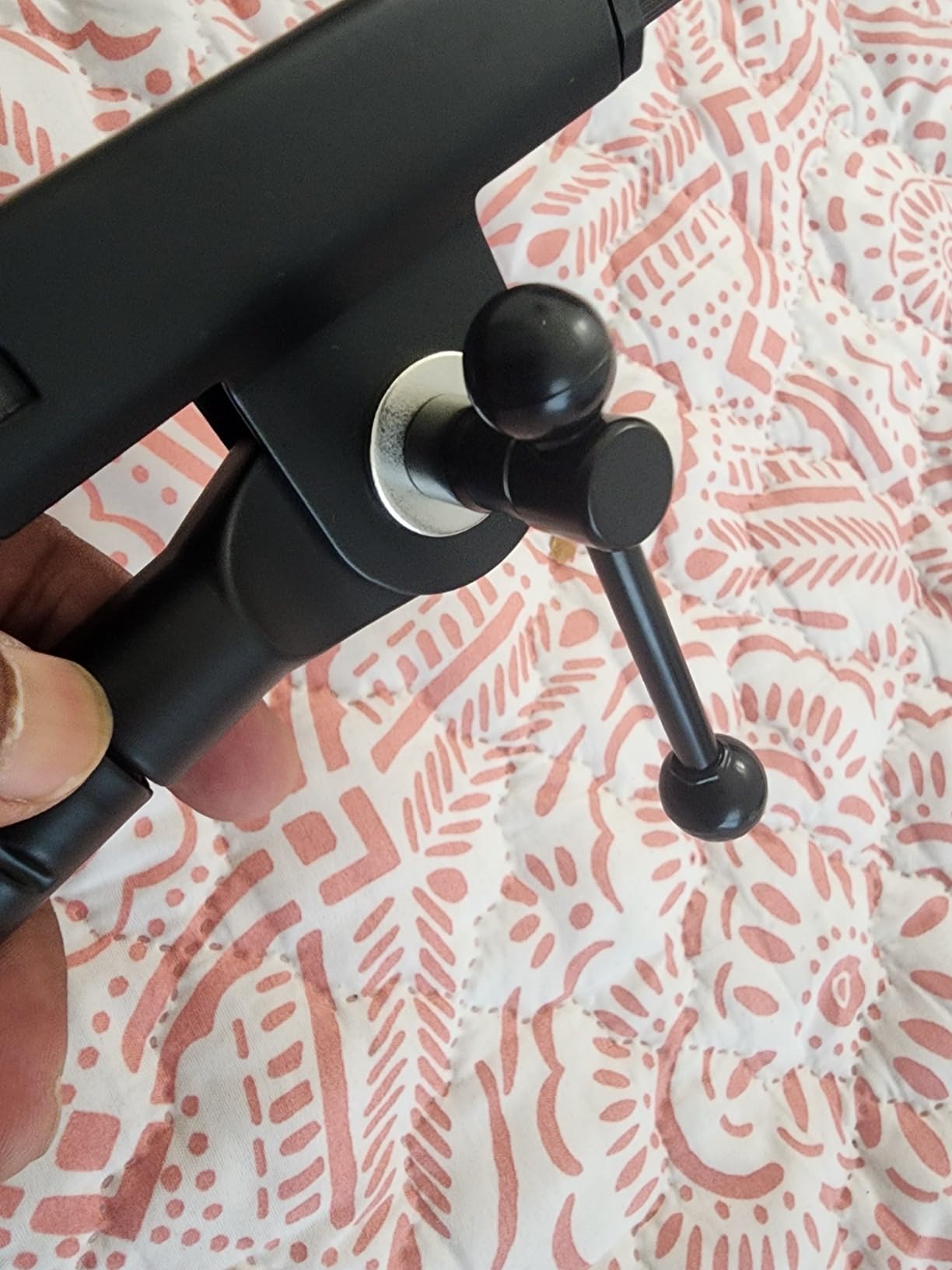
The reach is the story here. A 29.5 inch telescoping boom gets the mic over a drum kit or an amp, and the T-bar clutch at the boom joint is what holds it there instead of drooping.
Height runs from 51.2 to 78.75 inches, so the same stand covers a seated narration position and a standing performance height.
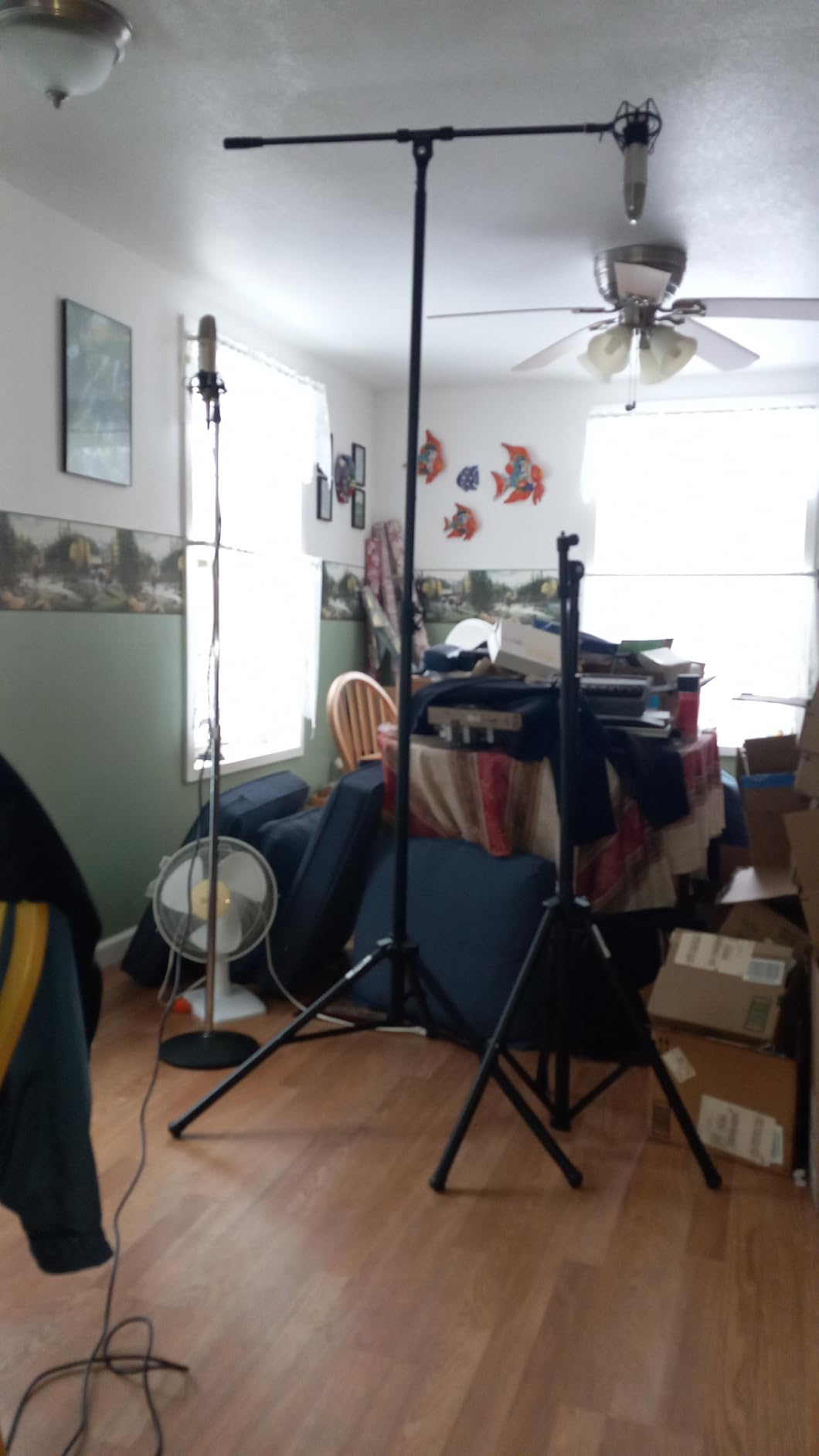
Owners consistently call out the clutch as the part that works, and the enlarged tubing is the reason the stand feels stiffer than its weight suggests. Remove the boom for a straight stand.
Reading the weight honestly
Sixteen ounces is the number that matters, and owners flag it as light for very heavy microphones. Dynamic vocals are comfortably within it.
Where the finish gets in the way
The glossy black finish shows fingerprints under studio lights, and at this mass a slightly loose telescoping section shows up as creep during a long take.
10. K&M Konig and Meyer 21090 Tripod Stand – Best for Lifetime Durability
K&M König & Meyer 21090.500.55 Tripod Microphone Stand – Adjustable Telescoping 2-Piece Boom Arm – Professional Grade – Heavy Duty with Folding Leg Base – German Made Black
German made
Stainless steel with zinc fittings
7.2 lb stand weight
35 to 63 in height
5 year warranty
Pros
- German made professional grade construction
- Heaviest build here at 7.2 lb
- 5 year warranty with 10 year parts availability
- Folding leg base for transport
Cons
- Heaviest option
- so poor for constant travel
- A few reports of missing lock washers in the box
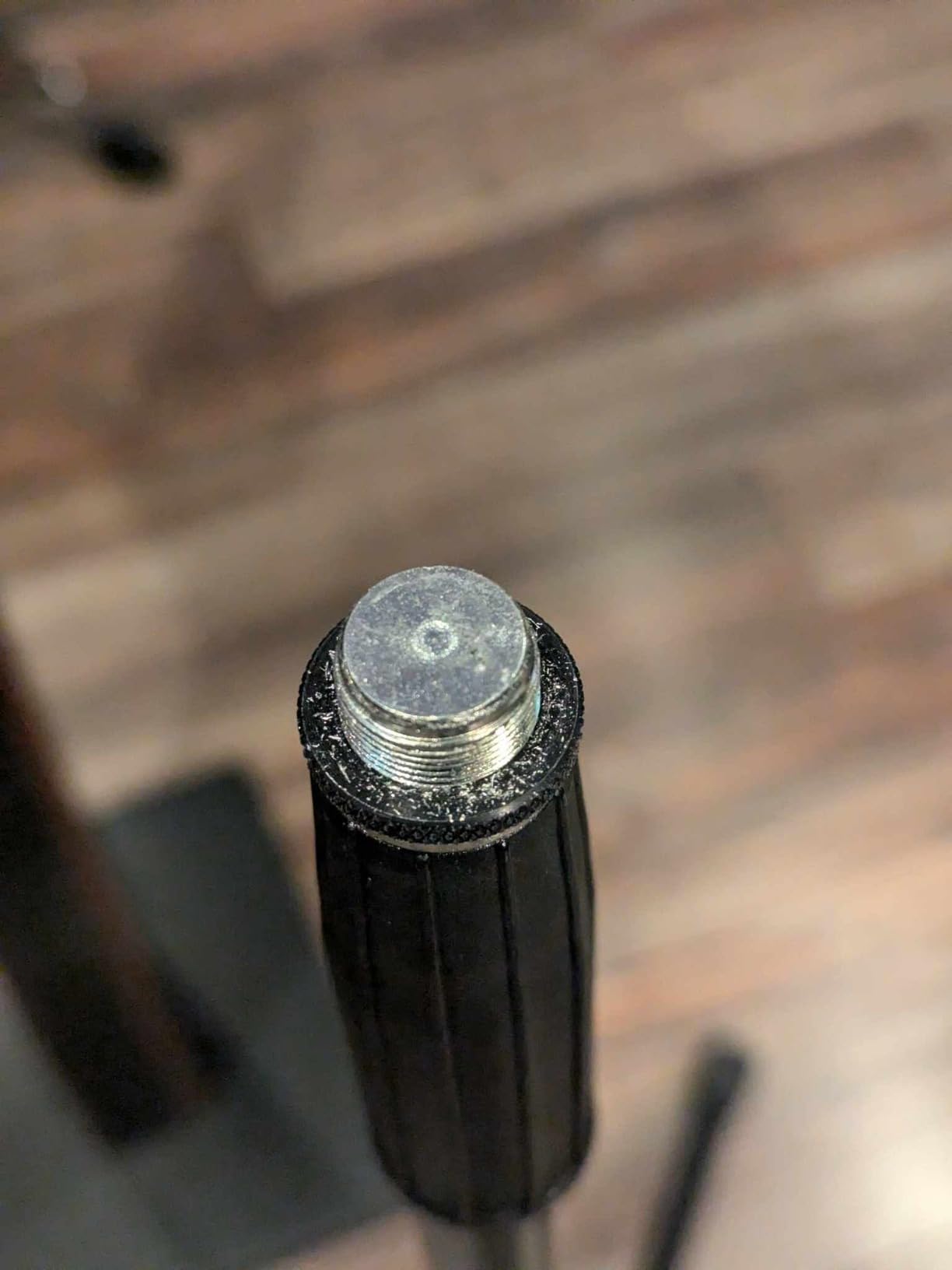
On r/audioengineering, K&M is the brand that comes up most often when people ask for the sturdiest stand worth keeping for years, and this tripod is why. At 7.2 pounds of stainless steel with zinc fittings, it is heavier than anything else we tested.
That mass is the feature. Heavy bases resist tip, heavy columns resist wobble, and heavy hardware means nothing strips when you adjust it a thousand times.

The warranty is the other argument. Five years of product warranty with ten years of replacement parts availability changes the maths on a stand you buy once and keep for a decade.
What the weight buys you
Footprint stability. Seven pounds across a folding tripod base means a heavy mic at boom height will not walk, and it will not creep while you reach for a fader.
When it is the wrong call
Moving between rooms or playing live, 7.2 pounds gets old fast. Check the box on arrival, since a few owners reported missing lock washers.
11. FIFINE CS1 Scissor Boom Arm – Best for Small Desks
FIFINE CS1 Scissor Microphone Boom Arm Stand for Gaming Recording
Metal arm
500 g arm weight
13 in max height
C-clamp fits 2 in desktops
1 year warranty
Pros
- Well-built metal arm with strong springs
- Upgraded desk clamp with an anti-scratch pad
- 180 degree rotation with wide extension
- Folds flat to free up desk space
Cons
- Limited reach for deep desks
- Springs are noisy until broken in
- Struggles with a heavy mic plus shock mount
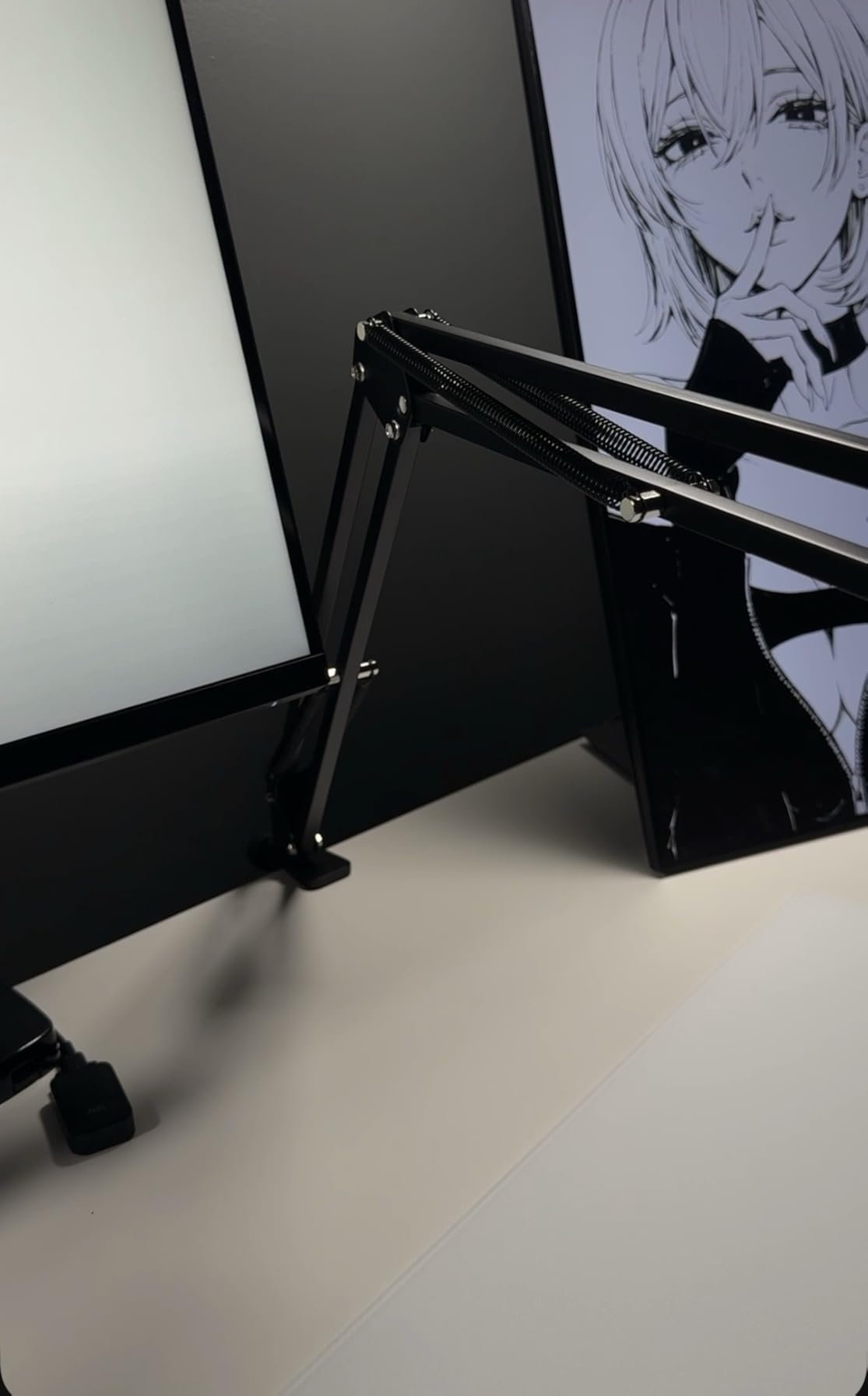
The CS1 is the stand for a desk that is 48 inches wide and a mic that weighs a pound. It is all metal rather than plastic, and the springs are the real ones rather than tensioned bands, which is why it does not shake when the desk is bumped.
Reach works out to about 26 inches, and at 500 g the arm is light enough for the clamp screw to carry it without strain.
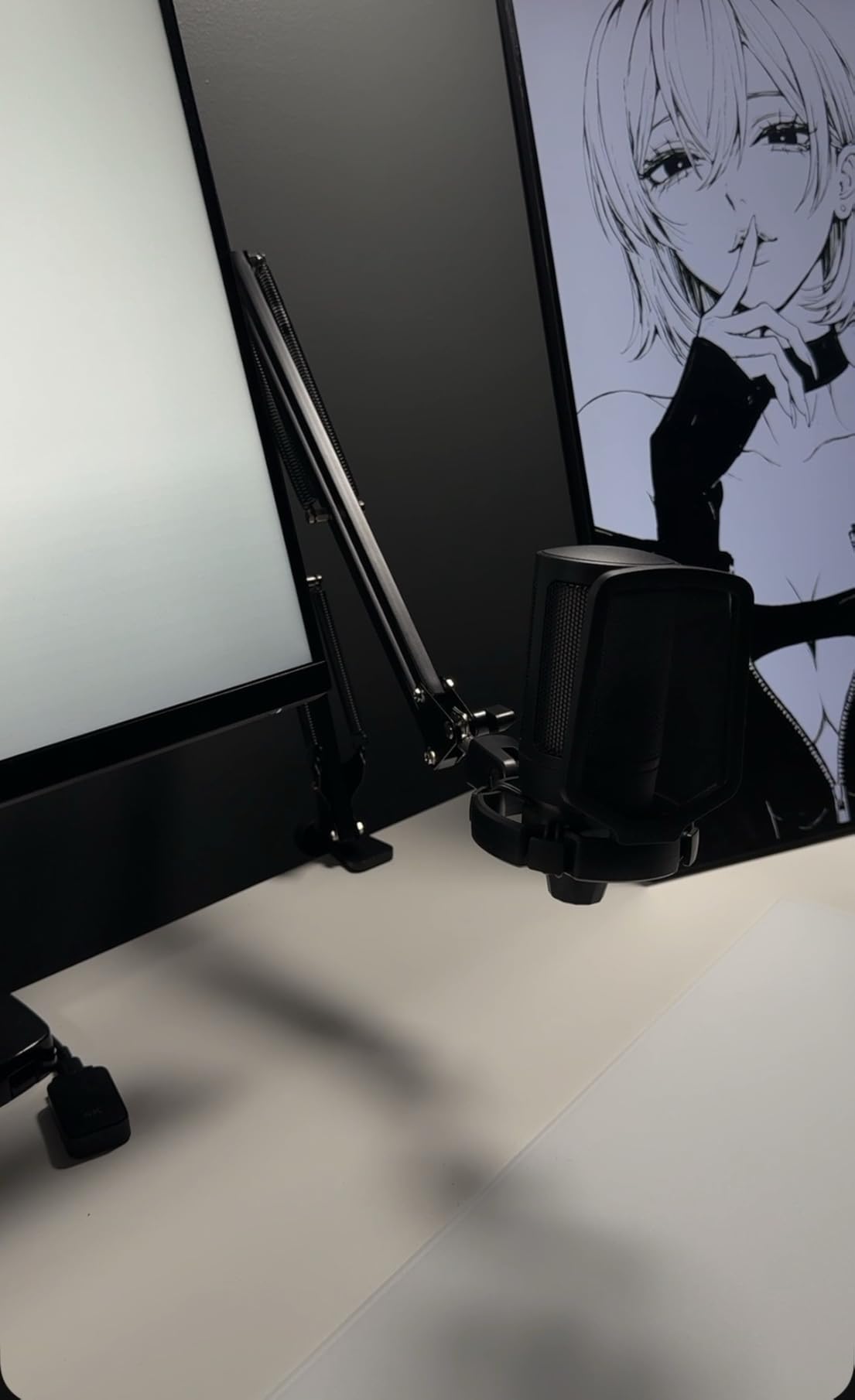
The clamp is the sleeper feature, with an anti-scratch pad and a mouth wide enough for desktops up to 2 inches thick. It also folds flat, which matters on a small desk where every inch is workspace.
Living with the break-in period
Out of the box the springs are noisy, and that noise lands in your recording if you move the mic mid-take. Owners report they quiet down after a period of use.
Know the ceiling before you order
Reach is short for deep desks, and the 1 kg ceiling means a heavy condenser plus a shock mount is over that line. Go for the InnoGear clamp arm or the Rode instead.
12. TONOR T35 Tripod Stand with Tablet Holder – Best for Presentations and Karaoke
TONOR Microphone Stand with Tablet Holder, Tripod Boom Arm for Floor, Adjustable Height and Angle, Heavy Duty Stand with Carrying Bag, Smartphone and Pad Clamp, Excellent Compatibility, T35
Steel and ABS tripod
4.26 lb stand weight
100 to 190 cm height
Boom 45 to 77 cm
2 year warranty
Pros
- Tablet and phone holder included for 5.1 to 9.1 inch devices
- Height range covers speeches and karaoke
- Removable boom with 360 and 180 degree rotation
- Carrying bag and cable ties included
Cons
- Load capacity limited to 2.2 pounds
- ABS parts are less durable than all-metal
- Tablet holder may not fit large tablets in cases
The T35 exists for a specific job: singing, presenting or streaming with lyrics on a screen. The tablet and phone clamp is built in, so there is no separate mount to buy.
Height runs from 3.3 feet to 6.2 feet, spanning seated karaoke through to standing presentation height, and the boom adjusts from 45 to 77 cm with 360 degree horizontal rotation.
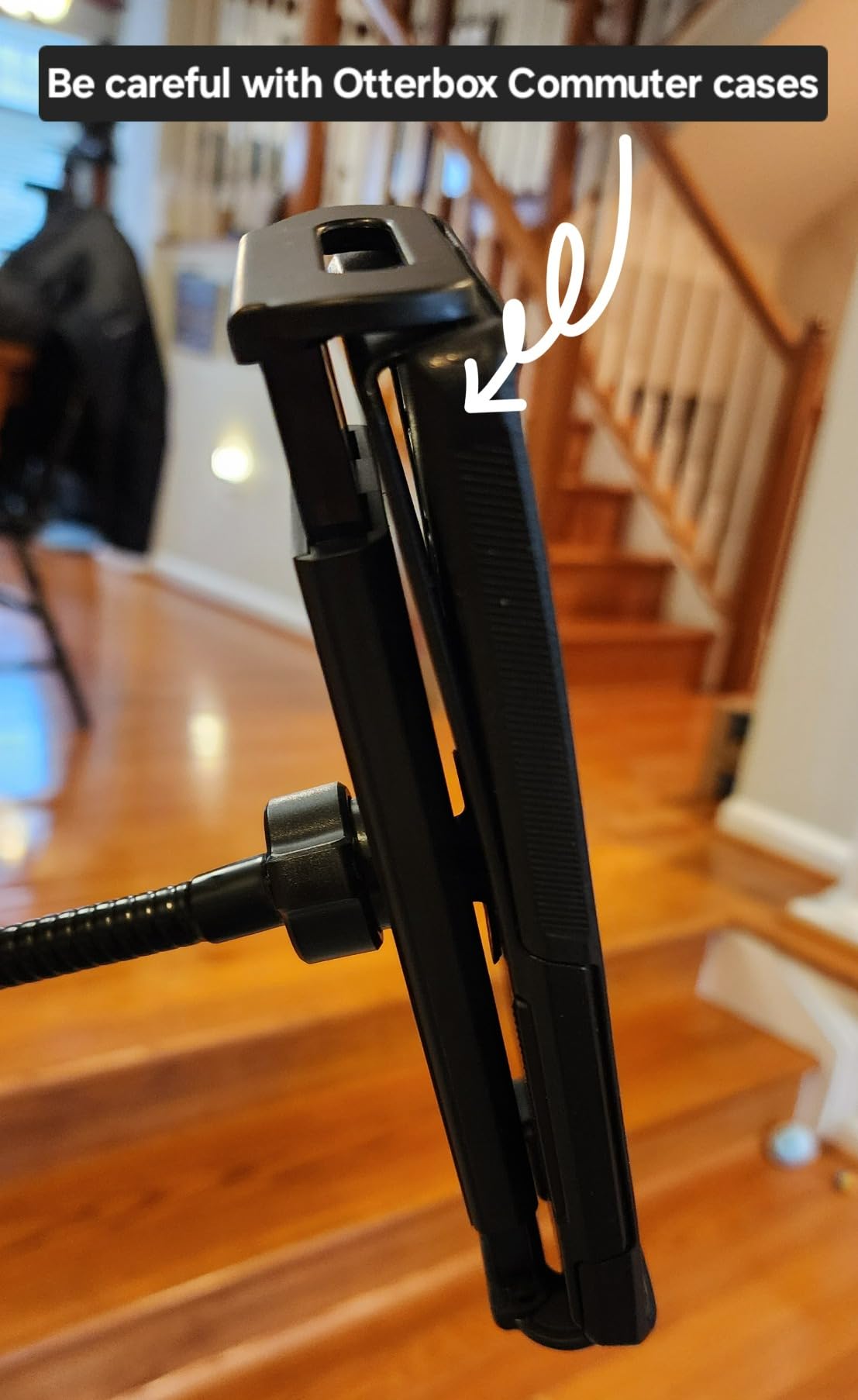
The base is a thickened steel tripod at 4.26 pounds with anti-slip pads. Two microphone clips, four cable ties, a carrying bag and a two year warranty all come in the box.
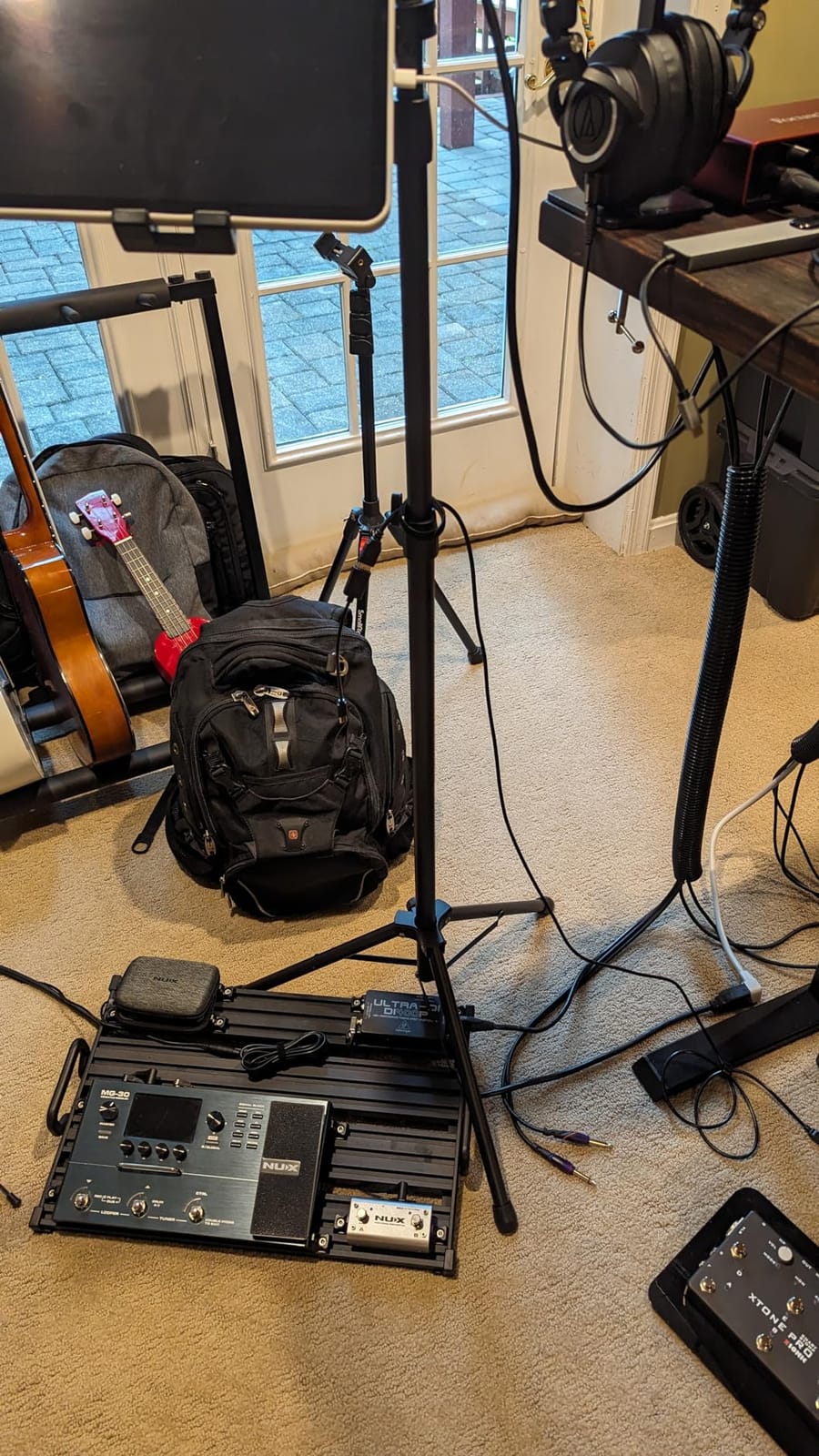
Best used as a single-purpose stand
Buying this for a studio corner that also needs a studio mic is overkill. It makes sense when the stand lives in a rehearsal room or a karaoke setup where the screen is the point.
Where it runs out of capacity
Load capacity is 2.2 pounds, so an SM7B with a shock mount is out. The ABS components will not absorb the abuse a metal stand takes, so treat it as event gear.
How to Choose a Microphone Stand for a Home Studio
Check your desk clamp will actually fit
Measure your desktop thickness first, then measure from the back edge to your seated mouth position. Most C-clamps here handle 2 inches of thickness, the BM88 stretches to 0.8 through 2.4 inches, and the Rode reaches 70 mm.
Curved, glass-topped and pedestal sit-stand desks defeat most clamps entirely. If you have no clampable edge, move to a desktop stand with a weighted base or use a grommet mount through a pre-cut hole.
Match the stand to the total load
Add up the microphone, the shock mount and the adapter before you compare against a capacity figure. A 2 kg rating that sounds generous stops being generous the moment a suspension mount adds 300 g of hardware up on top.
Dynamic mics and USB condensers fit almost anything. A large-diaphragm condenser plus a shock mount pushes you toward the Rode, the InnoGear desktop stand or a heavier floor tripod.
Round base or tripod: pick by room
A round base concentrates mass in one place and takes up a small footprint, but it tips if a chair wheel or a cat finds it. A tripod spreads mass wide, takes more floor, and survives a crowded room.
Small dedicated room and no passing traffic means round base. Shared room, kids, or a stand near a doorway means tripod.
Are expensive microphone stands worth it?
What the premium tier buys is clutch quality, mass and spring behaviour, not sound. A well-built clutch does not strip, a heavy base does not creep, and a spring-damped arm moves silently. On a stand you will adjust every session for a decade, that is worth paying for; on a stand that stays in one position, it is not.
It is also the most common question in the forums, where the answer is consistently to buy the sturdiest one you can justify and stop replacing arms. If you are still working out the rest of the chain, our [roundup of Amazon Prime Day microphone deals](https://www.thirstybear.com/best-amazon-prime-day-microphone-deals-2026/) is a reasonable place to start budgeting.
Test for sag and drift before you keep a stand
Set the arm to your working position, then leave the room for an hour and come back. If the mic has moved, the spring tension is not holding your load and you will re-adjust it before every take. That is the difference between a stand you own and a stand you tolerate.
Springs that squeak are the same story in miniature. Silent movement during a take is worth more than any feature list, and it is why the Rode sits where it does.
How many stands a home studio needs
One for the desk, one floor tripod for instruments, and a third only if you record two people at once or a second room. The fourth stand in most home studios sits unused against a wall, and we would rather see that money go toward your [microphone preamps](https://www.thirstybear.com/best-microphone-preamps/) instead.
For the visual side of the setup, the same logic about hardware weight and footprint applies whether you are choosing [cookbook stands](https://www.thirstybear.com/best-cookbook-stands-premium/) or [watch stands](https://www.thirstybear.com/best-watch-stands/): stability and footprint decide the outcome, styling only decides the look.
Frequently Asked Questions
Which company makes the best microphone stands?
Ku0026amp;M leads on build durability and offers a five year warranty with ten years of replacement parts, RODE builds the most refined desk boom arms with silent spring damping, On-Stage and Gator Frameworks cover the value tier, and InnoGear dominates entry-level volume. Match the brand to the stand type you need rather than the other way around.
What is the best microphone stand for a desk?
For most desks the InnoGear clamp boom arm is the answer, because its steel arm and 3.3 lb capacity handle both a USB condenser and a dynamic. The FIFINE BM88 is the pick for a very small desk, and the Rode PSA1+ is the pick for a thick desktop or a dedicated vocal booth.
Does a boom arm make your microphone sound better?
Not directly. A stand does not change how a microphone transduces sound. What it does is stop desk knocks, floor vibration and handling noise from reaching the mic body, so a take that would have carried a knock or a creak comes back clean.
Are expensive microphone stands worth it?
The premium tier buys clutch quality, base mass and no-drift spring behaviour rather than better sound. That matters on a stand you adjust every session for years. If the stand will sit in one position and never move, a mid-tier arm will do the same job.
What size microphone stand do I need for a Shure SM7B?
Add the mic, the shock mount and the adapter together, then stay well under the stand’s rated load. A suspension-mounted SM7B pushes past 3 pounds, which rules out several budget desktop arms. The Rode PSA1+, the InnoGear desktop stand and the heavier floor tripods handle it comfortably.
Why does my microphone stand wobble?
Almost always one of three things: a light mic on a heavy arm, a clamp not fully tightened, or an arm extended far past the clamp. Add mass near the base, tighten the socket where the arm enters the clamp, and keep the mic close to the clamp rather than far from it.
Final Verdict
For most home studios, the InnoGear clamp boom arm is the best microphone stand to start with, because it handles a USB condenser and a dynamic on the same mount and folds away when you are not recording. Add the Rode PSA1+ if you are building a vocal booth and need silent movement and a thicker clamp range.
Go floor-based with the On-Stage MS7701B for instruments and rehearsal, or the K&M 21090 if you want one stand that outlasts the rest of the room. Our picks for the best microphone stands for home studios in 2026 cover every stand type we could find worth owning.