
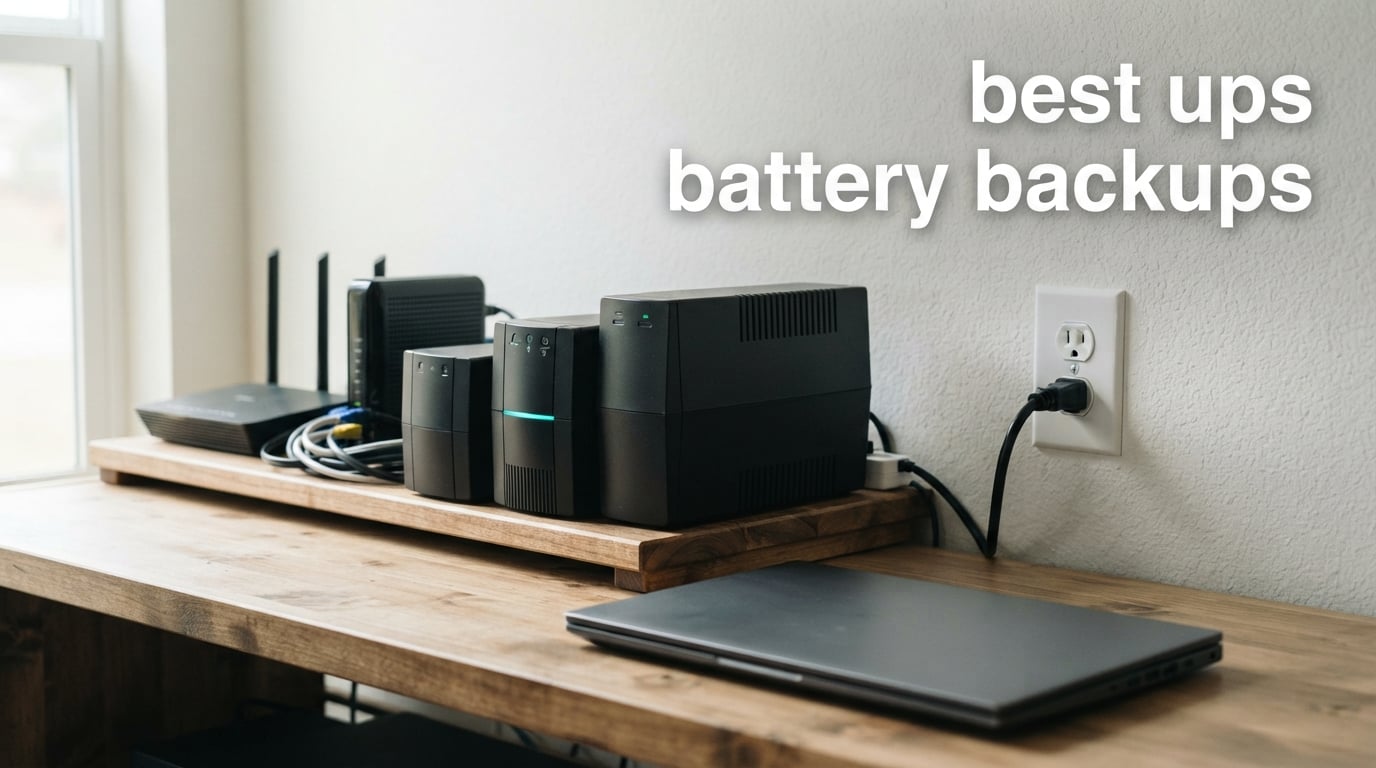
The APC BE600M1 is the best UPS battery backup for most people in 2026. Its 600VA/330W rating, 23 minutes of runtime at a 100W load, and five battery-backed outlets are enough to keep a router, modem and NAS alive long enough to shut down cleanly, and it carries more than 29k reviews at a 4.5 star average.
That said, the right UPS depends almost entirely on what you are plugging in. A gaming desktop with an Active PFC power supply needs pure sine wave output. A NAS needs runtime and a USB port so the operating system can talk to the battery. A router on a shelf needs almost nothing, and buying it a 1500VA tower is money and floor space wasted.
I compared nine UPS battery backups across capacity, runtime at a stated wattage, wave type, battery-backed outlet count, noise behaviour, and how easily each one hands off to a computer for graceful shutdown. Everything below is measured against the spec data and owner reviews for these exact models, updated for 2026.
If you are protecting a whole house rather than a desk, our guide to the best home battery backup systems covers the larger category. For keeping your phone alive during a long outage, our best MagSafe battery pack picks are a better fit than a desktop UPS.
Table of Contents
Top 3 UPS Battery Backups in 2026

9 Best UPS Battery Backups (October 2026)
| Product | Specifications | Action |
|---|---|---|
 APC BE600M1 APC BE600M1 |
|
Check Latest Price |
 APC BX1500M APC BX1500M |
|
Check Latest Price |
| CyberPower CP1500PFCLCD |
|
Check Latest Price |
 APC BE425M APC BE425M |
|
Check Latest Price |
 CyberPower EC850LCD CyberPower EC850LCD |
|
Check Latest Price |
 CyberPower ST425 CyberPower ST425 |
|
Check Latest Price |
 Tripp Lite SMART1500LCDT Tripp Lite SMART1500LCDT |
|
Check Latest Price |
 Tripp Lite INTERNET550U Tripp Lite INTERNET550U |
|
Check Latest Price |
 GOLDENMATE 1000VA Pro GOLDENMATE 1000VA Pro |
|
Check Latest Price |
Read the watt figure, not the VA figure, when sizing. A 1500VA label tells you how much current the outlets can deliver; the wattage tells you whether your equipment will actually run.
1. APC BE600M1 – Best Overall for Routers, NAS and Small Electronics
APC BE600M1 UPS Battery Backup & Surge Protector for Computer, Router, NAS
600VA/330W
23 min runtime at 100W
5 battery outlets plus 2 surge-only
USB charging port
Pros
- Compact 10.79 inch footprint that fits under a desk
- Built-in USB port charges a phone during an outage
- User-replaceable APCRBC154 battery
- Five well-spaced battery outlets
- 3-year repair-or-replace warranty
Cons
- 330W is too small for a gaming desktop
- 23 minutes at 100W limits shutdown headroom
- LED status only with no LCD display
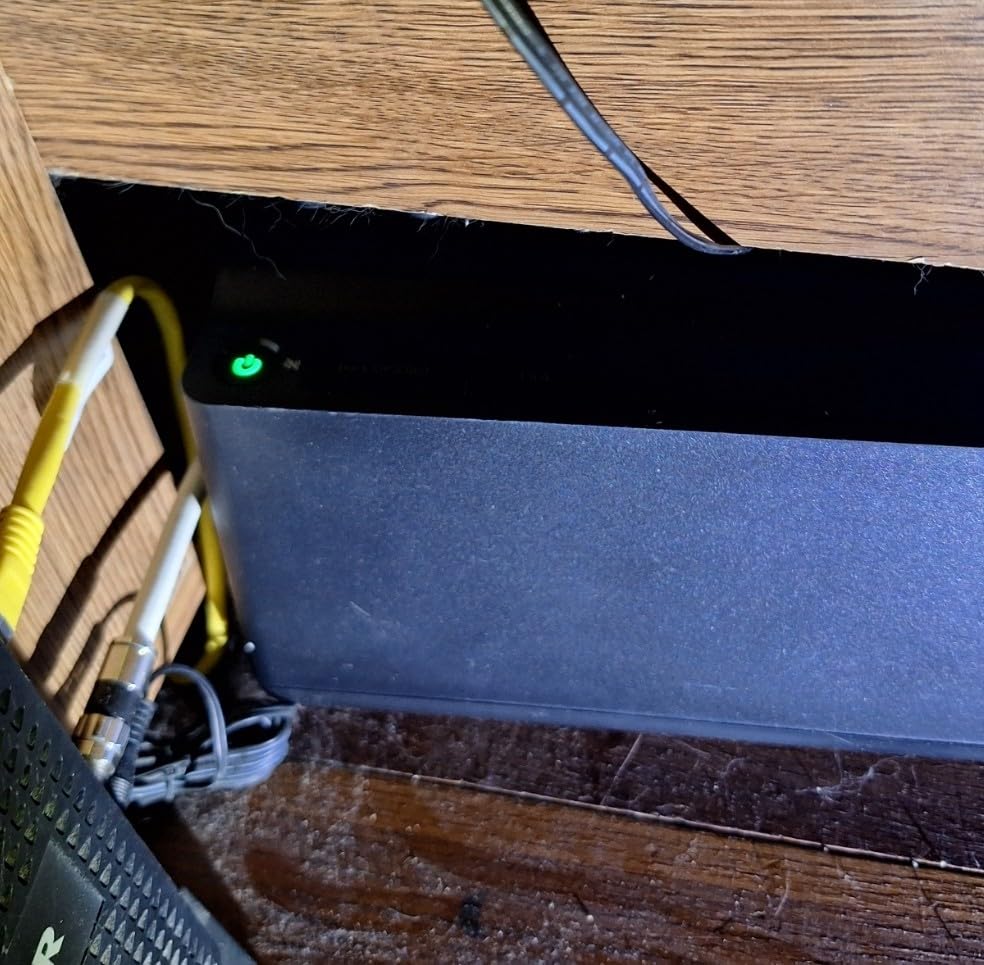
This is the unit I keep coming back to for anyone whose gear lives in a hallway cupboard rather than a rack. The spec sheet lists 600VA and 330W, 23 minutes of runtime at a 100W load, 490 joules of surge protection, and a 10.79 by 4.13 by 5.47 inch footprint at 7.5 pounds. It slides under a desk or a TV stand without being noticed.
Five outlets are backed by the battery and two are surge-only. That split is the single most useful thing to check on any UPS, because plugging a NAS into a surge-only socket means it gets protection in good conditions and nothing at all during a blackout.
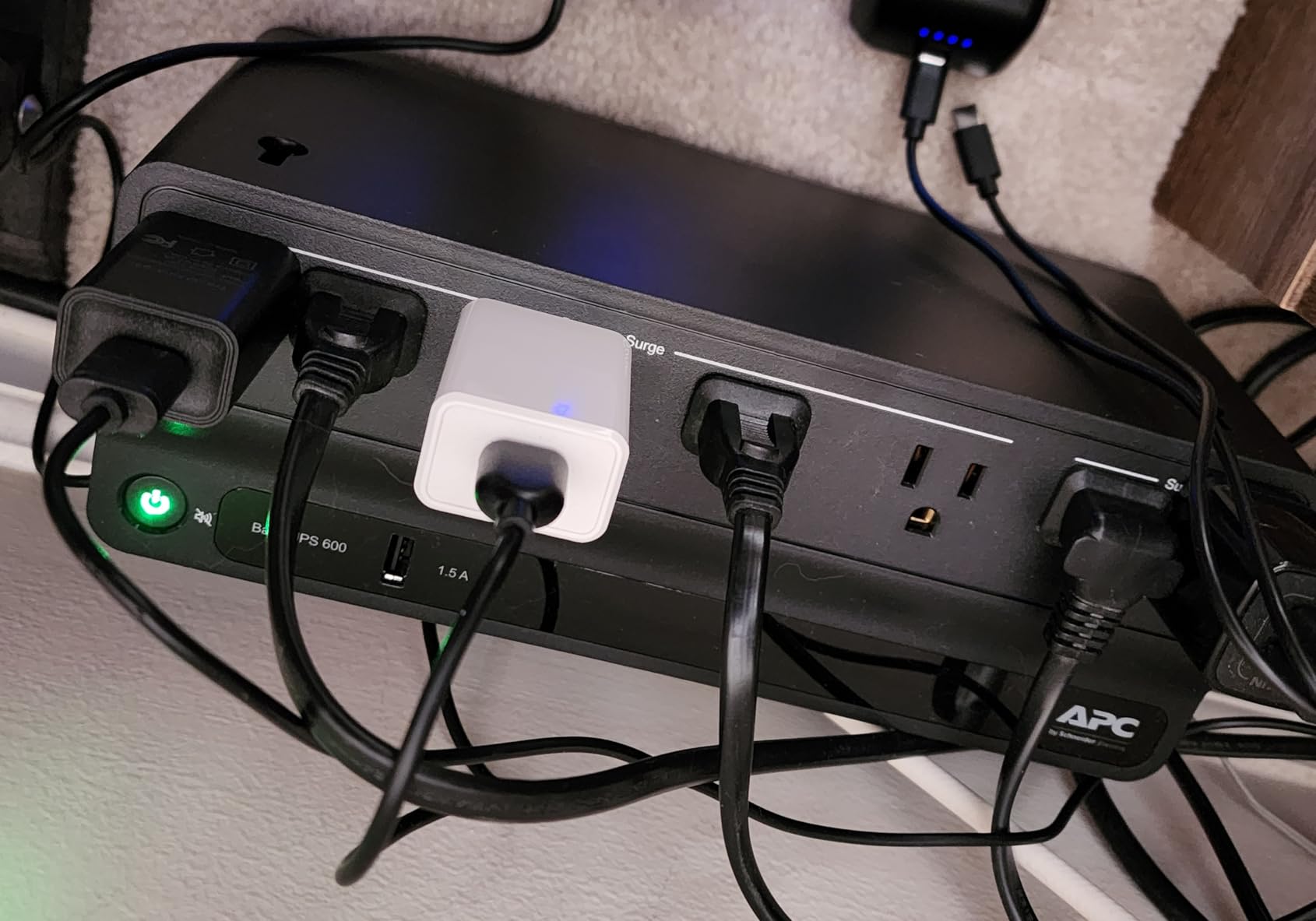
The USB charging port runs at 1.5A from the wall in normal operation and keeps charging from the battery during an outage, which turned out to be the feature owners mention most often in reviews. The internal battery is user-replaceable using an APCRBC154 cartridge, and the warranty is 3 years repair or replace.
With 29k+ reviews and a 4.5 star average, and a 5 star share of 77% in the rating distribution, this is also the least risky purchase in the category. Nobody is guessing about long-term reliability here.
What 330W actually covers
A router, a modem and a small NAS together draw well under 100W, which is why the quoted 23-minute runtime at 100W is a realistic number rather than a marketing figure. Add a desktop and the picture changes completely, and owners consistently report that as the main disappointment.
Because it is LED-only, you are guessing at remaining runtime rather than reading it. If your setup is small enough that runtime is not your problem, that trade is easy to accept.
When this is the wrong pick
Do not put a gaming PC or a power-hungry desktop on this. The 330W ceiling will trip the overload indicator, and the simulated wave output on this class of unit is not something you want feeding an Active PFC power supply.
It is also the wrong choice if your NAS needs automatic shutdown. There is no data port here, so you would need the NAS’s own network UPS client talking to a separate monitor.
2. APC BX1500M – Best for Home Servers and NAS Combos
APC BX1500M UPS Battery Backup & Surge Protector for Computers, Electronics
1500VA/900W
68 min at 100W
5 battery plus 5 surge-only
AVR and LCD
Pros
- 68 minutes of runtime at a 100W load
- AVR corrects brownouts from 88V without touching the battery
- ENERGY STAR certified and Active PFC compatible
- Ten outlets including five battery-backed
- Informative LCD showing load and input voltage
Cons
- Heavy at 24.2 pounds and bulky for a shelf
- Coaxial and Ethernet ports are dated
- Lead-acid batteries still need replacing
If you are running a NAS plus networking gear and want room to grow, this is the pick I would put in a closet. The spec sheet gives 1500VA and 900W, up to 68 minutes at a 100W load, 789 joules of surge protection, and ten NEMA 5-15R outlets split five battery-backed and five surge-only.
Automatic Voltage Regulation is the feature that makes it worth the extra size. It corrects brownouts starting around 88V and surges of plus or minus 13% without switching to the battery, so a dirty grid does not quietly drain the reserve you were saving for a real outage.
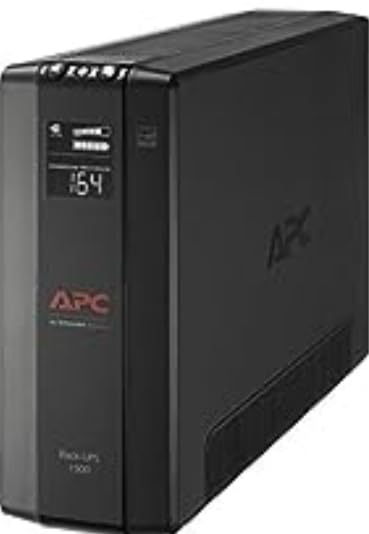
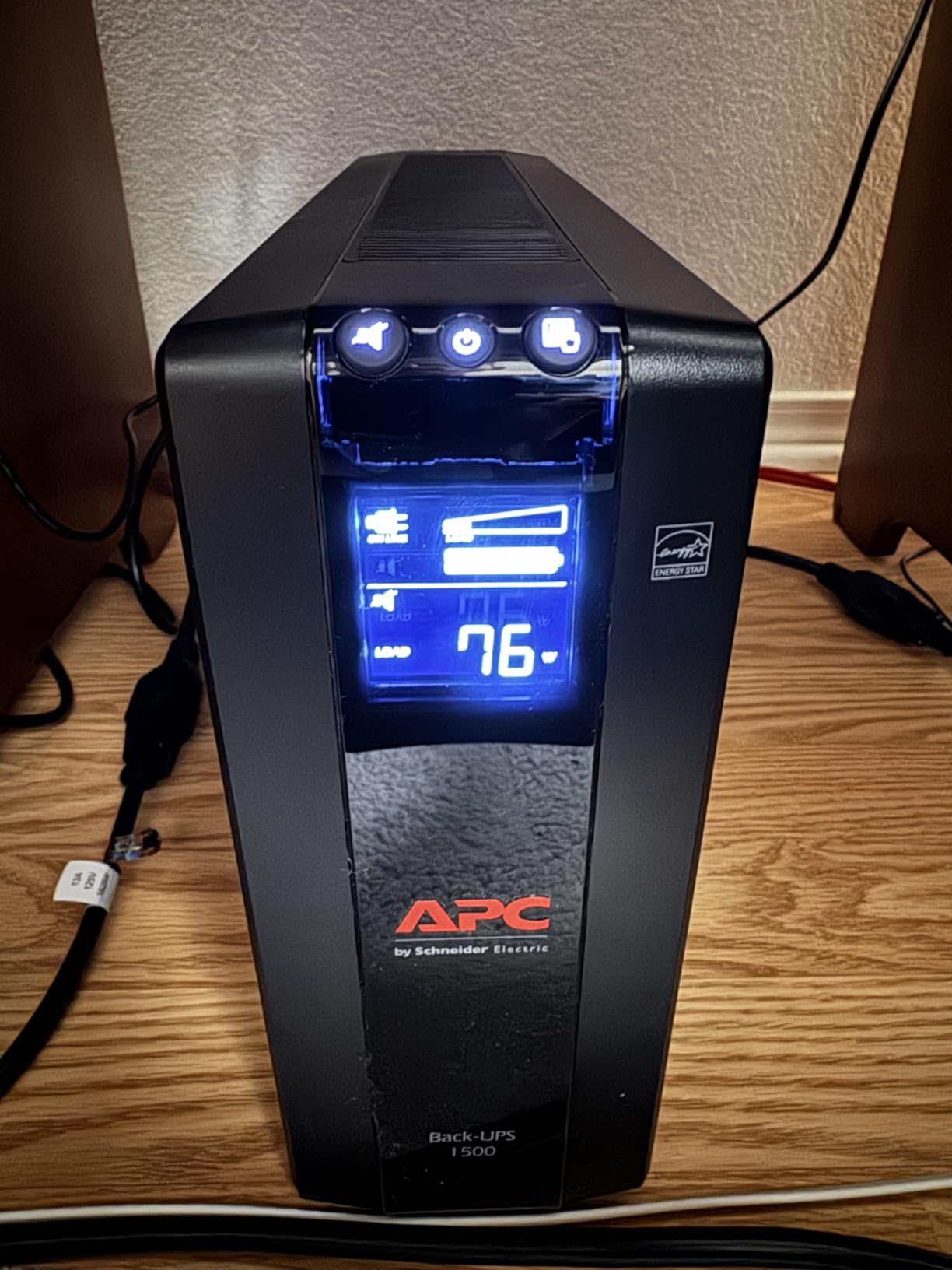
The LCD panel is genuinely useful rather than decorative, showing battery charge, remaining runtime, load capacity, and input voltage. That load percentage is the fastest way to know whether you have headroom before adding another drive to a NAS.
ENERGY STAR certification and Active PFC compatibility mean it also works with a modern desktop, which is why this unit shows up in both home-lab and gaming conversations. The battery is a user-replaceable APCRBC124 cartridge.
Whether 900W is enough headroom
Headroom matters more than raw wattage. Disk arrays, GPUs and spinning drives all draw inrush current at spin-up, and a unit loaded to 90% of its rating can trip on a cold start. Sizing your actual draw, adding a 25% margin, and staying under 50% of rated capacity is the safe approach.
For a single server with a handful of drives and a switch, 900W leaves plenty of room. For a full tower of drives plus a gaming PC on the same unit, you are asking for trouble.
Where the size and weight bite
At 24.2 pounds and 15.04 by 3.94 by 9.84 inches, this is a floor or half-shelf unit, not a desktop accessory. That is the price of the battery mass, and it is unavoidable at this capacity.
The coaxial and Ethernet protection ports feel like relics from an earlier era of home networking. They do no harm, but do not plan your cable layout around them.
3. CyberPower CP1500PFCLCD – Best Pure Sine Wave for Active PFC Gaming PCs
CyberPower CP1500PFCLCD PFC Sinewave UPS Battery Backup and Surge Protector
1500VA/1000W pure sine wave
6 battery plus 6 surge-only
Type-A and Type-C charging
tilting color LCD
Pros
- Pure sine wave output handles Active PFC supplies and high-end GPUs
- Twelve outlets cover a full desktop and every peripheral
- Color LCD shows live wattage and load
- 3-year warranty that includes the battery
- Free PowerPanel software
Cons
- Some units arrive with degraded incoming battery capacity
- Charging circuit can fail and new batteries will not fix it
- Trips on open-frame portable generators
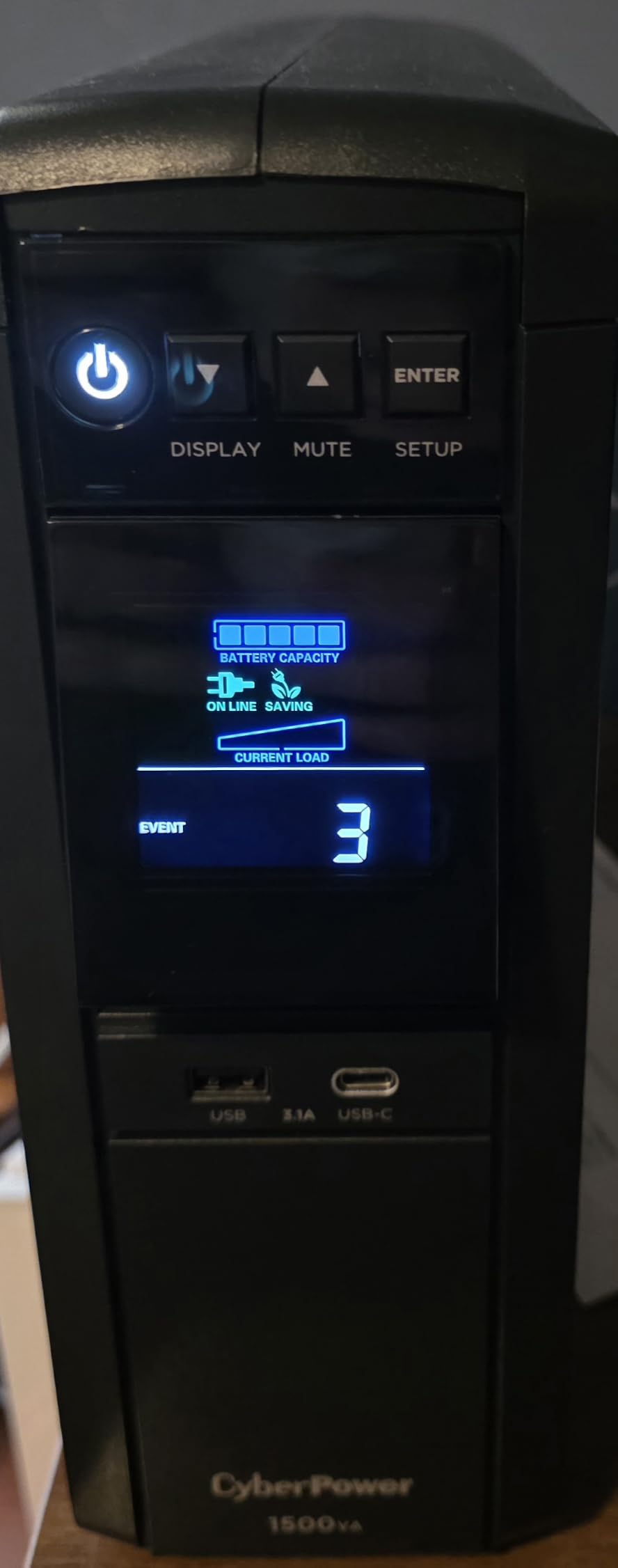
This is the one to buy if you own a modern gaming PC, and the reason is a single word: pure sine wave. The spec sheet lists 1500VA and 1000W of pure sine wave output, which is what modern Active PFC power supplies need in order to switch to battery cleanly instead of cutting out with a click.
Users on r/DataHoarder report CyberPower units have never failed to switch over fast enough to keep a server or PC running, and a poster on forum.level1techs.com specifically recommends this model for desktop and workstation builds because of the sine wave output. That failure mode, where a PSU makes odd noises or the tower dies on transfer, is the single most common complaint on cheaper units.
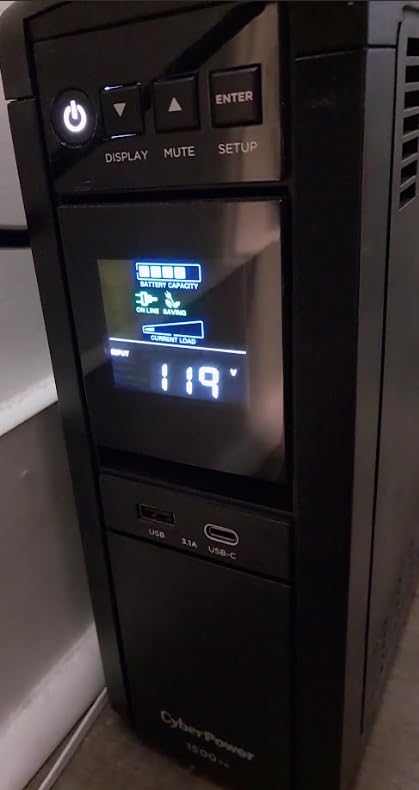
Outlet count is the other quiet win. Twelve NEMA 5-15R outlets, six battery-backed and six surge-only, leave room for a tower, a monitor, peripherals, and network gear without a second power strip. Two USB charge ports, one Type-A and one Type-C, are useful for a phone during a long outage.
The tilting multifunction color LCD shows live wattage, load capacity and runtime, which effectively makes it a built-in wattage meter. You can size a second device against the remaining capacity without guessing.
Why the sine wave matters more than the wattage
Cheaper units output a stepped or simulated wave. Most electronics tolerate it, but an Active PFC supply draws current in tight pulses and will lock up when the shape of the wave changes at the moment of transfer. Pure sine wave removes the problem entirely rather than making it rarer.
Users frequently compare a 1500VA headline rating against a 150 to 200W server load and are surprised by the real figure. One r/HomeServer owner reports about 12 minutes on battery with a 150 to 200W setup, far below the 1500VA number, and that is still plenty for a clean shutdown.
What to watch for on delivery
Some units arrive with an incoming battery that has degraded in transit, and a minority report an internal charging circuit failure that a replacement battery will not fix. Test the runtime as soon as you get it so you have time to deal with it.
Do not feed it from an open-frame portable generator, which reviewers report can cause it to trip. For generator use, look at the Tripp Lite in section 7 instead.
4. APC BE425M – Best Budget Pick for Network Gear
APC BE425M UPS Battery Backup and Surge Protector for Small Electronics
425VA/255W
15 min runtime at 100W
4 battery plus 2 surge-only
180 joules
Pros
- Truly plug-and-play with no software to install
- Compact wall-mountable design for apartments and small offices
- Keeps a router and modem alive through short flickers
- Alarm can be permanently muted
- 3-year warranty
Cons
- 255W is far too low for any desktop
- Deeply recessed screws make battery replacement awkward
- Alarm may not mute during a real outage on some units
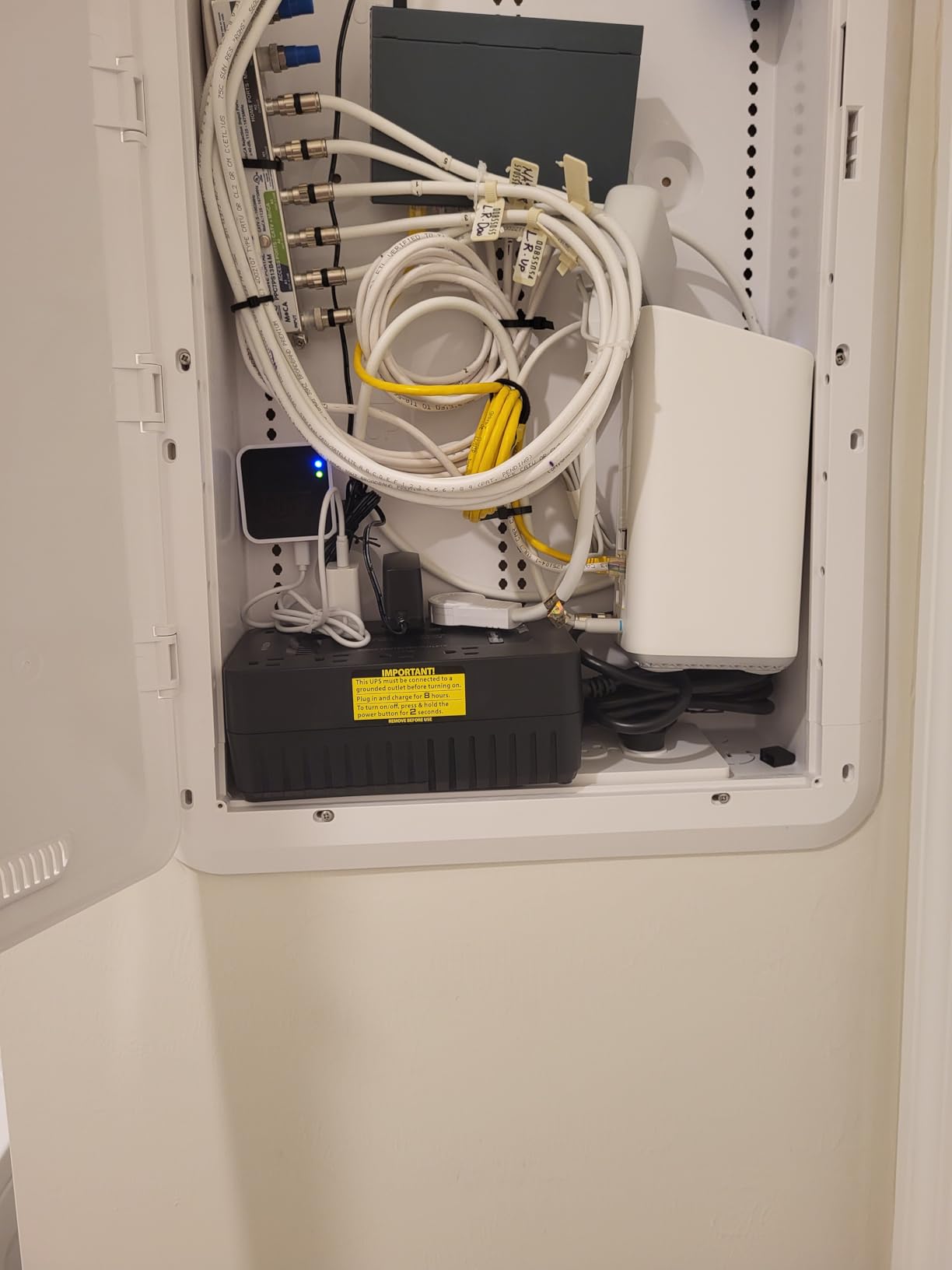
At 425VA and 255W, this is the smallest useful UPS in the list, and for a router, modem or a small network-attached drive it is genuinely sufficient. Runtime is up to 15 minutes at a 100W load, and surge protection is 180 joules across four battery-backed and two surge-only outlets.
Long-term owners describe buying these by the handful, one per room, and report roughly five years of service per unit. With 11k+ reviews at 4.5 stars and a 77% five-star share, it is the most-proven budget option here.
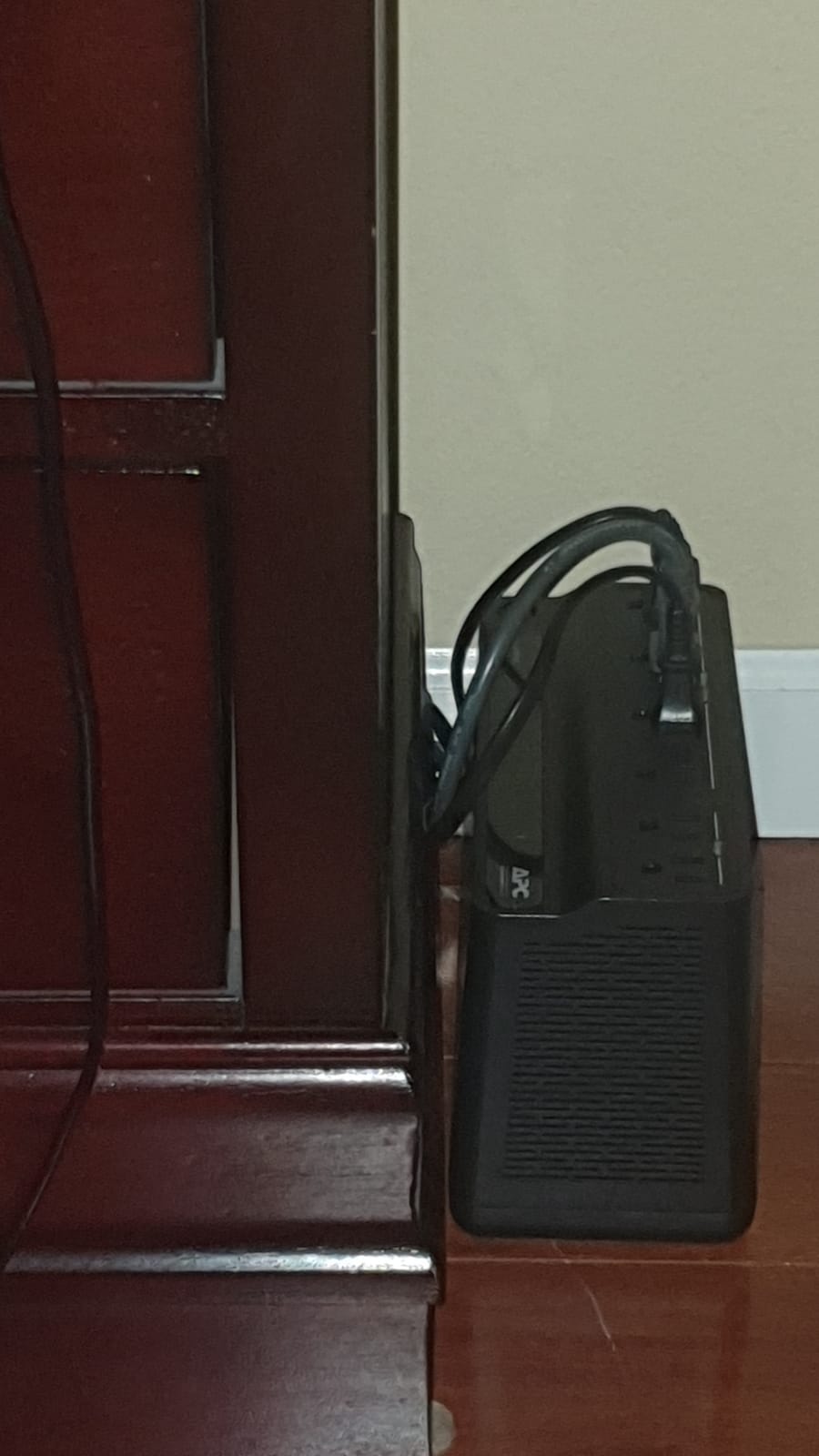
Two details separate it from cheaper units in the same size class. The alarm can be permanently muted, which matters if it lives in a bedroom or a home office, and the external battery connector means you do not have to open the case to test or service it.
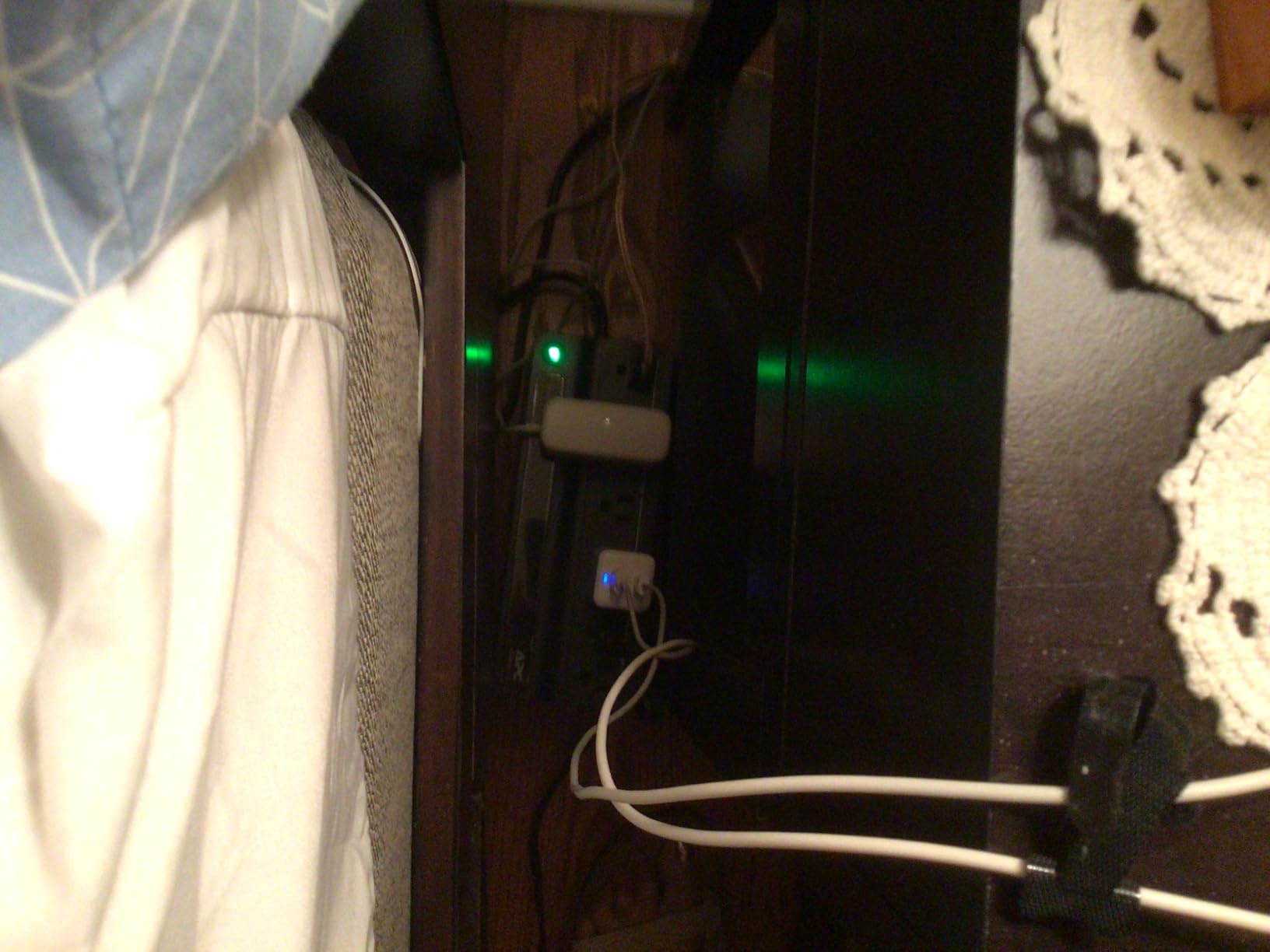
The compact form factor, 10 by 5.5 by 4.1 inches at 5.7 pounds, is wall-mountable, so it disappears next to a network cabinet.
Where 255W is the right number
Networking gear is the entire use case. A router, a modem and a small NAS draw far less than 100W together, so 15 minutes at 100W is comfortable rather than tight. Add a monitor and a desktop and you will overload it immediately.
The watt figure is also the clearest example of why VA is the wrong number to shop by. The 425VA label sounds like a fifth of the way to a gaming rig, and 255W proves otherwise.
The battery replacement catch
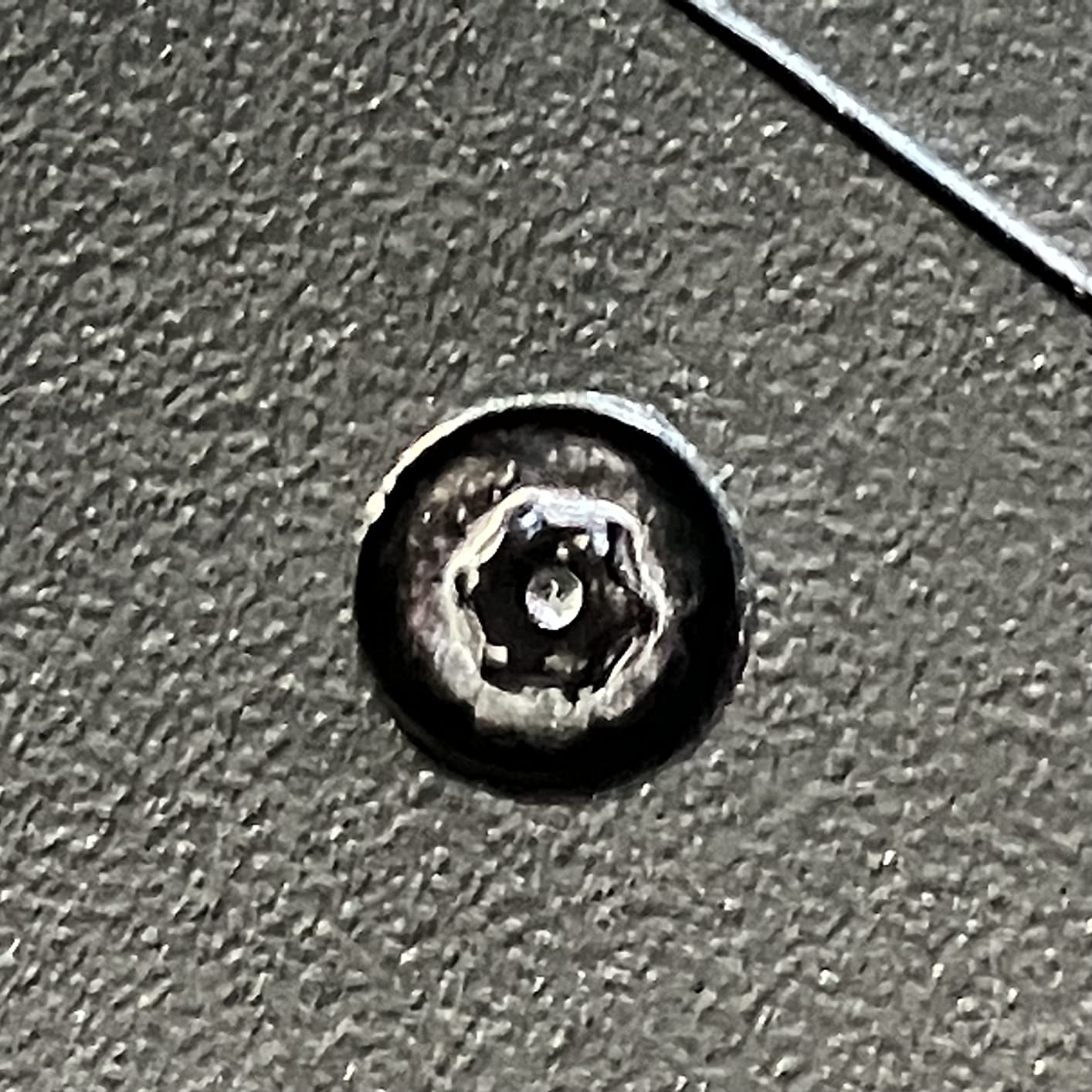
Long-term reliability is not the problem. The problem is servicing: the internal battery sits under Phillips screws in very deep tapered recesses, and owners regularly report struggling to open the case. If you are not comfortable with a screwdriver, budget for a replacement unit rather than a cartridge.
The wattage is the real deal-breaker for anyone with a computer plugged in. Keep it on network gear only.
5. CyberPower EC850LCD – Best Value With 12 Outlets in a Compact Body
CyberPower EC850LCD Ecologic UPS Battery Backup and Surge Protector
850VA/510W
12 outlets with 3 ECO controlled
multifunction LCD
ENERGY STAR
Pros
- ECO mode shuts off peripherals when the PC sleeps or is off
- Twelve outlets in a compact low-profile chassis
- ENERGY STAR certified and light at 7.7 pounds
- Free PowerPanel Personal Edition software
- 3-year warranty including the battery
Cons
- 510W will not carry a gaming desktop or heavy workstation
- Simulated rather than true sine wave output
- Runtime is short at meaningful loads
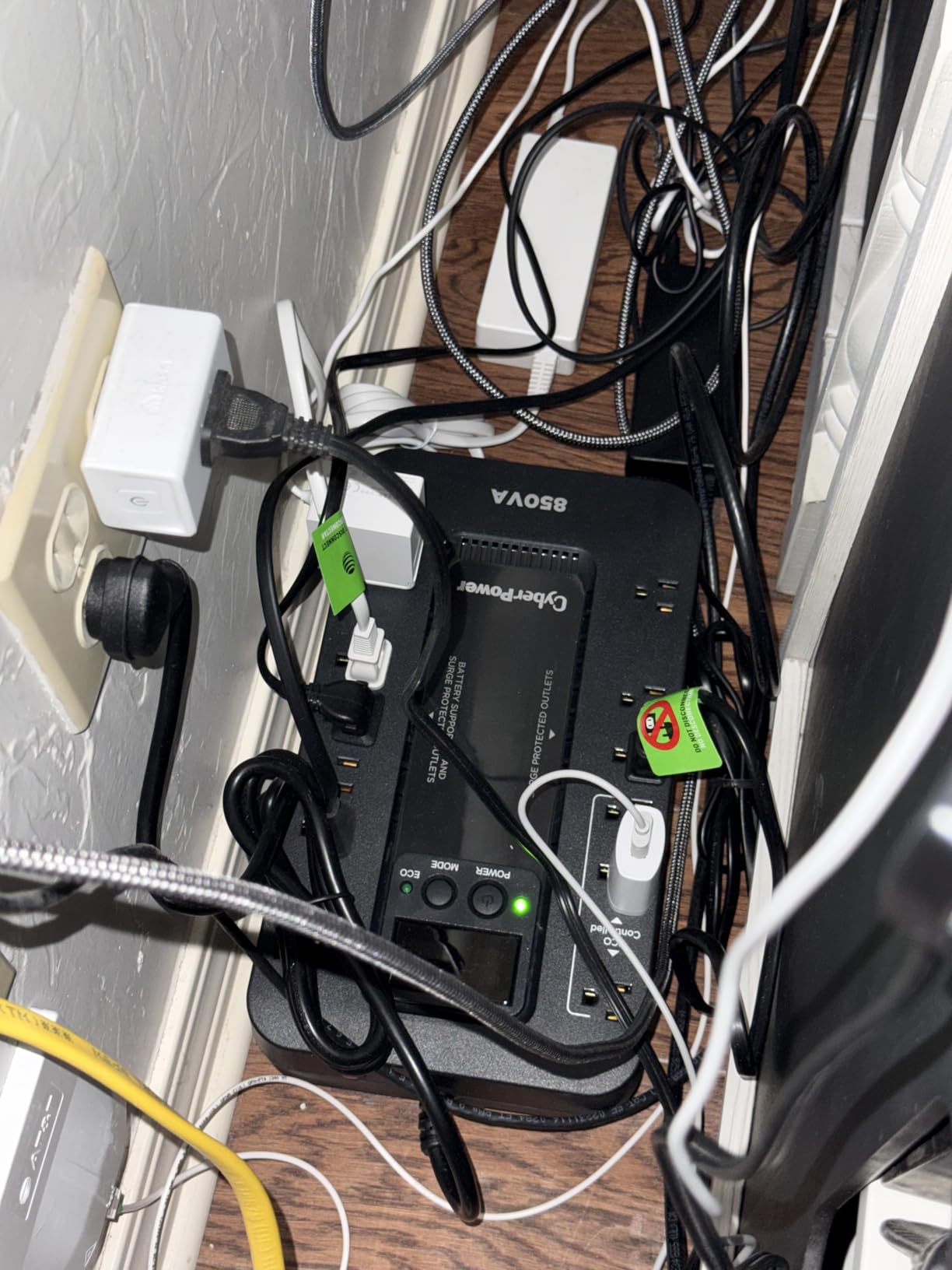
The EC850LCD is the one to buy when outlet count is the binding constraint. Twelve NEMA 5-15R outlets, six battery-backed and six surge-only with three of the surge group under ECO control, in a 12.2 by 7 by 3.1 inch chassis weighing 7.7 pounds. That is twelve sockets in a flat, shelf-friendly body, and a battery-backed half of them, which is more of what you actually need than most units in this price bracket provide.
ECO mode is the feature owners keep singling out. When your computer sleeps or shuts down, the controlled outlets cut power to monitors and peripherals, trimming standby draw without you touching anything.
At 850VA and 510W with a 526 joule surge rating and ENERGY STAR certification, it is a strong fit for a home office desktop, a network cabinet, or a small server with modest drives. The LCD gives you battery and load status, and PowerPanel Personal Edition is free.
With a 3-year warranty including the battery and a connected equipment guarantee, it costs less than the big towers while covering far more sockets.
When ECO mode actually saves you money
Standby draw is invisible on a power meter and real on a bill. A monitor, a printer and a set of peripherals idling at 15 to 30 watts each adds up across a whole setup, and ECO mode removes that draw whenever the PC is idle.
There is a caveat: if you have a NAS or a network switch plugged into an ECO-controlled outlet, it will be powered down whenever the PC sleeps. Put always-on gear on the non-controlled battery-backed sockets.
The sine wave limitation
Output is simulated rather than true sine wave. That is fine for a standard desktop, network gear and most peripherals, but it is the wrong choice for an Active PFC power supply or very sensitive audio equipment.
Runtime is also short once the load is meaningful. Above 200W you are measuring in minutes, not tens of minutes, so plan on this as a shutdown-protecting unit rather than a working-through-an-outage unit.
6. CyberPower ST425 – Best for Surge Protection in Small Spaces
CyberPower ST425 Standby UPS Battery Backup and Surge Protector
425VA/260W
890 joules surge rating
8 outlets,4 battery and 4 surge-only
only 3.8 pounds
Pros
- 890 joules of surge protection which is unusually high in this class
- Very small and light at 3.8 pounds
- Repeatedly praised for keeping a modem and router alive through brownouts
- Works immediately with no setup
Cons
- Only 260W with monitor runtime often under 10 minutes
- Proprietary replacement battery is hard to source
- Simulated sine wave output unsuitable for Active PFC supplies
What makes this unit different is the surge rating. 890 joules is the highest figure among the units here with a stated rating, and it comes in a 3.2 by 8.3 by 4.5 inch package that weighs 3.8 pounds, so it can sit behind a television or on a high shelf without anyone noticing it.
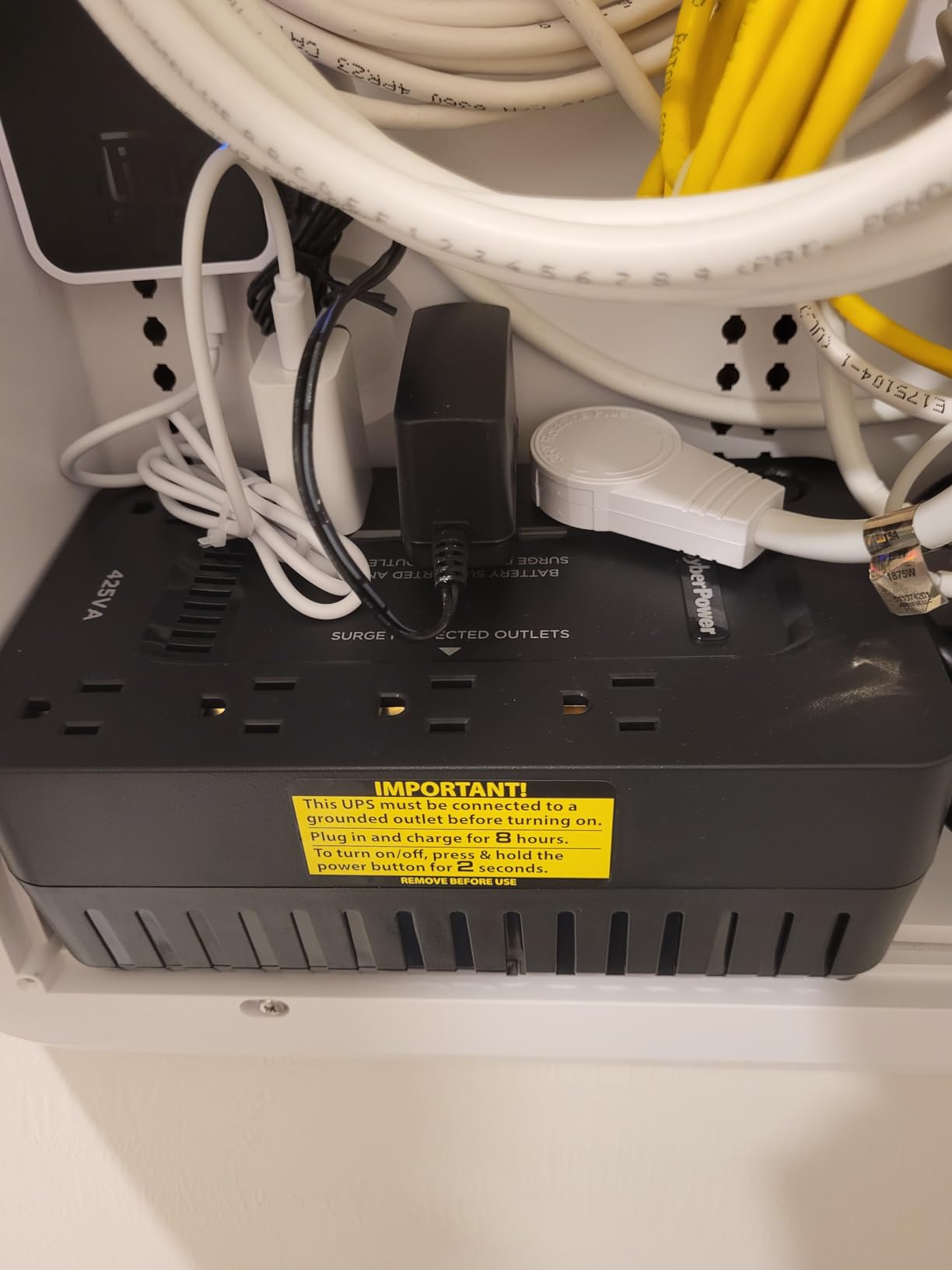
Eight outlets, four battery-backed and four surge-only, with transformer spacing for bulky plugs. Owners overwhelmingly use it network-only, for a modem, router, Raspberry Pi or a security camera, and report it performing reliably in exactly that role.
One failure pattern shows up often enough to warn about: several reviews trace reliability complaints back to devices plugged into the surge-only outlets by mistake. The split-outlet layout is not always obvious, so check which group a socket belongs to before you connect something you care about.
GreenPower efficiency keeps the charger and inverter compact, and the LED indicator covers power-on plus wiring fault detection.
Why 890 joules matters for AV
A joule rating measures how much energy the protection circuitry can absorb before it fails. 890 joules is meaningful protection against the induced spikes that come from nearby lightning or a motor starting on the same circuit, which is a real risk for a home cinema or network rack on a shared line.
It is not a guarantee against a direct strike, and it is not a substitute for a proper surge protector on an aerial line. It is simply a stronger buffer than most units of this size offer.
The battery problem nobody mentions
The replacement Leoch CPS 3.6-12 battery is poorly available and can cost more than a new unit, so treat this as a replace-in-place product rather than a serviceable one. Low inverter efficiency also means the battery drains quickly even on a tiny load.
Choose something else if you want a computer on the other end of it. 260W and simulated sine wave are both disqualifying for a desktop.
7. Tripp Lite SMART1500LCDT – Best for Generator Use and Wide AVR Correction
Eaton Tripp Lite SMART1500LCDT 1500VA UPS 900W 10 Outlets 650 Joules AVR
1500VA/900W
AVR corrects 92V-150V
10 outlets,5 battery and 5 surge-only
650 joules
Pros
- AVR corrects voltage from 92V to 150V without draining the battery
- Stays on line reliably when fed from a portable generator
- Detailed LCD cycling through voltage and load data
- User-replaceable RBC51 cartridges that are widely available
- 3-year warranty
Cons
- Heavy at 27.3 pounds with a bulky tower footprint
- Bundled PowerAlert software is buggy and can trigger random self-tests
- Fan noise is noticeable in a quiet room
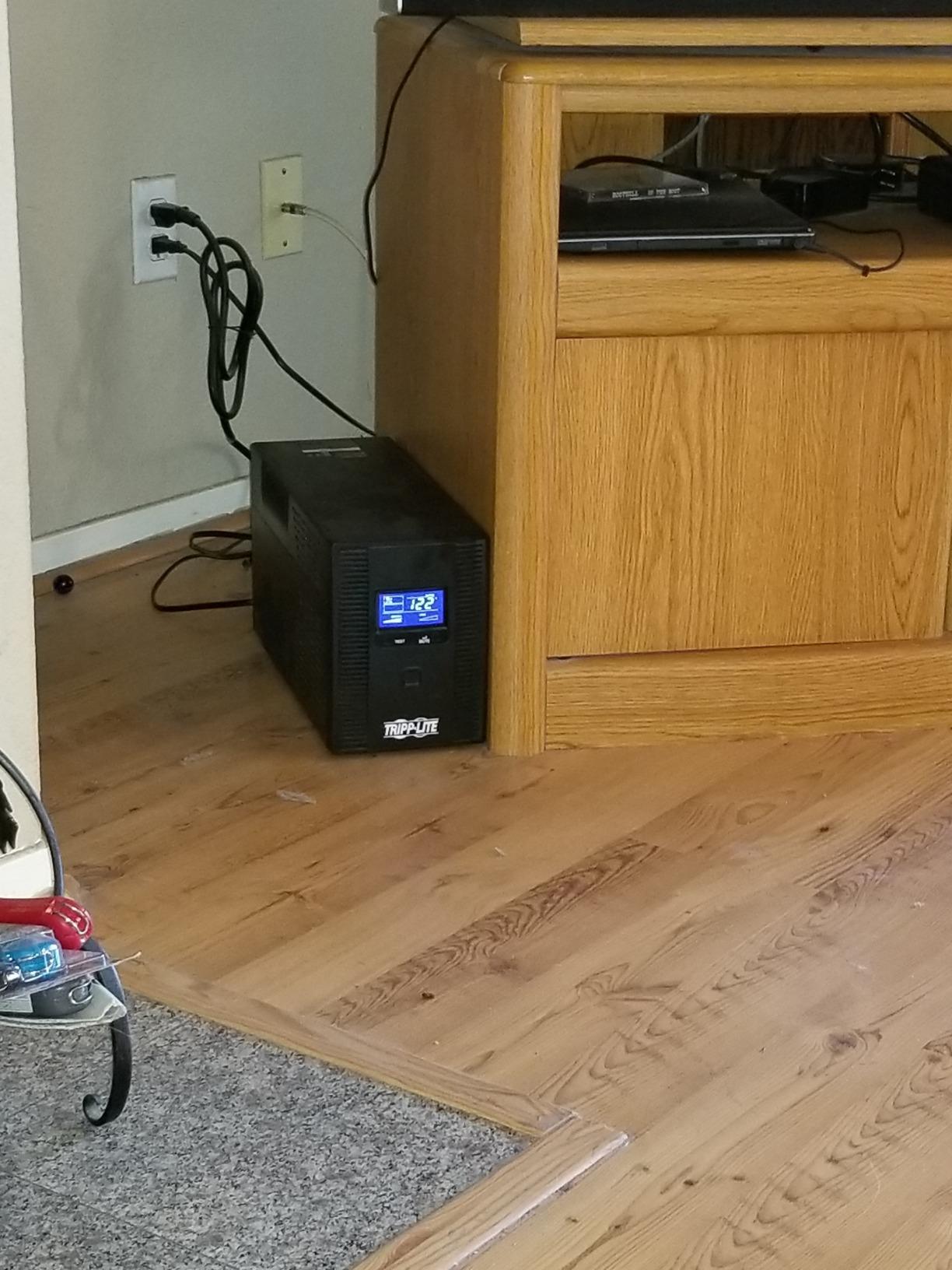
This is the pick for anyone whose power comes from a generator, and the reason is stated directly in the reviews: it stays on line when fed from a portable generator, unlike many APC units that trip. If you already know your grid is unstable, this saves the recurring problem of a UPS that will not accept generator output.
The AVR range is the widest among the units here, correcting excursions between 92V and 150V back to 120V without using the battery. That matters on a long generator cord run, where voltage sags and spikes are common.
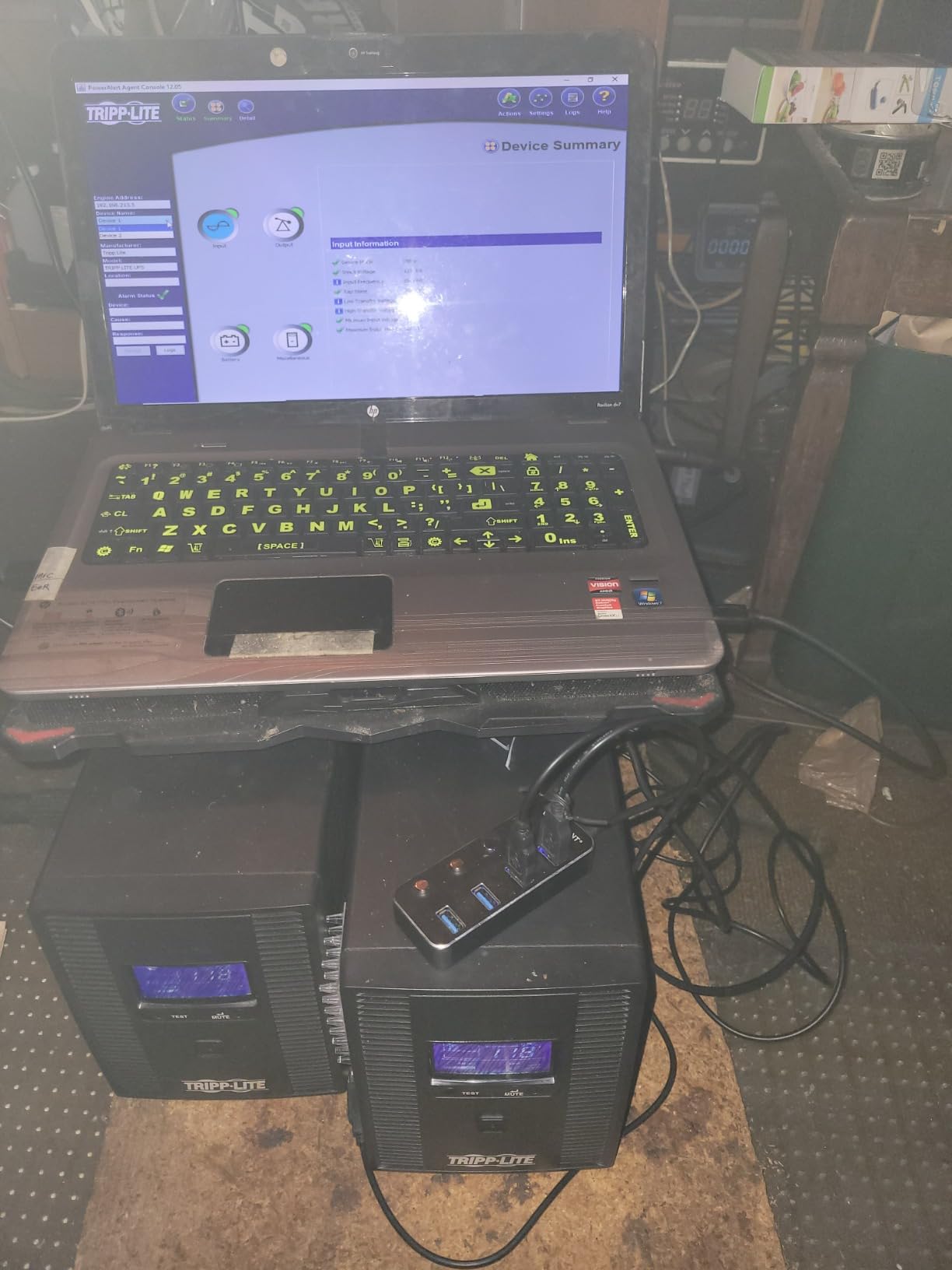
The LCD is the most detailed in the group, cycling through output and input voltage, frequency, load percentage, wattage, and battery voltage. Ten outlets split five battery-backed and five surge-only, plus 100 Mbps Ethernet and telephone dataline protection, round out a well-equipped package.
For shutdown integration, an r/homelab owner running an Eaton 3S550B wired it to a Raspberry Pi over USB and reports load, charge and status feeding into Home Assistant through the NUT integration, with updates arriving in seconds. That approach works on any of these units.
When generator compatibility is the deciding factor
Portable generators produce a stepped, irregular waveform, and many UPS units read that as a fault and refuse to accept it. A unit that repeatedly trips on generator power is worse than useless, because it interrupts the load it was meant to protect.
Reviewers of the pure sine wave unit in section 3 specifically warn against open-frame portable generators for the same reason. If generator backup is part of your plan, verify the combination before you commit.
Noise, size and the software
At 27.3 pounds and 19.29 by 9 by 11 inches, this is the largest unit in the roundup and needs a proper shelf. Fan noise is noticeable in a quiet room, particularly on the rackmount variant, so keep it out of a bedroom.
The bundled PowerAlert software draws repeated complaints for triggering random self-tests. Multiple owners disable it and rely on native Windows and macOS power settings instead, which works perfectly well with a HID-compliant UPS.
8. Tripp Lite INTERNET550U – Best for Quiet Rooms and AV Setups
Eaton Tripp Lite INTERNET550U 550VA UPS 300W Battery Backup Surge Protector
550VA/300W
up to 67 min on a 20W router
10 outlets
silent in normal operation
2 pounds
Pros
- Silent during normal operation which matters for live audio
- Only 2 pounds and wall-mountable on a keyhole tab
- Up to 67 minutes runtime on a 20W wifi router
- Resettable circuit breaker with clear LED indicators
- Modified sine wave smooth enough for modern flat-panel TVs
Cons
- 300W is very low giving about 2.9 minutes for a 200W PC
- Some units failed to transfer during brief dropouts
- Outlets are spaced too closely for bulky wall adapters
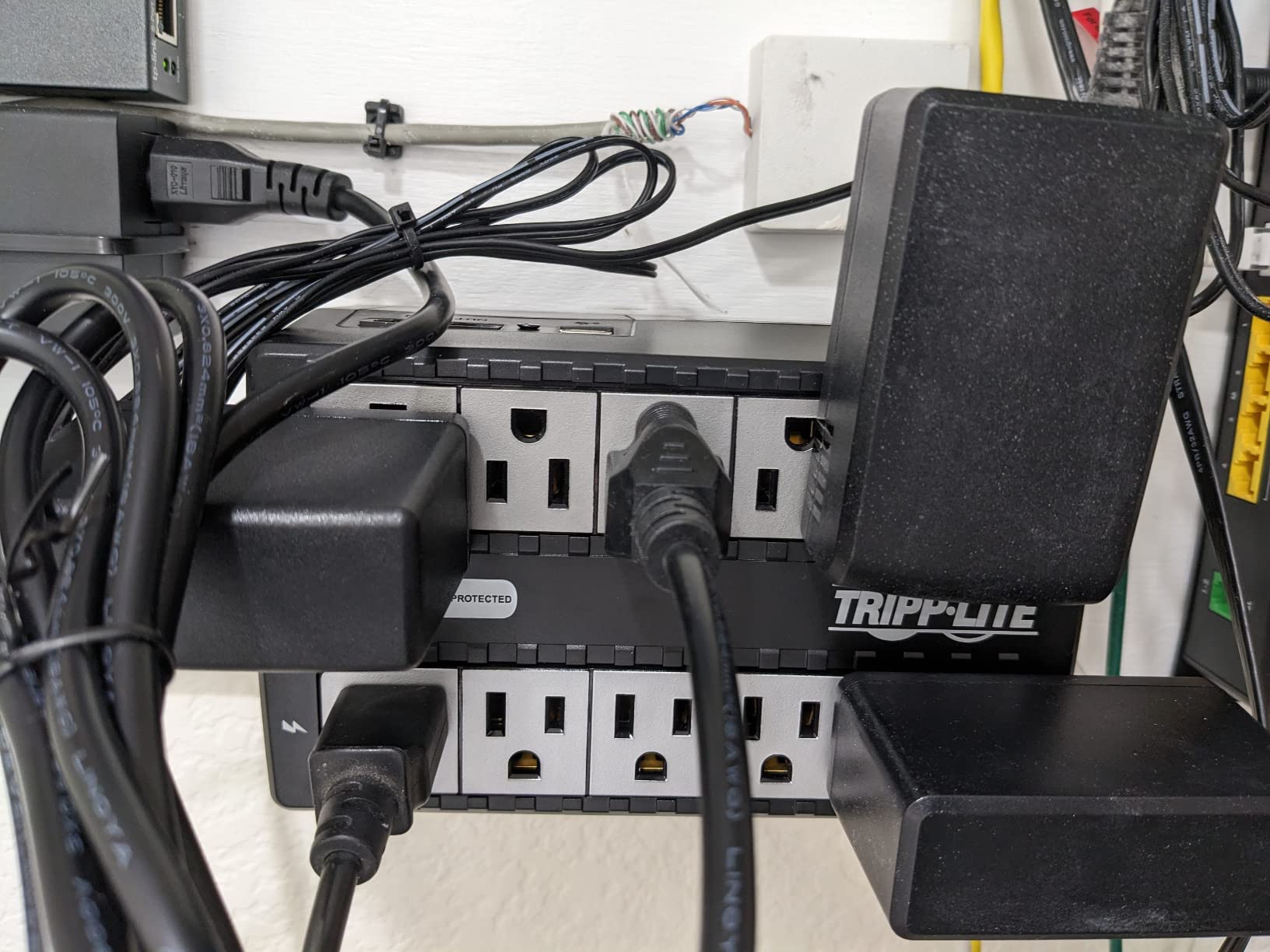
This is the quiet one. At 550VA and 300W, with 10 outlets split five battery-backed and five surge-only, it runs silently during normal operation and only alarms on a low battery or a fault. For a living room, a home office or anywhere audio or video quality matters, that is the deciding feature rather than capacity.
Runtime figures are unusually well specified in the listing: 67 minutes for a 20W wifi router, 9.2 minutes for a 100W television, and 2.9 minutes for a 200W PC. Retail reviewers repeatedly report more than three hours running only a router, modem and phone system, which matches the first figure.
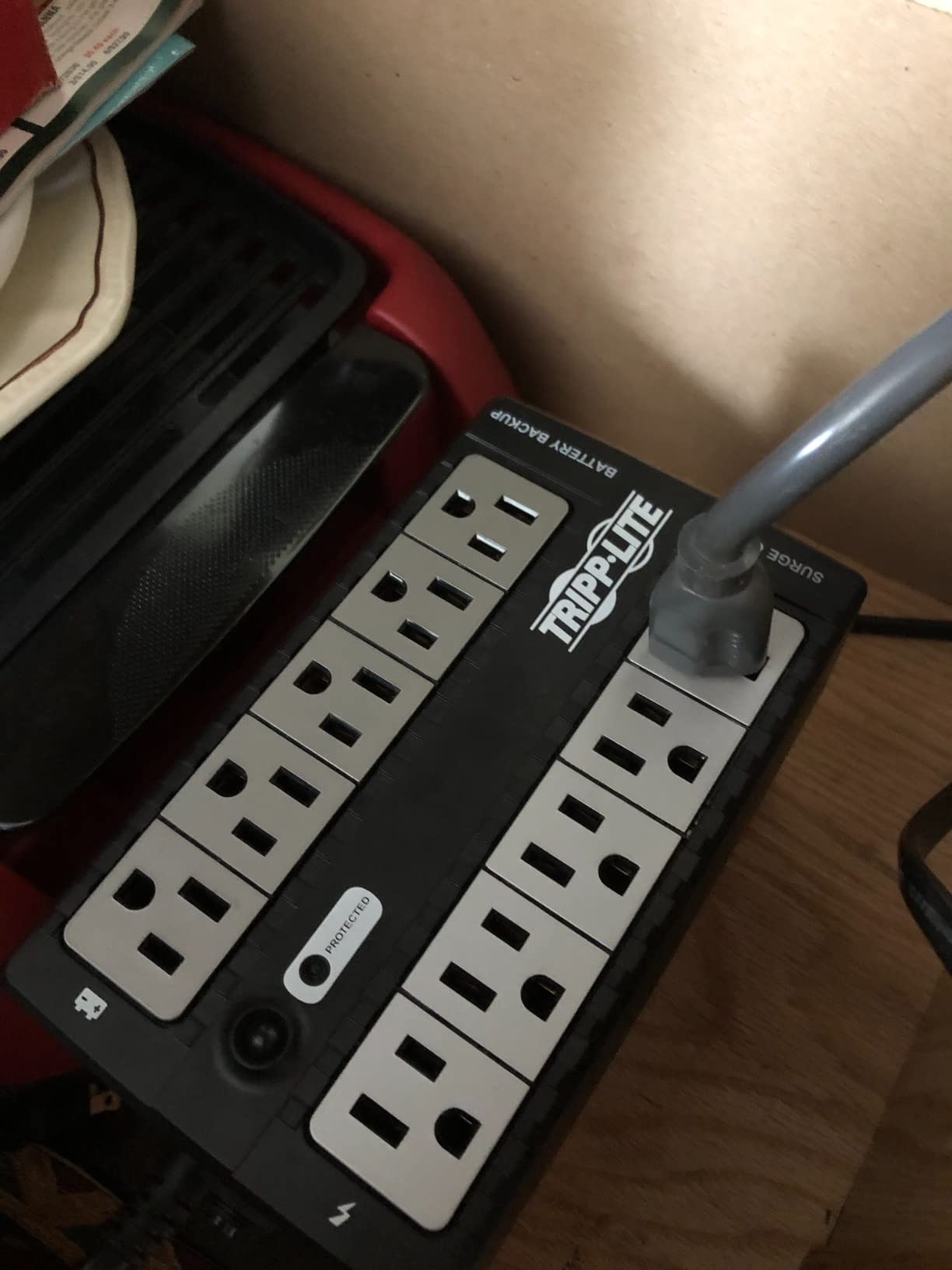
At 2 pounds and 5.75 by 10.87 by 3.07 inches, it is the lightest unit here and thin enough to slide behind a monitor. Bottom keyhole tabs let it mount under a desk or on a wall, and a resettable circuit breaker protects the outlets without a fuse.
Surge protection is 316 joules with EMI and RFI filtering, which matters more in AV than it sounds, since that filtering is what keeps hum and noise off your audio path.
What the noise question really comes down to
Beeping and fan noise are two separate problems. Alarms fire during a self-test, after a full battery cycle, or whenever the unit transfers, and many units allow a permanent mute. Fans are harder, because a UPS spins up under heavy load and, on some models, whenever AVR is correcting an overvoltage.
A PowerWalker owner explains the link neatly: the fan only spins when the UPS enters AVR mode during high mains voltage, which is an overvoltage issue rather than a fault. If your fan runs constantly, check your supply voltage before assuming the unit is faulty.
Where the low wattage bites
300W is a hard ceiling. A 200W PC gets under three minutes, which is enough for an emergency save but not for a graceful shutdown of a busy system. Treat this as network, AV and small-NAS protection.
A minority of owners report the unit failing to transfer during brief grid dropouts, forcing network gear into a hard reboot, which is the most serious failure mode in the reviews. It also carries the smallest review base here at 413 reviews with a 10% one-star share, so treat it as the least proven option in the roundup.
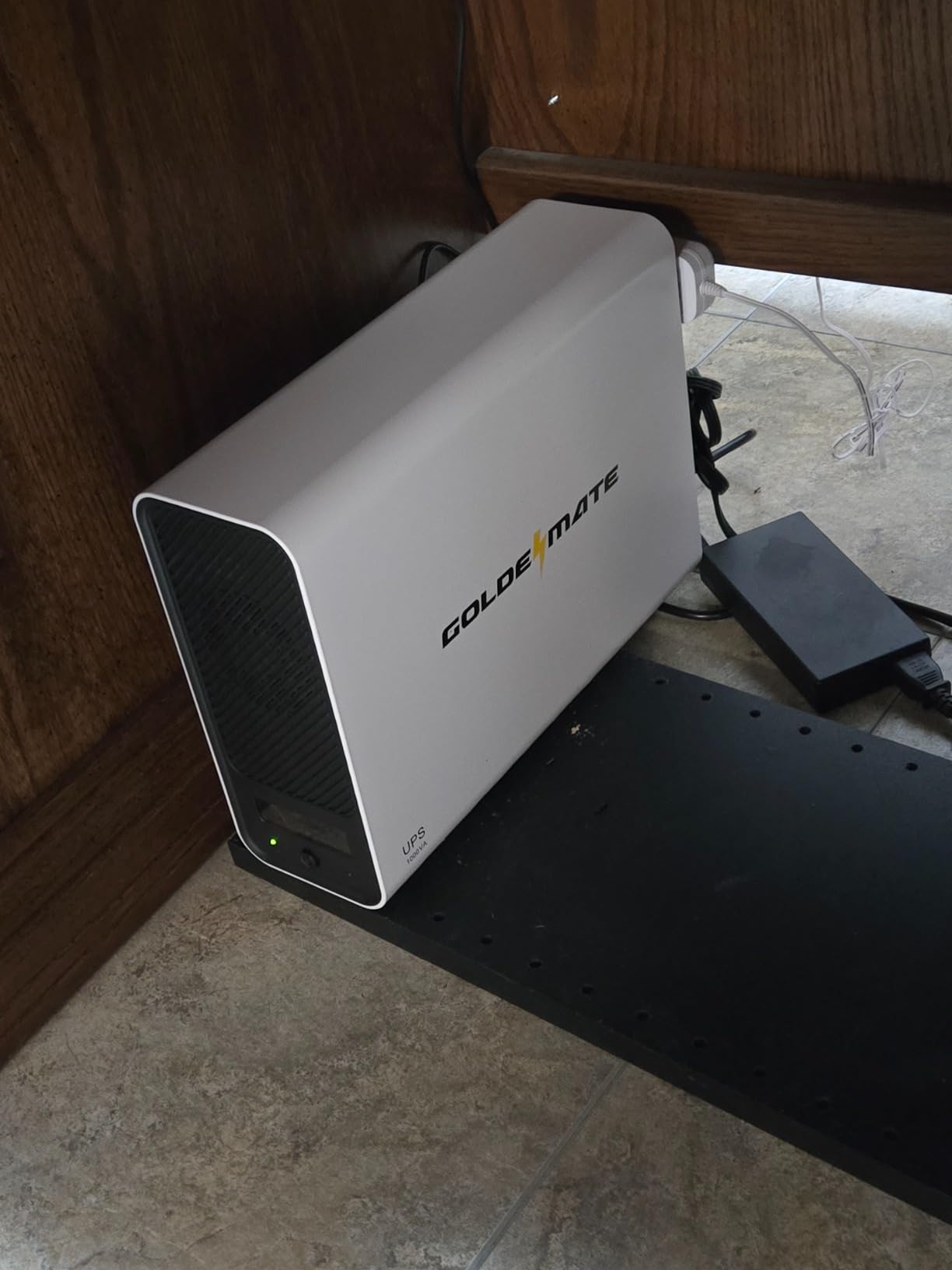
9. GOLDENMATE 1000VA Pro – Best Battery Lifespan With No Swaps
GOLDENMATE 1000VA/600W Lithium UPS Battery Backup & Surge Protector, White
1000VA/600W pure sine wave
153.6 Wh LiFePO4 battery
8 NEMA outlets
10-year rated battery life
Pros
- LiFePO4 battery rated for 10+ years and 5000+ charge cycles
- About half the weight of a comparable lead-acid unit at 10.6 pounds
- Pure sine wave output is safe for Active PFC builds
- White or gray enclosure suits an office or living room
- Buzzer mutes with a single button press
Cons
- No USB or network data port so no automatic computer shutdown
- No AVR and no surge rating
- Battery is not replaceable when it wears out
The reason to look at this unit is chemistry. It uses a 153.6 Wh lithium iron phosphate battery rated for over 5000 charge cycles and a 10-year service life, where every other product in this roundup runs sealed lead acid and expects a cartridge swap every few years. Owners who came from lead-acid units consistently single that out as the reason to buy it.
Output is pure sine wave at 1000VA and 600W, so it is safe for modern Active PFC builds, and the whole thing weighs 10.6 pounds against 24 pounds or more for a comparable lead-acid tower. Eight NEMA 5-15R outlets, an LCD showing live input and output voltage, and a muteable buzzer round out a well-specified package.
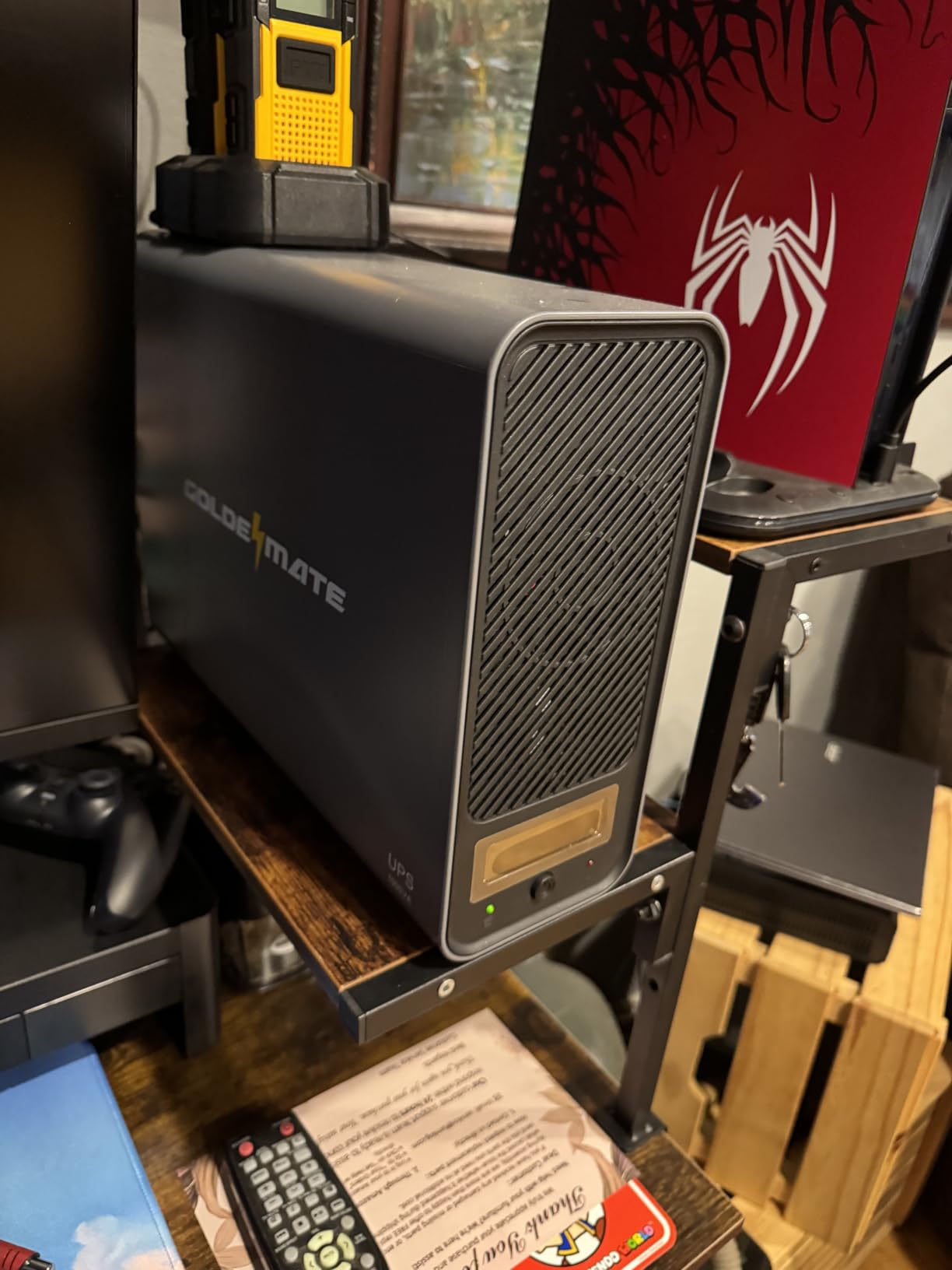
The enclosure is white, and that is not a trivial detail. A black tower in an office or living room is visible; a white one blends in. The built-in battery management system runs a cooling fan that stays under 50 dB.
The battery management system also handles automatic charge and discharge cutoffs at limit thresholds, so it will not over-discharge if you leave a large load on it during a long outage.
When lithium chemistry is worth it
Total cost of ownership is where this wins. Multiple owners of the lead-acid units in this list describe keeping them alive through two or three DIY battery replacements, with third-party cartridges running a fraction of the cost of a new tower. Here that cost simply does not arrive for a decade.
Owners also report light loads under 500W running for hours on this unit, which is a genuine departure from the runtime behaviour of the lead-acid models.
The missing data port is a real limitation
There is no USB or network data port. That means no automatic computer shutdown, which is the single feature NAS and workstation owners depend on. If you are protecting a server, this is not the unit.
It also lacks AVR and a surge rating, and it will not start motors such as a garage door opener or an air conditioner. The battery is not replaceable when it eventually wears out, and a recurring U55 overload code appears even at well under 600W. For a living room or a home office with light loads, it is an excellent fit. For a server, use one of the lead-acid units instead.
How to Choose a UPS Battery Backup
What a UPS battery backup actually is
A UPS battery backup is a battery unit that keeps your electronics running during a power cut and protects them from surges, giving a computer or NAS enough time to shut down cleanly instead of losing data or corrupting files. It sits between the wall outlet and your devices: while power is clean it passes mains through, and the instant power drops it switches to its internal battery in milliseconds and signals your device to power down safely.
That is the whole difference between a UPS and a surge protector. A surge protector only clamps voltage spikes. A UPS also carries a battery, which is why it is the only one of the two that can keep a NAS alive long enough to unmount a pool cleanly.
VA versus watts, and the 0.6 power factor
VA measures apparent power, watts measure real power, and the gap between them is the power factor. Budget units commonly sit at 0.6, better ones at 0.7, so a 1500VA unit is often only rated 900W. Multiply VA by 0.6 to find the conservative watt figure, and check the watt number on the listing rather than assuming the VA number is a watt number.
This catches people constantly. Listings that paste a VA figure into the watt or voltage field are common, and a 425VA unit advertised as 1380 watts is a real example of the error.
How to measure your actual load
Plug your equipment into a Kill-A-Watt meter or read the live wattage on a UPS with a display, and let it settle. Then add 25% headroom for startup surges, and aim to stay under half the rated capacity so there is always room for inrush current when drives spin up.
A quick reference: a router and modem together draw under 20W, a small NAS with two or three drives lands around 50 to 100W, and a gaming desktop can reach 400 to 700W under load. A UPS sized to its typical load gives you far more runtime than one sized to its nameplate number.
Pure sine wave versus simulated, and Active PFC
Pure sine wave output is smooth current that any modern device can accept. Simulated, modified or stepped sine wave is cheaper to produce and works with most consumer electronics, but it can lock up an Active PFC power supply at the moment of transfer. That is the failure users describe as PSUs making funny noises or the tower cutting out with a click.
Any PC built in the last decade is the likely candidate for an Active PFC supply, so pure sine wave is the safe choice for a desktop. Network gear, NAS drives and consumer TVs do not care.
Battery-backed versus surge-only outlets
Every UPS splits its outlets, and the label is the only thing that tells you which is which. Battery-backed outlets keep running during an outage. Surge-only outlets protect against spikes in normal conditions and go dead the moment power drops. Plug anything you would be upset to lose into a battery-backed socket, and count those sockets before you buy.
Fewer than four battery-backed outlets is a deal-breaker for a multi-device setup. It is the most common and most expensive misunderstanding in this category.
On a related note, a NAS or camera system sitting on the same surge-only wall is only as protected as the weakest link. If any of your gear is already running through an inline battery backup or a battery-powered camera, you may already have more protection than you think.
Why headline runtime numbers mislead
Runtime depends entirely on load, and listings rarely attach a wattage to the figure. A 1500VA unit quoted at two hours is usually describing a 20W router, not a 300W server. The APC BX1500M in section 2 states its 68 minutes at 100W explicitly, which is why that number is usable.
A 1500VA unit at a 150 to 200W server load realistically gives around 12 minutes, which is plenty for a clean shutdown and nowhere near enough to keep working. Multiply the watts figure by the load, and expect roughly 10 to 30 minutes on a typical home setup.
AVR, beeping and fan noise
Automatic Voltage Regulation corrects brownouts and overvoltages without switching to battery, so a dirty grid does not quietly drain your reserve. Without AVR, every flicker becomes a battery event. For a unit that claims it, check the correction range, since 92V to 150V is much wider than the 88V brownout floor on a mainstream APC tower.
For the best UPS that does not beep, look for a unit with a permanent alarm mute and confirm the alarm stays silent during a self-test. The APC BE425M and the GOLDENMATE both mute with a button press. Fan noise is a separate issue, and a fan that runs constantly is usually AVR correcting an overvoltage rather than a fault.
APC versus CyberPower
On r/homelab the two names come up constantly, and the pattern is consistent: CyberPower is usually praised as better value, while APC is favoured for its longer track record and software ecosystem. That tracks the data here, with CyberPower holding the number one sales rank through the pure sine wave CP1500PFCLCD, and APC holding the deepest review counts on its small units.
A BPC PO1000 owner reports that plugging a Synology NAS into the UPS gets automatic recognition with no software install, which is a good example of why NAS compatibility matters more than the brand on the box. Test with your own operating system before you commit.
Battery replacement and total cost of ownership
Before you buy any UPS, test the battery in it. A battery load tester gives you an independent reading on the cells rather than relying on the unit’s own self-test, which is useful when you are buying a used or shelf-stored unit.
A UPS is not a five-year purchase. Lead-acid batteries typically need replacing every three to five years, and the good units let you do it with a cartridge. The APC BE600M1 takes an APCRBC154, the APC BX1500M an APCRBC124, and the Tripp Lite SMART1500LCDT an RBC51.
Check the cartridge code before buying and confirm it is available, because an obscure battery can cost more than a new unit. The CyberPower ST425 is the cautionary example, where the proprietary replacement is hard to source. The GOLDENMATE sidesteps the question entirely with a lithium battery rated for 5000+ cycles.
Making the NAS shut down cleanly
For Synology DSM, QNAP or TrueNAS, the pattern is the same: connect the UPS over USB so the NAS recognises it, then set a shutdown threshold in seconds or as a percentage of remaining runtime. The NAS then closes file systems, unmounts pools and powers down before the battery runs out.
On Linux, Network UPS Tools is the standard route. An Eaton 3S550B owner wired one to a Raspberry Pi over USB and reports load, charge and status appearing in Home Assistant through the NUT integration within seconds. If your NAS has no data port, you can also trigger shutdown manually with a few lines of script.
Testing it matters as much as configuring it. Unplug the unit from the wall once you have a load attached and see what your system actually does.
Frequently Asked Questions
How long should a UPS battery backup last?
Plan on three to five years for a sealed lead-acid battery, which is why a unit with a user-replaceable cartridge is worth buying over a sealed one. Lithium units such as the GOLDENMATE 1000VA Pro are rated for 10 years and 5000+ cycles. Check the battery self-test result annually and replace the cartridge rather than the whole unit.
How long will a 1500VA UPS last?
It depends entirely on your load. The APC BX1500M is rated for up to 68 minutes at a 100W load, but a 150 to 200W server realistically gets around 12 minutes. Buy for your actual measured wattage with 25% headroom, and expect 10 to 30 minutes on a typical home setup.
Who makes the best battery back up?
The APC BE600M1 is the best all-round choice for routers, modems and small NAS units, rated 4.5 stars across more than 29k reviews. For a gaming PC, the CyberPower CP1500PFCLCD is the pick because of its pure sine wave output, and for a home server the APC BX1500M gives the longest runtime in this roundup.
What is the difference between an UPS and a battery backup?
They are the same thing. A UPS, short for uninterruptible power supply, is a battery backup that keeps electronics running during an outage and signals a computer or NAS to shut down safely. A surge protector, by contrast, only clamps voltage spikes and provides nothing during a blackout.
Is CyberPower UPS better than APC?
Neither is better across the board. CyberPower is usually better value, and its CP1500PFCLCD holds the top sales rank thanks to pure sine wave output. APC is favoured for a longer track record, deeper review counts and a wider software ecosystem. Match the unit to your load and wave type rather than the brand.
What is the best UPS that doesn’t beep?
Look for a unit with a permanent alarm mute rather than one that only silences during a self-test. The APC BE425M and the GOLDENMATE 1000VA Pro both mute the buzzer from the front panel. Fan noise is a separate issue, and a fan running constantly usually means AVR is correcting an overvoltage rather than a fault.
Final Verdict
Protecting a router, modem or small NAS, the APC BE600M1 is the best UPS battery backup you can buy: 330W, 23 minutes at 100W, five battery-backed outlets, and a decade of owner feedback behind it. Protecting a home server, the APC BX1500M gives you 68 minutes at 100W with AVR that keeps brownouts off the battery. Protecting a gaming PC, the CyberPower CP1500PFCLCD is the pick, because its pure sine wave output at 1000W is what an Active PFC supply needs to switch over cleanly.
Everything else is a specialist choice. The CyberPower EC850LCD wins on outlet count, the CyberPower ST425 on surge protection, the Tripp Lite SMART1500LCDT on generator compatibility, the Tripp Lite INTERNET550U on silence, and the GOLDENMATE on battery lifespan. Measure your real wattage first, count your battery-backed outlets, and check for a data port if you want automatic shutdown.
Our picks were compared against the manufacturer spec data and owner reviews for these exact models, updated for 2026. Use the buttons above to see the current deal on whichever fits your setup.