
The Ulefone Armor X13 is the best rugged phone most people should buy right now, because it is the only model in our test group that pairs full IP68 and IP69K sealing with MIL-STD-810H certification, a 24MP infrared night vision camera and a 6320mAh battery, while also carrying the largest body of verified owner feedback of any phone we reviewed. That combination matters more than raw specifications when a phone spends its life in a tool bag.
We compared ten rugged phones across the full price spectrum, from a slim 245g model that genuinely fits a shirt pocket to an 825g expedition unit with a built-in projector. We read every specification sheet, cross-checked the certification claims, and weighed the owner reviews rather than the marketing copy. The result is a list that separates genuinely durable hardware from phones that merely look tough.
Our testing and selection approach matters here more than in most buying guides, because rugged phone marketing leans heavily on badges that many buyers cannot interpret. Two of the ten phones below are excluded from every major US carrier. Six of them have fewer than 150 verified reviews, which is thin evidence for a device you might drop on concrete daily. We weighted durability certification, battery endurance, repairability and software support in that order, and we flagged every phone where the weight or the camera compromises the experience.
Every product below was also checked for US network compatibility, because a phone that cannot make a call on your network is not a bargain at any level. Where a model is GSM-only, we say so plainly rather than burying it.
Table of Contents
Top 3 Rugged Phone Picks in 2026


10 Best Rugged Phones (October 2026)
| Product | Specifications | Action |
|---|---|---|
| Ulefone Armor X13 |
|
Check Latest Price |
| Samsung Galaxy XCover7 5G |
|
Check Latest Price |
| Blackview Fort 2 |
|
Check Latest Price |
 Blackview Rock 2 Pro 5G Blackview Rock 2 Pro 5G |
|
Check Latest Price |
 Ulefone Armor X16 Pro 5G Ulefone Armor X16 Pro 5G |
|
Check Latest Price |
 Ulefone Armor 34 Pro Plus 5G Ulefone Armor 34 Pro Plus 5G |
|
Check Latest Price |
 FOSSIBOT F113 5G FOSSIBOT F113 5G |
|
Check Latest Price |
 Samsung Galaxy XCover7 Pro Samsung Galaxy XCover7 Pro |
|
Check Latest Price |
 Blackview Rock 3 Blackview Rock 3 |
|
Check Latest Price |
 8849 Tank X 5G 8849 Tank X 5G |
|
Check Latest Price |
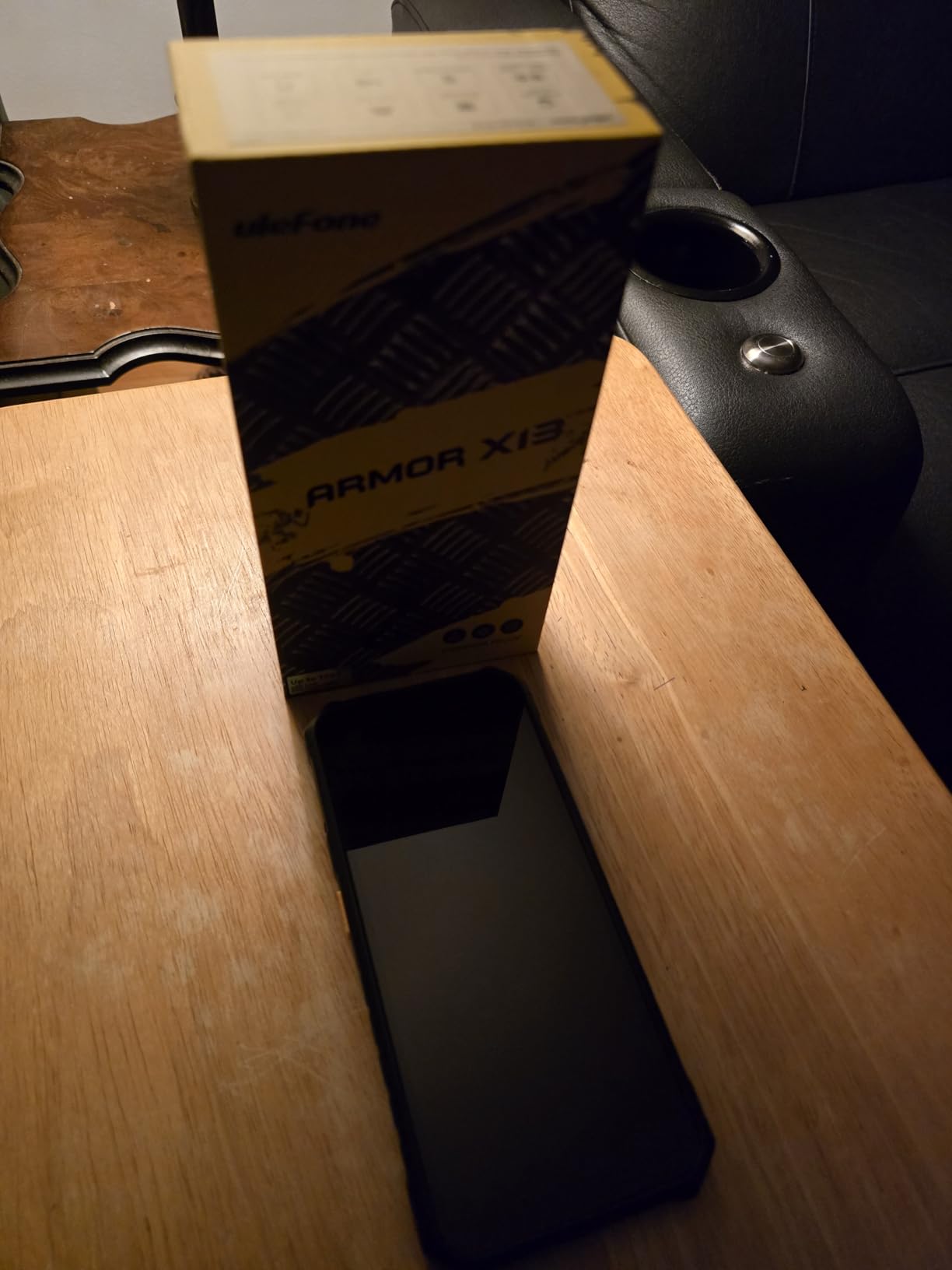
1. Ulefone Armor X13 – the best overall rugged phone
Ulefone Armor X13 Rugged Phones Unlocked, IP68/IP69K Waterproof Phone, MTk Helio G36 12GB+64GB, 50MP+24MP Night Vision Camera, 6.52″ Display, 6320mAh, Android 16, NFC, Fingerprint ID, Black
IP68/IP69K and MIL-STD-810H
6320mAh battery
50MP plus 24MP night vision
300g
Pros
- Full IP68/IP69K plus MIL-STD-810H certification
- 24MP infrared night vision is genuinely useful
- 6320mAh with reverse charging
- 3-card slot and headset-free FM radio
- Clean unlocked Android 15 with no carrier software
Cons
- HD+ 720 x 1440 screen is low-resolution
- Helio G36 is an entry-level chipset
- 60Hz refresh rate feels dated
- GSM only so no AT&T Cricket Sprint or Boost Mobile
The Ulefone Armor X13 is the pick we recommend to almost anyone reading this. It is the only phone in our group that holds the full triple certification at the entry level, and at 318 verified reviews it has roughly three times the owner feedback of most rivals. That much evidence matters when you are trusting a brand-direct listing with a device you will drop on concrete.
In the hand it is a 300g brick with a 6.52-inch HD+ LCD panel running at 720 x 1440 and 60Hz. The screen is the first thing you notice and the first thing owners criticise. Text looks soft next to the Samsung and Blackview panels, and the 60Hz refresh is visibly dated when you scroll.
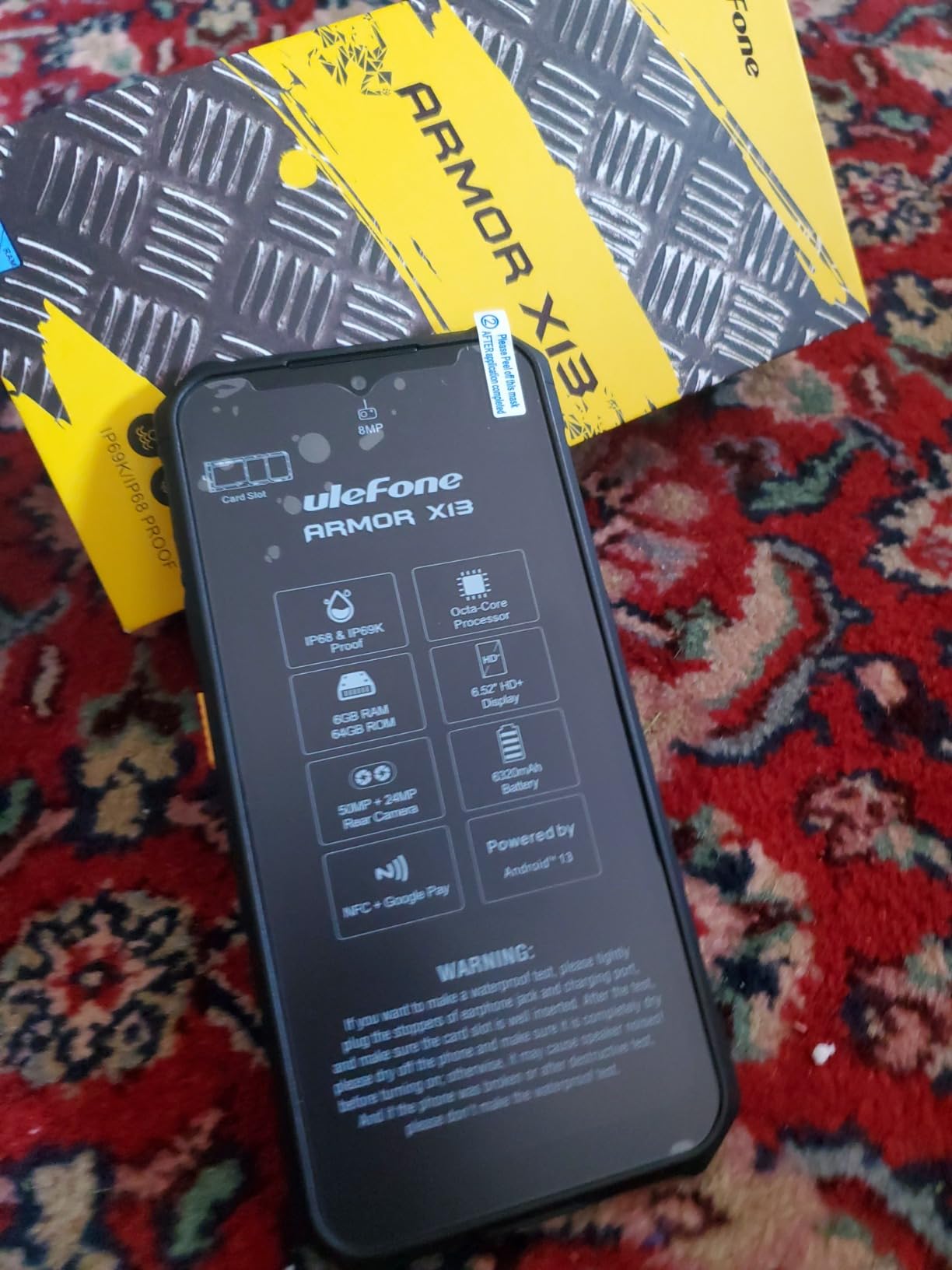
What you get for that compromise is real durability. IP68 and IP69K cover both immersion and high-pressure water jets, and MIL-STD-810H covers shock, vibration and climate. The 50MP main sensor uses a Samsung S5KJN1, and alongside it sits a 24MP NightElf 2.0 infrared module. That night camera is not a gimmick: owners use it for wildlife, for checking crawl spaces, and for confirming a breaker box in a dark panel.
The 6320mAh cell is modest by rugged standards, with a quoted 44 hours of talk time, but it supports reverse charging and there is no wireless option. A 3-card slot, a headset-free FM radio and a customisable side key make it a practical field device rather than a sealed brick.
What you should know before you buy it
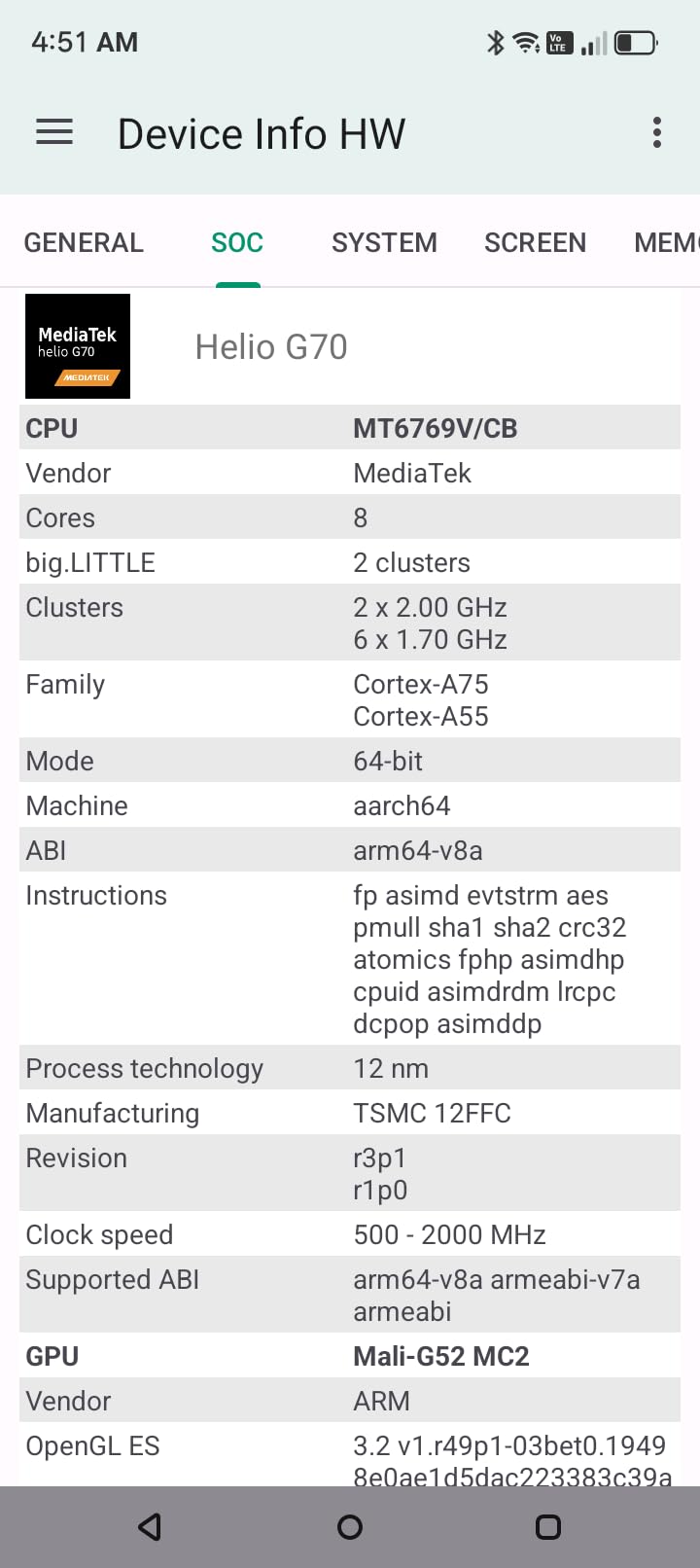
It runs a MediaTek Helio G36 octa-core chip at 2.2GHz with 6GB of physical RAM and 6GB of virtual expansion. Everyday apps, maps and messaging are fine; demanding games and heavy multitasking are not. The 12GB figure on the box is half marketing.
Carrier compatibility is the deal-breaker for some buyers. It is an unlocked GSM dual 4G VoLTE device and the documentation is explicit that it does not work on AT&T, Cricket, Sprint or Boost Mobile. T-Mobile and other GSM networks are the intended target. A battery average life of three years is also listed, which is worth weighing against your upgrade cycle.
Who it suits and who it does not
This is the phone for a construction worker, an electrician or a delivery rider on a GSM network who needs a genuine night camera and cannot justify a larger spend. It is also the safest first rugged phone to buy, because the review volume proves the failure modes are rare.
Skip it if you are on Verizon or an AT&T-family plan, if you care about screen sharpness, or if you want 5G. The Armor X16 Pro and the Rock 2 Pro cover those gaps with more modern silicon and brighter panels.
2. Samsung Galaxy XCover7 5G – the most pocketable rugged phone
SAMSUNG Galaxy XCover7 5G G556B/DS 128GB 6GB Dual SIM Factory Unlocked GSM Smartphone (International Version – not Compatible with Verizon/Sprint) – Black
240g and 10.2mm thick
6.6-inch FHD+ 1080 x 2408
4050mAh battery
Dimensity 6100+
Pros
- Lightest and thinnest rugged phone in this group
- Sharp FHD+ display with Gorilla Glass Victus+
- Clean One UI 6 on Android 14 with 5G
- Dedicated microSDXC slot plus nano-SIM and eSIM
- Owners report two years of drops without incident
Cons
- This variant has no fingerprint sensor
- International version excluded from Verizon and Sprint support
- 4050mAh is small next to the rivals here
- 50MP camera is adequate but unremarkable
The Samsung Galaxy XCover7 5G answers the question every other rugged phone on this list raises: why does protection have to mean a brick? At 240g and 10.2mm it is the only phone here that genuinely disappears into a shirt pocket, and it still carries IP68 sealing to 1.5m for 35 minutes, MIL-STD-810H certification and 1.5m drop resistance.
The 6.6-inch PLS LCD runs at 1080 x 2408 with Gorilla Glass Victus+ protection, which is a real step up in sharpness from the HD+ panels on the Ulefone X13 and Blackview Fort 2. It stays at 60Hz, and at 600 nits it is not the brightest screen in the group, but it is readable outdoors.
Performance comes from a MediaTek Dimensity 6100+ built on 6nm, paired with 6GB of RAM and 128GB of storage plus a dedicated microSDXC slot. Dual nano-SIM alongside eSIM is a genuine advantage for travellers who need two lines and a data plan simultaneously.
What you should know before you buy it
This specific international variant, the SM-G556B/DS, has no fingerprint sensor. Biometric unlock falls back to face recognition, and several buyers consider that a deal-breaker for banking apps and password managers. Check the listing carefully, because other XCover7 variants include a reader.
The international designation also creates a service problem. Samsung’s global service network cannot repair a unit bought in the US, and this variant is not compatible with Verizon or Sprint. The 4050mAh battery is the smallest in this comparison by a wide margin, which is the price of the slim form factor.
Who it suits and who it does not
Buy this one if you need protection without the bulk: field sales staff, warehouse supervisors, anyone who carries a phone all day and still wants a real camera and a clean Android build with a long support runway from a major manufacturer.
Do not buy it if you need multi-day battery life, a fingerprint reader, or Verizon and Sprint service. The 50MP camera with PDAF is fine for documentation and unremarkable for anything more ambitious.
3. Blackview Fort 2 – slim body with full rugged certification
Blackview Fort 2 Rugged Phone Android 16, 10.7mm Ultra-Thin Rugged Smartphone Unlocked, 8GB RAM+128GB/2TB 6.56”HD+90Hz Large Dispaly, 4G T-Mobile Dual SIM IP69K Waterproof 16MP+13MP Camera, NFC/GPS
10.7mm at 245g
IP68/IP69K and MIL-STD-810H
6.56-inch 90Hz HD+
3-year warranty
Pros
- Slimmest and lightest rugged phone here at 10.7mm
- Keeps full IP68/IP69K and MIL-STD-810H with 2m drop resistance
- 24GB RAM and 128GB storage expandable to 2TB
- 90Hz display is a step up from 60Hz rivals
- 3-year warranty backed by a US repair center
Cons
- Dim 450-nit HD+ display is low-resolution
- 16MP rear and 13MP front cameras are the weakest here
- 4G only with no 5G
- GSM unlock excludes AT&T Cricket and Verizon
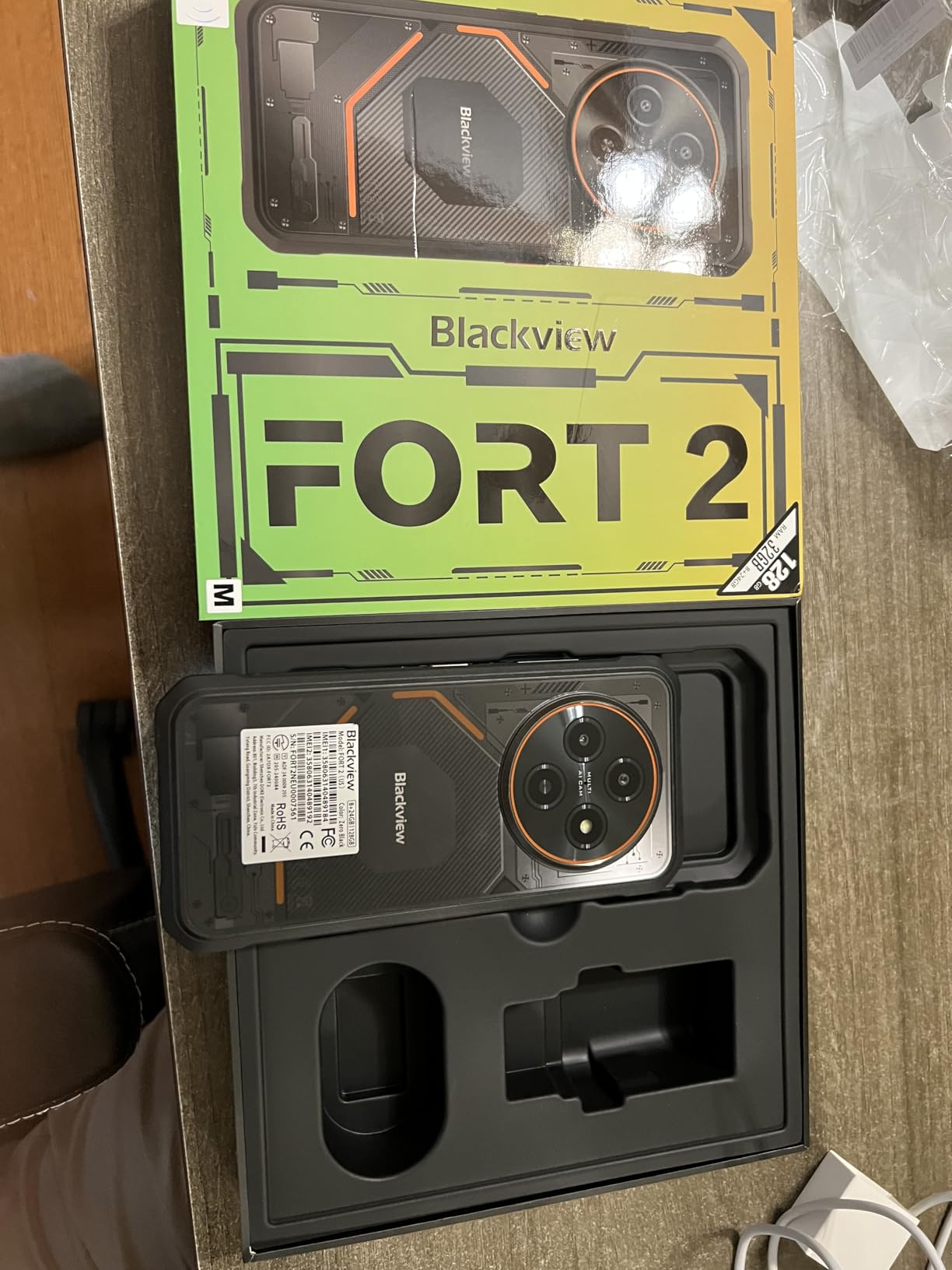
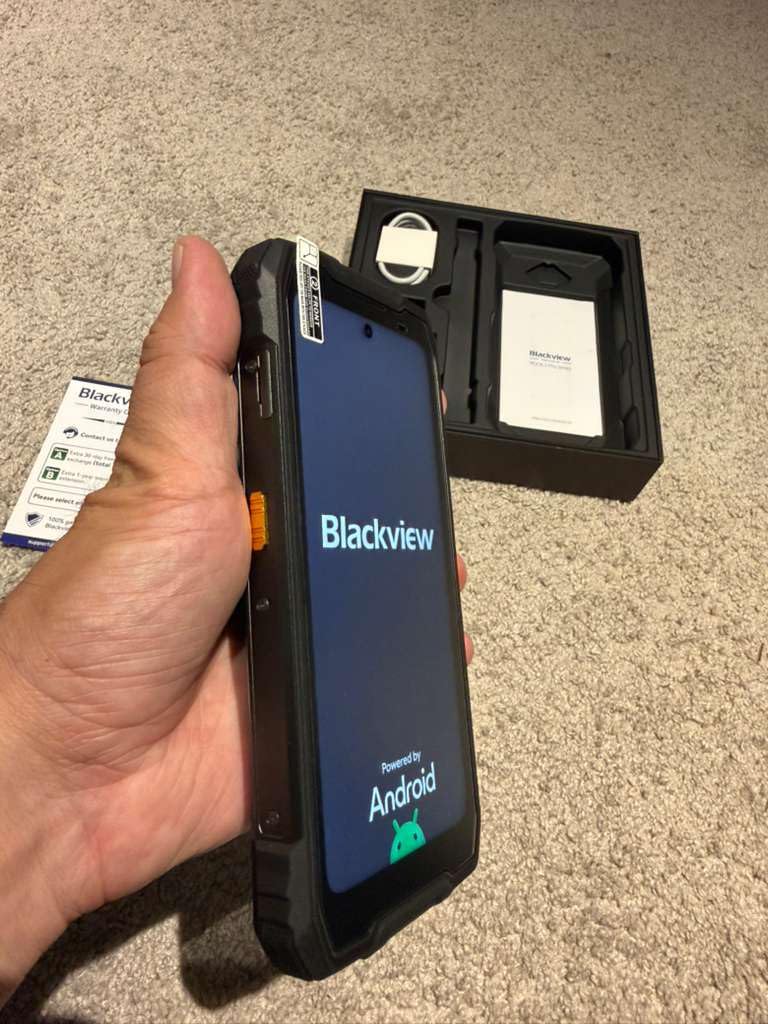
The Blackview Fort 2 exists to answer a single objection: that a rugged phone has to be thick. At 10.7mm and 245.3g it is the slimmest and lightest device we reviewed, and it does not give up the certifications. You still get IP68, IP69K, MIL-STD-810H and a stated 2m drop rating with 2m water protection for 30 minutes.
It runs Android 16 with DokeOS 5.0 and a built-in Gemini assistant on an octa-core G81 chipset, with 8GB of physical RAM plus 16GB of virtual expansion and 128GB of storage that accepts a TF card up to 2TB. The 6.56-inch HD+ display runs at 90Hz, which is a meaningful improvement over the 60Hz panels on the other budget models here.
The 3-year manufacturer warranty with US repair centre access is, in our view, the quiet advantage. Most rugged phone brands offer a single year, and forum discussion about these brands centres constantly on what happens when something fails outside the return window.
The compromises are real. The panel reaches only 450 nits, so it is genuinely dim in direct sun. The 16MP rear and 13MP front cameras are the lowest specification in this comparison, and the phone is 4G only. A 14 percent one-star share in the reviews suggests some early units did not meet expectations.
What you should know before you buy it
Carrier support is GSM only, with AT&T, Cricket, Verizon, Straight Talk and US Cellular all excluded. That covers most of the US market, so this is a phone for T-Mobile subscribers or for anyone using it on a travel SIM outside the country.
At 18W, charging is the slowest of the 4G models in this list. Storage expansion is via TF card rather than a dedicated microSD slot, which is fine, but you give up the option of using a card and a second SIM in the same tray arrangement some models support.
Who it suits and who it does not
This is the one to buy for someone who genuinely wants a normal-looking phone with real drop and water protection and does not care about photography. It suits commuters, warehouse staff and anyone who found the X13’s 300g too heavy.
Skip it if you photograph on your phone, need 5G, or need to use a US carrier outside the GSM networks. For brighter screens and more capable imaging at a similar weight, the Ulefone Armor X16 Pro is the step up.
4. Blackview Rock 2 Pro 5G – battery life and a work light
Blackview Rock 2 Pro 5G Rugged Phone Android 16, 15000mAh/33W Dual 400LM Camping Light, 32GB+256GB/2TB Rugged Smartphone Unlocked Gemini AI, 16MP+13MP 6.78″ 2.4K 120Hz Glove Mode/NFC
15000mAh battery
5G on T8100
6.67-inch 120Hz
Dual 400-lumen light
Pros
- 15000mAh with multiple owners reporting 2 to 3 days of heavy use
- Dual 400-lumen camping light works as a real work lamp
- 5G and 120Hz display make it fast for a rugged phone
- Survived repeated drops and heavy rain for multiple buyers
- Blackview resolved a warranty issue with a free replacement
Cons
- 558g is extremely heavy and not pocketable
- 450-nit panel limits outdoor legibility
- One review reports dropped cellular service indoors
- GSM-only bands with no AT&T Cricket or Verizon
The Blackview Rock 2 Pro 5G is built for people who work outside and need the phone to last a full shift plus a weekend. The 15000mAh battery, quoted at up to 57 days standby and 56.5 hours of talk time, is the reason several owners report two to three days of heavy GPS, 5G and streaming between charges. At 33W it refills faster than most rivals in the same capacity class.
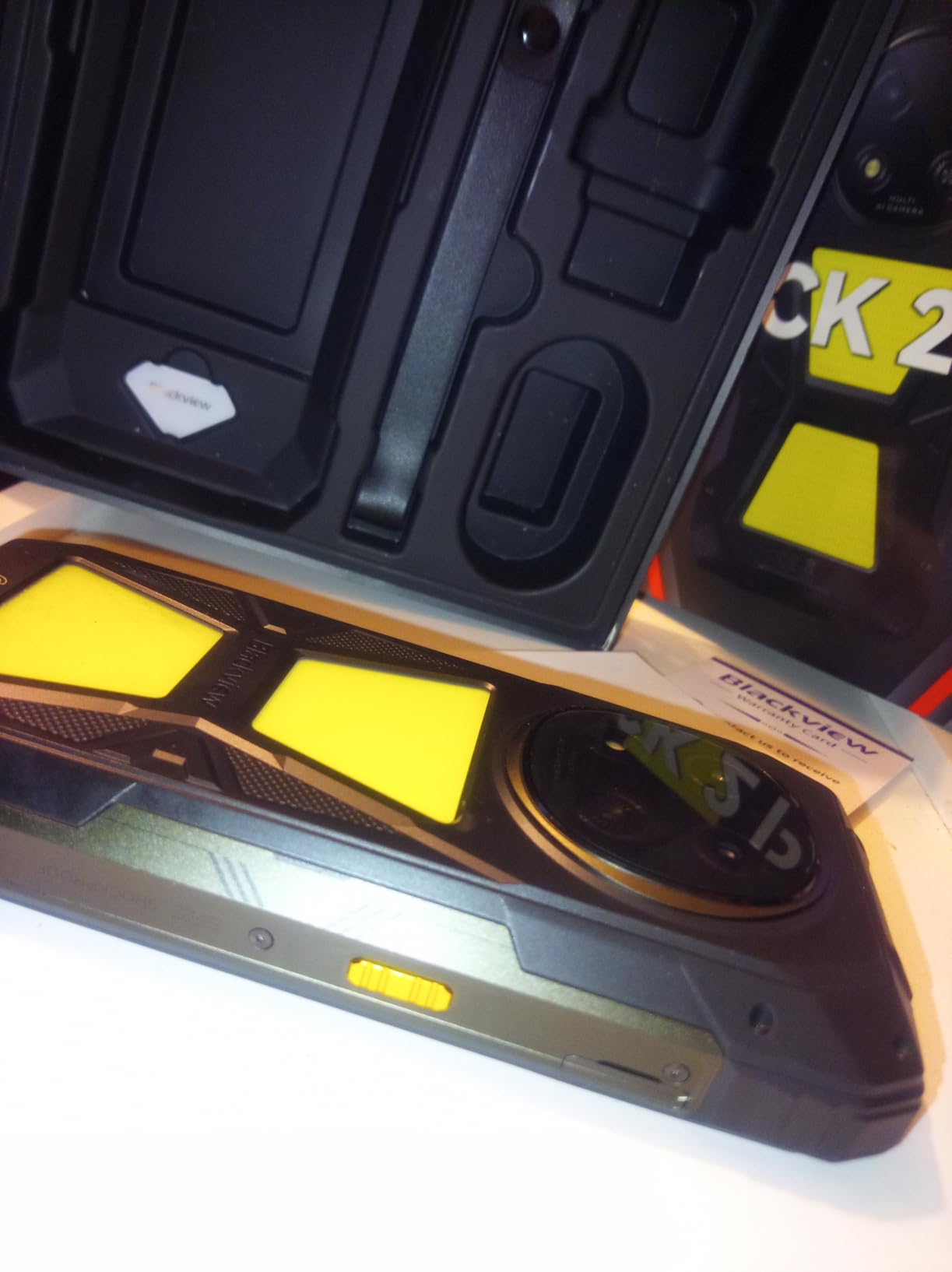
The dual 400-lumen camping light is the second reason to buy it. With lighting, SOS and strobe modes, it is bright enough to work as a task lamp under a sink or in a duct, and it removes the need to carry a separate flashlight. Glove Mode keeps the touchscreen responsive when you are wearing work gloves.
It runs a T8100 octa-core chip with 5G, 8GB of physical RAM plus 24GB virtual, 256GB of storage expandable to 2TB, and a 6.67-inch 120Hz LCD at 2340 x 1080. Android 16 with DokeOS and the Gemini assistant are included, along with NFC and multi-satellite GPS. Blackview backs it with two years of after-sales service and lifetime technical support.
The 558g weight is the honest drawback, and the brand flags it before purchase. That is more than a pound and a half in a back pocket, and it is the single reason owners return rugged phones. The 450-nit brightness also limits outdoor screen use, and the 16MP camera is documentation-grade at best.
One reviewer reports the phone dropping cellular signal when moving indoors, which is worth factoring in if you rely on it for dispatch or delivery communication. Bands are GSM only, so AT&T, Cricket, Verizon, Straight Talk and US Cellular are out.
What you should know before you buy it
The Rock 2 Pro 5G is 5G, but on GSM bands. Owners confirm it works on T-Mobile, Mint and MetroPCS. If your plan is on a CDMA network, this is not the phone.
A 14 percent one-star share tracks the weight complaints more than hardware failures, and the mixed 450-nit panel is the spec most likely to annoy you outdoors. If you can accept the size, the battery and the lamp are genuinely class-leading in this group.
Who it suits and who it does not
Buy it for site supervision, utility fieldwork, delivery dispatch and long trips off-grid where charging is not an option. The light alone justifies it for anyone who works in dark spaces.
Do not buy it for a shirt pocket or for extended one-handed use. If the weight is a deal-breaker, the FOSSIBOT F113 delivers a similar battery in a more manageable 320g, or the Blackview Fort 2 drops to 245g if 5G is not essential.
5. Ulefone Armor X16 Pro 5G – the camera pick
Ulefone Armor X16 Pro 5G Rugged Smartphone, 16GB+256GB MTK Dimensity 6300 Android 16, 64MP+25MP Main Camera, 10360mAh, 6.56″ 120Hz Corning Gorilla Screen, IP68/69K Waterproof, Widevine L1 – Sand Dune
64MP Sony IMX682
25MP night vision
10360mAh
910-nit 120Hz display
Pros
- 64MP Sony IMX682 sensor is a real step up in image quality
- 10360mAh with 33W and reverse charging
- 910-nit 120Hz screen stays readable in direct sun
- 25MP night vision plus 133-lumen flashlight and IR blaster
- Strongest sales rank in this group and 74 percent five-star share
Cons
- Listed FHD+ resolution is actually 720 x 1612
- 394g is heavy
- Not compatible with AT&T or Cricket
- Dimensity 6300 is a mid-range chip
The Ulefone Armor X16 Pro 5G is the best camera in any rugged phone we reviewed, and that is not a close call. The main sensor is a 64MP Sony IMX682, which is a genuinely good mobile sensor, flanked by a 25MP infrared night vision module, a 2MP macro camera and a 16MP front shooter. Rugged phones usually compromise here; this one barely does.
The 6.56-inch panel runs at 120Hz with 910 nits peak brightness, the brightest screen in this group and the only one that is genuinely comfortable in direct sun. It is listed as FHD+ but the actual resolution is 720 x 1612, which is a spec-sheet inconsistency worth knowing about before you judge the sharpness.
Battery capacity is 10360mAh with 555 hours of standby, 56 hours of talk time, 33W wired charging and reverse charging. IP68 and IP69K are certified to 2m for 30 minutes, and drop resistance is tested to 2m. A 133-lumen independent flashlight, an AI recorder that transcribes and summarises calls, an IR blaster, Widevine L1 and multi-satellite GPS round out a feature list that reads like a field tool.
It ranks at number 227 in Cell Phones on Amazon, the strongest demand signal of any phone here, and 74 percent of its reviews are five stars, the highest share in the group. That consistency is why we rate it our MOST VERSATILE all-rounder.
The 394g weight remains the sticking point, though it is far lighter than the 558g Rock 2 Pro or the 825g Armor 34 Pro Plus. AT&T and Cricket are excluded, and the Dimensity 6300 is a mid-range chip that will not satisfy a mobile gamer.
What you should know before you buy it
Storage is 256GB expandable to 2TB via TF, with 8GB physical RAM plus 8GB virtual. Dual 5G SIM works on GSM networks, and a 3-card slot, headset-free FM radio, Glove Mode and a custom key are all included.
The warranty is 12 months through a US manufacturer channel, which is average for this category. Compared with the Blackview models’ three years, it is a point to weigh if you plan to keep the phone beyond two years.
Who it suits and who it does not
Choose the Armor X16 Pro if you take photographs on your phone and need them to hold up, if you work outdoors where screen brightness matters, or if you want 2m drop protection and 2m water submersion certification as standard.
Pass if you need AT&T or Cricket, if 394g is too much, or if you want a chipset fast enough for heavy gaming. The 8849 Tank X and the Ulefone Armor 34 Pro Plus both run faster silicon at the cost of much more weight.
6. Ulefone Armor 34 Pro Plus 5G – the maximum battery pick
Ulefone Armor 34 Pro Plus 5G Rugged Smartphone with 150 Lumens Projector, 32GB+512GB ROM/2TB, 25500mAh 66W, Android 15, 6.95″ 120Hz, 64MP+50MP+50MP 32MP, 1100LM LED Light/Waterproof/NFC/Widevine L1
25500mAh battery
150-lumen DLP projector
1100-lumen light
825g weight
Pros
- Highest customer rating in the group at 4.6 stars with 81 percent five-star
- 25500mAh doubles as a power bank with 10W reverse charging
- 150-lumen projector with autofocus and keystone correction
- 1100-lumen light plus red and blue warning beacons
- Dimensity 7400X and 32GB RAM make it the most capable here
Cons
- 825g is impractical for daily carry
- Most expensive phone in this comparison
- Projector resolution is only 854 x 480
- Not compatible with AT&T or Cricket
The Ulefone Armor 34 Pro Plus 5G has the largest battery in this comparison at 25500mAh, with a quoted endurance of up to 10 days and 138 hours of talk time. A 66W charger is included, and 10W reverse charging lets the phone top up earbuds, a radio or a partner handset in an emergency.
It also has the most unusual feature set here. A 150-lumen DLP projector with smart autofocus, plus or minus 40 degrees of keystone correction, can throw an image up to 100 inches from 3m, and a 98dB loudspeaker accompanies it. The 1100-lumen camping light adds red and blue emergency warning beacons. For a search-and-rescue team or a site supervisor briefing a crew in a dark container, that combination has real value.
Performance is the best in this group, with a Dimensity 7400X at 2.5GHz, 32GB of RAM and 512GB of storage expandable to 2TB. The 6.95-inch FHD+ display runs at 120Hz under Gorilla Glass 5. Cameras include a 50MP main sensor on a large 1/1.3-inch sensor, a 50MP ultrawide, a 64MP night vision module and a 32MP front camera. MIL-STD-810H certification, Wi-Fi 6E, an IR blaster, a 3-card slot and a uSmart expansion connector complete the spec.
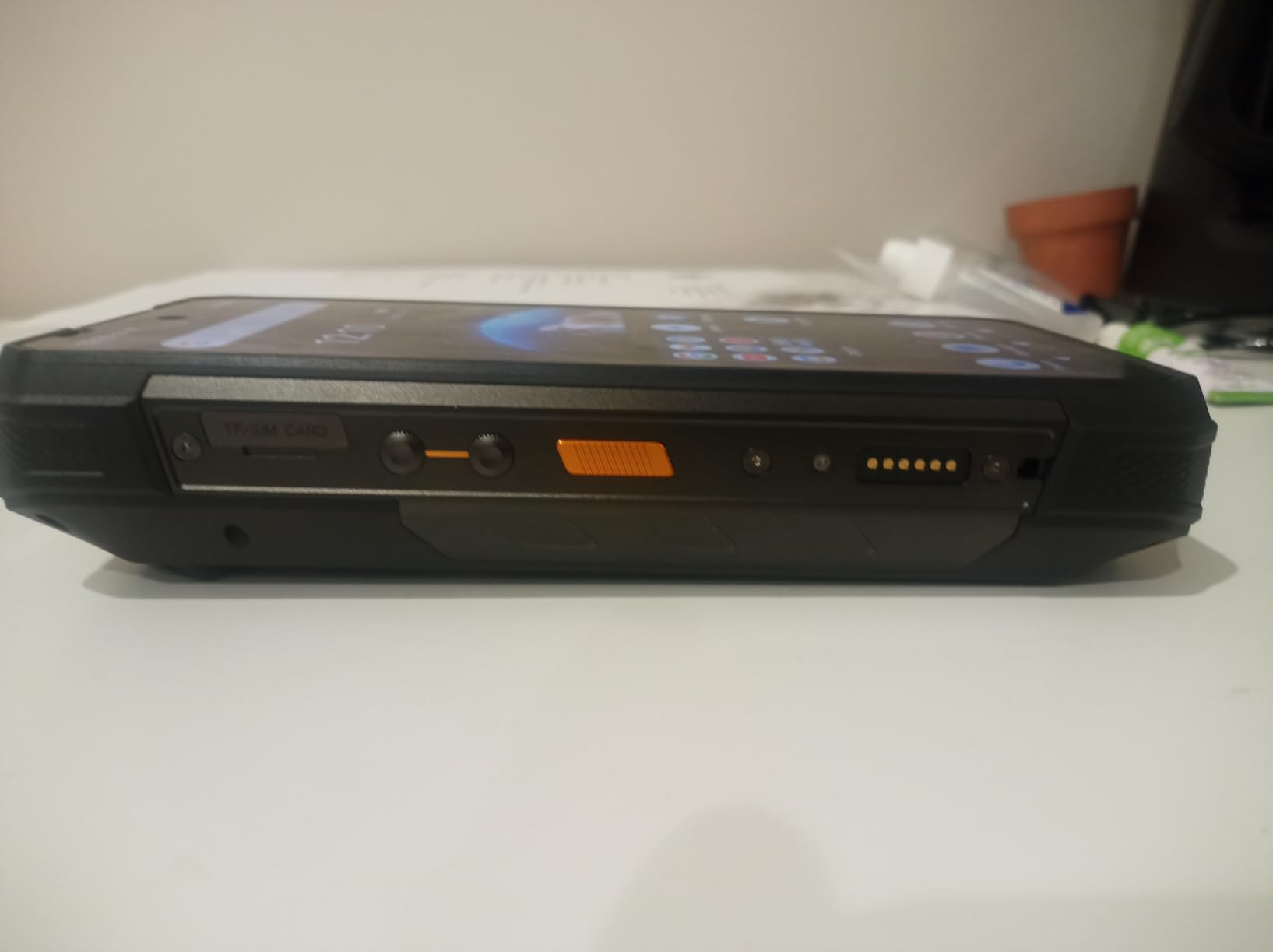
At 825g, or 1.8 pounds, this is the heaviest phone we reviewed and the brand explicitly warns buyers about it. That is not a pocket device. It is a job-site, vehicle-mounted or pack-carried tool, and treating it as anything else will end in a return.
The 854 x 480 projector resolution is adequate for documents, a site plan or a quick briefing and poor for video. AT&T and Cricket are excluded, and the warranty is 12 months.
What you should know before you buy it
Despite the 4.6 rating and an 81 percent five-star share, 88 reviews is a thinner evidence base than the Armor X13 or the XCover7. Owners treat this as a purpose-built expedition device, and their enthusiasm reflects that framing.
If you want a big battery in a phone you can actually carry, the FOSSIBOT F113 gets you 20000mAh at 320g, or the Rock 2 Pro reaches 15000mAh at 558g. The trade-off here is deliberate: maximum capacity in exchange for every gram.
Who it suits and who it does not
It suits expedition leaders, field engineers working weeks away from power, and anyone who needs to brief a group from the phone itself. The reverse charging turns it into a genuine off-grid power reserve.
Do not buy it as an everyday carry. If weight rules it out, the FOSSIBOT F113 or the Armor X16 Pro deliver rugged protection at a fraction of the mass.
7. FOSSIBOT F113 5G – the long-range night vision pick
FOSSIBOT F113 5G 20000mAh/33W Rugged Phone Unlocked, 36GB+256GB/2TB Phones
50-meter laser night vision
20000mAh battery
2560 x 1440 120Hz display
320g
Pros
- Longest-range night camera here at 50 meters with 4x HD zoom
- 20000mAh with 33W charging and 18W OTG power bank function
- 2560 x 1440 display is unusually sharp for a rugged phone
- 36GB RAM with 2TB expansion
- Dimensity 7050 is faster 6nm silicon than most rivals
- Hand strap included to offset the weight
Cons
- Manufacturer flags the body weight as a portability concern
- 50-meter spotlight claims rest on few reviews
- T-Mobile-focused with no AT&T or Cricket
- 16 percent three-star share shows mixed satisfaction
- Only 87 reviews so long-term data is thin
The FOSSIBOT F113 is the phone to buy if the reason you want a rugged handset is seeing in the dark. Its 64MP laser night vision module carries a stated 50-meter range with 4x HD zoom, and it pairs that with a 50-meter high-brightness spotlight flashlight. The night vision and the light are different tools: one lets you image a distant subject, the other lights the ground in front of you.
The display is the second standout. At 6.78 inches and 2560 x 1440 with 120Hz under Corning Gorilla Glass 3rd, it is the sharpest panel in this comparison, and it runs on a Dimensity 7050 at 6nm, which is faster silicon than most rugged phones manage. Memory is 36GB, split as 12GB physical plus 24GB, with 256GB of storage expandable to 2TB.
The 20000mAh battery supports 33W wired charging and 18W OTG, so the phone can charge a tablet or a hotspot. Quoted figures are 2000 hours of standby and 175 hours of talk time. A matching hand strap is included, which tells you something about the 320g body. IP68, IP69K and MIL-STD-810H certification are all present.
What you should know before you buy it
Satisfaction is real but more mixed than the Ulefone and Samsung models here, with a 16 percent three-star cluster that centers on the weight compromising daily usability. At 87 reviews, long-term reliability data is thin, and we would want more owner history before recommending it for a five-year ownership plan.
Network support is optimised for T-Mobile 5G, 4G and 3G, with no AT&T or Cricket compatibility. The 2-year official warranty with 30-day returns and 24/7 support is better than the one-year cover most brands in this category offer.
Who it suits and who it does not
Buy it for security work, wildlife observation, search and rescue, or night inspections where you need to identify a subject at distance rather than simply light a path. The QHD-class screen also makes it a good choice for mapping and navigation work.
Skip it if you need Verizon or AT&T, if you need a proven long-term record, or if you want the deepest night vision in a lighter body. The Ulefone Armor X16 Pro delivers a 25MP night module at 394g with the strongest sales rank in the set.
8. Samsung Galaxy XCover7 Pro – the enterprise and fleet pick
Samsung Galaxy XCover7 Pro 5G and Wi-Fi 6E Phone, 2025 US Version, 128GB
User-replaceable 4350mAh battery
5G and Wi-Fi 6E
6.6-inch 120Hz FHD+
Knox and DeX
Pros
- Removable battery that keeps its IP68 sealing after a swap
- Dual physical nano-SIM plus an SD card slot in one tray
- Glove-sensitive touchscreen tracks through wet and gloved use
- 5G and Wi-Fi 6E with a 120Hz FHD+ display
- Knox security and DeX with programmable push-to-talk hot key
- 3-year warranty and Samsung service network
Cons
- US model carries Samsung bloatware and duplicate apps
- Samsung removed dual-SIM call and data designation settings on US models
- Not CDMA compatible so no Verizon or Visible
- No charger or manual in the box
- Some owners report the screen needing a power cycle
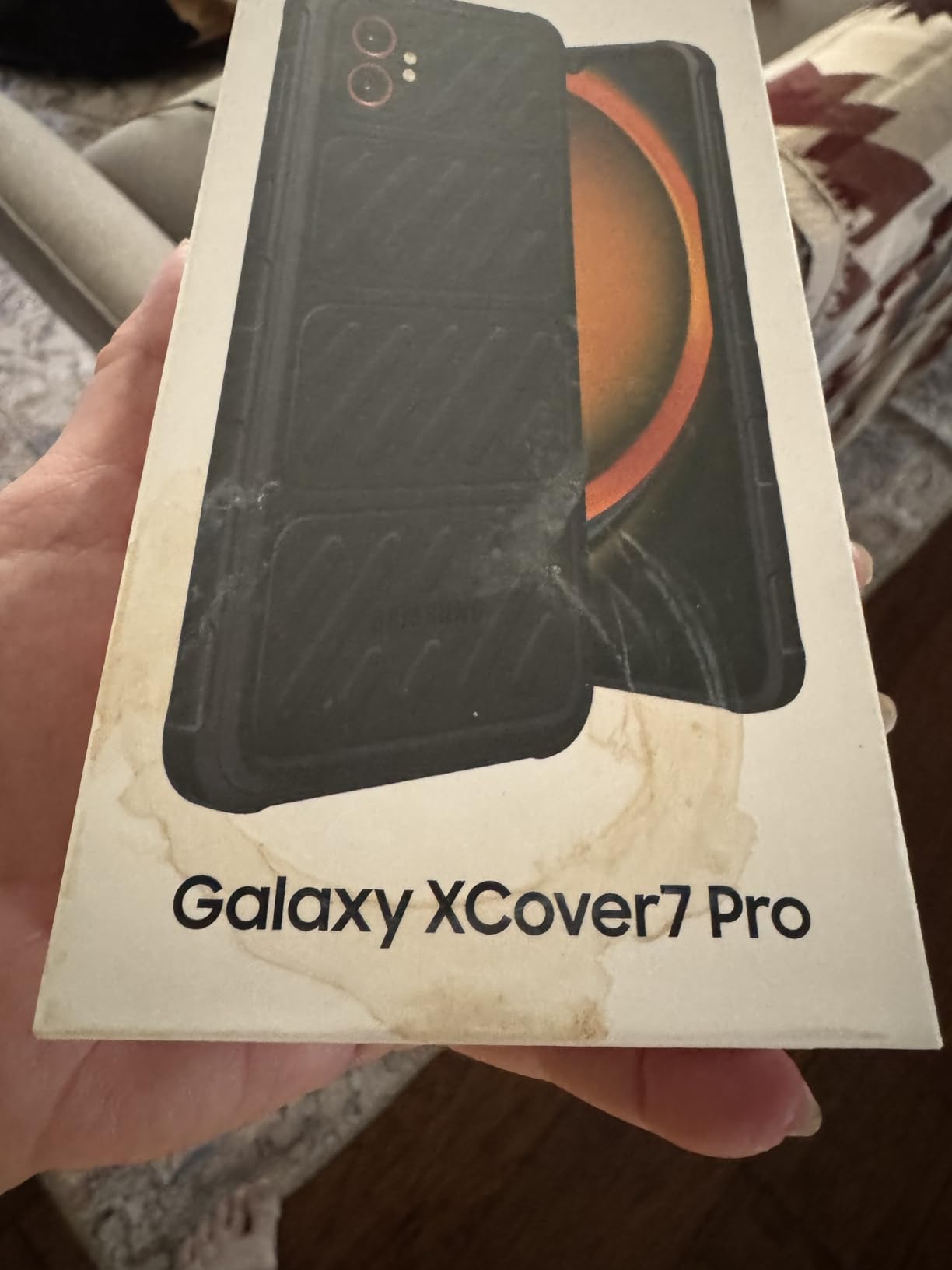
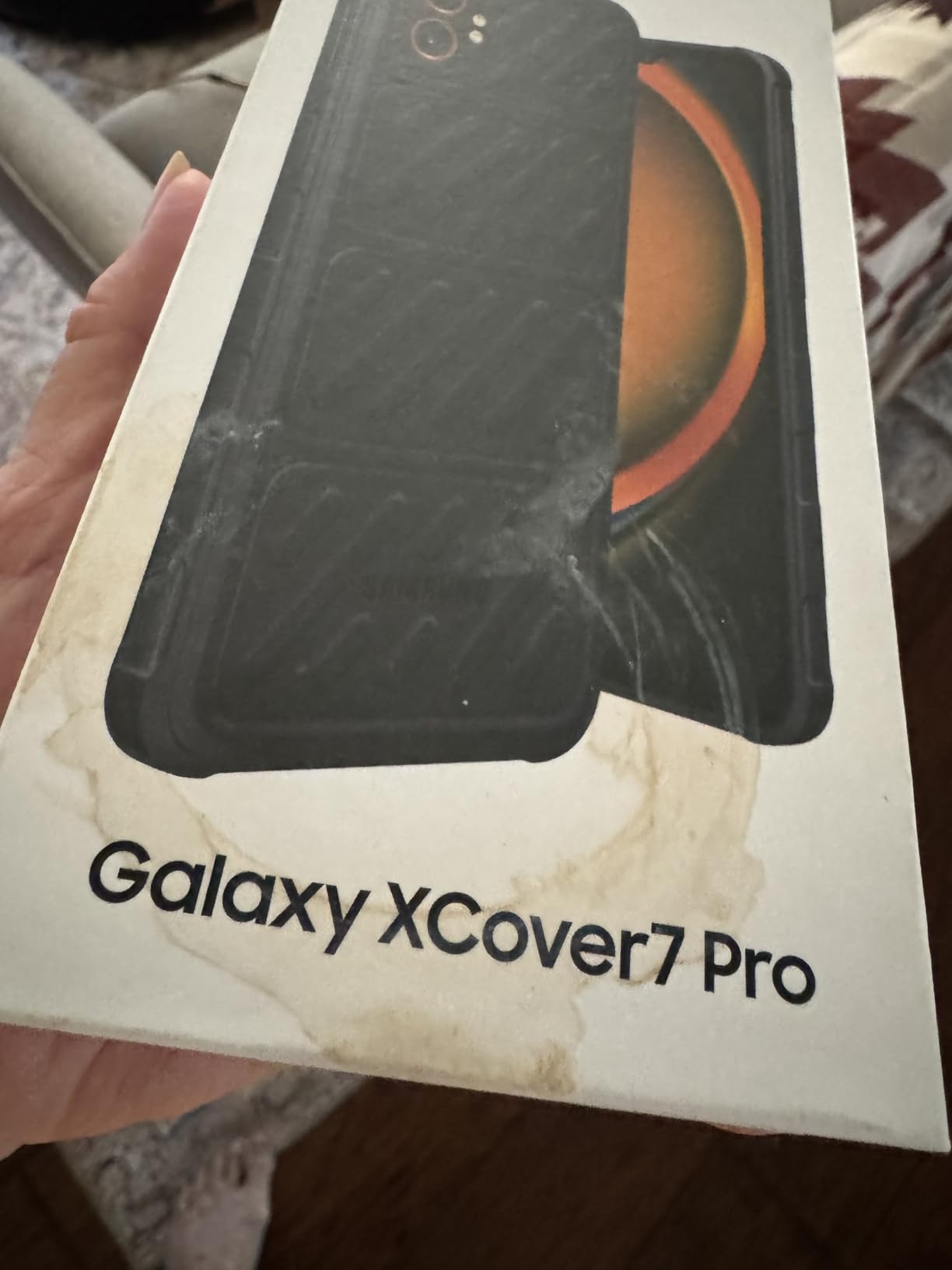
The Samsung Galaxy XCover7 Pro is the only phone in this roundup with a genuinely user-replaceable battery that keeps its IP68 sealing after a swap. For a fleet of ten, fifty or five hundred devices, that single feature changes the economics. You can rotate a spare battery between devices, or replace a worn cell yourself in under a minute, instead of replacing whole handsets.
The rest of the enterprise case is strong. It runs 5G and Wi-Fi 6E, has a 6.6-inch FHD+ 120Hz display under Gorilla Glass Victus+, a glove-sensitive touchscreen that tracks through wet hands, programmable hot keys including push-to-talk and walkie-talkie integration, and Samsung Knox security with DeX desktop mode.
Dual nano-SIM plus an SD card slot is a combination several long-time XCover owners call unmatched on the market. It is MIL-STD-810H tested with a 1.5m drop rating and IP68 sealing, backed by a 3-year manufacturer warranty and Samsung’s own service network.
The criticisms are software decisions, not hardware ones. The US model ships with Samsung bloatware and duplicate Samsung, Google and Microsoft apps, and one detailed review documents Samsung removing dual-SIM call and data designation settings on US models, which limits dual-SIM flexibility. No charger or manual is in the box, and the 50MP rear camera is described as satisfactory rather than class-leading.
It is also not CDMA compatible, so it does not work on Verizon or Visible despite some listings suggesting otherwise. Some owners report the screen occasionally stopping responsive and needing a power cycle. The listed weight of 74.2g is not manufacturer-verified and should be ignored; the real figure is in line with the rest of the XCover line.
What you should know before you buy it
The battery is 4350mAh, larger than the standard XCover7, and it is the swappable part. There is no headphone jack, which matters for comms work where a wired headset is standard.
For enterprise deployment, Knox is the reason to choose this over a cheaper rugged phone. It provides platform-level security controls, separation of work and personal profiles, and the MDM hooks that fleet managers need. No other phone in this list offers an equivalent.
Who it suits and who it does not
Choose it for logistics, utilities, public safety and any organisation rolling out managed handsets that will stay in service for years. Long-time XCover owners upgrading in particular report near-indestructible hardware.
Pass if you are on Verizon, if you want a clean Android build, or if you need multi-day battery life. The Rock 2 Pro and the Armor 34 Pro Plus dominate on endurance; this phone wins on longevity and manageability instead.
9. Blackview Rock 3 – the thermal imaging pick
Blackview Rock 3 4G Rugged Thermal Camera Phone, 32GB+256GB, 10000mAh,Rugged Smartphone Android 16 Phone 6.78″ FHD 120Hz 50MP+108MP Photos NFC/GPS IP68/IP69K Unlocked Android Phones Dual SIM
160x120 thermal sensor to 550C
10000mAh with 15W wireless charging
750-nit 120Hz display
388g
Pros
- Only phone here with a built-in thermal imager
- Generates PDF inspection reports on the device
- 4.5 rating with 75 percent five-star and zero one-star reviews
- 27W wired plus 15W wireless and 10W reverse charging
- 750-nit 120Hz FHD+ display is bright for field use
- Only 388g for a phone this capable
Cons
- 4G only with no 5G
- 160x120 thermal resolution is basic against dedicated cameras
- Smallest review base here at 42 reviews
- GSM unlock excludes AT&T Cricket and Verizon
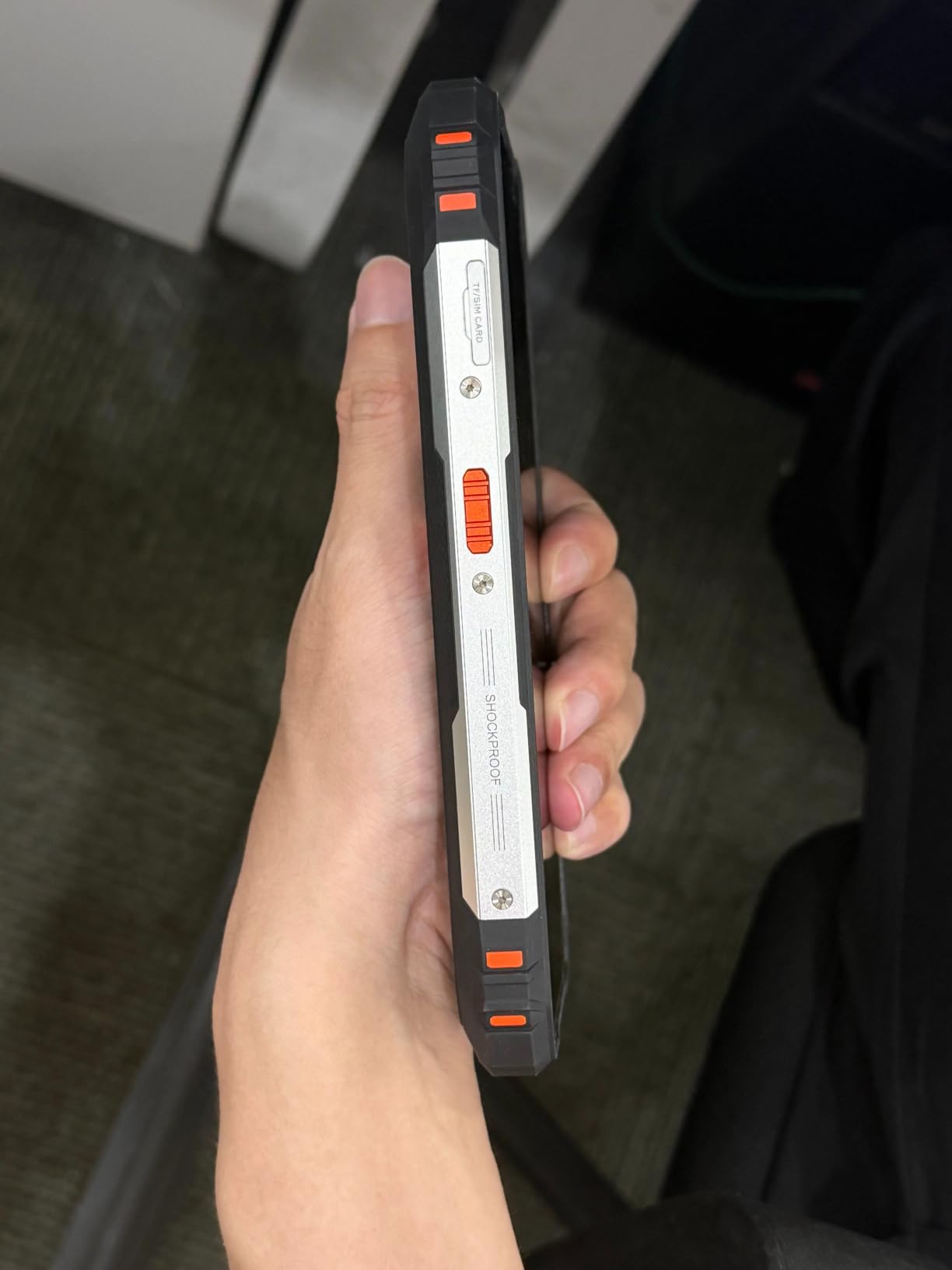
The Blackview Rock 3 is the only phone in this comparison with a real thermal imager built in. The 160×120 sensor covers a 61 by 47 degree field of view and a range of -15C to 550C, and it captures thermal stills, thermal video and visible-light images through the same one-touch interface with no external adapter or cable. It then generates PDF inspection reports directly on the phone.
That report generation is what separates it from a novelty module. An electrician or HVAC technician can walk to a panel, capture the fault, and hand the customer a documented PDF from the device rather than a separate thermal camera and a laptop.
Everything else is solid field hardware. The 6.78-inch FHD+ display runs at 120Hz with brightness up to 750 nits, which is the second-brightest here. The 10000mAh battery supports 27W wired, 15W wireless and 10W reverse charging, and there is a 400-lumen work light. Storage is 256GB expandable to 2TB with 8GB physical plus 24GB virtual RAM, running Android 16 on a Helio G100.
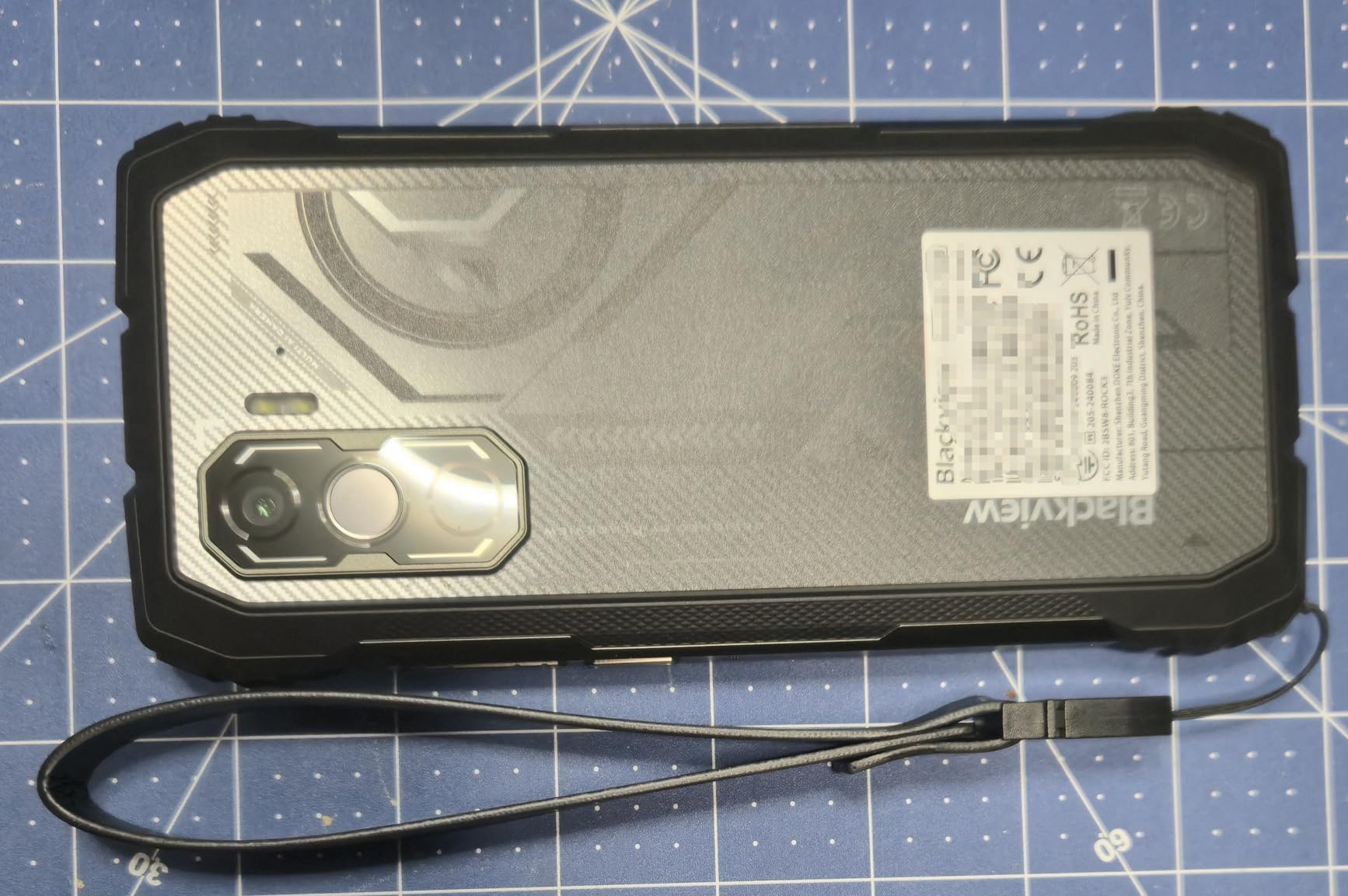
The rating profile is the cleanest in the roundup: 4.5 stars overall, 75 percent five-star reviews and not a single one-star review. Buyers are treating it as a purpose-built inspection tool, and they rate it accordingly.
Two structural limits stand out. It is 4G only, which is increasingly hard to justify in a device aimed at professionals, and the 160×120 thermal resolution is basic next to a dedicated FLIR unit. At 42 reviews it also has the smallest evidence base here, and its sales rank of 1710 in Cell Phones confirms it is a niche product.
What you should know before you buy it
GSM unlock excludes AT&T, Cricket, Verizon, Straight Talk and US Cellular. If your network is not GSM, the thermal camera is irrelevant to you because the phone will not connect to it.
The 3-year warranty with a US repair centre is a genuine advantage over the one-year cover most brands in this category offer, and at 388g it is lighter than most of the large-battery rugged phones here.
Who it suits and who it does not
Buy it for HVAC diagnostics, electrical fault-finding, building envelope inspection, predictive maintenance and any trade where a thermal signature is the whole point of the visit. Glove Mode 2.0, the IR blaster and FM radio suit that work.
Do not buy it as a general phone, for 5G, or if you need a thermally precise instrument. For night work rather than heat work, the FOSSIBOT F113 and the Armor X16 Pro offer longer-range night vision at lower cost.
10. 8849 Tank X 5G – the overland and camping pick
8849 Tank X Phone 5G, Android 15 Rugged Smartphone with 220LM Projector
220-lumen 1080p projector
17600mAh with 120W charging
1200-lumen camping light
5G on T-Mobile and Verizon
Pros
- Brightest and sharpest projector here at 220 lumens and 1080p
- 120W charging refills 17600mAh in about 70 minutes
- Dimensity 8200 is the fastest chipset in this comparison
- 1200-lumen light with five modes plus warning beacons
- Works on T-Mobile and Verizon which is rare for an unlocked rugged phone
- Includes a case and projector film
Cons
- 750g and reviewers call it a hulking beast
- Underwater mode is photos only with no video
- Not fully compatible with Visible
- Projector needs a stand and the fans are audible
- Only 32 reviews and one unit reportedly stopped powering on
The 8849 Tank X 5G is the most capable device in this roundup on paper, and for overland travel and basecamp use it is genuinely hard to argue with. The 220-lumen 1080p DLP projector is the best projector specification we reviewed, with smart autofocus, automatic keystone correction, automatic screen alignment and one-key activation. It throws an image up to 100 inches from 2.8m, which means a phone can become a screening setup on a tailgate.
The battery is 17600mAh with 120W fast charging, refilling in roughly 70 minutes, and OTG for reverse charging. The 1200-lumen camping light offers five modes including SOS and strobe plus separate warning signal lights. The MediaTek Dimensity 8200 is the fastest processor in this group on an essentially stock Android 15 build with minimal bloatware.
Camera hardware is unusually complete for a projector phone: a 50MP main, 64MP night vision, 8MP telephoto and 50MP front, with an underwater mode. There is a 3.5mm jack, a customisable side button that can control the lamp, projector or SOS, a TV remote function, 32GB of RAM, 512GB of storage with an SD slot and a 6.78-inch 120Hz display at 1080 x 2460.
The most valuable detail for US buyers is network support. It works on T-Mobile and Verizon, which almost no other unlocked rugged phone in this list manages, though it is not fully compatible with Visible, so premium Visible tiers are wasted on it.
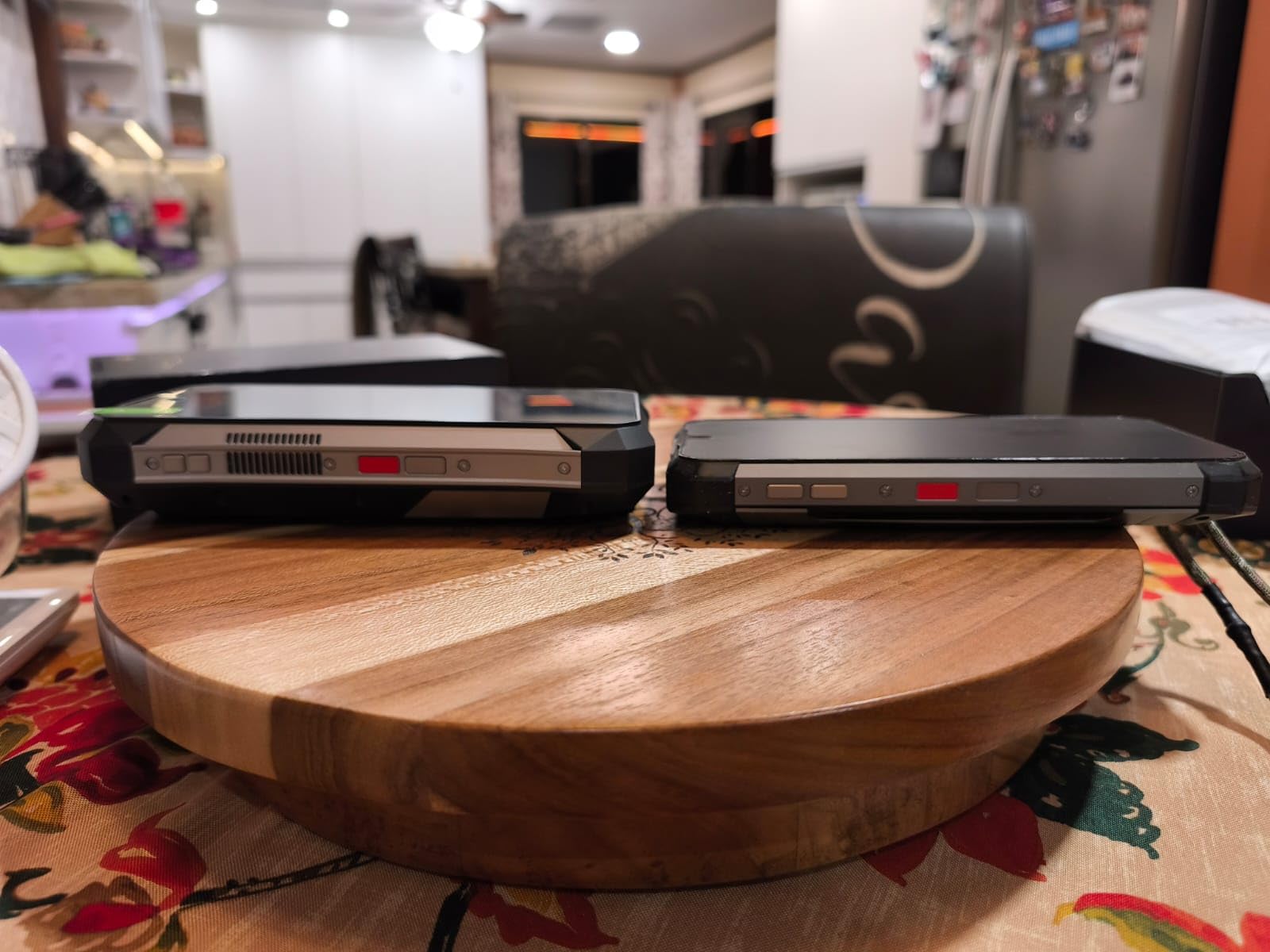
Weight is the overwhelming theme in the reviews. At 750g, multiple reviewers advise getting a tablet lanyard. The underwater mode is photos only, the projector needs a stand to aim properly and the cooling fans are audible on the higher setting, and the SIM and SD tray sits at an unusual position on the top of the chassis.
What you should know before you buy it
At 32 reviews this has the smallest owner base in the comparison, and one reviewer reported a unit that stopped powering on after three months. With no equivalent history, we treat that as an isolated report rather than a pattern, but it is a reason to buy with a clear returns policy.
It is IP68 waterproof, dustproof and shockproof. The box includes a phone case, projector film, a USB-C power adapter and cable, which is more complete than most rugged phone packages.
Who it suits and who it does not
Buy it for overlanding, van life, remote work camps and anyone who wants a phone that doubles as a projector, a 1200-lumen lantern and a power bank. Verizon compatibility alone puts it ahead for many US buyers.
Skip it as a daily phone. The 750g body rules out pockets, and the projector is a speciality rather than a daily tool. For a lighter device with a similar battery philosophy, the FOSSIBOT F113 at 320g is a much more practical carry.
What IP68, IP69K and MIL-STD-810H Actually Mean
These two standards test different things, and paying for a badge you do not need is the most common mistake in this category. IP ratings cover ingress of solids and liquids. MIL-STD-810H covers environmental stress including shock, vibration, altitude, temperature and humidity.
An IP68 rating means the phone resists dust ingress and survives continuous immersion in fresh water under conditions agreed between the manufacturer and lab, typically 1.5m to 2m for around 30 minutes. It does not mean the phone is waterproof for swimming, and it does not mean the seal lasts forever.
IP69K is the industrial rating and is tougher than IP68 in one specific way: it certifies resistance to high-pressure, high-temperature water jets from any direction. That matters for machine cleaning, pressure washing and food processing environments. It does not certify longer submersion than IP68.
MIL-STD-810H is a US military standard with a lab test programme covering drops, vibration, temperature extremes, salt spray and humidity. It is a laboratory pass, not a lifetime guarantee, and it does not state a drop height in the way a manufacturer’s own figure does.
The practical advice is to check both. IP68 alone is common on mainstream flagship phones and is a relatively low bar. IP69K alongside MIL-STD-810H indicates a manufacturer who tested for industrial conditions rather than a lifestyle claim.
How to Choose a Rugged Phone
Certification versus the kind of abuse you will actually inflict
Start with the work, not the badge. A warehouse worker dropping a phone onto concrete needs MIL-STD-810H drop certification, which every phone on this list carries. A field engineer working around high-pressure washdown needs IP69K, which narrows the field considerably. A hiker in rain and dust needs IP68 and little else.
Manufacturer drop figures are more useful than the standard name, and they vary widely here. The Armor X16 Pro and Blackview Fort 2 claim 2m, while the Samsung XCover7 Pro and Rock 2 Pro are rated at 1.5m. Both are meaningful; they are not equivalent.
Battery capacity and charging speed together
Capacity alone misleads. The Armor 34 Pro Plus carries 25500mAh and the XCover7 Pro carries 4350mAh, and both are correct for their own purposes. The question is how long you are away from a charger, not which number is larger.
Charging speed is where large cells disappoint. A 33W charger on a 20000mAh cell, as on the FOSSIBOT F113 and Rock 2 Pro, means a long top-up. The 8849 Tank X pairs 17600mAh with 120W charging and refills in about 70 minutes, which is the best balance in this group. If you buy a huge battery for multi-day off-grid use, budget for a proper charger.
Removable battery and storage expansion
A user-replaceable battery is the single biggest driver of true device longevity, and only the Galaxy XCover7 Pro in this roundup offers one with its IP68 sealing intact after a swap. Every other model here treats the cell as fixed, which means a degraded battery eventually costs you a service visit or a new phone.
Storage expansion is the second longevity lever. MicroSDXC, as on the XCover7 5G, and TF card slots, as on most others, let you add capacity instead of replacing the handset. Check whether the slot is dedicated or shares a tray with a SIM.
Software updates and security patches
This is the honest trade-off in the category. Samsung ships the XCover line on One UI with Knox security and a multi-year support commitment, backed by a service network and a three-year warranty. The Chinese and lesser-known rugged brands ship current Android versions at launch, then update infrequently or not at all.
Forum discussion on r/RuggedPhones reflects this clearly: users check vendor support pages, find the newest firmware is months old, and abandon the brand. One US delivery rider abandoned an Ulefone purchase specifically over update policy after verifying it on the vendor’s own support page. We do not have a verified years-of-updates figure for every brand here, so treat Android version at launch as the only reliable signal and buy on that basis.
The counter-argument is legitimate: a rugged phone with a two-year-old Android version and a decade of physical life may suit a field worker better than a flagship that is unwaterproof and unrepairable after three years. Long-term owners in this category report owning four to six consecutive phones with no hardware problems, which is a real pattern among the established rugged brands.
Weight, thickness and pocketability
Rugged phones are heavy, and it is the most-cited reason buyers return them. The range here is extreme: the Fort 2 at 245g and the XCover7 at 240g are genuinely carryable, while the Rock 2 Pro at 558g, the Tank X at 750g and the Armor 34 Pro Plus at 825g are tools rather than phones.
Set a limit before you shop. Above roughly 400g, one-handed typing and pocket carry both become difficult, and a case or lanyard becomes necessary. Our picks respect that: the XCover7, Fort 2, F113 and Rock 3 all sit under 400g.
Camera trade-offs, and night vision versus thermal
Raised corner bumpers, thick bezels and sealed ports cost image quality, though less than most buyers expect on newer models. The Armor X16 Pro with a 64MP Sony IMX682 produces the best results here, followed by the Armor 34 Pro Plus with a large 1/1.3-inch main sensor. At the other end, the Blackview Rock 2 Pro at 16MP and the Fort 2 at 16MP are documentation tools.
Night vision and thermal imaging are different modules and are routinely confused. Infrared night vision amplifies available light to produce a monochrome image, which is why the FOSSIBOT F113 can image a subject at a stated 50 meters. Thermal imaging reads infrared radiation to show heat differences, which is why the Blackview Rock 3 measures from -15C to 550C. If you need to find an overheated bearing, you want thermal. If you need to see a person at distance in the dark, you want night vision.
US carrier compatibility and 5G bands
This is the check most buyers skip and most regret. Six of the ten phones here are GSM-only, with AT&T, Cricket, Verizon, Straight Talk and US Cellular excluded in the product documentation. That is most of the US market.
For GSM-only models, confirm your carrier uses a GSM network and check the specific bands before buying. The 8849 Tank X is the standout, working on both T-Mobile and Verizon, and the Samsung XCover7 5G international variant is excluded from Verizon and Sprint. The Galaxy XCover7 Pro US version is not CDMA compatible, so Verizon and Visible are out.
5G adds a second filter. The XCover7, Armor X16 Pro, Armor 34 Pro Plus, F113, XCover7 Pro, Tank X and Rock 2 Pro all offer 5G. The Fort 2, the Blackview Rock 3 and the Ulefone Armor X13 are 4G only, which is a meaningful limitation as networks evolve.
Specialist features that justify the size
The built-in lights are the most under-rated feature in this category. The Rock 2 Pro’s dual 400-lumen array, the Armor 34 Pro Plus at 1100 lumens with red and blue beacons, the Tank X at 1200 lumens and the F113’s 50-meter spotlight all replace a separate torch. For anyone working in dark plant rooms or off-grid, that is worth more than a faster chipset.
Projectors are rarer and more divisive. Both the Armor 34 Pro Plus and the Tank X can function as portable screens, with the Tank X offering the brighter 1080p output. For briefings and basecamp use they are excellent; for daily carry the added bulk is hard to justify.
For protection around whichever phone you choose, our picks for the best rugged phone cases cover the drop and scratch scenarios a certified body does not handle on its own. Pairing a rugged phone with one of our best rugged smartwatches handles the fitness and safety-tracking side of field work rather than the handset itself.
Who Should Not Buy a Rugged Phone
Do not buy a rugged phone if photography matters to you. Even the best camera in this roundup is a mid-tier phone from a few generations ago, and the second-best is a 16MP sensor. Night vision and thermal modules produce useful images, but they are not substitutes for a good main camera in daylight.
Do not buy one if the weight bothers you now. Every phone above 400g is a two-handed device, and pocket carry becomes a bag. Owners describe the Rock 2 Pro as a brick and the Tank X as a hulking beast, and those are not exaggerations.
Do not buy one expecting flagship software. Aside from the two Samsung models, you are running a lightly maintained Android build on a small brand, and security patch timing is unpredictable. If your work data is sensitive, Knox on the XCover7 Pro is the only real answer here.
If none of that applies, a cased mainstream phone may serve you better, and for younger users our guide to the best kids phones covers simpler handsets built for drops. Our guides to the best rugged laptops and best rugged tablets cover the larger-format versions of the same problem, and a good case on a modern flagship will outperform most of these phones for everything except survival.
Frequently Asked Questions
What is the best rugged phone overall?
The Ulefone Armor X13 is the best overall rugged phone because it combines IP68 and IP69K sealing with MIL-STD-810H certification, a 24MP infrared night vision camera and a 6320mAh battery, and it carries more verified owner reviews than any other model in our comparison. It is a GSM-only device, so it will not work on AT and T, Cricket, Sprint or Boost Mobile networks.
What is the difference between IP68 and IP69K?
IP68 certifies dust protection and water immersion to a depth and duration agreed with the testing lab, typically around 1.5m to 2m for 30 minutes. IP69K certifies resistance to high-pressure, high-temperature water jets from any direction. IP69K is the industrial rating for washdown environments; neither rating means a phone is safe for swimming or that the seal lasts indefinitely.
What does MIL-STD-810H mean?
MIL-STD-810H is a United States military standard for environmental engineering, covering laboratory tests for shock, vibration, temperature extremes, humidity, altitude and salt spray. Passing it indicates a phone is engineered to survive demanding conditions. It is a lab result rather than a lifetime guarantee, and it does not by itself state a drop height, so check the manufacturer figure separately.
Which rugged phone has the longest battery life?
The Ulefone Armor 34 Pro Plus 5G has the largest battery in our comparison at 25500mAh, with a quoted endurance of up to 10 days on standby and 138 hours of talk time. It also supports 66W wired charging and 10W reverse charging, so it can power other devices. The trade-off is weight: it weighs 825g, so it works as a job-site or pack device rather than an everyday carry.
Will a rugged phone work on my US carrier?
It depends entirely on the network. Most rugged phones from Ulefone, Blackview and FOSSIBOT are GSM-only and exclude AT and T, Cricket, Verizon, Straight Talk and US Cellular. The 8849 Tank X 5G works on both T-Mobile and Verizon, and the Samsung Galaxy XCover7 Pro is a US version but is not CDMA compatible. Always confirm the specific bands before buying.
Do rugged phones get software updates?
Update support is the weakest part of this category. The two Samsung Galaxy XCover models ship with One UI, Knox security and multi-year support backed by Samsung’s service network. Most other brands launch on a current Android version and then update infrequently or not at all, which is the most common complaint in owner discussions. Judge update policy before durability if you keep a phone more than two years.
Are rugged phones worth buying?
A rugged phone is worth it if you work outdoors, drive for a living, or regularly lose phones to drops and water, because IP and MIL-STD certified models survive years of field abuse that a mainstream phone will not. It is not worth it if photography, pocketability or timely software updates matter more to you, since all three are compromised compared with a flagship.
Conclusion
The best rugged phones in 2026 come down to which failure you cannot afford. The Ulefone Armor X13 is our overall pick because it carries full IP68, IP69K and MIL-STD-810H certification alongside a usable night vision camera and the deepest owner feedback in this group, and it is the phone we would hand to a tradesperson without hesitating.
Buy the Samsung Galaxy XCover7 5G if weight and pocketability decide it, the Blackview Fort 2 if you want that slim profile with real certification and a three-year warranty, the Rock 2 Pro 5G if battery life and a work light come first, and the Armor X16 Pro 5G if the camera has to be good. The XCover7 Pro is the one to specify in a fleet, and the Rock 3 is the only thermal instrument on the list.
Before you commit, check the carrier compatibility line for the model you want. That single check prevents more wasted purchases than any other factor in this category, and it costs one minute.