
Best for most people, the Sky-Watcher Star Adventurer 2i Pro Pack (S20512) is the star tracker to buy. It carries up to roughly 400mm of lens on a balanced rig, controls over built-in Wi-Fi, and holds a 4.4 star average across more than 600 owner reviews. That combination of payload, accuracy and proven reliability is why it tops our list of the best star trackers for 2026.
One clarification before we start. This roundup covers motorised camera star trackers and small equatorial mounts used for night-sky photography. It does not cover space-grade satellite attitude trackers built by aerospace suppliers for spacecraft, which answer a completely different question and tend to rank for the same search phrase. It also does not cover body-worn or vehicle tracking hardware, where the winners are entirely different devices: our best fitness trackers and best GPS trackers roundups cover those.
Eight trackers made the cut. The niche is thinner than it looks: most listings for ultralight travel trackers carry only a handful of reviews, so we filtered hard and kept the models with enough owner history to judge. We looked at payload ratings, drive mechanics, power options, alignment aids, app reliability and the accessories each one leaves out of the box.
Everything here is aimed at one goal: helping you size a rig you already own. If you are still working out what kind of night-sky image you want, our star projector buying guide covers the indoor alternative, and it is a completely different purchase.
Table of Contents
Top 3 Star Tracker Picks for 2026

Sky-Watcher Star Adventurer 2i Pro
- Wi-Fi SAM Console control
- Equatorial wedge base
- Handles lenses to about 400mm
- 7 lb modular head

iOptron SkyGuider Pro
- 2.2 lb all-metal head
- 11 lb payload
- AccuAlign polar scope
- 20 hour internal battery

Sky-Watcher Star Adventurer GTi Kit
- Full GoTo pointing
- Complete tripod and counterweight kit
- Illuminated polar scope
- Two-year warranty
8 Best Star Trackers (October 2026)
| Product | Specifications | Action |
|---|---|---|
| Sky-Watcher Star Adventurer 2i Pro Pack |
|
Check Latest Price |
| iOptron SkyGuider Pro Full Package |
|
Check Latest Price |
| Sky-Watcher Star Adventurer GTi Mount Kit |
|
Check Latest Price |
 Omegon Mount MiniTrack LX3 Omegon Mount MiniTrack LX3 |
|
Check Latest Price |
 Explore Scientific iEXOS-100-2 PMC-Eight Explore Scientific iEXOS-100-2 PMC-Eight |
|
Check Latest Price |
 iOptron SkyTracker Pro iOptron SkyTracker Pro |
|
Check Latest Price |
 Sky-Watcher Star Adventurer Mini Sky-Watcher Star Adventurer Mini |
|
Check Latest Price |
 Vixen POLARIE U Star Tracker Vixen POLARIE U Star Tracker |
|
Check Latest Price |
1. Sky-Watcher Star Adventurer 2i Pro Pack – the most proven tracker in the group
Sky-Watcher Star Adventurer 2i Pro Pack (S20512)
7 lb head
13.9 x 9.6 x 6.3 inches
Lithium batteries included
Wi-Fi SAM Console app
Pros
- Reliable tracking with solid pinpoint stars at 2-3 minute exposures
- Compact modular design that fits a normal photo tripod
- Built-in Wi-Fi and illuminated polar finder scope
- Handles lenses to roughly 400mm when balanced
Cons
- Steep polar alignment learning curve
- Thin red plastic wedge feels flimsy
- Polar scope illuminator is small and hard to access
- Companion app is basic
This is the tracker I recommend to people who ask me where to start, and it is also the one that comes up most often in r/AskAstrophotography threads about first tracked exposures. The 2i Pro is a single-axis camera tracker that bolts onto a wedge, which sets the right ascension axis at your local latitude so the motor can turn at the sidereal rate and cancel the apparent motion of the sky.
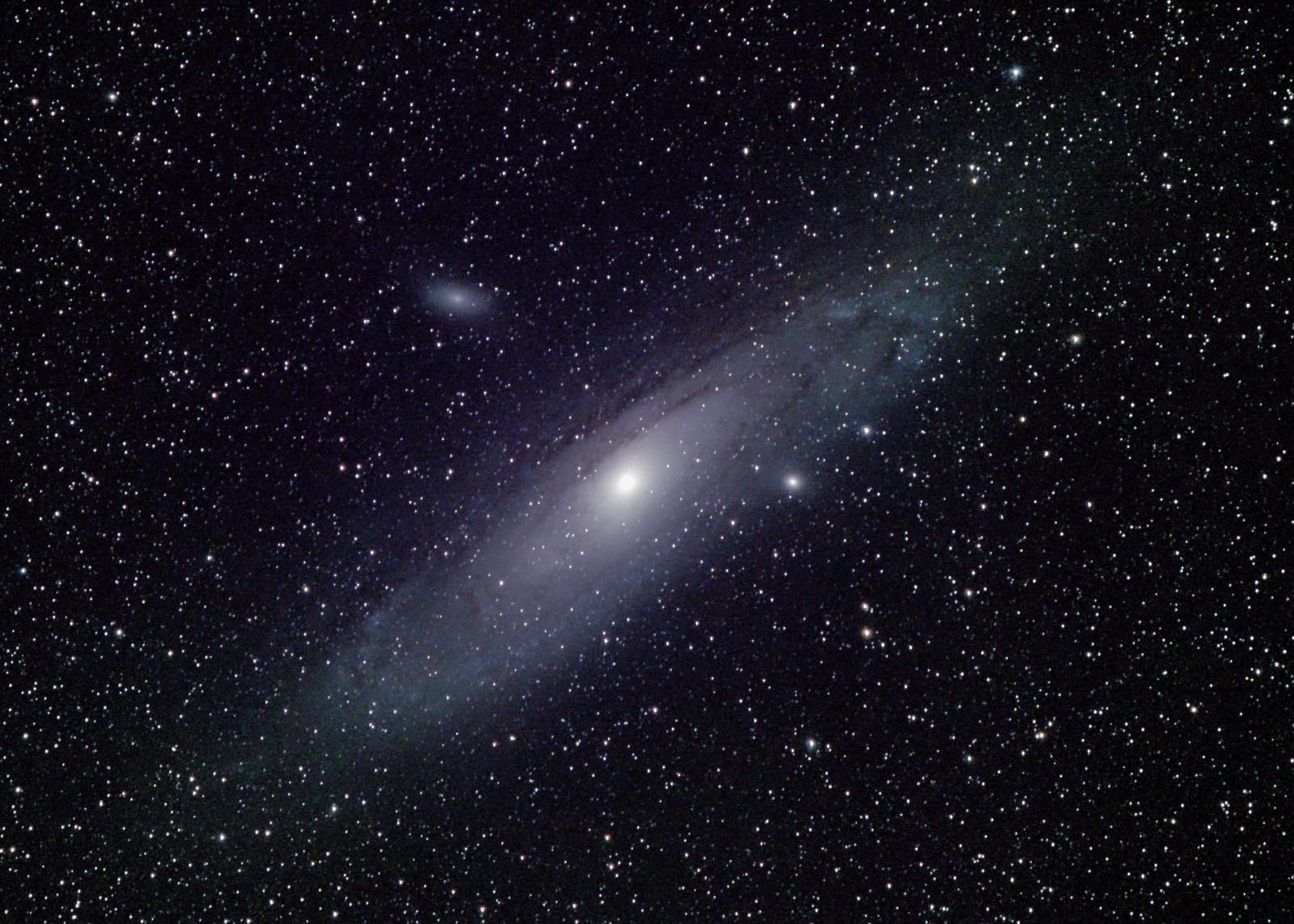
In practice, once the wedge is aligned well, owners report clean pinpoint stars in 2-3 minute exposures with a fast wide zoom, and the system has been used with heavier telephoto setups approaching 400mm when the counterweight bar is balanced. The head itself weighs 7 pounds and packs flat at under 14 inches on the long side.
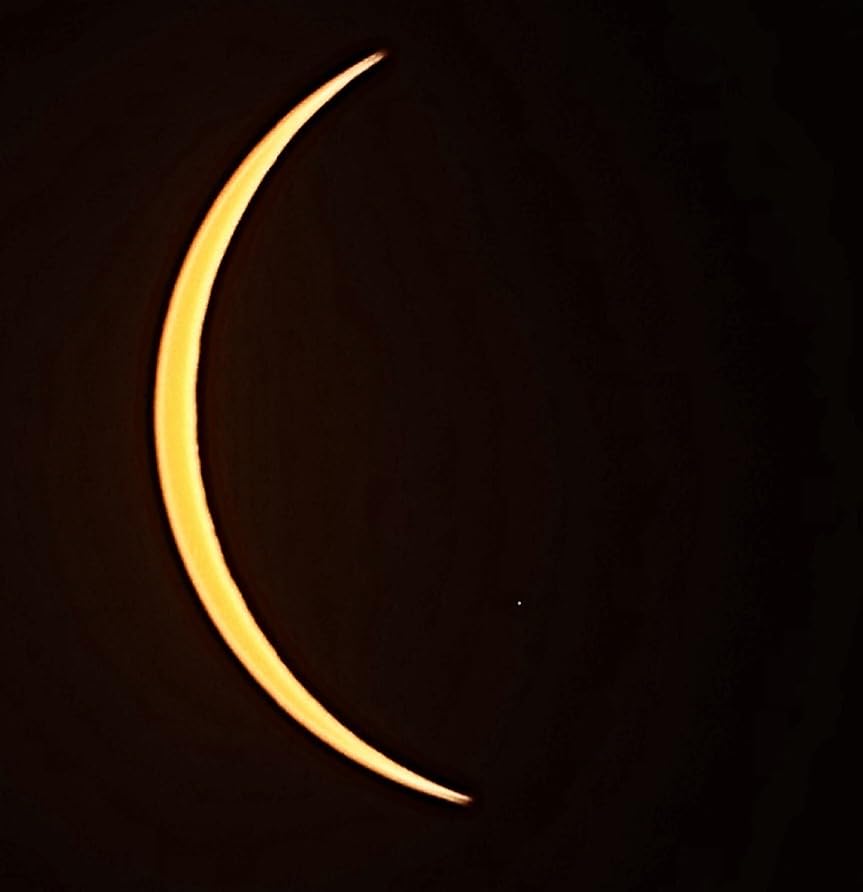
Control is over built-in Wi-Fi using Sky-Watcher’s free SAM Console app, which handles tracking start, exposure length and time-lapse programming. An illuminated polar finder scope is included, so alignment does not depend on being able to identify Polaris by eye. It is one of the few trackers here where the alignment hardware is genuinely in the box.
Reviewers are also candid about the downsides. The equatorial wedge is thin red plastic and some owners feel it is flexing under load, the learning curve for first-time polar alignment is the steepest in this group, and the supplied polar scope illuminator is small enough that it becomes awkward once a camera is mounted. The app is functional but sparse compared with the ExploreStars software on some competing mounts.
Who the Star Adventurer 2i Pro suits
This suits anyone shooting nightscapes or moderate deep-sky targets with a DSLR or mirrorless body and a lens from about 14mm to 200mm. It is a strong first tracker because it does not force you to learn a motorised mount menu before taking a single picture, and the 610-review history means failure modes are well documented.
It is also a good second tracker for anyone moving from a fixed tripod to longer focal lengths, since the payload headroom and the option of a counterweight give you room to grow. Reddit buyers frequently pair it with a 16-35mm zoom, which is exactly the kit it is built for.
Who should skip the Star Adventurer 2i Pro
Skip it if you want GoTo pointing. This model has no database of targets, so you frame the night sky yourself and refine manually. It is also the wrong choice for a small refractor telescope with real weight on it, or for anyone who wants autoguiding through a dedicated port for long stacked deep-sky sessions.
If you plan to shoot in the southern hemisphere, read the alignment section in the buying guide below first. The wedge is latitude-adjustable, but you will be aligning to a different pole than the one the finder scope is set up around.
2. iOptron SkyGuider Pro – the best balance of payload and pack size
iOptron SkyGuider Pro Camera Mount Full Package
2.2 lb head
11 lb (4.99 kg) payload
Up to 20 hours internal battery
AccuAlign dark field polar scope
Pros
- Very light all-metal body at 2.2 lb
- Pinpoint stars at 2-3 minute subs up to 300-500mm
- Integrated illuminated polar scope
- Internal rechargeable battery covers a full night
Cons
- No GoTo
- targets found manually
- Bundled 8 inch counterweight bar is short for heavy telephoto
- Polar scope often arrives out of collimation
- Loose eyepiece can wobble
The SkyGuider Pro is the one I reach for when I want the largest payload rating in a small box. The head weighs 2.2 lb and is machined from metal rather than plastic, and it carries a balanced payload of up to 11 lb (4.99 kg). That headroom is unusual for something this compact, and it means a telephoto zoom is a realistic option rather than a stretch.
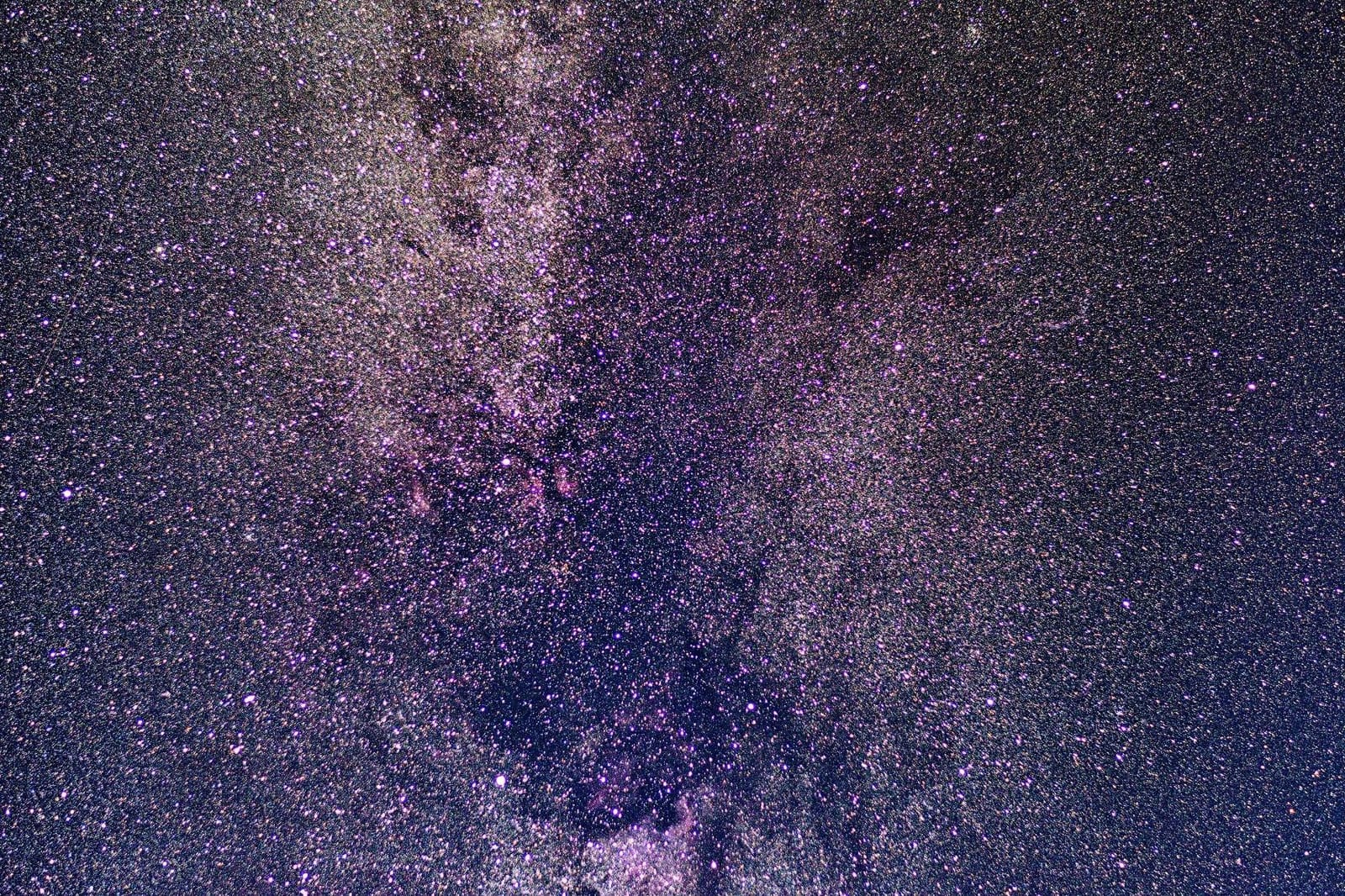
Owners report sharp 2-3 minute exposures even at 300-500mm, which puts it ahead of most portable trackers in the group once you are past 300mm. The drive is smooth and low in vibration, and the all-metal body is part of why the tracking holds together under a heavier rig.
Power is handled by an internal rechargeable battery rated for up to 20 hours of operation at 20C, which covers a full night of shooting without a cable run to a power bank. The alt-azimuth base adjusts from -30 to 65 degrees of latitude with plus or minus 5 degrees of azimuth, so it works across most of the populated northern hemisphere and into the tropics.
Alignment uses the AccuAlign dark field illuminated polar scope, which shows a ring of stars inside a reticle and lets you centre them rather than eyeballing the pole. It is the fastest alignment method among the trackers here, and it works in darkness without a torch on your head.
The honest complaints are about the counterweight and the polar scope itself. The bundled 8-inch counterweight bar is short for heavy telephoto combinations, and extended bars and weights are the accessory most often described as expensive and hard to source. The polar scope also frequently arrives out of collimation and needs adjusting with a 1.5mm hex key that is not supplied, and the eyepiece can wobble, which disturbs a good alignment.
Who the SkyGuider Pro suits
This is the pick for a photographer who wants a real payload number instead of a compromise, and who works with lenses from 14mm up toward 400mm. The 11 lb rating means a full-frame body with a fast zoom, or a smaller refractor, is not going to be the limiting factor.
It also suits anyone who shoots far from a car. The 2.2 lb head and the internal battery mean no power bank, no separate battery pack and no charging between setups, and reviewers repeatedly pair it with a genuinely stiff tripod rather than a travel one.
Who should skip the SkyGuider Pro
Skip it if you want GoTo or auto-guiding. Finding a target is entirely manual, and there is no autoguider port to correct drift during long stacked sequences. It is also the wrong choice for cold-weather field work if you rely on the internal battery, since lithium performance drops as temperature falls.
If you are a fast learner who expects to grow into deep-sky imaging within a year, the price difference to a dual-axis GoTo mount may be money better spent now rather than later.
3. Sky-Watcher Star Adventurer GTi Mount Kit – the complete GoTo package
Sky Watcher Sky-Watcher Star Adventurer GTI Mount Kit with Counterweight, CW bar, Tripod, and Pier Extension – Full GoTo EQ Tracking Mount for Portable and Lightweight Astrophotography
Complete tripod kit
26 lb total weight
44.5 inches maximum height
Counterweight bar and 5 lb weight included
Pros
- All-in-one package with head
- tripod and pier extension
- GoTo pointing removes manual star hunting
- Built-in illuminated polar scope
- Built-in Wi-Fi for app control
- Two-year limited manufacturer warranty
Cons
- Heaviest and largest tracker in the group at 26 lb
- Biggest assembled system to carry and transport
- Included listing data offered little customer review text
The Star Adventurer GTi is the only fully complete package in this roundup. Everything a tracking rig needs is in the box: the GoTo mount head, a tripod with a pier extension, a counterweight bar, a 5 lb counterweight, and a built-in polar scope with illuminator. If you have been put off by the accessory list on other trackers, this is the one that removes that problem.
It is also a true dual-axis equatorial mount. Both the right ascension and declination axes are motorised, which is the mechanical difference that separates a GoTo equatorial mount from a single-axis camera tracker, and it is the reason this head can slew to a target on command and then track it properly while you wait for the exposure.
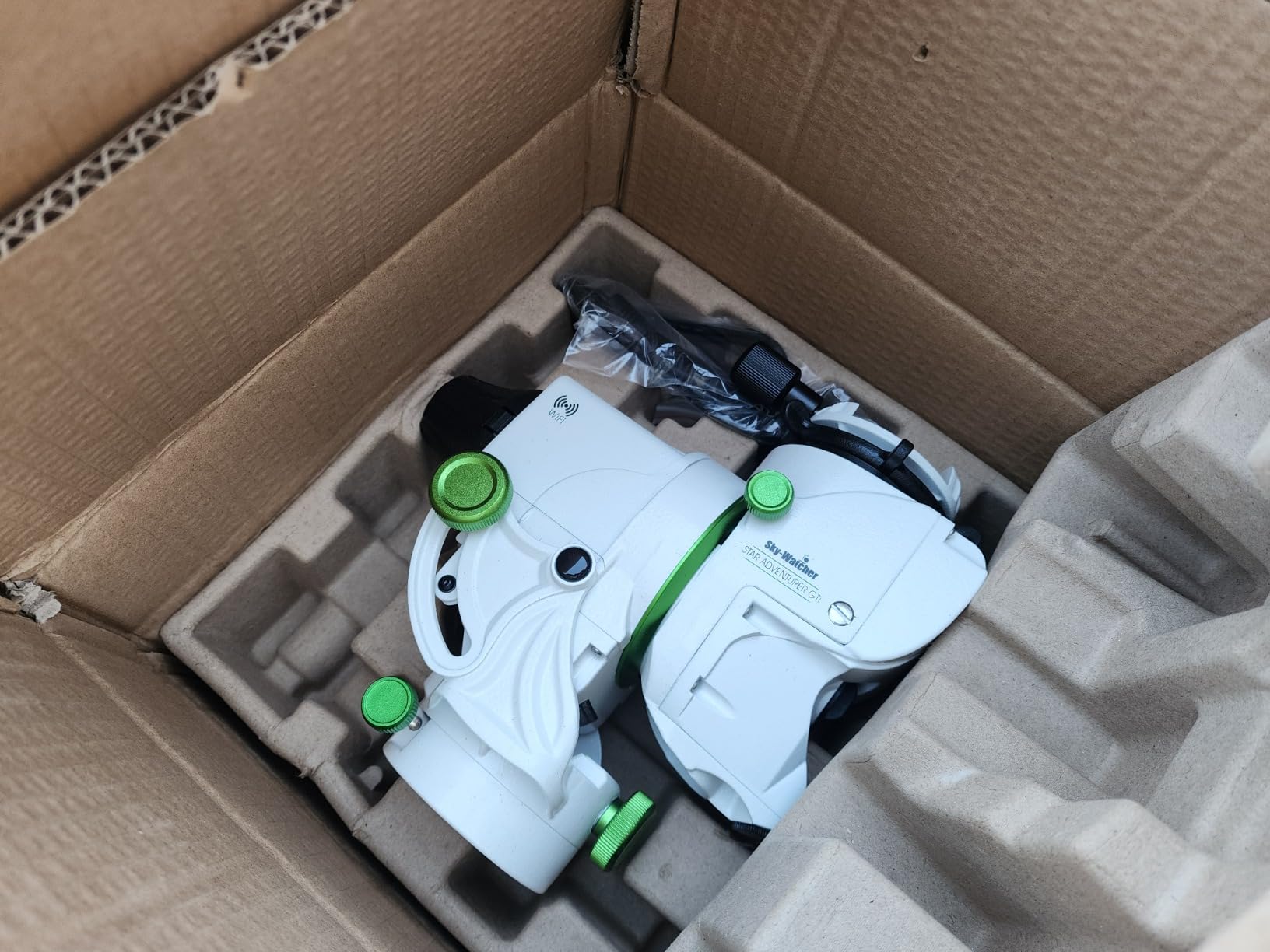
Control runs over built-in Wi-Fi from a smartphone, and GoTo functionality means the mount points at a named object instead of you hunting for it in the dark. Multiple tracking rates are supported, which covers both astrophotography and time-lapse work from the same head.
To answer a question that comes up constantly in buying guides: the Star Adventurer GTi is a genuine equatorial mount, unlike the single-axis Star Adventurer models, and that distinction matters if you want GoTo, autoguiding or a small telescope. The mount carries a two-year limited warranty from the manufacturer, longer than the one-year terms on most of the competing heads here.
The tradeoff is bulk. This kit weighs 26 pounds and stands 44.5 inches tall on 1.5 inch legs, which is a real load for a car boot and completely impractical for hiking. One honest limitation of the available listing data is that we had less customer review text to analyse than for the other picks, so our read on this one leans more on specifications than on owner anecdotes.
Who the Star Adventurer GTi Kit suits
It suits photographers setting up at a fixed observing site, at home or at a dark-sky location where you unload the car once and stay put. GoTo pointing removes the hardest part of a first night out, and the included counterweight hardware means a heavier refractor plus guide scope is a realistic configuration.
It is also the choice for anyone who wants a single purchase rather than a shopping list. The ball head, counterweight, tripod and power are the four things most trackers leave out, and this kit is where that stops being true.
Who should skip the Star Adventurer GTi Kit
Skip it for travel and mobile work. At 26 pounds this is the least portable tracker in the group by a wide margin, and the tripod is not something you want to carry to a summit. It is also overkill if your only goal is a wide Milky Way arch over a landscape, where a head that fits in a jacket pocket does the same job.
Anyone shooting well away from a vehicle should look at the Star Adventurer Mini or the Vixen POLARIE U instead and add a tripod separately.
4. Omegon Mount MiniTrack LX3 – the tracker with no battery at all
Omegon Mount MiniTrack LX3
650 g weight
3 kg maximum payload
Mechanical spring drive
Northern Hemisphere model
Pros
- No batteries
- no motor and no charging
- Cool and unaffected by cold weather
- Extremely light at 650 g
- Low-cost way into tracked photography
Cons
- Inconsistent accuracy
- some frames come out trailed
- Alignment is fiddly in darkness
- Gear backlash means the plate does not return exactly
- Needs a stiff tripod with a fluid head
The MiniTrack LX3 is the odd one out in this roundup because it has no electronics at all. It is a purely mechanical, spring-driven clockwork unit that rotates the camera at roughly the sidereal rate purely from the tension in a wound spring. There is nothing to charge, nothing to fail in the cold, and no app to connect when the batteries are flat.
That simplicity has real appeal. It weighs 650 g, it goes in a small bag, and it works in almost any temperature because no power supply is involved at all. Owners who have dialled in the alignment report nearly round stars with lenses around 300mm, which is a respectable result for a device with zero moving electronics.
Polar alignment uses an optical viewfinder style method, and it needs a rigid tripod with a fluid alt-azimuth head rather than a ball head. The maximum recommended payload is 3 kg. The LX3 N version is the northern hemisphere model, so buyers in the southern hemisphere need the other variant.
Where the reviews split is accuracy. A significant share of owners get trailed frames on light payloads, and backlash in the gear train means the plate does not return exactly to where it started, which limits repeatability. The alignment procedure is fiddly to do in darkness, and at least one package arrived without the polar scope despite the listing claiming it was included.
Who the MiniTrack LX3 suits
It suits a beginner on a strict budget, a photographer who wants to try tracked exposures before committing to electronics, and anyone shooting in genuinely cold conditions where battery life collapses. If you only want two or three clean subs of a wide Milky Way scene, the mechanical simplicity is enough.
It is also a good backup head. If your battery dies mid-session, this unit keeps working with no external supply.
Who should skip the MiniTrack LX3
Skip it if consistency matters. The 4.1 average across 86 reviews reflects a real reliability gap, and stacking or multi-exposure blending depends on the drive returning to the same position each time. It is also the wrong tool for anything past a moderate telephoto lens.
Anyone wanting GoTo, auto-guiding or a refractor telescope should move up to a motorised equatorial mount instead.
5. Explore Scientific iEXOS-100-2 PMC-Eight – the one that can autoguide
iEXOS-100-2 PMC-Eight Equatorial Tracker System Tripod and Mount for Astrophotography with WiFi and Bluetooth Compatible
Dual-axis worm gear mount
Eight independent processors
Runs on eight C batteries
ExploreStars app for GoTo
Pros
- Rock-solid build that holds a refractor
- guide scope and DSLR
- Unusually quiet while tracking
- Guides to around 1.5 arcseconds with PHD2 or EKOS
- Works with third-party controllers like ASIAIR and StellarMate
- Dual-axis GoTo in a compact package
Cons
- ExploreStars app crashes and has a confusing interface
- Flaky Wi-Fi that drops connection
- Polar scope and azimuth adapter sold separately
- Essential accessories add substantial cost
- Sparse documentation and unresponsive support
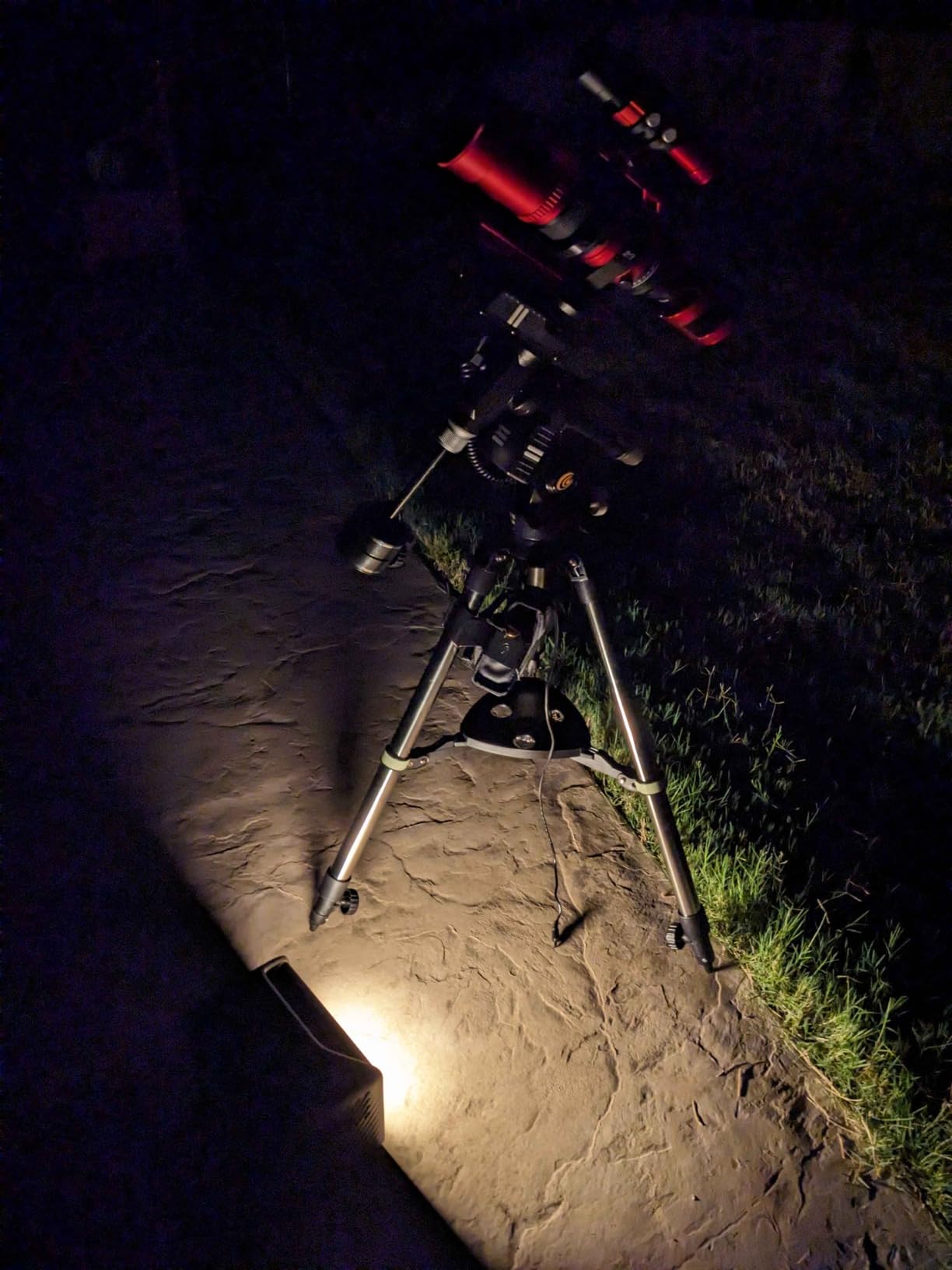
This is the only tracker in the roundup with a genuine auto-guiding path, and that is the single reason to consider it. The PMC-Eight control system runs on eight independently operating processors, which is why the mount can keep a guide camera loop, correct drift and still hold GoTo pointing. Owners report guiding variation of around 1.5 arcseconds with software such as PHD2 or EKOS, which is deep-sky imaging territory.
The mechanics are genuinely good. Clutched dual-axis worm gears with quiet belt-driven stepper motors, clutched right ascension and declination axes for smooth balancing, and a build quality owners describe as rock solid. Several reviewers run a small refractor plus guide scope and DSLR on it, and it is markedly quieter while tracking than larger mounts.
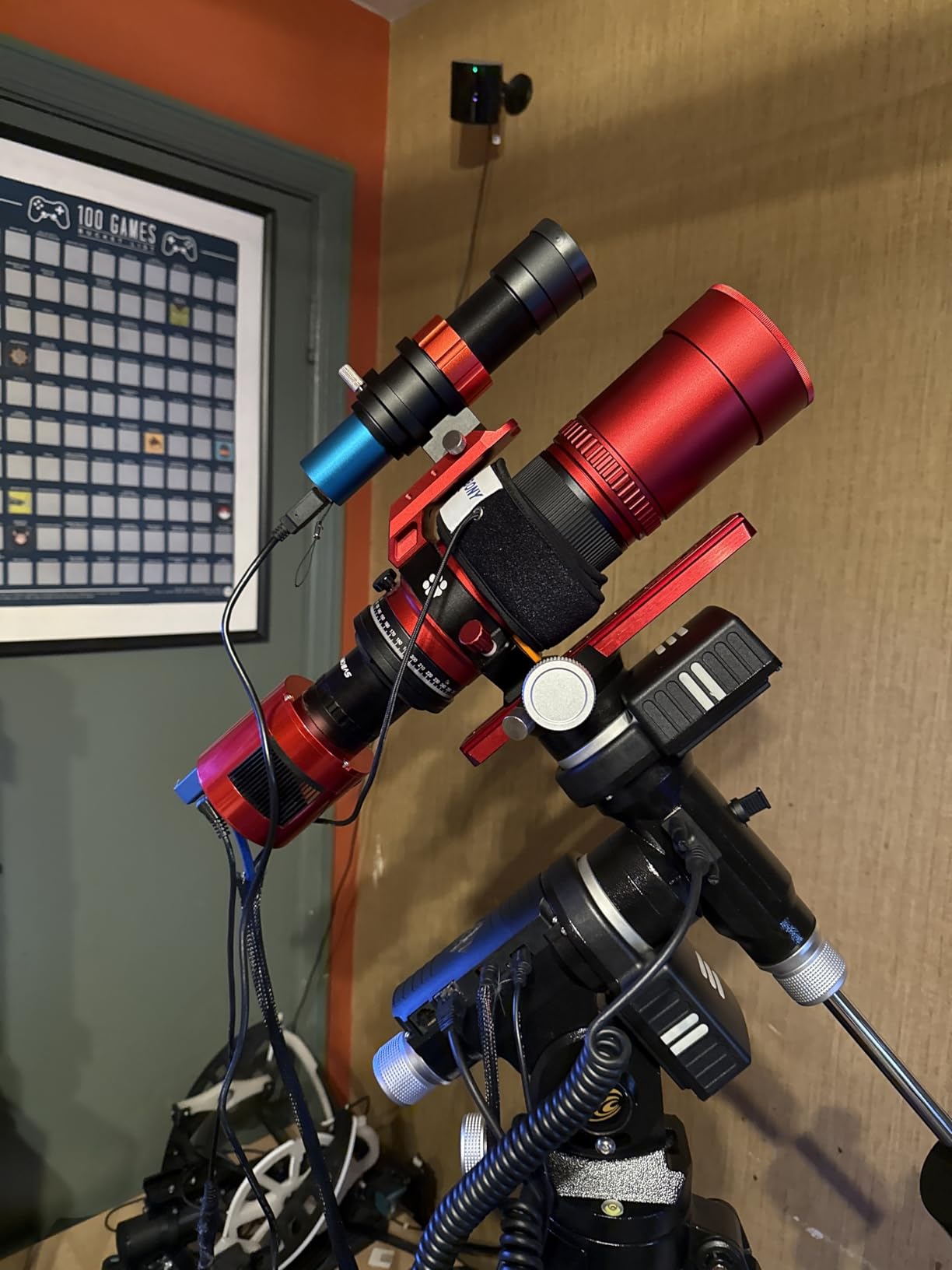
It is also the most open in this group. It works reliably with third-party controllers including ASIAIR and StellarMate, which means you are not locked into one app for the rest of the life of the mount. GoTo control is available through the ExploreStars app on Apple, Android and Windows.
Everything that goes wrong with it is in the software and accessory layer. The app is unreliable, crashes frequently and has a confusing interface. Wi-Fi drops, and a stable connection needs a wired mini-USB port that is not exposed from the factory. The mount is also demanding of supply voltage, which contributes to the connection problems, and it needs eight C batteries.
Polar alignment is the weak point in practice. The sight hole through the right ascension axis works, but the polar scope and the azimuth adapter are sold separately, and the upgraded tripod is a further cost. Documentation is sparse and dated, and support is described as unresponsive with repair turnaround of a month or more. The 3.9 average is the lowest here, and the reviews explain exactly why.
Who the iEXOS-100-2 suits
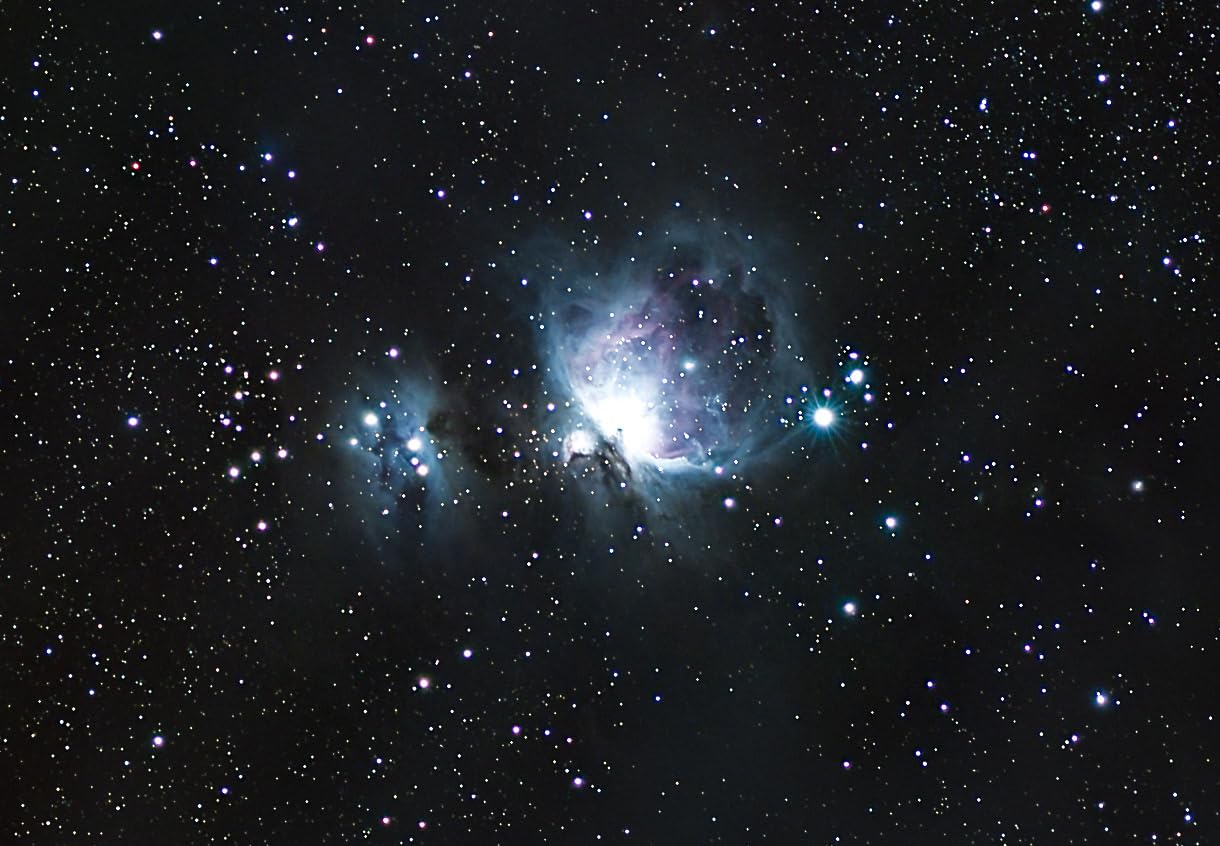
It suits someone already committed to deep-sky imaging who has reached the limit of a single-axis camera tracker and needs correction. The auto-guiding capability and the third-party controller support make it the one mount here that can grow into long stacked sessions on a target like the Andromeda galaxy or Rho Ophiuchi.
It also suits anyone who is comfortable wiring their own setup and would rather run PHD2 or EKOS on a laptop than fight a phone app. For a small refractor plus guide scope, the payload and build quality are more than adequate.
Who should skip the iEXOS-100-2
Skip it if you want something that works the moment you unbox it. The app and Wi-Fi problems are repeated across reviews, and forum sentiment treats a phone that will not connect as a genuine downside rather than a minor annoyance. Buying a tracker and then discovering you need a separate adapter, a different tripod and better software is a frustrating way to start.
It is also too much hardware for simple nightscape work, where a light single-axis head does the same job at a fraction of the weight.
6. iOptron SkyTracker Pro – the quietest drive in the group
iOptron SkyTracker Pro Camera Mount with Polar Scope, Only
3 kg (6.6 lb) payload
3.3 lb weight
600 second worm period
Four tracking rates
Pros
- Almost completely silent tracking with clean 4-5 minute exposures
- Internal rechargeable battery
- Many fine-tuning knobs for fast alignment
- Four tracking rates plus dimmable scope LED
- Padded carrying bag included
Cons
- Dovetail base is not Arca-Swiss compatible
- Rubber cushion at the swivel head slips with heavier payloads
- Long telephotos hit the 3 kg limit without a counterweight
- Alignment app sold separately
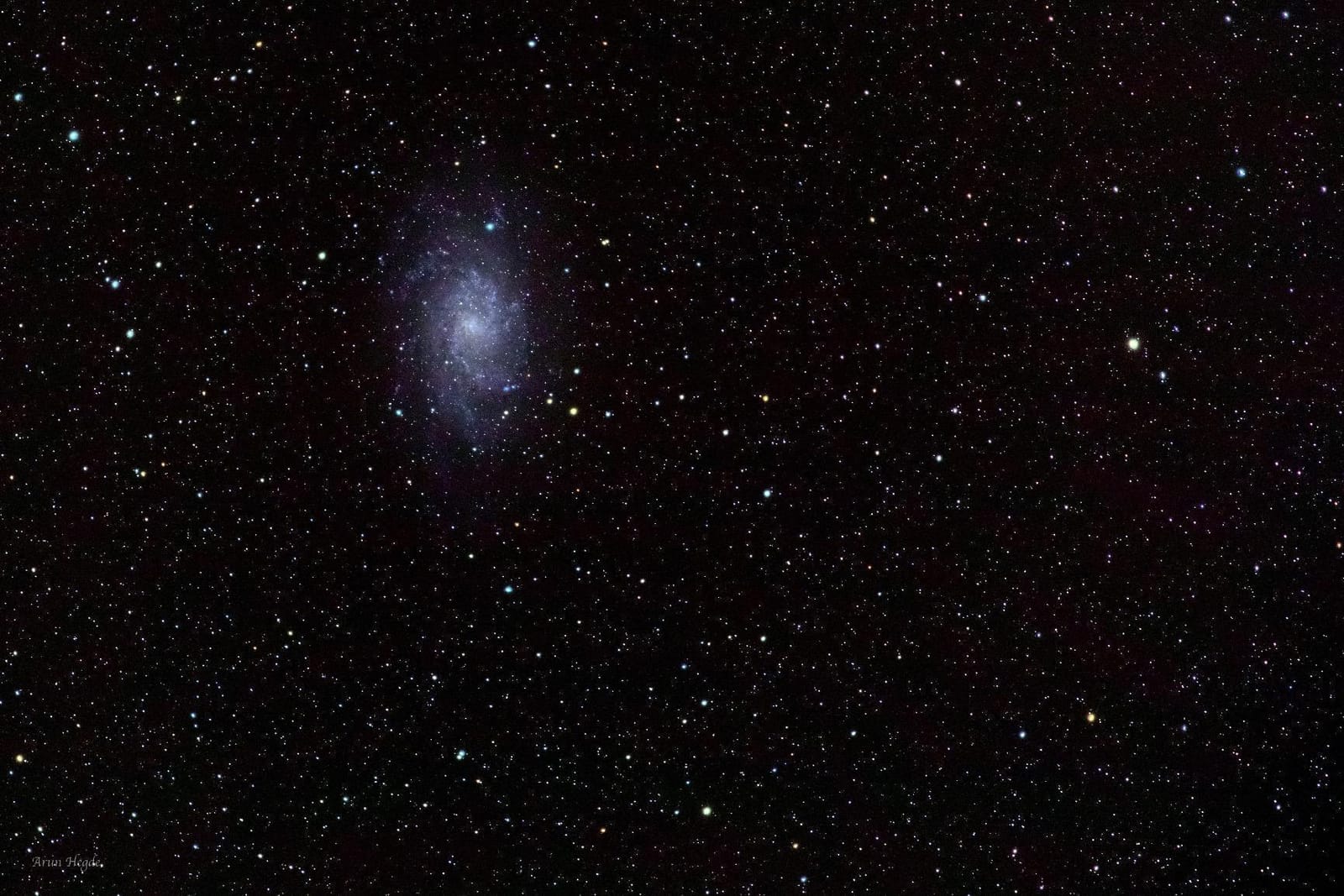
The SkyTracker Pro is the quietest unit we looked at, and that is not a trivial detail. Owners describe tracking that is almost completely silent, with clean 4-5 minute exposures reported from an 11mm lens on a D500 and clean 2 minute subs with a 70mm. A silent drive matters more than most people expect when you are working next to a sleeping campsite or beside other photographers.
It runs a 600 second worm period on a DC servo motor across four bearings, which is the mechanical reason the motion is so smooth. Automatic right ascension tracking handles the actual rotation, and a forward and reverse jog button makes framing straightforward without touching the camera.
Power comes from an internal rechargeable battery that reaches 80 percent charge in about 5 hours over micro USB, so there is no battery tray to fill and nothing to carry. Four tracking speeds are available: 1X sidereal, 1X/2X for blending sky and landscape, plus solar and lunar rates for eclipse and daytime work. A dimmable polar scope LED keeps the alignment view readable without destroying night vision.
Where it needs help is mechanical and accessory-related. The dovetail base is not Arca-Swiss compatible, so an adapter plate is usually needed to fit a standard ball head, and the rubber cushion at the swivel head mount slips when you load a heavier lens. Long telephotos approach or exceed the 3 kg (6.6 lb) payload limit without the optional counterweight, and a ball head is sold separately and required in practice.
One more detail catches people out: the flat base will not fit tripods with a fixed index mark for polar north, and the alignment app is a separate purchase rather than an included one.

Who the SkyTracker Pro suits
It suits wide-field and nightscape photographers who shoot alone, quietly, from a campsite or a cabin. The 3.3 lb weight and 3 kg payload cover a mirrorless body with a fast wide zoom comfortably, and the internal battery means one less thing to forget.
The extra alignment knobs make it a good first motorised tracker too, since you can fine-tune the setup rather than fighting fixed positions. The padded carrying bag in the box is a nice touch for travel.
Who should skip the SkyTracker Pro
Skip it if you shoot telephoto deep-sky. The 3 kg ceiling is the tightest real limit in this group, and hitting it means buying a counterweight and dealing with a non-Arca dovetail. It is also the wrong choice if you want GoTo, since there is no pointing database and no autoguider port.
If your tripod has a fixed index mark, check the base fit before you buy, because the flat base will not mate with it.
7. Sky-Watcher Star Adventurer Mini – the smallest full-featured tracker
Sky-Watcher Star Adventurer Mini – Motorized DSLR Night Sky Tracking Mount For Nightscapes, Time-lapse, and Panoramas
1.5 lb weight
6.6 lb payload
AA battery or 5V mini-USB
Polar scope and ball head adapter included
Pros
- Exceptionally small and light at 1.5 lb
- Clean 5 minute exposures at 300mm reported by owners
- No compromise in build quality despite the size
- Polar scope with illuminator and ball head adapter included
- Up to 24 hours on AA cells plus external USB power
Cons
- Sidereal tracking can only be started through the phone app
- Some units arrive with a battery compartment that will not power on
- Wi-Fi can refuse to connect where several networks compete
- Android SynScan app crashes for some users
- A wedge is recommended for easier alignment
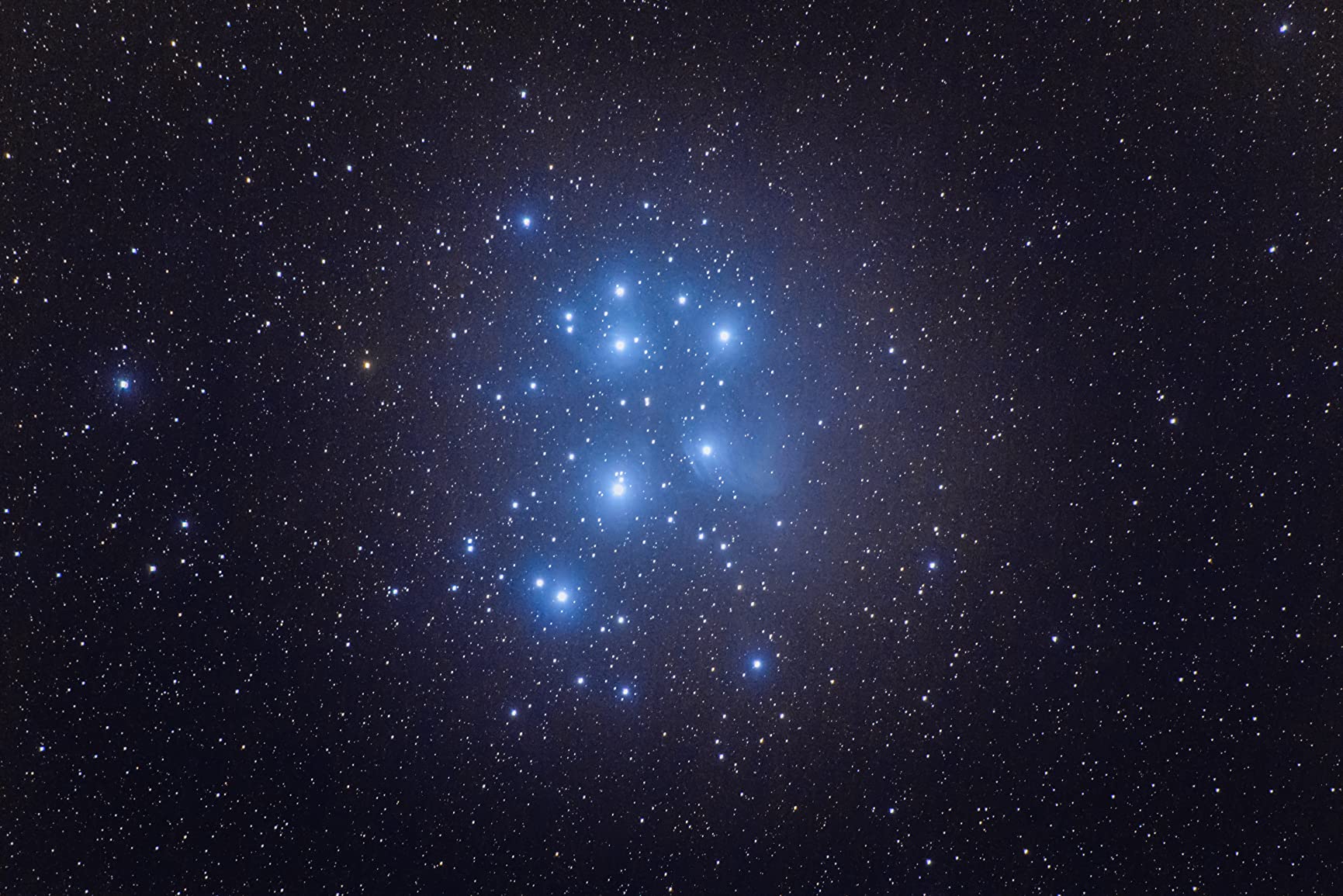
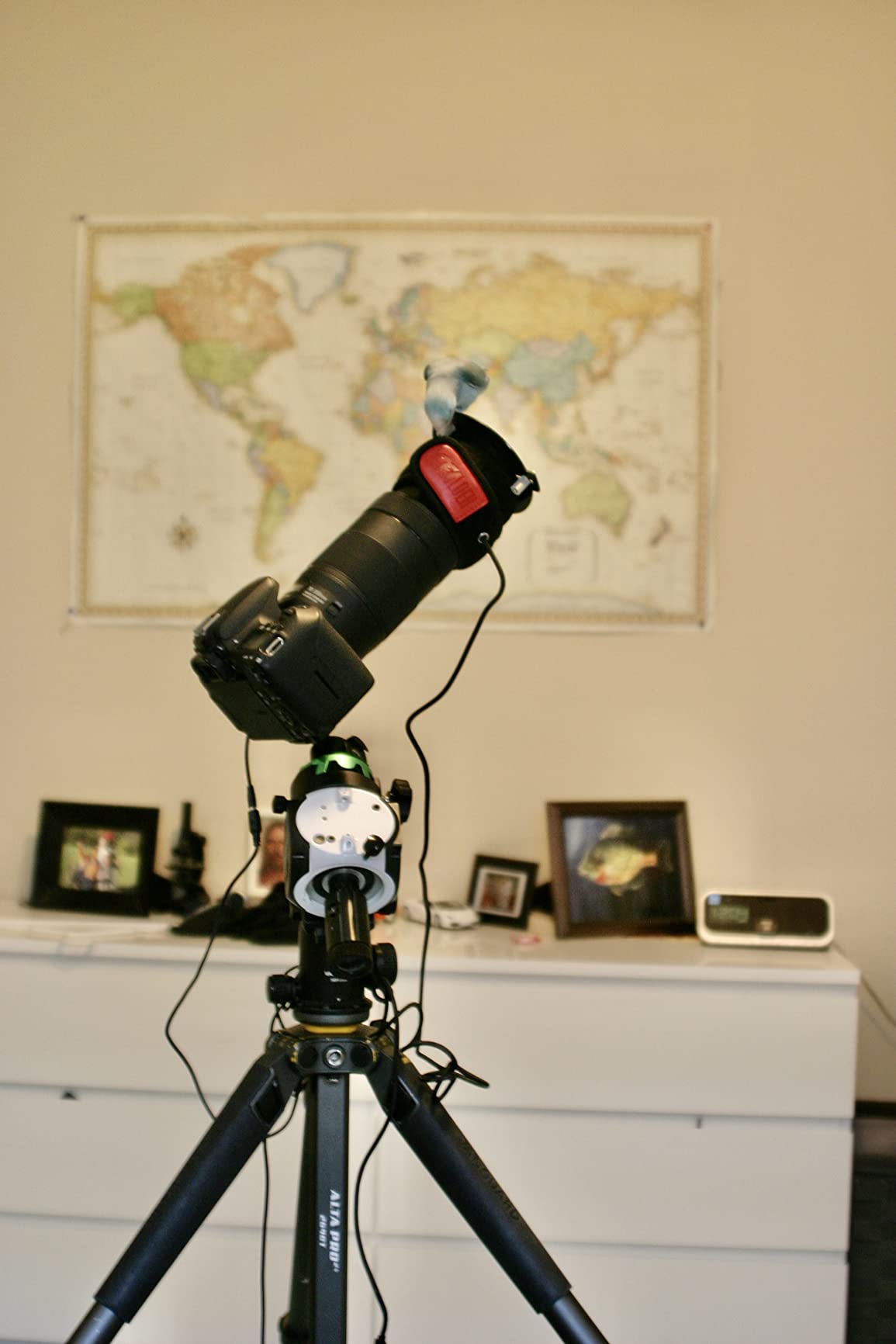
The Star Adventurer Mini is built for people who carry their camera on their back. At 1.5 lb it is one of the most compact trackers available, and the build quality does not feel like a compromise. Owners report clean 5 minute exposures at 300mm and solid 1-2 minute results when polar aligned, plus round stars with a 70mm pointed at Andromeda.
It handles a 6.6 lb payload, so a mirrorless body with a fast zoom is well within its limits. The aluminum enclosure and the brass and aluminum gears are the sort of specification you would not expect at this size, and there is a two-year limited warranty from Sky-Watcher USA.
Both a polar scope with illuminator and a ball-head adapter are included, which solves the two accessory problems that catch out buyers of bare tracker heads. Rugged brass and aluminum gears drive the movement, and the head can do time-lapse panning as well as tracked astrophotography.
Power is flexible. The built-in AA battery compartment runs up to 24 hours, and there is a 5V mini-USB input if you would rather run from a USB power bank. Control is over Wi-Fi using the free SynScan app for Android and iOS, and an auto-run setting lets it repeat the last programme without a phone in the field.
The most-cited complaint among experienced users is that sidereal tracking can only be started through the phone app, with no hardware button for it. If the app will not connect, the tracker is effectively a paperweight, and owners describe exactly that frustration. Quality control is the bigger theme in the negative reviews: several buyers report dead-on-arrival units with faulty battery compartments that misread voltage and will not power on, plus Wi-Fi connection failures and an Android app that crashes on launch. Sky-Watcher is noted as promptly replacing faulty units.
Who the Star Adventurer Mini suits
It suits hikers, backpackers and car-campers who want tracked nightscapes away from a vehicle. At 1.5 lb it disappears into a camera bag, and the included polar scope and ball-head adapter mean you can set it up with nothing else to buy.
It is also a good choice if you shoot both tracked astrophotography and time-lapse work from one head, and the auto-run feature is genuinely useful when you want to repeat a sequence without standing next to it with a phone.
Who should skip the Star Adventurer Mini
Skip it if you are not comfortable depending on a phone app for basic operation. The absence of a physical tracking button is the single most common complaint from experienced users, and crowded Wi-Fi environments make connection failures more likely rather than less.
It is also not the right tool for a refractor telescope or a heavy imaging train, and you will want an equatorial wedge to make polar alignment straightforward at night.
8. Vixen POLARIE U – the rigid build with an autoguider port
Vixen POLARIE U Star Tracker
0.58 kg weight
Five tracking speeds
ST4 autoguiding port on RA
USB Type-C external power
Pros
- Rigid equatorial-style build with no play in the rotation axis
- Near-point stars at 1-2 minute exposures from wide angle to 200mm
- ST4 autoguider port on the right ascension axis
- Works with existing Vixen POLARIE accessories
- Compact and light for travel imaging
Cons
- Maximum 10x tracking speed is slow for time-lapse
- Only one 3/8 to 1/4 inch adapter screw included
- Four AA format is heavy compared with two-cell options
- Optional POLARIE accessories carry steep pricing
The POLARIE U is the most mechanically refined head in this roundup, and at 0.58 kg it is also the lightest one we covered. Owners specifically call out the absence of play in the rotation axis, which is the difference between a cheap plastic tracker and something that will hold a star still for minutes on end. Reported results are near-point stars at 1-2 minute exposures from wide angle through about 200mm.
It is also the second tracker here with a route into guided imaging, through an ST4 autoguiding port on the right ascension axis. That is enough to close the loop with an external guider, even though the port sits on a single-axis head rather than a full dual-axis mount.
There are five variable tracking speeds, which gives you control over time-lapse work as well as sidereal tracking, and a reflex finder with a 60 degree field of view and a 5 mm exit pupil is included. The head runs on four AA batteries or a USB Type-C external power terminal, and it works with existing Vixen POLARIE accessories including the DX polar axis unit and earlier polar scopes, so owners of older POLARIE gear can reuse it.
The criticisms are narrow but real. The maximum tracking speed of 10x is slow for time-lapse compared with 30x alternatives, only one 3/8 to 1/4 inch adapter screw is included which can leave the unit unusable in some configurations, and four AA cells are heavy compared with two-cell formats. Optional POLARIE accessories are priced steeply relative to the head itself. The 4.4 average with no 1-star ratings shows broadly positive sentiment.
Who the POLARIE U suits
It suits a photographer who already owns POLARIE accessories and wants to keep using them, and anyone who values mechanical rigidity over electronics. The ST4 port also makes it a practical first step toward guided imaging without moving to a full equatorial mount.
At 0.58 kg it is the pick for the lightest travel kit here, and the included reflex finder gives you enough field of view to frame a wide nightscape without a separate finder.
Who should skip the POLARIE U
Skip it if time-lapse is your priority, because the 10x maximum speed will feel limiting. It is also the wrong choice for a heavy imaging train, and anyone with a tripod that needs a specific adapter screw should confirm the fit first.
If you want GoTo pointing, look at the Star Adventurer GTi instead. The POLARIE U is a refined manual tracker, not an automated one.
Star Tracker Buying Guide: Payload, Alignment and Power in 2026
What a star tracker actually does
A star tracker is a motorised mount that rotates at the sidereal rate, the speed at which the night sky appears to move across the sky as Earth turns. A single-axis tracker has one motor on the right ascension axis, which handles most of the apparent rotation once the mount is aligned to the celestial pole.
The critical step is polar alignment. The right ascension axis has to point at the celestial pole, and the mount is tilted on a wedge or base to your local latitude to achieve that. A declination wedge is the angled block that sets this tilt, and a base with an adjustable latitude range lets the same head work from the tropics to high latitudes. Get this wrong and the residual drift puts trails back into the corners of your frame even at short exposures.
Single-axis camera tracker or dual-axis equatorial mount
This is the distinction that confuses more first-time buyers than any other, and it regularly shows up as a search question. A single-axis camera tracker, such as the Star Adventurer 2i Pro, the Star Adventurer Mini, the Vixen POLARIE U or the iOptron SkyTracker Pro, has one motor and tracks in right ascension only. It is lighter, cheaper, quieter and more reliable for wide-field work.
A dual-axis equatorial mount adds a second motor on the declination axis. That is what makes GoTo pointing possible, because the mount can correct in two directions to point at a target, and what makes an autoguider meaningful, because corrections can be applied along both axes. The Explore Scientific iEXOS-100-2 and the Sky-Watcher Star Adventurer GTi are both true equatorial mounts in this sense.
The honest answer is that most nightscape and wide-field astrophotography does not need a second motor. You need one if you want to point at targets by name, or if you plan to stack long exposures on deep-sky objects over a full night.
Sizing payload with your own camera and lens
Payload capacity is the number people misjudge most often. A rating is only valid when the rig is properly balanced, and the stated figure assumes you are using a counterweight bar rather than hanging an off-centre camera off a bare head. A common rule in the field is that a tracker handles a little above its rated payload, but that is a limit to respect rather than exploit.
Work out your rig weight first. A nightscape setup of a DSLR with a wide zoom typically lands around 3.1 pounds of camera and lens, while a deep-sky rig of a body with a telephoto lens and a guide scope can reach 5.9 pounds or more. Against those numbers, the 3 kg (6.6 lb) ceiling of the iOptron SkyTracker Pro is comfortable for the first case and tight for the second. The 11 lb (4.99 kg) rating of the SkyGuider Pro and the heavier capacity of the full GoTo kits leave room to add a refractor and a guide scope without a second purchase.
Whichever head you choose, the counterweight matters as much as the motor. A short bar, and the Omegon and iOptron packages both draw complaints about short bars, will not let you balance a heavy telephoto combination, so check bar length against your intended rig before you commit.
Focal length and maximum usable exposure time
The 500 rule gives a usable shortcut: divide 500 by your focal length in millimetres to get the longest exposure in seconds before trailing becomes visible. That is a rule of thumb on an average sensor, and modern high-resolution bodies trail sooner, so treat the result as a ceiling rather than a target.
14mm to 24mm: roughly 5 minutes before field curvature and trailing show
50mm: around 2 minutes
135mm: about 1 minute
200mm: close to 45 seconds
400mm and beyond: around 30 seconds
That reference is why the maximum useful focal length matters when comparing trackers. A head that tracks acceptably at 300mm in 2 minute subs, as owners of the SkyGuider Pro and the Star Adventurer Mini report, is doing something quite different from a head producing sharp 1 minute frames at 200mm, and the difference is what you are paying for.
Polar alignment methods, north and south
Set the tripod level and stable, then adjust the wedge or base to your local latitude.
Point the right ascension axis at the pole for your hemisphere. In the northern hemisphere that is Polaris; in the southern hemisphere it is the faint southern celestial pole, which is why many apps provide a guided procedure.
Use an illuminated polar finderscope where one is included, such as the AccuAlign dark field scope on the SkyGuider Pro or the illuminated scope on the Star Adventurer models, and rotate the mount until the pole star sits in the reticle ring.
Refine with an app-based plate solve if your tracker supports Wi-Fi control, or with a laser or line-of-sight method if it does not.
Run a short test exposure at your intended focal length and check the corners before committing to a long sequence.
Two hemisphere notes worth making. The Omegon MiniTrack LX3 N is the northern hemisphere variant, and a different model exists for the south. The SkyGuider Pro base adjusts from -30 to 65 degrees of latitude, which covers the southern tropical and temperate zones as well as most of the north. In the deep south, where there is no Polaris to align on, use an app that computes the pole position for your coordinates.
Power source and runtime in cold weather
Runtime claims are laboratory numbers at around 20C, and field reality is different. The SkyGuider Pro is rated for up to 20 hours internally, the Star Adventurer Mini for up to 24 hours on AA cells, and both accept external USB power as a fallback. The iEXOS-100-2 needs eight C cells, which is a lot of battery volume to carry in cold weather, and the Vixen POLARIE U uses four AA cells.
Lithium chemistry loses capacity as temperature falls, so a session that starts at dusk can lose a meaningful chunk of runtime by 2am in winter. If you shoot cold, either carry a power bank for models that accept external input or choose the mechanical Omegon, which needs no power at all.
The accessories almost every tracker leaves out
Budget for the pieces that are not the tracker. A ball head, a counterweight bar and weight, a tripod stiff enough to hold tracking still, and a power source are separate purchases on most bare heads, and they frequently cost more than the mount itself. The Star Adventurer GTi Mount Kit is the exception that arrives complete.
Two more items catch people out. An equatorial wedge makes polar alignment far easier at night, and only some packages include one. And if you already own a modern quick-release plate, check whether the head accepts it, because the SkyTracker Pro uses a dovetail base that is not Arca-Swiss compatible and the POLARIE U ships with only one adapter screw.
Field failure modes to plan for
Wind and tripod flex undermine an otherwise accurate tracker more often than gear quality does, and a light travel tripod is the usual culprit. Brace the legs, hang something from the centre hook, and shelter the rig if a gust front arrives. Cold battery derating is the second predictable failure, and a cable snagging or a ball head creeping under load is the third, which is why balancing the rig rather than just mounting it matters.
Finally, app dependence is a genuine operational risk. Two trackers here can only start sidereal tracking through a phone app, and reviewers report connection failures in areas with several competing Wi-Fi networks. Know your manual-sidereal fallback before you leave home.
Frequently Asked Questions
What is the best star tracker for astrophotography?
The Sky-Watcher Star Adventurer 2i Pro Pack is the best star tracker for most astrophotography, because it combines a payload rating that handles lenses to roughly 400mm when balanced, built-in Wi-Fi control through the SAM Console app, and an illuminated polar finder scope included in the box. It holds a 4.4 star average across more than 600 owner reviews, which makes it the most proven unit in this roundup. If you want GoTo pointing and a dual-axis equatorial mount instead, the Sky-Watcher Star Adventurer GTi Mount Kit is the step up.
Is the Star Adventurer GTi a good choice?
Yes, particularly for anyone who wants a complete system rather than a bare tracking head. The GTi Mount Kit bundles the GoTo mount head, a tripod with pier extension, a counterweight bar, a 5 lb counterweight and a built-in illuminated polar scope, and it carries a two-year limited manufacturer warranty. GoTo pointing removes the manual star-hunting step that trips up beginners, and dual-axis motor control makes it suitable for longer guided work. The tradeoffs are weight and bulk: the assembled kit weighs 26 pounds and stands 44.5 inches tall.
Is the Star Adventurer GTi an equatorial mount?
Yes. The Star Adventurer GTi is a true dual-axis equatorial mount, with motors on both the right ascension and declination axes, which is what makes GoTo pointing and guided corrections possible. This is not true of every tracker in the Star Adventurer range. The 2i Pro and the Star Adventurer Mini are single-axis camera trackers that only correct in right ascension, so they cannot point at a target by name and cannot apply declination corrections. If you want a lighter, cheaper head for wide-field nightscapes, the single-axis design is the better choice.
How do I polar align a star tracker?
Level the tripod, then tilt the declination wedge or base to your local latitude so the right ascension axis points at the celestial pole. In the northern hemisphere that is Polaris, and in the southern hemisphere it is the faint southern celestial pole, so use an app that computes it from your coordinates. Rotate the mount until the pole star sits centred in the illuminated polar finderscope reticle, refine with an app-based plate solve if your tracker supports Wi-Fi, then take a short test exposure at your intended focal length and check the corners for drift before committing to a long sequence.
Do I need a star tracker for Milky Way photography?
Not always. If you shoot with a wide lens at 14-24mm and keep exposures to 15 or 20 seconds, a fixed tripod on a sturdy landscape tripod gives clean enough stars for a Milky Way arch over a foreground, and you can skip the tracker entirely. As soon as you want exposures of a minute or longer, or you move to a 35mm lens and beyond, tracking becomes the difference between pinpoint stars and visible trails. A single-axis tracker such as the Star Adventurer Mini or the Vixen POLARIE U is the simplest way to make that jump.
How much payload does a star tracker need?
Weight your camera and lens first, then allow room for a guide scope and counterweight if you plan to grow. A nightscape rig of a DSLR with a fast wide zoom typically runs around 3.1 pounds, while a body with a telephoto lens and a guide scope for deep-sky work can reach 5.9 pounds or more. The 3 kg (6.6 lb) limit on the iOptron SkyTracker Pro suits the first case, while the 11 lb (4.99 kg) rating on the SkyGuider Pro and the higher limits on the full GoTo kits handle the second. Balance the rig rather than mounting it off-centre, and check the counterweight bar length before buying.
The Best Star Tracker for 2026: Our Final Word
The Sky-Watcher Star Adventurer 2i Pro Pack is the best star tracker for most people in 2026. It has the largest review base in this group, a payload rating that covers real telephoto work when balanced, and alignment hardware that is actually in the box. If your budget allows a step up in payload rather than features, the iOptron SkyGuider Pro gives you 11 lb of balanced capacity at 2.2 lb of head weight.
Go further up the range only when your work demands it. The Star Adventurer GTi Mount Kit is the choice for GoTo pointing and a complete system in one purchase, the Explore Scientific iEXOS-100-2 is the one with a real auto-guiding path into deep-sky imaging, the Star Adventurer Mini and the Vixen POLARIE U are the travel answers, and the Omegon MiniTrack LX3 is the one that keeps working when the batteries die. Work out your rig weight and your longest intended exposure first, and the choice makes itself.