
Short answer: the Blackmagic Pocket Cinema Camera 4K is the best cinema camera for most people starting out in 2026, the Sony FX30 is the best all-rounder for a solo shooter who needs dependable autofocus, and the Sony FX3 is the one to buy if you need full frame and professional audio. Those three answer almost every version of this question, and the other seven picks below cover the specific gaps they leave: Super 35 resolution, built-in ND filters, 8K RAW, internal ProRes and 32-bit float audio.
I have shot, rented and re-rigged bodies across every tier listed here, and the pattern that keeps repeating is that the headline spec sheet rarely decides the purchase. What decides it is whether the camera will be the one you actually grab on a six-hour day, whether it runs out of battery or heat halfway through, and whether you already own glass that fits it. We looked at all ten against those criteria rather than against resolution alone.
One housekeeping note before the picks. This is a guide to bodies built for video, not home security or outdoor coverage. If that is what you are shopping for, our guides to the best Nest cameras and the best Arlo cameras cover that category properly. And if you want a casual point-and-shoot for nights out rather than a body you will rig, our best instant cameras guide is the right read instead.
Table of Contents
Top 3 Picks for the Best Cinema Cameras in 2026

Blackmagic Pocket 4K
- 4/3 sensor with 13 stops
- ProRes and 12-bit BRAW
- Dual gain ISO to 25600

Best Cinema Cameras at a Glance in 2026
Every body below appears in the table with the three or four specs that actually change the outcome of a shoot. Prices move daily, so use the buttons rather than the numbers you may have seen elsewhere.
| Product | Specifications | Action |
|---|---|---|
| Blackmagic Pocket Cinema Camera 4K |
|
Check Latest Price |
| Sony FX30 Cinema Line |
|
Check Latest Price |
 Blackmagic Pocket Cinema Camera 6K Blackmagic Pocket Cinema Camera 6K |
|
Check Latest Price |
 Sony FX3 Sony FX3 |
|
Check Latest Price |
 Blackmagic Pocket Cinema Camera 6K Pro Blackmagic Pocket Cinema Camera 6K Pro |
|
Check Latest Price |
 Panasonic LUMIX S5IIX Panasonic LUMIX S5IIX |
|
Check Latest Price |
 Canon EOS R5 C Canon EOS R5 C |
|
Check Latest Price |
 Nikon RED Z Cinema Nikon RED Z Cinema |
|
Check Latest Price |
 Sony FX2 Sony FX2 |
|
Check Latest Price |
 Panasonic LUMIX S1II Panasonic LUMIX S1II |
|
Check Latest Price |
1. Blackmagic Pocket Cinema Camera 4K – The Best Cinema Camera for Almost Everyone Starting Out
Blackmagic Design Pocket Cinema Camera 4K (CINECAMPOCHDMFT4K)
4/3 sensor at 4096 x 2160
13 stops of dynamic range
Dual gain ISO to 25600
ProRes and 12-bit BRAW
695 g
Pros
- Outstanding image quality and codecs for the money
- 13 stops of measured latitude
- Large bright 5-inch touchscreen
- DaVinci Resolve Studio key included
- Compact carbon fiber body
Cons
- No continuous autofocus
- No in-body image stabilization
- Short battery life around 30 minutes per pack
This is the body I recommend to people moving up from a phone or a mirrorless and asking whether cinema gear is worth it. The 4/3-inch sensor records 4096 x 2160 at 13 stops of dynamic range, and it records that to ProRes in every format or 12-bit Blackmagic RAW. Nothing else near the entry tier gives you both options inside a body this small.
What surprises people is how little the resolution matters. Almost all of our footage from this camera ends up as 1080p or 4K deliverables, and the 13 stops of latitude is what actually carries the grade, not the pixel count.
The Resolve Studio activation key in the box quietly pays for itself. Several of our editors started a project on this body and never opened another NLE, because the grading tools ship with it.
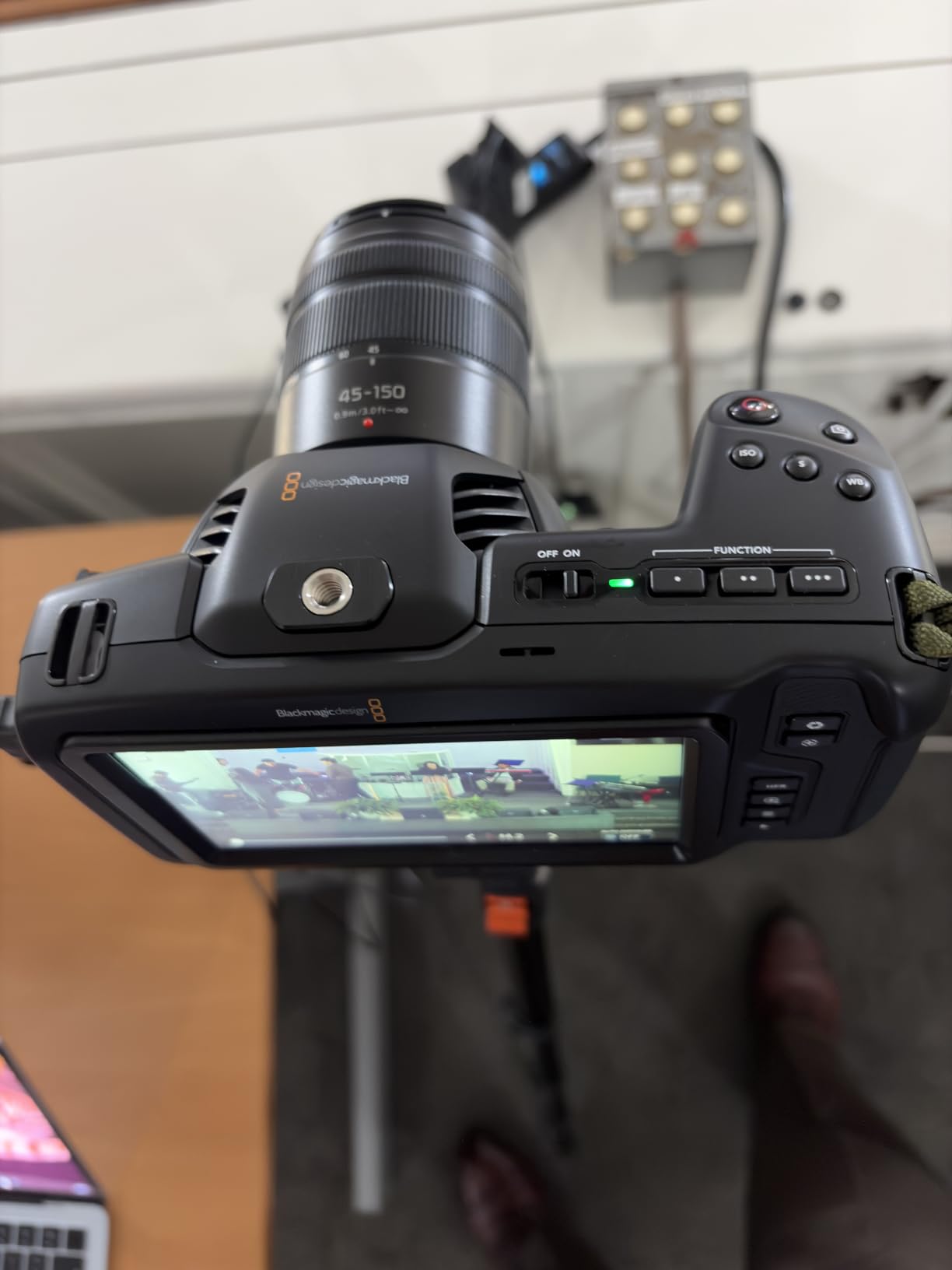
The honest limitation is physical rather than electronic. There is no in-body stabilization and no usable continuous autofocus, so this body wants a tripod, a gimbal or a fixed prime and manual focus marks. Shoot it handheld and moving and you will feel the difference immediately.
Battery life is the other one. Roughly 30 minutes per pack is the number owners quote most often, which means a small battery budget or a USB-C power solution for any real shooting day. Budget for the rig as well as the body.
How it performs on a real shoot day
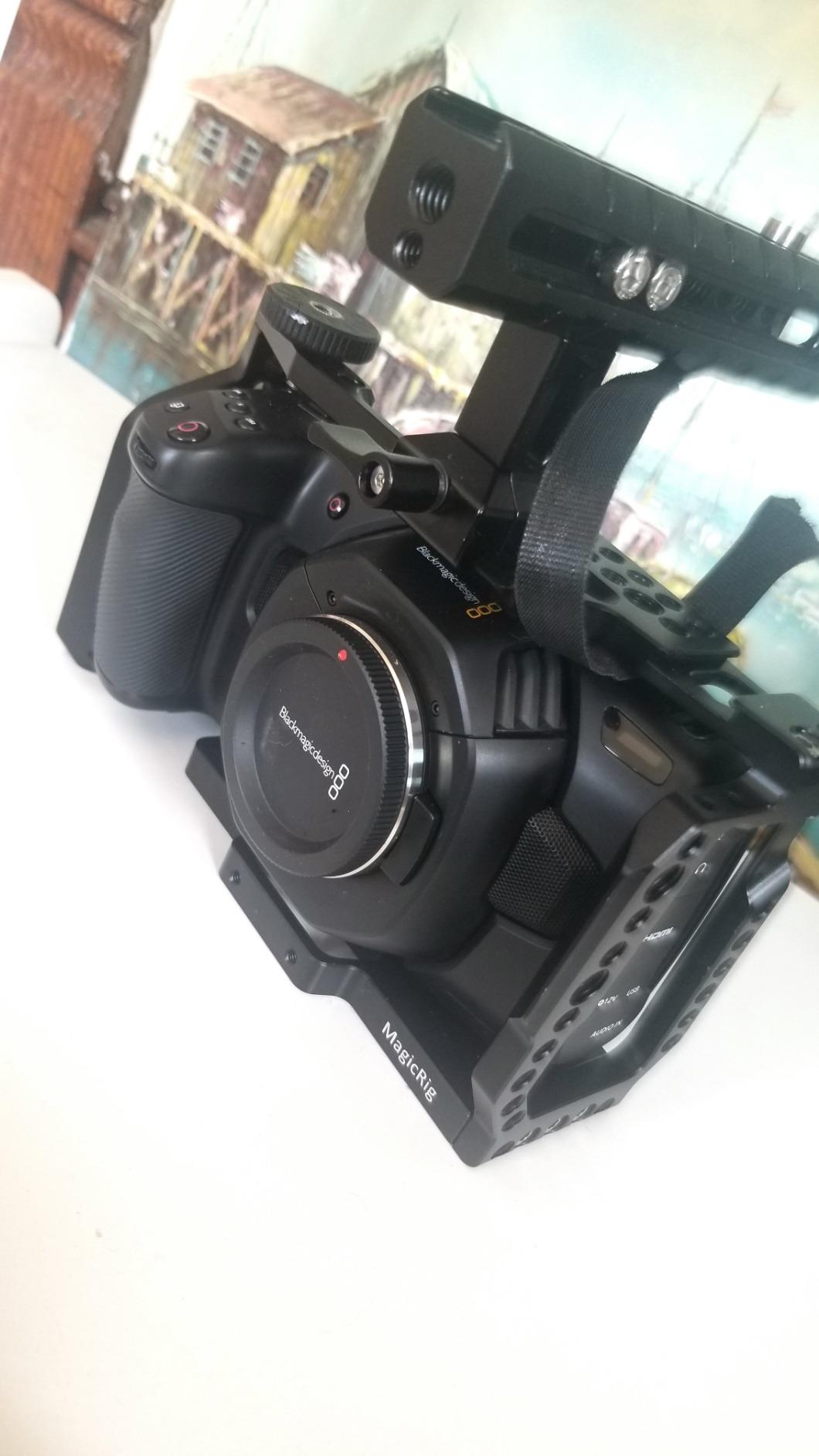
In daylight and on a documentary run, this is one of the most dependable bodies we have used, largely because there is almost nothing to go wrong. Menus are quick to learn, the 5-inch screen is bright enough to check focus outdoors, and the carbon fiber body shrugs off a backpack.
The Micro Four Thirds mount is where friction appears. Lenses are smaller and cost more than the equivalent EF options, though adapters are cheap and widely supported, so an existing EF or RF kit can be brought across.
Who should look elsewhere
Skip it if autofocus is non-negotiable, if you plan to shoot handheld and moving for a living, or if battery logistics will ruin your day. The Sony FX30 and FX3 both handle those cases, and the FX3 adds full frame.
Also skip it if you need a modern tilt screen. The fixed LCD here was improved on later Blackmagic bodies, and the 6K Pro fixed exactly this complaint.
2. Sony FX30 – The Best Cinema Camera for Autofocus and Low Light on a Budget
SONY Cinema Line FX30 Super 35 Camera, Gray
20.1MP Exmor R APS-C Super 35
14+ stops with dual base ISO
495 phase-detect AF points
Active stabilization
Active cooling
Pros
- Subject-recognition autofocus owners call flawless
- Dual base ISO cleans up low light
- Active cooling supports long 4K sessions
- Small and light for gimbals and travel
- Cinema Line tools at a lower tier price
Cons
- APS-C crops tighter than full frame
- Battery good for roughly 1 to 2 hours
- 3-inch LCD is small for focus checks
The FX30 is the rarest thing in this category: a body with genuine cinema features and an autofocus system you can trust on a moving subject. 495 phase-detection points with subject recognition handle a walking interview or a documentary scene without a focus puller, which is the single biggest reason solo shooters keep coming back to it.
Dual base ISO is the quiet headline here. Clean low-light performance on an APS-C sensor at 2026 prices changes what you can shoot after sunset, and it means fewer grainy compromises in documentary and event work.
Cine EI, Cine EI Quick, S-Cinetone and user LUTs are all present, so the look is cinema-derived rather than retrofitted. You can record a log profile and still preview a finished-looking image on the LCD.
Built-in cooling means long 4K sessions do not end in a thermal message. That single feature removes the most common failure mode for run-and-gun shooters, and combined with stabilization it makes this body far more flexible than its size suggests.
The APS-C sensor is the trade-off to accept. It crops tighter than full frame, so you give up the shallowest depth of field, and some owners treat the extra reach as a benefit for wildlife and sport work rather than a compromise.
How it performs on a real shoot day
On a two-week commercial shoot this was the body that got handed around the crew most, because the autofocus held focus through takes and the batteries lasted a full working day. Owners describe the sensor-recognition tracking as the feature that finally made solo shooting viable.
Cooling also means it can sit on a shoulder rig for long takes without drama, and the small footprint suits gimbal and car mounts where a larger body would fight the operator.
Who should look elsewhere
Skip it if shallow depth of field at wide apertures is the whole point of your look. That is a full-frame decision, and the FX3 and S5IIX sit right above this tier.
Skip it if you expect to grade heavily from log. It records well and Cine EI helps, but dedicated cinema bodies give you more latitude to push in Resolve. The 3-inch screen is also the first thing to budget an external monitor for.
3. Blackmagic Pocket Cinema Camera 6K – The Best Cinema Camera for Indie Film and Documentaries
Blackmagic Design Pocket Cinema Camera 6K with EF Lens Mount
Super 35 sensor at 6144 x 3456
6K 2.4:1 up to 60 fps
Dual base ISO 800 and 4000
EF mount
900 g
Pros
- 6K resolution allows reframing in post
- EF mount gives access to affordable glass
- Clean menu system that is quick to learn
- 5-inch tilting touchscreen
- SSD recording and Resolve Studio included
Cons
- Autofocus is effectively unusable
- Very large RAW files need fast media
- Battery life of roughly 20 minutes per pack
This is the body we point at when someone wants a film look for an indie narrative or a documentary and will be operating the lens themselves. A Super 35 sensor with an effective area of 23.10 x 12.99 mm shoots 6144 x 3456, plus 6K 2.4:1 at up to 60 fps, 5.7K 17:9 at 60 fps and 2.8K 17:9 at 120 fps.
Dual base ISO at 800 and 4000 in 6K gives you real latitude in dim interiors without lifting grain in post. Long-term owners consistently describe the image as punching well above bodies costing several times more.
The EF mount is the quiet business decision. You are not paying a premium for cinema glass to get a usable lens set, which is where the total system cost usually balloons.
Recording to external SSD plus a bundled Resolve Studio licence keeps the running cost low and the workflow simple. Frame rates cover 23.98 through 60 fps, so a documentary mixing 24 and 50 fps material is covered natively.
The catches are the standard Blackmagic ones. Autofocus is effectively unusable, RAW files are enormous and need fast officially supported media, and batteries last about twenty minutes under continuous use, so your power plan matters.
How it performs on a real shoot day
As a B-cam and a dedicated documentary body it is hard to argue with. A rigged 6K body with an EF prime and an external drive gives you a second angle that matches the grain and colour of the main unit, and SSD recording means no card management mid-day.
The fixed LCD on this original body is dim in direct sun, and a few early units developed dead pixels that Resolve fixes through pixel remapping. There is no weather sealing, so dust near the exposed SSD port is worth thinking about on location work.
Who should look elsewhere
Skip it if you shoot documentary handheld with unpredictable movement and no operator to manage focus. Autofocus simply is not there on this body, and the Sony Cinema Line models exist for that reason.
Skip it if your edit machine is modest. BRAW files at 6K will not be kind to a laptop that is not built for it, and the 6K Pro is the version with ND filters and a better screen if your budget stretches that far.
4. Sony FX3 – The Best Cinema Camera for Full Frame Solo and Small-Crew Work
Sony Alpha FX3 ILME-FX3 | Full-frame Cinema Line Camera
Full-frame sensor with 15+ stops
4K 120p 10-bit 4:2:2
627 phase-detect AF points
Sensor-shift stabilization
Internal cooling fan
Pros
- Full-frame Cinema Line image at 15+ stops
- 4K 120p 10-bit 4:2:2 full pixel readout
- Sensor-shift stabilization with fast autofocus
- XLR top handle included in the box
- Uninterrupted 4K 60p thanks to cooling
Cons
- Small 3.2-type LCD is awkward on a gimbal
- Single CFexpress Type A slot in the body
- No built-in ND filter
The FX3 is the body we recommend when someone is done learning manual focus and wants full frame, pro audio and the freedom to move. 15+ stops of dynamic range on a full-frame sensor, S-Cinetone colour, and 4K 120p 10-bit 4:2:2 with full pixel readout across every recording mode.
627 phase-detection points and sensor-shift stabilization make it a genuinely hybrid tool. Documentaries, events, narrative work and corporate production all fall out of it, which is why it has become the default recommendation for a one-body solution.
It ships with an XLR top handle in the box, which removes a real cost from a first build. The cage-free design with plenty of 1/4-20 points also means it rigs faster than bodies that need a cage before they are usable.
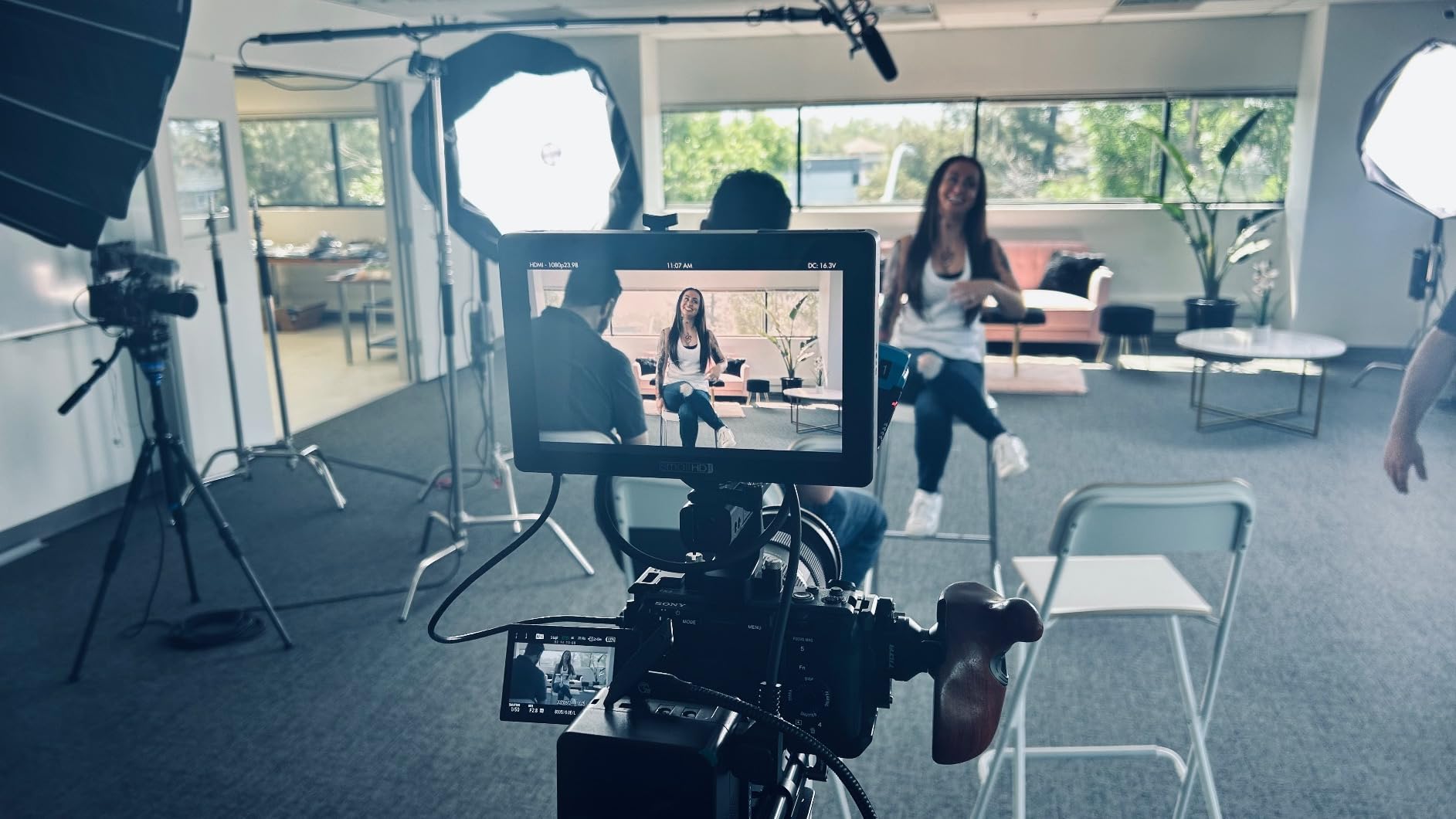
Internal cooling supports uninterrupted 4K 60p recording, and the 1.5 kg body is small enough for a gimbal once the handle is on. For a solo operator, the combination of autofocus, stabilization and record-time headroom is the whole proposition.
There is no built-in ND, so variable-density work needs external glass or a matte box. Media is CFexpress Type A in the body, with the SD slot living in the handle, so plan your card budget before the shoot.

How it performs on a real shoot day
Reviewers across narrative, documentary and event work point to the same three things: the full-frame sensor, the 4K 120p high frame rate modes, and the fact that the cooling fan means you are not checking the record time indicator before every take.
The most repeated practical note is the small 3.2-type screen. On a gimbal or at arm’s length for a solo shooter, you will want an external monitor, and the CFexpress Type A media is a real per-day cost on a long engagement.
Who should look elsewhere
Skip it if your work is single-camera documentary with a locked-off tripod and one prime lens. A hybrid mirrorless body will cover that for less, and the money is better spent on a second lens or an audio kit.
Skip it if you need a viewfinder for daylight shoulder work. The angle-adjustable EVF on the newer Sony FX2 is the answer to exactly this complaint, and that body is the next rung up.
5. Blackmagic Pocket Cinema Camera 6K Pro – The Best Cinema Camera for Variable-Density Days
Blackmagic Design Pocket Cinema Camera 6K Pro (CINECAMPOCHDEF06P)
Super 35 sensor at 6144 x 3456
Built-in 2 4 and 6 stop ND filters
Tilt 5-inch HDR LCD
13 stops of dynamic range
EF mount
Pros
- 6K Super 35 sensor with 13 stops
- Built-in ND filters save time on variable-density shoots
- Tilt HDR screen is a genuine upgrade
- EF mount opens up a large affordable lens library
Cons
- No continuous autofocus
- No in-body image stabilization
- Large BRAW files demand fast supported media
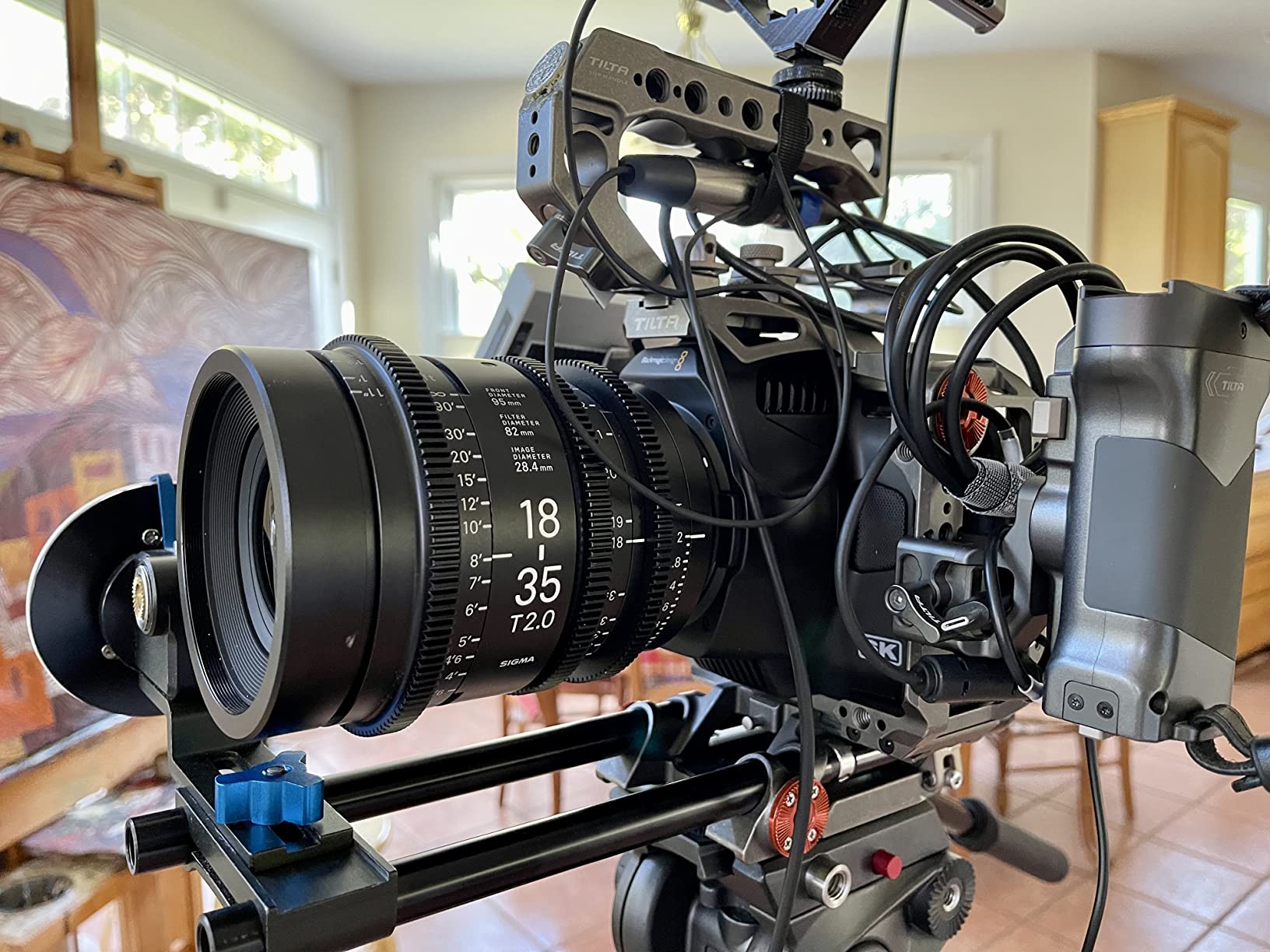
The Pro version of the 6K exists for one reason above all others: built-in 2, 4 and 6 stop ND filters. On a variable-density day, going from interior to exterior is a button press rather than a lens swap, a matte box rebuild or a stop of exposure you did not have.
Underneath, it is the same strong proposition. A Super 35 sensor at 6144 x 3456 with 13 stops of dynamic range, dual gain ISO up to 25,600, and the ability to record Apple ProRes up to 4K or 12-bit Blackmagic RAW with a Resolve Studio key included.
The tilt 5-inch HDR LCD is the other meaningful upgrade over the original body. It is far easier to line up a shot from an awkward angle or to show a client framing on set.
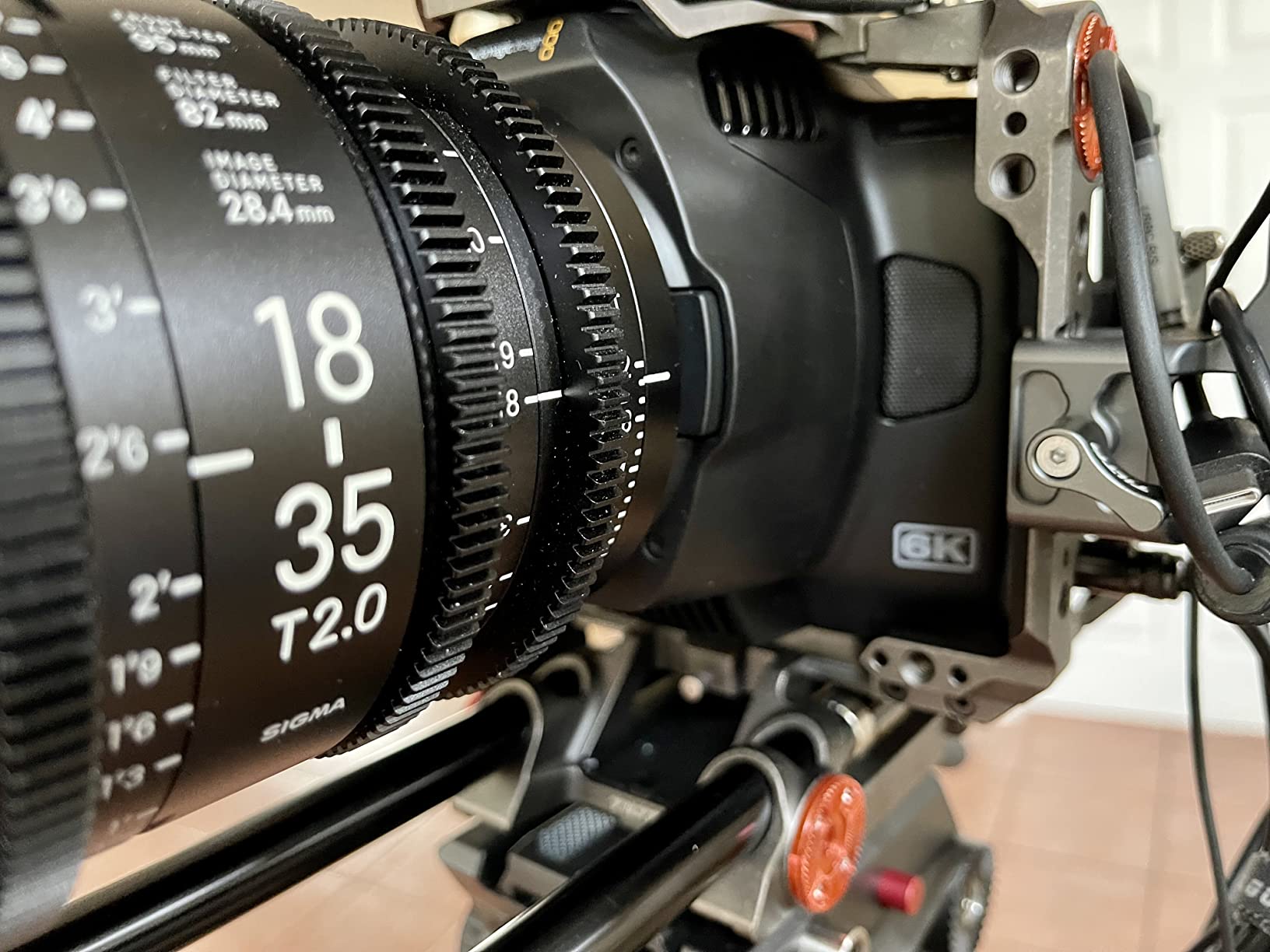
Recording options cover SD/UHS-II, CFast 2.0 and external SSD over USB-C, with mini XLR and 3.5mm audio inputs. That flexibility is what lets it sit in a documentary kit without a second media plan.
Autofocus is manual, there is no stabilization, and BRAW files at 6K are heavy. All three are the same Blackmagic deal, and all three are manageable if you plan for them before the shoot rather than on the day.
How it performs on a real shoot day
The ND filters earn their place on location work and music video days, where you move between lighting setups all afternoon. On those jobs the time saved adds up to more than the difference between this body and the base 6K.
Reviewers call the tilt screen a genuine quality-of-life change, and the EF mount keeps the lens bill sane. The catch they name most is post-production: large BRAW files need capable storage and a machine that can handle them.
Who should look elsewhere
Skip it if you shoot mostly at night or indoors, where ND stops are rarely needed. The base 6K gives you the same sensor and codecs for less, and the money is better spent on batteries.
Skip it if you are a solo operator who cannot pull focus. Manual focus plus large files is a two-person job, and a Cinema Line body with dependable autofocus will get more of your footage sharp.
6. Panasonic LUMIX S5IIX – The Best Cinema Camera for Photo and Video Hybrids
Panasonic LUMIX S5IIX Mirrorless Camera, 24.2MP Full Frame with Phase Hybrid AF, New Active I.S. Technology, 5.8K Pro-Res, RAW Over HDMI, IP Streaming – DC-S5M2XBODY Black
24.2MP full-frame sensor
14+ stops of V-Log
779-point phase hybrid AF
5.8K internal ProRes
740 g
Pros
- Phase hybrid AF closes the biggest Lumix gap
- 5.8K internal ProRes and RAW over HDMI
- Open Gate 3:2 for reframing in post
- Active cooling supports unlimited recording
- Active IS for walking shots
Cons
- 3-inch LCD is too small to judge focus
- Menu system needs real study time
- Blacked-out button lettering is hard to read in low light
The S5IIX is the value pick of the full-frame class. A 24.2MP sensor with 14+ stops of V-Log capture, internal 5.8K ProRes, RAW over HDMI, and a 740 g magnesium body that owners describe as tough enough to absorb a normal working life.
The phase hybrid autofocus with 779 points and subject detection is the headline change. Several owners replaced Sony and Blackmagic bodies with it specifically for that, and it is the single biggest reason this body now appears on shortlists it once would not have.
Open Gate recording across the full 3:2 sensor area is quietly valuable. You frame 16:9, 1.85:1 or a vertical cut from the same take, which is exactly what social and branded content needs.
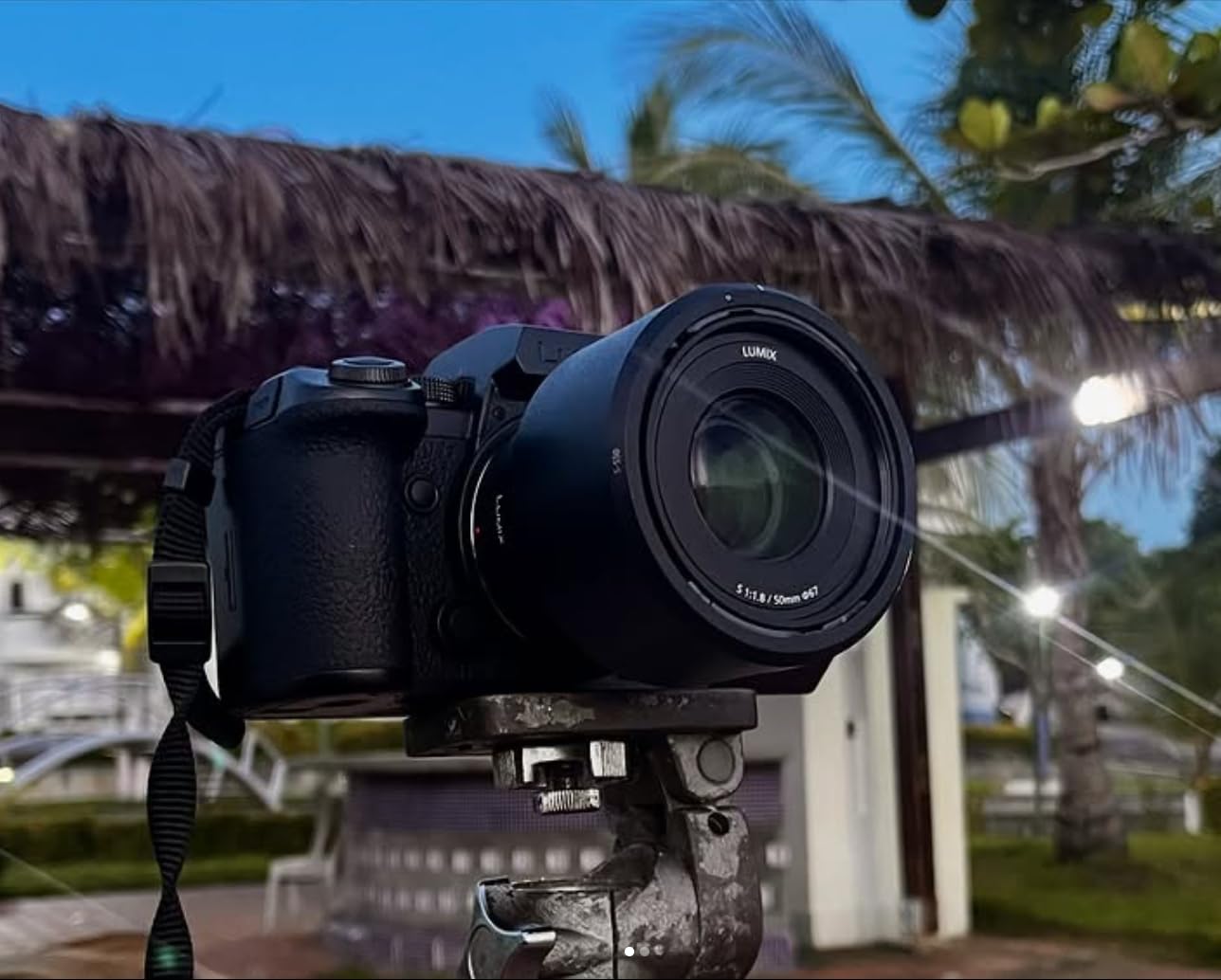
Heat dispersion from a small fan and heat sink enables unlimited recording, so long table reads and interview blocks do not force a restart. Full-size HDMI, USB-C 3.2 and dual UHS-II slots complete a pro connectivity set.
The complaints are ergonomic rather than image related. The 3-inch LCD cannot show you focus lines or zebras, button lettering is unreadable in the dark, and the menu system rewards an evening of setup. Build custom shooting modes early.
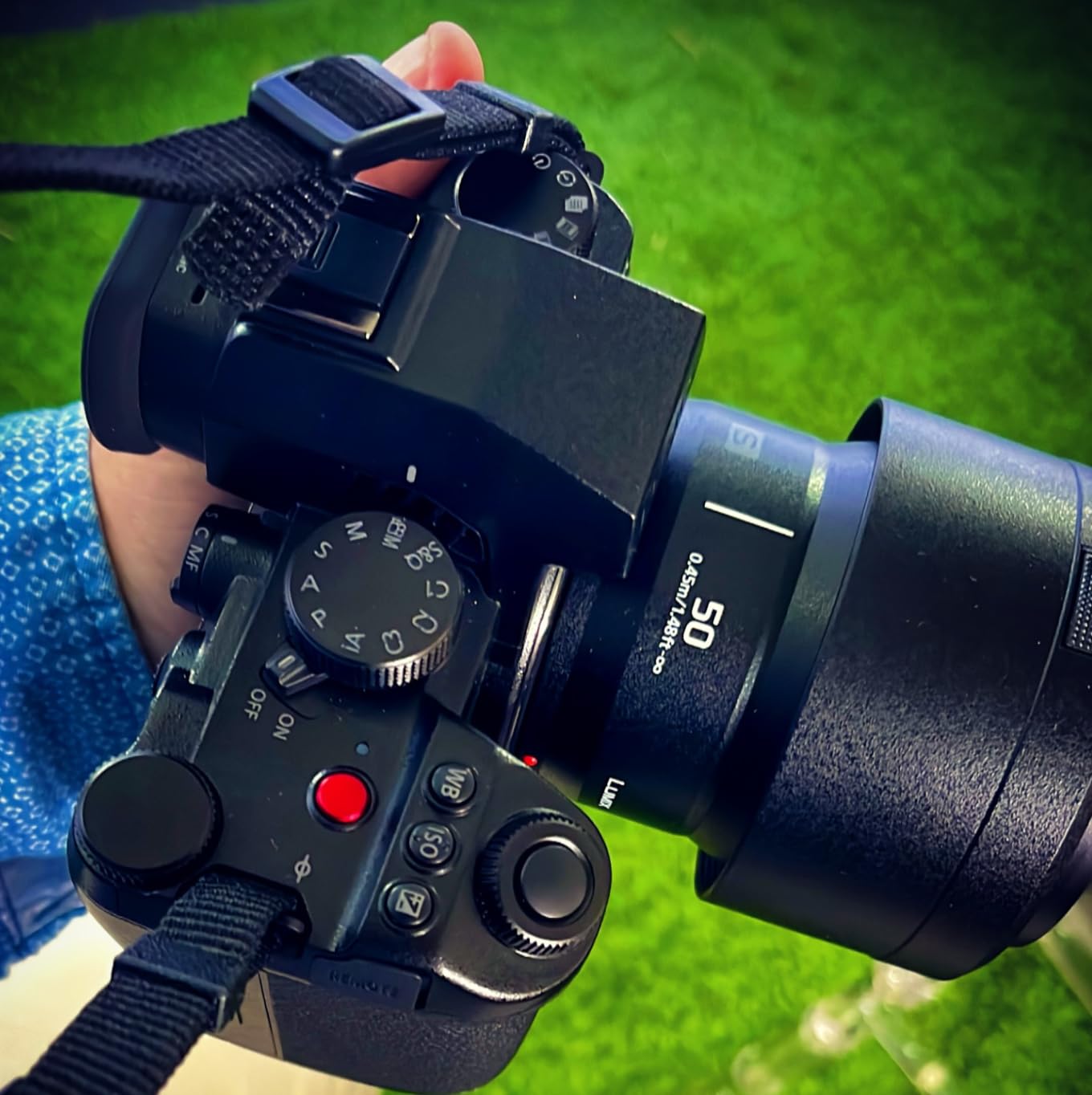
How it performs on a real shoot day
Active I.S. stabilization supports walking shots well enough to reduce a gimbal purchase, and the phase hybrid AF holds a moving subject through multiple people in frame. For a hybrid shooter, having one body for stills and video removes a whole category of decision.
Battery drains quickly during sustained high-resolution or high-frame-rate recording, and the L-Mount native lens selection is smaller than Sony E or Canon RF. Adapters cover the gap, but plan for them.
Who should look elsewhere
Skip it if you want a large screen. This is a pocketable, discreet body, and 3 inches is a compromise you feel on a gimbal or a bright exterior. The LUMIX S1II is the same family with a noticeably better panel.
Skip it if you are new to cinema cameras entirely. The feature set is wide and the menu is dense, so a simpler body will get you a finished film faster.
7. Canon EOS R5 C – The Best Cinema Camera for 8K Production and Hybrid Crews
Canon EOS R5 C Mirrorless Camera (Body Only)
45MP full-frame sensor
8K 60P internal RAW
Body-integrated cooling fan
Timecode input and output
1310 g
Pros
- 8K 60P internal RAW in a 45MP stills body
- Integrated fan sustains long takes
- Dual Pixel AF with iTR AF X and subject detection
- Timecode I/O and 13 assignable buttons
- Uncropped 4K 120p high frame rate
Cons
- Heaviest body here at about 1310 g
- Compact 3.2-inch screen is cramped
- RF cinema glass commands a premium
The R5 C is the only body here that shoots 45MP stills and 8K 60P internal RAW. That combination makes it the natural choice for crews who shoot documentary in the morning and branded content in the afternoon without swapping bodies.
Canon’s DIGIC X processor drives ISO 100 to 51200, expandable to 102400, plus 8K HDR in HLG and PQ, XF-AVC and MP4. A body-integrated internal cooling fan vents heat so 8K 60P recording continues without a shutdown.
Timecode input and output plus 13 marked assignable buttons are cinema-line features most hybrids skip. If you are running more than one body, the multi-camera sync is the reason to look here.
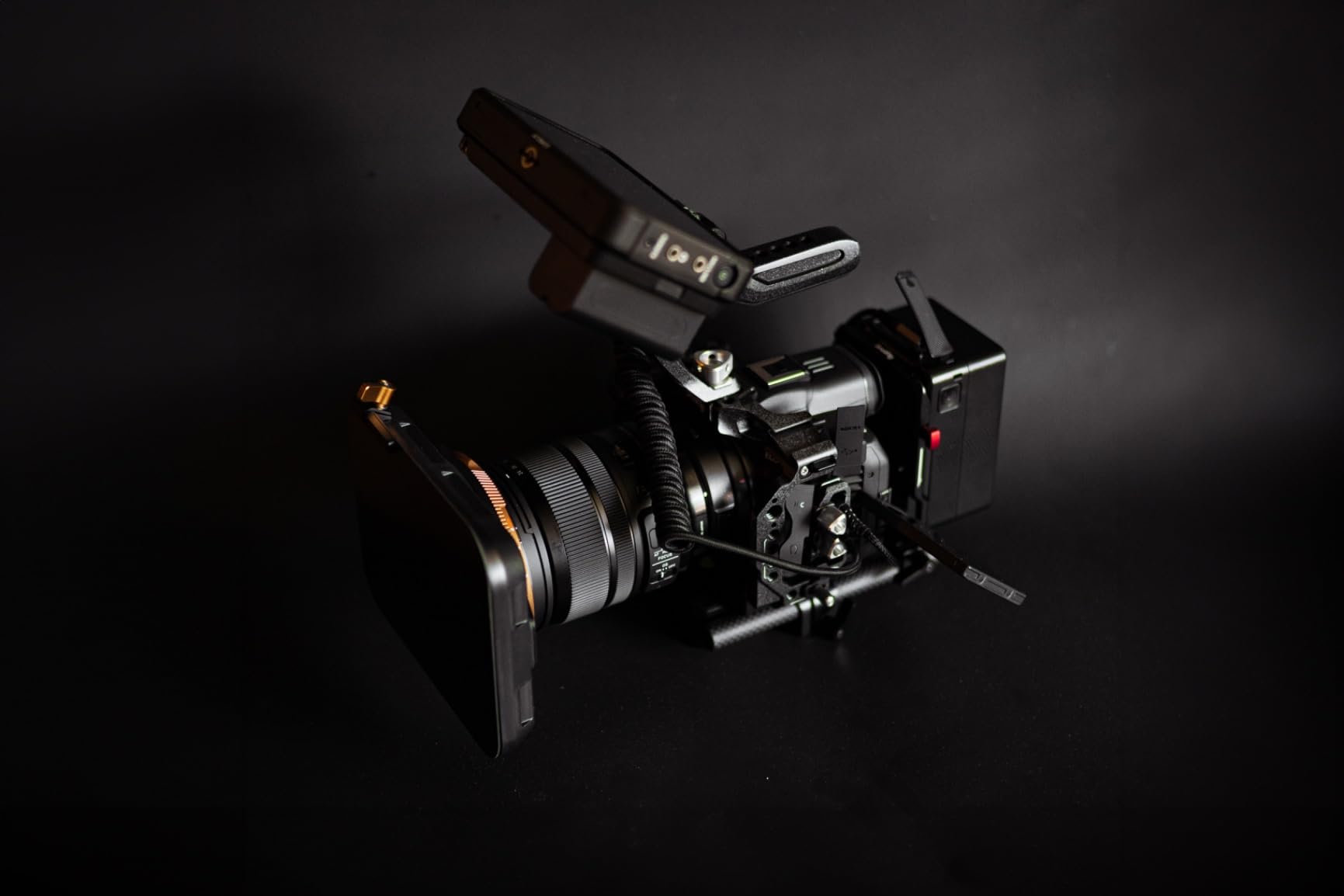
Dual Pixel CMOS AF with iTR AF X, Touch AF and an 8-way multi-controller handles moving subjects, and High Frame Rate modes reach 120p at 4K in 4:2:2 10-bit without cropping the sensor. That crop-free slow motion is a genuine advantage over trimmed rivals.
At roughly 1,310 g it is a heavy body for a hybrid, and the 3.2-inch screen is cramped for video review on something this size. Both are livable; neither is invisible on a long day.
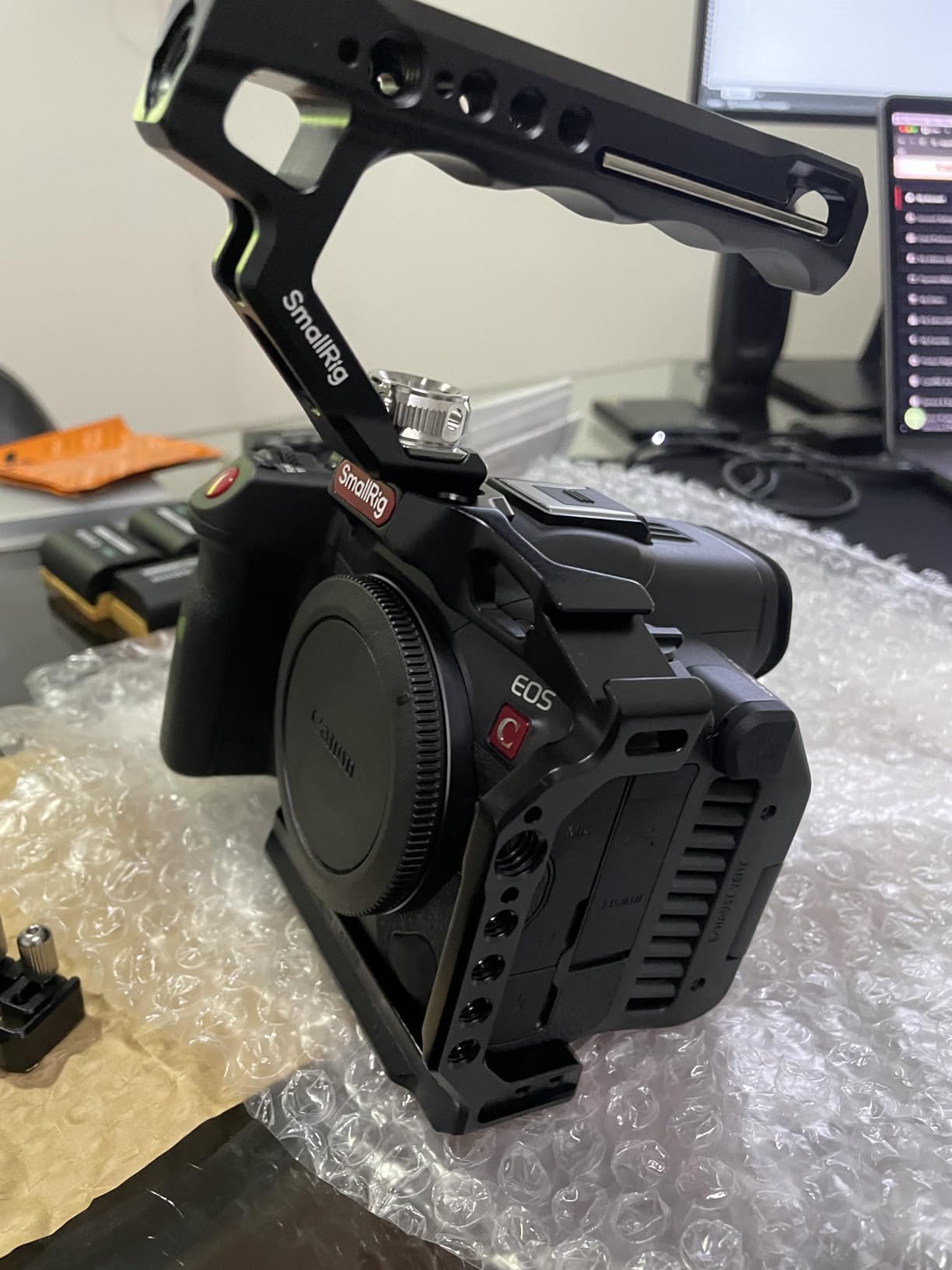
How it performs on a real shoot day
Owners single out the same three strengths: real 8K 60P internal RAW, a cooling fan that sustains long takes, and the timecode and assignable controls inherited from Canon’s cinema line. For episodic and corporate multi-camera work, those are the features that remove friction.
Weight is the daily tax. A 1,310 g body plus a full RF cinema prime is a two-handed camera for long stretches, and the small rear screen means a monitor is close to mandatory on narrative work.
Who should look elsewhere
Skip it if you shoot narrative on a shoulder or handheld rig, where weight and screen size both matter. Sony Cinema Line bodies with cage-free designs handle that better for less.
Skip it if you only need 4K. Most of the value of this camera is in modes you may never record, and a body with a 3-inch screen and a smaller sensor will serve a 4K-only shoot perfectly well.
8. Nikon RED Z Cinema – The Best Cinema Camera for 32-Bit Float Audio
Nikon RED Z Cinema | ZR Cinema Camera | 32-Bit Float Audio RED Color Science 6K Full-Frame Camera Body with 4″ DCI-P3 Monitor
6K full-frame sensor with 15+ stops
REDCODE RAW R3D NE capture
32-bit float audio
4-inch DCI-P3 swivel screen
1.18 lbs
Pros
- RED color science and REDCODE RAW give a film-like image
- 32-bit float audio removes manual gain work
- Unusually large 4-inch DCI-P3 swiveling screen
- Very light 1.18 lb body rigs easily
- Z mount gives access to a wide lens ecosystem
Cons
- No built-in viewfinder for eye-level work
- New body with a small pool of long-term feedback
- CFexpress Type B media costs more
This is the most interesting body in the roundup for anyone who records sound as seriously as picture. 32-bit float audio means the camera captures a far wider audio range and you can fix levels in post instead of riding the gain on set.
REDCODE RAW in R3D NE captures the same colour space and log curve as RED cameras, paired with a 6K full-frame sensor rated at 15+ stops with dual base ISO. RED color science has a long track record with working cinematographers.
The 4-inch DCI-P3 swiveling touchscreen is unusually large for a body at 1.18 lbs. On a gimbal, that extra screen makes framing and focus far easier than the 3-inch norm.
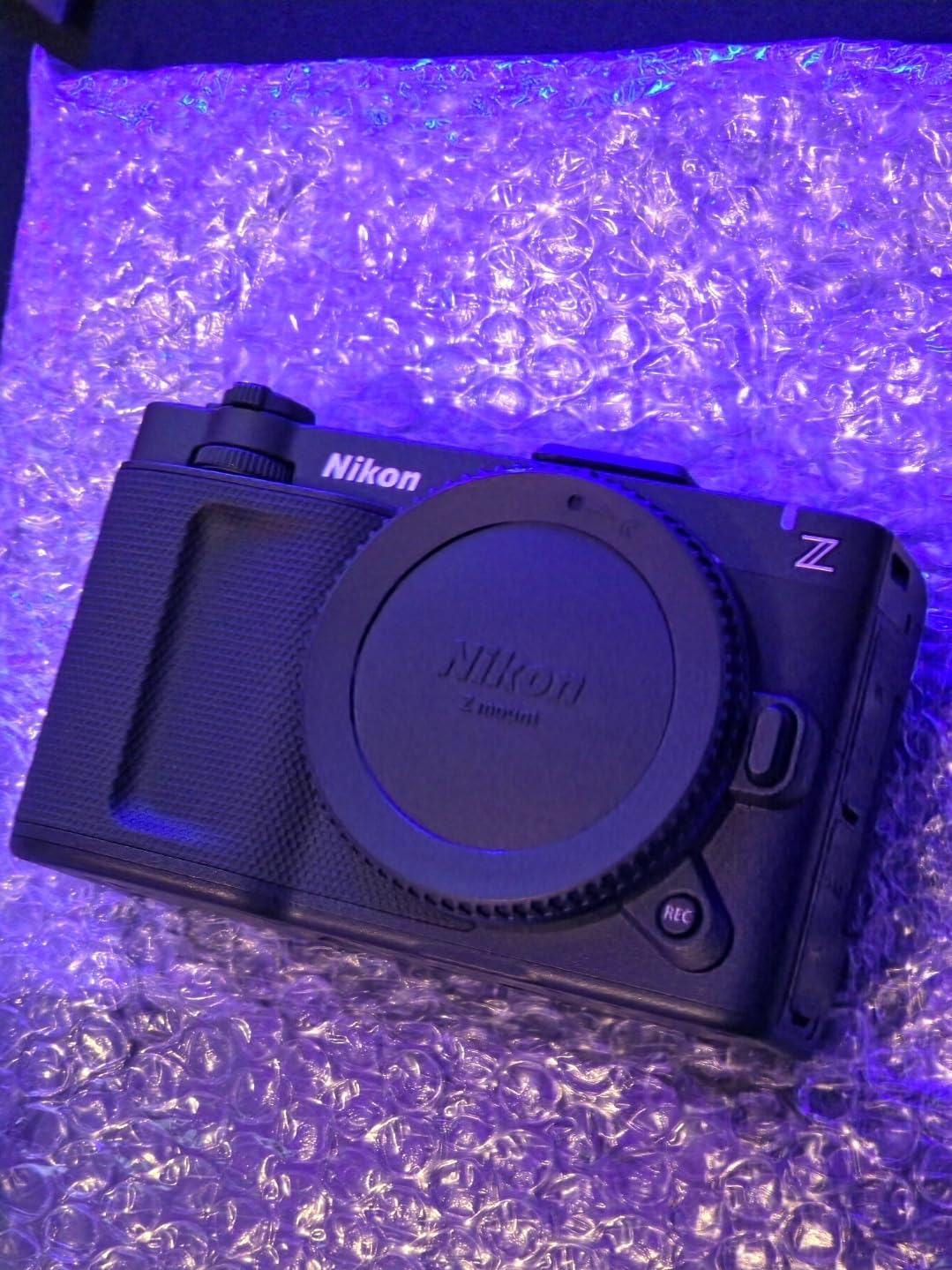
At 1.18 lbs with 273 phase-detection autofocus points, it integrates cleanly into cages and control grips. Nikon cites its Z mount as the widest, shallowest and most adaptable full-frame mount, which widens your lens options on tight spaces.
Two things stand out as drawbacks. There is no built-in viewfinder, so eye-level work needs an external EVF or monitor, and CFexpress Type B media is more expensive than SD-based alternatives.
How it performs on a real shoot day
For documentary, interview and event work, the float audio is the differentiator. Wind, clothing rustle and a sudden shout all land in the recording instead of clipping, which rescues takes that would otherwise be unusable.
The 4-inch DCI-P3 screen is praised as color-accurate and large enough to judge a grade on location. RED color science produces a film-like image straight out of camera, which reduces grading time for teams without a dedicated colorist.
Who should look elsewhere
Skip it if you need a viewfinder for daylight shoulder work, since there is none built in. Adding one costs money and adds a cable to manage.
Skip it if you want a proven long-term track record. With 57 reviews this body is still establishing its owner base, and buying on a thin review pool means accepting that some rough edges are undocumented.
9. Sony FX2 – The Best Cinema Camera for Rigged Full-Frame Builds
Sony FX2 Full-Frame Cinema Camera Body Only, Gray
33MP Exmor R full-frame sensor
15+ stops in Log with dual base ISO 800/4000
Angle-adjustable EVF
BIG6 rig interface
1.3 lbs
Pros
- 33MP full-frame sensor for photo and video
- 15+ stops of Log latitude with dual base ISO
- Angle-adjustable EVF is a real ergonomic gain
- Light 1.3 lb body with the BIG6 rig interface
- Cine EI and Cine EI Quick modes included
Cons
- New body with limited long-term owner feedback
- 3-inch screen is small for the class
- CFexpress Type A media costs more than SD
The FX2 is aimed squarely at operators who build a rig. The BIG6 interface plus plentiful mounting points means it accepts cages, handles and control grips faster than the smaller Cinema Line bodies, which is why it sits where it does in the lineup.
The sensor is a 33MP full-frame Exmor R with BIONZ XR, and it delivers 15+ stops of dynamic range in Log with dual base ISO at 800 and 4000. Flexible ISO, Cine EI and Cine EI Quick cover the log workflows pros expect.
759 autofocus points and CFexpress Type A plus SDXC dual slots handle both fast moving subjects and long records. XAVC-HS, S-I and S capture give you proper broadcast and cinema codecs rather than compressed consumer files.
The angle-adjustable EVF is the quiet winner. On earlier fixed-screen Cinema Line bodies, a bright outdoor shoulder shoot meant cupping your hands around a 3-inch screen. This one tilts into view.
At 1.3 lbs it stays manageable on a rig, and the 33MP sensor gives you a usable stills mode between setups, which matters for hybrid crews.
How it performs on a real shoot day
Owner feedback so far centres on the 33MP sensor, the Log latitude and the fact that the tiltable EVF plus BIG6 interface make the body easier to build than its smaller siblings. Rig compatibility is the reason most people buy this class of body.
The 3-inch rear screen remains small relative to rivals, and CFexpress Type A media carries a real per-day cost. Both are accepted trade-offs when the body is running on a monitor anyway.
Who should look elsewhere
Skip it if you shoot handheld and mobile, where a small body and simple controls matter more than mounting points. This camera is designed to be built up, not carried as a minimal kit.
Skip it if you want a mature owner community. With 46 reviews, this is an early sample, and long-term reliability is still being written by the people who bought it first.
10. Panasonic LUMIX S1II – The Best Cinema Camera for Internal RAW Workflows
Panasonic LUMIX S1II 6K Digital Camera, Mirrorless Full Frame, Hybrid Shooting with 24.1MP, 5.1K 60p Open Gate Video, 15 Stops Dynamic Range, Prores RAW HQ Internal Recording, L-Mount – DC-S1M2, Black
24.1MP partially stacked sensor
6K open gate 30p 3:2
5.1K 60p 3:2
ProRes RAW HQ internal
8.0-stop IBIS
Pros
- Internal ProRes RAW removes the external recorder
- 6K open gate and 5.1K 60p give framing freedom
- IBIS described as class leading
- Smaller than the S1H with better autofocus
- Screen quality and out-of-camera color praised
Cons
- No optical low-pass filter shows as extra noise
- ArriCLog is a paid upgrade
- Reported heat in some high frame rate modes
The S1II is the body that lets you throw away the external recorder. ProRes RAW HQ records internally, alongside H.264, H.265 and ProRes, so a gimbal build is lighter and a single-operator setup is simpler.
A 24.1MP partially stacked sensor handles high-speed readout, driving 6K open gate 30p in 3:2, 5.1K 60p in 3:2 and C4K or 4K 120p. Dynamic Range Boost pushes the dynamic range figure to 15 stops, and 8.0-stop five-axis IBIS is described by owners as the best in class they have used.
AI face detection works on tilted or partially obscured faces, which matters more than it sounds on documentary work where nobody is facing camera.
Out-of-camera color needs little grading, and the screen quality is a step up from smaller Lumix bodies. Owners upgrading from the S1H or S5II frame it as a clear step forward for video rather than a sidegrade.
There are real trade-offs. There is no optical low-pass filter, so some settings show more noise. ArriCLog is a paid upgrade. A few users report heat and rolling-shutter quirks in high frame rate modes, and S5II cages and grips do not fit.

How it performs on a real shoot day
Internal RAW is the daily win. Without an external recorder there is one less power source, one less cable and one less thing to fail in rain or dust, which is why this body shows up on mobile builds so often.
Rolling shutter becomes noticeable with Dynamic Range Boost enabled, so a fast whip pan is where you will see it. The dense menu of codec, frame rate and sensor size options is best solved by building custom modes in the first hour.
Who should look elsewhere
Skip it if you want a clean out-of-camera image without grading. The missing low-pass filter means some settings read noisier than the S5II, and that body is calmer in the shadows.
Skip it if you already own S5II accessories. Cages and grips do not carry over, so an existing rig becomes dead weight, and the smaller S5IIX covers much of the same ground for less.
How to Choose a Cinema Camera: 8 Criteria That Matter
Specs get quoted without context, which is why buyer paralysis is so common in this category. These eight criteria, in the order we would weigh them, resolve most of it.
1. Sensor size. Super 35, APS-C, full frame and large format are not just marketing tiers. A bigger sensor gives you shallower depth of field at a given aperture and cleaner low-light performance, but it also costs more and limits how close you can focus. If you are cropping into a 6K frame to reframe a shot, a Super 35 body is the one that supports that workflow properly.
2. Codec and log profile. ProRes, Blackmagic RAW, REDCODE RAW and internal ProRes RAW are the four currencies here. A log profile such as S-Log3, C-Log or V-Log preserves highlight and shadow detail so the grade happens in post, and 10-bit 4:2:2 chroma sampling is what makes that grading possible. A camera with a good codec and a small screen is a better buy than the reverse.
3. Base ISO and dynamic range in plain English. Base ISO is the sensitivity the sensor is designed to run at, so a low base ISO means cleaner night work. Dual base ISO gives you one clean low-light stop and one clean daylight stop. Stops of dynamic range translate simply: 13 stops holds a bright window and a dark interior in one take, 15 stops gives you more room to pull a grade, and every extra stop is real latitude rather than a spec-sheet trick.
4. Built-in ND filters. Two, four and six stops of internal ND, as on the Blackmagic 6K Pro, let you change exposure without changing your lens or breaking a matte box. If your work is exterior-to-interior, this is worth more than any resolution jump.
5. Autofocus reality. Modern subject-recognition AF on the Sony Cinema Line and the Lumix bodies is good enough that a solo shooter can skip a focus puller on interviews and short narrative work. The Blackmagic bodies still require manual focus, which is a legitimate creative choice and a deal-breaker if your work is run-and-gun.
6. Thermal headroom. Record limits and battery endurance decide whether you can shoot a six-hour day. Bodies with an integrated fan, such as the Canon R5 C, the Sony FX3 and the Lumix S5IIX, record without stopping. Bodies without one need discipline and spare media.
7. Media cost per shoot hour. SD/UHS-II is cheap and slow. CFexpress Type A and Type B are fast and pricier. 6K BRAW files will fill cards fast, so work out your per-day media bill before the body, not after.
8. Lens mount lock-in. This is the criterion buyers regret most. EF, Sony E, Canon RF, L-Mount, Nikon Z and PL each have different economics, and adapters help but cost money and time. If you already own glass, that usually decides the body for you.
Then there is the part nobody costs out: total ownership. The body is the smallest line in a real kit. Add a lens, a second battery, a cage or top handle, a monitor, media and an ND kit, and a modest body becomes a serious outlay. If you are also weighing outdoor and indoor coverage at home, our spotlight camera guide covers a very different use case, and if you want wired cameras with no cloud subscription involved our Lorex camera reviews make that comparison easy.
Buy or rent. If the work is a one-off spec, an advert or a single commercial, renting puts a far better body in your hands for a fraction of the outlay. Buy when the camera will be working across the year, because a rental day only makes the body cheaper once you have used it enough to pay the difference in rig, media and accessory costs.
Frequently Asked Questions
Which is the best cinema camera?
For most shooters the Blackmagic Pocket Cinema Camera 4K is the best cinema camera, because a 4/3 sensor with 13 stops of dynamic range, ProRes and 12-bit BRAW, and a bundled Resolve Studio licence are hard to beat for a first film body. The Sony FX30 is the best all-rounder for a solo shooter who needs dependable autofocus and long record times, and the Sony FX3 is the choice when you need full frame and professional audio. Match the body to whether you shoot handheld or on sticks.
What are the best cameras for filmmaking?
The shortlist is the Sony FX30, the Sony FX3, the Blackmagic Pocket Cinema Camera 6K Pro, the Canon EOS R5 C and the Panasonic LUMIX S5IIX. Between them they cover Super 35 and full frame, built-in ND filters, 8K internal RAW and reliable autofocus. If you also shoot stills, the R5 C and the Lumix bodies do both jobs on one body.
What are the top 5 film cameras?
Our top five in order are the Blackmagic Pocket Cinema Camera 4K, the Sony FX30, the Blackmagic Pocket Cinema Camera 6K, the Sony FX3 and the Blackmagic Pocket Cinema Camera 6K Pro. The first three give you the strongest image quality per pound spent, while the FX3 adds full frame and dependable autofocus for run-and-gun work.
What specs matter most on a cinema camera?
Dynamic range, codec and base ISO matter most, then autofocus and record-time headroom. Stops of dynamic range tell you how much highlight and shadow detail survives a take, the codec determines how much latitude your editor has, and base ISO decides how clean your night footage looks. Built-in ND filters and a usable screen matter more day to day than resolution does.
Should I buy or rent a cinema camera?
Rent for one-off commercial, advert or spec work, because a rental day puts a far better body in your hands for a fraction of the outlay. Buy when the camera will work across the whole year, since you will also need a lens, media, a rig and batteries before the first shoot. The body price alone is rarely the full cost of either option.
The Verdict on the Best Cinema Cameras in 2026
The best cinema cameras in 2026 come down to three honest answers. Buy the Blackmagic Pocket Cinema Camera 4K if you are starting out and want a genuine film look for the least money, and it is our pick of the whole list. Buy the Sony FX30 if you want the best balance of autofocus, low-light performance and size. Buy the Sony FX3 when full frame and professional audio matter more than your budget. Add the 6K Pro for built-in ND filters, the R5 C for 8K RAW and timecode, the Lumix S5IIX for a photo and video hybrid, and the RED Z Cinema for 32-bit float audio. Check the current price on your shortlist, then budget for media, a rig and a second lens before the first shoot.