
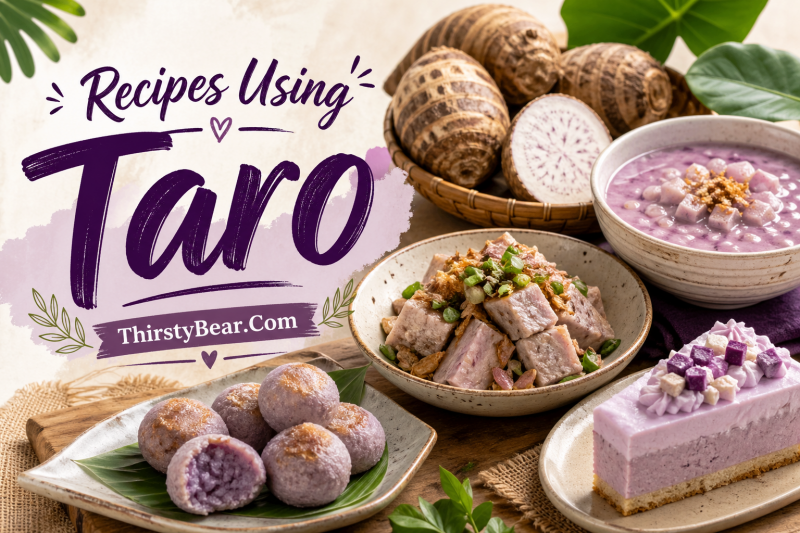
Looking for creative recipes using taro? This starchy root vegetable might look unassuming on the outside, but it transforms into everything from crispy fries to creamy desserts once you know how to prepare it properly. Our team spent weeks testing taro recipes from across Asian, Caribbean, and Hawaiian cuisines to bring you the most reliable collection of both sweet and savory dishes.
In this guide, you will learn how to select and safely prepare taro, discover the best cooking methods for different dishes, and get step-by-step instructions for ten tested recipes. Whether you are a beginner wondering what to do with your first taro root or an experienced cook seeking new ideas, these recipes using taro will expand your kitchen repertoire.
Table of Contents
What Is Taro? Understanding This Versatile Root Vegetable
Taro is a starchy root vegetable native to Southeast Asia that has become a staple ingredient across multiple cuisines worldwide. The brown, hairy exterior hides flesh that ranges from white to pale purple, with a texture similar to potato but creamier and more absorbent when cooked.
Unlike potatoes, taro carries an earthy, nutty flavor that pairs beautifully with coconut milk, garlic, ginger, and scallions. This distinctive taste makes it irreplaceable in many traditional dishes from Chinese, Vietnamese, Filipino, Hawaiian, and Caribbean cooking traditions.
Nutritionally, taro offers more fiber than white potatoes and contains resistant starch that digests slowly, making it favorable for blood sugar management. A 100-gram serving provides about 112 calories, 27 grams of carbohydrates, and 4.5 grams of fiber. Compared to sweet potatoes, taro contains fewer sugars and a lower glycemic index, though sweet potatoes offer more vitamin A.
How to Select, Store, and Prepare Taro Root
Choosing the right taro makes cooking easier. Look for roots that feel firm and heavy for their size, with skin that is intact and not overly shriveled. Avoid any with soft spots, mold, or a sour smell. Small to medium taro roots (about the size of a large potato) tend to cook more evenly than giant ones.
Store uncooked taro in a cool, dry place like a pantry for up to one week. Do not refrigerate raw taro, as cold temperatures can alter the texture and cause hardening in the center. Once peeled and cut, submerge pieces in water and refrigerate for up to two days.
Safety First: Why Gloves Are Essential When Handling Taro
Raw taro contains calcium oxalate crystals, the same compound found in rhubarb leaves and Dieffenbachia plants. These needle-shaped crystals can cause skin irritation, itching, and a stinging sensation when they contact bare skin. The effect is temporary but uncomfortable.
Always wear disposable gloves when peeling and cutting raw taro. If you handle taro without gloves and experience irritation, wash the affected area with running water and mild soap. The crystals break down completely during cooking, making cooked taro completely safe to eat and handle.
Step-by-Step Preparation Guide
Start by scrubbing the exterior under running water to remove dirt. Put on gloves, then use a vegetable peeler or sharp knife to remove the brown skin completely. The flesh may feel slightly slimy during peeling, this is normal.
Cut the taro into your desired shape: cubes for stews and soups, slices for chips and fries, or chunks for boiling and mashing. Immediately place cut pieces into a bowl of cold water to prevent browning and to help remove some of the surface starch.
Before cooking most recipes using taro, parboil the pieces for 5-7 minutes. This pre-cooking step ensures even texture and removes any remaining irritants from the surface.
Taro Cooking Methods: Finding the Right Technique
Different dishes call for different cooking approaches. Here is how to match methods to your desired outcome.
Boiling works best for soups, stews, and mashed preparations. Boil taro cubes for 15-20 minutes until fork-tender. The pieces should break apart easily but not dissolve completely.
Steaming preserves the most nutrients and creates a drier texture perfect for stir-fries and salads. Steam chunks for 20-25 minutes until a knife slides through without resistance.
Frying creates crispy exterior textures ideal for chips, fries, and fritters. Fry at 350°F (175°C) until golden brown, typically 3-5 minutes depending on thickness.
Baking produces caramelized edges with creamy centers. Roast taro wedges at 400°F (200°C) for 25-30 minutes, turning halfway through.
Recipes Using Taro: Savory Dishes
These savory recipes using taro showcase the vegetable’s ability to absorb flavors while maintaining a satisfying, starchy bite.
Chinese Taro Stir-Fry with Scallion Oil
This simple dish from Zhejiang province lets the taro shine with minimal ingredients. You will need 1 pound taro (small roots work best), 3 scallions, 2 tablespoons vegetable oil, 1 tablespoon soy sauce, and salt to taste.
Peel and cube the taro into 1-inch pieces. Steam for 20 minutes until tender but not falling apart. Meanwhile, slice scallions into 2-inch segments. Heat oil in a wok until smoking, then fry scallions until fragrant and slightly crispy, about 30 seconds.
Add the steamed taro to the wok and stir-fry for 2-3 minutes until coated in scallion oil. Season with soy sauce and salt. Serve immediately as a side dish or over rice.
Crispy Taro Fries
A delicious alternative to potato fries with a naturally creamy interior. You will need 2 large taro roots, vegetable oil for frying, salt, and optional seasonings like garlic powder or paprika.
Peel taro and cut into 1/2-inch thick fries. Soak in cold water for 30 minutes, then drain and pat completely dry. Heat oil to 350°F (175°C) and fry in batches for 4-5 minutes until golden and crispy.
Drain on paper towels and season immediately with salt while hot. These fries stay crispy longer than potato versions due to taro’s lower moisture content.
Homemade Taro Chips
Thin, crispy taro chips make an excellent snack or garnish. Slice peeled taro as thin as possible using a mandoline or sharp knife. Soak slices in cold water for 15 minutes, then dry thoroughly.
Fry in 350°F oil for 2-3 minutes until the bubbling subsides and chips turn golden. The natural sugars in taro create beautiful caramelized edges. Season with sea salt or try furikake for an Asian-inspired twist.
Egyptian Kolkas (Taro Root Stew)
This traditional Egyptian dish combines taro with garlic, cilantro, and bright citrus. You will need 2 pounds taro, 6 cloves garlic minced, 1 bunch cilantro chopped, 2 tablespoons vegetable oil, juice of 1 lemon, and 2 cups vegetable broth.
Peel and cube the taro. Sauté half the garlic in oil until golden, then add taro cubes and broth. Simmer covered for 20 minutes until tender. Meanwhile, blend remaining raw garlic with cilantro and lemon juice.
Stir the herb mixture into the cooked taro and simmer 5 more minutes. The result is a tangy, aromatic stew traditionally served with rice or bread.
Sinigang with Taro (Filipino Sour Soup)
Sinigang gets extra body from taro chunks that thicken the broth naturally. Start with pork ribs or belly, 1 pound taro cubed, tamarind soup base or fresh tamarind, tomatoes, onions, and leafy greens like kangkong or spinach.
Boil the meat until tender, about 45 minutes. Add taro, tomatoes, and onions, then simmer 15 minutes until taro is soft. Add tamarind for sourness and finish with greens just until wilted. The taro creates a silky, slightly thickened broth that balances the sour notes perfectly.
Recipes Using Taro: Sweet Dishes and Desserts
Taro’s natural affinity for coconut milk makes it a dessert superstar across Asian cuisines. These sweet recipes using taro range from drinks to frozen treats.
Homemade Taro Paste
This versatile base appears in countless Asian desserts. You will need 1 pound taro, 1/2 cup sugar, 1/4 cup coconut milk, and 2 tablespoons butter or coconut oil.
Steam peeled taro chunks until completely soft, about 25 minutes. Mash or blend until smooth. Transfer to a non-stick pan with sugar, coconut milk, and butter. Cook over medium-low heat, stirring constantly, for 15-20 minutes until the paste thickens and pulls away from the pan sides.
Cool and store refrigerated for up to one week. Use as filling for buns, mochi, mooncakes, or spread on toast.
Taro Milk Tea
Recreate the popular bubble tea shop drink at home. Blend 2 tablespoons taro paste with 1 cup milk and ice until smooth. Sweeten with honey or simple syrup to taste.
For an authentic version, cook taro paste with extra sugar to create a sweeter dessert base. Add cooked tapioca pearls for texture. The drink should have a pale lavender color and thick, milkshake-like consistency.
Taro Ice Cream
This no-churn recipe requires an ice cream maker. Heat 2 cups heavy cream with 1/2 cup taro paste and 1/3 cup sugar until dissolved. Chill completely, then churn according to your machine’s instructions.
The result is a pale purple ice cream with subtle nutty sweetness. Fold in small chunks of steamed taro in the last 5 minutes of churning for texture contrast.
Steamed Taro Buns
These fluffy Chinese buns feature sweet taro filling encased in soft white dough. Make the filling by mixing taro paste with extra sugar and a touch of coconut cream for richness.
Use any basic steamed bun dough recipe, filling each bun with a tablespoon of taro paste. Steam for 12-15 minutes until puffed and tender. The buns freeze well and reheat beautifully.
Taro Coconut Balls
A simple, gluten-free dessert combining taro and tapioca starch. Mix 1 cup mashed taro with 1/2 cup tapioca starch and 3 tablespoons sugar until a dough forms. Shape into small balls.
Boil until floating, then roll in shredded coconut. Serve warm or chilled in coconut milk. The texture is chewy and satisfying, similar to Japanese mochi.
Essential Taro Cooking Tips and Safety Notes
After testing dozens of recipes using taro, our team identified several key principles that ensure success every time.
- Never eat taro raw. The calcium oxalate crystals that irritate skin will also irritate your mouth and throat. Thorough cooking breaks these down completely. If you experience any throat irritation after eating taro, it needed more cooking time.
- Parboil before frying. Raw-fried taro often burns on the outside while remaining hard inside. A quick 5-minute boil ensures even cooking through the dense flesh.
- Match taro size to cooking time. Small taro roots (under 8 ounces) cook more evenly than large ones. If you only have large taro, cut pieces uniformly and expect longer cooking times.
- Embrace the purple. Some taro varieties have naturally purple flesh. This is completely normal and desirable, adding visual appeal to desserts especially.
- Season boldly. Taro’s mild flavor needs strong companions. Garlic, ginger, scallions, chili, and coconut milk are classic pairings that bring out taro’s best qualities.
Frequently Asked Questions About Recipes Using Taro
What do you do with taro?
Taro can be prepared in many ways: boil it for soups and stews, steam it for stir-fries, fry it into chips or fries, mash it into paste for desserts, or bake it like potatoes. Popular dishes include taro bubble tea, taro chips, stir-fried taro with scallions, and Egyptian kolkas stew.
Why does my throat hurt after eating taro?
Throat irritation occurs when taro is undercooked. Raw taro contains calcium oxalate crystals that irritate mucous membranes. These crystals break down completely with thorough cooking. If your throat hurts after eating taro, cook it longer next time. The vegetable should be completely soft throughout.
Can we eat taro in diabetes?
Yes, taro can be part of a diabetic diet in moderation. Taro has a lower glycemic index than white potatoes and contains resistant starch that digests slowly. Its high fiber content (4.5 grams per 100 grams) helps moderate blood sugar response. Always consult your healthcare provider about specific dietary needs.
Is taro healthier than sweet potatoes?
Taro and sweet potatoes offer different nutritional benefits. Taro contains fewer sugars and has a lower glycemic index, making it better for blood sugar management. Sweet potatoes provide significantly more vitamin A. Both are high-fiber, nutrient-dense alternatives to white potatoes. The best choice depends on your specific nutritional goals.
Conclusion
Recipes using taro open a door to diverse culinary traditions while adding nutrition and variety to your meals. From the simple elegance of Chinese stir-fried taro to the indulgent sweetness of taro milk tea, this humble root vegetable rewards cooks who take time to handle it properly.
Remember the essential safety rule: always wear gloves when peeling raw taro, and cook it thoroughly until completely soft. With these precautions in mind, taro becomes one of the most versatile ingredients in your kitchen.
Start with the crispy taro fries or the classic stir-fry to build confidence. Once you understand how taro behaves, branch into the sweet recipes using taro paste and discover why this vegetable has been beloved across Asia for thousands of years.