
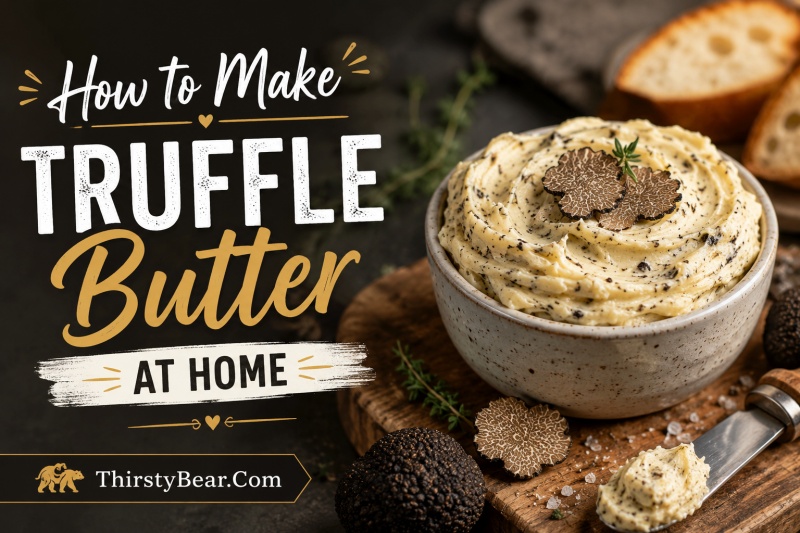
Learning how to make truffle butter at home changed the way I cook. I used to think this gourmet ingredient was only for fancy restaurants, but after my first batch, I realized it is surprisingly simple. The first time I spread fresh truffle butter over a warm baguette, the earthy aroma filled my kitchen and I knew I would never buy the store-bought version again.
This truffle butter recipe requires just three ingredients and about 10 minutes of your time. You will learn exactly how to transform ordinary butter into a luxurious finishing butter that elevates everything from steaks to pasta. Whether you have access to fresh black truffles or need to work with truffle oil, this guide covers every method.
By the end of this article, you will know how to make compound butter that tastes better than anything you can buy. You will understand the science behind why truffles and butter work so well together, and you will have a dozen ideas for using your creation.
Table of Contents
What is Truffle Butter?
Truffle butter is a compound butter made by mixing softened butter with finely grated fresh truffles or truffle products like oil, pate, or salt. This creates a rich finishing butter with earthy, aromatic flavors that can transform simple dishes into gourmet experiences.
At its core, truffle butter is an example of a classic French technique called compound butter, or beurre compose. Chefs have been mixing butter with flavorful ingredients for centuries. The fat in butter acts as a carrier for the aromatic compounds in truffles, which is why this combination works so beautifully.
Here is why this matters: truffles contain volatile compounds that need fat to fully express their flavor. When you mix grated truffles into butter, the fat captures and preserves those aromatic molecules. This is also why truffle oil exists, though many chefs prefer butter because it offers a cleaner, more natural flavor profile.
Ingredients You’ll Need
This homemade truffle butter comes together with just three core ingredients. Quality matters here more than complexity.
The Essentials
- Unsalted butter: You will need 1 cup (2 sticks or 226g) of high-quality unsalted butter. Look for butter with at least 80 percent fat content. European-style butters with 82-84 percent fat work even better because they carry more flavor. Many home cooks on forums swear by grass-fed butter for the richest results.
- Fresh black truffle or truffle product: You need about 0.5 to 1 ounce (14-28g) of fresh black truffle, finely grated. If fresh truffles are unavailable or too expensive, substitute with 1-2 teaspoons of high-quality truffle oil, 2 tablespoons of truffle pate, or 1 teaspoon of truffle salt.
- Fine sea salt: Use 1/4 teaspoon of fine sea salt, or more to taste. If you are using truffle salt as your truffle source, skip the additional salt.
Optional Additions
- Garlic: One small clove, finely minced, adds depth. This creates garlic truffle butter, which works beautifully on bread and potatoes.
- Fresh herbs: A tablespoon of minced parsley, chives, or thyme complements the earthy truffle flavor without competing.
- Lemon zest: A teaspoon of finely grated lemon zest brightens the flavor profile, especially for white truffle butter preparations.
How to Make Truffle Butter
Follow these steps to create your own easy truffle butter at home. The process takes about 10 minutes of active time, plus chilling.
Step 1: Soften the Butter
Remove your butter from the refrigerator 30-60 minutes before you plan to make the recipe. You want it soft enough to mix easily but not melted. The butter should give slightly when pressed and hold an indentation. If you press too hard and your finger sinks in completely, it is too soft.
Room temperature butter is essential here. Cold butter will not incorporate the truffle evenly. Melted butter will separate and create an oily, unpleasant texture.
Step 2: Prepare the Truffle
If using fresh truffles, gently brush off any dirt with a soft brush. Do not wash them under water as moisture ruins their texture and flavor. Using a microplane grater or truffle shaver, finely grate the truffle directly over your mixing bowl. The finer the grate, the better the flavor distribution.
If you are using truffle oil, measure carefully. Real truffle oil is potent, and too much will overwhelm the butter. Start with 1 teaspoon and add more if needed.
Step 3: Combine Ingredients
Place the softened butter in a medium mixing bowl. Add the grated truffle (or truffle oil/pate/salt), sea salt, and any optional ingredients like garlic or herbs. Using a fork or silicone spatula, mash and fold the ingredients together until completely combined.
You want a uniform mixture with no streaks of plain butter. The truffle should be evenly distributed throughout. This takes about 2-3 minutes of gentle mixing.
Step 4: Shape and Chill
For a traditional log shape, place the mixture on a sheet of parchment paper or plastic wrap. Roll it into a cylinder about 1.5 inches in diameter, twisting the ends to seal. Alternatively, pack it into a small ramekin or airtight container.
Refrigerate for at least 2 hours before using. This hardens the butter and allows the flavors to meld. The wait is worth it.
Step 5: Store Properly
Once chilled, your black truffle butter is ready to use. Slice rounds from the log as needed, or scoop from the container. Keep refrigerated when not in use.
Fresh Truffles vs Truffle Oil vs Truffle Pate vs Truffle Salt
Not everyone has access to fresh truffles, and that is okay. Here is how the different options compare.
Fresh Black or White Truffles
Fresh truffles offer the most authentic, complex flavor. Black truffles (Tuber melanosporum) have an earthy, woody aroma with notes of chocolate and forest floor. White truffles (Tuber magnatum) from Italy are more pungent, with garlicky notes and a stronger aroma. Fresh truffles are seasonal and expensive, typically $800-$2000 per pound, but you only need a small amount for butter.
Truffle Oil
Truffle oil is the most accessible option. Quality varies dramatically. Look for oils made with real truffle extract, not synthetic flavoring. Real white truffle oil or black truffle oil costs $15-30 for a small bottle. Use sparingly, 1-2 teaspoons per cup of butter. The flavor is more one-dimensional than fresh truffles but still delicious.
Truffle Pate
Truffle pate is a mixture of minced truffles, mushrooms, and sometimes oil. It is more affordable than fresh truffles and easier to find. Use 2-3 tablespoons per cup of butter. The flavor is milder and mushroom-forward, which some people actually prefer.
Truffle Salt
Truffle salt combines sea salt with dried truffle pieces. It is the most economical option. Replace the salt in your recipe with truffle salt, using about 1 teaspoon. The flavor is subtle but present. You can always add a drop of truffle oil to boost intensity.
Quick Comparison
- Best flavor: Fresh black or white truffles
- Best value: Truffle salt or pate
- Easiest to find: Truffle oil
- Longest shelf life: Truffle salt
- Most versatile: Fresh truffles (can use in multiple recipes)
How to Use Truffle Butter
Truffle butter is a finishing butter, which means you add it to dishes after cooking. Heat destroys the delicate truffle aroma, so never cook with it directly.
On Proteins
Place a thin slice of cold truffle butter on top of a hot steak, chicken breast, or pork chop right before serving. The residual heat melts the butter into a luxurious sauce. This is the classic steakhouse preparation that costs $15 extra at restaurants but pennies at home.
Scrambled eggs become extraordinary when you fold in a small pat of truffle butter at the end of cooking. The eggs should be soft and just set. The butter melts throughout, creating creamy, aromatic curds.
On Starches
Mashed potatoes and truffle butter are a match made in heaven. Fold the butter into hot potatoes just before serving. One tablespoon per serving is plenty. This combination of starchy comfort and earthy luxury is hard to beat.
Toss hot pasta with truffle butter and parmesan cheese for the simplest gourmet dinner. The butter creates a silky sauce that coats every strand. Add a splash of pasta water if needed to help emulsify.
Rice dishes, especially risotto, welcome a final pat of truffle butter stirred in off the heat. As one Reddit user noted, risotto with truffle butter and parmesan is a glorious combination.
On Vegetables and Bread
Roasted vegetables get an instant upgrade with a drizzle of melted truffle butter. Brussels sprouts, asparagus, and mushrooms are particularly good partners.
Spread truffle butter on warm crusty bread for an appetizer that will impress any guest. Add a sprinkle of flaky salt on top for texture.
Popcorn tossed with melted truffle butter and parmesan is an addictive snack. Use about 2 tablespoons per batch of popcorn.
What NOT to Do
Do not use truffle butter as your cooking fat. Sauteeing or frying with it wastes the truffle flavor and can create off tastes. Do not add it to boiling liquid, as the high heat destroys the aromatics. Do not use too much, a little goes a long way.
Storage and Freezing Instructions
Proper storage keeps your homemade truffle butter fresh and flavorful.
Refrigeration
Store truffle butter in an airtight container in the refrigerator for up to 7-10 days. The high fat content means it stays firm but spreadable when cold. Wrap logs tightly in parchment and then foil to prevent the butter from absorbing other refrigerator odors.
Freezing
You can freeze truffle butter for up to 6 months without significant flavor loss. Wrap logs in parchment paper, then heavy-duty foil or freezer bags. Remove as much air as possible. Slice off what you need while still frozen, the butter is easy to cut when cold.
Another option is to portion the butter into tablespoon-sized medallions before freezing. Place these on a parchment-lined tray, freeze until solid, then transfer to a freezer bag. This way you can grab individual servings as needed.
Thawing
Thaw frozen truffle butter overnight in the refrigerator. Do not microwave or use hot water, as heat damages the truffle flavor. Once thawed, use within a week.
Pro Tips and Variations
After making countless batches of truffle butter, here are my best tips for success.
Quality Matters
If you are using premium truffles, use premium butter. A forum user put it perfectly: the butter carries the flavor, so do not skimp. European-style butters with higher fat content create a more luxurious texture and better flavor carry.
For truffle oil, read labels carefully. Many inexpensive truffle oils use synthetic flavoring. Look for oils that list real truffle extract. The price is higher but the flavor is authentic.
Grating Technique
Use a microplane grater for fresh truffles. It creates the finest shavings that distribute evenly through the butter. A knife produces chunks that create inconsistent bites. The microplane also maximizes surface area, releasing more aroma.
Flavor Variations
- Garlic truffle butter: Add one minced garlic clove and a pinch of black pepper. Perfect for garlic bread and potatoes.
- Herb truffle butter: Mix in minced parsley, chives, or tarragon. This brightens the earthy flavor and adds color.
- Citrus truffle butter: Add lemon or orange zest for a lighter, brighter profile that works well with fish and vegetables.
- Spicy truffle butter: A pinch of red pepper flakes adds heat that cuts through the richness.
Common Mistakes to Avoid
Using too much truffle product is the most common error. Truffle flavor should enhance, not overwhelm. Start with less than you think you need and taste before adding more.
Working with cold butter makes mixing difficult and creates lumpy results. Be patient and let the butter soften properly.
Cooking with truffle butter destroys the flavor. Always use it as a finishing element added after heat is removed.
Store-bought truffle butter often disappoints because it uses low-quality truffle flavoring. Making your own guarantees real flavor.
Frequently Asked Questions
What is truffle butter made out of?
Truffle butter is made by mixing softened butter with finely grated fresh truffles or truffle products like truffle oil, truffle pate, or truffle salt. The basic recipe uses 1 cup of unsalted butter with about 0.5-1 ounce of fresh grated truffle or equivalent truffle product, plus a pinch of salt.
Is truffle good for diabetics?
Truffles themselves are low in carbohydrates and sugar, making them suitable for diabetic diets in moderation. Truffle butter contains fat from the butter, which has minimal impact on blood sugar. However, the foods you pair with truffle butter (like bread or pasta) affect blood sugar more than the butter itself. Always consult your healthcare provider about specific dietary concerns.
Can dogs eat truffles?
Yes, truffles are safe for dogs to eat in small amounts. In fact, dogs are often trained to hunt truffles in the wild. However, truffle butter contains high amounts of fat and salt that can upset a dog’s stomach or cause pancreatitis if consumed in large quantities. Keep truffle butter away from pets and do not intentionally feed it to them.
What does truffle butter mean to millennials?
Among some millennials and in certain online communities, truffle butter has taken on slang meanings unrelated to the food product. These meanings are not appropriate for culinary contexts. When discussing food and cooking, truffle butter always refers to the compound butter made with truffles.
How long does truffle butter last?
Fresh truffle butter lasts 7-10 days in the refrigerator when stored in an airtight container. You can freeze it for up to 6 months. The high fat content helps preserve it, but the truffle flavor diminishes over time. For best results, use within the first week of making or thawing.
Can I use truffle oil instead of fresh truffles?
Yes, truffle oil is a common substitute when fresh truffles are unavailable or too expensive. Use 1-2 teaspoons of high-quality truffle oil per cup of softened butter. Real truffle oil made with actual truffle extract provides better flavor than synthetic versions. The taste will be different from fresh truffles more one-dimensional but still delicious.
Should I cook with truffle butter?
No, you should never cook with truffle butter. Heat destroys the delicate aromatic compounds that make truffles special. Always use truffle butter as a finishing butter, added to dishes after cooking is complete. Place it on hot food just before serving and let the residual heat melt it.
Conclusion
Now you know how to make truffle butter at home with just three ingredients and 10 minutes of effort. This simple compound butter recipe transforms everyday meals into restaurant-quality experiences. The key is using quality ingredients and treating the butter as a finishing element rather than a cooking fat.
Whether you splurge on fresh black truffles or use truffle oil from your pantry, the result will be infinitely better than store-bought versions. Start with the basic recipe, then experiment with variations like garlic and herbs. Your steaks, pasta, and mashed potatoes will never be the same.
Make a batch this weekend and discover why home cooks across forums rave about this easy gourmet upgrade. Once you taste real truffle butter made with your own hands, you will understand why this simple technique has been treasured by chefs for generations.