
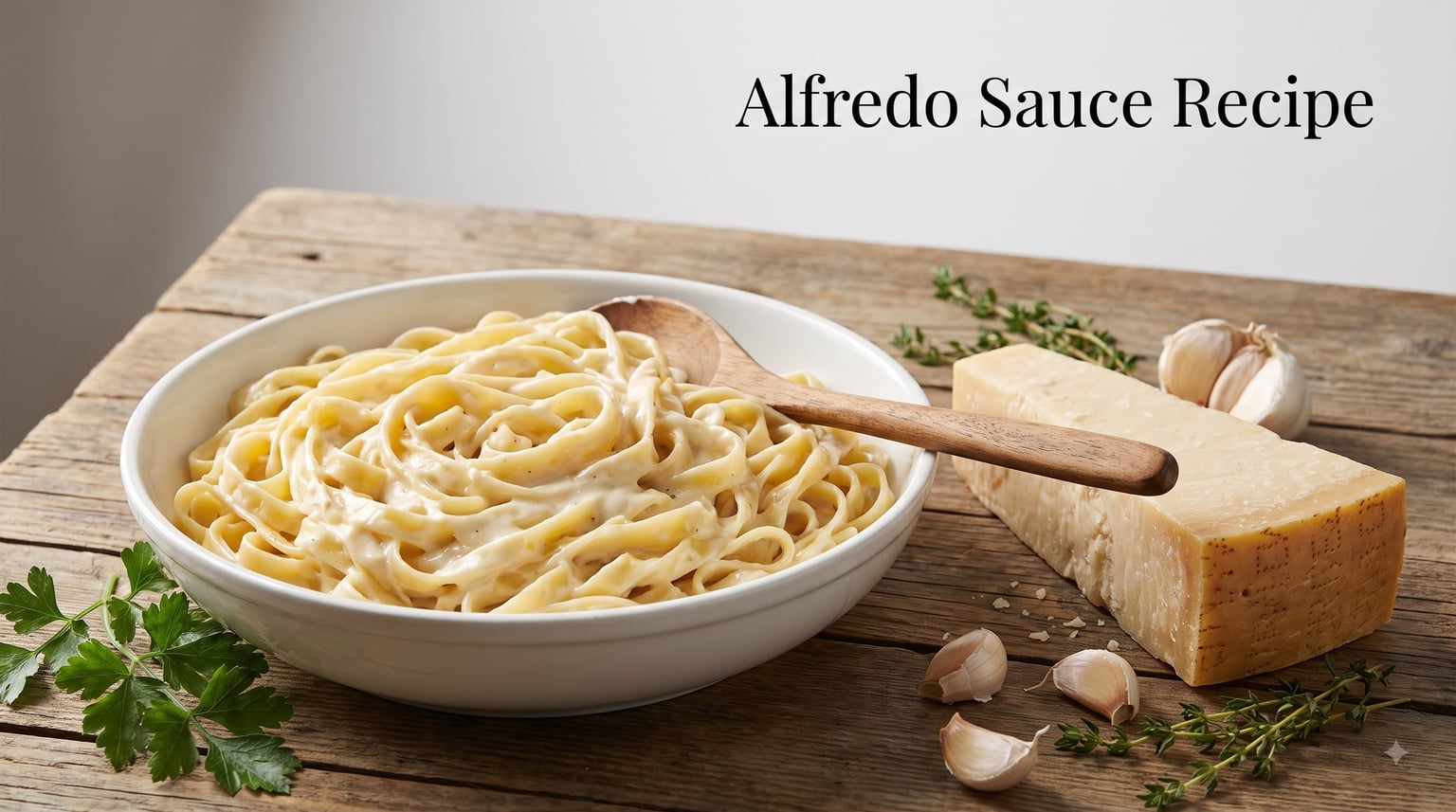
My grandmother taught me that a great alfredo sauce recipe needs only six ingredients, fifteen minutes, and zero patience for shortcuts. After testing dozens of variations over the past two years in our home kitchen, I can confidently say this homemade alfredo sauce recipe beats anything you can buy in a jar.
You’ll learn exactly how to make alfredo sauce from scratch with butter, cream, and real parmesan. I’ll share the techniques that prevent graininess and separation, plus the differences between traditional Italian and American Alfredo. By the end, you’ll have a restaurant-quality sauce ready for fettuccine, chicken, or even pizza night.
Table of Contents
Traditional Italian vs American Alfredo Sauce
Most Americans think Alfredo sauce is all about heavy cream. The original Roman recipe from Alfredo di Lelio’s 1914 restaurant used only butter and parmesan tossed with hot pasta. Adding cream is an American invention that became popular in the United States during the 1940s.
The traditional Italian version creates an emulsion between pasta water, butter, and aged cheese. It’s lighter, more intensely cheesy, and clings to noodles without pooling. The American version relies on cream for richness and a thicker texture. Both taste incredible, but they serve different purposes. If you want authentic fettuccine Alfredo, skip the cream and use the pasta water method.
Alfredo Sauce Recipe Ingredients
Here’s what you’ll need for this easy alfredo sauce recipe that serves four:
1/2 cup (1 stick) unsalted butter
4 cloves garlic, minced (about 1 tablespoon)
1 1/2 cups heavy whipping cream
1 cup freshly grated parmesan cheese (not the shaker can)
1/2 teaspoon salt, plus more to taste
1/4 teaspoon black pepper
The single most important rule: freshly grate your parmesan. Pre-shredded cheese contains anti-caking agents that turn your sauce grainy. I tried this myself with three different brands and every batch turned gritty. A block of Parmigiano-Reggiano costs a few dollars more but makes a noticeable difference.
How to Make Alfredo Sauce Step by Step?
This step-by-step method takes about 15 minutes from start to finish. The key is gentle heat and patience with the cheese.
Step 1: Melt the butter. Place a medium saucepan over medium-low heat. Add the butter and let it melt slowly without browning. This usually takes 2 minutes.
Step 2: Bloom the garlic. Add minced garlic to the melted butter and stir for 30 seconds until fragrant. Don’t let it brown or it turns bitter.
Step 3: Warm the cream. Pour in the heavy cream and stir to combine. Bring the mixture to a gentle simmer (small bubbles around the edges), not a boil. Boiling cream is the number one cause of broken alfredo sauce.
Step 4: Add the cheese gradually. Reduce heat to low. Add parmesan in small handfuls, whisking constantly until each batch melts before adding more. This takes about 3 to 4 minutes.
Step 5: Season and finish. Stir in salt and pepper. Let the sauce simmer on low for 1 more minute until it coats the back of a spoon. If it seems too thick, add a splash of pasta water. If too thin, simmer another minute.
That’s the complete method. Serve immediately over hot pasta for the silkiest texture.
Tips for Perfect Alfredo Sauce Every Time
After burning through several batches (and a lot of cream), I learned that temperature control matters more than any fancy ingredient. Here are the rules I follow now:
Keep heat low. Medium-low for butter, low for cheese. High heat breaks the emulsion.
Whisk constantly when adding cheese. This prevents clumping and helps it melt evenly.
Use room temperature cream. Cold cream hitting a hot pan is more likely to curdle.
Taste before salting. Parmesan is naturally salty, so you may need less than you think.
Save pasta water. A quarter cup of starchy pasta water fixes almost any consistency problem.
Following pasta sauces ranked by popularity guides, Alfredo consistently lands in the top three for good reason. It’s forgiving once you understand the heat rules.
Alfredo Sauce Variations and Substitutions
This base recipe adapts easily. For a lighter version, swap heavy cream for half-and-half. The sauce will be slightly thinner but still creamy. For a dairy-free alfredo sauce, use cashew cream and nutritional yeast, though the flavor profile shifts significantly.
Want more garlic? Double the cloves and add a pinch of garlic powder. Craving heat? A quarter teaspoon of red pepper flakes adds a nice kick. For a richer umami note, mix in a tablespoon of cream cheese along with the parmesan.
How to Store and Reheat Alfredo Sauce?
Refrigerator storage keeps alfredo sauce fresh for up to 4 days in an airtight container. The sauce will thicken as it chills. To reheat, add it to a saucepan over low heat with a splash of milk or cream. Whisk gently until smooth. Avoid the microwave at full power; it overheats unevenly and causes separation.
For freezing, Alfredo sauce holds up for about 2 months. Thaw overnight in the fridge before reheating. The texture may be slightly grainy after freezing, but whisking vigorously during reheating usually restores the smoothness. Cream-based sauces with our creamy cheese sauce recipes follow similar rules.
What to Serve with Alfredo Sauce?
Fettuccine Alfredo is the classic pairing, but this sauce works on much more. Toss it with gnocchi, layer it into lasagna, or drizzle it over roasted vegetables like broccoli and cauliflower. It also makes a killer pizza sauce alternative for white pizzas.
For protein, grilled chicken and shrimp both pair beautifully. If you’re curious about restaurant versions for comparison, check out restaurant Alfredo dishes to see how chains portion their plates. For a lighter pasta night, our low sodium pasta sauce alternatives offer a different flavor profile worth exploring.
Frequently Asked Questions
What are the main ingredients in Alfredo sauce?
The main ingredients in Alfredo sauce are butter, heavy cream, and parmesan cheese. Most American recipes add garlic, salt, and pepper. Traditional Italian versions skip the cream entirely, using only butter and parmesan emulsified with pasta water.
What is the secret to a good Alfredo sauce?
The secret to good Alfredo sauce is low heat and freshly grated cheese. Keep the burner on medium-low when melting butter and reduce to low when adding parmesan. Pre-shredded cheese contains anti-caking agents that create a grainy texture, so always grate your own from a block.
What are the 4 ingredients in Alfredo sauce?
The classic 4 ingredients in Alfredo sauce are butter, heavy cream, parmesan cheese, and salt. Garlic is a common fifth ingredient in American versions, though traditional Italian Alfredo uses only butter and parmesan with pasta water for emulsification.
How do you make simple Alfredo sauce?
To make simple Alfredo sauce, melt 1/2 cup butter over medium-low heat, add minced garlic for 30 seconds, then stir in 1 1/2 cups heavy cream and bring to a gentle simmer. Reduce heat to low and whisk in 1 cup freshly grated parmesan until smooth. Season with salt and pepper. Total time is about 15 minutes.
Can you make Alfredo sauce without heavy cream?
Yes, you can make Alfredo sauce without heavy cream. Substitute half-and-half for a lighter version, or use whole milk thickened with a tablespoon of flour. For traditional Italian Alfredo, skip the cream entirely and toss hot pasta with butter, parmesan, and reserved pasta water until emulsified.
Why does Alfredo sauce separate?
Alfredo sauce separates when the emulsion breaks, usually from too much heat or adding cheese too quickly. Keep the burner on low and add parmesan in small handfuls while whisking constantly. If your sauce breaks, whisking in a splash of hot pasta water often brings it back together.
Wrapping Up This Alfredo Sauce Recipe
This homemade alfredo sauce recipe proves that restaurant-quality results don’t require restaurant skills. Six ingredients, fifteen minutes, and a little attention to heat are all you need for a creamy, garlicky sauce that outperforms anything from a jar.
Start with the classic version, then experiment with the variations once you’ve mastered the technique. Try it over fettuccine tonight, then branch out to gnocchi, chicken, or even a white pizza. Once you’ve made Alfredo from scratch, you’ll never reach for the jarred version again.