
The best commercial stand mixers take the strain out of repeated dough and batter batches, but the right machine depends less on a shopping list of features than on your actual production. A cafe may need a compact 8-quart bowl, while a pizzeria should think first about a spiral mixer’s dough-handling action and sustained torque.
I compared the specifications, reported strengths, and recurring complaints for all 10 models in this roundup. I also considered details that can decide whether a mixer becomes a dependable workstation or an expensive interruption: noise, heat buildup, floor space, parts support, and whether the listed configuration is genuinely suited to commercial use.
If you are still shopping by brand, our current stand mixer deals can help you watch offers without losing sight of duty cycle and service needs. For a larger plan, match the machine to a properly sized station from our guide to stainless steel work tables.
Table of Contents
Top 3 Picks for Best Commercial Stand Mixers


Best Commercial Stand Mixers in 2026
| Product | Specifications | Action |
|---|---|---|
| ZACME 8.4QT Commercial Stand Mixer |
|
Check Latest Price |
| VEVOR 15Qt Commercial Food Mixer |
|
Check Latest Price |
 KitchenAid KSM8990CU KitchenAid KSM8990CU |
|
Check Latest Price |
| VEVOR 30Qt Commercial Food Mixer |
|
Check Latest Price |
 Waring Luna WSM7L Waring Luna WSM7L |
|
Check Latest Price |
 KitchenAid KSMC895 KitchenAid KSMC895 |
|
Check Latest Price |
 VEVOR 15Qt Timing Mixer VEVOR 15Qt Timing Mixer |
|
Check Latest Price |
 Winco EMP-10 Winco EMP-10 |
|
Check Latest Price |
 Towallmark 15QT Mixer Towallmark 15QT Mixer |
|
Check Latest Price |
| Ooni Halo Pro Spiral Mixer |
|
Check Latest Price |
1. ZACME 8.4QT Commercial Stand Mixer — Quiet, Certified Power
8.4QT Commercial Stand Mixer 800W with Aluminum Die Casting Meets the Standard of NSF/ANSI 8-2023, Mixers Kitchen Electric Stand Mixer with Stainless Steel 8L Bowl, Dough Hook, Whisk and Beater
800W motor
8.4 qt bowl
11 speeds
48 dB
NSF/ANSI 8
Pros
- Very quiet
- Strong torque
- NSF certified
- Timer and display
Cons
- Tall profile
- Head needs two hands
The ZACME stands out in the small-commercial class because it combines an 800W motor with an explicit NSF/ANSI 8-2023 listing. Its 8.4-quart bowl is large enough for cafe batches, cookie dough, icing, and moderate bread recipes, while the 33-pound body remains more manageable than a floor mixer.
I would use the low end for adding flour and the middle speeds for most mixing. Eleven settings, overload protection, and a digital timer make repeat batches easier, especially when a kitchen is running several jobs at once.
The listed 48 dB noise figure is unusually low for a mixer with this capacity. Real kitchens still have hoods, timers, and conversation, but a quieter machine reduces fatigue during long prep shifts; the review data also describes a wider 48-68 dBA range across speeds.
Its tilt head and removable bowl make changeover straightforward, although the reported two-hand head release is worth planning around. Measure cabinet clearance before buying, because the 16.3-inch height may be tight beneath an upper shelf.
Choose ZACME for small cafe and bakery production
It is the strongest fit for cafes, catering businesses, and home-based producers who want more power and capacity than a consumer tilt-head model. NSF/ANSI 8-2023 certification also matters where local inspection requires proof that the machine is suitable for commercial operation.
It is less attractive for teams that need to make very small batches, because the bowl and agitator are sized for larger loads. A dedicated countertop mixer is better for one-cup frostings or tiny yeasted doughs.
Check the clearance and attachment needs
Before ordering, confirm the height under cabinets, the electrical circuit, and which optional attachments use a compatible hub. The standard package covers a dough hook, whisk, and flat beater, which is enough for most cafe and bakery work.
The two-year warranty is reassuring, but long-term ownership still depends on cleaning the attachment shaft and keeping the head latch free of flour and fat. Those habits protect the motor and make the next batch more consistent.
2. VEVOR 15Qt Commercial Food Mixer — Strong Value for Daily Dough
VEVOR Commercial Food Mixer 15Qt, Commercial Mixer with 3 Adjustable Speeds, 550W Dough Mixer,Commercial Stand Mixer with Stainless Steel Bowl
550W motor
15 qt bowl
3 speeds
30-minute timer
Gear drive
Pros
- Gear driven
- Large bowl
- Timer
- Food-grade components
Cons
- 105.8-pound body
- Only 3 speeds
- Voltage confusion
The VEVOR 15-quart is a practical step up for small bakeries and restaurants that regularly mix dough or large batters. It has a 550W gear-driven motor, a 30-minute timer with auto-stop, and a lever-operated bowl that helps control loading and scraping.
Three fixed speeds at 135, 220, and 409 RPM are adequate for a dough-first workflow, but they give less fine control than the 10- or 11-speed machines here. I would reserve the fastest setting for egg whites, whipped cream, and light finishing work.
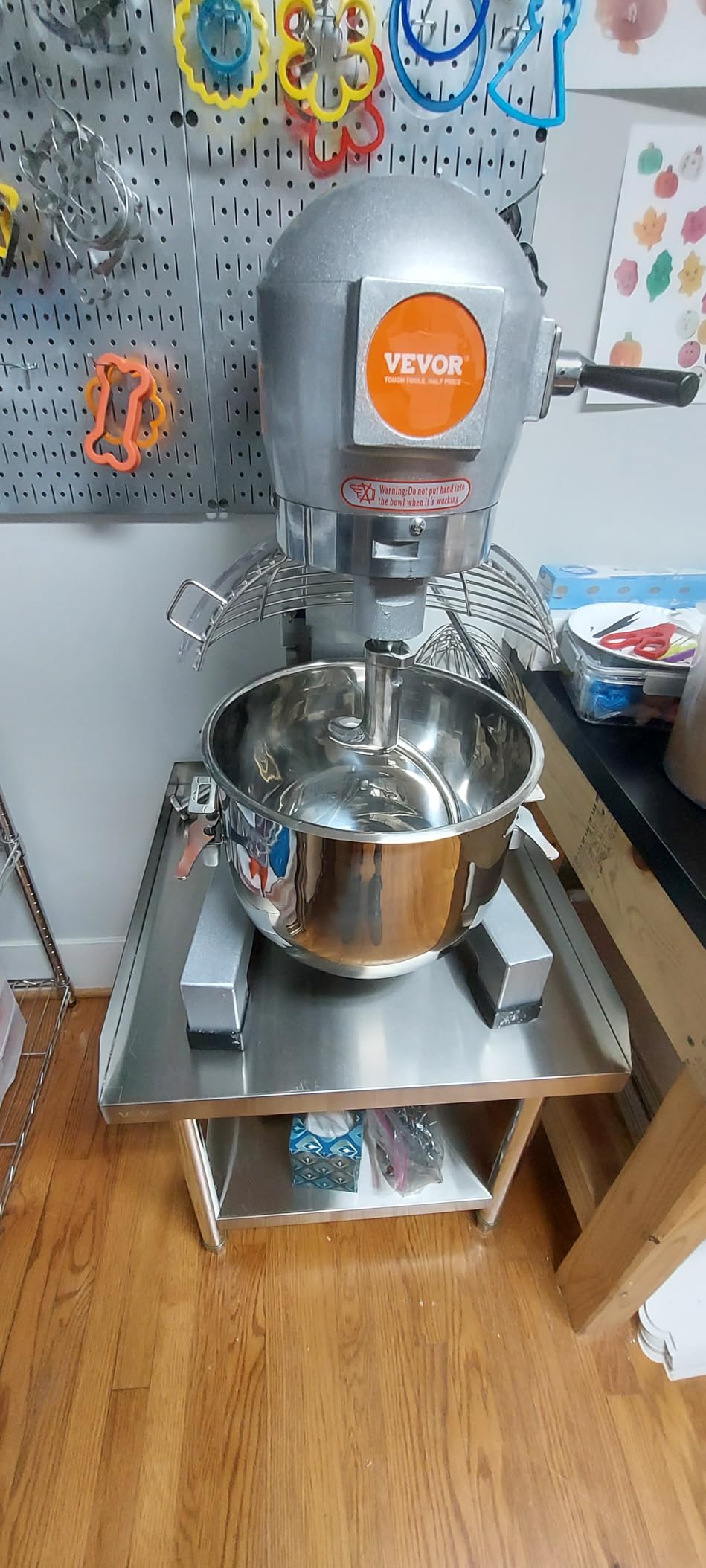
The stated 70 dB rating is lower than many open commercial kitchens expect, and the review summary specifically praises its relatively quiet operation. A 105.8-pound weight also helps stability, though it means the mixer should be placed before use rather than moved between stations.
Food-grade stainless steel and safety sensors make this a sensible all-round commercial planetary mixer. Still, check the voltage label carefully: the data notes confusion between the US 110V configuration and international 220V versions.
Choose VEVOR 15Qt for steady pizza and bread batches
This model suits a pizzeria, bakery, or restaurant that values a large bowl, direct controls, and repeatability over a broad speed range. The timer is useful for dough development because it removes guesswork between batches.
For delicate whipped products or a kitchen that switches constantly between tasks, the limited speed selection may feel restrictive. A planetary model with 10 or 11 speeds offers more room to dial in aeration.
Plan its permanent workstation
The floor-standing design requires a dedicated space with enough clearance for the bowl lift and safety cover. Use a sturdy stainless steel work table or floor mount that does not wobble under the machine’s weight.
Check the supplier’s replacement-parts policy before purchase. A commercial mixer is a working appliance, not a sealed appliance, and a delayed hook or guard can create a costly shutdown.
3. KitchenAid KSM8990CU — A Familiar Commercial Bowl-Lift
KitchenAid KSM8990CU 8-Quart Commercial Countertop Mixer, 10-Speed, Gear-Driven, Contour Silver
500W DC motor
8 qt bowl
10 speeds
Gear drive
NSF certified
Pros
- NSF certified
- Quiet
- 10 speeds
- Attachment ecosystem
Cons
- Poor small-batch feel
- Bowl lift takes space
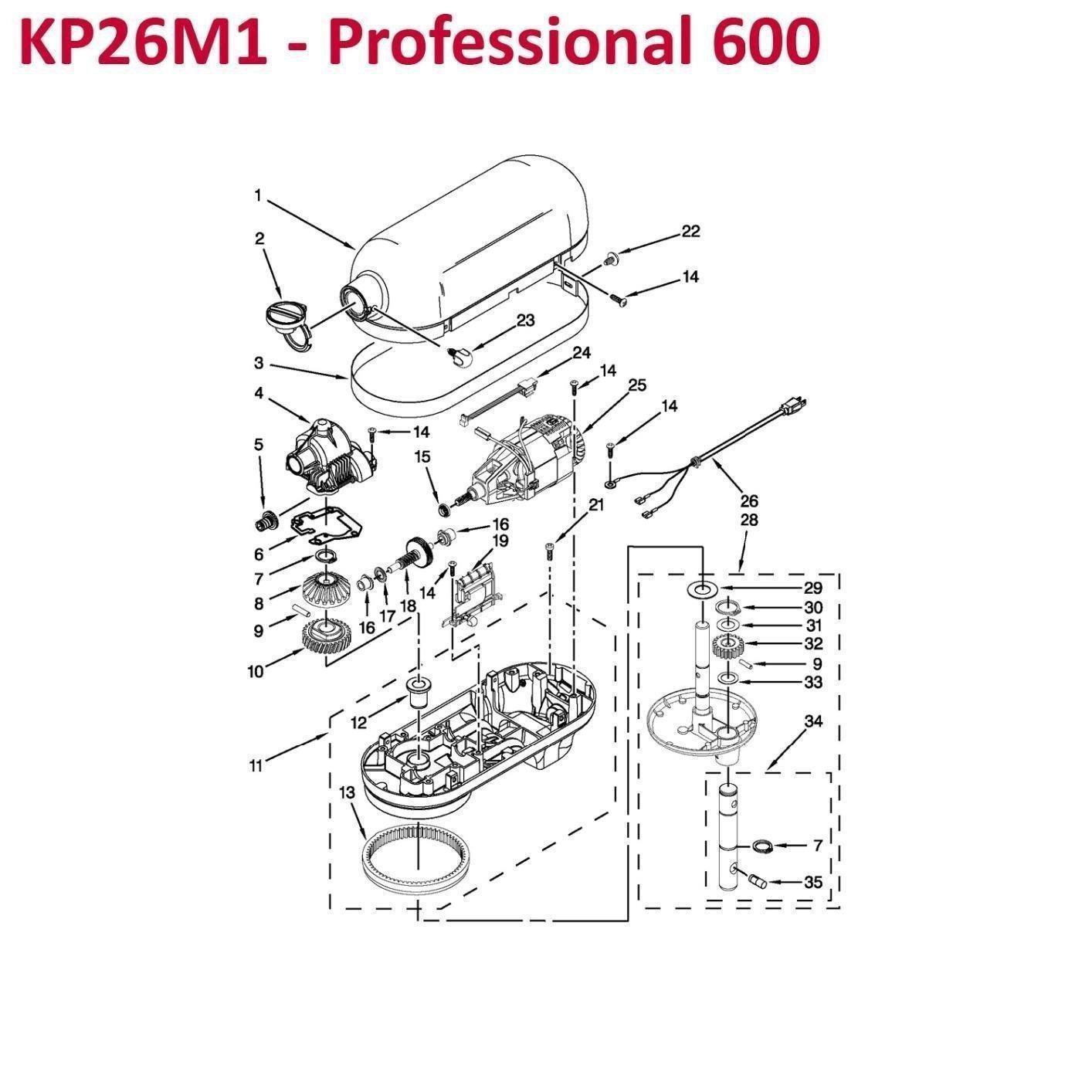
KitchenAid’s KSM8990CU gives cafes and restaurants a recognizable commercial format without moving to a full floor model. The 8-quart stainless bowl, bowl-lift mechanism, and 500W high-efficiency DC motor are designed for repeated preparation rather than occasional baking.
Its 10 speeds are easier to tune than a three-speed machine, and the gear-driven transmission is a better match for a working kitchen than a belt that can slip under a thick load. The tradeoff is that the bowl-lift arrangement takes more attention when adding ingredients or scraping.
Reviewers praise its quiet running and stability. The 25-pound body is easy to place on a commercial counter, but the bowl-lift and larger bowl mean it does not behave like a small home mixer.
NSF certification makes it a credible choice where a commercial listing is required. The all-stainless attachments and two-year commercial warranty add value, although the summary notes occasional manufacturing and finish concerns.
Choose KSM8990CU for mixed cafe production
It is well suited to a cafe that cycles between dough, buttercream, fillings, and batters throughout the day. Ten speeds and a broad attachment selection make it more flexible than a dedicated dough machine.
It is not my first choice for a very small batch, because a small amount of batter may not reach the beater efficiently. Keep a smaller mixer for one-off sauces and micro-batches.
Decide whether a bowl lift fits your workflow
The bowl-lift design raises the bowl toward the head, so the work area below the mixer needs a clear path. Measure the counter, not just the footprint, and confirm the guard will not interfere with overhead shelving.
Use the low speeds for flour incorporation and keep an eye on heat during long batches. The high-efficiency motor is reported to run cooler than older designs, but friction from a heavy dough can still warm the bowl.
4. VEVOR 30Qt Commercial Food Mixer — High-Volume Floor Model
VEVOR Commercial Food Mixer 30Qt, Commercial Mixer with 3 Adjustable Speeds, 1100W Dough Mixer,Commercial Stand Mixer with Stainless Steel Bowl
1100W motor
30 qt bowl
3 speeds
7.7 lb dough
Timer
Pros
- High volume
- 1100W output
- Lever bowl
- Auto-stop
Cons
- 149.9 pounds
- Large footprint
- 3 fixed speeds
The VEVOR 30-quart is the largest planetary model in this comparison and the clearest choice for restaurants, hotels, and bakeries with sustained batch demand. Its 1100W motor and 30-quart bowl are rated for up to 3.5kg, or 7.7 pounds, of dough per batch.
It uses three speeds at 130, 193, and 458 RPM. That is simple to train a team on, and the 30-minute timer helps standardize dough time, but there is less control than the 10- or 11-speed alternatives.
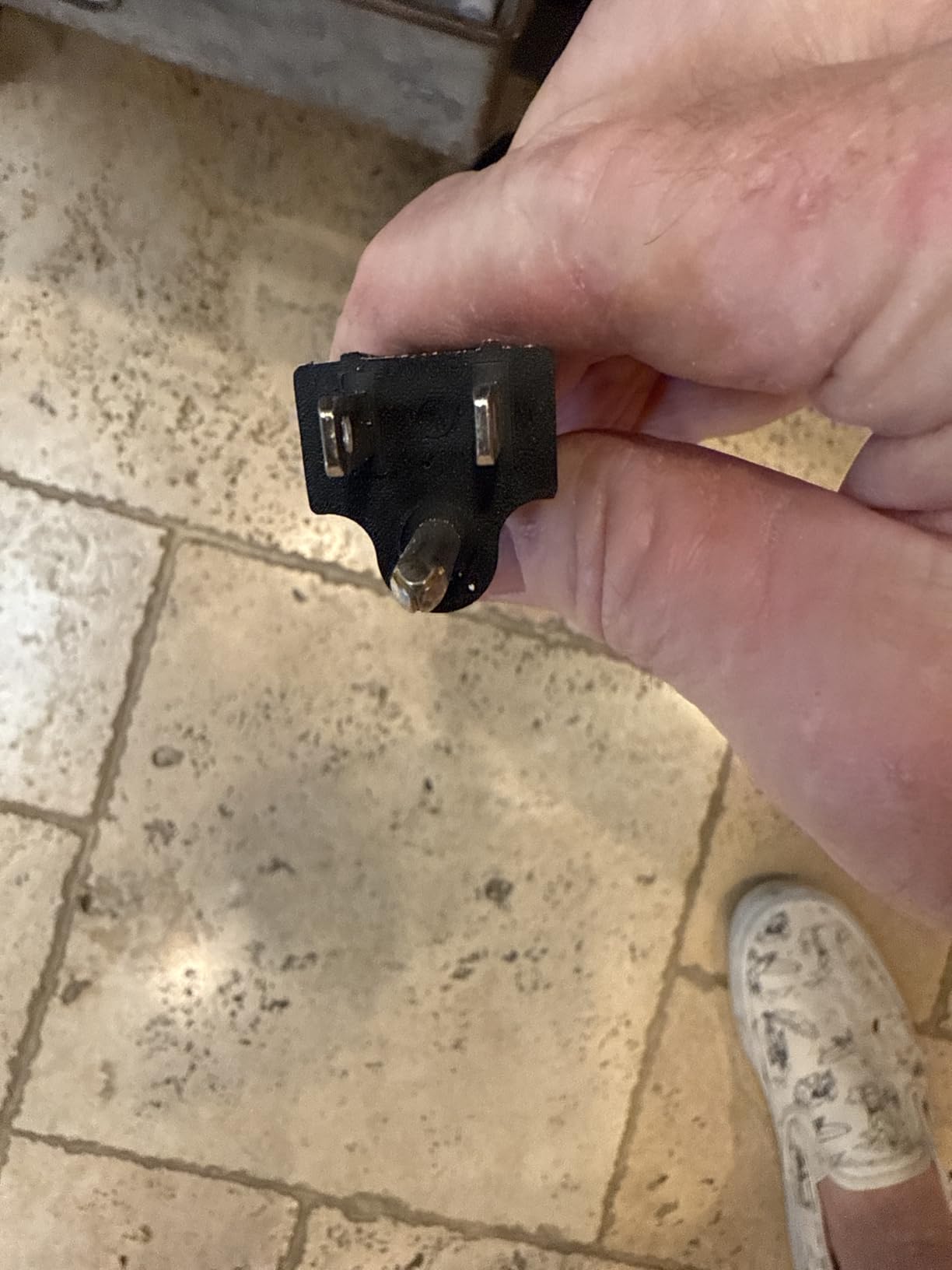
The machine is listed at 70 dB, which is reasonable for its size but still needs hearing awareness in a small prep room. Its 149.9-pound weight is a strong reason to choose the final position before delivery.
The stainless steel bowl, food-grade components, safety sensors, and lever bowl adjustment support daily service. Make sure the electrical supply matches the 110V specification shown in the product data.
Choose the 30Qt for real production volume
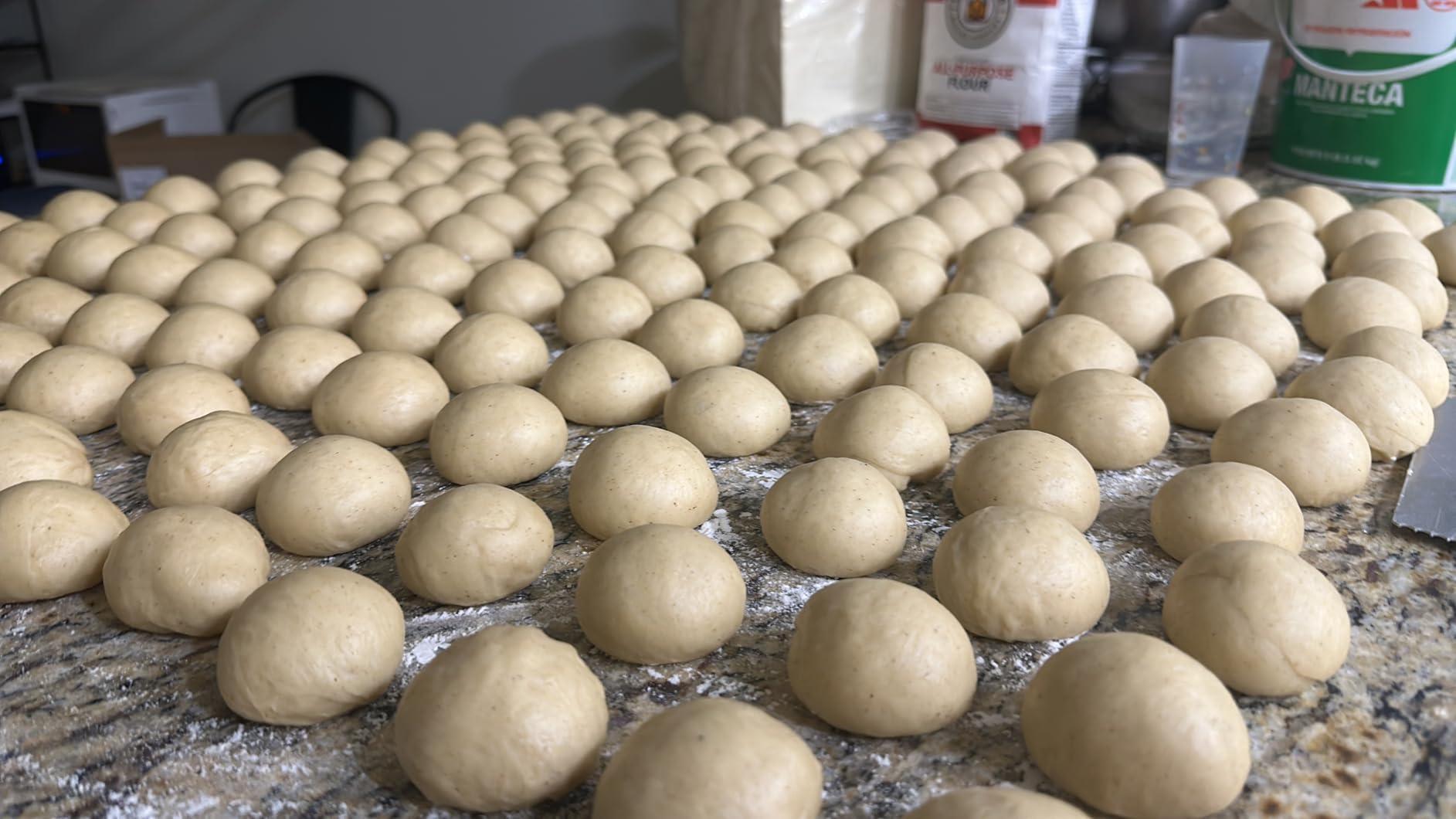
This is a better match than a countertop mixer for a bakery producing several dough or batter batches per shift. It can also reduce labor when staff currently mix sequentially in smaller bowls.
It is a poor fit for a small cafe with limited storage or a menu that changes every hour. The footprint and fixed speeds make it a specialist tool rather than an all-purpose countertop appliance.
Budget for installation and downtime
Leave room around the bowl lift, safety guard, and ventilation. Also confirm the supplier stocks bowls, hooks, guards, and controls locally; a large machine is only as dependable as its parts when something needs replacement.
Because the body is nearly 150 pounds, plan a floor or reinforced station and a safe cleaning path. Never move it while the bowl is loaded or while the head is raised.
5. Waring Luna WSM7L — Tilt-Head Versatility with 11 Speeds
Waring Luna Planetary Stand Mixer with 7-Quart Capacity
1/2 HP motor
7 qt bowl
11 speeds
NSF listed
Tilt head
Pros
- 11 speeds
- Quiet
- NSF listed
- Easy head access
Cons
- Guard is awkward
- Finish concerns
- 41.5 pounds
The Waring Luna WSM7L is a compact professional mixer with a 1/2-horsepower gear-driven induction motor, 7-quart bowl, and 11 speeds. It fits a bakery that needs more precision than a basic three-speed model but does not have room for a floor mixer.
I like the tilt-head layout for changing attachments and checking dough development. The front control, removable clear-view guard, stainless bowl, and included attachments make the workstation easier to teach to new staff.
The product is NSF Listed and ETL certified for the US and Canada, which helps when a commercial kitchen needs documented equipment. The 41.5-pound weight is substantial, so it is countertop equipment in mass rather than a portable mixer.
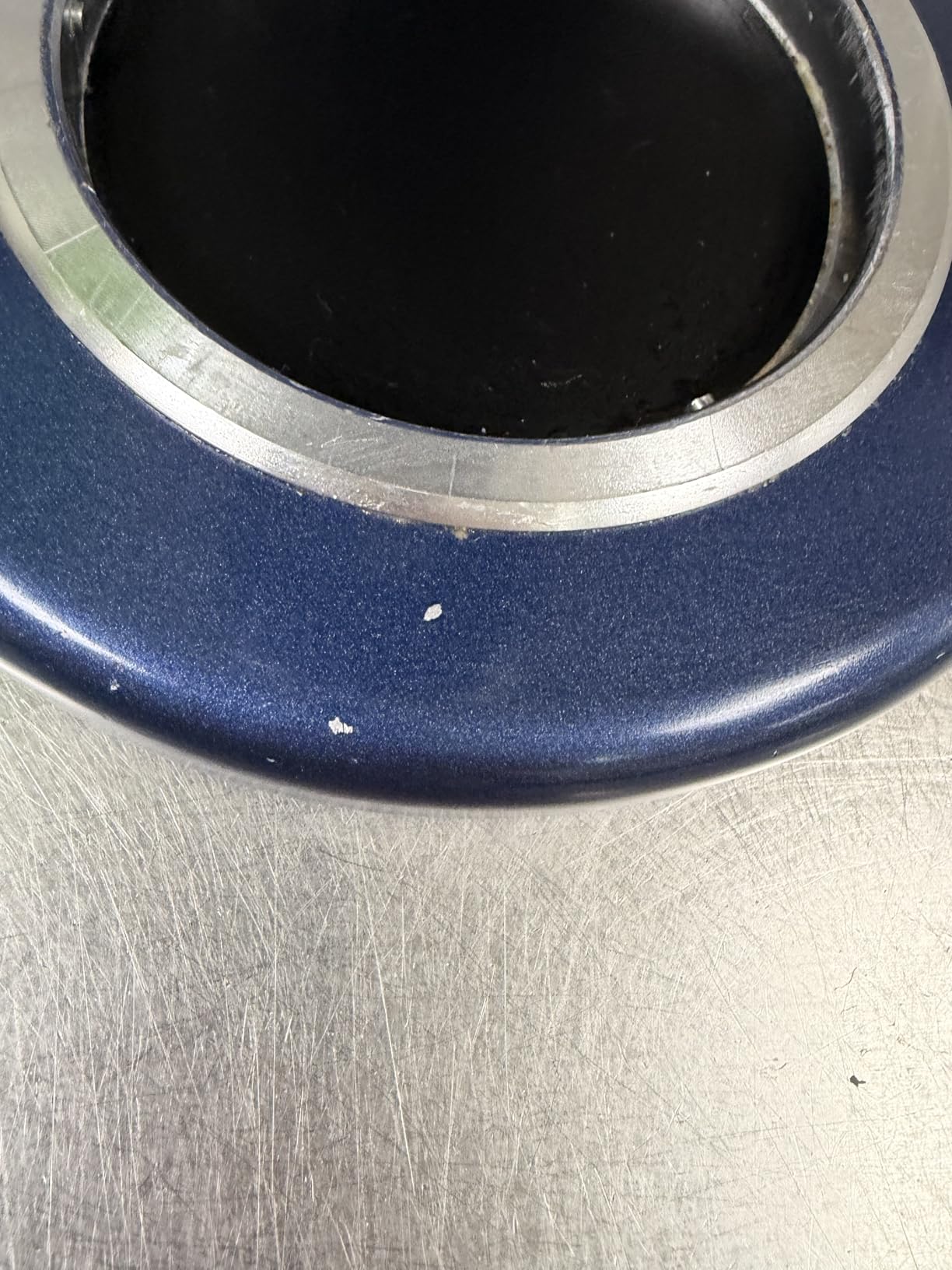
Users praise quiet operation, although the product review summary also mentions occasional finish and quality-control issues. Treat the 2-year motor warranty and 1-year parts-and-labor coverage as a support plan, not a reason to skip inspection after delivery.

Choose WSM7L for speed control in a small footprint
It is a strong option for a small bakery, pastry kitchen, or catering operation that makes several textures in one day. Eleven speeds help separate slow flour incorporation from fast whipping.
It may be more machine than a home user needs, but that is a feature when the machine is used for paid production. The bowl and motor are sized for batches that would overwhelm a typical consumer unit.
Check the guard and finish before first use
The clear-view guard is useful, but the review data says it can be difficult to remove. Test it during commissioning, and train the team to stop the motor before cleaning or reaching near the agitator.
Keep the exterior dry and inspect the finish around handles and attachment points. A small chip is not a performance failure, but it can become a cleaning or sanitation concern in a busy kitchen.
6. KitchenAid KSMC895 — Sealed Commercial Transmission
KitchenAid Commercial Series 8 Quart Bowl-Lift Stand Mixer with Stainless Steel Bowl Guard – KSMC895
500W DC motor
8 qt bowl
10 speeds
NSF certified
Bowl guard
Pros
- Sealed transmission
- Quiet
- Commercial warranty
- Safety guard
Cons
- Dough hook balance
- Attachment limits
- Regional voltage
The KitchenAid KSMC895 is the other commercial bowl-lift in this group, and its strongest differentiator is the sealed transmission. The product data says that design prevents grease leakage, a practical concern for kitchens that want a cleaner machine and fewer maintenance surprises.
The 500W high-efficiency DC motor, 8-quart bowl, 10 speeds, and stainless bowl guard support pastry, dough, and batter work. The 2-year hassle-free warranty is a meaningful advantage for a machine that may run every day.
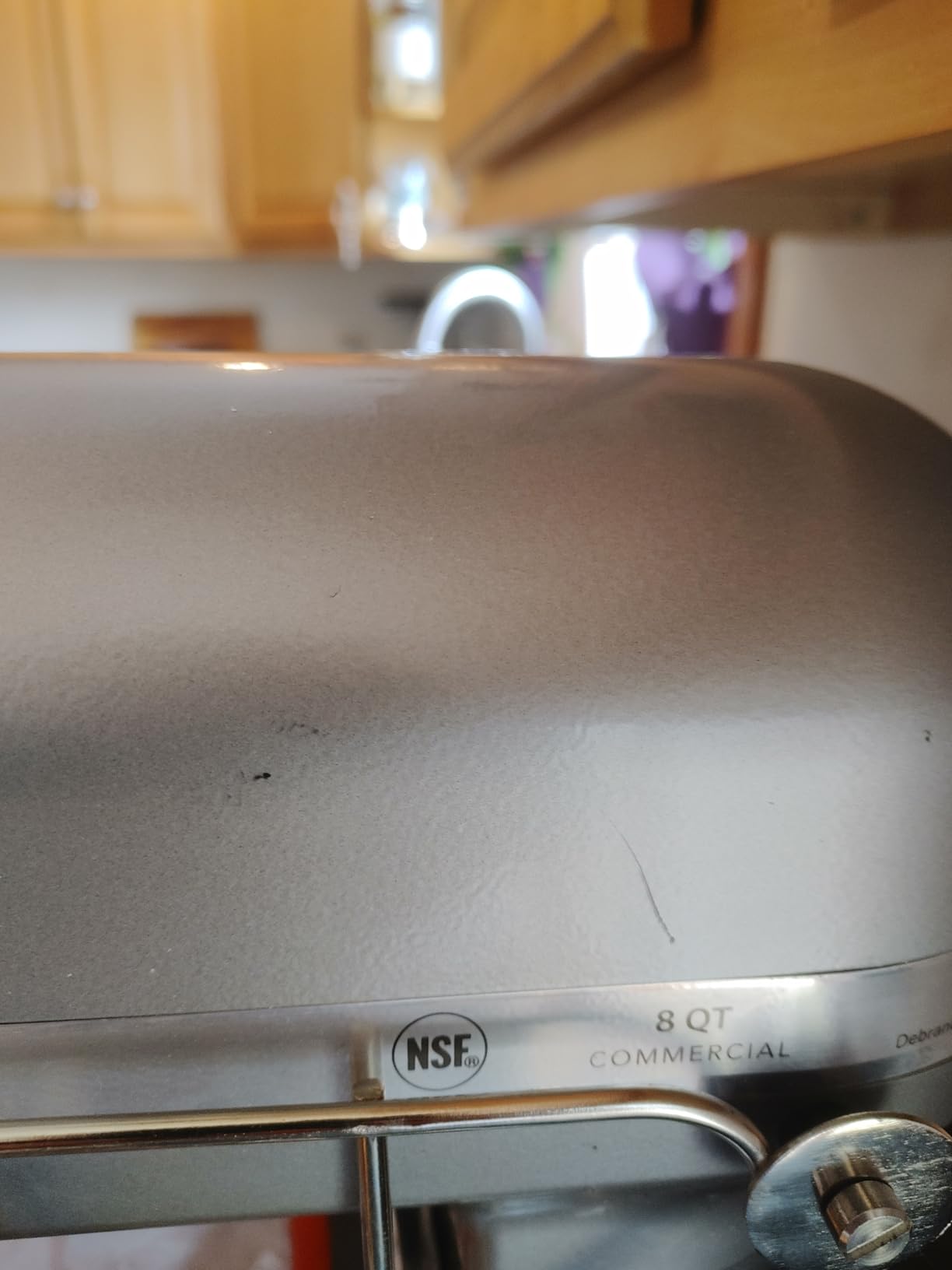
Review feedback emphasizes quiet operation and a stable bowl-lift. The summary also warns that the dough hook should not be used above speed 2, so training and speed discipline matter.
All-stainless attachments are dishwasher safe according to the product data. That is helpful for icing, meringue, and dough cleanup, although attachments still need to be fully dried before storage.
Choose KSMC895 for pastry shops and bakeries
It fits pastry shops that need a quiet bowl-lift, a commercial listing, and a sealed drive system. The guard and dishwasher-safe attachments make a strict sanitation routine easier to maintain.
If the menu is mostly dense bread or pizza dough, a spiral model may handle the product more directly. A planetary mixer remains more versatile when frosting, whipped cream, and fillings are central to the menu.
Confirm compatibility before expanding
Not every attachment works with every model, even within a familiar brand ecosystem. Check the exact KSMC895 attachment list before purchasing a slicer, grinder, or specialty beater.
Also confirm that the 110V specification matches your site. A commercial kitchen should identify the circuit, plug, and maintenance contact before the mixer becomes part of the production line.
7. VEVOR 15Qt Timing Function Mixer — Straightforward Commercial Prep
VEVOR 15Qt Commercial Food Mixer Timing Function 500W Commercial Mixer
500W motor
15 qt bowl
3 speeds
30-minute timer
Auto shutoff
Pros
- Large bowl
- Timer
- Food-grade steel
- Safety shield
Cons
- Low speed is fast
- Heavy
- Some QC reports
This VEVOR 15-quart configuration is aimed at bakeries, pizzerias, and restaurants that want a large bowl without a premium brand layout. It has a 500W gear-driven motor, three speeds, a 30-minute timer, and automatic shutoff when the shield is not closed.
The 15-quart stainless bowl is a good middle ground for teams that find an 8-quart bowl too small but cannot justify a 30-quart floor model. The 127.9-pound weight means two people should handle delivery and placement.
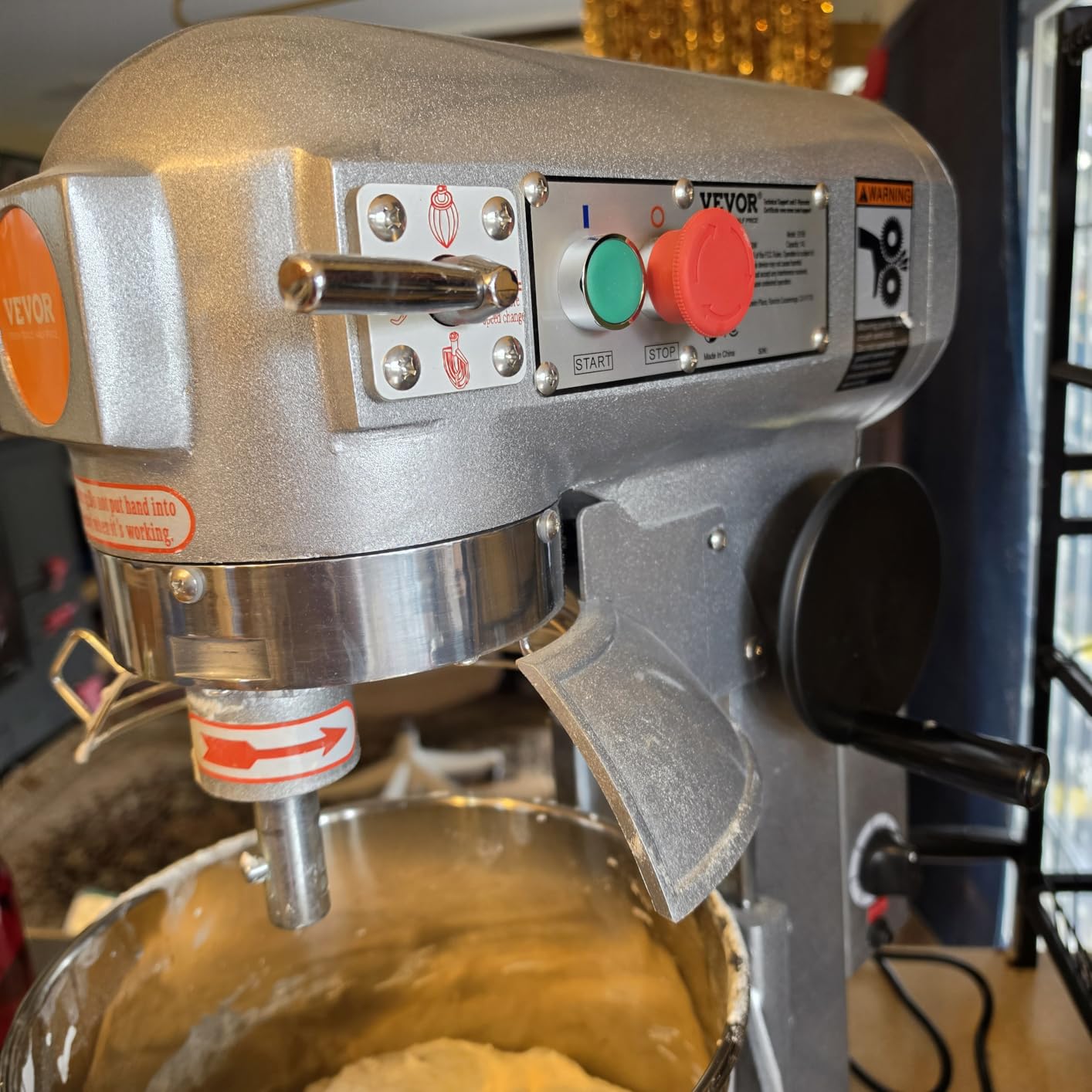
The data lists 70 dB, and the review summary says the lowest speed can still feel too fast for delicate dough. Start with the smallest amount of flour, add dry ingredients gradually, and do not assume “low” means planetary-mixer speed one.
The food-grade stainless bowl, hook, and rod are easy to wipe down. Reports of flour being thrown at higher speed and some quality-control complaints make supervision especially important during training.
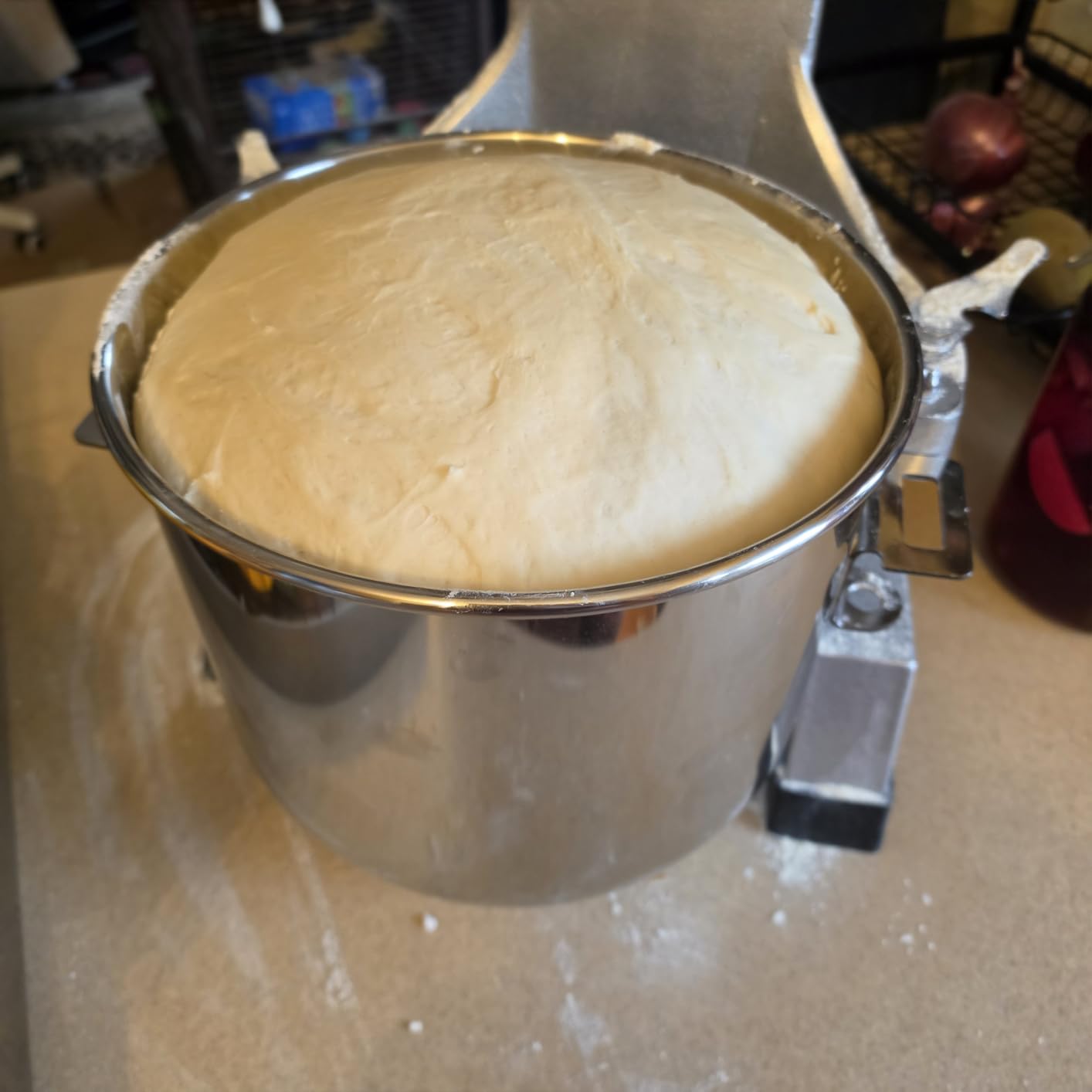
Choose this VEVOR for large, repeatable batches
It is a sensible budget-oriented choice for a small pizzeria or bakery that values bowl volume and timing over precise low-speed control. The automatic shutoff helps staff follow a repeatable process.
For whipped egg whites or delicate sponge batter, the lowest speed deserves a test before a full batch. A model with more speed steps may produce a more comfortable learning curve.
Make the safety shield part of the recipe
The interlocked shield is not a feature to bypass. Make sure it closes fully, and stop the mixer before adding ingredients through the chute or reaching toward the bowl.
Use a scale for flour and liquids, because overloading can increase heat and strain the gear train. Leave a realistic margin below the nominal bowl capacity for expansion during mixing.
8. Winco EMP-10 — Reinforced Planetary Workhorse
Winco 10 L White Commercial-Grade Planetary Mixer
750W motor
10 L bowl
3 speeds
Cast iron body
Interlocked guard
Pros
- Reinforced body
- High torque
- Quiet
- Versatile
Cons
- Too much for small batches
- Limited parts
- 1-year warranty
The Winco EMP-10 uses a 750W motor, cast-iron reinforced construction, and a gear-driven high-torque transmission in a 10-liter planetary format. It is designed for daily commercial preparation, including dough, batters, and frostings.
Its three-speed control and interlocking safety guard keep the interface simple for a trained kitchen. Review feedback describes it as quieter than expected and sturdy, though the sample of 17 reviews is smaller than the evidence available for most products here.
The 10-liter bowl offers useful capacity for medium and large batches, but the machine is not ideal for tiny recipes. The supplied bowl and attachments are also described as lighter than the robust body, so handle them with care.
The 1-year manufacturer warranty is shorter than the coverage listed for several KitchenAid, Waring, and ZACME products. Confirm replacement-parts availability before you buy, especially if this will be the only mixer on a production line.
Choose Winco for medium-batch prep
This model fits restaurants and small bakeries that need a reinforced planetary mixer without a large floor footprint. It is particularly attractive when a team values simple controls and sturdy construction.
It is a less compelling choice for a low-volume pastry station or a new home bakery that will mix one small batch at a time. Match capacity to the real recipe, not to the largest number printed on the spec sheet.
Protect the gear train with a load plan
Weigh ingredients and follow the manufacturer’s batch guidance. A heavy, dry dough can stress a gear-driven transmission, and a larger bowl does not justify filling it beyond the intended load.
Inspect the guard, bowl, and attachment pins at shift start. A small crack or loose fit can become a safety issue when the mixer reaches high speed.
9. Towallmark 15QT Mixer — Capable but Parts Matter
Commercial Food Mixer 15QT 600W 110V 3 Speeds Adjustable, Stand Mixer Dough Kneading Machine with Stainless Steel Bowl Dough Hooks Whisk Beater, With Safety Guard for Bakeries Restaurants Pizzerias
600W motor
15 qt bowl
3 speeds
3.5 lb dough
304 steel
Pros
- High capacity
- Food-grade bowl
- Easy cleanup
- Stable feet
Cons
- Parts hard to find
- Low speed is fast
- Some breakage reports
The Towallmark 15QT offers a 600W motor, 15-quart bowl, and a stated capacity of 3.5 pounds of dough at once. Food-grade 304 stainless steel and non-slip feet make it a practical-looking option for restaurants, bakeries, and pizzerias.
Its gear-driven transmission and three interchangeable attachments are the right basic architecture for commercial prep. The tradeoffs are important: review data reports that the low speed can be too fast for delicate dough, and replacement parts are difficult to find.
The 108-pound body should be installed in its final location. It is a large mixer, so check the floor or counter support and leave clearance for the safety guard, bowl adjustment, and cleaning.
Customer feedback also mentions some bowl and dough-hook failures within nine months. That does not mean every unit will fail, but it makes a pre-delivery inspection and a documented parts source non-negotiable.
Choose Towallmark for budget capacity
It may fit a value-focused bakery that needs more volume than an 8-quart machine and accepts a simple three-speed control layout. The stainless bowl and attachments simplify daily cleanup.
I would not choose it as the only mixer for a high-volume operation until parts and warranty service are confirmed. A single failed hook or bowl can stop a full production schedule.
Inspect before the first production batch
Check the bowl seating, hook balance, guard latch, and attachment pin under no-load operation. Listen for scraping or uneven rotation and stop immediately if the machine walks or vibrates.
Use a conservative dough weight and increase only after the first batches run normally. Heat, noise, and vibration are signals to reduce the load, not reasons to push through.
10. Ooni Halo Pro Spiral Mixer — Best Dough Development in a Compact Body
Ooni Halo Pro Spiral Mixer – Dough Stand Mixer with Attachments, 7.3 Quart Capacity and 58 Speed Settings – Charcoal Grey
650W motor
7.3 qt bowl
58 speeds
Spiral action
65 dB
Pros
- Spiral kneading
- 58 speeds
- Timer
- Compact
- LED bowl light
Cons
- Minimum 1 kg dough
- Whisk less effective
- 65 dB
- Support delays
The Ooni Halo Pro takes a different approach: a rotating bowl and spiral hook develop gluten while moving the dough efficiently. Its 650W motor, 7.3-quart removable bowl, and 58 speed settings give pizza and bread makers unusually fine control in a compact countertop body.
I would treat the 1kg minimum dough recommendation as a practical lower limit, not a marketing footnote. The spiral hook is designed for substantial dough, and a small load may not circulate as effectively as it would in a planetary bowl.
The 65 dB rating is not silent, and the review summary says it can be noisy like other powerful mixers. Its fan, timer, LED light, and dishwasher-safe bowl make long prep sessions easier to manage, but the whisk does not match a planetary mixer for every whipped application.
Customer support response times are a reported weakness. Before using the Halo Pro for a paid service, identify the local repair path, replacement bowl availability, and attachment compatibility.
Choose Ooni for bread and pizza dough
It is the most compelling choice here for a pizzeria, bread program, or serious home bakery that prioritizes gluten development and control. The 58 settings let the operator adjust hook speed instead of choosing among only three presets.
It is not the best all-purpose choice for a cafe that makes tiny batches, whipped cream, and delicate frostings. A planetary mixer remains the safer all-rounder for that menu.
Test the attachment and support ecosystem
The package includes a breaker bar, flexible beater, spiral hook, and geared whisk. Confirm that the attachments you want for your recipes are stocked locally, especially before a launch date or holiday production window.
Use the timer for dough development, but monitor the dough and bowl temperature. The rotating-bowl design is efficient, not immune to heat buildup, and a warm kitchen can still change fermentation behavior.
How to Choose the Right Commercial Stand Mixer
Choose a planetary mixer for versatility or a spiral dough mixer for bread. A planetary mixer keeps the bowl stationary while the beater travels around it, making it a strong all-rounder for cakes, cookies, icing, fillings, and moderate dough loads.
A spiral mixer rotates the bowl while a spiral hook travels through the dough. Forum bakers repeatedly describe that action as a better fit for bread and pizza, and the Ooni Halo Pro in this list reflects that workflow, though its 1kg minimum load means it is not a universal replacement for a small planetary machine.
Match bowl capacity to the recipe, not the largest batch you can imagine
An 8.4- or 8-quart machine is a sensible starting point for a cafe, small bakery, catering kitchen, or home bakery with several recipes each week. A 15-quart bowl suits a pizzeria or bakery that needs more dough per batch, while a 30-quart model belongs where several large batches are routine.
Bowl capacity is not the same as recommended dough weight. The VEVOR models list approximately 3.3 to 7.7 pounds of dough depending on size, and the Ooni recommends at least 1kg; follow the lower product-specific guidance and leave room for the dough to expand.
Read motor power alongside transmission and duty cycle
Wattage and horsepower help compare models, but they do not tell the whole story. A gear-driven transmission, cool-running DC motor, overload protection, and a stable bowl or body often matter more than a headline number when thick dough is mixed repeatedly.
For a small commercial kitchen, I would prioritize 500W or more, 10 or 11 speeds when recipe flexibility matters, and a motor designed for sustained use. A high-horsepower floor mixer is wasted if the electrical service, work surface, and team cannot support it.
Check NSF listing, safety, and service before the first shift
NSF/ANSI 8 certification or an NSF listing is an important signal for commercial food equipment, but local code requirements still control. Confirm the exact model listing, voltage, plug, guard, and installation requirements with the authority having jurisdiction.
Ask who stocks a replacement bowl, dough hook, beater, guard, control, and belt or gear component. A machine with fewer features can be the better purchase if the local repair network can keep it running.
Plan for heat, noise, and energy use
Heat becomes relevant during repeated dough batches or long whipped mixtures. High-efficiency DC motors and cooling fans help, but the load, room temperature, and batch interval still matter; let overheated components cool before the next demanding run.
Noise is a workplace issue, not just a spec-sheet detail. The ZACME is listed at 48 dB, while several VEVOR models are listed at 70 dB, and Ooni at 65 dB, so place noisy units away from customer seating and use hearing protection where the shift is long.
Energy use follows motor size, speed, load, and time. Use the lowest effective speed, shut the mixer off when the timer completes, and avoid running an empty or underloaded bowl; those habits reduce heat and electricity without changing the recipe.
Use attachments deliberately
Standard dough hooks, flat beaters, and whisps cover most core work, while slicers, grinders, and specialty tools can change the machine’s job. Our guide to stand mixer attachments can help you compare the ecosystem, but always verify the exact model and hub compatibility before ordering.
Do not let an attachment add weight beyond the model’s intended load. A commercial mixer is a safer investment when the standard tools are enough for the menu and replacement parts are easier to obtain.
Buy for the next three years
I would estimate a three-year cost rather than comparing purchase price alone: machine, guards, bowls, attachments, electrical work, cleaning labor, downtime, and warranty service all belong in the budget. A cheaper 15-quart model can be more expensive if its parts are unavailable or its batch limit forces a second purchase.
Keep a maintenance log, clean the bowl and attachment shaft after each shift, and inspect the guard and pins before operation. If storage is part of the plan, a proper baker’s rack can keep accessories organized without crowding the mixer.
Frequently Asked Questions
What is the best stand mixer for professional use?
The best stand mixer for professional use is the one sized to your real batch load. The ZACME is a strong compact choice for cafes, the VEVOR 30Qt suits higher-volume kitchens, and the Ooni Halo Pro is designed around bread and pizza dough.
What is the best mixer for commercial use?
For mixed bakery and restaurant work, the ZACME 8.4QT offers a compact footprint, 800W motor, 11 speeds, and NSF/ANSI 8-2023 certification. For mostly bread or pizza dough, the Ooni Halo Pro’s spiral action is the more direct choice.
What is the best brand of stand mixer?
Hobart is widely viewed as the durability benchmark, while KitchenAid is familiar and versatile, Ankarsrum is praised for quiet dough handling, and Waring and VEVOR offer commercial-style value. The best brand depends on whether you need bread performance, attachment breadth, service support, or a lower entry cost.
What mixers do bakeries use?
Bakeries commonly use planetary mixers for cakes, cookies, fillings, and general prep, plus spiral mixers for bread and pizza dough. A small bakery may use one versatile planetary machine, while a high-volume operation often uses separate dough and batter stations.
Conclusion
For most small commercial kitchens, the ZACME 8.4QT is the best-balanced pick because it combines 800W power, 11 speeds, quiet operation, and an NSF/ANSI 8-2023 listing in a manageable countertop body. Choose the VEVOR 30Qt for sustained batch volume, or the Ooni Halo Pro when bread and pizza dough are the priority.
Before you order, measure the space, confirm voltage and certification, test the proposed batch weight, and identify a parts source. That short check is the difference between buying a capable commercial stand mixer and buying a workstation your kitchen can actually keep working.