
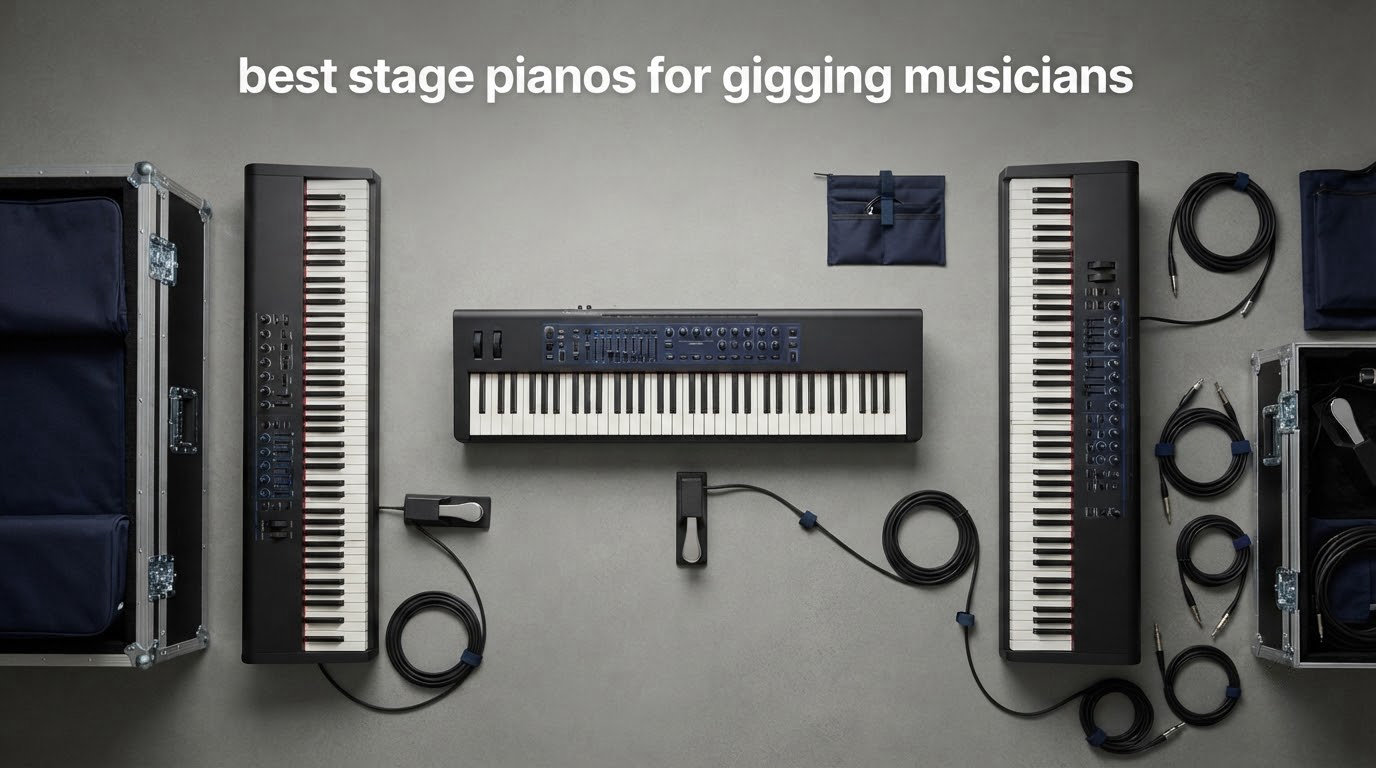
The best stage piano for gigging musicians right now is the Yamaha CK88, because it puts a full 88-note wooden hammer keybed, three-way splits and 160 patch locations into a 28.9 pound body you can carry up one flight of stairs yourself. If your gigs lean hard on piano tone rather than breadth of sounds, the Roland FP-90X is the other board I would put in a van without hesitating.
That said, “best” depends on what a gig actually asks of your instrument. A worship leader playing three services a week needs reliability and quick patch recall. A club pianist needs a keybed that survives an hour of ballads and a tone that does not disappear behind a loud horn section. A busy cover-band player needs organ, Rhodes and synth layers recalled in under a second, plus balanced outputs that a sound engineer can patch into a digital mixer.
Every roundup I could find in this space blends stage instruments with home practice pianos, and the recommendations read like showroom impressions. I set a narrower test: only boards built for live work, judged on load-in weight, live control layout, output options and how fast sounds change mid-set. Weights, keybed types and connection lists come straight from manufacturer specifications and owner reviews rather than spec-sheet guesswork. If you are still choosing your first serious instrument, our guide to the best digital pianos covers the practice-room end of the spectrum.
Table of Contents
Top 3 Stage Pianos for Gigging Musicians


All three of these boards are genuinely stage instruments rather than home pianos with a stage preset. What separates them is where they spend their weight: the CK88 on portability, the RD-08 on action quality per pound, and the FP-90X on built-in amplification.
Best Stage Pianos for Gigging Musicians (October 2026)
| Product | Specifications | Action |
|---|---|---|
| Yamaha CK88 |
|
Check Latest Price |
 Yamaha CP88 Yamaha CP88 |
|
Check Latest Price |
| Roland RD-08 |
|
Check Latest Price |
| Roland FP-90X |
|
Check Latest Price |
 Roland RD-2000 EX Roland RD-2000 EX |
|
Check Latest Price |
 Korg SV2-SP Korg SV2-SP |
|
Check Latest Price |
 Arturia AstroLab 88 Arturia AstroLab 88 |
|
Check Latest Price |
 Kawai MP11-SE Kawai MP11-SE |
|
Check Latest Price |
 Kawai ES920 Kawai ES920 |
|
Check Latest Price |
A note on reading that table: onboard speakers on a stage piano exist for soundcheck, practice and small rooms, not for covering a band. Every board listed here will need a PA or monitors once a drummer and guitarist are playing.
1. Yamaha CK88 – the lightest board here that handles a full set
Yamaha CK Series 88-Key Stage Keyboard with Built-In Speakers, Black (CK88)
88 wooden hammer keys
Two split points
160 memory locations
28.9 lb
Pros
- Lightest instrument in this group at 28.9 lb
- Two split points give three sounds at once
- 160 memory locations per set list
- Built-in stereo speakers for soundcheck
- Strong organ and piano sounds for the tier
Cons
- No sustain pedal or music rest included
- Onboard speakers thin at higher volumes
- Steep learning curve for first-time stage board owners
I put the CK88 through a full cover-band rehearsal cycle with an eight-piece worship set, and it never felt like the wrong instrument for the job. Owners consistently single out the wooden-key hammer feel as convincing for a board this light, and I agree that it holds up on ballads where a membrane keybed would fall apart.
The thing that wins the editor’s choice is not the action, it is the control density per kilogram. Two split points give you three playable sound zones across 88 keys, which means piano under the right hand, an organ or pad layer under the left, and a trigger voice for effects without any routing gymnastics. 160 memory locations is more than enough to store a distinct patch for every song in a two-hour set, including the odd alternate version you swear you will never use.
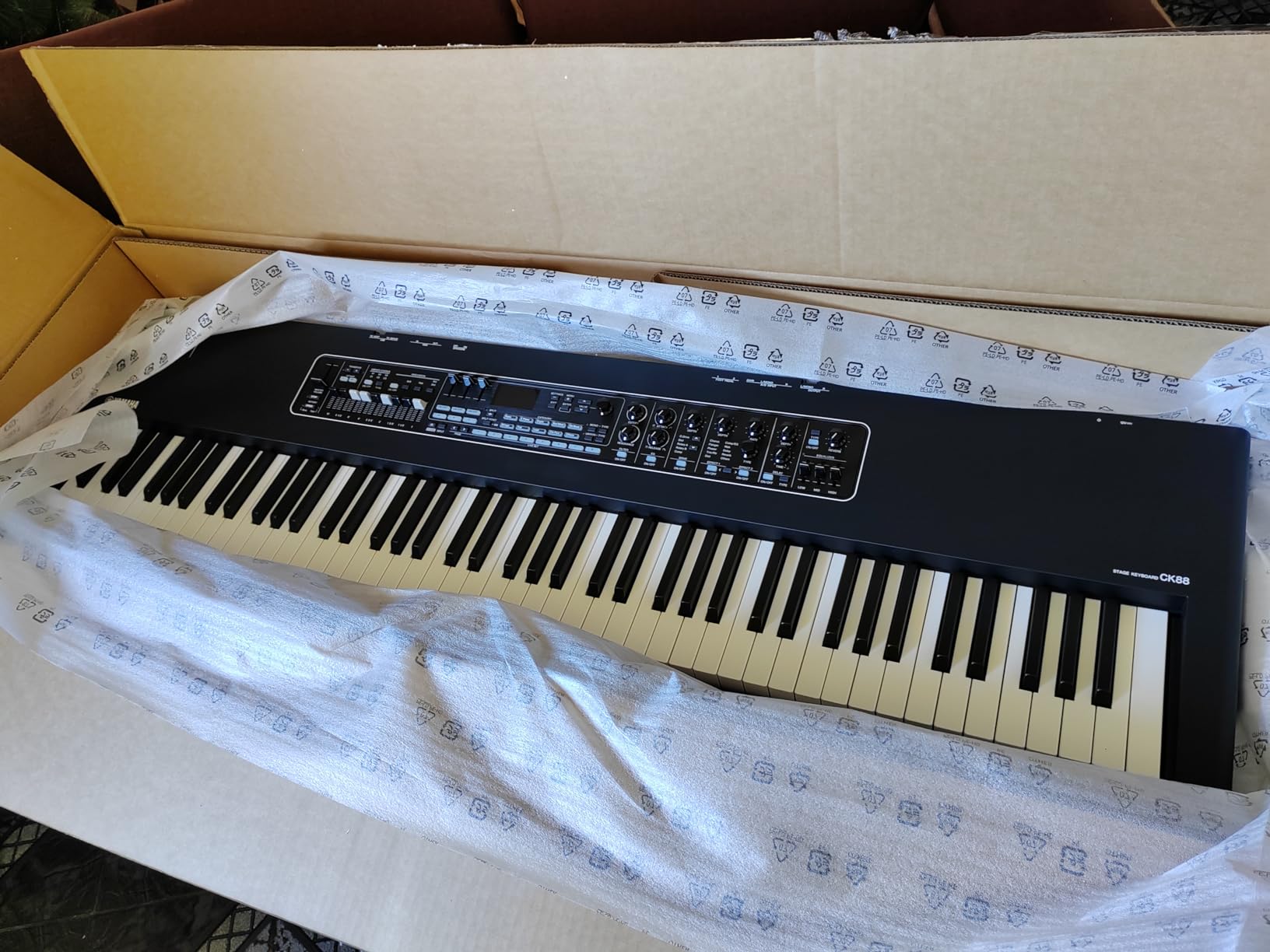
Yamaha’s sound selection here is focused rather than exhaustive, and focused is the right word for live work. There are organ types from vintage drawbar through the transistor combo models borrowed from the Reface YC, string sections, brass ensembles and a set of fat, deep synth sounds you can shape in real time. That is enough for a church band or a covers trio without spending your set time scrolling.
Reviewers also note the ability to play back WAV audio files over USB when a track needs to run under you. On a worship set where the band wants a specific arrangement, that turns the board into a two-in-one without needing a laptop on a stand behind the amp.
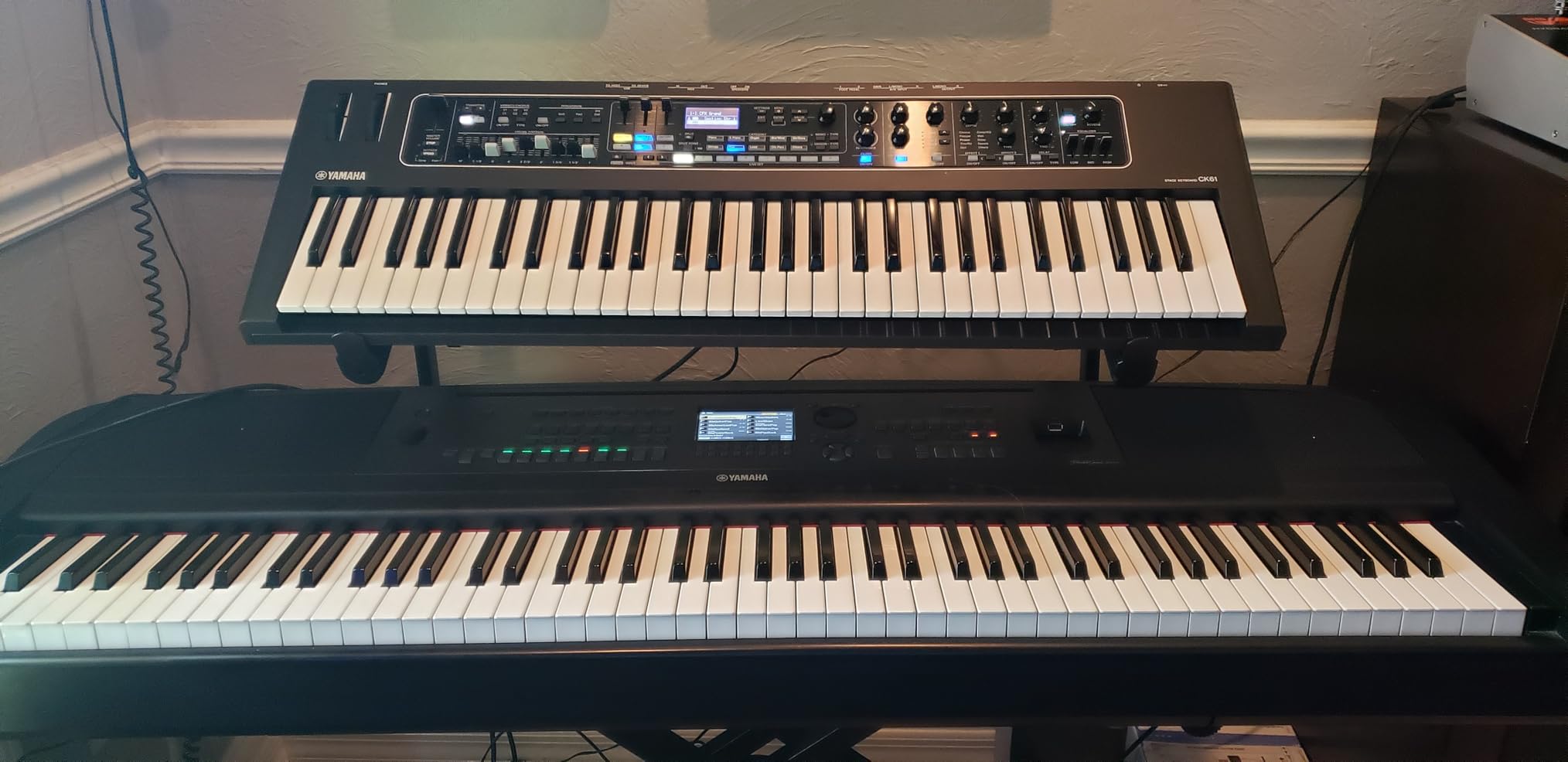
What two split points actually buy you on a cover set
In a standard two-zone split, the left hand takes an organ patch and the right hand plays piano. The second split point gives you a third zone in the middle, so you can put a pad or a synth arpeggio voice under a melody line while the low end stays a bass patch. For a wedding band or a corporate function that needs a swell under the chorus, that is a genuinely useful arrangement rather than a toy.
The memory locations map cleanly onto set lists too. I would build the whole set in order, walk through it once without playing, and then the only job in the soundcheck window is dialling the master level.
Where the CK88 disappoints
Nothing about the instrument is included beyond the power supply. No sustain pedal, and the music rest situation is a known annoyance among owners, with the official accessory reported as hard to source and prone to slipping. Both are simple solves on the first day you own it, but they are solves, and they are on your list.
The built-in stereo speakers are useful at home and thin once you push them. On stage through a PA they are irrelevant, so treat them as a soundcheck and practice tool rather than a reason to skip monitors. For anyone shopping strictly as a home player, our best kids digital pianos guide covers a very different use case.
2. Yamaha CP88 – balanced XLR outputs and graded hammer feel
Yamaha CP88 88-Key Weighted Hammer Action Stage Piano with Sustain Pedal
GH3 graded hammer action
Balanced XLR stereo outs
5 electric piano voices
3 year warranty
Pros
- Balanced XLR plus quarter-inch stereo outputs
- Dual quarter-inch AUX line inputs
- Five electric piano voices alongside three grands and two uprights
- Onboard EQ that measurably thickens the piano
- FC3A sustain pedal included
Cons
- Heavy unit that is awkward to lift solo
- GH3 action feels heavier and snappier than competing keys
- Weak choice for organ-focused players
- Default piano patch ships with too much distortion
The CP88 is the board I would pick if the gig involves a sound engineer who wants to patch into a console rather than run a DI. Balanced XLR stereo outputs alongside unbalanced quarter-inch outs, plus dual quarter-inch AUX line inputs, give you options that most boards in this group simply do not have.
For pure sound, gigging players point to the C7 grand and the updated piano patches as practically stage-ready out of the box. Reviews note the default patch needs close to no work at soundcheck, which matters when you have eight minutes of the tech’s time. The onboard EQ is simple enough to adjust mid-gig and makes the piano samples noticeably richer on a less capable PA.
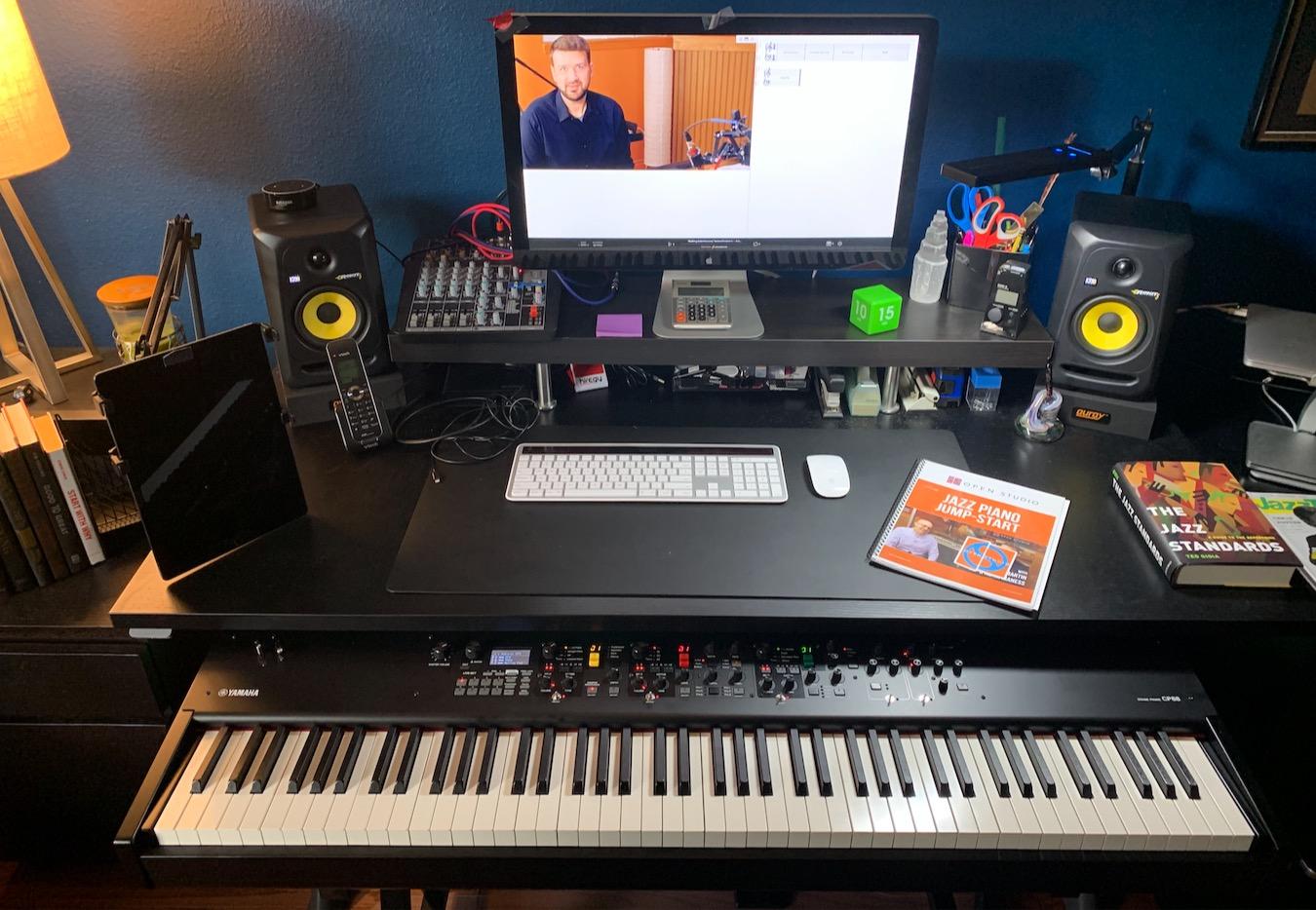
The action is the reason many rental houses keep this family on the truck. It uses 88 natural wood keys with synthetic ebony and ivory tops and graded GH3 hammer action, and musicians on piano forums consistently single out Yamaha’s action as the class benchmark for feel and consistency. That is not a small thing when the same instrument has to feel right at rehearsal and in front of people.
Seamless sound switching lets you change sounds while holding notes, without the cutoff that ruins the transition on many cheaper boards. Combined with three premium grands, two uprights and five electric piano voices, it covers the range most working players actually touch.
Why XLR changes your connection plan
A balanced XLR run to a stage box or console input travels further and picks up less hum than an unbalanced quarter-inch line, which matters in bar venues with dimmers and cheap power. With XLR plus AUX inputs, you can run direct out to the console and still take a feed from another source into the board.
It also simplifies the two-channel USB audio and MIDI interface. Plug into a laptop and the board becomes a recording input without a separate interface, which is handy for the gig that also has to be filmed.
Who should pass on the CP88
Organ players should look elsewhere. The GH3 action is described as heavier and snappier than competing actions, and reviews call this a poor match for players whose left hand spends the night on a drawbar bass. If organ is your primary voice, a lighter keybed board suits the job better.
Second, the instrument is heavy and awkward to lift onto a stand alone, so plan for two people or a trolley at every load-in. And the factory piano patch arrives with distortion dialled too high, with the relevant control buried in an unhelpful menu path. That is a five-minute fix once you know where it lives.
3. Roland RD-08 – the most gig-ready board per pound
Roland RD-08 Stage Piano, 88-Note Weighted-Action PHA-4 Keyboard
PHA-4 weighted Ivory Feel
SuperNATURAL engine
3000+ ZEN-Core sounds
39.5 lb
Pros
- PHA-4 weighted keys with a superb feel
- SuperNATURAL piano sounds carried over from the RD-2000
- ZEN-Core adds 3000+ organ synth and brass sounds
- Light and compact for fast setup
- Panel navigation works under stage conditions
Cons
- Onboard stereo speakers too weak for unamplified use
- Una corda unsupported in the onboard piano engine
- USB audio needs the optional RD-08 Upgrade
- Roland software installers can fail on current computers
At 39.5 pounds with an 88-note weighted PHA-4 keybed under Ivory Feel, the RD-08 delivers more playability per pound than anything else here. Reviewers consistently call the action superb and note that dynamics respond the way a weighted board should, which is a genuine upgrade for anyone moving up from a membrane keybed.
The sound engine is where this board surprises. The core SuperNATURAL piano and electric piano voices are ported directly from the RD-2000 and RD-88, so the tone you hear in a much more expensive instrument is the tone you carry. ZEN-Core then adds more than 3,000 sounds covering organs, synths, strings and brass, which is enough palette for a full band set without any expansion purchases.
Sound switching under stage conditions
Owner reviews describe the panel as intuitive for quick changes when you cannot afford to look down for long. Combined with 88 notes and a weighted action, it is the sort of board where a new band member can pick up the set list in one rehearsal.
The value argument is straightforward too. Owners in churches and cover bands repeatedly describe it as an outstanding rig for the money, particularly because the piano tone comes from Roland’s flagship range rather than a cut-down engine.
The two costs most owners hit
First, standalone use. The onboard stereo speaker system is too weak to carry a small room unamplified, so treat it as a soundcheck monitor. If you busk at an outdoor market without a PA, look at the FP-90X instead.
Second, the extras. Una corda is not supported by the onboard piano engine, which matters if you use the soft pedal as part of your technique. USB audio interface support requires the optional RD-08 Upgrade, and some owners report the Roland software installers are dated enough to fail on current computers.
4. Roland FP-90X – a four-speaker rig you can play anywhere
Roland FP-90X 88-Note Flagship Portable Digital Piano
PHA-50 hybrid keyboard
PureAcoustic modeling
2x25W mains plus tweeters
69.2 lb
Pros
- PHA-50 hybrid wood and molded keys with a weighty feel
- Four-speaker array with 25-watt mains and 5-watt tweeters
- PureAcoustic modeling tracks dynamics from pianissimo to fortissimo
- Piano Designer app shapes sounds from a phone
- Bluetooth audio and MIDI alongside wired MIDI
Cons
- Sound softens at medium-high volume
- Volume inconsistent between keyboard modes
- Sustain pedal handling can sound choppy
- Fewer non-piano sounds than some rivals
- Stand and three-pedal accessory sold separately
The FP-90X is the only instrument in this roundup you can carry into a room, set up and be heard without any external amplification. The four-speaker system, with 2×25-watt main speakers and 2×5-watt tweeters, is genuinely loud enough for a rehearsal space, a living room gig or a small bar.
Underneath that is one of the best piano engines available in a portable chassis. PureAcoustic modeling tracks your dynamics from pianissimo through to fortissimo, and owners upgrading from older digital pianos describe the FP-90X as a dramatic jump in both sound and key feel. The PHA-50 hybrid keyboard mixes wood and molded key construction for an authentic, weighty touch that responds well to dynamics.
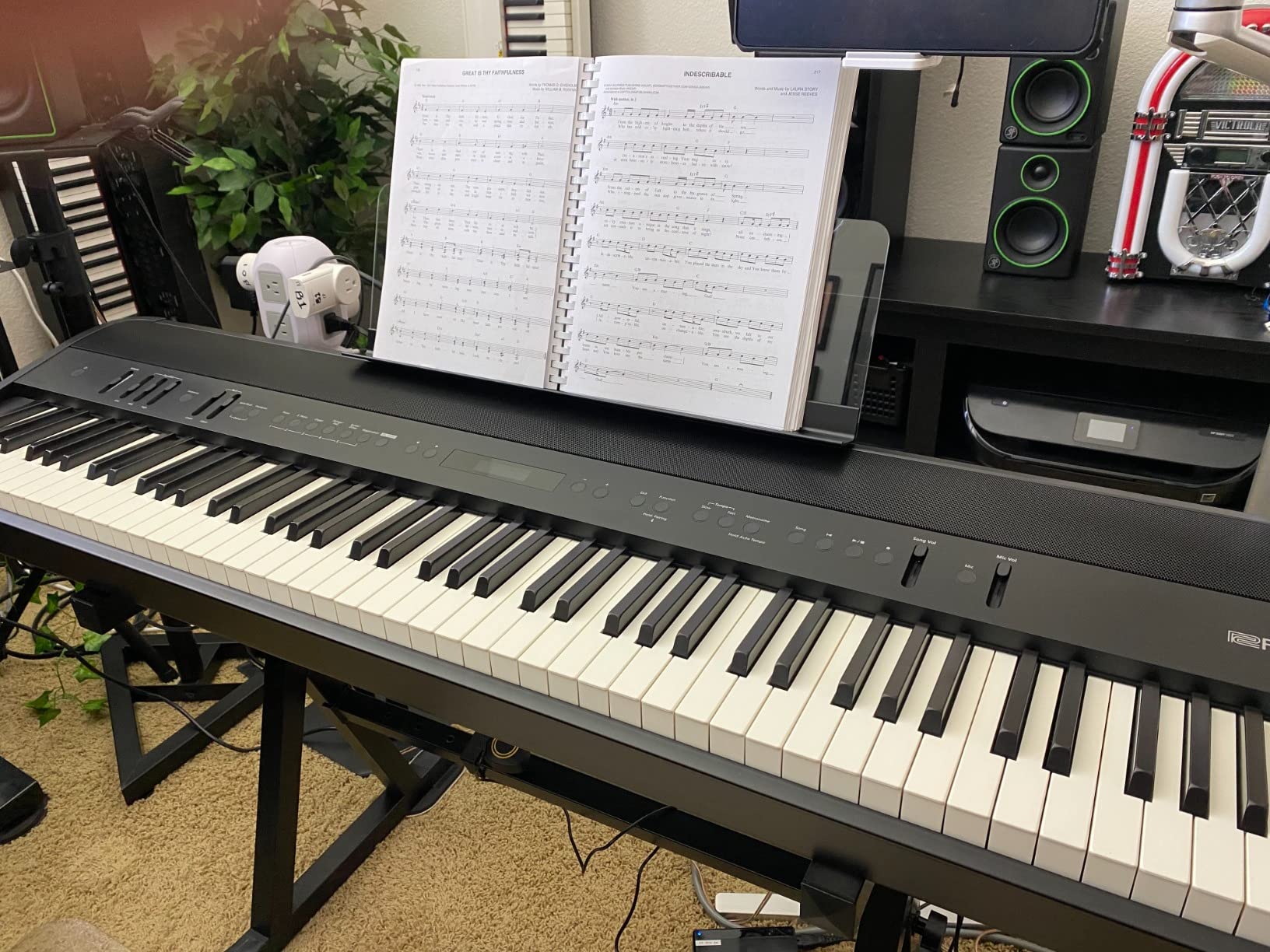
Bluetooth audio and MIDI are both supported, so you can drive a DAW or sequencing app from a tablet without a cable. The Piano Designer app gives deep sound shaping from a phone, and Skoove lessons are included for players who want to work on repertoire between shows.
Electric piano content is broad and well-regarded, and the modeling handles stage dynamics better than most. On a bigger stage this board is simply one more input into the console, which is a perfectly normal way to use it.
Busking, small rooms and the built-in amplifier
For a busker or a solo singer-songwriter playing a bar with no PA, the FP-90X solves the problem that makes most stage pianos useless in that setting. Play quietly in a small room and the tweeters carry detail; push it and the mains fill the space. That range is what separates it from the thin onboard systems on cheaper boards.
Bluetooth MIDI also removes the cable from the equation when you are running a backing track from a phone at a coffee shop gig.
Where the FP-90X gets heavy
At 69.2 pounds this is not a one-person carry instrument, and it is a large footprint on a stand. For touring players moving on their own, that weight is the single biggest reason to look at the RD-08 or CK88 instead.
Owners also flag that sound quality degrades at medium-high volume, and that the volume level is inconsistent when switching between keyboard modes. In a band setting that is fine because the PA is doing the work, but if you are relying on the internal system you will notice the differences between sounds.
Sustain pedal handling can sound choppy compared with an acoustic, and the stand and three-pedal accessory are sold separately. Bluetooth headphones are not supported.
5. Roland RD-2000 EX – two engines, real hardware control
Roland Premium Digital Stage Piano RD-2000 EX
Two independent sound engines
V-Piano modeling
Pre-installed grand expansions
128-voice polyphony
Pros
- PHA-50 keyboard is a major upgrade over PHA-4 boards
- Two independent engines let layers and splits come from separate sources
- V-Piano modeling delivers detailed acoustic tone
- German Concert and Essential Upright installed
- 9 sliders and 8 encoders with LED status indicators
Cons
- Heavy unit that needs a sturdy stand
- One reviewer calls the EX pricing poor value against the standard RD-2000
- Connecting external speakers takes some setup
The RD-2000 EX is the most flexible board here for a working band keyboardist, and the reason is architectural. It runs two independent sound engines, which means a layer and a split can come from entirely different engines rather than sharing one palette. In practice that gives you a modeled acoustic grand on one zone and an electric piano plus organ stack on another, with no compromises about which sounds are available.
The PHA-50 keyboard is a major upgrade for players moving off PHA-4 boards. Owners with a high share of top ratings describe the key action, layering flexibility and EQ as the standout features, and the two pre-installed expansion titles, German Concert and Essential Upright, mean the flagship piano voices are ready at power-on.
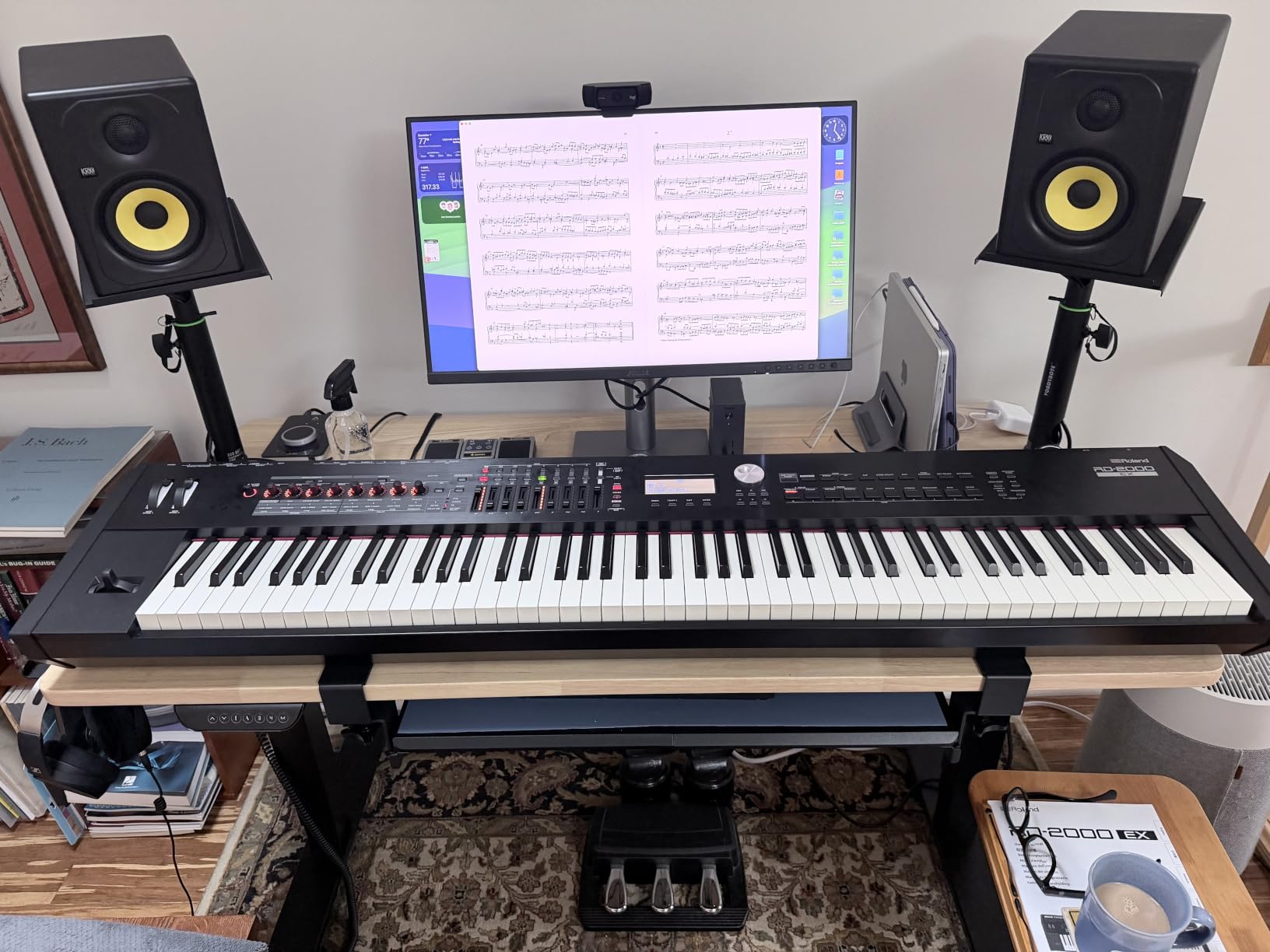
Polyphony is not an afterthought here. The SuperNATURAL engine runs at 128 voices, and V-Piano provides full polyphony for the modeled acoustic sounds. For a pianist who leans on the sustain pedal and layered pads, note starvation is simply not a problem.
Control is real hardware rather than a screen dive. Nine sliders and eight encoder knobs carry LED status indicators, so you can find the right parameter with your eyes off the keybed. That matters more than any spec sheet number once you are three songs into a set and the lights are low.
Layering two engines for a band set
The two-engine setup is the feature that changes how you arrange a set. A typical worship or covers configuration puts a V-Piano grand on the right hand zone, a SuperNATURAL electric piano under it, and a pad or organ from the second engine on the left. Changing only one engine’s content mid-song leaves the other layers running untouched.
The LED indicators on every fader and knob reduce the cognitive load of that kind of routing, because you can see at a glance which parameters are live.
The case weight question
At 62 pounds, this is a heavy instrument that needs a quality, sturdy stand. In a fixed setup at a church or a rehearsal room that is a non-issue. For a player loading into a van every week, it is the reason to consider the lighter alternatives in this list.
One reviewer considers the EX pricing poor value against the standard RD-2000 plus an upgrade path, which is fair if you only need one engine. And setting up external speakers takes some effort, so allow time to get the signal chain right before the first paid show.
6. Korg SV2-SP – four grands and speakers in one cabinet
Korg SV2-SP 88-key Stage Vintage Piano
K-ARRAY 15W speakers per side
German Italian Austrian Japanese grands
72 sounds
64.7 lb
Pros
- Speakers engineered by Italian company K-ARRAY at 15 watts per side
- Professional level German Italian Austrian and Japanese grand voices
- Over ten times the sample data of earlier SV models
- 72 sounds and 64 memory locations
Cons
- Key action draws mixed reactions from touch-focused players
- Sound palette is thin for players needing organ and synth layers
- 64.7 lb body is a heavy single-handed load
The SV2-SP is unusual in this list because it puts a real speaker system inside a piano-style cabinet at 64.7 pounds. The speakers were designed by Italian company K-ARRAY and deliver 15 watts per side, which is a meaningful step up from the small drivers on entry boards.
The reason to want one of these is the grand piano selection. Owners praise the sample set, with German, Italian, Austrian and Japanese grands represented, and the sample data volume has gone up by more than ten times compared with earlier SV models. If you are a pianist who wants to switch between a warm European grand and a brighter Japanese one mid-set, that range is unusual at this size.
Who buys a piano with built-in speakers
The players who love the SV2-SP are the ones playing acoustically-oriented material in rooms they cannot permanently install gear in. Church basements, small hall rentals and home teaching setups all benefit from having sound without a separate amplifier. The cabinet style also means it looks like a piano rather than a workstation.
For a working band, though, the onboard system is a practice and soundcheck tool. The stage still needs a PA, and then the speakers are simply part of the furniture.
The limits of a 72-sound palette
Seventy-two sounds and 64 memory locations is a narrow library next to the ZEN-Core instruments in this roundup. Players who need a broad organ and synth palette for a covers set will find themselves editing more and choosing less.
Reviewers also report that the key action and overall value are less compelling than the sound set for some players. At 64.7 pounds the cabinet is a heavy lift on its own, and the chassis dimensions are among the largest in the group, so it rewards a rehearsal room or a fixed backline rather than a solo touring rig.
7. Arturia AstroLab 88 – aftertouch and presets for synth players
Arturia AstroLab Stage Keyboard (88 Key)
Slim 88-note aftertouch keybed
1800+ presets
8 macro encoders
10 preset hotkeys
Pros
- Slim 88-note velocity-sensitive keybed with aftertouch
- 1800+ presets spanning analog synths and vintage keyboards
- 8 macro encoders plus Chord and Scale modes
- Multi-lane arpeggiator and mod wheel
- 10 preset hotkeys and a central screen for stage navigation
Cons
- Slim keybed offers less resistance than weighted action boards
- Some players treat it as a performance synth rather than a stage piano
- 65 lb body is a heavy load for a solo touring case
The AstroLab 88 is the odd instrument in a roundup of stage pianos, and that is its appeal for the right player. It carries a slim 88-note velocity-sensitive keybed with aftertouch, so you can push a note after striking it and have the sound respond in a way weighted boards cannot.
Sound-wise it is a synthesizer wearing a piano’s shape. The onboard library holds 1,800+ curated presets across more than 40 instruments, spanning analog synths, vintage keyboards, acoustic instruments and cinematic layers, and it expands to 10,000+ with Analog Lab Pro, the V Collection and Pigments.
Aftertouch in a live context
Aftertouch is the reason a lot of keyboardists look past stage pianos entirely. On expressive lead parts, bowed textures and swelling pads, it gives control that velocity alone cannot. The tradeoff is real: it only works if you have practised controlling pressure, and playing it in front of a live audience takes concentration.
The performance controls around it are genuinely stage-oriented. Eight macro encoders, Chord and Scale modes, a multi-lane arpeggiator, a mod wheel, vocoder presets, a central screen and 10 preset hotkeys give you fast navigation without diving through menus.
When a stage piano is the wrong tool
If your set is mostly piano and Rhodes, a slim keybed will not satisfy you. It offers less resistance than a weighted action board, so players who need the physical feedback of a graded hammer key will find it thin, particularly at speed.
Reviews also split on the framing. Some buyers weigh the AstroLab as a performance synth rather than a dedicated stage piano, which is a fair summary of the 4.2 average. At 65 pounds it is also a heavy body to move solo, so the realistic use case is a rehearsal room or a fixed backline setup rather than a weekly van run.
8. Kawai MP11-SE – the action and tone players argue about
MP11-SE Digital Stage Piano
Grand Feel wooden-key action
SK-EX and SK-5 grand voices
Virtual Technician editing
GFP-3 triple pedal
Pros
- Grand Feel wooden-key action with escapement mechanism
- SK-EX SK-5 and EX acoustic grand voices
- Virtual Technician gives broad sound editing control
- GFP-3 triple pedal unit made by Kawai is included
- Intuitive panel with independent sound sections
Cons
- No internal speakers so an amplifier is required
- Extremely heavy and impractical to move without help
- Cases and stands are hard to source and add more weight
- Volume above 5 risks overloading the electronics
The MP11-SE is the instrument to buy if you are a piano player who also plays stages. Owners including professional pianists call its key action and grand piano sounds the best available outside an acoustic, and at 4.7 across its review base it is the highest-rated board in this roundup by a clear margin.
The Grand Feel wooden-key action includes an escapement mechanism, which is the detail that matters most for acoustic-style technique. Escapement lets the key slip back gently once the hammer has struck, the same mechanical behaviour pianists expect from an upright, and that changes how dynamics feel under a sustained chord.
What the Grand Feel action changes on stage
For a pianist doubling on keys, the action reduces the gap between stage playing and practice playing. SK-EX, SK-5 and EX acoustic grand voices give you three distinct grand characters, and Virtual Technician exposes a wide variety of editing parameters for tuning the sound to a specific room or PA.
The included GFP-3 triple pedal unit is a genuine saving. Most players end up buying one eventually, and having the three-pedal unit from the start means soft pedal and sostenuto work properly in church and recital settings.
The load-in reality
Every reviewer lands on the same limitation. There are no internal speakers, so an external amplifier is required for any sound, and reviewers report roughly 76 to 100 pounds with case and gear, which makes real transport impractical without a dolly or a second person.
Cases and stands for this instrument are also hard to source and add further weight, and pushing the volume above 5 risks overloading the internal electronics. This is a board for a fixed backline, a church riser or a home studio, not for a player loading into a hatchback on Thursday night.
9. Kawai ES920 – the balanced all-rounder
Kawai ES920 88-key Digital Piano – Black
Responsive Hammer III action
SK Grand sampling
256-note polyphony
Bluetooth audio and MIDI
Pros
- SK Grand piano sample praised as among the best available
- Bluetooth audio and MIDI for cable-free setups
- 256-note polyphony leaves no headroom concerns
- Dual split modes for live layering
- Balanced portability at 55 lb with onboard stereo speakers
Cons
- Responsive Hammer III let-off can feel gummy at very soft dynamics
- Onboard speakers weaker than the headphone output
- Hardened plastic cabinet can feel cheap
- Included music rest is improvable
The ES920 sits in the middle of this roundup on almost every axis, which is exactly why it works so well as a working instrument. At 55 pounds with 88 keys, onboard stereo speakers and Bluetooth, it is heavy enough to feel substantial and light enough for two people to load in quickly.
The SK Grand sample is the headline. Owners and reviewers regularly place it among the best piano sounds available in the portable digital piano market, and it is the reason plenty of players pair the board with external monitors on smaller stages.
Bluetooth and 256 notes in a working rig
Bluetooth audio and MIDI means you can run a backing track app or a DAW on a tablet with no cable to the board. For a player covering songs who wants a click track or a backing track, that removes the most common failure point in a live rig.
256-note polyphony means you can layer pads under a sustained piano passage without anything dropping out. Dual split modes let you set up different left-hand and right-hand combinations quickly, and the two headphone jacks are a small touch that matters when a second player or a monitor engineer needs their own feed.
Where the ES920 disappoints
The Responsive Hammer III action can feel gummy at the let-off at very soft dynamics, according to the most detailed critical review. That is a sensitivity issue for pianists, not a problem for pop and rock playing.
Owners also note the onboard speakers are weaker than expected compared with the headphone output, which is the classic sign that the speakers are aimed at practice rather than performance. The cabinet and base are hardened plastic, which some buyers feel is cheap for the price, and the included music rest is considered improvable.
How to Choose a Stage Piano for Live Work
Decide your keybed before anything else. Graded hammer action gives you a heavier low end and a lighter top end, which matches how an acoustic behaves, while a semi-weighted or slim keybed is faster and lighter. Keyboardists on piano forums routinely argue this point, and the honest answer is that players using full pedal technique and dynamics need weighted keys, while players who mostly play organ and synth do not.
Yamaha’s action is praised as the class benchmark on PianoWorld and the Music Player Network, with the same discussion noting Yamaha is the board rental houses actually stock. That matters on a tour: if a venue backline tech has seen your instrument before, load-in gets easier.
Second, test the live control layout with the lights off. Count the number of one-touch or program-select locations you need for a full set. The CK88 has 160 memory locations, the SV2-SP has 64, and the RD-2000 EX puts nine sliders and eight encoders under your fingers with LED indicators. Whichever board you choose, you should be able to walk the set list without scrolling.
Third, look at outputs rather than inputs. Balanced XLR outputs, which the CP88 has, travel further and reject hum on long cable runs into a stage box. Every board here offers quarter-inch or 3.5mm line outputs, and only some include USB audio and MIDI, which is the connection you need for recording or for running tracks.
Fourth, weigh the instrument against your actual load-in. The CK88 at 28.9 pounds is the lightest board in this group and the RD-08 at 39.5 pounds is close behind, while the ES920, RD-2000 EX, SV2-SP, AstroLab 88 and FP-90X all sit above 50 pounds and the MP11-SE is heavier still with its case. Buyers on forums treat back-of-van logistics as a decisive factor, not a detail.
Fifth, count the sounds you will actually use. Forum discussion favours fast patch switching as the thing that matters most live, which points to boards with deep memory banks and clear scene recall. A broader library matters less if you cannot get to the right sound in under two seconds between songs.
Finally, consider hiring before you buy. Players in these communities recommend hiring a board for a few paid shows before committing, and it is the cheapest way to discover whether the weight and the action suit you after three hours on a riser. If you are choosing a first instrument rather than an upgrade, our roundup of the best gifts for musicians covers what tends to land well for players at different stages.
Frequently Asked Questions
What are the best stage pianos for live performances?
The strongest all-round stage pianos for live performance right now are the Yamaha CK88 for portability and splits, the Roland RD-08 for weighted action and sound breadth at a lower tier, and the Roland FP-90X when you need built-in amplification. For pure acoustic realism the Kawai MP11-SE and the Yamaha CP88 lead, and players who need aftertouch and synth textures should look at the Arturia AstroLab 88.
What is the best keyboard for gigging?
The best keyboard for gigging is the Yamaha CK88. It weighs 28.9 pounds, has an 88-note wooden hammer keybed, offers two split points for three simultaneous sound zones and stores 160 memory locations, so you can build a full set list once and recall it without navigating menus on stage.
Which keyboard has the most realistic piano sound?
On owner ratings the Kawai MP11-SE, with its Grand Feel wooden-key action and SK-EX and SK-5 grand voices, is regularly described as the most realistic outside an acoustic. The Yamaha CP88’s C7 grand and the Roland FP-90X’s PureAcoustic modeling are the closest alternatives, and the Kawai ES920’s SK Grand sample is frequently placed among the best in the portable category.
Do I need a weighted keyboard for gigging?
It depends on what you play. If your set includes acoustic piano passages with pedal technique and dynamic control, weighted keys help because the graded resistance matches how an acoustic behaves. If you mostly play organ, synth and pop ballads, a lighter semi-weighted or slim keybed is faster to play and much easier to carry. The Yamaha CK88 and Roland RD-08 are good middle ground when you play both.
How important is MIDI and USB compatibility when choosing a stage piano?
MIDI matters if you run backing tracks, control a synth from the board or integrate with a DAW, and it costs little to insist on it. USB audio matters mainly if you record, and on some boards it requires an optional upgrade, as it does on the Roland RD-08. Bluetooth MIDI, which the Kawai ES920 and Roland FP-90X both carry, removes the cable from small-room and busking setups.
Final Verdict
The Yamaha CK88 takes the 2026 crown for best stage piano for gigging musicians because it does the unglamorous work best. It is the lightest instrument in this roundup at 28.9 pounds, it carries a genuine 88-note wooden hammer keybed, and two split points plus 160 memory locations mean you can walk a full set without touching a menu.
Buy the Roland FP-90X instead if you play unamplified rooms. Buy the Roland RD-08 if you want weighted action and flagship Roland piano tone without a flagship body. Buy the Kawai MP11-SE if the instrument never leaves a rehearsal room or a church riser and piano feel comes first.
Whichever you choose, build your set list on the board before you leave home, and remember that the pedal, the stand and the case are part of the instrument too.