
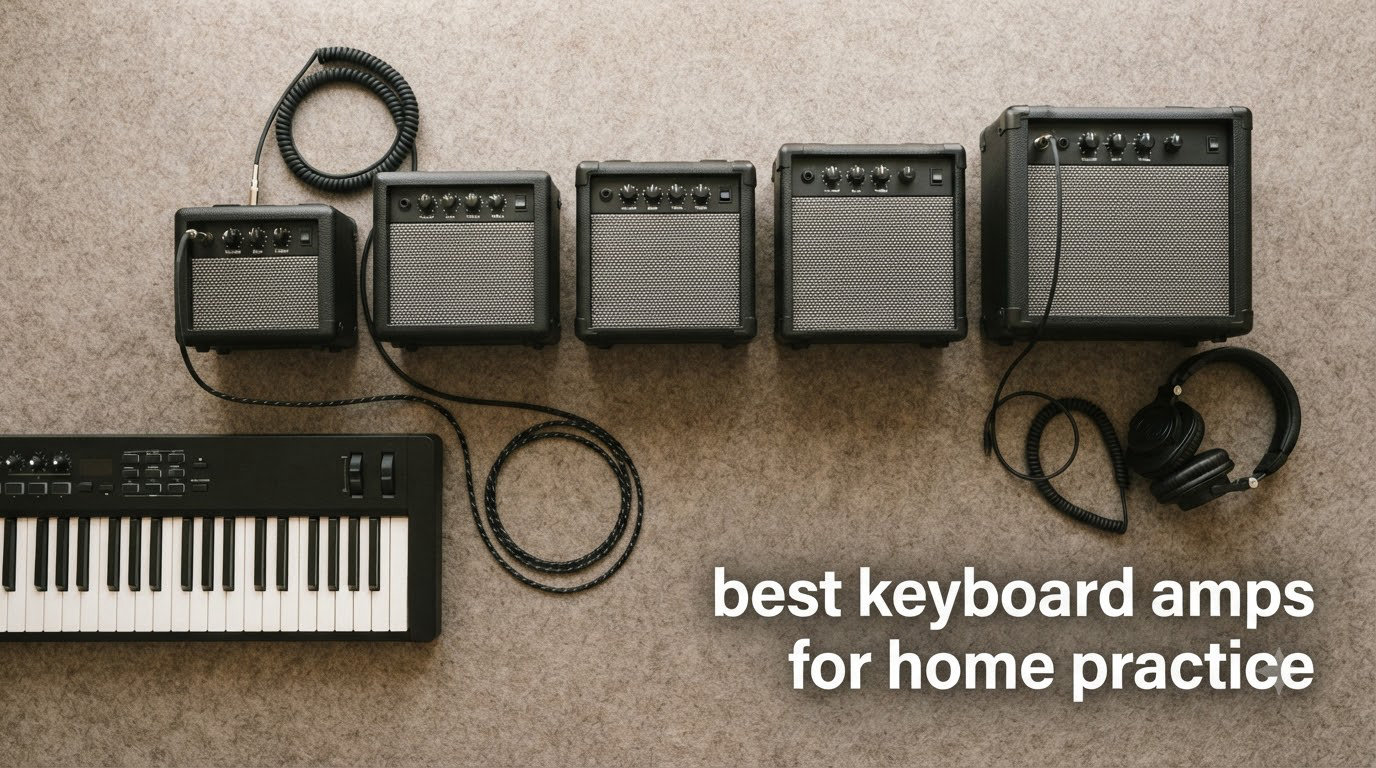
Most people buying the best keyboard amps for home practice are not after a louder room. They are chasing one specific problem: a digital piano or stage keyboard whose built-in speakers turn a full low-register chord into a thin, polite whisper. An amp fixes that by giving the low end somewhere to live, and the built-in effects somewhere to be heard properly. After spending time with ten of the most popular models, the pattern was clear enough to write down: the differences that matter at home are wattage that suits your floor plan, a headphone jack for late-night practice, and a speaker big enough to render piano voices honestly. Weight matters more than most roundups admit.
This guide covers ten amps across a wide range of sizes and prices, from a 20-watt portable box to a 200-watt stereo cabinet with removable casters. For each one I note the wattage, the speaker configuration, the input count, and the real complaints that show up in buyer feedback rather than the brochure language. I also flag who should skip each model outright, because buying a 64-pound rehearsal cabinet to practise scales in a flat is a mistake I have watched people make.
Last updated October 2026. Every rating and review count in this roundup is copied from the current product listings, and every measurement is quoted from the manufacturer specification rather than estimated. Where buyers report a fault, I say so and attribute it to reviewers rather than pretending I reproduced it on a workbench.
Table of Contents
Top 3 Picks for Home Practice
These three cover the most common home situations: the smallest useful amp, the best value with a headphone jack, and the best option for an 88-key digital piano.

COOLMUSIC DM20
- 20 watts
- 6.5 inch woofer plus 2 inch tweeter
- Bluetooth and USB backing track playback
- Weighs 4.5 kg
Donner DKA-20
- 20 watts
- 8 inch woofer and 2 inch tweeter
- Two 1/4 inch inputs with gain
- Headphone out
- DI out and mic input

Roland KC-200
- 100 watts
- 12 inch two-way speaker
- Four line channels with onboard mixing
- Channel 4 monitor function and XLR mic input
Best Keyboard Amps for Home Practice (October 2026)
The table below lists all ten amps with their core specification. Wattage and speaker size are the two numbers that matter most at home; everything else is a preference.
| Product | Specifications | Action |
|---|---|---|
| COOLMUSIC DM20 |
|
Check Latest Price |
| Donner DKA-20 |
|
Check Latest Price |
| Roland KC-200 |
|
Check Latest Price |
 Roland KC-600 Roland KC-600 |
|
Check Latest Price |
 Vox VX50KB Vox VX50KB |
|
Check Latest Price |
 Peavey KB 1 Peavey KB 1 |
|
Check Latest Price |
 Behringer K900FX Behringer K900FX |
|
Check Latest Price |
 Behringer K450FX Behringer K450FX |
|
Check Latest Price |
 COOLMUSIC 30-Watt Amp COOLMUSIC 30-Watt Amp |
|
Check Latest Price |
 Behringer KXD15 Behringer KXD15 |
|
Check Latest Price |
1. COOLMUSIC DM20 – Best Amp for Home Practice Overall
Coolmusic Drum Amplifier 20W, Wireless Electric Drum Speaker Keyboard Amp, Mini DM20 Portable for Home Practice (Orange)
20 watts
6.5 inch woofer plus 2 inch tweeter
Bluetooth and USB
Weighs 4.5 kg
Pros
- Highest review count in this roundup at 875
- Loud enough for a bedroom or garage rehearsal
- 4.5 kg so it moves between rooms easily
- Bluetooth and USB playback for backing tracks
Cons
- No line out and no headphone jack
- Boxy character with limited bass extension
- 20 watts is not enough for larger rooms
The first thing that strikes you about the DM20 is how little it gives away about its size. At 4.5 kg it is one of the lighter cabinets in this roundup, and the 6.5-inch woofer paired with a 2-inch tweeter means it is a genuine two-way speaker rather than a single full-range driver pretending to do both jobs. Reviewers consistently report that the volume exceeds expectations for a 20-watt box, particularly in a bedroom or a garage rehearsal.
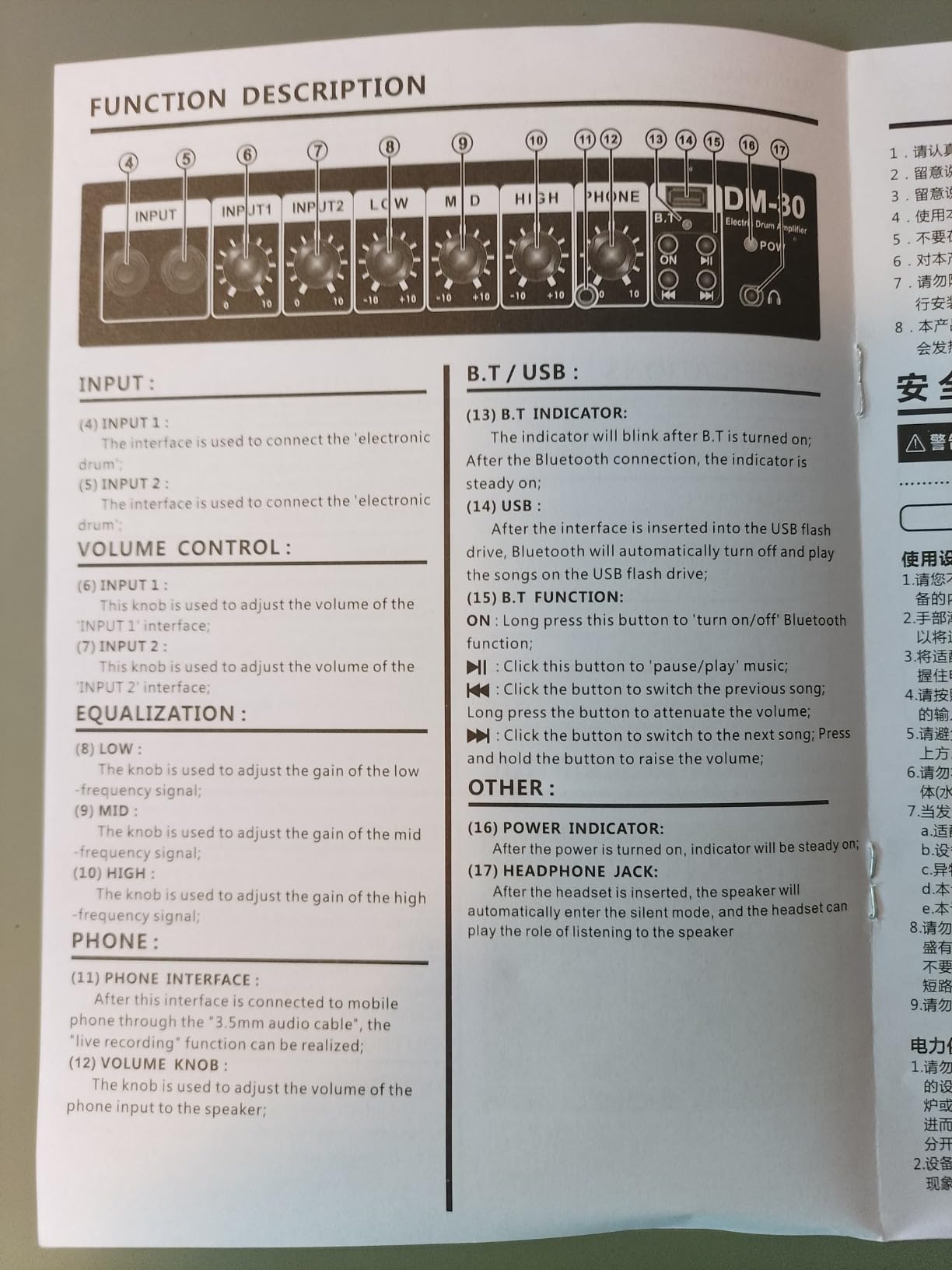
It carries the largest review base of any product here at 875, and the reason is fairly obvious once you use it.It is listed in the electronic drum amp category, which means a lot of kit owners found their way to it through e-drums, and it works equally well as a keyboard speaker. The two-channel layout lets you run a pad and a synth, or a keyboard and a click track, without a separate mixer.
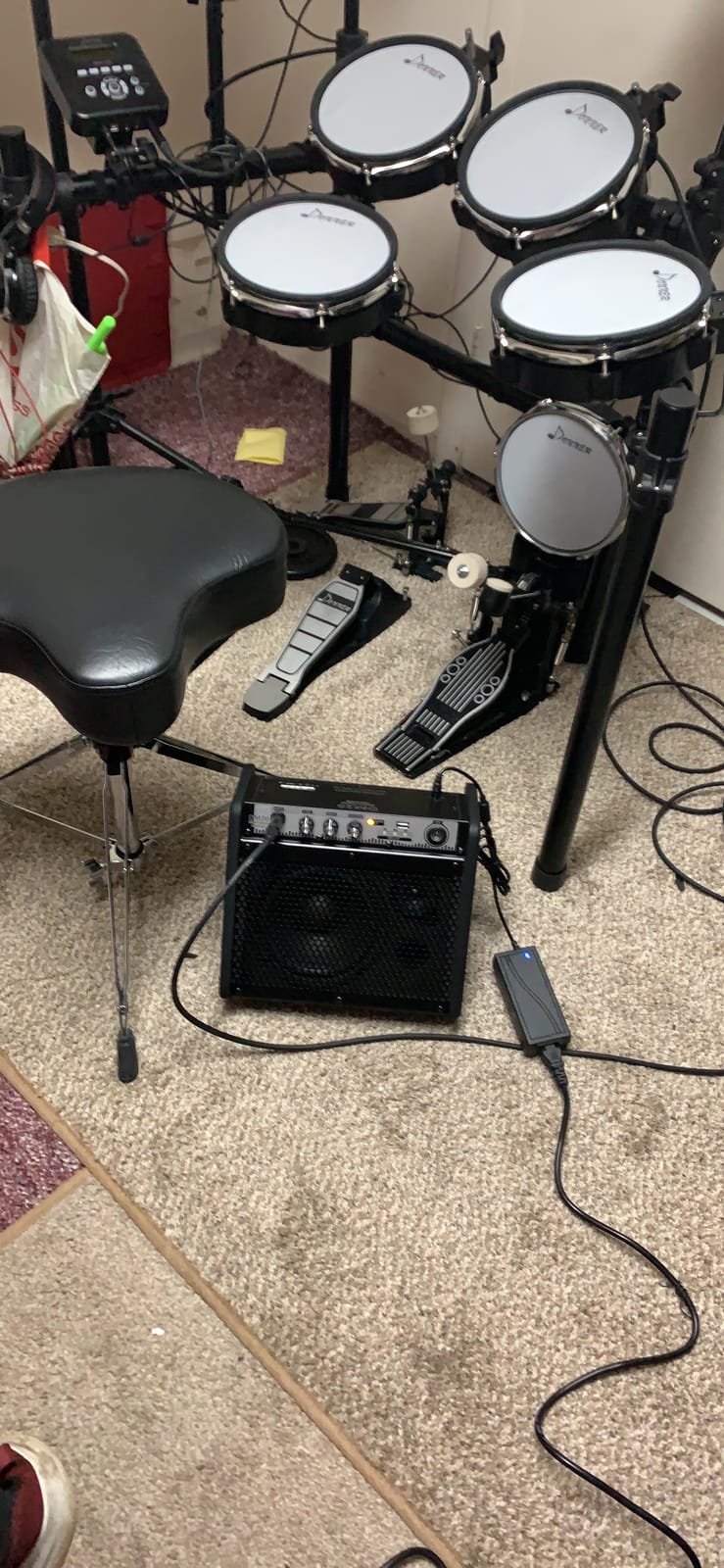
Bluetooth playback from a phone and a USB interface for flash-drive backing tracks are the two features that separate it from every other entry-level box in this list. Practising a pop song with a real track playing underneath changes how you phrase a part, and neither of those connections costs extra money. The plastic enclosure keeps the weight down, which is the trade you make against a wooden cabinet.
The honest weakness is connectivity on the output side. There is no line out and no headphone jack on this model, which is unusual because almost every other amp in this roundup offers at least one. That means you cannot record from it, chain it to a bigger system, or practise silently with headphones after the rest of the house has gone to bed. A small number of owners also report amplifier failures after about a year of light use, so keep the receipt.
Check the Bluetooth and USB playback before you buy
Both of the wireless and digital features are what pull most buyers toward this cabinet, so confirm your phone or tablet pairs cleanly and that your flash-drive files play without hunting for an input. It is the fastest way to practise against a song you actually like rather than a metronome.
Two speakers and two input channels is the other part of the appeal. If you play electronic drums, a keyboard and sing, this box can take all three in a small room, which is unusual at this size and weight.
Who should skip it
Skip it if you practise after 10pm and need a headphone jack, or if you want to feed a larger PA or a home recording setup. The absence of any output jack other than the speaker itself rules all three out. Everyone else will find 20 watts genuinely sufficient for a room under about 150 square feet.
Our full guitar amp roundup covers the other common question in these forums, which is whether a small guitar practice amp can do the same job. Short answer: it can, badly, because the preamp and voicing are wrong for a piano.
2. Donner DKA-20 – Best Value Keyboard Amp with a Headphone Jack
Donner DKA-20 Keyboard Amplifier 20 Watt Keyboard AMP with Aux in and Two Channels, Bass Guitar Amp, Piano Amplifier, Electronic Drum Speaker Support for Microphone Input
20 watts
8 inch woofer plus 2 inch tweeter
Two inputs with gain, headphone out
DI out and 48dB mic input
Pros
- Headphone jack on the front panel for silent practice
- Two 1/4 inch inputs with independent volume and gain
- DI output for feeding external speakers
- Instrument cable included
Cons
- Some buyers report background hum on digital keyboards at higher volume
- 20 watts has little headroom for playing over others
- Uses an external power brick
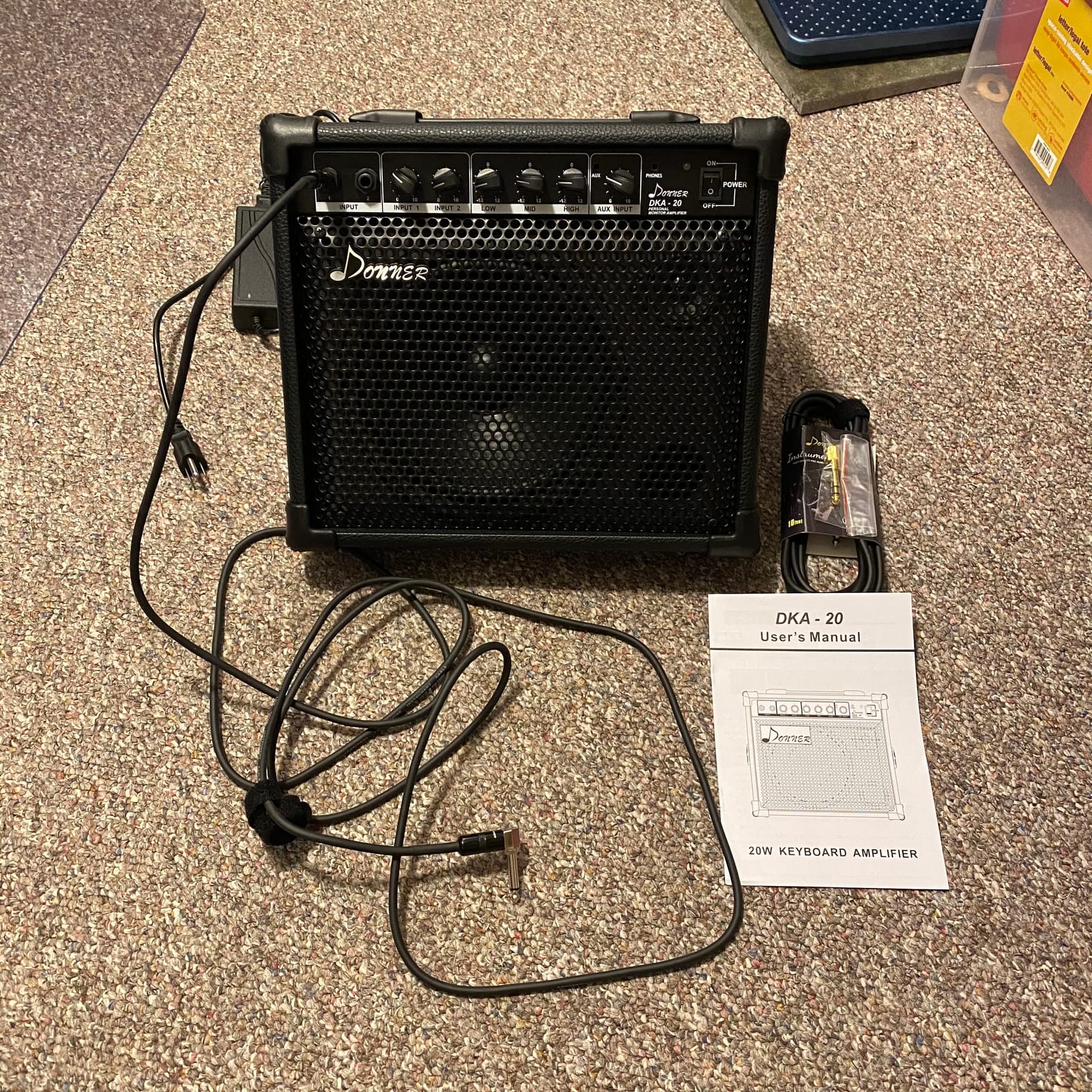
If the DM20 is the best bare-bones box, the DKA-20 is the one that solves the apartment problem. It has a 1/8-inch headphone output on the front panel, and that single jack is the reason so many home players end up owning one. The two 1/4-inch instrument inputs each have their own volume and gain, so you can run a keyboard plus a microphone without a mixer.
The speaker is a two-way design with an 8-inch low-frequency woofer and a 2-inch high-frequency tweeter, giving a 50Hz to 20kHz frequency response. That is a genuine improvement over the single drivers in most cabinets at this size, and it is the difference between a chord sounding like a chord and sounding like a keyboard in a quiet room.
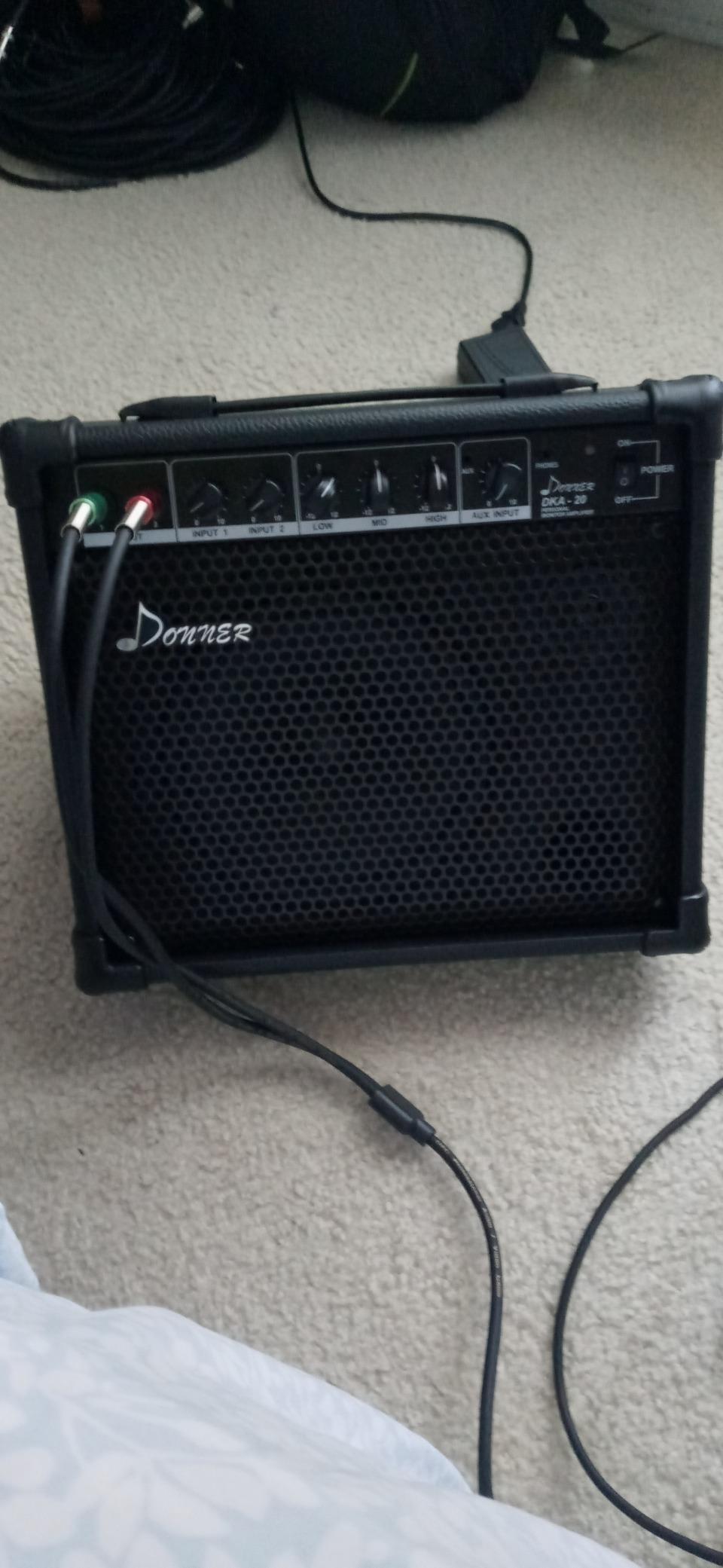
Reviewers praise the front-panel layout for setup speed and note that a 1/4-inch instrument cable is included in the box. That matters more than it sounds. Plenty of first-time amp buyers order a keyboard, an amp and a cable separately, then discover the cable they ordered is a USB cable and they are waiting two days for the right one.
The recurring complaint is hum. Some buyers report a noticeable background buzz on digital keyboard inputs once the volume comes up, which usually points to a ground loop or an unbalanced run rather than a fault in the amp. Start with the keyboard volume low, raise the amp volume instead, and the buzz usually disappears.
Check the headphone output and gain controls
The front-mounted headphone jack is the deciding detail for anyone in a shared building, and the per-channel gain trims let you balance a keyboard against a microphone without a separate mixer. Both are unusual in a 20-watt cabinet and both are worth more to a home player than raw wattage.
Also note the microphone input runs up to 48dB of gain, which is enough for a vocal mic with no phantom power and no extra preamp. Sing along to your own backing tracks through the aux input and you have a complete home practice rig in one box.
Who should skip it
Skip it if you intend to play live or rehearse over a drummer, because 20 watts and a single pair of drivers will not cut through. The external power brick is also worth flagging if you plan to move the amp between rooms constantly, since it adds a loose cable to the setup.
It also helps that this is one of the most reviewed products in the roundup at 4.4 across 793 reviews, which makes reliability complaints easy to spot. Reviews mentioning the hum cluster around digital keyboards rather than analogue ones, so check your instrument type before ruling it out.
3. Roland KC-200 – Best for 88-Key Digital Pianos
Roland 4-Channel Mixing Keyboard Amplifier, 100 watt (KC-200)
100 watts, 19 kg
Custom 12 inch two-way speaker
Four line channels plus stereo aux
XLR mic, line out, headphone out, sub out
Pros
- 12 inch woofer is the smallest here that carries piano voices convincingly
- Channel 4 monitor function for click and guide tracks
- Four onboard channels remove the need for a mixer
- Metal jacks and a metal chassis
Cons
- Master EQ is only 2-band for tone shaping
- 19 kg makes it a two-person carry
- Premium pricing for a 100 watt model
The single most common disappointment in keyboard amp forums is a weighted digital piano sounding thin through a small speaker. It is a physics problem, not a quality problem. The low register of an 88-key weighted instrument needs a driver with real cone area, and the Roland KC-200 pairs 100 watts with a custom two-way system built around a 12-inch woofer and a tweeter. That is the smallest driver combination here that renders an acoustic piano voice honestly.
The onboard mixer is the other reason this model keeps coming up. Four 1/4-inch line input channels, a stereo auxiliary input on both 1/8-inch and RCA jacks, and a master EQ mean you can run a stereo pair of controllers without bringing a desk mixer into the room. Channel 4 doubles as a monitor channel, which is genuinely useful for playing along with a click or a guide track while still hearing your own keys.
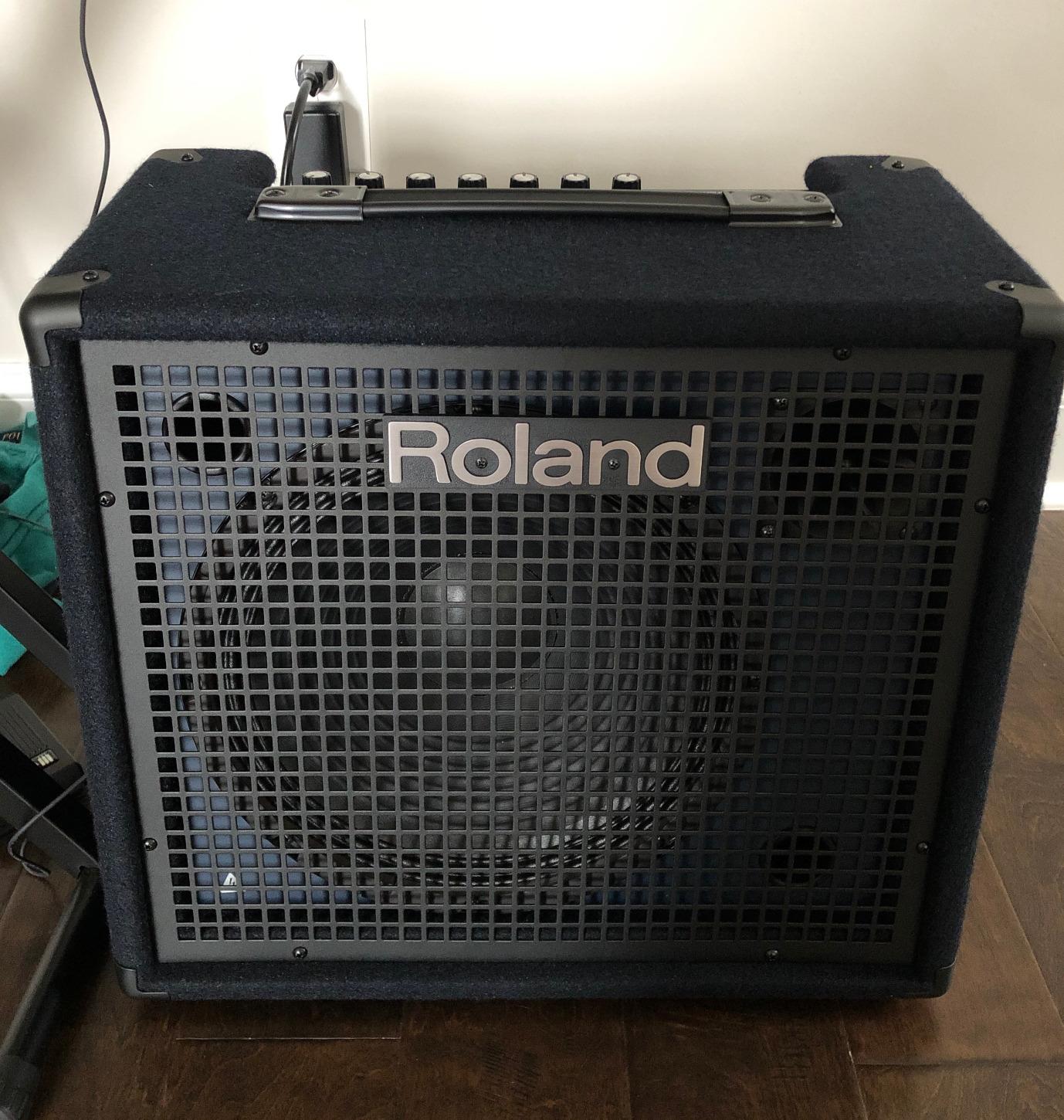
Outputs are unusually complete: an XLR microphone input, a 1/4-inch line output, a headphone output and a subwoofer output. The metal jacks and metal chassis are the sort of detail that tells you this is built to be moved between a rehearsal room and a gig rather than sat on a shelf. Owners repeatedly single out the bass response and the build quality.
The 2-band master EQ is the clearest compromise. Buyers comparing it with the 5-band graphic equalisers on the Behringer Ultratone models find the tone shaping basic. If you are dialling in a sound with a lot of midrange sculpting, the KC-200 will not give you those controls, and no firmware update will add them.
Check the speaker size and the monitor channel
If your instrument is a weighted digital piano rather than a synth, judge this amp on the 12-inch woofer before anything else. A larger cone is the only thing that makes the bottom octave of a 88-key instrument audible in a small room, and this is the lowest-power model in the roundup that pairs one with a tweeter above it.
The monitor function on channel 4 is the feature nobody advertises and everybody who owns one mentions. Plug a click or a backing track into channel 4, switch it to monitor, and you can hear the track without doubling it in the stereo mix.
Who should skip it
Once you have played, you have bought. Skip it if you play a portable arranger keyboard in a small room, because 19 kg is a two-person carry and 100 watts is wasted on a bedroom. It also makes sense to skip it if you are patient enough to work with a 2-band EQ, since a 5-band model gives you far more room to shape a sound.
At 4.5 from 73 reviews, this is a well-liked model with a modest review base, so read the buyer photos rather than relying on the average alone. The KC series runs from 50 to 320 watts, so this is the sensible starting point if you want Roland voicing without a rehearsal-room cabinet.
4. Roland KC-600 – Best for Rehearsal Spaces
Roland 4-Channel Stereo Mixing Keyboard Amplifier, 200 watt (KC-600)
200 watts, 29 kg
15 inch woofer and horn tweeter
Four stereo channels, Stereo Link
Lifetime warranty
Pros
- Highest rated model in the roundup at 4.7 across 69 reviews
- 200 watts with a 15 inch woofer covers a rehearsal room evenly
- Stereo Link chains a second unit for real stereo
- Channel 4 Output Select for click and guide tracks
- Removable casters included
Cons
- 29 kg is a large cabinet
- Premium pricing rules it out for casual practice
- Master EQ is still only 2-band
The KC-600 is the best-rated product in this roundup at 4.7 stars, with reviewers reporting 87 percent five-star ratings. It is also the heaviest model here at 29 kg, which tells you most of what you need to know about who it is for. This is a room-filling cabinet for a rehearsal space, a studio, or a home where the amp lives in one spot and everyone plays there.
Spec-wise it is among the most complete keyboard amplifiers we looked at. Two hundred watts drives a custom two-way system with a 15-inch woofer and a horn tweeter, and the onboard mixer has four stereo input channels plus a stereo auxiliary input. The master EQ includes a Shape switch, which gives you tonal presets beyond the two-band controls.
Stereo Link lets you chain a second KC-600 for more inputs and true stereo output, and Channel 4 carries an Output Select function for monitoring click and guide tracks. Outputs include an XLR microphone input, XLR and 1/4-inch line outputs, a headphone output and a subwoofer output. Removable casters come in the box, and the manufacturer warranty is registered for life.
Check the weight and the caster set
Twenty-nine kilograms is more than one person should plan to carry up a staircase, so measure your route before committing. The removable casters are a genuine help across a flat floor or to a rehearsal space with smooth floors, and they take the cabinet from a two-person carry to a rolling one.
If you already own a smaller amp and simply need more volume and a bigger driver, the step up to a 15-inch woofer and a horn tweeter is the change you will actually hear. Adding a separate subwoofer to a small amp will not do the same thing.
Who should skip it
Skip it if you practise in a flat and move your gear between rooms, because the weight and footprint are the whole cost. Also skip it if you are still deciding whether you need an amp at all, since this is the most expensive way to find out.
Even here the master EQ remains 2-band, so anyone shopping mainly for tone shaping should look at a 5-band model instead. What you are paying for is power, driver size, build quality and the lifetime warranty, not for granular EQ control.
5. Vox VX50KB – Best for Warm Tone at Low Weight
Vox VX50KB 50-Watt Keyboard Amp
50 watts, 4.77 kg
NuTube-equipped preamp
8 inch coaxial in bass reflex cabinet
Three channels, headphone and line out
Pros
- NuTube preamp gives a warmer tone than solid-state budget amps
- Weighs 4.77 kg so it is easy to carry
- Three independent channel volumes
- Line out for feeding a house PA
Cons
- 8 inch coaxial cannot deliver 50 watts cleanly at high volume
- Some reviewers report distortion when pushed
- Build materials feel cheap
The Vox is the one amp in this roundup where the character of the sound matters more than the specification. Its NuTube-equipped preamp produces a warmer, more tube-like response than the solid-state designs that dominate the budget end, and working keyboardists consistently mention it as the reason they keep the amp. At 4.77 kg it is also one of the lightest cabinets here.
Connectivity is well judged for the size. Three channels with independent volume controls, an auxiliary input, a headphone output and a line out mean you can run a keyboard and a microphone, then feed a house PA for a larger room. The three-band master EQ gives more tone control than the 2-band alternatives at a similar wattage.
The weakness is the gap between the rated output and what the speaker can actually do. The cabinet uses a single 8-inch coaxial driver in a bass reflex structure, and reviewers report distortion or saturation once the volume climbs. The 50-watt rating is therefore a ceiling rather than a working level, which is fine in a bedroom and a problem in a rehearsal room.
Check the driver size against your volume needs
Ask yourself whether you will ever need this at full volume with a band. If the answer is yes, choose a model with a larger woofer. If the answer is that you practise alone or with one other person, the warm preamp character is worth more to your practice than headroom you will never use.
Also look at the cabinet rather than the panel. Build quality impressions are mixed on this model, and the styling is deliberately retro, so judge the enclosure for wobble and seam quality if you plan to move it regularly.
Who should skip it
Skip it if you need to be heard over acoustic drums, because the coaxial will not deliver the rated 50 watts cleanly. Reviewers comparing it with dedicated PA-style cabinets report a lack of detail at higher volume, and a few buyers report defective examples with cutting-out or distorted signal.
It is a 4.1 average from 88 reviews, and the split between praise and criticism is mostly about expectations rather than quality. Treat the wattage figure as marketing headroom and you will be happy with it as a practice and small-gig amp.
6. Peavey KB 1 – Best for Beginners Starting Out
Peavey KB 1 20-Watt 1×8 Keyboard Amp, black (573100)
20 watts, 16 pounds
8 inch extended-range speaker
Two channels with 2-band EQ each
Headphone output
Pros
- Clean reliable sound for pianos and synths
- Simple front controls that are quick to set up
- Compact footprint for a small practice room
- Headphone output supports silent practice
Cons
- Only 20 watts so headroom is limited
- 2-band EQ per channel limits tone shaping
- Heavier than most practice amps at this wattage
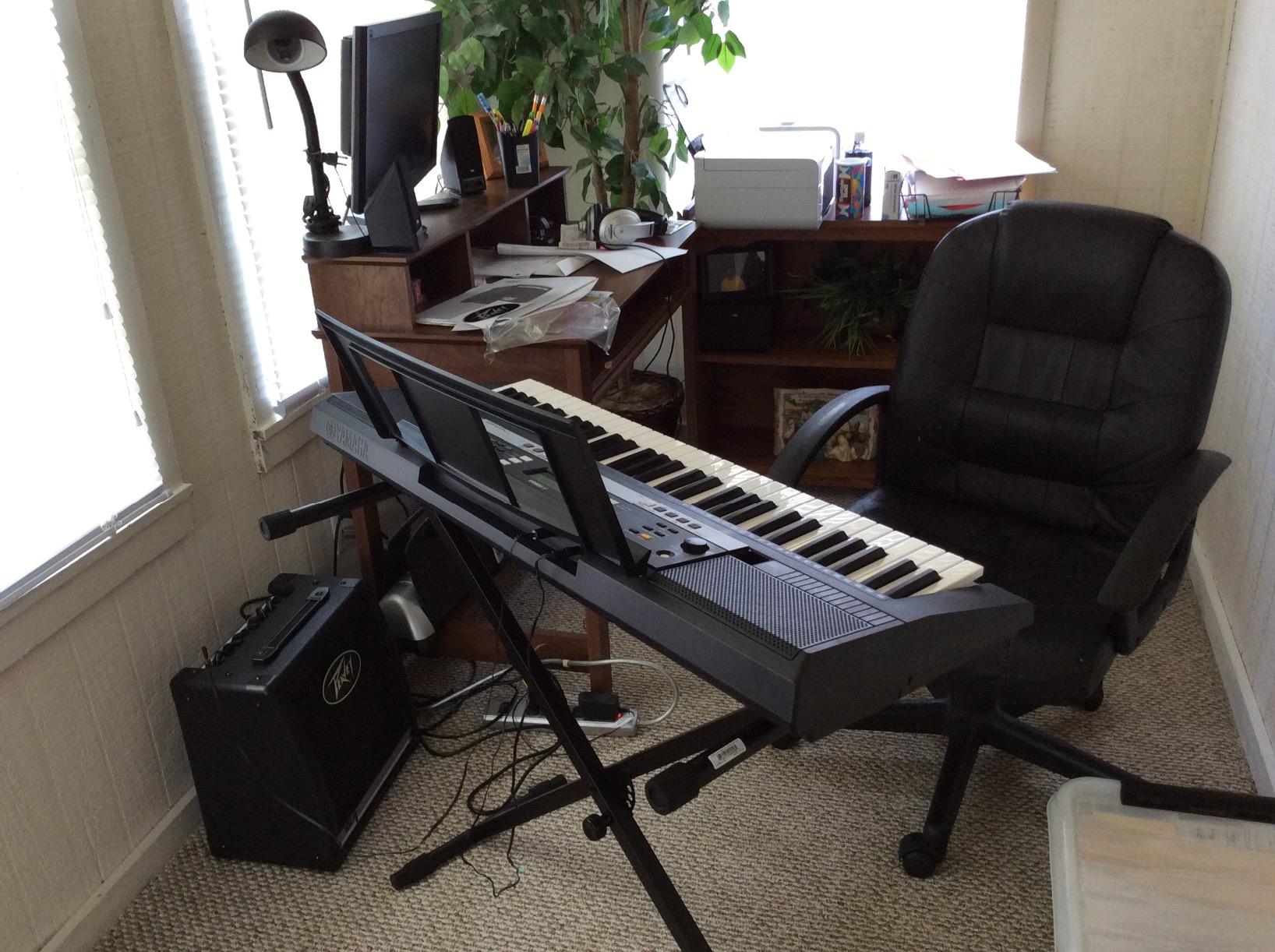
The Peavey KB series is the most conventional keyboard amplifier layout in this roundup, and that is exactly why it works for a beginner. Two separate channels, a 2-band EQ on each, front-panel controls you can understand without a manual, and a headphone output for silent practice. Nothing about the panel will confuse someone on their first amp.
Sound quality is described by reviewers as clean and reliable for pianos and synths, and the 8-inch extended-range speaker does a reasonable job in a small room. The family is also sold in 20, 50, 60, 75 and 100-watt versions, so the same panel layout exists at whatever power level you eventually need.
At 16 pounds it is heavier than most practice amps in the 20-watt class, which is the specification that most surprises buyers. The cabinet measures 19.5 inches tall and 18 inches wide, so it needs a corner with a bit of clearance behind it rather than a shelf.
The 2-band EQ per channel is described by owners as adequate rather than expressive. That is fair. If you want to shape a sound, two bands will not get you there, and a 5-band graphic equaliser is the single biggest tonal upgrade you can make for the money.
Check the 2-band EQ and the room size
Decide honestly whether you will be dialling in sounds or just playing. A 2-band EQ per channel is fine for volume and balance between two instruments, and it will not let you carve out a frequency range for a lead synth or a vocal.
The 20-watt rating is the other thing to check. It is honest for a bedroom, and it runs out of headroom the moment you practise with a band. This model ranks sixth in the keyboard amplifiers category on Amazon, so there is plenty of feedback to read before you commit.
Who should skip it
Skip it if you want to practise at gig volume or rehearse with a drummer, and skip it if you play a weighted digital piano and care about low-end weight, since 8 inches will not deliver it. For a first amp in a small room with simple tone needs, it remains a safe pick.
At 4.4 from 193 reviews, the feedback is consistent rather than polarising, which is reassuring for a first purchase. The long-running production also means parts and service are unlikely to be a problem.
7. Behringer K900FX – Best for Band Rehearsal on a Budget
Behringer Ultratone K900fx Ultra-Flexible 90-Watt, 3-Channel Pa System / Keyboard Amplifier With Fx And Fbq Feedback Detection
90 watts, 39.9 pounds
15 inch speaker
Five-band graphic EQ with 24-bit FX
FBQ feedback detection, line and sub out
Pros
- 90 watts and a 15 inch driver cover rehearsal spaces
- Three channels handle two keyboards and a mic
- FBQ stops howl without cutting high frequencies
- Line and subwoofer outputs allow scaling up
Cons
- Clips noticeably above roughly two o'clock on the volume dial
- 39.9 pounds is a heavy carry
- XLR inputs are true mic level so high impedance keyboards need a DI
The K900FX is a genuinely capable three-channel amplifier for the money, and it is the first one on this list that can hold its own in a rehearsal room. Ninety watts driving a 15-inch speaker is a substantial amount of low end for a home setup, and the three-channel mixer handles two keyboards plus a vocal microphone from a single box.
Two features set it apart from the other Behringer models here. The dedicated 5-band graphic equaliser gives real tone sculpting, and the FBQ feedback detection system identifies the frequencies that cause howling so you can notch them out instead of turning the treble down and losing your top end. The built-in 24-bit digital effects cover reverb, chorus, flanger, delay and pitch shifting.
Line and subwoofer outputs mean the system can grow. Start with the K900FX alone in a spare room, then add a sub or feed a larger PA when the venue gets bigger. There is also a CD input for playing along to music, which older amplifiers of this type often lack.
Check the clean headroom before you rely on the wattage
Owners report that the amplifier clips once the master volume passes roughly two o’clock, so the useful clean output is below the headline 90 watts. Practise at a level where the tone stays clean, because the distortion you hear at a rehearsal is the distortion you will be playing in a band setting.
Also check your instrument output type. The XLR inputs on this model are true microphone level, so a high-impedance keyboard output needs a DI box to get a usable signal into them.
Who should skip it
Skip it if you are in a flat and need to move the amp between rooms, because 39.9 pounds is a two-person lift with no casters. Reviewers also mention occasional signal dropouts and thin bass on some units, so check the return period carefully.
It is a 4.1 average from 150 reviews. The value is excellent if you are rehearsing with other musicians, and unnecessary if you are the only person in the room with a keyboard and a pair of headphones.
8. Behringer K450FX – Best for Multi-Instrument Setups
Behringer K450Fx Ultratone
45 watts, 34.8 pounds
10 inch BUGERA speaker
Three channels with separate FX send
5-band graphic EQ and subwoofer out
Pros
- Three channels run two keyboards plus vocals or a drum pad
- 5-band graphic EQ gives far more shaping than 2 or 3 band models
- Built-in reverb and echo effects are usable out of the box
- Subwoofer and headphone outputs expand the system
Cons
- Some buyers report boomy upper bass and weak treble on piano voices
- 34.8 pounds is heavy for home practice
- Occasional reports of a failure between the amp section and speaker
The K450FX is the middle rung of the Behringer Ultratone line, and it is the one to buy when you have more than one thing to plug in. Three full channels with separate volume and FX send per channel let you run two keyboards plus vocals, or a keyboard with an electronic drum pad, without buying a mixer.
The 5-band graphic equaliser is the feature that justifies the step up from a 2- or 3-band amp. You get real control over the low-mid range, where keyboard tones tend to pile up and get muddy in a small room. Built-in reverb and echo effects are usable straight out of the box, and a subwoofer output lets you add low end later rather than replacing the whole cabinet.
What holds it back is the single 10-inch BUGERA driver. Owners reviewing piano voices report a boomy upper bass and weak treble, which is the same complaint that comes up with any single-driver design in this power class. If you play a weighted digital piano, this is the weakness that will bother you first.
Check the single driver against your instrument
For synth patches, organs and pop leads, the 10-inch driver and 5-band EQ combination is genuinely useful. For acoustic piano tones, expect less detail at the top end and a looseness through the middle. If the piano sound is what you practise, look for a two-way system instead.
The subwoofer output is worth considering as a later upgrade, but note that a 4.0 average from 135 reviews is the lowest rating among the amps reviewed here, and several reviewers report a failure between the amplifier section and the speaker on models arriving out of the box.
Who should skip it
Skip it if you are a piano player on a single weighted keyboard, because the speaker voicing works against you. Also skip it if weight is a factor, since 34.8 pounds is substantial for a home practice amp that lives in a bedroom.
It is a fair pick for a multi-instrument rig or a small band rehearsal, where three channels and a 5-band EQ save you money on a separate mixer. Check the warranty terms and inspect the unit on arrival.
9. COOLMUSIC 30-Watt Amp – Best for Backing Tracks and USB Playback
Coolmusic Keyboard AMP 30W Electric Drum Amplifier Speaker,with 3-Year Warranty
30 watts, 8 inch speaker
Two inputs with gain plus AUX gain
Headphone out, DI out and USB interface
Pros
- 30 watts gives more headroom than most budget keyboard amps
- Per-channel gain makes balancing two sources easy
- USB and AUX inputs for backing tracks
- Backed by a multi-year warranty
Cons
- Generic branding with limited independent review coverage
- 20Hz frequency floor suggests limited real low end
- Bulky cabinet footprint for a practice-only amp
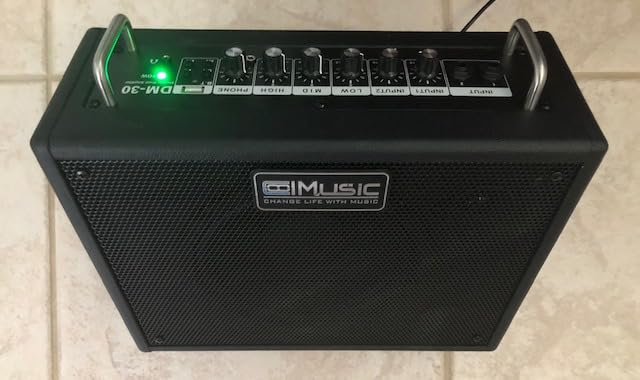
This 30-watt COOLMUSIC unit ranks second in Amazon’s keyboard amplifiers category, and the reason is straightforward: it gives you more clean output than most budget amps, and it hands you every connection you are likely to need. Two inputs each with their own gain control, a 3-band EQ, an auxiliary input with its own gain knob, a headphone output and a DI output for external active speakers.
The USB interface for flash-drive playback is the feature that separates it from the Donner DKA-20 and the Peavey KB 1 at a similar weight class. Rather than dragging a laptop in to run accompaniment, you can load tracks onto a stick, press play, and practise against a real song with no latency and no cables crossing the room.
It is also sold and reviewed as an electronic drum amplifier, which tells you the headroom is real. Thirty watts is enough to cover a small rehearsal space with a pad player, and the 20Hz to 20kHz frequency response is the widest quoted range among the single-driver cabinets in this roundup.
The practical drawback is size. At 27 inches wide and 28 inches tall, this is a large cabinet for an amp that is otherwise firmly a practice-room product, so measure the corner before you order. Independent long-form review coverage is also thin, so the buyer feedback is the main source of information.
Check the USB interface and the gain controls
Per-channel gain is what lets you balance a keyboard against a drum pad or a microphone without a separate mixer, and it is the reason this amp suits a multi-instrument home setup. The auxiliary input has its own gain knob, so backing tracks sit where you want them relative to the instrument.
Confirm your flash-drive files are in a format the USB interface reads before you rely on it. Every player in this category is different, and it is easier to test the connection on arrival than to discover it during a practice session.
Who should skip it
Skip it if floor space is tight, because the cabinet is bigger than amps with more power. The stated 20Hz low end is also more of a specification than a listening result, and if bass weight matters to you, choose a model with a larger woofer.
At 4.4 from 145 reviews it holds up well, and the multi-year warranty is a meaningful advantage over the cheapest options. For playing along to tracks and covering a small room, it does more per unit of floor space than the price suggests.
10. Behringer KXD15 – Best for Electronic Drums
BEHRINGER ULTRATONE KXD15
600 watts, 49.2 pounds
15 inch TURBOSOUND speaker
True bi-amping, 4 channels
KLARK TEKNIK FX with 100 presets
Pros
- 600 watts of bi-amped Class-D power in a light cabinet
- Four onboard channels replace a separate mixer
- 15 inch TURBOSOUND driver gives real low end weight
- 100 FX presets from reverb to pitch shifting
Cons
- 49.2 pounds makes it impractical for casual home practice
- Class-D character is less warm than a tube preamp design
- Modest 69-review sample with no customer photos
The KXD15 is the odd one out in this roundup, and that is why it is worth knowing about. It is a 600-watt bi-amped four-channel PA and keyboard amplifier with a 15-inch TURBOSOUND driver and a 1-inch tweeter, driven by Class-D amplification. That combination delivers genuine volume from a single cabinet, and the four onboard channels replace a separate mixer entirely.
True bi-amping means dedicated power for the low and high frequency drivers rather than one amplifier trying to drive both. The effect is cleaner output at high volume, which is exactly what an electronic drum kit needs, because a triggered kick and a cymbal hit are the most demanding inputs in this category.
Onboard, the KLARK TEKNIK effects processor offers 100 presets spanning reverb, chorus, flanger, delay and pitch shifting, and the XLR and 1/4-inch connections accept both microphones and line-level keyboards. Owners cite the bi-amping design, the 15-inch cabinet and the four channels as the reasons it can stand in for a small PA.
Check the weight before you plan the move
At 49.2 pounds this is the second-heaviest amplifier in the roundup, and it is impractical for a casual home practice spot. If it will live permanently in a rehearsal room or a garage, that is irrelevant. If you carry it between a bedroom and a spare room, it is a dealbreaker before any specification matters.
Note also that Class-D circuitry is functionally neutral rather than warm, and reviewers who prefer a tube-style preamp response find it flatter. For drum triggers and PA duties that is exactly right; for a warm piano tone it is a matter of taste.
Who should skip it
Skip it if your playing is one keyboard and a pair of headphones, and skip it if weight or floor space is a constraint. A 4.4 average from 69 reviews is a strong score on a modest sample, and there are no customer photos to help you judge the build quality in advance.
It earns its place if you play electronic drums, run a multi-keyboard rig, or need one box to handle a small event. Otherwise the 90-watt K900FX covers most of the same ground at a noticeably lower weight.
How to Choose a Keyboard Amp for Home Practice
Match the wattage to your room, not to the spec sheet
Room size is the only wattage guide that matters. A bedroom, study or small office needs 20 to 30 watts, a living room or converted garage needs 45 to 100 watts for band-volume headroom, and anything over 300 square feet needs 200 watts or a subwoofer output. Wattage on its own tells you nothing, because the same number fills one room and fails in another.
Under 150 square feet (a bedroom, a study, a small office): 20 to 30 watts is genuinely enough.
150 to 300 square feet (a living room, a converted garage, a teaching room): 45 to 100 watts gives you headroom to practise at band volume.
Over 300 square feet or an outdoor space: 200 watts and up, or a keyboard amp plus a subwoofer output.
Home practice almost always lands in the first two bands. If you can play acoustic piano through a weighted keyboard, prioritise the driver size over the wattage, because a small speaker is the real limit rather than the amplifier behind it.
Choose the speaker size for the instrument you play
Speaker size is the most underrated specification in this category. An 8-inch driver, whether coaxial or paired with a small tweeter, will make a synth patch sound good and will make an acoustic piano voice sound thin. A 12-inch woofer is the practical starting point for a weighted 88-key digital piano, and a 15-inch woofer is what you want if you also use the amp for rehearsals or small events.
Two-way systems beat single drivers at the same wattage because the tweeter handles the top end without the woofer cone trying to move fast enough to produce it.
Count the channels and the mixer you need
One channel is enough if you play one keyboard with no microphone. Two channels let you add a second instrument, a drum pad or a vocal mic. Three or four channels with per-channel volume and effects send remove the need for a desk mixer, which is both a saving and a reduction in clutter for a home practice room.
Pay attention to input types as well as count. A 1/4-inch line input accepts a keyboard output directly. An XLR input is microphone level, so a high-impedance instrument output needs a DI box to produce a usable signal. Mixing the two up is the most common cause of a thin, quiet or distorted keyboard channel.
Check the headphone output if anyone else lives nearby
A headphone output is the single most valuable feature for apartment practice, because it lets you use the amp at full speed and full volume while the room stays silent. Most amps in this roundup include one, but the compact DM20 does not, and the placement matters too: a jack on the front panel is far more convenient than one on the back.
Most practice amps with a headphone jack monitor the master mix rather than providing a separate cue, so whatever you are hearing is what the room hears. That is what you want for practice, and it is worth confirming before you buy.
Weigh the cabinet before you order
Weight is a real constraint for home players and almost never discussed. The amps in this roundup run from 4.5 kg to 29 kg. Anything under about 10 kg can be carried up a staircase by one person comfortably; between 20 and 35 kg is a two-person carry; at that weight the amp lives where it is plugged in.
Measure the depth as well as the width, since a 15-inch cabinet with a rear input panel can need a foot of clearance behind it. The best value in this roundup comes from accepting a limit on power so the amp stays light enough to move.
Connect without hum: five steps
Use a proper 1/4-inch instrument cable from the keyboard output to the amp input, and a shielded cable if the run is more than a few feet.
Plug the keyboard into a line input, never into an XLR microphone input unless you are using a DI box.
Start with the keyboard volume at about half and the amp volume low, then raise the amp volume rather than the keyboard volume.
Set all tone controls flat before shaping anything, so you can hear the change each control actually makes.
If you hear hum, unplug one cable at a time until it stops. The cable that kills the hum is the source, usually a loop between two mains sockets.
Keep the keyboard cable away from the power cable wherever you can, and if you must cross them, cross at a right angle. Feedback howl in a small room is almost always a microphone or a high gain setting, not a fault in the amplifier.
Best Amp at Each Budget Level
Budget pick: The COOLMUSIC DM20 is the least expensive way to get a two-way speaker, two channels, Bluetooth and USB playback into a practice room, and its 4.5 kg weight makes it the easiest to move. If you need a headphone jack at this level, the Donner DKA-20 is the alternative, and its microphone input makes it the better choice for singers.
Mid-range pick: The Vox VX50KB gives you the warmest tone in the roundup and weighs 4.77 kg, while the Behringer K450FX and K900FX give you three channels and a 5-band graphic equaliser. Choose the Vox for a solo player in a small room and the Behringers when other instruments or a microphone are joining you.
Premium pick: The Roland KC-200 is the model we would buy for a home practice setup on a weighted digital piano, because the 12-inch two-way speaker and four-channel mixer solve the two problems most home players actually have. The KC-600 is the step up when the same amp needs to fill a rehearsal room.
Our rule of thumb across all three tiers is simple: spend on the speaker before you spend on the power. A larger driver at moderate wattage sounds better in a small room than a small driver at high wattage, and it is also easier on your ears at practice volume.
Frequently Asked Questions
What is the best amp for home practice?
The COOLMUSIC DM20 is the best amp for home practice, because 20 watts and a 6.5 inch woofer with a separate tweeter are genuinely loud enough for a bedroom or small rehearsal room, and at 4.5 kg it is easy to move. It holds a 4.6 rating across 875 reviews and adds Bluetooth and USB playback. If you need a headphone jack, choose the Donner DKA-20 instead.
Are keyboard amps worth it?
They are worth it if your digital piano or keyboard has weak built-in speakers and you want to hear the low end, rehearse at realistic volume, or sing along with a microphone. They are not worth it if you play with good headphones at a modest volume and nothing else lives in the building. Many home players never buy one and lose nothing.
What is a good portable amp for keyboards?
The COOLMUSIC DM20 is the most portable option here at 4.5 kg, followed by the Vox VX50KB at 4.77 kg and the Donner DKA-20 at 5.3 kg. All three use two-way speaker layouts rather than single drivers. Anything approaching 20 kg becomes a two-person carry, so weight is the first specification to check when portability matters.
How much does the Roland KC-600 weigh?
The Roland KC-600 weighs 29 kg, making it the heaviest amplifier in this roundup. Removable casters are included, which makes it manageable across a flat floor or to a rehearsal space, but it is still effectively a two-person carry up a staircase.
Can I use a guitar amp with my keyboard?
You can, but it is the wrong tool. A guitar practice amp has a preamp voiced for electric guitar, a different EQ emphasis and usually fewer inputs, so digital piano voices come out thin and the built-in effects of your keyboard are harder to control. A keyboard amplifier is built for a wide frequency range and line-level inputs. Our guide to practice amps covers the guitar case in more detail.
The Verdict for Home Practice
The best keyboard amps for home practice come down to two questions: how big is your room, and do you play a synth or an 88-key piano. In a small room with a synth, the COOLMUSIC DM20 gives you the best combination of output, weight and connection options, and the Donner DKA-20 is the pick if you need a headphone jack for late-night playing. On a weighted digital piano, the Roland KC-200 is the smallest model with a speaker that renders the low register honestly.
Before buying anything, try good headphones for a fortnight. If that solves it, you have just saved the money and the floor space. If it does not, match the watts to the room, buy the largest driver you can carry, and check that the amp has the outputs your practice routine will actually need.
Every recommendation above was checked against current product listings in 2026, and all ratings and review counts are the live figures from those listings. Specs come from the manufacturer data rather than from our own measurements, so treat the wattage figures as marketing numbers and the review feedback as the real signal.